
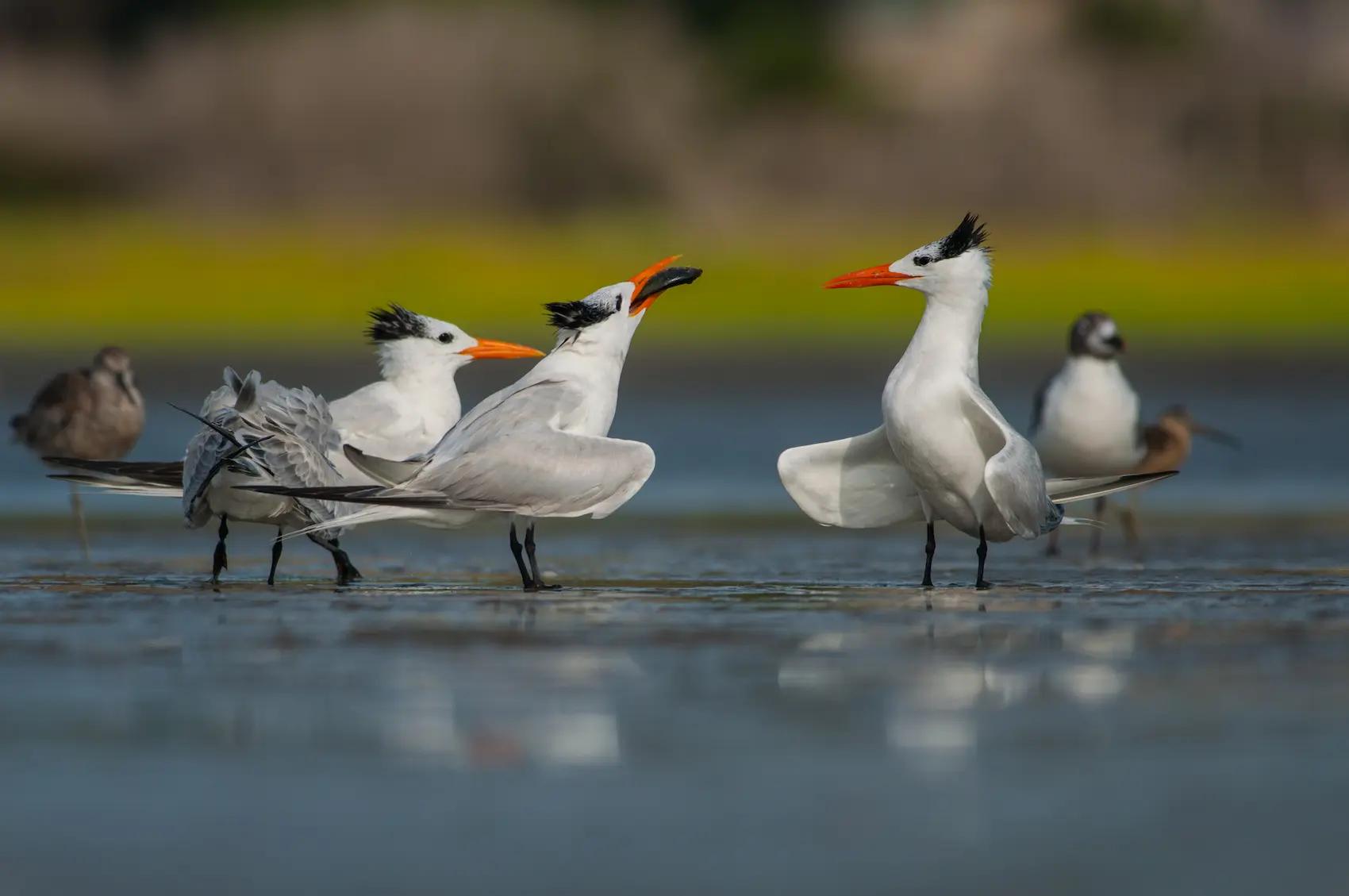

Abhishek
Writer
Updated On - Aug 12, 2026
15 min
Published On - May 19, 2026
The Last Birding Frontiers of the Western Himalayas
The Western Himalayas remain one of the last untouched birding frontiers, rich in rare and endemic species. From dense forests to alpine meadows, these landscapes offer unmatched biodiversity and serene beauty. It’s a dream destination for birdwatchers seeking unique sightings and peaceful nature experiences.
There is a particular kind of silence in the oak forests above Chopta at five in the morning. Not the silence of emptiness, but the charged, anticipatory quiet of a place that is about to fill with sound. The rhododendrons are in full bloom, their red so violent against the snow peaks that it feels almost theatrical. Then, somewhere in the canopy above you, a Koklass Pheasant calls — a deep, bark-like proclamation that carries across the valley and seems to shake loose the morning itself. If you have been a birder for any length of time, you will recognise this feeling: the realisation that you are somewhere genuinely extraordinary.
The Western Himalayas — stretching from Uttarakhand through Himachal Pradesh and up into the high cold deserts of Ladakh — constitute one of the most biologically rich birding zones on the planet. Yet they remain curiously overlooked, even among serious birders. The Eastern Himalayas, Eaglenest, Mishmi Hills and the avian superstars of Arunachal Pradesh have long dominated the imagination. The Western arc gets mentioned in footnotes. This is an enormous mistake, and one worth correcting before the world catches up.
Chopta and the Kedarnath Wildlife Sanctuary, Uttarakhand
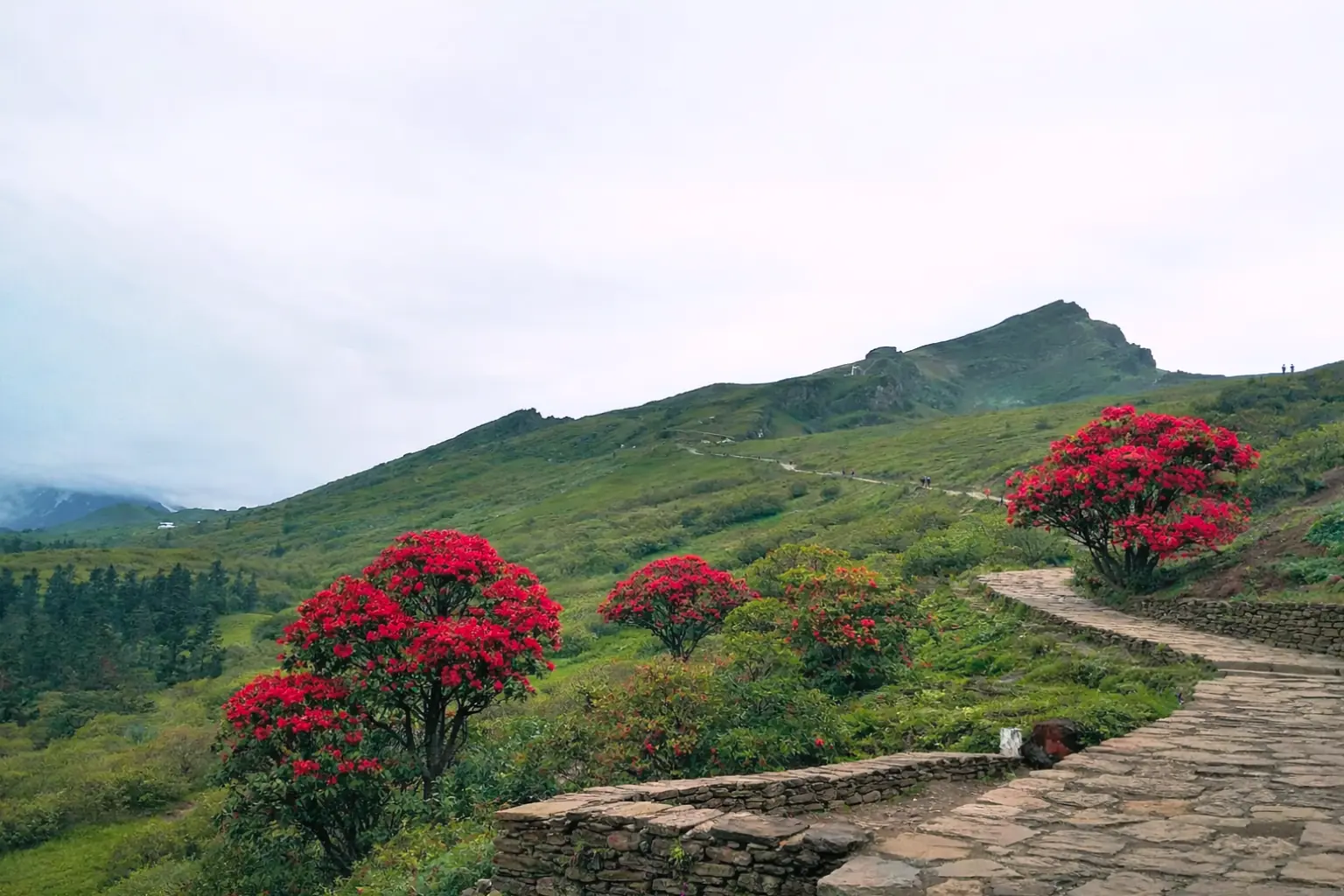
Situated at around 2,600 metres above sea level in the Rudraprayag district, Chopta is what happens when a village has the good fortune of being surrounded by one of India's most intact temperate forest systems. Part of the Kedarnath Wildlife Sanctuary, it sits at the confluence of pine, fir and rhododendron zones — a transitional band that creates precisely the kind of habitat diversity that birds, and the people who watch them, find irresistible.
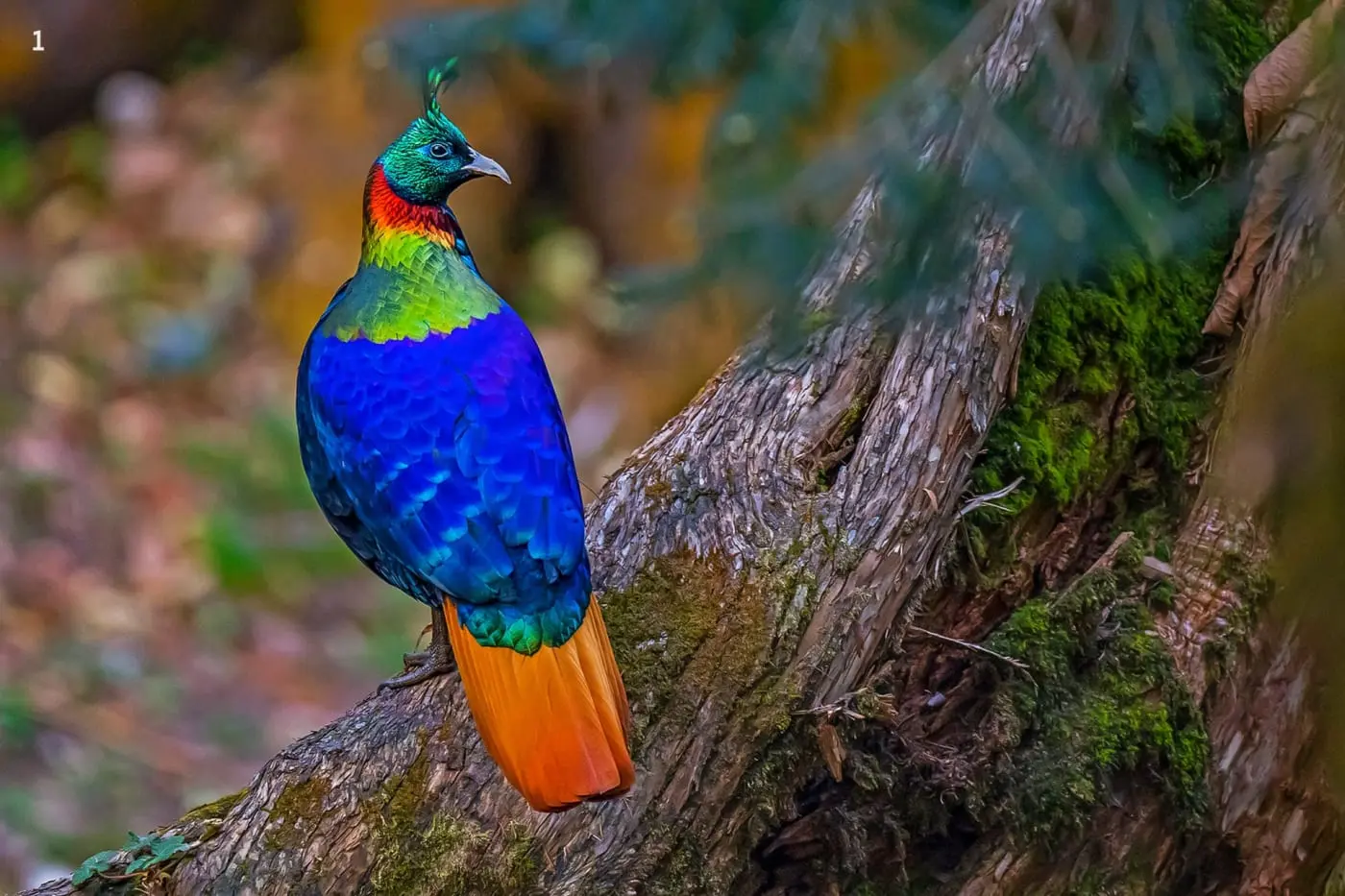
The headline bird here, and rightly so, is the Himalayan Monal — the state bird of Uttarakhand, and one of the most visually arresting creatures in the subcontinent. The male is iridescent beyond description: a green head that shimmers into copper, a crimson back, turquoise shoulders, and a tail of deep black. Photographs never quite capture it because the colours change with every shift of light. Chopta is one of the most reliable sites in India to see Monals at close range, particularly along the trail that leads up to the Tungnath temple, the highest Shiva shrine in the world.
But the Monal is only the beginning. The forest along this corridor holds an extraordinary list of Western Himalayan species that will keep any serious lister occupied for days: Koklass Pheasant calling from dense oak understorey; the Fire-capped Tit, an absurdly small bird with an absurdly showy orange cap, working through the canopy; Bar-throated Minla moving through mixed feeding flocks like a streak of warm autumn colour. The Rufous-gorgeted Flycatcher perches in the sub-canopy with the studied composure of a bird that knows it is beautiful. Along the forest edges, Great Barbets call with a persistence that becomes the ambient soundtrack of the place — a low, sonorous proclamation repeated every few seconds until it seems less like a bird call and more like the forest thinking aloud.
The best season runs from November through May, with mid-April offering something exceptional: the rhododendrons are in full bloom, the higher trails are clear of snow, and the breeding season is beginning, which means male birds are in peak plumage and full voice. The road from Dehradun follows the Ganga, Alaknanda and Mandakini rivers — a journey of around 225 kilometres that is itself a birding experience, the riparian zones offering species quite different from the forests above.
Dhanolti: The Quieter Neighbour Nobody Books
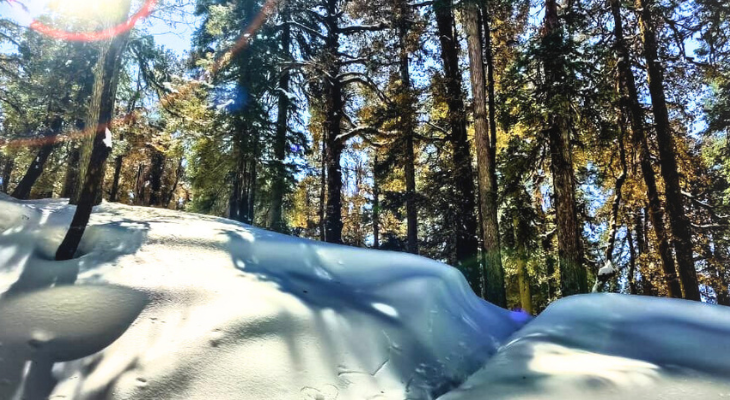
About 60 kilometres from Dehradun, at 2,300 metres, Dhanolti occupies a strange position in the Uttarakhand travel landscape. It is close enough to Mussoorie that it appears in guidebooks as a day trip, and yet serious travellers have been quiet about it, perhaps because they understand that the moment a place acquires a reputation for convenience, it acquires crowds, and crowds are the one thing birders cannot afford.
The cedar and oak forests around Dhanolti are dense and well-preserved, and the birding rewards the patience of anyone willing to move slowly. The Blue Whistling Thrush — an improbably large, improbably blue bird that is so conspicuous it seems almost immodest — haunts the rocky stream courses. White-throated Laughingthrush move through the undergrowth in gregarious, noisy flocks. The Wedge-tailed Green Pigeon, one of the more elegant members of a family not short on elegance, can be found where fruiting trees attract mixed flocks. The Common Rosefinch, with its rose-red head, appears almost as a parting gift as the forest gives way to more open terrain.
What Dhanolti offers that Chopta does not is a certain unhurried access — the GMVN resort at Dhanolti Heights is comfortable without being intrusive, and the surrounding forest can be explored on foot from base with minimal effort. The combination of Dhanolti for two nights followed by three nights in Chopta has quietly become a template among birders who know this region well.
Pangot and Sattal: Where the Birding Education Begins
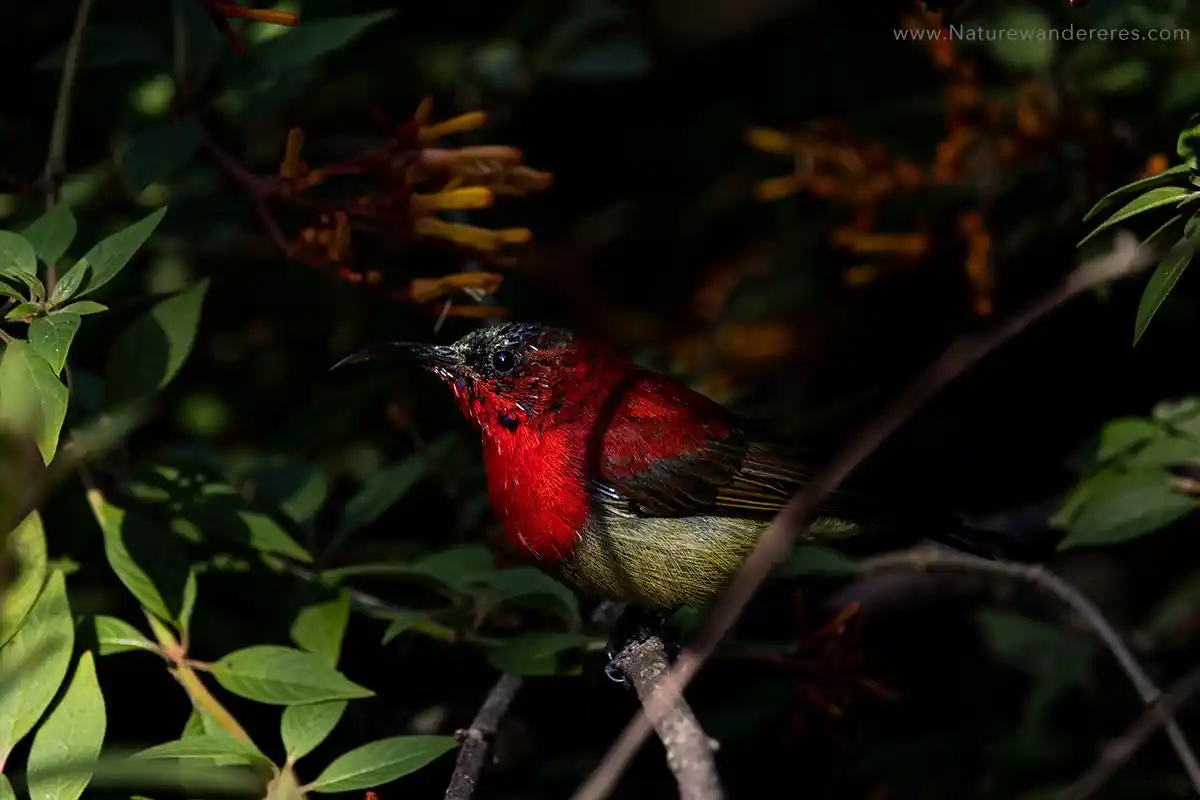
If Chopta is the high altar of Western Himalayan birding, then Pangot — perched about 15 kilometres above Nainital in the Kumaon hills — is the place where most serious birders first understand what this landscape can offer. The oak, rhododendron and mixed broad-leaf forests here hold an astonishing concentration of species in a relatively small area, which is why it has been a fixture on the Indian birding circuit for decades without ever quite becoming crowded.
The Cheer Pheasant, a species of genuine conservation concern, has its stronghold here. The Khalij Pheasant — more common but no less striking — crosses the road at dawn with the casual authority of a bird that has understood it is protected. Flycatchers are exceptional: the Blue-throated, Ultramarine, Verditer and the Rufous-bellied all occur, along with the Slaty-blue, which is compact and quietly spectacular in the right light. The forest above Pangot, towards Kilbury, has produced Tawny Fish Owls for patient nocturnal observers.
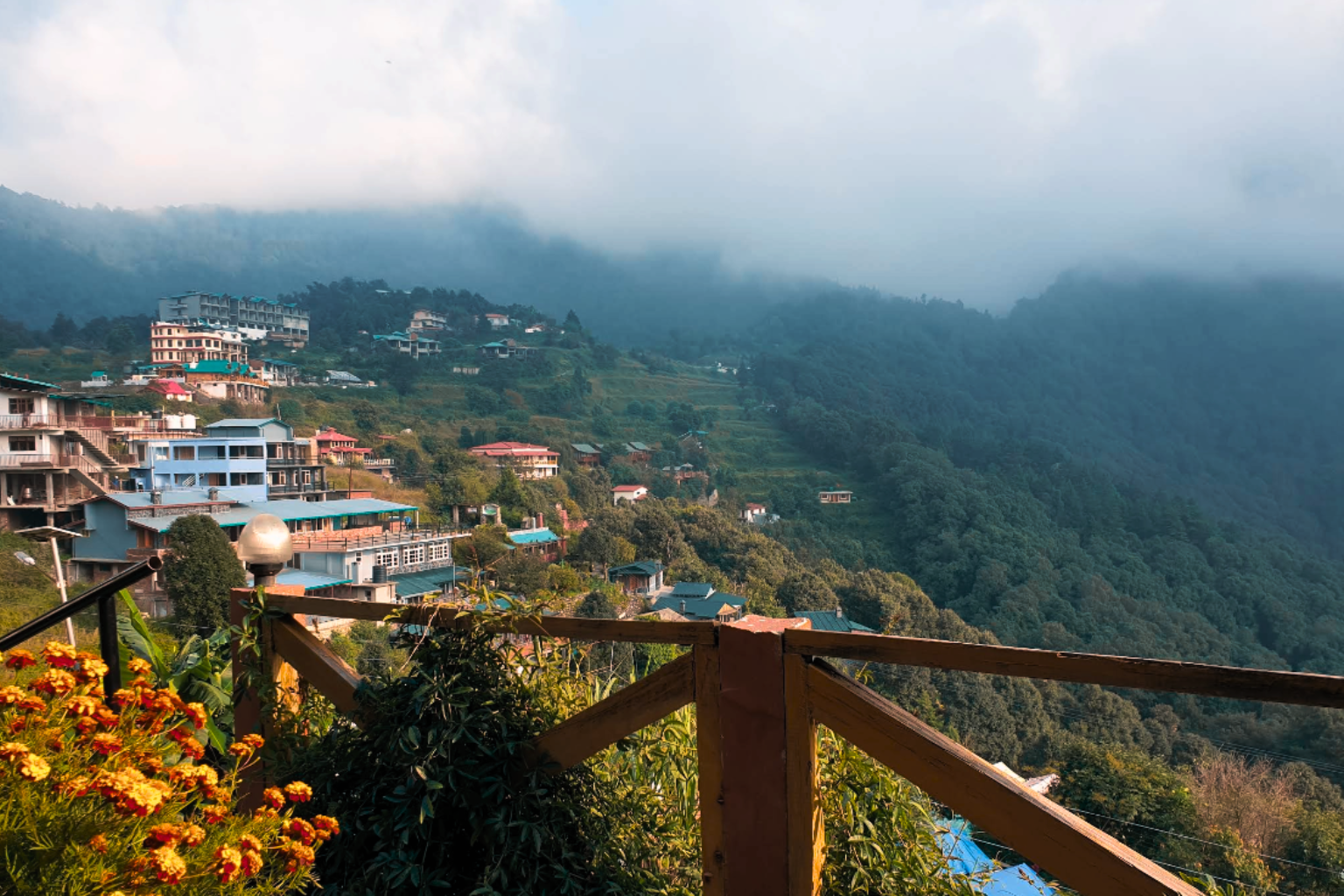
Sattal, nine lakes cupped in sal and mixed forest an hour from Nainital, operates on a different register entirely. Here the landscape is gentler, the altitude lower, and the species list shifts accordingly: Pied Kingfisher works the water, Indian Paradise Flycatcher floats through the canopy like a white ribbon caught in a slow wind, and Oriental Dwarf Kingfisher — one of the most searched-for birds in this part of India — turns up reliably for those who know where to look
The Himachal Circuit: Shimla, Narkanda and the Sutlej Valley
Cross from Uttarakhand into Himachal Pradesh and the landscape changes in ways that are immediately legible to a birder. The forests become denser with Himalayan cedar and kail pine; the valleys deepen and the rivers take on the pale grey-green of glacial melt. The towns — Kufri above Shimla, Narkanda further up the NH5 — are less visited, and the birding reflects this. A drive from Shimla to Narkanda at the right hour of morning can produce a feeding flock that takes twenty minutes to move through and leaves the observer with a list of fifteen species.
The Himalayan Griffon — wingspan of two and a half metres, the casual thermal-riding indifference of a creature that has nothing to fear — is a regular sight along the Sutlej Valley. The Red-billed Chough and its Yellow-billed counterpart work the higher ridges. The Spotted Nutcracker, which looks as if someone scattered white paint across a dark crow, moves through the nutpine forest with the methodical purpose of a bird that is storing food against winter, even in spring.
The valley around Naggar, above the Beas in the Kullu district, deserves particular mention. Known to art historians for the Nicholas Roerich estate and to travellers as the civilised alternative to Manali, it is less known as a birding site — which is precisely its appeal. The terraced fields and orchard edges hold species that cannot be found in the forest above: the Crested Bunting male in breeding plumage is an object of such implausible elegance that first-time observers often express audible disbelief. The White-capped Water Redstart works every stretch of the Beas river below.
Ladakh: The High Altitude Frontier

To come to Ladakh after the forested slopes of Uttarakhand and Himachal is to understand that the word 'Himalayas' covers an almost incomprehensible range of ecosystems. Leh sits at 3,500 metres in a cold desert of startling beauty — brown mountains, turquoise rivers, sky of an impossible depth. The birding here is radically different from everything below, and no less extraordinary.
The Indus Valley between Leh and the Tibetan plateau is the critical highway. Bar-headed Geese — the highest-altitude migratory birds in the world, crossing the Himalayas at over 7,000 metres — stop here on passage, grazing the barley fields with the serene confidence of birds that have already done the hard part of their year. Brahminy Duck pairs work the river margins. The Black-necked Crane, breeding at Tso Moriri, is perhaps the most sought-after bird in the Indian high Himalaya: tall, prehistoric in bearing, moving through the wet meadows around the lake with an unhurried gravitas.
The Hemis National Park, which is primarily visited for Snow Leopard, holds its own avian secrets. The Bearded Vulture — also called Lammergeier, a bird that feeds exclusively on bones and has evolved orange colouration by bathing in iron-oxide soil — soars over the canyon walls of the Markha Valley. The Ibisbill, one of the most peculiar and range-restricted waders in Asia, probes the glacier-fed streams with its curved red bill and the proprietorial air of a species that knows it is both rare and irreplaceable.
The best season is May through September, though July and August bring the highest passes into condition for the Changthang plateau, where the Tibetan Sandgrouse, Henderson's Ground Jay and the pale, wind-scoured passerines of the high steppe occur in species that simply cannot be seen elsewhere in India.
How to See It Properly
The Western Himalayas reward a particular style of travel that the standard tour itinerary is architecturally incapable of providing. You cannot see the Himalayan Monal from a bus window or add the Black-necked Crane to your list during a day trip. These landscapes require slowness — early mornings, quiet vehicles, a guide who understands that a mixed feeding flock is not an inconvenience to drive past but an event to stop for.
The ideal approach for a serious birder who wants to cover the Western arc comprehensively is to think in zones and seasons. Pangot and Sattal work well as an entry point in October-November or March-April. Chopta peaks in April when rhododendrons are flowering and the higher trails are accessible. The Himachal circuit — Shimla, Narkanda, Kullu valley — is best from April through June. Ladakh opens properly in May and offers its best birding through August.
Accommodation choices matter more than most birding guides acknowledge. Staying in well-positioned homestays or small lodges rather than large resort hotels is not merely an aesthetic preference — it means waking up inside the habitat rather than driving to it, and it means the people around you know where the Tawny Owl roosts and which trail the pheasants use at first light. This is information that no guidebook carries.
Before the World Catches Up
There is a window — perhaps five years, perhaps a decade — before the Western Himalayas acquire the birding tourism infrastructure that the Eastern Himalayas now possess. Before the Chopta trail has a queue at 6 a.m. Before the homestays around Narkanda are full every weekend of April. Before Tso Moriri has a resort on every shore and the Black-necked Cranes have adjusted their habits accordingly.
The birding in the Western Himalayas right now is what the Eaglenest Wildlife Sanctuary felt like fifteen years ago — abundant, accessible to those who know where to look, and largely unshared. The Himalayan Monal is still comparatively easy to find. The Ibisbill still wades its streams without a crowd on the bank. The Koklass Pheasant's bark still breaks the pre-dawn silence over Chopta without competition from anyone else's field guide.
Go now, while going there still feels like a discovery.