

Komal
Writer
Updated On - Nov 02, 2026
20 min
Published On - Nov 02, 2026
Chaukori: Uttarakhand's Best-Kept Secret Hill Station
A bowl of green tea gardens cradled between Nanda Devi and Panchachuli, where the only queue you will ever join is the one for breakfast at the KMVN watch tower.
Discover Chaukori, Uttarakhand's hidden hill station famous for Himalayan views, tea gardens, peaceful stays, and stunning sunrises. Explore attractions, best time to visit, and travel tips in this complete 2026 guide.
About Chaukori
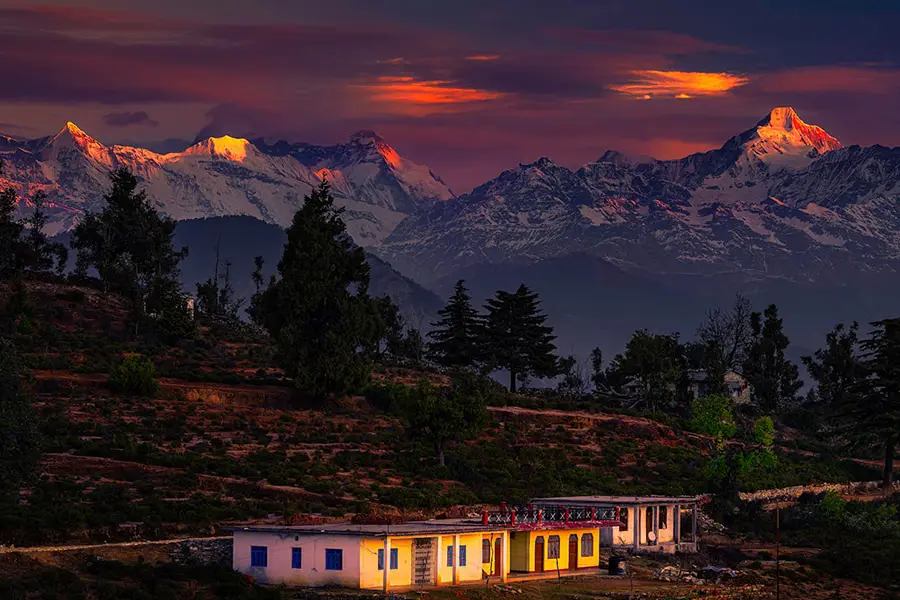
The cold arrives before the light does. I am standing on the balcony of a second-floor room at the Kumaon Mandal Vikas Nigam rest house, wrapped in a blanket I have stolen from the bed, and the sky ahead of me is doing something I have rarely seen it do with such patience. It begins as a thin grey wash over the ridge, then a seam of orange opens along the horizon, and then, all at once, the snow on five separate peaks catches fire. Nanda Devi first, then Nanda Kot, then the five fingers of Panchachuli reaching up beside it. Below the balcony, somewhere in the tea garden, a Himalayan monal calls out — a sound somewhere between a trumpet and a laugh ” as if it too has been waiting for this. Nobody else is awake. There is no queue, no jostling for the railing, no one shouting for a better angle. Just me, a flask of bed tea someone left outside my door, and a mountain range turning the colour of a peeled mandarin.
This, in essence, is Chaukori. It does not perform for you. It simply is —” and you either show up early enough to catch it, or you sleep through one of the finest sunrise spectacles in the Indian Himalayas.
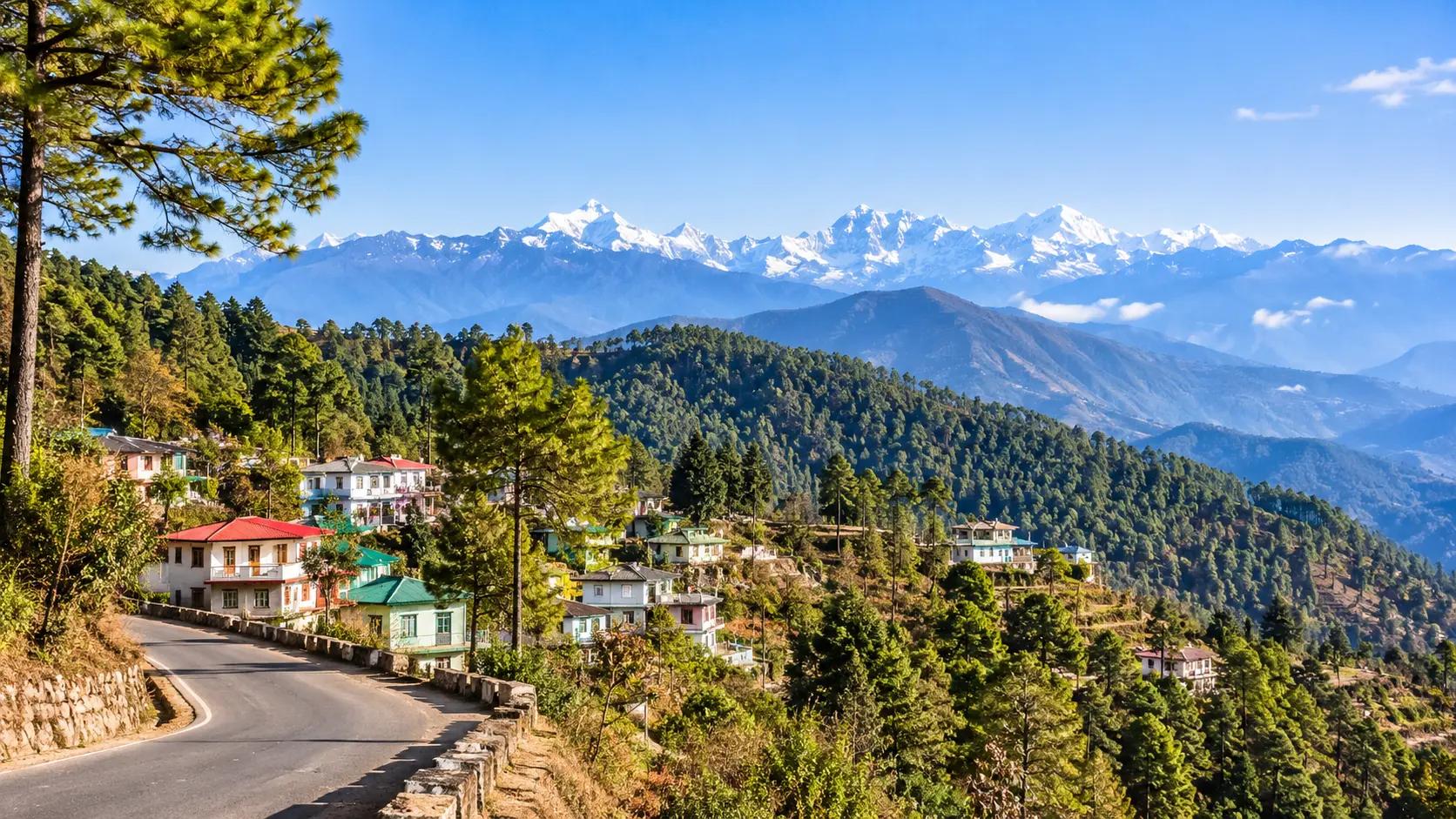
The name itself carries the shape of the land. "Chau" means four, and "kori" refers to corners —” the village sits in a bowl-like depression ringed on four sides by ridgelines, a geography that, in fact, is precisely why the views work so well. Perched at roughly 2,010 metres above sea level in the Pithoragarh district of the Kumaon Himalayas, Chaukori belongs to a part of Uttarakhand that gets far less footfall than Nainital or even Mukteshwar, despite arguably outclassing both on the sheer drama of its mountain panorama.
History left a quieter mark here than it did in the colonial hill stations further west. The British, however, did leave one significant legacy: tea. During the late nineteenth century, plantation officers identified the high-altitude slopes around Chaukori and neighbouring Berinag as suitable for tea cultivation, and the gardens they established still produce leaf today, making this one of the very few places in Kumaon where you can walk through working tea estates. Berinag tea, in fact, developed a quiet reputation of its own among connoisseurs, prized for a delicate, slightly smoky character that comes from the altitude and the cool nights.
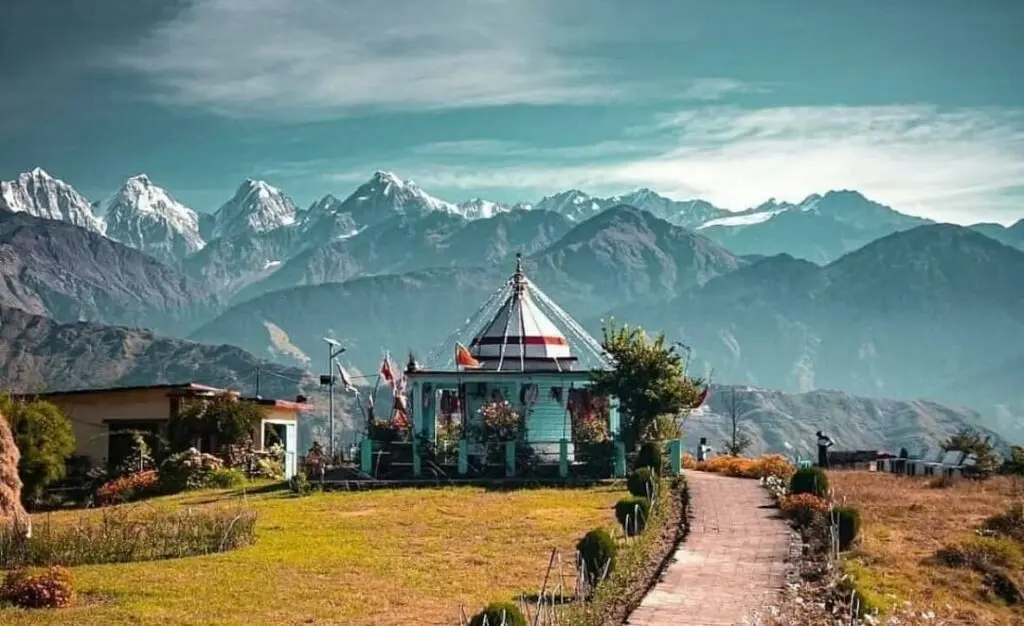
Geopolitically, this is borderland country. Pithoragarh district stretches towards the frontiers with Nepal and Tibet, and the deep cultural memory of trans-Himalayan trade routes —” salt, wool, and pilgrimage traffic moving between the plains and the high passes — still lingers in the temple architecture and the dialects you hear in roadside dhabas. The five peaks visible from Chaukori — Nanda Devi, Nanda Kot, Trishul, Chaukhamba, and the Panchachuli range — form part of this same Kumaon Himalayan wall, a natural border that has shaped trade, pilgrimage, and settlement patterns for over a thousand years.
| Essential Facts | Details |
|---|---|
|
Location |
Pithoragarh district, Kumaon Himalayas, Uttarakhand |
|
Altitude |
Approx. 2,010 metres above sea level |
|
Distance from Delhi |
Approx. 480-490 km by road (10-12 hours drive) |
|
Nearest railway station |
Kathgodam (approx. 180 km) |
|
Nearest airport |
Pantnagar (approx. 205-225 km) |
|
Famous for |
Tea gardens, Himalayan panorama, birdwatching, solitude |
|
Nearby attractions |
Berinag, Patal Bhuvaneshwar, Gangolihat, Munsiyari |
|
Best time to visit |
October to March for clear peak views; April to June for blooms |
Table 1 - Essential Facts
CHAUKORI IS THE TASTING MENU OF KUMAON €” A SMALL PLATE, BEAUTIFULLY ARRANGED, WITH NOT A SINGLE WASTED COURSE.
Route
Reaching Chaukori is, of course, half the experience — and depending on which route you choose, it can be either a smooth half-day drive through scenic Kumaon countryside or a long, winding haul that tests both your patience and your stomach. Most travellers from Delhi drive through Haldwani and Almora, a route that is well-surfaced for the most part but turns genuinely winding once you cross Almora towards Berinag. The stretch from Sheraghat through Dhaulchina, crossing roughly thirteen kilometres of road through the Binsar forest, is consistently described by drivers as one of the most scenic sections of the entire journey — though it is narrow in places, allowing only single-file traffic, so patience with oncoming vehicles is essential.
If you are coming from Munsiyari, be warned: this particular stretch has a reputation. Travellers report that the road condition between Munsiyari and Chaukori is considerably rougher than the Almora approach, narrowing further during the monsoon when landslides are common. One traveller recounted watching a vehicle overturn on this stretch directly ahead of them — a sobering reminder that this is genuinely mountain driving, not a scenic byway. If you are coming from that direction, build in extra time and avoid driving after dark. (places to visit in Munsiyari)
| Route | Approx. Distance | Road Condition Notes |
|---|---|---|
|
Delhi - Haldwani - Almora - Chaukori |
480-490 km |
Mostly good highway to Almora; narrow, winding hill road beyond |
|
Kathgodam - Almora - Chaukori |
approx. 180-200 km |
Well-surfaced via Almora-Sheraghat-Berinag, scenic Binsar forest stretch |
|
Pantnagar Airport - Chaukori |
205-225 km, approx. 5 hrs |
Taxi-dependent; book in advance, limited availability |
|
Munsiyari - Chaukori |
approx. 75-90 km |
Rougher surface, narrows in monsoon, landslide-prone, avoid night driving |
|
Tanakpur - Chaukori (via Bareilly) |
varies |
Locally recommended as a lower-cost taxi entry point |
Table2 - Route
What to Expect
Timing your visit around the weather here is less about avoiding rain and more about whether the mountains will actƒually show themselves. From October through March, the air is at its clearest and the five-peak panorama is at its sharpest — though this is also when temperatures drop hard after sunset, and a room heater (usually available for an additional charge of around Rs. 200 per night) becomes less a luxury and more a necessity. April through June brings rhododendron blooms across the valley, turning entire hillsides red, though haze can occasionally soften the mountain views during the hottest part of the day. The monsoon months, July through September, are when Chaukori is at its greenest and quietest, but also when road conditions on the approach routes deteriorate fastest, particularly on the Munsiyari side.
| Season | Months | What to Expect |
|---|---|---|
|
Winter / Clear Skies |
October - March |
Sharpest mountain views, cold nights, occasional snow at higher points, room heaters essential |
|
Spring / Bloom |
April - June |
Rhododendrons in flower, pleasant days, occasional haze affecting distant peak visibility |
|
Monsoon / Green Season |
July - September |
Lush landscapes, fewer tourists, but road conditions worsen on approach routes, especially Munsiyari side |
Table3 - What to Expect
THE TEA HERE TASTES LIKE THE LAND ITSELF €” NOT THE BOLD, BRASH FLAVOUR OF A MASS-MARKET BAR OF CHOCOLATE, BUT THE QUIET, SMOKY DEPTH OF SOMETHING HANDMADE.
What to do in Chaukori
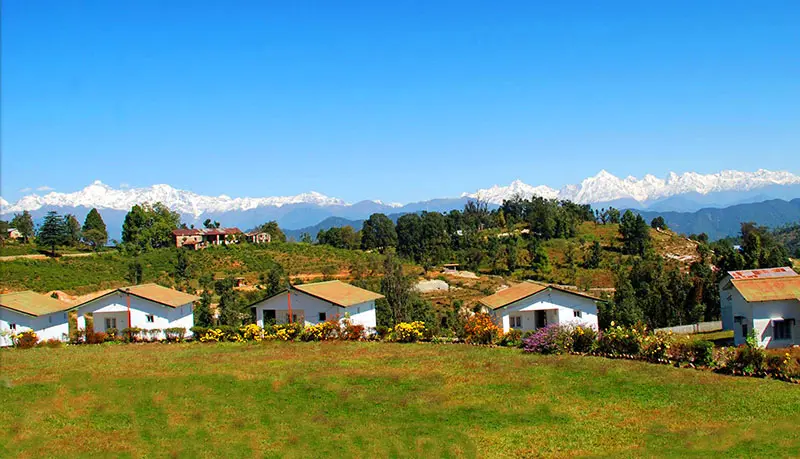
Watch the sunrise from the KMVN watch tower... this is, without question, the single experience that defines a Chaukori trip. The rest house grounds include a tall watch tower built specifically for the purpose, and on a clear morning the five-peak panorama — Nanda Devi, Nanda Kot, Trishul, Chaukhamba, and Panchachuli — lights up in sequence as the sun climbs. Arrive at the tower at least fifteen minutes before sunrise; the light changes faster than you expect, and missing the first blush means missing the best of it.
Walk through the tea gardens of Berinag... about ten kilometres from Chaukori, Berinag sits at a slightly lower elevation and is home to the tea estates that gave this region its quiet fame. A walk through the gardens, with their neat rows of glossy green bushes running down the slope, is unhurried and genuinely meditative — and if you are lucky, someone at the estate may walk you through the plucking and processing, ending, as it should, with a cup of the actual tea.
Descend into Patal Bhuvaneshwar cave temple... roughly 38 kilometres away, this limestone cave system is one of the more genuinely strange experiences on offer in Kumaon. The cave runs some 160 metres in length and descends about 90 feet from its entrance, and inside, naturally formed stalactites and stalagmites have, over centuries, been assigned the shapes of various deities — Ganesha's head, Shiva's matted locks, the mythical Brahma-Kamala flower. Local legend holds that the Pandava brothers sheltered here during their exile. The descent is narrow in places and not suitable for anyone with mobility concerns or claustrophobia, but for those who can manage it, it is unforgettable.
Go birdwatching at dawn... Chaukori's forests and meadows are genuinely excellent for birding, and you do not need to go far — the dawn chorus often starts within earshot of wherever you are staying. Keep an eye and ear out for the Himalayan Monal (Uttarakhand's state bird, with iridescent plumage that flashes blue, green, and copper in the light), the Koklass Pheasant, the Blue Whistling Thrush, the red-billed Blue Magpie, woodpeckers, and Black-throated Tits. Early morning, before the mist lifts fully, is consistently the best window.
Take the Hanging Rocks walk... a gentle, roughly one-kilometre trail through oak forest, grassland, and tea bushes, ending at a viewpoint that frames the snow peaks beautifully. This is an easy walk suitable for almost anyone, and the kind of low-key activity that fills an unhurried afternoon perfectly.
Visit Gangolihat and the Mahakali Temple... about 35 kilometres from Chaukori, Gangolihat is home to an ancient temple dedicated to Goddess Kali that draws devotees from across the region. The drive there winds through forest and village landscapes, and it pairs naturally with a visit to Patal Bhuvaneshwar as a single day trip, depending on how the road conditions are running that day.
| Activity / Site | Distance from Chaukori | Notes |
|---|---|---|
|
KMVN Watch Tower sunrise |
On-site |
Free for guests; arrive 15 min before sunrise |
|
Berinag tea gardens |
approx. 10 km |
Walkable estate visits, tea tasting possible |
|
Patal Bhuvaneshwar cave |
approx. 37-38 km |
Entry fee applies; narrow descent, not for everyone |
|
Gangolihat / Mahakali Temple |
approx. 35 km |
Combine with Patal Bhuvaneshwar as a day trip |
|
Hanging Rocks walk |
approx. 1 km trail |
Easy, suitable for most fitness levels |
|
Musk Deer Park |
approx. 2 km plus 1 km uphill trek |
Modest wildlife viewing, manage expectations |
|
Jayanti Temple |
approx. 2 km |
Small temple dedicated to Goddess Jayanti |
Table4 - Activity
DO NOT TREAT CHAUKORI LIKE A BOX OF ASSORTED CHOCOLATES TO BE DEVOURED IN ONE SITTING €” IT REWARDS THE TRAVELLER WHO TAKES ONE PIECE AT A TIME.
Not What To Do
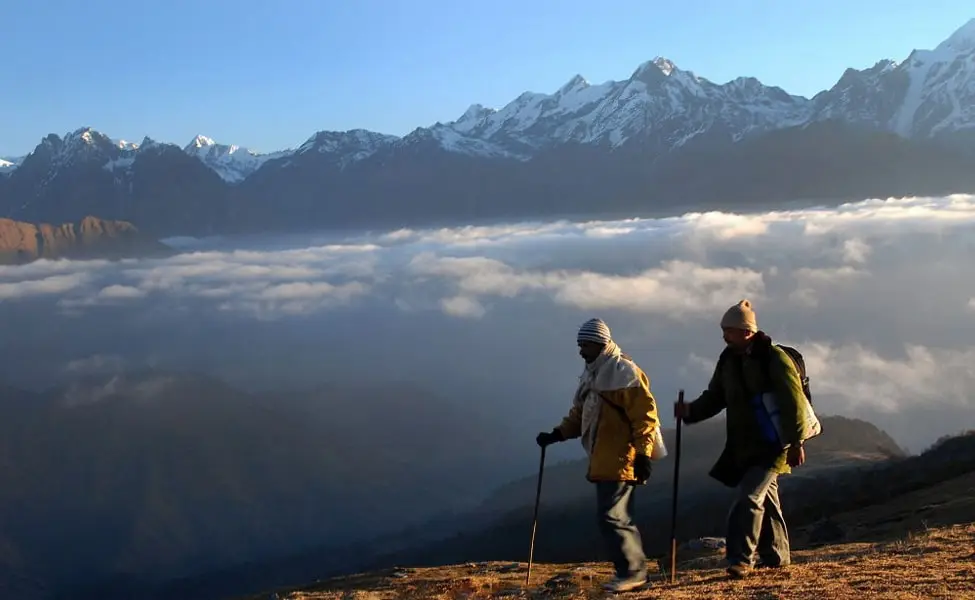
Do not expect a wide choice of cuisines... this is a small hill town, and food options are genuinely limited. The KMVN rest house and a handful of other properties offer basic North Indian, Chinese, and South Indian dishes, but do not expect variety or speed. Dhabas in town are your best bet for something simple and quick, and Kumaoni thali, where available, is worth seeking out — it is the most honest meal you will get here.
Do not drive the Munsiyari road after dark... the stretch between Munsiyari and Chaukori narrows considerably, is prone to landslides in the monsoon, and has a track record of serious accidents on blind curves. If you must take this route, do it in daylight and build in generous time buffers.
Do not assume mobile signal will be reliable... connectivity in Chaukori is patchy at best, with BSNL generally performing better than private networks at this altitude. Inform family of your itinerary in advance and do not rely on being reachable throughout your stay; treat this as part of the appeal rather than an inconvenience.
Do not skip the room heater in winter... even when daytime temperatures feel mild, nights between October and March drop sharply. Most properties charge a modest additional fee for a heater — pay it. The alternative is a genuinely uncomfortable night.
Do not arrive without a confirmed booking in peak season... Chaukori's accommodation options are limited in number, and while it never gets Nainital-levels of crowded, the few good properties do fill up around long weekends and the clear-sky winter months. Book ahead, particularly for the KMVN property, which is consistently the most sought-after.
| Practical Note | Detail |
|---|---|
|
Permits required |
None for Indian or foreign nationals to visit Chaukori itself (verify locally for any onward travel near border areas) |
|
Mobile network |
BSNL generally most reliable; private carriers patchy |
|
ATMs |
Limited; last reliable ATMs typically in Berinag or Almora — carry sufficient cash |
|
Fuel |
Last major fuel stations on the Almora side before Chaukori; top up in advance |
|
Medical facilities |
Basic only; nearest comprehensive care in Pithoragarh or Almora |
|
Road closures |
Monsoon landslides can close the Munsiyari approach temporarily; check local advisories |
Table5 - Practical Note
Accommodation in Chaukori
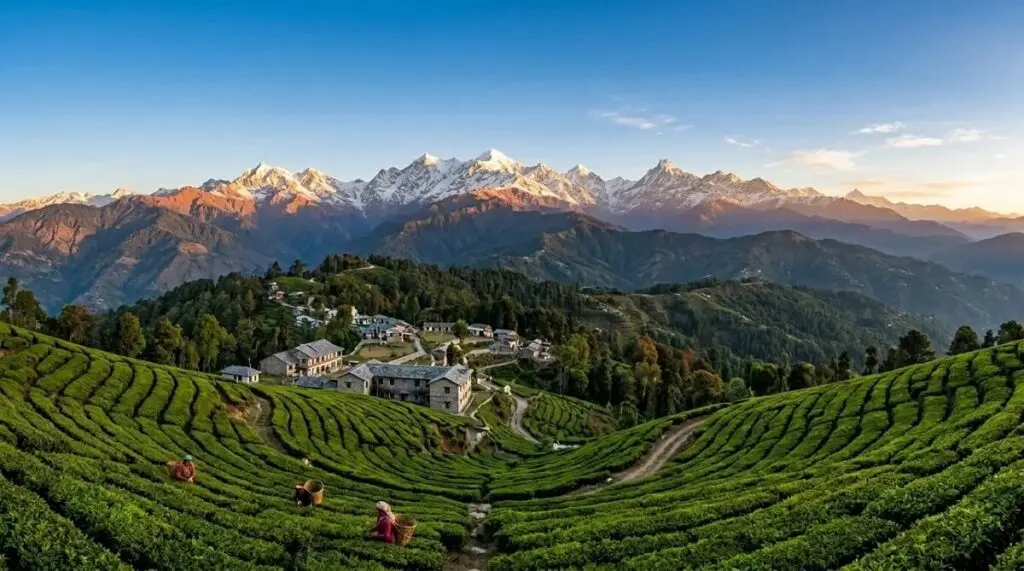
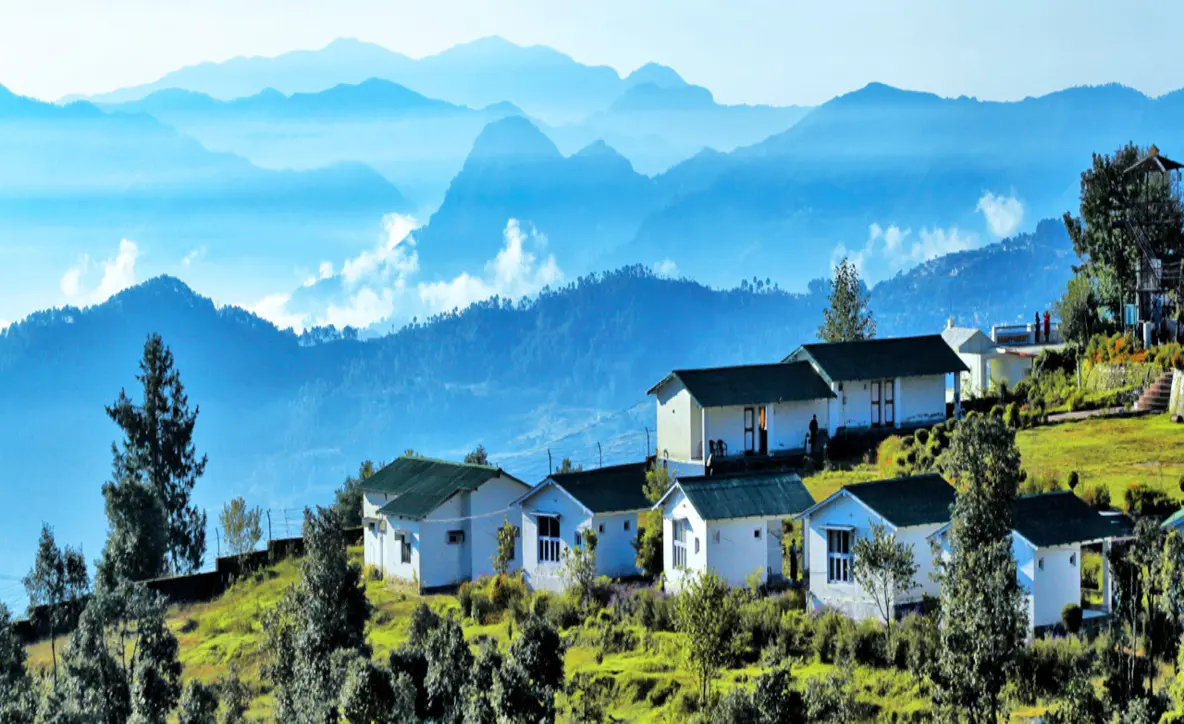
Accommodation in Chaukori is unpretentious, and the honest truth is that your choice of property will shape your trip almost as much as the weather does. The KMVN Tourist Rest House is, by a clear margin, the most sought-after option, and for good reason — it occupies the best-located plot in town, with the watch tower, sweeping lawns, and rooms with private balconies that open directly onto the five-peak panorama. Reviewers consistently rate the second-floor rooms and the Super Deluxe corner rooms as the best for views, and the property includes complimentary buffet breakfast. That said, it is a government-run property, and the trade-offs are exactly what you would expect: limited menu, occasionally tired bathroom fittings, and food that is described, charitably, as basic but homely. Ojaswi Resort sits just beside KMVN and is mentioned by several reviewers as a solid alternative when KMVN is full, though it does not share the same unobstructed view.
For a more personal experience, homestays scattered around the village — such as those run by local families on hilltop plots with their own helipads and grasslands — offer farm-fresh organic meals, traditional Kumaoni cooking (do try the jholi and bhang ki chutney if offered), and a level of warmth that government rest houses simply cannot replicate. Several of these properties run on 24-hour power backup and offer activities like bonfires, nature walks, and even basic adventure setups such as rappelling or zip-lining for younger guests.
| Property Type | Notes | Best For |
|---|---|---|
|
KMVN Tourist Rest House |
Best location and views; basic food, ageing fittings in places; book ahead |
View-focused stays, sunrise access |
|
Ojaswi Resort |
Adjacent to KMVN, good fallback option |
Travellers who can't get KMVN bookings |
|
Local homestays (e.g. hilltop family-run) |
24-hr power backup, organic farm meals, bonfires, library |
Slower-paced, immersive stays, families |
|
Berinag-area guesthouses |
Closer to tea gardens, slightly lower altitude |
Tea garden walks, milder winter nights |
Table6 - Property Type
Chaukori's appeal rests entirely on the fact that it has not yet been overrun, and keeping it that way is, in some sense, every visitor's quiet responsibility. Carry a refillable bottle — a LifeStraw is genuinely useful here, given that bottled water adds to a waste problem this small village has no real infrastructure to handle — and avoid single-use plastics wherever you can. When it comes to spending, favour the homestays and local dhabas over anything that funnels money out of the village; the difference between staying in a family-run homestay and a chain property is, quite literally, the difference between your money staying in Chaukori or leaving it. At religious sites such as Patal Bhuvaneshwar and the Mahakali Temple in Gangolihat, dress modestly, remove footwear where indicated, and ask before photographing anyone at prayer — a simple nod or smile usually gets you a yes, and a refusal should always be respected without argument. And finally, if you are birdwatching, keep a respectful distance and avoid playback calls to lure species closer; the Himalayan Monal and Koklass Pheasant are shy birds, and the quiet that makes Chaukori special is the same quiet that lets them be seen at all.
Before you go...
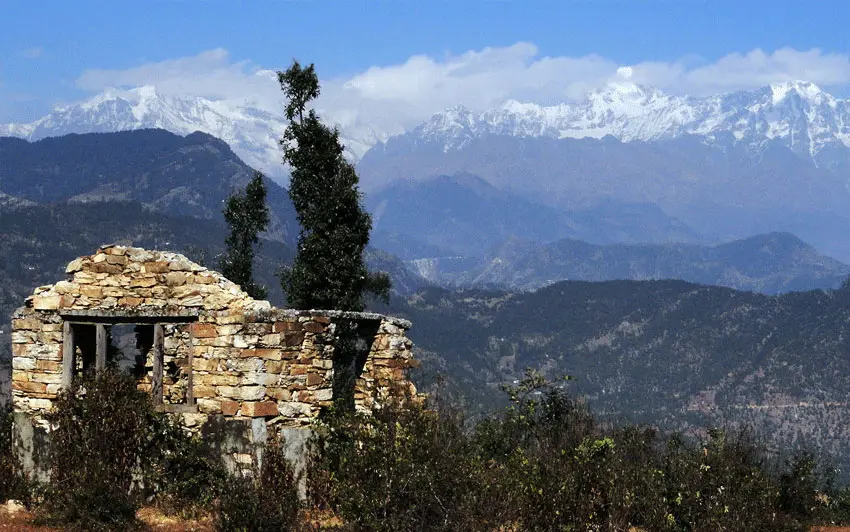
Before you go... pack warm layers regardless of season — evenings here are cooler than the daytime sun suggests — along with comfortable walking shoes, a torch for power-cut evenings, and any medication you might need, since pharmacies are sparse. We at BizareXpedition have routed several Kumaon itineraries through Chaukori as a two-night halt between Almora and Munsiyari, and it consistently turns out to be the part of the trip that travellers remember most fondly — not because anything dramatic happens, but because, for once, nothing needs to.
| Before You Go - Checklist | Detail |
|---|---|
|
Book accommodation in advance |
Especially KMVN TRH during winter clear-sky season |
|
Carry cash |
ATMs limited beyond Berinag/Almora |
|
Pack warm layers + heater budget |
Approx. Rs. 200/night for room heater in winter |
|
Confirm road conditions |
Especially for Munsiyari approach in monsoon |
|
Carry a refillable water bottle |
LifeStraw or similar; minimal waste infrastructure locally |
|
Binoculars for birding |
Best at dawn around forest edges and meadows |
Table7 - Before You Go - Checklist
| Budget Category | Approx. Cost (per person/day) |
|---|---|
|
Budget homestay/guesthouse with meals |
Rs. 1,500 - 2,500 |
|
KMVN TRH (room only, breakfast incl.) |
Rs. 1,000 - 2,000 depending on room |
|
Room heater (additional) |
Rs. 200 per night |
|
Local taxi (day trip to Patal Bhuvaneshwar/Gangolihat) |
Rs. 2,500 - 4,000 for vehicle |
|
Meals at local dhabas |
Rs. 150 - 300 per meal |
|
Taxi from Kathgodam to Chaukori |
Rs. 3,500 - 4,500 (full vehicle) or approx. Rs. 500/person shared |
Table8 - Budget Category
Some places ask to be conquered. Chaukori only asks that you wake up early enough to watch it happen.
Best Selling Tour Packages
Explore other exciting options for your next adventure!