

Karan
Writer
Updated On - Jun 04, 2026
8 min
Published On - Jan 24, 2026
What are the best Places you can visit during Chardham Yatra
Planning a Chardham Yatra is a monumental task. To make the most of Chardham Yatra sightseeing, this guide highlights the best places to visit during Chardham Yatra that many itineraries often overlook. While most pilgrims rightfully focus on the four main temples, the journey’s true magic often lies in the sacred and scenic spots found along the route—river confluences, ancient caves, and breathtaking viewpoints that many travelers miss.
Planning a Chardham Yatra goes beyond temple darshan—it’s about experiencing the sacred journey itself. This guide covers the best places to visit during Chardham Yatra, including spiritual stops, scenic viewpoints, and sacred river confluences often missed by pilgrims. Following the traditional west-to-east route, it helps you build a well-paced Chardham itinerary with meaningful sightseeing. Perfect for pilgrims seeking a deeper, calmer, and more fulfilling Chardham experience.
What are the best Places you can visit during Chardham Yatra
Planning a Chardham Yatra is a monumental task. To make the most of Chardham Yatra sightseeing, this guide highlights the best places to visit during Chardham Yatra that many itineraries often overlook. While most pilgrims rightfully focus on the four main temples, the journey’s true magic often lies in the sacred and scenic spots found along the route—river confluences, ancient caves, and breathtaking viewpoints that many travelers miss.
If you’re researching Chardham Yatra places to visit, remember that this sacred journey prioritizes sequence over spontaneity. For centuries, tradition has followed a specific west-to-east pilgrimage route, starting at the source of the Yamuna River and moving sequentially through the Garhwal Himalayas. The four holy destinations, or Dhams, are visited in this precise order:
Yamunotri
Gangotri
Kedarnath
Badrinath
This guide maps out the best places to visit during Chardham Yatra, including key Char Dham road trip attractions by location. It helps create a clear Chardham Yatra itinerary with sightseeing, ensuring pilgrims can experience important spiritual and scenic stops without rushing. It also highlights meaningful places to visit during Char Dham Yatra, helping you choose the right Char Dham sightseeing places for a well-paced and fulfilling journey.
Gateway and Base Cities
Rishikesh
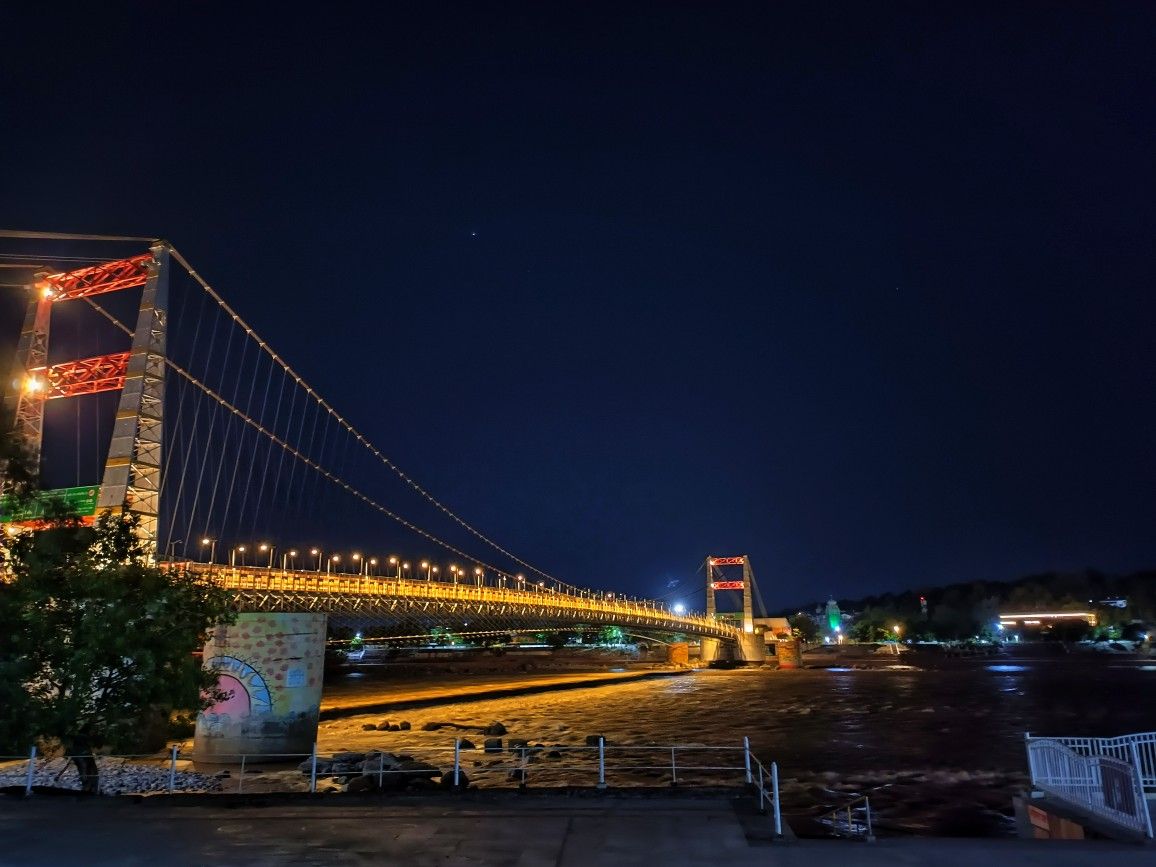
Known as the Yoga capital of the World. You can experience the Ganga aarti of Trevine Ghat other than this you can try adventure activities while returning back after darshan. Rishikesh is a premier destination for white river rafting, adventure sports, and the annual International Yoga Festival. Situated along the Ganges River, it is a primary starting point for the Char Dham Yatra and hosts essential offline registration centres for pilgrims
Best Time to Visit:
February to May and September to November
Ideal weather for sightseeing, yoga retreats, and river activities
Rafting is usually closed during peak monsoon months (July–August)
Distance:
Haridwar to Rishikesh: ~20 km
Delhi to Rishikesh: ~240 km
Rishikesh to Yamunotri (Janki Chatti): ~220 km
How to Reach:
By Train: Rishikesh railway station connects to Haridwar; major long-distance trains stop at Haridwar
By Road: Excellent road connectivity with Delhi, Haridwar, Dehradun, and other hill towns
By Air: Nearest airport is Jolly Grant Airport, Dehradun (20 km)
Haridwar
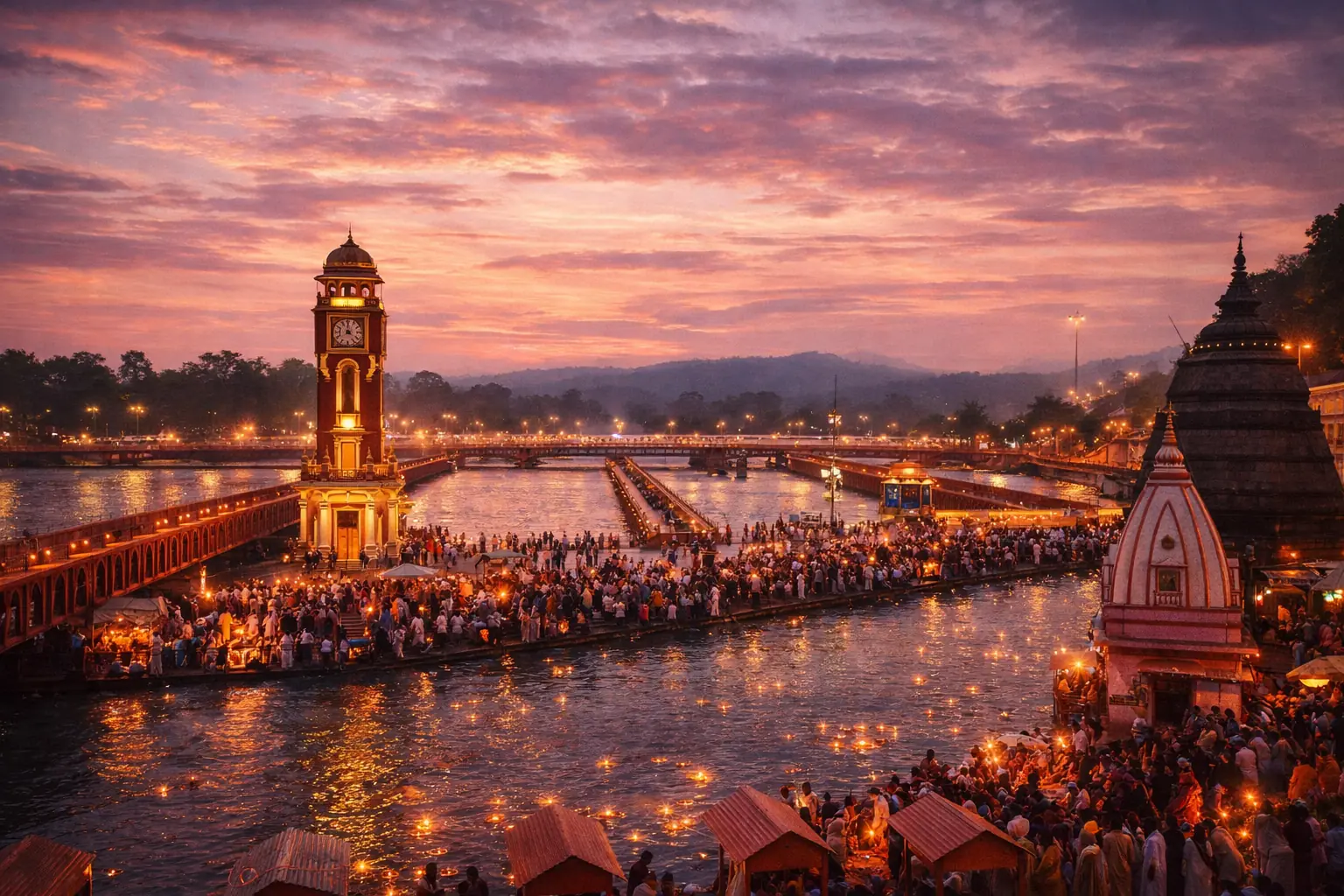
In Haridwar, dipping in the Har-ki-Pauri and witnessing divine Ganga aarti is the best thing you can do in Haridwar even if you are in Haridwar for very less time. Other than this you can visit Mansa devi Temple which is around 1-2 km from Har-ki-Pauri, Chandi Devi, Maaya Devi temple, Dakhash Mandir Kankhal (lord Shiva’s in-law house, where Mata Sati took her life).
Best Time to Visit:
February to June and September to November
Pleasant weather and ideal for temple visits and walking around ghats
Avoid peak summer afternoons (May–June) and heavy monsoon days (July–August)
Distance:
Delhi to Haridwar: ~220 km
Dehradun to Haridwar: ~55 km
Haridwar to Rishikesh: ~20 km
How to Reach:
By Train: Haridwar Junction is a major railhead, well connected to Delhi, Mumbai, Kolkata, Ahmedabad, and other cities
By Road: Regular buses and taxis from Delhi, Dehradun, Chandigarh, and Rishikesh
By Air: Nearest airport is Jolly Grant Airport, Dehradun (≈40 km)
Yanumotri Temple
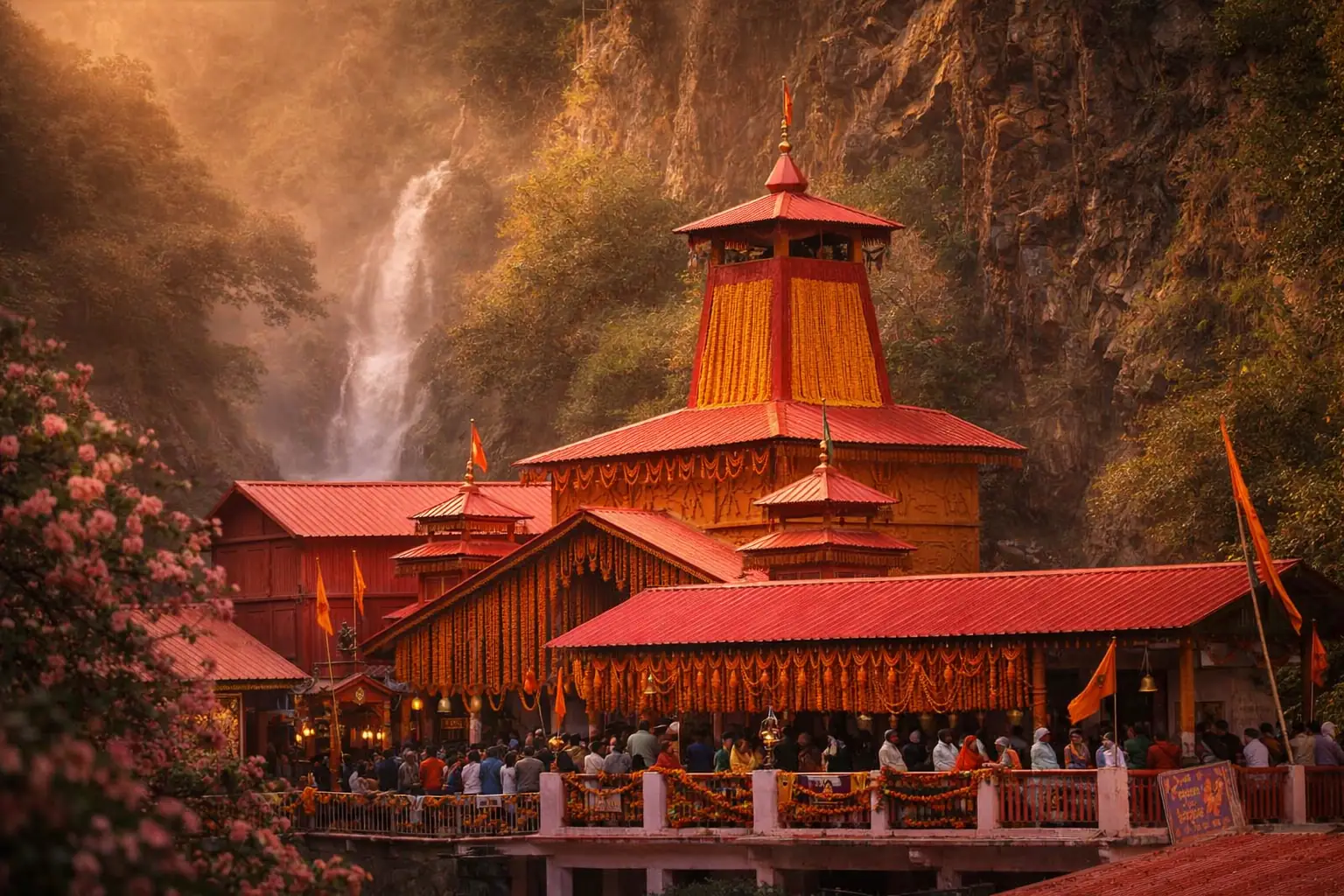
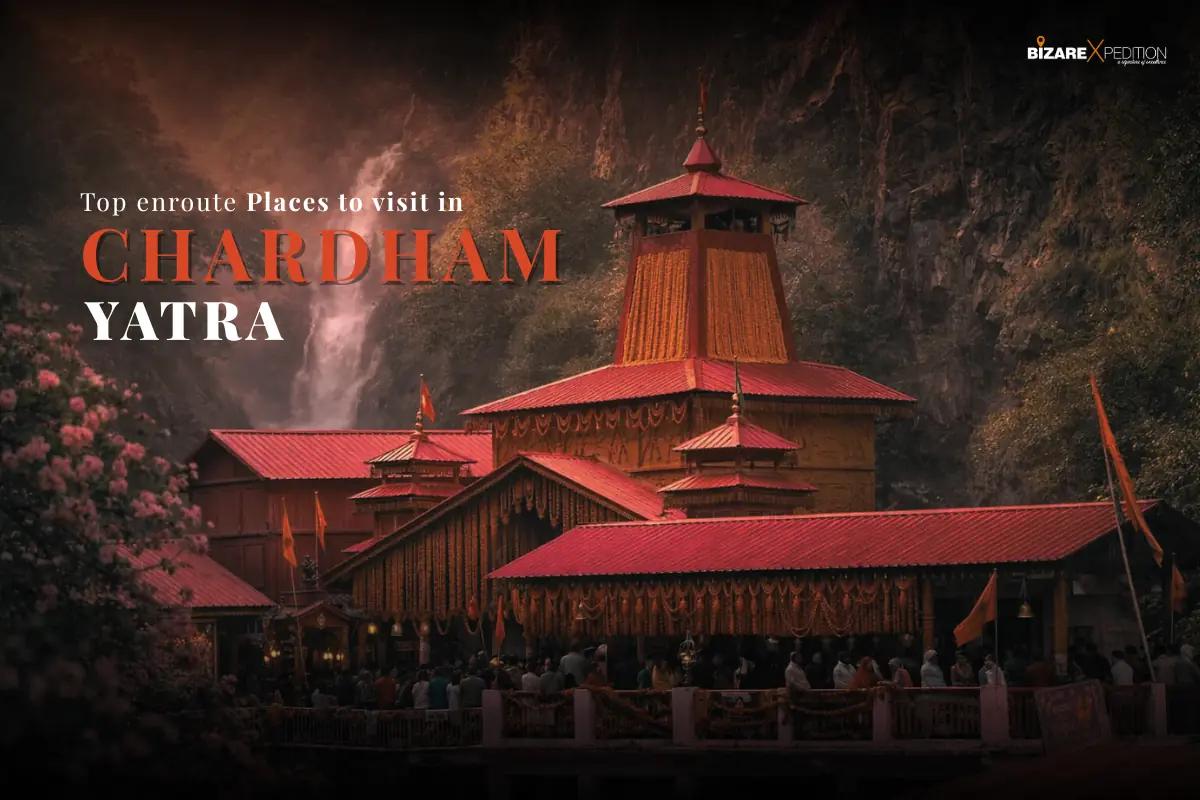
Your journey to the Yamunotri temple begins with a trek from the small town of Janki Chatti. This bustling hub is the starting point for the 6-kilometer walk and a crucial base camp where pilgrims stay and gather supplies. As one of the char dham tourist places, the approach offers simple comforts and local ritual experiences.
How to Reach & Distance: Yamunotri Temple is reached via a 6 km trek from Janki Chatti, the last motorable point.
Lakhamandal Temple
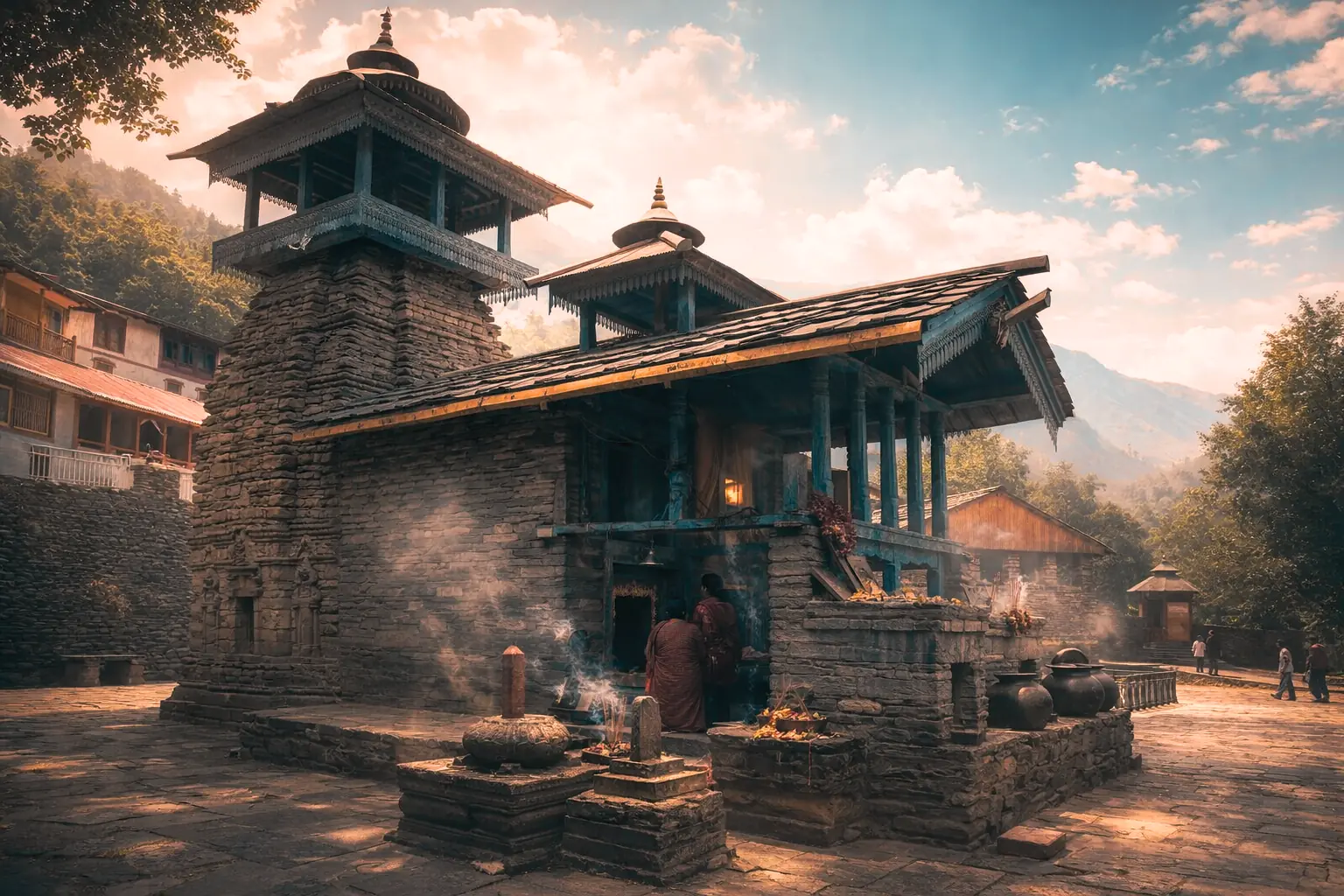
Situated about 122 km from Dehradun, this ancient 6th-century Shiva temple is linked to the Mahabharata. It is believed to be the site of the Lakshagriha (House of Lac), where the Pandavas escaped a fire through a hidden tunnel. While traveling from Dehradun to Yamunotri, the temple is located about 4 km off the main route to Yamunotri. If you wish to include it in your itinerary, you need to inform your travel partner in advance.
How to Reach & Distance: Dehradun to Lakhamandal ~122 km
Kharsali Village
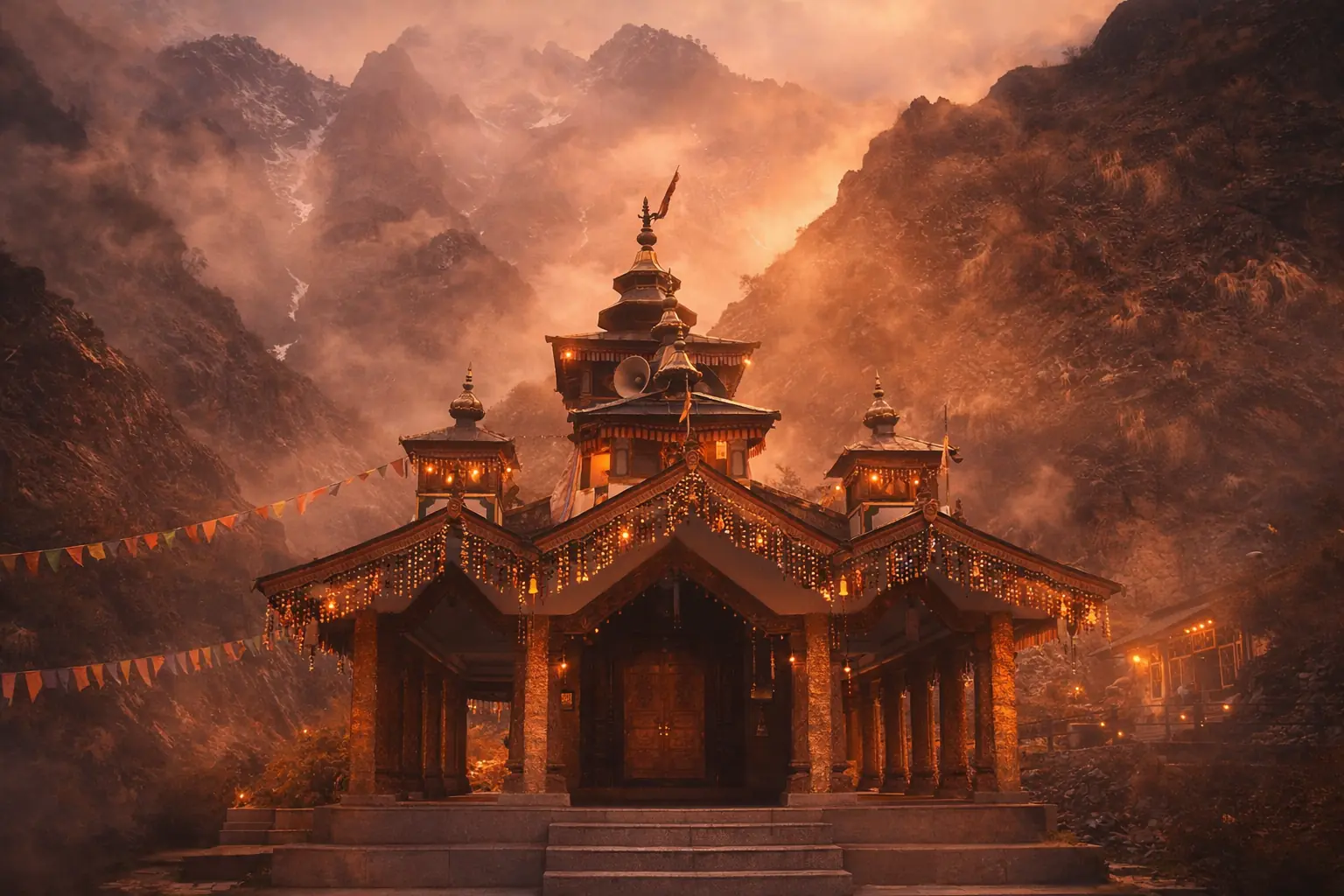
Known as the winter home of Goddess Yamuna, this village houses the deity when the main temple closes due to snow. It features ancient heritage homes and the Shani Dev Temple, built in a traditional Himalayan wooden style.
How to Reach & Distance: Yamunotri Temple to Kharsali ~1 km Easily reachable by foot.
Divya Shila
Just before the main temple entrance, you will encounter the Divya Shila , a dark, sacred rock pillar. According to tradition, this is the first place you should offer prayers. Worshipping this shila (sacred rock) is the essential first step of the pilgrimage at Yamunotri, performed even before visiting the main shrine.
Distance: Located just before the Yamunotri Temple entrance
Surya Kund
Adjacent to the temple, you'll find several thermal springs, but the most important is the Surya Kund . This kund (hot spring) is so hot that pilgrims often cook rice and potatoes in a cloth bag by dipping it into the steaming water. This cooked food becomes a blessed offering known as prasad, which you can take with you.
Distance - Adjacent to Yamunotri Temple
Mukhaba Village
The primary pilgrimage destination, this temple is dedicated to Goddess Ganga. During the winter months, when the main temple is closed due to heavy snow, the idol is moved to its winter seat in Mukhba Village.
How to Reach & Distance: Uttarkashi to Gangotri ~100 km by road fully motorable and accessible
Harsil Valley
Tucked away before Gangotri, this valley is famous for its apple orchards, pine forests, and peaceful atmosphere. It served as the filming location for the movie Ram Teri Ganga Maili.
Distance: Uttarkashi to Harsil 75 km, enroute to Gangotri dham
Gangotri Temple
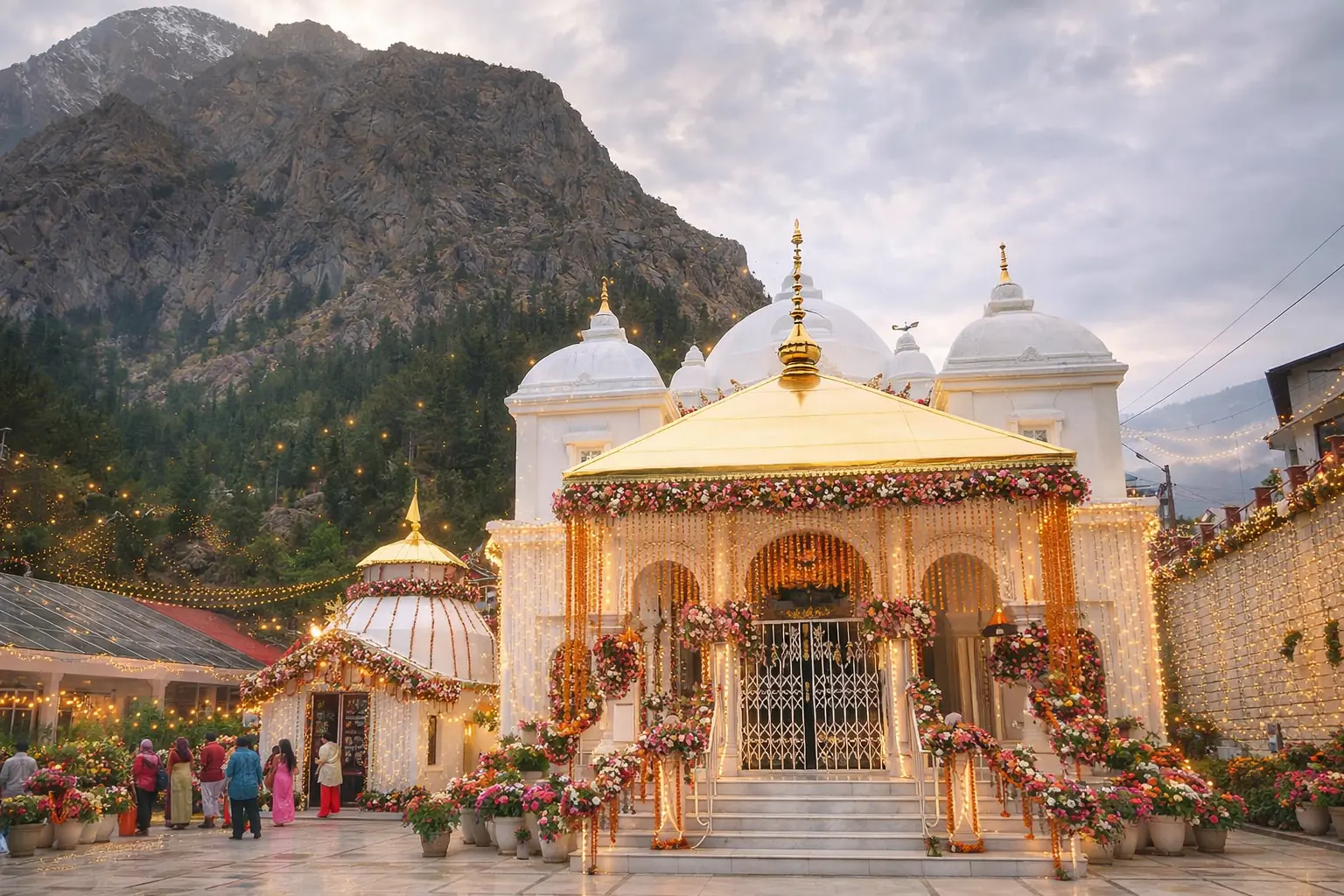
This stunning white granite temple, perched on the banks of the Bhagirathi river, is far more accessible and sits amidst a small, vibrant town. According to legend, Goddess Ganga descended from heaven to Earth here, making it one of the holiest sites in Hinduism. Among the places to visit during char dham yatra, Gangotri blends accessibility with deep mythic resonance.
How to Reach & Distance: Gangotri to Gaumukh 19 km trek via Chirbasa and Bhojbasa.
Gaumukh
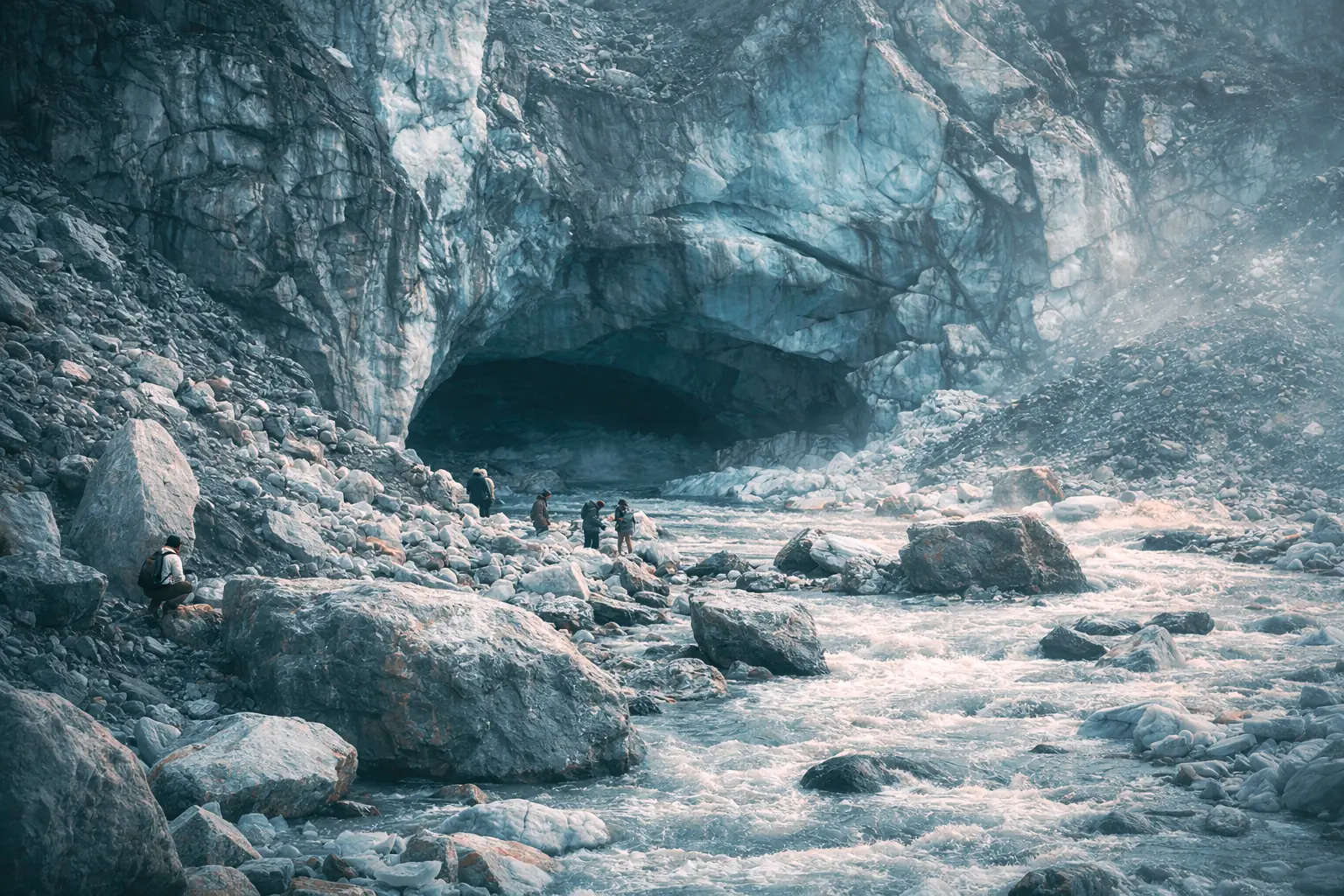
Goddess Ganga descended from heaven to Earth here, making it one of the holiest sites in Hinduism. Among the places to visit during char dham yatra, Gangotri blends accessibility with deep mythic resonance. A common point of confusion for visitors is the river's actual origin. While the temple marks the spiritual source, the Ganga's physical starting point is a challenging 18-kilometer trek away at Gaumukh, the massive mouth of a glacier. For most pilgrims, the journey to Gangotri temple is the primary destination; the Gaumukh trek is a separate undertaking for serious trekkers.
Distance - Gangotri to Gaumukh 19 km trek via Chirbasa and Bhojbasa (one-way)
Jalmagna Shivling
Right by the temple, you can see the Jalmagna Shivling, a natural rock submerged in the river that is only visible during winter when water levels recede. This spot is believed to be where Lord Shiva caught the powerful river in his matted hair to soften her descent to Earth, a foundational story connecting the site to the divine.
For a truly moving experience, take a holy dip in the icy waters of the Bhagirathi and stay for the evening Aarti, a fire ceremony on the riverbanks. The rhythmic chants and glowing lamps reflecting on the water create a powerful atmosphere, perfectly capping off your visit to the home of Mother Ganga.
Distance - Located near the Gangotri Temple, on the banks of the Bhagirathi River.
Guptkashi
The journey from Gangotri to the Kedarnath valley is a long but spiritually rich passage through the Mandakini river valley. Your main base in this region will be Guptkashi, whose name translates to "Hidden Kashi." Legend says this is where Lord Shiva hid from the Pandavas before revealing himself at Kedarnath. Today, this bustling town is the most important hub before the final push, offering a place to rest, acclimatize, and visit its own ancient Vishwanath Temple.
Distance - enroute to Gaurikund
Triyuginarayan Temple
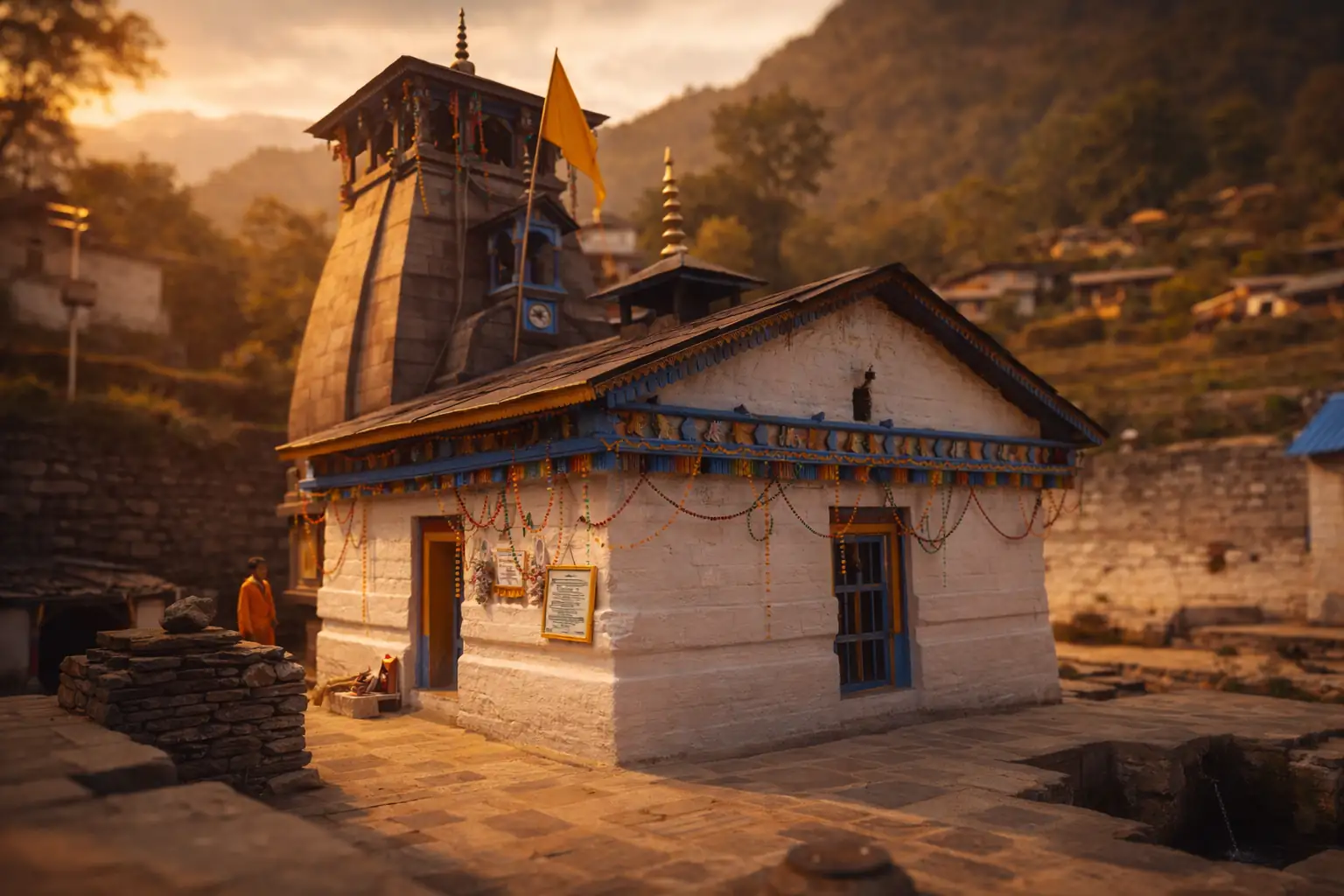
A short detour from the main route leads to a site of immense mythological importance: the Triyuginarayan Temple. This quiet, traditional temple is believed to be the exact spot where Lord Shiva and Goddess Parvati were married, with Lord Vishnu officiating the ceremony. Together, Guptkashi and Triyuginarayan are char dham places to visit that add context and calm between long drives.
The temple's unique feature is its Akhand Dhuni, an eternal flame burning in a hearth out front. Devotees believe this fire has burned continuously since the divine wedding, acting as the prime witness. Seeing the flame and feeling the deep tranquility of the spot connects you directly to one of Hinduism's most beloved stories.
Distance - 13.7 km from Kedarnath Temple
Bhairav Nath Temple
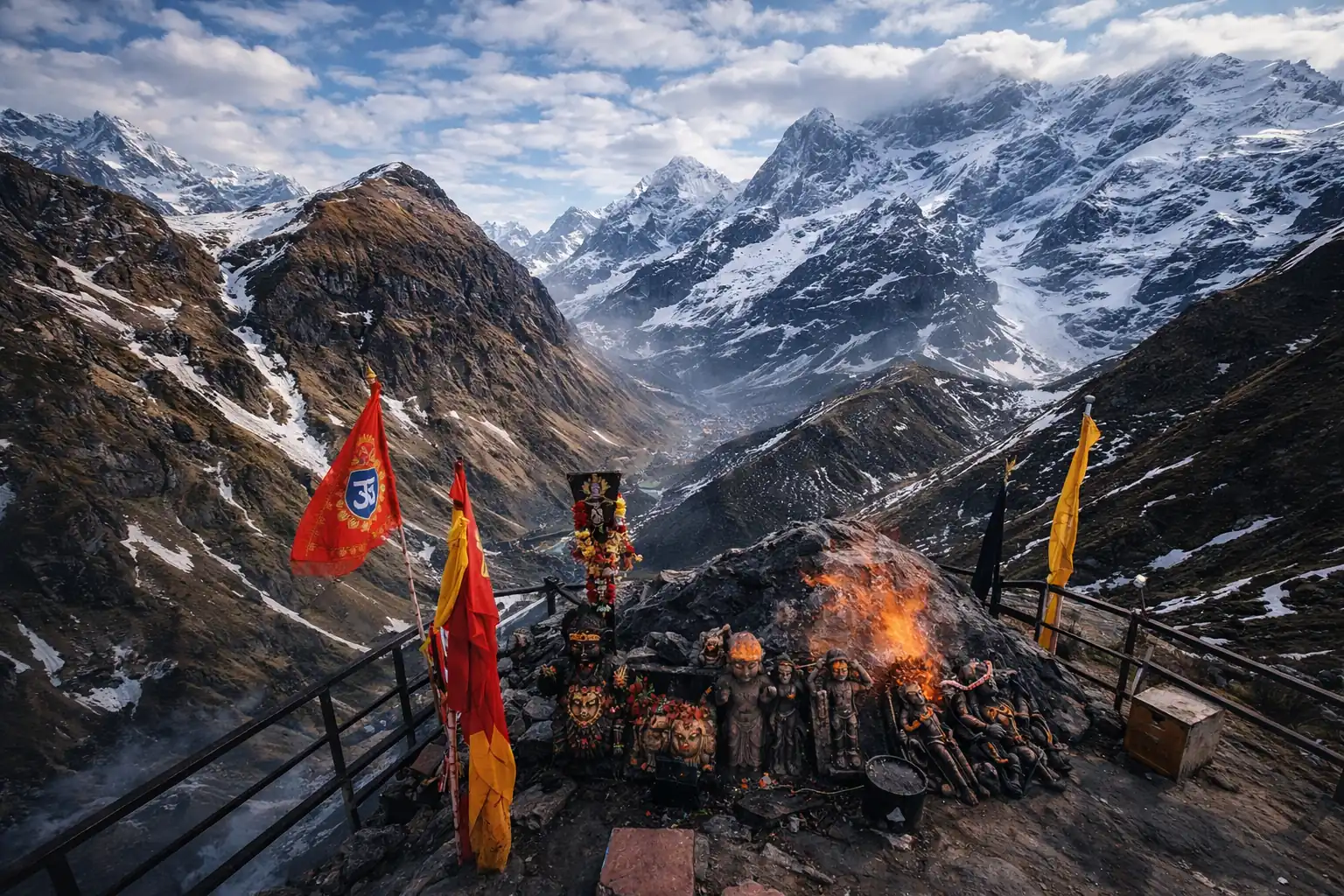
A short, steep climb from the main temple leads to the Bhairav Nath Temple. According to tradition, Lord Bhairav---a fierce form of Shiva---is the protector of the entire Kedarnath valley. It is believed that when the temple closes for the harsh winter, Bhairav stands guard over the sacred land. For this reason, many pilgrims feel their visit is only complete after paying respects here and taking in the panoramic views.
Distance - 1.5 km trek from the temple
Chorabari Tal
Just behind the temple lies Gandhi Sarovar, a small lake (sarovar) once known as Chorabari Tal. This tranquil spot is now a place of poignant remembrance, as the bursting of this lake was the source of the catastrophic 2013 floods. Visiting it offers a moment to reflect on nature's immense power and the valley's resilience. Collectively, they rank among the most evocative places to see in chardham yatra around Kedarnath.
Distance - 3 km (1–2 hours) trek.
Vasuki Tal
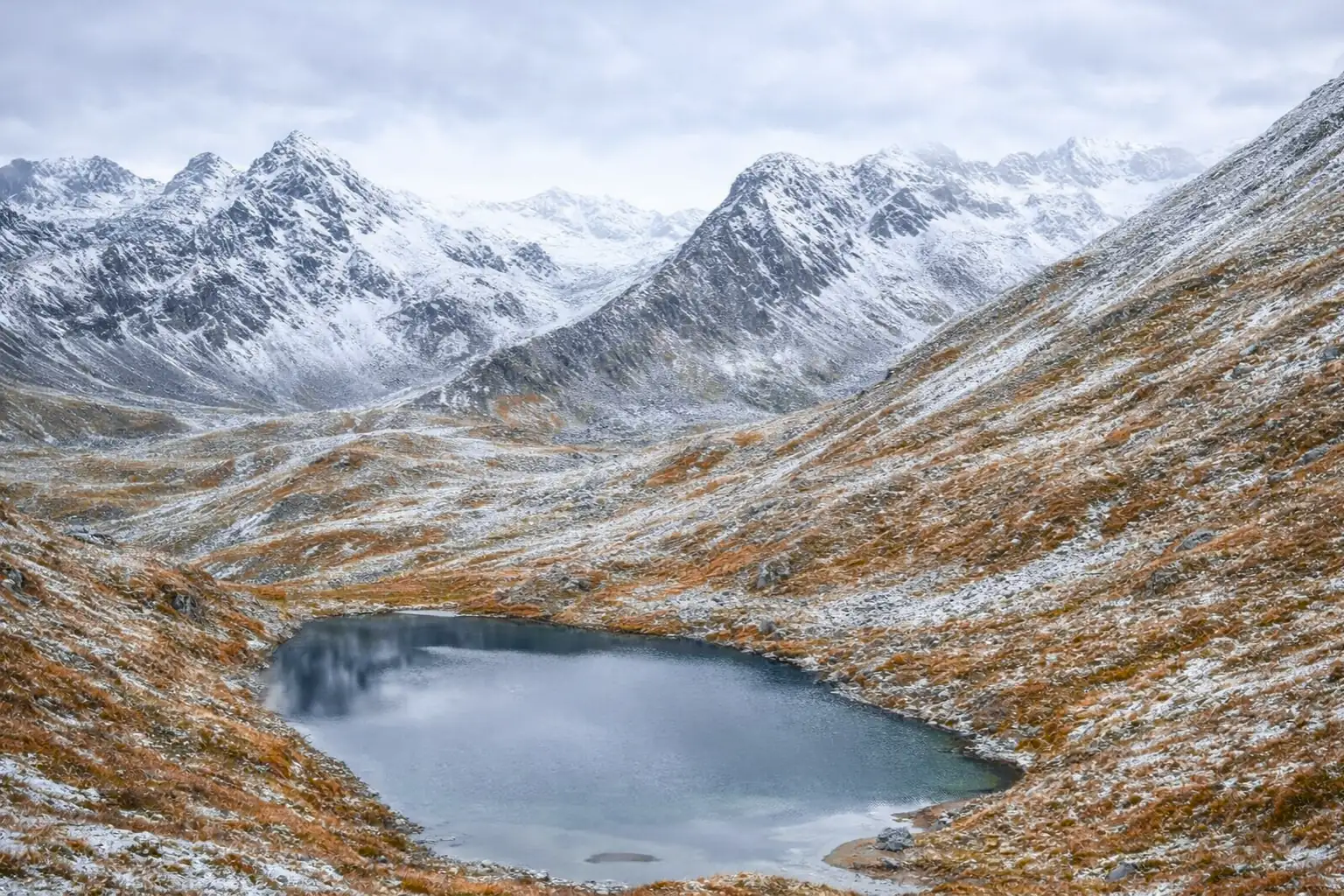
Vasuki Tal is one of the natural wonders around Kedarnath Dham, located at an altitude of 4,150 meters (13,615 ft). The lake is unique because it is home to the rare and sacred Brahma kamal flower, which blooms only at night and wilts before dawn, making it a rare sight for visitors. Being a glacial lake, the lake’s water is crystal clear, and you can easily see the reflection of the mountain peaks.
Distance - 8 km trek
Shankaracharya Samadhi
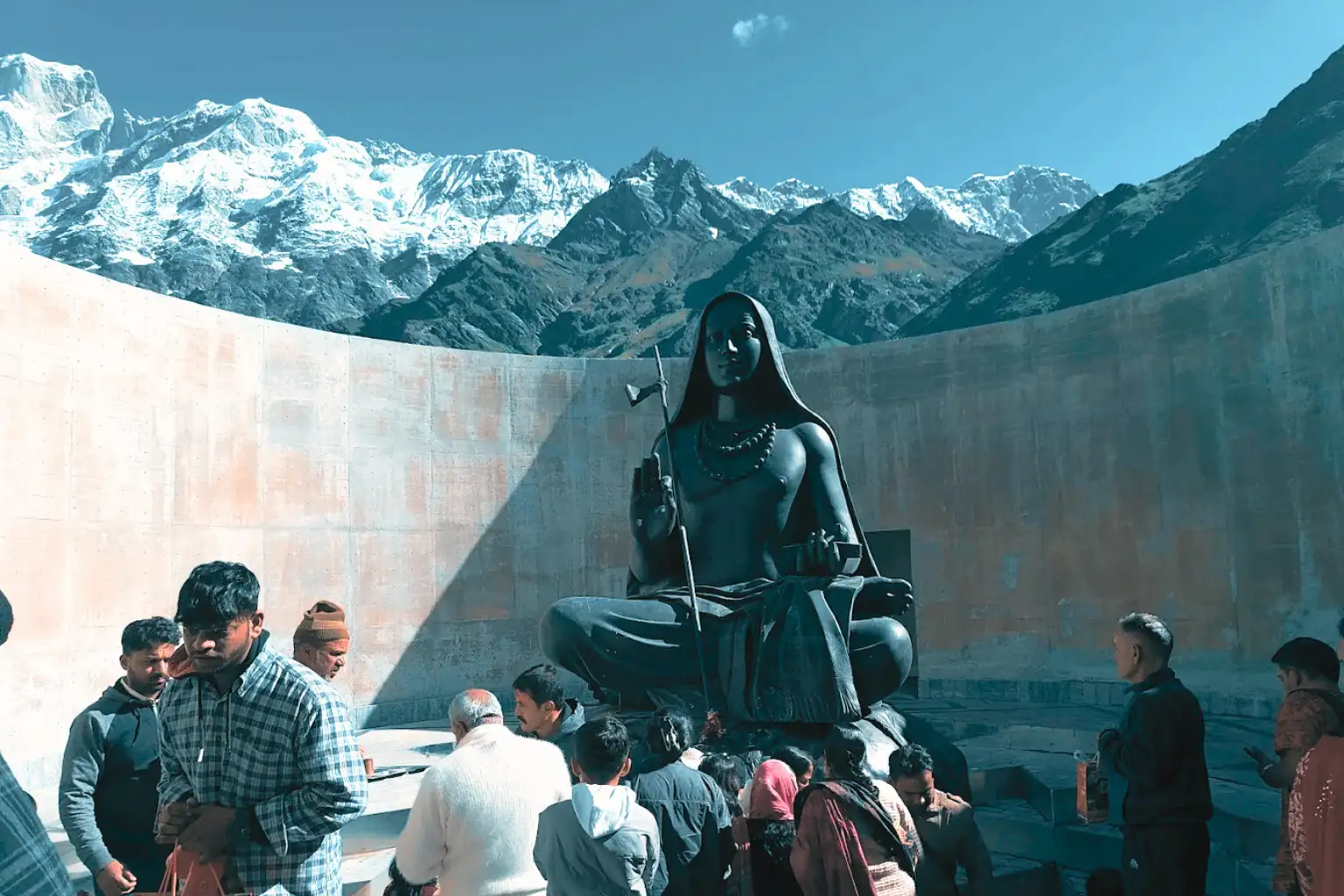
The Shankaracharya Samadhi is just behind the Kedarnath Temple, the ‘final resting place’ of Adi Shankaracharya, a revered Hindu saint, spiritual guru, and philosopher of the 8th century. He is credited for consolidating the Advait Vedanta philosophy and establishing four ‘Mathas’ across India. In his short yet profound life, he established and re-established numerous temples, and Kedarnath Temple is also one of them. The samadhi is just a couple of hundred meters from the Kedarnath temple and is one of must-see spots around Kedarnath.
Distance - 600m behind the temple
Tapt Kund
Before entering the colorful main temple, many pilgrims follow a sacred tradition at the Tapt Kund , a natural hot spring located just below. A dip in these sulfurous waters is believed to cleanse the body and soul, preparing you for a pure darshan of Lord Vishnu. Separate bathing areas are available for men and women.
Distance - Located right below Badrinath Temple
Mana Village
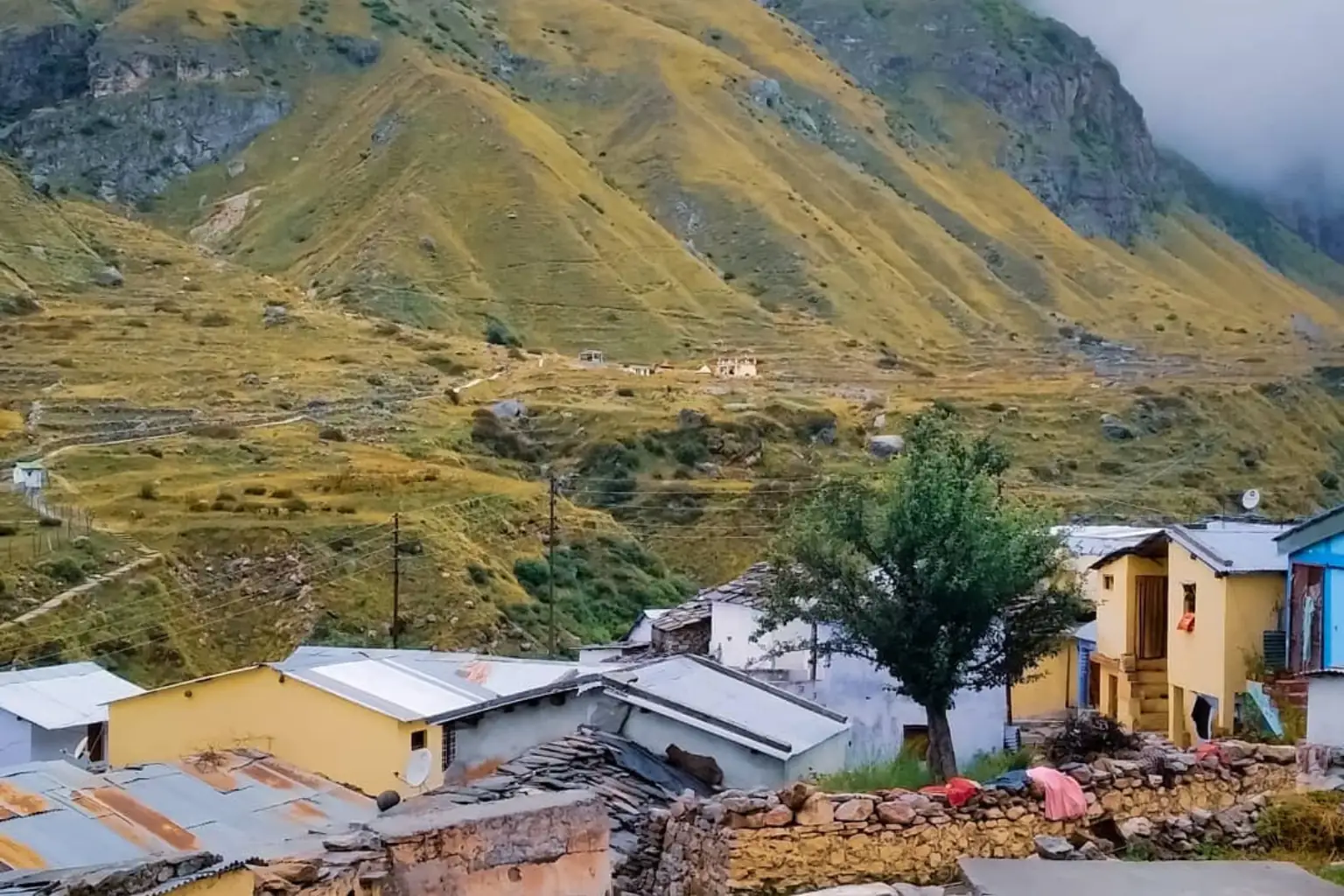
A few kilometers from the temple lies Mana Village, the last Indian village before the Tibetan border. This quaint settlement is steeped in legends tied directly to the epic Mahabharata, offering a unique chance to walk through stories you've only heard.
Distance - 3–4 km from Badrinath, 10-minute drive or 30-minute walk.
Origin of the Saraswati River
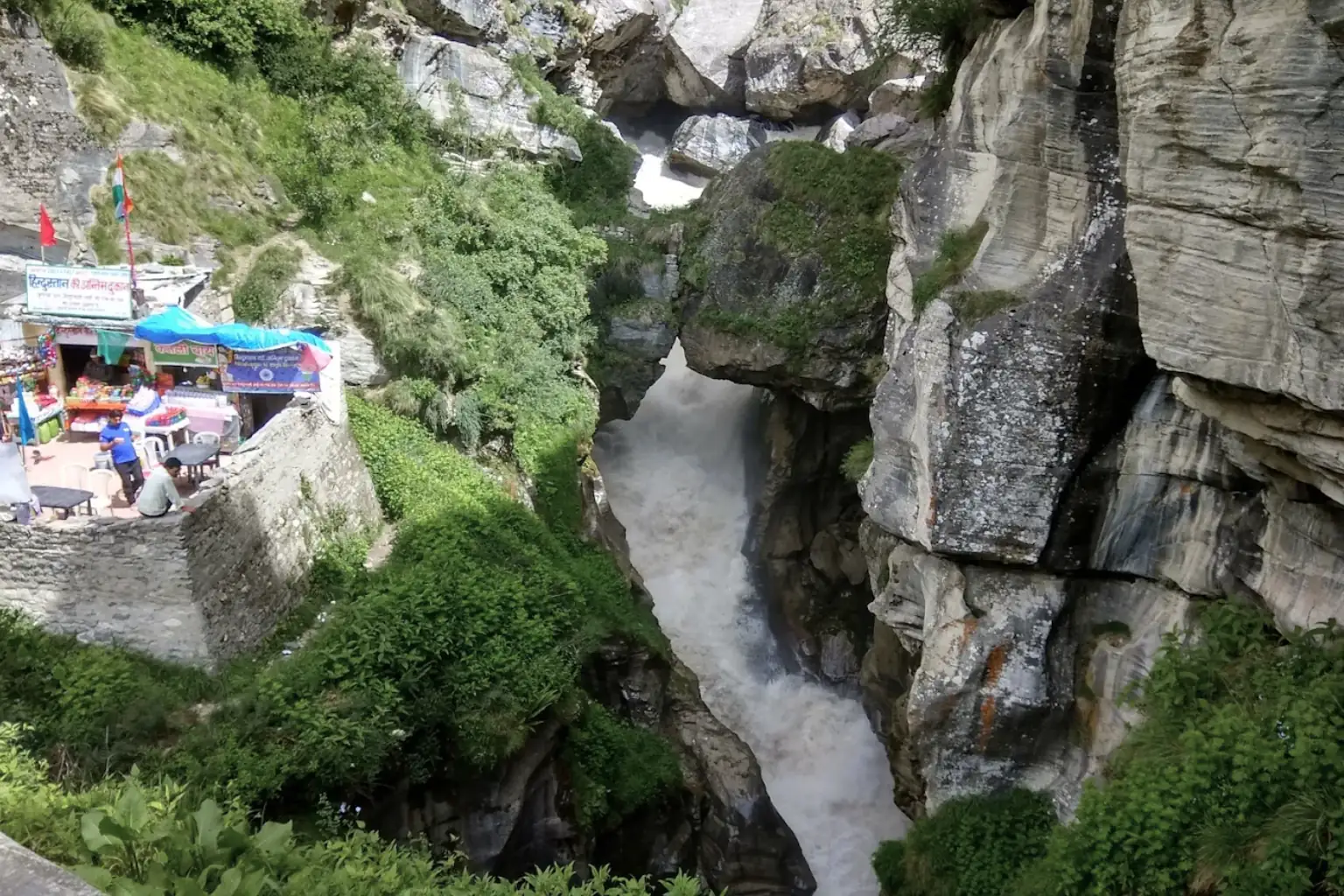
Mana is one of the rare places where the Saraswati River is actually visible, emerging with great force from a rocky crevice. According to Vedic tradition, the river flows mostly underground elsewhere, making this specific site highly consecrated.
Vyas Gufa
A small, ancient cave (gufa) where it's believed the sage Vyasa dictated the entire Mahabharata.
Distance - 500m from Mana parking, short uphill walk.
Ganesh Gufa
The nearby cave where Lord Ganesha is said to have written down the epic poem.
Bheem Pul
A massive, natural rock bridge spanning the roaring Saraswati River. The story behind Bheem Pul (pul means bridge) is particularly powerful. Legend says that when the Pandavas were on their final journey to heaven, Draupadi was unable to cross the turbulent river. In a feat of incredible strength, Bheem lifted a colossal boulder and placed it across the gorge, creating the bridge you can still walk across today. Standing on it, you can feel the raw power of nature and mythology coming together in one unforgettable place.
Distance - 700m from Mana entry
Vasudhara Falls
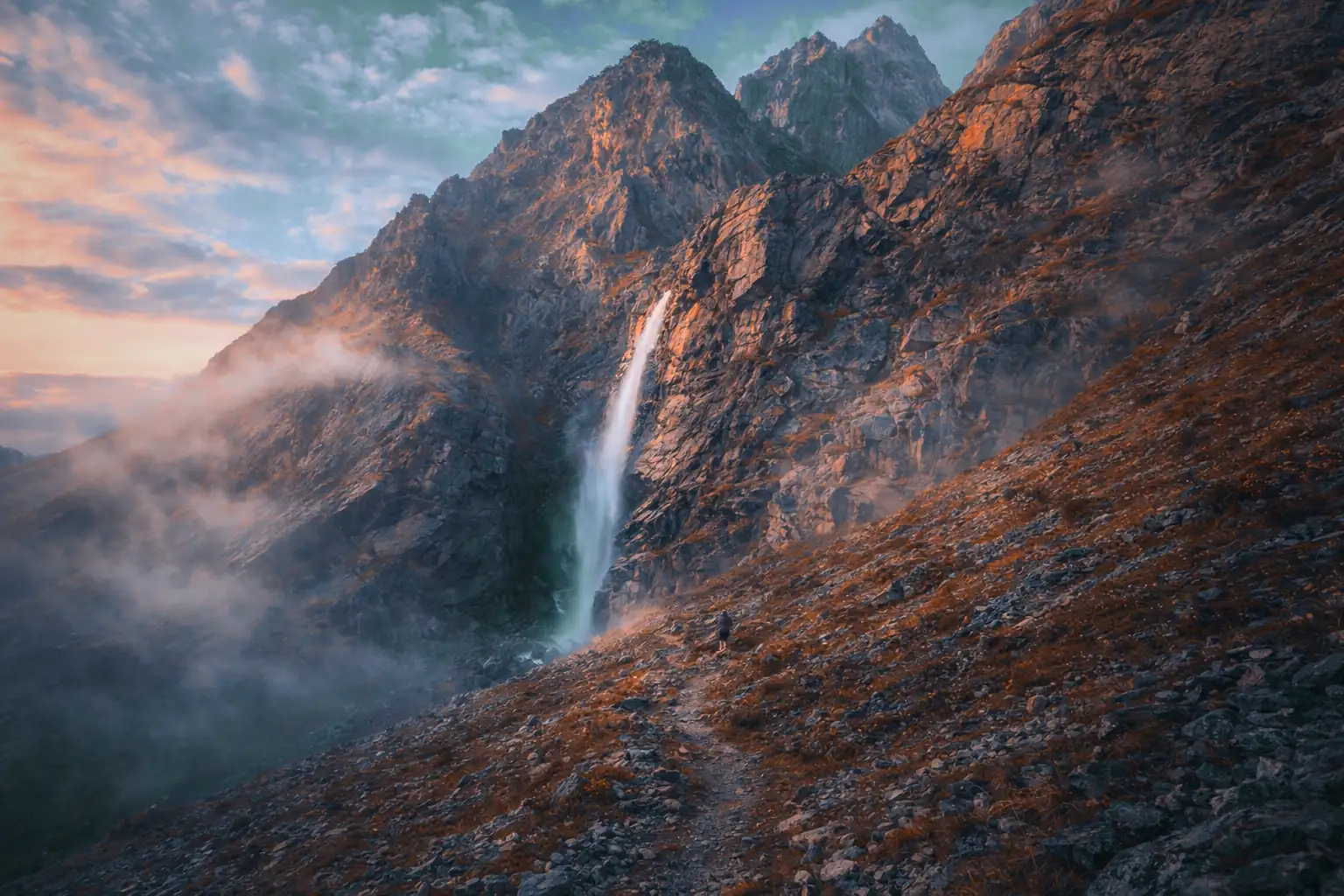
Located about 6 km from Mana, these 400-foot falls are where the Pandavas are said to have rested. A popular local belief suggests that the water of the falls will not touch a sinner, and sitting beneath it is thought to grant salvation. It can be done if you add 1 day in your itinerary.
Distance - 6 km from Mana, Moderate trek.
Panch Prayag - The Sacred Confluences
As you travel through the Himalayas, you'll notice a powerful theme: the meeting of rivers. In Hinduism, the point where two or more rivers merge is called a Prayag and is considered an incredibly sacred spot -a natural, open-air temple where the landscape's divine energy is most concentrated.
While there are many such confluences in Uttarakhand, five are revered as the Panch Prayag (Five Confluences). On the standard Chardham route, two of these are unmissable highlights. The most spiritually significant is the breathtaking Devprayag.
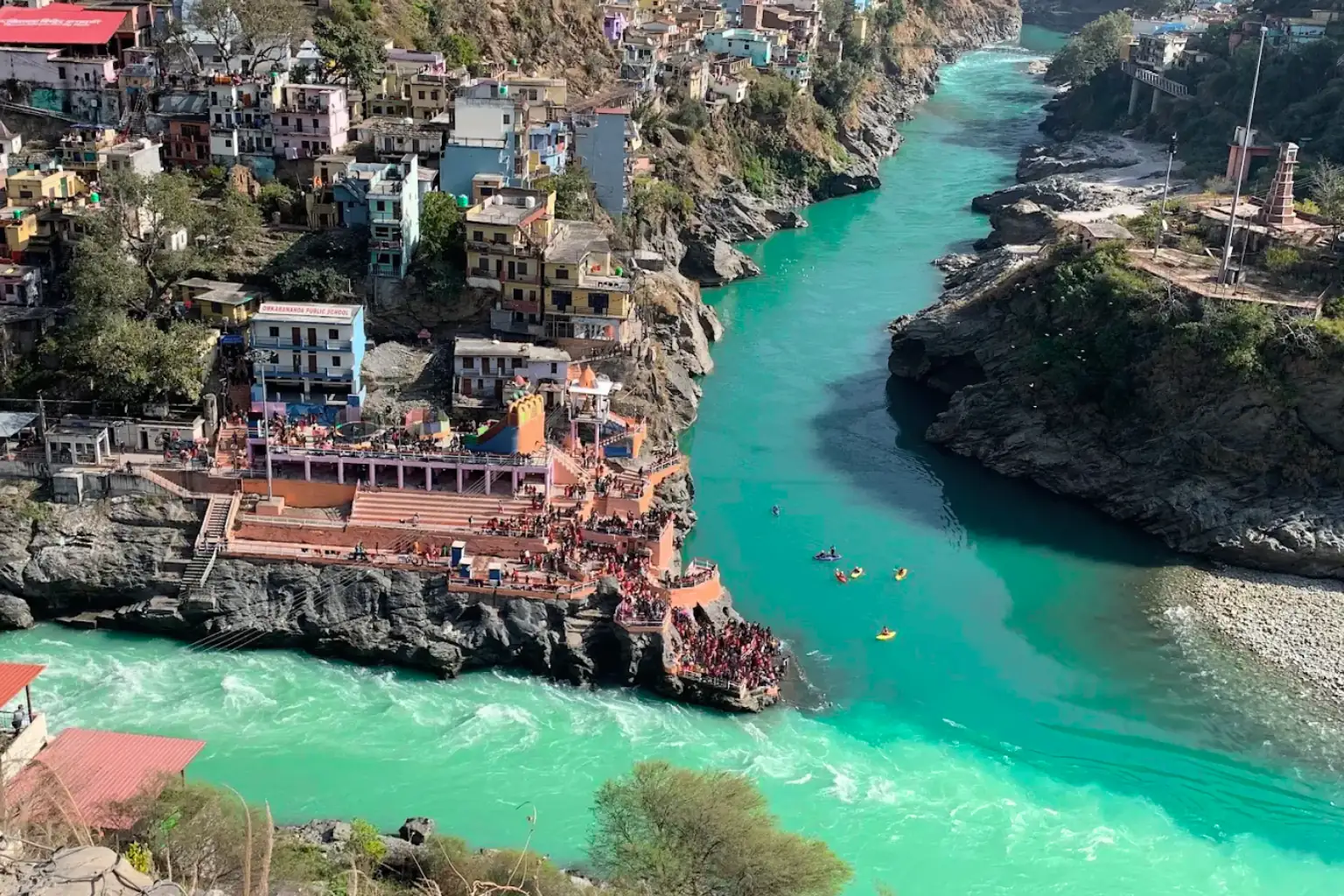
This is the dramatic spot where the darker, calmer Alaknanda River meets the rushing, pale green Bhagirathi River. You can clearly see the two distinct colors of water joining but not mixing for a distance. It is at this exact point that the river is officially named the Ganga, making a stop here feel like witnessing the birth of India's most holy river.
Further along your route, you will pass through Rudraprayag, the junction where the Alaknanda is joined by the Mandakini river that flows down from Kedarnath. Both Devprayag and Rudraprayag are towns built around these holy junctions, offering spectacular viewpoints to stop, reflect, and absorb the profound spiritual geography of your journey.
How to cover these Sights Into the Chardham Plan
The Char Dham Yatra is more than just four destinations on a map; the true pilgrimage unfolds along the entire path---in the sacred rivers, ancient caves, and stunning Himalayan vistas connecting the Dhams.
The biggest mistake in planning is a packed schedule that turns this spiritual journey into a race. To embrace these sights, add at least two or three buffer days to any standard Char Dham yatra itinerary. That way, chardham yatra sightseeing fits naturally between travel days and temple visits.
This simple adjustment transforms your trip from a checklist into an experience, giving you space to connect not just with the temples, but with the sacred energy of the Himalayas.
Best Selling Tour Packages
Explore other exciting options for your next adventure!