

Karan
Writer
Updated On - Nov 10, 2026
5 min
Published On - Nov 10, 2026
Haridwar Kumbh Mela 2027: The Complete Travel Guide
A pot, full to the brim, sitting on top of time itself. Nobody knows exactly what the old seer had in mind when he said it. But stand on the steps of Har Ki Pauri on a morning, with the river running ice-cold past your ankles and thousands of strangers whispering the same prayer, and the line starts to make sense in a strange, quiet way.
पूर्णः कुम्भोऽधि काल आहितः
“A full pitcher has been placed upon Time.”
Think about that line for a second.
A pot, full to the brim, sitting on top of time itself. Nobody knows exactly what the old seer had in mind when he said it. But stand on the steps of Har Ki Pauri on a morning, with the river running ice-cold past your ankles and thousands of strangers whispering the same prayer, and the line starts to make sense in a strange, quiet way.
Time keeps moving. The river keeps moving. People come and go. And every few years, the pot fills up again.
That is the Kumbh.
We have lived and worked in Haridwar since 2001. We’ve seen the town during the 2016 Ardh Kumbh, during the strange, half-empty 2021 Kumbh that COVID cut short, and on hundreds of ordinary days in between. So this guide is not a list copied from somewhere. It’s what we would tell a friend who calls us and says, “I want to come for the Kumbh. Where do I even start?”
Haridwar Kumbh 2027 at a Glance
Short on time? Here’s everything important in one place. The details follow below.
| Question | Quick answer |
|---|---|
|
What is it? |
The Haridwar Ardh Kumbh 2027, which the Uttarakhand government is organising on the scale of a full Kumbh Mela |
|
When does it start? |
14 January 2027 (Makar Sankranti) |
|
When does it end? |
20 April 2027 (Chaitra Purnima). That’s 97 days in total |
|
How many bathing days? |
10 official snan dates |
|
Amrit (Shahi) Snan dates |
6 March (Maha Shivratri), 8 March (Phalgun / Somvati Amavasya), 14 April (Mesh Sankranti / Baisakhi) |
|
Main ghat |
Har Ki Pauri, especially Brahma Kund |
|
Nearest airport |
Jolly Grant Airport, Dehradun (about 35–40 km) |
|
Main railway station |
Haridwar Junction (HW) |
|
Distance from Delhi |
About 220 km by road |
|
Official website |
|
|
Expected crowd |
Projections in news reports go above 10 crore visits over the full period |
Haridwar Kumbh 2027 at a Glance
So, what’s this guide about?
In plain words, the Kumbh Mela is the biggest gathering of people on Earth. Saints, sadhus, farmers, CEOs, grandmothers from Bihar, backpackers from Brazil. All of them walk to the same river to take a dip they believe washes away sins.
In 2027, it’s Haridwar’s turn.
Technically, it’s an Ardh Kumbh (a “half” Kumbh), which comes six years after a full one. But this time the state is treating it like a full Kumbh. There are proper Amrit Snans with akhara processions. There’s a 97-day calendar. And the government is spending big on ghats, roads, bridges and crowd control.
Below, you’ll find the story behind the Kumbh, its history, the full snan calendar, how the Ardh Kumbh differs from the Purna and Maha Kumbh, how to get here by train, flight or road, where to stay, what to do between dips, and the questions people keep asking us on the phone. We’ve tried to keep it simple. No jargon. No fluff.
Let’s begin.
What Is the Kumbh Mela?
The word Kumbh means a pot or pitcher. Mela means a fair, a gathering.
Put together, it’s a “festival of the pot.” And the pot in question is the one that held amrit, the nectar of immortality.
The Kumbh rotates between four cities, all sitting on sacred rivers:
• Haridwar on the Ganga (Uttarakhand)
• Prayagraj at the Sangam of Ganga, Yamuna and the unseen Saraswati (Uttar Pradesh)
• Ujjain on the Shipra (Madhya Pradesh)
• Nashik on the Godavari (Maharashtra)
Which city hosts it, and when, depends on where the Sun, the Moon and Jupiter (Brihaspati) sit in the sky. Jupiter takes roughly 12 years to go around the zodiac. That’s why a full Kumbh comes back to the same city about every 12 years.
For Haridwar, the full Kumbh happens when Jupiter is in Kumbha (Aquarius) and the Sun enters Mesha (Aries). That’s also why Baisakhi, in mid-April, is always the biggest day here.
Did you know?
In 2017, UNESCO added the Kumbh Mela to its list of the Intangible Cultural Heritage of Humanity. Not a building. Not a monument. A living gathering of people. That says a lot.
The Story Behind the Kumbh: Samudra Manthan

Long ago, the devas (gods) had grown weak. To get their strength back, they needed amrit. But the amrit was hidden deep in the cosmic ocean. So the devas teamed up with their old rivals, the asuras (demons), to churn the ocean.
They used Mount Mandara (Mandar or Mandarachal Parvat) as the churning rod. Vasuki, the serpent king, became the rope. Lord Vishnu took the form of a giant turtle, Kurma, to hold the mountain up from below.
All kinds of things came up from the ocean. Poison first. Lord Shiva drank it and held it in his throat, which turned blue. That’s why he’s called Neelkanth. (Keep that name in mind. There’s a temple by that name near Rishikesh, and we’ll come back to it.)
Finally, Dhanvantari rose up holding the pot of amrit.
Then, chaos. The asuras grabbed for it. In the struggle that followed, which lasted twelve divine days (some say twelve human years), four drops of amrit fell to Earth. They landed at Haridwar, Prayagraj, Ujjain and Nashik.
And that’s where the Kumbh is held to this day.
Why Har Ki Pauri?
Locals will tell you the drop in Haridwar fell at Brahma Kund, the small sacred pool at Har Ki Pauri. That’s why everyone wants to bathe right there on Amrit Snan days, and why it gets so crowded.
Why Haridwar is special
Haridwar literally means “the gateway to Hari” (Vishnu). Shiva devotees call it Hardwar, the gateway to Har (Shiva). Both are right, depending on who you ask.
This is where the Ganga finally leaves the mountains and steps onto the plains. Up north, she’s wild and narrow. Here, she slows down and spreads out. Old texts call this spot Gangadwar, the door of the Ganga. The Mahabharata lists it among the great tirthas. The Puranas also call it Mayapuri, after the goddess Maya Devi, whose temple still stands in the old town.
Har Ki Pauri means “the steps of Hari.” Tradition says King Vikramaditya built the first ghat here in memory of his brother Bhartrihari, who meditated on these banks. There’s also a stone on the ghat said to carry the footprint of Lord Vishnu.
स्रोतसामस्मि जाह्नवी
“Among the flowing rivers, I am the Ganga.”
— Bhagavad Gita 10.31
A Short History of the Kumbh Mela
Here’s the honest truth. Nobody can say exactly when the first Kumbh happened.
The idea of sacred bathing is old. Very old. The Rigveda has a whole hymn to rivers (the Nadistuti, Book 10, Hymn 75), and it calls out to the Ganga by name. The Atharvaveda line about the “full pitcher” is often quoted as an early seed of the Kumbh idea. But a fixed, 12-yearly, four-city festival? That came much later.
What we do know comes in pieces, like an old family album with a few photos missing.
| When | What happened |
|---|---|
|
Vedic period |
Rivers praised as goddesses. Ganga named in the Rigveda’s river hymn (10.75) |
|
Mahabharata era |
Gangadwar (Haridwar) listed among the holy tirthas for pilgrims |
|
7th century CE |
Chinese traveller Xuanzang describes a huge riverside gathering at Prayag under King Harsha. Many historians see it as an early form of the mela |
|
8th century CE |
Adi Shankaracharya is credited with organising the monastic orders. This tradition later grew into the akharas we see today |
|
1760 |
A violent clash between rival sadhu groups at the Haridwar Kumbh, often cited in history books |
|
1796 |
British officer Thomas Hardwicke visits the Haridwar fair and guesses the crowd at about 2.5 million people |
|
2010 |
Full Kumbh in Haridwar, January to April |
|
2016 |
Last Ardh Kumbh in Haridwar |
|
2017 |
UNESCO lists the Kumbh Mela as Intangible Cultural Heritage |
|
2021 |
Full Kumbh in Haridwar, held a year early due to planetary positions. Cut down to one month (April) because of COVID-19 |
|
2025 |
Maha Kumbh at Prayagraj. The UP government reported over 66 crore visits |
|
2027 |
Ardh Kumbh in Haridwar (14 Jan to 20 Apr), plus the Simhastha Kumbh in Nashik later in the year |
History of the Kumbh Mela
That 1796 number is wild if you think about it. No trains. No buses. No highways. Two and a half million people walked, rode bullock carts, or floated down rivers to reach a small town at the foot of the hills.
Faith moves people. Literally.
“It is wonderful, the power of a faith like that, that can make multitudes of the old and weak and the young and frail enter without hesitation or complaint upon such incredible journeys.”
— Mark Twain, Following the Equator (1897), after seeing a mela at Allahabad
Why the Kumbh Matters: Significance and Importance
Ask ten pilgrims why they came, and you’ll probably hear ten different answers. But a few reasons come up again and again.
1. Washing away the past
The core belief is simple. A dip in the Ganga during the Kumbh, especially on a snan day, cleanses sins from this life and past lives. It brings you closer to moksha, freedom from the cycle of birth and death.
You don’t have to believe it to feel something, though. Many people who come just to watch end up wading in anyway.
2. Darshan of the saints
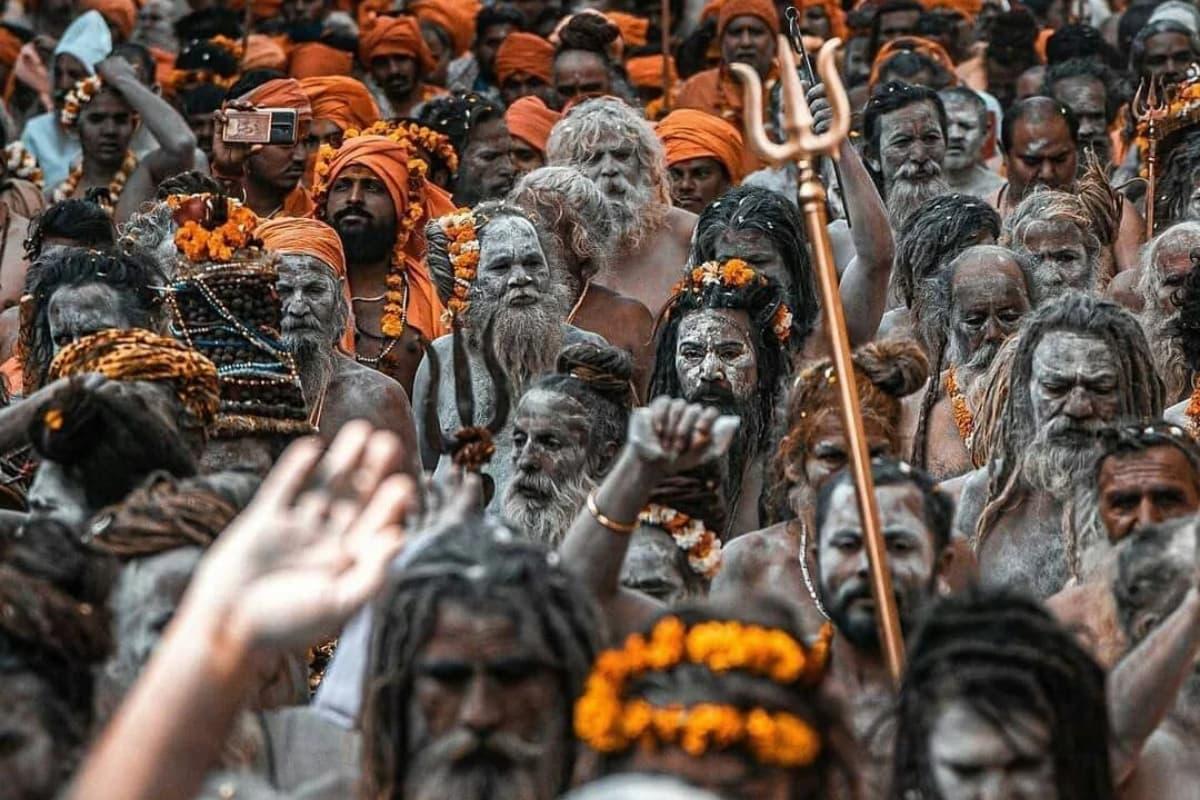
For most of the year, the Naga sadhus and great gurus live in caves, forests and ashrams far from cities. At the Kumbh, they come out. People travel thousands of kilometres just for a glimpse of them, or a word of blessing.
3. A meeting point for ideas
Historically, the Kumbh was where saints debated philosophy, settled questions of practice, and shared news across a huge country with no newspapers. In a smaller way, that still happens in the camps. Walk around in the evening and you’ll hear pravachans (spiritual talks) on loudspeakers from every direction.
4. Daan, seva and community
Feeding people, giving to the poor, serving pilgrims. All of this is part of the Kumbh. You’ll see free bhandaras (community kitchens) everywhere. Nobody asks who you are or where you’re from. You sit, you eat.
आपो हि ष्ठा मयोभुवः
“O Waters, you are indeed the source of well-being.”
— Rigveda 10.9.1
Ardh Kumbh vs Purna Kumbh vs Maha Kumbh: What’s the Difference?
This confuses a lot of people. Honestly, it confused us too when we were younger. So here’s the simple version.
| Type | How often | Where | Last held | Next |
|---|---|---|---|---|
|
Ardh Kumbh (half Kumbh) |
Every 6 years, between two full Kumbhs |
Haridwar and Prayagraj only |
Haridwar: 2016 |
Haridwar: 2027 |
|
Purna Kumbh (full Kumbh) |
About every 12 years in each city |
All four cities |
Haridwar: 2021 |
Haridwar: expected around 2033 |
|
Maha Kumbh |
Every 144 years (after 12 Purna Kumbhs) |
Prayagraj only |
Prayagraj: 2025 |
Not in our lifetime |
|
Simhastha Kumbh |
About every 12 years |
Nashik and Ujjain (when Jupiter is in Leo / Simha) |
Nashik 2015, Ujjain 2016 |
Nashik 2027, Ujjain 2028 |
Ardh Kumbh vs Purna Kumbh vs Maha Kumbh: What’s the Difference?
So why is the 2027 Ardh Kumbh such a big deal?
Here’s the thing. Usually, an Ardh Kumbh is a smaller, quieter event. The akharas don’t always hold grand royal processions for it.
2027 is different. A few reasons:
• Three Amrit Snans. The Akhil Bharatiya Akhara Parishad approved three Amrit (Shahi) Snans, and the state confirmed them. That means full akhara processions with elephants, horses, flags and the Naga sadhus leading the way.
• The 2021 Kumbh never really happened. COVID shrank it to one month, and the Shahi Snan was largely symbolic. A lot of devotees feel they missed out. Many will come in 2027 to make up for it.
• The Prayagraj effect. After the massive 2025 Maha Kumbh, interest in the Kumbh is at an all-time high, especially among young Indians and foreign travellers.
• Better roads. The Delhi–Dehradun Expressway opened in 2026, and a faster Delhi–Haridwar road link is close to completion. Easier travel usually means more people.
• The government is calling it “Kumbh Mela 2027.” The official logo, website and anthem all use the word Kumbh. Planning is being done for crowds several times bigger than 2010 and 2021.
Put simply: on paper, it’s an Ardh Kumbh. On the ground, expect a full Kumbh.
Haridwar Kumbh 2027 Snan Dates
These are the ten official bathing dates announced by the Uttarakhand government. The rows marked Amrit Snan are the big ones.
| Date | Day | Festival | Type | Crowd level |
|---|---|---|---|---|
|
14 Jan 2027 |
Thursday |
Makar Sankranti (Kumbh begins) |
Snan |
High |
|
6 Feb 2027 |
Saturday |
Mauni Amavasya |
Snan |
Very high |
|
11 Feb 2027 |
Thursday |
Basant Panchami |
Snan |
High |
|
20 Feb 2027 |
Saturday |
Magh Purnima |
Snan |
High |
|
6 Mar 2027 |
Saturday |
Maha Shivratri |
Amrit Snan 1 |
Extreme |
|
8 Mar 2027 |
Monday |
Phalgun Amavasya (Somvati Amavasya) |
Amrit Snan 2 |
Extreme |
|
7 Apr 2027 |
Wednesday |
Nav Samvatsar (Hindu New Year) |
Snan |
Moderate–High |
|
14 Apr 2027 |
Wednesday |
Mesh Sankranti / Baisakhi |
Amrit Snan 3 |
Extreme (peak day) |
|
15 Apr 2027 |
Thursday |
Shri Ram Navami |
Snan |
Very high |
|
20 Apr 2027 |
Tuesday |
Chaitra Purnima (Kumbh ends) |
Snan |
High |
Haridwar Kumbh 2027 Snan Dates
A small detail most people miss
8 March 2027 falls on a Monday, which makes that Amavasya a Somvati Amavasya. A new-moon Monday is considered extra holy for a Ganga snan. Two Amrit Snans just two days apart (6 and 8 March) means the town will stay packed for that entire week. Plan accordingly.
What exactly is an Amrit Snan (Shahi Snan)?
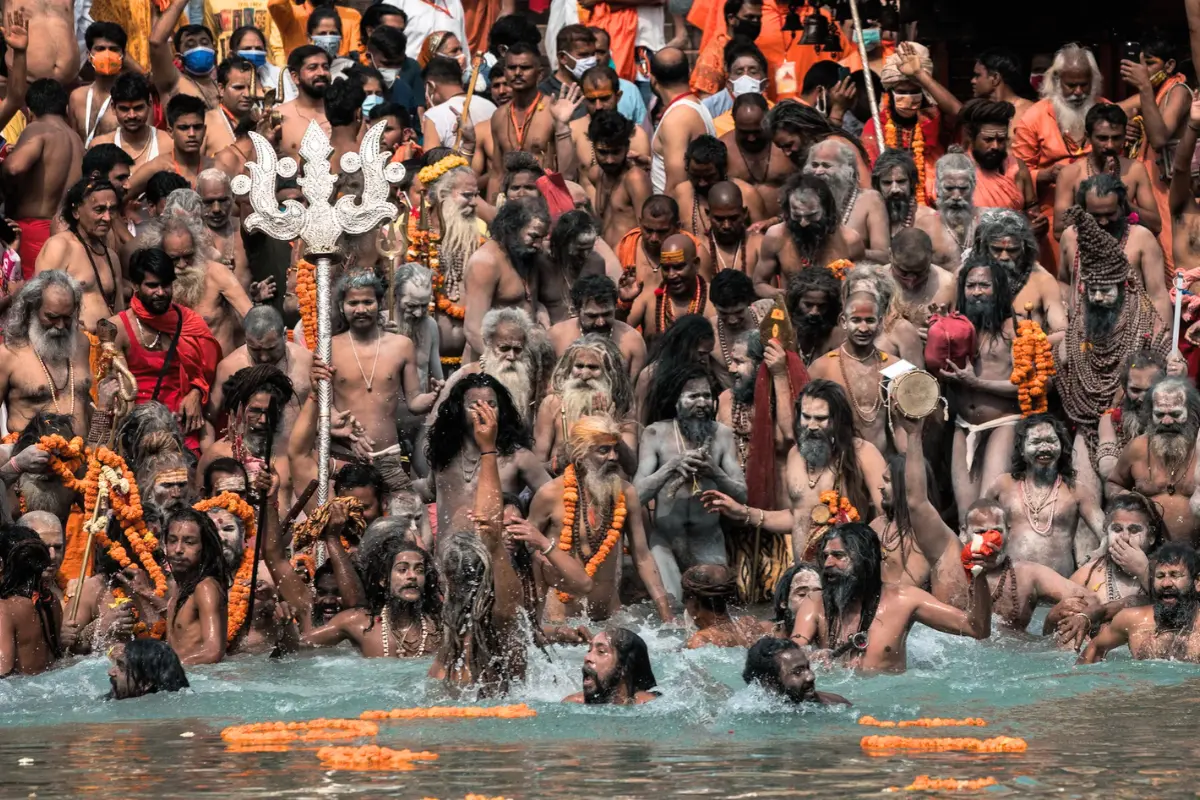
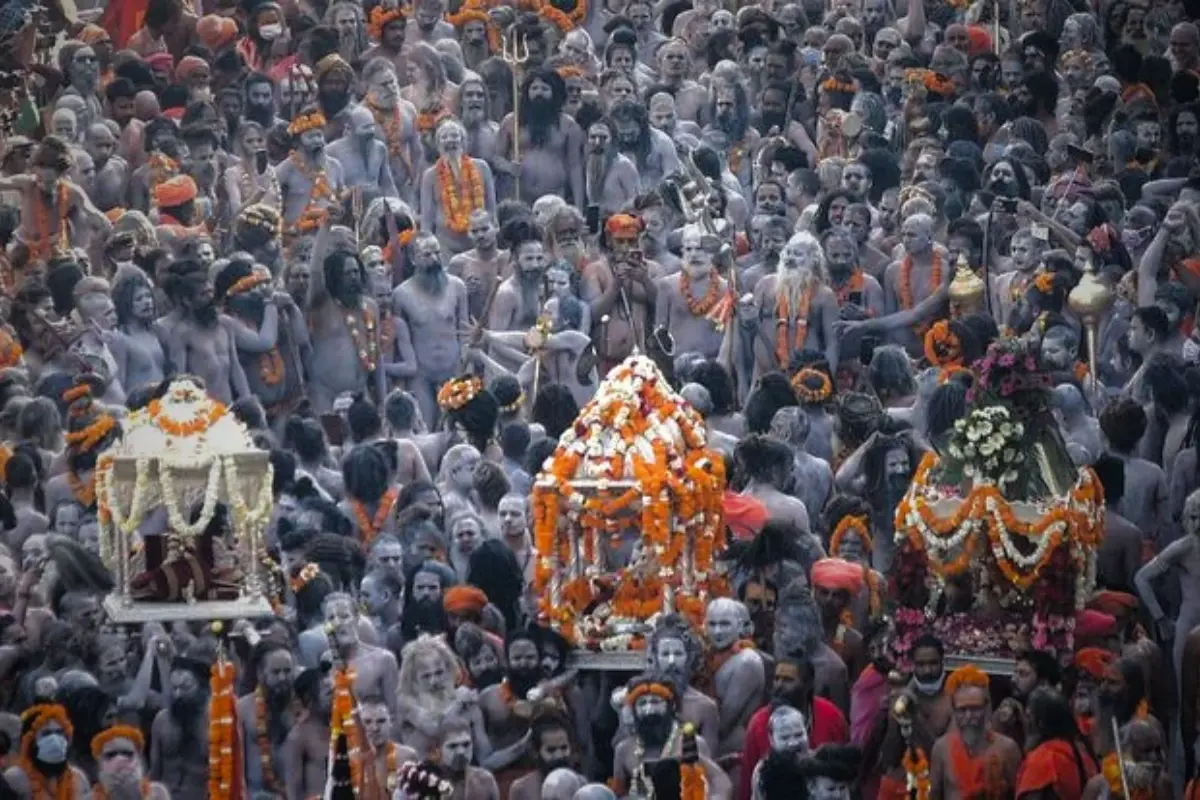
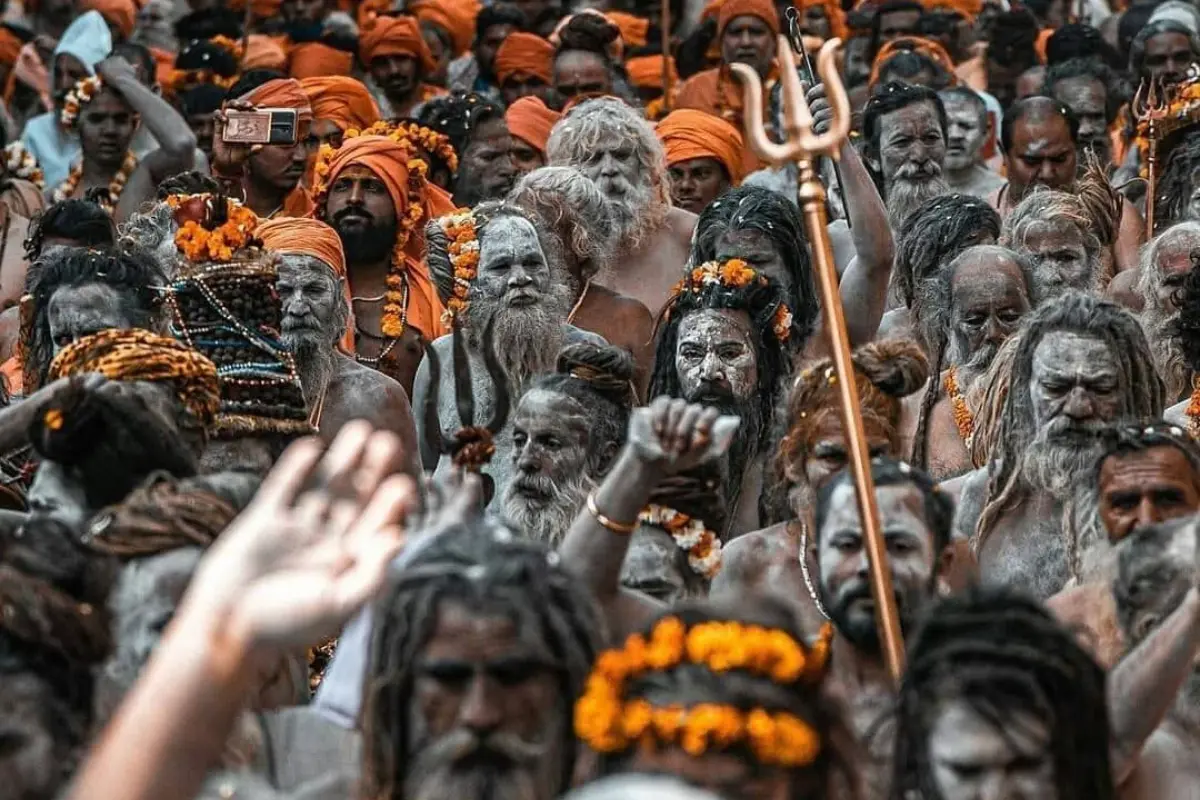
It’s the royal bath of the akharas. On these days, the ghat at Har Ki Pauri is reserved for the 13 akharas for several hours. Each akhara marches to the river in a set order. Naga sadhus, covered in ash, often lead the way, running into the water with tridents raised. Mahamandaleshwars follow on decorated chariots.
It is loud. It is wild. It’s also one of the most moving sights you’ll ever see.
Ordinary pilgrims bathe either before the processions begin, after they finish, or at other ghats along the river. The name changed from “Shahi” (a Persian-origin word) to “Amrit” in recent years, but most people still use both.
Which snan date is right for you?
| If you are… | Pick this | Why |
|---|---|---|
|
Coming to see the Naga sadhus and akhara processions |
6 Mar, 8 Mar or 14 Apr |
Only the Amrit Snans have the full royal processions |
|
Travelling with elderly parents |
Any weekday between snan dates, Feb–early Mar |
Same river, same blessings, far fewer people |
|
Travelling with small kids |
Late Feb or early April weekdays |
Mild weather, smaller crowds |
|
Wanting the “first dip” |
14 Jan (Makar Sankranti) |
The opening day has its own energy, though it’s cold |
|
A photographer |
The day before an Amrit Snan |
Camps are full, sadhus are settled, lanes are still walkable |
|
Short on leave |
A Friday–Sunday around 20 Feb or 7 Apr |
Good balance of atmosphere and access |
Which snan date is right for you?
How to Reach Haridwar for Kumbh 2027
Good news first. Haridwar is one of the easiest pilgrim towns in North India to reach. It has a big railway station, an airport an hour away, and it sits right on the main highway from Delhi.
The not-so-good news? On snan days, “easy” goes out the window. Roads close. Trains overflow. So the trick is less about how you come and more about when you arrive.
Best options, ranked
| Rank | Option | Best for | Watch out for |
|---|---|---|---|
|
1 |
Train to Haridwar Junction |
Most travellers, families, budget trips |
Book the moment the 60-day window opens; Kumbh specials get announced later |
|
2 |
Flight to Dehradun + cab |
Time-short travellers, those from South/West India |
The 35–40 km drive can take hours on snan days |
|
3 |
Private car / cab from Delhi |
Families, elderly, groups with luggage |
Vehicles are stopped at outer parking zones near snan days |
|
4 |
Bus from Delhi ISBT |
Solo and budget travellers |
Long queues and packed buses near big dates |
|
5 |
Fly to Delhi + train/road |
International visitors |
Adds a long transfer; build in a buffer day |
Best options, ranked
By air: flights to Haridwar
Haridwar doesn’t have its own airport. The nearest one is Jolly Grant Airport (DED) in Dehradun, about 35–40 km away. On a normal day, it’s roughly an hour by cab. On an Amrit Snan day, add a lot more.
| Airport | Distance to Haridwar | Good for |
|---|---|---|
|
Jolly Grant, Dehradun (DED) |
~35–40 km (about 1 hr) |
Direct flights from Delhi, Mumbai, Bengaluru, Hyderabad and several other cities |
|
Indira Gandhi International, Delhi (DEL) |
~220–230 km |
International arrivals and the widest choice of flights |
|
Chandigarh (IXC) |
~200 km |
Travellers from Punjab, Haryana and Himachal |
By air: flights to Haridwar
Our tip: If you’re flying in for an Amrit Snan, land at least a day early. Flight fares into Dehradun tend to jump sharply in the week before the big dates.
By train: the best trains to Haridwar
Haridwar Junction (station code HW) is the main stop. Many trains to Dehradun and Yog Nagari Rishikesh pass through it. Nearby Jwalapur station can also be handy if you’re staying on that side of town.
| Train | Number | From | Approx. time to Haridwar |
|---|---|---|---|
|
Vande Bharat Express |
22457 / 22458 |
Delhi (Anand Vihar) |
~3.5 hours |
|
Shatabdi Express |
12017 / 12018 |
New Delhi |
~4.5 hours |
|
Jan Shatabdi Express |
12055 / 12056 |
New Delhi |
~4.5–5 hours |
|
Mussoorie Express |
14041 / 14042 |
Delhi Jn (overnight) |
~8 hours |
|
Dehradun Express |
19019 / 19020 |
Mumbai (Bandra Terminus) |
Long distance, overnight |
|
Yoga Express |
19031 / 19032 |
Ahmedabad |
Long distance, overnight |
|
Doon Express |
13009 / 13010 |
Howrah (Kolkata) |
Long distance, overnight |
|
Kalinga Utkal Express |
18477 / 18478 |
Puri |
Long distance, overnight |
By train: the best trains to Haridwar
Booking window, made simple
Railway bookings in India open 60 days before the journey date. So for the 6 March Amrit Snan, tickets open around the first week of January. For 14 April, around mid-February. Set a phone reminder. Seriously.
By road: driving or taking a bus
| From | Distance (approx.) | Usual drive time | Route |
|---|---|---|---|
|
Delhi |
220 km |
5–6 hrs (shorter once the new Delhi–Haridwar link opens) |
Meerut – Muzaffarnagar – Roorkee (NH-334) |
|
Dehradun |
55 km |
1–1.5 hrs |
Via Doiwala or Rishikesh |
|
Rishikesh |
25 km |
45 min |
Haridwar–Rishikesh Road |
|
Chandigarh |
200 km |
4–5 hrs |
Via Yamunanagar, Saharanpur |
|
Agra |
390 km |
7–8 hrs |
Via Delhi or Aligarh–Meerut |
|
Lucknow |
500 km |
9–10 hrs |
Via Moradabad, Najibabad |
|
Jaipur |
480 km |
9–10 hrs |
Via Delhi |
By road: driving or taking a bus
Buses: Uttarakhand Transport (UTC) and UP Roadways run frequent buses from Delhi’s Kashmere Gate ISBT. Volvo and AC options are available. For the Kumbh, extra buses are normally added.
Important: road closures on snan days
• Private vehicles are usually stopped at outer parking areas a day before big snan dates.
• From there, you take shuttle buses or walk. Sometimes 3–5 km.
• One-way traffic rules and diversions are common. Follow Haridwar Police and Kumbh Mela updates.
• If you’ve hired a cab, ask your driver where he plans to park. A good local driver who knows the back lanes is worth his weight in gold.
Where to Stay During Haridwar Kumbh 2027
After your dates, this is the biggest decision you’ll make. Stay close and you walk to the ghat before sunrise. Stay far and you may spend half the day stuck in crowds.
| Area | Distance to Har Ki Pauri | Vibe | Best for |
|---|---|---|---|
|
Har Ki Pauri / Upper Road / Moti Bazaar |
0–1 km |
Loud, busy, right in the middle of it all |
Amrit Snan days, short stays |
|
Bhupatwala / Saptrishi area |
3–5 km |
Ashrams, quieter, near the river |
Families, spiritual stays |
|
Kankhal |
3–4 km |
Old, peaceful, historic temples |
Elderly, longer stays |
|
Tent cities (Bairagi Camp, Neel Dhara, Daksh Dweep) |
Varies |
Living inside the mela |
The full Kumbh experience |
|
Rishikesh |
25 km |
Calmer, yoga town |
Those who want to visit Haridwar only on snan days |
Where to Stay During Haridwar Kumbh 2027
A word of caution. Every Kumbh brings fake booking websites and “agents” who take money for tents that don’t exist. Before you pay, check the camp’s physical address, look for real reviews, call them directly, and never pay the full amount to an unknown personal bank account. If something feels off, it probably is.
Things to Do in Haridwar During the Kumbh
You won’t be in the water all day. (Trust us, in January, you’ll want to get out fast.) Here’s how to fill the rest of your time.
| Place | What it is | Our tip |
|---|---|---|
|
Ganga Aarti at Har Ki Pauri |
The famous evening aarti with giant brass lamps and floating diyas |
Get there 45–60 minutes early. On snan days, watch from a ghat further down |
|
Mansa Devi Temple |
Hilltop temple of the wish-fulfilling goddess |
Take the ropeway (udan khatola). Tie a thread on the tree for your wish |
|
Chandi Devi Temple |
Temple on Neel Parvat, across the river |
Combined ropeway tickets with Mansa Devi are often available |
|
Maya Devi Temple |
One of the oldest temples in Haridwar, a Shakti Peeth |
Close to Har Ki Pauri; go early morning |
|
Daksha Mahadev, Kankhal |
Where King Daksha held the yagna and Sati gave up her life |
Visit during Maha Shivratri week for a special mood |
|
Bharat Mata Mandir |
An eight-floor temple dedicated to Mother India |
Good for kids; each floor tells a different story |
|
Akhara camps |
The tent cities of the 13 akharas |
Walk in respectfully. Ask before taking photos of sadhus |
|
Shantikunj |
Headquarters of the Gayatri Pariwar |
Calm, clean and free to visit |
|
Pawan Dham |
Temple known for its glass and mirror work |
A nice short stop with family |
|
Bilkeshwar Mahadev |
Quiet Shiva temple in the forest edge |
Less crowded, good for a peaceful hour |
Things to Do in Haridwar During the Kumbh
Did you know?
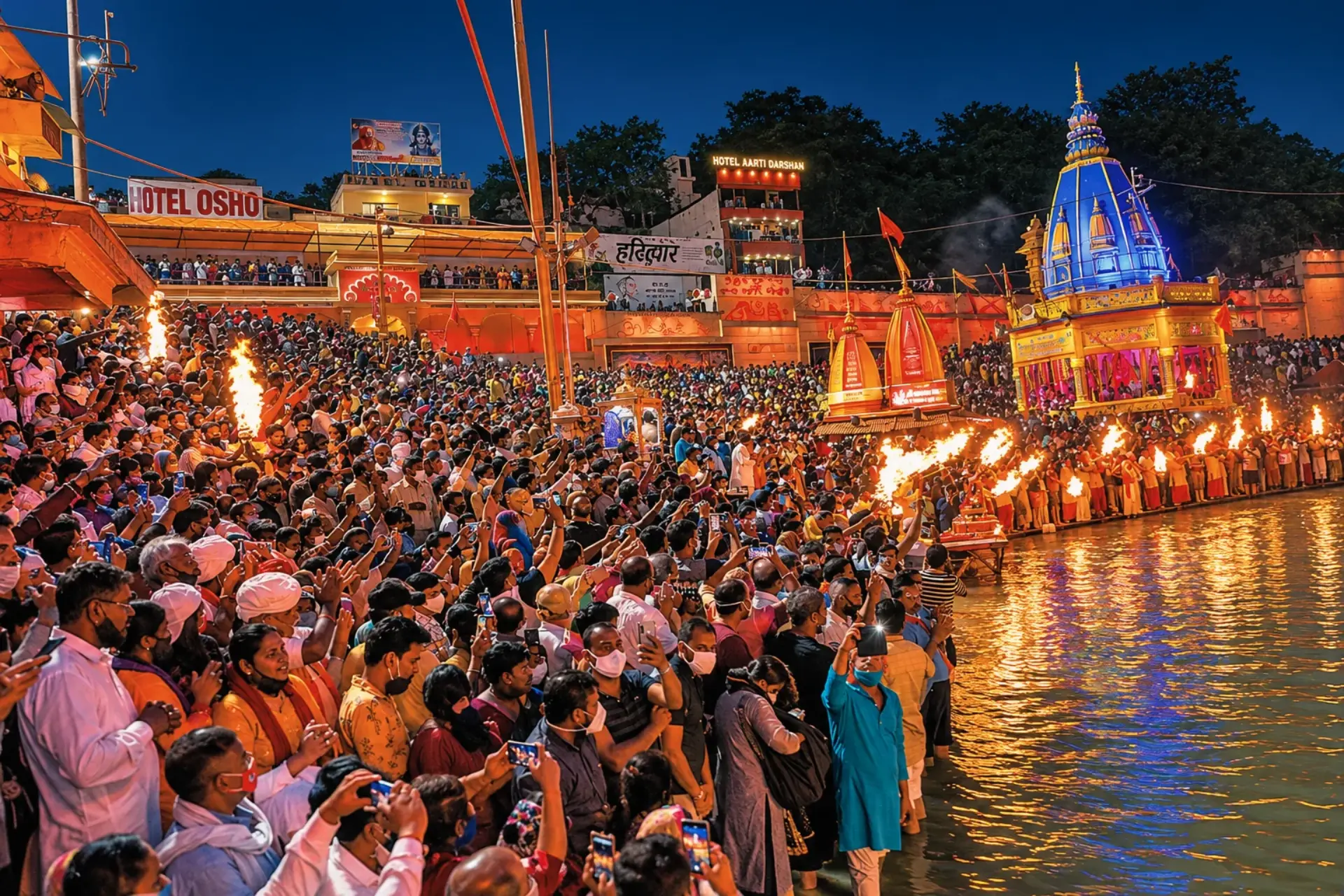
The Shri Ganga Sabha, which looks after Har Ki Pauri and its evening aarti, was set up in 1916 with the help of Pandit Madan Mohan Malaviya, the founder of Banaras Hindu University. So the next time you watch the lamps swing over the water, remember there’s more than a century of care behind that ritual.
What to eat in Haridwar (pure veg, all of it)
Haridwar is a vegetarian, alcohol-free holy city. Don’t look for anything else. But you won’t miss it.
• Kachori and aloo sabzi in the lanes of Moti Bazaar, early morning. Fresh, spicy, perfect after a cold dip.
• Aloo puri with pickle, at any small dhaba near the ghats.
• Rabri and gulab jamun. The sweet shops near Har Ki Pauri have been at it for generations.
• Kulhad lassi and kulhad chai. Especially good on a foggy January morning.
• Bhandara food at the akhara camps. Simple dal, rice, roti, halwa. Served with love. Free.
Places to Visit Near Haridwar
If you have an extra day or two, these are worth it.
| Place | Distance | Why go |
|---|---|---|
|
Rishikesh |
25 km |
Triveni Ghat aarti, Parmarth Niketan, Ram Jhula, the Beatles Ashram, cafés and yoga |
|
Neelkanth Mahadev |
~50 km via Rishikesh |
Where Shiva is said to have held the poison from the Samudra Manthan. Fits perfectly with the Kumbh story |
|
Rajaji National Park (Chilla) |
~10 km |
Elephants, deer and birds. Jeep safaris in the mornings |
|
Kunjapuri Devi |
~95 km |
Where Alaknanda and Bhagirathi meet and become the Ganga |
|
Dehradun |
55 km |
Robbers Cave, Sahastradhara, Tapkeshwar Temple |
|
Mussoorie |
~90 km |
Hill station views, Kempty Falls; can be cold in Jan–Feb |
Places to Visit Near Haridwar
Haridwar Weather and What to Pack, Month by Month
This Kumbh runs right through winter into spring. So the weather on your trip depends a lot on which snan you pick.
| Month | Day / Night (approx.) | How it feels | Pack this |
|---|---|---|---|
|
January |
18–20°C / 5–7°C |
Cold, foggy mornings. River is icy |
Thermals, woollens, cap, gloves, towel, warm socks |
|
February |
22–24°C / 8–10°C |
Cool mornings, pleasant days |
Light woollens, a shawl, layers |
|
March |
27–30°C / 12–14°C |
Mild and lovely |
Cotton clothes, one light jacket |
|
April |
33–36°C / 18–20°C |
Warm to hot by afternoon |
Light cotton, cap, sunscreen, water bottle |
Haridwar Weather and What to Pack, Month by Month
The packing list nobody tells you about
• A separate set of clothes for the dip, plus a plastic bag for the wet ones
• A small waterproof pouch for your phone and ID
• A power bank. Networks get jammed and phones drain fast searching for signal
• Slip-on footwear that you don’t mind losing. Shoe piles at ghats are… creative
• A printed paper with your hotel name and a family member’s number, especially for kids and elders
• Basic medicines: ORS, paracetamol, any regular prescriptions
• A bright scarf or flag so your group can spot you in a crowd
Kumbh Safety Tips: How to Stay Safe in the Crowd
We’ll be straight with you. Kumbh crowds are no joke. Most people have a beautiful, safe time. But a little planning makes a big difference.
• Fix a meeting point the moment you arrive. A temple, a clock tower, a specific ghat number. Not “near the river.”
• Hold hands with kids. Tie a band on their wrist with your phone number written on it.
• Go early. The first hours after dawn are the calmest on any snan day.
• Never push. If a crowd starts to surge, move sideways, not forward.
• Stay on marked ghats and hold the chains or railings in the water. The current is stronger than it looks.
• Use the Khoya-Paya (lost and found) centres if someone goes missing. There are several across the mela area.
• Leave valuables in your room. Carry only what you need.
• Follow police instructions, even if they seem annoying. They can see what you can’t.
Elderly pilgrims should seriously consider skipping the three Amrit Snan days. The blessings of Ganga Maa don’t check the calendar. A dip on a calm weekday is just as sacred.
A Last Thought Before You Pack
People often ask us if the Kumbh is “worth it.” The crowds. The cold water. The walking. The noise.
We never really know how to answer that.
What we can tell you is what you’ll probably see. A farmer coming up from his dip with wet eyes, quiet, like something heavy has finally been put down. Someone who came “just for photos” still sitting on the ghat steps an hour after the aarti, not saying a word. Strangers holding an old woman’s arm and walking her into the river as if she were their own mother.
Maybe that’s the amrit. Not the water itself, but what it brings out in people.
The pot is filling up again. See you on the ghats.
इमं मे गङ्गे यमुने सरस्वति
“O Ganga, Yamuna, Saraswati… hear this praise of mine.”
— Rigveda 10.75.5
Planning your Kumbh trip with us
BizareXpedition is a Haridwar-based travel company, running private, tailor-made journeys since 2014. For Kumbh 2027 we can help with:
• Private cabs from Delhi, Dehradun airport or Haridwar station, with drivers who know the Kumbh diversions
• Hotels, camps or ashram stays matched to your snan date
• Kumbh + Rishikesh, or Kumbh + Char Dham plans for families and senior citizens
Visit bizarexpedition.com to start planning. No group coaches. Just your trip, your pace.
Frequently Asked Questions: Haridwar Kumbh 2027
When is the Kumbh Mela in Haridwar in 2027?
The Haridwar Kumbh 2027 runs from 14 January 2027 (Makar Sankranti) to 20 April 2027 (Chaitra Purnima). That’s 97 days, with ten official snan dates in between.
Is Haridwar Kumbh 2027 an Ardh Kumbh or a full Kumbh?
Technically it’s an Ardh Kumbh, because it comes six years after the 2021 full Kumbh. But the Uttarakhand government is organising it on the scale of a full Kumbh, with three Amrit Snans and akhara processions. Officially, it’s branded as “Kumbh Mela 2027.”
What are the Shahi Snan (Amrit Snan) dates for Haridwar Kumbh 2027?
There are three: 6 March 2027 (Maha Shivratri), 8 March 2027 (Phalgun Amavasya, a Somvati Amavasya), and 14 April 2027 (Mesh Sankranti / Baisakhi).
Which is the most important day of the Haridwar Kumbh?
Traditionally, Mesh Sankranti (Baisakhi), 14 April 2027. In Haridwar, the Kumbh is tied to the Sun entering Aries, so this day usually draws the largest crowd.
When was the last Kumbh in Haridwar?
The last full Kumbh was in 2021, cut short to April because of COVID-19. The last Ardh Kumbh in Haridwar was in 2016. Before 2021, the full Kumbh was held in 2010.
When is the next full (Purna) Kumbh in Haridwar?
The next full Kumbh in Haridwar is expected around 2033, about 12 years after 2021. The exact year depends on the planetary positions.
What’s the difference between Ardh Kumbh and Maha Kumbh?
An Ardh Kumbh comes every 6 years, only in Haridwar and Prayagraj. A Maha Kumbh is held only at Prayagraj, and is popularly believed to come once every 144 years. The last one was in 2025.
How many people will come to the Haridwar Kumbh 2027?
Projections quoted in news reports go above 10 crore visits across the full 97 days. Officials have said they’re planning for crowds several times larger than 2010 and 2021.
What is the nearest airport to Haridwar?
Jolly Grant Airport, Dehradun (DED), about 35–40 km away. It takes around an hour by road on a normal day.
Which is the best train from Delhi to Haridwar?
The Vande Bharat Express (22457) from Anand Vihar is the fastest, at about 3.5 hours. The Shatabdi (12017) and Jan Shatabdi (12055) from New Delhi are also popular. Please check current timings on IRCTC.
Can I drive my own car to Har Ki Pauri during the Kumbh?
Not on major snan days. Vehicles are usually stopped at outer parking zones from the night before. You’ll need to walk or use shuttle buses for the last few kilometres.
Is it safe to take elderly parents and children to the Kumbh?
Yes, with planning. Avoid the three Amrit Snan days, choose a weekday, stay close to the ghat, and keep a written contact number on each family member. Use ghats with railings and chains.
Do I need to register or buy a ticket for the Kumbh?
There’s no entry ticket for the Kumbh itself. Bathing at the ghats is free. Keep an eye on the official website, haridwarkumbh.uk.gov.in, for any registration or pass system the administration may announce for vehicles or special areas.
Can foreigners attend the Kumbh Mela in Haridwar?
Absolutely. Foreign visitors are welcome. Carry your passport and visa copies, dress modestly, and always ask before photographing sadhus or people bathing.
What should I wear for the Ganga snan?
Men usually bathe in a dhoti or shorts. Women usually bathe in a salwar suit or saree. Changing rooms are set up at major ghats. Carry a dry set of clothes and a towel.
Is it very cold in Haridwar in January and February?
Yes. Nights can drop to around 5–7°C in January, and the river is icy. February is milder. March and April are pleasant to warm.
Can I stay in Rishikesh and visit Haridwar for the snan?
Yes, many people do. Rishikesh is just 25 km away and calmer. On Amrit Snan days, though, leave very early, because roads into Haridwar get heavily controlled.
What are the official Kumbh 2027 logo and anthem?
The logo, designed by Haridwar resident Madhu Sharma, shows Maa Ganga, Har Ki Pauri, Lord Shiva, saints, and the hills of Mansa Devi and Chandi Devi. The anthem is “Kumbh Ka Parv Aa Gaya” by Haridwar singer Raghav Raja. Both were launched on 12 October 2026.
Why is the Kumbh held in Haridwar?
According to the Samudra Manthan story, one of the four drops of amrit fell at Haridwar, at Brahma Kund in Har Ki Pauri. Haridwar is also where the Ganga leaves the mountains and enters the plains, which makes it especially holy.
Are there any other Kumbhs in 2027?
Yes. The Simhastha Kumbh in Nashik is also in 2027, expected around July–August. Ujjain’s Simhastha follows in 2028.
Best Selling Tour Packages
Explore other exciting options for your next adventure!