

Sakshi
Writer
Updated On - Jun 04, 2026
30 min
Published On - May 05, 2026
Leh & Ladakh Beyond Pangong & Nubra: Hidden Villages
Explore the lesser-known villages of Leh & Ladakh beyond Pangong and Nubra, where raw Himalayan beauty meets untouched culture. These hidden destinations are perfect for bikers, trekkers, photographers, and wildlife enthusiasts seeking unique adventures. Experience peaceful landscapes, local traditions, and offbeat travel at its best.
Leh-Ladakh has many popular tourist destinations like Pangong Tso, Nubra Valley, Khardung La & Magnetic Hill and these places attract lakhs of domestic & foreign visitors every summer season. However, Ladakh also boosts an extraordinary collection of hidden villages, remote plateau destinations & lesser-known trekking bases — tucked deep within its Changthang plateau, Zanskar gorges, Kargil frontier & Sham Valley — which offer equally exhilarating, raw & authentic Himalayan experiences for all kind of serious traveler i.e. bikers & road trippers, trekkers, wildlife & nature lovers, photographers & adventure sports enthusiasts.
These offbeat destinations are largely untouched by mass tourism & offer unmatched astrophotography & landscape photography opportunities, extreme frontier biking routes, rare wildlife encounters, glacier trekking, cliff monastery expeditions & genuine Ladakhi village culture that the standard Leh circuit can no longer provide.
This guide covers 12 such hidden villages & destinations of Leh-Ladakh, categorized specifically by traveler type, along with complete practical information on how to reach, where to stay, permits required, best time to visit & key activities which can be relished at each destination.
Who is the New Ladakh Traveler & What Are They Looking For
BizareXpedition
The traveler who chooses Ladakh in 2024-25 is no longer satisfied with Pangong selfies & Khardung La certificates. The mindset of this new breed of Ladakh explorer is distinctly different from the mainstream tourist & understanding this shift explains why these 12 hidden destinations deserve dedicated attention & trip planning.
Bikers Seeking Frontier Routes: The Manali–Leh & Srinagar–Leh highways are now considered routine by serious Indian bikers. The new frontier for motorcycle explorers runs towards Turtuk & the LOC, east to Hanle & Changthang, south through Suru Valley & Chiktan — routes with dramatic landscapes, near-zero traffic & a raw Ladakhi terrain that the standard circuit cannot offer.
Wildlife Photographers Targeting Specific Species: Snow leopard winter expeditions, black-necked crane spotting at Tso Moriri & Tso Kar, Kiang (Tibetan wild ass) photography at Changthang & bar-headed goose migration sightings are drawing serious Indian & international wildlife photographers to Ladakh's remote corners — far from the Pangong–Nubra mainstream circuit.
Trekkers Seeking Uncharted Wilderness: Popular Ladakh treks like Markha Valley & Stok Kangri are now increasingly crowded. Serious trekkers are turning to routes like Kanji–Rangdum, Zangla–Lingshed & Parang La which traverse remote Zanskar & Rupshu terrain with minimal other trekker encounters & genuinely untouched mountain scenery.
Adventure Sports Beyond the Standard: Zanskar River white water rafting (Grade 3–5), Chadar Trek (frozen river walk, January–February), ice climbing, Parang La high-altitude crossing (5,600 m) & extreme multi-day wilderness trekking are drawing adventure sports enthusiasts who specifically seek Ladakh's western & southern remote zones rather than the Leh-centric mainstream.
Photographers Seeking Unique Frames: The dark sky astrophotography opportunity at Hanle (India's first Dark Sky Reserve), the Balti apricot orchards of Turtuk, the salt flats & wetlands of Tso Kar & the ancient petroglyph sites of Dah-Hanu are drawing photographers who want frames that simply cannot be found anywhere else on the Ladakh tourist circuit.
Leh-Ladakh Tourism — Key Statistics
Ladakh's tourism growth trajectory over 50 years makes a compelling case for exploring its hidden corners before the crowds reach there too.
Ladakh formally opened for tourism in 1974 with just 527 tourists visiting the entire region
Tourist arrivals reached 5,25,374 in 2023 — now exceeding Ladakh's entire resident population
More than fourfold increase in tourist arrivals recorded between 2010 and 2018 alone
Film '3 Idiots' (2009) triggered a sharp surge — arrivals jumped from approx. 74,000 (2008) to nearly 1,80,000 by 2011
Tourism accounts for more than 60% of total revenue generated in Ladakh
More than 50% of Ladakh's population is directly or indirectly economically dependent on tourism
Leh district boosts 317 Hotels, 691 Guest Houses, 1,055 Homestays & 105 registered Camps
Hanle declared India's first Dark Sky Reserve in 2022 — opening an entirely new astro-tourism segment
New Sonamarg Tunnel inaugurated 2024 — significantly improving all-weather connectivity via Srinagar–Leh route
Shinkun La Tunnel (under construction, completion targeted 2025) — will provide first-ever all-weather access to Zanskar Valley
These numbers make the situation clear — Ladakh's popular destinations are heading toward saturation. The 12 hidden villages & destinations profiled in this guide currently receive only a tiny fraction of Ladakh's overall tourist footfall. Roads are improving. Permits are getting easier. The window of raw, uncrowded access to these places exists now but will not remain open indefinitely.
Village Quick Reference Table — Find Your Perfect Ladakh
BizareXpedition
The table below covers all 12 hidden destinations with key factual details for quick comparison & trip planning. Distance, altitude, ideal traveler type, key activities & approximate stay budget are mentioned for each.
| Village | District | Altitude | Distance | Best Time | Ideal For | Key Activities | Stay/Night |
|---|---|---|---|---|---|---|---|
|
Turtuk |
Leh (Nubra) |
2,850 m |
Leh – 205 Km |
Jun – Sep |
Bikers, Photographers |
Balti culture, apricot orchards, Shyok River, LOC proximity |
₹800–2,000 |
|
Hanle |
Leh (Changthang) |
4,500 m |
Leh – 250 Km |
Jun – Oct |
Photographers, Bikers |
Dark Sky Reserve, IAO Observatory, Hanle Monastery, Kiang spotting |
₹600–1,500 |
|
Dah-Hanu |
Leh |
2,800 m |
Leh – 163 Km |
Jun – Oct |
Photographers, Nature lovers |
Brokpa (Aryan) tribe, petroglyphs, apricot orchards, Indus River |
₹600–1,200 |
|
Sumur |
Leh (Nubra) |
3,050 m |
Leh – 165 Km |
Jun – Sep |
Bikers, Nature lovers |
Samstanling Gompa, Panamik hot springs, Shyok Valley bike route |
₹700–1,500 |
|
Rumtse |
Leh (Rupshu) |
4,300 m |
Leh – 70 Km |
Jun – Sep |
Trekkers, Bikers |
Tso Moriri Trek base, 108-stupa monastery, Taglang La biking |
₹500–1,000 |
|
Chiktan |
Kargil |
2,900 m |
Kargil – 45 Km |
Jun – Sep |
Adventure, Bikers |
Chiktan Fort, Chiktan–Batalik Trek, Suru Valley biking route |
₹500–1,000 |
|
Tso Moriri & Korzok |
Leh (Rupshu) |
4,522 m |
Leh – 240 Km |
Jun – Sep |
Wildlife lovers, Photographers |
Black-necked crane, Korzok Monastery, Pashminagoat herds, camping |
₹700–2,000 |
|
Tso Kar |
Leh (Rupshu) |
4,530 m |
Leh – 190 Km |
Jun – Sep |
Wildlife lovers, Photographers |
Bar-headed geese, Kiang, Himalayan wolf, salt flat photography |
₹500–1,000 |
|
Hemis Shukpachan |
Leh (Sham Valley) |
3,450 m |
Leh – 60 Km |
Dec–Mar (wildlife), Jun–Oct (trekking) |
Wildlife lovers, Trekkers |
Snow leopard tracking, Himalayan blue sheep, Sham Valley Trek |
₹600–1,200 |
|
Phugtal via Padum |
Leh (Zanskar) |
3,700 m |
Kargil – 230 Km |
Jun – Sep |
Trekkers |
Zangla Fort, Padum–Lingshed Trek, Zanskari village culture |
₹500–1,000 |
|
Zangla |
Leh (Zanskar) |
3,800 m |
Padum – 35 Km |
Jun – Sep |
Trekkers |
Zangla Fort, Padum–Lingshed Trek, Zanskari village culture |
₹500–1,000 |
|
Kanji |
Kargil |
3,500 m |
Kargil – 80 Km |
Jun – Sep |
Trekkers |
Kanji–Rangdum Trek (65 Km, 06-07 days), Nun-Kun massif views |
₹500–1,000 |
Ladakh Village Quick Reference Table
*Stay budget figures are approximate per night estimates for homestays & basic guesthouses. Camping options available at most high-altitude plateau destinations from approx. ₹500/night. Carry adequate cash — ATMs & card payment unavailable in all remote areas.
Part 1: Hidden Destinations for Photographers
1. Turtuk — India's Last Village & Balti Apricot Country
District: Leh (Nubra Valley) | Altitude: 2,850 m | Distance: Approx. 205 Kms from Leh | Best Time: June – September
Turtuk is located in Nubra Valley on the banks of the Shyok River & is one of the northernmost inhabited villages in India, situated just a few Kms from the Line of Control with Pakistan. Turtuk was part of Baltistan (Pakistan) until the 1971 Indo-Pak war, after which India reclaimed this region. Owing to this unique history, the Balti culture, language, architecture & customs of Turtuk are entirely distinct from the Tibetan Buddhist culture found across the rest of Ladakh — making it one of the most culturally unique photography destinations in India.
Turtuk boosts lush apricot, walnut & mulberry orchards alongside the Shyok River — a striking contrast to the barren desert landscape of most Nubra Valley. The famous Turtuk apricots are widely considered the finest in all of India. The village is divided into 02 sections — Youl (upper) & Faroul (lower) — with narrow Balti stone-house lanes & a warm local community. Inner Line Permit is required & can be obtained at Leh or Diskit checkpost.
Key Activities: Balti culture & architecture photography, apricot & walnut orchard walks, Turtuk Museum visit, Shyok River bank photography, Tyakshi village walk (07 Kms further towards LOC), local Balti cuisine tasting.
Best Photography Window: July – August for apricot harvest season — golden apricots drying on flat rooftops against Karakoram peaks in the background is one of the most uniquely Ladakhi frames possible. September for clear post-monsoon skies & walnut harvest.
2. Hanle — India's First Dark Sky Reserve
District: Leh (Changthang) | Altitude: 4,500 m | Distance: Approx. 250 Kms from Leh | Best Time: June – October
Hanle is situated on the remote Changthang plateau of eastern Ladakh & was declared India's first Dark Sky Reserve in 2022, owing to its exceptionally low light pollution & high altitude — making it one of the finest astrophotography locations in all of Asia. The Indian Astronomical Observatory (IAO) at Hanle operates at 4,500 m altitude & has been recognized by the Raman Research Institute as the optimal location in India for satellite-based quantum communications research.
The Changthang landscape around Hanle is other-worldly — vast open plateau stretching to the horizon, dotted with nomadic Changpa herder camps, yak & Pashmina goat herds, Himalayan wolves & the blue-green Hanle River winding through golden grassland. The ancient Hanle Monastery (17th century) perches on a hilltop above the village & offers a dramatic photography subject. Hanle is also one of the finest destinations in Ladakh for daytime spotting of Kiang (Tibetan wild ass) & bar-headed geese. Inner Line Permit required. 4x4 vehicle strongly recommended on this route.
Key Activities: Astrophotography & Milky Way photography (new moon period optimal), Hanle Monastery photography, Kiang & bar-headed geese wildlife spotting, Changpa nomad community & yak herd photography, Changthang plateau landscape photography, Hanle River valley walks.
Best Photography Window: New moon period throughout June–October for astrophotography. July–August for Changpa nomad culture & Kiang spotting. October for clearest skies & minimal haze.
3. Dah-Hanu — The Aryan (Brokpa) Tribe Village
District: Leh | Altitude: 2,800 m | Distance: Approx. 163 Kms from Leh via Srinagar–Leh Highway | Best Time: June – October
Dah & Hanu are twin villages in the Dah-Hanu block of Ladakh, home to the Brokpa community — popularly known as the Aryan people of Ladakh. The Brokpa maintain a strikingly distinct culture, physical appearance, language & traditions compared to the Ladakhi Buddhist majority, following an ancient polytheistic faith & known for elaborate floral headdresses & traditional costumes. Dah-Hanu is situated in a warmer, greener micro-climate alongside the Indus River — apricot & wheat cultivation flourishes here & ancient petroglyphs (rock carvings believed to date back over 3,000 years) are found in the surrounding hillsides.
The combination of unique Brokpa ethnic culture, Indus riverside greenery & dramatic cliff-backed valley backdrop makes Dah-Hanu one of the most rewarding cultural photography destinations in all of Ladakh. The Bonona Festival (August) is the finest time to visit for festival photography. Inner Line Permit required for Dah-Hanu.
Key Activities: Brokpa tribal culture & traditional costume photography, ancient petroglyph site visit, apricot orchard & harvest walk (July–August), Indus River bank photography, Bonona Festival (August), local Brokpa homestay & food experience.
Part 2: Hidden Routes for Bikers & Road Trippers
The Manali–Leh & Srinagar–Leh highways are now well-charted for Indian bikers. The real frontier biking of Ladakh heads towards the edges — north to Turtuk & the LOC, east to Hanle & Changthang, south to Zanskar & Kargil, west through Suru Valley & Chiktan. These routes offer dramatic mountain roads, extremely sparse traffic, high altitude challenges & a raw, uncrowded Ladakhi terrain that the mainstream circuit can no longer provide.
1. Sumur — The Quiet End of Nubra Valley
District: Leh (Nubra Valley) | Altitude: 3,050 m | Distance: Approx. 165 Kms from Leh | Best Time: June – September
Sumur is a small, serene village in Nubra Valley situated along the Shyok River, approximately 15 Kms beyond the heavily visited Diskit & Hunder. While most Nubra Valley itineraries stop at Hunder for the Bactrian camels & sand dunes, Sumur remains largely bypassed — offering a quiet & genuine Nubra experience without the tourist crowds. The Samstanling Gompa here is a well-maintained monastery with outstanding wall paintings & fabric paintings depicting religious symbols & is one of the finest lesser-known monastery photography destinations in Ladakh.
The Panamik hot springs (approx. 08 Kms further from Sumur) are another significant attraction — natural sulphur springs in a dramatic mountain setting, relished by bikers & trekkers alike after days on road. The Shyok Valley road beyond Sumur towards Turtuk (approx. 40 Kms) is one of Ladakh's most dramatic & scenic biking stretches — river crossings, clifftop roads & jaw dropping Karakoram panoramas throughout.
Key Activities: Samstanling Gompa visit & photography, Panamik hot springs (08 Kms), Shyok Valley frontier biking route (Sumur to Turtuk, 40 Kms), Nubra Valley riverside camping.
Tip for Bikers: Combine Sumur, Panamik & Turtuk into a 02-03 day frontier Nubra extension circuit beyond Diskit & Hunder. This route is largely crowd-free & represents the authentic, unhurried side of Nubra Valley that most visitors never see.
2. Rumtse — Gateway to the High Plateau
District: Leh (Rupshu) | Altitude: 4,300 m | Distance: Approx. 70 Kms east of Leh on Manali–Leh Highway | Best Time: June – September
Rumtse is the first human settlement encountered on the approach to Ladakh from Lahaul (Himachal Pradesh) after crossing Taglang La Pass (5,328 m — one of the highest motorable passes in the world). The village is sandwiched between the vast Rupshu plateau, Zanskar ranges & the Tibetan border at 4,300 m altitude. The Rumtse Monastery — known for its 108 stupas — is of significant local religious importance & offers an audacious photography subject set against high-altitude barren landscape.
For bikers, Rumtse is the critical split point on the Manali–Leh route — the turnoff for the Tso Moriri & Hanle plateau extension routes, dramatically opening the biking circuit into Ladakh's remote eastern zones. A capable motorcycle (Royal Enfield Himalayan or similar with good ground clearance) is essential beyond Rumtse. Next reliable fuel point after Leh on this route is Karzok, near Tso Moriri.
Key Activities: Rumtse Monastery & 108 stupas visit, Taglang La Pass biking (5,328 m), Rupshu plateau extension biking route towards Tso Moriri & Hanle, Tso Moriri Trek starting point (05-06 day multi-day trek).
3. Chiktan — The Forgotten Kargil Frontier
District: Kargil | Altitude: 2,900 m | Distance: Approx. 45 Kms from Kargil | Best Time: June – September
Chiktan is a largely unknown village in Kargil district, situated in a hidden valley accessible via a side road from the Kargil–Batalik route. The village boosts ancient fort ruins — the Chiktan Fort — perched dramatically on a clifftop with outstanding heritage photography potential. The surrounding Wakha River valley boosts lush summer greenery, a striking contrast to the barren Kargil plateau. Very few Indian travelers — even those who have done the standard Leh circuit multiple times — have explored this corner of Kargil district.
The Chiktan–Batalik Trek (approx. 50 Kms, 05-06 days) is one of Ladakh's least-known trekking routes, offering near-complete solitude, ancient monastery visits & stunning Karakoram panoramas. Batalik is historically significant — it was one of the key sectors of the 1999 Kargil War & the surrounding landscape retains a powerful rawness that serious explorers find deeply compelling.
Key Activities: Chiktan Fort photography, Chiktan–Batalik Trek (50 Kms, 05-06 days), Wakha River valley biking, Kargil War memorial visit at Batalik, Mulbekh Maitreya Buddha rock carving (en route, 9 m high Maitreya Buddha carved directly into cliff face).
Tip for Bikers: The Kargil–Chiktan–Batalik–Turtuk frontier loop is one of Ladakh's most dramatic & underexplored biking circuits — combining Kargil War history, ancient fort ruins, Karakoram landscape & LOC proximity. Carry puncture repair kit & spare fuel — service stations are absent on this route.
Part 3: Hidden Destinations for Wildlife & Nature Lovers
Ladakh boosts some of the rarest & most elusive wildlife found anywhere in Asia — snow leopard, Himalayan wolf, Kiang (Tibetan wild ass), black-necked crane, bar-headed goose, Himalayan blue sheep & Ladakh Urial among others. The remote high-altitude wetlands & plateau grasslands of Changthang & Rupshu are the primary habitats for most of these species & are largely unknown to the mainstream Leh-circuit tourist.
1. Tso Moriri & Korzok — The Ramsar Wilderness Lake
District: Leh (Rupshu) | Altitude: 4,522 m | Distance: Approx. 240 Kms from Leh | Best Time: June – September
Tso Moriri is a high-altitude lake of exceptional natural beauty in the remote Rupshu plateau of eastern Ladakh at 4,522 m. Unlike the heavily touristed Pangong Tso, Tso Moriri receives far fewer visitors, partly owing to more demanding road conditions & greater remoteness — making it one of the finest unspoiled high-altitude lake destinations in all of India. Tso Moriri is a Ramsar Wetland of International Importance & a critical breeding ground for the endangered black-necked crane (Grus nigricollis) — one of the world's rarest cranes with fewer than 10,000 individuals surviving globally.
Korzok village on the lake's western shore is one of the highest permanently inhabited villages in India. Korzok Monastery stands above the village & offers a remarkable photography setting against the turquoise lake & Rupshu snow ranges. Changpa nomad herders with their Pashmina goat flocks can be encountered in surrounding grasslands. Other wildlife present includes Kiang, Himalayan wolf, red fox, Tibetan gazelle & numerous migratory waterfowl. Inner Line Permit required for Tso Moriri & Rupshu area.
Key Activities: Black-necked crane spotting & photography (best May–June & September), Korzok Monastery visit, Kiang & Changpa nomad photography, high-altitude lake camping (with permits), Parang La Trek starting point (07-10 days, crossing to Spiti Valley at 5,600 m).
Tip for Wildlife Lovers: Black-necked cranes are best spotted in May–June during nesting season & again in September before migration. Hire a local Korzok guide — they know the exact nesting & feeding locations on the lake shore that no app or blog can map.
2. Tso Kar — The Salt Lake of Rupshu
District: Leh (Rupshu) | Altitude: 4,530 m | Distance: Approx. 190 Kms from Leh | Best Time: June – September
Tso Kar is a large salt lake on the Rupshu plateau at 4,530 m, situated approximately 50 Kms north of Tso Moriri. Far less known than Pangong or Tso Moriri, Tso Kar is one of the premier wildlife photography destinations in all of Ladakh — the lake & surrounding wetlands attract extraordinary concentrations of migratory birds including bar-headed geese, brahminy ducks, great crested grebes & black-necked cranes. The Kiang (Tibetan wild ass) population in the surrounding Rupshu grasslands is among the largest & most easily observable in India.
The stark white salt flats at the lake's edge — contrasting with deep blue water & rust-red Rupshu ranges beyond — make Tso Kar one of the most exquisite & unique landscape photography locations in Ladakh. Tso Kar is also the starting point for the Parang La Trek — one of Ladakh's most extreme wilderness routes, crossing into Spiti Valley over a 5,600 m pass in 07-10 days. Inner Line Permit required. Best combined with Tso Moriri into a 04-05 day Rupshu loop from Leh.
Key Activities: Bar-headed goose & black-necked crane photography (July–August), Kiang wildlife spotting & photography, salt flat landscape photography, Parang La Trek base (07-10 days to Spiti Valley), Thukje traditional Rupshu village visit.
3. Hemis Shukpachan — Snow Leopard Country
District: Leh (Sham Valley) | Altitude: 3,450 m | Distance: Approx. 60 Kms from Leh | Best Time: December – March for snow leopard, June – October for trekking
Hemis Shukpachan is a small village in the Rumbak Valley within Hemis National Park — the largest national park in India & one of the finest snow leopard habitats in the world. While Rumbak village is the primary base for snow leopard winter expeditions, Hemis Shukpachan (approx. 05 Kms further into the valley) is far less visited & offers a genuinely remote wildlife experience. The surrounding junipur & sea buckthorn forests support dense populations of Himalayan blue sheep (bharal) — the primary prey of snow leopard — as well as Himalayan ibex, red fox & golden eagle.
Winter snow leopard tracking expeditions (January–March) from Hemis Shukpachan have become a niche but fast-growing segment of Ladakh's wildlife tourism, attracting serious wildlife photographers from India & worldwide. The village is also the starting point for the Sham Valley Trek — a moderate 03-04 day trek through remote Ladakhi villages & ancient gompas, suitable for first-time Ladakh trekkers.
Key Activities: Snow leopard tracking & photography (January–March with experienced wildlife guide), Himalayan blue sheep & ibex spotting (year-round), Sham Valley Trek (03-04 days), Hemis National Park nature walks, junipur forest walks & bird watching.
Tip for Wildlife Lovers: Book a dedicated snow leopard tracking expedition through a reputable Leh-based wildlife operator — minimum 05-07 days commitment is required for reasonable snow leopard sighting probability. January–February offers highest success rates owing to prey congregation at lower altitudes during peak winter.
Part 4: Hidden Villages for Trekkers & Adventure Sports
Ladakh boosts some of the most extreme, raw & genuinely remote trekking terrain in India. Beyond the increasingly popular Markha Valley & Stok Kangri routes, a vast network of wilderness trekking corridors runs through Zanskar, Rupshu & Kargil — traversing landscapes that most trekkers have never seen & passing through villages where outside visitors remain a genuine rarity.
1. Phugtal Gompa via Padum — The Cliff Monastery Trek
District: Leh (Zanskar) | Altitude: Padum at 3,657 m, Phugtal at approx. 3,900 m | Distance: Kargil to Padum approx. 230 Kms | Phugtal is 20 Km trek from motorable road | Best Time: June – September
Phugtal Gompa is arguably the most dramatically situated monastery in all of India — a 12th century Buddhist monastery built directly into a natural cave in a sheer vertical cliff face above the Tsarap River gorge in Zanskar. Reaching Phugtal requires a 20 Km trek from the nearest motorable road (via Purne village from Padum), making it one of the most genuinely effort-rewarding experiences in all of Ladakh. The approach trek through the Zanskar gorge — flanked by 1,000 m vertical rock walls & crossing the thundering Tsarap River — is as spectacular as the destination itself.
Padum — the base town for the Phugtal expedition — is also the hub for Zanskar River white water rafting (Grade 3–5 rapids, June–August), the legendary Chadar Trek winter frozen-river walk (January–February) & longer wilderness treks towards Lingshed, Zangla & the Kashmir Valley. Zanskar road is accessible from Kargil (approx. 230 Kms, 06-07 hours) during summer months only — June through November.
Key Activities: Phugtal Gompa cliff monastery trek (20 Km, 01-02 days from Purne), Zanskar River white water rafting (Grade 3–5, June–August), Chadar Trek winter frozen river walk (January–February), Padum–Lingshed Trek (05 days), Padum–Darcha Trek (08-10 days to Himachal Pradesh).
Tip for Trekkers: Spend minimum 02 nights in Padum before the Phugtal trek for acclimatization — Zanskar altitude combined with demanding gorge terrain requires good fitness preparation. Carry all supplies from Padum. No shops, no mobile connectivity & no accommodation on the Phugtal trail beyond Padum.
2. Zangla — The Fort Village of Zanskar
District: Leh (Zanskar) | Altitude: 3,800 m | Distance: Approx. 35 Kms from Padum | Best Time: June – September
Zangla is a remote village in Zanskar on the banks of the Zanskar River, approx. 35 Kms east of Padum. The Zangla Fort — a crumbling but dramatically sited hilltop fortress — overlooks the village & surrounding Zanskar Valley in a setting that has changed little over centuries. Zangla is also a key waypoint on the famous Chadar Trek route — the winter frozen-river walk along the Zanskar River, considered one of the most extreme & iconic winter treks in India. Very few road-based tourists make the effort to visit Zangla beyond the Padum circuit.
Those who do are rewarded with a genuinely raw Zanskari village experience — traditional whitewashed stone houses, monks in saffron robes, yak caravans, barley terraces & a warmth that reflects the genuine surprise of a community that encounters very few outside visitors. The trek from Padum to Zangla & onwards to Lingshed (05-06 days) is one of the most rewarding offbeat trekking routes in Zanskar & requires a registered guide, full camping equipment & all food supplies from Padum.
Key Activities: Zangla Fort visit & photography, Padum–Zangla–Lingshed Trek (05-06 days), Chadar Trek corridor walk (January–February), Zanskar River fishing (Himalayan snow trout, with permit), traditional Zanskari village culture & homestay experience.
3. Kanji — Base for Ladakh's Greatest Unknown Trek
District: Kargil | Altitude: 3,500 m | Distance: Approx. 80 Kms from Kargil | Best Time: June – September
Kanji is a small, remote village in Kargil district & the starting point for the Kanji–Rangdum Trek — one of the most spectacular & least-known trekking routes in all of Ladakh. The route covers approx. 65 Kms over 06-07 days, traversing entirely uninhabited high-altitude terrain from Kanji through the Suru Valley to Rangdum — with near-zero other trekker encounters, glacial river crossings, remote high passes & alpine meadows throughout.
Rangdum — the trek endpoint — is a strikingly audacious destination in its own right. The ancient Rangdum Monastery sits in isolated splendor in the middle of a vast flat-bottomed valley surrounded on all sides by the glaciated peaks of the Nun-Kun massif (Nun at 7,135 m & Kun at 7,077 m — the highest peaks in the Kargil-Ladakh region). Rangdum is also accessible by road from Kargil (approx. 140 Kms) for those who wish to visit without the full trekking commitment.
Key Activities: Kanji–Rangdum Trek (65 Km, 06-07 days, moderate to challenging), Nun-Kun massif panoramic viewpoints, Rangdum Monastery visit & photography, Suru Valley landscape photography, glacial river crossings & alpine meadow walks.
Tip for Trekkers: This trek requires a registered Kargil-based guide, full camping equipment & all food supplies carried from Kargil — absolutely nothing is available on route. Recommended for trekkers with prior multi-day wilderness trekking experience. Zero mobile connectivity throughout entire route.
Practical Information — Planning Your Hidden Ladakh Trip
1. How to Reach
By Air: Kushok Bakula Rimpochee Airport, Leh — connected to Delhi, Mumbai, Chandigarh, Jammu & Srinagar. Advance booking strongly recommended (May–September peak season fills quickly). Mandatory 24-48 hour acclimatization rest upon arrival at Leh (3,256 m) before onward travel to higher altitude destinations.
By Road via Manali–Leh Highway (NH3): Approx. 490 Kms, open June – October, 02-03 days. Passes include Baralacha La (4,892 m) & Taglang La (5,328 m). Recommended route for bikers — petrol pumps available at Tandi (last fuel before Leh on this route, approx. 365 Kms to Leh). Carry sufficient fuel.
By Road via Srinagar–Leh Highway (NH1): Approx. 434 Kms, open May – November, 01-02 days. Passes Zoji La (3,528 m). New Sonamarg Tunnel (inaugurated 2024) significantly improves all-weather connectivity on this route.
To Zanskar / Kargil: Kargil is approx. 230 Kms from Leh & approx. 200 Kms from Srinagar. Padum (Zanskar) is approx. 230 Kms from Kargil on a mountain road open June – November. Shinkun La Tunnel (under construction, completion targeted 2025) will provide first-ever all-weather access to Zanskar Valley.
2. Permits — Critical Information
Inner Line Permit (ILP): Mandatory for Hanle, Tso Moriri, Tso Kar, Changthang, Dah-Hanu, Turtuk & all areas near LOC/LAC. Apply online at lahdcleh.nic.in or at DC Office Leh. Free of cost. Carry 03 photocopies + original government ID.
Wildlife Sanctuary Permit: Hemis National Park entry for snow leopard tracking requires permit & registered guide — obtain through Wildlife Warden Office Leh.
Protected Area Permit (PAP): Mandatory for foreign nationals in several restricted Changthang & Zanskar zones — apply through registered Leh-based tour operators minimum 02 weeks in advance.
ID Proof: Government-issued ID (Aadhaar or passport) mandatory at all checkposts throughout Ladakh. Carry multiple photocopies — checkposts are frequent on all roads in sensitive zones.
3. Where to Stay
Homestays: Most authentic option across all these destinations. Budget approx. ₹500–2,000/night including meals. Very limited options in remote areas — confirm availability well in advance through Leh-based operators or J&K Tourism homestay portal. Money goes directly to local Ladakhi families.
Camping: Essential for multi-day wilderness treks (Phugtal, Zangla–Lingshed, Kanji–Rangdum, Parang La). Carry all camping equipment from Leh — no rental options in remote villages beyond Padum. Operator-organized camping packages available for most established trekking routes.
Government Tourist Bungalows: Available at Padum (Zanskar), Korzok (Tso Moriri) & Kargil from approx. ₹750/night. Basic but reliable — advance booking recommended during peak June–August season.
4. Best Time to Visit — Season-Wise
June – July: Roads fully open, good trekking & biking conditions, wildflowers in Suru Valley & Zanskar, black-necked crane nesting at Tso Moriri, apricot blossom & orchards in Turtuk. Best overall season for most destinations on this list.
August – September: Apricot harvest at Turtuk (August), clear skies, excellent wildlife spotting at Changthang & Rupshu. Occasional high-altitude precipitation possible — check road status before departure for remote plateau routes.
October – November: Crowd-free season. Outstanding clear sky photography. Progressively colder nights — warm gear essential. Roads begin closing from late October. Hanle & Changthang remain accessible till November in dry years.
January – March: Snow leopard tracking season at Hemis National Park & Rumbak Valley. Chadar Trek (frozen Zanskar River walk) season runs January – February. Extreme cold (-20°C to -35°C at high altitude) — suitable only for well-prepared & experienced cold-weather travelers with proper winter gear.
Your Ladakh is Waiting Beyond the Tourist Circuit
BizareXpedition
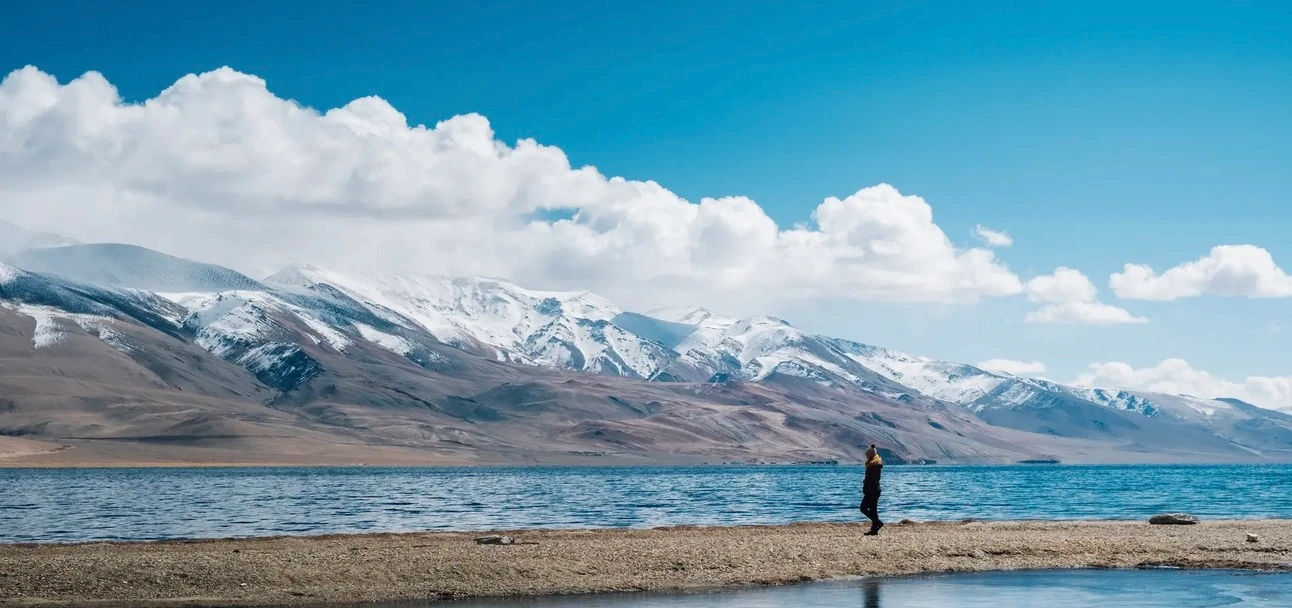
Leh-Ladakh is not merely Pangong Tso & Nubra Valley — it is many layered landscapes & experiences stacked one upon another. It is the utterly dark & star-thick sky of Hanle at 4,500 m, interrupted only by the faint orange glow of the IAO Observatory on the hilltop. It is the jaw dropping sight of a 12th century monastery clinging to a sheer cliff face above a roaring Zanskar gorge. It is the raw & audacious frontier of India at Turtuk — where golden apricots dry on Balti rooftops with Pakistan's Karakoram peaks looming behind. It is the exhilarating solitude of the Kanji–Rangdum trekking corridor where days pass without encountering another soul.
With tourist arrivals growing from 527 in 1974 to 5.25 lakh in 2023 — now exceeding Ladakh's entire resident population — the window of genuinely offbeat access to these hidden destinations is real but narrowing. Roads are improving. Permits are getting easier to obtain online. Awareness is spreading steadily among the serious traveler community.
Go with proper preparation, adequate permits & genuine respect for local Ladakhi culture & the fragile high-altitude ecosystem. Go with your motorcycle, trekking boots, camera or binoculars — or all four. The frozen rivers, cliff monasteries, salt lakes, dark skies & frontier villages of Ladakh will deliver experiences that no standard Leh package tour ever could.
Your Ladakh is waiting. Go beyond the tourist circuit.
Planning a biking route, trekking expedition or wildlife photography trip to any of these destinations? Drop your questions, travel dates & traveler type in the comments — our team will help plan your perfect Ladakh escape.