

Abhinav
Writer
Updated On - Sep 28, 2026
25 min
Published On - Sep 28, 2026
Solo Female Travel in India — A Realistic Safety & Planning Guide
No fearmongering, no false reassurance. This is the official safety data, the real emergency infrastructure, and the honest regional breakdown almost every other guide either skips or oversimplifies.
Ask about solo female travel in India and you'll generally get one of two answers, both unhelpful. Either a relative who's never been insists it's too dangerous to consider, or a breezy blog post insists it's all fine if you "walk with confidence" — as if confidence alone has ever stopped anything. Neither answer is built on the actual data, and both leave out the more useful, more specific question: safe compared to what, and prepared how?
Here's what the numbers actually say: solo bookings by Indian women grew ninefold year-on-year according to one major travel platform's 2026 index, and women now make up the majority of solo travellers globally, not a cautious minority. That growth isn't happening because India suddenly became risk-free — it's happening because the risk was always more specific, more manageable, and more regional than the generic warnings suggested. This guide is built to give you that specificity.
Before You Go — The
| Detail | Information |
|---|---|
|
National emergency number |
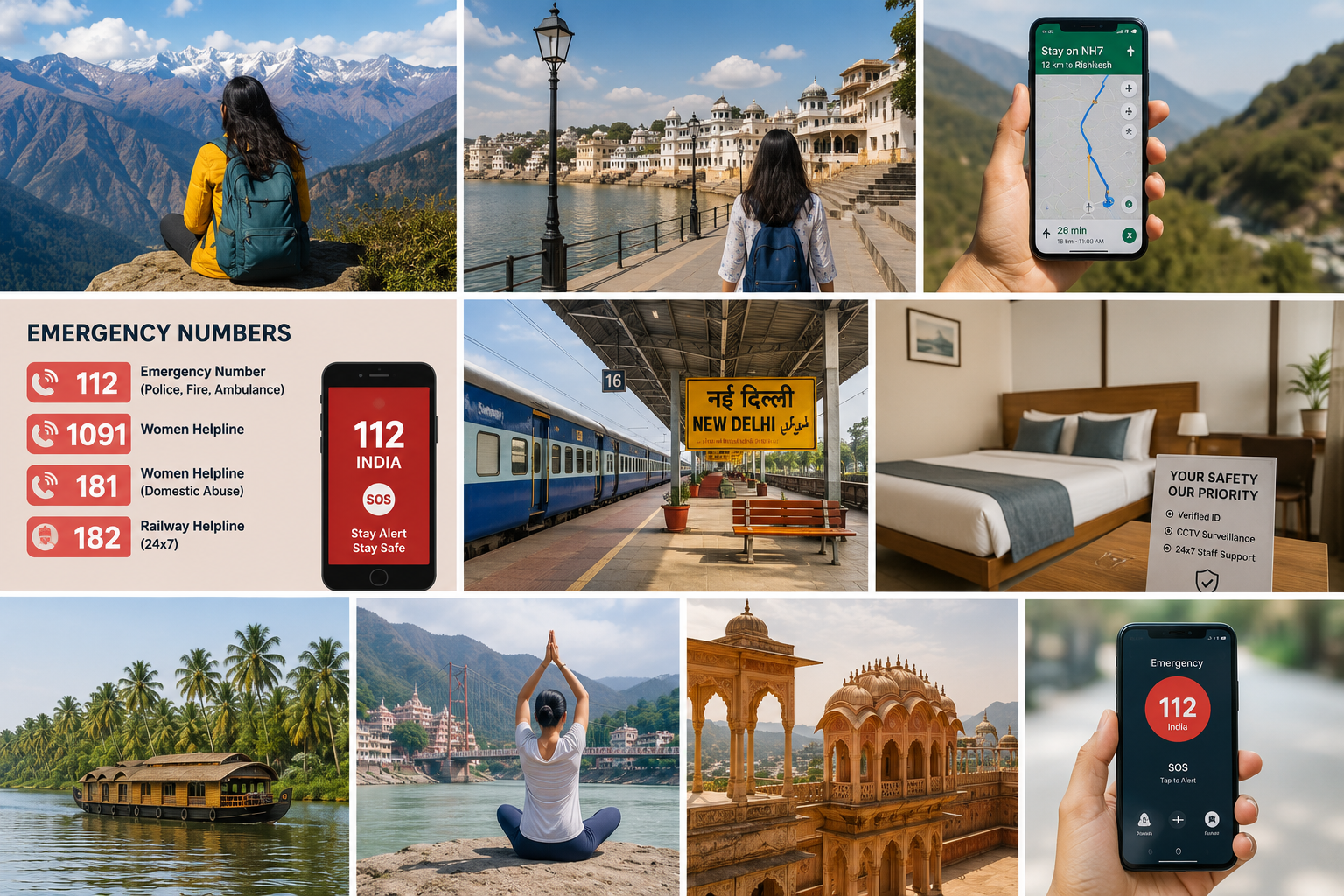
112 — connects to police, fire, and ambulance anywhere in India |
|
Women's helpline |
1091 (general) · 181 (domestic abuse/distress) · 182 (railway-specific, 24/7) |
|
Emergency app |
112 India (SOS + live GPS + SHOUT feature, alerts nearby registered volunteers) |
|
Your legal right |
You can file a Zero FIR at any police station, regardless of where the incident occurred |
|
Officially safest cities for women |
Kohima, Visakhapatnam, and Bhubaneswar top the 2025 national ranking — see below |
|
Foreign traveller registration |
Register with your embassy's travel program (e.g. India's MADAD portal for Indian nationals abroad; check your own country's equivalent for India) |
Before You Go
What the Official Data Actually Shows
Most solo-female-travel guides lean on anecdote — one blogger's experience, generalised into advice for everyone. There is, in fact, an official government safety index that almost none of them cite: the NARI 2025 report from India's National Commission for Women, which surveyed 12,770 women across 31 cities on infrastructure, harassment incidence, workplace security, trust in authorities, and day-versus-night safety perception.
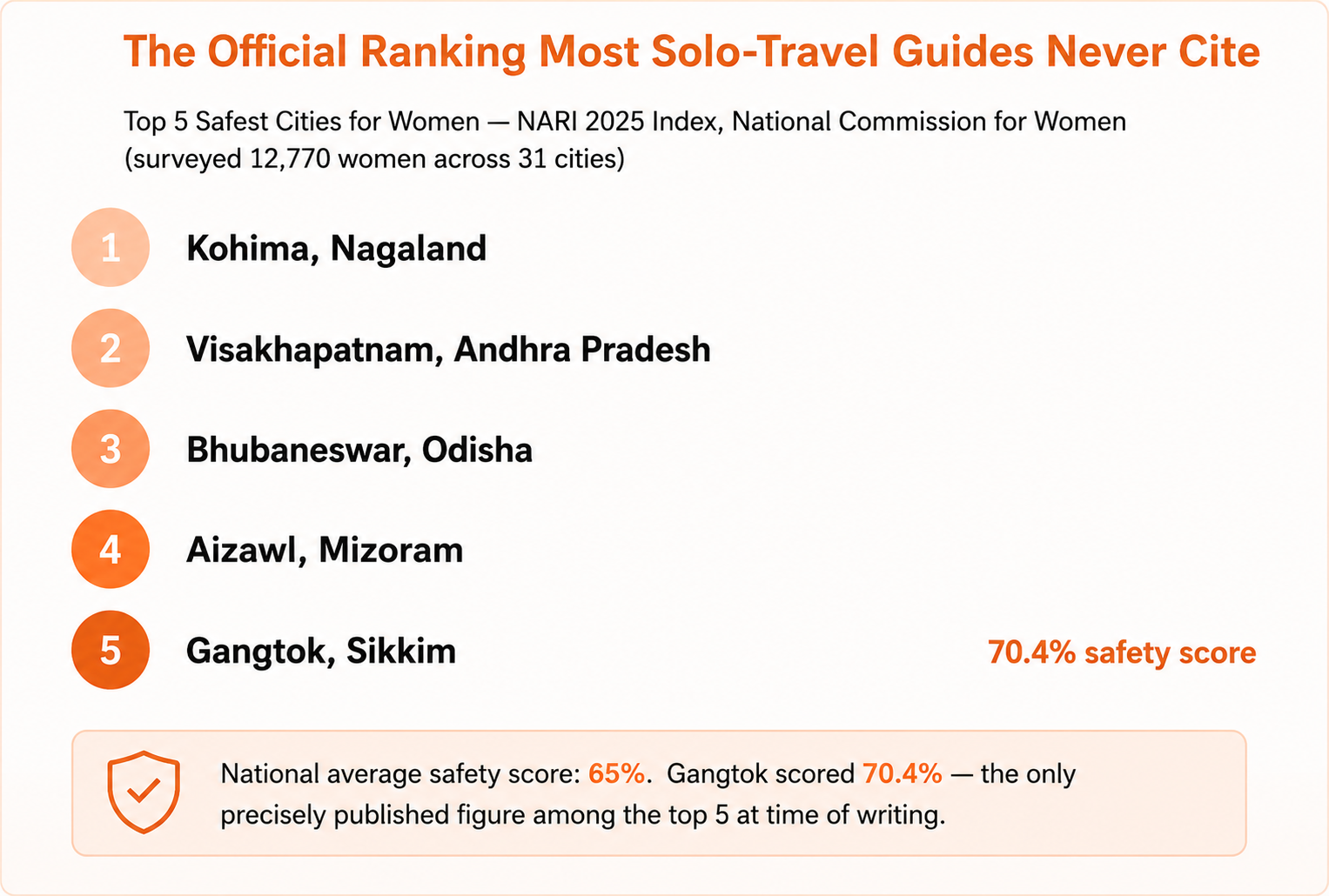
The result surprises most first-time researchers: none of India's biggest, most tourist-marketed cities take the top spots. Northeast India's Kohima leads the ranking, with Visakhapatnam and Bhubaneswar close behind — cities that rarely appear on a first-timer's shortlist precisely because they're less internationally marketed, not because they're less safe. Meanwhile, NCRB crime data separately shows Delhi recording the highest number of crimes against women among India's metro cities, while Kolkata, Bangalore, Chennai, Mumbai, and Pune consistently report the lowest big-city rates.
The honest takeaway isn't "avoid Delhi" or "only go to Kohima." It's that safety in India correlates far more with specific city and region than with the country as a single entity — which is exactly why a generic "is India safe" answer is the wrong question to be asking.
The Regional Reality — Because India Isn't One Place
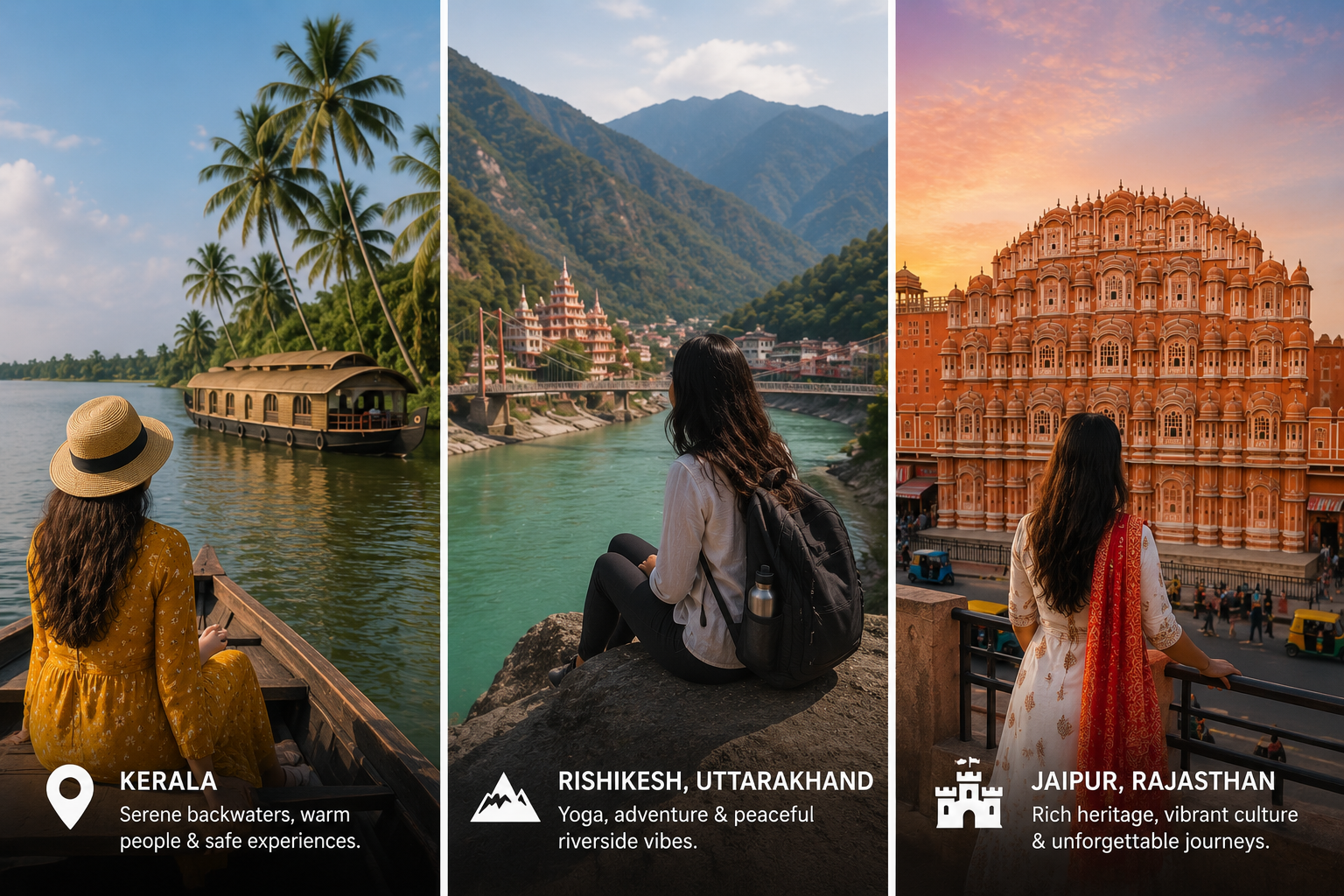
India spans 28 states and multiple culturally distinct regions, and treating solo female travel safety as a single national verdict is where most generic advice goes wrong. Here's a realistic, region-by-region breakdown based on infrastructure, tourism maturity, and reported experience.
| Region | Realistic Picture |
|---|---|
|
Kerala & South India |
Consistently rated among the most comfortable for first-time solo women — strong tourism infrastructure, high literacy, and a culture less prone to open staring or approach than parts of the north |
|
Rajasthan & North India heritage circuit |
Well-trodden and well-supported by tourism infrastructure, but expect more attention, more persistent vendors, and a higher baseline of unwanted staring — manageable with preparation, not a reason to avoid it |
|
Rishikesh & Himachal hill towns |
Widely considered welcoming for solo women, with an established yoga- and wellness-traveller community that makes solo dining and evening walks feel considerably less isolating |
|
Northeast India |
Statistically the safest region by the NARI index, though less tourism infrastructure exists outside the main hubs — worth researching connectivity and accommodation more carefully before independent travel |
|
Varanasi & Uttar Pradesh |
The Kashi Vishwanath Corridor redevelopment has materially changed Varanasi's ghats — better lighting, dedicated tourist police outposts, and 24/7 surveillance that didn't exist a decade ago |
|
Major metros (Delhi, Mumbai) |
Highest reported crime volume against women among metro cities (Delhi specifically), but also the highest concentration of police presence, CCTV, and app-based safe transport — awareness matters more here than in smaller towns |
The Regional Reality
The Emergency Infrastructure — What Actually Exists

This is the part most safety guides gesture at vaguely ("know the emergency numbers") without actually listing them. Here's what's genuinely available, and how each piece works.
| Resource | What It Does |
|---|---|
|
112 (national emergency number) |
Single number for police, fire, and ambulance under India's Emergency Response Support System — routes to the nearest response centre automatically |
|
112 India app — SHOUT feature |
Specifically for women and children: one tap alerts both the Emergency Response Centre and nearby registered volunteers, not just the police |
|
1091 / 181 (women's helplines) |
1091 for general safety concerns; 181 specifically for distress or domestic abuse situations, run through State Women's Commissions |
|
182 (railway helpline) |
24/7, multilingual — routes directly to the Railway Protection Force and Government Railway Police at the nearest station for train or platform incidents |
|
Zero FIR |
A little-known legal right: you can file a First Information Report at any police station in India, regardless of where the incident took place — it will be transferred to the correct jurisdiction, so you're never turned away for being in the "wrong" precinct |
|
Sakhi Centres |
500+ one-stop centres nationally offering medical, legal, and psycho-social support plus temporary shelter for women in distress |
The Emergency Infrastructure
Practical Precautions That Actually Matter
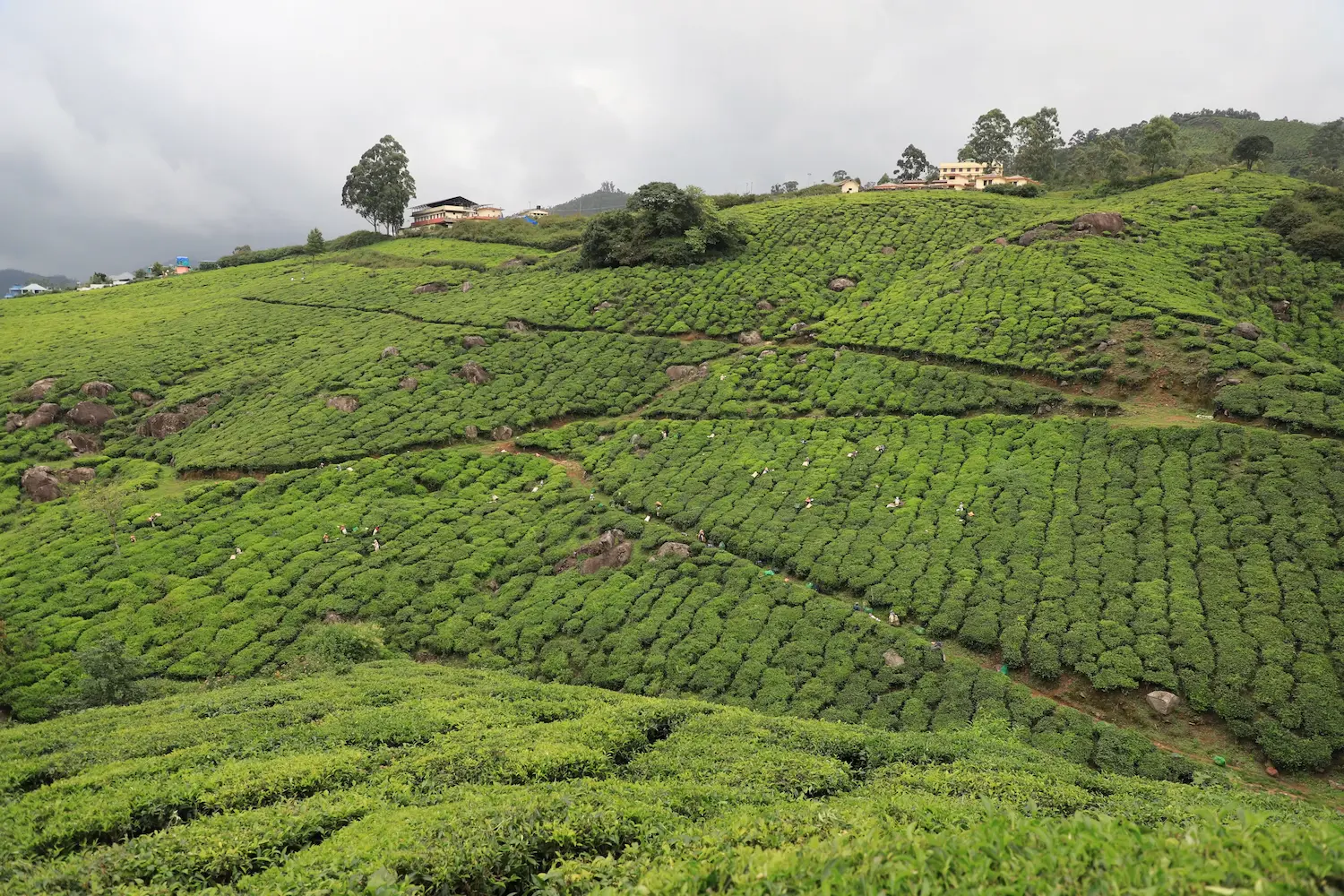
Skip the generic "trust your instincts" advice for a moment — here's what experienced solo women travellers in India specifically do differently from first-timers.
Choose aisle or window seats near the front on trains and buses, and book upper berths on overnight trains when possible — small logistical choices that reduce unwanted interaction more than any single behavioural rule.
Use app-based transport (Uber, Ola) over hailing informally, and note that both platforms offer a female-driver preference option in major cities — worth enabling even if it occasionally means a longer wait.
Share live location with someone you trust for the full duration of transit segments, not just at the start of a trip — this is standard practice among experienced solo travellers, not excessive caution.
Book accommodation with genuine reviews from other solo women specifically, not just a high overall rating — a property can be excellent for couples and still poorly suited to a woman travelling alone.
Dress with awareness of regional norms rather than a single national rule — looser, shoulders-and-knees-covered clothing reduces unwanted attention meaningfully more in smaller towns and religious sites than in Goa or central Mumbai.
If persistent unwanted attention occurs, moving toward a shop, hotel lobby, or any space with visible staff works more reliably than confrontation — India's service and hospitality culture treats an approaching foreign or domestic guest as something staff will actively intervene for.
Safety as a System, Not a Single Decision
The most common mistake in how this topic gets discussed is treating safety as one big yes-or-no judgment about a destination. In practice, experienced solo travellers stack several independent layers of protection, and no single layer needs to be perfect on its own.
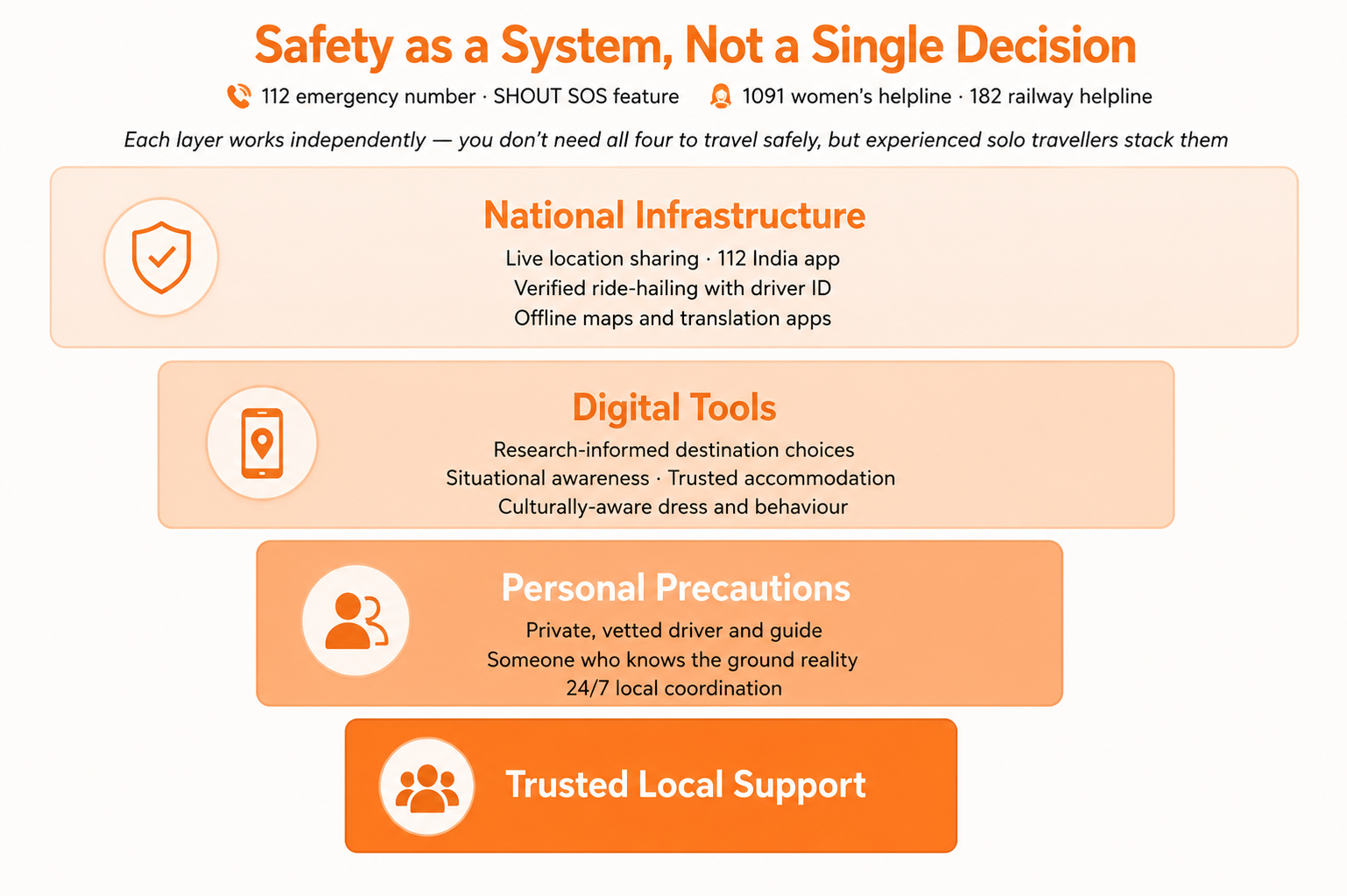
This is also where the honest case for a guided or semi-guided structure fits in, without romanticising it as the only valid way to travel. A fully independent solo trip across India is genuinely done by thousands of women every year and can be extraordinary. But for a first visit specifically, or for regions with less tourism infrastructure, having a vetted private driver and local guide isn't a concession — it's simply one more layer stacked on top of the national infrastructure and personal precautions already in place, and it's the layer that most directly replaces the guesswork of figuring out ground realities from scratch.
Quick Answers
Is India actually safe for solo female travellers?
Statistically and by lived report, yes for the large majority of visitors — but safety varies meaningfully by specific city and region, which is why this guide leads with the NARI index rather than a single verdict.
What's the single most useful safety tool to set up before arriving?
The 112 India app, specifically for its SHOUT feature — it's free, works nationally, and alerts more than just the police in an emergency.
Should I avoid Delhi entirely given the NCRB data?
No — Delhi also has the highest concentration of tourist police, CCTV, and app-based safe transport of any Indian city. Higher reported crime volume partly reflects better reporting infrastructure, not necessarily higher actual risk to a well-prepared visitor. Standard precautions matter more there than in smaller towns, not that the city should be skipped.
Is it culturally acceptable for a woman to dine or travel completely alone in India?
Increasingly yes, especially in tourist-established areas — Rishikesh, Goa, Kerala, and the main heritage circuit all have visible, normalised solo female traveller presence. It's less common, though not unheard of, in smaller towns off the main circuit.
What should I do if I experience harassment?
Move toward a public space with visible staff (a shop, hotel, or restaurant) rather than confronting the situation directly, and use 112 or 1091 if it escalates. You have the right to file a Zero FIR at any police station, not just the one nearest to where it happened.
Before You Book
The honest version of this guide doesn't end with either "don't worry, you'll be fine" or a list of dangers designed to talk you out of going. It ends with what the data, the infrastructure, and thousands of women's actual experiences consistently show: India rewards preparation more than it punishes solo travel, and the gap between a difficult trip and an extraordinary one is almost always in the planning done before you land, not in luck once you're there.
BizareXpedition's Women's Solo Luxury itineraries build in exactly the fourth layer this guide describes — a vetted private driver and guide, a female-guide option where preferred, and a 24/7 local coordinator, on top of everything you're already doing right by reading this far. Tell us where you're drawn to, and we'll handle the ground reality.
Best Selling Tour Packages
Explore other exciting options for your next adventure!