

Abhinav
Writer
Updated On - Aug 12, 2026
15 min
Published On - May 11, 2026
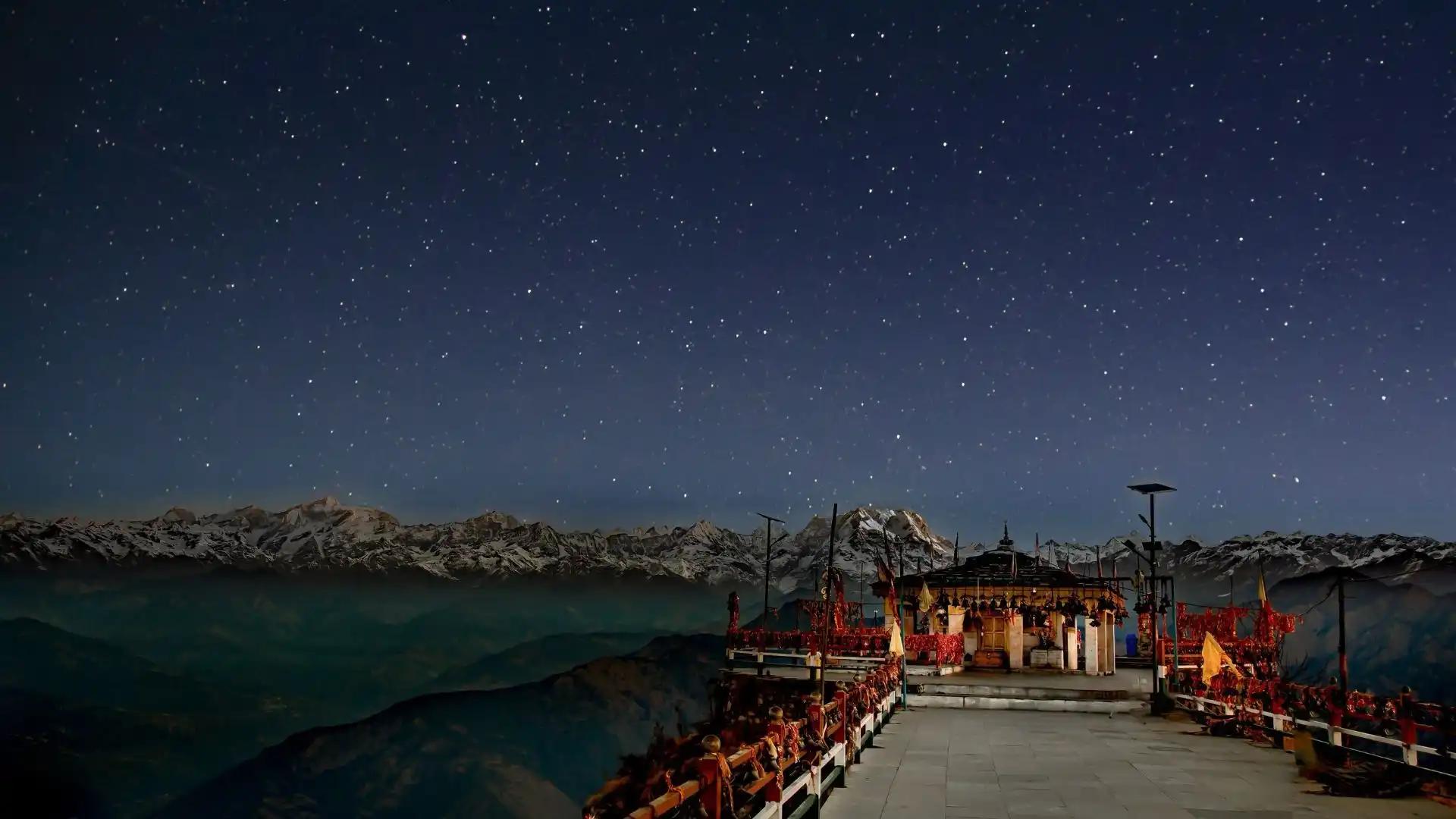
Under a Sky That Cities Have Forgotten: Dark Sky Stargazing and Astro Camping in Uttarakhand
Escape the city lights and witness a sky full of stars in the peaceful mountains of Uttarakhand. Experience astro camping, Milky Way views, bonfires, and unforgettable nights under the Himalayan sky. A perfect adventure for nature lovers, photographers, and stargazing enthusiasts.
Most people who visit Uttarakhand go for the temples, the treks or the rivers, and come back talking about the mountains. A smaller, quieter group goes for the night sky — and they tend not to talk about it much at all, partly because it is difficult to describe, and partly because they are hoping you won't find out about it before they go back.
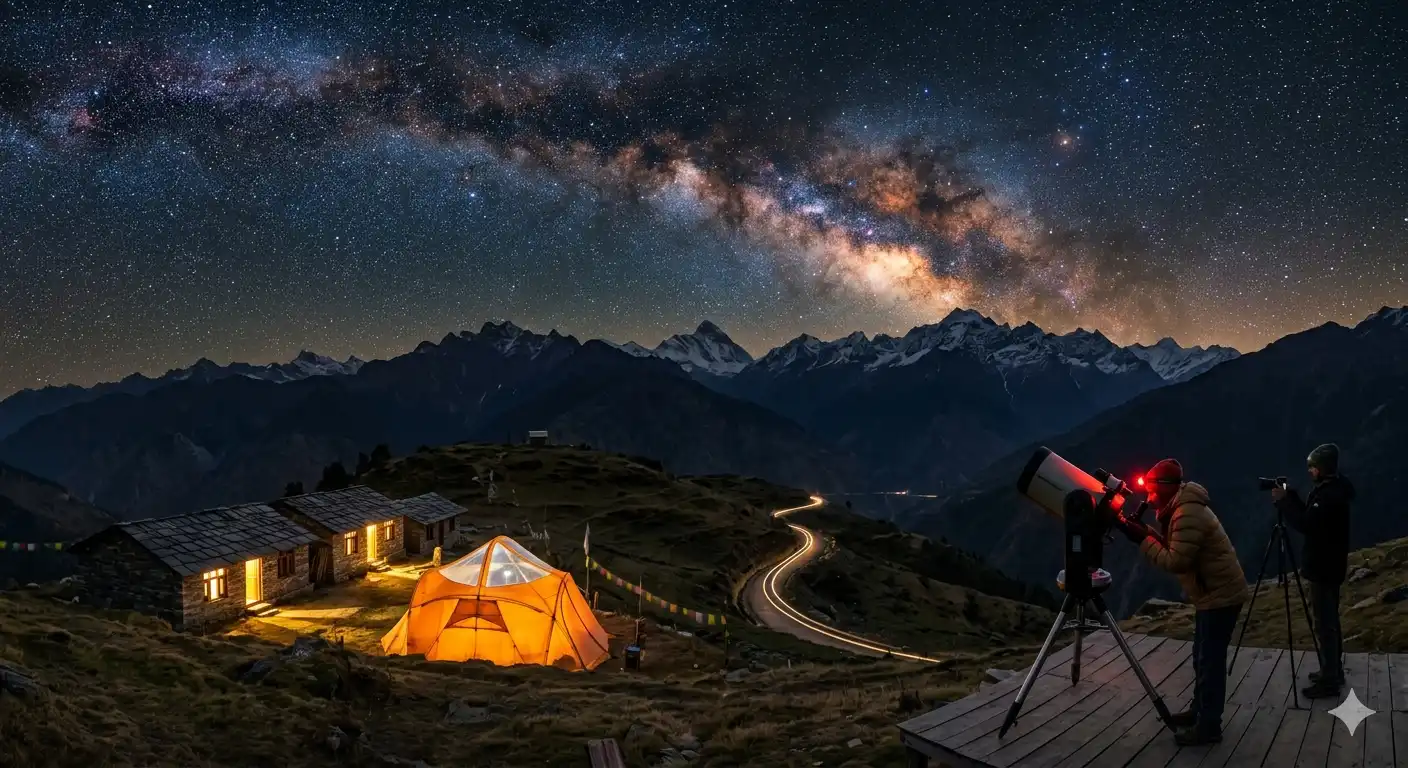
The scale of what most Indians are missing is worth stating plainly. Over 70% of India's population lives under light-polluted skies, and in cities like Delhi the nighttime brightness is 40 to 50 times higher than what scientists consider natural. On a clear night in Delhi you can see perhaps 20 to 50 stars. At Chopta or Munsiyari, several thousand are visible to the naked eye and the Milky Way — our own galaxy, which most city residents have never once seen — becomes a dense, luminous band stretching from one ridge to the other. Globally, 80% of the world's population cannot see it from where they live. The area under artificial light in India grew by a third between 2012 and 2016, roughly three times the global average rate, and has not slowed since.
Astro-tourism is one of the fastest-growing forms of travel in the country. The numbers below tell that story, and the rest of this guide tells you where to go, when to go, and exactly what to do when you get there.
India Dark Sky & Astro-Tourism: Key Facts and Figures
| Fact | Figure / Source |
|---|---|
|
Global astro-tourism market value (2025) |
$1.18 billion (MarketIntelo, 2026) |
|
Projected global market by 2034 |
$3.47 billion — CAGR 12.7% |
|
India astronomy tourism market (2030 projection) |
$137.3 million — CAGR 43.1% (Grand View Research) |
|
Population living under light-polluted skies — India |
Over 70% |
|
Population that cannot see the Milky Way — globally |
80% (DarkSky International / Science Advances) |
|
Delhi nighttime brightness vs natural level |
40–50 times higher (Prana Air / Springer study) |
|
Stars visible on a clear Delhi night |
20–50 |
|
Stars visible at Chopta / Munsiyari (naked eye) |
Several thousand |
|
Growth of area under artificial light in India (2012–16) |
+33% — 3× the global average rate (IndiaSpend) |
|
Certified astro-tourism guides trained in Uttarakhand |
500, across 14 destinations (UTTB / Starscapes) |
|
India's first Dark Sky Reserve |
Hanle, Ladakh — 4,500m, 250+ clear nights/year |
|
India's first Dark Sky Park |
Pench Tiger Reserve, Maharashtra (Jan 2024) |
Key Facts and Figures
Where to Go in Uttarakhand
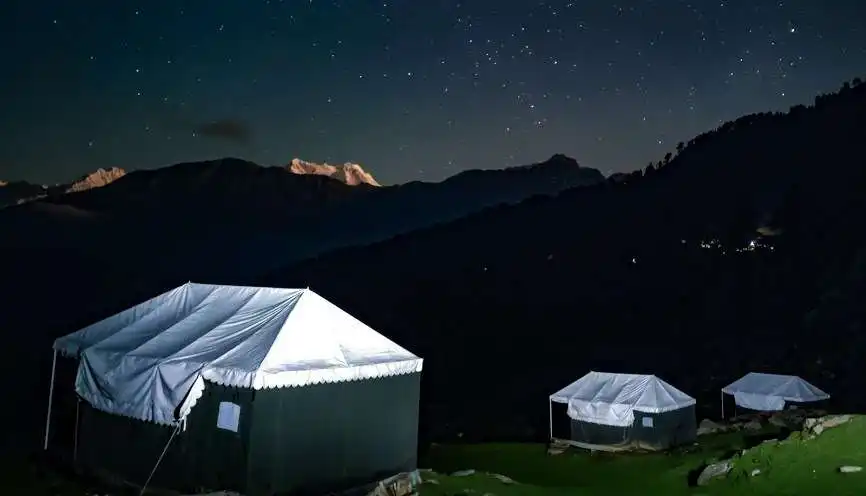
Uttarakhand has several dark sky locations within reach of Delhi, each with a distinct character. Chopta is the most accessible and the most photographed. Munsiyari is the darkest and the most remote. Deoria Tal is the one you go to for the reflection shot that photographers obsess over. The table below maps the key variables so you can match the location to what you are looking for.
Location Comparison: Uttarakhand and Beyond
| Location | Altitude | Bortle Class | Best Season | Distance from Delhi | Key Draw |
|---|---|---|---|---|---|
|
Chopta |
2,600m |
3–4 |
Apr–Jun, Sep–Nov |
~460km / 10–11hrs |
Milky Way over Chandrashila ridge; Tungnath silhouette |
|
Deoria Tal |
2,438m |
3–4 |
Apr–Jun, Sep–Nov |
~450km / 10hrs |
Milky Way reflection in still lake water |
|
Munsiyari |
2,200m |
2–3 |
Mar–Jul, Sep–Nov |
~530km / 12hrs |
Darkest in Uttarakhand; star trail photography |
|
Chandrashila Summit |
4,000m |
2–3 |
Apr–Jun, Sep–Oct |
~460km + trek |
Panoramic 360° view; above most atmospheric haze |
|
1,890m |
3–4 |
Oct–Apr |
~320km / 7hrs |
Starscapes private observatory; beginner-friendly |
|
|
2,286m |
3–4 |
Sep–Apr |
~330km / 7hrs |
Observatory with guided sessions; accessible |
|
|
4,500m |
1 |
Jun–Sep |
~1,000km / fly |
India's only certified Dark Sky Reserve; best in country |
|
|
3,800–4,500m |
2 |
Jun–Oct |
~700km / fly+drive |
Crown jewel of Indian stargazing; Milky Way casts shadows |
Location Comparison: Uttarakhand and Beyond
A note on the Bortle Scale for those encountering it for the first time: it rates sky darkness from 1 (the darkest wilderness skies on earth, where the Milky Way casts visible shadows) to 9 (the inner-city sky of a major metropolis, where you can see perhaps a dozen stars). Most Indian cities sit at Bortle 7 to 9. The key Uttarakhand locations range from Bortle 2 to 4, which is the range where the night sky genuinely surprises people who have only ever looked up from a city.
Chopta
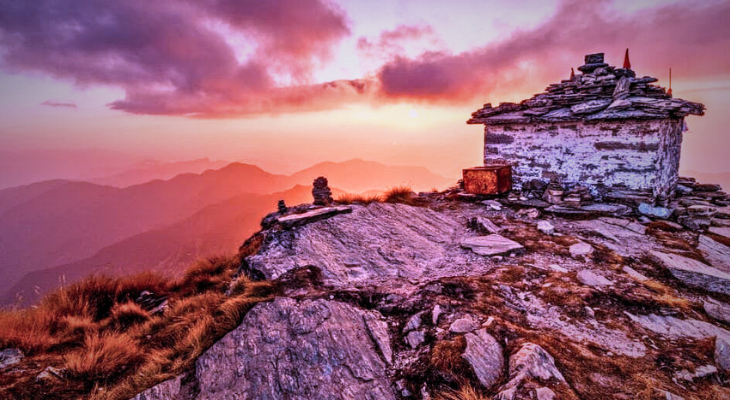
Chopta is everything: a base camp for the Tungnath-Chandrashila trek, one of the finest birding sites in the Western Himalayas, and for astro-photographers and casual stargazers alike, one of the most reliably dark locations in northern India. It sits at 2,600 metres in the Kedarnath Wildlife Sanctuary in Rudraprayag district, about 220 kilometres from Dehradun via Rishikesh, Devprayag and Rudraprayag — six to seven hours by road. The open meadow slopes give you an unobstructed sightline to the southern horizon, the direction of the Milky Way's galactic core. The Baniyakund camp below Tungnath temple — the world's highest Shiva shrine, at 3,680 metres — is the setting most astrophotographers return to specifically.
Chopta lies inside a protected wildlife sanctuary, so random camping is prohibited; you need to stay at an organised, designated camp site. A forest entry fee is collected at the Dugalbitta check-post. Plastic, alcohol and non-biodegradable items are not permitted. The rules are enforced, and it is precisely because they are that the darkness is still as complete as it is.
Deoria Tal
Deoria Tal is a lake at 2,438 metres on the Ukhimath-Chopta road, reached by a three-kilometre trek from Sari village. When the lake surface is calm — most reliably around 2 to 3 a.m. before the mountain breeze picks up — the Milky Way reflects in the water so precisely that sky and lake are barely distinguishable. It is the image that astrophotographers plan trips around.
Munsiyari
Munsiyari, in Pithoragarh district at 2,200 metres below the Panchachuli peaks, is consistently the darkest location in the state. Light pollution measurements here are essentially zero — this is a satellite-data measurement, not a figure of speech. The drive from Haldwani takes around ten hours, which is part of why the sky has remained what it is. For star trail photography it has no equal in Uttarakhand.
When to Go: Seasonal and Moon Phase Guide
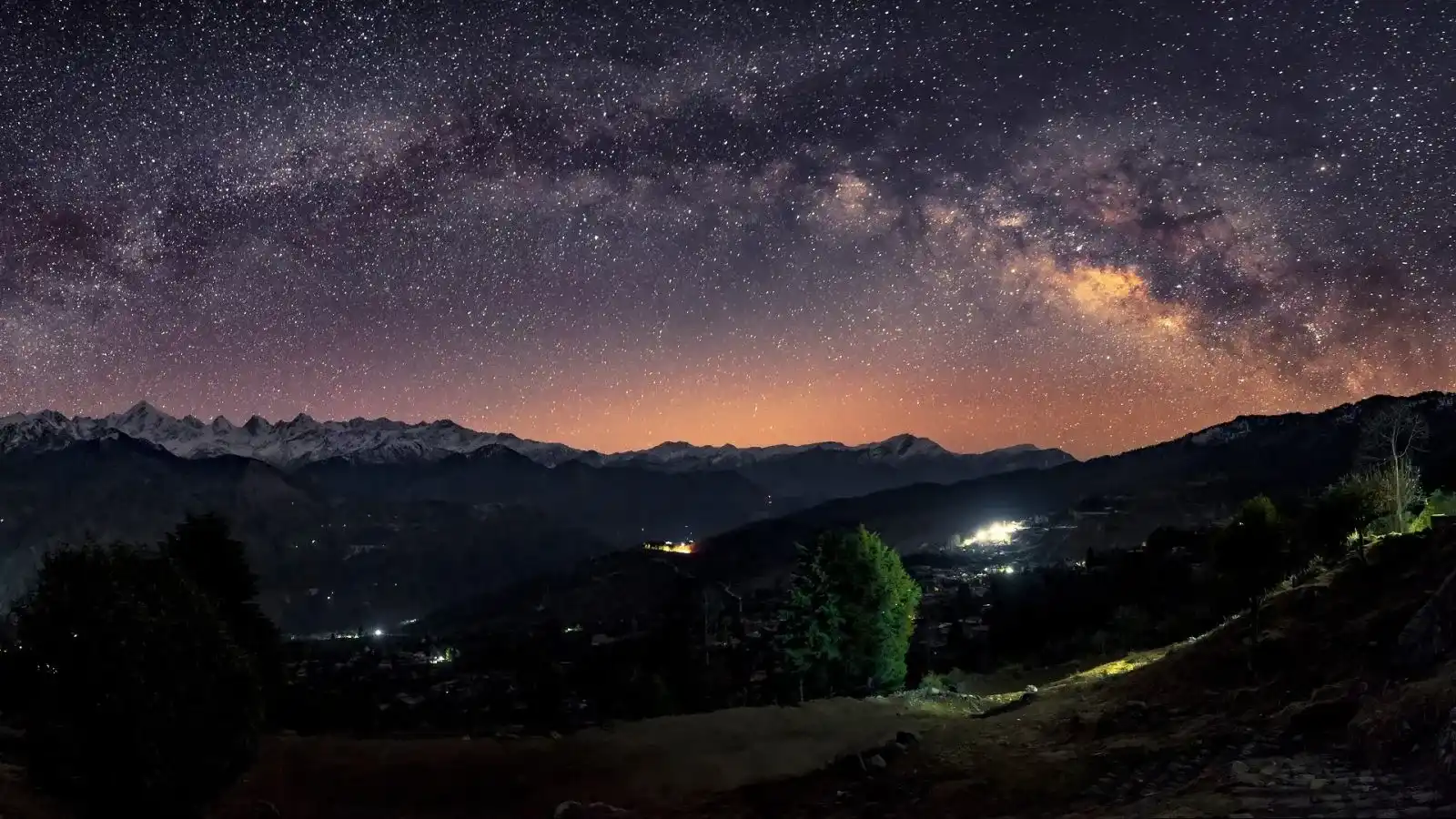
The Milky Way's galactic core is visible from approximately March through October in the northern hemisphere, peaking between May and August. Within any given month, the moon phase is the single most important variable — a full moon washes the Milky Way out entirely. The table below maps both: which months have good sky conditions at Chopta, and what the core visibility looks like across the year.
| Month | Milky Way Core Visibility (N. Hemisphere) | Chopta / Uttarakhand Sky | Best For Astro? |
|---|---|---|---|
|
January |
Not visible (pre-season) |
Clear but extreme cold; −10°C+ nights |
No — too cold for most; winter specialists only |
|
February |
Not visible |
Clear; heavy snow on upper trails |
No |
|
March |
Rising late (2–4 AM) |
Generally clear; rhododendrons beginning |
Yes — moon-phase dependent |
|
April |
Good (rises ~11 PM) |
Excellent; rhododendrons in full bloom |
Best month overall |
|
May |
Peak visibility (rises ~9 PM) |
Very good; warm enough to camp comfortably |
Peak season — highly recommended |
|
June |
Peak visibility |
Pre-monsoon clouds building; unpredictable |
Good early June; deteriorates later |
|
July |
Visible but monsoon disrupts |
Monsoon — most nights cloudy |
Not recommended |
|
August |
Visible but monsoon disrupts |
Monsoon continues |
Not recommended |
|
September |
Good (sets earlier) |
Post-monsoon clarity; excellent skies |
Very good — often underrated |
|
October |
Good through mid-month |
Outstanding clarity; cold but manageable |
Second-best month; highly recommended |
|
November |
Fading (sets ~10 PM) |
Very clear; nights getting cold |
Good for early November |
|
December |
Season ends |
Clear and dry; extreme cold at altitude |
Not recommended for beginners |
Seasonal and Moon Phase Guide
Photographing the Milky Way
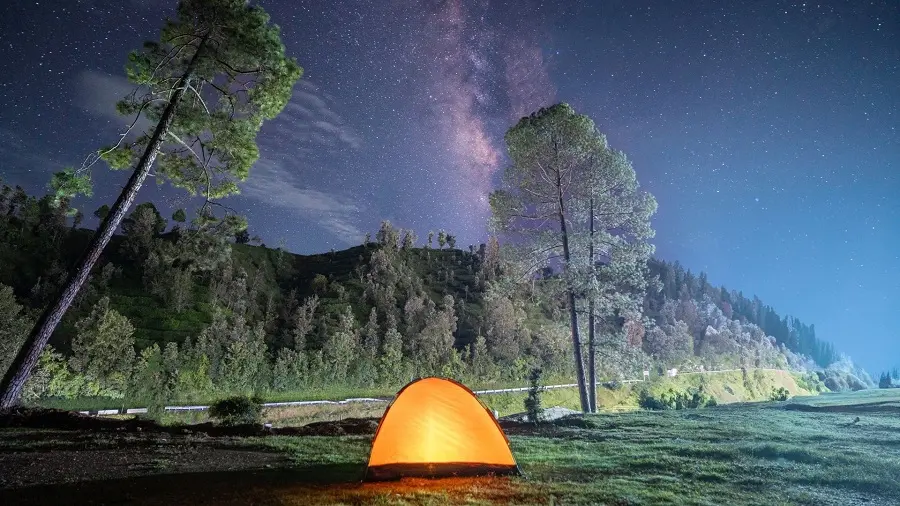
The Milky Way is not difficult to photograph once you understand what the camera needs. A DSLR or mirrorless camera with manual controls, a wide-angle lens in the 14 to 24mm range, and a solid tripod are the essentials — no specialist astronomical equipment required. Focus is the most common point of failure: autofocus does not function in darkness. Switch to live view, magnify the brightest star digitally, and turn the focus ring until it resolves to the sharpest possible point. Do this once at the start of the night and do not touch the focus ring again. The full settings reference is below.
| Camera Setting | Recommended Value | Why It Matters |
|---|---|---|
|
Mode |
Manual (M) |
Full control over all three exposure variables |
|
Aperture |
f/1.4 – f/2.8 (widest available) |
More light in = more stars visible; f/2.8 is the practical minimum |
|
ISO |
3200 – 6400 |
Full-frame cameras: up to 12800. Crop-sensor: stay at 1600–3200 |
|
Shutter Speed |
15 – 25 seconds |
Use the 500 Rule: 500 ÷ focal length = max seconds before star trails |
|
500 Rule at 16mm |
Max ~31 seconds |
Wider lens = more time before trailing appears |
|
500 Rule at 24mm |
Max ~20 seconds |
Standard wide-angle; 20s is the safe ceiling |
|
500 Rule at 50mm |
Max ~10 seconds |
Normal lens — too short for easy Milky Way work |
|
Lens focal length |
14mm – 24mm (wide-angle) |
The Milky Way spans a large portion of sky; narrow lens misses it |
|
Focus |
Manual — focus on brightest star |
Autofocus fails in darkness; use live view + digital zoom to nail it |
|
White Balance |
3800K – 4000K |
Gives natural, slightly cool tone; adjust in RAW editing if needed |
|
File format |
RAW |
Preserves all data for post-processing; JPEG loses shadow detail |
|
Tripod |
Essential — no exceptions |
Any camera movement during a 20-second exposure ruins the shot |
|
Shutter release |
Remote or 2-second timer |
Pressing the shutter button causes vibration that softens stars |
Photographing the Milky Way
For planning — figuring out precisely where the Milky Way will be positioned at any given location on any given night — PhotoPills is the standard tool among serious astrophotographers; it lets you visualise the composition weeks before you arrive. Stellarium maps the wider sky. Smartphone photographers using an iPhone 15 Pro or Samsung S24 Ultra with astrophotography mode on a tripod will capture the Milky Way at a genuine dark-sky location like Chopta; it is not the same as a full-frame camera with a fast lens but it is considerably better than most people expect.
Quick Reference: Everything You Need to Know Before You Book
The table below condenses the most common questions travellers have before a first astro-camping trip in Uttarakhand.
| Question | Answer |
|---|---|
|
Best single location for first-timers? |
Chopta — accessible, spectacular foreground, Bortle 3–4, organised camps available |
|
Best for astrophotography (reflection)? |
Deoria Tal — Milky Way reflects in the lake; best at 2–3 AM on moonless nights |
|
Darkest sky in Uttarakhand? |
Munsiyari — Bortle 2–3, effectively zero light pollution, ideal for star trails |
|
Best month overall? |
April — galactic core visible, rhododendrons in bloom, clear skies, manageable temperatures |
|
When NOT to go? |
July–August (monsoon); December–January unless experienced in extreme cold camping |
|
Moon phase rule? |
Plan within 7 days either side of new moon; full moon washes the Milky Way out entirely |
|
Minimum camera gear needed? |
Any DSLR/mirrorless in manual mode + wide lens (f/2.8 or faster) + solid tripod |
|
Can a smartphone work? |
Yes — iPhone 15 Pro, Samsung S24 Ultra with astrophotography mode on tripod at Chopta |
|
Best planning apps? |
PhotoPills (composition planning), Stellarium (sky map), Windy (mountain weather) |
|
Is a guide necessary? |
Not mandatory but strongly recommended — certified guides available at Chopta, Munsiyari, Kausani |
|
Travel time from Delhi to Chopta? |
~460km; 10–11 hours via Rishikesh, Devprayag, Rudraprayag, Ukhimath |
|
Can this be done as a weekend trip? |
Yes — leave Delhi Friday night, arrive Chopta Saturday morning, night sky Saturday night, return Sunday |
|
Camping rules at Chopta? |
Only organised camps in designated areas; no random camping inside Kedarnath Wildlife Sanctuary |
|
What does Bortle 3–4 actually mean? |
Milky Way clearly visible with structural detail; thousands of stars naked-eye; deep-sky objects in telescope |
Everything You Need to Know Before You Book
A Window That Is Still Open
Light pollution spreads quietly. The sky above Nainital is already measurably compromised compared to a decade ago. Areas around Mussoorie have shifted. Chopta, inside a protected sanctuary with rules that are enforced, is more sheltered than most — but road development along the outer approaches is visible, and the question of how long the darkness will last is one that practitioners of dark sky tourism in the region think about. The Uttarakhand government's programme to certify local astro guides and build rural livelihoods around dark sky preservation is also a conservation argument: when a community depends on the darkness above it, that darkness acquires a constituency that advocates for its protection.
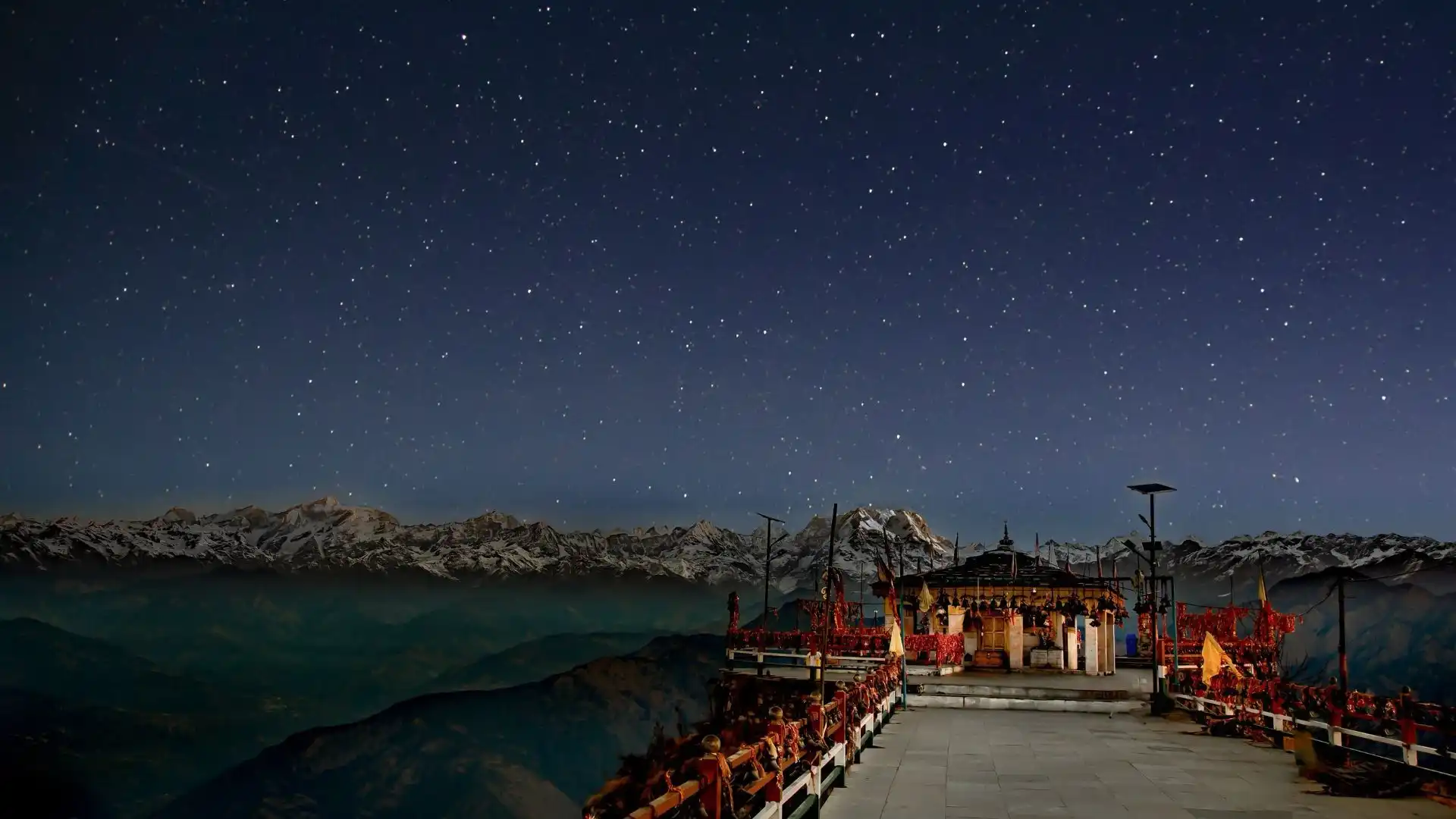
The sky above Chopta on a clear October night — Bortle 3, the Milky Way's structural detail visible to the naked eye, the Chandrashila ridge black against it, the meadow silent and cold — has been there for five billion years. The window to see it clearly from this particular hillside is considerably shorter. It is worth using.