
Abhinav
Writer
Updated On - Jun 04, 2026
30 min
Published On - May 05, 2026
Beyond the Tourist Trail: Unexplored Uttarakhand Villages for Every Kind of Traveler
Discover the hidden charm of Uttarakhand through its unexplored villages, far from crowded tourist spots. From peaceful mountain hamlets to culturally rich local communities, these destinations offer authentic experiences for every kind of traveler. Whether you seek adventure, nature, or tranquility, these offbeat villages reveal a different side of the Himalayas. Experience slow travel, scenic beauty, and untouched traditions.
Uttarakhand has many popular tourist destinations like Rishikesh, Mussoorie & Haridwar and these places attract millions of visitors every peak season. However, Uttarakhand also boosts a treasure trove of lesser-known villages — tucked deep within its Garhwal & Kumaon hills — which offer equally exhilarating, serene & spiritually enriching experiences for all kind of traveler i.e. trekkers, spiritual seekers, photographers & nature admirer. These offbeat villages are largely untouched by mass tourism & offer authentic Himalayan experience, warm local hospitality & stunning natural beauty.
This guide covers 12 such unexplored villages of Uttarakhand, categorized specifically for trekkers, spiritual seekers & photographers, along with complete practical information on how to reach, where to stay, best time to visit & key activities which can be relished at each destination.
The New Traveller & Why These Villages Are the Answer
The mindset of today's Indian traveler has shifted considerably. Overcrowding at popular Uttarakhand destinations like Nainital, Mussoorie & Rishikesh has given rise to a new breed of explorer who actively seeks authentic, uncrowded & meaningful travel experience. Understanding this shift is important to understand why offbeat Uttarakhand villages deserve serious attention.
Overtourism Fatigue: Popular Uttarakhand hill stations face acute overcrowding during peak season, leading to inflated accommodation prices, traffic snarls, degraded environment & diluted experience. Offbeat villages offer serene, unhurried alternative to this chaos.
Experience-Driven Travel: Today's traveler prefers experience over mere sightseeing — homestays with local families, village walks, cooking local Kumaoni or Garhwali food, attending temple rituals & trekking with guides who grew up on those very trails. These villages cater perfectly to this demand.
Solo Travel & Trekking Boom: Solo travel in India has grown considerably, with Uttarakhand being one of the most preferred states for solo trekkers, solo women travelers & backpackers seeking offbeat trails & affordable village homestays.
Workcation & Slow Travel Culture: Remote work culture has created a new traveler type who can stay in a Himalayan village for 02-04 weeks, working during daytime & exploring forests, trails & local culture in evenings. Villages like Peora, Khirsu & Pangot are already catering to this growing tribe of slow travelers.
How This Guide Helps: Whether you are a first-timer unsure where to begin, a seasoned trekker searching for next trail less taken, a photographer scouting raw Himalayan landscapes, or a spiritual seeker looking beyond the crowded pilgrimage queues — this guide maps the exact kind of Uttarakhand you are looking for, with factual & practical information for real trip planning.
Uttarakhand Tourism — Key Statistics
Uttarakhand's tourism growth numbers underline both the massive popularity of the state & the urgency of exploring its offbeat corners before they too get overwhelmed by footfall.
54.64 million domestic tourists visited Uttarakhand in 2022 (India Tourism Statistics 2023)
Tourism contributes approximately 14.57% to Uttarakhand's State GDP (SGDP)
Tourist arrivals grew at a CAGR of 11.97% from 2014 to 2019; post-Covid growth has multiplied significantly
Uttarakhand targets doubling tourist inflow to 70 million by 2030 (Vision 2030)
Nearly 5,000 registered homestays operational across the state — and growing rapidly
Nakshatra Sabha astro-tourism campaign launched June 2024 — positioning Uttarakhand as a global dark-sky destination
State government targets average tourist stay of 4–5 days (currently lower)
Foreign tourist proportion among non-religious visitors targeted to reach 5%
GST on hotel tariffs up to ₹7,500 reduced from 12% to 5% — making offbeat stays more affordable
These numbers make one thing clear — Uttarakhand's most celebrated spots are heading towards saturation. The offbeat villages covered in this guide currently receive a tiny fraction of this footfall. The window of unhurried, authentic access to these places exists now — but it will not remain open indefinitely as infrastructure improves & awareness spreads.
Village Quick Reference Table — Find Your Perfect Match
The table below covers all 12 villages with key factual details for quick comparison & trip planning. Suitable time, ideal traveler type, key activities & approximate stay budget are mentioned for each village.
| Village | District | Altitude | Nearest Railhead | Best Time | Ideal For | Key Activities | Stay/Night |
|---|---|---|---|---|---|---|---|
|
Sankri |
Uttarkashi |
1,920 m |
Dehradun – 200 Km |
Oct – Jun |
Trekkers |
Kedarkantha Trek, Har Ki Dun, Ruinsara Lake |
₹700–1,500 |
|
Munsiyari |
Pithoragarh |
2,200 m |
Kathgodam – 275 Km |
Apr–Jun, Sep–Nov |
Trekkers, Honeymooners |
Milam Glacier, Ralam Glacier, Panchachuli views |
₹800–2,000 |
|
Lohajung |
Chamoli |
2,350 m |
Haridwar – 220 Km |
May–Jun, Sep–Oct |
Trekkers |
Roopkund Trek, Ali Bedni Bugyal |
₹600–1,200 |
|
Chopta |
Rudraprayag |
2,680 m |
Haridwar – 225 Km |
Mar–Apr, Dec–Feb |
Trekkers, Snow seekers |
Tungnath-Chandrashila Trek, Deoria Tal |
₹800–2,500 |
|
Mana Village |
Chamoli |
3,200 m |
Haridwar – 297 Km |
May – Oct |
Spiritual seekers |
Vyas Gufa, Bheem Pul, Saraswati river origin |
₹500–1,000 |
|
Jageshwar |
Almora |
1,870 m |
Kathgodam – 125 Km |
Year-round |
Spiritual seekers |
124 ancient Shiva temples, Jataganga river walk |
₹700–1,500 |
|
Triyuginarayan |
Rudraprayag |
1,980 m |
Haridwar – 220 Km |
May–Jun, Sep–Nov |
Spiritual seekers |
Eternal Dhuni temple, 5 Km trek from Sonprayag |
₹600–1,200 |
|
Kalpeshwar |
Chamoli |
2,200 m |
Haridwar – 255 Km |
Year-round |
Spiritual seekers |
Panch Kedar cave shrine, Urgam Valley drive |
₹500–1,000 |
|
Khirsu |
Pauri Garhwal |
1,700 m |
Kotdwar – 115 Km |
Oct – Mar |
Photographers |
300 peak panorama, apple orchards, forest walks |
₹1,000–2,000 |
|
Harsil |
Uttarkashi |
2,620 m |
Dehradun – 192 Km |
Apr–Jun, Sep–Nov |
Photographers, Nature lovers |
Bhagirathi riverside, deodar forest, old wooden architecture |
₹1,200–3,000 |
|
Peora |
Nainital |
1,800 m |
Kathgodam – 60 Km |
Mar–May, Sep–Nov |
Photographers, Workcation |
Fruit orchards, terraced fields, village walks |
₹1,000–2,500 |
|
Pangot |
Nainital |
2,000 m |
Kathgodam – 75 Km |
Nov – Mar |
Bird photographers |
200+ bird species, forest trails, birding guides |
₹1,500–4,000 |
Uttarakhand Village Quick Reference Table
*Stay budget figures are approximate per night estimates for homestays & budget guesthouses. GMVN/KMVN government rest houses are available at most destinations from approx. ₹750/night onwards.
Part 1: Hidden Villages for Trekkers
Uttarakhand boosts some of the finest trekking terrain in India. Beyond the well-known Char Dham corridors, a vast network of lesser-trodden trekking routes begins from villages that most travelers have never heard of. These 04 villages serve as ideal base camps & gateways for trekkers of all levels — beginners, intermediate & professional alike.
1. Sankri — The Trekker's Base Camp Village
Sankri Village Uttarkashi
District: Uttarkashi | Altitude: 1,920 m | Distance: Approx. 200 Kms from Dehradun | Best Time: October – June
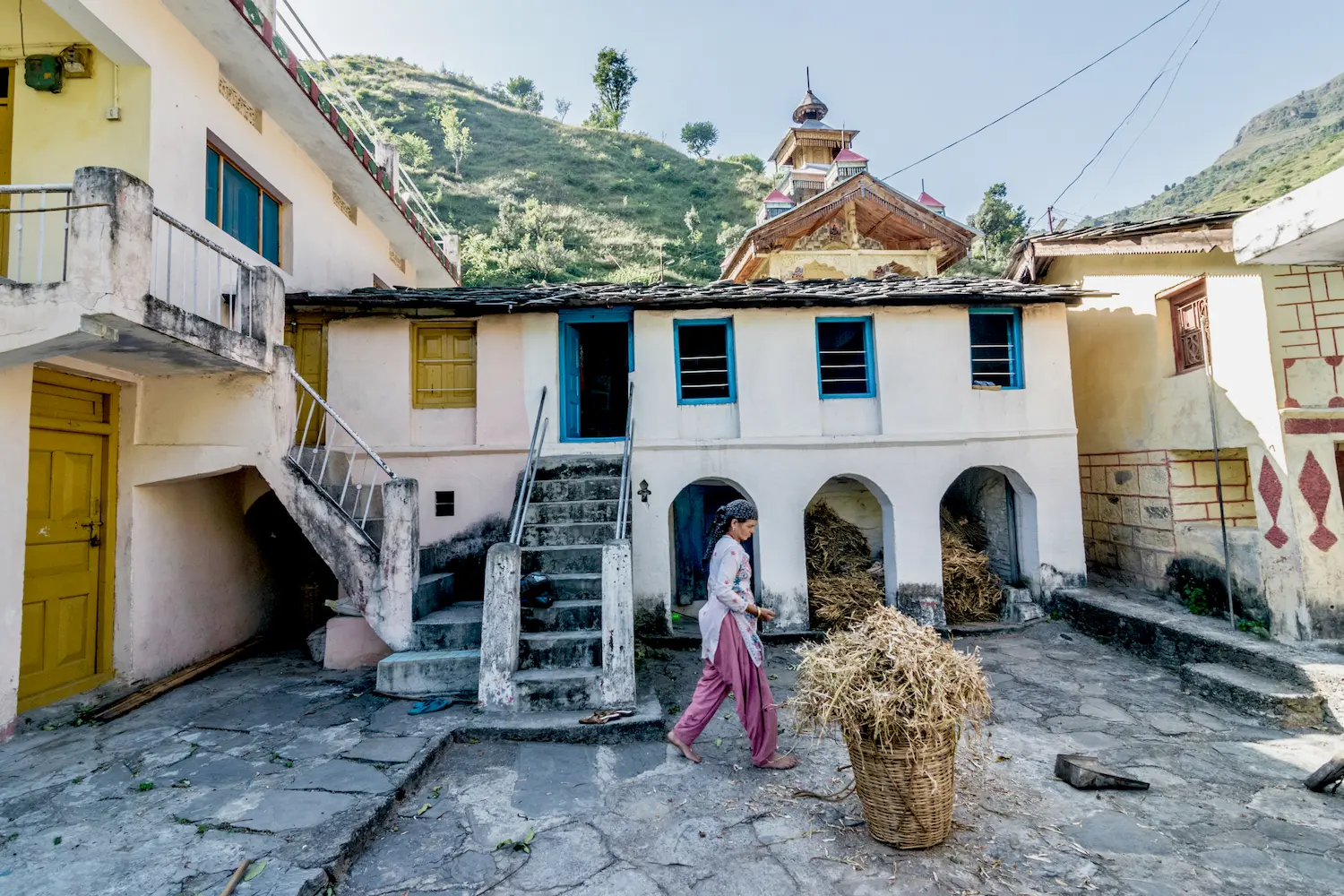
Sankri is located inside the Govind Wildlife Sanctuary & serves as the primary gateway to some of Uttarakhand's most celebrated trekking routes i.e. Kedarkantha, Har Ki Dun & Ruinsara Lake. Despite growing popularity as a trekking hub, the village itself remains largely unhurried — stone houses with wooden balconies, narrow lanes & locals going about their daily life with quiet dignity, far removed from city chaos.
The Kedarkantha Trek (3,810 m) is particularly popular in winter months when the trail transforms into a snow wonderland — one of the few high-altitude winter treks accessible to first-timers & beginner trekkers. The Har Ki Dun Valley, often referred to as the 'Valley of Gods', is a stunning cradle-shaped glacial valley encircled by magnificent peaks like Swargarohini & Black Peak, offering multi-day trekking of exceptional quality.
Key Activities: Kedarkantha Summit Trek, Har Ki Dun Valley Trek, Ruinsara Lake Trek, nature walks, village exploration.
Tip for Trekkers: Stay in local homestay rather than tent camp. The warmth, local rajma-chawal & genuine conversation with host family is an experience in itself. Homestays available from approx. ₹700 – 1,500/night including meals.
2. Munsiyari — Where the Himalayas Begin

Munsiyari
District: Pithoragarh | Altitude: 2,200 m | Distance: Approx. 275 Kms from Kathgodam | Best Time: April – June & September – November
Munsiyari is often referred to as the 'Little Kashmir of Uttarakhand' & is located in Pithoragarh district at the base of the great Himalayan range. The magnificent Panchachuli Peaks — 05 summits believed in Hindu mythology to be the cooking hearths of the Pandavas — dominate the skyline & offer a jaw dropping Himalayan panorama that is hard to match anywhere in Kumaon.
From Munsiyari, trekkers can access the Milam Glacier — one of the largest glaciers in Kumaon Himalayas — as well as the Ralam & Namik glaciers. These treks demand genuine fitness, proper acclimatization & Inner Line Permits. Munsiyari is also popular among honeymooners owing to its idyllic setting & serene ambience. The Tribal Heritage Museum here documents the life of the Bhotiya community — a semi-nomadic tribe that has inhabited these high-altitude mountains for generations, historically trading across the Indo-Tibet border.
Key Activities: Milam Glacier Trek, Ralam Glacier Trek, Namik Glacier Trek, Birthi Falls visit, Nanda Devi Temple darshan, Panchachuli viewpoint.
Tip for Trekkers: Hire a local Munsiyari guide without fail. They possess firsthand knowledge of the trails, weather patterns & hidden campsites that no app or blog can replicate. Inner Line Permits required for high-altitude glacier routes — apply through District Magistrate office Pithoragarh.
3. Lohajung — The Quiet Gateway to Roopkund
Lohajung
District: Chamoli | Altitude: 2,350 m | Distance: Approx. 220 Kms from Haridwar | Best Time: May – June & September – October
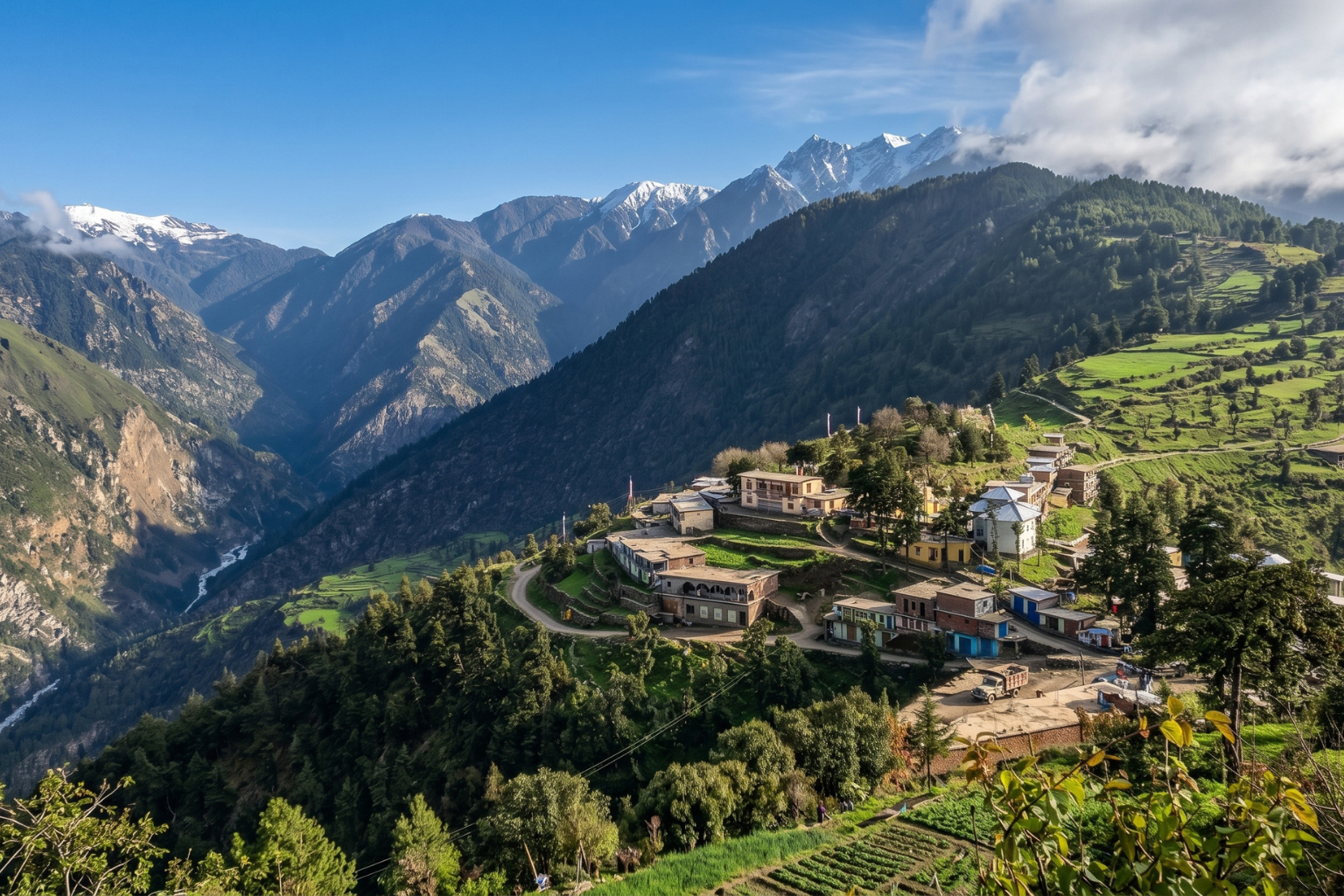
Lohajung is a small, relatively unassuming village that punches well above its weight in the trekking world. It serves as the base camp for the legendary Roopkund Trek — the trail leading to the mysterious 'Skeleton Lake' at 5,029 m, where hundreds of ancient human skeletons were discovered & are believed to date back to 9th century CE. A 2019 DNA study suggested these were likely victims of a catastrophic hailstorm during a high-altitude pilgrimage, making the trek as historically fascinating as it is physically challenging.
Lohajung is also the starting point for the Ali Bedni Bugyal Trek — traversing some of the most expansive alpine meadows (bugyals) in all of India. In summer months, these meadows are carpeted with wildflowers. In autumn, they glow golden under crisp blue skies. The village has a handful of guesthouses & a warm local community experienced in hosting trekkers, yet it has not been overly commercialized — yet.
Key Activities: Roopkund Trek (5,029 m), Ali Bedni Bugyal Trek, Wan village walk, local forest trails.
Tip for Trekkers: Spend at least 01 full night in Lohajung before beginning any trek — acclimatization is important at this altitude. The sunset panorama of Trishul & Nanda Ghunti peaks visible from the village is worth the trip on its own.
4. Chopta — Uttarakhand's Mini Switzerland

Chadrashilla Chopta
District: Rudraprayag | Altitude: 2,680 m | Distance: Approx. 225 Kms from Haridwar | Best Time: March – April (rhododendron season) & December – February (snow season)
Chopta is often referred to as the 'Mini Switzerland of India' owing to its dense rhododendron & oak forests, rolling meadows & unobstructed views of towering Himalayan peaks including Trisul, Nanda Devi & Chaukhamba. It serves as the base for the famous Tungnath–Chandrashila Trek & is perfect for trekkers seeking both adventure & serene natural beauty.
Tungnath Temple at 3,680 m is the highest Shiva temple in the world. Chandrashila peak at 4,130 m offers a full 360-degree panorama of some of the most iconic peaks of Garhwal Himalayas. In winter months, Chopta transforms into a snow-covered wonderland — the trek to Tungnath through knee-deep snow is an experience of exceptional beauty. Deoria Tal, a pristine high-altitude lake approx. 3 Kms from Sari village near Chopta, offers mirror-like reflections of the Chaukhamba massif & is a must-visit.
Key Activities: Tungnath–Chandrashila Trek, Deoria Tal Trek, Kedarnath Wildlife Sanctuary birding & wildlife walks, camping, rhododendron forest walks.
Tip for Trekkers: Begin the Chandrashila summit push before 4 AM to witness sunrise from the top — it is one of the finest sunrise viewpoints in the Indian Himalayas. Buses & taxis available from Rishikesh & Haridwar to Chopta.
Part 2: Hidden Villages for Spiritual Seekers
Uttarakhand — Devbhoomi (Land of the Gods) — is the spiritual heartland of India. Beyond the massively crowded Char Dham yatra circuit lie sacred villages & temple towns of equal or greater religious significance, receiving far fewer pilgrims & offering a genuinely intimate & profound spiritual experience. These 04 destinations are particularly outstanding for the spiritual traveler.
1. Mana Village — Where India Ends & the Sacred Begins

Mana Village, Badrinath
District: Chamoli | Altitude: 3,200 m | Distance: Approx. 03 Kms from Badrinath | Best Time: May – October
Mana is the last inhabited village before the Indo-Tibet border & holds the distinction of being the northernmost village of India. Located just 03 Kms from Badrinath, Mana's significance in Hindu mythology is profound. The Saraswati River — considered sacred & believed to have disappeared underground — is said to originate here. The Vyas Gufa (cave) is where sage Vyas reportedly dictated the Mahabharata to Lord Ganesha. The Bheem Pul — a natural rock bridge over the roaring Saraswati — is believed to have been placed by Bheem himself during the Pandavas' final ascent to heaven (Swargarohini).
Mana village receives a fraction of the enormous pilgrimage footfall that Badrinath attracts, offering a rare opportunity to explore this mythologically rich & naturally dramatic setting in relative peace. The village boosts a few small shops & tea stalls run by locals of the Bhotiya community.
Key Activities: Vyas Gufa darshan, Ganesh Gufa visit, Bheem Pul crossing, Saraswati River origin point, Mata Murti Temple, short nature walks.
Tip for Spiritual Seekers: Visit early morning before the Badrinath pilgrims begin arriving in numbers. The village in dawn light — with mist rising from the Saraswati & the sound of distant temple bells — offers a rare & moving experience.
2. Jageshwar — A Temple Town Frozen in Time

Jageshwar, Almora
District: Almora | Altitude: 1,870 m | Distance: Approx. 125 Kms from Kathgodam | Best Time: Year-round
Jageshwar is situated inside a dense ancient deodar forest in Almora district & boosts a cluster of 124 stone temples dating from the 7th to 12th century CE. It is one of the 12 Jyotirlingas of Lord Shiva & one of the most important ancient Shiva pilgrimage sites in the entire Kumaon region. Despite its profound religious significance, Jageshwar remains far less crowded than Kedarnath or Kashi, making it one of the finest destinations for spiritual seekers who prefer genuine devotion over pilgrimage crowds.
The Jataganga stream flows alongside the temple complex, adding to the serene & sacred ambience. Priests perform rituals here that have remained unchanged for centuries. The Jageshwar Monsoon Festival (July – August) is a particularly spectacular time to visit — the entire ancient complex comes alive with devotees, classical music & elaborate ritual performance.
Key Activities: Ancient Shiva temple complex darshan (124 temples), Jataganga stream walk, Dandeshwar Temple, Mrityunjaya Temple, Jageshwar Archaeological Museum, nature walks through deodar forest.
Tip for Spiritual Seekers: Arrange an overnight stay at the nearby forest rest house. The temples at night — lit by oil lamps, with no tourists around — offer a rare sacred stillness that the daytime cannot provide.
3. Triyuginarayan — The Wedding Village of the Gods
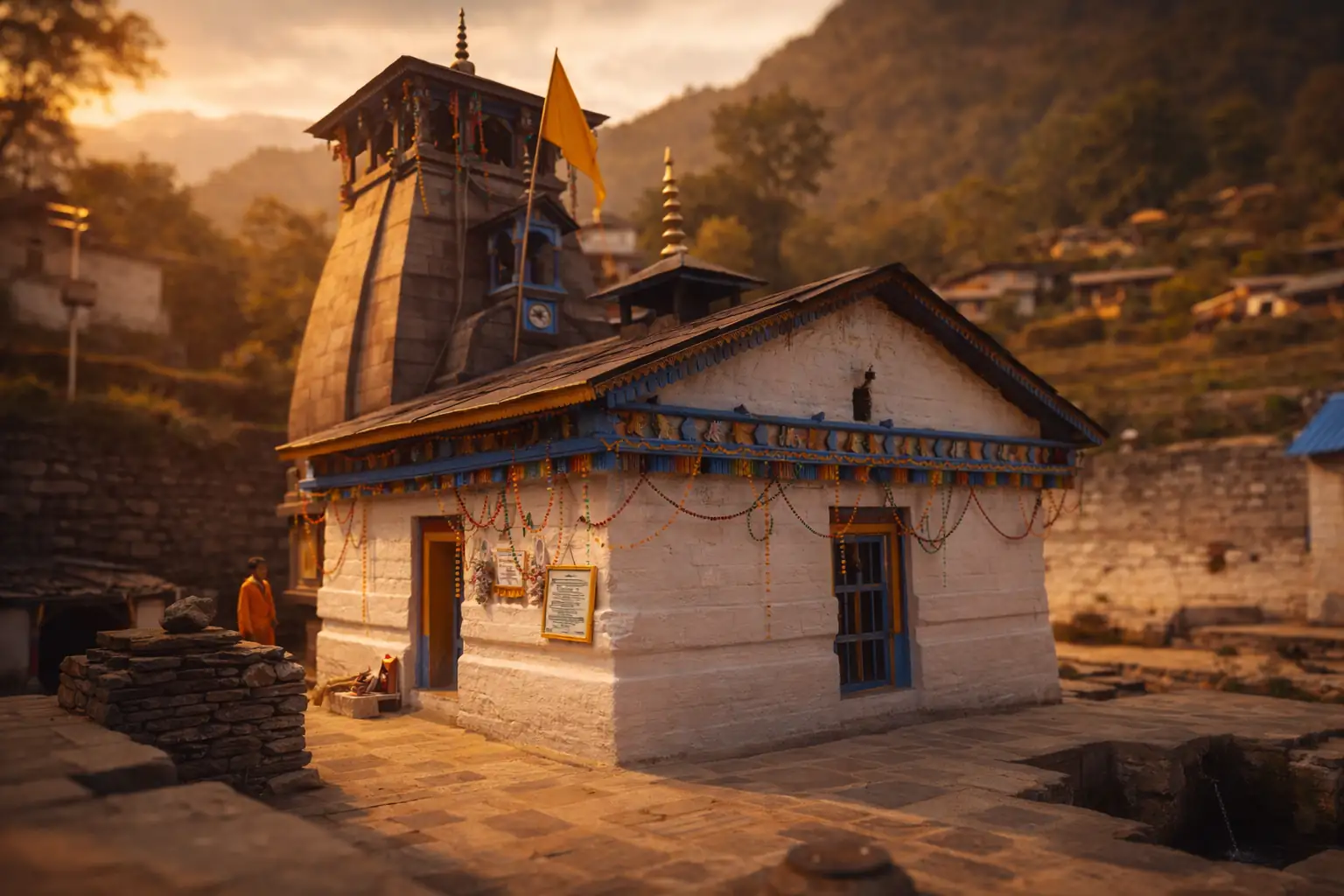
District: Rudraprayag | Altitude: 1,980 m | Distance: Approx. 05 Kms trek from Sonprayag | Best Time: May – June & September – November
Triyuginarayan holds a unique place in Hindu religious tradition — it is believed to be the exact spot where Lord Shiva & Goddess Parvati were married, with Lord Vishnu presiding over the ceremony. The Eternal Flame (Akhand Dhuni) in the temple courtyard is said to have been burning continuously since that divine wedding — through 03 complete yugas (cosmic ages). The village receives a small fraction of the pilgrims that nearby Kedarnath draws, yet its spiritual significance is arguably every bit as profound.
The trek from Sonprayag to Triyuginarayan is approx. 05 Kms through beautiful oak & rhododendron forest & is manageable for most reasonable fitness levels — making it a comfortable half-day spiritual trek that does not demand the physical commitment of the Kedarnath yatra.
Key Activities: Triyuginarayan Temple darshan, Eternal Dhuni (sacred flame), 05 Km forest trek from Sonprayag, village walk.
Tip for Spiritual Seekers: Many couples specifically visit Triyuginarayan for blessings before or after their wedding, owing to its association with the divine marriage of Lord Shiva & Goddess Parvati. Sonprayag is the nearest motorable point — taxis available from Rishikesh & Haridwar.
4. Kalpeshwar — The Forgotten Panch Kedar
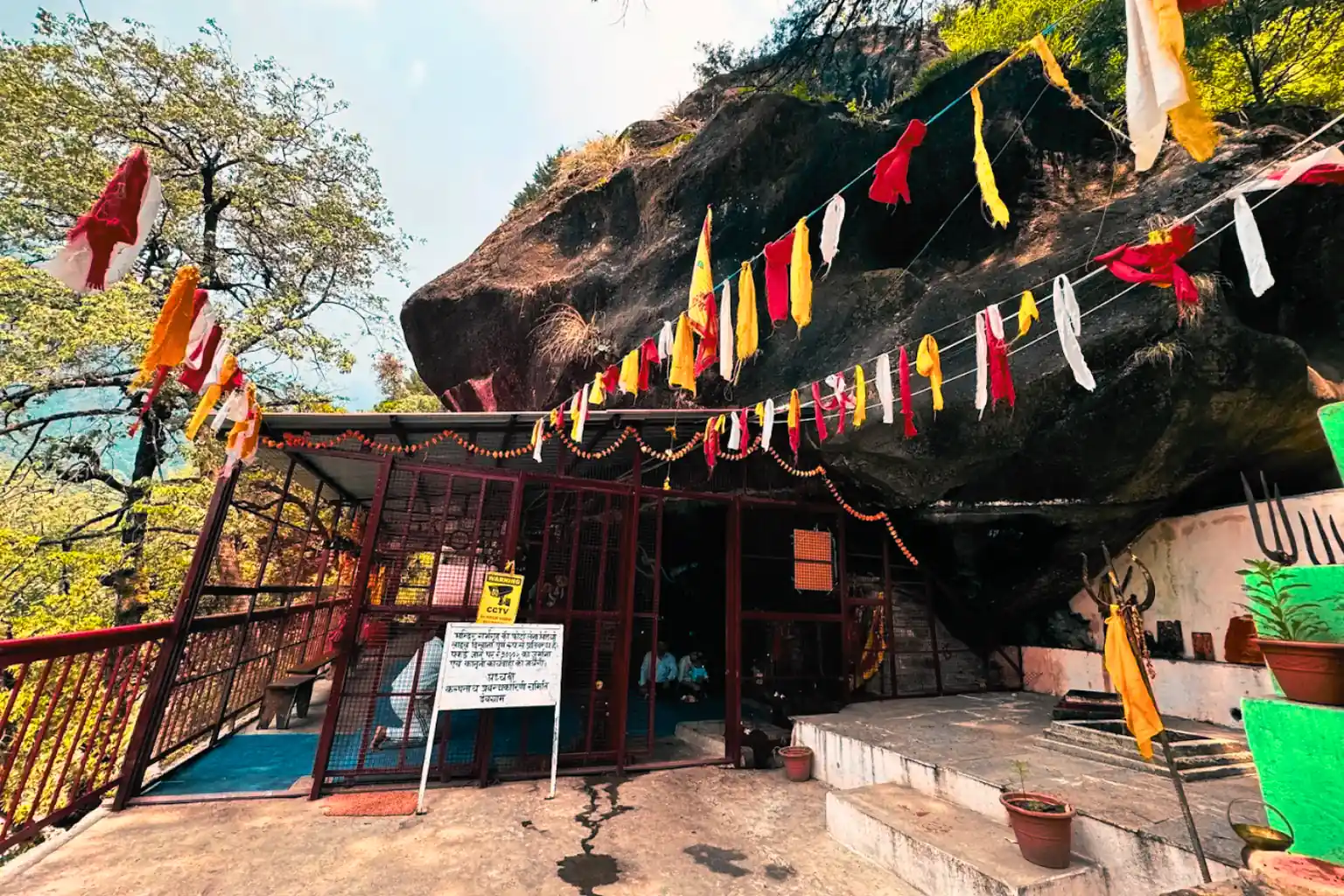
District: Chamoli | Altitude: 2,200 m | Distance: Approx. 255 Kms from Haridwar | Best Time: Year-round — accessible even in winter months
Of the 05 sacred Kedar shrines (Panch Kedar), Kalpeshwar is the least visited & perhaps the most mystical. The temple — dedicated to Lord Shiva's matted hair (jata) — is reached through a short natural cave passage that adds to its mystical character. Unlike the other Panch Kedars, Kalpeshwar remains open throughout the year, making it accessible even during winter when the higher shrines like Kedarnath & Tungnath are closed under heavy snow.
The surrounding Urgam Valley is one of Uttarakhand's most pristine & least-touristed valleys — terraced fields, ancient stone villages & forested hillsides where the pace of life follows a rhythm entirely different from the mainline yatra circuit. Helang on the Badrinath highway is the nearest motorable point, from where Kalpeshwar is approx. 11 Kms via Urgam village.
Key Activities: Kalpeshwar cave shrine darshan, Urgam Valley exploration, Anusuya Mata Temple trek (11 Kms), village walks in Urgam Valley.
Tip for Spiritual Seekers: Combine Kalpeshwar with a slow drive & walk through Urgam Valley. The terraced farms, ancient village temples & unhurried local life of this valley are a genuine revelation for those who have only experienced Uttarakhand's pilgrimage highways.
Part 3: Hidden Villages for Photographers
Uttarakhand offers an extraordinary diversity of photographic subjects — Himalayan panoramas, ancient temple architecture, village life & traditions, wildlife, wildflowers, glacial rivers, dense forests & the incomparable quality of mountain light at golden hour & blue hour. These 04 villages are particularly outstanding for photographers of all levels, from enthusiasts to professionals.
1. Khirsu — 300 Peaks, One Frame
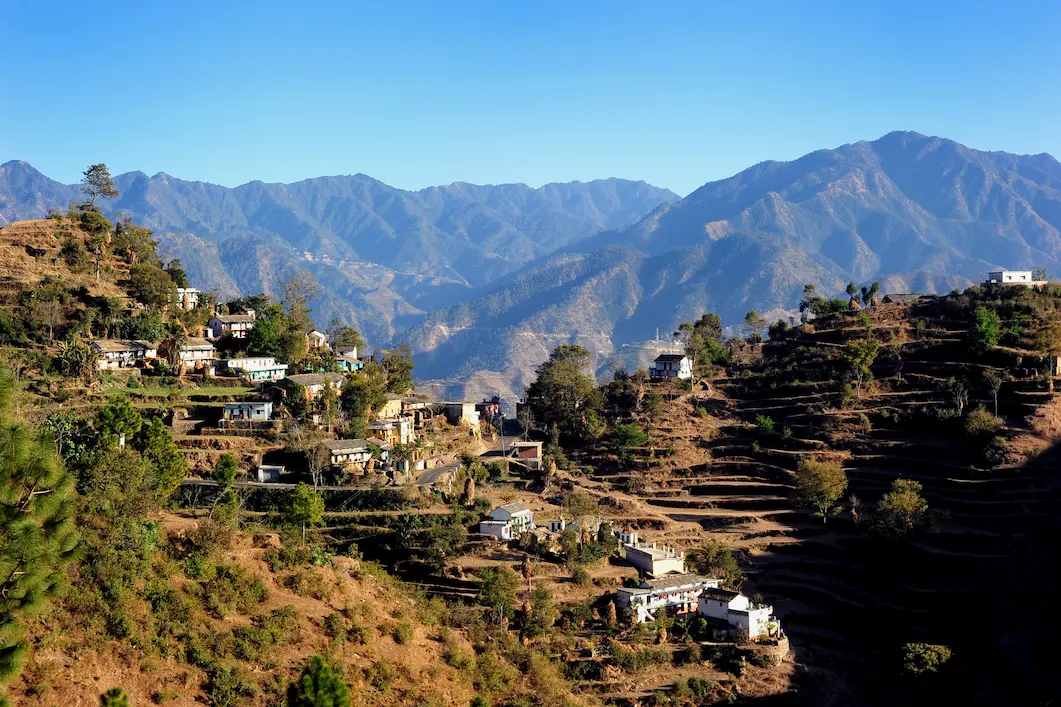
District: Pauri Garhwal | Altitude: 1,700 m | Distance: Approx. 115 Kms from Kotdwar & 15 Kms from Pauri town | Best Time: October – March
Khirsu is one of the finest viewpoints in Garhwal, Uttarakhand & a largely undiscovered gem for photographers. On a clear winter day, over 300 Himalayan peaks are visible from this quiet hilltop village — including iconic summits of Nanda Devi, Trishul, Kedarnath & Chaukhamba — spread across the horizon in a panorama of extraordinary scale. The village is encircled by apple, pear & peach orchards that burst into blossom in spring, offering excellent foreground for wide-angle mountain compositions.
Ancient oak & rhododendron forests frame the landscape & the light quality here — particularly in golden hour before sunset — is exceptional. The Van Manoranjan Kendra (nature park) near the GMVN Rest House is a good base for panoramic shots. The nearest railway station is Kotdwar (115 Kms) & Jolly Grant Airport, Dehradun is approx. 145 Kms. Taxis & buses available from Pauri (15 Kms).
Key Activities: Himalayan panoramic photography (300+ peaks), apple orchard walks, Ghandiyal Devta Temple visit, sunrise & sunset viewpoints, forest nature walks.
Tip for Photographers: Arrive a day before the full moon & shoot the moonrise over the Himalayan panorama from the GMVN rest house area. Stay minimum 02 nights — one night for orientation & the second for the shots you planned on the first evening.
2. Harsil — The Valley That Inspired a Legend

Harsil
District: Uttarkashi | Altitude: 2,620 m | Distance: Approx. 192 Kms from Dehradun | Best Time: April – June & September – November
Harsil sits in a valley so exquisite that Frederick Wilson — a British deserter who settled here in the 19th century — built a timber trading empire around it. His extraordinary story reportedly inspired Ruskin Bond's writing & the valley has been inspiring artists, writers & photographers ever since. The Bhagirathi River — crystal clear & powerfully flowing — runs through Harsil flanked by ancient deodar forests & traditional wooden architecture with intricately carved windows & slate roofs.
Apple orchards line the hillsides in terraced rows. The village retains a timeless quality — the Gangotri highway passes through but most traffic continues without stopping, leaving Harsil in a state of relative quietude. Harsil is also an excellent base for the Gangotri & Gaumukh Glacier route for trekkers who want to combine photography with adventure.
Key Activities: Bhagirathi riverside photography, traditional wooden architecture documentation, apple orchard walks, Gangotri & Gaumukh Glacier day excursion, deodar forest walks, Dharali village (1 Km away).
Tip for Photographers: The old wooden houses of Harsil — with their intricately carved balconies, slate roofs & stacked timber walls — are outstanding for architectural photography. Shoot in the blue hour just before dawn with the Bhagirathi in the foreground for the most dramatic results.
3. Peora — Mist, Orchards & Morning Light
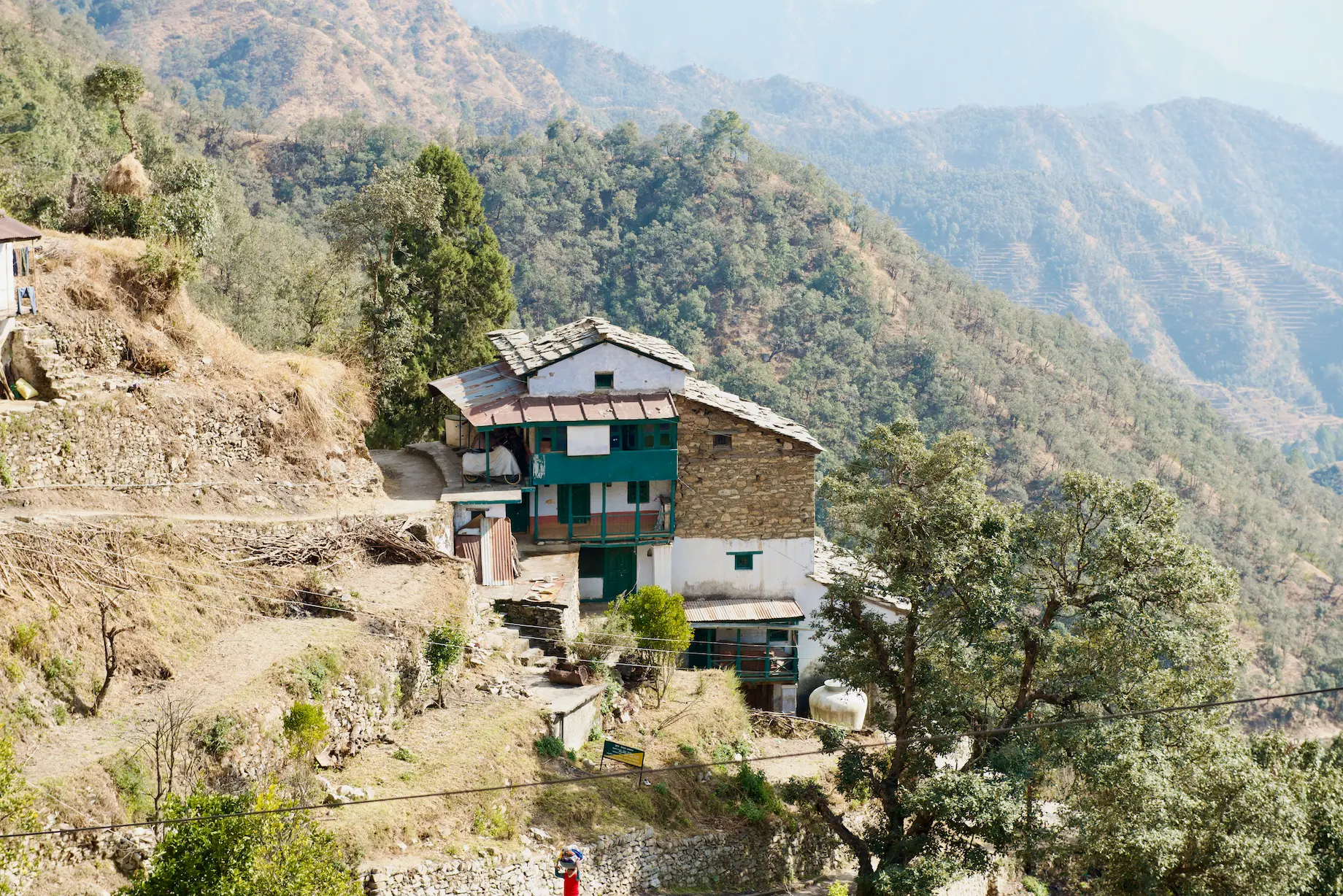
Peora Village
District: Nainital | Altitude: 1,800 m | Distance: Approx. 60 Kms from Kathgodam | Best Time: March – May & September – November
Peora is a serene & largely undiscovered village in Nainital district, ideal for photographers who appreciate slow-paced, intimate landscapes. Terraced fields cascade down the hillside in elegant geometric patterns. Fruit orchards — plum, peach, apricot — glow soft in morning light. Mist rolls in from the valley below in early hours, softening the landscape into something resembling a Kumaoni watercolor painting.
Peora also caters well to the workcation traveler, with a few thoughtfully run homestays offering good connectivity, genuine local hospitality & affordable rates. It is an ideal destination for photographers & writers seeking an extended, unhurried stay in a Himalayan village setting without the crowds of Nainital or Almora.
Key Activities: Orchard & terraced field photography, village walks, local bird watching (numerous Himalayan species present), short forest treks, slow travel & workcation stay.
Tip for Photographers: Stay minimum 02 nights — the first morning spent orienting & finding the best vantage points, the second morning for the serious photography when you already know exactly where to be at what hour of light.
4. Pangot — A Bird Photographer's Paradise
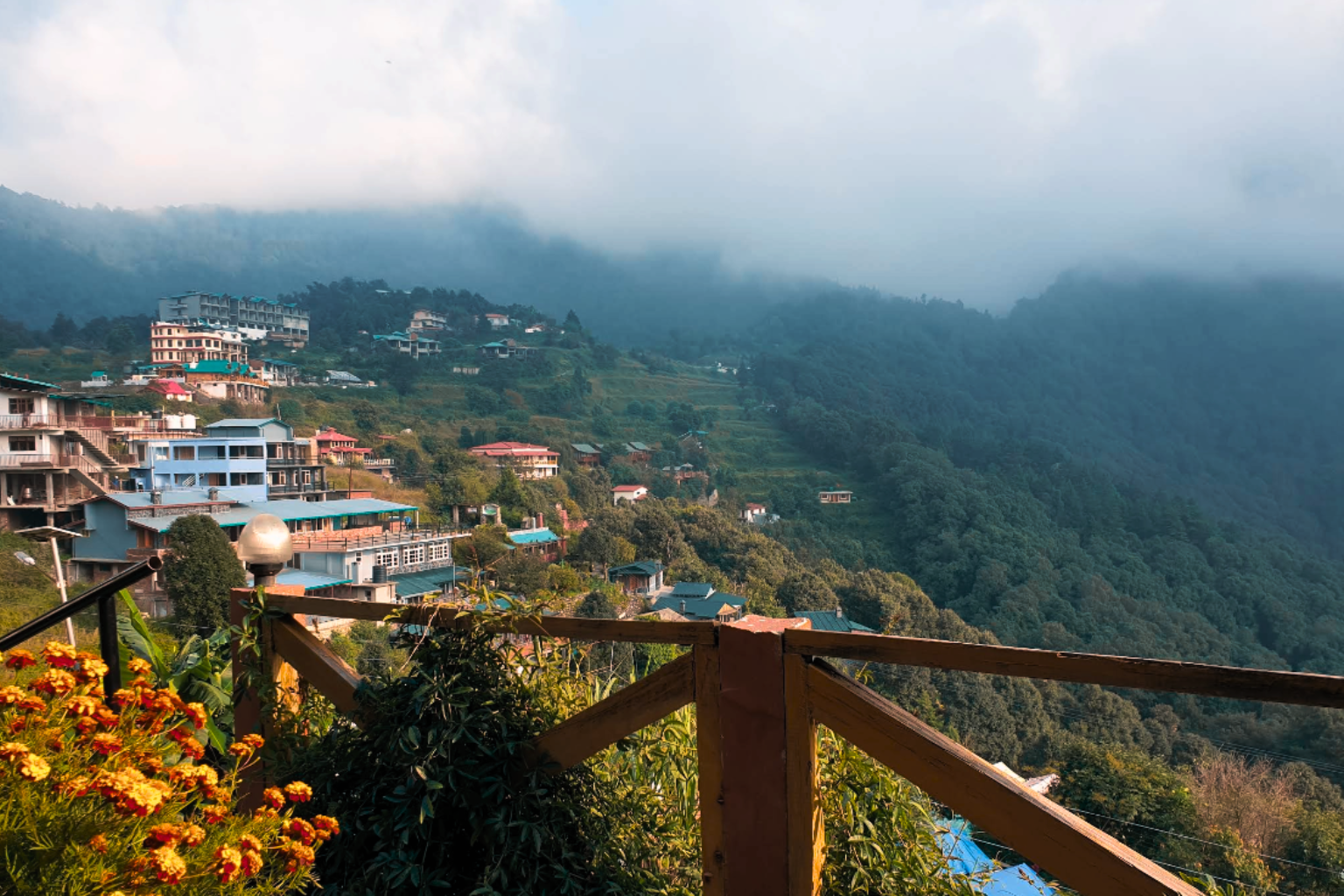
Pangot, Nainital
District: Nainital | Altitude: 2,000 m | Distance: Approx. 15 Kms from Nainital | Best Time: November – March
Pangot is located just 15 Kms from Nainital, yet feels like an entirely different world. The dense oak, rhododendron & pine forests here shelter over 200 species of birds — including the Himalayan griffon, koklass pheasant, cheer pheasant & Kalij pheasant — making it one of the most productive bird photography locations in the entire lower Himalayan region. Several rare & elusive species that are extremely difficult to find elsewhere in Uttarakhand can be reliably spotted in Pangot's forests.
The village itself is small & blessedly quiet — a scattering of homestays & forest lodges nestled among the trees. Birding begins at first light & the forest remains alive with calls, colours & movement through the morning hours. Being just 15 Kms from Nainital, Pangot is comfortably accessible & can be combined with Nainital for a 02-03 night trip.
Key Activities: Bird photography (200+ species), forest trails, Kilbury Bird Sanctuary (02 Kms), Naina Peak (07 Kms trek), wildlife spotting — leopard & barking deer present in forest area.
Tip for Photographers: Hire a local birding guide without fail — they know precisely where each species feeds, roosts & drinks, saving hours of searching & dramatically improving the quality & quantity of shots. Guides available through most homestays in Pangot.
Practical Information — How to Plan Your Offbeat Uttarakhand Trip
1. How to Reach
By Air: Jolly Grant Airport Dehradun serves the Garhwal region. Pantnagar Airport serves the Kumaon region. Both have regular flights from Delhi, Mumbai & other major cities. From both airports, taxis & buses are available to most destinations.
By Rail: Haridwar, Rishikesh & Dehradun are the main railheads for Garhwal villages. Kathgodam & Haldwani are the primary railheads for Kumaon villages. From these railheads, most villages are 03-08 hours by road.
By Road: Most villages are accessible via state highways & mountain roads. A vehicle with good ground clearance is recommended for all mountain routes. A 4x4 is advisable for Munsiyari & other high-altitude remote routes. For most other destinations on this list, any SUV or hatchback with decent clearance manages well. Uttarakhand has a road network of over 39,000 Kms.
2. Where to Stay
Homestays: The most authentic & recommended option across all these villages. Budget approx. ₹700 – 2,500/night including meals. Money goes directly to local families & the experience is genuinely irreplaceable.
GMVN / KMVN Rest Houses: Government guesthouses available at most destinations from approx. ₹750/night onwards. Basic, clean & reliable — particularly useful in remote areas where private accommodation is limited. Online booking available on GMVN & KMVN official portals.
Eco-camps & Tent Camps: Available near trekking bases like Sankri (Kedarkantha & Har Ki Dun), Lohajung (Roopkund) & Chopta (Tungnath). Ranging from budget tent setups to comfortable glamping options depending on operator.
3. Permits & Permissions Required
Inner Line Permits: Required for Milam Glacier, Ralam Glacier (Munsiyari) & areas near Indo-Tibet border. Apply through District Magistrate office Pithoragarh or online.
Forest Permits: Roopkund Trek requires a Forest Department permit — typically arranged through registered operators at Lohajung or Kathgodam.
Wildlife Sanctuary Entry: Gobind Wildlife Sanctuary (Sankri routes) & Kedarnath Wildlife Sanctuary (Chopta) require entry fees & registered guides.
ID Proof: Carry government-issued ID (Aadhaar or passport) at all times. Checkposts are common on mountain roads in sensitive zones.
4. Best Time to Visit — Season-Wise
April – June: Best for most trekking routes, wildflower blooms, pleasant temperatures & clear Himalayan views. Ideal for first-time Uttarakhand trekkers.
July – August (Monsoon): Lush landscapes but landslide risk on mountain roads. Some roads may be temporarily closed. Suitable for experienced mountain travelers who understand the risks. Jageshwar Monsoon Festival is a highlight in July-August.
September – November: Arguably the finest overall season — crisp clear skies, stable weather, best panoramic mountain views & excellent trekking conditions across Garhwal & Kumaon both.
December – February: Snow season. Chopta, Sankri & Munsiyari transform into winter wonderlands. Kedarkantha is one of the most popular & accessible winter treks during this period. Proper winter gear essential.
Your Kind of Uttarakhand is Waiting
Uttarakhand is not merely one destination — it is many layered one upon another. It is the burning thighs of a trekker pushing toward a glacier. It is the folded hands of a pilgrim before an eternal flame that has burned for centuries. It is the held breath of a photographer watching extraordinary mountain light change second by second on a snow peak. It is the quiet contentment of a slow traveler watching morning mist roll off a fruit orchard with a cup of Kumaoni tea in hand.
With 54.64 million domestic tourists visiting annually & the state targeting 70 million by 2030, the window to experience these villages in their current unhurried & uncrowded state is genuine — but finite. The villages covered in this guide currently receive only a small fraction of Uttarakhand's overall tourism footfall. Infrastructure is improving. Awareness is spreading. The time to go is now — before the crowds arrive, before the prices inflate & before the solitude disappears.
Go with curiosity & genuine respect for local culture & environment. Go with your trekking boots, your prayers, or your camera — or all three. These villages & the mountains that shelter them will deliver experiences that no packaged tour & no popular hill station ever could.
Your Uttarakhand is waiting. It always has been.
Planning a trip to any of these villages? Drop your questions, travel dates & traveler type — our team at BizareXpedition will help plan your perfect Himalayan escape.