
Deccan Buddhist Heritage Trail8N/9D
Deccan Buddhist Heritage Trail
Start & City : Hyderabad
best deal price
₹
Without GST ₹1,31,544
per person on twin sharing
Choose your departure city, dates, and add guests to secure your tour.
Hurry, as seats fill up, prices rise! Book now!
1. Choose your departure date
Highlights
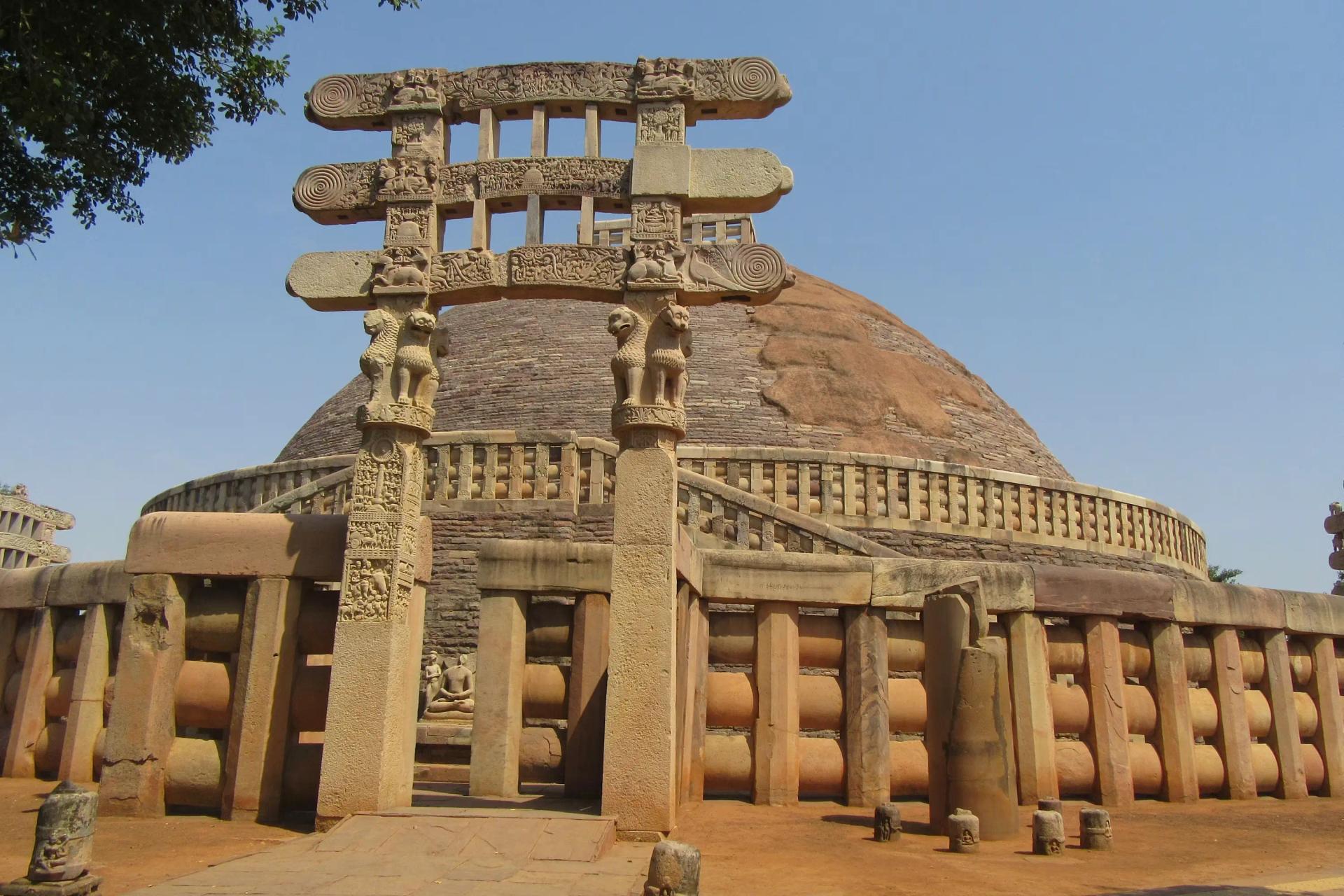
Walk the grounds of the Amaravati stupa, and see its carved limestone slabs in the museum next to it.
See the Undavalli caves, a cave temple of several storeys cut in a sandstone hill.
Cross the lake by ferry to the Nagarjunakonda island museum, built to hold the monasteries and stupas moved from the drowned valley.
Take a boat to the great Buddha statue in the middle of Hussain Sagar lake in Hyderabad.
Visit the Chalukya cave temples of Badami and the temples of Aihole and Pattadakal (UNESCO).
Stand at Sannati, where a stupa carved with a portrait of the emperor Ashoka was found.
Travel with a guide who explains the stupa, the vihara and the carved stories at each site.
Essence of Journey
The experiences that capture the true spirit of the entire trip.
| Day | Route | Distance | Major Highlights |
|---|---|---|---|
| Day 1 | Arrive Hyderabad (HYD), drive to Vijayawada | ~275 km, 5 to 5.5 hrs | Drive to the Krishna river |
| Day 2 | Vijayawada: Amaravati and Undavalli | ~90 km local | Amaravati stupa and museum, Undavalli caves |
| Day 3 | Vijayawada to Nagarjunakonda to Hyderabad | ~340 km, 7.5 to 8.5 hrs plus ferry | Ferry to the island museum |
| Day 4 | Hyderabad | Local | Buddha statue on the lake, state museum |
| Day 5 | Fly to Hubballi, drive to Badami | ~120 km, 2.5 to 3 hrs | Flight, Badami caves at sunset |
| Day 6 | Badami, Aihole and Pattadakal | ~100 km local | Road across the Deccan plateau |
| Day 7 | Badami to Kalaburagi | ~300 km, 6 to 6.5 hrs | Road across the Deccan plateau |
| Day 8 | Kalaburagi to Sannati to Hyderabad | ~280 km, 6 to 7 hrs with the visit | Sannati and the Ashokan stupa remains |
| Day 9 | Hyderabad (HYD) | Airport transfer | Departure |
About
This is a private 9-day Andhra Telangana Karnataka Buddhist tour. It follows the little-known southern story of Buddhism across three states: the great stupa site of Amaravati, the island museum of Nagarjunakonda, Hyderabad's Buddha on the lake, the Chalukya art of Badami and Pattadakal, and Sannati, where a rare carved portrait of Emperor Ashoka was found. It starts and ends in Hyderabad and costs from about INR 131,544 per person (twin sharing).
Most Buddhist journeys in India head north, to Bodh Gaya, Sarnath and Kushinagar. Far fewer travellers know that the Deccan plateau in the south was once one of the great centres of the faith. Buddhism arrived here in the time of Emperor Ashoka, in the 3rd century BCE, and under the Satavahana and Ikshvaku kings the Krishna river valley filled with stupas, monasteries and some of the finest carved stone in ancient India.
This trail brings that story back to life. The sites are quiet, often uncrowded and deeply atmospheric. Many are ruins and museums rather than active temples, and we are honest about what you will and will not see. With a knowledgeable guide at every stop, you learn to read the carvings, from early symbols of the Buddha to scenes from his life.
Who This Buddhist Heritage Tour Is For
Buddhist travellers and pilgrims who want to see the faith's southern heritage
History and art lovers interested in early Buddhist sculpture and the story of the stupa
Travellers who have visited the northern Buddhist sites and want to complete the picture
Those who enjoy quiet places: these sites see a fraction of the visitors of better-known monuments
It is less suited to travellers who want comfort and short drives every day. Four days involve 5 to 8 hours on the road, and one night is in a simple hotel. We can add nights to soften the pace.
The Buddhist Story of the Deccan, Site by Site
| Place | State | Period | What to look for |
|---|---|---|---|
|
Amaravati |
Andhra Pradesh |
3rd century BCE to 3rd century CE |
The foundation of a great stupa, a museum of carved limestone slabs, a large modern Buddha statue |
|
Undavalli |
Andhra Pradesh |
4th to 5th century CE |
A cave temple of several storeys cut into a hill, with a reclining figure inside |
|
Nagarjunakonda |
Andhra Pradesh |
3rd to 4th century CE |
A museum on an island, built like a monastery, with panels from the life of the Buddha |
|
Hyderabad |
Telangana |
Modern, with older relics |
A large Buddha statue on a lake, and a state museum |
|
Badami and Aihole |
Karnataka |
6th to 8th century CE |
Chalukya caves and temples, Hindu and Jain, with a small Buddhist ruin at Aihole |
|
Sannati (Kanaganahalli) |
Karnataka |
3rd century BCE to 3rd century CE |
The remains of a stupa, with carvings that include a portrait of Ashoka |
The Buddhist Story of the Deccan, Site by Site
An Honest Note on What You Will See
We believe you should know exactly what to expect:
Many Buddhist sites here are ruins and museums. At Amaravati, little of the great stupa still stands; you walk around its foundation and see its carved panels in the site museum. Many of its finest slabs are now in the Government Museum in Chennai and the British Museum in London.
Nagarjunakonda's original valley is under water. When the Nagarjuna Sagar dam was built in the 1960s, the monasteries and stupas were moved to an island, where you see them today.
Badami's famous caves are Hindu and Jain, not Buddhist. We include Badami and Pattadakal for their outstanding Chalukya art and history. Karnataka's real Buddhist treasure is Sannati.
Sannati is a rural site, set among open fields with very basic facilities. That quiet is part of its magic.
The Places You Will Explore
Amaravati and Undavalli: the great stupa of the Krishna
A stupa was first built at Amaravati in Ashoka's time and grew over five centuries into one of the largest in India. Today you walk around its vast foundation circle to sense its scale, then see its carved limestone slabs in the museum next door. The Satavahana sculptors carved figures that seem to move and flow, and your guide explains how the Buddha appears in the earliest scenes only as symbols. A large modern seated Buddha stands nearby by the river. On the way back, you stop at Undavalli, a rock-cut cave of several storeys with a huge reclining figure carved from a single block of stone.
Nagarjunakonda: the valley that became an island
Under the Ikshvaku kings of the 3rd and 4th centuries CE, this valley was a major Buddhist centre, linked in tradition with the great philosopher Nagarjuna. When the Nagarjuna Sagar dam flooded the valley, its monasteries, stupas and carvings were moved to higher ground. You take a ferry of about 45 minutes to the island museum, built in the style of a monastery, to see panels from the Buddha's life, relics and inscriptions, with rebuilt stupas and a bathing ghat outside.
Hyderabad: a Buddha on the lake
In the middle of Hussain Sagar, a lake created in the 16th century, stands a granite Buddha about 17 metres tall, raised in 1992. A short boat ride takes you to its base. At the Telangana State Museum, sculpture and relics from the region's Buddhist sites help connect what you have seen at Amaravati and Nagarjunakonda. You also have time for Charminar and the Laad Bazaar, or a rest at your hotel.
Badami, Aihole and Pattadakal: Chalukya art
A short flight to Hubballi saves a long drive. Badami sits in a red sandstone gorge and was the Chalukya capital from the 6th century. Its four caves are Hindu and Jain, with a celebrated 18-armed dancing Shiva. At Pattadakal, a UNESCO World Heritage Site, northern and southern temple styles stand side by side. Nearby Aihole has more than a hundred small temples and a small Buddhist ruin, a reminder that Hindu, Jain and Buddhist communities lived side by side here.
Sannati: Ashoka's portrait in stone
Near the village of Kanaganahalli, Sannati was a Buddhist town from Ashoka's time. Excavations uncovered the remains of a large stupa decorated with carved limestone panels. One shows a rare portrait of Emperor Ashoka himself, with his name carved alongside. It is one of the very few known images of him. Walking this quiet site with your guide, you see how it links Karnataka with the great stupas of the Krishna valley.
ACCOMMODATION CATEGORIES
The four hotels are the same in every tier. What changes is the room. Each tier maps to a room category at each hotel, subject to availability on your dates.
| Hotel | Nights | Premium | Luxury | Ultra-Luxury |
|---|---|---|---|---|
|
Novotel Vijayawada Varun |
2 |
Superior room |
Deluxe room |
Suite |
|
Taj Krishna, Hyderabad |
3 |
Luxury room |
Taj Club room |
Suite |
|
Badami Court, Badami |
2 |
Deluxe room |
Suite |
Best available suite |
|
Best available hotel, Kalaburagi |
1 |
Deluxe room |
Best available room |
Best available room |
Deccan Buddhist Heritage Trail Accommodation Categories
Note: Kalaburagi has no luxury hotel. We use the best available one for one night, and the same room standard applies in every tier. It is clean and comfortable, and simpler than the other stays. Room names are confirmed with each hotel when dates are fixed. If a category is full, we offer the nearest one at the same hotel first. Another hotel is used only if you agree.
WHY BOOK THIS WITH BIZAREXPEDITION
A 9-day private journey through the Buddhist sites of Andhra Pradesh, Telangana and Karnataka, planned and run by BizareXpedition from arrival at Hyderabad to departure from Hyderabad.
A flight saves a long road day. Hyderabad to Badami is about 500 km by road. A flight of about 1 hour 10 minutes to Hubballi, then a 2.5-hour drive, replaces it.
The trail returns to Hyderabad. Badami to Sannati to Hyderabad runs through the Deccan on the way back, and ends at your departure airport.
Honest about each site. Many of the Buddhist sites are ruins and museums. We tell you what you see, and what is now in other museums.
A guide for each place. Each stop has a local guide who knows the site and its story.
Named hotels, three room levels. The four stays are used at every tier. The tier changes the room, not the hotel.
A registered company. BizareXpedition Services Pvt. Ltd. (CIN U63090UR2016PTC007433), headquartered in Haridwar, books the hotels and runs the ground arrangements directly.
3-TIER PRICING SUMMARY
| Tier | Per Couple (approx.) | Per Person, twin sharing (approx.) |
|---|---|---|
|
Premium |
Rs.263,088 – Rs.284,135 |
Rs.131,544 – Rs.142,068 |
|
Luxury |
Rs.322,308 – Rs.348,093 |
Rs.161,154 – Rs.174,046 |
|
Ultra-Luxury |
Rs.431,928 – Rs.466,482 |
Rs.215,964 – Rs.233,241 |
Deccan Buddhist Heritage Trail 3-Tier Pricing Summary
Indicative pricing, modeled per couple. The range covers date and season variation. A final quote is given once dates and room categories are confirmed.
How the season changes the price
| Season | Months | What It Means on This Route | Price Guide |
|---|---|---|---|
|
Peak |
20 December – 5 January |
Festive-season rates. Buddhist sites also see more pilgrims in winter. Book the top rooms early. |
+20% to +35% |
|
High |
November – mid-December, and mid-January – February |
Dry days and cool mornings. The best months for walking ruins and caves. |
Base price |
|
Shoulder |
March |
Warm and dry. Start early at Sannati and Aihole. |
–10% to –15% |
|
Hot |
April – May |
Very hot, often over 40 degrees Celsius on the plateau. Stone and open sites are hard going. Not advised. |
–20% to –30% |
|
Monsoon |
June – September |
Moderate rain on the plateau and heavier near the Krishna river. The land turns green. The Nagarjunakonda ferry runs on the water level, and some roads can flood. |
–10% to –25% |
|
Post-monsoon |
October |
Green, with some showers. The reservoir is full, and the ferry usually runs. |
–5% to –10% |
Deccan Buddhist Heritage Season Adjustments
Rates vary between hotels, so the final quote is confirmed against live rates.
PRACTICAL NOTES
Long drives: Days 1, 3, 7 and 8 are 5 to 8 hours on the road. Your driver plans breaks. If you prefer a gentler pace, we can add nights at Nagarjuna Sagar or Kalaburagi.
Dress code: Cover shoulders and knees at all religious sites, and remove shoes at temples and stupas. Light cotton works best.
Quiet sites: Many Buddhist sites are ruins in open fields. Carry water, a hat and sunscreen, and wear sturdy shoes.
Museums: Several museums close on Fridays or Mondays. We plan the days around closing days and confirm each opening.
The ferry: The Nagarjunakonda ferry runs by the water level and the season. We confirm the timetable before you travel.
The flight: The Hyderabad to Hubballi flight is a separate domestic ticket. We book it with the package and confirm timings.
Safety: South India is among the easier regions of India to travel in. Our team is reachable 24 hours.
Drinking water: Drink bottled or filtered water only. Your vehicle and hotels provide it.
Photography: Rules differ at each site and museum, and some charge a fee. Drones cannot be flown by foreign visitors.
Tipping: Not compulsory. As a rough guide: driver Rs.300–500 per day, guides Rs.500 per visit, hotel staff at your discretion.
Visa: Most nationalities can apply for an Indian e-Visa online before travel. Allow at least a week.
Booking Summary
Dept. City :
--
Dept. Date :
--
Traveller :
Adults: 2, Child: 0, Infant: 0
Rooms :
--
Basic Price :
--
Total Cost
--
GST
--
Grand Total
--
Itinerary (Day Wise)
across the Deccan. You begin in Hyderabad and travel to Amaravati. Here you walk around the base of what was once one of India’s largest stupas and see its carved limestone panels in the museum next door. On the way back you stop at the many-storeyed Undavalli caves. Next, a ferry takes you across the lake to Nagarjunakonda, where monasteries and stupas were moved to an island when the valley was flooded for a dam. In Hyderabad you take a boat out to the great Buddha standing in Hussain Sagar lake and see Buddhist relics at the State Museum. A short flight then takes you to Badami for the Chalukya caves and the temples of Aihole and Pattadakal. The trail ends at Sannati, a quiet site among open fields, where a carved panel shows one of the very few known portraits of Emperor Ashoka. A guide goes with you at every stop and helps you read the carvings.
Day 1
ARRIVE HYDERABAD, DRIVE TO VIJAYAWADA | THE ROAD TO THE KRISHNA RIVER
Route: Rajiv Gandhi International Airport (HYD) – Suryapet – Vijayawada, about 275 km
Your driver meets you at Hyderabad airport and takes you east on the highway to the Andhra coast. The road crosses the dry Telangana plateau, with fields of cotton, chilli and rice, and then drops to the broad Krishna river at Vijayawada.
Vijayawada is a busy city on the river, in the heart of the old Satavahana country. The hotel is on the main road. You arrive in the evening. Rest, and have dinner at the hotel.
Note on arrival time: This first day has a long drive. We advise an international arrival at Hyderabad before about 2 pm. If you arrive later, we add a night at a Hyderabad hotel, at extra cost, or book a short domestic flight to Vijayawada. Flight schedules are checked for your dates.
Experience of the Day
Airport welcome
Drive across the Telangana plateau
Arrival at the Krishna river
Food
Recommended: Dinner at the hotel.
Must-Try: Andhra-style meals with gongura chutney, a sour leaf relish, and a hot pickle.
Activities to Do
Rest after the flight
Short walk near the hotel
Day 2
AMARAVATI AND UNDAVALLI | THE GREAT STUPA AND THE CAVE TEMPLE
Route: Vijayawada – Amaravati – Undavalli – Vijayawada, about 90 km
Drive about 35 km west to Amaravati, on the banks of the Krishna. A stupa was built here in the time of Ashoka, in the 3rd century BCE, and grew over five centuries into one of the largest in India. Little of it stands today, but you can walk round the foundation circle, and see its size. The carved limestone slabs that once covered the stupa, with scenes from the Buddha's life, are in the museum beside it. Many other slabs are now in museums in Chennai and London.
The museum shows the work of Satavahana sculptors, in figures that seem to move and flow. Your guide explains how the Buddha is shown in these early carvings by symbols, such as a footprint, a tree and an empty throne, before images of him were made. A large seated Buddha statue stands in a garden near the river.
On the way back, stop at Undavalli, about 6 km from Vijayawada. Monks and kings cut a cave temple of several storeys into a sandstone hill in the 4th to 5th century. The upper floor has a large reclining figure carved from a single block of stone.
Note on the museum: The Amaravati museum is open from about 9 am to 5 pm and closed on Fridays. If your visit falls on a Friday, we visit the site and Undavalli, and replace the museum with a later opening or the Nagarjunakonda museum.
Experience of the Day
Amaravati stupa site and museum
Seated Buddha statue by the river
Undavalli caves
Food
Recommended: Lunch at a local restaurant. Dinner at the hotel.
Must-Try: Andhra meals on a banana leaf, with rice, dal, curd and spicy chutneys.
Shopping
Kalamkari hand-painted cloth, and Kondapalli wooden toys.
Activities to Do
Optional visit to Kanaka Durga temple above the river (a working Hindu temple)
Evening at the hotel
Day 3
VIJAYAWADA TO NAGARJUNAKONDA TO HYDERABAD | THE VALLEY THAT IS NOW AN ISLAND
Route: Vijayawada – Nagarjuna Sagar – Nagarjunakonda (by ferry) – Hyderabad, about 340 km
This is the longest day of the tour. Leave early and drive west to Nagarjuna Sagar, a large dam on the Krishna river, about 170 km away. The road runs through Guntur and then through cotton and chilli fields.
The valley behind the dam was once a Buddhist centre of the Ikshvaku kings, who ruled from the 3rd to the 4th century CE. When the dam was built in the 1960s, the valley was flooded. The monasteries, stupas and carvings found there were moved to higher ground, and a museum was built on an island. Take the ferry, about 45 minutes each way. The museum is built like a monastery, and holds limestone panels with scenes from the Buddha's life, relics and inscriptions. Rebuilt stupas and a bathing ghat stand outside.
Take the ferry back, have lunch at the dam, and drive about 160 km to Hyderabad. You arrive in the evening.
Note on the ferry: Ferry times depend on the water level and the season. The last boat back leaves in the afternoon. We confirm the timetable and the museum's opening day before you travel. If the ferry is not running, we replace it with the Buddhavanam heritage park near the dam.
Experience of the Day
Drive to Nagarjuna Sagar
Ferry to Nagarjunakonda island
Island museum
Drive to Hyderabad
Food
Recommended: Lunch at Nagarjuna Sagar. Dinner at the hotel.
Must-Try: A simple local thali, and fresh fruit from the roadside.
Activities to Do
Rest at the hotel
Evening walk in the hotel garden
Day 4
HYDERABAD | A BUDDHA ON THE LAKE
Route: Hyderabad: Hussain Sagar – State Museum – old city
Start at Hussain Sagar, a large lake in the centre of the city, made in the 16th century. A tall granite Buddha statue stands on an island in the middle, raised in 1992. Take the boat to the statue, which stands about 17 metres high on a rock. The lake is a pleasant spot in the morning.
Visit the Telangana State Museum, which holds sculpture and relics from the region, including pieces from Buddhist sites. Your guide explains how the Deccan's Buddhist art moved from Amaravati and Nagarjunakonda north to Telangana. In the afternoon, walk to Charminar and the Laad Bazaar, or rest.
Note on the museum: Museum collections and opening days change. We confirm them before you go, and replace the visit if a gallery is closed.
Experience of the Day
Hussain Sagar boat to the Buddha statue
Telangana State Museum
Charminar and Laad Bazaar
Food
Recommended: Lunch at a local restaurant. Dinner at the hotel.
Must-Try: Hyderabadi biryani, cooked with rice and meat sealed under dough.
Shopping
Pearls and Bidri metalware from licensed shops.
Activities to Do
Optional half-day trip to a Buddhist site near Hyderabad, such as Kondapur or Phanigiri (confirmed before booking)
Optional Golconda Fort visit
Day 5
HYDERABAD TO BADAMI | A FLIGHT AND THE RED CLIFFS
Route: Hyderabad – Hubballi (HBX) by air – Badami, about 120 km by road
Fly to Hubballi in the morning. Hyderabad to Badami is about 500 km by road, so the flight saves a day. From Hubballi, your driver takes you north across the Karnataka plateau to Badami, a town in a gorge of red sandstone. The Chalukya kings made it their capital in the 6th century.
Check in at Badami Court, then walk to the caves in the late afternoon, when the light on the cliffs is warm. Four caves were cut into the cliff above a green lake. Three are Hindu and one is Jain. There is no Buddhist cave at Badami. Your guide explains the carvings, a dancing Shiva with eighteen arms and Vishnu on a serpent. Sunset at the lake follows.
Note on the flight: The Hyderabad to Hubballi service is a short flight with limited departures, and times can change. We book the best available flight and confirm timings before you travel. If no flight suits, the alternative is a one-stop flight or a long drive.
Experience of the Day
Morning flight to Hubballi
Drive to Badami
Badami caves at sunset
Food
Recommended: Lunch on the road or at the hotel. Dinner at the hotel.
Must-Try: North Karnataka thali with jolada rotti, spicy chutney powders and curd.
Activities to Do
Evening walk by the lake
Optional visit to the Bhutanatha temples on the shore
Day 6
BADAMI, AIHOLE AND PATTADAKAL | THE TEMPLE WORKSHOPS OF THE CHALUKYAS
Route: Badami – Pattadakal – Aihole – Badami, about 100 km
Drive first to Pattadakal, about 22 km from Badami. It was the coronation site of the Chalukya kings. Ten temples of the 7th and 8th centuries stand in a garden beside the Malaprabha river. Some copy the northern style of tower, and some the southern, and the two styles meet here. Pattadakal is a UNESCO World Heritage Site.
Go on to Aihole, a village about 13 km away, with over a hundred small temples. The Durga temple has a curved end and a covered walk, and the Lad Khan temple is a simple hall. Aihole also has a small ruined Buddhist temple of about the 6th to 7th century. Your guide shows it, and explains how Hindu, Jain and Buddhist communities lived side by side in the Chalukya towns.
Return to Badami in the late afternoon. Take a slow walk through the old town, or rest.
Note on Buddhist sites: Karnataka's Buddhist remains are at Sannati, in the north-east of the state. Aihole's Buddhist ruin is small. If your guide cannot confirm access, we replace it with the Meguti hill view.
Experience of the Day
Pattadakal temples
Aihole temples and the Buddhist ruin
Evening in Badami
Food
Recommended: Lunch at a local restaurant. Dinner at the hotel.
Must-Try: Jolada rotti with a spiced brinjal curry, the local staple.
Activities to Do
Optional visit to Mahakuta temples
Optional village walk at Aihole
Day 7
BADAMI TO KALABURAGI | ACROSS THE DECCAN PLATEAU
Route: Badami – Bagalkot – Vijayapura – Kalaburagi, about 300 km
Drive north-east across the Deccan plateau, through Bagalkot and Vijayapura. The land is open and dry, with fields of sorghum, sunflower and pulses. Stop for lunch at Vijayapura. If you wish, your guide shows you Gol Gumbaz, a large domed tomb of the 17th century, before you continue.
Kalaburagi was the first capital of the Bahmani sultans. You arrive in the late afternoon. The hotel is simple. Rest and have dinner. Tomorrow's visit to Sannati is a short drive from here.
Note on the hotel: Kalaburagi has no luxury hotel. We use the best available one for one night, and the same room standard applies in all tiers.
Experience of the Day
Drive across the plateau
Lunch stop at Vijayapura
Arrival in Kalaburagi
Food
Recommended: Lunch at Vijayapura. Dinner at the hotel.
Must-Try: Jolada rotti with a spicy brinjal curry.
Activities to Do
Rest at the hotel
Short walk near the hotel
Day 8
KALABURAGI TO SANNATI TO HYDERABAD | THE ASHOKAN STUPA
Route: Kalaburagi – Sannati (Kanaganahalli) – Tandur – Hyderabad, about 280 km
Drive south-east to Sannati, near the village of Kanaganahalli, about 50 km from Kalaburagi. This was a Buddhist town from the time of Ashoka. Excavations here found the remains of a large stupa, with carved limestone panels. One of them is a rare portrait of the emperor Ashoka, with a name carved beside it. The site is quiet, with little built around it, and the ground is open fields.
Walk the site with your guide, and see the carved slabs, some of them still in place. Any site display is confirmed before you go. Your guide explains how this stupa links Karnataka to the great sites at Amaravati and Nagarjunakonda.
Continue south-east to Hyderabad by Tandur, about 220 km, and arrive in the evening. Taj Krishna is a comfortable place to end the journey.
Note on Sannati: Sannati is a rural site, with basic facilities and no cafe. Carry water and a hat. Opening hours and access to the carved slabs are confirmed before you go.
Experience of the Day
Sannati and Kanaganahalli stupa remains
Drive across the plateau to Hyderabad
Food
Recommended: Lunch on the road. Dinner at the hotel.
Must-Try: A simple roadside meal, and a farewell dinner at the hotel.
Activities to Do
Rest at the hotel
Day 9
HYDERABAD | DEPARTURE
Route: Taj Krishna to Hyderabad airport (HYD), about 35 km
Your driver takes you to the airport. Hyderabad has a large international airport with flights to many cities. The morning is free if your flight is later. We check your flight time and plan the transfer.
Experience of the Day
Airport transfer
Tour Information
Your complete guide to a hassle-free and enjoyable trip.
Inclusion
Exclusion
Payment Terms
Important factors to consider before your trip!
Cancellation
Need To Know
Be Responsible Traveller
- Minimize Plastic Use : Bring a reusable water bottle, shopping bag, and utensils to reduce the need for single-use plastics. Many destinations have water refill stations and eco-friendly stores.
- Support Local and Sustainable Businesses : Eat at local restaurants, buy souvenirs from local artisans, and choose tour operators that prioritize sustainable practices and support the local community.
- Respect Wildlife and Natural Habitats : Avoid disturbing wildlife or their natural habitats. Stick to designated paths and observe animals from a distance without feeding or touching them.
- Dispose of Waste Properly : Follow local guidelines for recycling and waste disposal. If facilities aren't available, carry your waste with you until you can dispose of it responsibly.
- Educate Yourself and Others : Learn about the local environment, culture, and customs. Respect local practices and traditions, and share your knowledge about responsible travel with others.
- Choose Sustainable Activities : Engage in eco-friendly activities such as hiking, snorkeling, or visiting national parks. Avoid activities that exploit animals or damage the environment.
- Leave No Trace : Follow the principle of "Leave No Trace," which means leaving natural areas as you found them. Pack out all trash, avoid picking plants, and refrain from carving or writing on rocks or trees.
- Plant Trees Whenever Possible : Participate in local tree-planting initiatives or plant trees in your own community. Trees absorb carbon dioxide, provide oxygen, and help support biodiversity, making them vital for a healthy environment.
Connect
Share Itinerary
Email Itinerary
Frequently Asked Questions (FAQs) & People Also Ask — Deccan Buddhist Heritage Trail
We help you prepare for your trip and ensure an effortless and enjoyable travel experience.
How many days do you need for an Andhra Telangana Karnataka Buddhist tour?
Nine days is enough to cover the main Buddhist sites of the three states at a steady pace. This plan has four long driving days and a flight. With two more days, add a night at Nagarjuna Sagar and a night in Hampi or Kalaburagi.
What is a Deccan Buddhist circuit?
It is a route through the Buddhist sites of the Deccan plateau, from Amaravati and Nagarjunakonda in Andhra Pradesh, through Hyderabad in Telangana, to Sannati in Karnataka. Buddhism reached the region in Ashoka's time, and the Satavahana and Ikshvaku kings built stupas and monasteries here.
Is this a good Buddhist heritage trail in south India for foreigners?
Yes, if you enjoy history, quiet ruins and museums. Most sites are archaeological, not active temples. Each stop has a guide who explains what stood there and what is now in other museums. The drives are long on four days.
Are there Buddhist caves at Badami?
No. Badami's four caves are Hindu and Jain. The Buddhist sites in Karnataka lie at Sannati, and Aihole has a small Buddhist ruin. The plan visits Badami for its Chalukya art, and Sannati for its Buddhist history.
How do you reach Nagarjunakonda?
Nagarjunakonda is on an island in the Nagarjuna Sagar reservoir, about 160 km from Hyderabad. You drive to the dam and take a ferry of about 45 minutes to the island museum. Ferry times depend on the water level, so we confirm them before you travel.
What is at Amaravati today?
Amaravati has the foundation of a great stupa, and a museum of carved limestone slabs from it. Little of the stupa stands, and many slabs are now in museums in Chennai and London. A large Buddha statue stands nearby. The museum is closed on Fridays.
What is the best time to visit?
November to February is the best time. Days are dry and the mornings are cool. April and May are very hot, and the monsoon from June to September brings rain and affects the ferry at Nagarjunakonda.
Which airports do we use?
You fly into and out of Hyderabad (HYD). The Hyderabad to Hubballi flight is a separate domestic ticket, and we book it with the package. We advise arriving at Hyderabad before about 2 pm, so you reach Vijayawada before dark.
How much does a 9-day Deccan Buddhist tour cost?
This 9-day trip costs about Rs.263,088 to Rs.284,135 per couple in the Premium room tier, about Rs.322,308 to Rs.348,093 for Luxury, and about Rs.431,928 to Rs.466,482 for Ultra-Luxury. Prices include the four hotels, the Hubballi flight, vehicles, guides, entries and GST. International flights are not included.
Do we need a visa for India?
Yes. Most nationalities can apply for an Indian e-Visa online before travel. Check which airports accept e-Visa arrivals for your nationality, and apply at least a week ahead on the official e-Visa site.
Can we add Hampi, Bodh Gaya or a longer stay in Hyderabad?
Yes. Hampi fits after Badami, and adds the ruined Vijayanagara capital. Bodh Gaya in Bihar is a separate northern trip. A longer stay in Hyderabad adds Golconda and a Buddhist day trip. Tell us your dates and we will price the extra nights.
BizareXpeditionTMReviews
Let's go, pack up, and hit the road!
Similar Tour Packages
Explore other exciting options for your next adventure!
Trusted Paths, Bold Journeys — Inside BizareXpedition
From humble beginnings to a trusted name in the industry, BizareXpedition's story is one of purpose-driven growth, community connection, and a relentless pursuit of excellence that speaks for itself.




























Deccan Buddhist Heritage Trail
best deal price
Without GST
₹1,31,544
per person on twin sharing
Book Now