
Binsar Leopard & Jageshwar Temple Architecture Tour5N/6D
Binsar Leopard & Jageshwar Temple Architecture Tour
Start & City : Delhi, Haridwar
best deal price
₹
Without GST ₹48,976
per person on twin sharing
Choose your departure city, dates, and add guests to secure your tour.
Hurry, as seats fill up, prices rise! Book now!
1. Choose your departure date
Highlights
Walk into Binsar's old-growth oak and rhododendron forest, a sanctuary set aside in 1988 to protect one of the last large stretches of broadleaf forest in the central Himalaya.
Stand at Zero Point before dawn, where Nanda Devi, Trishul, Kedarnath and the Panchachuli peaks are named in a single panorama on a clear morning.
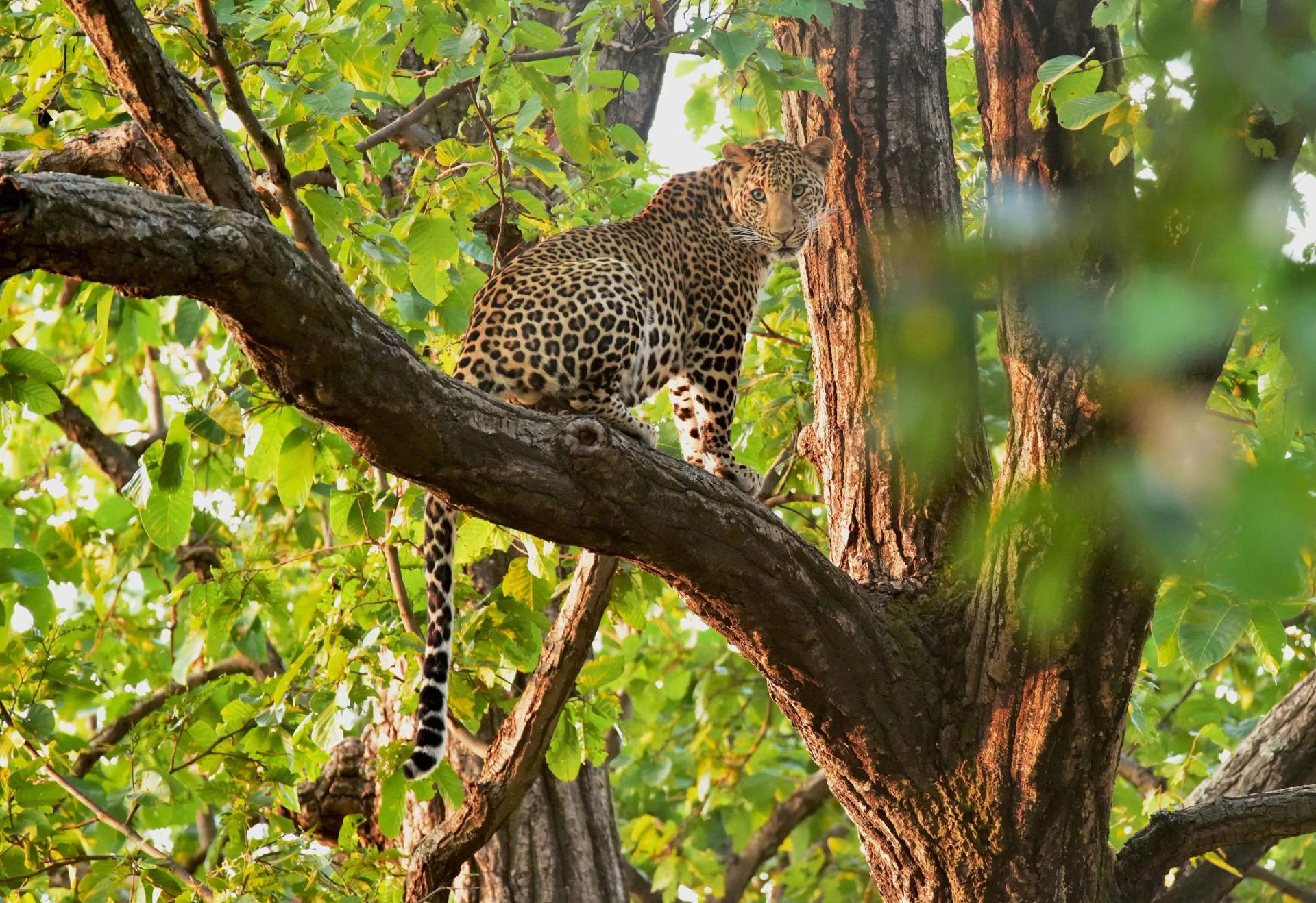
Look for leopard, Himalayan goral and over 200 recorded bird species with a naturalist who is honest about the odds.
Visit Khali Estate, a colonial house inside the sanctuary once used by Mahatma Gandhi and later by Indira Gandhi.
Walk the Jageshwar valley's stone temples with a guide who reads the architecture: the Mrityunjaya temple, one of the largest and oldest, and the 15-temple Dandeshwar group nearby.
See a Himalayan temple valley built almost entirely under one medieval dynasty, the Katyuris, and still standing after more than a thousand years.
Essence of Journey
The experiences that capture the true spirit of the entire trip.
| Day | Route | Distance | Major Highlights |
|---|---|---|---|
| Day 1 | Delhi (airport, hotel) | ~30 km local | Airport pickup, early night before the morning train |
| Day 2 | New Delhi – Kathgodam (train) – Nainital (road) | ~35 km by road, 1–1.5 hrs | Shatabdi Express, drive up to Nainital, evening at the lake |
| Day 3 | Nainital – Almora – Binsar | ~90 km, 3.5–4 hrs | Drive through Almora, first walk into Binsar's oak forest |
| Day 4 | Binsar (Zero Point, Khali Estate, forest trails) | ~15 km local | Sunrise at Zero Point, forest trails, Khali Estate |
| Day 5 | Binsar – Almora – Jageshwar | ~90 km, 3–3.5 hrs | Arrival at Jageshwar, the Mrityunjaya and Dandeshwar temple groups |
| Day 6 | Jageshwar – Kathgodam (road) – New Delhi (train) | ~125 km road, plus rail | Drive to Kathgodam, Shatabdi to Delhi, airport drop |
About
This is a Kumaon heritage and wildlife tour built around two very different mornings: a walk through Binsar's old-growth oak forest, home to leopard and over 200 recorded bird species, and a slow, guided reading of Jageshwar's stone temples, one of the largest clusters of early Himalayan architecture anywhere in India. A binsar wildlife tour international guests rarely combine with a jageshwar temple architecture tour, and that pairing, not either place alone, is the point of this route.
Binsar was declared a wildlife sanctuary in 1988 to protect a shrinking stretch of broadleaf oak forest on a ridge above Almora, and its Zero Point is one of the widest Himalayan panoramas in Kumaon on a clear day. Jageshwar, about an hour further on, holds roughly 125 stone temples in a deodar valley, with 151 structures registered by the Archaeological Survey of India as protected monuments built before the 12th century, mostly under the Katyuri kings in the North Indian Nagara style. Neither the sanctuary nor the temple valley appears on BizareXpedition's live site today, and no other operator we found pairs the two into one route.
This is a private journey with a vehicle, a driver and an English-speaking guide for the whole six days, with a naturalist for the Binsar forest and a guide who reads architecture, not just legend, at Jageshwar. It is priced in three tiers, Premium, Luxury and Ultra-Luxury, and every departure is built to your dates.
Note on sightings and the temple count. Binsar's leopard is a shy, mostly nocturnal animal in dense forest, and camera traps confirm it far more often than a daylight walk does. We tell you this plainly: the reliable draw is the old oak and rhododendron forest, the birds and the Zero Point view, not a promised cat. At Jageshwar, sources differ on the exact temple count, from about 124 to over 200 once every later shrine in the wider valley is counted. We use the Archaeological Survey of India's protected figure, 151 pre-12th-century structures, as the number that can be checked.
WHY BOOK THIS WITH BIZAREXPEDITION
A tour that crosses six valleys needs a team that lives at the start of it.
A pairing nobody else offers. Binsar is covered on a handful of older Kumaon pages, and Jageshwar barely at all, but no operator we found pairs the two into one route. This document is built around that combination.
A guide for the stone, not just the story. At Jageshwar your guide is briefed to read Nagara-style architecture, erosion patterns and construction phases, not just recite the temple's legend.
An honest wildlife promise. Binsar's leopard is shy and mostly nocturnal. We tell you the real odds rather than promise a sighting, and let the forest, the birds and the view carry the day.
Three tiers, one route. The Premium, Luxury and Ultra-Luxury versions share the same route and the same guide standard. The tiers change the rooms, the vehicle and the naturalist support.
Built for a short, focused trip. Six days is enough to do both places properly without turning into a marathon, and it can be extended with Kausani or Nainital's lakes on either end.
ACCOMMODATION CATEGORIES
| Destination | Nights | Premium | Luxury | Ultra-Luxury |
|---|---|---|---|---|
|
Delhi |
1 |
Radisson Blu Plaza Delhi Airport |
ITC Maurya |
The Oberoi, New Delhi |
|
Nainital |
1 |
Lake-view heritage hotel (named at booking) |
The Naini Retreat |
The Manu Maharani, top-grade room |
|
Binsar |
2 |
Forest lodge (named at booking) |
Khali Estate or equivalent heritage stay |
Best available heritage suite (named at booking) |
|
Jageshwar |
1 |
Comfortable hotel (named at booking) |
Best available hotel (named at booking) |
Best available hotel, top room (named at booking) |
Binsar Leopard Jageshwar Temple Accommodation Categories
Note on hotels. Binsar and Jageshwar have no branded luxury or ultra-luxury hotels, so the higher tiers buy the best available heritage stay, room grade and guide time rather than a different named property. Property names are proposals and are confirmed at booking. Rates in this document are modelled, not contract rates. Where a tier has no separate property, it differs by room grade, food and trek support. Property names are proposals and are confirmed at booking. Rates in this document are modelled, not contract rates.
3-TIER PRICING SUMMARY (indicative)
| Tier | Per couple | Per person (twin sharing) |
|---|---|---|
|
Premium |
Rs.97,952 – Rs.105,788 |
Rs.48,976 – Rs.52,894 |
|
Luxury |
Rs.150,394 – Rs.162,426 |
Rs.75,197 – Rs.81,213 |
|
Ultra-Luxury |
Rs.225,994 – Rs.244,074 |
Rs.112,997 – Rs.122,037 |
Binsar Leopard Jageshwar Temple 3-Tier Pricing Summary
Prices are indicative and modelled. The upper figure covers date and season variation. The final quote depends on dates, hotels confirmed and any upgrade you choose.
Binsar: An Old-Growth Forest Sanctuary, Not a Big-Cat Circuit
The Forest and Its Leopard
Binsar was declared a wildlife sanctuary in 1988 to protect a shrinking stretch of broadleaf oak forest on a ridge above Almora, covering 45.59 sq km between 900 and 2,500 m. It's one of the last large stretches of old broadleaf forest left in the central Himalaya — the same reason Sir Henry Ramsay, the British commissioner who governed Kumaon for three decades, chose this ridge as his summer retreat. The sanctuary holds leopard, Himalayan goral, barking deer, wild boar and over 200 recorded bird species, but the forest is dense and the leopard is shy and mostly nocturnal. Camera traps and pugmarks confirm it far more often than a daylight sighting does, and this package says so plainly rather than promise a cat. What a Binsar walk reliably gives you is birdsong, old oak and rhododendron, and the quiet of a forest with almost no other visitors.
Zero Point
Zero Point, also called Jhandi Dhar, is the highest spot in the sanctuary, and on a clear morning it's one of the widest Himalayan panoramas in Kumaon: Nanda Devi, Trishul, Kedarnath and the Panchachuli peaks are all named from this single ridge. The panorama depends entirely on the sky that morning, and a cloudy one is still a good forest walk.
Khali Estate
Khali Estate is a colonial-era house inside the sanctuary once used by Mahatma Gandhi and later by Indira Gandhi, now run as a small heritage stay, with the nearby Mary Budden Estate also worth a visit.
SEASON ADJUSTMENTS
| Season | Dates | Conditions |
|---|---|---|
|
Autumn to early spring (this build) |
October to March |
Clearest skies for the Zero Point panorama, and comfortable walking weather at both Binsar and Jageshwar. Cold mornings, especially at Binsar's altitude. |
|
Late spring |
April to mid-June |
Rhododendron flowers in the Binsar forest, but haze can soften the far peaks at Zero Point by May. Warmer days at Jageshwar. |
|
Monsoon |
Mid-June to September |
Not offered. Hill roads carry landslide risk, and cloud usually hides the Zero Point view entirely. |
Binsar Leopard Jageshwar Temple Season Adjustments
Binsar and Jageshwar do not close for the season, but road and view conditions in the monsoon make this route impractical then.
Jageshwar: A Thousand Years of Katyuri Stone
The Temple Valley
Jageshwar sits in a narrow valley of deodar cedar, about 90 km from Binsar, and holds one of the largest clusters of early stone temples in the Himalaya: roughly 125 structures in the immediate cluster, with 151 numbered by the Archaeological Survey of India as protected monuments built before the 12th century. Most were raised between the 7th and 14th centuries under the Katyuri kings, in the North Indian Nagara style, tower over cella, though a few show southern and central Indian influences that art historians still debate. Jageshwar is also an active Shiva pilgrimage site, with a monsoon festival in Shravan and a Maha Shivratri mela each spring — this tour is built around the architecture and history rather than a pilgrimage itinerary, though the temples remain places of active worship.
Reading the Architecture
The Mrityunjaya temple, one of the largest and oldest in the group, is dedicated to Shiva as the conqueror of death. The Dandeshwar group nearby holds 15 more temples in a tighter cluster, and the Jageshwar temple itself, the one that gives the valley its name, was likely built in its present form in the 12th or 13th century over an older shrine. The temples are carved from cut stone with no mortar, and the erosion on some of the oldest ones is its own kind of evidence — you can see which shrines have stood the longest by how soft their carving has gone.
What You'll Experience Along the Way
The Shatabdi Express, a comfortable, scenic train journey between Delhi and Kathgodam that lets the plains fall away before the mountain road begins.
An evening on Naini Lake, with a walk on the Mall and a boat ride at sunset before the drive on to Binsar.
The deodar forest at Jageshwar in late light, when the stone changes colour as the sun drops through the trees.
Who This Trip Suits
Travellers who want both wildlife and heritage, not a trip built around just one, since Binsar's forest and Jageshwar's temples serve genuinely different interests.
Heritage-focused travellers for whom Jageshwar is the real draw — the forest walk at Binsar works even without a wildlife sighting, since the setting, birds and Zero Point view are the point.
Travellers who'd rather hear the honest odds than a sales pitch. This package states plainly that a leopard sighting is rare and that sources differ on the exact Jageshwar temple count.
Repeat Kumaon visitors who've already covered Nainital or Almora and want a route pairing that no other operator currently offers.
Travellers comfortable with gentle forest trails and level stone paths, with no trekking or technical walking anywhere on this itinerary.
PRACTICAL NOTES
Sightings. A leopard sighting at Binsar is rare, not likely. The forest, the birds and the Zero Point view are the reliable reasons to come, and the naturalist tells you plainly what a given walk is likely to show.
Fitness. Walks at Binsar are gentle forest trails, not a trek, and the Jageshwar valley is walked on level stone paths. No special fitness is needed beyond comfortable walking shoes.
Altitude. Binsar sits at an average of about 2,400 m. Most guests feel nothing more than a slightly shorter breath on the first morning. Tell your guide about headache or nausea.
Photography. Photography is generally allowed at the Jageshwar temples from outside the inner sanctums; check with your guide on the day. A tripod helps at Zero Point before sunrise.
Weather at Zero Point. The panorama depends entirely on the sky that morning. We do not guarantee a clear view of the peaks, and a cloudy morning is still a good forest walk.
Dress code. Cover shoulders and knees at the temples and remove shoes at the entrance. For the forest: layers, a warm hat for the dawn walk, and comfortable shoes.
Tipping. Tips for the guide, driver and naturalist are given at the end of the trip. The guide advises on a suitable amount.
Booking Summary
Dept. City :
--
Dept. Date :
--
Traveller :
Adults: 2, Child: 0, Infant: 0
Rooms :
--
Basic Price :
--
Total Cost
--
GST
--
Grand Total
--
Itinerary (Day Wise)
This is a six-day Kumaon trip that pairs two mornings nobody else seems to put together: a walk through Binsar's old oak forest, where leopard live but rarely show themselves, and a slow, guided walk through Jageshwar's stone temples, one of the largest clusters of early Himalayan architecture in the country. You catch sunrise at Zero Point with four Himalayan ranges laid out in front of you, spend an afternoon at the colonial-era Khali Estate once used by Gandhi, then move on to Jageshwar for temples the guide reads as architecture rather than just legend, including the Mrityunjaya temple and the 15-shrine Dandeshwar cluster. It's honest about the leopard odds rather than promising a sighting, runs by train and road from Delhi across three tiers, and works well stretched out further with a night at Kausani or Nainital.
Day 1
ARRIVE DELHI | A Night Before the Train
Route: Delhi (airport, hotel)
The Shatabdi to Kathgodam leaves New Delhi at 6:20 am, so the plan starts with a night in Delhi. Your trip lead meets you at arrivals, takes you to the hotel, and hands over your train tickets and a short briefing on the six days ahead.
Nothing is scheduled after that. Sleep, because the alarm is early.
Experience of the Day
– Airport pickup.
– Briefing and train tickets.
Food
Dinner at the hotel, chosen from a menu that suits jet lag. The hotel handles allergies.
Activities to Do
Airport pickup
Hotel check-in
Trip briefing
Day 2
DELHI TO NAINITAL | By Train and Up to the Lake
Route: New Delhi – Kathgodam (train) – Nainital (road)
The train crosses the plains in about five and a half hours, with breakfast served in your seat. At Kathgodam the plains end and the road climbs about 35 km to Nainital, at about 2,084 m around the eye-shaped Naini Lake.
You check in by early afternoon, and the rest of the day is unhurried: a walk on the Mall, a boat on the lake at sunset. Tomorrow's drive to Binsar is long, so tonight is an early one.
Experience of the Day
– Board the Shatabdi Express at New Delhi.
– The road from Kathgodam up to Nainital.
– A boat on Naini Lake at sunset.
Food
Lunch on the train. Dinner at a lakeside restaurant chosen by the guide.
Activities to Do
Train to Kathgodam
Drive to Nainital
Evening boat ride
Day 3
NAINITAL TO BINSAR | Into the Leopard's Forest
Route: Nainital – Almora – Binsar
The road from Nainital to Almora is a familiar Kumaon drive, past Bhimtal and Bhowali, and from Almora a further climb of about 32 km brings you into the Binsar Wildlife Sanctuary. Binsar was declared a sanctuary in 1988 to protect a shrinking stretch of broadleaf oak forest, and it covers 45.59 sq km between 900 and 2,500 m, with an average height above 2,400 m.
You check in to a forest lodge inside or at the edge of the sanctuary in the afternoon. The light through the oak and rhododendron canopy is the reason people come here even before the wildlife: this is one of the last large stretches of old broadleaf forest left in the central Himalaya, and Sir Henry Ramsay, the British commissioner who governed Kumaon for three decades, chose this ridge as his summer retreat for the same reason.
In the evening your naturalist takes you on a short walk near the lodge. Binsar's forest is thick and its animals are shy, so this first walk is about learning to read the forest: pugmarks, alarm calls from langur and barking deer, and the birdsong that never really stops.
Note on distance. Sources give the Nainital–Binsar road anywhere from about 70 to 95 km depending on the route through Almora, and we use 90 km and 3.5 to 4 hours as the working figure. Your guide confirms the road on the day.
Experience of the Day
– Drive through Almora to the Binsar ridge.
– First walk into the oak forest.
– Learn to read pugmarks and alarm calls.
Food
Lunch at a roadside place near Almora. Dinner at the lodge, with Kumaoni dishes on request.
Activities to Do
Drive to Binsar
Evening forest walk
Day 4
BINSAR | Zero Point and the Forest by Day
Route: Binsar (Zero Point, Khali Estate, forest trails)
Zero Point, also called Jhandi Dhar, is the highest spot in the sanctuary, and on a clear morning it is one of the widest Himalayan panoramas in Kumaon: Nanda Devi, Trishul, Kedarnath and the Panchachuli peaks are all named from this single ridge. You are there before the light, with a flask of tea, and you wait for the cloud to move or not.
The rest of the morning is a slower forest walk with your naturalist. Binsar holds leopard, along with Himalayan goral, barking deer, wild boar and over 200 recorded bird species, but the forest is dense and the leopard is a shy, mostly nocturnal animal. Camera traps and pugmarks confirm it far more often than a daylight sighting does, and we tell you this plainly rather than promise a cat. What the walk reliably gives you is birdsong, old oak and rhododendron, and the quiet of a forest with almost no other visitors.
In the afternoon you visit the Khali Estate, a colonial-era house inside the sanctuary once used by Mahatma Gandhi and later by Indira Gandhi, now run as a small heritage stay, and the nearby Mary Budden Estate. Dinner is at the lodge, and the forest around it is loud with insects after dark.
Note on sightings. This is a forest walk, not a jeep safari, and a leopard sighting is rare rather than likely. Binsar's real draw is the old-growth oak and rhododendron forest, the birdlife and the Zero Point panorama, and the document says so rather than oversell the leopard.
Experience of the Day
– Sunrise at Zero Point, with four Himalayan ranges in view on a clear day.
– A slow forest walk for birds, deer and leopard sign.
– Khali Estate and Mary Budden Estate.
Food
A flask of tea and a packed breakfast at Zero Point. Lunch and dinner at the lodge.
Activities to Do
Zero Point sunrise
Forest walk with naturalist
Khali Estate visit
Optional Nearby Excursions
A longer birding walk for guests who want to spend the whole day in the forest.
Day 5
BINSAR TO JAGESHWAR | A Valley of a Hundred Temples
Route: Binsar – Almora – Jageshwar
Jageshwar sits in a narrow valley of deodar cedar, 34 km from Almora, and holds one of the largest clusters of early stone temples in the Himalaya: about 125 structures, with 151 numbered by the Archaeological Survey of India as protected monuments built before the 12th century. Most were raised between the 7th and 14th centuries under the Katyuri kings, in the north Indian Nagara style, tower over cella, though a few show southern and central Indian influences that art historians still debate.
You spend the afternoon walking the main cluster with a guide who reads temple architecture, not just legend. The Mrityunjaya temple, one of the largest and oldest in the group, is dedicated to Shiva as the conqueror of death. The Dandeshwar group nearby holds 15 more temples in a tighter cluster, and the Jageshwar temple itself, the one that gives the valley its name, was likely built in its present form in the 12th or 13th century over an older shrine.
The temples are carved from cut stone with no mortar, and the erosion on some of the oldest ones is its own kind of evidence: you can see which shrines have stood the longest by how soft their carving has gone. The deodar forest around them is itself protected, and the light through the trees in the late afternoon is when the stone changes colour.
Note on the numbers. Sources differ on the exact temple count, between about 124 and over 200 once every later shrine in the valley is included. We use the ASI's protected figure, 151 pre-12th-century structures, as the number that can be checked, and mention the wider valley figure as context rather than a fixed fact.
Experience of the Day
– Walk the Mrityunjaya and Dandeshwar temple groups.
– Read the architecture with a guide, not just the legend.
– The deodar forest in late light.
Food
Lunch at a roadside place near Almora. Dinner at the hotel.
Activities to Do
Drive to Jageshwar
Temple architecture walk
Deodar forest walk
Optional Nearby Excursions
A visit to the small ASI site museum, where open.
Dandeshwar's inner cluster in the early morning light, before the day-trip crowds arrive.
Day 6
JAGESHWAR TO DELHI | Down by Road and Rail
Route: Jageshwar – Kathgodam (road) – New Delhi (train)
Breakfast at the hotel, then the road back through Almora to Kathgodam, about 125 km and 4 to 4.5 hours with a lunch stop. The Shatabdi leaves at 3:20 pm and reaches New Delhi at 8:55 pm, and your trip lead meets you at the station.
Because the train arrives in the evening, a late international departure works best. If your flight is earlier, we add a night in Delhi, quoted on request.
Experience of the Day
– Drive down to Kathgodam.
– Shatabdi Express to New Delhi.
Food
Breakfast at the hotel. Lunch on the road. Dinner on the train.
Activities to Do
Drive to Kathgodam
Shatabdi to Delhi
Airport drop
Optional Nearby Excursions
A Delhi night after the train, quoted on request.
Tour Information
Your complete guide to a hassle-free and enjoyable trip.
Inclusion
Exclusion
Payment Terms
Important factors to consider before your trip!
Cancellation
Need To Know
Be Responsible Traveller
- Minimize Plastic Use : Bring a reusable water bottle, shopping bag, and utensils to reduce the need for single-use plastics. Many destinations have water refill stations and eco-friendly stores.
- Support Local and Sustainable Businesses : Eat at local restaurants, buy souvenirs from local artisans, and choose tour operators that prioritize sustainable practices and support the local community.
- Respect Wildlife and Natural Habitats : Avoid disturbing wildlife or their natural habitats. Stick to designated paths and observe animals from a distance without feeding or touching them.
- Dispose of Waste Properly : Follow local guidelines for recycling and waste disposal. If facilities aren't available, carry your waste with you until you can dispose of it responsibly.
- Educate Yourself and Others : Learn about the local environment, culture, and customs. Respect local practices and traditions, and share your knowledge about responsible travel with others.
- Choose Sustainable Activities : Engage in eco-friendly activities such as hiking, snorkeling, or visiting national parks. Avoid activities that exploit animals or damage the environment.
- Leave No Trace : Follow the principle of "Leave No Trace," which means leaving natural areas as you found them. Pack out all trash, avoid picking plants, and refrain from carving or writing on rocks or trees.
- Plant Trees Whenever Possible : Participate in local tree-planting initiatives or plant trees in your own community. Trees absorb carbon dioxide, provide oxygen, and help support biodiversity, making them vital for a healthy environment.
Connect
Share Itinerary
Email Itinerary
Frequently Asked Questions (FAQs) & People Also Ask — Binsar Leopard & Jageshwar Temple Architecture Tour
We help you prepare for your trip and ensure an effortless and enjoyable travel experience.
How many temples are there at Jageshwar?
Sources differ. About 125 stone temples stand in the immediate cluster, and the Archaeological Survey of India has registered 151 structures across the wider valley as protected monuments built before the 12th century. Later shrines take the total figure for the whole valley above 200 in some counts. We use the ASI's protected figure as the number that can be checked.
Can you see leopards at Binsar?
Leopards live in Binsar's forest and camera traps confirm them regularly, but a daylight sighting on a forest walk is rare, because the animal is shy and mostly nocturnal. The sanctuary's more reliable draws are the old oak and rhododendron forest, over 200 recorded bird species, and the Zero Point panorama.
What can you see from Zero Point?
Zero Point, also called Jhandi Dhar, is the highest spot in Binsar Wildlife Sanctuary. On a clear morning it names Nanda Devi, Trishul, Kedarnath and the Panchachuli peaks in a single sweep, one of the widest Himalayan panoramas in Kumaon. Cloud can hide the view on any given day, and we do not promise a clear morning.
How old are the Jageshwar temples?
Most were built between the 7th and 14th centuries, mainly under the Katyuri dynasty that ruled Kumaon from around the 7th to 11th centuries, in the North Indian Nagara style. The main Jageshwar temple itself was likely rebuilt in its present form in the 12th or 13th century over an older shrine.
Is this trip suitable for a heritage-focused traveller rather than a wildlife one?
Yes. Jageshwar is an architecture and history destination first, and Binsar's forest walk works even without a wildlife sighting, since the setting, the birds and the Zero Point view are the point. The two halves of the trip suit different interests, and both are covered in full.
How far is Binsar from Jageshwar?
Sources give this distance differently, from about 90 km on the working route through Almora to figures as high as 92 km reported elsewhere. We use 90 km and about 3.5 hours as the working figure, and the guide confirms the road on the day.
Is there a hotel inside Binsar Wildlife Sanctuary?
There is no branded luxury hotel inside the sanctuary. Guests stay at a forest lodge at or near the boundary, or at a heritage property such as Khali Estate, a colonial house once used by Mahatma Gandhi and later by Indira Gandhi. Property names are confirmed at booking.
Is Jageshwar a religious pilgrimage site or a heritage site?
Both. Jageshwar is an active Shiva pilgrimage site with a monsoon festival in Shravan and a Maha Shivratri mela each spring, and it is also one of the largest clusters of early stone temple architecture in the Himalaya. This tour is built around the architecture and history rather than a pilgrimage itinerary, though the temples remain places of active worship.
Is Uttarakhand safe for tourists on this route?
Yes. The main considerations are the same as any Himalayan foothill route: cool mornings at altitude, ordinary hill-road care, and dressing modestly at active temples. There is no trekking or technical walking on this itinerary.
How much does this Binsar and Jageshwar tour cost?
A private 6-day, 5-night Binsar and Jageshwar tour costs about Rs.97,952 to Rs.105,788 per couple in Premium, Rs.150,394 to Rs.162,426 in Luxury, and Rs.225,994 to Rs.244,074 in Ultra-Luxury. These are modelled figures and depend on dates and hotels confirmed.
Can this trip be extended?
Yes, the tour is tailor-made. Common additions are a night at Kausani for the Himalayan view, an extra night at Nainital for the lakes, or a Delhi night at either end. Tell us the dates and we rebuild the route.
BizareXpeditionTMReviews
Let's go, pack up, and hit the road!
Similar Tour Packages
Explore other exciting options for your next adventure!
Trusted Paths, Bold Journeys — Inside BizareXpedition
From humble beginnings to a trusted name in the industry, BizareXpedition's story is one of purpose-driven growth, community connection, and a relentless pursuit of excellence that speaks for itself.














Binsar Leopard & Jageshwar Temple Architecture Tour
best deal price
Without GST
₹48,976
per person on twin sharing
Book Now