
North East Handicraft & Textile Trail for Collectors9N/10D
North East Handicraft & Textile Trail for Collectors
Start & City : Guwahati
best deal price
₹
Without GST ₹1,10,880
per person on twin sharing
Choose your departure city, dates, and add guests to secure your tour.
Hurry, as seats fill up, prices rise! Book now!
1. Choose your departure date
Highlights
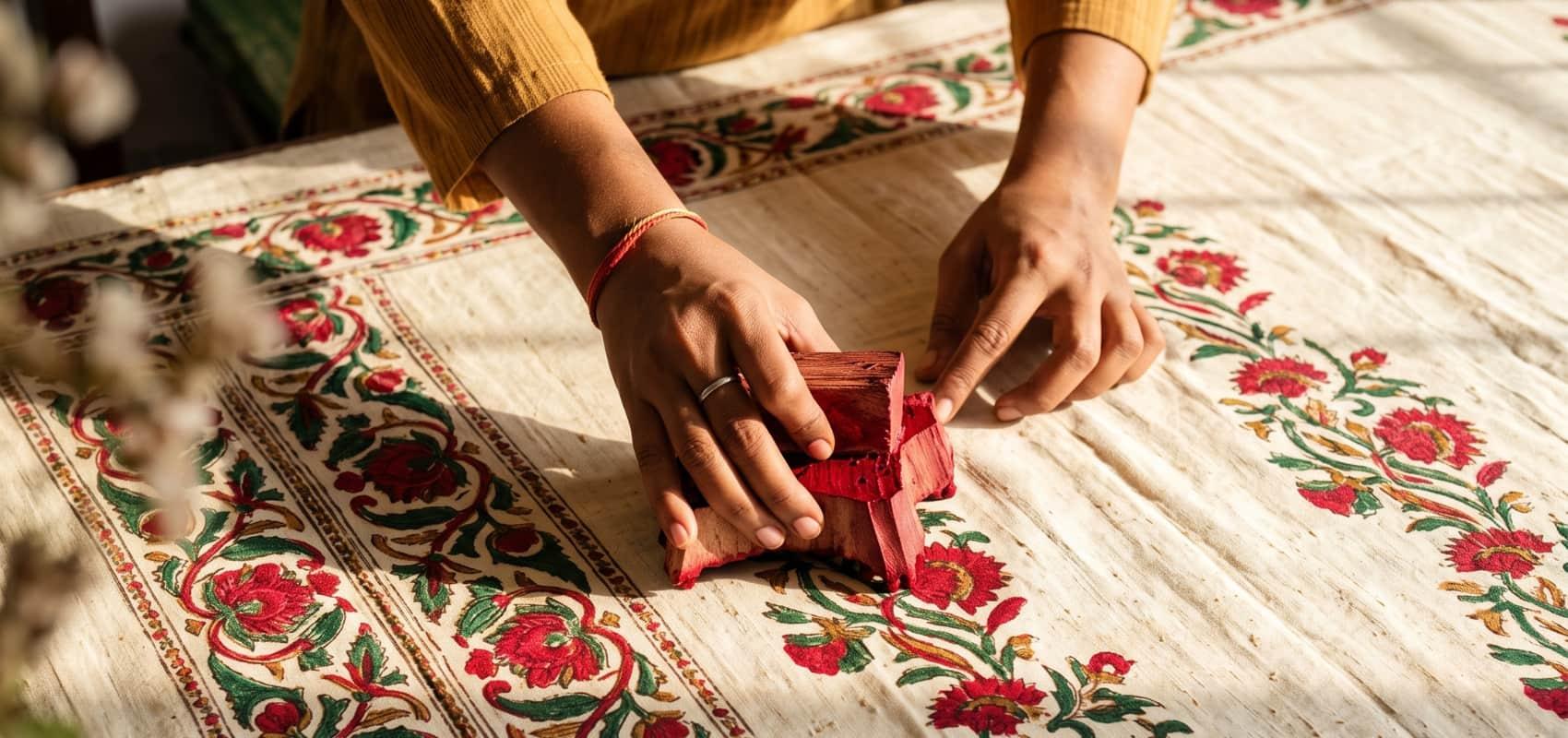
Watch Muga, Pat and Eri silk being woven in family workshops at Sualkuchi on the Brahmaputra.
Visit Eri silk weavers in Ri-Bhoi district, where the thread is spun by hand from cocoons after the moth has left.
Study textiles from across the region at the Don Bosco Museum of Indigenous Cultures in Shillong.
Meet Chakhesang Naga weavers at Chizami, a women's weaving enterprise in the hills beyond Kohima.
Stand at the Kohima War Cemetery and see Naga shawls, beadwork and basketry at the Kisama Heritage Village.
Watch mask-makers at Samaguri Satra, potters at Salmora and Mising weavers on the island of Majuli.
Essence of Journey
The experiences that capture the true spirit of the entire trip.
| Day | Route | Distance | Major Highlights |
|---|---|---|---|
| Day 1 | Arrive Guwahati | Airport to hotel, about 45 min | Assam State Museum, handloom emporium |
| Day 2 | Sualkuchi day trip | About 35 km each way, 1 hr | Muga, Pat and Eri silk workshops |
| Day 3 | Guwahati to Shillong via Ri-Bhoi | About 100 km plus the village detour, 5 to 6 hrs | Eri silk weaving villages |
| Day 4 | Shillong | Local drives | Don Bosco Museum, Bara Bazaar, Khasi weaving |
| Day 5 | Shillong to Guwahati, fly to Dimapur, drive to Kohima | About 100 km; flight about 45 min; about 75 km, 2.5 hrs | Into Nagaland |
| Day 6 | Kohima | Local drives | Naga shawls, Kisama Heritage Village, War Cemetery |
| Day 7 | Chizami day trip | About 88 km each way, 3 hrs | Chakhesang loin-loom weavers |
| Day 8 | Kohima to Jorhat | About 220 km, 6 to 7 hrs | Down to the Assam tea country |
| Day 9 | Majuli day trip | Ferry about 1 to 1.5 hrs each way | Masks, pottery, Mising weaving |
| Day 10 | Jorhat airport, fly out | About 10 km | Departure |
About
This is a private 10-day textile and craft tour of North East India for international collectors. You visit silk weavers at Sualkuchi in Assam, Eri silk villages in Meghalaya, Naga loin-loom weavers at Chizami in Nagaland, and the mask-makers and potters of Majuli island. You buy directly from the makers, with a textile specialist guide in each state. Prices start from about INR 110,880 per person.
This Northeast textile tour for collectors is a buying and learning trip through three states. Each has its own fibres, looms and patterns, and in most villages the weaving is still done at home by women.
Assam is the home of Muga, the golden silk found nowhere else in the world. At Sualkuchi, the weaving town near Guwahati, you see Muga, white Pat and soft Eri silk on the loom. In Meghalaya, Khasi weavers in Ri-Bhoi district spin and weave Eri silk, known locally as ryndia. In Nagaland, each Naga tribe has its own shawl patterns, woven on the back-strap loin loom. The trip ends on Majuli, the river island known for its masks, pottery and Mising weaving.
It is an Assam muga silk tour can join with no special knowledge: each workshop comes with a local guide who knows the craft. Manipur, on the sheet route for Moirang Phee, is left out while the UK government advises against all but essential travel there.
The Textiles you’ll see, and Where
Each region on this route has its own fibre, loom and style. This table is a quick guide to what you can expect to see, and buy, at each stop.
| Textile or craft | Where | What makes it special |
|---|---|---|
|
Muga silk |
Sualkuchi, Assam |
Golden silk from a silkworm found only in Assam. Its natural sheen gets brighter with washing. GI-tagged since 2007 |
|
Pat silk |
Sualkuchi, Assam |
Fine white mulberry silk, used for formal mekhela chador |
|
Eri silk (Ryndia) |
Ri-Bhoi, Meghalaya |
“Peace silk”: spun after the moth leaves the cocoon. Hand-spun and often naturally dyed. Soft and warm like wool |
|
Khasi dress |
Shillong, Meghalaya |
The jainsem and festive dhara, sold in Bara Bazaar, one of the region’s largest markets |
|
Naga shawls |
Kohima and Chizami, Nagaland |
Woven on the back-strap loin loom. Each tribe has its own patterns, which once showed a man’s rank and deeds |
|
Satra masks |
Majuli, Assam |
Masks of bamboo, clay and cloth, made for religious drama at Samaguri Satra |
|
Hand pottery |
Majuli, Assam |
Pots shaped entirely by hand, without a wheel, at Salmora |
|
Mising weaving |
Majuli, Assam |
Bright striped cloth woven on looms under stilted houses |
North East Handicraft Textile
Highlights for collectors
Three Assam silks in one day at Sualkuchi
Sualkuchi, about 35 km from Guwahati on the Brahmaputra, is a town of weavers. In many houses the loom sits on the ground floor, and you can hear the shuttles from the street. This is the best place on any Assam Muga silk tour to see Muga, Pat and Eri side by side, from reeling to dyeing to weaving, and to buy from the families directly. A single Muga mekhela chador can take a weaver several weeks.
Hand-spun Eri silk in the Khasi villages
In Ri-Bhoi district, on the road up into Meghalaya, Khasi women rear Eri silkworms on castor leaves, spin the thread by hand and weave it on simple looms. Many still use natural dyes from local plants. Because the moth leaves the cocoon before spinning, Eri is often sold as a cruelty-free “peace silk”.
The best textile collection in the North East
The Don Bosco Museum of Indigenous Cultures in Shillong has seven floors on the peoples of the region. Its dress and weaving galleries are the easiest way to compare textiles from all eight north-eastern states in one place, and they help you recognise good work before you buy.
A day with the Chakhesang weavers of Chizami
Chizami Weaves started in 2008 as a livelihood project for women weavers in a Chakhesang Naga village beyond Kohima. You spend a full day with them, watch the loin loom up close, learn how a pattern is set up and buy scarves, shawls and home textiles made in the village.
Kohima and Kisama
Kohima’s weaving cooperatives and market are good for tribal shawls, beadwork and cane baskets. At the Naga Heritage Village at Kisama, each tribe has its own traditional house. Nearby, the Kohima War Cemetery marks where the Japanese advance into India was stopped in 1944.
Masks, pots and weaving on Majuli
Majuli, a large river island in the Brahmaputra, is the centre of Assam’s Vaishnavite satras, monasteries founded from the 1500s on. It is a short ferry ride from Jorhat, and the last stop on the trail.
ACCOMMODATION CATEGORIES
Tier labels follow the standard of the room and the property, not a star count. Kohima and Jorhat have small hotel markets, so tiers there reflect the best rooms available. Where no property is named, it is flagged honestly rather than guessed.
| Destination | Nights | Premium | Luxury | Ultra-Luxury |
|---|---|---|---|---|
|
Guwahati |
2 |
Novotel Guwahati GS Road |
Radisson Blu Hotel Guwahati |
Vivanta Guwahati |
|
Shillong |
2 |
Hotel Polo Towers |
Royal Heritage Tripura Castle |
Ri Kynjai – Serenity by the Lake |
|
Kohima |
3 |
Good town hotel |
Best-available hotel |
Best-available suite |
|
Jorhat |
2 |
Good city hotel |
Thengal Manor, heritage planter's bungalow |
Thengal Manor, best room |
North East Handicraft Textile ACCOMMODATION CATEGORIES
Who this tour is for
Textile collectors looking for named, traceable pieces from the people who made them
Designers and buyers who want to understand fibres and meet weaving groups
Curious travellers who would rather spend time in workshops and villages than at viewpoints
It may not suit you if you want a sightseeing holiday with lots of free time, or if long drives on hill roads are a problem. Four days of this trip include longer drives.
What about Manipur?
If you’re searching for a Manipuri weaving trail for foreigners, you’ll know Manipur for Moirang Phee and its other fine handloom traditions. We have left Manipur out of this trip for now, because the UK government currently advises against all but essential travel there.
We review this regularly. When the advice changes, we can add a Manipur leg to this tour. Ask us to let you know.
3-TIER PRICING SUMMARY
| Tier | Per couple | Per person | Standard |
|---|---|---|---|
|
Premium |
Rs.221,760 to Rs.239,501 |
Rs.110,880 to Rs.119,750 |
Good hotels throughout |
|
Luxury |
Rs.273,420 to Rs.295,294 |
Rs.136,710 to Rs.147,647 |
Superior and heritage properties where they exist |
|
Ultra-Luxury |
Rs.350,280 to Rs.378,302 |
Rs.175,140 to Rs.189,151 |
Best rooms and heritage stays where they exist |
North East Handicraft Textile 3-Tier Pricing Summary
The upper figure allows for date and season variance of about 8%. Prices are indicative and confirmed on request.
WHY BOOK THIS WITH BIZAREXPEDITION
A textile trail through Assam, Meghalaya and Nagaland, planned and run by BizareXpedition from start to finish.
Three silks in one day. At Sualkuchi on Day 2 you see Muga, Pat and Eri on the loom side by side, with time to buy from the weaving families.
Time with working weavers. Ri-Bhoi on Day 3, Chizami on Day 7 and Majuli on Day 9 are visits to working weavers and craftspeople in their villages.
One flight to the Naga Hills. A short flight from Guwahati to Dimapur on Day 5 replaces a road journey of more than 400 km from Shillong to Kohima.
Three nights in Kohima. Enough time for the market, Kisama and a full day to Chizami, at an easy pace.
An island finish. Two nights near Jorhat give a full day on Majuli by ferry, and Jorhat airport has onward flights.
A registered company. BizareXpedition Services Pvt. Ltd. (CIN U63090UR2016PTC007433), headquartered in Haridwar, plans and runs the trip itself.
SEASON ADJUSTMENTS
| Season | Months | What to expect |
|---|---|---|
|
Peak |
October to February |
Dry roads, steady ferries to Majuli, and weavers at work after the harvest. |
|
High |
Early December |
Hornbill Festival at Kisama, 1 to 10 December. Kohima hotels fill early. |
|
Good |
March to April |
Warm days. Rongali Bihu in mid-April, when Assamese families wear new silk. |
|
Caution |
May |
Pre-monsoon rain begins and river levels start to rise. |
|
Monsoon |
June to September |
Floods on the Brahmaputra and Majuli; landslides in the hills. The trip is not sold in this period. |
North East Handicraft Textile Season Adjustments
Buying, shipping and taking textiles home
Buying is a big part of this trip, so here is what collectors usually ask us:
Buy direct. Village prices are often lower than city shops, and the money goes straight to the weaving family.
Bring cash. Many village weavers don’t take cards. Your guide can tell you roughly how much to carry.
Check for Silk Mark. Ask for the Silk Mark label when buying silk. It confirms the fibre is real silk.
Bargaining. Prices at cooperatives are usually fixed. In markets, polite discussion is normal.
Antiques. Indian law doesn’t allow textiles or objects more than 100 years old to leave the country. Buy new work, or ask for paperwork on older pieces.
Shipping. Larger purchases can be shipped home from Guwahati or Shillong. Keep receipts for customs.
Permits for foreign Travellers
Assam and Meghalaya need no special permit. Nagaland needs a Protected Area Permit (PAP), and foreign visitors must register with the district foreigners office within 24 hours of arrival. We arrange both for you, and the cost is included.
Get your Indian visa first (many nationalities can apply for an e-Visa online).
Send us clear copies of your passport and visa at least three weeks before travel.
We apply for your Nagaland permit and send it to you before you fly.
On arrival in Kohima, we handle your registration with the foreigners office.
PRACTICAL NOTES
Permits. Nagaland needs a Protected Area Permit and registration within 24 hours of arrival. Assam and Meghalaya need none. Send passport and visa copies at least three weeks before travel.
Manipur. Left out while the UK government advises against all but essential travel there. It can be added when the advice changes.
Buying. Carry cash for villages. Ask for the Silk Mark label on silk. Prices are fixed at most cooperatives and open to polite discussion in markets.
Antiques. Indian law does not allow textiles or objects more than 100 years old to be exported. Buy new work, or ask for paperwork on older pieces.
Shipping. Larger purchases can be shipped from Guwahati or Shillong. Keep receipts for customs at home.
Long road days. Days 3, 5, 7 and 8 involve long drives on hill roads. Early starts leave slack for delays.
Photography. Ask before photographing weavers and their homes. Some satras limit photography inside prayer halls.
Dress. Warm layers for Shillong and Kohima in winter; light clothes for the Assam plain.
Connectivity. Mobile data works in towns; signal is weak around Chizami and on Majuli.
Tipping. Appreciated but not required. Most guests tip drivers and guides at the end of each state.
Booking Summary
Dept. City :
--
Dept. Date :
--
Traveller :
Adults: 2, Child: 0, Infant: 0
Rooms :
--
Basic Price :
--
Total Cost
--
GST
--
Grand Total
--
Itinerary (Day Wise)
This private 10-day trip is for people who like to meet the weaver before they buy the cloth. It starts at Sualkuchi near Guwahati, where families still weave golden Muga, white Pat and Eri silk on looms in their homes. In Ri-Bhoi you meet Khasi women who spin Eri silk by hand and colour it with plant dyes. In Shillong, the Don Bosco Museum lets you compare textiles from across the region. A short flight takes you to Kohima, and from there you spend a full day with the Chakhesang weavers of Chizami, working on their back-strap looms. The trip ends on Majuli, where you visit mask-makers at Samaguri Satra, potters at Salmora who shape clay without a wheel, and Mising weavers. A local guide who knows the craft goes with you in each state, so you can ask questions and buy directly from the makers.
Day 1
ARRIVE GUWAHATI | THE BRAHMAPUTRA
Route: Arrive Guwahati airport; transfer to hotel; Assam State Museum
Your driver meets you at the airport. Guwahati is the main gateway to the North East and the market town for much of Assam's handloom.
If you arrive in time, visit the Assam State Museum for its sculpture and tribal textile collections, then browse a government handloom emporium to get a feel for prices before the villages.
Note on buying
Prices in the villages are often lower than in city shops, and the money goes straight to the weaving family. Carry some cash; cards are not always taken in villages.
Experience of the Day
Airport pickup
Assam State Museum
First look at Assam silks
Food
Recommended: Paradise, a long-running Guwahati restaurant, for an Assamese thali.
Must-Try: Masor tenga, a light, sour fish curry.
Activities to Do
Rest after the flight
Museum visit
Emporium browsing
Day 2
SUALKUCHI | THE SILK TOWN
Route: Guwahati to Sualkuchi on the north bank of the Brahmaputra, about 35 km each way
Sualkuchi is a town of weavers. In many houses the loom sits on the ground floor, and you hear the shuttles from the street. Most of the work is mekhela chador, the two-piece dress of Assamese women, and fine silk stoles.
Your guide shows you the three silks of Assam. Muga, from a silkworm found only in Assam, has a natural golden sheen that grows brighter with washing; it has had a Geographical Indication since 2007. Pat is a fine white mulberry silk. Eri, sometimes called peace silk, is spun from cocoons after the moth has left, and feels warm and soft like wool.
Watch reeling, dyeing and weaving in family workshops, and buy direct from the weavers.
The Human Story
Weaving in Sualkuchi is a family trade. Many households have woven for generations, and a single Muga mekhela chador can take a weaver several weeks.
Experience of the Day
Silk reeling and weaving
Muga, Pat and Eri side by side
Buying from weaving families
Food
Recommended: A simple Assamese lunch in Sualkuchi.
Must-Try: Pitha, Assamese rice cakes, with Assam tea.
Shopping
Muga and Pat mekhela chador, Eri stoles and fabric lengths direct from the looms. Ask for the Silk Mark label on silk.
Activities to Do
Workshop visits with a textile guide
Buying time
Optional Nearby Excursions
Hajo, a pilgrimage town close to Sualkuchi with Hindu, Buddhist and Muslim shrines
Day 3
GUWAHATI TO SHILLONG | ERI SILK OF RI-BHOI
Route: Guwahati to Shillong with a detour to the Eri silk villages of Ri-Bhoi district
Ri-Bhoi district, on the way up from Assam into Meghalaya, is the centre of Khasi Eri silk. Here the silk is called ryndia. Women rear the silkworms on castor leaves, spin the thread by hand and weave it on simple looms, often with natural dyes from local plants.
Visit a weaving village such as Umden, where a weavers' cluster works with Eri. Then continue up to Shillong, at about 1,500 metres, through pine forest.
Experience of the Day
Eri silkworm rearing
Hand spinning and natural dyeing
Climb into the Khasi Hills
Food
Recommended: Lunch on the road; dinner in Shillong.
Must-Try: Jadoh, red rice cooked with pork.
Shopping
Hand-spun, naturally dyed Eri stoles and shawls from the weavers.
Activities to Do
Village visit with a weaving demonstration
Drive to Shillong
Day 4
SHILLONG | KHASI WEAVING AND THE DON BOSCO MUSEUM
Route: Don Bosco Museum, Bara Bazaar, a Khasi weaving workshop
The Don Bosco Museum of Indigenous Cultures has seven floors on the peoples of the North East. Its galleries of dress, weaving and ornaments are the best place to compare the region's textiles in one building.
In the afternoon, walk Bara Bazaar (Iewduh), one of the biggest traditional markets in the North East, run largely by Khasi women. Look for the jainsem, the Khasi women's dress, and the dhara worn on festive days. End with a visit to a Shillong weaving workshop or designer studio working with Eri silk.
The Human Story
Khasi society is matrilineal: children take their mother's clan name, and the youngest daughter usually inherits the family home. In Bara Bazaar you see many of the stalls run by women.
Experience of the Day
Don Bosco Museum textile galleries
Bara Bazaar
Khasi weaving workshop
Food
Recommended: A café in Laitumkhrah or Police Bazaar.
Must-Try: Dohneiiong, pork cooked with black sesame.
Shopping
Jainsem fabric, Eri stoles, cane and bamboo baskets from Bara Bazaar.
Activities to Do
Museum visit
Market walk
Workshop visit
Day 5
SHILLONG TO KOHIMA | INTO THE NAGA HILLS
Route: Shillong to Guwahati airport, about 100 km; fly to Dimapur; drive to Kohima, about 75 km
Drive down to Guwahati airport and fly to Dimapur in Nagaland. Then drive up into the Naga Hills to Kohima, at about 1,400 metres. You register with the local foreigners office on arrival.
The evening is free.
Note on the Nagaland permit
Foreign nationals need a Protected Area Permit for Nagaland and must register with the district foreigners office within 24 hours. BizareXpedition handles both.
Experience of the Day
Descent from the Khasi Hills
Flight to Nagaland
Climb to Kohima
Food
Recommended: Dinner at your hotel.
Must-Try: Smoked pork with bamboo shoot.
Activities to Do
Drive, flight and transfer
Day 6
KOHIMA | NAGA SHAWLS AND THE WAR CEMETERY
Route: Kohima market and cooperatives, Kisama Heritage Village (about 12 km), Kohima War Cemetery
Each Naga tribe has its own shawls, and the patterns once showed a man's rank and deeds. The shawls are woven by women on the loin loom, a back-strap loom tied to a post, which limits the width of each panel. Wider shawls are made by joining panels.
Visit Kohima's weaving cooperatives and the market, then the Naga Heritage Village at Kisama, where each tribe has its own traditional house. The Hornbill Festival is held here from 1 to 10 December.
End at the Kohima War Cemetery. In 1944 the Japanese advance into India was stopped here after weeks of close fighting.
Note on the War Cemetery
The cemetery is a place of remembrance. Keep voices low and stay on paths.
Experience of the Day
Naga shawls on the loin loom
Kisama Heritage Village
Kohima War Cemetery
Food
Recommended: Lunch at a Naga restaurant in Kohima.
Must-Try: Galho, a Naga rice porridge, and axone, fermented soybean.
Shopping
Tribal shawls, beadwork and cane baskets from cooperatives in Kohima.
Activities to Do
Cooperative visits
Heritage village
Cemetery visit
Day 7
CHIZAMI | THE CHAKHESANG WEAVERS
Route: Kohima to Chizami in Phek district, about 88 km, 3 hours each way
Chizami is a Chakhesang Naga village in the hills south-east of Kohima. Chizami Weaves began in 2008 as a livelihood project for women weavers, and it now works with weavers across the village and nearby.
Spend the day with the weavers. See the loin loom close up, learn how patterns are set up, and buy scarves, shawls and home textiles made in the village.
The Human Story
In many Naga villages weaving was a skill every girl learned at home. Chizami's project helped women earn from it while keeping the patterns of their own tribe.
Experience of the Day
Drive through the Naga Hills
Loin-loom weaving demonstration
Buying from the weavers
Food
Recommended: Lunch with a family in the village, arranged through the weavers.
Must-Try: Chakhesang rice and smoked meat with local greens.
Activities to Do
Village walk
Weaving session
Buying time
Day 8
KOHIMA TO JORHAT | DOWN TO THE TEA COUNTRY
Route: Kohima to Dimapur, Golaghat and Jorhat, about 220 km, 6 to 7 hours
Drop from the Naga Hills to the Assam plain and drive north-east through tea country to Jorhat, a tea town close to the Brahmaputra. The Luxury and Ultra-Luxury tiers stay at Thengal Manor, a planter family's heritage bungalow.
Experience of the Day
Descent from the Naga Hills
Assam tea gardens
Heritage bungalow evening
Food
Recommended: Dinner at your hotel.
Must-Try: Khar, an Assamese dish made with an alkaline extract from dried banana peel.
Activities to Do
Transfer
Tea-garden views
Day 9
MAJULI | MASKS, POTS AND MISING WEAVING
Route: Jorhat to Nimati Ghat, ferry to Majuli, and back
Majuli is a large river island in the Brahmaputra and the centre of Assam's Vaishnavite satras, monasteries founded from the 1500s onwards.
At Samaguri Satra, craftsmen make the masks used in religious drama from bamboo, clay and cloth. At Salmora, potters shape clay by hand without a wheel. In the Mising villages, women weave bright striped cloth on looms under their stilted houses. Catch the last ferry back to Jorhat.
Note on the ferry
Ferry times depend on the season and the river. BizareXpedition plans the day around the last ferry back.
Experience of the Day
Mask-making at Samaguri Satra
Hand pottery at Salmora
Mising weaving village
Food
Recommended: Lunch on the island, often a Mising meal.
Must-Try: Apong, the Mising rice beer, if you want to try it.
Shopping
Satra masks, Mising textiles and small pottery pieces.
Activities to Do
Ferry crossing
Workshop and village visits
Day 10
JORHAT | DEPARTURE
Route: Hotel to Jorhat airport, about 10 km
Transfer to Jorhat airport for your onward flight.
Experience of the Day
Last tea-garden morning
Airport drop
Food
Recommended: Breakfast at your hotel.
Must-Try: A last cup of Assam tea.
Activities to Do
Airport transfer
Tour Information
Your complete guide to a hassle-free and enjoyable trip.
Inclusion
Exclusion
Payment Terms
Important factors to consider before your trip!
Cancellation
Need To Know
Be Responsible Traveller
- Minimize Plastic Use : Bring a reusable water bottle, shopping bag, and utensils to reduce the need for single-use plastics. Many destinations have water refill stations and eco-friendly stores.
- Support Local and Sustainable Businesses : Eat at local restaurants, buy souvenirs from local artisans, and choose tour operators that prioritize sustainable practices and support the local community.
- Respect Wildlife and Natural Habitats : Avoid disturbing wildlife or their natural habitats. Stick to designated paths and observe animals from a distance without feeding or touching them.
- Dispose of Waste Properly : Follow local guidelines for recycling and waste disposal. If facilities aren't available, carry your waste with you until you can dispose of it responsibly.
- Educate Yourself and Others : Learn about the local environment, culture, and customs. Respect local practices and traditions, and share your knowledge about responsible travel with others.
- Choose Sustainable Activities : Engage in eco-friendly activities such as hiking, snorkeling, or visiting national parks. Avoid activities that exploit animals or damage the environment.
- Leave No Trace : Follow the principle of "Leave No Trace," which means leaving natural areas as you found them. Pack out all trash, avoid picking plants, and refrain from carving or writing on rocks or trees.
- Plant Trees Whenever Possible : Participate in local tree-planting initiatives or plant trees in your own community. Trees absorb carbon dioxide, provide oxygen, and help support biodiversity, making them vital for a healthy environment.
Connect
Share Itinerary
Email Itinerary
Frequently Asked Questions (FAQs) & People Also Ask — North East Handicraft & Textile Trail for Collectors
We help you prepare for your trip and ensure an effortless and enjoyable travel experience.
What is Muga silk?
Muga is a golden silk made from a silkworm found only in Assam. Its natural sheen gets brighter with washing, and it has had a Geographical Indication since 2007.
Where can I see Muga silk being woven?
Sualkuchi, about 35 km from Guwahati, is the main weaving town for Muga, Pat and Eri silk. This trip spends a full day there with a textile guide.
Is this an assam muga silk tour international collectors can buy on?
Yes. You buy directly from weaving families at Sualkuchi and from weavers in Meghalaya, Nagaland and Majuli. Ask for the Silk Mark label on silk.
What is Eri or peace silk?
Eri silk is spun from cocoons after the moth has left, so the silkworm is not killed. It is warm and soft, and in Meghalaya it is called ryndia.
Is there a manipuri weaving trail for foreigners on this tour?
Not for now. Manipur, home of Moirang Phee, is left out while the UK government advises against all but essential travel there. A Manipur leg can be added when that advice changes.
What makes Naga shawls special?
Each Naga tribe has its own shawl patterns, and they once showed a wearer's rank and deeds. They are woven by women on the back-strap loin loom.
Who is this north east textile tour for collectors suited to?
It suits textile collectors, designers and curious travellers who enjoy workshops and village visits. No weaving knowledge is needed.
Do foreigners need a permit for Nagaland?
Yes. Foreign nationals need a Protected Area Permit and must register with the local foreigners office within 24 hours. BizareXpedition arranges both.
Can I ship textiles home?
Yes. Larger purchases can be shipped from Guwahati or Shillong. Textiles more than 100 years old cannot be exported under Indian law.
When is the best time for a textile tour of the North East?
October to April is best, with dry roads and steady ferries. Early December has the Hornbill Festival in Kohima, and mid-April has Rongali Bihu in Assam.
Why does the tour end in Jorhat?
Jorhat is the nearest airport to Majuli, so ending there saves a drive of more than 300 km back to Guwahati. Jorhat has flights to Guwahati, Kolkata and Delhi.
How much does this textile tour cost?
This 10-day tour costs about Rs.221,760 to Rs.239,501 per couple at the Premium tier, or Rs.110,880 to Rs.119,750 per person. Luxury runs Rs.273,420 to Rs.295,294 per couple, and Ultra-Luxury Rs.350,280 to Rs.378,302. Prices include hotels, cars, guides, workshops, the Dimapur flight and GST, but not purchases or international flights.
BizareXpeditionTMReviews
Let's go, pack up, and hit the road!
Similar Tour Packages
Explore other exciting options for your next adventure!
Trusted Paths, Bold Journeys — Inside BizareXpedition
From humble beginnings to a trusted name in the industry, BizareXpedition's story is one of purpose-driven growth, community connection, and a relentless pursuit of excellence that speaks for itself.














North East Handicraft & Textile Trail for Collectors
best deal price
Without GST
₹1,10,880
per person on twin sharing
Book Now