
Birdwatching And Nature Tours India
Birdwatching And Nature Tours India
India is one of the richest countries in the world for birds, with more than 1,300 species recorded. Its habitats range from deserts and salt flats to wetlands, rainforests, grasslands and high Himalayan slopes. In winter, millions of migratory birds arrive from Central Asia, Siberia and Europe to feed on India's lakes and marshes. The Western Ghats and the North East hold many species found nowhere else on earth. For birdwatchers and nature lovers, India offers a lifetime of discovery.
This page gathers our birdwatching and nature study journeys. You will find what nature travel means to us, how we plan birding trips, a guide to India's best birding regions, and the journeys you can book.
Who we are
BizareXpedition is a private travel company based in Haridwar, Uttarakhand, founded in 2016 by Deepika Negi. Haridwar sits where the Himalayan foothills meet the plains, close to Rajaji National Park and the forests of the Shivalik hills, which are home to hornbills, kingfishers and many forest birds. We plan private journeys across India, Nepal and Bhutan, and we enjoy planning for guests who travel with binoculars.
Our promise is India, arranged around you. On a birding journey, that means the right habitats in the right season, expert local guides, early starts and long days in the field when you want them, and comfortable places to rest.
What nature study means to us
Birding is a patient way of seeing a place. It means waking before dawn, walking slowly, listening for calls and noticing small details: the shape of a wing, the colour of an eye, the way a bird feeds. It slows travellers down and connects them with the landscape in a way few other activities can.
For us, a nature journey is about more than the list of species. It is about understanding habitats, how a wetland works, why the Western Ghats hold so many unique species, how farmers and villagers live alongside wildlife. Good guides share this knowledge, and our guests return with a deeper understanding of India's natural world.
We also believe nature travel matters for conservation. Birding visitors support local guides, homestays and community conservation projects, and they show that protected habitats have real value. Some of the best birding guides in India today began as villagers who learned to protect the birds near their homes.
How we plan your birding journey
We start by asking about your experience and goals. Are you a keen birder with a target list, a beginner who wants to learn, or a nature lover interested in birds, butterflies and plants? Do you photograph? How active do you want to be? Then we shape a route around your answers.
Habitats and seasons. We match regions to the best season for the birds you want to see, from winter migrants to breeding residents.
Expert birding guides. We work with specialist local guides who know calls, habitats and where target species are likely to be found.
Early starts, flexible days. Birding days follow the birds. We plan early mornings, rest in the heat of the day and evening outings.
Lodges close to the action. We choose lodges and homestays near the best birding areas, so you spend less time on the road.
Three levels of comfort. Each journey comes in Premium, Luxury and Ultra-Luxury versions, though in remote birding areas the choice can be simpler, and we say so honestly.
Permits arranged. Some areas, such as parts of the North East, need special permits for foreign visitors. We arrange them.
Support throughout. Our team follows your journey and can adjust plans for weather or special sightings.
India's best birding regions
Rajasthan: Bharatpur and the desert
Keoladeo National Park at Bharatpur, a UNESCO World Heritage Site, is one of the world's famous bird reserves. In winter its wetlands fill with ducks, geese, storks, herons and raptors, and it is easy to explore on foot, by bicycle rickshaw or by boat. In the Thar Desert, look for the great Indian bustard, sandgrouse and larks, and visit the village of Khichan, where thousands of demoiselle cranes gather in winter.
Gujarat: the Little Rann and the wetlands
The Little Rann of Kutch hosts flamingos, pelicans, cranes and many birds of prey in winter, alongside the Indian wild ass. Nal Sarovar and other wetlands draw huge numbers of waterbirds, and the grasslands of Velavadar are good for harriers and the lesser florican.
Central India
The forests of Madhya Pradesh are rich in birds as well as tigers. Panna and Satpura are especially good, with vultures, paradise flycatchers, pittas and many woodland species.
The Western Ghats
This mountain range along India's west coast is a global biodiversity hotspot, with many endemic birds such as the Malabar grey hornbill, the Nilgiri flycatcher and the white-bellied treepie. Kerala, Karnataka and the Nilgiris offer excellent birding, often combined with coffee and spice estates.
The North East
The North East is one of the richest birding regions in Asia. Kaziranga's grasslands hold Bengal floricans and many waterbirds. The forests of Arunachal Pradesh and Assam hold hornbills, laughingthrushes, babblers and rare species such as the Bugun liocichla. The region is also excellent for butterflies and orchids.
The Himalaya
In Uttarakhand, the forests around Sattal, Pangot and the Kumaon hills hold Himalayan species such as pheasants, woodpeckers and finches. In Ladakh, summer birding brings high-altitude species, from black-necked cranes in remote wetlands to snowcocks and rosefinches.
| Region | Habitats | Highlights | Best months |
|---|---|---|---|
|
Rajasthan |
Wetlands, desert |
Waterbirds at Bharatpur, demoiselle cranes |
November to February |
|
Gujarat |
Salt flats, wetlands, grasslands |
Flamingos, cranes, raptors |
November to February |
|
Central India |
Dry deciduous forest |
Vultures, paradise flycatcher, pittas |
October to April |
|
Western Ghats |
Rainforest, shola grassland |
Endemic hornbills, flycatchers |
November to April |
|
North East |
Grassland, hill forest |
Hornbills, floricans, rare babblers |
November to April |
|
Himalaya |
Oak and pine forest, high desert |
Pheasants, finches, black-necked cranes |
Varies by altitude |
Birdwatching And Nature Tours India Region - 2027
A day of birding
Your guide meets you at first light with a flask of tea. You walk along the edge of a wetland as mist lifts from the water, and the air fills with calls. Painted storks stand in the shallows, a purple heron stalks the reeds, and a flock of bar-headed geese flies overhead, having crossed the Himalaya to winter here. Your guide sets up a telescope and points out a distant spotted eagle on a dead tree.
By mid-morning you return to the lodge for breakfast and a rest while the day warms up. In the afternoon you explore a different habitat, perhaps woodland or grassland, and finish the day watching birds come in to roost as the sun goes down. In the evening, you go through your checklist with your guide and plan tomorrow's targets.
Ways to experience nature
Wetland birding. Walk or boat through wetlands rich in waterbirds, especially in winter.
Forest walks. Explore forest trails with a guide, listening for calls and watching for movement.
Butterflies and plants. The North East and the Western Ghats are wonderful for butterflies, orchids and other plants.
Night walks. In some areas, guided night walks reveal owls, nightjars and small mammals.
Photography. Specialist birding photography trips use hides and the best light.
Who these journeys suit
Our birding journeys suit keen birders with a target list, beginners who want to learn from expert guides, and nature lovers who enjoy birds as part of a wider interest in wildlife and landscapes. Photographers, botanists and butterfly enthusiasts are welcome too. Non-birding partners can enjoy the scenery, the lodges and cultural visits nearby.
Birding through the year
| Season | Where to go | Notes |
|---|---|---|
|
November to February |
Bharatpur, Gujarat, Central India, South India |
Winter migrants at their peak |
|
March to April |
North East, Western Ghats, Himalayan foothills |
Breeding season begins; birds singing |
|
May to June |
Higher Himalaya, Uttarakhand hills |
Breeding Himalayan species |
|
June to August |
Ladakh |
High-altitude birding |
Birding through the year - 2027
What our guests take home
Birders return with long lists and many first sightings, but often what they remember most is the setting: cranes calling over a misty lake, a hornbill flying across a forest valley, a quiet morning with a guide who knew every song. Many return to India again and again, exploring a new region each time.
Combining birding with other themes
Birding fits easily into other journeys. Bharatpur sits between Agra and Jaipur on the Golden Triangle. The Little Rann pairs with Gujarat's crafts and Gir's lions. Kaziranga combines rhinos and birds, and the Western Ghats combine birding with tea, coffee and spice estates.
Birds to look for
Sarus crane. The world's tallest flying bird, often seen in pairs in the wetlands and fields of North India and Gujarat.
Greater flamingo. Large flocks gather on the salt lakes and wetlands of Gujarat in winter.
Great hornbill. A huge forest bird with a yellow casque, found in the Western Ghats and the North East.
Indian pitta. A small, brilliantly coloured ground bird of Central and South Indian forests, especially in spring.
Himalayan monal. A pheasant with shining green, blue and copper feathers, found in the high forests of Uttarakhand and Himachal.
Demoiselle crane. Thousands winter in Rajasthan and Gujarat, arriving from Central Asia each autumn.
Your birding guide
A good guide makes all the difference on a birding journey. Our specialist guides know local calls, nesting sites and feeding areas, and many grew up in the regions where they work. They carry telescopes, help you identify difficult species and know when to wait and when to move on. For beginners, they explain field marks and behaviour patiently. For experienced birders, they focus on target species and rarities. Many guests say their guide was the highlight of their trip.
Butterflies, orchids and more
Nature lovers will find far more than birds. The North East is one of the best places in Asia for butterflies, with hundreds of species, and its forests hold a remarkable variety of wild orchids. The Western Ghats are rich in frogs, butterflies and endemic plants. In the Himalaya, summer brings alpine flowers to high meadows such as the Valley of Flowers. We can plan specialist journeys for butterfly and plant enthusiasts, with expert guides.
Where you stay
On birding journeys, we choose lodges close to the best habitats, so you can be in the field at first light. These range from comfortable wildlife lodges near Bharatpur and in Central India to plantation bungalows in the Western Ghats and simple, friendly homestays in the forests of the North East. In remote areas the choice is limited, and we always tell you honestly what to expect.
A note on conservation
Many of India's birds face pressure from habitat loss, and some, like the great Indian bustard and several vulture species, are critically endangered. India has made real efforts to protect them, through wetland reserves, vulture breeding centres and community conservation projects. Some villages protect birds that nest near their homes, and in places like Khichan, villagers have fed wintering cranes for generations. Visiting these places with local guides supports their work and shows that birds are worth more alive than gone.
Birding for beginners
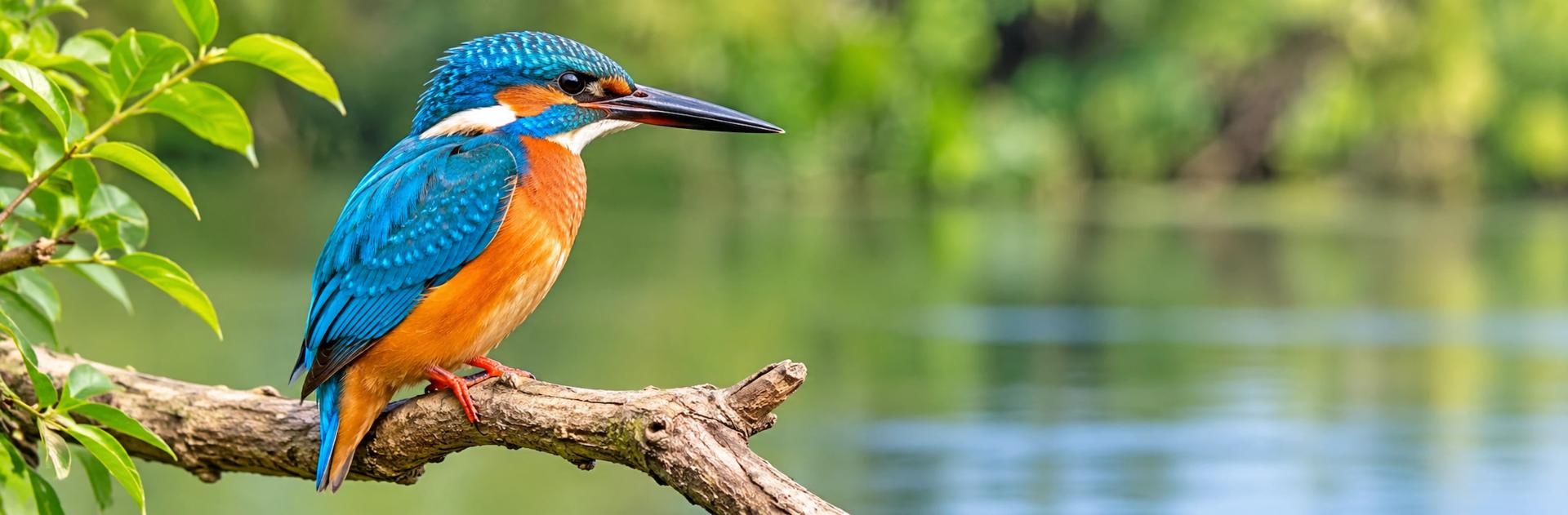
You do not need to be an expert to enjoy a birding journey in India. Many of our guests start as curious travellers and leave as keen birders. India's birds are often colourful, approachable and easy to see: kingfishers, bee-eaters, rollers and parakeets appear on almost every trip. Our guides teach you how to use binoculars well, how to recognise birds by shape and behaviour, and how to learn a few calls. By the end of the journey, you may be keeping your own list.
Our birding and nature journeys
| Journey | Region | Length |
|---|---|---|
|
Golden Triangle with Bharatpur Bird Sanctuary |
Delhi, Agra, Bharatpur, Jaipur |
On request |
|
Gujarat Birdwatching Specialist Tour |
Gujarat |
8 days |
|
Little Rann Flamingo City Birding |
Gujarat |
5 days |
|
Velavadar Blackbuck Grassland Wildlife |
Gujarat |
4 days |
|
Panna and Satpura Birding Expedition |
Madhya Pradesh |
9 days |
|
Western Ghats Biodiversity and Coffee |
Kerala and Karnataka |
12 days |
|
North East Birdwatching Specialist Tour |
North East India |
16 days |
|
North East Butterfly and Biodiversity Specialist Tour |
North East India |
14 days |
|
North East Orchid and Flora Specialist Tour |
North East India |
12 days |
|
High-Altitude Wildlife of the Kumaon Frontier |
Uttarakhand |
On request |
|
Kerala Grand Wildlife Circuit |
Kerala and Karnataka |
9 days |
Our birding and nature journeys - 2027
Practical tips for birders
Bring good optics. Binoculars are essential; a telescope helps for wetlands and raptors. Our guides usually carry a scope.
Dress in muted colours. Greens and browns help you blend in.
Pack for early mornings. Winter mornings are cold in North India. Bring warm layers and a hat.
Use a field guide. A good field guide or app for the birds of the Indian subcontinent helps you prepare and record sightings.
Protect against insects. Use repellent in forests and wetlands, especially at dawn and dusk.
Travelling with respect
We follow responsible birding practices: keeping a respectful distance, never disturbing nests, avoiding playback where it harms birds, staying on trails and supporting local guides and community conservation. These simple rules help protect the birds we come to see.
Start planning your birding journey
Tell us your experience, your target species or regions and your travel dates. We will suggest the right habitats and send a first route with lodges at each level and an indicative price. You can reach us at info@bizarexpedition.com or on +91 95604 08806.
Best Selling birdwatching and nature tours india
Book exciting birdwatching and nature tours india with BizareXpedition Updated On: Nov 27, 2026
Frequently Asked Questions (FAQs) & People Also Ask — birdwatching and nature tours india Tour Packages
We help you prepare for your trip and ensure an effortless and enjoyable travel experience.