
Festival Tours India
Festival Tours India
India celebrates more festivals than almost any country on earth. Every religion, every region and many villages have their own, and the calendar is full from January to December. Some festivals are national, such as Diwali, the festival of lights, and Holi, the festival of colours. Others belong to a single place: the camel fair at Pushkar, the masked dances at Hemis monastery in Ladakh, the kite festival in Ahmedabad, the nine nights of Garba dancing in Gujarat. To join one is to see India at its most joyful and most generous.
This page gathers our festival journeys. You will find what festivals mean to us, how we plan festival travel, a guide to India's festival calendar region by region, and the journeys you can book.
Who we are
BizareXpedition is a private travel company based in Haridwar, Uttarakhand, founded in 2016 by Deepika Negi. Haridwar is a city of festivals. The evening Ganga Aarti happens every day, and great gatherings such as the Kumbh Mela bring millions of pilgrims to the river. Celebration is part of the life around us, and we love sharing it with our guests.
Our promise is India, arranged around you. During a festival, that means good places to watch and take part, comfortable hotels booked well in advance, and guides who explain the meaning behind every ritual.
What festivals mean to us
Festivals are when India opens its doors. Families clean and decorate their homes, cook special food, wear new clothes and welcome friends and strangers alike. Streets fill with music, processions and colour. For a traveller, a festival is the easiest way to feel part of Indian life rather than an observer of it.
Each festival also has a story. Diwali celebrates the return of Lord Rama and the victory of light over darkness. Holi marks the arrival of spring. The Hemis festival honours Guru Padmasambhava, who brought Buddhism to the Himalaya. Understanding these stories turns a spectacle into something meaningful, and our guides make sure you know them.
For our guests, festival journeys often become the highlight of their travels. They remember being covered in coloured powder in a Rajasthan village, dancing Garba until midnight in Gujarat, or watching monks in masks spin to the sound of horns in a Ladakhi courtyard. These are experiences that cannot be found any other time of year.
How we plan your festival journey
Festivals bring crowds and high demand for hotels, so careful planning matters. We start by asking which festival interests you, how involved you want to be and how you feel about crowds.
Dates confirmed early. Many festivals follow the lunar calendar and move each year. We confirm the dates for your year before you book.
Hotels booked well ahead. Rooms near major festivals sell out months in advance. We secure them as soon as you confirm.
Good places to watch. We arrange good viewing spots, seats at events where available, and quieter ways to take part.
Guides who explain. Local guides explain the history, rituals and etiquette of each festival.
Safety and comfort. We plan routes to avoid the heaviest crowds, and guides stay with you during busy events.
Three levels of comfort. Each journey comes in Premium, Luxury and Ultra-Luxury versions, with the same route and experiences.
Support throughout. Our team follows your journey and adjusts plans if timings change on the day.
India's festivals, region by region
Rajasthan
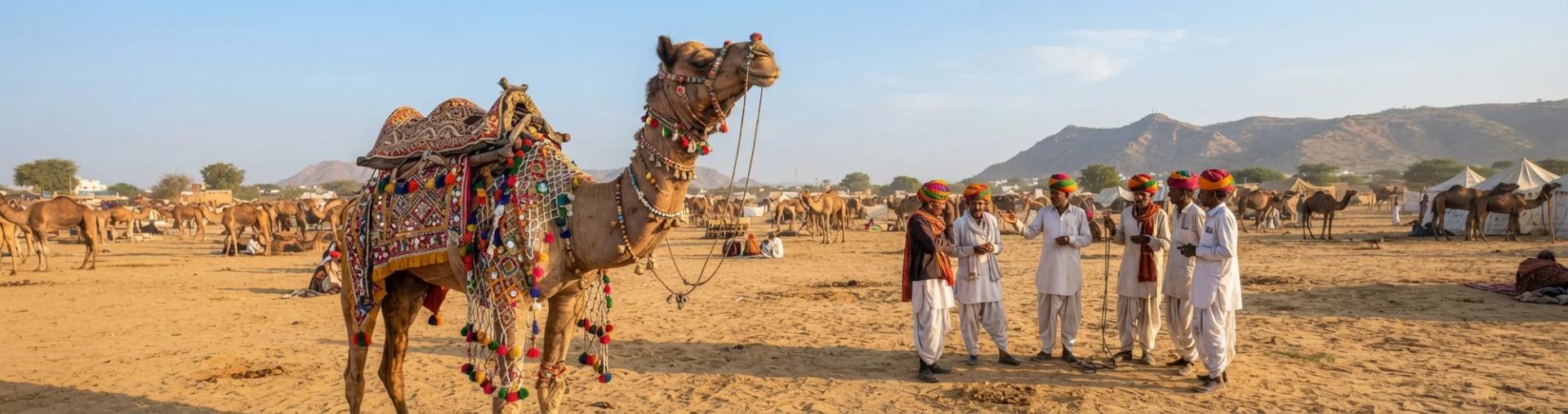
The Pushkar Camel Fair, held in October or November, brings thousands of camels, traders and pilgrims to the holy town of Pushkar, with races, music and a sacred bathing day at the lake. Holi in March is especially lively in Rajasthan's cities and villages. Jaisalmer holds its Desert Festival in February, and Diwali lights up the forts and palaces in October or November.
Gujarat
Navratri, the nine nights of the goddess in autumn, is celebrated in Gujarat with Garba and Dandiya dancing that lasts late into the night. In January, Uttarayan fills the skies over Ahmedabad with kites. In winter, the Rann Utsav festival brings tents, music and culture to the White Rann of Kutch.
Ladakh and Himachal
Ladakh's monastery festivals feature masked cham dances performed by monks. Hemis, in summer, is the most famous. Losar, the Tibetan New Year, is celebrated in winter in Ladakh and Spiti, with prayers, dances and family gatherings.
Uttarakhand
Ganga Dussehra in early summer honours the descent of the Ganga to earth, with large gatherings at Haridwar and Rishikesh. Rishikesh also hosts an International Yoga Festival each spring.
South India and the coasts
Pongal in Tamil Nadu and Onam in Kerala are harvest festivals full of food and colour. Christmas and New Year are celebrated widely in Goa and Kerala, with midnight masses, lights and beach celebrations.
The North East
The North East has many tribal festivals. Nagaland's Hornbill Festival in early December brings together the state's tribes for music, dance and food, and can be included in North East journeys.
| Festival | Where | When | What to expect |
|---|---|---|---|
|
Uttarayan (Kite Festival) |
Ahmedabad, Gujarat |
January |
Kites on every rooftop |
|
Losar |
Ladakh and Spiti |
Winter, by the lunar calendar |
Tibetan New Year rituals |
|
Desert Festival |
Jaisalmer, Rajasthan |
February |
Folk music, camel events |
|
Holi |
Across North India |
March |
Festival of colours |
|
International Yoga Festival |
Rishikesh, Uttarakhand |
March |
Yoga, music, talks |
|
Ganga Dussehra |
Haridwar and Rishikesh |
May or June |
River prayers and gatherings |
|
Hemis Festival |
Ladakh |
June or July |
Masked monastery dances |
|
Navratri |
Gujarat |
September or October |
Garba dancing |
|
Pushkar Camel Fair |
Pushkar, Rajasthan |
October or November |
Camels, traders, pilgrims |
|
Diwali |
Across India |
October or November |
Lamps, fireworks, sweets |
|
Hornbill Festival |
Nagaland |
Early December |
Tribal culture |
|
Rann Utsav |
Kutch, Gujarat |
November to March |
Tent city on the White Rann |
Festival Tours of India
A day at a festival
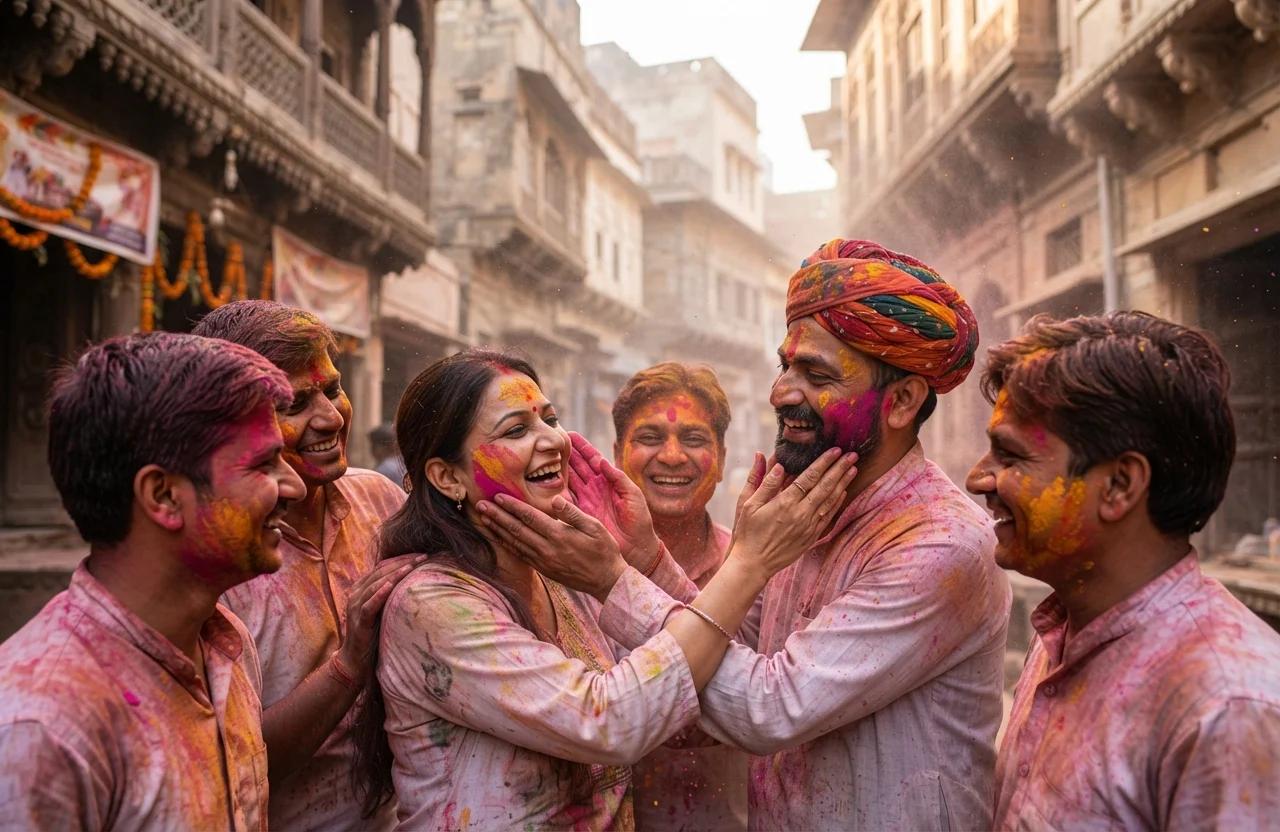
Imagine Holi in a Rajasthan town. The night before, families gather around bonfires to mark the victory of good over evil. In the morning, the streets fill with people carrying packets of coloured powder and water guns. Your guide takes you into the old town, where children, grandparents and visitors alike throw colour at each other, laughing and calling out 'Happy Holi'. By mid-morning you are pink, green and yellow from head to toe.
Around noon the playing slows down. People wash, change into clean clothes and visit friends and family, sharing sweets such as gujiya, a sweet dumpling. You return to your hotel to clean up and rest, and in the evening you enjoy a quieter celebration dinner. It is one of the happiest days of the year in India, and a day you will never forget.
Who festival journeys suit
Festival journeys suit travellers who love colour, music and people, and who are happy to share space with large, joyful crowds. Photographers find endless subjects. Families enjoy the fun of Holi or the kites of Uttarayan. Travellers interested in religion and culture can see rituals that happen only once a year.
If you prefer quiet, we can plan festival visits with calmer viewing spots, or time your journey to avoid busy festival dates altogether.
What our guests take home
Guests return with vivid memories and photographs: the light of a thousand lamps on Diwali night, the colours of Holi, the camels of Pushkar at sunrise, a sky full of kites over Ahmedabad. Most of all, they remember the warmth of the people who invited them to join in.
Combining festivals with other themes
Festivals fit well with other journeys. The Pushkar Fair pairs with a Rajasthan heritage tour, Holi with the Golden Triangle, Navratri and Uttarayan with Gujarat's crafts and wildlife, Hemis with a Ladakh trek, and Christmas with Kerala's beaches.
Diwali, the festival of lights
Diwali is India's most widely celebrated festival, held each year in October or November. In the days before, families clean and decorate their homes, draw rangoli patterns in coloured powder at their doors and buy new clothes and sweets. On the main night, oil lamps called diyas are lit in every window and doorway, prayers are offered to Lakshmi, the goddess of prosperity, and fireworks fill the sky. In Rajasthan, palaces and forts are lit up, and in Varanasi, a few weeks later, the ghats glow with thousands of lamps for Dev Deepawali. Spending Diwali in India is an experience few guests forget.
Great gatherings
India is also home to some of the largest religious gatherings in the world. The Kumbh Mela is held in turn at Haridwar, Prayagraj, Ujjain and Nashik, and at its peak draws many millions of pilgrims to bathe in the sacred rivers. Haridwar, our home, hosts the Kumbh and smaller Ardh Kumbh gatherings in their turn. These events need very careful planning, and we are happy to advise guests who want to experience one.
Festival food
Diwali. Sweets of every kind, from milk-based barfi and ladoo to crisp snacks shared with neighbours.
Holi. Gujiya, a sweet dumpling filled with milk solids and nuts, and thandai, a spiced milk drink.
Navratri. Many people fast during the day, then eat special dishes made without grains in the evening.
Pongal and Onam. Harvest feasts: sweet rice pongal in Tamil Nadu and the sadya, a vegetarian banquet on a banana leaf, in Kerala.
Losar. Khapse, fried pastries, and butter tea shared with family and guests in Ladakh.
Where you stay during festivals
Festival towns can be very busy, and the right hotel makes a big difference. In Pushkar, we use comfortable tented camps and heritage hotels near the fair grounds. At Hemis and other monastery festivals, we choose good hotels in Leh with an early drive to the monastery. For the Rann Utsav, guests stay in the festival's tent city on the edge of the White Rann. We book these as early as possible, because the best rooms go first.
Festival etiquette
A few simple customs help you join in comfortably. Accept sweets when they are offered, as sharing food is part of every festival. Ask before throwing colour at someone during Holi, and avoid people who clearly do not wish to play. Dress modestly at temples and monasteries, remove your shoes where asked, and stay quiet during prayers. When in doubt, follow your guide's lead.
Smaller festivals worth knowing
Beyond the famous festivals, India has many smaller celebrations that are just as memorable. Teej in Rajasthan, during the monsoon, sees women in green and red swinging on decorated swings. Durga Puja in Kolkata in autumn fills the city with artistic shrines to the goddess. Ganesh Chaturthi brings huge processions to the streets of Mumbai. Ladakh's monasteries hold festivals throughout the year, and villages across India celebrate local deities with fairs and music. If your dates are fixed, tell us and we will look for a festival that fits.
Festivals and photography
Festivals are a dream for photographers, full of colour, light and emotion. Our guides know the best places to stand and the best times of day. At religious events, they help you understand when photography is welcome and when it is not, so you can take great pictures while respecting the people around you.
Our festival journeys
| Journey | Region | Length |
|---|---|---|
|
Pushkar Camel Fair Tour |
Rajasthan |
6 days |
|
Holi Festival Rajasthan Special |
Rajasthan |
6 days |
|
Navratri: Nine Nights of Garba |
Gujarat |
6 days |
|
Uttarayan International Kite Festival Experience |
Gujarat |
4 days |
|
Rann of Kutch: White Desert by Full Moon |
Gujarat |
5 days |
|
Rann Utsav Luxury Desert Glamping |
Gujarat |
4 days |
|
Hemis Festival Cultural Tour |
Ladakh |
9 days |
|
Losar: Ladakhi New Year Winter Festival |
Ladakh |
9 days |
|
Losar: Tibetan New Year in Spiti |
Himachal Pradesh |
12 days |
|
Ganga Dussehra River Festival Tour |
Uttarakhand |
6 days |
|
International Yoga Festival Rishikesh Experience |
Uttarakhand |
9 days |
|
Christmas and New Year Triple Coast Special |
Goa, Karnataka, Kerala |
11 days |
Our festival journeys
Practical tips for festival travel
Book early. Six months ahead is wise for Pushkar, Holi, Diwali and Hemis.
Dress for Holi. Wear old clothes you can throw away, oil your hair and skin, and protect your eyes and phone.
Expect crowds. Keep valuables safe, stay with your guide and agree a meeting point.
Respect the rituals. Many festivals are religious. Dress modestly at temples and monasteries and follow local customs.
Photography. Ask before photographing people, especially during prayers and ceremonies.
Travelling with respect
Festivals are sacred to the people who celebrate them. We encourage guests to take part with respect, to follow the guidance of hosts and priests, to avoid plastic and harmful colours, and to support local businesses during the celebrations.
Start planning your festival journey
Tell us which festival you would like to join and your travel dates. We will confirm the festival dates for your year and send a first route with hotels at each level and an indicative price. You can reach us at info@bizarexpedition.com or on +91 95604 08806.
Best Selling festival tours india
Book exciting festival tours india with BizareXpedition Updated On: Nov 24, 2026
Frequently Asked Questions (FAQs) & People Also Ask — festival tours india Tour Packages
We help you prepare for your trip and ensure an effortless and enjoyable travel experience.