
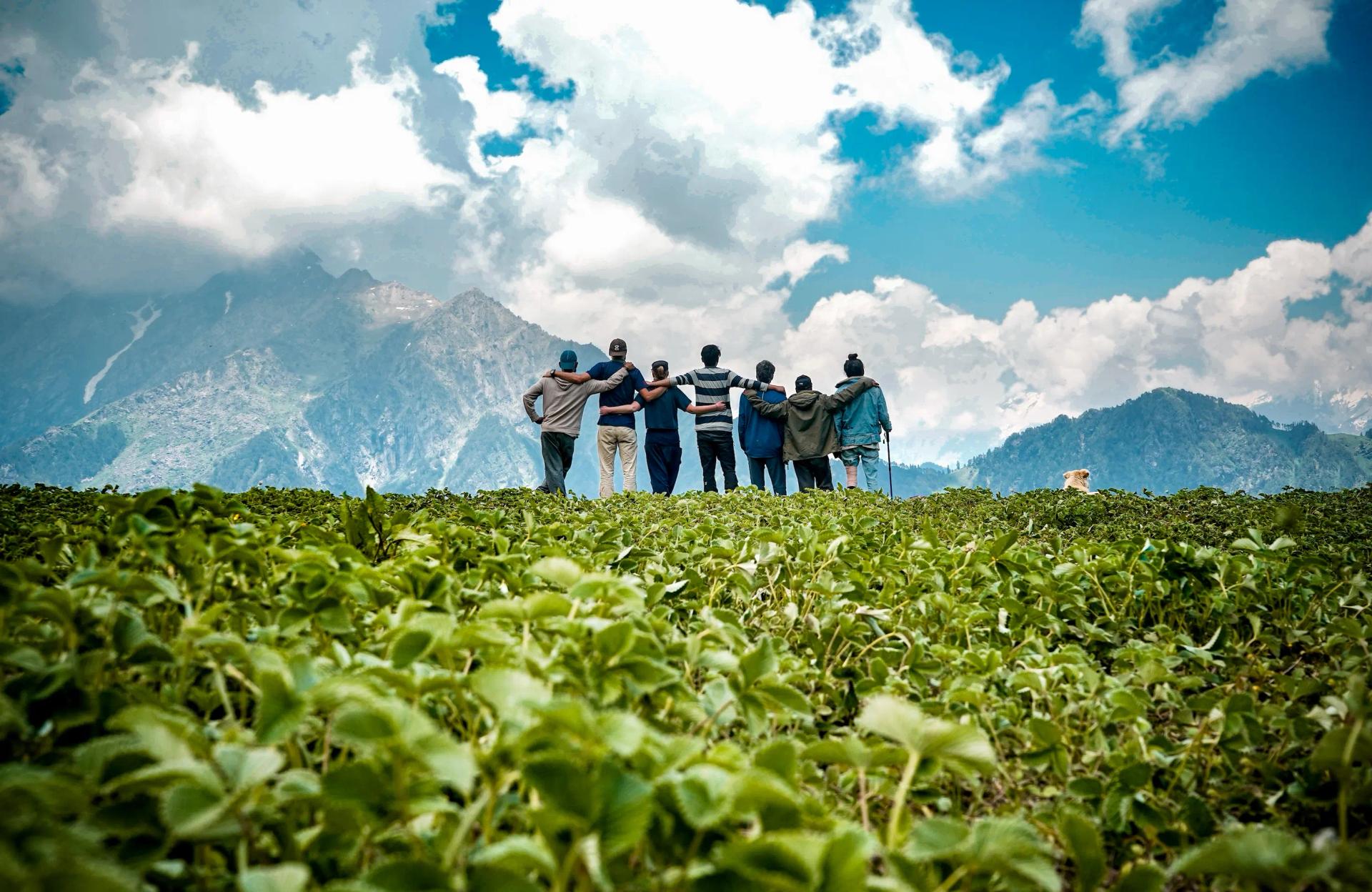
Hill Station And Leisure Holidays India
Hill Station And Leisure Holidays India
When the plains of India grow hot, the country looks up to the hills. For more than a century, families have escaped the summer to towns in the mountains: Shimla and Mussoorie in the north, Darjeeling in the east, Ooty, Kodaikanal and Munnar in the south. Some began as British summer capitals and still have their churches, bungalows and old hotels. Others are older pilgrim or market towns that grew into places of rest. Together they show a quieter, greener India that many visitors never expect.
This page gathers our hill station and leisure journeys. These are slower trips, made for walks, views, good food and time to rest. Below you will find what this kind of travel means to us, how we plan it, a guide to India's hills region by region, and the journeys you can book.
Who we are
BizareXpedition is a private travel company based in Haridwar, at the foot of the Himalaya. The company was founded in 2016 by Deepika Negi. From our office, the hills of Mussoorie and Rishikesh are a short drive away, and the high peaks of Garhwal and Kumaon are where many of our journeys begin. We plan private journeys across India, Nepal and Bhutan, and we have a special love for the mountains on our doorstep.
Our way of working is captured in one line: India, arranged around you. A leisure holiday is the clearest example. There is no list of sights to rush through. There is a route, a comfortable place to stay, and as much or as little activity as you want each day.
What a hill holiday means to us
For us, leisure is a skill. It means choosing the right place at the right season, keeping drives short, and finding hotels where the view is part of the stay. It means a morning walk through a tea garden, a long lunch, an afternoon with a book and an evening by the fire. Many of our guests have busy lives at home. A week in the hills is often the first time in months that they slow down.
The hills are also where India's diversity is easiest to feel. In Darjeeling, you hear Nepali and see prayer flags. In Kashmir, you drink kahwa, a saffron tea, on a houseboat. In Munnar, you walk through tea estates on rolling hills, and in Kumaon you look across the valleys to the snow peaks of Nanda Devi. Each hill region has its own people, food and way of life.
This is why we think a hill holiday matters for our guests. It gives the body rest and the mind space, and it shows a side of India that balances the energy of the cities. Many guests combine a few days in the hills with a busier journey elsewhere, and come home more rested than they left.
How we plan your hill holiday
Every journey starts with a conversation about what rest looks like for you. Some guests want gentle walks and good hotels. Others want light hiking, birdwatching or photography. We shape the route around those wishes.
Short drives, long stays. Mountain roads are slow. We keep transfers short and suggest at least two or three nights in each place, so that you have time to settle.
The right season. Each hill region has its best months. We match your travel dates to the places that will be at their best.
Rooms with a view. In the hills, the view matters. We choose hotels for their setting and tell you honestly what each room looks out on.
Three levels of comfort. Each journey comes in Premium, Luxury and Ultra-Luxury versions, with the same route and vehicle. Heritage hotels, tea estate bungalows and boutique lodges are included where they exist.
Private vehicle and driver. You travel in your own vehicle with a driver who knows mountain roads, and you can stop wherever you like.
Optional activities. Walks, cooking sessions, toy train rides, boat trips and visits to tea estates can be added or left out, day by day.
Someone to call. Our team knows your journey from start to finish and can change plans if the weather turns.
India's hills, region by region
Kashmir
Kashmir's valley has been called a paradise on earth for centuries. Srinagar's Dal Lake, with its houseboats and shikara boats, the Mughal gardens, and the meadows of Gulmarg and Pahalgam make it one of India's most beautiful regions. Spring brings tulips, summer brings green meadows, and winter brings snow.
Himachal Pradesh
Shimla was the summer capital of British India, and its Mall Road and old buildings still carry that history. Further north, Manali sits in the Kullu valley, Dharamshala and McLeodganj are home to the Tibetan community in exile, and the Kangra valley is known for its tea and gentle views.
Uttarakhand: Garhwal and Kumaon
Mussoorie looks over the Doon valley, and Nainital is built around a lake. In Kumaon, quieter towns such as Almora, Binsar, Kausani and Munsiyari face a long wall of Himalayan peaks. Auli and Chopta offer meadows and snow views in the Garhwal hills.
Darjeeling, Sikkim and Meghalaya
Darjeeling is famous for its tea and its toy train, the Darjeeling Himalayan Railway, a UNESCO World Heritage Site. On a clear morning, Kanchenjunga, the world's third-highest mountain, fills the horizon. Sikkim adds monasteries and mountain lakes, and Shillong in Meghalaya is a green hill town of pine forests and waterfalls.
South India: Munnar, Ooty, Kodaikanal and Coorg
In the Western Ghats, Munnar is covered in tea estates, Ooty is reached by the Nilgiri Mountain Railway, another UNESCO site, and Kodaikanal sits around a quiet lake. Coorg, in Karnataka, is coffee country, with plantation homestays and misty forests.
Western India: Mount Abu and Saputara
Mount Abu, Rajasthan's only hill station, holds the marble Dilwara Jain temples. Saputara in Gujarat is a small, quiet hill town popular in the monsoon.
| Region | Main hill towns | Known for | Best months |
|---|---|---|---|
|
Kashmir |
Srinagar, Gulmarg, Pahalgam |
Houseboats, gardens, meadows |
April to October; winter for snow |
|
Himachal Pradesh |
Shimla, Manali, Dharamshala |
Colonial history, Tibetan culture |
March to June, September to November |
|
Uttarakhand |
Mussoorie, Nainital, Binsar, Kausani, Auli |
Himalayan views, lakes |
March to June, October to November |
|
Darjeeling, Sikkim, Meghalaya |
Darjeeling, Gangtok, Shillong |
Tea, toy train, monasteries |
March to May, October to December |
|
South India |
Munnar, Ooty, Kodaikanal, Coorg |
Tea and coffee estates, mountain railway |
October to May |
|
Western India |
Mount Abu, Saputara |
Jain temples, lakes |
October to March; Saputara in the monsoon |
Hill Station & Leisure Holidays Region - 2027
Ways to enjoy the hills
Ride a toy train. Take the Darjeeling Himalayan Railway or the Nilgiri Mountain Railway for a slow, scenic journey on narrow tracks.
Walk through a tea or coffee estate. Learn how tea is plucked and processed in Darjeeling or Munnar, and taste it at the source.
Stay on a houseboat. Spend a night on a carved wooden houseboat on Dal Lake and take a shikara ride at sunrise.
Watch the peaks at dawn. Wake early in Kausani, Binsar or Darjeeling for sunrise on the snow peaks.
Take a gentle hike. Walk forest trails to viewpoints, villages and waterfalls with a local guide.
Do nothing. Leave days free. A good book and a mountain view are part of the plan.
Choosing the right hill holiday
Think about season first. In April to June, the northern hills are at their best while the plains are hot. From October to March, the southern hills are pleasant and the northern hills are clear and cool, with snow higher up. Kashmir has a different beauty in every season.
Then think about pace. A week in one region, such as Kumaon, Kashmir or the Nilgiris, is relaxing. Ten days can combine two regions or add a city. Many guests add a few days in the hills to a heritage journey in Rajasthan or a wildlife journey in Central India.
A day in the hills
Picture a morning in Binsar, in the Kumaon hills. You wake in a quiet lodge surrounded by oak and rhododendron forest. If the sky is clear, the first light falls on a line of snow peaks more than three hundred kilometres long, from Kedarnath in the west to Nanda Devi and Panchachuli in the east. After breakfast on the terrace, a local guide takes you on a gentle forest walk to a village, where a family offers tea and shows you their terraced fields. You are back for a long lunch, and the afternoon is yours: a book, a nap, a game of cards or a walk to a viewpoint for sunset.
Or picture Munnar, in Kerala. Mist lifts slowly off the tea estates, and the hills are lined with neat rows of bushes as far as you can see. You visit a tea factory, walk with a planter through the gardens, then drive up to a viewpoint above the clouds. Evenings are cool enough for a light sweater. Days like these are the heart of a hill holiday.
Who our hill journeys suit
Hill holidays suit almost everyone. Couples come for romance and quiet, often on a honeymoon. Families come for fresh air, easy walks and space for children. Older travellers enjoy the cool climate and slow pace. Photographers come for the light and the mountains, and walkers come for trails that are beautiful without being hard.
They are also a good choice for travellers who find big Indian cities tiring. The hills are calmer and cleaner, and many guests say they felt most relaxed here. We often suggest a few hill days in the middle of a longer journey, as a pause between busier places.
The hills through the year
Every season brings something different to India's hills. Here is a simple guide to help you choose.
| Season | Where to go | What to expect |
|---|---|---|
|
March to May |
Shimla, Mussoorie, Kumaon, Darjeeling, Kashmir |
Spring flowers, clear views, rhododendrons |
|
June |
Northern hills and Kashmir |
Warm days, cool nights; busy Indian holiday season |
|
July to September |
Southern hills, Saputara |
Monsoon greenery; landslide risk in the Himalaya |
|
October to November |
All northern hills |
Clearest mountain views of the year |
|
December to February |
Southern hills; snow in Kashmir, Auli, Manali |
Cold in the north, pleasant in the south |
The hills through the year - 2027
For the clearest Himalayan views, October and November are hard to beat. For flowers, choose spring.
What our guests take home
Guests return from the hills with simple memories: a perfect cup of Darjeeling tea on a cold morning, the silence of a forest walk in Kumaon, the first sight of snow peaks turning pink at sunrise, a shikara gliding across Dal Lake at dusk. They also return rested. Many tell us that the hills were where their journey made sense, where they had time to think about everything they had seen.
The hills also show how varied India's people are. In one country you meet Kashmiri boatmen, Tibetan monks in McLeodganj, Gorkha families in Darjeeling, Khasi villagers in Meghalaya and tea pickers in Munnar. Each region has its own language, food and festivals, and a slow journey gives you time to notice them.
Combining the hills with the rest of India
The hills fit well with other journeys. Shimla or Mussoorie are easy additions to Delhi and the Golden Triangle. Darjeeling pairs with Sikkim, Bhutan or a wildlife visit to Kaziranga. Munnar sits between Kerala's backwaters and its wildlife parks, and Kashmir combines naturally with Ladakh in summer. Tell us your other plans and we will suggest how the hills can fit in.
A note on Ladakh and Spiti
Ladakh and Spiti are high-altitude regions, above 3,000 metres, and are covered by our trekking and adventure and our heritage themes. They can be combined with a hill holiday in Kashmir or Himachal, with careful planning for altitude.
Where you stay in the hills
In the hills, where you sleep is part of the holiday. You might stay in a restored colonial bungalow in Shimla, a tea planter's home in Darjeeling or Munnar, a houseboat in Srinagar, or a forest lodge in Kumaon with the Himalaya outside your window. In Coorg, plantation homestays let you wake among coffee bushes and eat home-cooked meals with the family. At the Luxury and Ultra-Luxury levels, there are fine resorts and heritage hotels in most regions.
We choose places for their setting, warmth and comfort, and we tell you honestly where the choice is simple, as it is in some remote villages. A small, friendly lodge with a great view is often the stay guests remember most.
Our hill station and leisure journeys
| Journey | Region | Length |
|---|---|---|
|
Kashmir Valley Classic |
Kashmir |
7 days |
|
Best of Kashmir and Ladakh |
Kashmir and Ladakh |
12 days |
|
Himachal Introduction: Hills, Valleys and Cold Desert |
Himachal Pradesh |
15 days |
|
Nainital and the Kumaon Lakes District |
Uttarakhand |
8 days |
|
Munsiyari and the Panchachuli Peaks |
Uttarakhand |
9 days |
|
Almora: Art of the Kumaon Hills |
Uttarakhand |
7 days |
|
Himalayan Foothills: Mussoorie, Chopta and Auli |
Uttarakhand |
8 days |
|
North East and Darjeeling Tea Combination |
Darjeeling and the North East |
9 days |
|
Assam and Meghalaya |
North East India |
9 days |
|
Kerala and Tamil Nadu Hill Station Double: Munnar, Ooty, Kodaikanal |
South India |
8 days |
|
Kerala Offbeat Hills: Munnar, Wayanad and Vagamon |
Kerala |
6 days |
|
Goa and Coorg: Beach to Hills |
Goa and Karnataka |
11 days |
|
Saputara Hidden Hill Station |
Gujarat |
4 days |
|
Gujarat and Mount Abu |
Gujarat and Rajasthan |
12 days |
Our hill station and leisure journeys - 2027
Practical tips for the hills
Pack layers. Hill towns can be warm by day and cold at night. Bring a jacket even in summer.
Allow for slow roads. A short distance can take hours on mountain roads. Motion sickness tablets help some travellers.
Weekends and holidays. Popular hill towns are busy during Indian school holidays in May and June. Quieter towns in Kumaon and the Western Ghats stay calm.
Monsoon. From July to September, heavy rain can cause landslides in the Himalaya. The southern hills are green but wet.
Altitude. Most hill stations are between 1,500 and 2,500 metres and cause no problems. Higher places such as Auli or Gulmarg's upper slopes need a slower pace.
Travelling with respect
Mountain towns are small, and their water, forests and roads are under pressure from visitors. We encourage guests to stay longer in fewer places, to use refillable water bottles, to keep to trails and to buy from local shops and homestays. These small choices help the hills stay beautiful for the people who live there.
Start planning your hill holiday
Tell us when you want to travel and how you like to spend a relaxing day. We will suggest the hills that suit you best and send a first route with hotels at each level and an indicative price. You can reach us at info@bizarexpedition.com or on +91 95604 08806.
Best Selling hill station and leisure holidays india
Book exciting hill station and leisure holidays india with BizareXpedition Updated On: Nov 26, 2026
Frequently Asked Questions (FAQs) & People Also Ask — hill station and leisure holidays india Tour Packages
We help you prepare for your trip and ensure an effortless and enjoyable travel experience.