
Photography Tours India
Photography Tours India
Few countries offer photographers as much as India. Every scene is full of colour, texture and life: the pink walls of Jaipur, the blue houses of Jodhpur, the ghats of Varanasi at dawn, the green tea hills of Munnar, the white salt of the Rann of Kutch, the monasteries of Ladakh under a deep blue sky. India's people, festivals, wildlife and landscapes give photographers endless subjects, and the soft light of the winter months makes them glow.
This page gathers our photography journeys. You will find what photography travel means to us, how we plan these trips, a guide to India's most photogenic regions, and the journeys you can book. Every journey can be adjusted to your style, equipment and level of experience.
Who we are
BizareXpedition is a private travel company based in Haridwar, Uttarakhand, founded in 2016 by Deepika Negi. From Haridwar, we see one of India's great photographic subjects every evening: the Ganga Aarti at Har Ki Pauri, with lamps floating on the river and thousands of faces lit by fire. We plan private journeys across India, Nepal and Bhutan, and photographers are among the guests we most enjoy planning for.
Our promise is India, arranged around you. For a photographer, that means a plan built around the light, enough time at each place to wait for the right moment, and guides who understand what a photographer needs.
What photography travel means to us
A photography journey runs on a different clock. The best pictures come in the first and last hours of daylight, so days start early and finish late, with a rest in the middle. Good photographs also need time: time to return to a place, to wait for the light, to build trust with the people you photograph. We plan for all of this.
For us, good travel photography is also about respect. India's people are generally warm and happy to be photographed, but the best portraits come from conversation and permission. Our guides help with introductions and translation, so your pictures tell real stories and the people in them feel respected.
We believe photography journeys matter because they help travellers see more closely. Looking through a lens makes you notice light, colour and expression, and many guests tell us they understood India better because they were looking so carefully.
How we plan your photography journey
We start by asking about your interests and equipment. Do you prefer people, architecture, landscapes, wildlife or festivals? Are you a beginner, a keen amateur or a professional? Do you travel with a partner who does not photograph? Then we design a route and refine it with you.
Planned around the light. We schedule key locations for sunrise and sunset, and leave the middle of the day for rest, travel or indoor subjects.
Time to wait. We build in repeat visits and longer stays, so you can return when conditions are right.
Guides who understand photography. Our guides know the best viewpoints, help with introductions and understand the patience photography needs.
Photographer mentors on request. For guests who want to learn, we can arrange sessions with experienced photographers.
Permits and rules. Some monuments charge camera fees, restrict tripods or ban photography inside. We tell you in advance, and arrange permissions where possible.
Three levels of comfort. Each journey comes in Premium, Luxury and Ultra-Luxury versions, with the same route and timings.
A private vehicle. Your own vehicle and driver let you stop the moment you see a picture.
India's most photogenic regions
Rajasthan
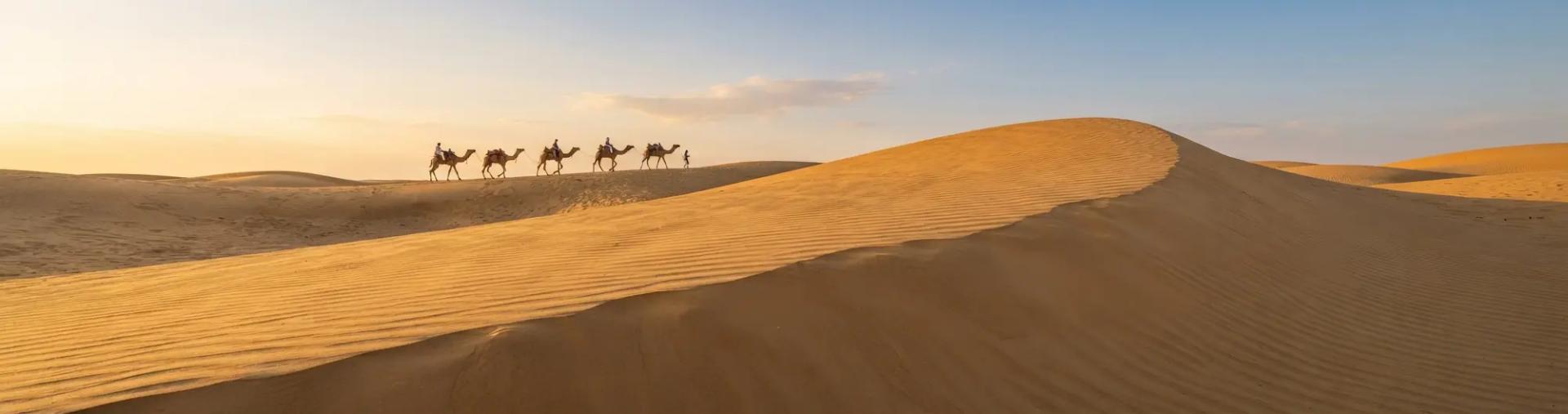
Rajasthan is a photographer's dream: forts on hilltops, palaces on lakes, desert dunes, colourful turbans and saris, camels and village life. Jodhpur's blue city, Jaisalmer's golden fort and Udaipur's lakes are at their best in the soft light of early morning and late afternoon. The Pushkar Camel Fair is one of the world's great photographic events.
Varanasi
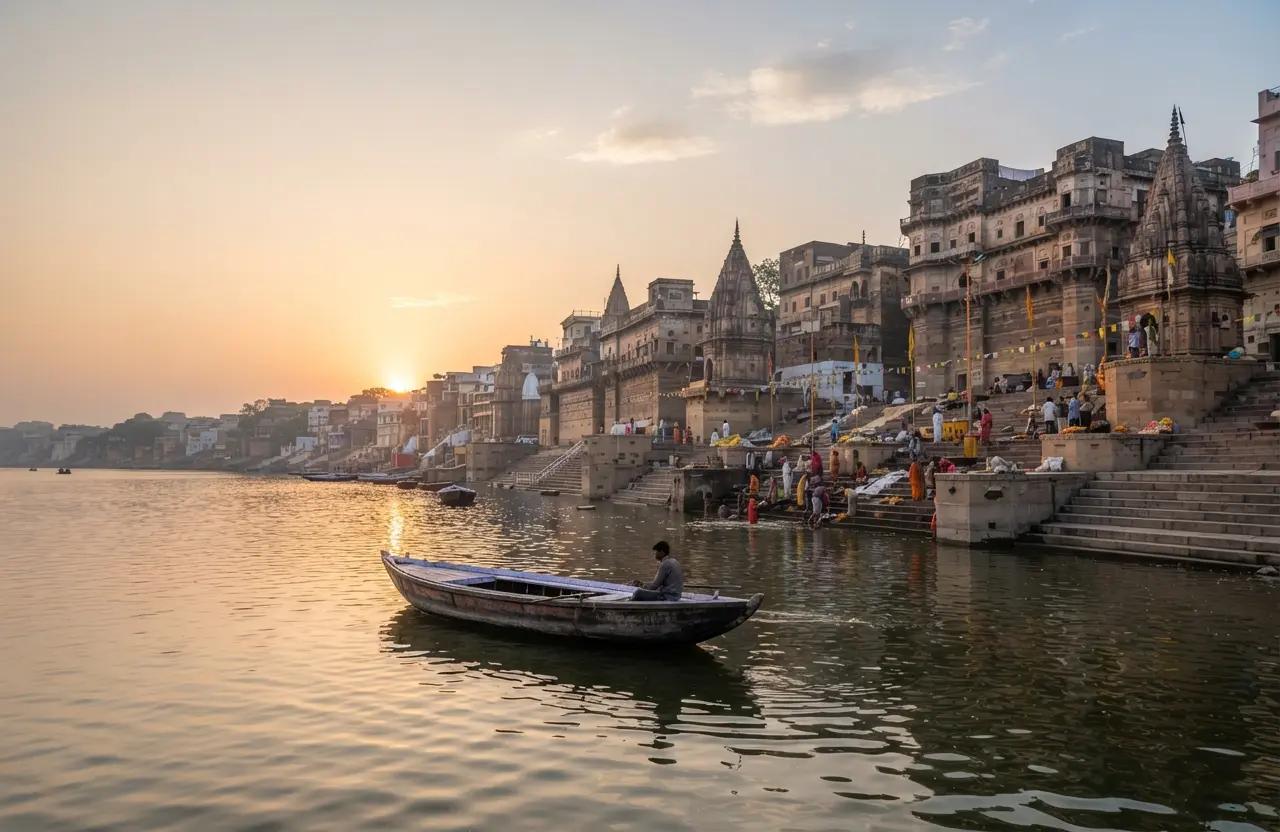
Varanasi's ghats offer extraordinary scenes from dawn to night: bathers in the Ganga, priests performing rituals, boats in the morning mist and the evening aarti lit by fire. It is one of the most powerful places in India to photograph, and also one where sensitivity is essential, especially near the cremation ghats, where photography is not appropriate.
The Himalaya: Ladakh, Spiti and Uttarakhand
High-altitude light is clear and dramatic. Ladakh and Spiti offer monasteries perched on cliffs, prayer flags, turquoise lakes and vast landscapes. Hanle, in Ladakh, is a dark sky reserve, ideal for night photography of the Milky Way. In Uttarakhand, temples and snow peaks make striking images, especially in the clear air of October and November.
Gujarat
The White Rann of Kutch under a full moon, colourful embroidered clothing in the Kutch villages, Ahmedabad's old city and Gir's lions give Gujarat great variety for photographers.
Kerala and the South
Kerala's backwaters, Chinese fishing nets, tea hills and Kathakali dancers, and Tamil Nadu's colourful temple towers and rituals, offer rich subjects in a softer, greener landscape.
The North East
The North East offers tribal cultures, living root bridges, misty hills and Kaziranga's rhinos and elephants, far from the usual tourist routes.
Wildlife in Central India
The tiger reserves of Madhya Pradesh are excellent for wildlife photography, with tigers, leopards, deer and many birds in beautiful forest light.
| Region | Subjects | Best light and season |
|---|---|---|
|
Rajasthan |
Forts, palaces, deserts, people, festivals |
October to March; golden hours |
|
Varanasi |
Ghats, rituals, river life |
October to March; dawn and dusk |
|
Ladakh and Spiti |
Monasteries, landscapes, night skies |
June to September; winter for snow |
|
Gujarat |
White Rann, crafts, people, lions |
November to February |
|
Kerala and Tamil Nadu |
Backwaters, temples, dance, tea hills |
October to March |
|
North East |
Tribal cultures, hills, wildlife |
October to April |
|
Central India |
Tigers and forest wildlife |
October to June |
Photography Tours of India Regions
A day on a photography journey
In Jodhpur, your day begins in darkness. Your guide drives you to a rooftop in the old city, where you set up your tripod facing Mehrangarh Fort. As the sun rises, the fort walls turn gold and the blue houses below come slowly into view. After breakfast, you walk the narrow lanes with your guide, who introduces you to a spice seller, a family of tie-dye artists and an old man playing cards at his doorstep, each happy to be photographed after a short conversation.
In the middle of the day, when the light is harsh, you rest at your hotel and review your images. In the late afternoon, you visit the fort itself, photographing its carved windows and courtyards as the light softens, and finish at a viewpoint as the city turns blue and violet at dusk.
Who these journeys suit
Our photography journeys suit beginners who want to learn in an inspiring setting, keen amateurs who want to build a portfolio, and professionals working on projects. They also suit couples where one person photographs and the other enjoys the sights; we plan for both.
Photography through the year
| Season | Best for | Notes |
|---|---|---|
|
October to March |
Rajasthan, Varanasi, Gujarat, South India, wildlife |
Soft light, clear skies, festivals |
|
October to November |
Himalayan views in Uttarakhand and Himachal |
Clearest mountain air |
|
June to September |
Ladakh and Spiti |
Dramatic skies, high-altitude landscapes |
|
July to September |
Kerala and the Western Ghats in the monsoon |
Lush greens and moody skies |
Photography through the year
What our guests take home
Guests return with images they are proud of, and with the stories behind them: the boatman in Varanasi who rowed them out at dawn, the family in Kutch who invited them for tea, the snow leopard on a distant ridge. Many say that photographing India taught them to look more closely, and that the experience stayed with them long after the journey ended.
Combining photography with other themes
Photography fits every theme. Combine it with festivals such as Holi or the Pushkar Fair, with a tiger safari, a trek in Ladakh or a cultural journey through Rajasthan or the South.
Photographing people well
Portraits are often the most memorable images from India, and the best ones come from a moment of connection. Start with a smile and a greeting. Ask before you raise the camera, using gestures or with help from your guide. Spend a little time talking or watching before you shoot. Show people the picture on your screen; many will be delighted. If someone says no, thank them and move on. Never photograph people at cremations, during private rituals or in situations that could embarrass them. Our guides help you navigate these moments with sensitivity.
Night skies
India has some wonderful places for night photography. Hanle in Ladakh, high on the Tibetan plateau, is India's first dark sky reserve, with some of the clearest skies in the country. The deserts of Rajasthan and Kutch, especially on moonless nights, also offer good conditions for star trails and the Milky Way. On full-moon nights, the White Rann of Kutch glows silver, a unique subject for moonlit landscapes.
What to pack
| Item | Why |
|---|---|
|
Wide-angle and telephoto lenses |
Architecture and landscapes; wildlife and candid street scenes |
|
A fast prime lens |
Low light in temples, markets and evening ceremonies |
|
Light travel tripod |
Sunrise, sunset and night skies, where permitted |
|
Spare batteries and memory cards |
Long days, cold weather and remote areas |
|
Lens cloths and a blower |
Dust in deserts and on dirt roads |
|
Rain cover and dry bags |
Monsoon, boats and waterfalls |
|
Laptop or backup drive |
Back up images every evening |
Photography Tours of India - What to pack
Where you stay
On photography journeys, location matters. We choose hotels with views of the subjects you came to photograph, such as rooms facing the fort in Jodhpur or Jaisalmer, the lake in Udaipur, the river in Varanasi or the peaks in the Himalaya. This lets you shoot sunrise and sunset from your room or rooftop, and gives you more time with the best light.
Festival photography
India's festivals offer some of the most vibrant photography anywhere. Holi's flying colours, the lamps of Diwali, the camels and traders at Pushkar, Garba dancers in Gujarat and masked dancers at Ladakh's monastery festivals are unforgettable subjects. Festivals are busy and fast-moving, so our guides help you find good positions, protect your equipment and understand which moments are sacred and should not be photographed. Holi needs special care: waterproof covers for your camera and phone are essential.
Learning on the road
Many guests use a photography journey to improve their skills. With a mentor, you can work on composition, light, portraits and editing in the field, with feedback each evening on the day's images. Even without a mentor, our guides share local knowledge that helps: which gate of the fort catches the first light, where fishermen land their catch at dawn, which lane in the old city glows at sunset. These details turn good photographs into great ones.
Wildlife photography tips
Wildlife photography in India's parks takes patience and planning. Book several safaris, ideally in the same zone, so your naturalist can follow animal movements. Use a long lens, at least 300mm, and a bean bag for support in the jeep. Shoot in the early morning and late afternoon for the best light. Keep quiet, follow park rules and let the animals decide how close they come.
Our photography journeys
| Journey | Region | Length |
|---|---|---|
|
Rajasthan Photography Tour |
Rajasthan |
10 days |
|
Pushkar Camel Fair Tour |
Rajasthan |
6 days |
|
Gujarat Photography Expedition |
Gujarat |
12 days |
|
Rann of Kutch: White Desert by Full Moon |
Gujarat |
5 days |
|
Central India Photography Expedition |
Madhya Pradesh |
14 days |
|
Kerala Photography Expedition: Tea, Backwaters and Wildlife |
Kerala |
10 days |
|
North East Photography Expedition |
North East India |
16 days |
|
Himachal Photography Expedition: Spiti, Kinnaur, Dhauladhar |
Himachal Pradesh |
19 days |
|
Photography Expedition: Himalayan Peaks and Temple Light |
Uttarakhand |
11 days |
|
Photography Expedition: Himalayan Peaks and Temple Light |
Ladakh |
8 days |
|
Hemis Festival Cultural Tour |
Ladakh |
9 days |
Our photography journeys
Practical tips for photographers
Ask before you shoot. Always ask permission before photographing people, and respect a no.
Know the rules. Some monuments charge camera fees, ban tripods or forbid photography inside. Military areas and airports must not be photographed.
Drones. Flying drones in India needs permission and is banned near many monuments and borders. Ask us before you bring one.
Protect your gear. Dust and heat are hard on cameras. Bring cleaning kits and keep equipment covered.
Power and storage. Carry spare batteries and memory cards, and back up images each evening.
Travelling with respect
We encourage photographers to work respectfully: to ask before photographing people, to avoid sensitive scenes such as cremations and private rituals, to share images with the people they photograph where possible, and to support local guides and communities. Good photography and good manners go together.
Start planning your photography journey
Tell us what you love to photograph, your experience and your travel dates. We will design a route around the light and send a first plan with hotels at each level and an indicative price. You can reach us at info@bizarexpedition.com or on +91 95604 08806.
India, arranged around you.
Best Selling photography tours india
Book exciting photography tours india with BizareXpedition Updated On: Nov 24, 2026
Frequently Asked Questions (FAQs) & People Also Ask — photography tours india Tour Packages
We help you prepare for your trip and ensure an effortless and enjoyable travel experience.