
Village And Homestay Tours India
Village And Homestay Tours India
Most Indians still live in villages, and village life is where many of the country's traditions are strongest. Farming, crafts, festivals, food and family life follow rhythms that have changed slowly over generations. Staying in a village homestay, sharing meals with a family and walking through fields with a local guide is one of the most rewarding ways to understand India. It is also one of the most welcoming, because hospitality is a deep part of village culture.
This page gathers our village and homestay journeys. You will find what these journeys mean to us, how we plan them, a guide to India's villages region by region, and the journeys you can book.
Who we are
BizareXpedition is a private travel company based in Haridwar, Uttarakhand, founded in 2016 by Deepika Negi. Uttarakhand is a land of mountain villages, many of them reachable only on foot, where families still grow their own grain and keep cows and goats on terraced fields. We plan private journeys across India, Nepal and Bhutan, and village stays are some of the experiences our guests remember most.
Our promise is India, arranged around you. On a village journey, that means warm, clean homestays chosen with care, local guides who are part of the community, and a pace slow enough to make real connections.
What village life means to us
For us, a village journey is about people. It is the grandmother who shows you how to make bread on a wood fire, the farmer who explains how terraces are built, the children who walk you to the village temple, the family who welcomes you to their festival. These moments cannot be arranged in a city hotel, and they show a side of India that most visitors never see.
Village journeys also help communities directly. Homestay income supports families, local guides earn a fair wage and money spent on crafts stays in the village. In many mountain areas, homestays give young people a reason to stay rather than move to the cities. We work with homestays that are run by the families themselves.
We believe these journeys matter for our guests because they offer understanding, not just sights. Many guests tell us that a few days in a village changed how they see India, and often how they see their own lives at home.
How we plan your village journey
We start by asking what you hope to experience: daily life, farming, crafts, festivals, walking, or simply rest in a quiet place. We also ask about your comfort needs, as village homestays vary from simple to quite comfortable. Then we suggest regions and homestays and refine the plan with you.
Homestays chosen with care. We visit or vet each homestay for cleanliness, comfort and warmth of welcome, and we tell you honestly what facilities are available.
Local guides. Village walks are led by guides from the community, who know every family, path and story.
Meaningful activities. Cook with your hosts, help in the fields, learn a craft, join a festival or walk to neighbouring villages.
A balanced journey. We mix village nights with comfortable hotels in nearby towns, so you can rest between experiences.
Three levels of comfort. Hotel nights come in Premium, Luxury and Ultra-Luxury versions. Homestays are chosen for their character and welcome.
Fair arrangements. Homestay and guide fees go directly to the families and communities you visit.
Support throughout. Our team stays in touch throughout your journey, even in remote areas where possible.
India's villages, region by region
Ladakh
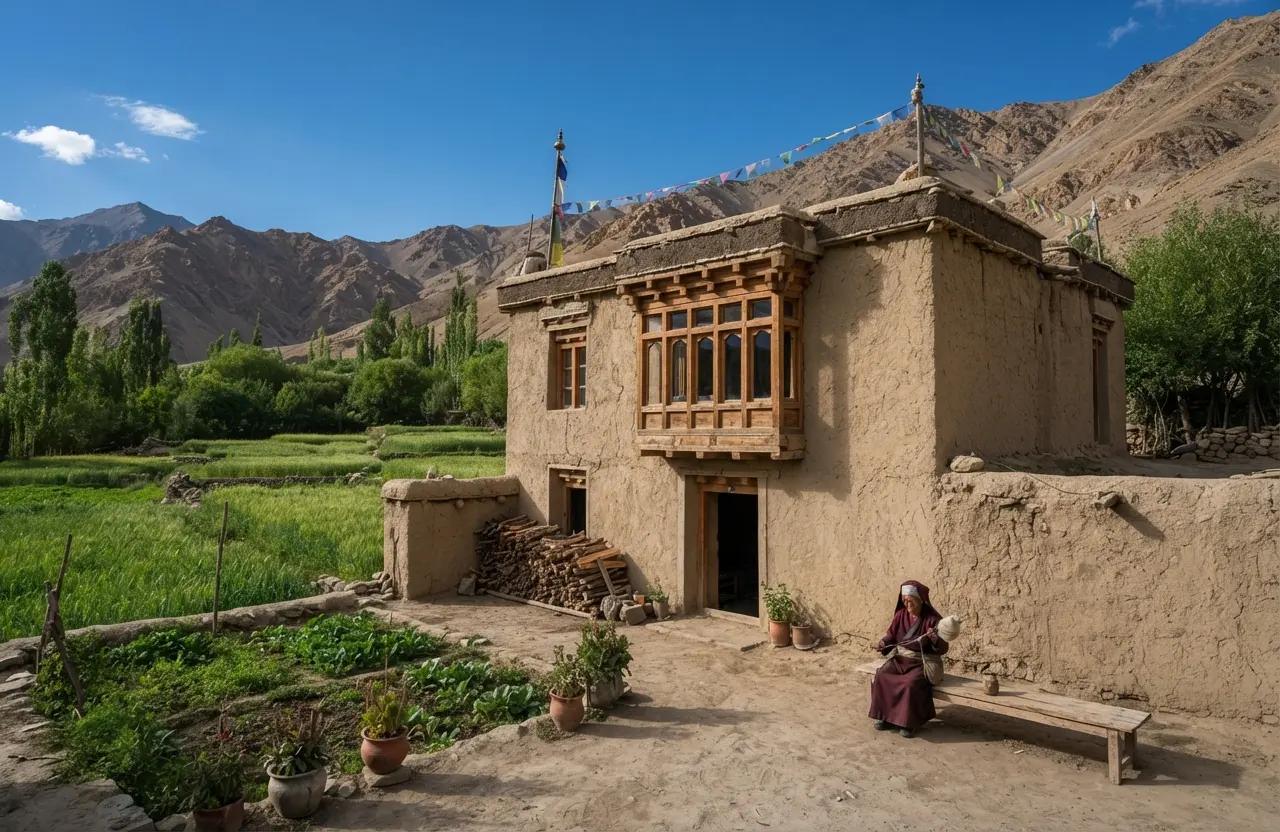
Ladakhi villages sit in green oases surrounded by bare mountains. Homestays in the Sham valley, along the Markha valley and in the Changthang plateau, home to nomadic herders, offer warm rooms, home-cooked food and butter tea in traditional kitchens. Village monasteries and prayer walls are part of daily life.
Himachal Pradesh and Spiti
In Spiti, some of the world's highest villages welcome guests in traditional mud-brick homes. Lower in Himachal, villages in the Kullu and Kangra valleys offer apple orchards, wooden temples and gentle walks.
Uttarakhand
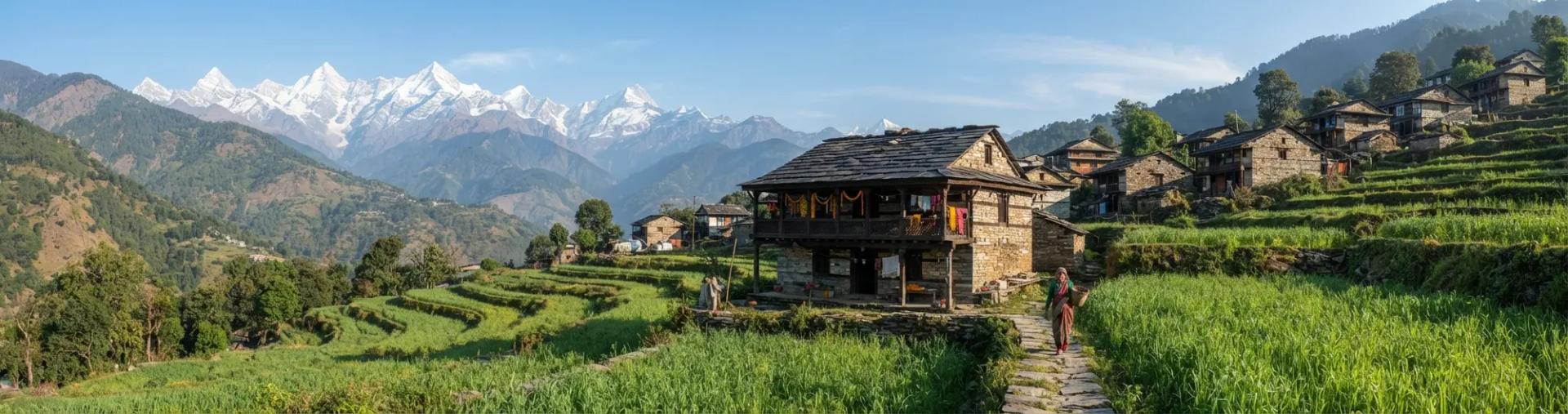
In the Kumaon and Garhwal hills, village homestays look out over terraced fields to Himalayan peaks. Munsiyari, Kausani and villages near Binsar are good bases for walks. Mana, near Badrinath, is often called the last village before the Tibet border.
The North East
The North East is rich in village life. In Meghalaya, villages such as Mawlynnong are known for their cleanliness and living root bridges. In Assam, Majuli island in the Brahmaputra is home to Vaishnavite monasteries called satras and to Mising villages. In Nagaland, villages like Khonoma are known for conservation and strong tribal traditions.
Gujarat: Kutch
In Kutch, villages such as Hodka and those around Bhuj offer stays in round mud houses called bhungas, and meetings with embroiderers, weavers and herders.
Rajasthan
Rajasthan's villages offer a window on desert life, from Bishnoi villages near Jodhpur, known for protecting wildlife and trees, to farming villages near Ranthambore and Udaipur. Heritage homes and small rural hotels make comfortable bases.
South India
In Kerala and Karnataka, plantation homestays in Coorg, Wayanad and the Western Ghats let you wake among coffee, pepper and spice gardens and eat home-cooked meals with the family.
| Region | Village life | Stay | Best months |
|---|---|---|---|
|
Ladakh |
Buddhist villages, nomadic herders |
Family homestays |
June to September |
|
Spiti and Himachal |
High villages, orchards |
Mud-brick homes, village houses |
June to October |
|
Uttarakhand |
Terraced fields, mountain temples |
Village homestays |
March to June, October to November |
|
North East |
Tribal villages, root bridges, river islands |
Homestays and eco-lodges |
October to April |
|
Kutch, Gujarat |
Craft villages, herders |
Bhunga mud houses |
November to February |
|
Rajasthan |
Desert and farming villages |
Rural hotels, heritage homes |
October to March |
|
South India |
Plantation villages |
Plantation homestays |
October to May |
Village And Homestay Tours India
A day in a village
In a Ladakhi village homestay, you wake to the sound of your host lighting the kitchen stove. Breakfast is fresh bread, apricot jam and butter tea in the warm kitchen, where the family gathers around a polished iron stove. After breakfast, your host takes you through the barley fields, where neighbours are working together to harvest the crop, singing as they cut. You join in for an hour, then walk up to the village monastery, where an old monk shows you the prayer hall.
Lunch is a hearty bowl of thukpa, a noodle soup. In the afternoon, you walk to a neighbouring village along irrigation channels lined with willow trees, and return to help your host prepare momos for dinner. In the evening, the family gathers again around the stove, sharing stories and laughter, and you fall asleep under thick blankets in a quiet room, with stars filling the sky outside.
Who these journeys suit
Village journeys suit curious, open-minded travellers who enjoy simple comforts and genuine encounters. Families with children love the space, animals and freedom of village life. Walkers and trekkers enjoy village-to-village routes. Responsible travellers like knowing their money supports local families directly.
Homestays are not hotels. Bathrooms may be shared, hot water may come in a bucket and electricity can be limited in remote areas. We always explain what to expect, and we balance village nights with comfortable hotels.
Village journeys through the year
| Season | Where to go | Notes |
|---|---|---|
|
October to March |
Rajasthan, Kutch, the North East, South India |
Pleasant weather in the plains and hills |
|
March to June |
Uttarakhand and Himachal villages |
Spring flowers, clear views |
|
June to September |
Ladakh and Spiti |
Harvest season in the high villages |
|
Festival times |
Villages across India |
Village festivals are a wonderful time to visit |
Village journeys through the year
What our guests take home
Guests return with friendships and stories. Many stay in touch with their host families for years. They remember the taste of home cooking, the warmth of the kitchen, the children who taught them words in the local language and the quiet of village nights. Many say a village stay was the heart of their journey.
Combining village stays with other themes
Village stays fit naturally into other journeys. A Ladakh trek can include homestays along the way. A Rajasthan heritage tour can include a night in a rural village. A Kutch journey can combine crafts, villages and the White Rann, and a North East journey can combine tribal villages with Kaziranga's wildlife.
Village crafts and food
Villages are where many of India's crafts and recipes are kept alive. In Kutch, women embroider in their homes in the afternoon light. In the Kumaon hills, families weave wool and grow local grains such as millet. In the North East, weavers create patterned shawls on back-strap looms. Village food is simple and seasonal: fresh vegetables, local grains, dairy from the family's animals and recipes passed from mother to daughter. Cooking with your hosts is one of the best ways to understand their way of life.
Village festivals
If your journey coincides with a village festival, you are in for a treat. Ladakh's villages hold monastery festivals with masked dances. Kumaon and Garhwal villages celebrate local deities with music, dance and fairs. In the North East, harvest festivals bring whole communities together. Hosts are usually delighted to invite guests, and we can plan journeys around these dates when you tell us early.
Responsible travel in villages
Village tourism works best when it is small-scale and led by the community. We keep group sizes small, choose homestays run by local families and pay fair prices directly to them. We avoid places where tourism has become intrusive, and we brief guests on local customs before each stay. In fragile mountain areas, we encourage guests to use water sparingly, to carry out plastic and to support local cooperatives and craftspeople.
Learning from your hosts
Every village stay is a chance to learn. Your hosts may teach you to plough a field with oxen, to make butter by churning milk, to weave on a loom or to cook a local dish over an open fire. In Ladakh, you may learn how families store food for the long winter. In Meghalaya, how living root bridges are grown over many years by guiding the roots of rubber fig trees. These skills reflect deep knowledge of the land, and sharing them is a source of pride for many communities.
Combining comfort and authenticity
Many guests worry that a village journey means giving up all comfort. It does not have to. We plan journeys that balance a few nights in homestays with stays in comfortable hotels or heritage properties nearby. In some regions, such as Coorg, Kumaon and Rajasthan, there are also boutique rural properties that combine village life with a high level of comfort. We help you find the balance that feels right.
Our village and homestay journeys
| Journey | Region | Length |
|---|---|---|
|
Himachal Village Homestay Responsible Travel |
Himachal Pradesh |
12 days |
|
Spiti Valley: The Middle Land |
Himachal Pradesh |
15 days |
|
Nomads of Changthang Cultural Immersion |
Ladakh |
11 days |
|
Hiking the High Tibetan Monasteries of Ladakh |
Ladakh |
9 days |
|
Trekking in Ladakh: Markha Valley |
Ladakh |
14 days |
|
North East Village Homestay Responsible Travel |
North East India |
15 days |
|
Assam and Meghalaya |
North East India |
9 days |
|
Munsiyari and the Panchachuli Peaks |
Uttarakhand |
9 days |
|
Badrinath, Mana and the Last Village |
Uttarakhand |
On request |
|
Kutch Handicraft and Textile Immersion |
Gujarat |
6 days |
|
Grand Classic Rajasthan |
Rajasthan |
14 days |
|
Kerala and Karnataka Spice and Coffee Plantation Trail |
South India |
11 days |
Our village and homestay journeys
Practical tips for village stays
Pack light and practical. Bring comfortable clothes, a torch, slippers, a small towel and any personal medicines.
Dress modestly. Cover shoulders and knees in villages, and follow your hosts' lead.
Eat what is offered. Village food is fresh and home-cooked. Tell us about dietary needs in advance.
Learn a few words. A greeting in the local language goes a long way.
Ask before photographing. Always ask before taking pictures of people and homes.
Travelling with respect
Village journeys depend on trust. We ask guests to respect local customs, to dress modestly, to avoid giving money or sweets to children, which can encourage begging, and to use water and electricity carefully. Small gifts from your home country, given to your hosts, are a kind way to say thank you.
Start planning your village journey
Tell us which regions interest you and how you like to travel. We will suggest the right villages and homestays and send a first plan with an indicative price. You can reach us at info@bizarexpedition.com or on +91 95604 08806.
Best Selling village and homestay tours india
Book exciting village and homestay tours india with BizareXpedition Updated On: Nov 24, 2026
Frequently Asked Questions (FAQs) & People Also Ask — village and homestay tours india Tour Packages
We help you prepare for your trip and ensure an effortless and enjoyable travel experience.