
Published On - Jun 30, 2026
Updated On - Aug 20, 2026
25 min
Bhutan Complete Travel Guide 2026 — For Indian Travellers
No visa, a permit you can get on arrival, and a country that measures its progress in Gross National Happiness rather than GDP. Here's everything an Indian traveller actually needs to plan a trip to the Land of the Thunder Dragon in 2026 — done properly, and done honestly.
Bhutan is one of the easiest international destinations for Indian travellers, offering visa-free entry with just a permit and valid identification. This complete Bhutan Travel Guide 2026 covers everything from permits, Sustainable Development Fees (SDF), transportation, and budgeting to the country's most iconic attractions. Explore the breathtaking Tiger's Nest Monastery, the historic Punakha Dzong, the peaceful capital of Thimphu, and the scenic Phobjikha Valley. Learn the best time to visit, practical travel tips, route permits, self-drive options, and suggested itineraries. Whether you're planning a short holiday or an extended Himalayan adventure, this guide provides all the essential information needed for a smooth and memorable Bhutan journey.
Why Bhutan works so well for Indian travellers
There's a particular kind of trip that exists in a sweet spot — foreign enough to feel like a real international holiday, familiar enough that nothing about it feels intimidating to plan. For Indian travellers, Bhutan occupies that spot almost perfectly.
The reason goes back to August 8, 1949, when India and Bhutan signed a Treaty of Friendship establishing freedom of movement between the two countries. Indian nationals have been able to enter Bhutan without a visa ever since — a privilege held by only two other nationalities, Bangladesh and the Maldives. Every other foreign visitor to Bhutan must apply for a visa through a licensed Bhutanese tour operator, pay a daily fee of USD 100, and travel on a pre-arranged itinerary. Indians do none of this. We carry a passport or voter ID, get an entry permit at the border or airport, pay a modest daily fee in rupees, and can genuinely plan our own trip.
That last point is worth sitting with, because most Bhutan content written for an international audience doesn't apply to us. The country's famous "High Value, Low Volume" tourism policy — the one that requires every other nationality to book through an operator — simply doesn't constrain Indian travellers the same way. We're free to plan independently, drive our own vehicles in with the right documentation, and structure a trip exactly the way we'd plan one inside India.
| FACT | DETAIL |
|---|---|
|
Visa requirement (Indians) |
None — Entry Permit only, issued at Paro airport or Phuentsholing border, or online via immi.gov.bt |
|
Accepted ID |
Indian passport (6+ months validity) OR Voter ID/EPIC card — Aadhaar, PAN, and driving licence NOT accepted |
|
Minors without passport |
Original birth certificate + accompanying legal guardian required |
|
Sustainable Development Fee (SDF), 2026 |
₹1,200 per adult per night; ₹600 for children 6–12; free under 5/6 (sources vary slightly on cutoff — confirm at booking) |
|
Foreign nationals' SDF |
USD 100 per person per night, plus USD 40 visa fee, processed only through a licensed Bhutan tour operator |
|
Initial permit coverage |
Thimphu and Paro only — a separate Route Permit (Thimphu Immigration Office) is required for Punakha and beyond |
|
Can Indians travel independently? |
Yes — uniquely among foreign visitors, Indian nationals can plan and travel independently without a mandatory tour operator |
|
Can Indians self-drive? |
Yes, with proper documentation and permits — confirmed by a 2026 Indian convoy that self-drove from Gurgaon to Thimphu and back, 3,900 km round trip |
|
Flights into Bhutan |
Only Druk Air and Bhutan Airlines fly into Paro (PBH), from Delhi, Kolkata, Bagdogra, Guwahati, and Mumbai |
|
One-way flight fares |
₹18,000–30,000+ depending on season; book 6–8 weeks ahead |
|
Land border crossing |
Jaigaon (India) to Phuentsholing (Bhutan) — the most popular and accessible overland route |
|
Nearest Indian railway station |
Hasimara, West Bengal — connects to Jaigaon by road |
|
Phuentsholing pedestrian terminal |
Open 24/7; daily visitors to Phuentsholing only need no permit or SDF; online pre-registration at bms.doi.gov.bt generates a QR code |
|
SDF waiver for border towns |
Up to 24 hours for Samtse, Phuentsholing, Gelephu, and Samdrup Jongkhar |
|
Currency |
Bhutanese Ngultrum (BTN), pegged 1:1 to the Indian Rupee; Indian ₹100 and ₹500 notes widely accepted |
|
Best season |
March–May (spring, rhododendrons, clear skies) and September–November (autumn, clearest mountain views, festival season) |
|
5-day trip cost estimate |
₹35,000–70,000 per person, all-inclusive of SDF, flights, hotel, meals and transport |
BHUTAN FOR INDIANS — ESSENTIAL FACTS 2026
Bhutan is the only international destination where an Indian traveller can show up with a voter ID card and a rough itinerary and genuinely just go. No operator, no visa office, no months of preparation. That ease is rare enough to deserve being said plainly.
The permit and the SDF — what you actually need to know
Indian nationals do not need a visa for Bhutan. What we need is an Entry Permit, which the Bhutanese Department of Immigration issues at the point of entry — Paro airport if flying, or the Phuentsholing border if travelling by road. You can also apply online in advance through immi.gov.bt, which is increasingly the smoother option since it reduces wait times at the border, particularly during peak season.
The identification question trips up more travellers than it should. A valid Indian passport with at least six months of validity remaining works. So does an original Voter ID card (EPIC). What doesn't work: Aadhaar, PAN card, or a driving licence. None of these are accepted at the immigration counter, and I've read enough accounts of travellers arriving at Phuentsholing with only an Aadhaar card to know this is worth stating plainly rather than assuming it's obvious. For children under 18 travelling without a passport, an original birth certificate works, provided they're accompanied by a legal guardian.
Then there's the Sustainable Development Fee — the SDF — which is genuinely worth understanding rather than just paying. As of 2026, Indian nationals pay ₹1,200 per adult per night, with children aged 6 to 12 paying half that and children under 5 (some sources list under 6 — confirm at booking) exempted entirely. This fee isn't a tourist tax in the way we might think of one. It funds free healthcare and education for Bhutanese citizens, environmental conservation, and cultural preservation — the policy infrastructure behind Bhutan's much-discussed Gross National Happiness framework. Compare it to the USD 100 per night that non-Indian foreign tourists pay, and the concessional rate for Indians starts to look less like a discount and more like what the original 1949 treaty relationship was always meant to deliver.
One detail that catches people out: your initial Entry Permit only covers Thimphu and Paro. If your itinerary includes Punakha, Phobjikha, or anywhere further afield — which, frankly, it should — you'll need a Route Permit, obtained from the Department of Immigration office in Thimphu once you arrive. This is usually straightforward and same-day, but it does mean building a Thimphu stop into your itinerary early, not as an afterthought.
| PERMIT / DOCUMENT | REQUIRED FOR | HOW TO OBTAIN | KEY NOTES |
|---|---|---|---|
|
Entry Permit |
All Indian nationals entering Bhutan |
On arrival at Paro airport or Phuentsholing border, or pre-applied online at immi.gov.bt |
Covers Thimphu and Paro only; no visa needed, but this permit is mandatory and checked at every transition point |
|
Route Permit |
Travel beyond Thimphu and Paro — Punakha, Phobjikha, eastern Bhutan, etc. |
Thimphu Immigration Office, in person, during working days |
Apply as soon as you reach Thimphu if your itinerary extends further; processing is same-day in most cases |
|
Valid Indian passport or Voter ID |
Primary identification for entry |
Carry the original — photocopies are not accepted |
Passport must have minimum 6 months validity; Aadhaar, PAN and driving licence are explicitly NOT valid travel documents for Bhutan entry |
|
Vehicle permit (self-drive) |
Indian-registered vehicles entering Bhutan |
Processed at the border crossing (e.g., Phuentsholing); QR code generated for the vehicle |
Passengers typically cross on foot for immigration while the driver returns to bring the vehicle across separately |
|
Visa (foreign, non-Indian/Bangladeshi/Maldivian nationals) |
All other foreign tourists |
Through a licensed Bhutan tour operator only — cannot be arranged independently |
USD 40 visa fee plus USD 100/night SDF; processing takes 5–7 working days |
PERMITS AND DOCUMENTATION — COMPLETE 2026 GUIDE
Getting there — air, road, and yes, your own car
Two airlines fly into Bhutan: Druk Air, the national carrier, and Bhutan Airlines. Both operate into Paro International Airport from Delhi, Kolkata, Bagdogra, Guwahati, and Mumbai. One-way fares typically start around ₹18,000 and climb past ₹30,000 in peak festival season, so booking six to eight weeks ahead makes a genuine difference to the fare you'll pay. Paro's airport sits in a narrow valley that demands exceptional piloting, flights are restricted to daylight hours, and weather — particularly during the May to September monsoon — causes real delays and occasional cancellations. Build in a buffer day if you have an onward international connection; this isn't a route to cut close.
The overland route runs through Jaigaon in West Bengal, crossing into Phuentsholing on the Bhutanese side. The pedestrian terminal here is open 24/7, and if you're only visiting Phuentsholing itself for the day, you don't need a permit or the SDF at all — there's an online pre-registration system at bms.doi.gov.bt that generates a QR code for quick passage. Travel beyond Phuentsholing, and the standard permit and SDF rules apply. The nearest Indian railway station is Hasimara, which connects onward to Jaigaon by road.
And then there's the detail that genuinely surprises most people: Indians can drive their own vehicles into Bhutan. This isn't a theoretical allowance — in May 2026, a convoy of ten electric vehicles drove from Gurgaon to Thimphu and back, a 3,900-kilometre round trip that was registered as an Indian Book of Records attempt. The border process is specific: you park your vehicle on the Indian side, cross on foot with your luggage for immigration processing, and then the driver alone returns to bring the vehicle across, where a QR code is generated for it. It's more procedure than a typical road trip, but it's entirely legal and increasingly common among Indian self-drive enthusiasts. Foreign tourists, by contrast, cannot self-drive in Bhutan under any circumstances — they're required to use a Bhutanese-registered vehicle with a local driver. This is one more way the rules are simply different, and better, for us.
| ROUTE | FROM | TIME / DISTANCE | NOTES |
|---|---|---|---|
|
Fly direct to Paro |
Delhi / Kolkata / Bagdogra / Guwahati / Mumbai |
1–2.5 hrs flight |
Only Druk Air and Bhutan Airlines operate this route; flights are daylight and weather-dependent — allow buffer time, especially May–September monsoon |
|
Train + road via Hasimara |
Most major Indian cities (via Kolkata/NJP) |
Train to Hasimara, then ~20 km road to Jaigaon |
Hasimara is the nearest railhead; local transport bridges the final stretch to the border |
|
Road via Jaigaon–Phuentsholing |
Siliguri / Bagdogra (West Bengal) |
~170 km Siliguri to Phuentsholing; ~5–6 hrs Phuentsholing to Thimphu |
The classic overland entry; park or process your vehicle at the border, cross on foot for immigration, then continue by road |
|
Self-drive (own vehicle) |
Anywhere in India |
Documented: 3,900 km Gurgaon–Thimphu–Gurgaon round trip |
Indians can drive their own vehicles into Bhutan with proper permits — confirmed by a 2026 Indian Book of Records attempt; non-Indian tourists cannot self-drive |
|
Thimphu to Paro |
Thimphu |
~54 km / 1–1.5 hrs |
Smooth road; most itineraries shuttle between the two multiple times |
|
Thimphu to Punakha |
Thimphu |
~76 km / 2.5–3 hrs (via Dochula Pass) |
Despite the modest distance, mountain roads make this a half-day journey; Dochula Pass (3,100m, 108 chortens) is the scenic midpoint |
|
Punakha to Phobjikha (Gangtey) |
Punakha |
~75 km / 2–2.5 hrs |
Route continues east toward the glacial Phobjikha Valley, home of the black-necked cranes |
ROUTES INTO BHUTAN — COMPLETE GUIDE
A convoy of Indian electric vehicles drove from Gurgaon to Thimphu and back in 2026 — 3,900 kilometres, an Indian Book of Records attempt, and concrete proof that Bhutan is one of the only international borders an Indian can drive their own car across.
When to go
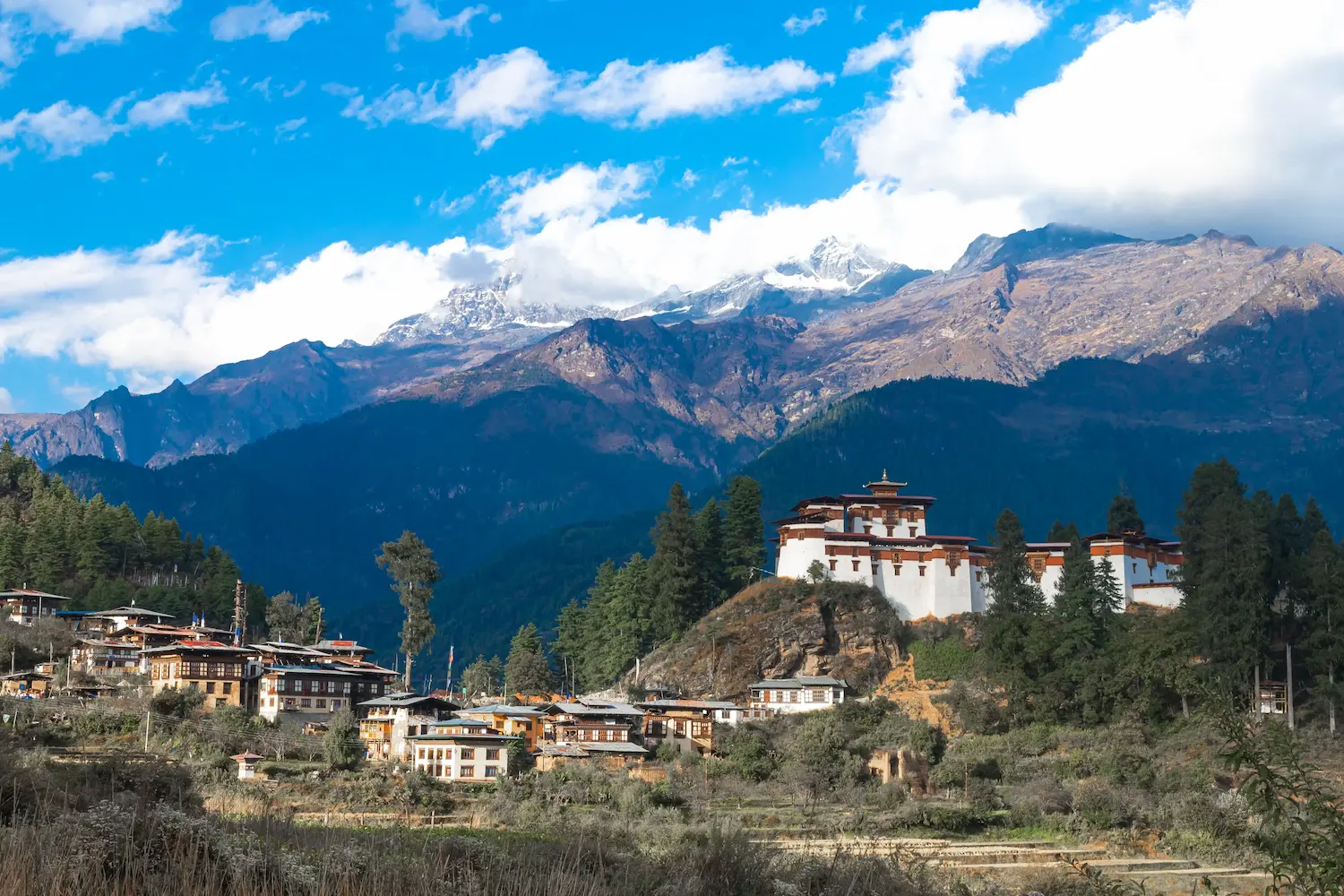
Spring and autumn are Bhutan's two genuinely excellent seasons, and they offer slightly different versions of the country. March to May brings rhododendrons and blue poppies into bloom across the valleys, clear skies, and the Paro Tshechu — Bhutan's largest and most famous festival, held at Rinpung Dzong, with a pre-dawn unveiling of a giant embroidered Thongdrel on its final day that's said to cleanse the sins of anyone who sees it. September to November brings the clearest mountain visibility of the year, golden autumn light, and the Thimphu Tshechu, alongside the very particular pleasure of the Black-Necked Crane Festival in Phobjikha Valley each November.
The monsoon months — June through August — are genuinely the quieter, cheaper option, and not without their own appeal: the valleys turn intensely green, the Mo Chhu river runs full for rafting (advanced level given the high water), and Punakha at lower altitude stays warm and pleasant even as rain disrupts the higher passes. What it costs you is reliability — flights into Paro are at their most weather-affected during this window, and several of the higher mountain passes can see reduced visibility.
Winter, December through February, is Bhutan's most underrated season for budget-conscious, crowd-averse travellers. Thimphu and Paro can see snow, turning the valleys properly beautiful in a way few visitors plan for, hotel rates often drop, and the Punakha Tshechu in February or March gives you a major festival without the peak-season crowds of Paro or Thimphu's autumn events. Some higher passes, like Chele La, may close, but the core western circuit — Paro, Thimphu, Punakha — stays fully accessible.
| MONTH | CONDITIONS | BEST FOR | NOTES |
|---|---|---|---|
|
March–May (Spring) |
Mild, rhododendrons and blue poppies in bloom, clear skies |
Trekking, photography, Paro Tshechu (late March/early April) |
One of the two best windows; book flights and hotels well ahead — peak season |
|
June–August (Monsoon) |
Warm, frequent rain, lush green valleys, misty mountains |
Lower-altitude valleys (Punakha, Phobjikha); rafting on the Mo Chhu (high water, advanced level) |
Flights into Paro are most weather-affected in this window; build in a buffer day for connections |
|
September–November (Autumn) |
Crisp, clear, the best mountain visibility of the year |
Everything — trekking, festivals (Thimphu Tshechu, Black-Necked Crane Festival), photography |
The single best season; also the busiest — book 3–6 months ahead for major festivals |
|
December–February (Winter) |
Cold, clear days, possible snow in Thimphu and Paro |
Phobjikha crane-watching (Nov–Mar), Punakha Tshechu (Feb/Mar), budget-conscious travel |
High passes like Chele La may close; central valleys remain accessible; hotel rates often drop |
SEASON-BY-SEASON GUIDE
Paro Taktsang — the Tiger's Nest, properly explained
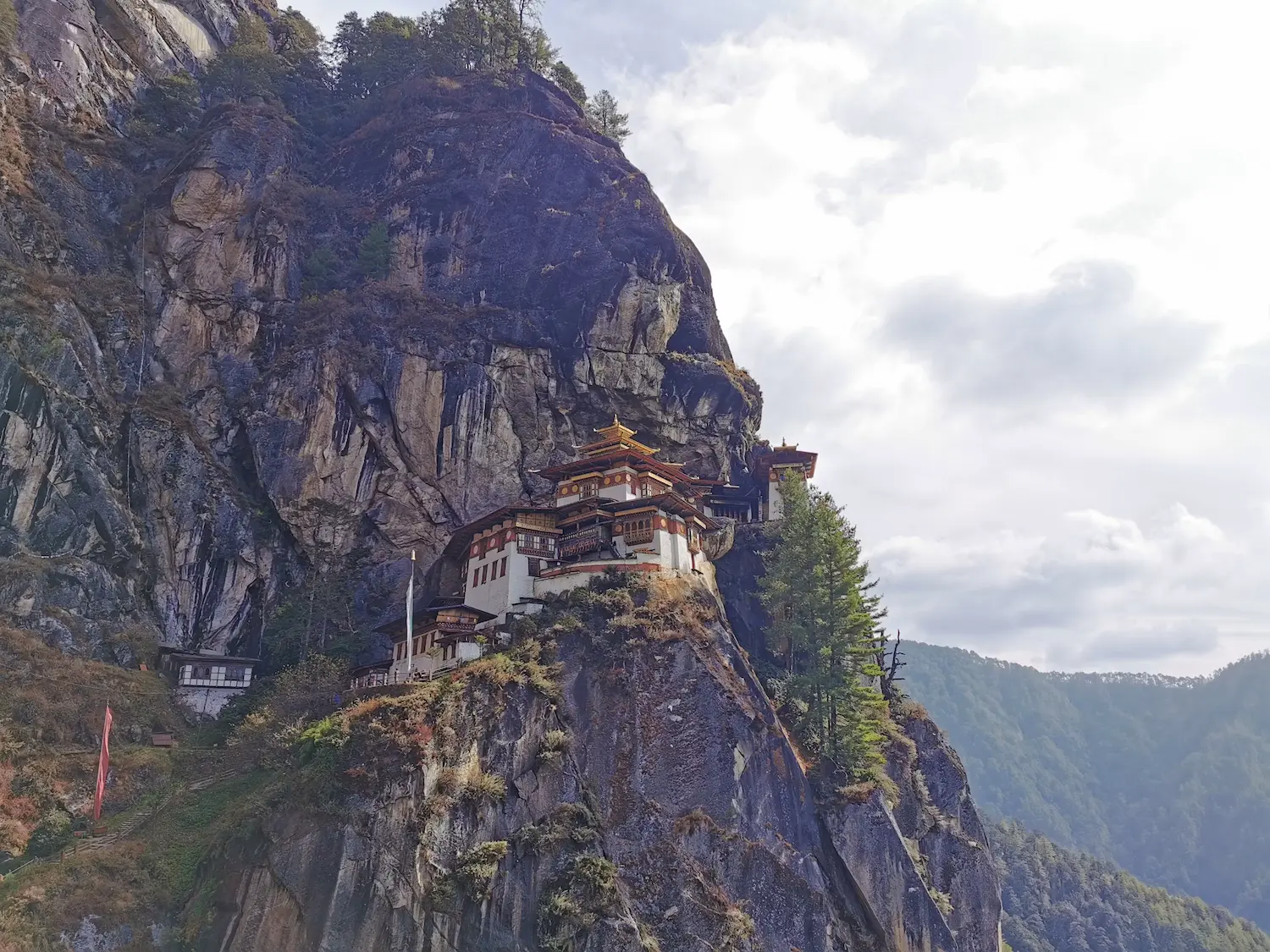
No description of Bhutan is complete without Paro Taktsang, and very few of those descriptions actually explain why it matters rather than just how to get there.
The story begins in the 8th century, when Guru Rinpoche — Padmasambhava, the figure credited with introducing Vajrayana Buddhism to Bhutan — is said to have flown to this cliffside from Tibet on the back of a tigress, a transformed manifestation of his consort Yeshe Tsogyal. He meditated in a cave here for three years, three months, three days and three hours (some tellings add three weeks), subduing local demons and sanctifying the site. The monastery complex itself was built much later, in 1692, by the 4th Druk Desi Tenzin Rabgye, constructed directly around that sacred cave — known as Taktsang Senge Samdup. It's one of thirteen "tiger lair" meditation caves associated with Guru Rinpoche across the historical Tibetan Buddhist world, and the best known of all of them.
Practically: the monastery clings to a cliff roughly 900 metres above the Paro valley floor, at an elevation of about 3,120 metres. The hike itself is around 3 to 4 kilometres one way, gaining 700 to 900 metres, and most people complete it in two to three hours at a comfortable pace — though plenty of honest reviews note it took them longer, and that's entirely fine. A cafeteria sits roughly at the halfway point, where horses (available for the ascent only, not the descent) drop riders off. The final stretch crosses a bridge over a waterfall gorge before a steep run of stone steps — sources differ on the exact count, somewhere between 120 and several hundred depending on which section is being counted — leads to the entrance.
Before entering, you'll deposit all electronics — phones, cameras, everything — with a sentry. No photography is permitted inside. Shoes come off, shoulders and knees stay covered. Inside, the complex holds four main temples and eight caves connected by narrow stairways carved into the rock, including the original meditation cave itself. The entry fee, revised in March 2023, is 1,000 Ngultrum per adult (roughly ₹1,000, given the currency's peg to the rupee) with reduced rates for children. Aim to start by 7 to 8 AM — not just for the crowds, which do build by mid-morning, but because the descent in full midday heat is, by every honest account, considerably harder on the legs than the climb up.
Punakha Dzong — Bhutan's most beautiful fortress
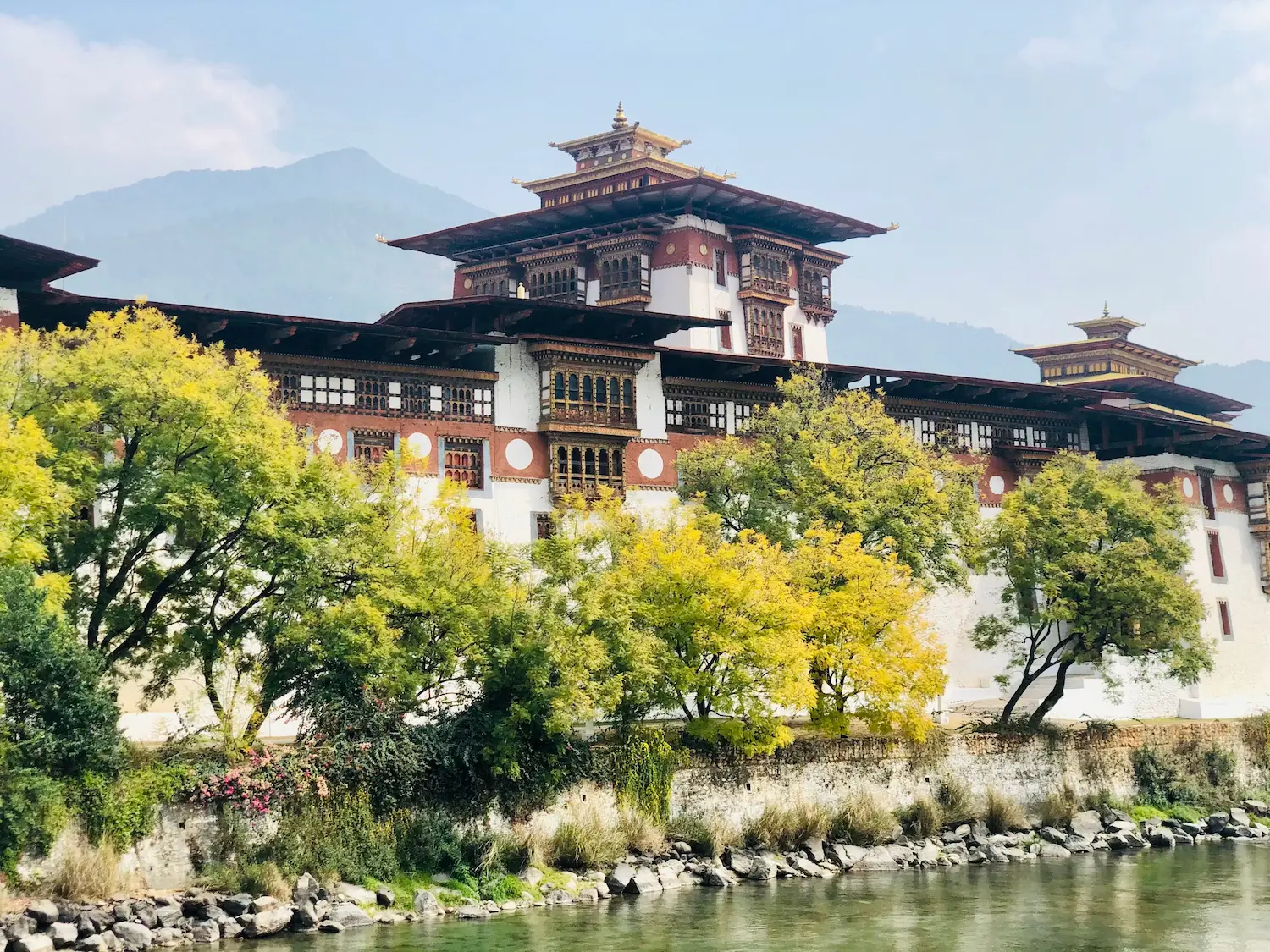
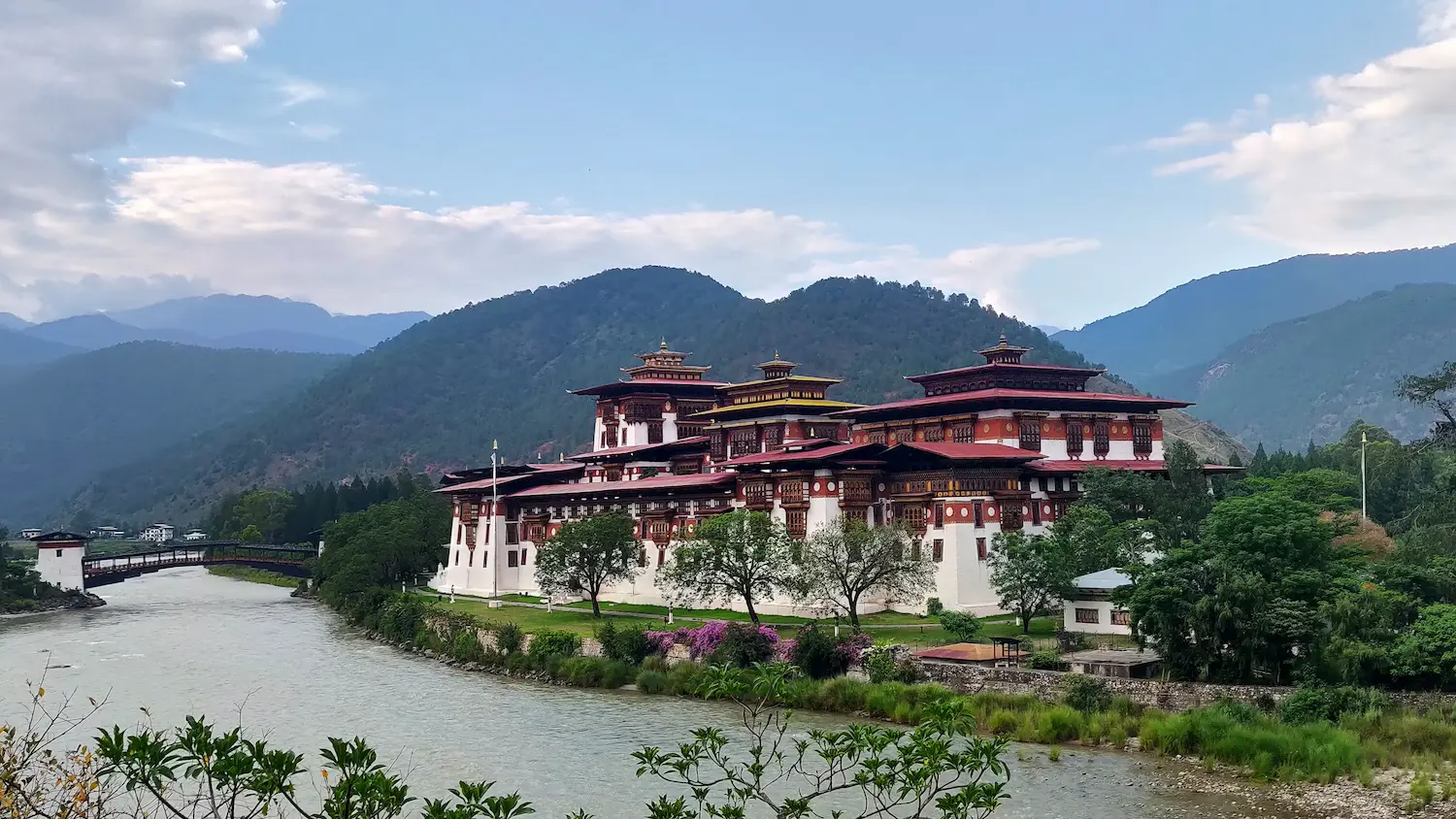
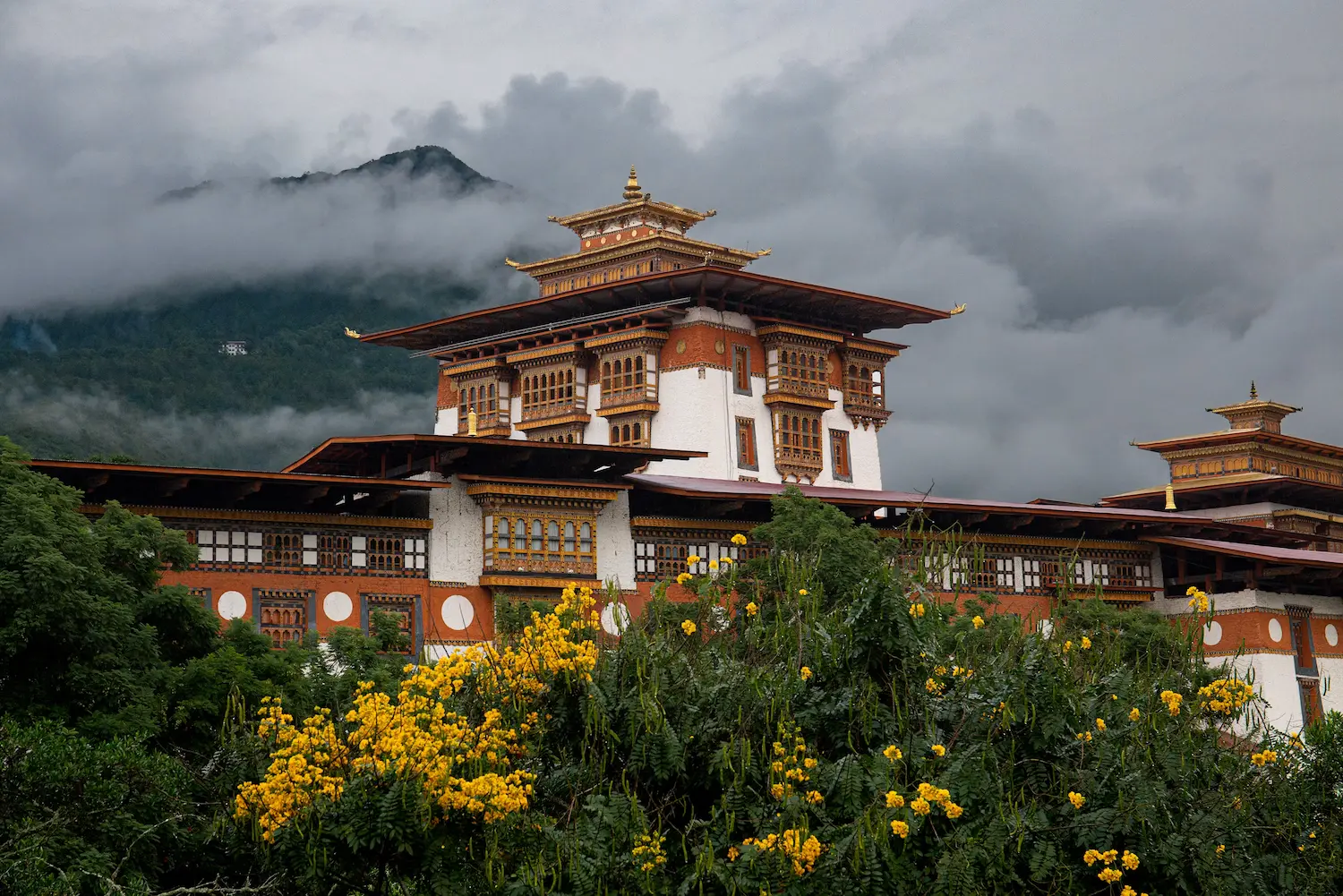
If Tiger's Nest is Bhutan's most photographed site, Punakha Dzong is the one that most seasoned visitors quietly call the most beautiful. It sits at the confluence of two rivers — the Pho Chhu, the "father" river, and the Mo Chhu, the "mother" river — a setting so striking that the dzong's reflection in the water on a calm morning has become one of the defining images of the entire country.
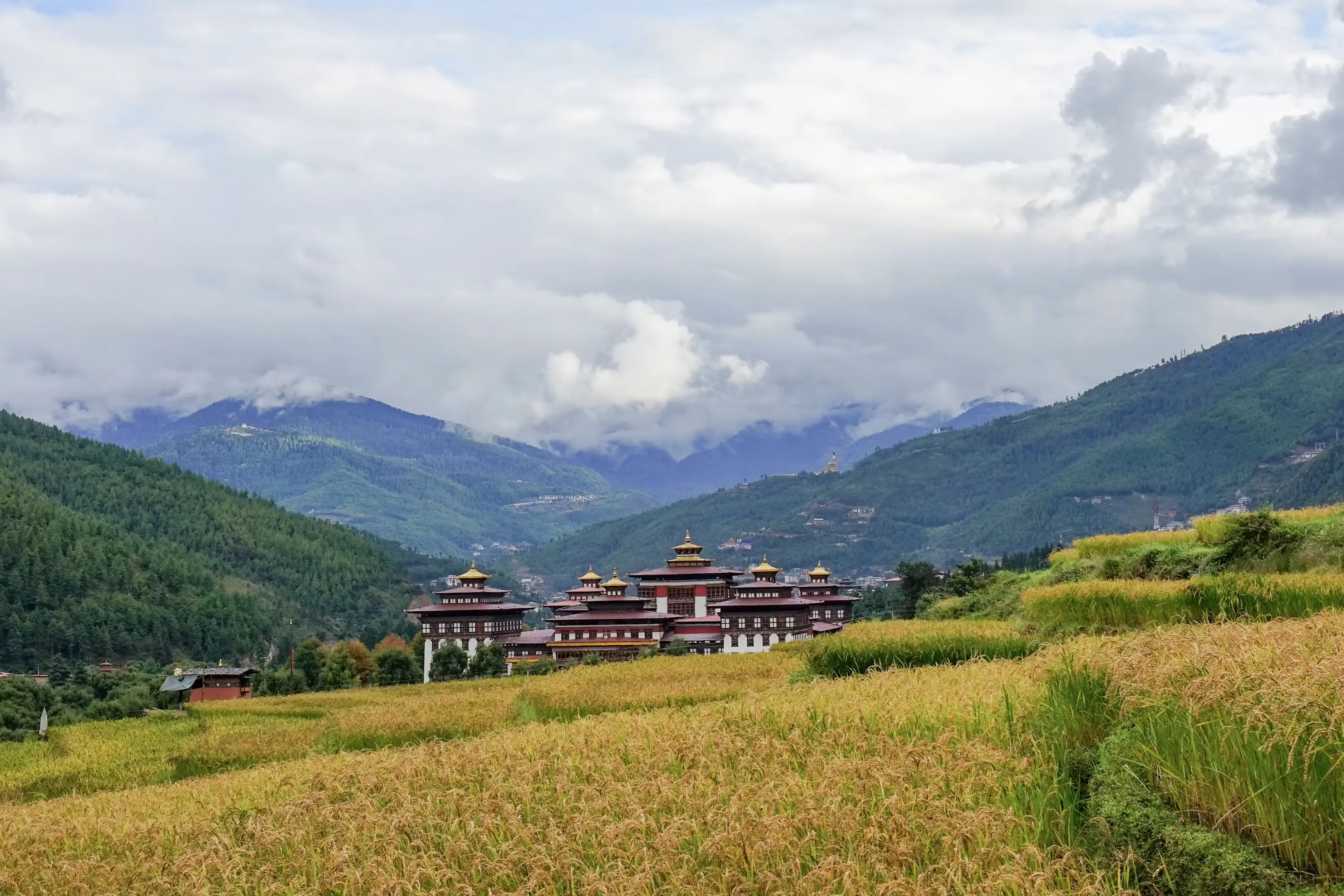
Built in 1637–38 under the command of Zhabdrung Ngawang Namgyal, the lama who first unified Bhutan as a nation-state, Punakha Dzong was the seat of Bhutan's government until the capital moved to Thimphu in 1955. It remains, today, the winter residence of the country's Central Monastic Body. Every Bhutanese king since 1907 has been crowned within its walls, including the current king's wedding to Jetsun Pema, held here in 2011. The structure has survived an extraordinary run of disasters — fires in 1780, 1789, 1802, 1831, 1849 and 1986; a damaging earthquake in 1897; and a glacial lake outburst flood in 1994 that killed 21 people and badly damaged the foundations. Each time, it's been rebuilt using traditional nail-free joinery and craftsmanship, much of the most recent restoration funded by the Government of India.
You reach the dzong via a 55-metre traditional wooden cantilever bridge across the Mo Chhu, rebuilt in 2008 with German assistance after the original 17th-century bridge washed away in a flood decades earlier. Inside, the six-storey central tower holds some of Bhutan's most sacred relics, including the remains of Zhabdrung Ngawang Namgyal himself. Allow two to three hours, and if your dates align with February or March, the Punakha Tshechu festival held in the dzong's courtyard — featuring a dramatic re-enactment of a 17th-century battle against Tibetan invaders — is one of the most visually compelling events in the entire Bhutanese festival calendar.
Thimphu and the capital that has no traffic lights
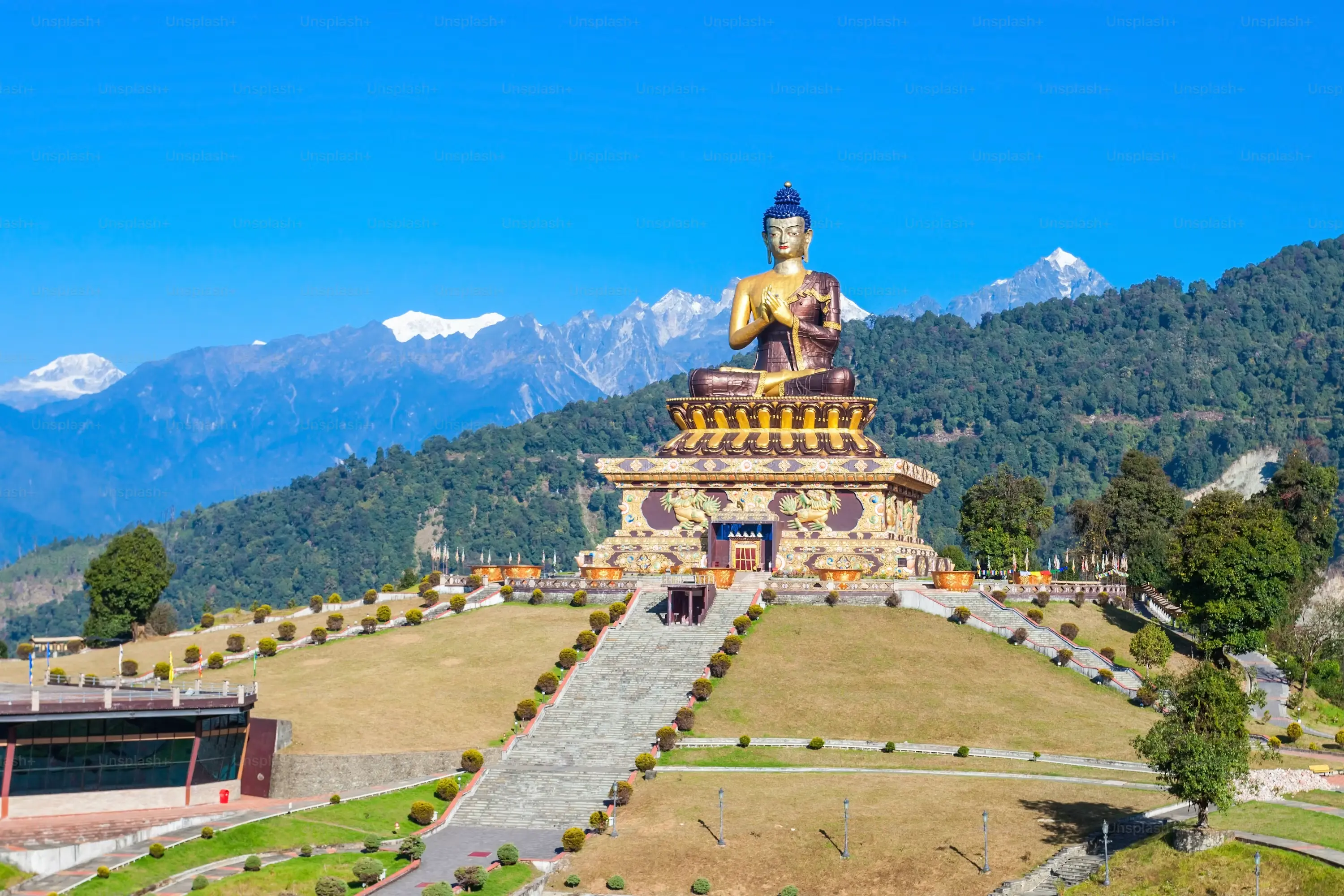
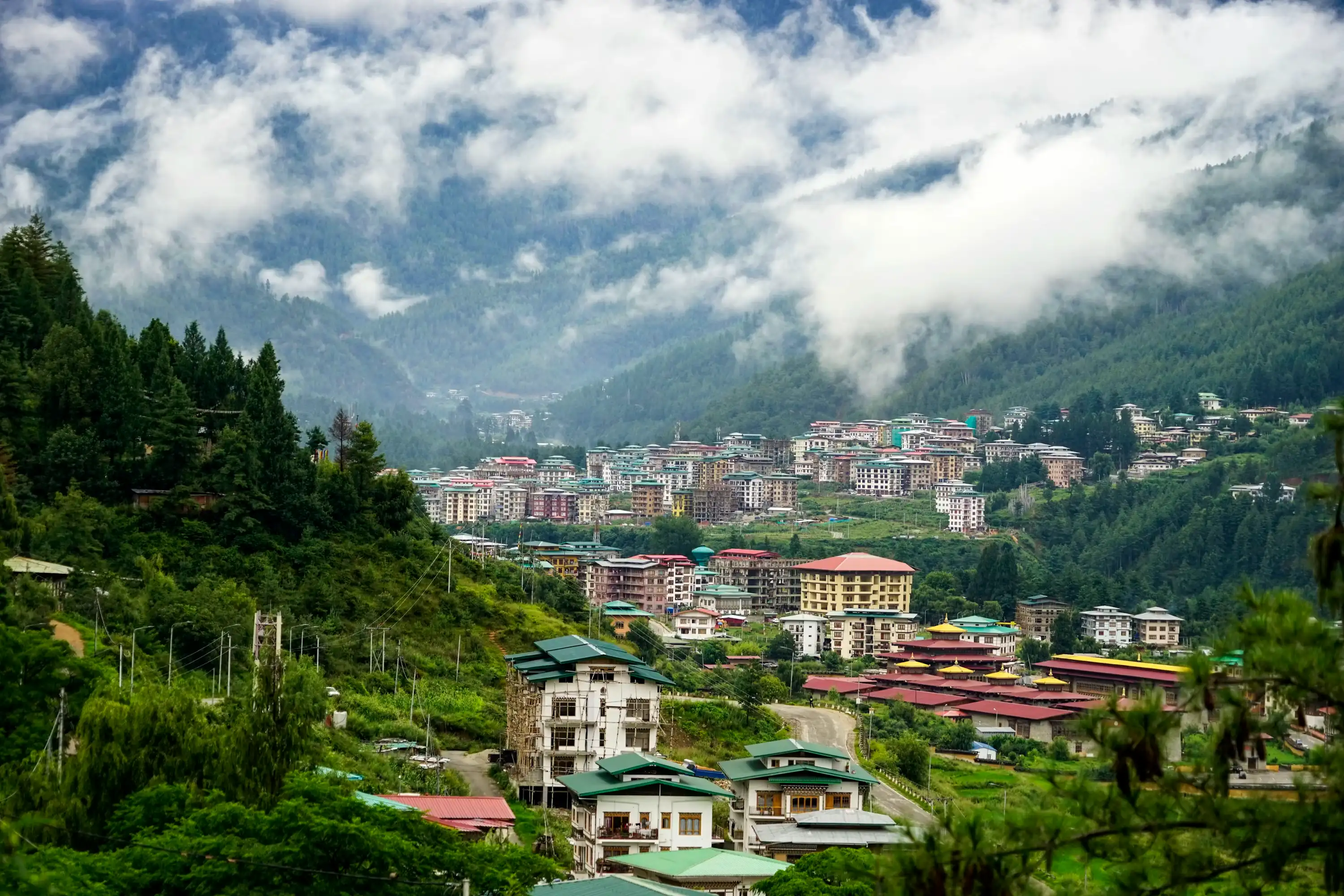
Thimphu is the only national capital in the world without a single traffic light — intersections are managed instead by white-gloved traffic police performing an almost choreographed set of hand signals, a detail that somehow tells you everything about the country's relationship with modernity before you've seen anything else.
The Buddha Dordenma, a 51.5-metre bronze and gold statue overlooking the valley from Kuensel Phodrang, is one of the largest Buddha statues anywhere in the world and worth visiting at sunrise if your schedule allows it — the early light on the gold plating is considerably more striking than the midday version everyone else sees. Tashichho Dzong houses the offices of the King and the central monastic body, and hosts the autumn Thimphu Tshechu, one of the country's largest festivals. The Centenary Farmers' Market, open from Friday morning to Sunday evening, is the best single place to see ordinary Bhutanese daily life — yak cheese, handwoven textiles, incense, and produce from across the country, sold by people who aren't performing for tourists because the market exists primarily for locals.
Phobjikha Valley and the cranes
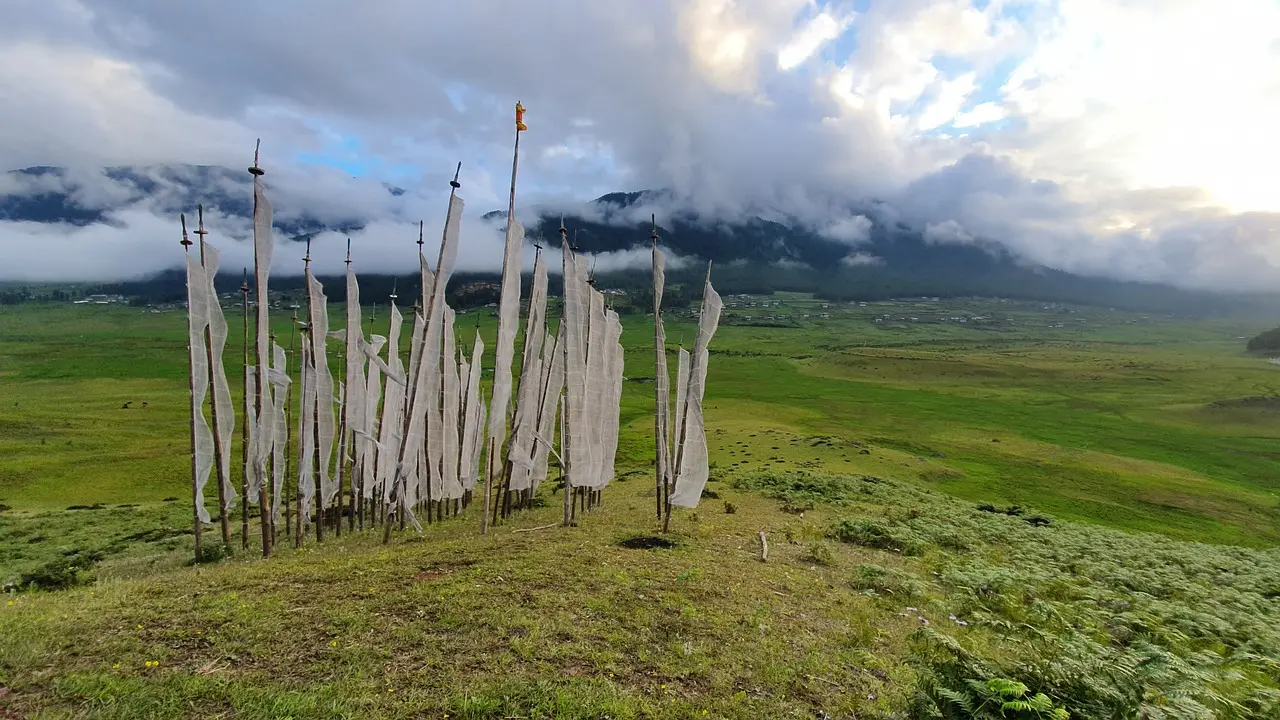
Phobjikha is the detour most first-time Bhutan itineraries skip and most second-time visitors insist on. A glacial valley in central Bhutan, reached via Punakha, it's the winter home of the black-necked crane — an endangered species that migrates here from the Tibetan plateau each November and stays until March. The Gangtey Monastery overlooks the valley floor, and the Crane Information Centre, run by the Royal Society for the Protection of Nature, explains the conservation effort behind the species' continued survival here.
If your dates allow it, the Black-Necked Crane Festival on November 11 — timed to coincide with the birth anniversary of the 4th King, who championed the conservation effort — is a genuinely moving, distinctly non-touristy event: school children perform crane dances, and the celebration is built around environmental awareness rather than spectacle for visitors. Several operators now offer farmhouse stays in Phobjikha specifically, putting you in a local family's home with traditional meals rather than a hotel — a detail worth specifically requesting if it appeals to you.
KEY SITES AND EXPERIENCES — COMPLETE GUIDE
| SITE / EXPERIENCE | LOCATION | TIME NEEDED | KEY DETAIL |
|---|---|---|---|
|
Paro Taktsang (Tiger's Nest Monastery) |
Paro Valley |
Half day (3–5 hrs round trip) |
Built 1692 around the cave where Guru Rinpoche meditated for three years, three months, three days and three hours in the 8th century after arriving on the back of a transformed tigress; clings to a cliff 900m above the valley floor |
|
Punakha Dzong |
Punakha, at the Pho Chhu–Mo Chhu confluence |
2–3 hrs |
Built 1637–38; site of every Bhutanese king's coronation since 1907; survived floods, fires and earthquakes; crossed via a 55m traditional cantilever bridge |
|
Buddha Dordenma |
Kuensel Phodrang, Thimphu |
1 hr |
A 51.5-metre bronze and gold statue overlooking the Thimphu valley — one of the largest Buddha statues in the world |
|
Tashichho Dzong |
Thimphu |
1–1.5 hrs |
Seat of the Bhutanese government and the central monastic body; hosts the autumn Thimphu Tshechu |
|
Dochula Pass |
Between Thimphu and Punakha |
30–45 min stop |
3,100m pass crowned with 108 memorial chortens; clear-day views extend to several Himalayan peaks including Gangkhar Puensum |
|
Phobjikha Valley |
Central Bhutan, via Punakha |
Full day / overnight |
A glacial valley and winter home to the endangered black-necked crane (Nov–Mar); Gangtey Monastery overlooks the valley floor |
|
Chimi Lhakhang (Fertility Temple) |
Near Punakha |
1 hr |
Built 1499 in honour of the 'Divine Madman' Lama Drukpa Kuenley; a short, pleasant walk through rice fields to reach it |
|
Centenary Farmers' Market |
Thimphu |
1–2 hrs, weekends only |
Open Friday 7 AM to Sunday 7 PM; the best place to see everyday Bhutanese life alongside textiles, yak cheese, and produce |
|
Hot stone bath (Dotsho) |
Widely available, especially Paro and Punakha farmhouses |
1–1.5 hrs |
River stones heated over fire and submerged in a wooden tub with mineral-rich water and artemisia herb — a centuries-old wellness ritual |
|
Khoma Village (textile weaving) |
Lhuntse district, far eastern Bhutan |
Specialist add-on, full day or more |
Source of Kishuthara, an intricately woven silk textile historically worn by Bhutanese royalty |
KEY SITES AND EXPERIENCES — COMPLETE GUIDE
Punakha Dzong has burned down, flooded, and survived an earthquake — and every single time, it's been rebuilt by hand using the same nail-free joinery as the original 1637 structure. That continuity, more than the postcard reflection in the river, is what makes it Bhutan's most important building.
A practical 5 to 7 day itinerary
The classic first-time Bhutan circuit covers Paro, Thimphu, and Punakha, with Phobjikha as a natural extension for those with an extra two days. This sequence works well because it follows the country's actual geography rather than forcing unnecessary backtracking, and it builds in acclimatisation before the more demanding Tiger's Nest hike.
| DAY | ITINERARY | OVERNIGHT |
|---|---|---|
|
Day 1 |
Arrive Paro (by flight or land via Phuentsholing). Settle in, gentle walk through Paro town, evening at leisure |
Paro |
|
Day 2 |
Hike to Tiger's Nest Monastery (depart early to beat both crowds and afternoon heat on the descent). Afternoon at leisure or textile shopping in Paro |
Paro |
|
Day 3 |
Drive to Thimphu (1–1.5 hrs). Buddha Dordenma, Tashichho Dzong, Centenary Farmers' Market if it's a weekend |
Thimphu |
|
Day 4 |
Drive to Punakha via Dochula Pass (108 chortens, Himalayan views). Visit Chimi Lhakhang en route. Afternoon at Punakha Dzong and the suspension bridge |
Punakha |
|
Day 5 |
Morning at leisure in Punakha — optional rafting on the Mo Chhu (seasonal) or a hot stone bath at a riverside farmhouse. Drive back toward Paro for departure, or extend to Phobjikha |
Paro or extend |
|
Day 6 (extension) |
Drive to Phobjikha Valley (2–2.5 hrs from Punakha). Gangtey Monastery, Crane Information Centre, valley nature walk |
Phobjikha |
|
Day 7 (extension) |
Return to Paro via Thimphu. Final shopping, departure preparations |
Paro |
SUGGESTED 5–7 DAY ITINERARY
Food, culture, and a few specific things to try
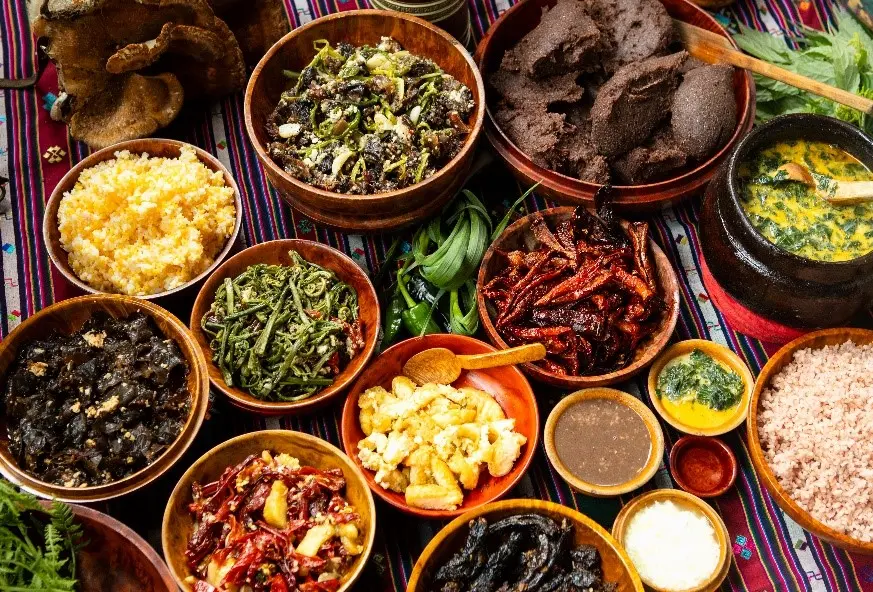
Bhutanese food revolves around chillies in a way that genuinely surprises people who haven't been warned. Ema Datshi — a stew of chillies and local cheese — is the national dish, served with red rice, and it's vegetarian by default, which makes Bhutan an unexpectedly easy country for vegetarian Indian travellers. Momos, buckwheat pancakes called khuli, and butter tea (suja) round out the everyday Bhutanese table. Meat-eaters have more variety available — Phaksha Pa, a cured dried pork dish, and Jasha Maroo, minced chicken with green chillies, are both worth seeking out specifically rather than defaulting to the hotel buffet, which tends toward a safer, less interesting version of Bhutanese-continental fusion.
A hot stone bath — locally called a Dotsho — is one of the most worthwhile things to build into a Bhutan itinerary, particularly after the Tiger's Nest hike. River stones are heated over an open fire until glowing, then submerged in a wooden tub filled with water and artemisia herb, creating a mineral-rich soak that's been part of Bhutanese wellness tradition for centuries. Most farmhouse stays in Paro and Punakha offer this, and it's worth specifically requesting if your itinerary doesn't already include it.
For those with an interest in textiles, Bhutanese weaving is one of the country's most significant living art forms, and Kishuthara — an intricately patterned silk textile historically worn by Bhutanese royalty — is produced primarily in Khoma village in the far eastern Lhuntse district. This is a genuine specialist detour, not a casual add-on, but for travellers extending beyond the standard western circuit, it's one of the most rewarding crafts-focused destinations in the country. Closer to the standard circuit, the markets and textile shops of Thimphu and Paro offer good-quality handwoven items without the multi-day journey east.
Common mistakes, honestly addressed
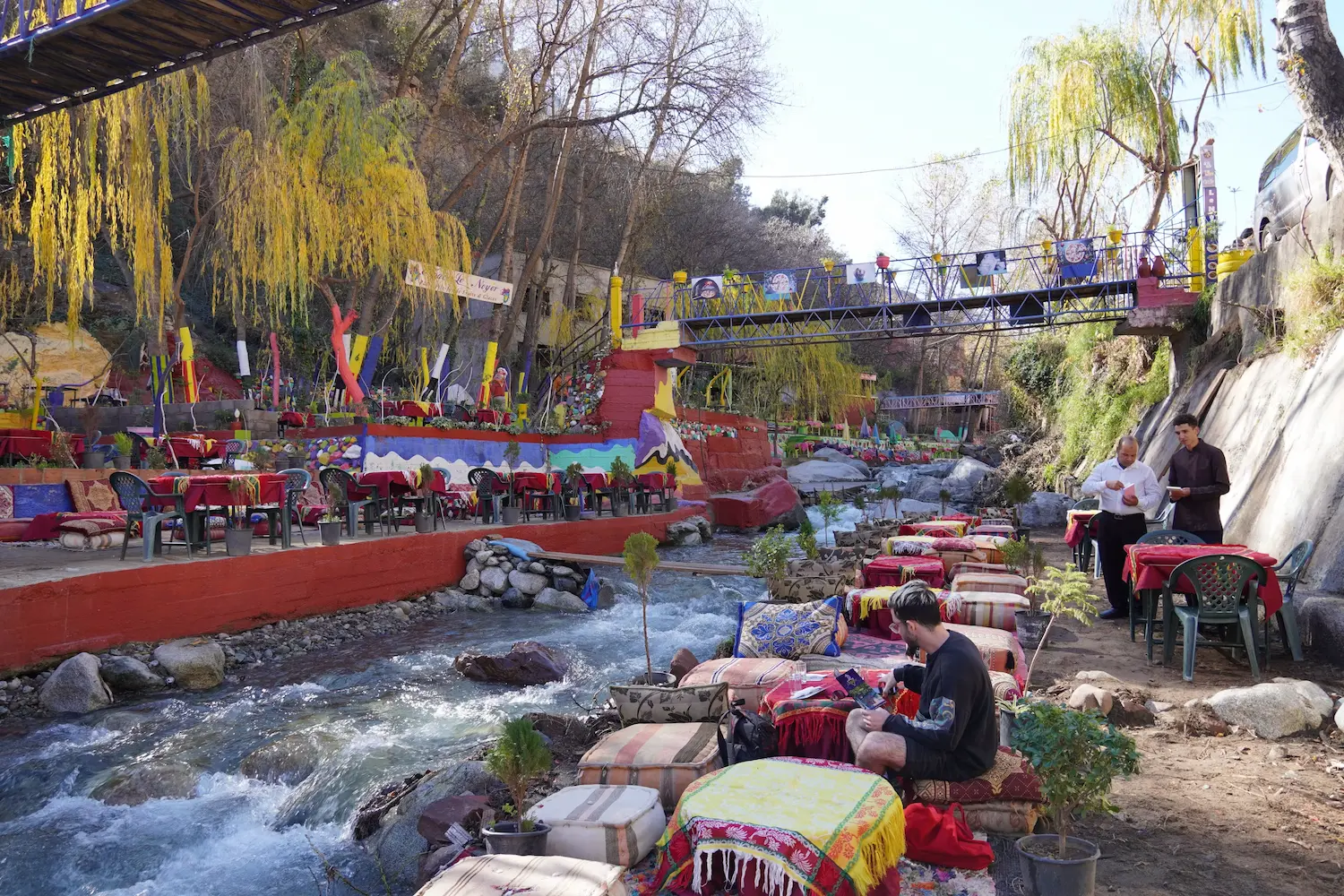
A few patterns come up often enough in traveller accounts that they're worth naming directly rather than leaving you to discover them the hard way.
The altitude catches people off guard more than they expect. Thimphu sits at 2,320 metres, and several popular destinations exceed 4,000 metres — not extreme by Himalayan standards, but enough that arriving from sea level and immediately pushing into a full first-day itinerary leaves some travellers breathless and fatigued for reasons they don't initially connect to elevation. Give yourself an easier first day.
Taxis in Bhutan are unreliable, generally unmetered, and drivers will often quote inflated fares to visibly foreign-looking travellers — negotiate clearly before the ride starts, every time. Public transport infrastructure is minimal across the country, which is part of why a private vehicle, whether self-driven or hired with a driver, is the practical norm rather than a luxury choice.
Bhutan's evenings end early. Most towns are quiet by 9 PM, and nightlife in any conventional sense barely exists outside hotel lounges in Thimphu. This isn't a flaw in the country — it reflects a genuinely different relationship with pace and reflection — but travellers expecting an active evening scene should recalibrate that expectation before arrival rather than during it.
And finally: photography rules are taken seriously, not as a casual suggestion. Photography inside monastery interiors is prohibited at most sites, electronics are physically deposited before entry at places like Tiger's Nest, and violations can lead to real consequences rather than a polite warning. Plan your photography around the exterior architecture and landscape, and accept that some of Bhutan's most extraordinary interior spaces are meant to be experienced rather than documented.
Gross National Happiness — and what it actually means for a visitor
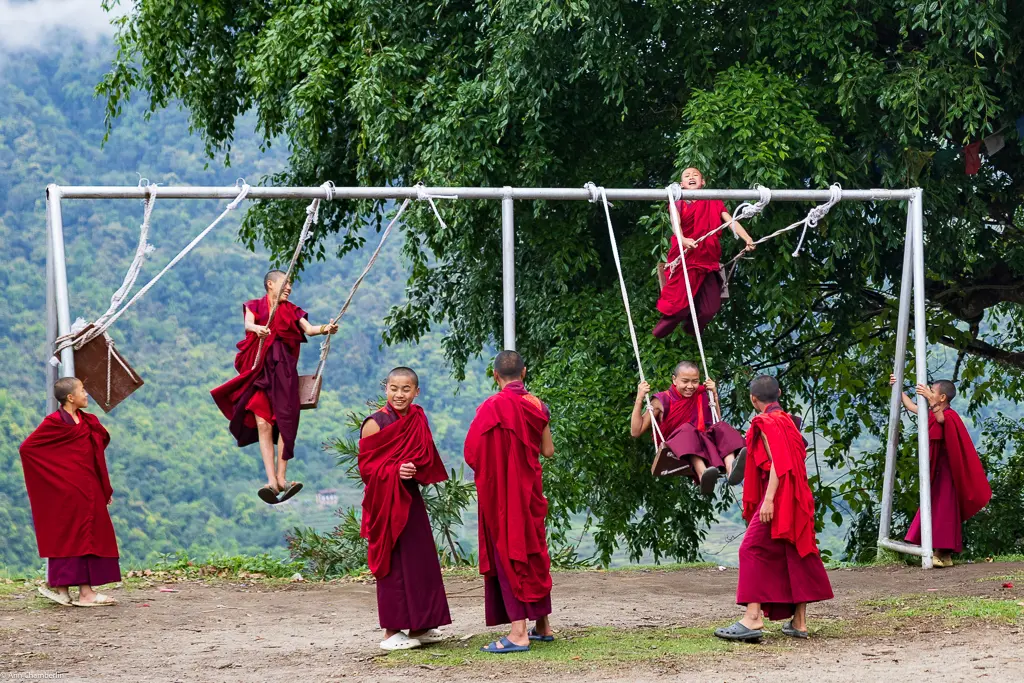
Bhutan is the country that famously prioritises Gross National Happiness over Gross Domestic Product, a philosophy introduced by the 4th King and now embedded in the country's constitution and development policy. For a visitor, this isn't an abstract talking point — it's the underlying logic behind almost every rule that might otherwise seem restrictive. The SDF that funds free healthcare and education for Bhutanese citizens. The "High Value, Low Impact" tourism policy that limits visitor volume rather than chasing maximum arrivals. The strict architectural codes that keep even modern buildings in traditional Bhutanese style. The 70%-plus forest cover the country has constitutionally committed to maintaining in perpetuity.
None of this is performed for tourists. It's the genuine operating philosophy of a small Himalayan kingdom that watched what unmanaged mass tourism did to other mountain destinations and made a deliberate, sustained choice to do things differently. As an Indian traveller benefiting from a uniquely easy entry process into this carefully managed system, it's worth carrying that context with you — not as a burden, but as the reason the place feels the way it does.
Planning your Bhutan trip with BizareXpedition
Bhutan's unique position for Indian travellers — visa-free, independently plannable, even self-drivable — means it rewards careful planning rather than improvisation. Knowing when to apply for your Route Permit, which season actually matches what you want from the trip, and how to sequence Paro, Thimphu, Punakha and Phobjikha so you're not retracing roads unnecessarily makes a measurable difference to how the week unfolds.
BizareXpedition™ Services Pvt. Ltd. (bizarexpedition.com), based in Haridwar and specialising in Himalayan journeys across the Indian subcontinent and beyond, builds customised Bhutan itineraries for Indian travellers — whether that's a classic 5-day introduction to Paro, Thimphu and Punakha, a self-drive adventure across the Jaigaon border with full documentation support, or a festival-timed trip built around the Paro Tshechu or the Black-Necked Crane Festival. The goal is the same approach we bring to every destination: honest seasonal advice, accurate permit guidance, and an itinerary that reflects what the place actually offers rather than what's easiest to sell.
| ITEM | NOTES |
|---|---|
|
Acceptable ID |
Indian passport (6+ months validity) or Voter ID/EPIC card only — confirm you're carrying the original, not a photocopy |
|
SDF payment |
Pay online in advance where possible at immi.gov.bt for a smoother arrival; carry proof of payment |
|
Route Permit timing |
If your itinerary includes Punakha or beyond, plan to spend your first full day in Thimphu partly on Route Permit processing |
|
Flight buffer |
Paro airport flights are daylight and weather-dependent, especially risky May–September; build in a 24-hour buffer for any onward international connection |
|
Currency |
Carry Indian ₹100 and ₹500 notes — both are widely accepted alongside the Ngultrum; digital payments work in cities but cash is safer in rural areas |
|
Mobile connectivity |
Most Indian SIM cards work on international roaming; for longer stays, a local TashiCell or B-Mobile SIM (with permit and ID) offers better coverage |
|
Self-drive documentation |
If self-driving, confirm current vehicle permit requirements at the border in advance — carry vehicle registration, insurance, and driving licence |
|
Dress code for dzongs and monasteries |
Covered shoulders, long pants, closed-toe shoes; remove shoes and hats before entering sacred halls; no photography inside without explicit permission |
|
Photography rules |
Photography is prohibited inside most monastery interiors — phones and cameras are typically deposited with a sentry before entering at sites like Tiger's Nest |
|
Altitude awareness |
Thimphu sits at 2,320m and some destinations exceed 4,000m — pace your first two days, especially if flying in directly from sea level |
|
Vegetarian travellers |
Well catered for — Ema Datshi (chili-cheese stew), the national dish, is vegetarian by default; momos and red rice are widely available |
|
Emergency number |
Dial 112 for ambulance and emergency medical assistance anywhere in Bhutan |
PRACTICAL CHECKLIST — BHUTAN FOR INDIANS 2026
| CATEGORY | BUDGET | MID-RANGE | PREMIUM |
|---|---|---|---|
|
SDF (per night, Indian) |
₹1,200 (fixed — same across all tiers) |
₹1,200 |
₹1,200 |
|
Accommodation |
₹2,000–3,500/night (budget hotel) |
₹3,500–6,000/night (3-star comfort) |
₹8,000–20,000+/night (heritage farmhouse, boutique, 5-star) |
|
Private vehicle with driver (per day) |
₹2,500–3,500 |
₹3,500–5,000 |
₹5,000–8,000+ (premium SUV) |
|
Food (per day) |
₹600–1,000 |
₹1,200–2,000 |
₹2,500–4,000 (specialty dining, hot stone bath included) |
|
Tiger's Nest entry + extras |
₹1,000–1,500 (entry + optional pony ride) |
Same |
Same, plus private guide and curated pacing |
|
Total per day estimate (excl. flights) |
₹6,000–9,500 |
₹9,500–14,500 |
₹17,000–33,500+ |
BUDGET GUIDE — PER PERSON PER DAY (EXCLUDING FLIGHTS)
At the entrance to Tiger's Nest, after the climb, after depositing my phone with the sentry, after the shoes came off and the modest dress was confirmed, there was a moment of simply standing in a cave where a man is said to have meditated for three years, three months, three days and three hours in the 8th century, with nothing to record it and nothing to do but be there. Bhutan asks for that, more than it asks for anything else — to put the camera down occasionally and just stand in the place. For a country we can reach without a visa, on a permit we can get at the border, that's a remarkably generous thing to be asked.
Best Selling Tour Packages
Explore other exciting options for your next adventure!