
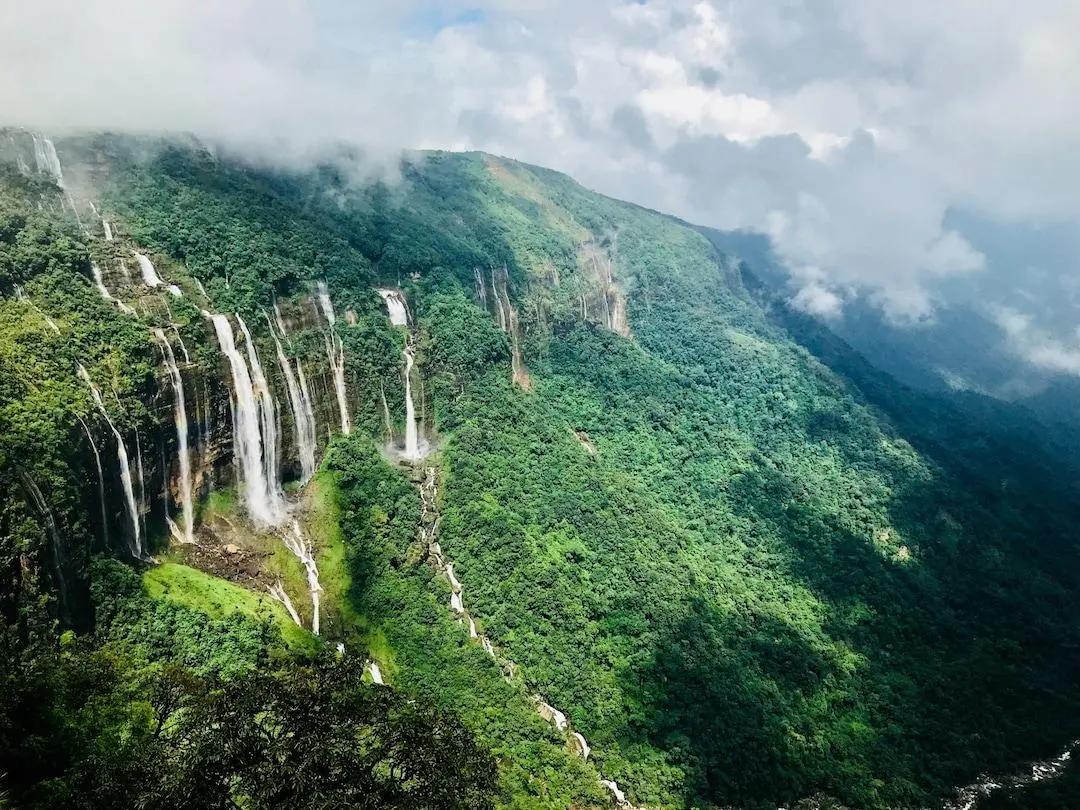
Published On - Jun 01, 2026
Updated On - Aug 12, 2026
20 min
North East India: The Traveller's Guide to the Part of India Most People Have Never Seen
North East India is one of the most breathtaking yet least explored regions of the country. Home to misty mountains, living root bridges, vibrant tribal cultures, pristine rivers, and untouched wilderness, it offers experiences far beyond typical tourist routes. From the rolling hills of Meghalaya to the remote valleys of Arunachal Pradesh, every corner reveals a different side of India waiting to be discovered.
Northeast India is made up of eight states — Assam, Meghalaya, Arunachal Pradesh, Nagaland, Manipur, Mizoram, Tripura and Sikkim, collectively known as the Seven Sisters and a Brother — connected to the rest of India by a narrow 22-kilometre corridor in West Bengal called the Siliguri Corridor or, more commonly, the Chicken's Neck. The region shares borders with Bhutan, Tibet, China, Myanmar and Bangladesh, has over 220 distinct ethnic groups with their own languages and traditions, and offers experiences that simply do not exist in any other part of India. You can visit the living root bridges of Meghalaya — ancient structures grown from the aerial roots of rubber fig trees over thirty years — or watch a one-horned rhino walk through tall elephant grass in Kaziranga, or attend the Hornbill Festival in Kohima in December when all 16 of Nagaland's major tribes gather for ten days of dance, music, food and ceremony. There's plenty here for every kind of traveller, and you'll be pleasantly surprised by how accessible the Northeast has become in the last few years.
Operational airports in the region grew from 6 in 2014 to 19 in 2024, direct flights from Delhi reach Guwahati in two and a half hours, and the tourism numbers have responded — combined footfall across all eight states crossed 80 lakh in FY 2024–25, with Sikkim's arrivals more than doubling (up 105.3%), Arunachal nearly doubling (up 98.5%) and Meghalaya growing 72.5% year on year. In the meantime, the permit situation is far simpler than most people assume — only Arunachal Pradesh and Mizoram require an Inner Line Permit for Indian nationals, while Assam, Meghalaya, Nagaland and Tripura need no permit at all. And to add to that, the Northeast is still, despite all of this growth, one of the least crowded major travel regions in India — which is its most valuable quality for anyone who has had enough of peak-season Manali or Nainital.
The best approach to the Northeast is to pick two or three states rather than trying to cover all eight on one trip — and to go slowly once you are there. Here is what each state offers and how to plan around it.
The Numbers Worth Knowing First
| State | Capital / Gateway | ILP for Indians? | Best Season | Tourism Growth FY 2024–25 |
|---|---|---|---|---|
|
Assam |
Guwahati — main NE gateway |
Not required |
Oct–Apr (avoid monsoon Jun–Sep) |
65% rise — 52,41,600 visitors (up from 31,75,700) |
|
Meghalaya |
Shillong |
Not required |
Oct–May |
72.5% rise — 12,54,800 visitors |
|
Sikkim |
Gangtok |
Partial — some zones only |
Mar–May (flowers), Sep–Nov (clarity) |
105.3% rise — 5,89,500 visitors |
|
Arunachal Pradesh |
Itanagar / Tawang / Guwahati entry |
Yes — mandatory for ALL Indians |
Oct–Apr |
98.5% rise — 2,78,530 visitors |
|
Nagaland |
Kohima / Dimapur |
Not required (removed 2022) |
Nov–Mar; Hornbill Dec 1–10 |
Steady; Hornbill Festival draws 50,000+ annually |
|
Manipur |
Imphal |
Not required |
Oct–Mar |
Consult current advisories before booking |
|
Mizoram |
Aizawl |
Yes — mandatory for all Indians |
Oct–Mar |
139% rise — 5,24,000 visitors (from 2,19,000) |
|
Tripura |
Agartala |
Not required |
Oct–Mar |
Accessible; Ujjayanta Palace; close to Bangladesh |
|
Combined NE footfall FY 2024–25 |
Over 80 lakh |
— |
— |
20–25% further growth projected 2025–26 |
Table 1 — State-by-State Overview: Tourism Growth, Permits and Best Season
Assam: More Than a Gateway
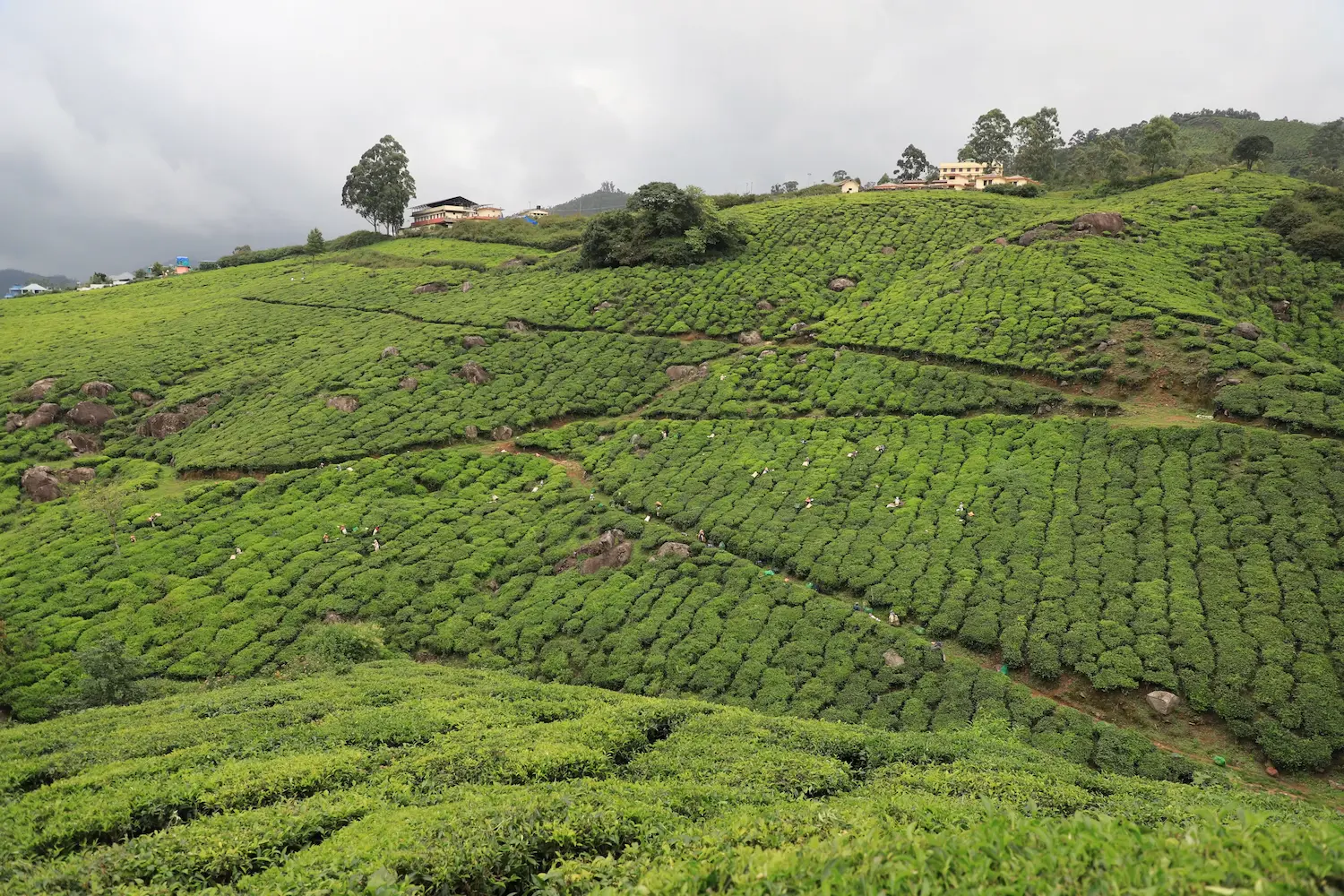
Assam is where most Northeast trips begin — Guwahati's Lokpriya Gopinath Bordoloi Airport is the main regional hub, with direct flights from Delhi, Kolkata, Mumbai, Chennai and Hyderabad — and it is also one of the most underrated states in the region, because most visitors use it as a transit point rather than a destination. The state is built around the Brahmaputra, one of the largest rivers in Asia, and the annual cycle of flooding and renewal that the river brings shapes Assam's wildlife, its agriculture, its festivals and its landscapes in ways that are completely different from anything in the western Himalayas. Kaziranga National Park, a UNESCO World Heritage Site 200 kilometres east of Guwahati, is the centrepiece — it houses 2,613 one-horned rhinoceroses, roughly 70% of the world's entire population, and attracted 3,27,493 visitors in 2023–24, the highest in its history. Jeep and elephant safaris run from October to April; the park floods completely in the monsoon and is inaccessible from May to September. You can also visit Majuli, the world's largest freshwater river island at 350 square kilometres, by a 20-minute ferry from Jorhat — it is home to 22 Vaishnavite satras, or monasteries, that have preserved centuries-old traditions of masked dance, music and manuscript illumination, and a visit there feels genuinely unlike anything else in India.
Assam registered 52,41,600 tourist arrivals in FY 2024–25, up 65% from the previous year, and the Brahmaputra river cruise sector has grown significantly alongside it — multi-day cruises on the river, stopping at wildlife reserves and riverbank villages, have become one of the more distinctive travel experiences available in the Northeast. The tea gardens of upper Assam, particularly around Jorhat and Dibrugarh, are another stop that travellers interested in agriculture, heritage bungalows and slow travel find rewarding. Several colonial-era planter bungalows have been converted into boutique stays, and a morning walk through a working tea garden before breakfast is the kind of quiet experience that most first-time visitors to the Northeast don't know to look for.
Meghalaya: The Abode of Clouds — and the Most Accessible NE State
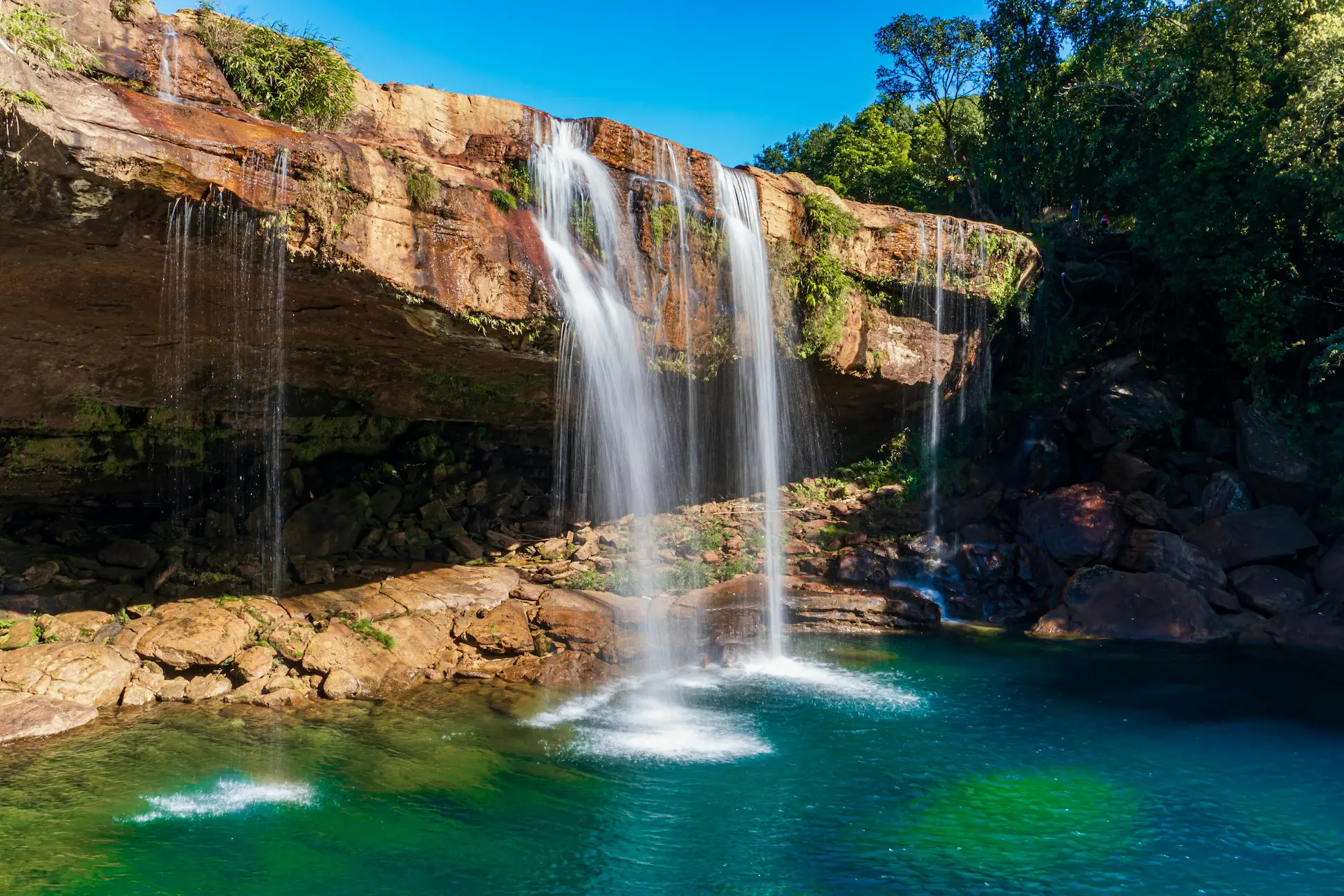
Meghalaya, which translates from Sanskrit as 'abode of clouds', is consistently the best starting point for first-time visitors to the Northeast — it requires no Inner Line Permit for Indian nationals, it is 100 kilometres by road from Guwahati's airport, and it contains some of the most extraordinary landscapes and human-made structures in India. Shillong, the capital at 1,491 metres, is often described as the Scotland of the East for its rolling hills and colonial bungalows, and it is one of the more pleasant and walkable hill capitals in India — the Don Bosco Museum here is the finest museum of tribal culture anywhere in Northeast India, and the city's live music scene, with its deep roots in Western music going back to missionary education, makes it feel unlike most Indian hill towns of comparable size.
Cherrapunji, 54 kilometres from Shillong, is where the living root bridges are and where most Meghalaya trips focus. The bridges are grown — not built — by the War Khasi community, who guide the aerial roots of rubber fig trees across streams over fifteen to thirty years until they form natural crossings that strengthen rather than weaken with age. The double-decker root bridge at Nongriat, reached by a descent of 3,000 stone steps from the road above, is the most photographed and is on UNESCO's World Heritage tentative list since 2023. The Nohkalikai Falls at 340 metres is India's tallest plunge waterfall and is visible from a viewpoint 10 minutes from the town. And Mawlynnong, 90 kilometres from Shillong near the Bangladesh border, was awarded Asia's cleanest village in 2003 and has maintained that standard visibly — bamboo dustbins on every path, swept grounds, a sky walk over the forest canopy. Most people treat it as a one-hour stop; it is worth staying the night if you can.
Meghalaya recorded 12,54,800 tourist arrivals in FY 2024–25, a 72.5% increase from the previous year. The Umngot River at Dawki, 82 kilometres from Shillong at the Bangladesh border, has become extremely popular for its glass-clear water where boats appear to float in air — the photograph has been shared so widely online that the spot is crowded in season, and early morning visits in October and November remain the most rewarding.
Sikkim: The Best-Organised Himalayan State
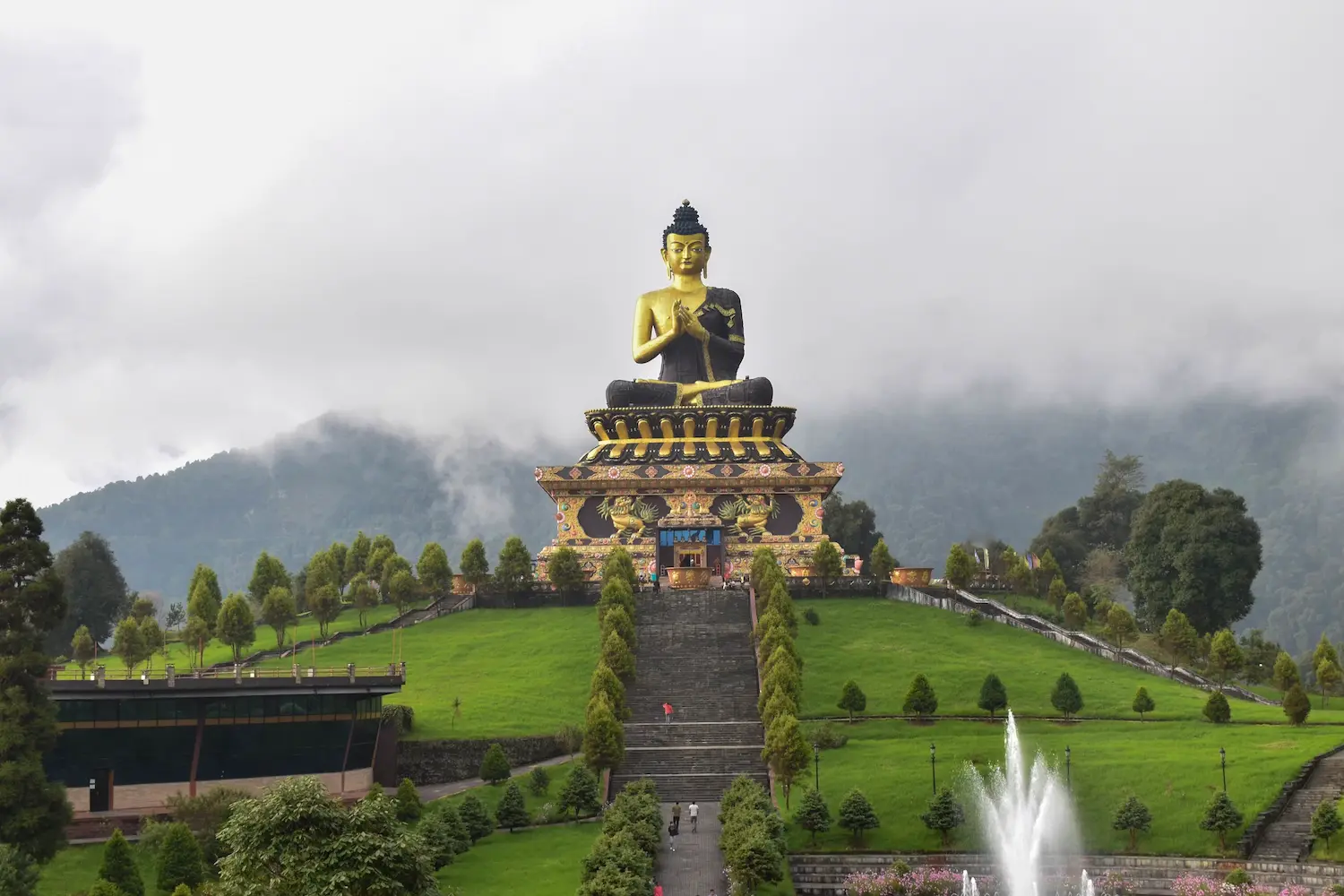
Sikkim is the smallest state in India at 7,096 square kilometres and the most recently joined (1975), and it is in many ways the easiest Himalayan state to visit — the roads are good, the infrastructure is well-maintained, the accommodation is reliable across a wide range of budgets, and Gangtok, the capital at 1,650 metres, is walkable and friendly in a way that larger hill capitals are not. You can visit the Rumtek Monastery — one of the most important Kagyu Buddhist monasteries in the world — the Enchey Monastery, and the MG Marg pedestrian zone from Gangtok's centre, and the standard day trips to Tsomgo (Changu) Lake at 3,753 metres and Nathula Pass at 4,310 metres on the India-China border (Indians only, permit required through a registered operator) are genuinely spectacular, not just check-box stops.
The rhododendron forests of Sikkim are the finest in India — over 40 species bloom from March to May across the state at elevations from valley floor to alpine treeline, and the combination of the rhododendrons and Kangchenjunga (third highest mountain in the world at 8,586 metres) visible from high viewpoints is exceptional. Sikkim saw a 105.3% rise in tourist arrivals to 5,89,500 in FY 2024–25, and the state's careful approach to tourism management — registered operators for restricted zones, controlled footfall at Gurudongmar Lake, mandatory permits for North Sikkim — has kept the quality of the experience relatively high despite the growth. Gurudongmar Lake at 5,183 metres, sacred to both Buddhists and Sikhs, is the most dramatic single stop in the state — a full-day trip from Gangtok through North Sikkim for which you need a special group permit through a local operator. The colour of the water at that altitude, and the scale of the landscape around it, is worth the early start.
Arunachal Pradesh: The Most Extraordinary and the Most Demanding
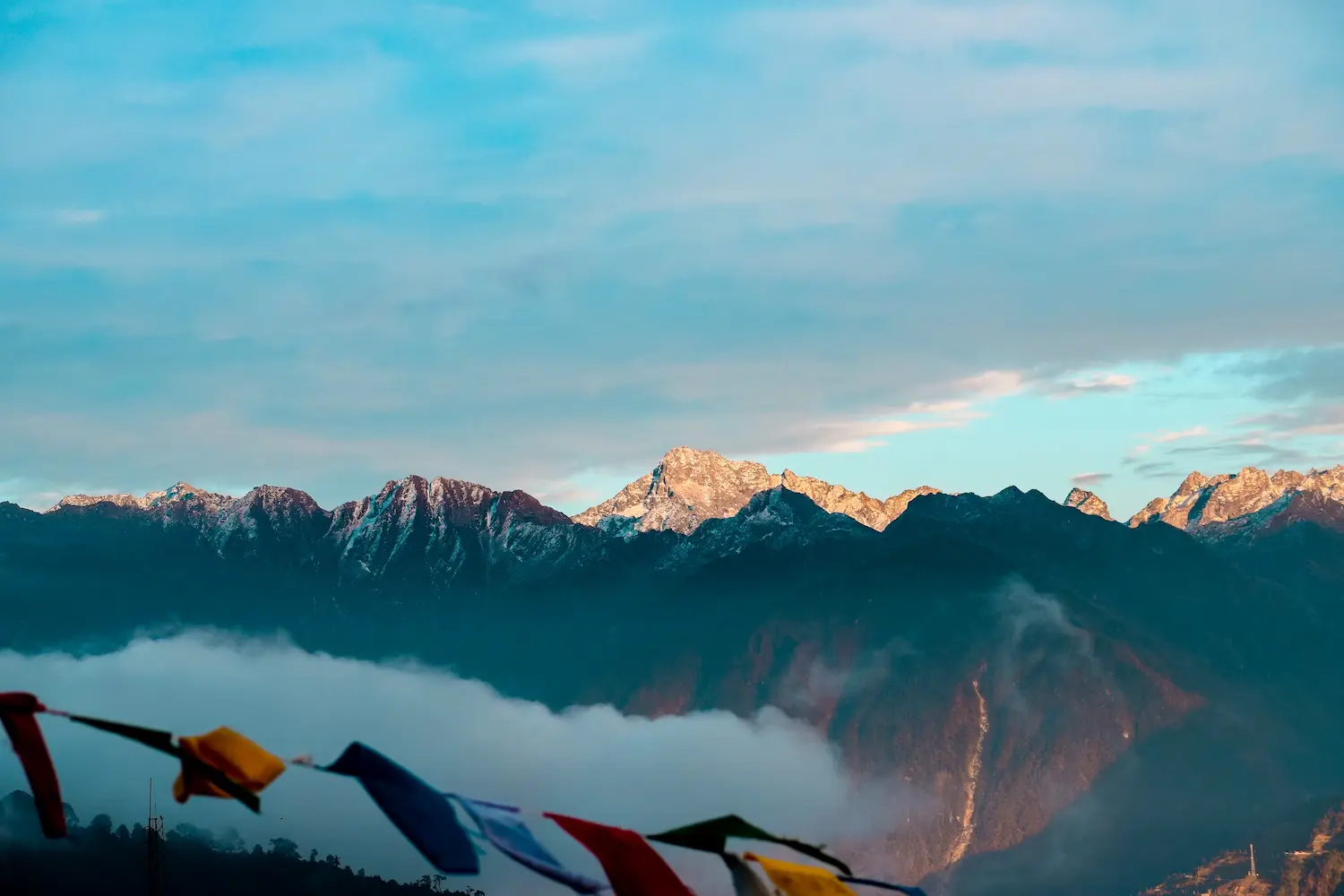
Arunachal Pradesh is India's most easterly state, bordering China, Bhutan and Myanmar, and it is the state that experienced Northeast travellers tend to describe as the most extraordinary — large, unhurried, home to tribes, forests, rivers and Buddhist monasteries that exist in few other places on earth. It is also the one that requires an Inner Line Permit for all Indian nationals without exception; the permit is a straightforward online process at arunachalilp.com but must be obtained before you reach the state border. Tourist arrivals grew 98.5% in FY 2024–25 to 2,78,530 — nearly doubling in a single year — though the numbers remain modest relative to the size of the state.
Tawang is the destination most people come for — the Tawang Monastery at 3,048 metres is the largest Buddhist monastery in India and the second largest in the world, founded in the 17th century, housing around 700 monks, holding a library of ancient manuscripts, and positioned against snow peaks in a way that is genuinely extraordinary. The approach from Bhalukpong via Bomdila and Sela Pass at 4,170 metres — high enough to be above the clouds for stretches of the drive — is itself one of the finest mountain road journeys in India. Ziro Valley in the Lower Subansiri district is the home of the Apatani tribal community and their ancient, sustainable paddy-cum-fish farming system, a UNESCO tentative World Heritage site, and the host of the Ziro Music Festival each October — one of the finest independent music events in India, which draws artists and audiences from across the country to a setting of paddy fields and pine forests that is as good a festival backdrop as exists anywhere.
Nagaland: The Hornbill Festival and More
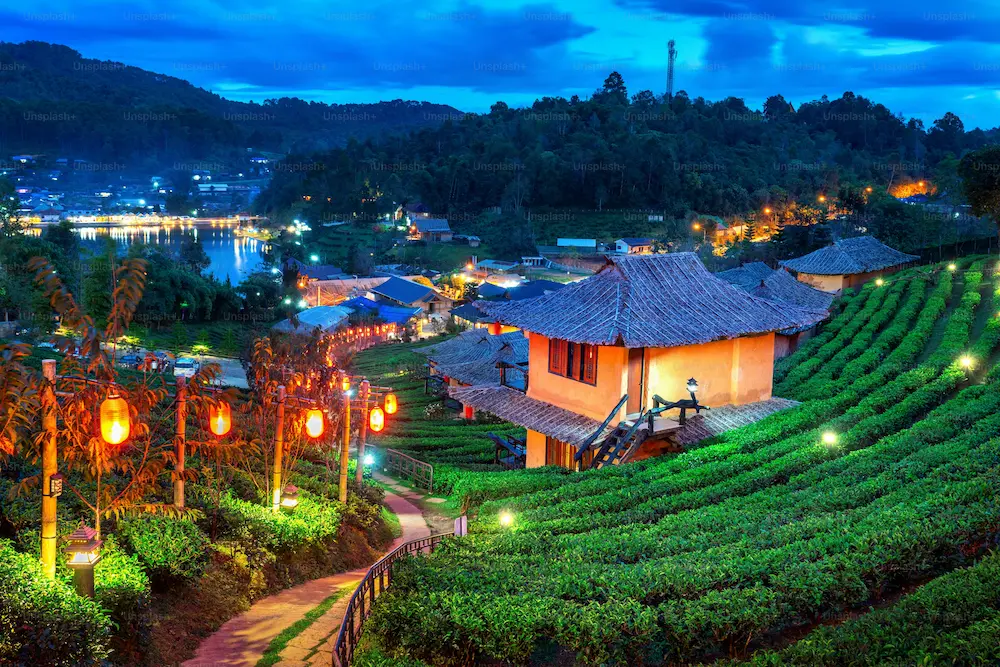
Nagaland is the state that consistently surprises people who visit it for the first time, because nothing quite prepares you for the combination of dramatic landscape, deeply intact tribal culture, genuine warmth toward visitors, and the Hornbill Festival — which is simply the best tribal cultural festival in India and worth building an entire Northeast trip around. The festival runs December 1 to 10 each year at Kisama Heritage Village, 12 kilometres from Kohima, and brings together all 16 of Nagaland's major tribes with dance, music, food, craft and traditional games. Over 50,000 visitors attend annually, and accommodation in Kohima fills up entirely — book three to four months ahead for the festival dates.
Kohima, the capital, sits on a ridge at 1,444 metres with good valley views and a War Cemetery that is one of the most moving memorials in India. The Battle of Kohima in 1944 was one of the decisive battles of the Second World War in Asia; the cemetery is maintained by the Commonwealth War Graves Commission, and the epitaph on the memorial stone — 'When You Go Home, Tell Them Of Us And Say, For Your Tomorrow, We Gave Our Today' — is the kind of thing you carry with you after a visit. Nagaland removed the Inner Line Permit requirement for most tourist zones in 2022, making it significantly more accessible than before.
Manipur, Mizoram and Tripura: Worth Knowing
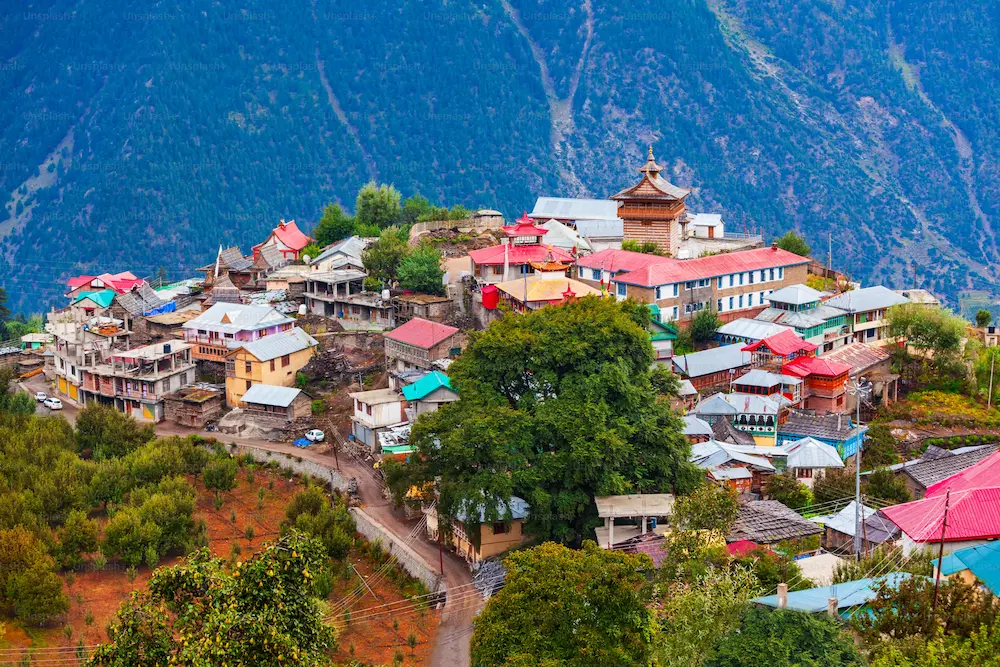
Manipur's Loktak Lake, at 287 square kilometres India's largest freshwater lake, is home to the world's only floating national park — Keibul Lamjao — and the last natural habitat of the endangered Sangai, the brow-antlered deer. It is worth the trip for the phumdis (floating islands of vegetation) and the birdlife alone, though current travel advisories for parts of Manipur need to be checked before booking — the internal situation has improved significantly in 2026 but monitoring the advisories remains sensible. Mizoram, though requiring an ILP, has seen the most dramatic growth of any NE state — tourist arrivals grew 139% to 5,24,000 in FY 2024–25 — and offers the Blue Mountain (Phawngpui), the highest peak in Mizoram at 2,157 metres, and the bamboo-covered Tam Dil Lake among its highlights. Tripura, the most accessible of the three (no permit, close to Kolkata and Bangladesh), is worth knowing for the Ujjayanta Palace in Agartala and the Unakoti rock carvings, a vast complex of 9th–10th century stone-carved faces on a jungle hillside that most people outside the state have never heard of.
The Destinations Worth Planning Your Trip Around
| Destination | State | What It Is and Why You Should Go |
|---|---|---|
|
Kaziranga National Park |
Assam |
UNESCO World Heritage Site. Home to 2,613 one-horned rhinoceroses — roughly 70% of the world's entire population. Also has wild buffalo, Bengal tigers, swamp deer, hoolock gibbons and over 480 bird species. Attracted 3,27,493 visitors in 2023–24 — highest ever. Jeep and elephant safaris Oct–Apr. Closes May–Sep (floods). |
|
Majuli River Island |
Assam |
World's largest freshwater river island at 350 sq km on the Brahmaputra. Home to 22 Vaishnavite satras (monasteries) that have preserved centuries-old traditions of music, dance and manuscript illumination. Ferry from Jorhat (20 km). Best Oct–Mar. |
|
Shillong |
Meghalaya |
Capital at 1,491m, often called the Scotland of the East. Well-paved, walkable, with the Don Bosco Museum (finest tribal culture museum in NE India), Ward's Lake, Umiam Lake, Elephant Falls and a live music scene unlike most Indian hill towns. Good starting base for all Meghalaya circuits. |
|
Cherrapunji & Nohkalikai Falls |
Meghalaya |
Cherrapunji (Sohra) holds multiple world rainfall records. Nohkalikai Falls at 340 metres is India's tallest plunge waterfall. Seven Sisters Falls visible from a single viewpoint. Living root bridges of Nongriat village below. Best visited Oct–May; Jul–Aug waterfalls are spectacular but trails difficult. |
|
Living Root Bridges — Nongriat |
Meghalaya |
Ancient bridges grown — not built — by guiding aerial roots of rubber fig trees across streams over 15–30 years. The double-decker root bridge at Nongriat, reached by 3,000 stone steps, is the most famous. On UNESCO World Heritage tentative list since 2023. Worth every step of the descent. |
|
Mawlynnong — Asia's Cleanest Village |
Meghalaya |
Awarded Asia's cleanest village in 2003, and the community has maintained it since with bamboo dustbins, swept paths and visible civic pride. Sky walk over the forest canopy, views into Bangladesh on clear days. 90 km from Shillong. Visit early morning for the best experience. |
|
Dawki — Umngot River |
Meghalaya |
The Umngot River is so clear that boats appear to float on glass — the photograph has been shared so widely that the spot has become crowded in peak season. Go early morning in October or November for the experience minus the crowd. |
|
Gangtok & surroundings |
Sikkim |
Well-organised capital at 1,650m — walkable MG Marg, Rumtek Monastery (major Kagyu Buddhist centre), Enchey Monastery, day trips to Tsomgo Lake (3,753m) and Nathula Pass (4,310m, Indians only). Good infrastructure, clear signage, friendly without being pushy. |
|
Gurudongmar Lake |
Sikkim |
One of the highest lakes in the world at 5,183m, sacred to both Buddhists and Sikhs. Full-day trip from Gangtok through North Sikkim. Special permit required through a registered operator. Extraordinary colour and scale at that altitude. |
|
Tawang Monastery |
Arunachal Pradesh |
Largest Buddhist monastery in India, second largest in the world. Founded 17th century. Around 700 monks. 8-metre golden Maitreya Buddha. Ancient manuscript library. Setting among snow peaks at 3,048m is one of the most spectacular in Asia. ILP mandatory for all Indian visitors. |
|
Ziro Valley |
Arunachal Pradesh |
Home of the Apatani tribal community and their centuries-old sustainable paddy-cum-fish farming system — a UNESCO tentative World Heritage Site. The Ziro Music Festival (October) is one of India's finest independent music events. Valley is green, quiet and very photogenic. |
|
Dzukou Valley |
Nagaland/Manipur |
High-altitude valley at 2,452m accessible by 4-hour trek from either side. Fills with wildflowers and Dzukou lilies in June–July, turns golden in October. Often called the Valley of Flowers of the Northeast. Overnight at the base camp is highly recommended. |
|
Kohima & Hornbill Festival |
Nagaland |
Kohima War Cemetery is one of the most moving memorials in India — site of the 1944 Battle of Kohima, maintained by the Commonwealth War Graves Commission. The Hornbill Festival, December 1–10 at Kisama Heritage Village, brings together all 16 Naga tribes with dance, music, food and craft. 50,000+ visitors annually. Book accommodation 3–4 months ahead. |
|
Loktak Lake & Keibul Lamjao |
Manipur |
India's largest freshwater lake at 287 sq km, famous for its phumdis (floating islands). Keibul Lamjao National Park — the world's only floating national park — is the last habitat of the endangered Sangai (brow-antlered deer). Check advisories before visiting Manipur. |
Table 2 — Must-See Destinations Across All Eight States
Permits: What You Need, State by State
The permit situation is simpler than its reputation, and the most important things to know are these: Arunachal Pradesh requires an Inner Line Permit for every Indian national — no exceptions, and it must be obtained before you reach the state border, online at arunachalilp.com or from ILP counters in Guwahati, Delhi or Kolkata. Mizoram also requires an ILP for Indian nationals. Some zones in Sikkim — Nathula Pass and North Sikkim — need a special group permit through a registered Sikkim operator. Everything else — Assam, Meghalaya, Nagaland (since 2022), Tripura and Manipur — needs only a valid photo ID for Indian nationals. Foreign nationals need a Protected Area Permit or Restricted Area Permit for most NE states; this must be arranged through a registered local tour operator and cannot be done independently.
| State | Permit for Indians | Permit for Foreigners | How to Get It |
|---|---|---|---|
|
Assam |
None |
None for most areas |
Just carry valid ID. |
|
Meghalaya |
None |
None for most areas |
No advance permit needed. |
|
Sikkim — main areas |
None for Gangtok, Pelling, Rumtek |
PAP required for restricted zones |
Sikkim permit at border checkposts (Rangpo, Melli) or online at sikkimtourism.gov.in |
|
Sikkim — Nathula / North Sikkim |
Special permit; Indians only at Nathula |
Foreigners not permitted at Nathula |
Through a registered Sikkim operator or Gangtok DM office. Min 2 persons for North Sikkim. |
|
Arunachal Pradesh |
ILP mandatory — no exceptions |
Restricted Area Permit (RAP) |
Apply online at arunachalilp.com or at ILP counters in Guwahati, Delhi, Kolkata. Get BEFORE you reach the state border. |
|
Nagaland |
Not required since 2022 |
Check specific zones |
Carry valid ID for most areas. |
|
Mizoram |
ILP mandatory |
RAP required |
MZP ILP counter at Silchar, Guwahati airports or at Vairengte border checkpost. |
|
Manipur |
Not required for most areas |
Check advisories |
Carry valid ID. Monitor advisories closely. |
|
Tripura |
None |
None for most areas |
No advance permit needed. |
Table 3 — Permit Reference: What You Need for Each State
Getting There: The Main Gateways
Guwahati is the entry point for most Northeast trips — the airport has direct flights from Delhi in two and a half hours, from Kolkata in one hour, and from Mumbai, Chennai and Hyderabad as well, on IndiGo, Air India, SpiceJet and Vistara. From Guwahati, the road network connects to every major NE destination. Bagdogra near Siliguri is the better gateway for Sikkim — Gangtok is 125 kilometres by road from Bagdogra, and the drive through the Teesta River valley is very good. Dimapur in Nagaland, Imphal in Manipur, Jorhat and Dibrugarh in upper Assam, Agartala in Tripura and the new Hollongi Airport near Itanagar in Arunachal Pradesh all have connections to Kolkata and increasingly to Delhi, making the region significantly more accessible than it was even five years ago.
| Gateway | State | How to Reach from Delhi | What It Connects To |
|---|---|---|---|
|
Guwahati |
Assam |
Direct flights (2.5 hrs) on IndiGo, Air India, SpiceJet, Vistara. Rajdhani Express from Delhi (37 hrs). Main gateway for all NE. |
Kaziranga (200 km), Majuli (305 km), Shillong (100 km), Tezpur, Dibrugarh. Entry point for most NE circuits. |
|
Bagdogra / Siliguri |
West Bengal |
Direct flights from Delhi, Mumbai, Kolkata. Then road or shared jeep. |
Gangtok (125 km), Darjeeling (75 km). Best gateway for Sikkim. |
|
Shillong |
Meghalaya |
2 hrs road from Guwahati. Umroi Airport has limited flights. Most visitors come by road from Guwahati. |
Cherrapunji (54 km), Mawlynnong (90 km), Dawki (82 km), living root bridges. |
|
Dibrugarh / Jorhat |
Upper Assam |
Flights from Delhi and Kolkata. Useful for Upper Assam and eastern Arunachal. |
Majuli by ferry (20 km), Dibru-Saikhowa, eastern Arunachal approach. |
|
Dimapur |
Nagaland |
Flights from Kolkata, Guwahati, Delhi. 74 km road to Kohima. |
Kohima (74 km), Kisama Heritage Village (Hornbill), all of Nagaland. |
|
Imphal |
Manipur |
Flights from Delhi, Kolkata, Guwahati. |
Loktak Lake (48 km), Keibul Lamjao, Moreh border. Check advisories. |
|
Agartala |
Tripura |
Flights from Kolkata (50 min), Guwahati. |
Ujjayanta Palace, Neermahal, Unakoti rock carvings. |
|
Aizawl (Lengpui Airport) |
Mizoram |
Flights from Kolkata and Guwahati to Lengpui, 32 km from Aizawl. |
Phawngpui (Blue Mountain), Tam Dil Lake, Champhai. |
Table 4 — Gateway Cities and What They Connect To
When to Go: The Season and Festival Calendar
October to April is the main window for Northeast travel, with October being the single best month across the widest range of states. Kaziranga opens in October, Sikkim is post-monsoon clear, Meghalaya's trails are passable, Nagaland is building toward the Hornbill Festival, and the Dzukou Valley is golden. December brings the Hornbill Festival, worth a dedicated trip. March and April are the rhododendron months in Sikkim, and they are extraordinary — over 40 species in bloom from valley to treeline. The monsoon from June to September brings Meghalaya to its most dramatic in terms of waterfalls but makes many trails impractical and closes Kaziranga entirely. Arunachal is worth building extra buffer days into at any season; the distances are long and the roads reward patience.
| Month | Weather | Festivals, Wildlife & What's Open |
|---|---|---|
|
Oct |
Cool, post-monsoon clear. Best month across most states. |
Kaziranga opens. Dzukou Valley golden. Ziro Music Festival (Arunachal). All main circuits operational. Best overall month for a first NE trip. |
|
Nov |
Cool to cold. Very clear. |
Kaziranga peak season. Hornbill Festival preparation (Nagaland). Brahmaputra river cruises good. Tawang accessible and clear. |
|
Dec |
Cold. Snow at higher altitudes. |
Hornbill Festival Dec 1–10 in Kohima — the best tribal cultural festival in India. Tawang in snow. Kaziranga peak wildlife season continues. |
|
Jan |
Cold and dry. |
Kaziranga peak season. Magh Bihu preparations in Assam. Tawang cold but accessible. Ziro Valley quiet and atmospheric. |
|
Feb |
Cold to mild. Early blooms. |
Cherry Blossom Festival in Shillong (Meghalaya). Early rhododendrons in Sikkim. Kaziranga still excellent. |
|
Mar–Apr |
Warm in valleys, snow still on high passes. |
Rhododendrons peak across Sikkim — some of the best in India. Meghalaya green. Kaziranga last weeks before monsoon closure. Wangala (Meghalaya) harvest festival. |
|
May |
Warm. Sikkim rhododendron season ending. |
Kaziranga closes end of April/early May. Living root bridges in full leaf. Losar (Sikkimese New Year). Good for Meghalaya and Sikkim. |
|
Jun–Sep |
Heavy monsoon. Especially Meghalaya. |
Kaziranga CLOSED (floods). Meghalaya waterfalls at their most spectacular but trails can be difficult. Dzukou Valley flowers (Jun–Jul). Majuli most dramatic. Not recommended for first-timers. |
Table 5 — Month-by-Month Season and Festival Calendar
Quick Reference: Everything in One Place
| What You Need to Know | The Answer |
|---|---|
|
Combined NE footfall FY 2024–25 |
Over 80 lakh (8 million). 20–25% further growth expected in 2025–26. |
|
Fastest growing NE state for tourism |
Sikkim — 105.3% rise to 5,89,500 visitors in FY 2024–25. |
|
Assam tourists FY 2024–25 |
52,41,600 — up 65% from previous year. Main entry state for all NE travel. |
|
Kaziranga one-horned rhino count |
2,613 (2022 census) — approximately 70% of the world's total population. |
|
Kaziranga visitors 2023–24 |
3,27,493 — highest since the park was established. |
|
World's wettest place |
Mawsynram, Meghalaya — 11,872 mm average annual rainfall. |
|
Living root bridges — status |
On UNESCO World Heritage tentative list since 2023. Nongriat double-decker bridge is the most famous. |
|
Tawang Monastery size |
Largest Buddhist monastery in India. Second largest in the world. Around 700 monks. Founded 17th century. |
|
Majuli River Island |
World's largest freshwater river island — 350 sq km on the Brahmaputra. |
|
ILP requirement summary |
Mandatory: Arunachal Pradesh and Mizoram (all Indians). Partial: some Sikkim zones. Not needed: Assam, Meghalaya, Nagaland, Tripura, Manipur. |
|
Main gateway airport |
Guwahati — direct flights from Delhi (2.5 hrs), Kolkata (1 hr). Starting point for most NE circuits. |
|
Sikkim gateway airport |
Bagdogra near Siliguri — then 125 km road to Gangtok. |
|
Hornbill Festival 2026 |
December 1–10. Kisama Heritage Village, 12 km from Kohima, Nagaland. Book accommodation 3–4 months ahead. |
|
Manipur advisory |
Consult current travel advisories. Imphal and Loktak Lake are main tourist zones; internal unrest in some 2023 areas is improving. Check before booking. |
|
Best first-time NE destination |
Meghalaya — no ILP, easy road from Guwahati, living root bridges, cleanest village in Asia, waterfalls, good cafés in Shillong. |
|
Best 10–12 day circuit (no ILP hassle) |
Guwahati → Kaziranga → Shillong → Cherrapunji → Mawlynnong → Dawki → Gangtok → Tsomgo Lake → Bagdogra. Covers Assam, Meghalaya and Sikkim. |
|
Ethnic groups in NE India |
Over 220 distinct groups with different languages, traditions and cuisines. |
|
Airports in NE (2024) |
19 operational — up from just 6 in 2014. |
Table 6 — North East India Master Reference 2026
Before You Book
The Northeast is experiencing a genuine tourism boom — 80 lakh visitors in FY 2024–25, close to double in several states from the year before, and projections of a further 20–25% growth in 2025–26. Yet it is still, in most of its corners, a destination where you can walk for a full day without seeing another tourist, where the culture is intact and the communities are genuinely engaged rather than performing for cameras, and where the range of what is available — wildlife safaris at Kaziranga, living root bridges in Meghalaya, Buddhist monasteries in Tawang, tribal festivals in Kohima, rhododendron forests in Sikkim — is as wide and as varied as anywhere in India.
The best first circuit for someone who has not been before is Guwahati to Kaziranga to Shillong to Cherrapunji to Mawlynnong to Gangtok to Tsomgo Lake and out through Bagdogra — covering Assam, Meghalaya and Sikkim in ten to twelve days with no ILP complications. Go in October or November. Build two buffer days in. And if you are going to Meghalaya specifically, stay in Cherrapunji or Nongriat for at least two nights rather than treating it as a day trip from Shillong — the living root bridges and the falls are worth the time, and the place opens up when you stop hopping.
The Northeast has been waiting for the rest of India to notice it for a long time. The rest of India is finally beginning to. The permit process is simpler than it sounds, the flights are better than they were, and the landscapes are as good as anything the country has to offer. It is worth going before the crowd catches up fully.