
Published On - Jun 24, 2026
Updated On - Aug 14, 2026
20 min
Tirthan Valley Complete Guide
Discover Tirthan Valley in Himachal Pradesh with this complete 2026 travel guide. Explore attractions, things to do, best time to visit, stays, weather, trout fishing, trekking, and travel tips.
There are valleys in Himachal Pradesh where the tourism industry has arrived fully formed — the cafés, the adventure operators, the Instagram viewpoints with queue management systems. And then there is Tirthan. The river is cold and clear enough to see the trout from the bank. The forests run up the hillsides without a break. The Great Himalayan National Park begins where the road ends. This is the guide to going properly.
A valley built around one river and one extraordinary park
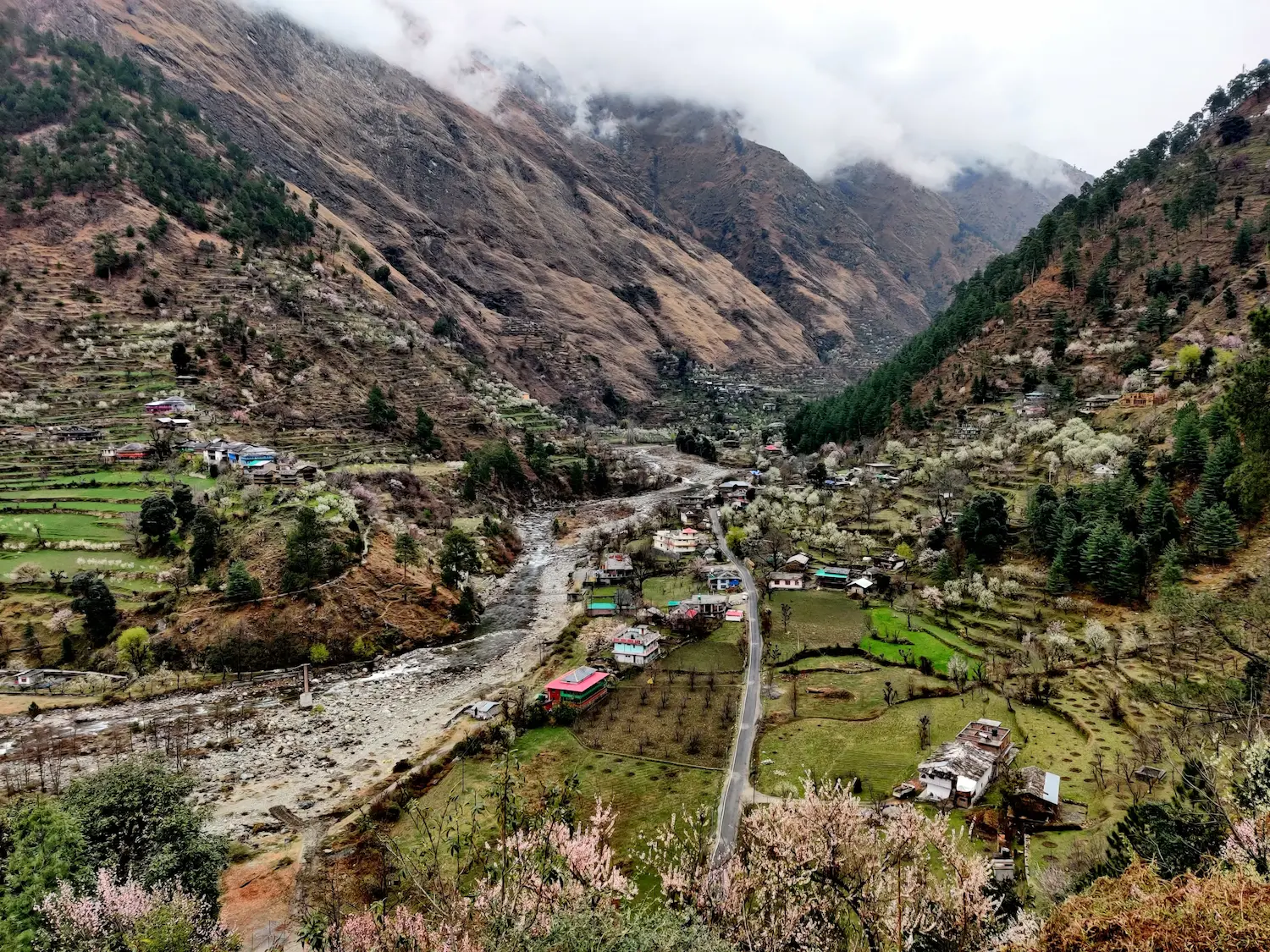
Start with a geography lesson, because understanding what Tirthan Valley is depends on understanding what it is the gateway to. The Tirthan River — from which the valley takes its name — originates inside the Great Himalayan National Park high in the Himalayan ranges and flows westward through a progressively widening valley before joining the Beas River at Larji. The river gives the valley its entire character: clear, cold, boulder-strewn, full of wild brown trout, and flanked by forests of blue pine, oak and deodar that have been left largely intact because the national park above them has made large-scale development impossible.
Tirthan Valley lies in the Kullu district of Himachal Pradesh, approximately 65 kilometres south of Manali and 511 kilometres from Delhi via Chandigarh, Mandi and Aut. The main villages — Gushaini, Banjar, Ropa, Shoja and the increasingly popular Jibhi — are strung along the valley floor and the lower hillsides at an altitude of approximately 1,600 metres. Above them, the Great Himalayan National Park rises to peaks above 6,000 metres. The GHNP covers 754.4 square kilometres and encompasses four river valley systems — Tirthan, Sainj, Jiwa Nal and Parvati — each with its own character and its own trail network. Added to the UNESCO World Heritage list in 2014, the GHNP is home to over 375 species of fauna including the snow leopard, Himalayan brown bear, musk deer, Western Tragopan, Himalayan monal, and more than 200 bird species. It is, by any reasonable measure, one of the finest protected natural areas in Asia. Most Indian travellers have never heard of it.
What Tirthan Valley is — and this is what most guides fail to state clearly enough — is a destination built on three things. First, GHNP access: the valley is the primary western gateway to one of India's most biodiverse UNESCO sites. Second, trout fishing: the Tirthan River is one of India's finest wild trout streams, with a 45-kilometre permitted stretch that the state fisheries department stocks and manages. Third, silence. Unlike Manali 80 kilometres north or Kasol 60 kilometres west, Tirthan never developed a tourist strip. There is no Mall Road. No ATM cluster. No nightlife. The road ends and you have to walk to most interesting places. For travellers who know what they are looking for, this is entirely the point.
| Detail | Information |
|---|---|
|
Location |
Kullu district, Himachal Pradesh. ~65 km south of Manali, ~511 km from Delhi. |
|
Altitude |
~1,600 metres (Gushaini/valley floor). GHNP peaks above 6,000 metres. |
|
Tirthan River |
Originates in GHNP. Wild brown trout. 45 km permitted fishing stretch. Cold, clear, boulder-strewn. |
|
Great Himalayan National Park |
754.4 sq km. UNESCO World Heritage Site (2014). 375+ fauna species including snow leopard. |
|
Main Villages |
Gushaini (main hub), Banjar, Ropa, Shoja, Jibhi. Nagini, Bandal and Phalachan above valley floor. |
|
Jalori Pass |
3,120 metres. 45 min from Gushaini via Banjar and Shoja. Accessible by road. Serolsar Lake trek from summit. |
|
Nearest Airport |
Bhuntar (Kullu-Manali Airport) — 50 km. Taxi ₹1,200–₹1,800 to Gushaini. |
|
Nearest Railway |
Jogindernagar narrow-gauge or Chandigarh/Kalka. Taxi from Aut Junction (on NH-3) is most practical. |
|
From Aut Junction |
~18 km / 45 min by road. Taxi ₹800–₹1,200 from Aut to Gushaini. |
|
ATM |
Banjar (7 km from Gushaini). No ATM in Gushaini or deeper valley. Carry cash. |
|
Mobile Signal |
Jio and Airtel work in Gushaini and Banjar. Patchy beyond. No signal in GHNP core zone. |
|
GHNP Permit |
Ecozone (day hike to boundary): Free, no guide. Core zone trek: ₹100/day Indian / ₹400/day foreign + certified guide mandatory. |
|
Fishing Permit |
₹300 per rod per day. Season: 1 March to 31 October. Arranged via homestay or Fisheries Dept, Gushaini. |
Tirthan Valley — Essential Facts
TIRTHAN VALLEY IS LIKE BEING GIVEN THE FINEST PIECE OF DARK CHOCOLATE AND TOLD THERE IS NO RUSH AND NOBODY ELSE IS WAITING. THE RIVER RUNS COLD AND CLEAR OVER SMOOTH BOULDERS, THE FORESTS CLOSE IN ABOVE YOU, AND THE GREAT HIMALAYAN NATIONAL PARK BEGINS WHERE THE LAST ROAD ENDS. THERE IS NO HURRYING THIS. THAT IS, IN FACT, THE WHOLE IDEA.
Getting there — and why the road matters
The standard approach from Delhi is 511 kilometres via Chandigarh, Mandi and Aut — the junction town on National Highway 3 where a smaller road branches off into the Tirthan Valley. The drive takes 10 to 12 hours depending on traffic through Chandigarh and the Mandi bypass. The fastest option from Delhi is the overnight HRTC or HPTDC Volvo bus from ISBT Kashmere Gate — departures between 5:30pm and 7:30pm, fare ₹1,300 to ₹1,800, arriving at Aut by around 6am. From Aut, a local bus to Banjar costs ₹40 to ₹50; a taxi direct to Gushaini costs ₹800 to ₹1,200.
There is a second, more scenic approach via the Jalori Pass road from the Shimla side — connecting Rampur and Narkanda to Shoja and descending into the valley from above. This route is open from approximately April to November and is significantly more dramatic than the Aut approach: you arrive at the top of the valley with the whole landscape below you rather than driving in from the floor. In winter, when Jalori Pass closes under snow, this route is not available and the Aut approach is the only option. Flying into Bhuntar (Kullu-Manali Airport) and continuing by taxi covers 50 kilometres to Gushaini in approximately 90 minutes.
One honest note about the road that most guides mention and most travellers underestimate: the 18-kilometre stretch from Aut to Gushaini is narrow, winding, and in parts spectacular — a single-lane mountain road with occasional oncoming traffic and a river canyon below. It is entirely manageable but requires patience, particularly during peak season when the road sees more traffic than it was designed for. Go slowly. The valley at the other end is worth every careful kilometre.
| Route | Distance | Duration | Details | Best For |
|---|---|---|---|---|
|
Delhi → Chandigarh → Mandi → Aut → Gushaini (drive) |
~511 km |
10–12 hrs |
NH-3 to Aut, then 18 km valley road. Early morning start recommended. |
Self-drive; flexibility |
|
Delhi → Aut by overnight Volvo bus, taxi to Gushaini |
511 km total |
Bus 10–11 hrs + 45 min taxi |
HRTC/HPTDC Volvo from ISBT Kashmere Gate 5:30–7:30pm. Aut arrival ~6am. Taxi ₹800–₹1,200. |
Budget travellers; solo travellers |
|
Delhi → Bhuntar by flight, taxi to Gushaini |
50 km from airport |
Flight + 90 min taxi |
Flights to Bhuntar (Kullu-Manali Airport) from Delhi daily. Taxi ₹1,200–₹1,800. |
Premium visitors; time-constrained |
|
Shimla → Narkanda → Jalori Pass → Shoja → Gushaini |
~195 km from Shimla |
5–6 hrs |
Open April–November only. Pass at 3,120m. More scenic arrival — top-of-valley approach. |
Road trippers; Shimla circuit |
|
Manali → Kullu → Aut → Gushaini |
~100 km from Manali |
3–3.5 hrs |
Well-maintained NH-3 to Aut. Good option for combining with Manali circuit. |
Combining with Manali trip |
Getting to Tirthan Valley — All Routes
Things to do in Tirthan Valley...
Trek into the Great Himalayan National Park — properly. The GHNP has two entry zones with completely different access rules, and most visitors only discover this on arrival. The ecozone — the buffer area around Gushaini that covers the first section of forest trails — is free, requires no guide, and is accessible to anyone who wants to walk. The Rolla trek from Gushaini to the GHNP park gate is 8 kilometres one way — a genuine half-day walk through dense forest with extraordinary birdwatching, particularly for the Western Tragopan and Himalayan monal. For the core zone — the pristine wilderness beyond the park gate that leads to high-altitude meadows (thaches), glacial streams and views of peaks above 5,000 metres — you need a permit (₹100 per day for Indian nationals, ₹400 for foreigners) and a certified GHNP guide, which can be arranged through the Sai Ropa forest office or through a good homestay. A tailormade Tirthan National Park trek package for a three to five day core zone expedition, organised through a registered local operator, is the most rewarding and sustainable way to experience this part of the park.
Fish the Tirthan River — on a proper permit, with catch and release. The Tirthan River is one of the finest wild trout streams in the Indian Himalaya — 45 kilometres of crystal-clear water over smooth boulders, stocked and managed by the Himachal Pradesh Fisheries Department, full of wild and stocked brown trout that rise for flies in the evening with satisfying predictability. The fishing season runs from 1 March to 31 October. A permit costs ₹300 per rod per day and can be arranged by your homestay owner over breakfast — this is genuinely how it works, and it is one of the more civilised experiences available in Indian adventure tourism. Catch and release is strongly encouraged and increasingly enforced. A tirthan valley private trout fishing tour organised with a local guide who knows the best pools, the right morning light and the current hatch is an experience that most fishing guides in India cannot match at any price.
Drive or ride to Jalori Pass and walk to Serolsar Lake. Jalori Pass at 3,120 metres is the most accessible high-altitude pass in Himachal Pradesh — a 45-minute drive from Gushaini via Banjar and Shoja, reachable by car or motorcycle without special equipment. The views from the summit across the Himalayan foothills are extraordinary on a clear day. The Serolsar Lake trek from the summit is a three-kilometre walk through dense silver fir and rhododendron forest to a sacred lake at altitude, surrounded by forest and visited by almost no one outside the summer season. The forest on the approach to Serolsar is among the finest high-altitude oak-rhododendron forest in Himachal. Bring a lens for birds — the laughing thrush species that inhabit this elevation are easily seen here.
Walk the village trails above the valley floor. The villages above Gushaini — Nagini, Bandal, Ropa, Phalachan — have traditional Himachali stone-and-wood houses, apple and walnut orchards, and terraced fields that have been cultivated on the same slope for generations. Walking between these villages on the ancient footpaths (rather than the road) gives an experience of how this part of Himachal has been lived for centuries. The carved wooden architecture of the older houses — some with generations of weather carved into their faces — is a form of vernacular beauty that urban India is rapidly losing. Walk quietly. Speak warmly when you meet people. Accept apples in autumn when they are offered.
Stay by the river and do absolutely nothing for a day. This sounds like a throwaway point but it is genuinely the highest-value activity in Tirthan Valley. The riverside situation of the better homestays and cottages — the Tirthan flowing a few metres below the deck, the forest closing in on both banks, the sound of the water constant and enormously calming — is the reason people come back to Tirthan Valley repeatedly. The best homestays in Tirthan Valley for couples seeking a getaway are the riverside properties at Gushaini and Ropa: private enough for genuine seclusion, beautiful enough to make you resent having to leave. Sit on the deck with a book and a cup of Himachali apple juice and do nothing at all. The national park and the pass and the river will all still be there tomorrow.
Watch birds at dawn along the riverbank. With over 200 recorded bird species in the GHNP and surrounding forests, Tirthan Valley is one of the finest birdwatching locations in the Indian Himalaya — and one of the least known outside specialist circles. The Western Tragopan, the state bird of Himachal Pradesh and listed as Vulnerable by the IUCN, is resident in the GHNP forests. The Himalayan monal, arguably the most spectacular pheasant species in the world, is regularly seen on the ecozone trails. Walking slowly along the riverbank at dawn with a pair of binoculars, before the valley wakes up and the occasional vehicle traffic begins, is an act of quiet patience that the valley rewards generously.
Visit Jibhi and the ancient fort. Jibhi, a short drive east of Gushaini, has become Tirthan Valley's most talked-about small village in the past two years — a cluster of traditional wooden houses, a small waterfall, a handful of riverside cafés, and an ancient circular fort (Jibhi Fort) that most visitors walk past without stopping to look at properly. The fort is small and atmospheric, built in the traditional Himachali style with heavy wooden beams and stone walls, and it deserves more than a glance from a moving vehicle. Jibhi has also become something of a compact alternative to Kasol for younger travellers seeking beauty without the crowd — quieter, greener, and noticeably more relaxed.
| Trek | Start Point | Duration | Max Altitude | Difficulty | Permit / Guide Required |
|---|---|---|---|---|---|
|
Rolla Day Trek (ecozone) |
Gushaini |
Half day (8 km one way) |
~2,100m |
Easy–Moderate |
No permit. No guide. Free. |
|
Rolla to Shilt Thach (core zone) |
Gushaini / Sai Ropa |
2–3 days |
~3,600m |
Moderate |
Core zone permit ₹100/day (Indian). Certified guide mandatory. |
|
Tirthan Valley to Pundrik Lake |
Sai Ropa / Gushaini |
3–4 days |
~4,300m |
Moderate–Hard |
Core zone permit + certified guide. Stunning high-altitude lake. |
|
Tirath Trek (full traverse) |
Sai Ropa |
7–10 days |
~4,800m+ |
Hard |
Core zone permit + guide. Multi-day expedition to Tirthan River origin. |
|
Sainj Valley to Tirthan Cross-Trek |
Ropa (Tirthan side) |
5–9 days |
~4,500m |
Hard |
Permit both zones + guide. Crosses high ridge between two UNESCO valleys. |
|
Jalori Pass to Serolsar Lake |
Jalori Pass summit (3,120m) |
Half day (6 km return) |
~3,200m |
Easy |
No permit needed. No guide required. Accessible by road. |
Trek Options — Great Himalayan National Park (Tirthan Entry)
THE WESTERN TRAGOPAN IS ONE OF THE RAREST PHEASANTS IN THE WORLD — AND IT LIVES IN THE FOREST ABOVE GUSHAINI, IN THE CORE ZONE OF ONE OF INDIA'S MOST BIODIVERSE UNESCO PARKS. WALKING QUIETLY THROUGH THAT FOREST AT DAWN, IN THE COLD, BEFORE THE VALLEY WAKES UP, IS THE KIND OF THING THAT MAKES EVERY OTHER WILDLIFE EXPERIENCE FEEL SLIGHTLY LESS EXTRAORDINARY BY COMPARISON.
Things not to do in Tirthan Valley...
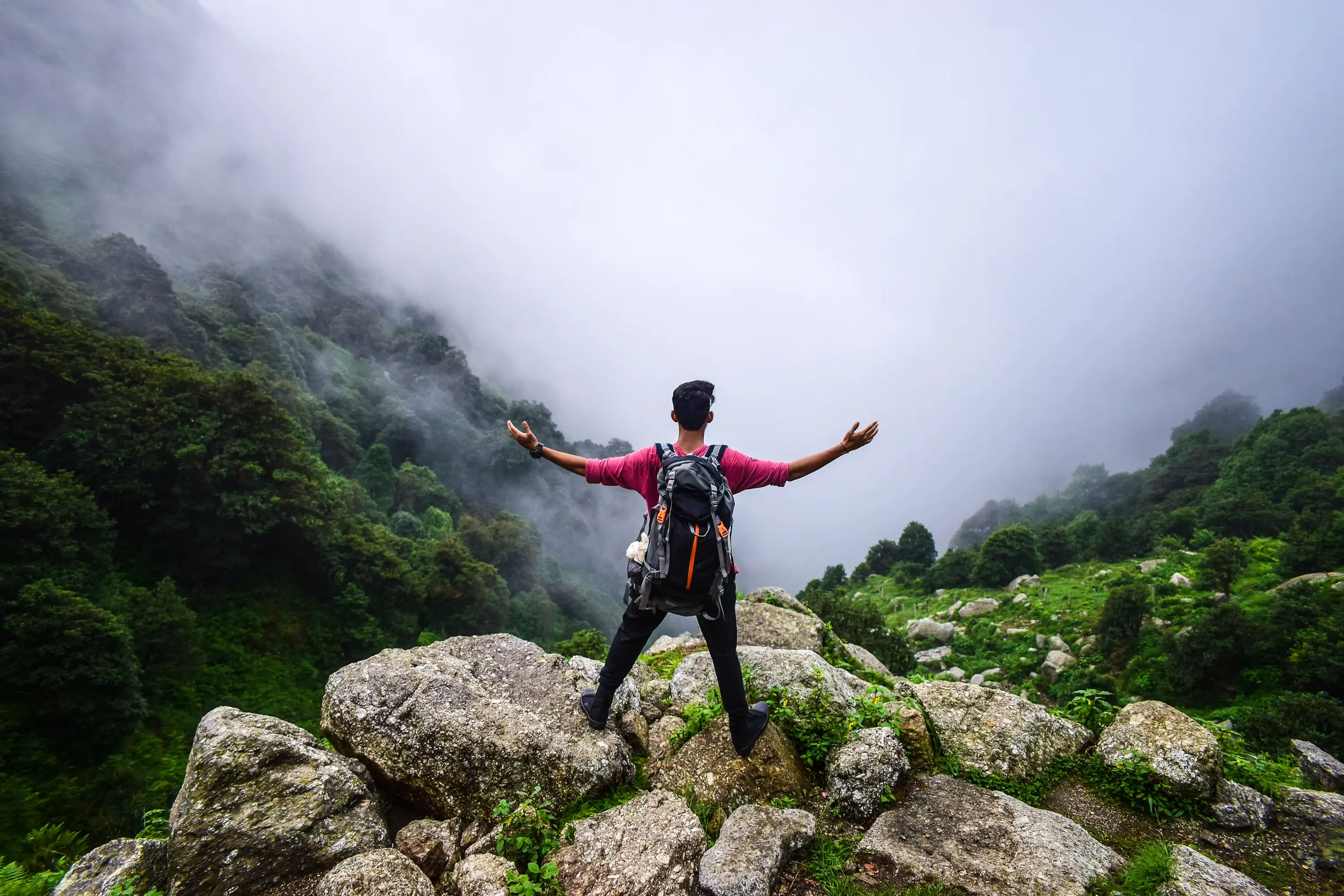
Do not try to trek into the GHNP core zone without a permit and certified guide. The ecozone day hike to the park boundary is free and open to anyone. The core zone — the wilderness beyond the park gate that leads to the high meadows and the pristine Himalayan interior — requires a permit (₹100 per day for Indian nationals at the Sai Ropa forest office) and a certified GHNP guide. This is not bureaucratic paperwork to be navigated around — it is a conservation measure that has genuinely protected one of India's finest national parks from the trajectory of overcrowding and degradation that has affected more accessible parks. Hire the guide. Buy the permit. The core zone with a knowledgeable local guide is a categorically different and better experience than wandering independently.
Do not treat Tirthan as a one-night stop on the Manali highway. Tirthan Valley is three hours from Manali, which makes it tempting to visit for a single night as a detour on a Kullu-Manali circuit. This is a mistake. One night in Gushaini gives you the drive in, dinner, and the drive out the next morning — approximately three hours of the valley at its best and an incomplete experience that will make you want to come back without the satisfaction of having properly arrived. The minimum meaningful stay is three nights: one for acclimatisation and river time, one for a GHNP ecozone trek or village walk, one for Jalori Pass or a full fishing day. Five nights is the honest recommendation for anyone who wants to come back without a sense of having rushed it.
Do not go without cash. The nearest ATM to Gushaini is in Banjar, 7 kilometres away. Most homestays and local operators in the deeper valley accept cash only. UPI works at some properties but connectivity is unreliable enough that you should not depend on it. Carry sufficient cash from Chandigarh, Mandi, or the Bhuntar airport before entering the valley — budget accommodation from ₹800 to ₹2,500 per night, meals ₹300 to ₹500 per head, fishing permit ₹300 per rod per day, GHNP core permit ₹100 per day, and a reasonable reserve for any guide, taxi, or unexpected extra night.
Do not visit the GHNP during prohibited seasons or disturb wildlife. The GHNP core zone is closed from 1 November to 1 May annually for wildlife protection — this is the period when many species are most vulnerable and when the park's interior is most difficult to navigate safely. The ecozone day hike remains accessible year-round. Inside the park at any time, maintain strict silence on approach to wildlife, do not deviate from marked trails, do not attempt to photograph wildlife from within 30 metres, and carry out all waste. The park's extraordinary biodiversity — the reason it earned UNESCO designation — is the direct result of these protections being maintained for decades. Every visitor who respects them is contributing to something genuinely worth protecting.
Do not book accommodation without checking its actual position on the river. The single most critical variable in the Tirthan Valley accommodation experience is not the price, the amenities, or the star rating — it is the distance from the river. A riverside cottage with the Tirthan running five metres below the deck is a fundamentally different experience from a guesthouse on the main road 500 metres back. When booking, ask explicitly: Is this a riverside property? How many metres from the water? Is there a deck or seating area above the river? The best homestays in Tirthan Valley for a couples getaway are the riverside properties at Gushaini and Ropa with direct water access — book these, and book them early for peak April-June and October-November season.
Do not bring single-use plastic into the GHNP or the valley. Tirthan Valley and the GHNP are among the cleaner Himalayan destinations in Himachal Pradesh — precisely because the limited road access and the national park status have slowed the kind of tourist-driven plastic accumulation visible in more developed valleys. A LifeStraw self-filtering bottle means you carry one bottle and fill from any cold mountain stream or tap. Carry a dry bag for all your waste. The valley's cleanliness is its most valuable tourism asset and it is maintained by the collective choices of everyone who visits.
| Month | Conditions | River | GHNP | Crowds | Verdict |
|---|---|---|---|---|---|
|
January–February |
Cold. Snow at Jalori Pass and Shoja. Valley floor light snow. |
Low, cold. Fishing closed (season opens 1 March). |
Ecozone accessible. Core zone closed (1 Nov–1 May). |
Very low |
For snow seekers and complete solitude. Cold but atmospheric. |
|
March |
Warming up. Rhododendrons beginning to bloom. Fishing season opens 1 March. |
Fishing season opens. Clear water, good trout activity. |
Ecozone open. Core zone opens 1 May. |
Low |
Excellent — fresh season opener. First fishing. Few visitors. |
|
April–May |
Green and lush. Wildflowers. Warm days, cool nights. |
Snowmelt raises river. Spectacular flow. Good fishing. |
Core zone opens 1 May. Trails excellent. |
Moderate |
Outstanding — best months overall. Full green, all activities. |
|
June–July |
Warm. Pre-monsoon clarity early June. Some rain July onward. |
High from monsoon. Fishing excellent early June. |
Trails accessible. Wildlife active. |
Moderate–High |
Very good. Jalori Pass road excellent. Book in advance. |
|
August |
Monsoon. Some leeches on lower trails. Forest at its most lush. |
High and fast. Fishing possible but challenging. |
Core zone open but trails slippery. |
Low–Moderate |
Good for forest atmosphere. Fewer visitors. Bring rain gear. |
|
September–October |
Post-monsoon clarity. Cool. Autumn colours. Apple harvest. |
Perfect fishing conditions. Clear water, active trout. |
Core zone excellent. Best wildlife activity. |
Moderate |
Outstanding — finest photography month. Trout fishing peak. |
|
November |
Core zone closes 1 Nov. Jalori Pass road closing late November. |
Fishing season ends 31 October. |
Core zone closed from 1 November. |
Low |
Last window. Beautiful colours. Check Jalori Pass road status. |
|
December |
Cold. Jalori Pass closed. Valley accessible but limited activities. |
River at lowest. Fishing closed. |
Core zone closed. |
Very low |
Peaceful winter retreat. Snow at higher elevations. |
Season Guide — Best Time to Visit Tirthan Valley
Where to stay — and why the riverside matters
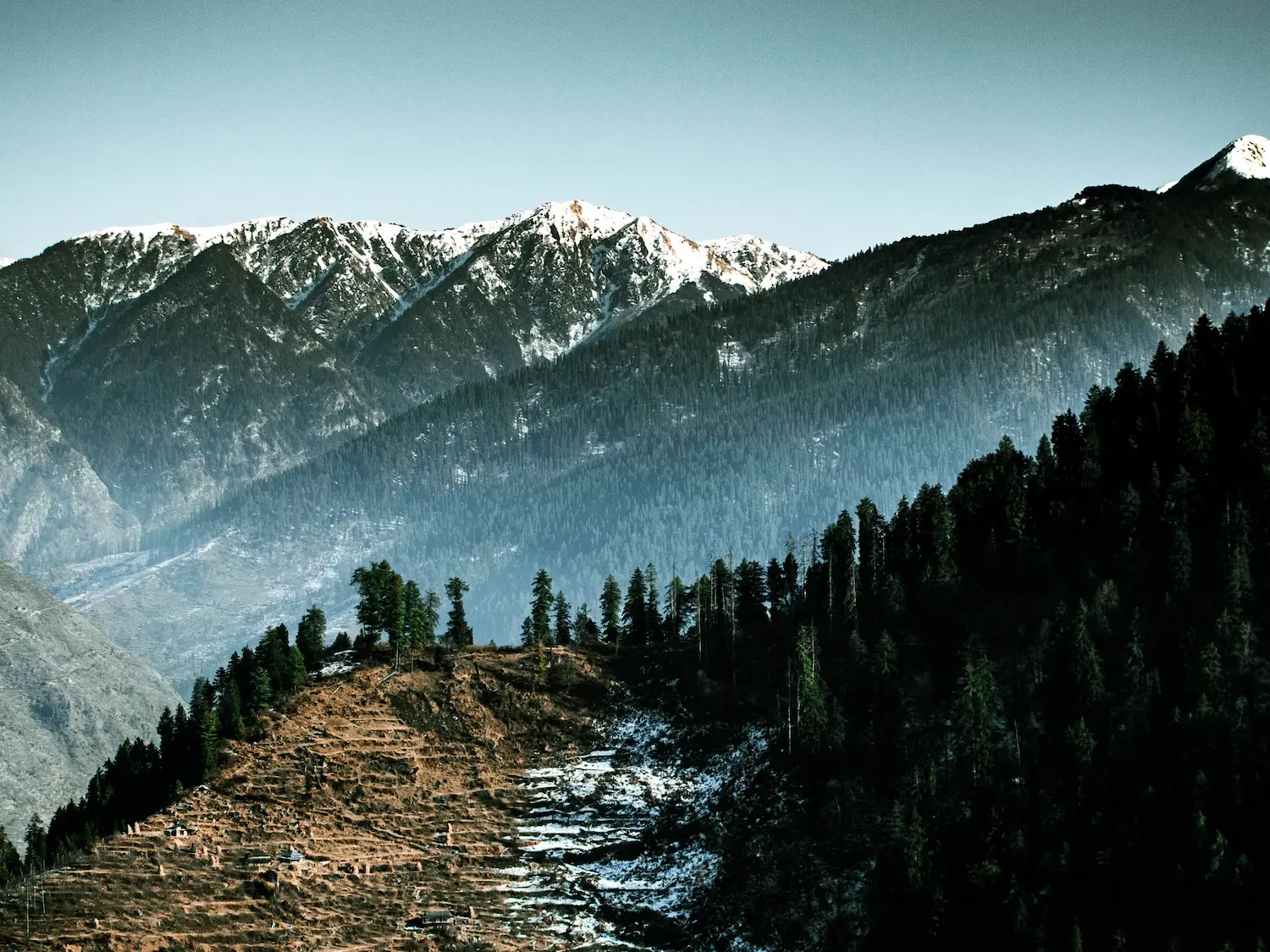
Tirthan Valley has approximately 200 guesthouses, homestays and cottages — which sounds like an abundance until you realise that only a fraction of them are actually on the river. The rest are on the road, on the hillside, or in the village centres — perfectly adequate for a night's sleep but missing entirely what makes Tirthan different from any other Himachali valley. The riverside properties have the Tirthan running metres below the deck. The sound of that river, through the night and into the morning, is the soundtrack that people come back for.
The best homestays in Tirthan Valley for a couples getaway concentrate in Gushaini and Ropa — private riverside cottages with the forest on three sides, the river below, and enough distance from the main road to feel genuinely secluded without being inaccessibly remote. The Himalayan Trout House, run by a local family with deep roots in the valley, is consistently cited by independent travellers as one of the best value riverside properties. ROKPA Tirthan Valley offers boutique cottage-style accommodation with sustainable design sensibilities and direct river access. Raju Bharti Guest House in Gushaini, the pioneer of Tirthan Valley hospitality and the first guesthouse in the valley, is still the first recommendation for many repeat visitors for its warmth, food and knowledge of the area.
| Property | Location | Type | Price / Night | Notes |
|---|---|---|---|---|
|
Raju Bharti Guest House |
Gushaini |
Pioneer homestay |
₹1,200–₹2,500 |
First guesthouse in the valley. Runs on local knowledge and genuine warmth. Home-cooked Himachali food. River access. Book ahead in peak season. |
|
Himalayan Trout House |
Gushaini / Ropa |
Family-run riverside cottage |
₹2,500–₹5,000 |
Directly on the river. Excellent trout fishing access. Family who genuinely loves the valley. One of the best bases for fishing permit and GHNP trek arrangements. |
|
ROKPA Tirthan Valley |
Gushaini |
Boutique eco-cottage |
₹3,500–₹7,000 |
Sustainable design. Direct river access. Thoughtfully run. Good option for the custom Tirthan Valley luxury itinerary visitor who wants quality without a resort feeling. |
|
Sunshine Himalayan Cottages |
Gushaini |
Riverside cottage |
₹2,500–₹6,000 |
Well-reviewed for location and staff warmth. River-facing deck. Good base for GHNP and fishing. |
|
Tirthan Riverside Cottages |
Ropa / Banjar area |
Small group of riverside cottages |
₹2,000–₹4,500 |
Quieter than Gushaini hub. More secluded feel. Good for longer stays. |
|
Village Homestays (Nagini, Bandal, Phalachan) |
Upper villages |
Traditional family homestay |
₹800–₹1,800 |
Home-cooked meals, carved wooden houses, apple orchards. More immersive cultural experience. Limited amenities. Perfect for village trail walkers. |
|
Shoja Guesthouses |
Shoja / near Jalori Pass |
Various small guesthouses |
₹800–₹2,000 |
Base for Jalori Pass and Serolsar Lake. Cool even in summer. Snow in winter. Road from Shimla side. |
Where to Stay — Tirthan Valley Accommodation
THE BEST HOMESTAYS IN TIRTHAN VALLEY FOR A COUPLES GETAWAY ARE THE ONES WHERE THE RIVER IS CLOSER THAN THE ROAD. WHERE THE DECK LOOKS OVER THE WATER AND THE FOREST CLOSES IN ON BOTH SIDES AND THERE IS GENUINELY NO REASON TO LEAVE UNTIL YOU ARE READY TO. TIRTHAN DOES NOT HURRY ANYONE. THAT IS, IN THE END, ITS GREATEST GIFT.
Wildlife and birdwatching — the GHNP's extraordinary biodiversity
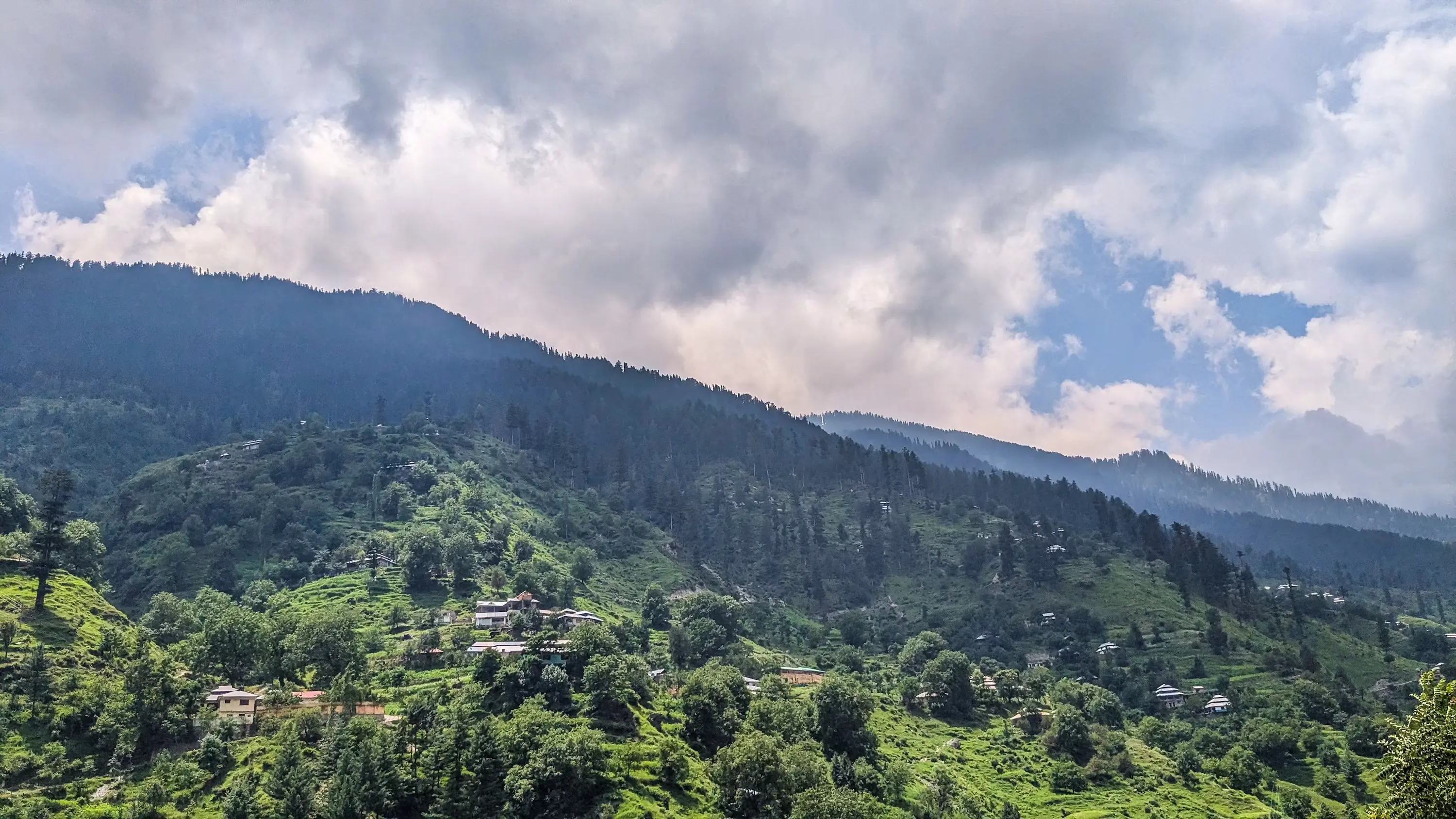
The Great Himalayan National Park exists because this stretch of the western Himalaya contains one of the most intact temperate ecosystems left in India. 375 species of fauna, over 200 species of birds, and a vertical range from 1,500 to 6,000 metres that creates microhabitats from subtropical riverine forest at the valley floor to alpine meadows and permanent snowfields at the peaks. The result is a concentration of Himalayan biodiversity that no other accessible national park in India can match.
| Species | Type | Status | Best Zone | Best Season |
|---|---|---|---|---|
|
Western Tragopan |
Bird — state bird of Himachal Pradesh |
Vulnerable (IUCN) |
Core zone dense forest, 2,400–3,600m |
April–June (breeding display) |
|
Himalayan Monal |
Bird — national bird of Nepal |
Least Concern (but declining) |
Upper forest and treeline |
Year-round (most visible March–June) |
|
Snow Leopard |
Large cat |
Vulnerable (IUCN) |
High ridges and rocky slopes above 3,500m |
Winter (Nov–March, comes lower following prey) |
|
Himalayan Brown Bear |
Large mammal |
Vulnerable (IUCN) |
Core zone; high meadows (thaches) |
May–October |
|
Musk Deer |
Deer — source of natural musk |
Endangered (IUCN) |
Dense forest, 3,000–4,000m |
Year-round; most active at dawn |
|
Blue Sheep (Bharal) |
Wild ungulate |
Least Concern |
Rocky slopes near treeline |
Year-round |
|
Himalayan Tahr |
Wild ungulate |
Near Threatened |
Steep rocky slopes |
Year-round; groups in winter |
|
Koklass Pheasant |
Bird |
Least Concern |
Mixed forest, 1,800–3,600m |
Year-round |
|
White-capped Redstart |
River bird |
Least Concern |
Tirthan River banks |
Year-round — easily spotted |
Wildlife and Birds — Great Himalayan National Park
Travelling responsibly in Tirthan Valley...
Tirthan Valley's most valuable quality — the intact forest, the clean river, the functional ecosystem — is also its most fragile. The GHNP's UNESCO designation exists because of decades of protection by the Himachal Pradesh Forest Department and the local communities who chose conservation over commercial development. Every visitor who comes here benefits from that choice, and every visitor has a responsibility to honour it.
Fish only with a permit, and practice catch and release. The trout population of the Tirthan River is managed by the state fisheries department and is genuinely healthy by the standards of Indian rivers — healthy because the regulations are followed and because the homestay owners and local fishing community have developed a culture of stewardship over the water they depend on. A ₹300 fishing permit is not a bureaucratic inconvenience. It is the funding mechanism for the management that makes the fishing worth having.
Stay in family-run homestays rather than larger commercial operations. The local families of Gushaini, Ropa and Banjar built the tourism economy of Tirthan Valley from nothing — the first homestay opened in the 1990s, run by the Bharti family, and the valley's reputation as a genuine nature escape was built by families who offered their homes and their knowledge before any operator from outside the valley arrived. Spend your money with them.
Carry nothing in single-use plastic and carry all waste out of the GHNP. The core zone of the park has no waste management infrastructure. Everything you carry in must come out. A LifeStraw bottle, a dry bag for waste, and the understanding that the forest you are walking through has been pristine for centuries longer than plastic has existed — these are the minimum requirements of a responsible visit.
Before you go...
No special permit is required to visit Tirthan Valley itself. For the GHNP core zone trek, permits are obtained at the Sai Ropa forest office, 3 kilometres from Gushaini on the main road — open 9am to 5pm on weekdays. A certified GHNP guide is mandatory for all core zone treks and can be arranged at the office or through your homestay. Fishing permits are arranged through your homestay or directly at the Fisheries Department office in Gushaini. Foreign nationals should carry their passport; the GHNP permit requires identification.
Carry all cash from Chandigarh, Mandi or Bhuntar — the nearest ATM to Gushaini is in Banjar (7 km). Book riverside accommodation well in advance for April-June and October-November, which are the peak seasons — the best riverside properties fill weeks ahead during these months. Download offline maps in Chandigarh or Mandi before you lose reliable connectivity. The road from Aut to Gushaini is narrow — plan to arrive in daylight.
At BizareXpedition, we build fully supported custom Tirthan Valley luxury itineraries — riverside cottage stays at the finest properties in Gushaini and Ropa, tailormade Tirthan National Park trek packages with certified GHNP guides into the core zone, tirthan valley private trout fishing tours with local guide and permit, and seamless connections to the Kullu-Manali circuit or the Manali Kasol-Parvati Valley route. Every detail arranged before you arrive. Visit bizarexpedition.com to start planning.
| Category | What to Carry | Why It Matters in Tirthan Specifically |
|---|---|---|
|
Cash |
Sufficient cash from Chandigarh/Mandi/Bhuntar. ₹5,000 minimum. |
Nearest ATM is Banjar (7 km from Gushaini). UPI unreliable in deeper valley. |
|
Water |
Reusable bottle + LifeStraw filter |
Himalayan stream water when filtered is excellent. No plastic recycling in GHNP. |
|
Permits |
GHNP core zone: ₹100/day (Indian) at Sai Ropa office + guide. Fishing: ₹300/rod/day via homestay. |
Core zone without permit is not permitted. Fishing without permit is illegal. |
|
Footwear |
Waterproof trekking boots or sturdy trail shoes |
River crossings on GHNP trails. Monsoon mud on village paths. |
|
Layers |
Light fleece + waterproof shell + base layers |
1,600m valley floor warm in summer but cool at night. Jalori Pass significantly colder. |
|
Binoculars |
Good quality 8x42 or 10x42 binoculars |
200+ bird species. Western Tragopan and Himalayan monal are the prizes. Dawn walks are essential. |
|
Connectivity |
Jio or Airtel SIM + offline maps downloaded before Aut |
Signal patchy beyond Gushaini. No signal in GHNP core zone. |
|
Torch / Headlamp |
Headtorch with spare batteries |
Generator power limited at some homestays. GHNP trails at dawn require light. |
|
First Aid |
Personal first aid kit + blister kit |
GHNP core zone is remote. Nearest hospital: Banjar (7 km) or Kullu (50 km). |
Practical Checklist — What to Carry to Tirthan Valley
| Category | Budget | Mid-Range | Premium |
|---|---|---|---|
|
Accommodation (per night) |
₹800–₹1,800 (village homestay) |
₹2,500–₹5,000 (riverside cottage) |
₹5,000–₹10,000 (boutique riverside, curated stays) |
|
Meals (per day) |
₹400–₹600 (homestay food) |
₹700–₹1,200 (guesthouse / riverside dining) |
₹1,500+ (curated full board) |
|
Delhi to Gushaini transport |
₹1,300–₹1,800 (Volvo bus) + ₹1,000 taxi |
₹3,000–₹5,000 (private car Delhi–Gushaini) |
₹6,000–₹10,000+ (premium car with stops) |
|
GHNP trek (3 days, with guide) |
₹4,000–₹6,000 (permit + basic guide) |
₹8,000–₹12,000 (certified guide + porter) |
₹15,000–₹25,000 (tailormade full package) |
|
Trout fishing permit (per day) |
₹300 per rod |
Same — fixed rate |
Private guide ₹1,500–₹3,000 extra |
|
Jalori Pass + Serolsar Lake day |
₹500–₹800 (shared taxi) |
₹1,500–₹2,500 (private taxi) |
₹3,000–₹4,000 (curated private day) |
Budget Guide — Tirthan Valley Trip from Delhi
Tirthan Valley does not make demands on you the way that Manali or Kasol do. It does not have events or nightlife or queues for viewpoints. It has a river that is cold and clear and full of trout, a forest that begins at the edge of the last village and runs unbroken to peaks above 5,000 metres, and a national park that earned UNESCO designation because it chose its own integrity over its own development. Go slowly. Stay by the water. This is the whole point.
Best Selling Tour Packages
Explore other exciting options for your next adventure!