
Published On - Jun 10, 2026
Updated On - Aug 13, 2026
20 min
Tso Moriri & Tso Kar: The Complete Guide to Ladakh's Forgotten Lakes
Everyone goes to Pangong. Fewer people know about Tso Moriri and Tso Kar — and that, in itself, tells you something important. These two lakes sit deeper into the Changthang plateau than most itineraries dare to go, at altitudes that demand respect and reward it generously. Here is everything you need to know before you make the journey.
Everyone goes to Pangong. Fewer people know about Tso Moriri and Tso Kar — and that, in itself, tells you something important. These two lakes sit deeper into the Changthang plateau than most itineraries dare to go, at altitudes that demand respect and reward it generously. Here is everything you need to know before you make the journey.
Two lakes, one extraordinary plateau
Start, as always, with a geography lesson. The Changthang plateau — the name means 'northern plains' in Tibetan — is a vast high-altitude cold desert that extends from eastern Ladakh deep into the Tibetan Autonomous Region of China. It sits at an average elevation of well above 4,000 metres, making it one of the highest inhabited plateaus on earth. The air is thin, the wind constant, the landscape stripped to its absolute geological essentials: brown mountains, silver-white salt flats, vast open sky, and lakes of a blue so vivid and improbable that your first instinct is to wonder whether someone has tampered with the colour settings on your eyes.
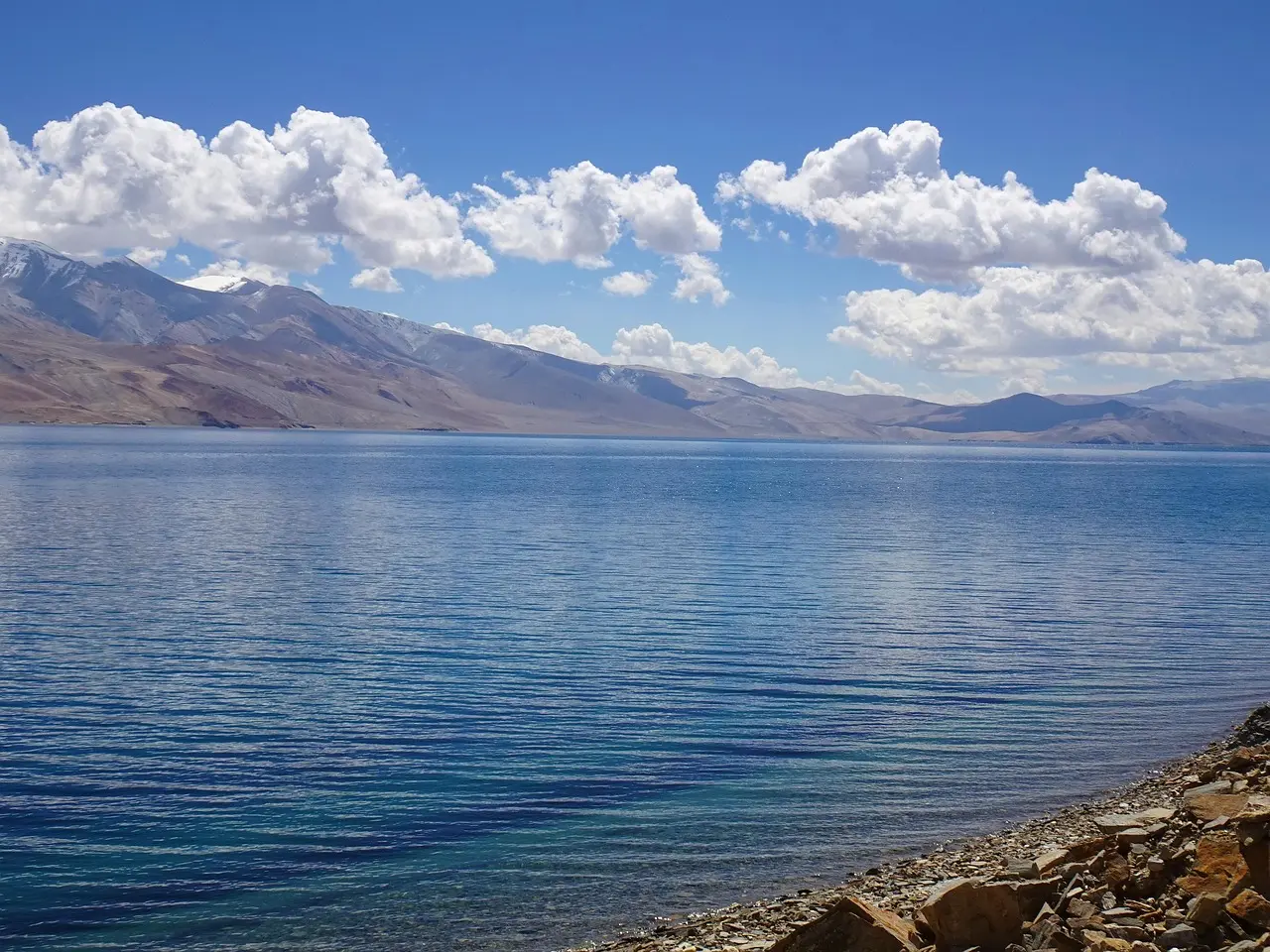
Tso Moriri — the name translates literally as 'mountain lake' in Tibetan, though a more evocative local legend gives it a different origin entirely. A Buddhist nun, a Chomo, was riding a yak near the lakeshore when the animal was carried into the water and began to drown. The woman cried 'Ri Ri' in desperate appeal for help until both she and the yak disappeared beneath the surface. The lake became Chomoriri, corrupted over centuries to Tso Moriri. Whether the legend is true or not, it tells you something important about the relationship between the Changpa nomads and this water: it is not merely scenic. It is sacred. The lake sits at 4,522 metres, stretches 26 kilometres north to south and up to five kilometres across, reaches depths of 105 metres, and is the largest high-altitude lake lying entirely within Indian territory. It has been a Ramsar designated wetland since August 2002 — and it is the highest Ramsar site in the world.
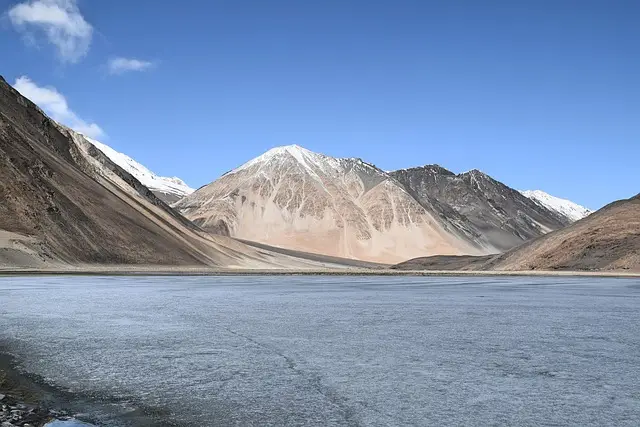
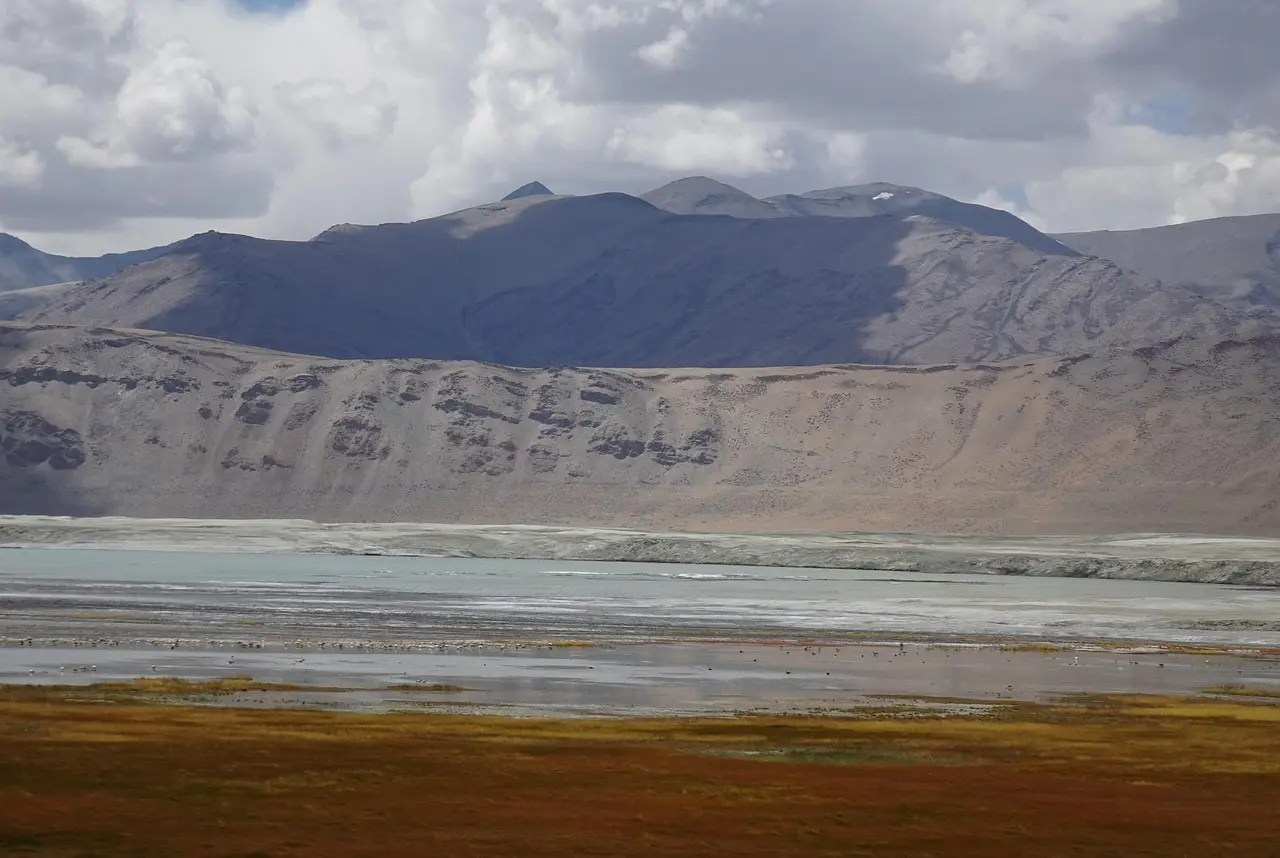
Tso Kar is a different kind of lake entirely — smaller, stranger, and arguably more interesting scientifically. Located roughly 150 kilometres from Leh in the Rupshu region at 4,530 metres, it is a fluctuating hypersaline lake whose name means precisely what it looks like: tso kar translates as 'white lake,' named for the thick white salt efflorescence that crusts its margins as the saline water evaporates under the fierce Changthang sun. Tso Kar is in fact a twin-lake system: the hypersaline northern pool (1,800 hectares) and the smaller freshwater Startsapuk Tso (438 hectares) to the south are connected by an inlet stream, together forming the Tso Kar Wetland Complex — India's 42nd Ramsar site, designated in November 2020. Tso Kar was for centuries the primary source of salt for the people of Ladakh and Tibet, traded along ancient caravan routes that the Changpa nomads walked for a thousand years. Today it is an A1 Category Important Bird Area under BirdLife International. Most visitors to Ladakh have never heard of it. This is their loss entirely.
| Detail | Tso Moriri | Tso Kar Wetland Complex |
|---|---|---|
|
Altitude |
4,522m (14,836 ft) |
4,530m (14,860 ft) |
|
Dimensions |
26 km long × 3–5 km wide; 105m max depth |
Tso Kar: 7.5 km × 2.3 km. With Startsapuk Tso: ~9 km² combined |
|
Water Type |
Freshwater — fed by snowmelt and springs |
Twin system: hypersaline (Tso Kar) + freshwater (Startsapuk Tso) |
|
Name Meaning |
'Mountain Lake' (Tibetan). Legend of the drowned nun Chomoriri. |
'White Lake' — from salt efflorescence on margins |
|
Ramsar Status |
Designated 2002 — highest Ramsar site in the world |
Designated 2020 — India's 42nd Ramsar site |
|
IBA Status |
Key breeding area: black-necked crane, bar-headed goose |
A1 Category IBA (BirdLife International). Central Asian Flyway. |
|
Sacred Status |
Sacred; abode of goddess Dorje Gummo |
Ancestral salt bowl of Ladakh and Tibet |
|
Distance from Leh |
~240 km via Upshi–Chumathang (6–8 hrs) |
~150 km via Tanglang La (~4 hrs) |
|
Nearest Stay |
Korzok village — homestays and small guesthouses |
Thukje village (basic) or stay at Tso Moriri |
|
Special Note (2025) |
— |
ISRO space simulation exercise held here August 2025 |
At a Glance — Tso Moriri vs Tso Kar
TSO MORIRI MAKES PANGONG LOOK LIKE A STARTER COURSE. IT IS THE MAIN EVENT — WILDER, HIGHER, HARDER TO REACH, AND SO MUCH QUIETER THAT ON A CLEAR SEPTEMBER MORNING THE ONLY SOUND IS WIND ON WATER AND A BAR-HEADED GOOSE DECIDING WHETHER TO TRUST YOU. THIS IS WHAT A LAKE LOOKS LIKE BEFORE TOURISM GETS FULLY TO WORK ON IT.
Getting there — routes and road reality
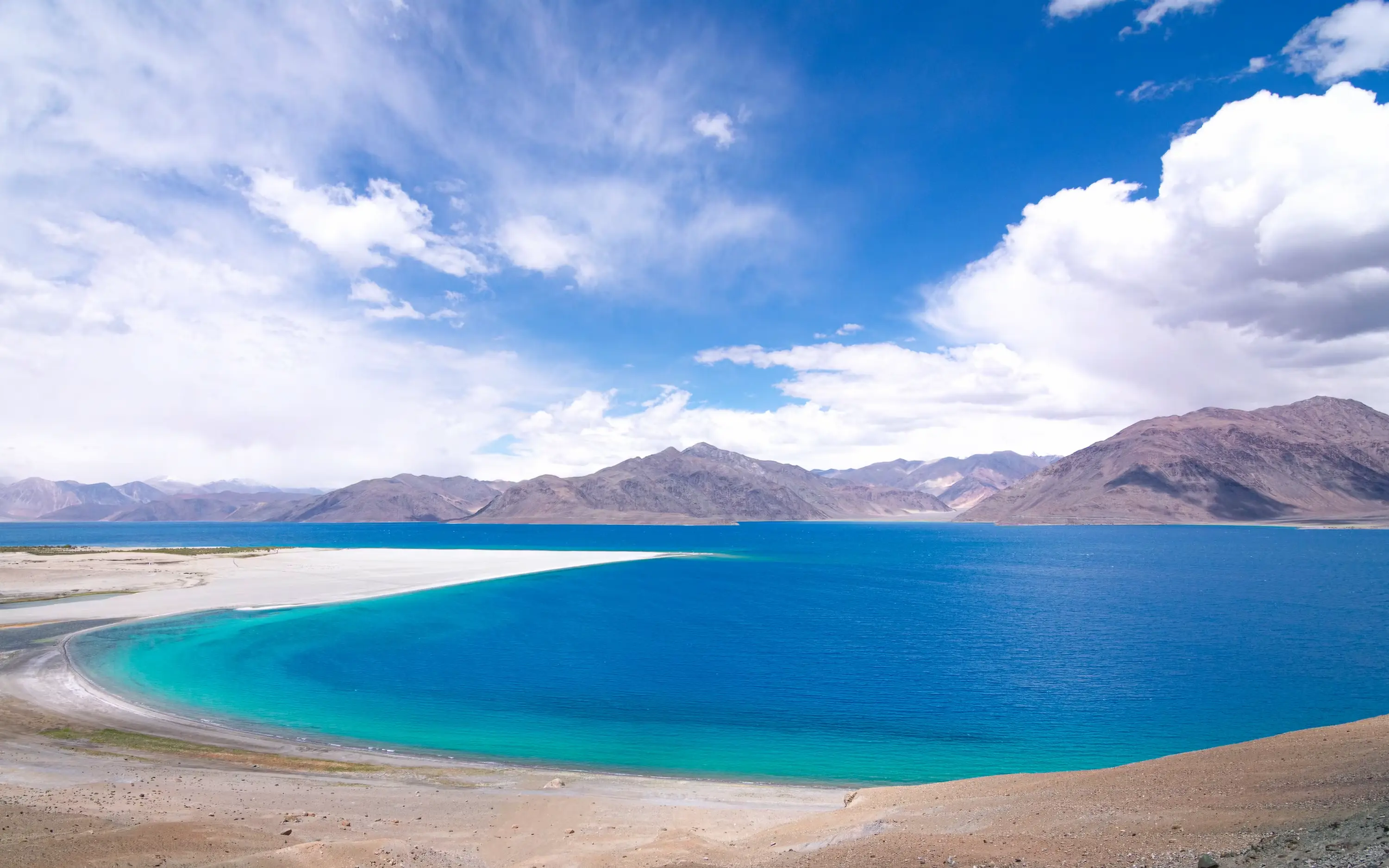
The most common route to Tso Moriri from Leh runs via Upshi, Chumathang, Mahe and Sumdo — approximately 240 kilometres and six to eight hours in good conditions. The first two-thirds are well maintained. The last 45 to 50 kilometres after Sumdo are consistently reported by independent travellers as among the worst road surfaces in Ladakh: sharp rocks, deep boulders, river-bed sections that degrade rapidly after rain. This section is tailor-made for a high-end Ladakh off-road SUV expedition — a robust 4WD handles it well; a sedan will struggle. Motorcyclists need genuine off-road competence for this final stretch. One traveller on a Ladakh circuit described it as 'beyond horrible' by motorcycle — though everyone agrees the view when the lake finally appears makes every kilometre worthwhile.
For those combining Tso Kar with a Leh-Manali highway journey the Tanglang La route is significantly shorter at around 150 kilometres and four hours. Tanglang La at 5,328 metres is one of the world's highest motorable passes. Tso Kar appears as a natural midpoint stop before continuing to Korzok. For the full Changthang circuit — combining Pangong, Tso Moriri, Tso Kar and Hanle in one sweep — the Pangong to Chushul to Nyoma to Mahe route connects everything without returning to Leh, though it requires permits for all border zones and serious prior route planning.
| Route | Distance | Duration | Road Reality | Best For |
|---|---|---|---|---|
|
Leh → Upshi → Chumathang → Mahe → Sumdo → Korzok |
~240 km |
6–8 hrs |
Good tarmac to Chumathang. Last 45–50 km after Sumdo: sharp rocks, boulders, river-bed sections. 4WD strongly recommended. Go slowly. |
Main route; all vehicles |
|
Leh → Tanglang La (5,328m) → Tso Kar → Sumdo → Korzok |
~265 km |
7–9 hrs |
Tanglang La is world's 3rd highest motorable pass. Good road overall. Tso Kar a natural midpoint. Best circuit approach from Leh-Manali side. |
Circuit travellers; Manali entry |
|
Pangong → Chushul → Tsaga → Loma → Nyoma → Mahe → Korzok |
~220 km from Pangong |
7–9 hrs |
Remote border route. Rough sections. Full Changthang circuit. Requires border zone permits. |
Full Changthang circuit; experienced drivers |
|
Leh-Manali Highway → Tso Kar roadside stop |
~35 km from Pang |
45 mins from Pang |
Easy off-highway access. Walk to Startsapuk Tso for wildlife — do not just photograph salt from the road. |
Highway travellers en route Leh–Manali |
All Routes to Tso Moriri and Tso Kar — 2026 Conditions
When to go
September is outstanding for both lakes — the finest month for an elite Leh Ladakh photography tour to the Changthang. The light on Tso Moriri at 5pm in late September is irreproducible: the water turns a deep copper-blue, the Pangong Range peaks catch the last gold of the day, and the Korzok monastery bell carries across the plateau in the evening air. The post-monsoon sky clarity at this altitude produces photographs that make people question whether they have applied a filter. They have not.
June is the prime birdwatching month — the black-necked cranes arrive at Tso Kar's Startsapuk Tso for their breeding season, and the kiang herds are active and visible across the plateau. July and August bring warmer temperatures and peak colour at both lakes. October is spectacular but cold; confirm that your Korzok accommodation is still open before committing to the drive. Winter closes both lakes completely — temperatures at Korzok plunge to minus 30 degrees and the roads are blocked from both ends.
| Month | Temp Day / Night | Tso Moriri | Tso Kar | Verdict |
|---|---|---|---|---|
|
May |
10°C / -6°C |
Open; snow on peaks; pale blue; very quiet |
Open; salt crust visible; cold |
Early season. Cold but beautiful. Few visitors. |
|
June |
16°C / 0°C |
Deep blue; wildlife active |
Peak breeding season — black-necked cranes at Startsapuk Tso |
Excellent — prime birdwatching. First two weeks of July equally good. |
|
July |
20°C / 4°C |
Vivid blue; peak colour; kiang herds active |
Kiang active near Startsapuk; flamingos occasionally seen |
Best overall — warm, all wildlife active, lakes at full colour |
|
August |
18°C / 2°C |
Blue-green; some rain possible on Chumathang road |
Salt crust most visible after summer evaporation |
Good — watch for rain on approach road |
|
September |
14°C / -4°C |
Electric blue; post-monsoon sky clarity |
Clear skies; wildlife still active |
Outstanding — arguably the best photography month |
|
October |
4°C / -12°C |
Deep indigo; ice forming at edges |
Salt crust expands as water contracts for winter |
Spectacular but cold. Confirm Korzok accommodation open first. |
|
Nov–April |
— |
Frozen. Roads blocked. -30°C possible. |
Frozen. Tanglang La and Chumathang road closed. |
Not accessible for general tourism. |
Season Guide — Month by Month
TSO KAR IS WHAT HAPPENS WHEN AN ANCIENT SEA DRIES UP AND LEAVES ITS SKELETON BEHIND. WHITE SALT CRUST AT THE MARGINS, BLACK-NECKED CRANES IN THE REED BEDS, THE PEAKS OF GURSAN AND THUGJE OVERHEAD, AND A SILENCE SO COMPLETE YOU CAN HEAR YOUR OWN BLOOD MOVING. THIS IS NOT A ROADSIDE PHOTO-STOP. THIS IS A PLACE TO SPEND A MORNING.
Things to do at Tso Moriri and Tso Kar...
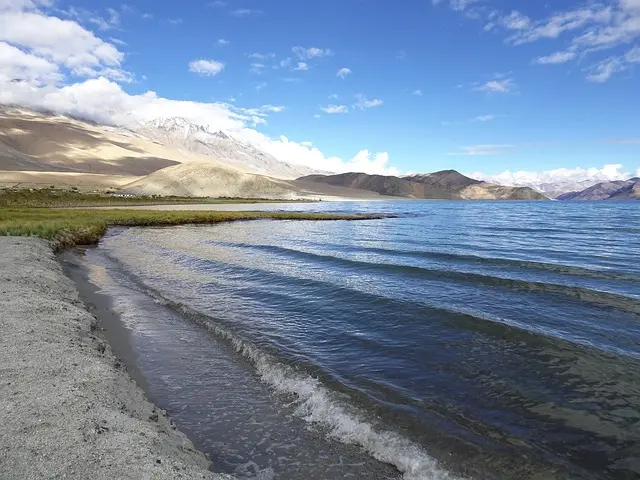
Visit both lakes as one Changthang circuit — never as separate add-ons. The most rewarding approach is to plan Tso Moriri and Tso Kar as a single journey rather than bolting one onto a Pangong trip as an afterthought. The two lakes are roughly 60 kilometres apart via the Sumdo road, meaning you can take in Tso Kar on the way in or on the drive back to Leh via Tanglang La. Think of them as the two components of one extraordinary tasting menu — the white salt ghost lake and the deep blue mountain lake, back to back, in the same magnificent landscape. Doing only one is like eating only the starter.
Stay two nights at Korzok — and choose a family homestay. Korzok village sits at 4,595 metres — higher than the lake itself. Two nights gives you one full day to walk the lakeshore, visit the monastery and watch the light on the water through the hours; and one sunrise. The village's family homestays — the Wangdu Homestay, Goose Homestay, and Korzok Tribal Homestay — offer a boutique Leh Ladakh glamping experience of a completely different kind from the Spangmik camps: genuine Changpa hospitality, home-cooked dal-bhaat on a bukhari wood stove, and a night sky of extraordinary quality that makes Korzok one of the finest premium Leh Ladakh stargazing camp destinations in the entire Union Territory. The Milky Way here, at 4,595 metres with near-zero light pollution, is the kind of thing that makes people sit outside in the cold long after they intended to go to bed.
Visit Korzok Monastery early in the morning. The 300-year-old Korzok Gompa sits on a rise above the village with panoramic views of the lake and surrounding Changthang peaks. It is among the highest monasteries in Ladakh and among the least visited — you are very likely to have it almost to yourself. Morning prayers begin around 6am. The chanting carries across the water in the cold morning air in a way that is difficult to describe and very easy to remember. Remove your shoes, speak quietly, take your time.
Walk the Startsapuk Tso shore at Tso Kar — the finest private Leh Ladakh wildlife safari on the plateau. Most visitors who stop at Tso Kar do so briefly from the highway and photograph the white salt crust before driving on. This misses the point entirely. The freshwater Startsapuk Tso is where the wildlife concentrates — black-necked cranes in the reed beds, bar-headed geese grazing in pairs, kiang approaching the water in small herds. In June and July this is one of the finest birding locations in the Indian Himalaya. Get out of the vehicle. Walk the southern shore slowly. Give it an hour. The cranes are not shy here because almost nobody actually walks.
Detour to Puga Valley's geothermal fields. About 12 kilometres from Korzok, the Puga Valley is one of the most geologically extraordinary places in Ladakh — steaming fumaroles, boiling mud pools, sulphur vents and hot springs at 4,400 metres that look completely out of place in a cold desert. India's space agency ISRO has operated a geothermal research station here, and in August 2025 conducted the country's first space-simulation exercise at the site. Puga is a short deviation from the main Korzok-to-Leh road and produces photographs nobody back home believes are from India.
Stop at Chumathang hot springs on the return — a natural luxury Leh Ladakh wellness retreat moment. The main road back from Korzok runs via Mahe, Chumathang and Upshi. Chumathang, roughly halfway, has natural geothermal hot springs at the roadside — warm enough to soak tired feet after days at altitude. Basic, semi-developed, completely free. Together with the Puga Valley geothermal fields, the Changthang circuit offers what no operator has yet properly commercialised: a natural high-altitude Ladakh thermal spa package, spread across two extraordinary geothermal sites on the same circuit, at elevations most spa resorts could not reach in their dreams. The drop in altitude from Korzok to Chumathang produces a relief in breathing that most travellers describe as physically euphoric.
Trek the Rumtse to Tso Moriri route if you have the time and fitness. This is widely considered one of the most beautiful treks in all of Ladakh. The trail follows the ancient salt road from Rumtse village through the Changthang plateau, crossing seven high passes including the final Yarlung Nyau La at 5,200 metres — from which Tso Moriri first appears below you. The trek takes nine to fourteen days, passes through Tso Kar and the Rupshu Valley, and offers near-daily encounters with kiang, marmots, bar-headed geese and, on lucky days, snow leopard.
Spend time with the Changpa nomads — on their terms. The Changpa are the semi-nomadic pastoral people of the Changthang, keepers of the Pashmina goat herds that produce the world's finest cashmere. Spending time with the Changpa families of the Tso Moriri shore — sitting in their rebos, accepting butter tea, learning something about what it means to manage life at 4,500 metres across a Himalayan winter — is the most genuine 5-star Leh Ladakh cultural immersion available anywhere in the region. Accept the butter tea when offered: salty, creamy, warm, and like nothing from any coffee shop in any city you have ever visited.
| Species | Best Lake | Best Season | Notes |
|---|---|---|---|
|
Black-necked Crane |
Tso Kar (Startsapuk Tso) + Tso Moriri |
June–July (breeding) |
India's most important breeding site for this species. Critically endangered. Unmistakeable call. Red crown deepens when displaying. |
|
Bar-headed Goose |
Both lakes, all shorelines |
May–September |
One of world's highest-flying birds — crosses Himalayas at 8,000m+ during migration. Breeds here. Feeds in pairs in shallow margins. |
|
Brahminy Duck (Ruddy Shelduck) |
Tso Moriri northern shore |
April–October |
Pairs inseparable. Sacred in Buddhist folklore as a symbol of devotion. Highly visible. |
|
Tibetan Wild Ass (Kiang) |
Changthang plateau near both lakes |
Year-round; most active May–Oct |
Herds of 10–30 near Startsapuk Tso. World's largest wild ass species. |
|
Tibetan Gazelle |
Open plains near Tso Kar and Tso Moriri |
April–October |
Pale fawn coat, distinctive white rump patch. Often in small groups on plateau. |
|
Flamingo (Greater) |
Tso Kar (Startsapuk Tso margins) |
July–August (occasional) |
Not guaranteed. Saline conditions create suitable feeding habitat in peak summer. |
|
Snow Leopard |
Rocky ridges surrounding Tso Moriri valley |
Winter (Nov–Mar) |
Comes lower following prey. Very rare. Specialist winter expeditions only. |
|
Himalayan Marmot |
Rocky slopes on Rumtse trek approach |
May–October |
Highly visible on the trek route. Alarm call audible from a distance. |
|
Pashmina Goat |
Korzok grazing areas |
Year-round |
Herded by Changpa nomads. Source of world's finest cashmere. Noticeably smaller than domestic goats. |
Wildlife at Tso Moriri and Tso Kar
THE CHANGPA NOMADS HAVE LIVED AT 4,500 METRES WITH THEIR YAKS AND PASHMINA GOATS FOR A THOUSAND YEARS. THEY WILL OFFER YOU BUTTER TEA — SALTY, CREAMY, WARMING, AND LIKE NOTHING YOU HAVE EVER DRUNK BEFORE. ACCEPT IT WITH BOTH HANDS AND DRINK IT SLOWLY. YOU ARE THEIR GUEST ON THEIR PLATEAU.
Things not to do at Tso Moriri and Tso Kar...
Do not attempt either lake without proper acclimatisation — this is more serious than at Pangong. Tso Moriri sits at 4,522 metres and Korzok village at 4,595 metres — higher than Pangong, and considerably more remote from medical help. The nearest hospital is Leh, six or more hours away by road. One travel group arriving at Korzok without adequate acclimatisation spent their first night in severe discomfort and received Diamox and supplemental oxygen from the Korzok clinic duty doctor the next morning. Three nights in Leh minimum before attempting Tso Moriri. Aaaram se — chill out. The lake will still be there.
Do not expect comfortable roads, particularly the last section to Korzok. The last 45 to 50 kilometres after Sumdo are consistently reported as among the worst road surfaces in Ladakh — sharp rocks, deep boulders, river-bed sections that deteriorate rapidly after rain. In a car, choose a 4WD and go slowly. On a motorcycle, this requires genuine off-road competence. The route is entirely worth every rough kilometre. Just do not arrive expecting tarmac.
Do not camp on the Tso Moriri lakeshore. Tso Moriri is a protected Ramsar Wetland Conservation Reserve and camping directly on the lake banks is specifically prohibited. Korzok village has homestays and small guesthouses with electricity available approximately four hours per evening via generator. Hot running water is rare — most accommodation provides it for one hour in the morning if at all. Carry your own sleeping bag rated to minus 10 degrees Celsius minimum. The only satellite phone in the area is kept at the Tsomoriri Lake View Hotel and generally has a queue.
Do not treat Tso Kar as a five-minute photo stop. The highway passes close to Tso Kar and most vehicles do exactly this — photograph the white salt crust from the road and drive on. The Startsapuk Tso freshwater section requires a short walk and offers a completely different experience: green margins, active birdlife, the twin-mountain backdrop of Gursan and Thugje. Give it an hour. The Tso Kar Wetland Complex is India's 42nd Ramsar site. It deserves more than a windshield view.
Do not leave Leh without cash, fuel, and offline maps. There are no ATMs near either lake. No fuel stations between Leh and Korzok. No mobile signal on most of both routes — prepaid SIMs stop working entirely beyond Leh city. Carry all cash from Leh in small denominations. Fill your tank completely and carry a Jerry can for larger vehicles. Download offline maps on Maps.me or Gaia GPS before departure.
Do not visit without sorting permits in advance. Both lakes sit near the Line of Actual Control and require permits for all visitors. Indian nationals need the Environment Development Fee applied at lahdclehpermit.in — ₹400 base fee plus ₹20 per day. Foreign nationals require a Protected Area Permit through a registered travel operator. List all Changthang zones on one application: Tso Moriri, Tso Kar, Hanle, Pangong if applicable. Carry a printed receipt because checkpoints have no internet connectivity.
| Visitor Type | Permit | How to Get It | Cost | Notes |
|---|---|---|---|---|
|
Indian Nationals |
Environment Development Fee (EDF) |
Online at lahdclehpermit.in before departure |
₹400 base + ₹20/day |
List all zones on one application. Print receipt + original govt ID mandatory at checkpoints. |
|
Foreign Nationals |
Protected Area Permit (PAP) |
Through registered travel operator only. Min 4 weeks lead time. |
Varies by operator |
Cannot self-apply. Must travel with registered operator. |
|
Combined circuit |
Single EDF covers all Changthang zones |
One application listing all areas |
₹400 + ₹20/day total |
Add Pangong, Hanle, Tso Kar, Tso Moriri — all on one application. |
Permit Requirements — Tso Moriri and Tso Kar 2026
Where to stay — Korzok village
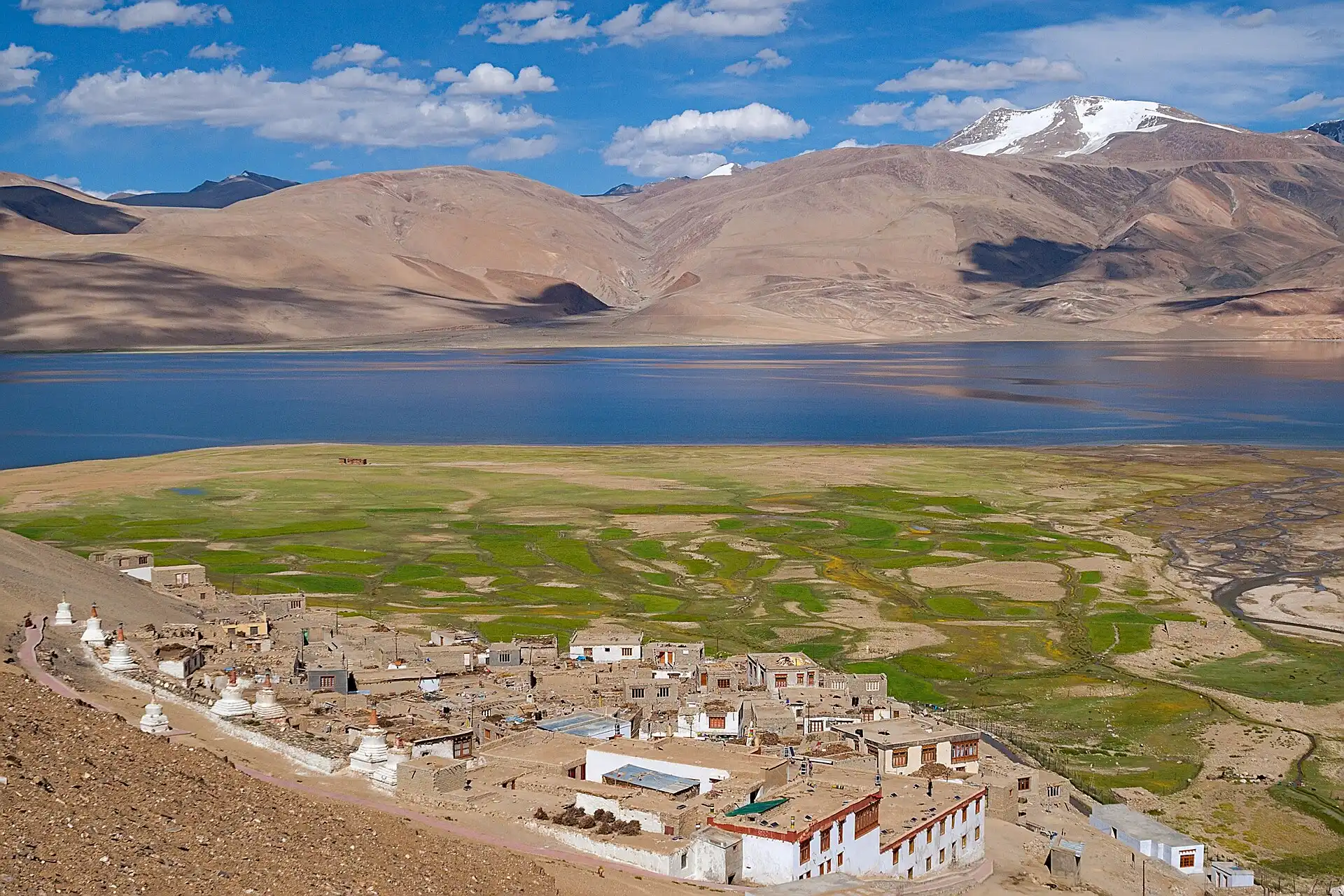
Korzok is the only permanent settlement on the Tso Moriri shore and it sits at 4,595 metres — one of the highest inhabited villages in India. The village has a handful of homestays and small guesthouses, all running on generator power for approximately four hours each evening. What Korzok has instead of luxury is something considerably rarer: genuine Changpa hospitality, extraordinary views from every window, and the particular quiet of a village where the nearest city is six hours away. The family-run homestays here offer a luxury Tso Moriri remote lake camp experience of a completely different and more honest kind — one where the luxury is the silence, the sky, and the warmth of the people rather than the thread count of the sheets.
The best advice is to book directly with a family-run homestay. The Wangdu Homestay, run by an elderly Changpa couple, is warmly reviewed — the woman of the house will notice if you are not eating enough and will do something about it immediately. Goose Homestay places you as a guest in a family home rather than a customer in an accommodation. The Korzok Tribal Homestay is one of the oldest in the village, with lake and mountain views from every room. The Tsomoriri Lake View Hotel has clean upper-floor rooms with attached bathrooms and holds the sole satellite phone in the area — it generally has a queue. For those wanting a VIP Tso Kar high-altitude lake tour as part of the same trip, the Thukje village homestays near Tso Kar are basic but provide an extraordinary base for the Startsapuk Tso wildlife walk.
| Property | Type | Price / Night | Honest Notes |
|---|---|---|---|
|
Wangdu Homestay |
Traditional family homestay |
₹1,000–₹1,800 |
Run by an elderly Changpa couple. Warm and caring. Butter tea within 5 minutes of arrival. Basic facilities; immensely characterful. Best for cultural experience. |
|
Goose Homestay |
Family homestay on lake banks |
₹1,200–₹2,500 |
3 rooms, shared bathroom, running water. You are living with the family. Meals cooked on request. Tea always on. Honest and unpretentious. |
|
Korzok Tribal Homestay |
Traditional homestay |
₹1,200–₹2,000 |
One of the oldest in the village. Magnificent views from all rooms. 3 rooms including 1 with attached western toilet. Shared dining area. Good fellowship with other travellers. |
|
Tsomoriri Lake View Hotel |
Small hotel |
₹2,000–₹5,000 |
Most substantial building in Korzok. Book upper-floor rooms — clean, good beds, attached bathrooms, lake view. No hot water. Has the only satellite phone in the area (often queued). Locally run and friendly. |
|
Golden Mark Hut and Camp |
Tented camp |
₹2,500–₹6,000 |
Closest camp to lakeshore, attached bathrooms, lake views. Better for those preferring camp-style comfort over village homestay feel. |
|
Snowleopard Cottage |
Cottage guesthouse |
₹2,000–₹4,000 |
Cosy, peaceful, good food, warm staff. Well-reviewed for atmosphere. Good choice for nature travellers wanting a quiet retreat. |
Where to Stay — Korzok Village Accommodation
Travelling responsibly on the Changthang plateau...
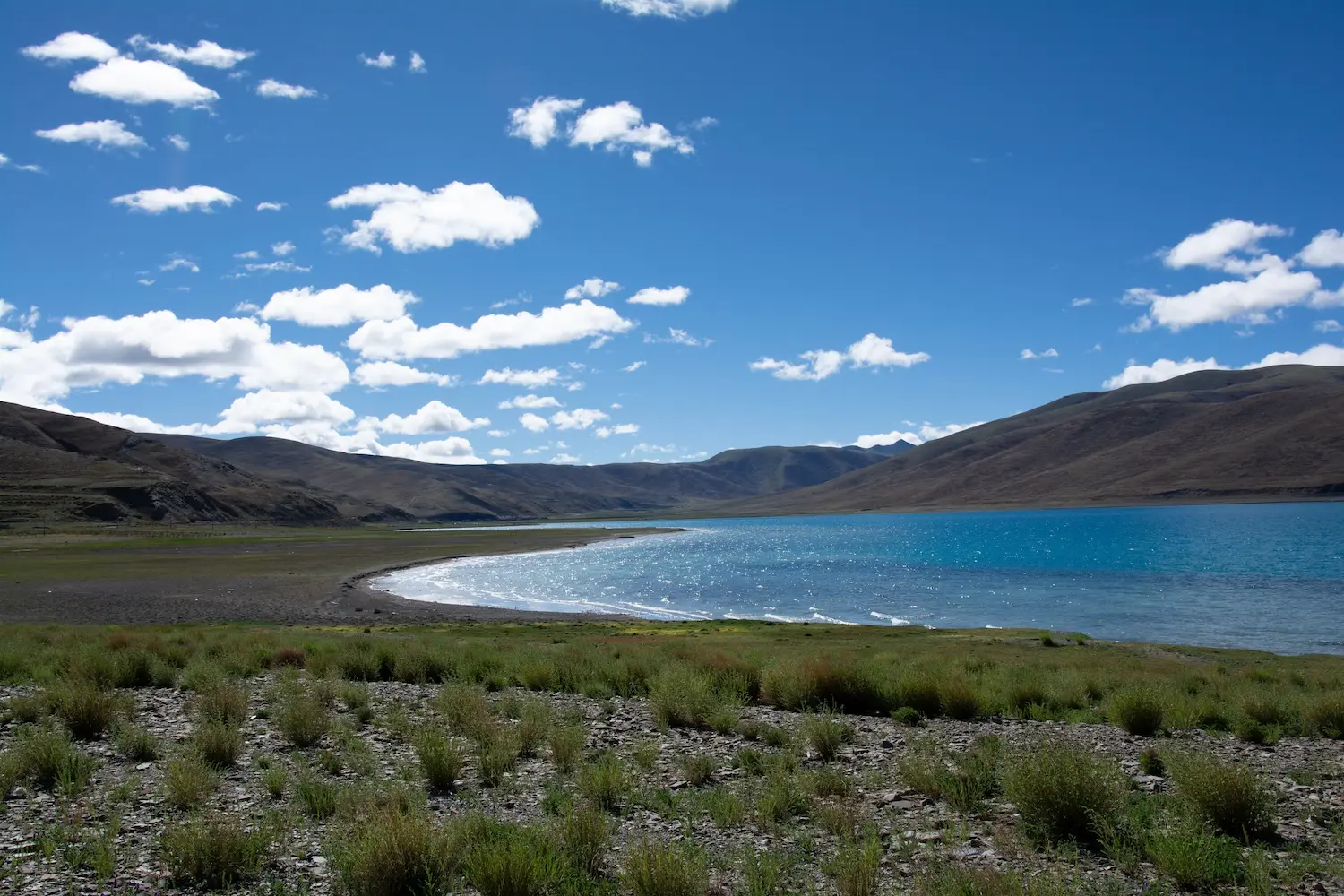
The Changthang plateau is one of the most ecologically and culturally fragile landscapes in India. Two Ramsar sites in close proximity, a remarkable concentration of rare and endangered birds, a semi-nomadic community whose way of life is under increasing pressure from climate change and tourism — this is not a landscape that absorbs careless tourism without consequence.
Plastic waste is the most immediate and actionable problem. There is no waste infrastructure at either lake. A LifeStraw self-filtering water bottle means you carry one bottle for the entire journey, fill from any source, and filter as you go. Carry a dry bag for all your own waste and return it to Leh. Ask your homestay host directly what they do with waste from their property — the families who are managing this responsibly deserve your business more than those who are not.
Spend locally and deliberately. The Korzok tribal homestays put money directly into Changpa households. Eat the food they cook. Buy Pashmina products directly from producing families, not from souvenir shops in Leh. Approach the Changpa nomads with genuine respect — ask before photographing their rebos, their animals, their faces. Learn two words of Ladakhi before you go: julay means both hello and thank you. It costs nothing and goes a remarkably long way.
Before you go...
Apply for your EDF permit at lahdclehpermit.in before leaving home. List every zone you plan to visit on the single application. Print the receipt and save it offline. Book your Korzok accommodation before you leave Leh, not on the day. Confirm that your booking includes dinner and breakfast. At 4,595 metres in the evening with a six-hour drive to the nearest alternative, arriving to find no dinner ready is a memorable experience in the wrong direction.
Carry more warm clothing than you think you need. The Changthang at night is genuinely cold even in July. The wind off the lake compounds it considerably. A sleeping bag rated to minus 10 degrees is not overcaution — it is the minimum for comfort at Korzok. Carry all cash from Leh in small denominations. Download offline maps before you leave Leh. Fill your tank and carry a Jerry can.
At BizareXpedition, we craft fully customised luxury Leh Ladakh tour packages built around the Changthang circuit — Korzok family homestays, the Puga Valley geothermal detour, the Chumathang hot springs on the return, and the full Tso Kar wildlife walk at Startsapuk Tso. For those wanting the complete eastern arc, our ultra-luxury Ladakh adventure package combines Tso Moriri, Tso Kar, Hanle Dark Sky Reserve, and Umling La in one seamlessly planned journey — the finest circuit in all of Ladakh, planned to the last detail. Visit bizarexpedition.com to start building your Changthang journey.
| Category | What to Carry | Why It Matters Here |
|---|---|---|
|
Cash |
All cash for trip in small denominations |
No ATMs. No digital payments. Budget ₹300–₹500/meal; ₹1,200–₹6,000/night. |
|
Fuel |
Full tank in Leh + Jerry can |
No fuel stations between Leh and Korzok. None at Tso Kar. |
|
Water |
Reusable bottle + LifeStraw filter |
No clean water infrastructure. No plastic recycling at either lake. |
|
Sleeping |
Sleeping bag rated -10°C minimum |
Homestay bedding often inadequate. 4,595m altitude, cold even in July. |
|
Warmth |
Down jacket, thermals, gloves, windproof shell, warm hat |
Changthang plateau wind is constant. Cold by 5pm even in summer. |
|
Connectivity |
BSNL or Jio postpaid SIM + offline maps downloaded in Leh |
Prepaid SIMs stop working beyond Leh. No signal most of both routes. |
|
Vehicle |
Robust 4WD strongly recommended |
Last 45–50 km before Korzok is rocky and rough. Sedans struggle. |
|
Health |
First aid kit + Diamox (consult doctor) + personal medications |
Primary Health Centre in Korzok. Nearest hospital is Leh — 6+ hrs away. |
|
Documents |
EDF permit receipt (print + offline) + original government ID |
Checkpoints on route. No internet at checkpoints to verify online. |
Practical Checklist — What to Carry to Tso Moriri and Tso Kar
| Category | Budget | Mid-Range | Premium |
|---|---|---|---|
|
Accommodation (Korzok, per night) |
₹1,200–₹2,000 (homestay, shared bathroom) |
₹2,500–₹4,000 (guesthouse or camp) |
₹5,000–₹8,000 (premium camp, lake view) |
|
Meals (per day) |
₹600–₹900 (homestay meals, dal-bhaat) |
₹1,000–₹1,500 (guesthouse dining) |
₹1,800+ (premium camp full board) |
|
Private Taxi Leh–Tso Moriri return |
₹12,000–₹15,000 (shared/basic) |
₹16,000–₹20,000 (good SUV) |
₹22,000–₹28,000 (premium 4WD) |
|
JKSRTC Bus (one way, Leh to Korzok) |
₹370 per person |
— |
— |
|
Permits (EDF per person) |
₹400 + ₹20/day |
Same |
Same |
|
Emergency insurance (high altitude) |
₹2,000–₹5,000 (10-day policy) |
₹5,000–₹12,000 (2–3 weeks) |
₹15,000+ (expedition cover) |
Budget Guide — Tso Moriri Trip from Leh (Per Person, Group of 4)
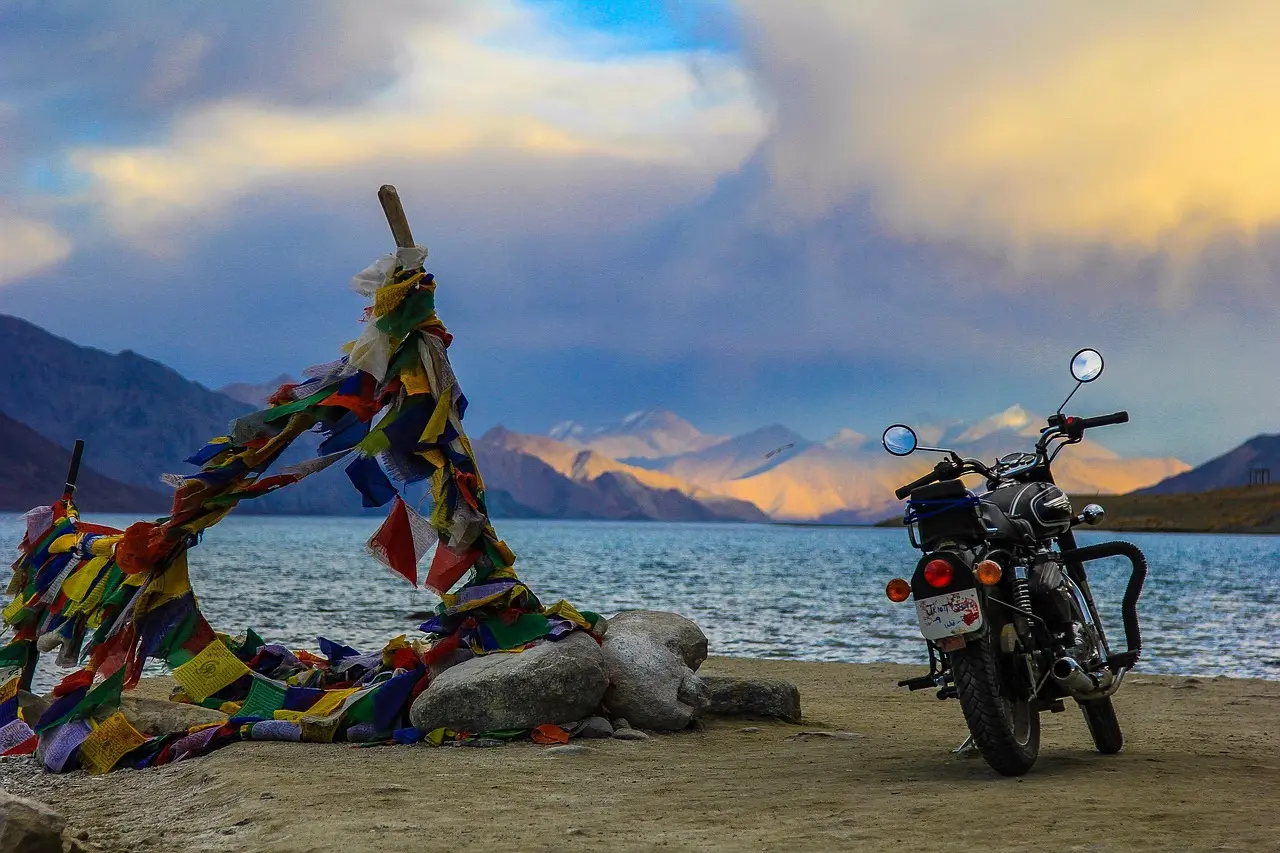
Tso Moriri will appear in your line of sight after six hours of driving and forty-five kilometres of rough road and a long uphill approach through a landscape that makes you wonder whether you have gone too far into nowhere. And then suddenly there it is — cobalt blue, utterly still, surrounded by mountains that look as if they have been there since before the concept of time was invented. It was worth every kilometre.
Best Selling Tour Packages
Explore other exciting options for your next adventure!