
Published On - Jul 21, 2026
Updated On - Jul 21, 2026
25 min
Uttar Pradesh: The Complete Travel Guide for 2026
UP just had its biggest travel-infrastructure year in decades — a new international airport, a 594-km expressway, and a genuinely different Ayodhya. Most guides haven't caught up. This one has.
The Cities — What Each One Is Actually For
1. Agra — The Taj, and What Everyone Rushes Past
2. Varanasi — The City That Rewards Slowness
3. Lucknow — Nawabi Elegance and the Actual Best Reason to Visit: Food
4. Ayodhya — A City Rebuilt Around a Single Destination
5. Prayagraj — The Sangam, and the Kumbh Legacy
6. Mathura & Vrindavan — Krishna's Landscape
7. The Buddhist Circuit — Sarnath, Kushinagar, Shravasti
Uttar Pradesh doesn't need a pitch. It has the Taj Mahal, the oldest continuously inhabited city on earth, the birthplace of Lord Rama at the centre of one of Hinduism's most significant pilgrimage sites, and the city believed to be Krishna's birthplace, all within a single state whose GDP would rank it among the world's larger economies on its own. What it hasn't had, until this year, is the infrastructure to move between all of that without losing entire days to the road.
That changed in 2026. A new international airport opened at Jewar in March. A 594-kilometre expressway connecting western and eastern UP went fully operational in April. Ayodhya, already flying pilgrims in and out since its own airport opened in late 2023, has kept building on that momentum. None of this is background noise — it changes which itineraries are actually sensible this year, and most published UP guides are still written for the state as it existed two years ago.
Why 2026 Specifically — The Infrastructure Story Nobody's Updated For Yet
| Details | Information |
|---|---|
|
Best time to visit |
October to March — cool, clear, and comfortable across the whole state |
|
Realistic minimum trip |
7–8 nights to cover Agra, Varanasi, and Lucknow without rushing |
|
Main entry points |
Delhi (for Agra/Golden Triangle), Varanasi Airport, Lucknow Airport, Ayodhya's Maharishi Valmiki International Airport, and now Noida International Airport at Jewar |
|
New in 2026 |
Noida International Airport (Jewar) opened March 2026 — UP's 5th international airport; Ganga Expressway (594 km) operational since April 2026 |
|
Signature experiences |
Sunrise at the Taj Mahal, the Ganga Aarti in Varanasi, free Sugam Darshan at Ram Mandir, Awadhi cuisine in Lucknow |
|
State size context |
243,290 km² — the 4th largest Indian state by area, and the most populous state or country-subdivision on Earth |
At a Glance
Most "complete guide" content for Uttar Pradesh reads like it was written before this year, because most of it was. Four milestones, taken together, genuinely change how a well-planned UP trip should be routed in 2026.
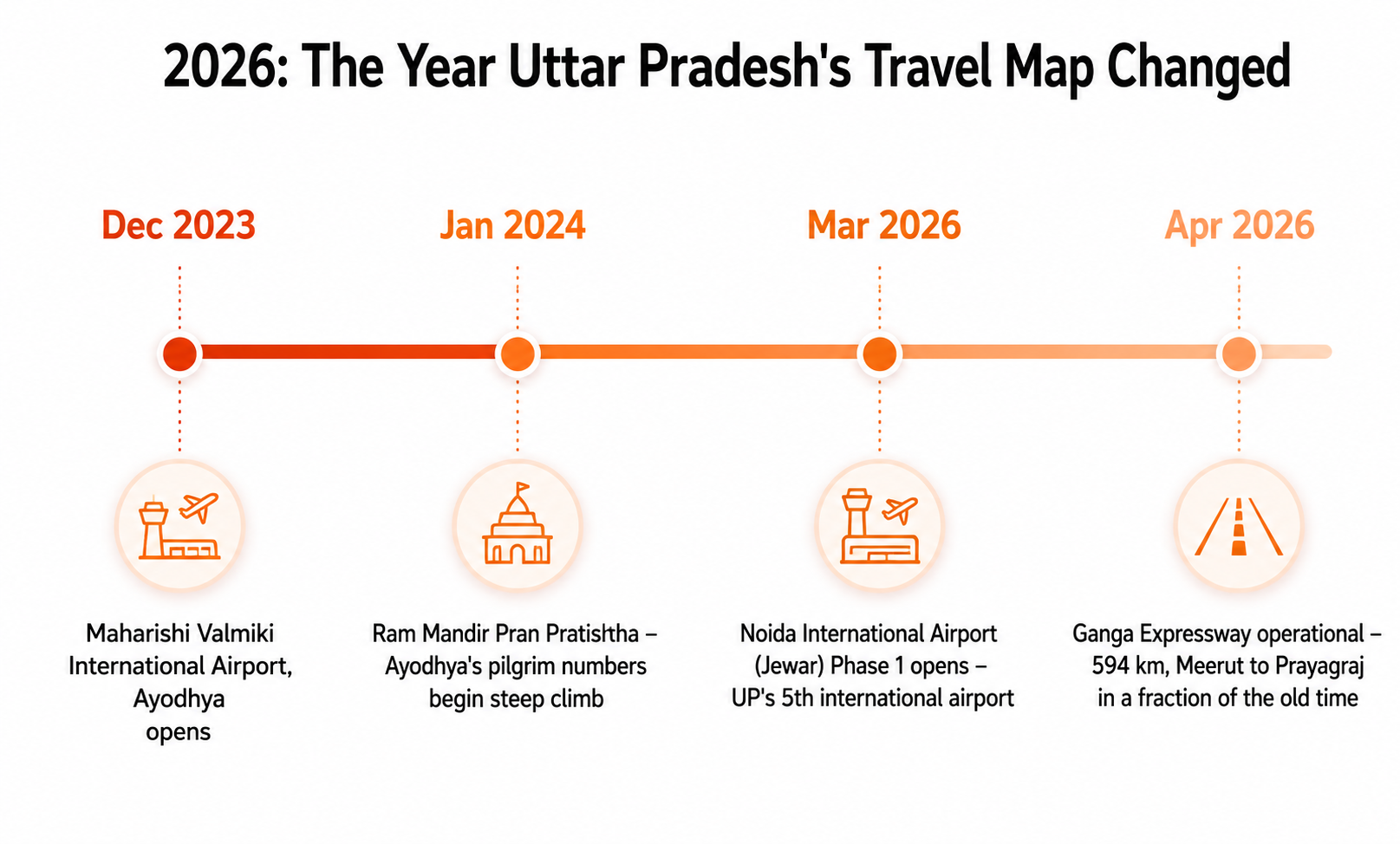
Noida International Airport at Jewar received its Phase 1 inauguration in March 2026 — UP's fifth international airport, and a direct new gateway for western UP and the Agra corridor that didn't route through Delhi's often-congested IGI Airport before. The Ganga Expressway, a six-lane, 594-kilometre corridor connecting Meerut to Prayagraj across 12 districts, went fully operational in April 2026, cutting what was previously a full day's drive across the state's midsection into a fraction of that time. A newly approved 74-kilometre link road will soon connect the Ganga and Yamuna Expressways directly to Jewar itself, tying the whole western half of the state into one continuous fast corridor.
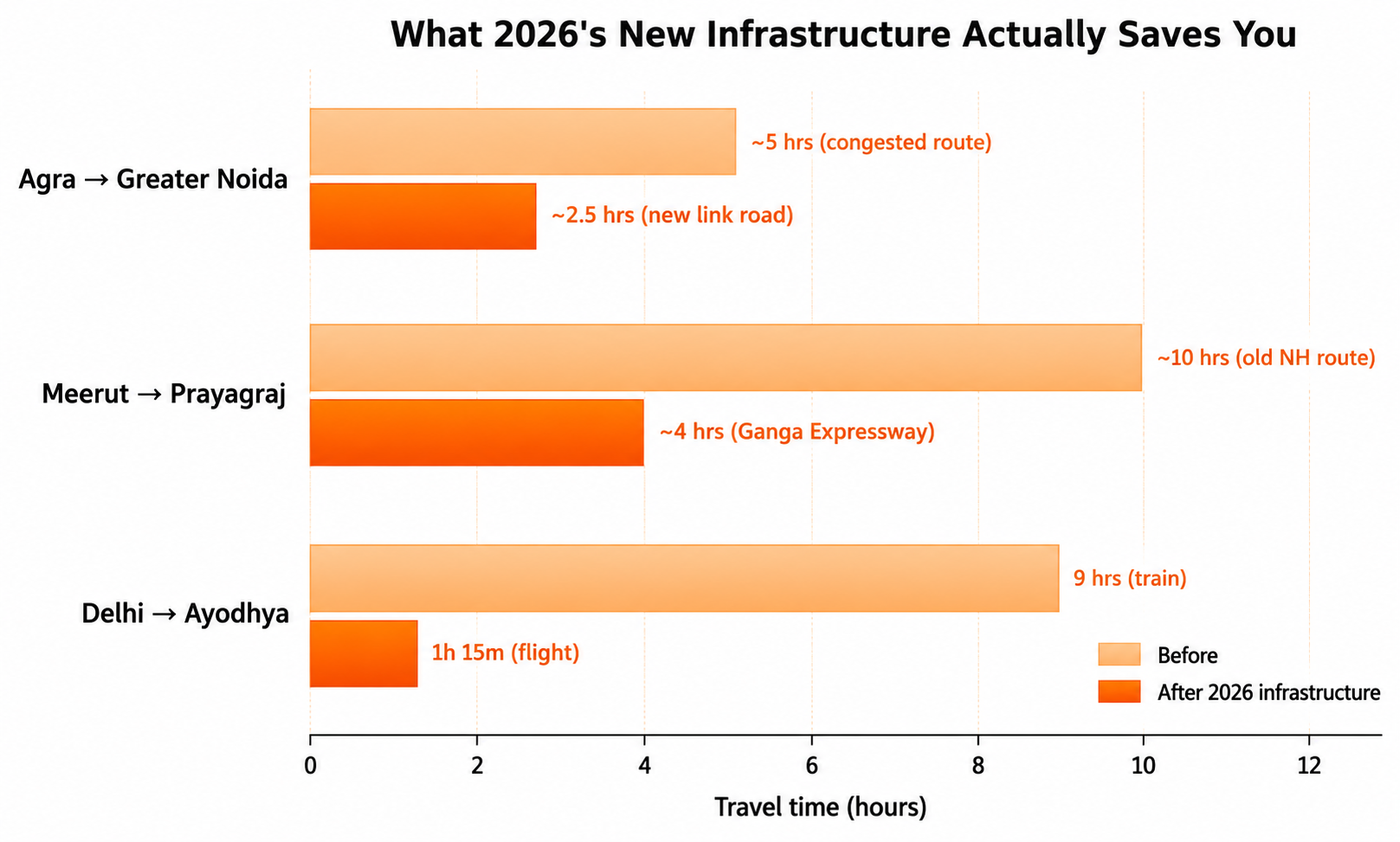
The practical takeaway: itineraries that used to force a choice between Agra-and-Delhi or Varanasi-and-Lucknow as separate trips are now genuinely combinable in one circuit without the transit time eating your holiday. Most operators haven't rebuilt their standard itineraries around this yet — which is exactly the gap worth exploiting if you're planning now.
The Cities — What Each One Is Actually For
| Details | Taj Mahal | Agra Fort | Fatehpur Sikri |
|---|---|---|---|
|
Indian / OCI |
₹50 + ₹200 mausoleum |
₹50 |
₹50 |
|
SAARC / BIMSTEC |
₹540 + ₹200 mausoleum |
₹300 |
₹300 |
|
Foreign nationals |
₹1,100 + ₹200 mausoleum |
₹650 |
₹610 |
|
Hours |
30 min before sunrise – 30 min before sunset |
Sunrise – sunset |
Sunrise – sunset |
|
Closed |
Every Friday (prayers only) |
Open daily |
Open daily |
Agra Three Monuments
1. Agra — The Taj, and What Everyone Rushes Past
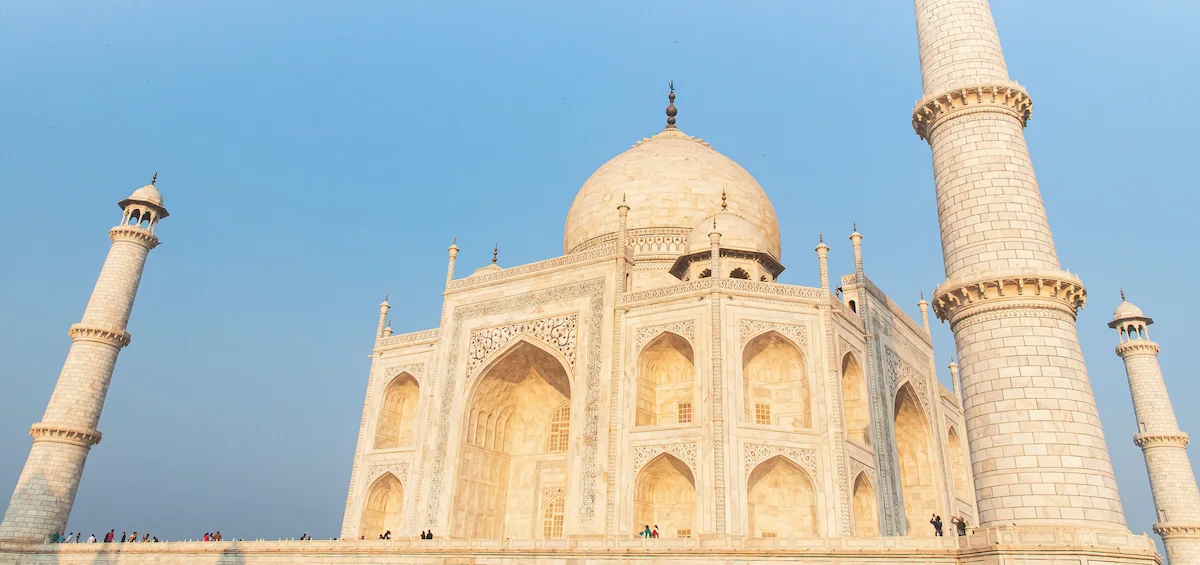
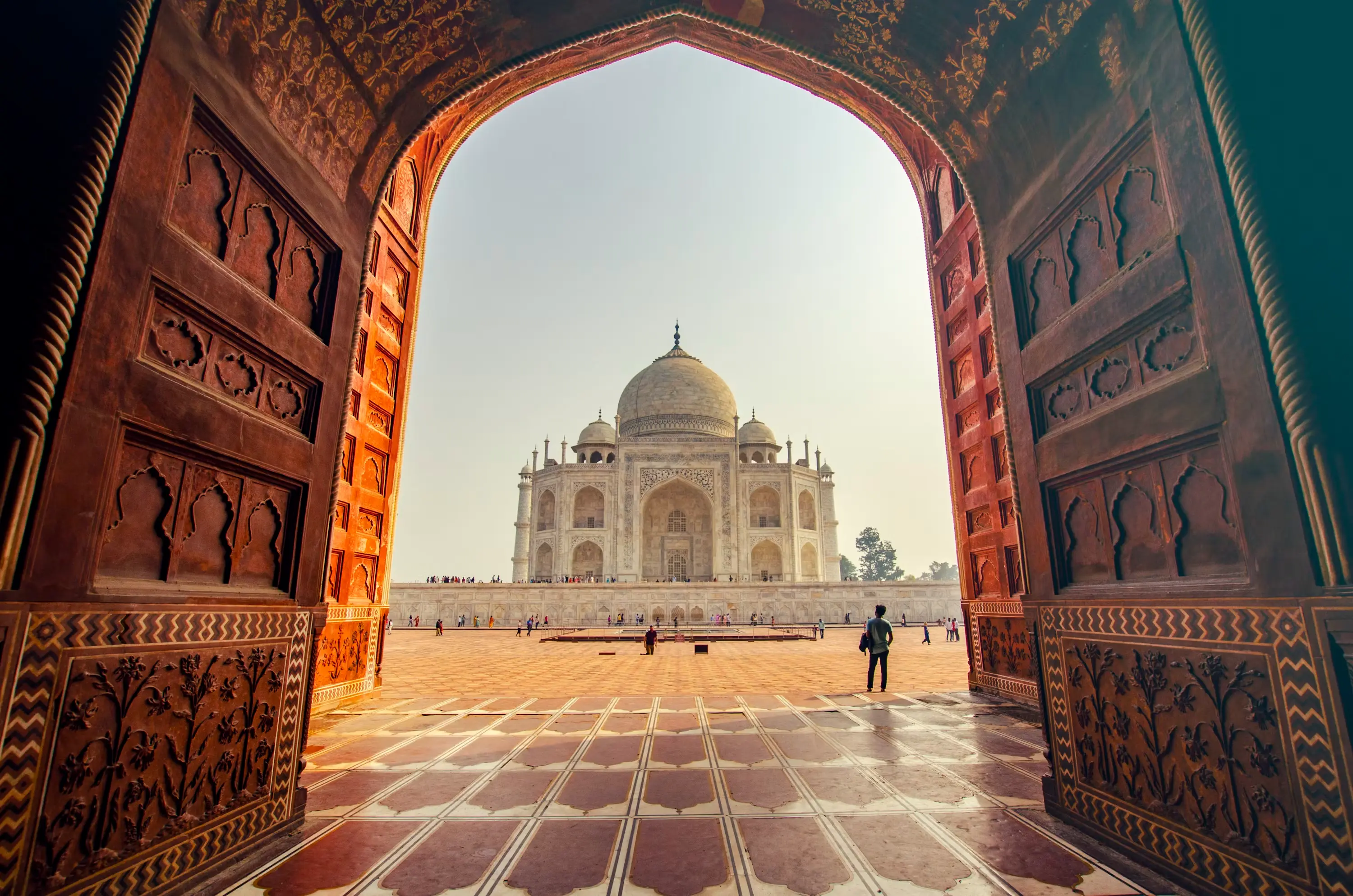
The Taj Mahal remains the single most-visited monument in India for good reason, and sunrise entry — gates open 30 minutes before sunrise — is the one piece of advice every serious guide agrees on, because it's the only way to see it without the crowd. What gets rushed past: Agra Fort, a genuine Mughal power centre in its own right, and Fatehpur Sikri, the abandoned red-sandstone capital 40 km out, both routinely reduced to a single afternoon when each deserves a proper half-day.
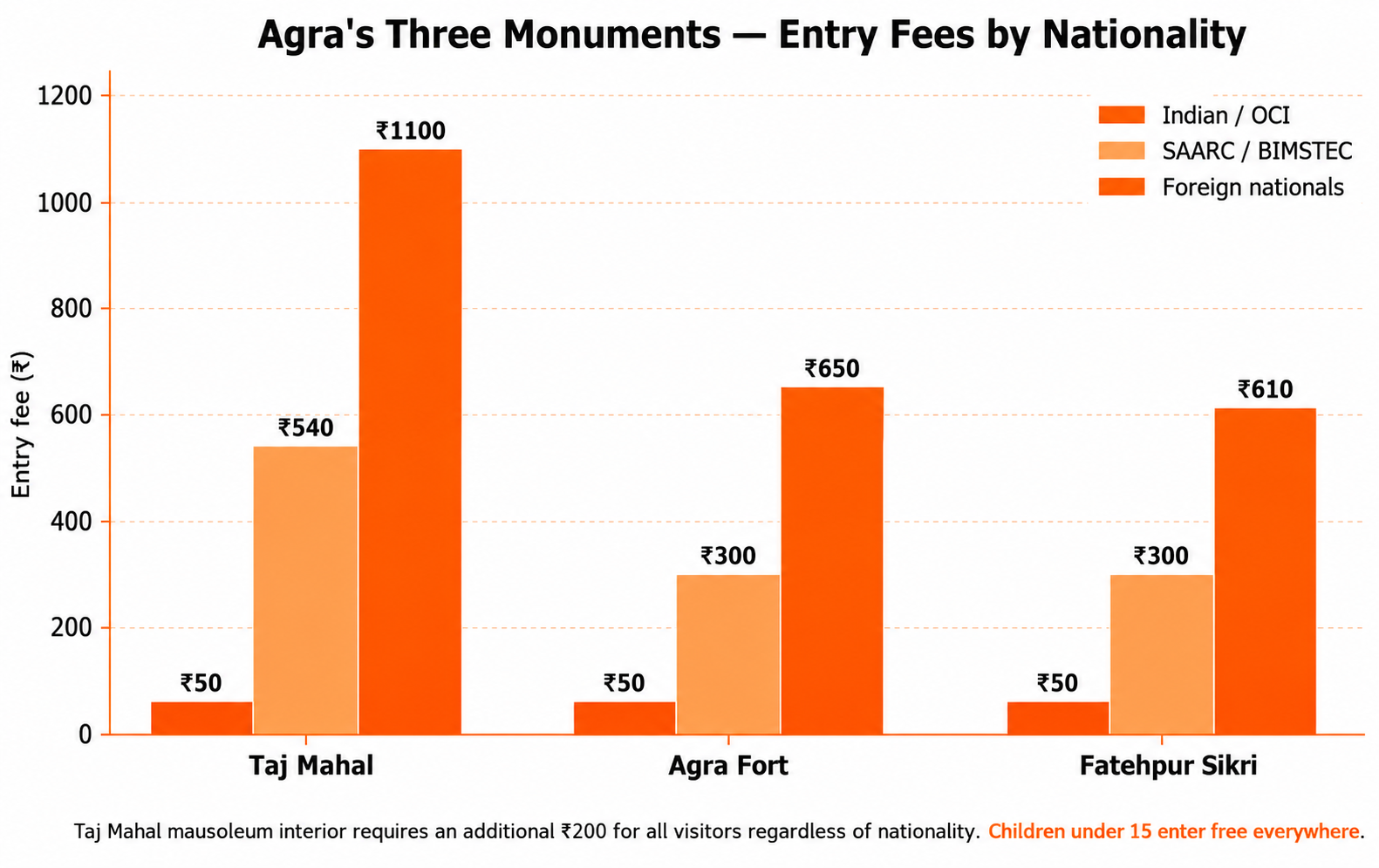
A detail worth building your day around: the Taj Mahal's Friday closure catches more first-time visitors off guard than almost anything else in Agra planning. If your itinerary lands on a Friday, that's your Agra Fort and Fatehpur Sikri day by design, not a scheduling accident to work around. Banned items at the Taj include food, tobacco, drones, and large bags — leave them at the hotel rather than at a gate-side cloakroom queue.
2. Varanasi — The City That Rewards Slowness
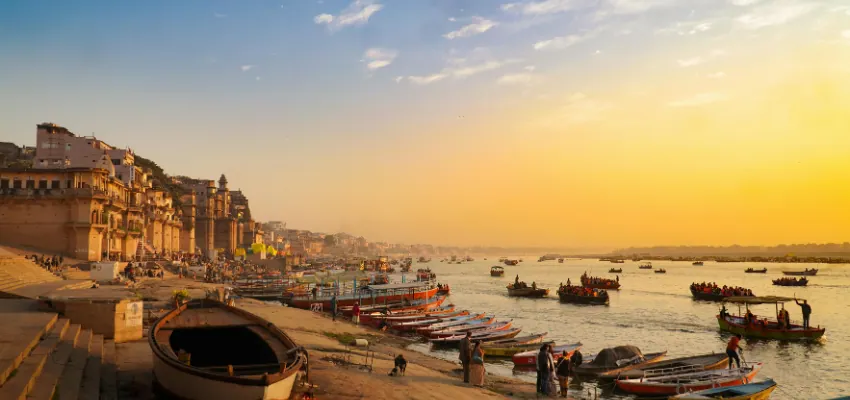
Ganga Aarti at Dashashwamedh Ghat at sunset, and a sunrise boat ride the next morning, are the two fixed points of any Varanasi visit, and both remain genuinely essential rather than tourist-trap versions of themselves. What's changed materially in recent years: the Kashi Vishwanath Corridor redevelopment has transformed the temple's immediate surroundings with wider approach paths, better lighting, and a noticeably heavier tourist-police presence than existed a decade ago.
3. Lucknow — Nawabi Elegance and the Actual Best Reason to Visit: Food
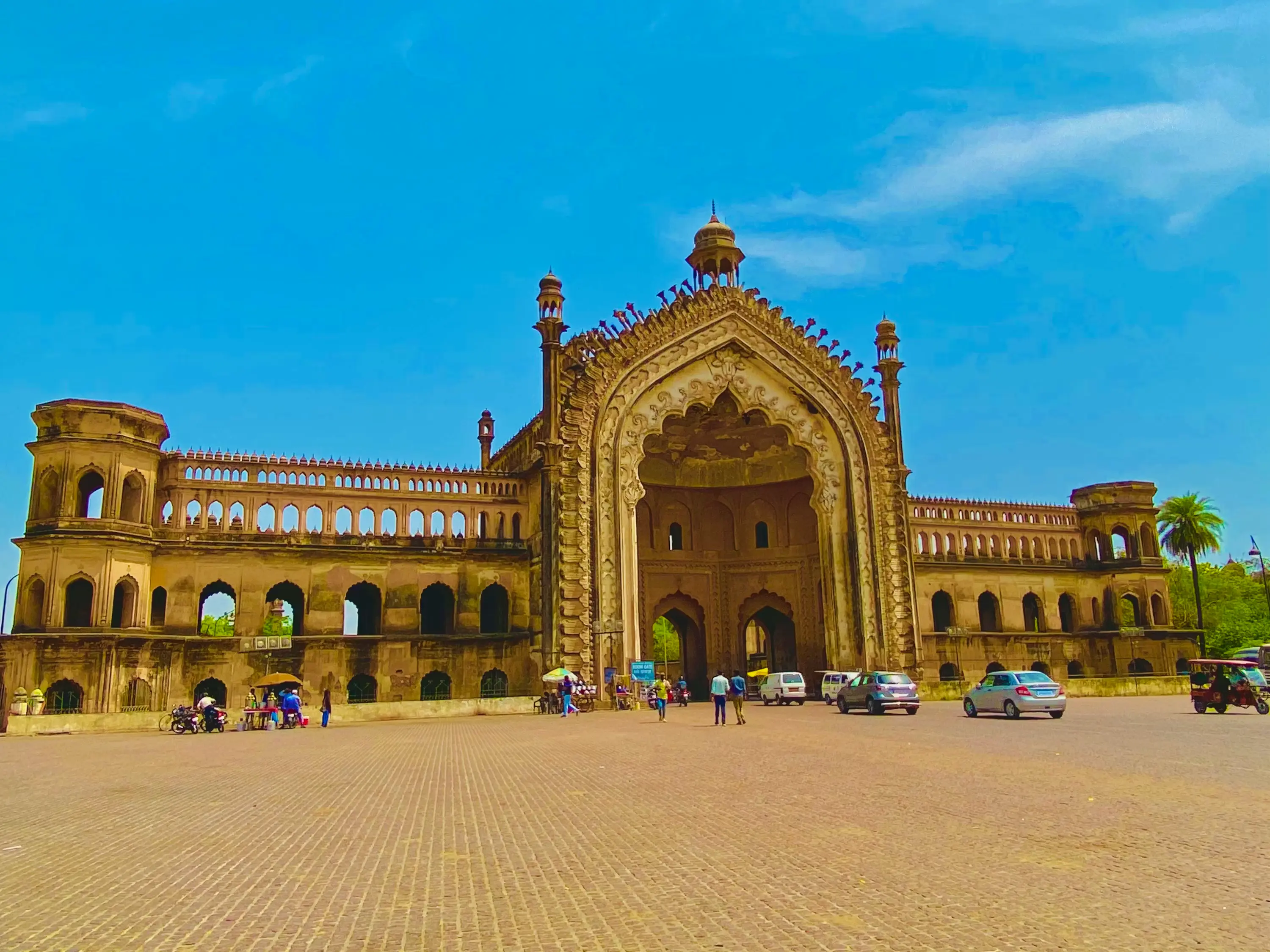
Bara Imambara's Bhool Bhulaiya labyrinth and the ornate Chota Imambara are genuine architectural sites, but ask anyone who's actually spent time in Lucknow and the conversation turns to food within a sentence — galouti kebabs at Tunday Kababi, proper dum pukht biryani, and sheermal from an old-city bakery are the real headline, not a footnote.
4. Ayodhya — A City Rebuilt Around a Single Destination
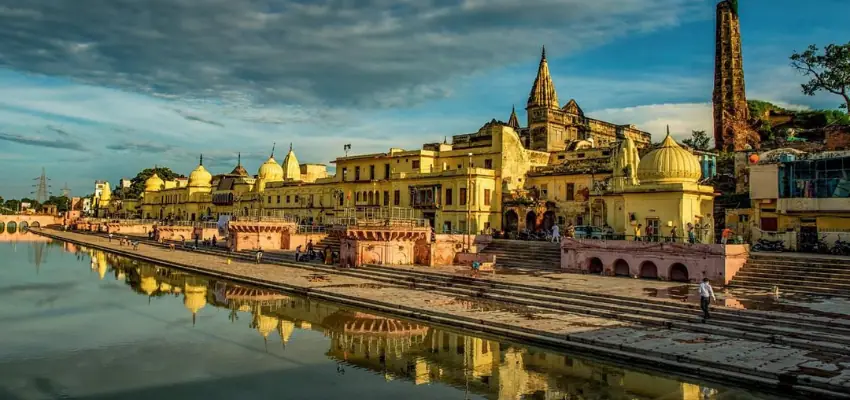
Ram Mandir now runs a free Sugam Darshan booking system — online registration up to 15 days ahead, no VIP or paid tier, up to 8 devotees per booking — a genuinely well-organised system worth using rather than queueing cold. The Maharishi Valmiki International Airport sits just 8–10 km from the temple, meaning a same-day Delhi-to-darshan-and-back trip is now realistic in a way it simply wasn't before December 2023, when the same journey meant a 9-hour train each way.
5. Prayagraj — The Sangam, and the Kumbh Legacy

The confluence of the Ganga, Yamuna, and mythical Saraswati rivers is the city's spiritual core, and while the scale of a full Kumbh Mela only comes around on its own cycle, the infrastructure built for it — wider ghats, better river access, improved crowd management systems — now benefits any visitor arriving in an ordinary year, not just pilgrimage-season crowds.
6. Mathura & Vrindavan — Krishna's Landscape
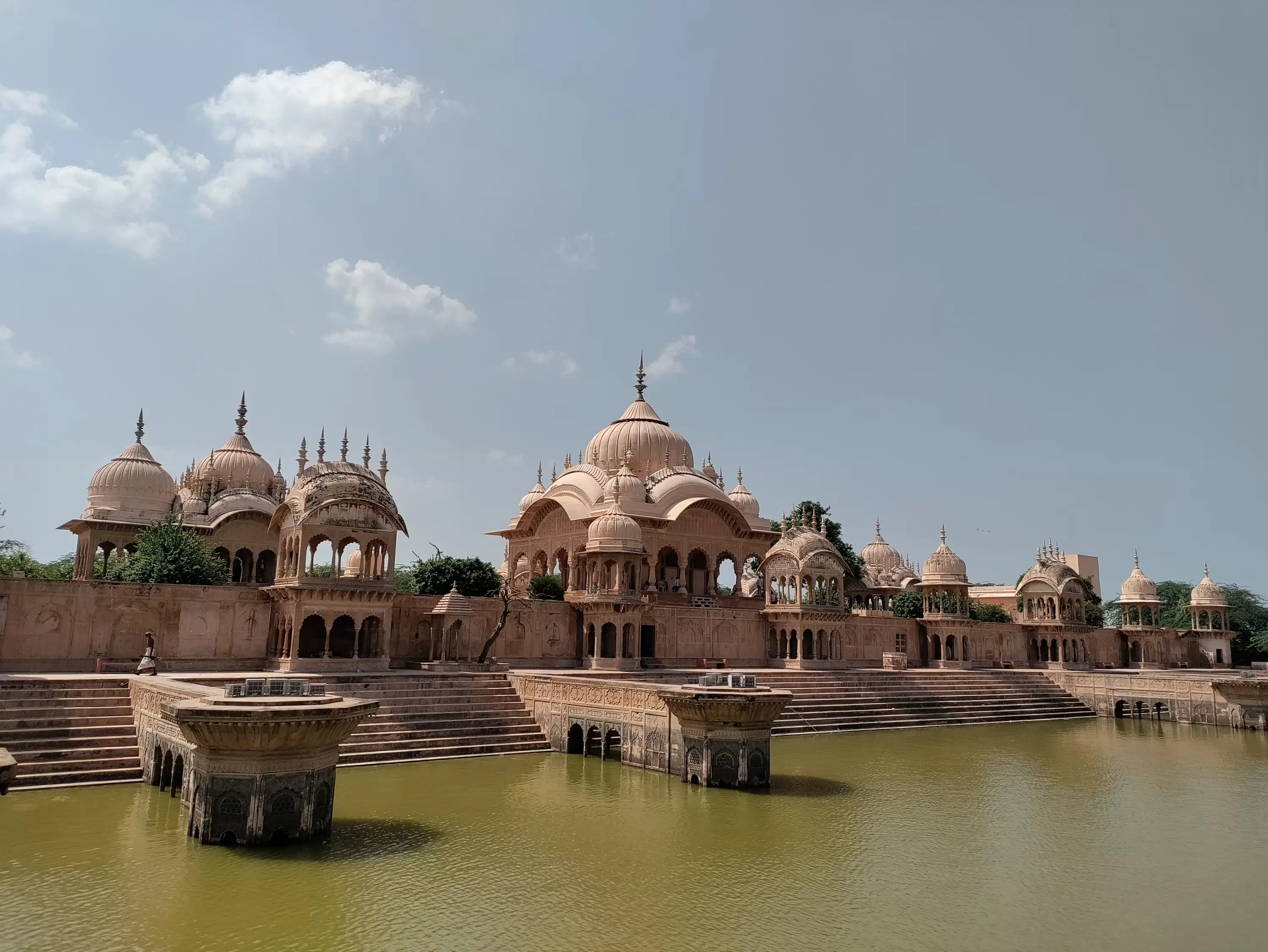
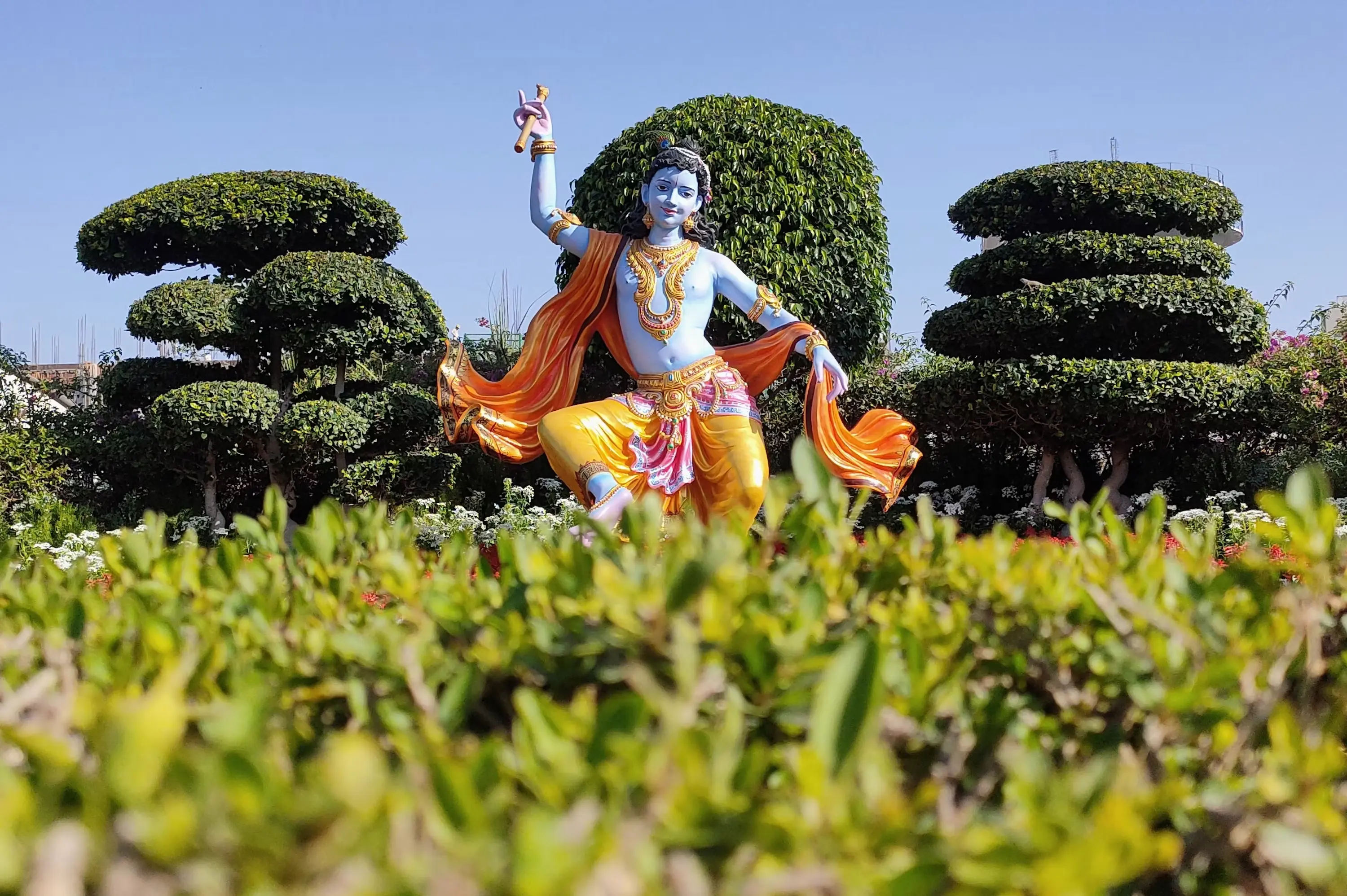
The Krishna Janmabhoomi temple in Mathura and the well-organised ISKCON Vrindavan temple anchor a pilgrimage circuit best timed around Holi in March, when the region's festival of colour is at its most vivid and authentic — a genuinely different experience from visiting the same temples in an ordinary month.
7. The Buddhist Circuit — Sarnath, Kushinagar, Shravasti
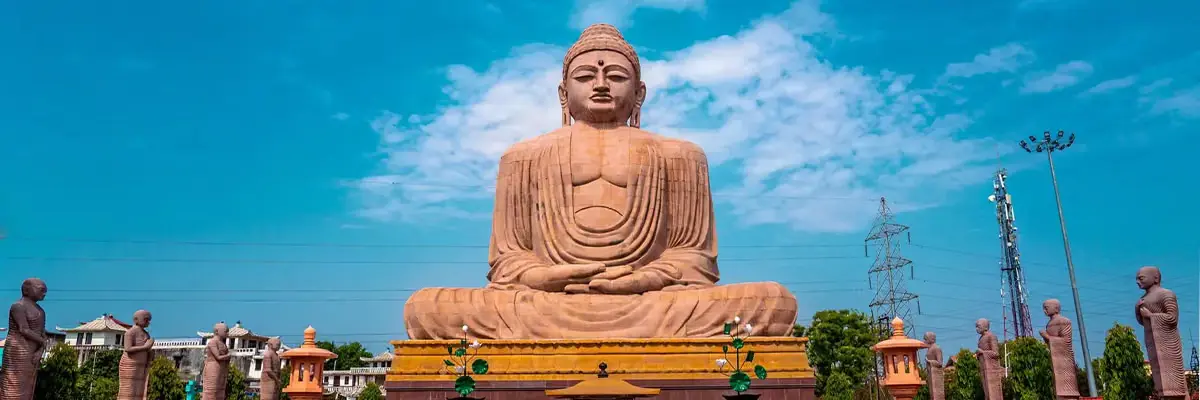
Sarnath, where the Buddha delivered his first sermon, sits close enough to Varanasi for a half-day addition to any itinerary already built around the ghats. Kushinagar and Shravasti sit further out and see far fewer Western tourists proportionally than international Buddhist pilgrims — a genuinely underused circuit for travellers interested in Buddhist heritage rather than the standard temple-and-ghat itinerary.
The Real Itinerary — Three Ways to Do Uttar Pradesh Properly
UP rewards a slower pace than most first-timers plan for, and the 2026 infrastructure genuinely changes what fits in a given number of days. Here's what actually works now.
| Duration | Route | Best For |
|---|---|---|
|
5 nights / 6 days |
Delhi → Agra (2N) → Varanasi (3N), flying between |
First-timers who want the Taj and the ghats without the full state |
|
7 nights / 8 days |
Agra (2N) → Lucknow (2N) → Ayodhya (1N) → Varanasi (3N) |
The benchmark circuit — heritage, cuisine, pilgrimage, and spirituality in one unhurried arc |
|
10 nights / 11 days |
Agra (2N) → Lucknow (2N) → Ayodhya (1N) → Varanasi (3N) → Sarnath (day trip) → Prayagraj (2N) |
Travellers who want the complete state story, including the Buddhist circuit and the Sangam |
Three Ways to Do Uttar Pradesh Properly
A practical sequencing note: the Ganga Expressway now makes Prayagraj a genuinely comfortable add-on to a Varanasi-anchored trip rather than a detour that eats a full extra travel day — worth reconsidering if an older itinerary template talks you out of it.
What Nobody Tells You
Booking Trains as a Foreign Visitor — The Quota Most People Don't Know Exists: Indian Railways reserves a specific Foreign Tourist Quota — bookable online up to 365 days ahead once your IRCTC account is verified, or in person at International Tourist Bureaus in Delhi, Agra, and Varanasi specifically. It carries a flat ₹200 booking fee and only covers 1A, 2A, and Executive Chair classes, but it draws from a separate allocation than the general quota — genuinely useful on high-demand routes like Delhi–Agra or Varanasi–Khajuraho during peak season (November–February) when general-quota seats vanish weeks out.
The Chikankari Authenticity Test: Genuine hand-embroidered Lucknawi chikankari involves thousands of individual stitches and takes days to weeks to complete a single garment — which is exactly why it costs meaningfully more than the machine-embroidered pieces flooding Hazratganj's tourist-facing stalls. Turn the fabric over: hand-done chikankari shows slightly irregular, textured stitching on the reverse; machine work looks uniformly neat on both sides. If a price seems too good for the intricacy shown, it almost always is.
Varanasi's Boat Fare Reality: Shared sunrise boat rides along the ghats are inexpensive and widely available, but private boat hire is a negotiation, not a fixed-rate service — agree on the price and duration before stepping in, not after. Boatmen offering a suspiciously cheap rate often plan to make it up through an unplanned mid-river stop at a silk or souvenir shop paying them commission; politely declining and confirming your route in advance avoids this entirely.
Ayodhya's Free Darshan vs. Paid "Fast-Track" Offers: Sugam Darshan booking for Ram Mandir is genuinely free through the official channel — up to 15 days ahead, no VIP tier exists. Be wary of any tout or unofficial website offering a paid "skip the line" service; it's not how the temple's own system works, and money spent on it is money spent on nothing.
What to Actually Eat
Uttar Pradesh's food identity shifts as dramatically by city as its architecture does, and treating it as one "North Indian food" experience misses most of what makes it worth the trip.
Agra: petha, a translucent, syrup-soaked cube of candied ash gourd, is the city's signature sweet — Panchhi Petha is the most consistently recommended source among long-standing local shops.
Lucknow: galouti kebabs at Tunday Kababi, dum pukht biryani, and sheermal (saffron flatbread) from an old-city bakery — the real headline reason to visit, not a footnote to the monuments.
Varanasi: kachori-sabzi for breakfast at any old-city stall, thandai (especially around Holi and Shivratri), and Banarasi paan as a genuine local ritual worth trying once, properly, rather than skipping as a tourist curiosity.
Ayodhya and Mathura-Vrindavan: both lean heavily vegetarian and satvik (temple-appropriate) in their food culture — expect simpler, ghee-forward cooking rather than the Mughlai richness of Lucknow, and treat that as a genuinely different, worthwhile register of Indian food rather than a lesser one.
| Window | What You Get | Trade-off |
|---|---|---|
|
Oct – Feb |
Cool, clear, comfortable across the entire state — the standard recommended window for first-time visitors |
Peak season in Agra and Varanasi means the biggest crowds at the Taj and the ghats |
|
Mar |
Holi in Mathura-Vrindavan — the single best-timed festival visit in the state |
Accommodation books out well ahead in the Krishna pilgrimage towns specifically |
|
Apr – Jun |
Fewer tourists, lower prices |
Genuinely hot — regularly exceeding 40°C in the Gangetic plains by May |
|
Jul – Sep |
Lush post-monsoon landscape, lowest prices of the year |
Humidity and occasional heavy rain disruption, particularly around the rivers |
What You Get
Getting Around — Now Genuinely Faster
Indian Railways remains the backbone for heritage-circuit travel — the Gatimaan Express covers Delhi to Agra Cantonment in under two hours, and Shatabdi services connect major cities reliably.
The Ganga Expressway now makes a Meerut-to-Prayagraj drive dramatically faster than the old National Highway route — relevant if you're routing through western UP toward Varanasi or Prayagraj rather than flying directly.
Noida International Airport at Jewar adds a genuine alternative to Delhi IGI for the Agra corridor specifically, once the link road to the Yamuna Expressway is complete — worth checking current status against your travel dates given the pace of construction.
A private driver remains the most comfortable way to cover multiple UP cities in one trip — distances between Agra, Lucknow, Varanasi, and Ayodhya are real, and self-navigating unfamiliar highway interchanges isn't where you want to spend your holiday's attention.
| Details | Comfort | Luxury |
|---|---|---|
|
Accommodation |
3–4 star hotels, well-located |
Heritage and 5-star properties — Taj, Oberoi, and ITC all operate flagship UP properties |
|
Transport |
Private car for city-to-city transfers |
Private chauffeur throughout, plus Gatimaan Express for the Delhi-Agra leg |
|
Guides |
Shared or half-day guides at major sites |
Private, specialist guides — particularly worthwhile at the Taj and in Varanasi's old city |
|
Per person, per day |
$80 – 150 |
$250 – 450+ |
What You Will Actually Spend
Safety — An Honest Picture, Not a Reassurance
UP's established heritage circuit — Agra, Lucknow, Varanasi, Ayodhya — carries a heavy, visible tourist-police presence precisely because these cities depend so directly on tourism revenue. Varanasi specifically has changed materially: the Kashi Vishwanath Corridor redevelopment brought wider approach paths, 24/7 surveillance, and dedicated tourist-police outposts at key ghats that simply didn't exist a decade ago. Ayodhya's rapid infrastructure build-out has followed a similar pattern, with heavy policing and monitoring around the temple complex.
Standard precautions apply here as anywhere in India — reputable transport, busy well-reviewed places to eat, and normal vigilance with valuables in crowded ghats and markets.
Solo female travellers are increasingly common on the UP heritage circuit specifically, helped by the same tourist-police visibility mentioned above — though the general precautions covered in any solo-travel safety guide still apply.
Water and food safety is more about source than city — busy, high-turnover stalls and restaurants are consistently safer than empty ones, regardless of price point or location.
The honest summary: UP's most-visited cities are also its best-protected, precisely because the state has invested heavily in tourist infrastructure around them in the last few years. The bigger practical risk on a UP trip is usually a mistimed Friday at the Taj or an unconfirmed boat fare in Varanasi, not personal safety.
Quick Answers
Can I really combine Agra, Varanasi, Lucknow, and Ayodhya in one trip now?
Yes, more comfortably than at any point before 2026 — the Ganga Expressway and Jewar's new airport both reduce transit time meaningfully across the state's midsection, though 7-8 nights minimum is still the realistic figure for all four without rushing.
Is Ayodhya worth visiting if I'm not religious?
The temple itself is built around active worship, but the Ramayana-themed airport architecture, the city's rapid rebuild, and the broader story of how a pilgrimage town transformed in under three years make it a genuinely interesting stop regardless of personal belief.
What's the single best UP experience most people skip?
Sarnath, if you're already in Varanasi — it's a half-day addition most itineraries simply don't build in, despite its direct relevance to anyone interested in Buddhist history.
Do I need to book the Ram Mandir darshan in advance?
Not strictly, but the free Sugam Darshan online booking system (up to 15 days ahead) is genuinely worth using over queueing without a slot, especially during peak pilgrimage periods.
Is UP safe for tourists, including solo travellers?
Yes for the large majority of visitors, particularly along the established heritage circuit — Varanasi's ghats specifically have seen a marked increase in lighting and tourist-police presence following the Kashi Vishwanath Corridor redevelopment.
Before You Go
Uttar Pradesh has always had the monuments and the meaning. What it's had for barely a year is the infrastructure to move between them without the road eating your trip — and that's a genuinely new fact about the state, not a marketing line. Plan around it, and a UP itinerary that used to mean choosing between Agra or Varanasi becomes one continuous, well-paced journey through the state that's arguably done more than any other to define India's spiritual and imperial history.
BizareXpedition builds private, no-group-coaches itineraries across Uttar Pradesh — from the Varanasi Spiritual & Heritage Tour to the complete Agra-Lucknow-Ayodhya-Varanasi circuit, now genuinely faster to run than it was even a year ago. Tell us how much time you have, and we'll route it around the new infrastructure rather than the old assumptions.