
Bhutan Tour Packages
Bhutan Tour Packages
Bhutan tour packages by BizareXpedition are curated Indian-traveller itineraries covering Paro, Thimphu, Punakha, and optionally Bumthang — combining monastery visits, Himalayan landscapes, and cultural immersion, typically priced between ₹25,000 and ₹65,000 per person for 4–7 day trips, excluding the mandatory Sustainable Development Fee.
If you've been wondering whether Bhutan is "too expensive" or "too complicated to visit" from India — it's actually one of the easier international trips for Indian passport holders, no visa required, and genuinely one of the calmer, less-crowded Himalayan experiences left in South Asia. Here's everything that goes into planning it properly.
What Is Bhutan Famous For?
Bhutan is a small Himalayan kingdom wedged between India and China, known globally as the last Buddhist kingdom and the birthplace of the "Gross National Happiness" development philosophy — a country that measures progress by wellbeing rather than GDP alone. It's also the world's only carbon-negative country, with over 70% forest cover protected by its constitution.
Quick Fact: Bhutan deliberately caps mass tourism through a "High Value, Low Volume" policy — every international tourist pays a daily Sustainable Development Fee (SDF), which keeps the country uncrowded even at its most popular monasteries.
A few nuances worth knowing before you book anything:
Bhutan is not a budget backpacking destination in the way Nepal or Vietnam are — the SDF and mandatory licensed-operator system mean costs are structured differently, even for Indians who get a heavily discounted rate.
Indian nationals don't need a visa — only an entry permit, which is far simpler and largely handled by the tour operator.
There are no railways in Bhutan at all; every internal journey is by road, and travel times between towns are longer than the map distances suggest because of mountain roads.
Photography inside monasteries (dzongs) is often restricted — always check before you start clicking.
The Culture of Bhutan
Bhutanese culture is built around Vajrayana Buddhism, a strict architectural identity centred on fortress-monasteries called Dzongs, and a national philosophy that consciously prioritises wellbeing over pure economic growth.
Nearly every town in Bhutan is anchored by a dzong that functions as both a religious monastery and an administrative centre — a structure unique to Bhutan among Himalayan Buddhist nations. Monks and government officials often work within the same walled complex, which says a lot about how tightly religion and governance are woven together here.
A few cultural nuances that add real texture to a visit:
National dress is still everyday wear: Men wear the gho and women the kira as regular office attire, not just festival costume — a rare example of traditional dress surviving as functional daily clothing.
Architecture is legally protected: All new buildings, even shopping complexes, must follow traditional Bhutanese architectural style by law.
Gross National Happiness isn't a slogan: It's an actual policy framework used to evaluate government decisions, covering psychological wellbeing, health, education, and environmental conservation.
Smoking is banned nationwide — Bhutan was the first country in the world to enforce a complete ban on the sale of tobacco.
Respect etiquette matters: Modest dress is expected inside dzongs and temples, and photography of the central shrine areas is typically not allowed.
Best Places to Visit in Bhutan
Here's what most Bhutan sightseeing itineraries include, roughly in order of priority:
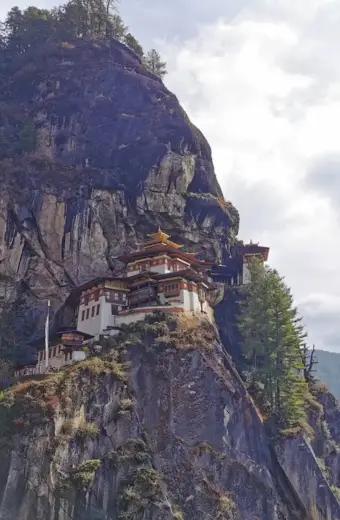
Paro Taktsang (Tiger's Nest Monastery) — Bhutan's most iconic image: a monastery clinging to a cliff face 900 metres above the Paro valley, reached by a 2–3 hour uphill hike.
Punakha Dzong — Widely considered Bhutan's most beautiful fortress, set at the confluence of two rivers and especially striking in spring when the jacaranda trees bloom around it.
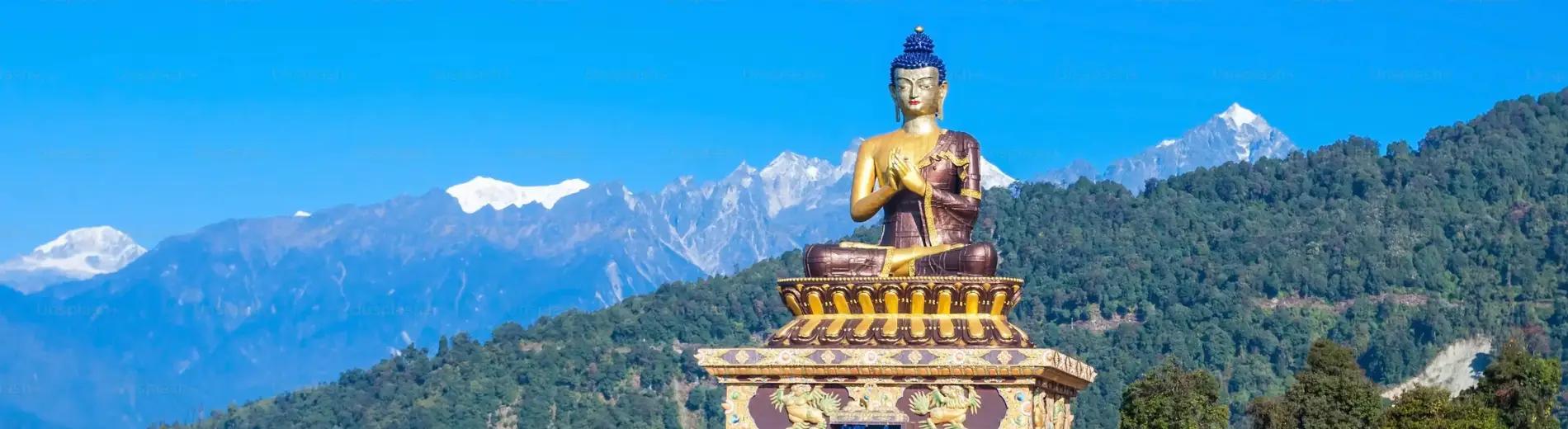
Thimphu — The capital city, home to the giant Buddha Dordenma statue, the weekend market, and the National Memorial Chorten.
Chele La Pass — At roughly 3,988 metres, one of the highest motorable passes in Bhutan, offering views of Mount Jomolhari on clear days.
Dochula Pass — A scenic mountain pass near Thimphu marked by 108 memorial chortens, a popular stop en route to Punakha.
Bumthang Valley — Bhutan's spiritual heartland, dotted with some of the country's oldest temples; usually included in longer 7-day-plus itineraries.
Rinpung Dzong (Paro) — A well-preserved fortress-monastery overlooking Paro town, often visited before or after the Tiger's Nest hike.
A genuine nuance: the Tiger's Nest hike isn't optional sightseeing — it's the single most physically demanding part of most itineraries. If mobility is a concern, ponies are available partway up, but the final stretch is on foot regardless.
| Region | Typical Days in Itinerary | Highlight |
|---|---|---|
|
Paro |
1–2 Days |
Tiger's Nest Monastery, airport town |
|
Thimphu |
1–2 Days |
Capital city, markets, Buddha Dordenma |
|
Punakha |
1–2 Days |
Punakha Dzong, river valley |
|
Bumthang |
2+ Days (extended trips) |
Ancient temples, spiritual heartland |
Bhutan Itinerary
What to Eat in Bhutan — Beyond the Chilli-Cheese Stereotype
Bhutanese food centres on chillies treated as a vegetable rather than a spice, rich cheese-based sauces, red rice, and hearty mountain-climate cooking built for cold weather — quite different from anything else in the Himalayan region.
Dishes worth specifically seeking out:
Ema Datshi — The national dish: chillies simmered in a thick melted cheese sauce, eaten with rice at almost every meal.
Kewa Datshi / Shamu Datshi — Milder cheese-and-vegetable variants (potato or mushroom) for travellers easing into Bhutanese spice levels.
Red Rice — A nutty, slightly chewy staple grown in Bhutan's high-altitude valleys, distinct from regular rice.
Momos — Bhutanese-style dumplings, usually filled with cheese, pork, or beef, and served with a fiery chilli dip.
Suja (Butter Tea) — Salted, buttery tea common across the Himalayan belt; an acquired taste worth trying at least once.
Ara — A traditional home-brewed spirit, often offered in rural homestays as a gesture of hospitality.
A genuine nuance: most hotel and tour-package meals are toned down for non-Bhutanese palates by default. If you actually want the real, chilli-forward Ema Datshi experience, tell your guide explicitly — otherwise you may end up with a diluted "tourist version."
Festivals in Bhutan
Bhutan's festivals, known as Tshechus, are the single best reason to time a trip around a specific date rather than just picking convenient weeks — they involve masked monk dances, elaborate costumes, and genuine community participation, not staged performances.
Paro Tshechu (March/April) — One of the largest and most famous, featuring the display of a giant thangka (religious scroll) at dawn on the final day.
Thimphu Tshechu (September/October) — Held in the capital's dzong courtyard, drawing large crowds of both locals and tourists.
Punakha Drubchen & Tshechu (February/March) — Commemorates a historic 17th-century battle, with a unique reenactment alongside the usual masked dances.
Black-Necked Crane Festival (November) — Held in Phobjikha Valley, celebrating the endangered cranes that winter there; more nature-focused than religious.
Tip: Tshechu dates follow the Bhutanese lunar calendar and shift slightly each year, so always confirm exact dates with your operator before locking in flights — this is one of the most common planning mistakes travellers make.
How to Reach Bhutan — Flights, Roads, and No Trains
By Air: Bhutan has only one international airport — Paro (PBH) — considered one of the most technically challenging airports in the world due to the surrounding mountains, with only a small number of certified pilots authorised to land there. Direct flights connect Paro with Delhi, Kolkata, Mumbai, Bagdogra, Guwahati, and Bangkok, operated by Drukair (Royal Bhutan Airlines) and Bhutan Airlines.
By Road (from India): Indian travellers commonly enter Bhutan overland through Phuentsholing (bordering Jaigaon, West Bengal), or through the newer entry points at Gelephu and Samdrup Jongkhar. This route is significantly cheaper than flying and popular with travellers driving in from Siliguri, Bagdogra, or Guwahati.
By Train: There are no railway lines inside Bhutan, and no direct international train service into the country. The nearest major Indian railway stations are New Jalpaiguri (NJP) near Siliguri and Hasimara near Jaigaon, from where the rest of the journey continues by road.
| Mode | Entry Point | Best For |
|---|---|---|
|
Flight |
Paro Airport (PBH) |
Shorter trips, direct scenic arrival over the Himalayas |
|
Road |
Phuentsholing / Jaigaon |
Budget travellers, road-trip style itineraries |
|
Road |
Gelephu / Samdrup Jongkhar |
Travellers coming from Assam/Northeast India |
|
Train (to India border only) |
NJP / Hasimara |
Connecting onward by road to Phuentsholing |
Bhutan Different Way to Reach
Note: Indian nationals staying 24 hours or less within the immediate border towns (Phuentsholing, Samtse, Gelephu, Samdrup Jongkhar) are exempt from the SDF — but the moment your trip extends beyond that or into the interior, the fee applies for the full duration.
Best Time to Visit Bhutan
The best time to visit Bhutan is March–May (spring) and September–November (autumn), when skies are clearest, temperatures are moderate, and most of the major tshechu festivals fall within these windows.
| Season | Months | What to Expect |
|---|---|---|
|
Spring (Best) |
March – May |
Rhododendrons in bloom, clear mountain views, Paro Tshechu |
|
Autumn (Best) |
September – November |
Crisp air, excellent visibility, Thimphu Tshechu |
|
Winter |
December – February |
Cold but clear, fewer crowds, good for Tiger's Nest without haze |
|
Monsoon |
June – August |
Heavy rain, landslide risk on mountain roads, lush but harder travel |
Bhutan Best Time to Visit
Nuance worth noting: winter in Bhutan is underrated. It's genuinely cold, especially at night, but daytime skies are often at their clearest for photography and Himalayan views, and hotel/flight prices tend to dip since it's considered off-season.
Bhutan Tour Package Cost — What to Budget
Bhutan tour package pricing depends heavily on trip duration, hotel category, and whether the mandatory Sustainable Development Fee (SDF) is quoted separately or bundled in — for Indian travellers, expect roughly ₹25,000 for a 4-day Paro-Thimphu trip to ₹65,000+ per person for a 7-day extended circuit including Punakha and Bumthang, plus SDF.
| Package Type | Duration | Approx. Land Package (Per Person) | SDF (Indians, separate) |
|---|---|---|---|
|
Paro-Thimphu Quick Trip |
4 Days / 3 Nights |
₹25,000 – ₹35,000 |
₹1,200/night |
|
Paro-Thimphu-Punakha Classic |
5 Days / 4 Nights |
₹35,000 – ₹45,000 |
₹1,200/night |
|
Extended Circuit with Bumthang |
7 Days / 6 Nights |
₹50,000 – ₹65,000+ |
₹1,200/night |
|
Tiger's Nest + Festival Special |
6 Days (timed to Tshechu) |
₹45,000 – ₹60,000 |
₹1,200/night |
Bhutan Tour Package Cost
Note: As of January 2026, a 5% GST applies to in-country tour services (hotels, transport, guides) — this doesn't apply to the SDF itself, but does affect the overall land package cost. Always confirm whether your quoted price is SDF-inclusive or SDF-exclusive; this is the single biggest source of confusion in Bhutan package pricing.
Why Book Bhutan Tour Packages Through BizareXpedition
BizareXpedition structures Bhutan packages specifically around the friction points Indian travellers actually hit — permit paperwork, SDF payment confusion, and itineraries that either rush the Tiger's Nest hike or skip Punakha entirely to save a day.
What that means practically:
Permit handling done for you — Indian nationals need an entry permit (not a visa), and BizareXpedition manages this end-to-end rather than leaving it to the traveller.
Realistic hike pacing — the Tiger's Nest day is scheduled with buffer time and rest stops, not treated as a quick add-on between other sightseeing.
Transparent SDF quoting — package costs clearly separate the land package from the daily Sustainable Development Fee, so there are no surprise add-ons at permit stage.
Festival-timed departures — for travellers who want to catch a tshechu, itineraries are built around the correct lunar-calendar dates rather than generic fixed departures.
Note: Indian nationals staying 24 hours or less within the immediate border towns (Phuentsholing, Samtse, Gelephu, Samdrup Jongkhar) are exempt from the SDF — but the moment your trip extends beyond that or into the interior, the fee applies for the full duration.
Frequently Asked Questions (FAQs) & People Also Ask — bhutan Tour Packages
We help you prepare for your trip and ensure an effortless and enjoyable travel experience.