

Karan
Writer
Updated On - Aug 24, 2026
25 min
Published On - Jul 02, 2026
Kasol and the Parvati Valley — India's Most Misunderstood Mountain
A pine-forest backpacker village where Israeli travellers eat shakshuka beside the Himalayas, a hot-spring pilgrimage that feeds thousands for free, a five-thousand-year-old democratic village that will fine you for touching its walls, and one of India's most beautiful — and quietly complicated — valleys
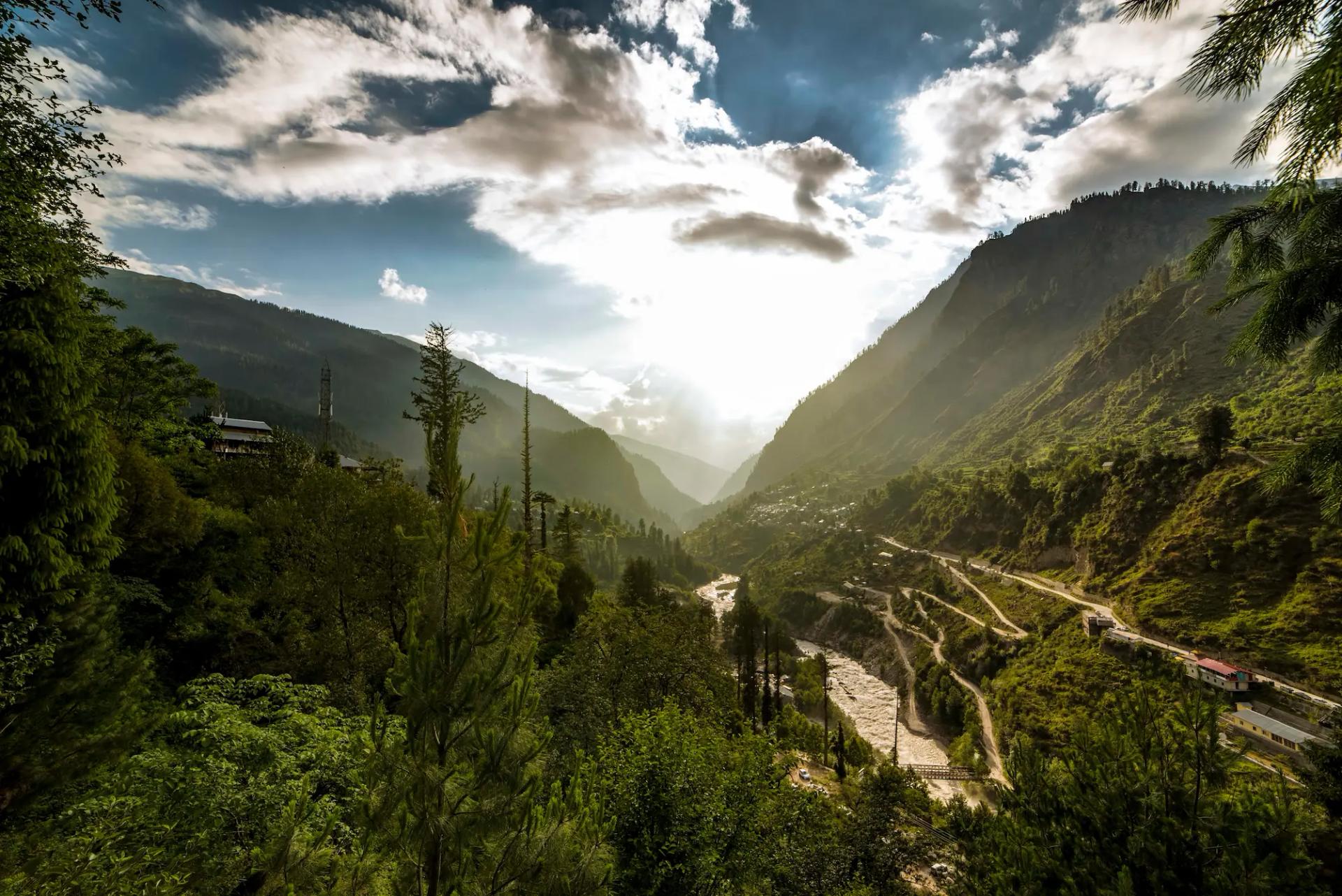
The café owner is explaining, in Hebrew, which momos are vegan. She is from Tel Aviv. The menu on the wall behind her is written in English, Hebrew, and Hindi, with prices in rupees. Outside, the Parvati River is audible — a constant roar of snowmelt over boulders — and the pine forest climbs so steeply on both banks that the sky, from inside the café, is just a thin ribbon of blue above the treeline. I am in Kasol, in the Parvati Valley of Himachal Pradesh, eating hummus for breakfast at altitude, and I am not entirely sure what country I am in. The answer, I will come to understand, is that you are in all of them at once — which is precisely the point.
Kasol is one of those rare places that generates extraordinary loyalty among the people who find it, and genuine bewilderment among those who do not. It is not particularly beautiful, in the conventional hill-station sense: there are no sweeping views from a ridge, no lake, no famous temple. It is a village on the banks of a river, in a pine forest, at 1,580 metres. The main street is approximately two hundred metres long. And yet it pulls people — solo backpackers from Delhi and Pune, Israeli travellers on their post-army odyssey, trekkers using it as a base camp, spiritually-inclined travellers heading to Manikaran's hot springs, families from across the country — with a consistency that well-marketed hill stations four times its size cannot match. This guide will try to explain why.
The short explanation is this: the Parvati Valley, of which Kasol is merely the loudest and most accessible chapter, is a ninety-kilometre corridor of extraordinary variety. At its lower reaches, near Kasol, you have pine forest, riverside trails, and an improbable café culture that has evolved over thirty years of international backpacker traffic. Deeper into the valley, past Manikaran's geothermal springs and the terraced fields of Barshaini, the landscape opens into glacial meadows and high passes. The treks that begin here — to Kheerganga's hot springs, to the hidden village of Tosh, to the notoriously strict community at Malana, to the 4,220-metre snowfield of Sar Pass — are among the finest and most varied in Himachal Pradesh. Understanding Kasol means understanding all of this, not just the street food.
The Geography of the Parvati...
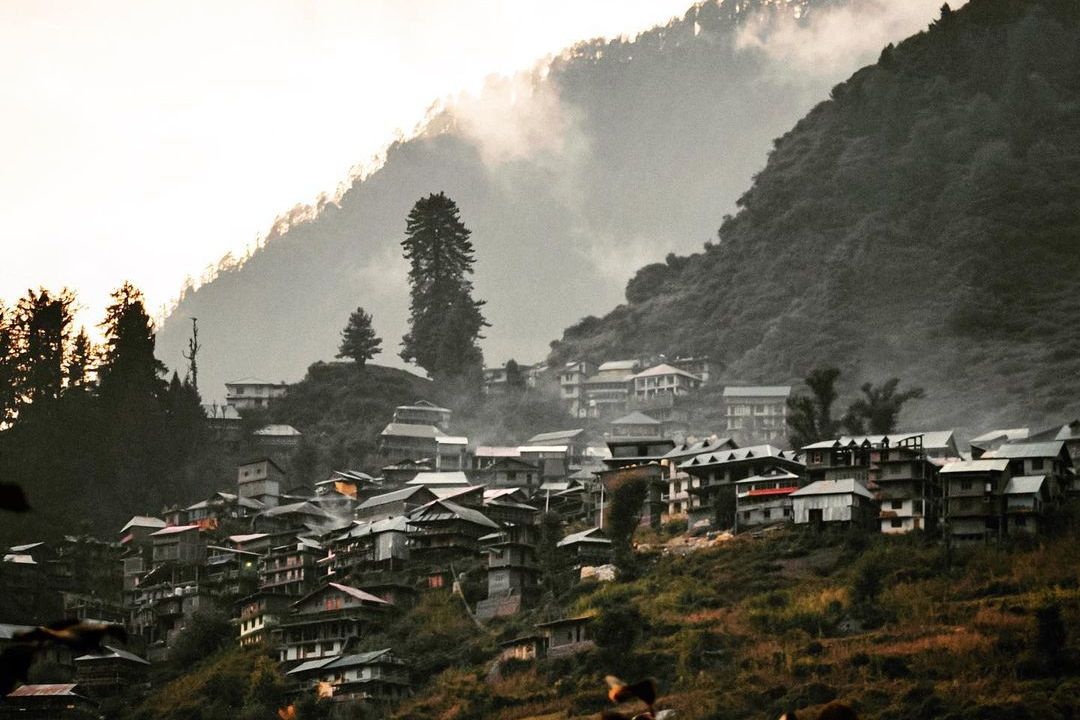
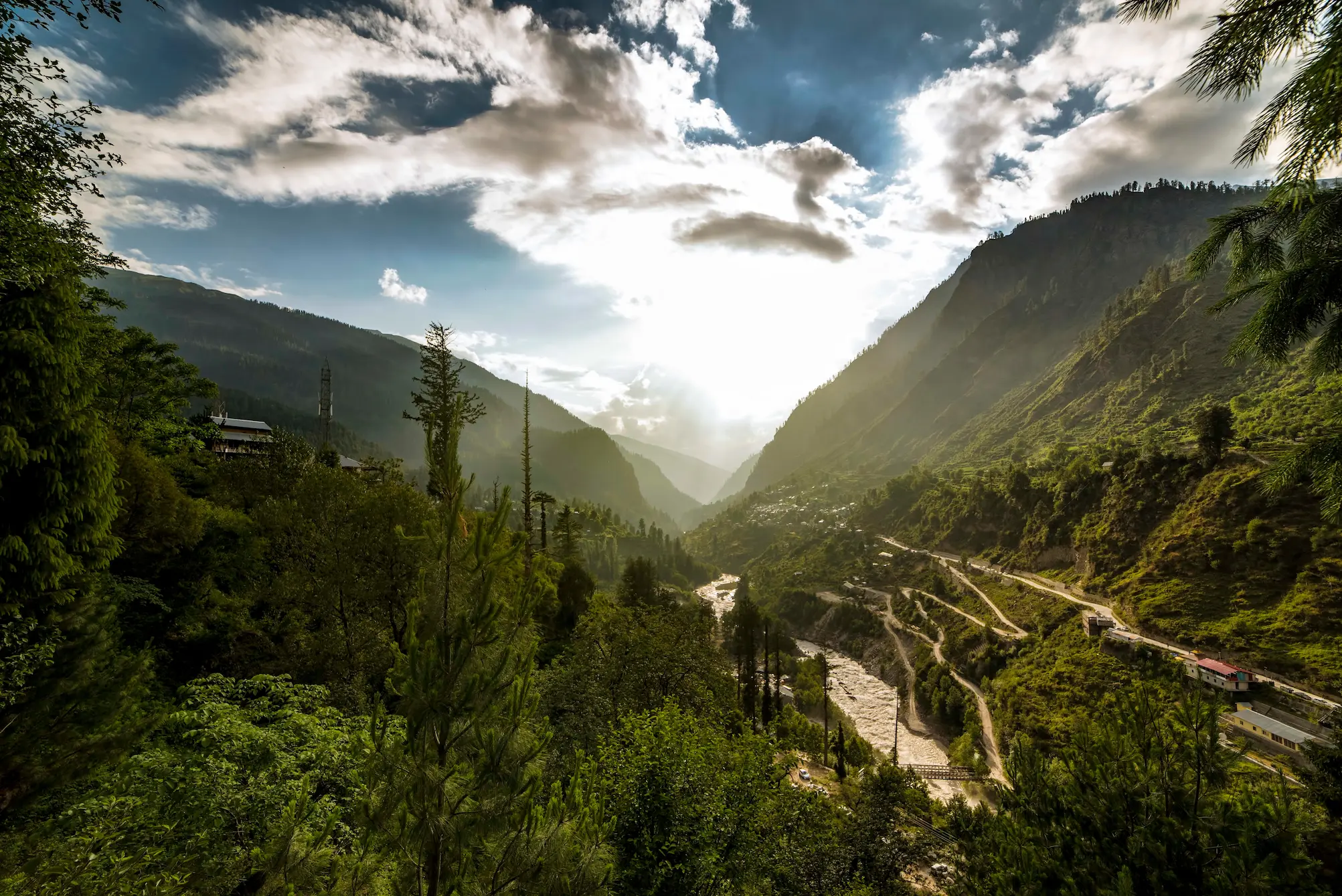
The Parvati River is born at the Man Talai Glacier, far up the valley beneath the Pin Parvati Pass — the high ridge that separates this corner of Himachal from the cold deserts of Spiti. It flows southwest for roughly ninety kilometres before joining the Beas near Bhuntar, and it is a river with a personality: fast, cold, opaque with glacial silt, relentlessly loud. Every settlement in the valley — Kasol, Manikaran, Tosh, Pulga, Kalga, Barshaini — sits either directly on its banks or on the slopes immediately above them, and the river is the valley's metronome. When the snowmelt peaks in May and June, the Parvati rises and quickens and becomes genuinely dangerous. When it settles in September and October, the whole valley settles with it.
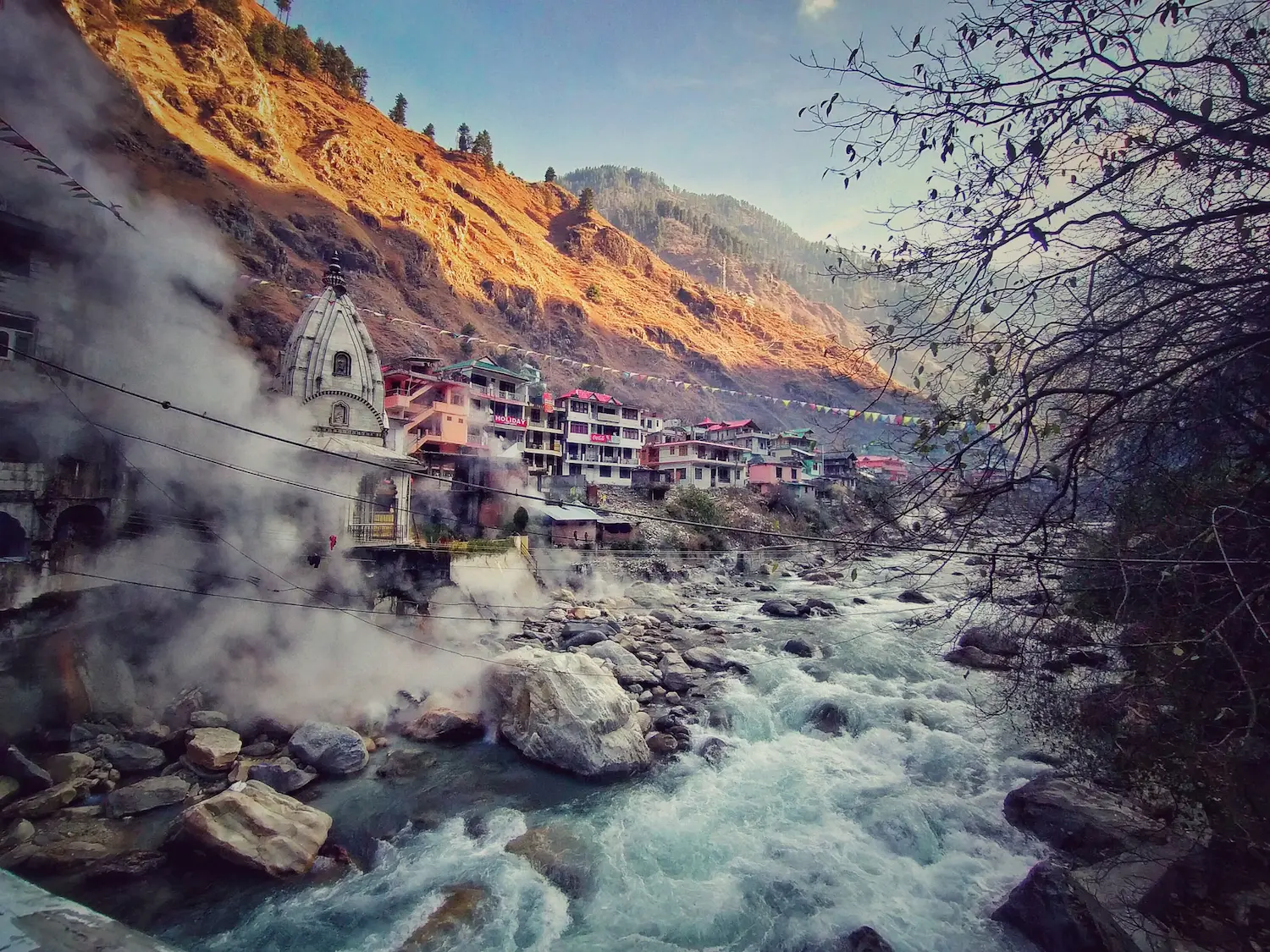
The name Parvati is not incidental. The valley is steeped in the cosmology of the goddess: the name of the town of Manikaran derives from the legend that Goddess Parvati lost her mani — her jewel or earring — in the river here, and that Lord Shiva performed his tandava dance to retrieve it from the serpent king Shesh Nag who had stolen it. Hot springs still bubble up from the ground at Manikaran — 80°C water emerging from fissures in the riverbed — and the local belief that the Goddess's presence warms the earth is not difficult to understand when you are standing next to a steaming natural spring in a narrow Himalayan gorge. The Kullu district in which the valley sits is one of the most deity-dense regions of Himachal Pradesh, with its famous Kullu Dussehra festival, attended by hundreds of local devtas — village deities — being perhaps the most extraordinary calendar event in the state. The Parvati Valley has its own variant of this devotion, quieter and more internalised, which you sense most strongly at the gurudwara in Manikaran and in the ancient temples scattered through the upper villages.
The valley became internationally known in the 1980s and 1990s through a combination of two things that travel writing usually discusses separately: its extraordinary trekking terrain, and its cannabis. The high-altitude cannabis cultivated in the villages of the upper valley — particularly in Malana — has been traded for centuries; it entered the international backpacker circuit as "Malana Cream" in the drug-culture literature of the 1980s, and the result was a steady influx of a particular kind of traveller that has never entirely stopped. The Israeli connection, specifically, accelerated in the late 1990s when young Israelis completing their mandatory military service began travelling in large numbers to India; many settled in Kasol for months at a time, and the Hebrew menus, Israeli-run cafés, and cultural infrastructure that followed gave Kasol its enduring nickname of "Mini Israel." These are facts about the valley that an honest guide must include, because they are part of what shaped the place you will encounter.
| FACT | DETAIL |
|---|---|
|
Location |
Parvati Valley, Kullu District, Himachal Pradesh |
|
Kasol altitude |
1,580 m (5,184 ft) |
|
Parvati River source |
Man Talai Glacier, below Pin Parvati Pass |
|
Valley length |
~90 km (Bhuntar to Mantalai Lake) |
|
Distance from Delhi |
~520 km (12–14 hours by road) |
|
Nearest airport |
Bhuntar (Kullu-Manali), 31 km from Kasol |
|
Nearest railway station |
Joginder Nagar (~144 km); Chandigarh (~295 km) |
|
Best season |
March–June & September–November |
|
Avoid |
July–August (active landslide zone on Bhuntar–Manikaran road) |
|
Kheerganga altitude |
~2,950 m (9,678 ft) |
|
Sar Pass altitude |
4,220 m (13,845 ft) |
|
Malana village altitude |
~2,652 m (9,938 ft) |
|
Tosh village altitude |
~2,400 m (7,874 ft) |
|
Camping ban |
Kheerganga overnight camping BANNED since July 2024 — day trek only |
ESSENTIAL FACTS
KASOL IS LIKE A BOX OF HANDMADE CHOCOLATES ASSEMBLED FROM THREE DIFFERENT COUNTRIES — ISRAELI BREAKFASTS, HIMACHALI TROUT, ITALIAN WOOD-FIRED PIZZA, ALL ARRANGED IN A PINE FOREST BESIDE A RIVER THAT SOUNDS LIKE APPLAUSE. YOU DON'T UNDERSTAND HOW IT WORKS UNTIL YOU'RE HALFWAY THROUGH THE BOX.
Getting to Kasol...
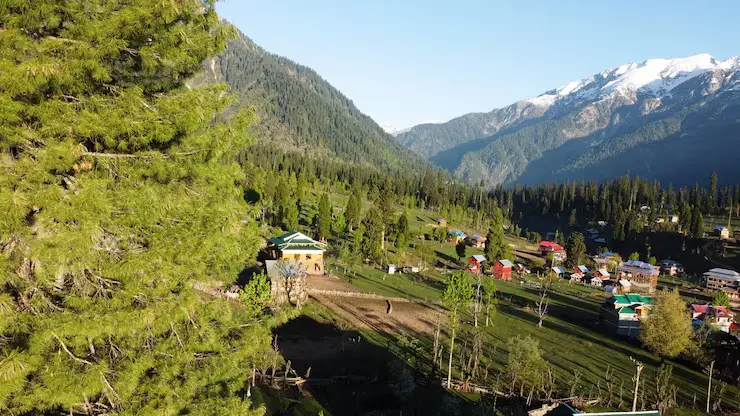
The nearest airport, Bhuntar (Kullu-Manali Airport), is 31 kilometres from Kasol — but Bhuntar is small, frequently fogged out, and connects only to Delhi and occasionally to Chandigarh. In practice, the most reliable way to reach Kasol from most parts of India is by overnight bus or by train to Chandigarh followed by a road journey. HRTC Volvo buses from Delhi ISBT to Bhuntar run daily at around ₹1,200–1,550 for the roughly twelve-hour overnight journey; from Bhuntar, a local bus to Kasol costs ₹50–80 and takes about an hour, or you can take a shared cab for ₹100–250. If you prefer the train, the Chandigarh Shatabdi from Delhi arrives at a reasonable hour and connects to Kasol by taxi or shared cab from Chandigarh.
The drive itself, once you enter the Parvati Valley at Bhuntar and turn northeast off the Kullu-Manali highway, is among the more memorable road journeys in Himachal. The narrow road follows the Parvati River upstream through gorges that tighten and widen in alternation, past apple orchards and terraced potato fields, through villages where women in bright Kullu dress carry baskets on their backs and children wave at passing vehicles. The thirty-one kilometres from Bhuntar to Kasol takes about an hour in normal conditions but can stretch considerably in peak season, when the road clogs with tourist traffic and the occasional landslide-cleared section forces single-lane caution. The drive in from Bhuntar is, in fact, your first introduction to the valley's principal rule: patience.
| ROUTE | FROM | DISTANCE | TIME | NOTES |
|---|---|---|---|---|
|
HRTC Volvo bus to Bhuntar, then local bus/taxi |
Delhi ISBT |
~520 km |
12–14 hrs |
HRTC Volvo: ₹1,200–1,550 to Bhuntar; local bus ₹50–80 to Kasol; shared cab ₹100–250 |
|
Private taxi |
Delhi |
520 km |
12–13 hrs |
₹6,000–9,000 depending on vehicle |
|
Fly to Bhuntar then taxi |
Delhi (Bhuntar flights) |
31 km post-landing |
~1 hr from Bhuntar |
Bhuntar flights limited and often cancelled; Chandigarh airport more reliable |
|
HRTC bus via Chandigarh |
Chandigarh |
~295 km |
6–8 hrs |
More reliable connection; overnight buses available |
|
Kasol to Manikaran |
Kasol |
6 km |
15–20 min |
Bus ₹15; taxi ₹150–200 |
|
Kasol to Barshaini (Kheerganga base) |
Kasol |
17 km |
40–45 min |
Local bus ₹40–60; shared jeep ₹80–100/person; private taxi ₹600–800 |
|
Kasol to Jari (Malana base) |
Kasol |
~13 km |
25–30 min |
Taxi from Jari to Malana trailhead: ₹850–1,300 |
|
Kasol to Manali |
Kasol |
~80 km |
2.5–3 hrs |
Easy day trip or add-on |
ROUTES AND TRANSPORT
When to go...
The Parvati Valley has two excellent windows and one very poor one. March to June and September to November are the bookends of a genuinely good visit; July and August are for the enthusiastic and the resilient only. The July-August monsoon brings the valley to extraordinary lushness — waterfalls appear on every cliff, the river turns white, and the forest is saturated with green — but it also brings the landslides. The Bhuntar–Manikaran road is an active landslide zone from June onwards; in February 2026, a major slide blocked the Manikaran–Barshaini road for days, stranding travellers in Tosh and Barshaini. The monsoon closes several trekking routes entirely and makes the Kheerganga trail genuinely dangerous.
September is, by wide consensus among frequent visitors, the single best month. The rain has stopped, the waterfalls are still running, the Parvati River has settled to manageable levels, the trails are open, the guesthouses have space, and the light in the evenings is the colour of buckwheat honey. October follows it closely, adding the apple harvest and a crispness to the air that makes every walk feel like something from a different altitude than it actually is. Peak season (May to early June) has the advantage of the full trekking menu — Sar Pass is open, Kheerganga is at its most popular — but Kasol's main street becomes very crowded, especially on weekends.
| MONTH | WEATHER | BEST FOR | CAUTIONS |
|---|---|---|---|
|
March |
Cool, dry; snow still on high passes |
Early-season peace; cafés reopening; Kheerganga trek starts March–April |
Cold nights; some guesthouses still shut early March |
|
April |
Warming; rhododendrons in bloom |
Sar Pass trek opens mid-April; Kheerganga trail clear |
Weekends crowded; pre-book accommodation |
|
May |
Warm, pleasant 15–22°C in Kasol |
Peak trekking; Sar Pass best in May–June; Kheerganga lovely |
Delhi holiday rush; Kasol gets very crowded on weekends |
|
June |
Hot in Kasol (25°C+); cool at altitude |
Last good trekking month before monsoon; Kheerganga; Sar Pass closes mid-June |
Bhuntar–Manikaran road landslide risk starts |
|
July–August |
Monsoon; heavy rain; landslide risk |
Not recommended for trekking; only Kasol village visit possible |
Active landslide zone on Manikaran road; Barshaini road blocked in Feb 2026 |
|
September |
Post-monsoon; lush green; clear skies |
Best overall month — trails open, crowds thin, light extraordinary |
First 2 weeks may still see rain; verify road status |
|
October |
Crisp, clear; apple harvest season |
Excellent weather; Kheerganga open; cultural authenticity peak |
Temperatures drop after dark; warm layers essential |
|
November |
Cold; first snows on higher passes |
Quiet and beautiful; only Kasol–Manikaran corridor reliable |
Kheerganga may close; Barshaini road icy |
|
December–February |
Deep winter; Kasol cold but accessible |
Snow lovers; very quiet village life |
Many cafés shut; Kheerganga/Tosh inaccessible; not for casual visitors |
MONTH-BY-MONTH SEASON GUIDE
SEPTEMBER IN PARVATI VALLEY IS LIKE FINDING A TOBLERONE PEAK YOU THOUGHT WAS ONLY ACCESSIBLE IN SUMMER, AND DISCOVERING IT'S EVEN BETTER NOW — THE CROWDS ARE GONE, THE LIGHT IS GOLD, AND THE MOUNTAIN HAS KEPT ALL ITS BEST SECRETS FOR YOU.
Things to do in Kasol and Parvati Valley...
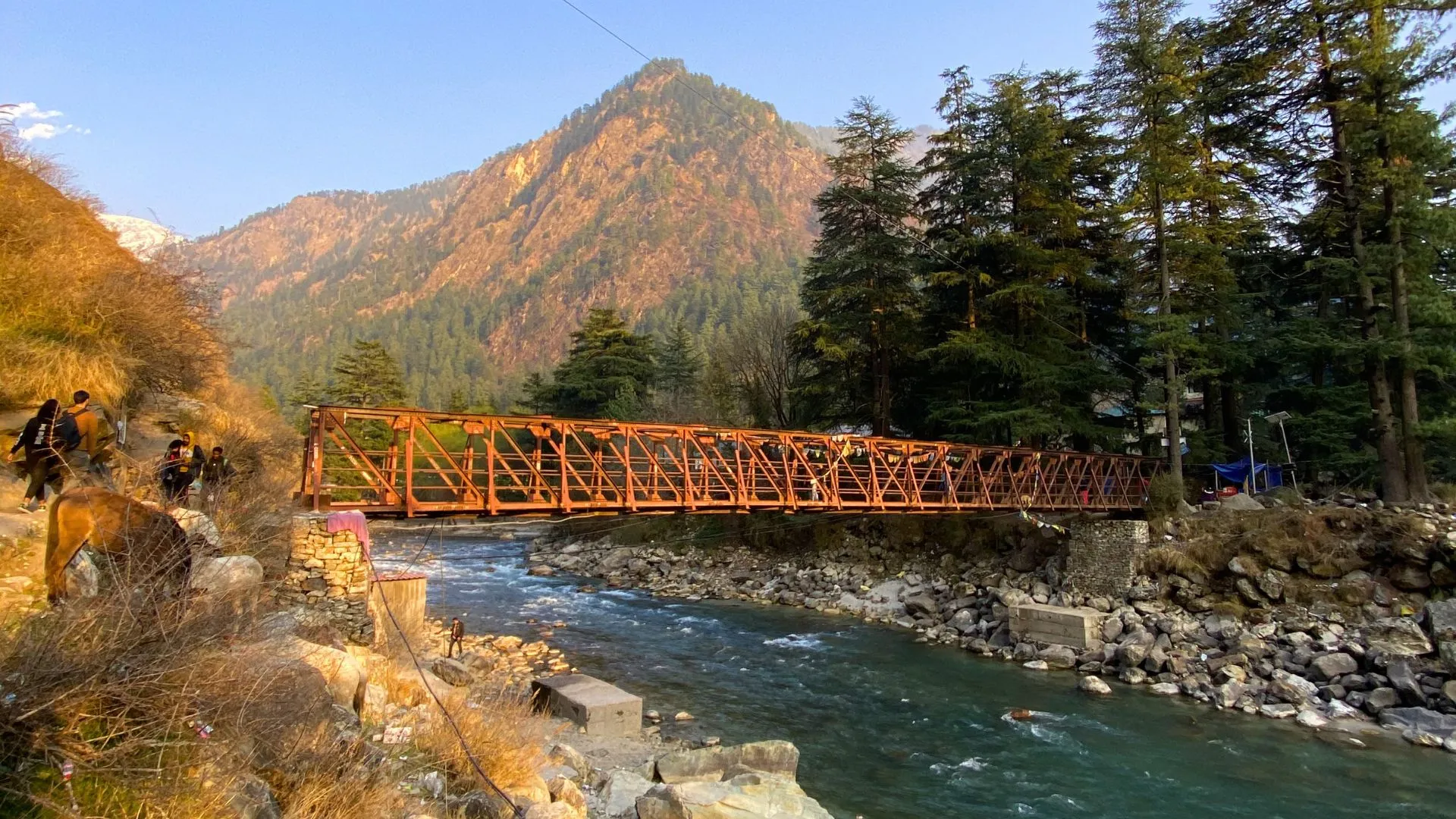
Walk to Chalal and sit by the river — the easiest and most overlooked pleasure in Kasol is also the one most consistently praised by people who have made repeat visits over many years. Cross the suspension bridge from Old Kasol over the Parvati River, follow the trail along the bank for twenty-five minutes, and you reach Chalal village — a quieter cluster of guesthouses, basic cafés, and pine trees where the river is visible below and the pace of life drops several notches from even Kasol's already-relaxed standard. Café Sunshine at the end of this short walk serves trout, shakshuka, and chai with a view that rewards the minimal effort handsomely. In the early morning, before the day-trippers arrive, the riverside path between Kasol and Chalal is one of the finest quiet walks in Himachal Pradesh.
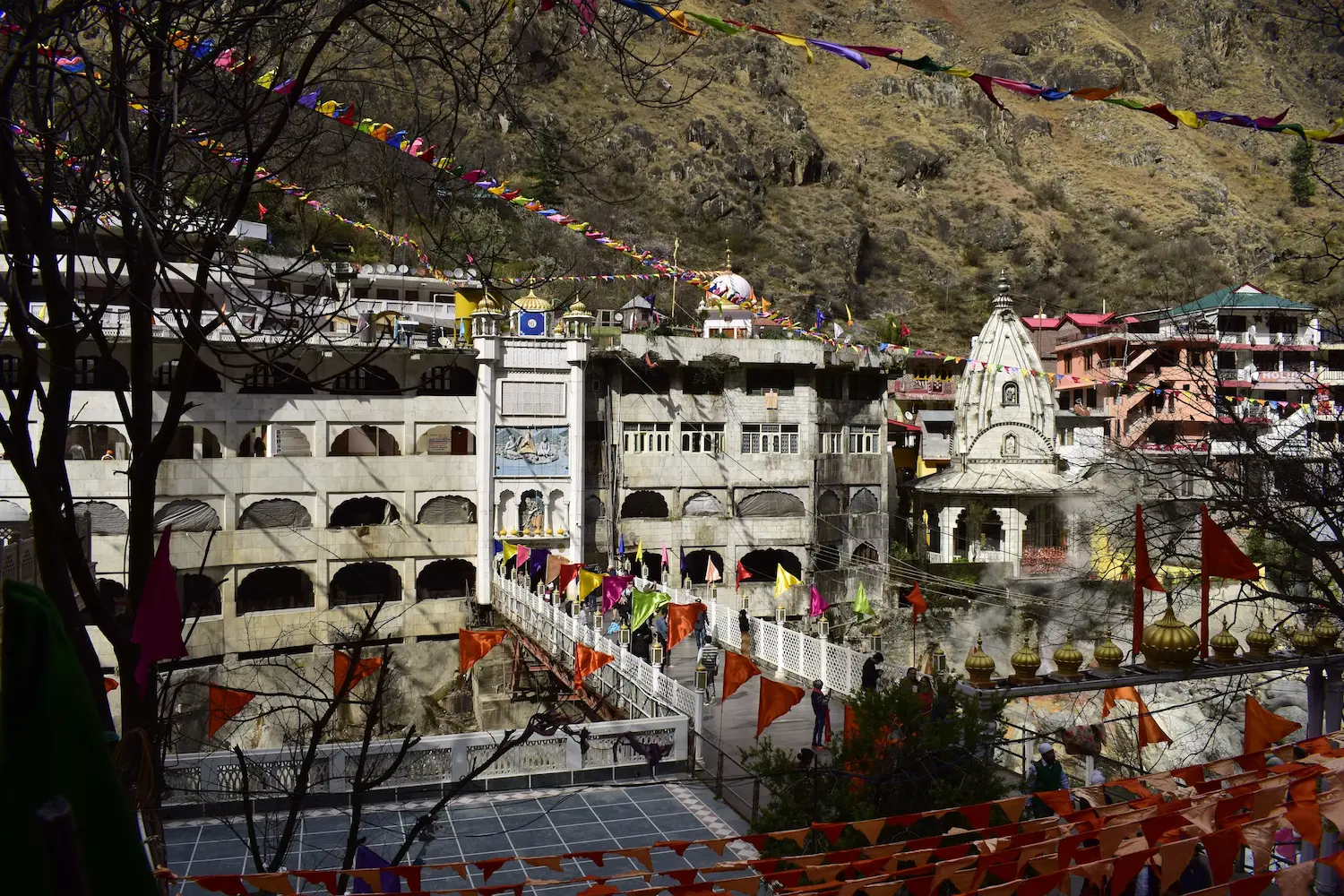
Manikaran Sahib — where the earth cooks the langar — six kilometres up the valley from Kasol, the town of Manikaran is, depending on your perspective, either a bustling pilgrimage site or one of the most genuinely moving spiritual places in north India. The Gurudwara Manikaran Sahib is revered by Sikhs as the site where Guru Nanak Dev Ji, during his third
udasi — missionary journey — in 1574 CE, asked a rock to be lifted and found hot spring water beneath it sufficient to cook the community's langar (free communal meal). The story has the ring of metaphor, but the hot springs are entirely literal: water at 87°C emerges from the earth at the gurudwara's foundations, and rice cooked in sealed containers lowered into this water emerges — the cooks will tell you — perfectly prepared. The langar is free, open to all, and extraordinary. For Hindus, Manikaran is equally sacred: this is where Goddess Parvati lost her mani (jewel), giving the town its name. Both traditions coexist in the same small complex of temples and shrines with a generosity that is itself a kind of quiet miracle.
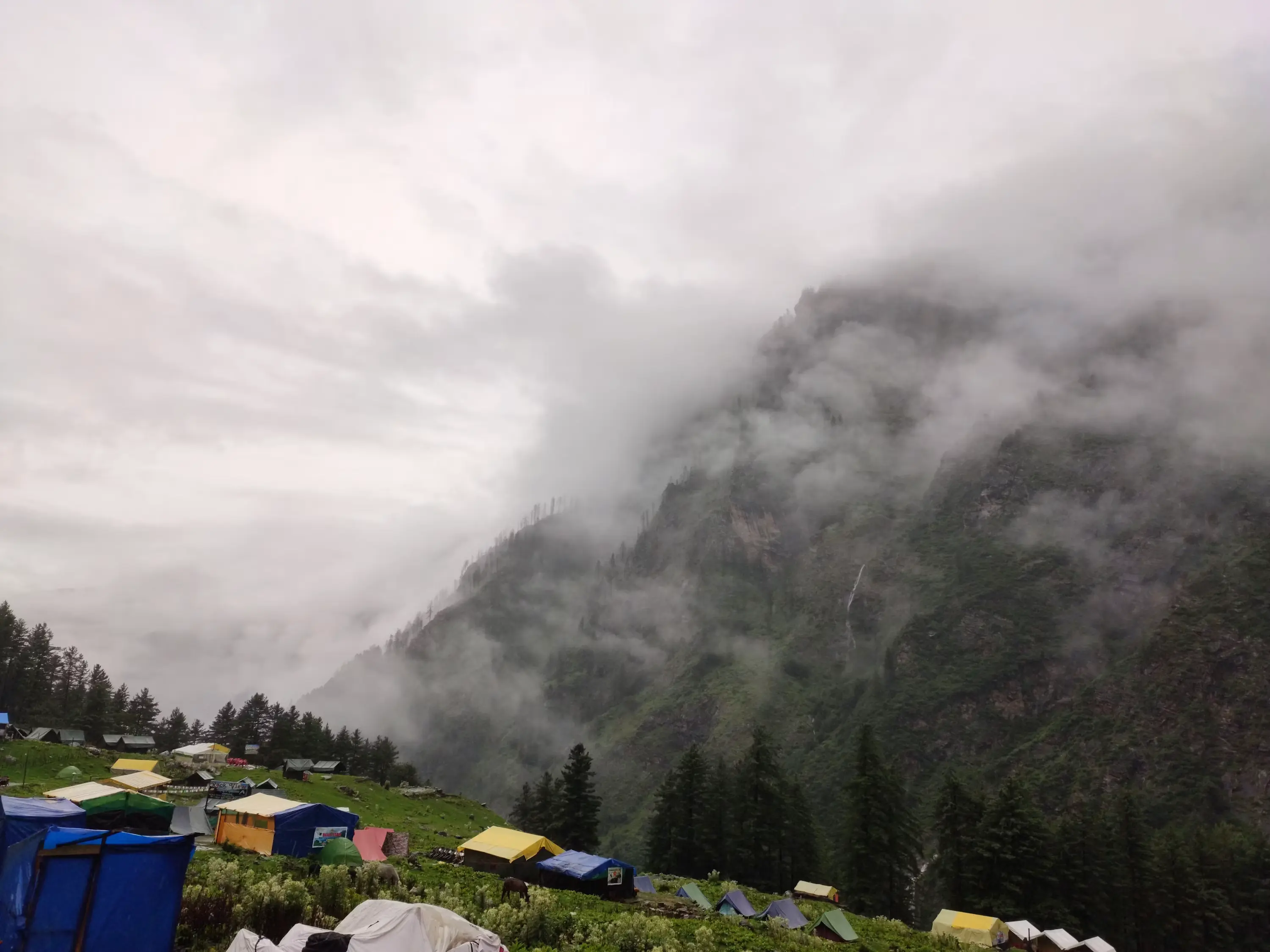
Kheerganga — the hot spring plateau — the name means "the Milky Sacred Water" —
kheer being the white rice pudding beloved across north India — and refers to the naturally hot, mineral-rich spring water that feeds a natural pool at the meadow plateau above Barshaini at nearly 3,000 metres. The trek from Barshaini is 12 kilometres, climbing roughly 900 metres through dense deodar and pine forest, past the Rudranag waterfall and the small temple dedicated to Kartikeya, son of Shiva and Parvati, who, legend holds, meditated here for eleven thousand years. A critical update for 2026: the Himachal Pradesh Forest Department banned overnight camping at Kheerganga in July 2024, and the ban remains strictly enforced. Entry is permitted only before 10am; all trekkers must descend by 2pm. There are no exceptions, and violations result in permit revocation and FIR registration. Plan accordingly — overnight at Barshaini, Nakthan, Kalga, or Tosh, and start early.
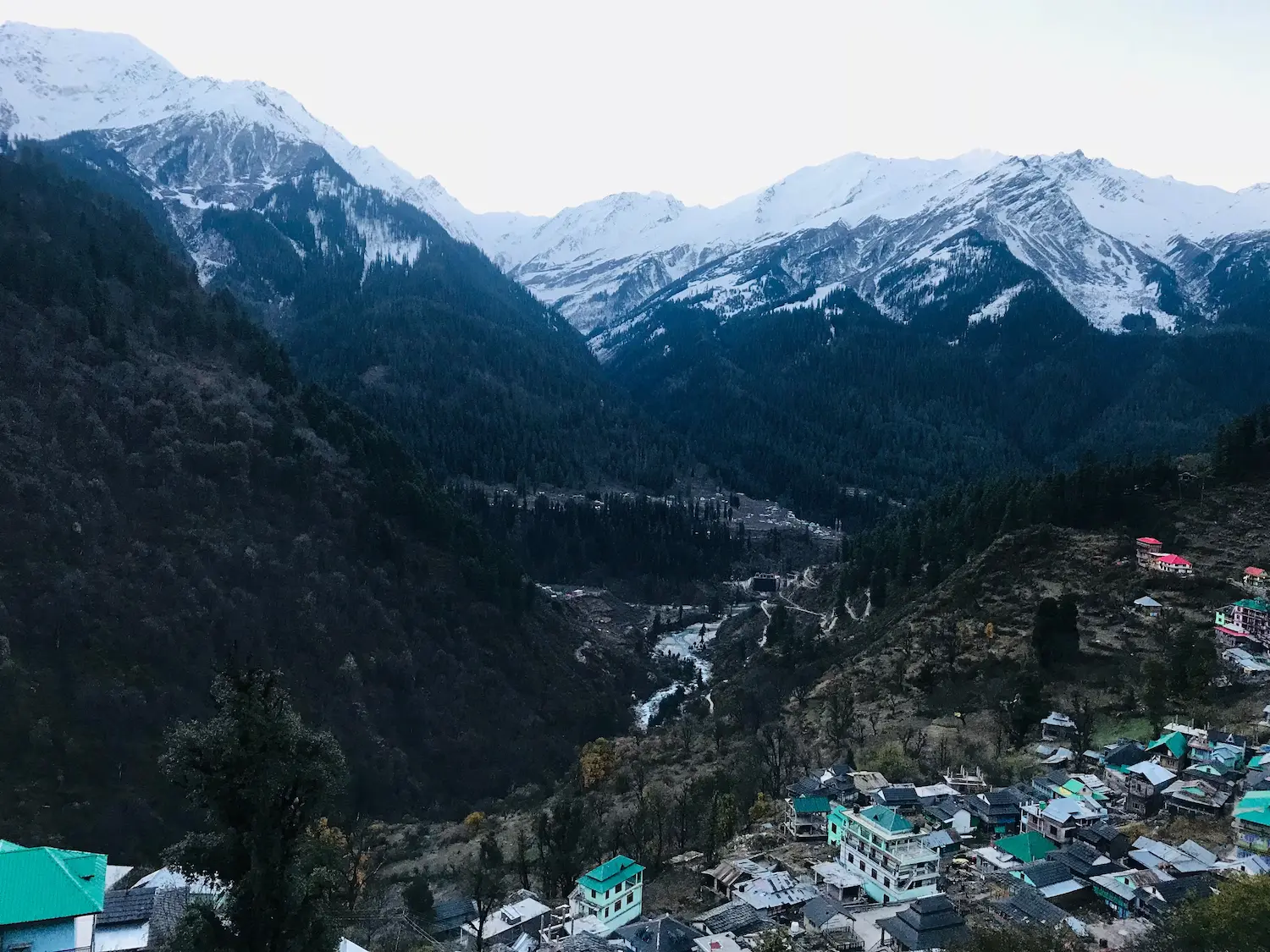
Tosh village — for those who want what Kasol used to be — twenty-one kilometres from Kasol via Barshaini, Tosh is the village that honest Kasol visitors often describe as their favourite place in the valley. At 2,400 metres on a mountain slope above the river, with the glaciated peaks of Papasura and White Sail visible on clear days, it has no vehicles inside the upper village — you walk from the gate, through narrow lanes between traditional wooden houses, past a 500-year-old temple to the sage Jamadagni Rishi. The cafés here serve wood-fired pizza and
siddu — the local steamed bread stuffed with walnuts and poppy seeds — alongside reasonable coffee, all with mountain panoramas that the ground-floor cafés in Kasol simply cannot match. Tosh is also a base for the Kutla Meadows, a higher-altitude extension of the Tosh trail that opens into alpine grassland ringed by snow peaks.
Malana — perhaps the most unusual village in India — the full story of Malana is long enough to require a book, and indeed several have been written about it. The short version: this ancient village, located in a side valley of the Parvati accessible by a 4-kilometre trail from the road-end near the Malana Hydroelectric Project, has maintained a functional democracy with its own two-house council (called the Hakima) since before written history. Its residents claim descent from the soldiers of Alexander the Great — a theory that serious anthropologists debate but that the villagers themselves maintain with quiet conviction. The language spoken here, Kanashi, bears no relationship to any neighbouring dialect. And crucially for visitors: Malana operates on a strict no-touch protocol — you must not touch walls, houses, belongings, or residents; shopkeepers place goods on a counter and you put money on the same counter; physical contact triggers a ritual purification bath and a fine of ₹2,500–3,500. This is not a tourist performance. It is a genuine and ancient social code. Observe it meticulously, with respect and without irony. Photography is restricted at the temple and in many parts of the village — always ask before pointing a camera. Overnight stays in Malana are currently banned; it is a day-trip destination. Take a taxi from Jari to the road-end (₹850–1,300), trek 4km, spend 2–3 hours, and leave before dark.
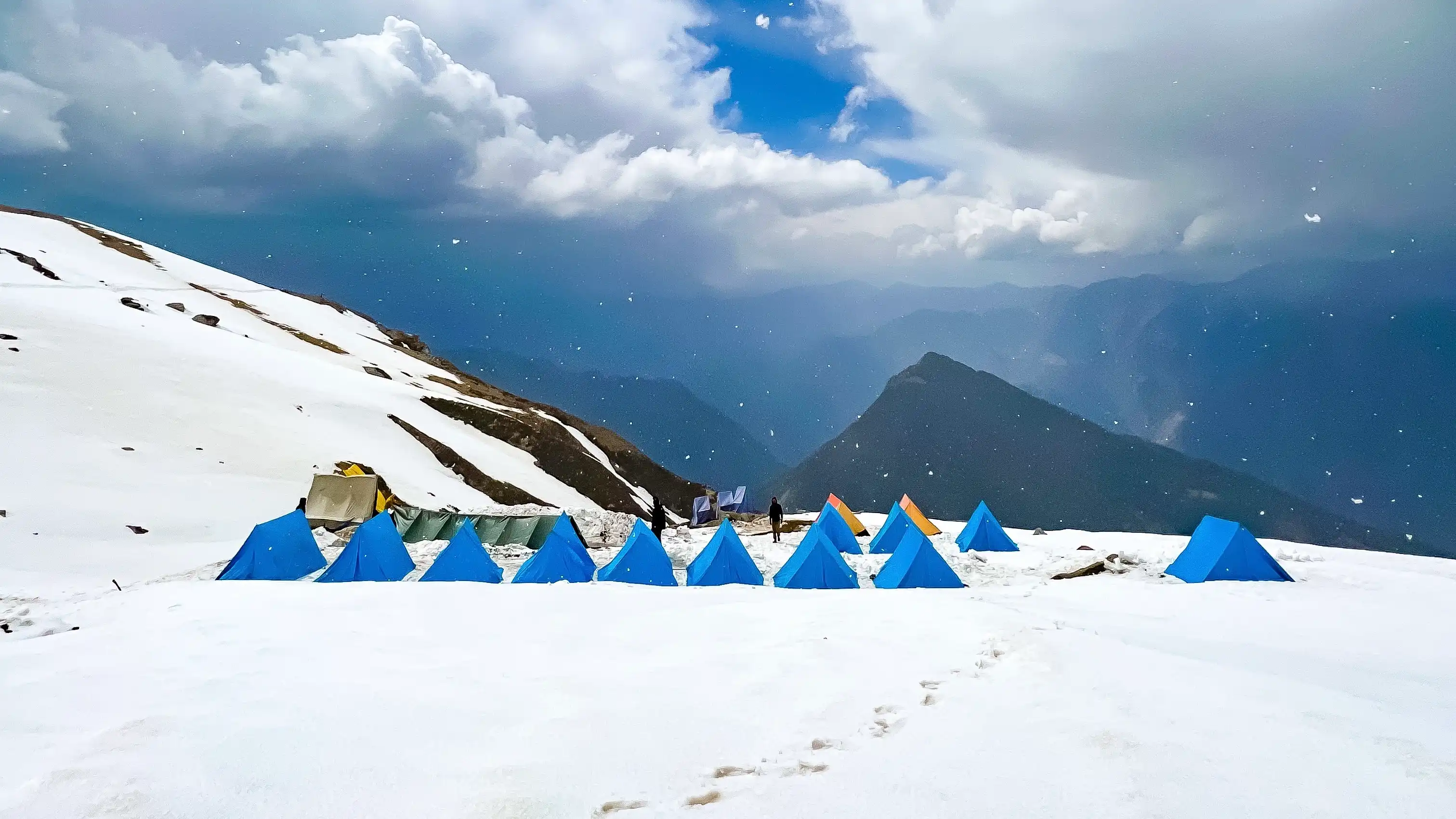
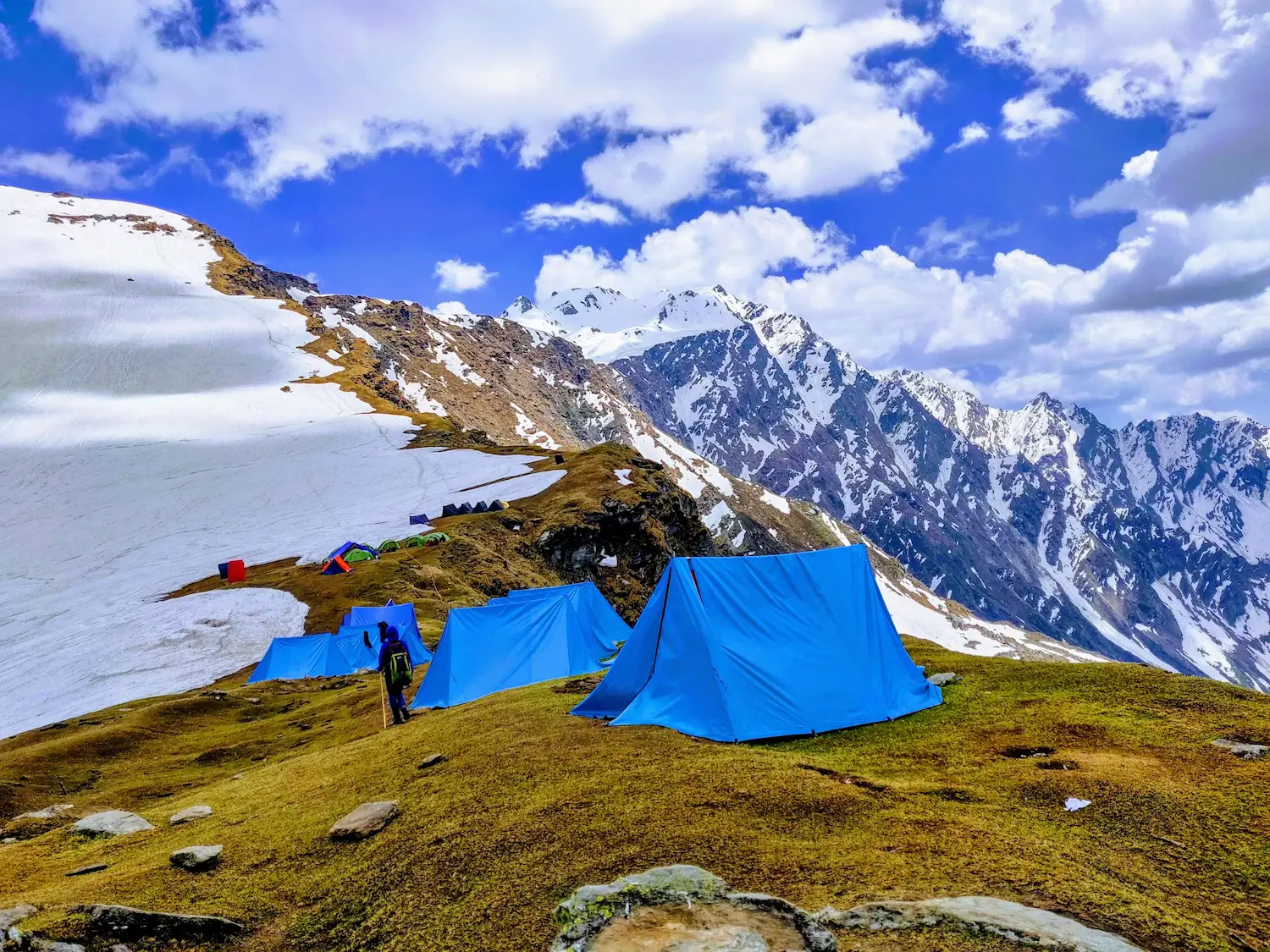
The Sar Pass trek — Kasol's finest adventure — if Kheerganga is Kasol's warmest experience, Sar Pass is its most demanding and, for many, its most rewarding. The five-day, 50-kilometre circuit begins in Kasol, climbs through the traditional village of Grahan to the high-altitude camps at Min Thach and Nagaru, ascends the snowfield to the pass at 4,220 metres, and descends to Biskeri Thach meadow before returning to Barshaini. The pass is open mid-April to mid-June only — after which monsoon snow and ice make it impassable. The defining moment is the descent from the pass itself: a long, exhilarating snow slide that veteran trekkers describe in food terms only one way — like being shot down a very cold, very white waterslide made entirely of Mars Bar filling. It is the kind of physical joy that makes you understand, for a moment, why people come to mountains in the first place.
The Israeli café circuit — a food experience unlike any other in India — the concentration of Israeli-influenced cafés in Kasol's Old and New halves is genuinely extraordinary. Moon Dance Café is the long-established favourite, known for its artsy décor, Mexican-Italian-Israeli menu, and the kind of unhurried service that signals it does not particularly need your business in a hurry. Mama Café, with its pool table and trance soundtrack, serves some of the best shakshuka — eggs poached in a spiced tomato sauce — in the valley. Sunshine Café in Chalal, after the short riverside walk, offers freshly caught trout with views of the Parvati. The food culture in Kasol is not merely a backpacker convenience; it is a thirty-year accretion of a distinct culinary identity, and it is worth engaging with seriously.
| TREK | DISTANCE / TIME | ALTITUDE | DIFFICULTY | BEST SEASON | NOTES |
|---|---|---|---|---|---|
|
Chalal (village walk) |
1.5 km / 25 min |
~1,600 m |
Easy — flat to gentle |
Year-round |
Across suspension bridge from Kasol; riverside café stop |
|
Kheerganga |
12 km from Barshaini / 5–6 hrs ascent |
2,950 m |
Easy–Moderate |
March–June, Sep–Oct |
Day-trek ONLY (2024 camping ban enforced 2026); enter before 10am, descend by 2pm; hot springs free |
|
Tosh Village |
3 km from Barshaini / 1.5 hrs |
2,400 m |
Easy |
Year-round (road to Barshaini open) |
Road to Barshaini gate motorable; from gate 3km uphill walk; village cafés excellent |
|
Grahan Village |
9 km from Kasol / 3–4 hrs |
~2,300 m |
Easy–Moderate |
April–November |
Quieter than Chalal; traditional Himachali village; basic homestays ₹300–800 |
|
Rasol Village |
~6 km from Kasol / 3–4 hrs |
~3,050 m |
Moderate |
April–November |
Less crowded; panoramic Parvati Valley views; basic homestays available |
|
Malana trek |
4 km from road-end / 1–1.5 hrs |
2,652 m |
Easy (steps laid) |
May–October |
Taxi from Jari (~23 km, ₹850–1,300); register at police checkpost; no overnight (ban in place) |
|
Sar Pass Trek |
50 km / 5 days |
4,220 m |
Moderate |
Mid-April to mid-June ONLY |
Kasol → Grahan → Min Thach → Nagaru → Sar Pass → Biskeri Thach → Barshaini; famous snow-slide descent; registered agencies recommended |
|
Pin Parvati Pass (advanced) |
105 km / 9–11 days |
5,319 m |
Difficult / Technical |
July–September |
Valley-crossing route to Spiti; requires full expedition setup; not for beginners |
TREKS FROM KASOL — 2026 GUIDE
MALANA IS THE LEAST TOURIST-FRIENDLY PLACE I HAVE EVER VISITED AND THE MOST FASCINATING. IT DOES NOT WANT YOUR APPROVAL OR YOUR INSTAGRAM. IT HAS BEEN RUNNING ITS OWN PARLIAMENT SINCE BEFORE MOST EUROPEAN DEMOCRACIES EXISTED. APPROACH IT AS A GUEST, NOT A SPECTACLE — AND IT WILL GIVE YOU MORE THAN YOU EXPECTED.
Things not to do in Kasol and Parvati Valley...
Do not attempt overnight camping at Kheerganga — the Himachal Pradesh Forest Department's overnight camping ban at Kheerganga, imposed in July 2024 and continuing through 2026, is strictly enforced. Entering after 10am or remaining after 2pm results in permit revocation and FIR registration against the trekker. This is not a theoretical risk — Forest Department personnel conduct checks actively during peak season. Plan your Kheerganga day around an early start from Barshaini: leave by 7am, reach the top by noon, soak in the hot spring, eat, and begin the descent. Overnight stays are available in Barshaini, Nakthan, Kalga, and Tosh; none of these alternatives are hardships.
Do not touch anything in Malana — this bears repetition because every season brings travellers who treat the no-touch rule as a quaint curiosity rather than a genuine cultural code. Touching a wall, a house, or a villager triggers a ritual purification requirement for the person touched — they must bathe and perform a religious ceremony to cleanse themselves of the contact. The fine of ₹2,500–3,500 is the lesser consequence; the more significant one is the disruption to someone's day and the reinforcement of every piece of evidence that outsiders are, in the Malanese worldview, genuinely unclean and intrusive. The no-touch protocol is not about you — it is about a community that has maintained its distinctness for centuries. Respect it as a guest would respect a host's home.
Do not ignore the safety picture of the upper valley — this is the piece of information that many Kasol guides omit, and omitting it does visitors a disservice. Parvati Valley has seen 1,078 disappearances between 2003 and 2023, including 21 foreign nationals whose fates have never been fully determined. The valley's unofficial nickname — "India's Bermuda Triangle" — is journalistic hyperbole, but it points to something real: the combination of dense forest, unmarked high-altitude trails, the drug trade's presence in the upper valley, and a shortage of mobile connectivity creates conditions in which solo trekkers can and do get into serious trouble. The practical response is straightforward: do not trek alone above Barshaini; hire a registered local guide for any route beyond Kheerganga or above 3,000 metres; leave your itinerary with your guesthouse; ensure you have a BSNL SIM; and stay on marked trails. The valley is not dangerous for sensible, prepared trekkers. It has been dangerous for those who treated its remoteness as a reason for recklessness.
Do not smoke or carry cannabis — Malana Cream, the high-resin hashish cultivated in the upper valley, is internationally famous. It is also illegal under India's Narcotic Drugs and Psychotropic Substances Act, and possession can result in a minimum ten-year prison sentence. The NDPS Act does not distinguish between quantities or between domestic and foreign nationals. The Kullu police conduct checks and have registered FIRs against travellers, including foreign nationals, for possession. The valley's drug culture is a real and complex social phenomenon; engaging with it as a tourist is a different matter entirely. The risk is not worth the consequence.
Do not visit Manikaran without gurudwara etiquette — the Gurudwara Manikaran Sahib is an active and significant place of Sikh worship, not a tourist attraction with hot springs attached. Cover your head (scarves are available at the entrance), remove your shoes, dress modestly with shoulders and knees covered, and do not photograph in the main prayer hall. The langar is served free to all, regardless of religion or background — accept it with gratitude and without treating it as a novelty. The correct way to experience Manikaran is as a guest at a spiritual institution, not as an observer of one.
Do not plan a monsoon trek — the Bhuntar–Manikaran road is an active landslide zone from mid-June onwards. Sections are blocked for days at a time — sometimes longer — and there is no reliable detour. Trekking routes above Barshaini become genuinely dangerous under monsoon conditions: trails wash out, nallahs (seasonal streams) flood without warning, and rescues in the upper valley are complex and slow. If you must visit during July–August, confine your exploration to Kasol village and the short Chalal walk, and do not attempt any trekking above the valley floor.
| REQUIREMENT | WHO | COST | WHERE |
|---|---|---|---|
|
No general permit required |
All Indian nationals in Kasol/Manikaran/Tosh/Kheerganga |
— |
No permit office required |
|
Kheerganga registration fee |
All trekkers |
~₹100 (nominal; verify locally) |
Gallu Devi Temple registration point at trailhead |
|
Malana police checkpost registration |
All visitors (especially foreign nationals) |
Free |
Naka (checkpost) ~1.5 km before Malana village on trek |
|
Forest permit (Sar Pass) |
All Sar Pass trekkers |
Included in agency fee (verify) |
Trek operator handles; pay before departure |
|
Rohtang vehicle permit (if crossing Rohtang) |
All vehicles crossing Rohtang Pass |
~₹50 online |
himachal.nic.in / Manali permit office — only if using this route |
|
Photography in Malana |
Seek permission; no photos of temples or interior |
Variable (gift/donation basis) |
Ask locally before every photograph |
|
Valid photo ID |
All travellers |
— |
Carry Aadhaar/passport for police checks at valley entry |
PERMITS AND PRACTICAL NOTES — 2026
Where to stay...
Kasol's accommodation is divided, like the village itself, into Old and New. Old Kasol, across the bridge, has the Israeli cafés and the more atmospheric cluster of small guesthouses close to the river. New Kasol has the main market, more accommodation infrastructure, and easier access to buses. For most purposes, the distinction matters less than proximity to the trail you plan to use: if you are trekking to Kheerganga, you want to be in or near Kasol proper so you can catch the early bus to Barshaini. If your priority is the cafés and the river walk, Old Kasol's cluster around the bridge is the sweetest spot.
Zostel Kasol in Katagla — an eleven-minute drive from central Kasol through forest — is the most consistently recommended option for young solos and groups, with its illuminated woodland pathway, rooftop café, and social atmosphere. The Hosteller is the other major hostel brand with a strong presence. For a more local experience, the guesthouses in Chalal village (a 30-minute walk from Kasol) offer the cheapest beds in the valley at ₹200–500 per night, and the walking-distance separation from Kasol's main street is a genuine advantage if quiet evenings matter to you.
For those planning to trek, a note on the upper valley: Tosh has several good homestays at ₹400–800 per night in traditional wooden houses with extraordinary views; these are worth the extra journey. Barshaini, the Kheerganga and Tosh trailhead, has basic guesthouses at ₹400–700 per night that make for the ideal overnight before an early-morning Kheerganga departure. Grahan and Rasol villages have homestays at ₹300–800 for those who want to sleep in a genuinely traditional Himachali setting away from the Kasol café circuit entirely.
| PROPERTY | LOCATION | TYPE | PRICE RANGE | NOTES |
|---|---|---|---|---|
|
Zostel Kasol (Katagla) |
Katagla village, 11 min from Kasol |
Hostel |
Dorm: ₹350–500/night |
Illuminated forest pathway; rooftop café; social vibe; book ahead for weekends |
|
The Hosteller Kasol |
Main Kasol area |
Hostel |
Dorm: ₹350–400/night |
Well-run social hostel; reliable hot water; popular with young solos and groups |
|
Riverside Guest House |
Near Old Kasol |
Guesthouse |
₹800–1,500/room |
Parvati River on one side; mountains on other; breakfast+lunch/dinner included |
|
Dream Valley Homestay |
Manikaran Road, Kasol |
Homestay |
₹1,000–2,000/room |
Terrace panoramic view; spacious family rooms; outdoor dining; near market |
|
Hill Crest Homestay |
Kasol hillside |
Homestay |
₹1,000–2,200/room |
Quieter uphill location; valley views; honest hospitality |
|
Chalal village guesthouses |
Chalal (30 min walk from Kasol) |
Basic guesthouses |
₹200–500/room |
Cheapest option; away from crowd; riverside walk to Kasol |
|
Tosh village homestays |
Tosh village |
Village homestays |
₹400–800/room |
No vehicles inside upper village; stunning peak views (Papasura, White Sail); traditional wooden houses |
|
Kheerganga camping shelters |
Kheerganga top |
Temporary shelters |
₹300–500/person |
Day-visit only under 2024/2026 ban — use these as reference for pre-ban context / shelters may operate legally as day facilities |
|
Spiti Mud Huts / Tethys Den (nearby) |
Tabo/nearby Spiti (add-on) |
Eco-cottages |
₹1,500–4,000 |
For those extending to Spiti from Parvati; highly recommended |
WHERE TO STAY — KASOL AND PARVATI VALLEY
Responsible travel in the Parvati Valley...
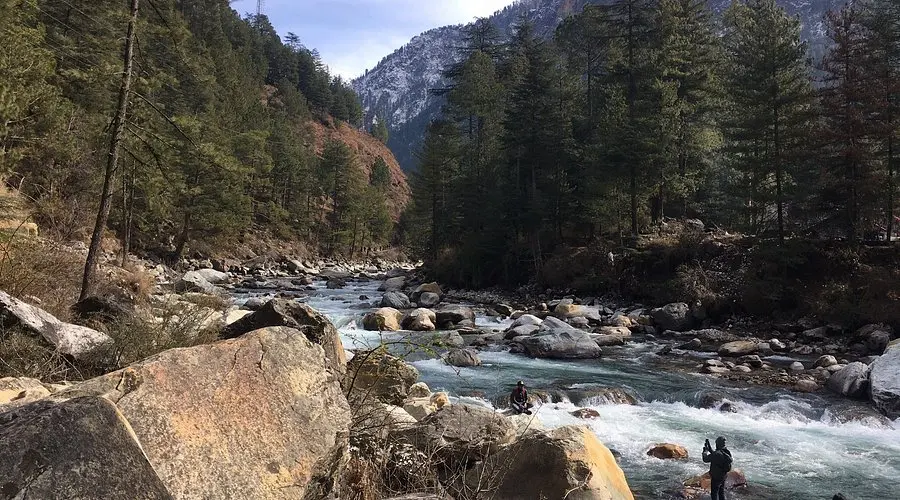
The Parvati Valley has been receiving international backpacker traffic for thirty years, and the evidence of that traffic — plastic waste on high-altitude trails, overcrowding at Kheerganga, the gradual commercialisation of villages like Tosh and Chalal — is visible to any honest observer. Bring a LifeStraw bottle or a quality filter and eliminate plastic bottle purchases entirely; the Parvati River's glacier-fed water, properly filtered, is safe and excellent. Carry out every piece of packaging you carry in; the Forest Department's trail-management capacity does not scale with peak-season visitor numbers.
Spend locally and deliberately. The best food in Kasol is not in the chain-affiliated cafés on the main street; it is in the small family-run places and the Manikaran Sahib's langar. Pay fair prices for shared jeeps and porter services. Do not negotiate aggressively with local guides; the knowledge of the Parvati Valley's upper trails is hard-won and genuinely important for your safety, and the guides who have it deserve to be paid for it fairly.
The cultural etiquette requirements of Malana are the most specific in the valley, and they sit in a context worth understanding: Malana has been receiving curious outsiders for decades, and the sustained pressure of tourism on a community of fewer than 2,000 people whose social fabric depends on maintaining boundaries is considerable. The Forest Department's overnight camping ban at Kheerganga is a direct response to the ecological and social strain of unmanaged mass tourism. Both of these developments are responses to traveller behaviour. How you behave in the valley affects what it can offer the people who come after you.
Before you go — a few honest additions...
Five days is the comfortable minimum for a Kasol trip that does more than sit in cafés: one day for the village and Chalal walk, one for Manikaran, one for Tosh, one for Kheerganga (day trek), and one rest day that will fill itself. Seven days allows you to add Malana and the Rasol or Grahan trails without rushing. Ten days with the Sar Pass trek is the full Parvati Valley experience for a trekker, and it is one of the most satisfying ten days you can spend in the Indian mountains.
The Parvati Valley is, in the end, a place that rewards the traveller who is willing to be slightly uncomfortable with ambiguity. It is not entirely safe. It is not entirely comfortable. Its most famous village will fine you for touching its walls and speaks a language you cannot find in any phrasebook. Its most celebrated trek is closed for overnight camping. The cafés serve shakshuka in a language you may not speak. And the river, which gives the whole place its name and its rhythm, will not stop making noise for a single moment of your stay. If that sounds like a recommendation, it is one.
For those who want the depth of Parvati Valley without the logistics complexity of managing trailheads, permits, altitude timing, and Malana's delicate etiquette requirements from scratch, BizareXpedition™ Services Pvt. Ltd. (bizarexpedition.com), based in Haridwar, designs fully customised Himalayan itineraries that can build a Parvati Valley programme around your pace, experience level, and specific interests — whether that is the quiet village circuit, the Sar Pass challenge, or a multi-valley journey connecting Parvati with Spiti or Kullu's wider corridor.
| ITEM | NOTES |
|---|---|
|
Cash |
Kasol has 1–2 ATMs; they run out on weekends — withdraw in Bhuntar or Kullu town |
|
Mobile network |
BSNL works best across the valley; Airtel patchy beyond Kasol; Jio largely absent |
|
LifeStraw / water filter |
Parvati River water is glacier-fed; filter before drinking; eliminate plastic bottle waste |
|
Trekking shoes |
Real trekking shoes mandatory for Kheerganga — Nakthan route has slippery wet rock sections |
|
Layers |
Even June evenings at Kasol drop to 10–12°C; Kheerganga/Tosh/Sar Pass camps reach 0°C at night |
|
Kheerganga timing |
Enter before 10am; descend by 2pm; no exceptions under 2024/2026 Forest Dept ban |
|
Malana rules |
Do NOT touch walls, houses, belongings or residents — fine ₹2,500–3,500; money on counter only |
|
Drug laws |
Cannabis is illegal in India (IPC Section 20 NDPS Act); possession leads to arrest and FIR — no exceptions |
|
Trek guide for remote routes |
Pin Parvati Pass and solo upper-valley routes — hire a registered local guide |
|
Emergency contacts |
Kullu Police: 01902-222126; Kullu District Hospital: 01902-222018; Himachal Tourism: 1800-180-8080 |
PRACTICAL CHECKLIST
| CATEGORY | BUDGET (₹/DAY) | MID-RANGE (₹/DAY) | PREMIUM (₹/DAY) |
|---|---|---|---|
|
Accommodation |
300–600 (dorm/Chalal) |
800–1,500 (guesthouse/homestay) |
2,000–4,000+ (boutique/eco-resort) |
|
Food |
300–500 (daal-rice, Maggi, thukpa) |
600–900 (Israeli café, trout, wood-fired pizza) |
1,000–1,500 (full café meals, fresh juice) |
|
Transport (local) |
100–200 (local bus to Barshaini/Manikaran) |
400–700 (shared jeep/shared cab) |
1,200–2,500 (private taxi, full day) |
|
Trek permits/fees |
100–200 (Kheerganga nominal) |
200–500 (Sar Pass includes permits) |
Included in full agency package |
|
Total per day estimate |
₹800–1,500 |
₹2,000–3,500 |
₹5,000–10,000+ |
BUDGET GUIDE — PER PERSON PER DAY
The Parvati River does not keep office hours. It has been running through this valley since long before the cafés opened and will be running long after they close. At some point on every visit — on a dawn walk before the buses start, or on the Chalal trail as the light comes through the pines, or at Kheerganga with the hot water rising and the snow peaks above — you will hear it properly, not as background noise but as something that has been going on for a very long time and is entirely indifferent to your itinerary. That is the moment the valley becomes real.
Best Selling Tour Packages
Explore other exciting options for your next adventure!