

Amit
Writer
Updated On - Nov 23, 2026
25 min
Published On - Nov 23, 2026
The Four Gompas of Spiti — Ki, Tabo, Dhankar and Komic
A circuit through India's oldest frescoed halls, a cliff-hanging fortress the world is trying to save, a village sitting so high the clouds look like a floor, and a monastery that has been open for over a thousand years without pause.
The butter lamp is about the size of a teacup. It sits in a brass holder in the corner of a hall that smells of ancient earth and cold stone, and its flame does not flicker — not because the air is still, but because the walls around it are three feet thick and have been keeping the wind out since the year 996. I am sitting cross-legged on a low wooden bench in Tabo Monastery, in the Spiti Valley of Himachal Pradesh, watching a monk in burgundy robes restack a column of ancient manuscripts. Outside, the Himalayan sun is bright enough to burn your forearms through a car window. In here, it is the perpetual cool of deep history.
This is the thing no photograph captures about a Spiti monastery: not the view from outside — which is, in every case, extraordinary — but the sensation of stepping inside. The contrast between the blinding high-altitude exterior and the cave-like interior is physical, almost vertiginous. Your eyes must adjust. So must your expectations. You come in expecting a museum and you find, instead, a living institution. Monks eat breakfast here. Lamas debate Buddhist philosophy here. Young novices conjugate Sanskrit here. The gompas of Spiti are not relics. They are offices. Spiritual ones, yes — but offices nonetheless, and they have been open for business without interruption through invasions, earthquakes, fire, and several centuries of snowed-in winters.
The monastery circuit of Spiti — linking Ki, Tabo, Dhankar and Komic — is one of the great cultural journeys of the Indian Himalaya. It is not a trek in the conventional sense. You can drive between most of the key sites. But do not mistake accessibility for ease: this is high-altitude desert country, the roads are mountain roads, and the altitude at Komic will make you feel as though someone has quietly tightened a band around your chest. The effort, however, is precisely commensurate with the reward. What you find at the end of every dust-track turnoff in this valley is something that should not exist — a butter lamp burning in a thousand-year-old hall, at over four thousand metres above the sea, in one of the most remote places on the Indian map.
The Geography of Little Tibet
Spiti — the name derives from the Tibetan Spyi-ti, meaning "the middle land" — is a high-altitude cold desert tucked into the trans-Himalayan reaches of Himachal Pradesh, sitting at an average elevation of 3,800 metres and hemmed in by passes that close under fifteen feet of snow for five months every year. The valley follows the Spiti River, a tributary of the Sutlej, through a landscape so denuded of vegetation and so saturated with geological colour — ochre, rust, slate, pale gold — that first-time visitors often describe it as looking like another planet. The comparison is fair. Fewer people live in the entire Lahaul and Spiti district than in a mid-sized Indian town. The nearest traffic light is in Shimla, six hours away on a good day.
The valley's Buddhist culture is a direct extension of the Tibetan Buddhist tradition, carried here by the great translator-monk Rinchen Zangpo in the late tenth century under the patronage of King Yeshe-Ö of the Guge kingdom. Rinchen Zangpo is said to have built 108 monasteries across the western Himalayas on a single royal commission — a fact that, when you are standing in Tabo Monastery looking at murals painted in 996 CE, seems entirely plausible. Spiti was never administered from Delhi in any meaningful sense until the twentieth century; its closest cultural, religious and trading relationships were always with Lhasa and Central Tibet. The monks speak Tibetan in their prayer halls. The thangkas on the walls are painted in a style that evolved from the same Kashmiri-Tibetan synthesis that produced the great art of Ajanta. And the great passes — Kunzum La, Rohtang — functioned, for centuries, as the valley's calendar: when they opened, the world came in; when they closed, Spiti was entirely alone.
To travel the monastery circuit today is to navigate a geography that has barely changed in substance since the 11th century. The roads are new, of course, and the Atal Tunnel opened in 2020 now allows Manali-side access through the winter months as far as the Lahaul valley floor. But the plateau villages of Komic and Langza and Hikkim — perched at 4,500 metres on the rim of the Spiti basin — look, from a distance, almost exactly as they must have looked when the first monks arrived to found their sky-high monasteries. This is one of the last places in India where you can stand on a hillside and see a landscape that has not been materially changed by the twenty-first century. Savour it accordingly.
| FACT | DETAIL |
|---|---|
|
Circuit name |
Spiti Valley Buddhist Monastery Circuit |
|
Key monasteries |
Ki (Kye), Tabo, Dhankar, Komic |
|
Base town |
Kaza (3,800 m / 12,467 ft) |
|
Ki Monastery altitude |
4,166 m (13,668 ft) |
|
Tabo Monastery altitude |
3,050–3,300 m (10,170 ft) |
|
Dhankar Monastery altitude |
3,894 m (12,774 ft) |
|
Komic Monastery altitude |
~4,520 m (14,830 ft) |
|
State |
Himachal Pradesh |
|
Nearest airport |
Bhuntar (Kullu-Manali), ~250 km from Kaza |
|
Circuit total driving distance |
~130–150 km (Kaza base) |
|
Best season |
Mid-June to mid-October |
|
Permit (Indians) |
None required — carry photo ID |
|
Permit (Foreign nationals) |
Protected Area Permit (PAP), ~₹250–400 |
|
SADA vehicle fee |
₹200 (cars), ₹300 (SUVs/MUVs) |
ESSENTIAL FACTS
THE GOMPAS OF SPITI ARE LIKE A TASTING MENU OF HIMALAYAN BUDDHISM — EACH MONASTERY IS A DIFFERENT COURSE, A DIFFERENT FLAVOUR OF THE SAME DEEP TRADITION. YOU THINK YOU UNDERSTAND IT AFTER KI. THEN TABO SERVES YOU SOMETHING ENTIRELY DIFFERENT.
Getting to Spiti...
There are two doors into Spiti and they have entirely different personalities. The Shimla–Kinnaur–Kaza route is the older, more forgiving door: NH-5 through the Sutlej gorge is one of India's most dramatic drives, passing through Kinnaur's apple orchards and the dramatic narrowing canyon at Wangtu before climbing through Nako and Tabo into the high desert. The road is generally good as far as Reckong Peo; beyond, it is mountain road but manageable in a sedan with a confident driver. Crucially, this route is open year-round — which makes it the only option between November and late May.
The Manali–Kaza route via the Atal Tunnel and Kunzum Pass (4,551m) is the adventure door: roughly 182 kilometres of some of the most thrilling and genuinely difficult driving in India. The Atal Tunnel now allows you to bypass Rohtang's snowfields, but the Gramphu–Losar–Kunzum stretch that follows is a completely different proposition — sixty kilometres of broken road, boulder tracks, and seasonal water crossings that test suspension, nerves, and lower-back resilience in equal measure. It opens in late May or early June (in 2026, BRO cleared the route in the second half of May) and closes in late October. For bikers and 4WD enthusiasts it is an annual pilgrimage. For anyone in a sedan, take the Shimla side.
The last reliable ATM is in Kaza — State Bank of India, and it runs out. Withdraw generously. The last fuel pump before the remote reaches of the circuit is also in Kaza. Top up the tank every single morning before setting out. Mobile signal is BSNL territory: Airtel is patchy, Jio is absent for most of the circuit. If your entire digital life runs on Jio, buy a BSNL SIM in Shimla or Manali. You will not regret it.
| ROUTE | DISTANCE | TIME | ROAD QUALITY | OPEN SEASON |
|---|---|---|---|---|
|
Delhi → Shimla → Kinnaur → Kaza |
~700 km from Delhi |
2 days recommended |
Good until Tabo; NH-5 reliable |
Year-round (winter caution) |
|
Manali → Atal Tunnel → Kunzum Pass → Kaza |
~182 km from Manali |
8–12 hours |
Rough: Gramphu–Losar section broken |
Late May/June to Oct |
|
Chandigarh → Shimla → Kinnaur → Kaza |
~530 km |
2 days recommended |
Better than Manali route overall |
Year-round (winter caution) |
|
Kaza to Ki Monastery |
14–16 km |
20–25 min |
Good tarmac, scenic |
Jun–Oct |
|
Kaza to Dhankar turnoff (Shichilling) |
~20 km |
30 min |
Good road to turnoff |
Jun–Oct |
|
Shichilling to Dhankar Monastery (diversion) |
8 km |
20–30 min |
Narrow single-lane mountain track |
Jun–Oct |
|
Kaza to Tabo |
~47 km |
1.5–2 hrs |
Generally good tarmac highway |
Year-round |
|
Kaza to Komic via Langza |
19–21 km |
40–50 min |
Tarmac then gravel/unpaved |
Jun–Oct |
ROUTES TO KAZA — 2026 ROAD NOTES
When to Go...
The monastery circuit is properly accessible from mid-June to mid-October. July and August are the warmest months, with daytime temperatures around 15–20°C in Kaza and rather colder at Komic and Ki. September is the connoisseur's choice: the tourist crowds thin, the light turns golden, the sky turns a shade of blue that seems almost theatrical, and you can sit in Ki Monastery's courtyard without a jacket at noon and feel, as one traveller put it to me, "like the luckiest person in the world." Early June has the advantage of post-snowmelt freshness, but confirm the Komic road is fully open before committing to the higher-altitude monastery.
One date worth planning around: the Ki Chaam festival, also known as the Gustar festival, falls in June or July (exact date shifts with the Tibetan lunar calendar — enquire locally 2–3 weeks before you travel). The monastery's courtyard fills with lamas in extraordinary silk costumes and animal-mask headpieces performing the ancient Cham — a "dance of death" that is, paradoxically, one of the most joyful things you will see in the Indian Himalaya. If you arrive by 8am you can claim a front-row position on the terrace. If you arrive at noon, you will be watching over the heads of several hundred other people who had the same idea.
| MONTH | CONDITIONS | MONASTERY CIRCUIT | NOTES |
|---|---|---|---|
|
May |
Snow melting; Shimla route open |
Tabo & Dhankar accessible; Ki accessible; Komic may have snow on road |
Early season; cool and uncrowded; Manali route usually closed |
|
June |
Main season starts; Kunzum Pass opens late June |
All four monasteries fully accessible |
Ki Chaam festival in June/July — plan around it |
|
July |
Peak season; warm days 15–20°C; some rain in lower Kinnaur |
All four open; Ki Gustar festival mid-July |
Book accommodation 2–3 weeks ahead |
|
August |
Best weather; clear skies; high-altitude wildflowers |
Full circuit — all roads and monasteries optimal |
Kibber wildlife sanctuary: snow leopard surveys active |
|
September |
Autumn begins; fewer crowds; golden light |
Best photography month; all monasteries open |
Highly recommended for photographers |
|
October |
Temperatures drop; early snow at higher altitudes by mid-Oct |
Komic road may close first; Ki and Tabo accessible until mid-Oct |
Exit before 15 Oct if using Manali route |
|
November–April |
Deep winter; Manali route closed; extreme cold |
Only Tabo accessible via Shimla route; Ki, Dhankar, Komic closed/dangerous |
Winter specialists only; temperatures −20°C to −30°C at Komic |
MONTH-BY-MONTH SEASON GUIDE
SITTING IN THE KI MONASTERY COURTYARD IN SEPTEMBER IS LIKE BITING INTO A PERFECTLY AGED DARK CHOCOLATE — COMPLEX, UNHURRIED, WITH A FINISH THAT KEEPS SURPRISING YOU LONG AFTER YOU THINK IT'S DONE. THE VALLEY BELOW, THE SILENCE, THE MONKS AT THEIR DEBATES: NOTHING IS RUSHED AND NOTHING IS WASTED.
Things to do in Spiti's monastery circuit...
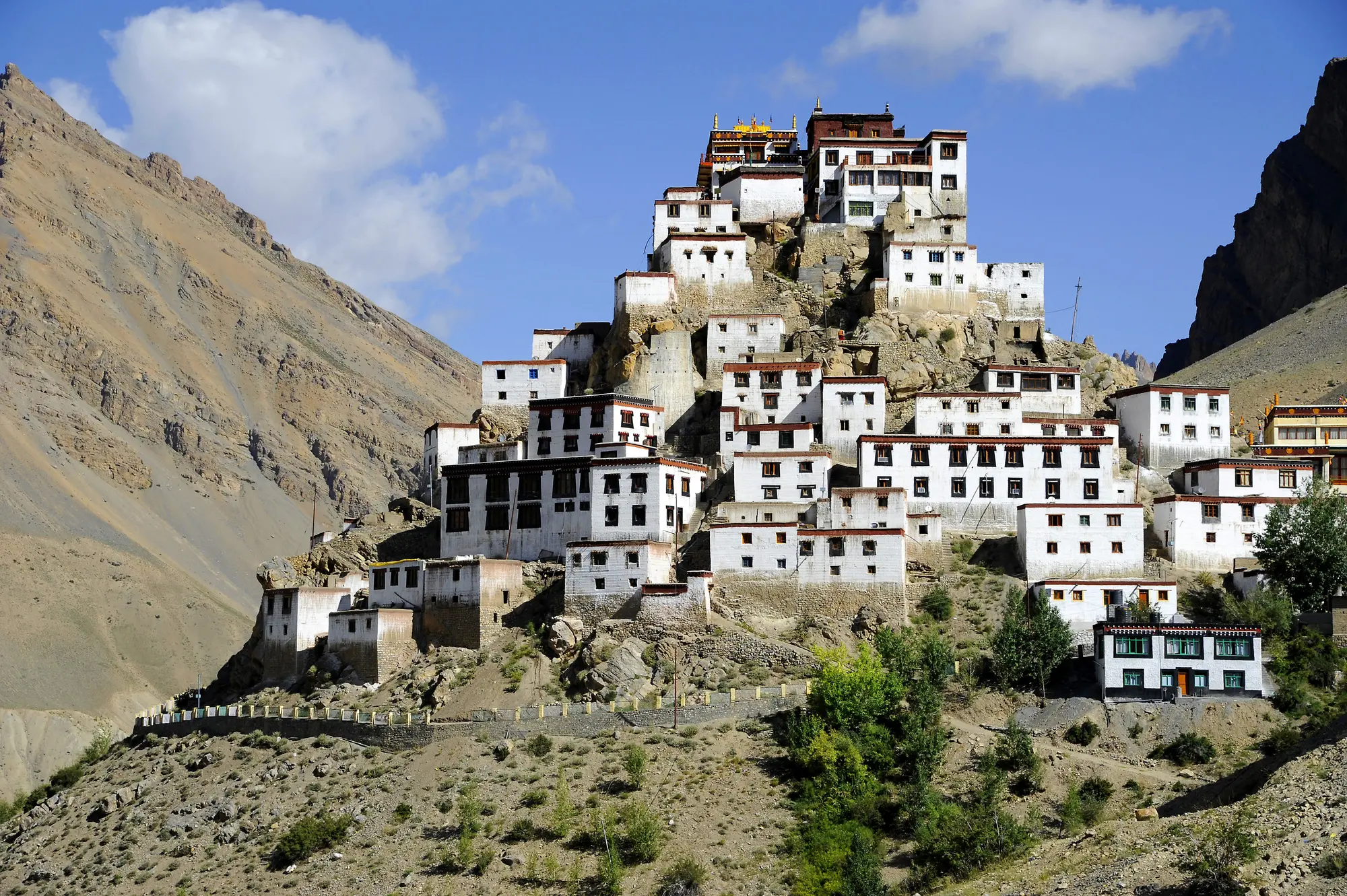
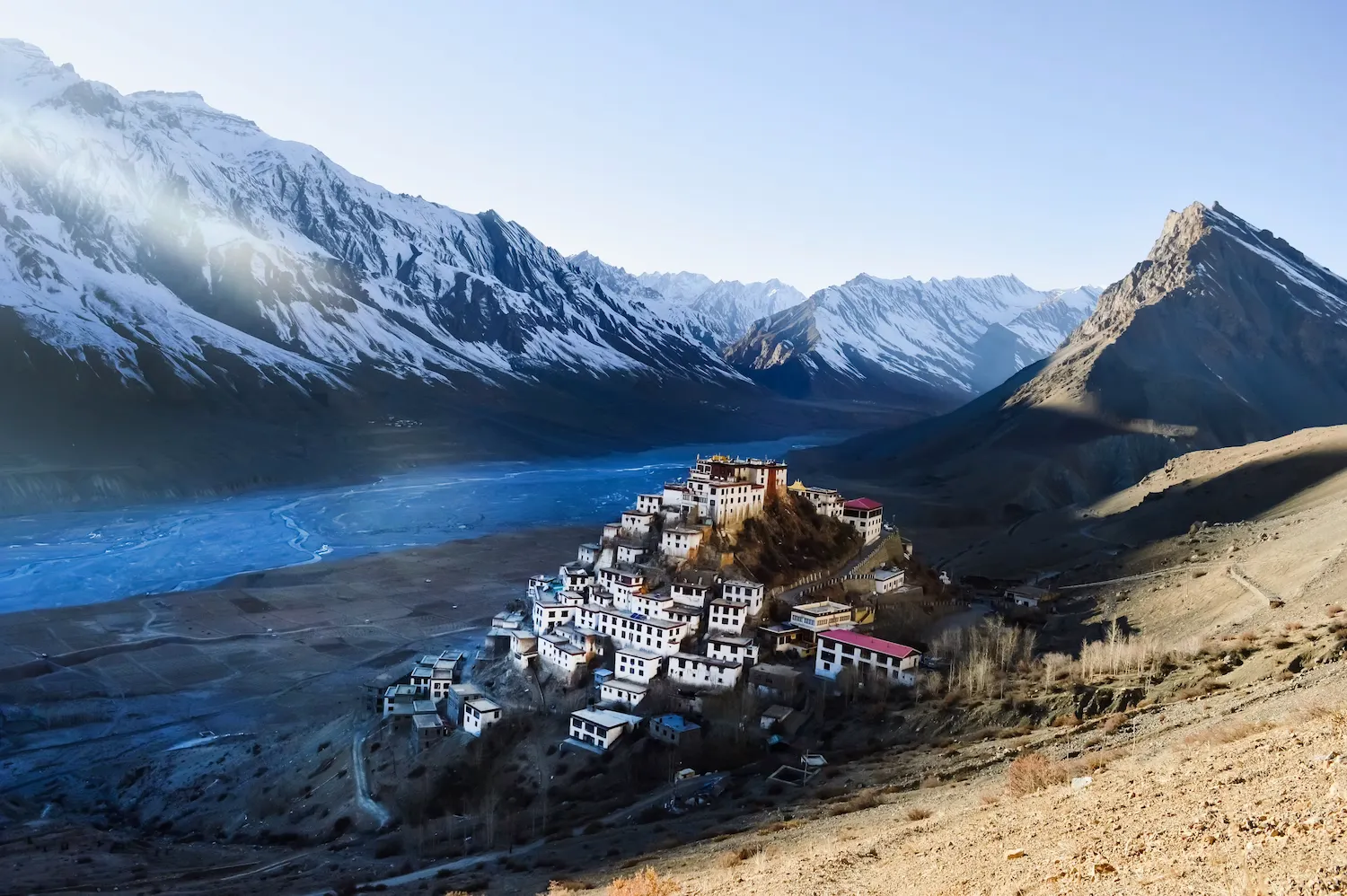
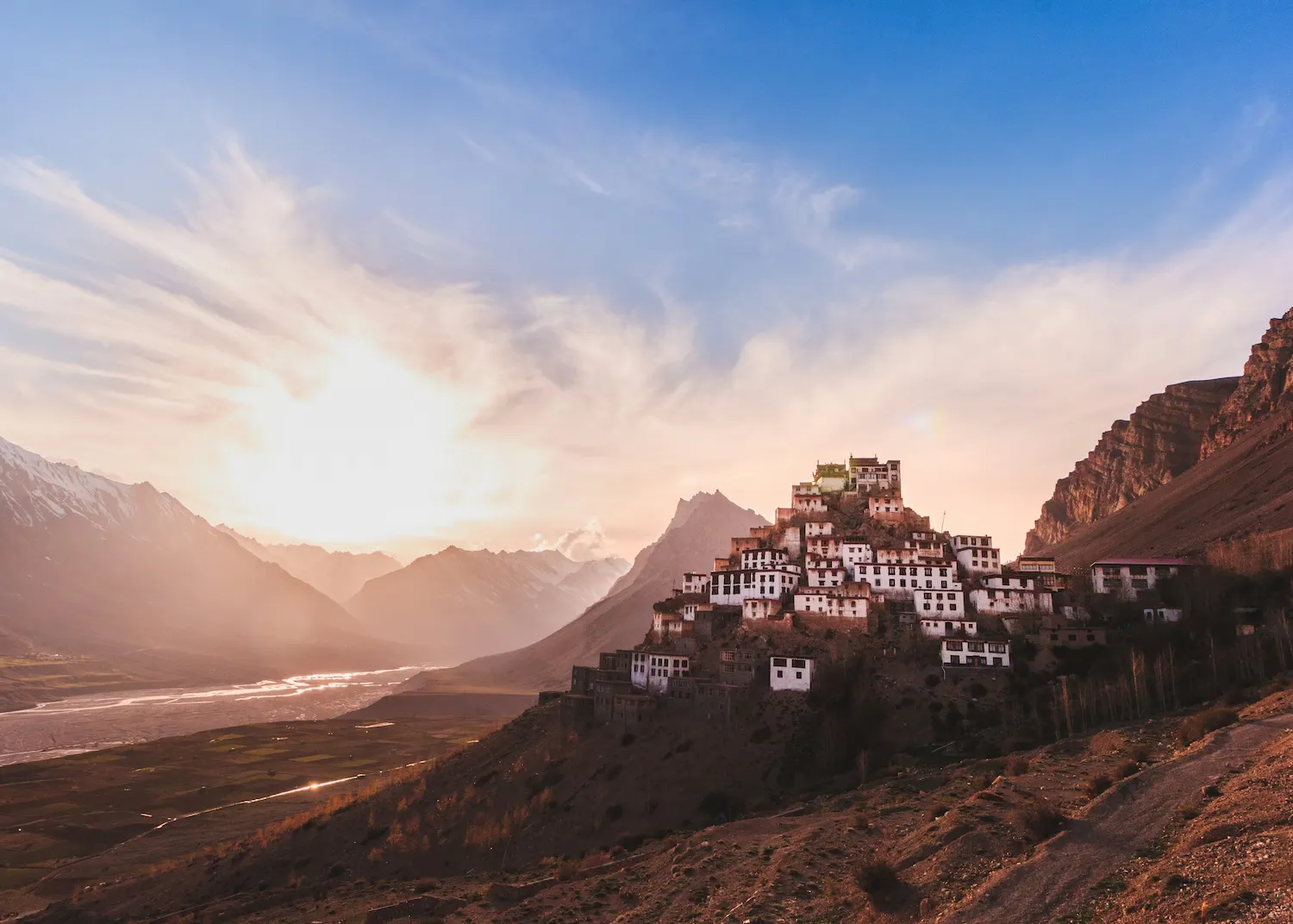
Ki Monastery at sunrise — rise before dawn in Kaza and drive the 16 kilometres to Ki Monastery in time for the early light. The road climbs through switchbacks that reveal the Spiti River valley below in progressive stages. Ki Monastery itself — a whitewashed cluster of cubes stacked on a hilltop like the world's most implausible Jenga tower — appears suddenly above a bend, with its 250 resident monks beginning their first prayers of the day. The main prayer hall contains ancient murals, sacred thangkas, and statues whose craftsmanship is so fine that art historians periodically make the three-day journey from Shimla just to study them. The monks are genuinely friendly; the herbal tea offered in the common rooms is genuinely restorative at altitude.
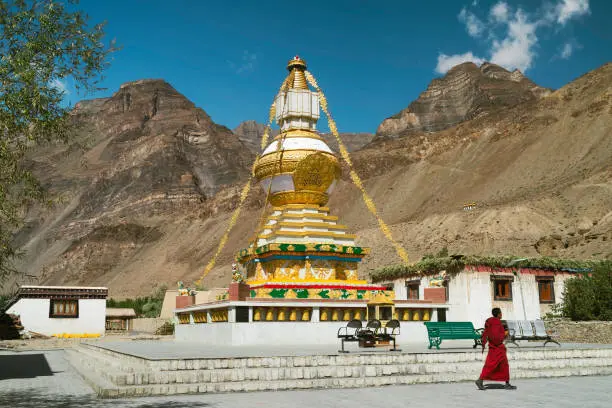
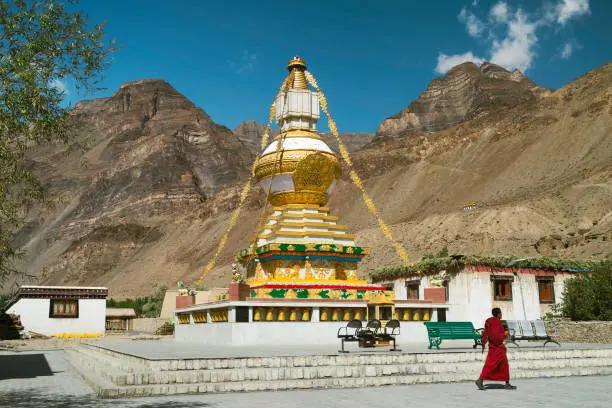
The Ajanta halls of Tabo — no photograph has ever done justice to Tabo Monastery's interior. Founded in 996 CE by Rinchen Zangpo under King Yeshe-Ö of the Guge kingdom, it is the oldest continuously functioning Buddhist monastery in the Himalayas — over a thousand years without a single year of closure. What makes it extraordinary is what is on the walls: murals, frescoes, and stucco sculptures covering almost every surface, depicting Buddhist deities, mandalas, Jataka tales, and Tantric Buddhist iconography with a detail and colour that prompted scholars to name it the "Ajanta of the Himalayas." The entire complex covers 6,300 square metres and contains nine temples, four stupas, and a series of meditation caves carved into the cliff above the village. Sit on the floor. Let your eyes adjust. The paintings will rise out of the dim air slowly, like stories emerging from deep water.
The meditation caves above Tabo village — a short walk up the cliff behind the monastery complex brings you to a series of hand-carved meditation caves used by monks since the monastery's foundation. These are not tourist exhibits. They are retreat chambers, some still in active use. Entering with quiet and genuine respect is rewarded with a perspective on Tabo village below and the wide valley beyond that is unlike anything a viewpoint platform can offer. Come in the early morning or the evening golden hour.
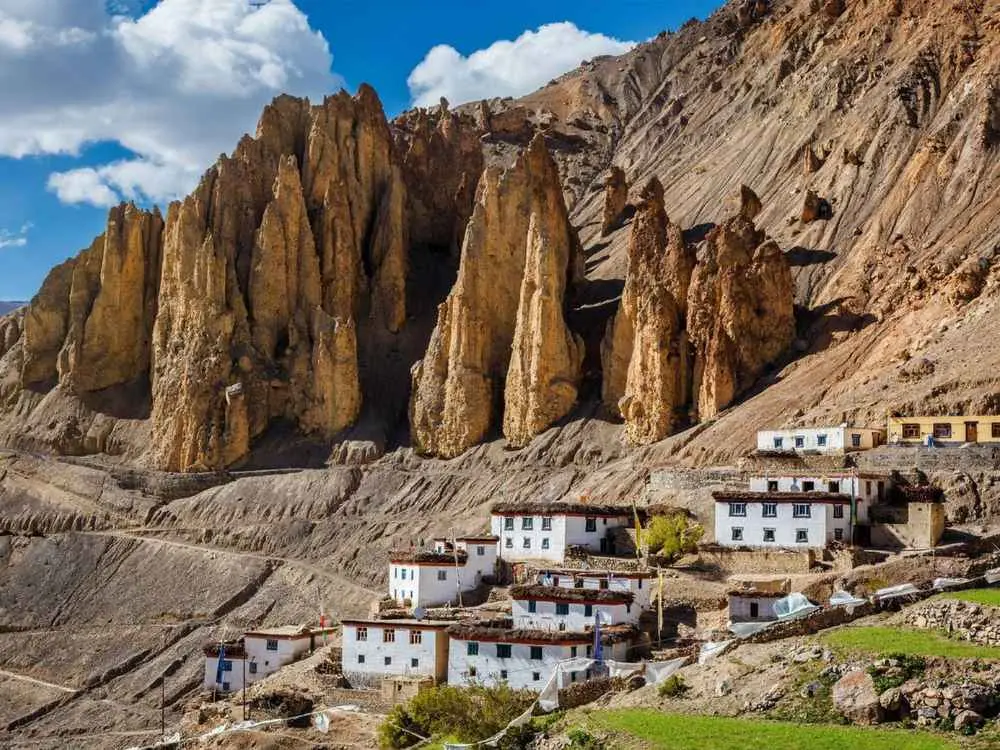
Dhankar at golden hour — the old monastery at Dhankar is, by any honest measure, one of the most extraordinary buildings in the Indian Himalaya. Built on a 300-metre-high spur of cliff at the confluence of the Spiti and Pin rivers — a geological drama that reads, from the monastery's terrace, like two rivers deciding on a very theatrical handshake — it clings to the rock with a combination of structural faith and good fortune that has lasted over a thousand years. The 1975 Spiti earthquake weakened it considerably; the World Monuments Fund placed it on its list of the 100 most endangered heritage sites in the world in 2006. A conservation organisation, the Dhankar Initiative, has taken up restoration work. Time your arrival for the hour before sunset: the old monastery's mud-and-stone complex turns the colour of a very good single-malt whisky in the late light, and the twin rivers below shimmer gold. It is the kind of scene that makes you reach for your camera, then put it away and simply look.
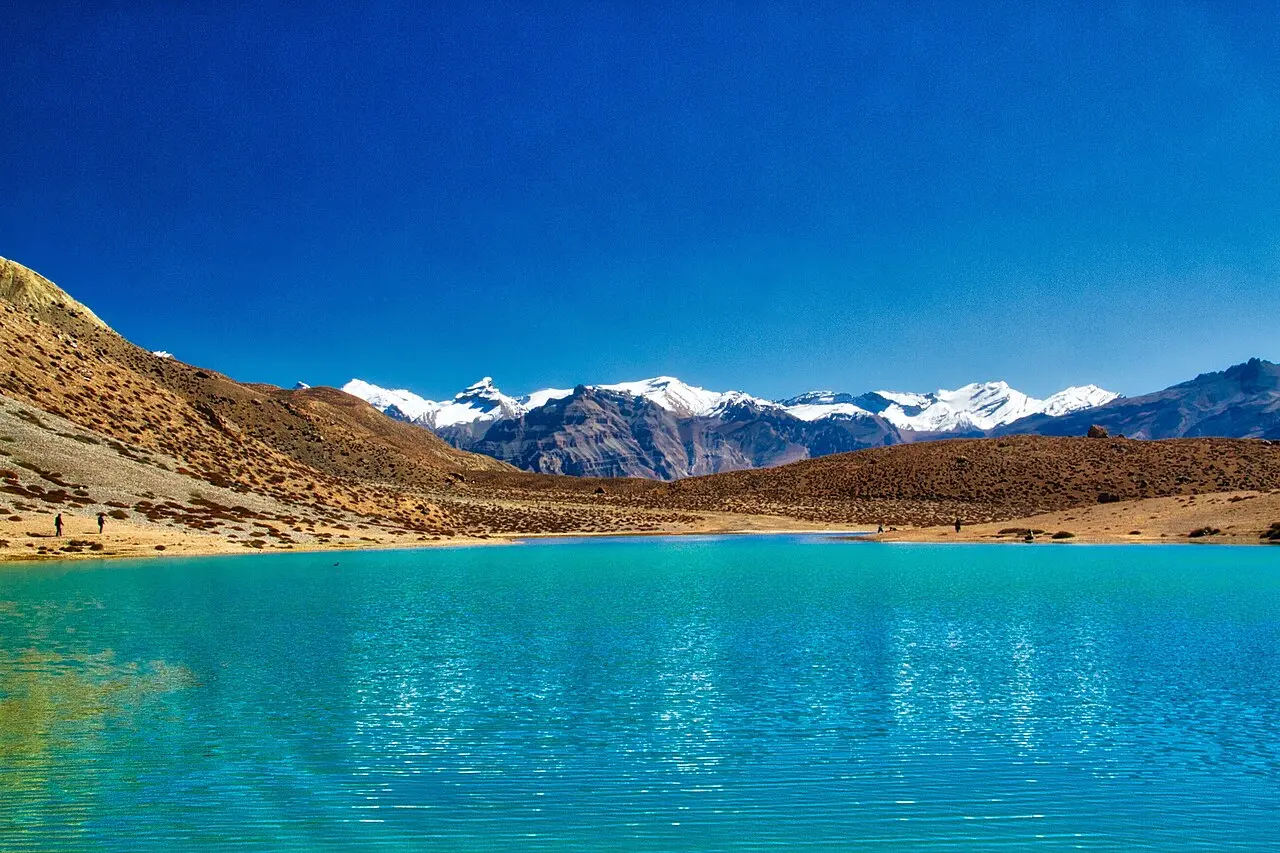
The Dhankar Lake trek — a 45-minute uphill walk from the old monastery — roughly two kilometres, on a clear path — leads to Dhankar Lake: a still, glacial tarn sitting in a bowl of arid ridges at approximately 4,140 metres. The only sound is wind. The only inhabitants are a few snow pigeons. The water is an improbable jade. This is the kind of effortful reward that Spiti specialises in — the pay-off is entirely disproportionate to the effort, and it is entirely invisible from the road.
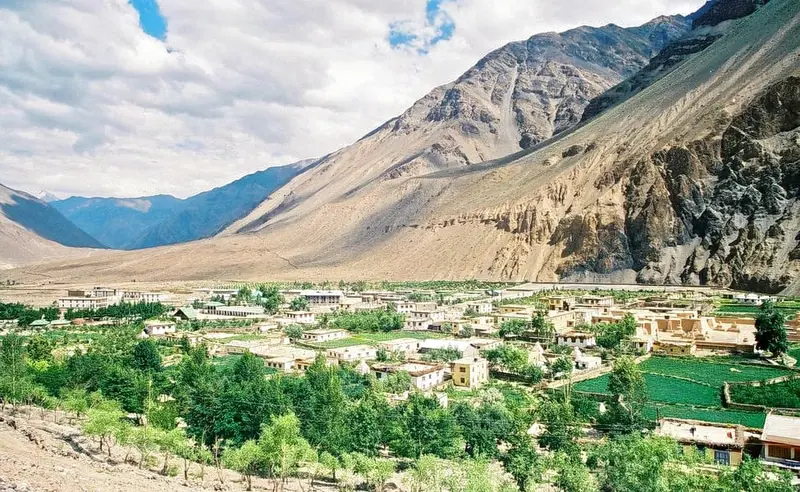
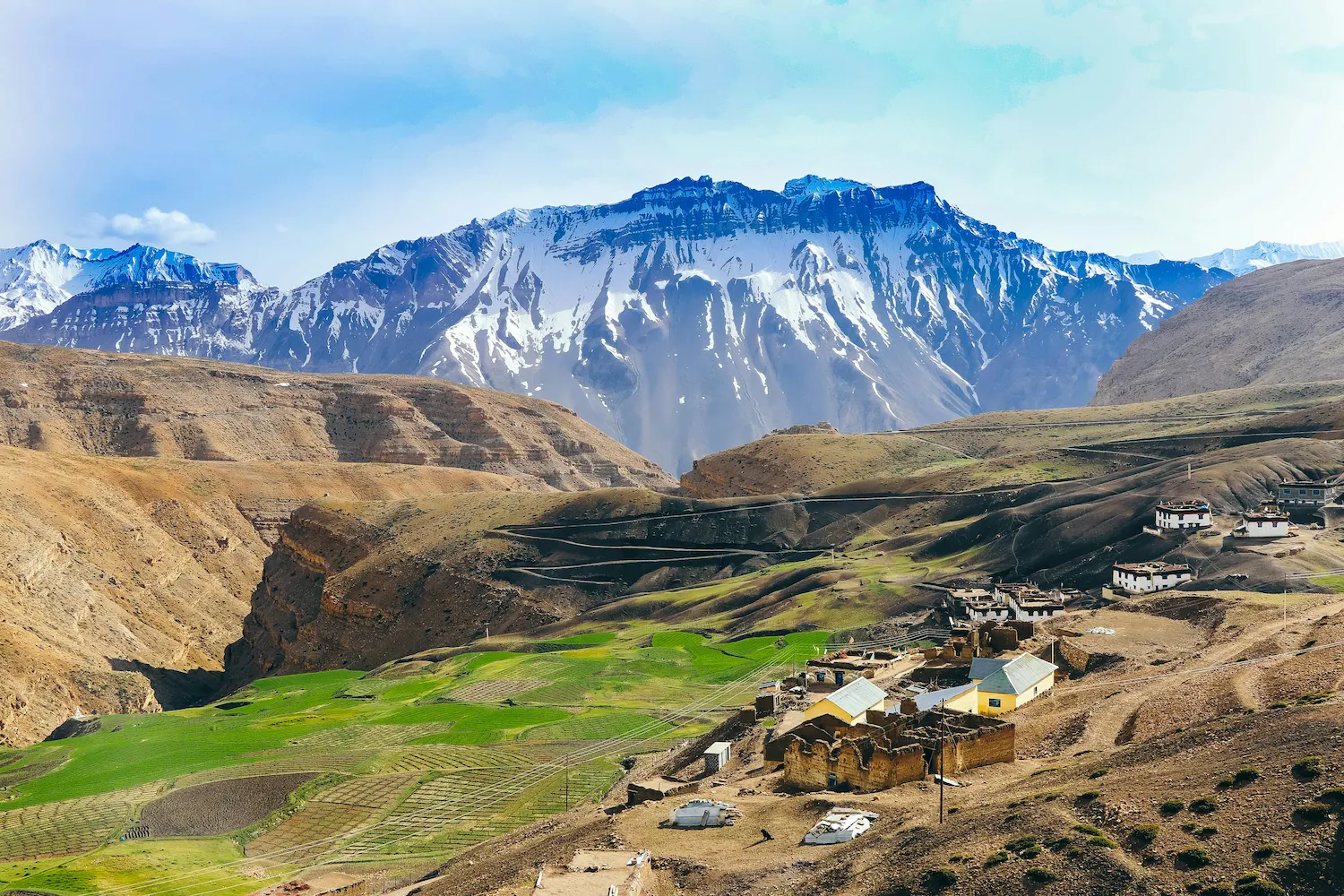
Komic and the altitude of silence — the 19-kilometre road from Kaza to Komic via Langza climbs from the valley floor to over 4,500 metres in a series of hairpin bends that become more surreal with every switchback. At Komic, population approximately 130, you are standing in one of the world's highest motorable villages. The name derives from the Tibetan —
Ko (snow cock) and Mik (eye) — and refers to the village's shape as seen from the ridge above: the eye of the snowcock, a sacred bird of the high plateau. The Tangyud Monastery at the village centre, believed to be around 800 years old, houses an ancient figure of Maitreya — the "future Buddha" — and is widely considered among the highest-functioning monasteries in India. More than the monastery itself, it is the quality of silence at Komic that visitors remember. At 4,520 metres, the air is thin enough to make walking uphill feel like wading through warm treacle. But you will want to sit outside with a cup of butter tea — ma butter cha, a very acquired taste — and watch the clouds pass far below the valley rim. Few things in travel are more clarifying.
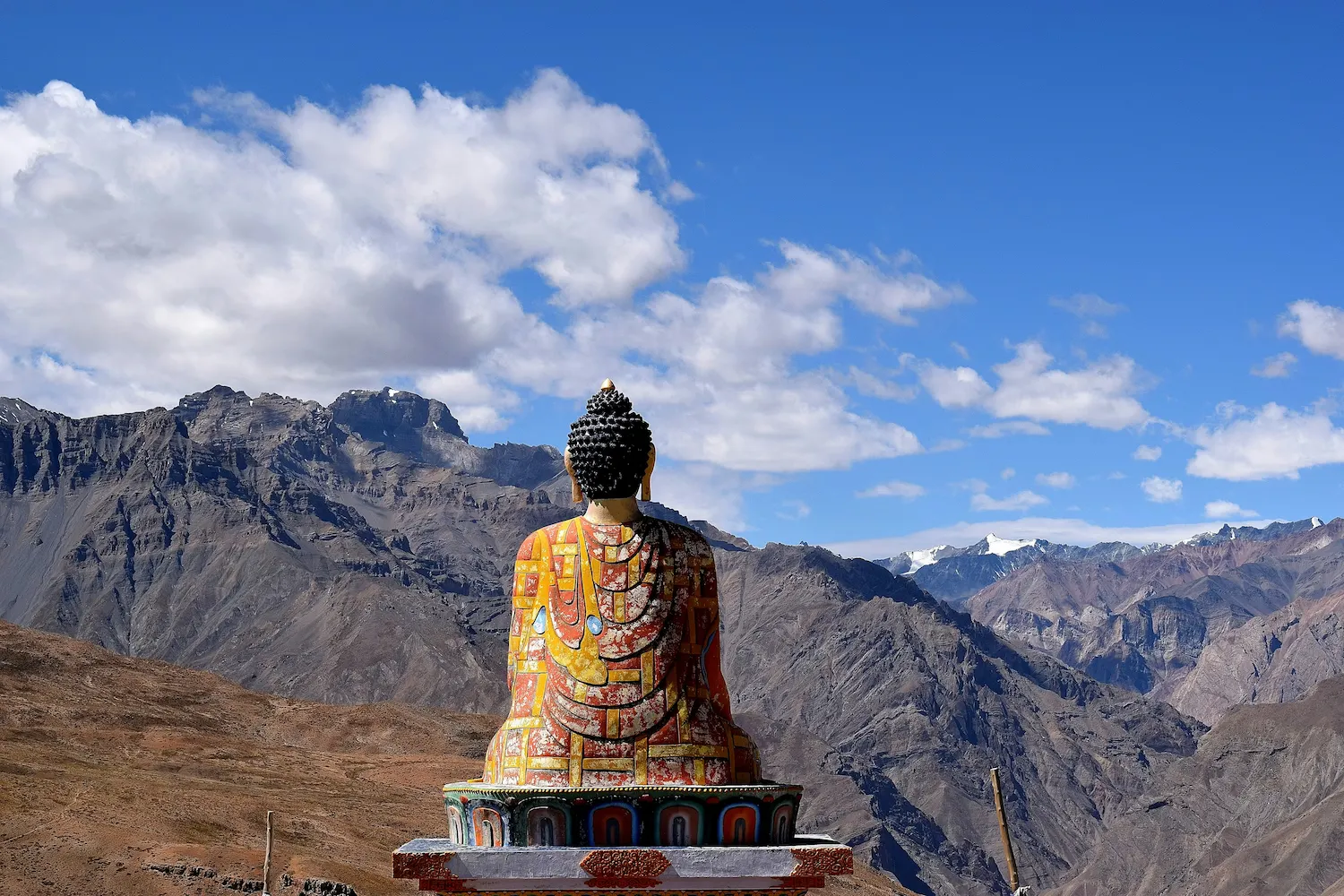
The Langza–Hikkim–Komic day circuit — the three high-altitude villages of Langza (Buddha statue, fossil hunting for ancient marine creatures in the Tethys Sea deposits), Hikkim (the world's highest operational post office, at ~4,400m — send a letter home, it will arrive eventually), and Komic can be combined into a single half-day loop from Kaza. A private jeep costs roughly ₹2,500–3,500 for the circuit; shared taxis run for around ₹800–1,200 per person during the season. There is also an HRTC bus from Kaza towards Komic at approximately 5pm, but it returns very early the following morning — check timings at Kaza bus stand before relying on it.
| MONASTERY | ALTITUDE | AGE | SECT | DEFINING CHARACTER | DO NOT MISS |
|---|---|---|---|---|---|
|
Ki (Kye) Gompa |
4,166 m |
~1,000 yrs (11th C) |
Gelugpa (Yellow Hat) |
Largest in Spiti; fortress architecture stacked on hilltop |
Main prayer hall murals; June/July Gustar Chaam festival; rooftop views |
|
Tabo Gompa |
~3,280 m |
1,029 yrs (996 CE) |
Gelugpa |
Oldest continuously functioning monastery in Himalayas; mud-brick complex on valley floor |
Ajanta-style frescoes; meditation caves above village; 9 temples within complex |
|
Dhankar Gompa |
3,894 m |
~1,000 yrs (12th C) |
Gelugpa (reformed) |
On the World Monuments Fund's 100 most endangered list; fort-monastery on 300m cliff |
Old monastery cliff viewpoint; 45-min trek to Dhankar Lake; new monastery murals |
|
Komic (Tangyud) Monastery |
~4,520 m |
~800 yrs (14th C Sakya era) |
Gelugpa |
Among the highest functioning monasteries in India; tiny village of 130 souls |
Panoramic sky-meets-plateau views; ancient Maitreya Buddha figure; sunrise silence |
THE FOUR MONASTERIES — AT A GLANCE
DHANKAR IS A BOX OF HANDMADE CHOCOLATES BALANCED ON THE EDGE OF A CLIFF — YOU KNOW IT PROBABLY SHOULD NOT BE THERE, YOU KNOW IT MAY NOT SURVIVE ANOTHER CENTURY, AND YET YOU CANNOT STOP STARING AT IT. SOME THINGS ARE MOST BEAUTIFUL PRECISELY BECAUSE THEY ARE FRAGILE.
Things not to do in Spiti's monastery circuit...
Do not rush the acclimatisation — this is perhaps the single most common mistake made by eager visitors. Kaza sits at 3,800 metres. Komic is at 4,520 metres. Ki Monastery is at 4,166 metres. The human body needs at least 48 hours at altitude before it will comfortably manage physical exertion. Arriving from Delhi, doing an overnight train to Chandigarh, and driving straight to Kaza for a full monastery day is a reliable recipe for acute mountain sickness — headaches, nausea, and a completely ruined first day of what should be one of India's great journeys. Sleep two nights in Kaza first. Walk slowly. Drink water constantly. Save Komic for day three at the earliest.
Do not visit Tabo's inner temples without genuine quiet — Tabo's murals are over nine hundred years old. They are protected by the Archaeological Survey of India. Flash photography causes micro-damage to the ancient pigments over time. The ASI rules are clear: no flash photography, ever, in the older temples. More importantly, these are active places of worship; monks conduct puja in the same halls where you are photographing. A quiet and genuinely respectful presence is not merely etiquette here — it is the difference between a place that remains open to visitors and one that does not. Pay the photography fee. Turn off the flash. Move as though you are a guest, because you are.
Do not attempt Dhankar's diversion road after rain — the 8-kilometre mountain track from the Shichilling junction to Dhankar Monastery is a narrow, single-lane affair that shares its surface with agricultural tractors, mule trains, and the occasional overloaded goods vehicle. In dry conditions it is perfectly manageable in any high-clearance vehicle. After rain, or in the days following rain when the surface has been churned up by traffic, sections can become genuinely treacherous. If you drove through rain the previous day, ask your driver's assessment before turning off the main road. The monastery will still be there tomorrow.
Do not skip the new monastery at Dhankar — most visitors head straight for the dramatic old monastery on the cliff, which is the correct instinct. But the new Dhankar monastery, built at the base of the cliff to protect the active monastic community from the deteriorating old structure, houses around 150 monks and has its own prayer hall with contemporary murals of considerable quality. The monks are accessible here, the atmosphere is warm, and it is a useful reminder that Spiti's monastery tradition is not merely a heritage to be preserved but a living community to be met.
Do not expect ATMs, fuel or connectivity beyond Kaza — this feels obvious, but every season brings a fresh cohort of visitors who discover it the hard way. Kaza's ATM runs out of cash during peak season, sometimes for 24–48 hours. Fuel exists nowhere else on the monastery circuit. Mobile connectivity drops to zero between Kaza and most of the circuit monasteries, and at Komic it is essentially absent. Treat Kaza like the last reliable service town in the world, because for the purposes of this trip, it is.
Do not photograph monks, villagers or religious ceremonies without explicit permission — the Spitian people are among the most generous and welcoming communities in the Himalaya, but they are not props for someone else's travel photography. At the Ki Chaam festival, for example, the front rows of the terrace fill fast not because tourists are welcome but because the community has chosen to share something sacred. The appropriate response is to receive it gratefully and ask before you photograph. Refusal is rare but it must be accepted graciously when it comes.
| PERMIT / FEE | WHO NEEDS IT | COST | WHERE TO GET | VALIDITY |
|---|---|---|---|---|
|
Protected Area Permit (PAP) |
Foreign nationals only |
₹250–400 (varies by office) |
SDM Office Reckong Peo, Kaza, Keylong, or Manali — offline only |
7–14 days; extendable |
|
Rohtang vehicle e-permit |
All vehicles crossing Rohtang (Manali route only) |
₹50 approx (vehicle charge) |
Online: himachal.nic.in portal |
One day |
|
E-Aagman registration |
All vehicles entering Lahaul-Spiti district |
Nominal / free |
Online portal before entry |
Per trip |
|
SADA development fee |
All tourist vehicles entering Spiti |
₹100 (bikes), ₹200 (cars), ₹300 (SUVs/MUVs), ₹400 (buses) |
Collected at barrier on entry |
Per entry |
|
Chandratal vehicle e-ticket |
All vehicles visiting Chandratal Lake |
Nominal |
Online portal |
Per day |
|
Photography permit (monastery interiors) |
All visitors — at each monastery |
₹50–₹200 per monastery (varies; confirm locally) |
At monastery gate/office |
Per visit |
PERMITS AND PRACTICAL NOTES — 2026
Where to stay on the monastery circuit...
Kaza functions as the natural base for the entire monastery circuit. It has the valley's best accommodation infrastructure — a cluster of homestays and small guesthouses along its main street that range from basic and honest (₹700–1,200 per night for a clean room with common bathroom and all the thukpa you can eat) to a handful of mid-range options with attached bathrooms and solar hot water. Norling Homestay is the most consistently recommended by solo travellers; Sakya Abode, built in traditional mud-brick with open verandas and a courtyard, offers the most atmospheric experience in the mid-range bracket.
For Tabo, the choice of staying in the village rather than commuting from Kaza is strongly recommended. The monastery and its meditation caves are an entirely different experience at dusk and dawn, without the day-tripper traffic of peak hours. Spiti Mud Huts Tabo — eco-cottages built in traditional Spitian mud architecture — is the most characterful option. Tethys Himalayan Den, near Tabo, represents the closest thing to a boutique hotel the valley currently offers, at prices that still feel modest by Delhi standards. Dhankar has the monastery guesthouse run by the monks themselves, which is basic, genuine, and unforgettable for the right kind of traveller — but it requires advance notice and a certain cheerful acceptance of shared facilities.
Komic has two small homestays — Komik Retreat and Tashi Homestay — that together accommodate perhaps a dozen guests at any one time. Sleeping at 4,520 metres is not for everyone: the thin air makes sleep light and dreams strange. But the experience of waking above the clouds, with no sound but prayer flags and wind, is one that regular Spiti visitors cite as the most singular night of their entire journey.
| PROPERTY | LOCATION | TYPE | PRICE RANGE | HONEST NOTES |
|---|---|---|---|---|
|
Norling Homestay |
Kaza town |
Homestay |
₹1,000–1,800/night |
Most-recommended solo-traveller base in Kaza; warm hosts; hearty Spitian food; book ahead in peak season |
|
Sakya Abode |
Kaza |
Guesthouse (mud-brick) |
₹1,200–2,200/night |
Traditional architecture; 12 rooms; fireplace rooms available; balconies with courtyard views; solar hot water |
|
Spiti Mud Huts Tabo |
Tabo village |
Eco-cottages |
₹1,500–2,500/night |
Mud-hut cottages built in traditional style; ideal base for Tabo monastery & caves; Dhankar day trip possible |
|
Tethys Himalayan Den |
Near Tabo |
Boutique guesthouse |
₹2,500–4,000/night |
One of few near-luxury options in the valley; rare tranquility; mountain views; cultural richness |
|
Dhankar Monastery Guesthouse |
Dhankar village |
Monastery guesthouse |
₹600–1,000/night |
Run by monks; basic rooms; no guarantees on hot water; advance notice required; profound atmosphere |
|
Tara Guest House |
Pin Valley (Mud village) |
Homestay |
₹1,500–1,750 (B&B+dinner for 2) |
Hosts Kunzang & Sonam widely praised; home-cooked meals; best base for Pin Valley wildlife |
|
Komik Retreat |
Komic village |
Village homestay |
₹800–1,500/night |
Rare chance to sleep at 4,520m; basic rooms but extraordinary sky; confirm availability before heading up |
|
Tashi Homestay Komic |
Komic village |
Family homestay |
₹700–1,200/night |
Budget-friendly; family-run; simple clean rooms; meals lovingly prepared; book via phone in Kaza |
WHERE TO STAY — MONASTERY CIRCUIT ACCOMMODATION
Travelling responsibly in Spiti...
Spiti Valley is, by any measure, one of India's most ecologically fragile travel destinations. The Buddhist principle of ahimsa — non-harm — is woven into the fabric of Spitian life in ways that go far beyond religious observance: local communities have practised a form of environmental custodianship for centuries because they have had no choice. The valley has no margin for waste. Bring a LifeStraw bottle or a quality filter. Glacier-fed tap water in the villages is safe to drink after filtration, and eliminating plastic bottle waste in this high-altitude desert is among the most tangible contributions a visitor can make.
Spend locally at every opportunity. The best thukpa in Spiti is not in a Manali-run café in Kaza — it is in the kitchen of a Spitian family whose grandmother has been making it since before the road existed. Pay the fair price for accommodation, guides, and taxis without negotiating aggressively; the margins in a remote cold desert are already thin, and the economic returns from tourism are what allow young Spitians to build livelihoods here rather than migrating to the plains. Ask your homestay host what the fair rate is before you book; they will tell you.
At the monasteries, the protocols are straightforward and non-negotiable: remove footwear at the entrance, circumambulate the complex clockwise, never touch a thangka or a manuscript, speak softly in prayer halls, and put your phone away when monks are at prayer. Dress modestly — shoulders and knees covered, regardless of the temperature. The rule about photography in the ancient halls of Tabo is not bureaucratic fastidiousness; it is a genuine conservation requirement. Pay the photography fee cheerfully and abide by the flash restriction absolutely. The ancient murals have survived over a thousand years; the least we can do is ensure they survive our visit.
Before you go — a few honest additions...
The monastery circuit of Spiti rewards unhurried travellers. Three days is the absolute minimum to cover Ki, Tabo, Dhankar and Komic with any depth; five to seven days allows you to add Pin Valley, the Dhankar Lake trek, the high-altitude fossil villages, and the luxury of sitting in a courtyard for an extra hour simply because it feels right. If you time your visit around the Ki Chaam festival in June or July, add an extra day on either side — accommodation in Kaza fills quickly in festival week, and arriving the day before allows you to understand the monastery's normal rhythm before the extraordinary one begins.
Altitude sickness is not a minor inconvenience at these elevations — it is a genuine medical risk that must be taken seriously. Begin acclimatising in Kaza before attempting Komic or the higher reaches of Ki. Anyone experiencing severe symptoms — persistent headache, loss of coordination, confusion — must descend immediately. There is no monastery on earth worth a medical emergency at 4,500 metres.
If planning your Spiti Valley monastery circuit feels like an exercise in managing too many moving parts — route timing, permit applications, altitude acclimatisation logistics, homestay availability, festival dates — the team at BizareXpedition™ Services Pvt. Ltd. (bizarexpedition.com) can design a fully customised itinerary that handles the complexity while preserving everything that makes an independent journey worth having. Based in Haridwar and specialising in Himalayan journeys, they understand the monastery circuit intimately and can build a programme that puts you in Ki's courtyard at the right moment, Tabo's inner hall in the right quality of morning light, and Dhankar's terrace at exactly golden hour.
| ITEM | NOTES |
|---|---|
|
Vehicle |
SUV/4WD essential for Dhankar diversion and Komic road; sedan manageable for Ki and Tabo only |
|
Fuel (last reliable pump) |
Kaza — fill up before every excursion; next pump Tabo-side is Reckong Peo (~140 km) |
|
ATM |
Kaza has 1–2 ATMs (State Bank of India) — withdraw generously; they run out |
|
Mobile network |
BSNL SIM works best across Spiti; Airtel partial; Jio absent in most of the circuit |
|
Altitude medicine |
Acetazolamide (Diamox) on doctor's advice; acclimatise 48 hrs in Kaza before monastery circuit |
|
LifeStraw water bottle |
Tap water in villages is glacial meltwater — use LifeStraw or filter; do not buy plastic bottles |
|
Clothing layers |
Base thermal + mid-fleece + windproof shell even in July; Komic temperatures drop sharply after 4pm |
|
Photography |
Seek permission before photographing inside temples; ₹50–₹200 per gompa; no flash on ancient murals |
|
Monastery etiquette |
Remove shoes at entrance; circumambulate clockwise; do not touch thangkas or sculptures; silence in prayer halls |
|
Emergency contact |
HRTC Kaza bus stand: 01906-222201; District Hospital Kaza: 01906-222223 |
PRACTICAL CHECKLIST
| CATEGORY | BUDGET TRAVELLER | MID-RANGE | PREMIUM |
|---|---|---|---|
|
Accommodation (per night) |
₹700–1,200 (monastery guesthouse/village homestay) |
₹1,500–2,500 (guesthouse with meals) |
₹3,000–5,000 (boutique / Tethys-tier) |
|
Food (per day) |
₹300–500 (thukpa, tsampa porridge, momos at homestay) |
₹600–900 (homestay meals + café in Kaza) |
₹1,000–1,500 (guesthouse full board) |
|
Local taxi (full-day circuit) |
₹2,500 (shared taxi, peak season) |
₹3,000–4,000 (private jeep, monastery circuit) |
₹5,000–8,000 (private SUV with driver, custom itinerary) |
|
Monastery entry / photography |
₹200–400 (all four monasteries) |
₹400–600 (with photography permits) |
₹600–1,000 (full photography access) |
|
Permits (foreign nationals) |
₹250–400 (PAP at SDM office) |
Same |
Same |
|
Total per day estimate |
₹2,000–3,000 |
₹3,500–5,500 |
₹7,000–12,000+ |
BUDGET GUIDE — PER PERSON PER DAY
The butter lamp in Tabo does not care about your itinerary. It has been burning, in one form or another, since the year before the turn of the first millennium — through invasions and earthquakes and five months of annual snow and nine hundred and twenty-nine annual cycles of the same Himalayan spring. When you leave, it will still be there. That, finally, is what the monastery circuit of Spiti is: a reminder that some things are built to outlast the urgency of arrival.
Best Selling Tour Packages
Explore other exciting options for your next adventure!