
Bikaner Tour Packages
Bikaner Tour Packages
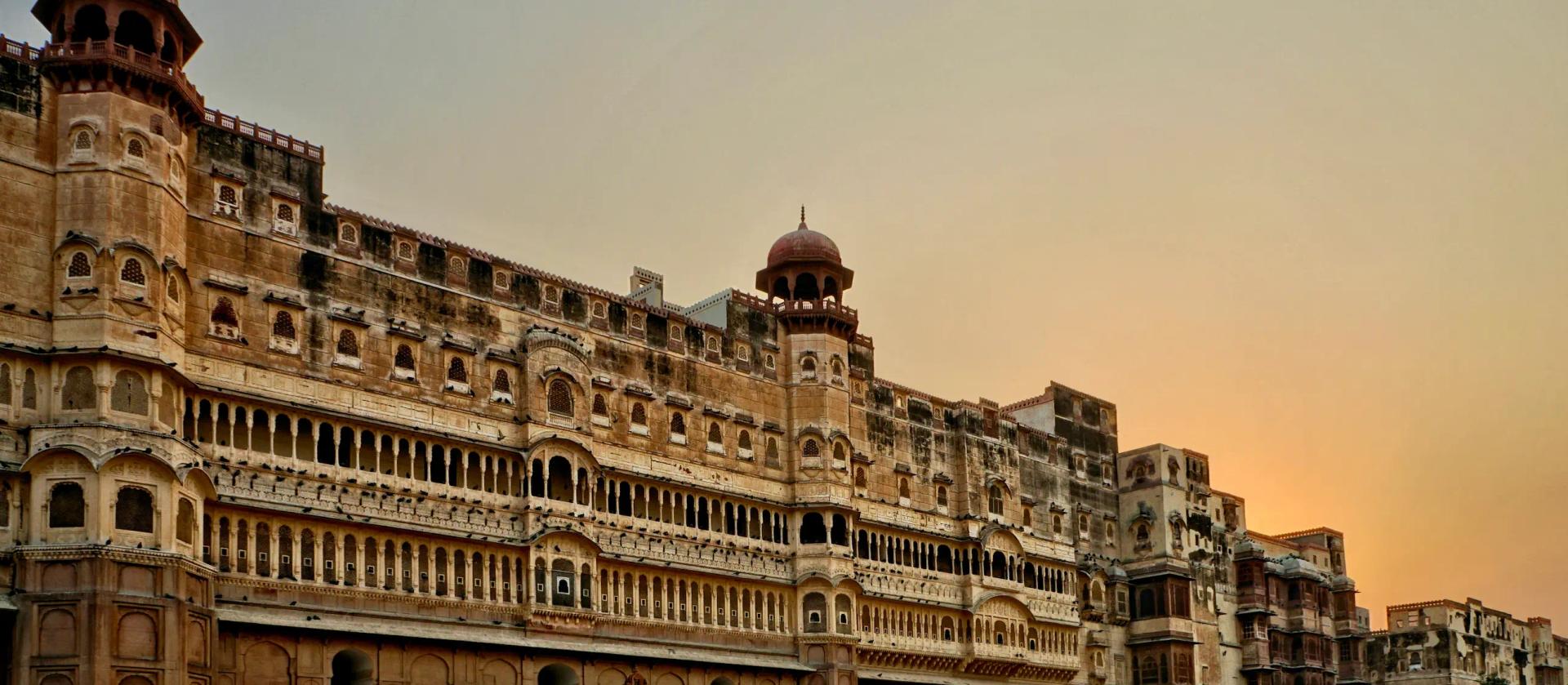
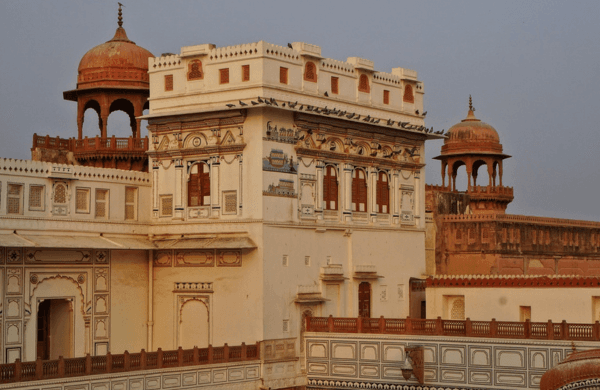
Bikaner is a red-sandstone desert city in northern Rajasthan, founded in 1488 CE by Rao Bika, a Rathore prince and son of Rao Jodha, the same ruler who founded Jodhpur — a lineage that ties Bikaner directly into Rajasthan’s wider Rathore royal history. Its centrepiece, Junagarh Fort, is unusual among Rajasthan’s major forts in that it was built on flat ground rather than a hilltop, ringed instead by a moat, and its interior palaces — the Anup Mahal, Chandra Mahal, and Karan Mahal among them — hold some of the most detailed mirror work, gold leaf painting, and carved marble screens found anywhere in the state.
A BizareXpedition Bikaner tour package is built around that heritage core plus a set of experiences genuinely distinct from the rest of Rajasthan’s desert circuit. The city’s old quarter holds the ornately carved Rampuria Havelis, built by wealthy Marwari merchant families; just outside town, the National Research Centre on Camel operates as both a working research farm and a visitor attraction, tied to Bikaner’s long identity as camel country, historically home to the Bikaner Camel Corps; and a short drive further out, the Karni Mata Temple at Deshnoke — widely known as the “Rat Temple” — houses thousands of black rats considered sacred, along with the rare white rat that pilgrims consider especially auspicious to spot. Add the lakeside Gajner Palace and its surrounding wildlife sanctuary, and Bikaner covers a noticeably wider range of experiences than a typical single-city stop.
| Info | Details |
|---|---|
|
Location |
Northern Rajasthan, on the edge of the Thar Desert |
|
Founded |
1488 CE, by Rao Bika (Rathore dynasty, son of Rao Jodha of Jodhpur) |
|
Signature sights |
Junagarh Fort, Lalgarh Palace, Rampuria Havelis |
|
Signature excursions |
Karni Mata Temple (Deshnoke, ~30 km), National Research Centre on Camel, Gajner Palace & Wildlife Sanctuary (~32 km) |
|
Local specialty |
Bikaneri Bhujia — a famous savoury snack that originated in the city |
|
Signature festival |
Bikaner Camel Festival (typically January) |
|
Best travel season |
October – March |
|
Nearest airport |
Bikaner (Nal) Airport (limited flights); Jodhpur or Jaipur airports as reliable alternatives |
|
Approx. distance from Jodhpur |
~250 km |
|
Approx. distance from Jaisalmer |
~330 km |
|
Approx. distance from Jaipur |
~330–335 km |
|
Tour type |
100% private — no group coaches, no fixed departures |
Bikaner at a Glance
Because Bikaner sits somewhat apart from the more heavily-trodden Jaipur-Udaipur-Jodhpur loop — closer in character and geography to Jaisalmer than to Rajasthan’s palace cities — how it’s sequenced into a wider trip matters. Most travellers either treat it as a dedicated 2-3 night stop in its own right, or slot it in as a stop between Jodhpur and Jaisalmer on a longer desert circuit. BizareXpedition plans this with you directly: whether Bikaner works better as a full stay with time for Gajner and the camel farm, or as a shorter, well-paced stop on a route that continues into the deeper desert toward Jaisalmer.
Why Book Your Bikaner Tour With BizareXpedition?
Every BizareXpedition itinerary is built from scratch for one traveller, one couple, or one family — never sold as a seat on a shared coach. In Bikaner, that means a private guide who can walk you through Junagarh Fort’s palaces at a pace that actually lets you take in the detail, a driver who handles the desert-highway stretches to Deshnoke and Gajner without you needing to arrange separate transport, and a schedule built around your interests — whether that’s the camel research farm, the havelis of the old city, or simply more time at Gajner’s lakeside setting. It’s the difference between passing through Bikaner and actually getting a feel for a city that’s genuinely different from the rest of Rajasthan’s desert circuit.
What Does a Bikaner Itinerary Include?
A typical BizareXpedition Bikaner package includes airport or railway station transfers, a private vehicle with driver for the full stay, hotel accommodation on your chosen tier, daily breakfast, and guided sightseeing across Junagarh Fort, Lalgarh Palace, and the old city havelis. Excursions to the Karni Mata Temple at Deshnoke, the National Research Centre on Camel, and Gajner Palace and its wildlife sanctuary can all be built in as add-ons.
What’s Included vs. What’s Optional
| Included as standard | Available as an add-on |
|---|---|
|
Private vehicle with driver for the full stay |
Karni Mata Temple excursion at Deshnoke |
|
Airport / railway station transfers |
National Research Centre on Camel visit, including camel milk tasting |
|
Hotel stay on your chosen tier |
Gajner Palace and Wildlife Sanctuary day trip or overnight |
|
Daily breakfast |
Guided heritage walk through the Rampuria Havelis and old city |
|
Sightseeing at Junagarh Fort and Lalgarh Palace |
Bikaner Camel Festival experience (seasonal, January) |
|
Dedicated trip coordinator |
Extension toward Jaisalmer via the desert highway |
Bikaner What’s Included vs. What’s Optional
How Many Days Do You Need for Bikaner?
Bikaner works well both as a focused 2-3 night stop and as a stop within a wider Jodhpur-Bikaner-Jaisalmer desert circuit.
| Duration | Pace | Best suited for |
|---|---|---|
|
1 Night / 2 Days |
Focused — Junagarh Fort and the old city |
A stop within a larger Rajasthan circuit |
|
2 Nights / 3 Days |
Balanced — the most-booked option |
Most travellers, adding Karni Mata and the camel farm |
|
3+ Nights |
Relaxed — includes Gajner Palace |
Heritage- and wildlife-focused travellers |
|
As part of a desert circuit |
Varies |
Combined with Jodhpur and Jaisalmer |
BikanerTrip Days Do You Need
Every duration is fully customisable — how much time goes to the city versus the surrounding excursions is built around what you want to see.
What Are the Bikaner Package Tiers?
BizareXpedition structures Bikaner packages across three tiers, each private and tailor-made:
Premium — Comfortable 3-star heritage-style hotels, a private vehicle, and all core sightseeing — a well-run, hassle-free trip without excess.
Luxury — 4-star and boutique haveli-style properties, upgraded vehicle options, and a more curated pace with added excursions like Gajner Palace.
Ultra-Luxury — Heritage palace-category stays (including options at the historic Lalgarh Palace and lakeside Gajner Palace where available), a premium vehicle with an experienced driver, private guides throughout, and fully bespoke arrangements.
| Tier | Accommodation category | Vehicle | Guide | Best for |
|---|---|---|---|---|
|
Premium |
3-star heritage-style hotels |
Private sedan/SUV |
Shared local guide |
Hassle-free, well-run trips without excess |
|
Luxury |
4-star/boutique haveli properties |
Upgraded SUV |
Private guide, curated add-ons |
A more immersive, comfortable pace |
|
Ultra-Luxury |
Heritage palace-category stays |
Premium SUV, experienced driver |
Private guide throughout |
Honeymoons, heritage-focused, fully bespoke trips |
Bikaner Package Tiers
Exact pricing depends on travel dates, accommodation selection, and group size — reach out for a tailored quote for your preferred tier and season. Our Rajasthan heritage hotels guide covers what to expect from palace-category stays like Lalgarh and Gajner in more depth.
When Is the Best Time to Visit Bikaner?
October through March is the clear best window, with cool, comfortable days well suited to walking Junagarh Fort’s courtyards and the excursions to Deshnoke and Gajner. April through June brings intense desert heat, with daytime temperatures regularly exceeding 40°C, making sightseeing considerably more demanding. The monsoon months (July–September) bring some relief from the peak heat along with occasional rain, though — like the rest of the Thar region — Bikaner’s monsoon looks quite different from the wetter parts of India. For a broader comparison across the state, our best time to visit Rajasthan guide breaks down how Bikaner’s desert climate lines up against Jaipur and Udaipur.
| Months | Weather | Verdict |
|---|---|---|
|
October – November |
Pleasant days, cool nights |
Excellent — peak season begins |
|
December – February |
Cool days, cold nights |
Excellent — also Bikaner Camel Festival season (January) |
|
March |
Warming, still comfortable |
Very good |
|
April – June |
Extreme heat, often 40°C+ |
Not recommended for extended sightseeing |
|
July – September |
Monsoon — some relief from heat, occasional rain |
Quieter season; desert monsoon is mild compared to the rest of Rajasthan |
Bikaner-by-Season Guide
Can the Bikaner Tour Be Combined With Other Destinations?
Yes. Bikaner is most commonly combined with Jodhpur and Jaisalmer as part of a wider western Rajasthan desert circuit, given how the three cities line up along the same general route. Some travellers extend a Bikaner stop into a broader loop through Ajmer and Udaipur, and it’s also visited on its own as a shorter desert-heritage trip by travellers who’ve already covered Jaipur and the Golden Triangle on a previous visit. For general planning across the state, our Rajasthan travel guide and Jaisalmer desert safari package are useful references for what a combined desert-circuit itinerary can look like.
Good to Know Before You Go
A handful of practical facts that shape how a Bikaner itinerary is planned:
Junagarh Fort was built on flat ground rather than a hilltop, unlike most of Rajasthan’s major forts — it’s instead protected by a wide moat, a defensive approach distinct from the elevated forts at Jaisalmer, Jodhpur, and Chittorgarh.
Bikaner was founded by Rao Bika, son of Rao Jodha, the same ruler who founded Jodhpur — the two cities share a direct dynastic connection within the wider Rathore Rajput lineage.
The Karni Mata Temple at Deshnoke is home to thousands of rats considered sacred, and spotting the rare white rat among them is considered especially auspicious by visiting pilgrims — it’s one of the more distinctive religious sites anywhere in Rajasthan.
Bikaner has a long historical association with camels, home to the National Research Centre on Camel and formerly the base of the Bikaner Camel Corps (the “Ganga Risala”), a camel cavalry unit that served in British military campaigns in the early 20th century.
Bikaneri Bhujia, the well-known savoury snack sold across India, originated in Bikaner and remains one of the city’s most recognisable exports.
Gajner Palace, roughly 32 km from Bikaner, was built as a royal hunting lodge on the edge of a lake, and its surrounding sanctuary is known for imperial sandgrouse and blackbuck — a genuinely different kind of sightseeing from the city’s forts and havelis.
Ready to Plan Your Bikaner Journey?
Share your travel dates, group size, and preferred tier, and BizareXpedition will put together a private, day-wise Bikaner itinerary — with or without a Jodhpur-Jaisalmer desert circuit — built entirely around you.
Frequently Asked Questions (FAQs) & People Also Ask — bikaner Tour Packages
We help you prepare for your trip and ensure an effortless and enjoyable travel experience.