
Published On - Jun 30, 2026
Updated On - Jul 06, 2026
25 min
Rajasthan — The Complete Travel Guide 2026
India's largest state by area, its most cinematic, and arguably its most demanding to plan well. Jaipur, Jodhpur, Jaisalmer, Udaipur — four cities with four distinct identities, six UNESCO World Heritage Sites, one of the world's few inhabited forts still lived in by 3,000 people, and enough commission-steering taxi drivers in tourist areas to fill their own guide. Here's how to do it properly
Rajasthan is India's most iconic heritage destination, known for its magnificent forts, royal palaces, colorful cities, and vast desert landscapes. This complete Rajasthan Travel Guide 2026 covers the must-visit destinations including Jaipur, Jodhpur, Udaipur, Jaisalmer, Pushkar, and Ranthambore. Discover UNESCO World Heritage Sites, historic forts, desert camps, tiger safaris, cultural festivals, and authentic Rajasthani cuisine. The guide also includes the best time to visit, transportation options, accommodation recommendations, budget estimates, and practical travel tips. Whether you're planning a luxury royal holiday, a cultural exploration, or a desert adventure, Rajasthan offers unforgettable experiences at every turn. Plan your perfect Rajasthan itinerary with expert insights and local recommendations.
Why Rajasthan — and why it still delivers
Rajasthan is the destination that people approach with the most anticipatory photographs already in their heads, and the one where the gap between that expectation and reality most reliably closes in the right direction. I've seen first-time visitors stand at the top of Mehrangarh Fort and genuinely not know what to say. I've watched the sun go down over Lake Pichola in Udaipur and understood, finally, why every photographer and every filmmaker who comes here comes back. The forts are as large and as extraordinary as the books suggest. The desert is as disorienting and as beautiful as the photographs imply. Rajasthan earns it.
What it doesn't earn is the idea that it plans itself. Rajasthan rewards those who sequence it correctly and punishes those who don't — with heat if you go in May, with crowds if you go to the wrong places at the wrong time, with commission shops if you take the wrong taxi, and with a Ranthambore tiger safari you won't see because you forgot to book it three months ahead. None of this is difficult to navigate with the right preparation. All of it is easily encountered without it.
This guide covers the four major cities in detail — the historical facts worth knowing before you arrive, the specific sites that justify the travel time, and the honest context that separates the most worthwhile experiences from the ones that sound good in a brochure and deliver less in practice. It covers the offbeat extensions (Bundi, Bikaner, Kumbhalgarh, Ranakpur) that most first-time itineraries skip and most second-time visitors insist on. And it covers, plainly, the tourist friction points that are predictable, patterned, and completely avoidable once you know what to look for.
| FACT | DETAIL |
|---|---|
|
Area |
342,239 sq km — India's largest state by area |
|
Nickname |
Land of Kings (Rajputana) |
|
Colours |
Jaipur = Pink City; Jodhpur = Blue City; Jaisalmer = Golden City; Udaipur = City of Lakes |
|
Best season |
October to March (cooler weather, all major sites accessible) |
|
Peak season |
October–November and January–February |
|
Avoid (for sightseeing) |
April to June — temperatures exceed 45°C in many areas |
|
UNESCO World Heritage Sites |
Hill Forts of Rajasthan (6 forts including Amber, Chittorgarh, Kumbhalgarh, Jaisalmer, Gagron, Ranthambore) — inscribed 2013; Keoladeo National Park — inscribed 1985 |
|
Key cities |
Jaipur (capital), Jodhpur, Jaisalmer, Udaipur, Pushkar, Bikaner, Chittorgarh, Bundi |
|
Languages |
Hindi, Rajasthani (Marwari, Mewari, Dhundhari) |
|
Ranthambore tiger safari booking |
Book online at rajasthanwildlife.in up to 90 days in advance; morning slots fill 2–3 months ahead in peak season |
|
Elephant rides at Amber Fort |
Legally operational as of 2026 but under ongoing scrutiny — jeep rides are available and preferred by responsible travellers |
|
Key festivals |
Pushkar Camel Fair (November), Jaipur Literature Festival (January), Desert Festival Jaisalmer (February), RIFF Jodhpur (October), Teej and Gangaur (March/August) |
|
Nearest airports |
Jaipur (JDP), Jodhpur (JDH), Udaipur (UDR), Jaisalmer (JSA — limited services) |
|
Best inter-city transport |
Private car/SUV; trains for overnight journeys (Jaipur–Jodhpur; Jodhpur–Jaisalmer) |
|
Jodhpur to Udaipur |
No direct train; taxi ~4.5–5 hrs; recommend route via Kumbhalgarh Fort (1 hr from Jodhpur) + Ranakpur Jain Temple |
RAJASTHAN — ESSENTIAL FACTS 2026
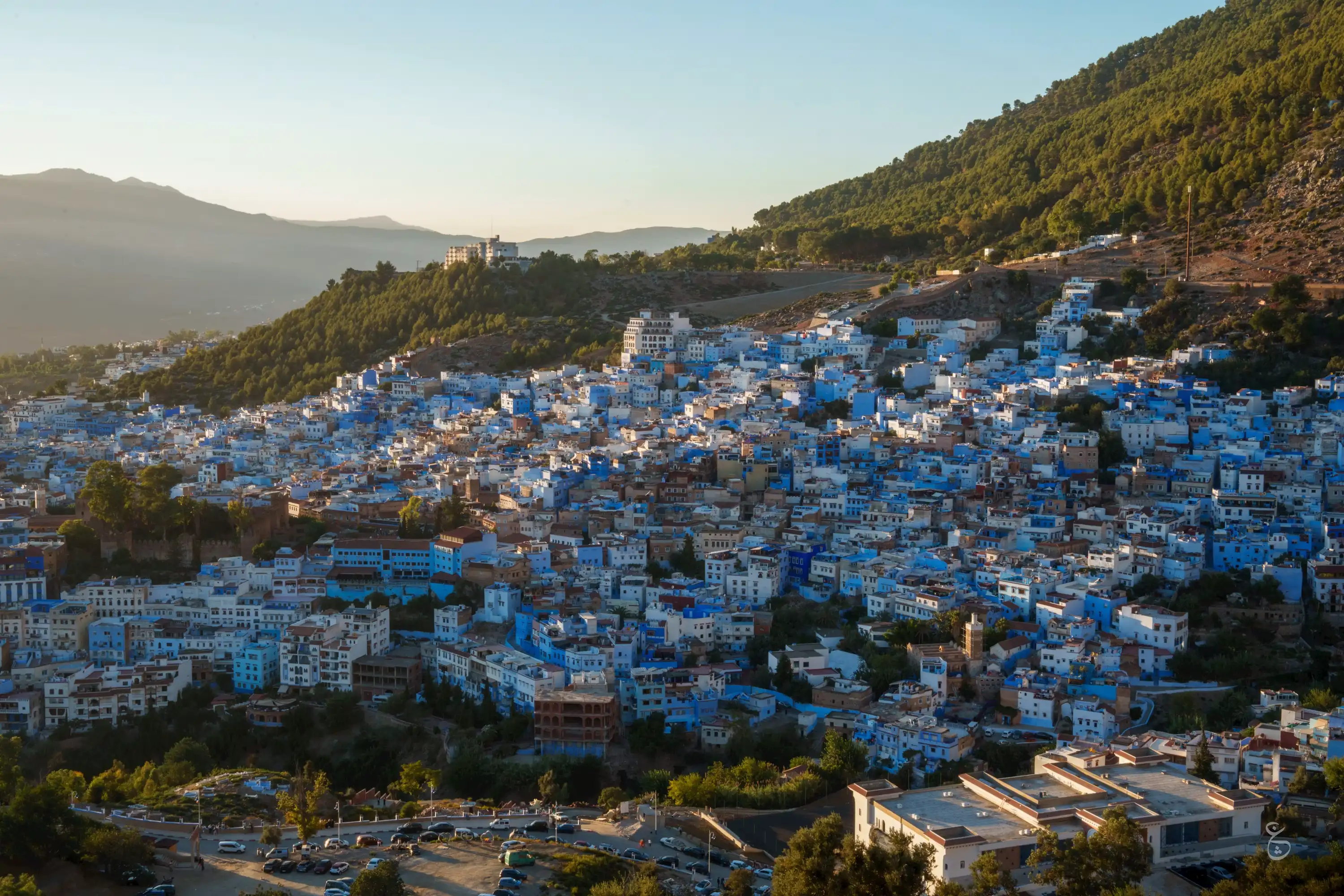
Standing at the top of Mehrangarh Fort at sunrise, looking down at a city of blue-painted houses that stretch to the Thar Desert, is one of those moments that makes travel feel like it was specifically invented for this view. Rajasthan has several of those moments. Plan around them.
Jaipur — the Pink City
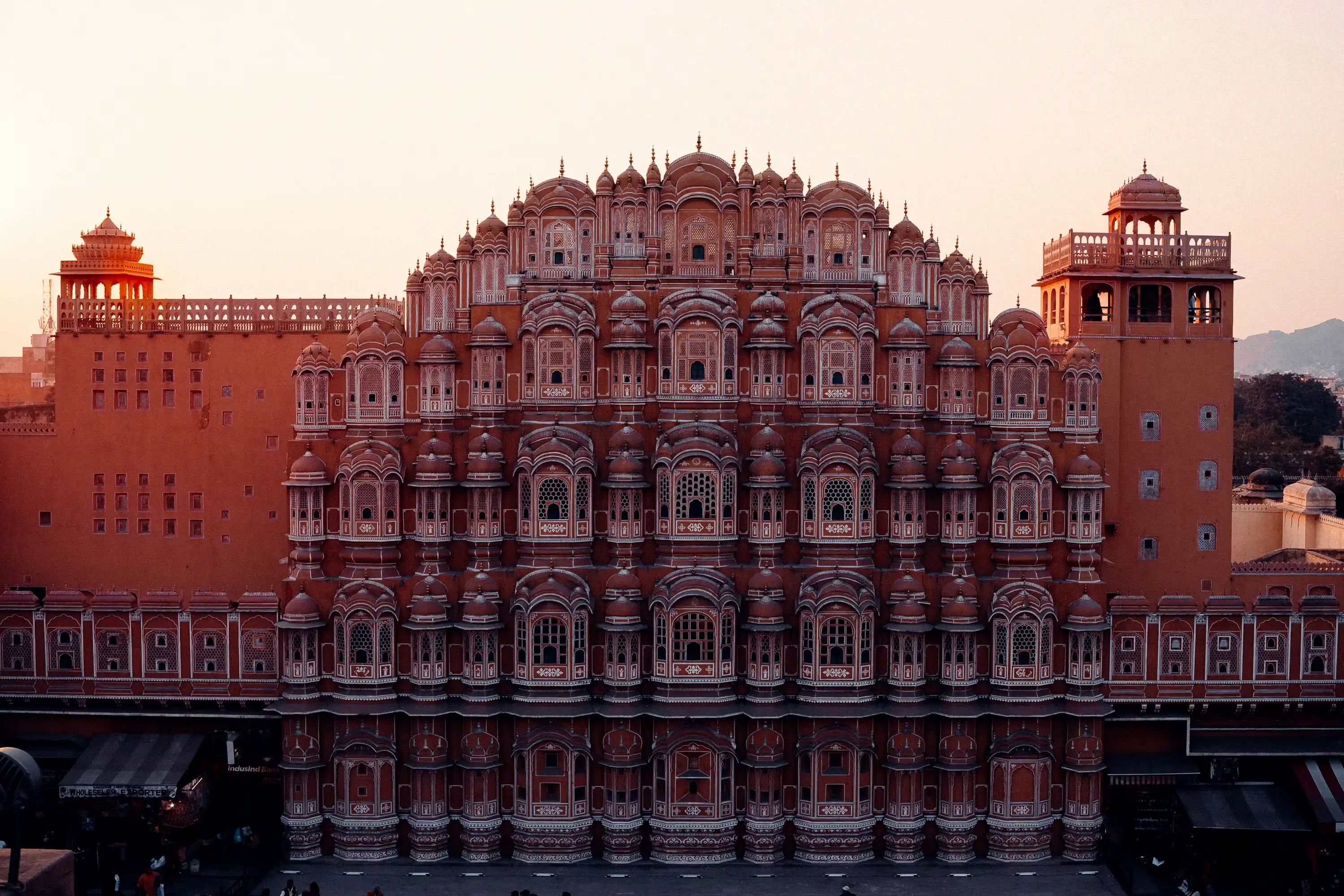
Jaipur was built to a plan. In 1727, Maharaja Sawai Jai Singh II — ruler, astronomer, mathematician, and administrator of unusual ambition — commissioned a new city on the Rajasthani plain, laid out on a grid following the principles of the ancient Vastu Shastra architectural texts. The pink colour that gives the city its nickname was applied in 1876, when the entire old city was painted terracotta-pink to welcome the Prince of Wales — and has been maintained ever since under municipal law. The city that Jai Singh designed is still there, still inhabited, still functioning as a market town behind a painted façade that has become one of the most photographed urban streetscapes in India.
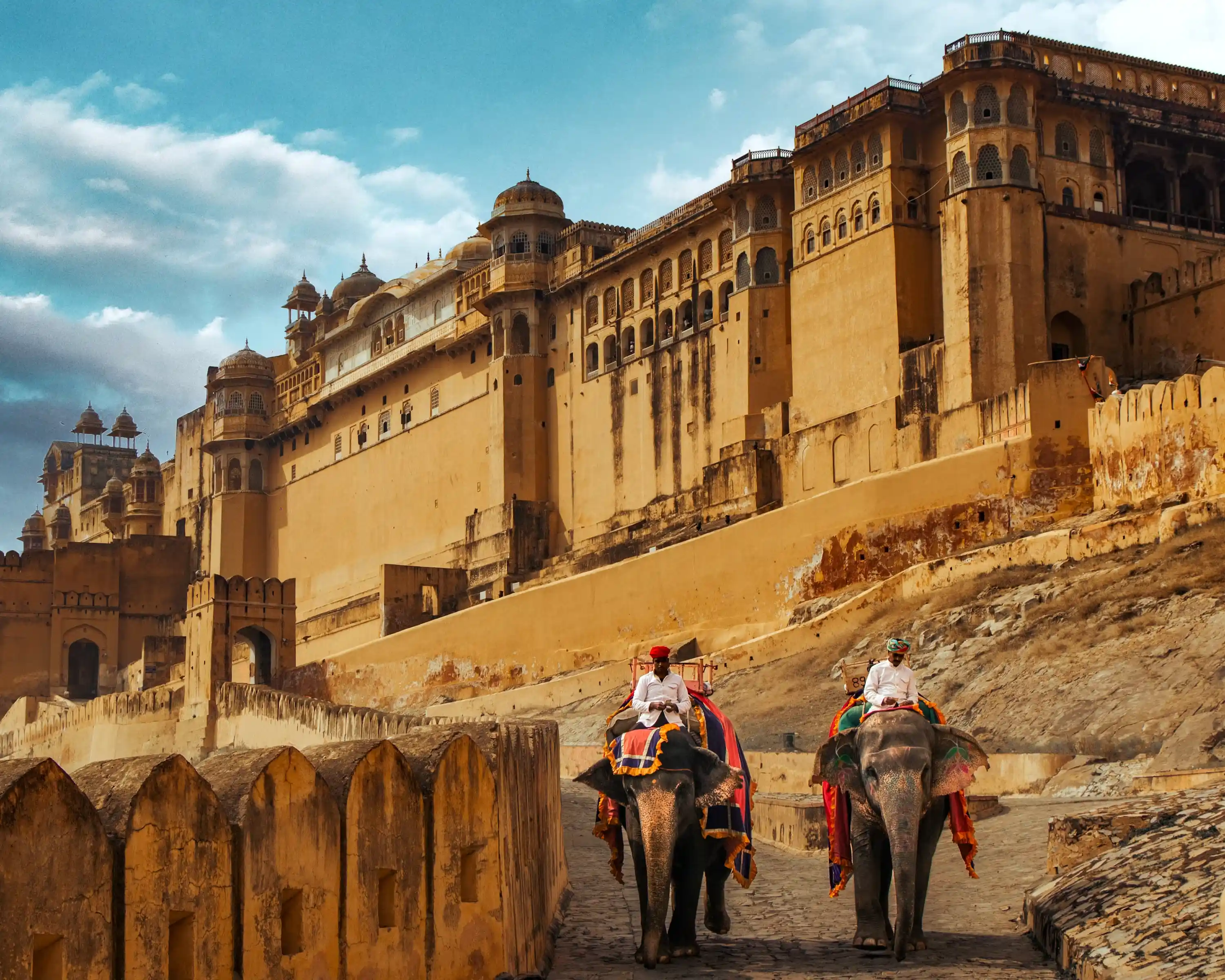
The Amber (or Amer) Fort, eleven kilometres outside the city, is where most visitors spend the most time and rightly so. Built from 1592 by Raja Man Singh I and expanded by successive Kachwaha Rajput rulers over the following century, it is a working example of the military-residential architecture that defines Rajput ambition: thick red sandstone walls, multiple courts, elaborate state halls, and the Sheesh Mahal — the Hall of Mirrors, where the entire ceiling is covered with thousands of tiny convex mirrors that reflect a single candle flame into the appearance of a star-filled night sky. The jeep ride up is available as an alternative to the elephant rides (the latter remaining legally operational as of 2026 but increasingly scrutinised for animal welfare). Arrive early; the morning light on the approach road and the Maotha Lake reflection is Amber's finest hour.
Jantar Mantar, Jai Singh's astronomical observatory adjacent to the City Palace, is the site that most visitors underestimate and most leave wishing they'd spent more time in. The nineteen instruments are not decorative — they are precision astronomical tools, each designed to calculate a specific celestial measurement, and several remain functionally accurate to within seconds. The Samrat Yantra, a 27-metre sundial that tells time to within two seconds, is one of the most extraordinary pieces of functional architecture in India. Get a guide. The instruments mean relatively little without explanation and a great deal with it.
Jodhpur — the Blue City
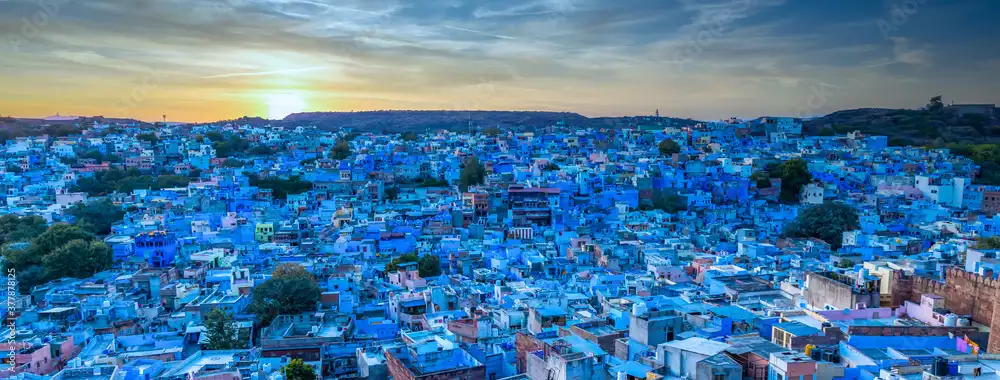
The approach to Mehrangarh Fort from Jodhpur's old city is one of the finest approaches to any building anywhere in India. You walk through the old market lanes, the houses intensifying in their blue-painted stucco as you climb, and then the fort walls simply rise above you — 36 metres of sandstone at their highest, rising from a rocky outcrop that itself rises 122 metres above the city. Rao Jodha, the 15th Rathore ruler and founder of Jodhpur, began the construction in 1459. Most of what stands today is 17th-century work by his successors. The walls are so wide — up to 21 metres across in some sections — that it feels less like a fortification than a small city that happens to have very thick exterior walls.
Rudyard Kipling, who visited and was not easily impressed, called it "a palace that might have been built by Titans and coloured by the morning sun." Time magazine named it the Best Fortress in Asia in 2007. These are outsized claims that the fort does not embarrass. Inside, the Mehrangarh Museum Trust has assembled one of the finest collections of royal artefacts in India — Mughal howdahs, the personal swords of Akbar and Timur, turbans from every community and era, and an arms gallery that includes Rao Jodha's own 3-kilogram khanda sword. The audio guide, recorded by the museum trust, is genuinely excellent and genuinely necessary: the context makes the collection.
After the fort, the stepwell at Toorji Ka Jhalra — a 200-year-old baoli restored from near-ruin in 2017, now open to the public as both a functional water feature and a social gathering point — is one of the most elegant pieces of public space in Rajasthan. The clock tower market at Sardar Bazaar is the food circuit that every Jodhpur visit should include: mawa kachori (fried bread stuffed with a rich khoya mixture and soaked in syrup) at Mishrilal Hotel; mirchi bada (green chilli in gram-flour batter, fried); lassi of a calibre that makes everywhere else's lassi feel like a reasonable approximation of the thing. Jodhpur's food is, by any objective assessment, the best food in Rajasthan.
Jaisalmer — the Golden City and the living fort
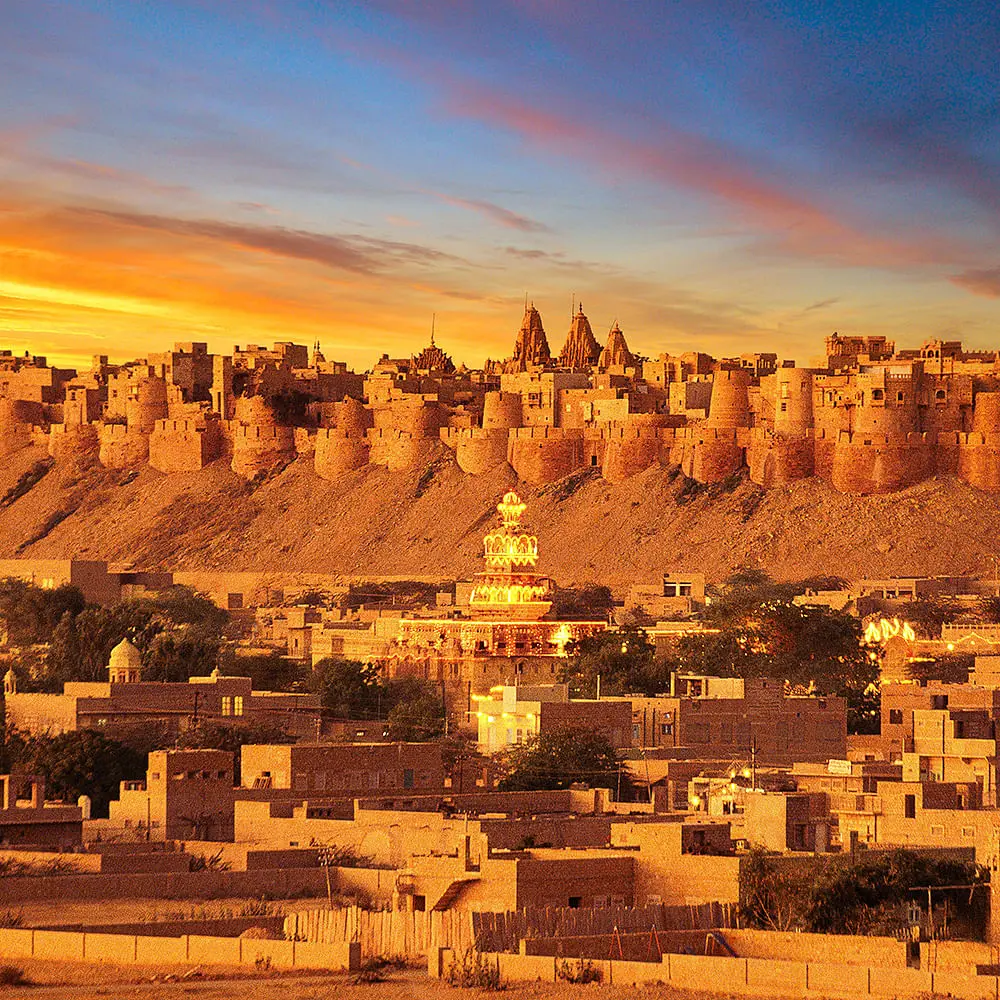
In 1156 CE, a Bhati Rajput ruler named Rawal Jaisal was looking for a new capital. His existing one at Lodhruva, fifteen kilometres away, no longer satisfied him. He found Trikuta Hill — a 76-metre sandstone ridge rising from flat desert — and built his fort on top of it. The location was deliberate: Jaisalmer sat on the trade routes connecting India with Central Asia and Persia. Silk, spices, opium, horses — everything that moved between the subcontinent and the west passed through this part of the Thar Desert. Rawal Jaisal built his fort to control and profit from this movement, and for six centuries, it worked.
The maritime trade routes through Bombay eventually drew wealth away from the overland caravan paths, and Jaisalmer's economic purpose faded. But the fort — made from yellow sandstone that hardens with age rather than crumbling, set on a hill that commands the surrounding desert, home to a resident population that has never been fully displaced — survived. Today, Jaisalmer Fort is one of the world's largest inhabited forts, with approximately 3,000 to 4,000 people still living and working within its 12th-century walls. This is not a museum. It is a small city that happens to be 870 years old.
The name Sonar Kella — Golden Fortress in Bengali — was popularised not by the fort's 12th-century founders but by the filmmaker Satyajit Ray, whose 1974 detective film of the same name was shot here and introduced the fort to audiences across India who had never visited Rajasthan. The fort's walls, made of the same yellow limestone as the surrounding desert, genuinely do turn honey-gold at sunset — it is not a guidebook invention. Walk through the main gates in the late afternoon, when the light is raking, and the colour change across the stones is remarkable enough to stop a conversation mid-sentence.
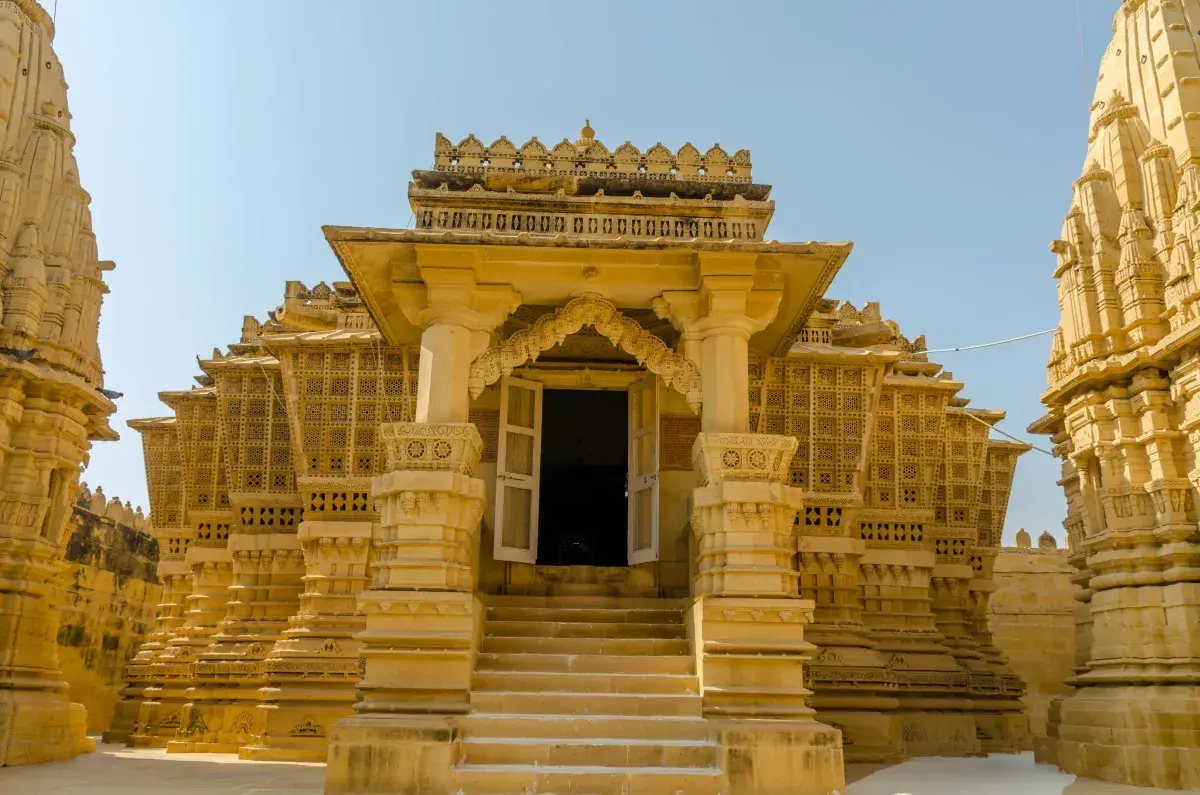
Inside the fort, the seven Jain temples built between the 12th and 16th centuries by wealthy merchants who controlled the Silk Road trade are, collectively, some of the finest examples of medieval Jain temple architecture in India. Visit them before noon — they close to non-Jains at midday, and the morning light through the stone jali screens is the light they were designed for. Leave leather items at the gate.
An honest note on conservation: the fort's foundation, built on weak desert rock designed for minimal rainfall, is under real stress from the modern water use of residents and tourists. Sections have collapsed. UNESCO and the World Monuments Fund are both involved in restoration discussions. Visiting the fort, spending money at its shops and restaurants, and treating it as a living community rather than a backdrop for photographs — these are the small contributions a visitor can make to the economic case for its continuing maintenance.
Udaipur — the City of Lakes
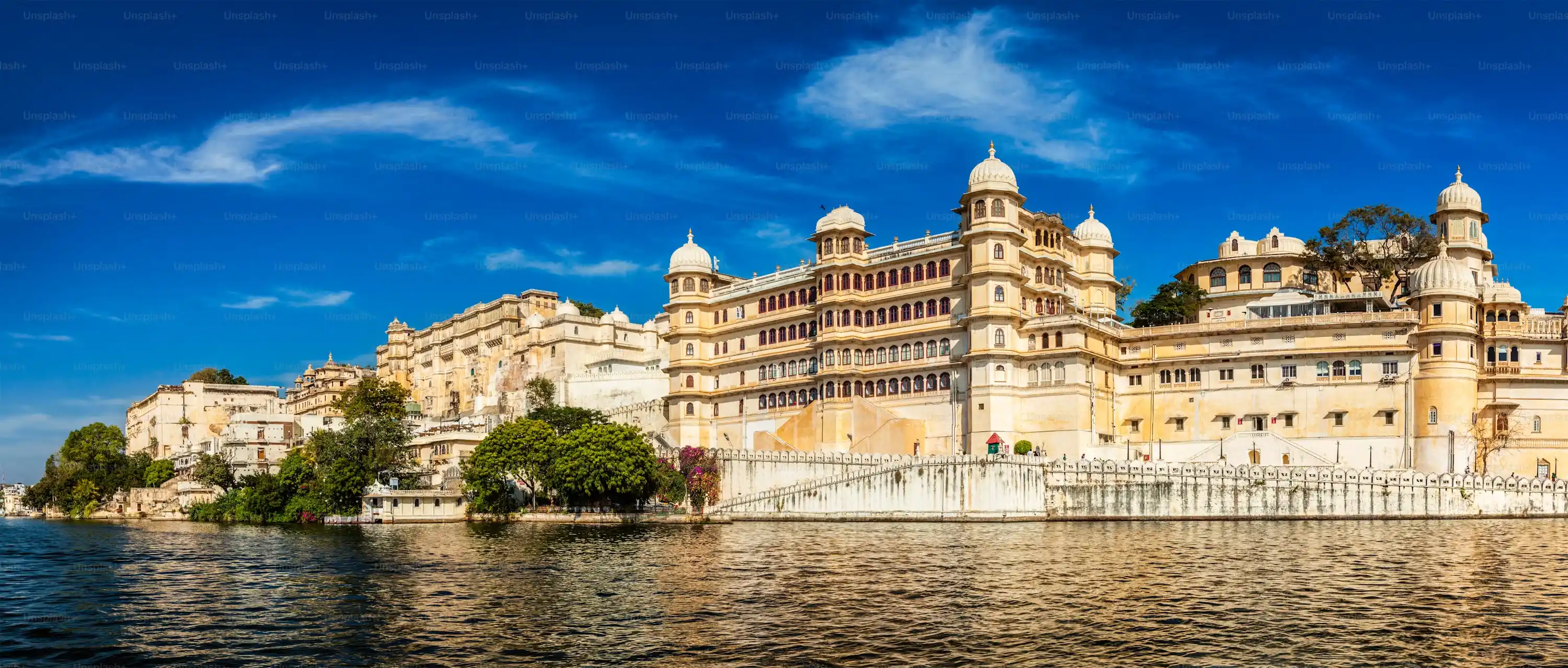
Udaipur was founded in 1553 by Maharana Udai Singh II, who moved his capital from Chittorgarh after it fell to Mughal Emperor Akbar. He found a site in the Aravalli hills, beside a lake called Pichola, and began building. His successors built for nearly four hundred years — adding palaces, gateways, temples and gardens — which is why the City Palace complex is the largest of its type in Rajasthan and why walking through it feels like walking through multiple centuries of design intention simultaneously.
The detail that most guides mention only in passing is worth sitting with: the Jag Mandir palace, built on an island in Lake Pichola from 1620, gave shelter to Prince Khurram when he rebelled against his father, the Mughal Emperor Jahangir. Prince Khurram — who later became the Emperor Shah Jahan, builder of the Taj Mahal — spent enough time in this island palace that it is widely credited with influencing his later architectural ambitions. The Taj Mahal, by this telling, is at least partly inspired by a Rajput palace on a lake in Udaipur.
Lake Pichola is Udaipur's essential experience, and the boat ride at sunset is exactly as good as every photograph of it suggests. The light on the City Palace's marble and sandstone changes colour over the thirty minutes of the ride as the sun descends behind the Aravalli hills, and the white facade of the Taj Lake Palace hotel (originally built 1620–1652 as a Maharana's summer retreat, converted by Taj Hotels in the mid-20th century, and now one of India's finest palace hotels) reflects on the water from the middle of the lake. Octopussy, the 1983 James Bond film, was partly shot here — which is now mentioned on every marketing brochure but was, at the time, simply one of the world's most cinematic places being used for exactly that purpose.
| FORT / SITE | CITY | KEY FACTS | DON'T MISS | ENTRY FEE (APPROX) | HONEST DETAIL |
|---|---|---|---|---|---|
|
Mehrangarh Fort |
Jodhpur |
Built 1459 by Rao Jodha (Rathore Rajput); walls up to 36m high; most existing structure dates to the 17th century; Rudyard Kipling called it 'a palace that might have been built by Titans and coloured by the morning sun'; Time magazine named it 'Best Fortress in Asia' in 2007 |
Loha Pol gate (sati handprints, 1843); Sheesh Mahal (Hall of Mirrors); panoramic views of Jodhpur's blue city; Mehrangarh Museum Trust audio guide (highly recommended) |
₹100 Indian / ₹600 foreign + camera fees |
One of the finest fort interiors in India; allow 3–4 hours minimum; go at sunrise for the blue city view in morning light |
|
Amber (Amer) Fort |
Near Jaipur, 11 km |
Built from 1592 by Raja Man Singh I; expanded by successive Kachwaha Rajput rulers; 16th–18th century; Sheesh Mahal uses thousands of tiny mirrors to create the effect of starlight from a single flame; UNESCO World Heritage Site (2013) |
Sheesh Mahal interior; Ganesh Gate with saffron-flower paintings; light and sound show in the evenings; view from the approach road |
₹100 Indian / ₹500 foreign |
Jeep rides now available as alternative to elephant rides; book early in day before heat; the approach via the Maotha Lake reflection is the classic photograph — take it from the road, before entering |
|
Jaisalmer Fort (Sonar Quila) |
Jaisalmer |
Built 1156 by Rawal Jaisal (Bhati Rajput) on Trikuta Hill; one of the world's largest inhabited forts with 3,000–4,000 current residents; UNESCO World Heritage Site (2013); walls glow honey-gold at sunset; name 'Sonar Kella' popularised by Satyajit Ray's 1974 film |
Seven Jain temples inside (12th–16th century, exquisite carvings — visit before noon); Raj Mahal palace; Dussehra Chowk; rooftop views of the desert beyond |
₹50 Indian / ₹250 foreign |
Foundation under stress from modern water usage — some sections have collapsed; a living fort, not a museum; buy at a shop inside the fort to support resident traders |
|
City Palace + Jantar Mantar |
Jaipur |
City Palace: complex of multiple palaces begun by Maharaja Sawai Jai Singh II (1727); Jantar Mantar: UNESCO-listed observatory (1734) featuring 19 astronomical instruments, largest of five built across India by Jai Singh — still functionally accurate |
Mubarak Mahal; Diwan-i-Khas with the two massive silver urns (among the world's largest); Jantar Mantar's Samrat Yantra (world's largest sundial, 27m high, accurate to 2 seconds) |
₹200 Indian / ₹700 foreign (combined ticket for main attractions) |
Buy the combined entrance ticket online in advance — avoids queues and typically 10–20% cheaper; Jantar Mantar is often underestimated and is genuinely extraordinary once you understand what each instrument does — get a guide |
|
City Palace |
Udaipur |
Construction began 1553 by Maharana Udai Singh II (founder of Udaipur); largest palace complex in Rajasthan; built over nearly 400 years; Jag Mandir palace on Lake Pichola gave shelter to the future Shah Jahan and reportedly inspired the Taj Mahal's design |
Mor Chowk (Peacock Courtyard); Sheesh Mahal (mirror work); Zenana Mahal; evening light and sound show at Manek Chowk; sunset boat ride on Lake Pichola after the palace visit |
₹300 Indian / ₹650 foreign (museum) |
The City Palace and lake together are the visual identity of Udaipur; spend the morning inside, the afternoon on the ghats watching the light change on the water |
|
Kumbhalgarh Fort |
55 km from Udaipur |
Built mid-15th century by Maharana Kumbha; perimeter wall is 36 km long — the second-longest continuous wall in the world after the Great Wall of China; birthplace of Maharana Pratap; inside the walls are 360+ temples; wildlife sanctuary surrounds it |
The great wall circuit walk; Badal Mahal (Cloud Palace) at the fort's summit; sunrise over the Aravalli hills from the top |
₹50 Indian / ₹200 foreign |
Almost always combined with Ranakpur on the Jodhpur–Udaipur road; allow half a day; the wall's scale doesn't photograph easily — you need to walk it to understand what you're looking at |
|
Ranakpur Jain Temples |
Between Jodhpur and Udaipur |
Built 1437–1458 by the merchant Dhanna Shah; dedicated to Adinatha (first Tirthankara); main temple has 1,444 uniquely carved marble pillars — no two are alike; the Chaturmukha Dharana Vihara is the main structure |
The marble pillar hall; the hand-carved ceilings; the light through the stone jali screens |
₹50 Indian |
Dress code strictly enforced (remove shoes; no leather; women in skirts provided at gate); arrive before 11 AM for the best light and smallest crowds; the quality of the carving rivals anything in Rajasthan |
KEY SITES AND FORTS — COMPLETE GUIDE 2026
When to go — the honest season guide
October to March is Rajasthan's travel season, and within that window, November and January are the two finest months — November for the post-monsoon clarity and the Pushkar Camel Fair, January for the coolest temperatures and the Jaipur Literature Festival. The summer months (April to June) are genuinely hostile: temperatures exceed 45°C in many areas of the desert, most desert camps close, and sightseeing becomes a matter of racing between air-conditioned vehicles and air-conditioned interiors rather than enjoying the landscape.
The monsoon (July to September) gives Rajasthan a version of itself that almost nobody plans for and many discover accidentally: the landscape turns green, the lakes fill, Udaipur's Lake Pichola swells to its most photogenic state, and the forts sit in isolation with dramatically reduced visitor numbers. It is not the most comfortable season for comprehensive sightseeing, but it has a particular beauty that the dry months don't offer, and for travellers who've seen the postcard version and want to see something else, the monsoon Rajasthan is worth considering.
| MONTH | TEMP | CONDITIONS | BEST FOR | HONEST NOTE |
|---|---|---|---|---|
|
October |
25–35°C |
Post-monsoon green; warm but bearable |
Ranthambore reopens; RIFF festival Jodhpur; Pushkar Fair approach season |
Start of the best season; book accommodation early — prices rise fast |
|
November |
18–30°C |
Best weather of the year; clear skies; lush post-monsoon green |
Everything — all forts, safaris, desert camps |
Pushkar Camel Fair (early-mid November, dates vary); busiest and most expensive month |
|
December |
12–25°C |
Cool, comfortable; some nights cold in the desert (below 5°C) |
All sightseeing; Jaisalmer desert camps (cold nights make campfire evenings magical) |
December 31 brings crowds to Jaipur and Udaipur — book 6+ weeks ahead for New Year's |
|
January |
10–22°C |
Cool and pleasant; Jaipur Literature Festival |
All cultural experiences; Kite Festival (Makar Sankranti 14 Jan) |
JLF draws 400,000+ visitors to Jaipur — plan around it or embrace it; book 3 months ahead |
|
February |
12–25°C |
Warming up; Holi approaches; Desert Festival Jaisalmer |
Desert Festival (camels, folk music, moustache competitions — genuine spectacle) |
Holi (March) is transformative across Rajasthan; Udaipur and Pushkar are particularly vivid |
|
March |
15–30°C |
Warming fast; Holi celebrations; spring flowers |
Holi; last good weather before summer heat builds |
After Holi (mid-March) crowds thin significantly — good value window |
|
April |
25–38°C |
Hot; avoid midday outdoor activity |
Very limited — heritage hotel stays only; indoor palace visits early morning |
Only for travellers with high heat tolerance; many desert camps close |
|
May–June |
35–46°C |
Extremely hot; temperatures exceed 45°C in desert areas |
Not recommended for sightseeing |
Some forts are extraordinary in the empty heat — but know what you're choosing |
|
July–September |
28–38°C |
Monsoon; Rajasthan receives rain; landscape turns green |
Monsoon palace visits; Mewar Festival in Udaipur; lake levels at their highest — Lake Pichola is most full |
Some roads may be disrupted; desert camp season not active; forts quieter |
MONTH-BY-MONTH SEASON GUIDE
The offbeat circuit — what most itineraries miss
The standard Rajasthan circuit — Jaipur, Jodhpur, Jaisalmer, Udaipur — is excellent. It's also the circuit that every traveller does. The additions that most regular Rajasthan visitors insist on for repeat trips are less visited and, in certain respects, more rewarding.
Bundi, a small town in the Hadoti region south of Jaipur, looks like the set of a film about Rajasthan that was built before anyone thought to add tourists. The Taragarh Fort above the town is in partial ruin and entirely unmanaged, which means you climb it with a watchman and three goats rather than an audio guide and five tour groups. The Bundi Palace below has some of the finest Rajput murals in Rajasthan — painted in a style specific to this region — and its stepwells, particularly Raniji Ki Baori, are engineering objects of extraordinary beauty. Bundi is two to three hours from Jaipur. Most people don't go. This is precisely the reason.
Kumbhalgarh Fort, fifty-five kilometres from Udaipur in the Aravalli hills, has a perimeter wall of 36 kilometres — the second-longest continuous wall in the world after the Great Wall of China. It is also the birthplace of Maharana Pratap, the Mewar ruler whose resistance to Mughal expansion made him a hero of Rajasthani historical memory. Ranakpur Jain Temple, another ninety minutes from Kumbhalgarh, is a 15th-century marble temple with 1,444 individually carved pillars — not one is identical to another. The carving quality matches anything at Khajuraho. Both are standard stops on the Jodhpur-to-Udaipur road, and both are consistently the sites that visitors wish they'd spent more time at.
| CITY / REGION | BEST FOR | TIME NEEDED | DON'T MISS |
|---|---|---|---|
|
Jaipur (Pink City) |
Heritage, palaces, bazaars, Golden Triangle |
2–3 days |
Amber (Amer) Fort + Sheesh Mahal; City Palace museum; Hawa Mahal exterior at dawn; Jantar Mantar UNESCO observatory; Johri Bazaar jewellery |
|
Jodhpur (Blue City) |
Mehrangarh Fort, blue-painted old city, food |
1–2 days |
Mehrangarh Fort at sunrise; Toorji Ka Jhalra stepwell; Jodhpur food (mawa kachori, laal maas); Sardar Bazaar clock tower; RIFF festival in October |
|
Jaisalmer (Golden City) |
Living fort, Thar Desert, sand dune camps |
2–3 days |
Jaisalmer Fort interior (3,000+ people still live here); Patwon Ki Haveli; Sam Sand Dunes at sunset; overnight desert camp; Gadisar Lake at dawn |
|
Udaipur (City of Lakes) |
Palaces, Lake Pichola, romantic ambience, art |
2–3 days |
City Palace + Lake Palace views from the ghats; boat ride on Lake Pichola at sunset; Saheliyon Ki Bari garden; miniature painting workshops |
|
Ranthambore |
Wildlife, tigers, UNESCO fort |
2 nights minimum |
Tiger safari (book 2–3 months ahead for morning slots in Oct–Feb); Ranthambore Fort inside the national park; evening nature walk |
|
Pushkar |
Sacred ghats, camel fair, spiritual town |
1 day (or 3–4 days during Camel Fair) |
Brahma Temple (one of very few in India dedicated to Brahma); ghats at sunset; Pushkar Camel Fair if November; honest note: outside the fair, Pushkar's tourist infrastructure outweighs its standalone sightseeing value |
|
Kumbhalgarh + Ranakpur |
Off-circuit forts and temples between Jodhpur and Udaipur |
Day trip or overnight |
Kumbhalgarh Fort (second-longest wall in the world after the Great Wall of China, 36 km perimeter); Ranakpur Jain Temple (1,444 marble columns, 15th century) |
|
Bundi |
Undervisited palace town, stepwells, old painting tradition |
1–2 days |
Taragarh Fort; Bundi Palace with Rajput murals; Nawal Sagar Lake; Raniji Ki Baori stepwell — a town that looks like a film set before the crowds arrive |
|
Bikaner |
Red sandstone architecture, camel research station, rat temple |
1 day |
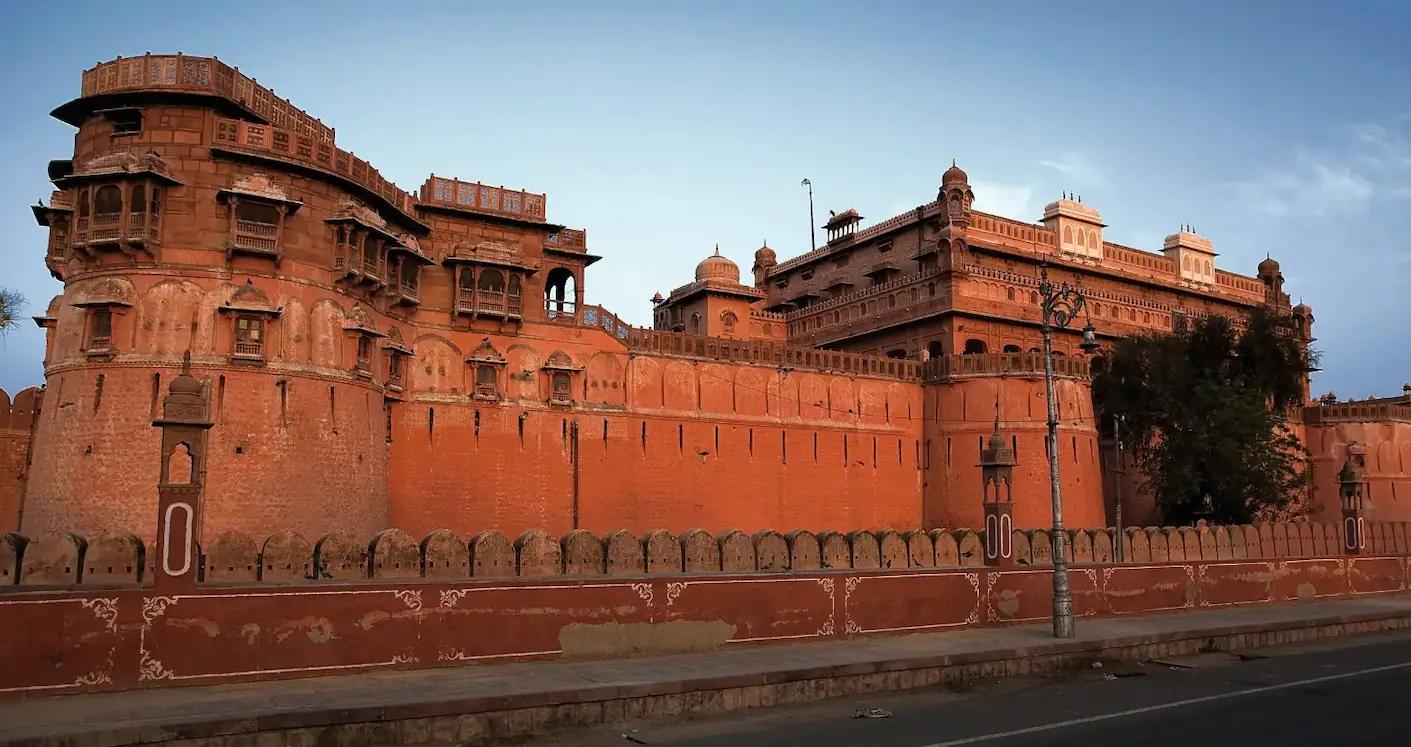
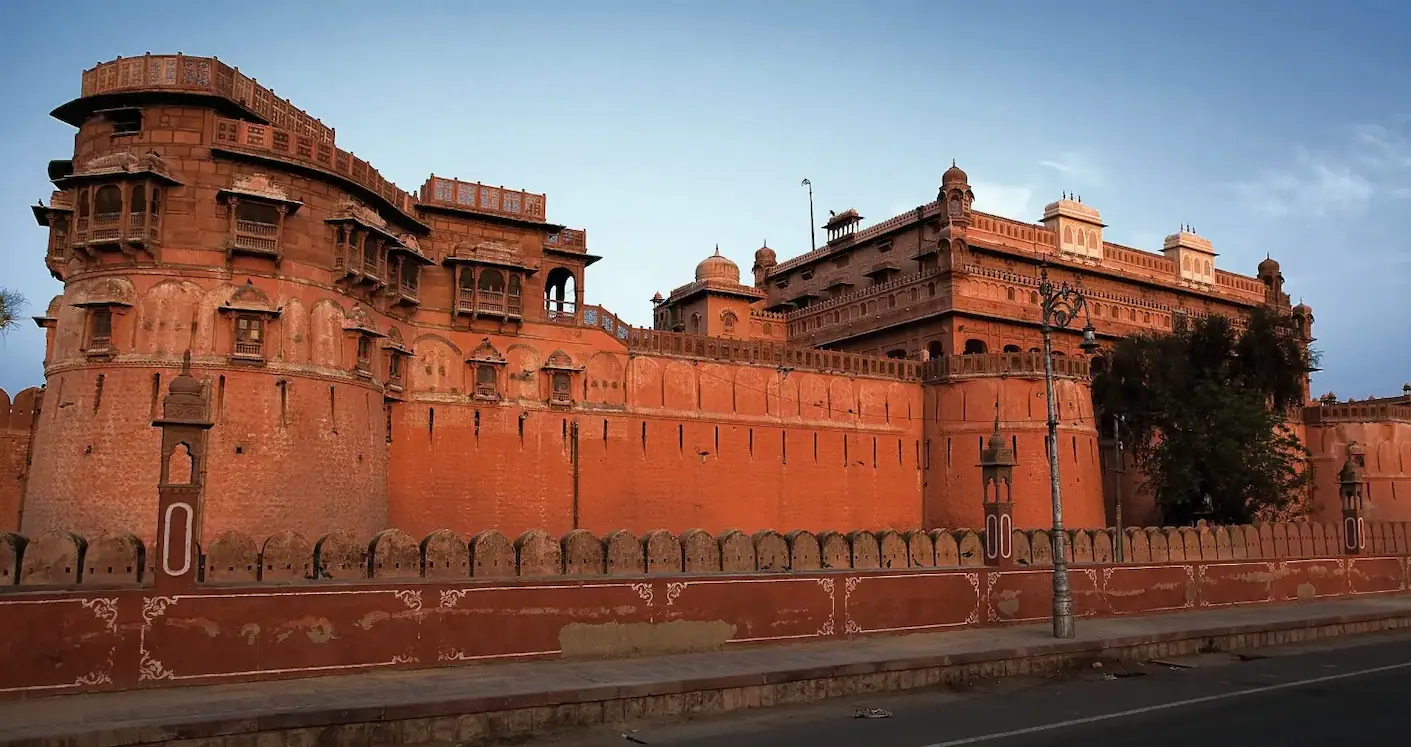
Junagarh Fort (never conquered, no steep hillside); Karni Mata Temple (20,000 resident rats); National Research Centre on Camel |
THE CITIES AND REGIONS — WHERE TO GO AND HOW LONG
Experiences worth planning around
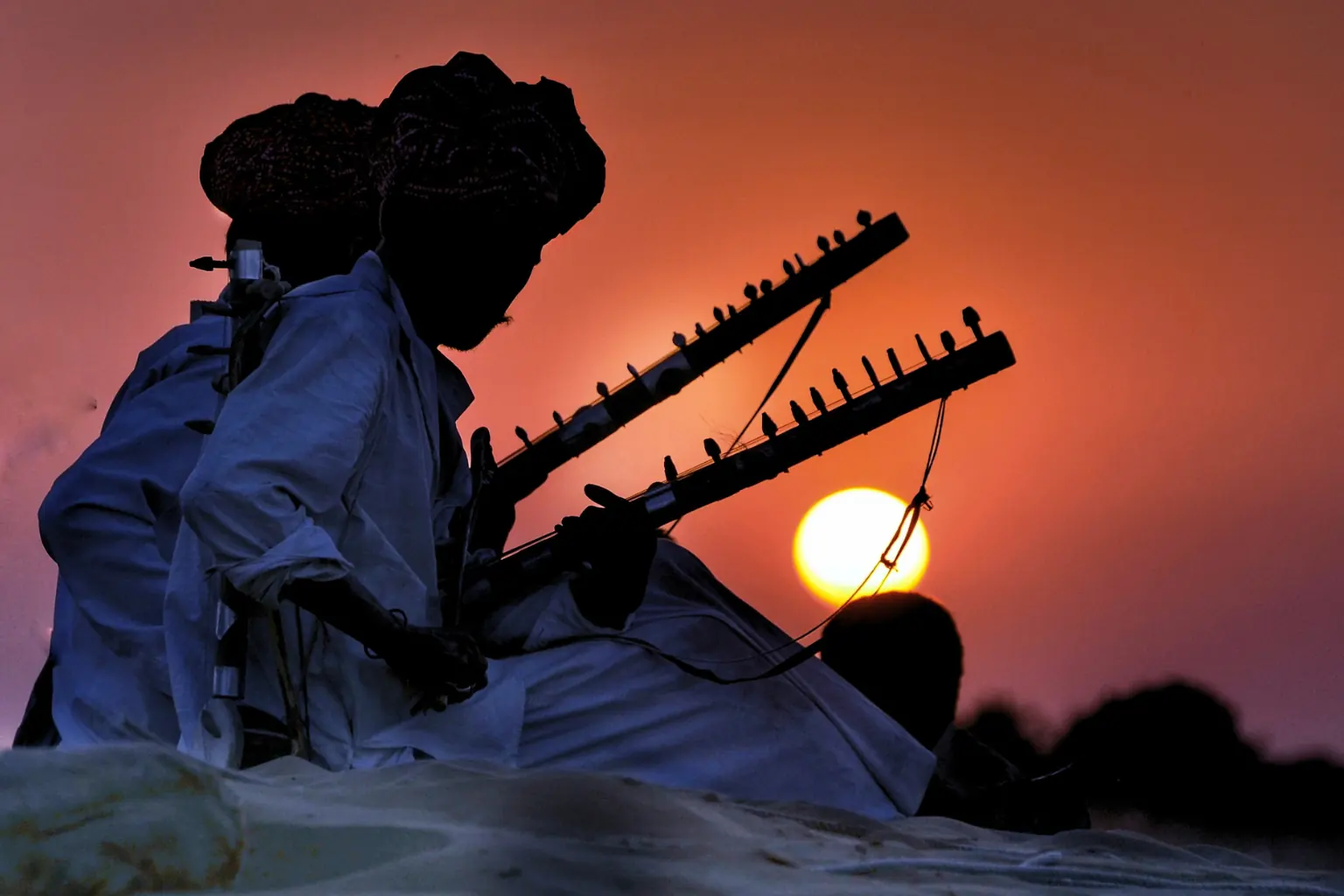
The Rajasthan International Folk Festival at Mehrangarh Fort in October — more commonly called RIFF — is the musical event that most deserves to be better known. Held across four nights on the ramparts and grounds of Mehrangarh, it brings together folk musicians from Rajasthan (Manganiyar and Langa performers, who are the communities that have carried Rajasthani classical folk music as a hereditary profession for generations), alongside international artists from Morocco, Sub-Saharan Africa, the Americas, and Southeast Asia. UNESCO has described RIFF as a "People's Platform for Creativity and Sustainable Development." The acoustics on Mehrangarh's ramparts at night, with the blue city below and the desert beyond, are extraordinary. If an October trip is possible, plan it around RIFF.
The Pushkar Camel Fair is the event that makes Pushkar genuinely worth adding to a Rajasthan itinerary. The town itself — a sacred lake, one of India's very few temples dedicated to Brahma, a market of textiles and trinkets aimed entirely at tourists — is pleasant but limited as a standalone destination. The fair, held over five days leading to Kartik Purnima (the full moon in November), transforms it entirely: thousands of camels, horses, and cattle; camel beauty and grooming competitions; moustache competitions; folk music around evening fires; and a genuinely unmissable cross-section of Rajasthani rural life that the forts and palaces of the standard circuit don't access. Plan the entire Rajasthan trip around the fair dates if they're in your travel window.
| EXPERIENCE | WHERE | COST (APPROX) | HONEST DETAIL |
|---|---|---|---|
|
Ranthambore tiger safari (jeep or canter) |
Ranthambore National Park |
₹1,500–3,500/person for a zone safari (jeep) depending on zone and season |
Book at rajasthanwildlife.in up to 90 days ahead; morning slots in Zones 1–3 (most active tiger territory) fill months in advance October–March; the experience of being in a jeep in a morning jungle, whether you see a tiger or not, is outstanding |
|
Desert camp overnight at Sam Sand Dunes |
30 km from Jaisalmer |
₹3,000–15,000/tent depending on luxury level (full board usually included) |
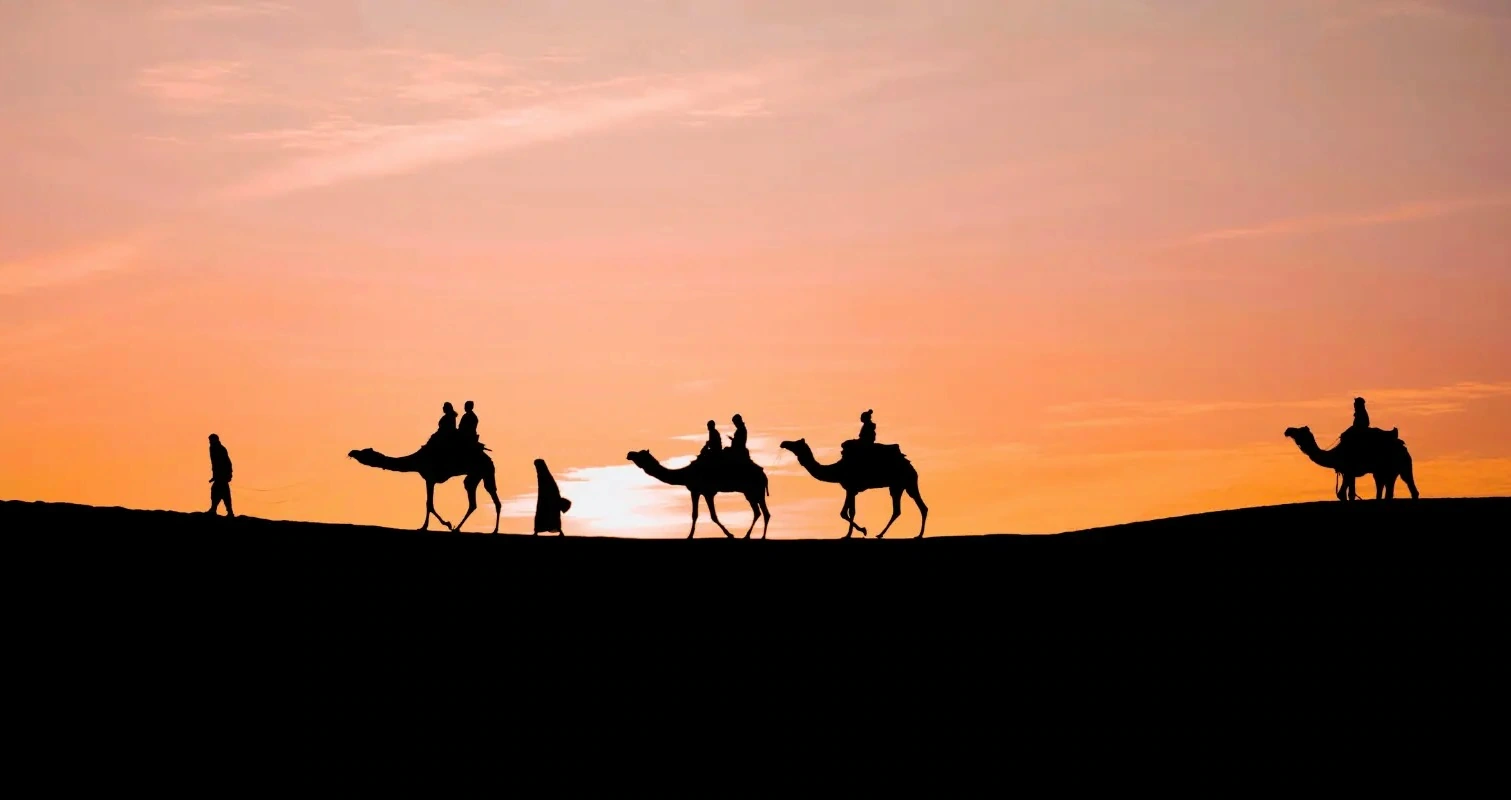
The dune camel ride at sunset and fire circle dinner are genuine experiences, not manufactured ones; choose an established camp operator; cold December–February nights make sleeping bags essential — most camps provide blankets but not always sufficient ones |
|
Sunrise at Mehrangarh Fort |
Jodhpur |
₹100 Indian entry + audio guide |
The blue-painted houses of Jodhpur's old city, seen from the fort ramparts in early morning light, are one of the most photogenic views in India; arrive at opening time and go directly to the upper ramparts before the tour groups arrive |
|
Dal Baati Churma at a local dhaba |
Anywhere in Rajasthan |
150–300/person |
The definitive Rajasthani meal — round wheat balls (baati) baked over fire, served with lentil dal and churma (coarsely ground wheat sweetened with sugar and ghee); eat this at a proper Rajasthani dhaba, not a hotel 'Rajasthani menu' |
|
Evening boat ride on Lake Pichola |
Udaipur |
₹400–700/person (sunset boat) |
The Taj Lake Palace hotel (now a 5-star resort) sits on the lake and is visible from the public boats; the City Palace reflection in the water changes colour through the sunset; the golden hour light on the lake is Udaipur's defining visual moment |
|
Jaipur Literature Festival |
Jaipur |
Free to attend (ticketed for some events) |
The world's largest free literary festival, held at Diggi Palace in January; 400,000+ visitors, 200+ authors, 5 days; genuinely democratic — no paywall for most events; the city doubles in price during the festival — book accommodation 3 months ahead |
|
Pushkar Camel Fair |
Pushkar, near Ajmer |
Entry free; ₹200–500 for organised viewing areas |
Held over 5 days leading to Kartik Purnima (full moon in November); thousands of camels, horses, cattle; camel beauty competitions, moustache competitions, folk music; one of India's genuinely extraordinary events — plan the whole trip around it if dates align |
|
Stepwells (baolis) circuit |
Across Rajasthan |
Free to ₹50 entry |
Rajasthan's stepwells — Toorji Ka Jhalra (Jodhpur), Chand Baori (Abhaneri, near Jaipur, 3,500 steps), Raniji Ki Baori (Bundi), Panna Meena Ka Kund (Amer/Jaipur) — are among the most extraordinary pieces of water architecture in the world; systematically undervisited; mostly free entry |
SIGNATURE EXPERIENCES — WHAT'S WORTH PLANNING AROUND
Rajasthan International Folk Festival at Mehrangarh Fort — musicians on the ramparts of a 15th-century citadel, the blue city below, the desert beyond, traditional Manganiyar music and international artists on the same stage. If you're in India in October, this is worth planning a trip around.
The commission-steering pattern — and how to navigate it
I want to be direct about this because it's the most consistent source of tourist frustration across all of Rajasthan, and it's entirely preventable once you understand how it works.
The pattern: a friendly local — sometimes a chance encounter on the street, sometimes the driver you've hired, sometimes someone who identifies themselves as a guide — offers to take you to a 'family shop,' a 'government emporium,' or a 'cooperative.' You are shown textiles, gems, carpets, or crafts at what are described as wholesale prices unavailable elsewhere. The shop is pleasant, the staff are attentive, the pressure is gentle but consistent. Anything you buy generates a substantial commission for whoever brought you in — the shop has priced that commission into the ticket price, so you are not getting a special rate; you are paying the commission on top of the item's fair market value.
This system is genuinely widespread in Jaipur, Jodhpur, Jaisalmer, and Udaipur. It is also easy to sidestep with two habits: use Uber or Ola for city transport (drivers on app-based platforms have no commission relationship with shops), and when you want to buy textiles or gems, go independently to the Johri Bazaar in Jaipur, Sardar Bazaar in Jodhpur, or the market lanes inside Jaisalmer Fort — where you pay the real price, not the commission-inflated one. Rajasthani handicrafts — block-print textiles, Jodhpur furniture, silver jewellery, blue pottery — are genuinely worth buying. Just buy them on your own terms.
| PATTERN | HOW IT WORKS | HOW TO SIDESTEP |
|---|---|---|
|
Commission steering (gem shops, textile emporia) |
Your driver, a friendly local on the street, or an unofficial guide offers to take you to a 'government-approved' or 'family' shop. You are shown around, pressured gently or firmly, and anything you buy generates a large commission for your escort — not a quality premium for you. |
Book city transport through Uber or Ola (driver has no commission incentive); if you want to shop for textiles or gems, go independently to the Johri Bazaar or Tripolia Bazaar; government emporiums do exist (Rajasthali chain) but 'government emporium' claimed by anyone flagging you on the street is not one |
|
Gem investment scam |
You are shown high-quality gems at 'wholesale price' by a convincing story about a family business and an export opportunity. The 'investment' gems are either glass, synthetic, or grossly overvalued. |
Simple rule: no gem purchase you make in Rajasthan will ever generate a resale profit. Buy gems if you love them as jewellery; never as investments |
|
Taxi/auto overcharging |
Drivers near Hawa Mahal, City Palace Udaipur, Mehrangarh Fort, and Jaisalmer Fort routinely quote 3–5 times the going rate for short rides. |
Uber and Ola both operate in Jaipur, Jodhpur, Udaipur and Jaisalmer; for intra-city travel, always prefer them; for inter-city, agree the full return price before departure and confirm it in writing on WhatsApp |
|
Hotel-switching scam |
Your pre-booked accommodation is claimed to be 'closed', 'under renovation', or 'not open this month' by the driver who picks you up from the airport/station. An alternative hotel — where he earns commission — is offered. |
Contact your hotel directly before arriving; if a driver claims your booking is invalid, call the hotel in front of the driver; this scam relies entirely on you not having the hotel's number ready |
|
Fake cultural show tickets |
Touts outside major sites sell tickets to folk music/puppet shows at inflated prices, often claiming limited availability or VIP seating that doesn't exist. |
Book cultural performances through your hotel, or through known venues like Bagore Ki Haveli in Udaipur (legitimate, well-organised evening shows); any 'exclusive' show sold on the street is rarely either |
TOURIST FRICTION PATTERNS — AND HOW TO SIDESTEP THEM
Where to stay
Rajasthan has the most extraordinary range of heritage accommodation in India, and arguably in the world. Umaid Bhawan Palace in Jodhpur — built between 1929 and 1943 as a public works project during a severe drought, still partly the residence of the Maharaja of Jodhpur, managed by Taj Hotels in one of its most extraordinary properties — represents the absolute pinnacle of Indian palace hospitality. The Taj Lake Palace in Udaipur, floating on Lake Pichola, is the hotel that made it possible to believe the phrase 'palace hotel' was not an overstatement.
Below the trophy tier, the most satisfying Rajasthan accommodation is often the heritage haveli — the old merchant or noble house, built around an internal courtyard, converted into a small hotel that maintains the architecture while adding functional modern rooms. In Jaipur, Samode Haveli (a 475-year-old building with original frescoes intact) and several family-run havelis in the old city offer this at mid-range prices. In Jaisalmer, any guesthouse with a rooftop view of the fort is worth paying a modest premium for — the sunset from that particular vantage point is one of Rajasthan's defining visual experiences.
At the most practical level: Rajasthan's old city guesthouses — small, family-run, rooftop common areas, honest helpfulness about what's actually worth doing — consistently out-deliver mid-tier chain hotels at the same price or lower. In Jodhpur's old city near Mehrangarh, in Udaipur's lake-view lanes, and in Jaisalmer's fort neighbourhood, these are the accommodation category worth seeking out specifically.
| PROPERTY | LOCATION | TYPE | PRICE RANGE | NOTES |
|---|---|---|---|---|
|
Umaid Bhawan Palace (Taj) |
Jodhpur |
Palace hotel (still partly royal residence) |
₹25,000–1,00,000+/night |
One of India's great palace hotels; part of the building is still the Maharaja of Jodhpur's residence; the Taj-managed portion has excellent museum and service; the scale is staggering — built 1929–1943 as a public works project during a drought |
|
Taj Lake Palace |
Udaipur |
Iconic lake hotel (island) |
₹25,000–80,000+/night |
Accessible only by boat; the hotel that inspired the James Bond 'Octopussy' filming; the view from the lake looking at the City Palace is the quintessential Udaipur photograph; service is exceptional; book 3–6 months ahead for any good dates |
|
Suryagarh Jaisalmer |
Jaisalmer |
Desert luxury hotel |
₹15,000–30,000/night |
Consistently the most recommended luxury stay in Jaisalmer; excellent spa; desert activities organised; beautifully built in traditional sandstone |
|
Samode Haveli |
Jaipur |
Heritage haveli hotel |
₹8,000–18,000/night |
In the old city; 475-year-old haveli with original frescoes and hand-painted interiors; excellent starting point for Jaipur's bazaars |
|
Dera Amer (wildlife camp near Amber) |
Near Jaipur |
Eco-luxury tented camp |
₹8,000–15,000/night (full board) |
Adjacent to the Amber Fort wildlife sanctuary; elephant sanctuary with ethical interaction programme; wildlife drives; highly rated for both responsible tourism and comfort |
|
WelcomHeritage / heritage chain options |
Multiple cities |
Heritage hotels, havelis, mid-tier |
₹3,000–8,000/night |
The WelcomHeritage and HRH Group brands cover many heritage properties across Rajasthan at more accessible prices than the top tier — Rohet Garh near Jodhpur and Mihir Garh (for the ultra-premium) are standouts |
|
Zostel / hostels |
Jaipur, Jodhpur, Jaisalmer, Udaipur |
Budget hostel |
₹400–700 dorm; ₹1,500–2,500 private |
Good option for solo travellers; Jaisalmer Zostel has unusually good rooftop views of the fort; social atmosphere useful for finding camel safari companions |
|
Guesthouses in old cities |
All Rajasthan cities |
Family guesthouses |
₹800–2,500/room |
Family guesthouses in the old city areas consistently offer better views, more authentic atmosphere, and more direct helpfulness than mid-tier hotels at the same price; ask for a rooftop room where available |
WHERE TO STAY — 2026 ACCOMMODATION GUIDE
Food — the dishes that define Rajasthan
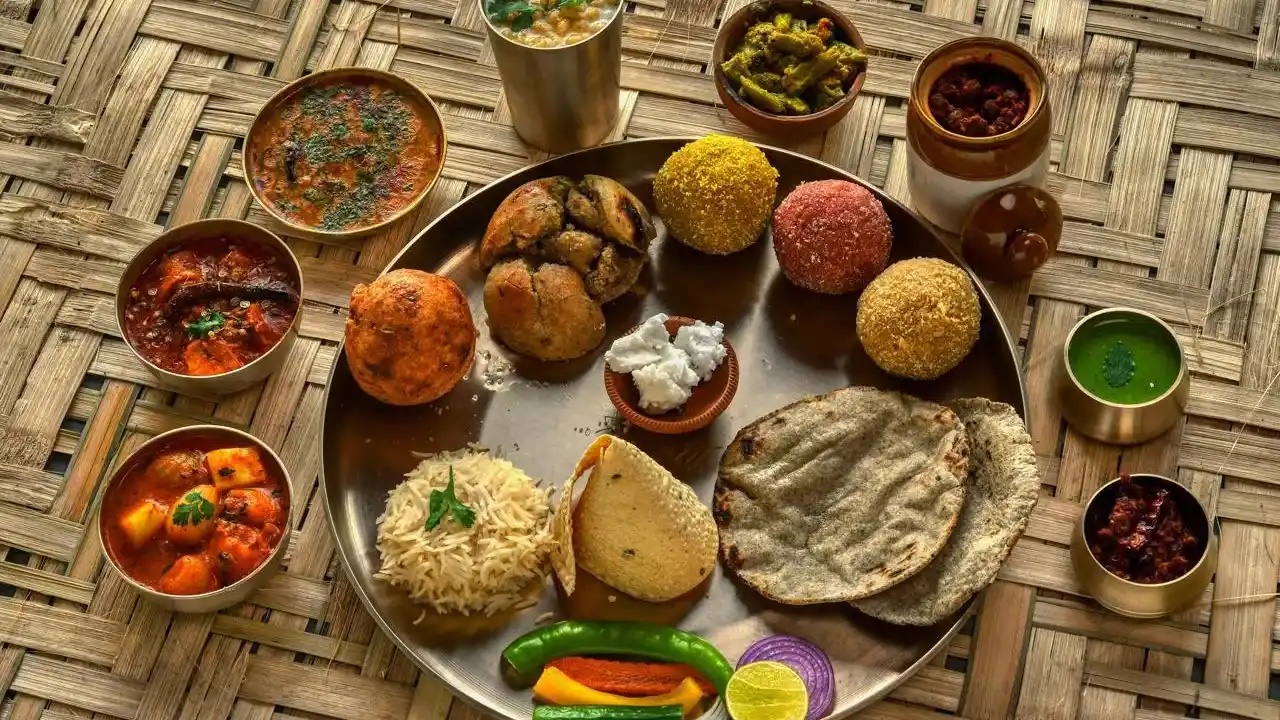
Dal Baati Churma is the dish that Rajasthan claims, correctly, as its own: wheat dough balls (baati) baked hard in a traditional earthen oven or over cow-dung fire until crisp outside and hollow inside, served with thick lentil dal and churma — a coarsely ground wheat sweetened with sugar and pure ghee. Eaten together, the three components make a meal that is both extraordinarily simple and extraordinarily satisfying. Every tourist restaurant in Rajasthan serves a version of it. To eat it properly, find a local dhaba or a family home that sells thalis — the hotel version is a decoration; the dhaba version is the thing itself.
Laal Maas is the other Rajasthan specific: mutton slow-cooked in a gravy of dried red Mathania chillies (the particular variety grown near Jodhpur, with a heat that builds rather than attacks), yoghurt, and whole spices. It is genuinely hot — not tourist-menu hot — and it is the meat dish that gives Jodhpur its food reputation. Order it in a proper Jodhpur restaurant and allow it time to work.
Ker Sangri — a desert dish made from the ker berry and the sangri bean, both products of the Thar's extreme climate — is the vegetarian preparation most specific to Rajasthan and least available elsewhere in India. It is dry, intensely spiced, and impossible to describe accurately until you've tasted it. Gatte ki sabzi (chickpea-flour dumplings in a yoghurt-based curry) and Mawa Kachori (Jodhpur's fried bread stuffed with sweetened khoya) round out the essential Rajasthani table.
Planning your Rajasthan trip with BizareXpedition
Rajasthan is large enough and varied enough that the single most impactful planning decision is sequencing: which cities in what order, which offbeat extensions are worth adding for your specific interests, and which days of the week matter for which sites (Jantar Mantar is most rewarding with a guide who can explain what each instrument does; Ranthambore safari slots must be booked months ahead; the RIFF festival and Pushkar Camel Fair have specific dates that can anchor an entire itinerary).
BizareXpedition™ Services Pvt. Ltd. (bizarexpedition.com), based in Haridwar and specialists in Himalayan journeys and India-wide travel planning, designs customised Rajasthan itineraries that sequence the standard circuit and the offbeat extensions correctly — combining the palace cities with Bundi or Bikaner or Kumbhalgarh and Ranakpur depending on your interests, building in festival timing where it works, and ensuring that the Ranthambore booking and the heritage property choices are made well ahead rather than at the last moment. The honest approach to planning that defines our Himalayan work is the same approach we bring to the desert.
| CATEGORY | BUDGET (₹/DAY) | MID-RANGE (₹/DAY) | LUXURY (₹/DAY) |
|---|---|---|---|
|
Accommodation |
800–1,500 (guesthouse; old city haveli) |
2,500–5,000 (heritage hotel; good 3-star) |
10,000–50,000+ (Samode Haveli; Suryagarh; Taj properties) |
|
Food |
300–600 (local dhaba, dal baati churma thali) |
700–1,200 (restaurant meals, rooftop café |
1,500–3,000 (hotel restaurant, curated Rajasthani dining) |
|
Transport (inter-city taxi) |
600–1,000/day (shared or economy taxi) |
1,500–2,500/day (private AC car, Jaipur-level city work) |
3,000–6,000/day (Innova Crysta, full Rajasthan circuit with driver) |
|
Fort / site entries |
300–600/day (2–3 major forts) |
600–1,000/day (combined tickets, audio guides) |
1,000–2,000/day (private guided tours, all sites) |
|
Total per day estimate |
₹2,000–3,800 |
₹5,500–9,700 |
₹15,500–61,000+ |
BUDGET GUIDE — PER PERSON PER DAY
At the top of Mehrangarh Fort at sunrise, the guide said something I've thought about since. 'Every ruler added something,' he said. 'Not to improve what was there, but to show they had been here.' The fort is 15th-century foundations, 17th-century walls, 18th-century gates, 19th-century palaces, 21st-century zip-line. Five centuries of showing up and leaving a mark. Rajasthan is like that. Everyone who comes leaves with something specific — a colour, a light, a meal, a moment at a stepwell that nobody else was visiting. You can plan around it, but you can't predict exactly which moment it will be.