

Kolkata Tour Packages
Kolkata Tour Packages
The BizareXpedition Kolkata Tour Package is a curated travel experience covering Kolkata's most iconic heritage sites, cultural landmarks, street food trails, and hidden neighbourhood gems. Designed for both first-time visitors and returning travellers, this package offers the full City of Joy experience — from the ghats of the Hooghly to the chaos and warmth of Kumartuli.
Why Visit Kolkata? What Makes It Different from Every Other Indian City?
There's a reason Kolkata is called Mahanagar — the Great City. It doesn't just have culture. It IS culture. Other cities in India have monuments. Kolkata has adda — that untranslatable Bengali tradition of sitting with people you love (or just met) and talking endlessly about literature, football, politics, food, and life. You can't Google adda. You have to experience it at a neighbourhood tea stall with a clay cup of cha warming your hands.
Non-Bengalis often arrive expecting noise, crowds, and chaos. They get that, yes — but underneath it is a city that reads poetry for fun, treats footballers like gods, argues about Tagore at midnight, and makes the best mishti doi (sweetened yoghurt) on the planet. You don't just visit Kolkata. It gets into you. And Bengalis who have moved away? Coming back to Kolkata is always emotional. The smell of jhalmuri (puffed rice tossed with mustard oil, peanuts, and chilli) near Maidan, the sight of the Howrah Bridge at dusk, the sound of dhak (traditional drums) during Durga Puja — it hits differently when you've been away.
What Is the History of Kolkata?
Kolkata was founded by the British East India Company in 1690 when Job Charnock established a trading post in the village of Sutanuti on the eastern banks of the Hooghly River. It served as the capital of British India until 1911, when the capital was shifted to New Delhi. This 200+ year history as the seat of colonial power left Kolkata with an unmatched architectural legacy — Gothic churches, Neo-Classical administrative buildings, Victorian mansions, and Indo-Saracenic palaces — much of which still stands today.
But Kolkata's history doesn't begin with the British. The region was home to the Sabarna Roy Choudhury family, the original zamindars (landlords) who owned the land before the British arrived. Their atchala (traditional Bengali octagonal-roofed) temples still stand in Barisha, South Kolkata, and they hold Durga Puja in a manner that predates everything the city became. Post-independence, Kolkata became the heartland of the Bengal Renaissance — a period of extraordinary intellectual, artistic, and social reform led by figures like Ram Mohan Roy, Rabindranath Tagore, Swami Vivekananda, Subhas Chandra Bose, and Satyajit Ray. These aren't just names on street signs — they are the soul of the city.
What Is the Culture of Kolkata?
Kolkata's culture is woven from literature, music, theatre, cinema, football, and an almost obsessive love of food. The city produced the first Nobel Prize winner from Asia (Tagore, 1913), a revolutionary filmmaker (Satyajit Ray), a saint (Mother Teresa), and a national hero who challenged the British Empire (Netaji Subhas Chandra Bose). That's not a coincidence — this is a city that produces greatness because it takes ideas seriously.
Cultural pillars of Kolkata — what defines the city:
Literature — Bengalis read. Seriously. The Boi Mela (Book Fair) draws 2+ million people annually
Football — Mohun Bagan (est. 1889) vs East Bengal: the Boro Match, Asia's oldest football derby
Cinema — Satyajit Ray, Ritwik Ghatak, Mrinal Sen built a cinematic tradition that rivals the world
Music — Rabindra Sangeet (Tagore's songs), Baul folk music, classical Hindustani tradition
Visual Arts — Kumartuli idol-making, Kalighat paintings, Patachitra, terracotta crafts
Cricket too — Eden Gardens is one of the world's great cricket grounds
Adda — the Bengali art of meaningful, unscheduled conversation (more on this below)
Devotion — Kali worship is central; this is the city of the goddess
What Are the Best Places to Visit in Kolkata?
The best places to visit in Kolkata include the Victoria Memorial, Howrah Bridge, Dakshineswar Kali Temple, Kalighat Temple, College Street (Boi Para), Kumartuli, the Indian Museum, Park Street, Maidan, Princep Ghat, and the Marble Palace. Each of these represents a different layer of Kolkata's history, culture, and daily life — and no single visit can do all of them justice.
Victoria Memorial — The Victoria Memorial is the grandest colonial structure in India — a white marble monument built between 1906 and 1921 to commemorate Queen Victoria. It now houses a museum of 3,500+ artefacts chronicling the colonial period. The gardens around it at dusk, when Kolkata's golden light hits the marble, are genuinely beautiful — a strange but real experience of beauty born from complicated history.
Howrah Bridge — The Howrah Bridge (Rabindra Setu) is a cantilever bridge built in 1943 that carries an estimated 100,000 vehicles and countless pedestrians every single day — making it one of the busiest bridges in the world. It was built without a single nut or bolt — the entire structure is riveted. Standing on the bridge at sunrise, watching the Hooghly, flower sellers crossing with baskets on their heads, and the city waking up around you — that's a Kolkata moment you carry forever.
Dakshineswar Kali Temple - Dakshineswar is one of the most sacred Kali temples in India, built in 1855 by Rani Rashmoni on the banks of the Hooghly. It's where Ramakrishna Paramahamsa spent most of his life and had his mystical experiences. The temple complex is large and stunning — a navaratna (nine-spired) structure surrounded by twelve smaller Shiva temples along the ghats. For non-Hindus, it's a powerful introduction to Bengal's devotional tradition.
Kalighat Temple — Kalighat Kali Temple is one of the 51 Shakti Peethas (sacred sites of the goddess) in Hindu tradition. It's so important that the city itself is named after it — Kali-ghat became Kolkata. This is not the sanitised heritage tourism version of religion. It's raw, crowded, noisy, and completely alive. Go with an open mind and comfortable shoes.
Kumartuli — Kumartuli is the potters' neighbourhood in North Kolkata where artisans (kumors) spend months sculpting the clay idols of Durga, Kali, Saraswati, and Lakshmi that are worshipped during festivals and then immersed in the Hooghly. Walking through Kumartuli's narrow lanes and watching an idol take shape — seeing a goddess emerge from river clay — is one of the most extraordinary experiences any visitor to Kolkata can have. Go before Durga Puja (September–October) to see the work at its most intense.
College Street (Boi Para) — College Street is a kilometre-long stretch of bookshops, pavement stalls, and chai stalls near the University of Calcutta and Presidency University. They say you can find any book ever published in any Indian language somewhere on College Street. Bengalis have been arguing, studying, and drinking tea here for over a century. India Coffee House at College Street, where generations of revolutionaries, poets, and students have sat — is still open, still cheap, and still serves the same filter coffee it always has.
Park Street — Park Street is where Kolkata's Anglophone, cosmopolitan identity lives. Great restaurants, music venues, bakeries (Flury's, established 1927, is still going), and the famous Park Street Cemetery — a hauntingly beautiful colonial-era cemetery where many prominent East India Company officials are buried. Park Street at Christmas is a spectacle — Kolkata celebrates Christmas (Baro Din, "Big Day") with more enthusiasm than almost any Indian city.
Maidan and the Victoria Oval - The Maidan is a massive open green in the heart of Kolkata — roughly 3.5 square kilometres of parkland where Kolkata exhales. Joggers, footballers, families, the city's famous adda circles, and political rallies all share this space. Adjacent to Maidan is the iconic Eden Gardens, one of cricket's most storied venues.
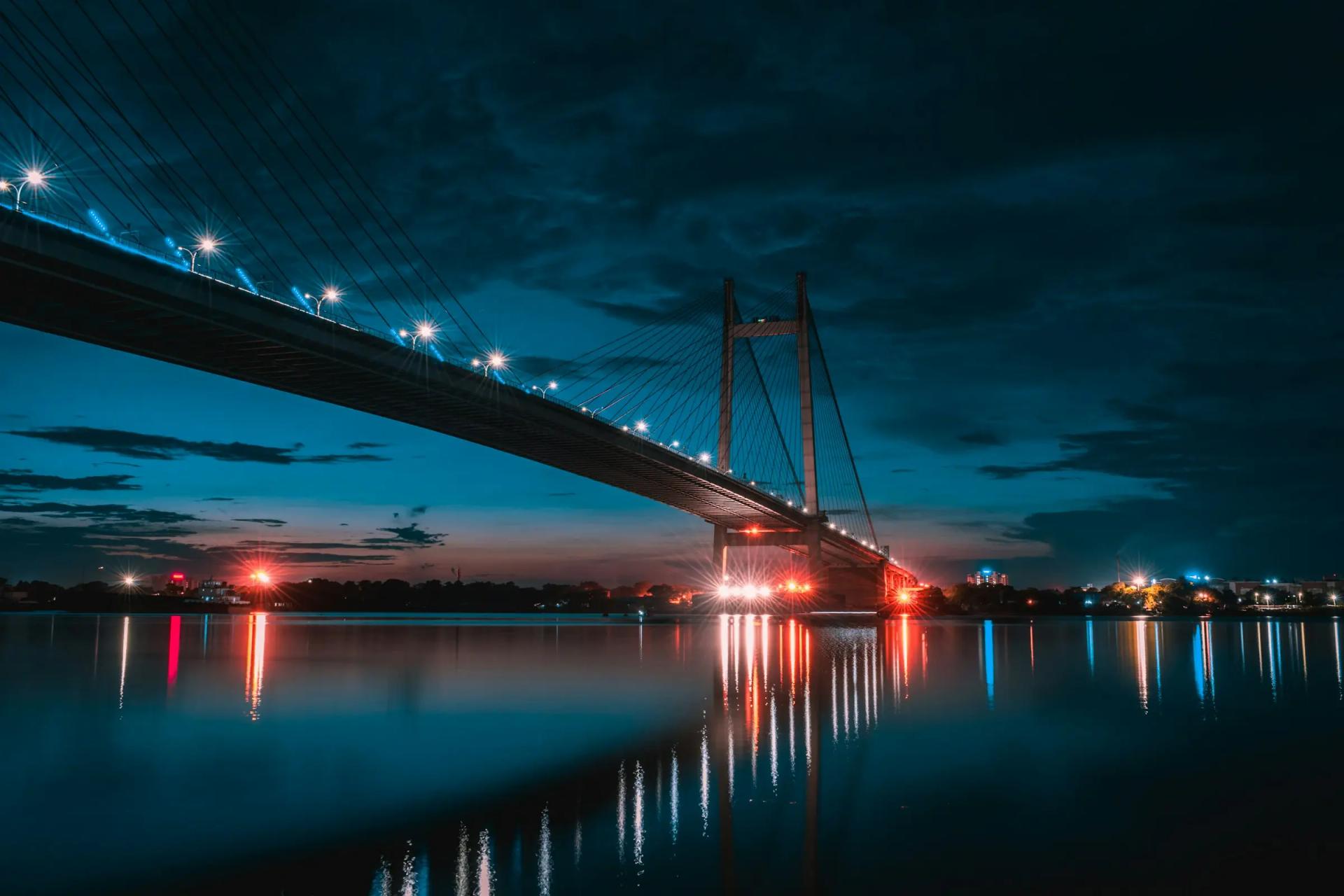
Princep Ghat - Princep Ghat is a neoclassical riverside promenade built in 1841, now beautifully restored. At sunset, it's where young Kolkata comes — couples, students, dreamers — watching the Hooghly and the lights of the Vidyasagar Setu (Second Hooghly Bridge). It's romantic in the way only this city manages — historical weight and youthful lightness in the same breath.
Indian Museum, Kolkata - The Indian Museum (1814) is the oldest and largest museum in India and the Asia-Pacific region. Its 60 galleries include ancient sculpture, Mughal paintings, Egyptian mummies, fossils, and Gandharan Buddhist art. It's a full day, easily. Come for the art collection; stay for the sheer bewildering depth of it.
Marble Palace - The Marble Palace is a private 19th-century mansion in North Kolkata that houses an extraordinary collection of European paintings, Chinese jade, Egyptian statues, and Victorian furniture — all collected by one Bengali merchant family. It's still a private residence, and getting in requires a pass from the West Bengal Tourism office — which is entirely worth the effort.
What Is Durga Puja? Why Is It Important for a Kolkata Visit?
Durga Puja is Kolkata's greatest festival — a five-day celebration (Shashthi through Dashami) in September or October where the entire city transforms into an open-air art gallery. Thousands of pandals (temporary themed pavilions) are built across the city to house elaborately crafted idols of Goddess Durga. People walk all night, neighbourhood to neighbourhood, just to see the pandals. It is simultaneously a religious celebration, a community festival, an art competition, and the single most joyful public event in India.
For non-Bengalis, the emotional scale of Durga Puja is hard to prepare for. The sound of Dhak drums reverberating through evening air, the smell of Dhuno (incense), the sight of millions of people moving through streets lit with light installations — it's overwhelming in the best possible way. On Bijoya Dashami (the final day), when the goddess is immersed in the river and Kolkata collectively weeps and starts Puja again in their hearts for next year — even a first-time visitor feels something crack open in their chest. UNESCO inscribed Durga Puja as an Intangible Cultural Heritage of Humanity in 2021. Come during Puja if you possibly can. BizareXpedition's Kolkata packages during Durga Puja are particularly recommended.
What Other Festivals Should You Experience in Kolkata?
| Festival | Month | What Makes It Special |
|---|---|---|
|
Durga Puja |
October |
World's largest open-air art & cultural festival; UNESCO Heritage |
|
Kali Puja |
October (same as Diwali) |
Darker, more intense; city lit with diyas; Kalighat at night |
|
Saraswati Puja |
January/February |
City turns yellow with marigolds; students worship textbooks |
|
Dol Jatra (Holi) |
March |
Tagore's spring festival; Shantiniketan Basanta Utsav is iconic |
|
Christmas (Baro Din) |
December 25 |
Park Street illuminations; Anglo-Indian traditions; Flury's cakes |
|
Kolkata Book Fair (Boi Mela) |
January |
World's largest non-trade book fair; 2 million+ visitors |
|
Poush Mela (Shantiniketan) |
December |
Tagore's university town; Baul music, crafts, open-air performances |
Kolkata Festival should Experience
What Food Should You Eat in Kolkata?
Kolkata food is one of the finest, most underrated food cultures in India. Bengali food is not uniformly spicy — it uses a distinct spice palette of mustard, panch phoron (five-spice blend), turmeric, and hilsa mustard oil. Different from North Indian cooking entirely. The city eats with complete seriousness. The Bengali food rules non-Bengalis need to know:
Fish (Mach) is not a side dish in Bengal. It IS the meal. Bengalis are serious about their fish in a way that might feel religious — because it is.
Rice (Bhaat) is the foundation of life. "Have you eaten rice?" (bhaat kheyecho?) is how Bengalis ask if you've had lunch.
Mishti come at the start of good news, at festivals, at visits, and at funerals. There is no occasion for which mishti is inappropriate.
Sweets — Rasgulla (Kolkata will argue passionately that they invented it, not Odisha), Sandesh, Chomchom, Pantua, Langcha — a Bengali sweet shop (mishti-r dokan) is not a shop. It is a cultural institution.
Coffee House Filter Coffee — Go to India Coffee House on College Street. Order the filter coffee. Read the walls. Feel the history.
Kosha Mangsho — slow-cooked mutton in a dark, thick gravy. The Bengali Sunday lunch dish. It requires three hours to make properly. Residents of other cities have been known to travel to Kolkata specifically for this.
Hilsa (Ilish) Fish — Bengal's most beloved fish, available July–September (monsoon season). Steamed in mustard and banana leaf (Bhapa ilish), fried in mustard oil, or curried — every preparation is different and irreplaceable. A Bengali will discuss the best Hilsa they've ever eaten with the same reverence a Frenchman might describe a Burgundy.
Street Food — Phuchka (Kolkata's version of pani puri, with tamarind water so sharp it makes your eyes water), Jhalmuri, kathi rolls (Nizam's Restaurant invented the egg chicken roll; dispute this at your peril), Telebhaja (fritters: begun bhaja, aloo bhaja, prawn cutlets), and Ghugni (spiced dried peas).
Biryani — Kolkata biryani has potato in it. This is not a mistake. This is genius. The Awadhi nawabs who brought biryani to Kolkata added potato to stretch the meat during hard times. Today it's the defining feature of Kolkata biryani (try Arsalan or Shiraz).
What Is the Best Time to Visit Kolkata?
The best time to visit Kolkata is from October to March, when the weather is pleasant, the city is at its most festive, and Durga Puja (October) has either just passed or is arriving. November through February is the peak travel season with temperatures between 12°C and 28°C — ideal for walking the city's neighbourhoods and heritage trails. Avoid May and June when humidity and heat are at their most intense (35–42°C with high humidity).
October — Durga Puja (the best reason to visit Kolkata, full stop)
November — Kali Puja, Kolkata International Film Festival, pleasant weather
December — Christmas and New Year, Park Street celebrations, cool evenings
January — Kolkata Book Fair, Makar Sankranti (kite flying over the city)
February — Saraswati Puja, a city draped in yellow marigolds
March — Dol/Holi, the best time for day trips to Shantiniketan
How to Reach Kolkata?
By Train — How to Reach Kolkata by Rail
Kolkata is served by Netaji Subhas Chandra Bose International Airport (IATA: CCU), located approximately 17 kilometres northeast of the city centre in Dumdum. It has direct flights from all major Indian cities (Delhi, Mumbai, Bengaluru, Hyderabad, Chennai) and international connections to Southeast Asia, the Middle East, and Europe. IndiGo, Air India, SpiceJet, Vistara, and AirAsia all serve Kolkata. From the airport, the Kolkata Metro (Airport Metro line, opened in 2024) is the fastest and most affordable way into the city.
By Train — How to Reach Kolkata by Rail
Kolkata is one of India's best-connected rail hubs. It has two major railway stations: Howrah Junction (the largest railway station in India by number of platforms) and Sealdah Station. Key trains include the Rajdhani Express (Delhi to Howrah), Duronto Express (Mumbai to Howrah), Coromandel Express (Chennai to Howrah), and the Poorva Express. Booking berths 60–90 days in advance is strongly recommended for peak season (October–January).
| Train | Route | Duration (approx.) |
|---|---|---|
|
Rajdhani Express |
Delhi → Howrah |
17–18 hours |
|
Duronto Express |
Mumbai → Howrah |
32 hours |
|
Coromandel Express |
Chennai → Howrah |
26 hours |
|
Poorva Express |
Delhi → Howrah |
20–22 hours |
|
Howrah Rajdhani |
Delhi → Howrah |
17 hours |
|
Shatabdi / Vande Bharat |
Short-distance routes |
Varies |
Kolkata Trains from Different Cities
Pro tip: Book train tickets 60–90 days in advance for October–January travel. The Rajdhani to Howrah fills up extremely fast during Durga Puja season.
By Road — How to Reach Kolkata by Bus or Car
Kolkata is accessible by road from neighbouring states — West Bengal, Jharkhand, Odisha, and Bihar. The NH12 (formerly NH6) connects Kolkata to Mumbai via Nagpur. Bus services operate from Bhubaneswar, Patna, Siliguri, and Guwahati. For those driving, Kolkata's traffic requires patience — the city is dense, and the ring roads can be unpredictable.
Explore Local Area By?
Kolkata has the only hand-pulled rickshaw service still operating in India (in areas like Shyambazar and Taltala — a heritage that's both fascinating and contested). The Metro rail (India's oldest, operational since 1984) is the fastest way to move north–south. Yellow Ambassador taxis (the classic ones) are iconic but increasingly rare; Ola and Uber are widely available. The tram system — one of the last surviving in India — is slow but atmospheric: take the Esplanade to Shyambazar tram route at least once.
What are the Best Day Trips from Kolkata?
Shantiniketan (Birbhum) — 3 Hours from Kolkata
Shantiniketan is where Rabindranath Tagore built his university — Visva-Bharati — under the open sky, rejecting the colonial classroom model entirely. Students still study outside under trees. The Poush Mela (December fair) and Basanta Utsav (spring festival, Holi celebration) are Shantiniketan's most visited events. The town itself has galleries, crafts markets (particularly for Baul music instruments and Santali crafts), and a stillness that feels earned.
Sundarbans — 4 Hours from Kolkata
The Sundarbans is the world's largest mangrove delta, a UNESCO World Heritage Site, and home to the Bengal Tiger. BizareXpedition offers dedicated Sundarbans packages — boat safaris through the tiger reserve, village stays, and wildlife photography opportunities. The Sundarbans is not a regular wildlife safari. It's a landscape of tidal creeks and silence where the tiger might be watching you from the tree line and you'll never know.
Murshidabad — 5 Hours from Kolkata
Murshidabad was the last independent capital of Bengal before the British effectively ended Bengali sovereignty at the Battle of Plassey (1757). The Hazarduari Palace (Palace of 1000 Doors), the Imambara, and the ruins of Siraj-ud-Daulah's capital are here — along with silk weavers, mango orchards, and a quiet that feels like history settling. A must-visit for anyone who wants to understand what Kolkata replaced.
Bishnupur (Bankura) — 4 Hours from Kolkata
Bishnupur is famous for its terracotta temples (built by the Malla kings between the 17th and 18th centuries), Baluchari silk sarees, and Bishnupuri classical music. The temples use terracotta because stone wasn't locally available — what the artisans created instead is astonishing. The Rasmancha (platform for the Ras festival) and the Jorbangla temple are the most striking. If you love craft and heritage, Bishnupur is one of the most underrated day trips in India.
Chandannagar — 1.5 Hours from Kolkata
Chandannagar (Chandernagore) was a French colonial territory until 1950 — and it still feels distinctly European. The Institut de Chandernagore, the promenade along the Hooghly, the French-style villas — it's like a small slice of Pondicherry, but older and quieter. Chandannagar's Jagaddhatri Puja illuminations are considered the most spectacular in all of Bengal.
What Are the Best Kolkata Tour Packages?
BizareXpedition's Kolkata tour packages are designed to give travellers the real Kolkata — not just the monument circuit but the living city: its neighbourhoods, food culture, festivals, and the warmth of its people. Whether you're a solo traveller, a family, a group of friends, or a couple, there's a BizareXpedition Kolkata package built around what you actually want from the city.
Kolkata Heritage Walk Package — Focuses on North Kolkata's historic lanes: Jorasanko (Tagore's birthplace), Kumartuli, Shyambazar, Sovabazar Rajbari, and the Marble Palace. Best for history lovers and architecture enthusiasts.
Kolkata Food & Culture Package — A deep dive into the food culture: Shyambazar street food, College Street chai and book stalls, Park Street's colonial-era restaurants, Dacres Lane (the original office-goer lunch spot), and a mishti trail through the city's best sweet shops.
Kolkata Durga Puja Special Package — Available during the Puja season (September–October). Includes pandal hopping (by foot and by bus), the Bijoya rituals, Kumartuli visits, and all the logistics that make Puja navigation manageable for first-timers.
Kolkata + Sundarbans Combo Package — Combines a Kolkata city stay with a 2-day Sundarbans forest safari. Best for travellers who want urban culture and wild nature in one trip.
Kolkata + Shantiniketan Package — The ultimate Bengal cultural trip: Kolkata's city heritage combined with a day or two in Tagore's university town, with visits to rural craft villages. Contact BizareXpedition directly for current pricing, batch dates, and customisation options. Packages are regularly updated based on season and group size.
What Makes BizareXpedition's Kolkata Package Worth It?
Kolkata is one of the few cities in India that will genuinely overwhelm you if you go unprepared — not because it's difficult, but because it's deep. Every lane in North Kolkata has a story. Every temple has three hundred years of devotion embedded in its walls. Every sweet shop has an argument about whether it was founded before or after its competitor across the street. BizareXpedition's Kolkata packages are designed by people who understand this depth. Not the surface circuit of monuments and photo stops, but the city's living culture — its food, its festivals, its conversations, its contradictions. They take you to the places the guidebook mentions AND the lane behind it that the guidebook missed. Kolkata will feed you, overwhelm you, move you, and then — if you let it — make you slightly obsessed with coming back. That's the only honest thing to say about it.
Frequently Asked Questions (FAQs) & People Also Ask — kolkata Tour Packages
We help you prepare for your trip and ensure an effortless and enjoyable travel experience.