
Maharashtra Tour Packages
Maharashtra Tour Packages
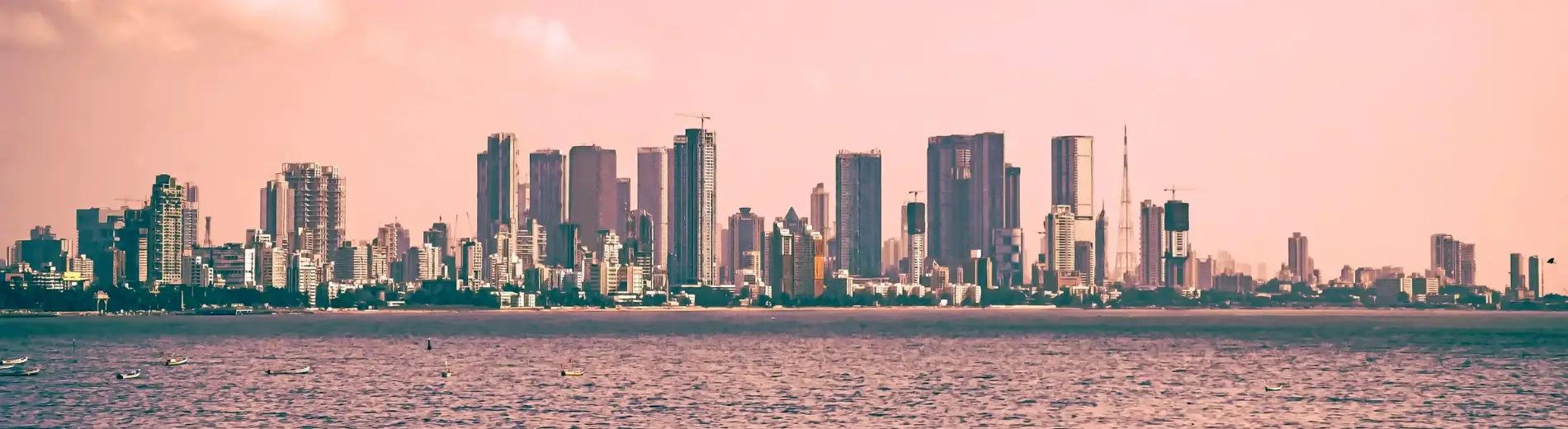
Most people's mental image of Maharashtra begins and ends with Mumbai. The financial capital, the film industry, the Gateway of India, Marine Drive at night. That's a fair starting point — Mumbai is genuinely extraordinary. But treating Maharashtra as a Mumbai trip with some day-excursions is like tasting one dish at a 40-course meal and calling it dinner.
Maharashtra is India's third-largest state by area (307,713 sq km) and second-most populous, with over 126 million people spread across a geography that includes a dramatic Arabian Sea coastline, the entire northern stretch of the Western Ghats, the flat Deccan Plateau, and the tropical forests of Vidarbha. It has two UNESCO World Heritage Sites that rank among the finest rock-cut architecture anywhere on earth — Ajanta and Ellora. It has the country's wine country, its most celebrated tiger reserve for first-time safari-goers, hill stations that empty Mumbai on every long weekend, and a coastal cuisine that doesn't get half the national attention it deserves.
BizareXpedition put this guide together for travelers who want to understand the full scope before booking their Maharashtra tour package — what to prioritize, what the different regions feel like, what things actually cost, and when to go based on what you want to see.
What Is Maharashtra Known For Beyond Mumbai?
Maharashtra is known for being one of India's most geographically and culturally diverse states — encompassing the UNESCO cave complexes at Ajanta and Ellora, the Konkan coastline, the Western Ghats hill stations, Tadoba tiger reserve, India's wine country around Nashik, and a Maratha cultural heritage centered around Chhatrapati Shivaji Maharaj. Most travelers only discover about 20% of this on a first visit.
The state divides naturally into four distinct travel zones, each with a completely different character:
Mumbai and the Konkan Coast — the Arabian Sea edge: beaches, seafood, sea forts, and India's most cinematic skyline
Pune and the Western Ghats — hill stations, trekking forts, the Mumbai-Pune corridor's weekend escape circuit
Aurangabad and the Deccan — the historical and archaeological heart, anchored by Ajanta, Ellora, and Mughal-era monuments
Vidarbha (Nagpur and East Maharashtra) — wildlife, tiger reserves, the geographical center of India, and a completely different culinary identity
Most standard Maharashtra tour packages cover one or two of these zones. Extended circuits across all four take 10-14 days and reward the effort.
Maharashtra's Culture: The Layers Most Travelers Miss
What Is the Maratha Cultural Identity?
Maharashtra's cultural spine is built around the Maratha legacy — and at the center of that legacy stands Chhatrapati Shivaji Maharaj, the 17th-century king who built a guerrilla empire against the Mughals across the Western Ghats. He isn't just historical here — he's viscerally present in everyday public life, from highway naming conventions to the pride with which locals recount tales of his mountain forts.
Understanding this context transforms the Western Ghats forts from "old ruins" into something with genuine narrative weight. Every cliff, every bastion, every strategic view has a story that locals will tell you if you ask.
Beyond the Maratha legacy, Maharashtra's culture runs deep in several other directions:
The Bhakti Movement — Maharashtra was the birthplace of the Warkari tradition, a devotional path centered on pilgrimage to Pandharpur and the poetry of saints like Dnyaneshwar, Tukaram, Namdev, and Eknath. Their abhangas (devotional poetry) are still sung daily by millions. The twice-annual Wari pilgrimage to Pandharpur — where lakhs of devotees walk hundreds of kilometers on foot — is one of India's most moving, least-touristified spiritual events.
Lavani and Tamasha — Maharashtra's most distinctive performing arts: Lavani is an expressive, rhythmic folk dance form with roots in the Peshwa era, while Tamasha is a folk theatre tradition mixing comedy, social commentary, and music. Both are much harder to see in authentic form than tourist brochures imply; seek out government cultural programs in Pune or Mumbai if you want the real thing.
Bollywood proximity — Mumbai is the physical home of India's Hindi film industry, and that reality is visible in the city's fabric in ways both obvious (film sets, studios in Goregaon, star homes in Bandra and Juhu) and subtle (the city's relationship with aspiration, reinvention, and visible ambition).
Ganesh Chaturthi — Maharashtra's cultural peak. For 10 days every August or September, the state undergoes a collective transformation that has to be seen to be understood.
Cultural Note: Addressing any historical figure from Maharashtra's Maratha past incorrectly — particularly Shivaji Maharaj, who is always referred to with the suffix "Maharaj" rather than just by name — is considered deeply disrespectful. This isn't prudishness; it's a matter of genuine reverence that travelers should be aware of before having local conversations.
Top Places to Visit in Maharashtra
Mumbai — Where India's Ambitions Live
Mumbai operates at a frequency that's different from every other Indian city. It's faster, denser, more financially minded, and somehow also home to a street food culture, a music scene, and a coastline that coexist with the commercial pressure without being crushed by it.
Must-visit in Mumbai:
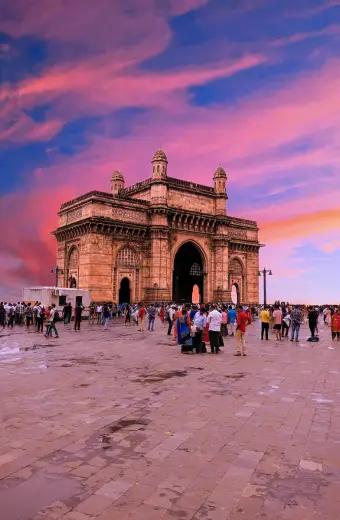
Gateway of India — The 1924 basalt arch on the Colaba waterfront, built to commemorate King George V's visit, now the departure point for ferries to Elephanta. Iconic, always crowded, worth seeing at dawn before the day's crowd arrives.
Elephanta Caves — A 1-hour ferry from the Gateway takes you to Elephanta Island and one of India's finest examples of rock-cut temple architecture. The main Shiva Cave features a 6-meter trimurti (three-faced Shiva) that has been called one of the greatest sculptures in Indian art. UNESCO World Heritage Site.
Chhatrapati Shivaji Maharaj Terminus (CSMT) — The Victorian Gothic railway station built in 1887, now also a UNESCO World Heritage Site. It remains a fully functioning station handling over 3 million commuters daily — the heritage and the chaos coexist in a way that is very Mumbai.
Marine Drive — The 3.6 km arc of reclaimed land along the Arabian Sea, best experienced in two windows: at dusk when the city skyline begins to light up behind you, or at dawn when the promenade belongs almost entirely to Mumbaikars doing their morning exercise.
Dharavi — One of Asia's largest informal settlements, home to an estimated 700,000–1 million people and a manufacturing economy producing leather goods, pottery, garments, and recycled plastics worth an estimated ₹700 crore annually. Responsible guided tours exist (seek operators who work with community organizations rather than voyeuristic outfits) and offer a genuinely humanizing counter-narrative to the poverty-tourism concern.
Haji Ali Dargah — An island dargah (Sufi shrine) accessible via a narrow causeway during low tide, dedicated to the 15th-century saint Pir Haji Ali Shah Bukhari. One of Mumbai's most visually striking religious sites and a place of active, cross-community devotion.
Bandra — Mumbai's most liveable neighborhood for visitors: cafes, street art, old Portuguese churches, the sea promenade at Bandstand, and the Bandra-Worli Sea Link as a visual backdrop.
Siddhivinayak Temple — One of Mumbai's most revered Ganesh temples; Tuesday evenings draw particularly heavy devotee crowds including many from Bollywood.
Pune — The City That Rewards Slow Travel
Pune sits about 150 km from Mumbai across the Western Ghats — close enough for a weekend but different enough culturally to feel like a distinct world. It's Maharashtra's cultural and educational capital in a way that Mumbai, too commercially focused, never quite is.
What to see in Pune:
Shaniwar Wada — The 18th-century seat of the Peshwa rulers, partly destroyed by fire in 1828 and now a partially standing fortress complex that's most atmospheric at the sound-and-light show after dark.
Aga Khan Palace — Where Mahatma Gandhi and Kasturba Gandhi were interned during the Quit India movement (1942-44). Kasturba died here; her samadhi is on the grounds. More important historically than its gentle surroundings suggest.
Sinhagad Fort — "The Lion Fort," about 30 km from Pune, where Maratha commander Tanaji Malusare died capturing it from the Mughals in 1670 (prompting Shivaji to reportedly say, "We won the fort but lost the lion"). The trek up is popular with Puneites on weekends; the views are excellent.
Dagdusheth Halwai Ganpati Temple — One of India's wealthiest and most-visited Ganesh temples, right in central Pune; the idol is decorated with real gold ornaments.
Osho International Meditation Resort — Controversial in some circles, genuinely transformative for others. The meditation and mindfulness programs here draw an international clientele, and the sprawling campus with its distinctive black-robed visitors is a Pune institution.
Aurangabad (Chhatrapati Sambhajinagar) — The Archaeological Heart of Maharashtra
If Maharashtra has one region that consistently blindsides visitors with its depth, it's the Aurangabad area. People arrive expecting old caves. They leave having seen some of the finest art and engineering in human history.
What Are the Ajanta Caves and Why Are They Significant?
The Ajanta Caves are a complex of 30 rock-cut Buddhist cave monuments dating from the 2nd century BC to approximately 480 AD, containing paintings and sculptures considered masterpieces of Buddhist religious art. They depict Jataka tales (stories of the Buddha's past lives) in colors that have survived over two millennia, painted using natural pigments on prepared rock surfaces.
The caves were entirely unknown to the outside world until a British Army officer named John Smith stumbled upon them while tiger-hunting in 1819. The jungle had grown so thoroughly over the cliff face that the caves had been invisible for centuries.
Visiting Ajanta: The caves are 107 km from Aurangabad. Access requires a state bus or private vehicle to Fardapur, then a government bus or walk to the caves themselves. No private vehicles enter the cave zone — this keeps the atmosphere considerably more serene than it would otherwise be. Budget a full day; the paintings in Caves 1, 2, 16, and 17 alone justify the journey.
What Are the Ellora Caves and How Are They Different from Ajanta?
The Ellora Caves are a complex of 34 monasteries and temples — Buddhist, Hindu, and Jain — cut directly into the Charanandri hills about 29 km from Aurangabad between the 6th and 11th centuries AD. Where Ajanta is about painting, Ellora is about sculpture and architectural audacity on a scale that defies easy explanation.
The Kailasa Temple (Cave 16) is the centerpiece: a complete Hindu temple carved top-down from a single basalt rock, estimated to have required the removal of 200,000 tonnes of rock over more than a century. It is the world's largest monolithic rock-cut structure. No mortar. No assembly. Just subtraction — carving away everything that wasn't the temple.
Both Ajanta and Ellora are UNESCO World Heritage Sites. Together they justify Aurangabad as a standalone destination.
Other Aurangabad essentials:
Bibi Ka Maqbara — Built in 1679 by Aurangzeb's son in memory of his mother; visually modeled on the Taj Mahal and known locally as the "Poor Man's Taj." Genuinely beautiful, unfairly undersold.
Daulatabad Fort — A hilltop fortress considered one of the best-preserved in India, with a complex defensive system including a moat, pitch-dark tunnels, and indirect stairwells designed to disorient attackers.
Panchakki (Water Mill) — A 17th-century water mill and garden complex adjacent to the dargah of Sufi saint Zar Zari Zar Baksh; the underground water channel engineering is remarkable.
Nashik — Wine, Pilgrimage, and a Surprising Range
Nashik sits about 170 km northeast of Mumbai and manages to be simultaneously a major Hindu pilgrimage center (one of the four Kumbh Mela cities) and India's wine tourism capital — a combination that says something interesting about the range of human needs.
Sula Vineyards — Maharashtra produces approximately 90% of India's domestically made wine, and Sula, founded in 1999, pioneered the industry. The winery offers tastings, tours, and an annual SulaFest music festival in February that has grown into one of India's major outdoor music events.
Trimbakeshwar — One of India's 12 Jyotirlingas (sacred Shiva shrines), about 28 km from Nashik. Significant enough that Kumbh Mela is held here every 12 years.
Pandavleni Caves — A series of 24 rock-cut Buddhist caves from the 1st century BC–3rd century AD on a hillside south of Nashik; much quieter than Ajanta but historically significant.
Shirdi — About 80 km from Nashik, Shirdi is home to the Sai Baba Samadhi Mandir, one of India's most-visited pilgrimage sites drawing over 25,000 devotees daily, surging to 100,000+ on festival days. The shrine is open to all faiths.
Igatpuri — The home of the Vipassana International Academy, where S.N. Goenka's famous 10-day silent meditation courses began. Even for non-participants, the setting in the Western Ghats foothills is striking.
Mahabaleshwar and the Western Ghats Hill Stations
The stretch of Western Ghats between Mumbai and Pune contains Maharashtra's hill station belt — the places where the cities come to breathe.
Mahabaleshwar (elevation: 1,372 meters) is the queen of Maharashtra's hill stations. It gets heavy rainfall (over 6,000 mm annually), which is what keeps the surrounding plateau so intensely green and what makes the strawberry farms here so productive — Mahabaleshwar strawberries have a geographic indication tag and account for a significant portion of India's strawberry output.
Key viewpoints: Wilson Point, Arthur's Seat (viewpoint over the Konkan coast), Venna Lake for early morning fog.
Panchgani sits just 18 km below Mahabaleshwar and is known for Table Land — a large flat basalt plateau at about 1,300 meters that was used as a film set in dozens of Bollywood productions and offers panoramic views of the Krishna River below.
Lonavala and Khandala — 65 km from Mumbai on the Mumbai-Pune Expressway, these twin towns are the most-visited weekend escape from both cities. The Bhushi Dam, Rajmachi Fort, and Lohagad Fort draw trekkers; the chikki (nut brittle) shops draw everyone else.
Matheran — A hill station 80 km from Mumbai with a distinctive character: it's one of only five hill stations in Asia that bans motor vehicles entirely. Access is by a narrow-gauge toy train from Neral (one of India's most scenic short railway rides) or on foot/horseback. Quieter than Lonavala, genuinely serene in the off-season.
Konkan Coast — Maharashtra's Most Underrated Region
The Konkan coast runs for about 720 km along Maharashtra's western edge, from Mumbai south to the Goa border. It's a strip of mango orchards, cashew farms, ancient sea forts, fishing villages, and beaches that attracts fewer national tourists than it deserves because Mumbai's pull is so strong that many visitors never make it further down.
Murud-Janjira — An island sea fort about 165 km from Mumbai, built on a rock island by the Siddis (Abyssinian naval commanders) in the 15th century. One of the few forts in India that was never conquered. Access requires a boat from Rajapuri jetty.
Alibaug — The closest proper beach to Mumbai (a 2-hour ferry or 3-hour road trip), popular for quick coastal escapes. Kolaba Fort, accessible by foot at low tide, sits just offshore.
Ratnagiri — The heartland of Alphonso (Hapus) mango country. If you're traveling between February and June, a Ratnagiri stop for fresh-off-the-tree Alphonso mangoes is a genuinely sensory experience.
Malvan and Sindhudurg — Maharashtra's southernmost Konkan region, known for the Sindhudurg Fort built by Shivaji in 1664 on a sea island, and for having some of the clearest water on Maharashtra's coast. Tarkarli nearby is the state's best scuba diving location.
Ganpatipule — A beach town centered on the Swayambhu Ganesh temple (idol said to have formed naturally from the earth rather than being carved), with a relatively calm and less developed beach than those closer to Mumbai.
Tadoba-Andhari Tiger Reserve — Maharashtra's Best Wildlife Experience
Tadoba is Maharashtra's oldest and largest national park, and the state's most rewarding tiger-watching destination. Located in the Chandrapur district of Vidarbha, it's a 2.5-hour drive from Nagpur (the nearest major city with an airport).
Maharashtra's Tadoba tiger reserve has recorded some of the highest tiger sighting frequencies among Indian reserves — some safari routes consistently report sightings in 70-80% of trips during the dry season (March-May), which is exceptional by Indian wildlife standards.
The reserve is open from October to June (closed during monsoon, July-September). The best safari windows:
March–May: Dry season, foliage thinned, animals concentrate around water sources; best tiger sighting rates, very hot
October–February: Pleasant weather, greenery, but denser foliage makes spotting harder
Beyond tigers, Tadoba hosts leopards, sloth bears, gaurs, wild dogs (dholes), and a rich bird population. Accommodation outside the park gates ranges from basic forest lodges to premium jungle resorts.
Nagpur — The Orange City and Maharashtra's Eastern Anchor
Nagpur is often described as the geographical center of India — a zero-mile stone marking this claim sits in the city. It's also the orange capital (Vidarbha oranges are a legitimate reason to visit between November and February), the location of the RSS headquarters, and the primary access point for Tadoba and Pench national parks.
Pench National Park — Spanning the Maharashtra-Madhya Pradesh border, Pench's northern Maharashtrian section is accessible from Nagpur (about 90 km). The park inspired Rudyard Kipling's The Jungle Book, and the landscapes — teak forests along the Pench River — live up to the literary origin story.
Maharashtra Food: A State With Five Completely Different Cuisines
This deserves more than a list. Maharashtra's food varies so dramatically by region that Mumbai street food, Kolhapuri mutton, Vidarbha's sabudana preparations, and Konkan coastal cuisine are essentially separate culinary traditions that happen to share a state.
Mumbai street food (you have to try these):
Vada Pav — The definitional Mumbai street snack: a spiced potato fritter (vada) inside a small bread roll (pav) with chutneys. Often called the "Mumbai burger." Best at an inconspicuous stall near a busy railway station, not at a restaurant calling itself "authentic."
Pav Bhaji — A thick spiced vegetable mash (bhaji) served with butter-slathered bread rolls; one of Mumbai's most satisfying street meals, invented by mill workers in the 1850s who needed something fast and filling.
Misal Pav — Spicy moth bean curry topped with farsan (crunchy gram flour snacks), raw onion, and lemon, served with bread rolls. Pune's version (Puneri misal) is drier and spicier than Nashik's version; the debate between locals is real and passionate.
Traditional Maharashtra staples:
Puran Poli — A sweet flatbread filled with a mixture of chana dal and jaggery, eaten during festivals particularly Holi and Diwali. Labor-intensive to make well; the homemade version bears little resemblance to the commercial one.
Modak — Steamed or fried dumplings filled with coconut and jaggery, associated with Lord Ganesha. The steamed version (ukdiche modak) is the traditional Maharashtrian form and considerably more interesting than the fried variety.
Pitla Bhakri — The rural Maharashtra staple: a thick chickpea flour gravy (pitla) with jowar (sorghum) or bajra flatbread (bhakri), eaten with raw onion and thecha (green chilli chutney). Simple, deeply satisfying, and almost impossible to find on restaurant menus.
Sabudana Khichdi — Pearl sago stir-fried with peanuts, cumin, and green chilli; traditionally a fasting food eaten during Navratri and Ekadashi. Maharashtra eats this with a seriousness it deserves.
Kolhapuri cuisine — the spice warning: Kolhapuri food is not "a bit spicy." The two flagship dishes — Pandhra Rassa (white mutton soup) and Tamda Rassa (red spiced mutton gravy) — are among the most intensely flavored meat preparations in India. The Kolhapuri masala uses up to 24 spices. Order with full knowledge of your tolerance and no apologies about asking for milder preparations.
Konkan coastal food:
Kombdi Vade — Spiced Malvani chicken curry served with deep-fried bread rounds; a coastal specialty that represents the non-vegetarian Konkan kitchen at its most distinctive
Bombil (Bombay Duck) — Despite the name, Bombay Duck is a fish (Harpadon nehereus) common in the Arabian Sea, dried and fried crispy; a Mumbai coastal staple with an acquired quality that fans are very evangelical about
Solkadhi — A cooling pink drink made from kokum (dried purple fruit) and coconut milk, traditionally served at the end of Konkan meals as a digestive. Worth drinking with any seafood meal in the region.
Vidarbha specialties:
Saoji cuisine — The fiercely spiced food tradition of Nagpur's Teli community; Saoji mutton curry is Nagpur's most celebrated dish and considerably hotter than Kolhapuri by most accounts (the local rivalry on this question is good-natured and ongoing)
Festivals that Celebrated in Maharashtra
Ganesh Chaturthi (August–September) Maharashtra's defining festival. For 10 days, the state celebrates Lord Ganesha's birthday with an intensity found nowhere else in India. Mumbai and Pune are the two epicenters. The Lalbaugcha Raja pandal in Mumbai draws several million visitors over the 10-day period — it's been estimated that the idol there alone receives darshan from over 1.5 million people annually. On the final day (Anant Chaturdashi), enormous processions carry the idols to water for immersion; Mumbai's Girgaum Chowpatty sees the largest such immersion in the country.
If your Maharashtra trip can align with even the final 2 days of Ganesh Chaturthi, particularly in Pune (where the Kasba Ganpati and Tambdi Jogeshwari pandals are the most historically significant), the experience is unmatched.
Gudi Padwa (March–April) The Marathi New Year, marked by the raising of the Gudi (a decorated bamboo staff with a copper or silver pot on top) outside homes. Mumbai's Girgaum area hosts a large Gudi Padwa procession with traditional dress, folk performances, and Marathi cultural displays.
Wari / Vari Pilgrimage (June and November) Hundreds of thousands of Warkari devotees (followers of Vitthal/Vithoba) walk from across Maharashtra to Pandharpur twice a year on Ashadhi and Kartiki Ekadashi. The walking processions — called dindis — travel for weeks, with devotees singing abhangas and moving as a river of humanity through Maharashtra's countryside. Witnessing a dindi passing through a rural town is quietly one of the most moving things Maharashtra offers.
SulaFest (February) Nashik's annual wine and music festival held at Sula Vineyards, drawing national and international artists across genres. One of India's most sophisticated outdoor festivals and a good pairing with Nashik's caves and Trimbakeshwar visits.
Ellora Ajanta Aurangabad Festival — A classical music and dance festival held in the atmospheric setting of the Ellora caves, typically in February-March.
How to Reach Maharashtra: Flights, Trains, and Roads
What Is the Best Airport for Maharashtra Tourism?
Mumbai's Chhatrapati Shivaji Maharaj International Airport (BOM) is India's second-busiest airport and the primary gateway for Maharashtra from both domestic and international origins. It has direct connections to virtually every major Indian city and to destinations across Southeast Asia, the Middle East, Europe, and North America.
For travelers heading directly to specific regions rather than Mumbai:
Pune Airport (PNQ) — for Pune, Mahabaleshwar, Lonavala; connected to Delhi, Bangalore, Hyderabad, Chennai, Kolkata
Dr. Babasaheb Ambedkar International Airport, Nagpur (NAG) — for Tadoba, Pench, Vidarbha; connected to Delhi, Mumbai, Bangalore, Hyderabad
Aurangabad Airport (IXU) — for Ajanta-Ellora circuit; connected to Delhi, Mumbai, Hyderabad
Shirdi Airport (SAG) — for Shirdi pilgrimage; connected to Delhi, Mumbai, Hyderabad, Chennai, Bangalore
Which Are the Major Railway Stations for Maharashtra?
Maharashtra is one of India's best-connected states by rail. Key junctions:
Mumbai CSMT and Mumbai Central — connected to Delhi (Rajdhani, 16-17 hours), Kolkata, Chennai, Bangalore, and every major Indian city
Pune Junction — connected to Delhi (~17-18 hours on Rajdhani), Mumbai, Bangalore, Hyderabad
Nagpur Junction — the major junction for Vidarbha; connected to Delhi (~13-14 hours on Rajdhani), Mumbai, Kolkata, Chennai
Konkan Railway deserves special mention: it's India's most scenic coastal rail route, running 741 km from Mumbai to Mangalore through the Western Ghats foothills and along the Konkan coastline. The section from Mumbai to Goa passes through Maharashtra's coastal districts on viaducts and through tunnels in scenery that's genuinely dramatic during and after monsoon.
| Route | Distance | Train Options | Approx. Time |
|---|---|---|---|
|
Delhi → Mumbai |
~1,400 km |
Rajdhani, August Kranti |
16–17 hours |
|
Kolkata → Mumbai |
~1,970 km |
Gitanjali Express |
27–30 hours |
|
Bangalore → Mumbai |
~980 km |
Udyan Express |
23–26 hours |
|
Mumbai → Aurangabad |
~335 km |
Tapovan Express |
7–8 hours |
|
Mumbai → Nagpur |
~835 km |
Vidarbha Express |
14–15 hours |
Maharashtra Major Railway Stations
Maharashtra by Road: The Expressway Advantage
Maharashtra has some of India's best road infrastructure:
Mumbai-Pune Expressway (Yashwantrao Chavan Expressway) — India's first 6-lane expressway; the 94 km between the two cities takes about 90 minutes under normal conditions (traffic on weekends and holidays can stretch this considerably)
Samruddhi Mahamarg (Nagpur-Mumbai Super Communication Expressway) — Newly opened 701 km expressway connecting Nagpur to Mumbai, cutting drive time from 16+ hours to approximately 8 hours
NH-48 — Mumbai to Bangalore highway, passing through Pune and into South India
Private cab networks are well-developed across Maharashtra, making inter-city road travel genuinely comfortable. State-run buses (MSRTC) connect even smaller towns and are reliable if slower.
Maharashtra Tour Package Cost
Maharashtra's size means costs vary significantly by which part of the state you're visiting and what accommodation tier you choose.
Mumbai sightseeing packages (2 Nights / 3 Days): ₹8,000 – ₹20,000 per person. Budget options use public transport; mid-range adds private cab and better hotel. Mumbai has excellent budget accommodation but costs rise sharply for centrally-located mid-range hotels.
Ajanta-Ellora tour package from Aurangabad (2 Nights / 3 Days): ₹10,000 – ₹22,000 per person. Covers Ajanta, Ellora, Bibi Ka Maqbara, Daulatabad Fort; accommodation in Aurangabad ranges from budget guesthouses to decent 3-4 star hotels.
Maharashtra hill station packages — Mahabaleshwar/Lonavala (2 Nights / 3 Days from Mumbai/Pune): ₹7,000 – ₹18,000 per person. Weekend demand significantly inflates hotel prices on Fridays and Saturdays; mid-week visits cost meaningfully less.
Tadoba tiger safari package (2 Nights / 3 Days from Nagpur): ₹15,000 – ₹40,000 per person, depending heavily on whether you stay at a basic lodge or a premium jungle resort. Safari vehicle costs and park entry fees apply per safari.
Extended Maharashtra circuit (7 Nights / 8 Days — Mumbai + Pune + Aurangabad + Nashik): ₹35,000 – ₹65,000 per person mid-range, covering accommodation, private transport throughout, guided sightseeing, and most meals.
Pricing Reality: Maharashtra's peak weekend demand (especially for hill stations and Konkan coastal destinations) makes Friday-Saturday hotel rates 30-50% higher than weekday equivalents. BizareXpedition's packages can be structured mid-week to reduce accommodation costs on hill station and beach circuits significantly.
When Best Time to Visit Maharashtra?
The best time to visit Maharashtra overall is between October and March, when temperatures are manageable across most of the state, skies are clear for viewpoints and monuments, and both coastal and inland destinations are at their most accessible. However, each region has a different optimal window depending on what you want to experience.
October – November: The Sweet Spot Post-monsoon Maharashtra at its most lush. The Western Ghats are intensely green, waterfalls near Lonavala and Mahabaleshwar are still flowing strongly, Ajanta and Ellora are at their most atmospheric with golden morning light and reduced midday heat, and the landscape has been washed into clarity. Tadoba's jungle starts thinning and game-viewing improves as November progresses.
December – February: Peak Season Pleasant across the state; hill stations can get cold at night (Mahabaleshwar drops to 8-10°C in January). Dawki-level clarity on Mumbai's harbor for Elephanta ferry rides. Nashik wine country is harvesting; SulaFest (February) makes this window excellent for Nashik visitors. Best Tadoba weather (though game sighting rates are better March-May). Book well ahead for popular properties; this is when demand peaks.
March – May: Summer Builds, Wildlife Peaks Mahabaleshwar, Lonavala, and hill stations are comfortable until April. Tadoba is at its best for tiger sightings — dry heat concentrates animals at water bodies and thins the jungle. Konkan Alphonso mangoes (February–May) are in season. Mumbai and Pune get hot; Aurangabad becomes very hot by May (40°C+). Not ideal for Vidarbha city stays, but excellent for Tadoba safaris.
June – September: Monsoon The Konkan coast, the Western Ghats, and the hill stations are at their most dramatically beautiful — and most practically challenging. Lonavala's Bhushi Dam becomes a waterfall attraction; Dudhsagar Falls (just across the Goa border) reaches full flow. Mumbai monsoon is a sensory experience if you're prepared for it rather than surprised by it. Ajanta and Ellora visits are perfectly fine (the caves don't get flooded). Tadoba is closed (July–September).
Maharashtra Tour Packages from Major Indian Cities
Maharashtra tour packages from Delhi: Delhi–Mumbai flights run dozens of times daily across all carriers; also well-connected by Rajdhani Express. Most common Delhi-origin packages start in Mumbai, then circuit through Pune, Nashik, and Aurangabad before returning.
Maharashtra tour packages from Kolkata: Kolkata to Mumbai direct flights are about 2.5-3 hours; Kolkata-Nagpur connects directly for Tadoba-focused packages. Combining Maharashtra with a Nashik wine country and Aurangabad archaeological circuit works well from Kolkata as a standalone 8-10 day trip.
Maharashtra tour packages from Bangalore: Bangalore–Pune is a natural starting point for South India travelers adding Maharashtra. The road from Bangalore through Pune and up to Nashik makes for a solid north-moving circuit.
Maharashtra weekend packages from Mumbai and Pune: The largest segment of Maharashtra's tourism. Lonavala, Mahabaleshwar, Alibaug, Matheran, Nashik — all within 2-4 hours of either city. BizareXpedition's weekend packages are structured around Friday evening departure and Sunday night return, maximizing time against work constraints.
Why Book Maharashtra Tour Packages Through BizareXpedition
Maharashtra's diversity is genuinely its best feature and its biggest planning challenge simultaneously. Building an itinerary that connects Mumbai's urban experience, an Aurangabad archaeological circuit, a Konkan coastal stretch, and a Tadoba safari without wasting 3 days on road travel requires knowing the logistics at a level that requires local knowledge.
BizareXpedition's Maharashtra packages are designed around:
Region-specific expertise — separate teams for Mumbai-Pune corridor packages, Aurangabad archaeological circuits, Konkan coastal itineraries, and Vidarbha wildlife packages, rather than one generic itinerary trying to cover everything
Festival-timed departures for Ganesh Chaturthi (Pune and Mumbai), Wari pilgrimage witnessing, and SulaFest — with accommodation booked 2-3 months ahead of these high-demand windows
Ajanta-Ellora day sequencing — most visitors don't realize Ajanta requires a full day on its own, and Ellora another; packages that try to combine both in one day short-change both sites significantly
Tadoba safari slot booking — park safari zones book up months ahead in peak season; BizareXpedition coordinates zone allocation and timing to maximize sighting probability based on current ranger reports
Frequently Asked Questions (FAQs) & People Also Ask — maharashtra Tour Packages
We help you prepare for your trip and ensure an effortless and enjoyable travel experience.