
Published On - Sep 24, 2026
Updated On - Sep 24, 2026
4 min
51 Ropeway Projects to Transform Uttarakhand’s Connectivity
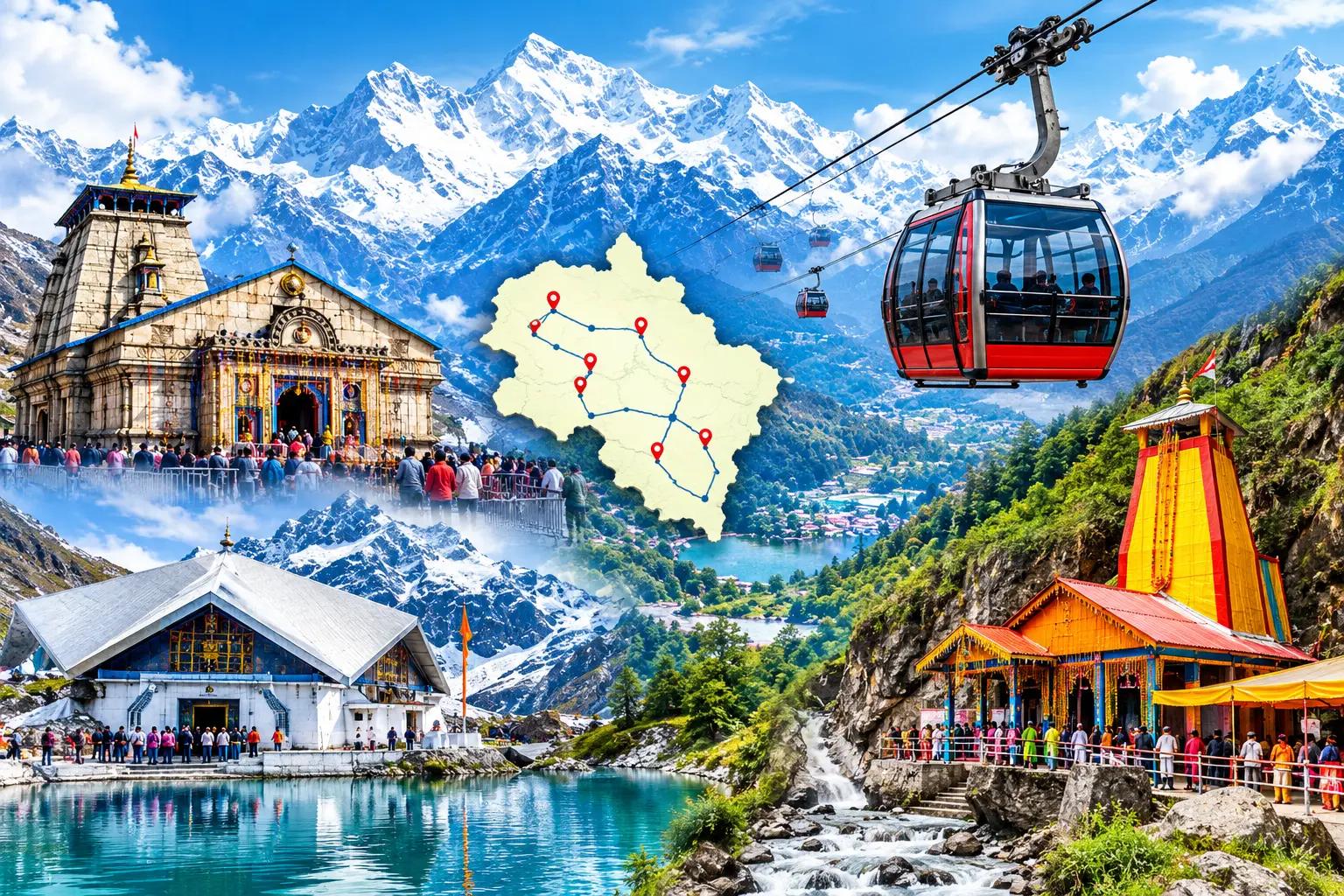
Uttarakhand has outlined an ambitious plan to develop 51 ropeway projects covering nearly 160 km across the hill state, with the network aimed at improving access to major pilgrimage centres, tourist destinations and difficult mountain corridors.
Uttarakhand has outlined an ambitious plan to develop 51 ropeway projects covering nearly 160 km across the hill state, with the network aimed at improving access to major pilgrimage centres, tourist destinations and difficult mountain corridors. The proposal, being advanced with Centre-state coordination, places ropeway connectivity alongside roads, rail and air links as part of a broader push for Uttarakhand infrastructure and tourism mobility. As per various news outlets detailed the plan and listed prominent routes including Kedarnath, Hemkund Sahib and Kainchi Dham.
What is planned under the 51 ropeway projects?
The state is planning 51 ropeway projects across Uttarakhand, together spanning nearly 160 km, to create an alternative transport network suited to the region’s mountainous geography. The proposed Uttarakhand ropeway network is expected to connect religious sites, hill stations, trekking-linked destinations and locations where road travel is often time-consuming or vulnerable to terrain-related disruption.
The initiative is being pursued under the direction of Chief Minister Pushkar Singh Dhami, with ropeways being positioned as a practical mobility option in areas where conventional transport expansion can be difficult. The state government has linked the programme to both Uttarakhand tourism and everyday access needs, particularly as visitor pressure rises during pilgrimage and holiday seasons.
The development comes at a time when the hill state is looking to diversify how people move between valleys, towns, temples and high-altitude destinations. In plain terms, the plan is not just about adding tourist attractions. It is also about reducing dependence on long, winding road routes where a short aerial link can sharply change the travel experience.
Major routes include Kedarnath, Hemkund Sahib and Kainchi Dham
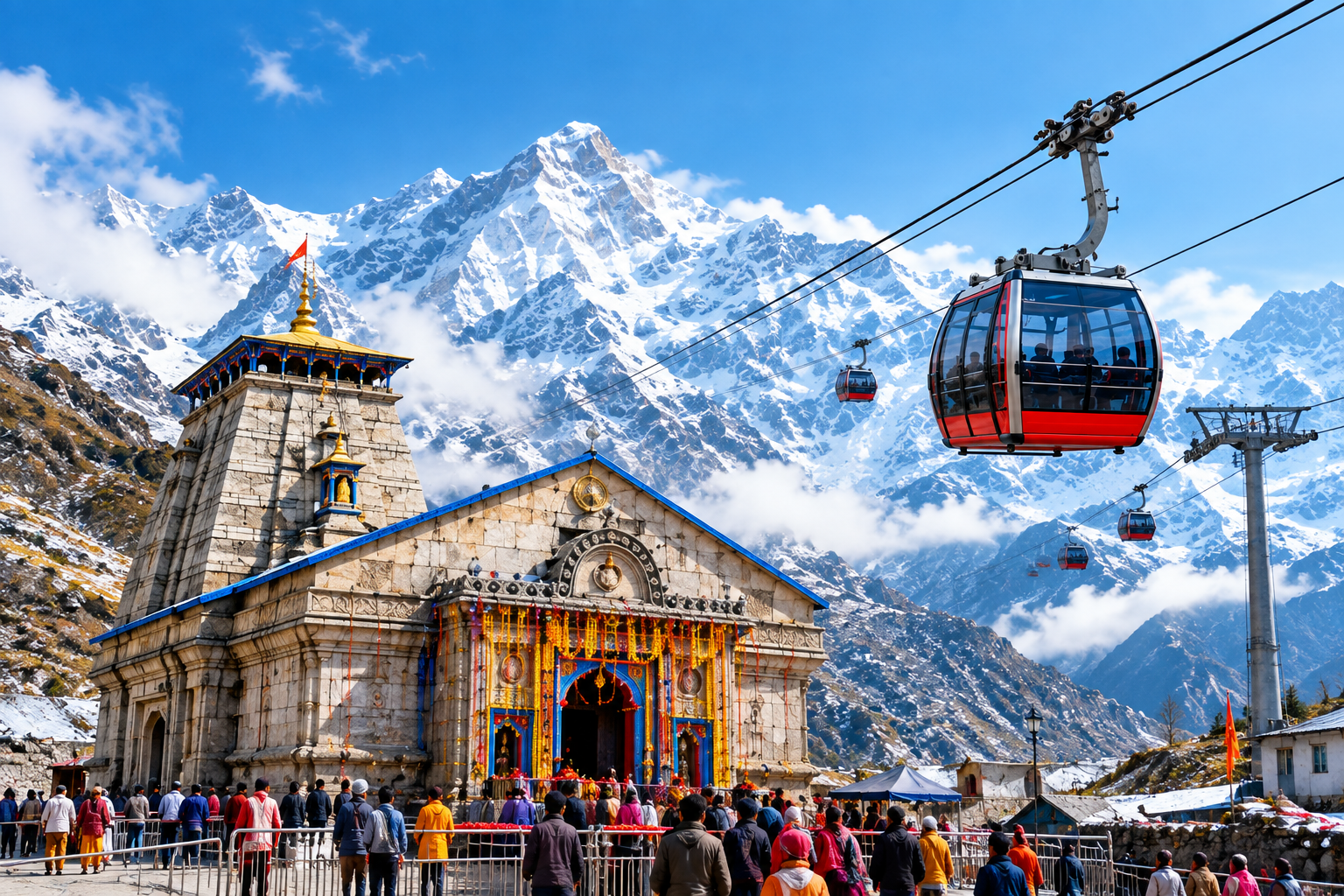
The prominent routes identified in the current plan include several of Uttarakhand’s most visited religious and tourism destinations. Among the key proposals are -
the Sonprayag–Kedarnath ropeway in Rudraprayag,
the Govindghat–Hemkund Sahib ropeway in Chamoli
the Ranibagh–Hanumangarh–Kainchi Dham ropeway in Nainital.
Kanakchouri–Kartik Swami in Rudraprayag,
Joshimath–Auli–Gorson in Chamoli
Raithal–Dayara Bugyal in Uttarkashi.
The Kedarnath ropeway and Hemkund Sahib ropeway are particularly significant because both serve high-demand pilgrimage routes where terrain, seasonality and visitor volumes create mobility challenges. For pilgrims, a reliable ropeway can mean easier access, shorter travel time and a less physically demanding journey. For local authorities, it can provide another tool to manage footfall without relying only on road widening or seasonal traffic restrictions.
The Kainchi Dham ropeway proposal also stands out because Kainchi Dham has seen growing public attention and visitor interest. Improved ropeway connectivity in the Nainital region could help disperse travel pressure while linking nearby points in a more structured way. If executed carefully, such routes can also support local businesses by making smaller towns and nearby attractions easier to reach.
Approved flagship projects under Parvatmala Pariyojana
Two major ropeway projects already have Union Cabinet approval under the National Ropeways Development Programme, also known as Parvatmala Pariyojana. The 12.9-km Sonprayag–Kedarnath ropeway has an approved capital cost of ₹4,081.28 crore and is planned under the DBFOT model, according to the Indian Masterminds report. The 12.4-km Govindghat–Hemkund Sahib ropeway has also received Cabinet approval, with an estimated project cost of ₹2,730.13 crore.
Proposed network extends beyond headline pilgrimage sites
While Kedarnath, Hemkund Sahib and Kainchi Dham are the most visible names in the announcement, the broader list of proposed routes shows a wider tourism and mobility strategy. The reported list includes
Kharsali (Janki Chatti) – Yamunotri
Ranikhet–Chaubatia
Kasardevi–Almora
Dwarahat–Dunagiri
Dwarahat–Kukuchina–Pandukhola
Chaukhutia–Targatal–Kukuchina
Chaughanpata–Base Hospital–New Collectorate in Almora.
Tallital Market–Gangnath Temple area in Nainital
Camel Back Road connections to Lal Tibba
George Everest and Kempty Falls in Mussoorie
George Everest House–Bhadraj Temple
Tapkeshwar Mahadev Temple–Robber’s Cave
Raipur–Maldevta
Maldevta–Dhanaulti
Treveni Ghat to Neelkanth Mahadev Temple
Thuligad–Purnagiri Temple
These routes indicate that the 51 ropeway projects are not confined to a single tourism circuit. They cover pilgrimage centres, town-level mobility corridors, scenic destinations and places where road access is constrained by terrain.
For Uttarakhand tourism, this matters because the state’s visitor economy is spread across many different travel types: Char Dham pilgrimage, weekend hill tourism, winter tourism, trekking, spiritual travel and nature-based trips. A 160 km ropeway network, if phased sensibly, could help distribute traffic more evenly and bring lesser-known destinations into the visitor map without turning every journey into a road-heavy itinerary.
Key details reported so Far
The announcement is still at the planning and project-development stage for many routes, but several important details are now clear:
Scale: 51 ropeway projects are proposed across Uttarakhand, with a combined length of nearly 160 km.
Purpose: The network is intended to improve access to religious and tourist destinations while adding another transport option alongside road, rail and air connectivity.
Priority corridors: Kedarnath, Hemkund Sahib, Kainchi Dham, Auli, Dayara Bugyal, Mussoorie, Nainital and other mountain destinations feature in the route list.
Approved projects: The Sonprayag–Kedarnath and Govindghat–Hemkund Sahib ropeways have received Union Cabinet approval under Parvatmala Pariyojana.
Implementing agencies: The projects are being taken forward through multiple agencies, including National Highways Logistics Management Limited, Uttarakhand Metro Rail Urban Infrastructure and Building Construction Corporation, Urban Infrastructure and Building Construction Corporation and the Uttarakhand Tourism Department.
These details point to a multi-agency implementation model rather than a single standalone tourism project. That can help distribute responsibility, but it also increases the need for coordination on timelines, land requirements, environmental compliance, passenger facilities and maintenance standards.
Tourism pressure is driving the infrastructure push
The state government has linked the ropeway expansion to rising visitor numbers. According to the report, more than 6.03 crore tourists and pilgrims visited Uttarakhand in 2025, underlining the pressure on transport corridors that serve temples, hill towns and seasonal destinations.
That number helps explain why ropeway connectivity is being discussed as infrastructure, not merely as a sightseeing facility. In peak season, popular routes can face congestion, parking stress and delays caused by landslides, weather interruptions or narrow approach roads. Ropeways cannot replace roads everywhere, but they can reduce the need for vehicles on selected stretches and provide a more predictable link where the geography allows.
The tourism master plan has also identified ropeways as an important transport option for mountainous destinations where accessibility remains difficult. This gives policy backing to the current pipeline of Uttarakhand ropeway projects and places them within a longer-term mobility strategy for the state.
What happens Next
The immediate focus is expected to remain on projects that already have approvals or are in advanced stages of preparation, especially the Kedarnath and Hemkund Sahib ropeways. For the remaining routes, feasibility work, agency coordination, clearances, funding structures and implementation schedules will determine how quickly the wider 160 km ropeway network takes shape.
For travellers, the plan signals a future in which some of Uttarakhand’s most visited destinations may become easier to reach, especially for elderly pilgrims, families and visitors with limited time. For the state, it marks a major infrastructure bet: using ropeways to solve mobility challenges that roads alone cannot fully address.
Best Selling Tour Packages
Explore other exciting options for your next adventure!