
Kutch Handicraft & Textile Immersion5N/6D
Kutch Handicraft & Textile Immersion
Start & City : Bhuj
best deal price
₹
Without GST ₹57,645
per person on twin sharing
Choose your departure city, dates, and add guests to secure your tour.
Hurry, as seats fill up, prices rise! Book now!
1. Choose your departure date
Highlights
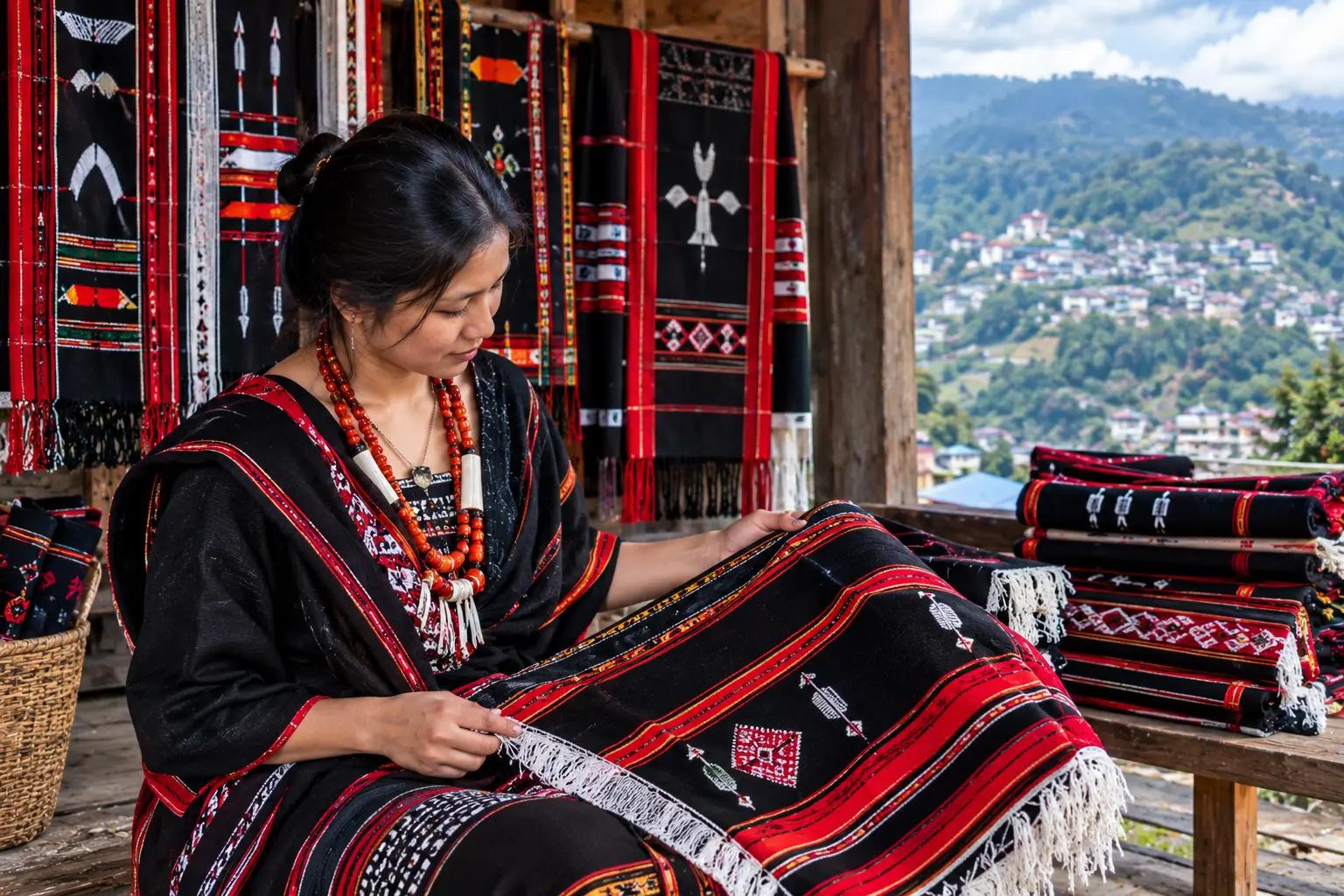
Hands-on turn at the loom with a Vankar weaving family in Bhujodi, a tradition tracing back some 500 years.
A Rogan art workshop in Nirona with the Khatri family, the single family keeping this craft alive today, whose work has been gifted to a foreign head of state.
Zura's thousand-year-old bell-making craft, hammered and interlocked entirely without welding.
A hands-on Ajrakh block-printing session in Ajrakhpur, on cloth you print yourself and take home.
A working Bandhani tie-dye workshop in Bhuj's own old city, one of Kutch's confirmed Bandhani-producing centres.
An honest, disclosed answer to the Patola question: where it's actually from, and where to see and buy it responsibly.
A gujarat handicraft village tour for foreigners built around five living traditions, each met through a named family.
Private car and driver throughout, no group transport at any point.
Essence of Journey
The experiences that capture the true spirit of the entire trip.
| Day | Route | Distance | Major Highlights |
|---|---|---|---|
| Day 1 | Bhuj: arrival, Bandhani workshop | Local | Old-city tie-dye workshop, evening free |
| Day 2 | Bhujodi weaving village | 8-14 km each way | Hands-on loom turn with a Vankar weaving family |
| Day 3 | Zura and Nirona: bells and Rogan art | Zura ~27 km; on to Nirona | Bell-making, Rogan art with the Khatri family, lacquerwork |
| Day 4 | Ajrakhpur: Ajrakh block printing | ~15 km each way | Hands-on block-printing session, Khatri family |
| Day 5 | Bhuj: market, museum, the Patola question | Local | Emporium, Kutch Museum, Aina Mahal, Prag Mahal |
| Day 6 | Departure from Bhuj | Local | Transfer to Bhuj airport |
About
The Kutch textile tour is a private 6-day craft holiday based in Bhuj, Gujarat. You visit five artisan communities in their homes and workshops: Bandhani tie-dye in Bhuj, hand weaving in Bhujodi, copper bells in Zura, Rogan painting in Nirona and Ajrakh block printing in Ajrakhpur. You try weaving and block printing yourself. Prices start at about ₹57,645 per person.
If you've ever bought a block-printed scarf or a tie-dyed stole and wondered where it really came from, there's a good chance the answer is Kutch. This dry, wide region in the far west of India has some of the richest living craft traditions anywhere in the world, and many of them are still made by the same families, in the same villages, by hand.
This tour takes you to them. Not to a showroom, but into courtyards where cloth is drying in the sun, rooms where looms click all day and workshops where indigo vats sit beside piles of wooden printing blocks. You meet the makers, hear how their crafts survived hard times, including the 2001 earthquake, and try a few techniques yourself.
Each craft gets its own day, so nothing feels rushed. And you stay in Bhuj throughout, coming home each evening to the same hotel.
The Crafts of Kutch at a Glance
| Craft | Where | What it is | Can you try it? |
|---|---|---|---|
|
Bandhani |
Bhuj |
Cloth tied in thousands of tiny knots, then dyed to make dotted patterns |
Watch the process |
|
Hand weaving |
Bhujodi |
Wool and cotton shawls with bold geometric patterns woven in by hand |
Yes, a turn at the loom |
|
Copper bells |
Zura |
Bells hammered from sheet metal without welding, then coated and fired |
Watch the process |
|
Rogan art |
Nirona |
Fine painting on cloth using a thick paste made from castor oil |
Watch and learn |
|
Lacquerwork |
Nirona |
Colourful wooden items shaped and polished on a hand-turned lathe |
Watch the process |
|
Ajrakh |
Ajrakhpur |
Block printing with natural dyes like indigo and madder |
Yes, print your own cloth |
Kutch Handicraft & Textile at a Glance
What You'll Experience
We don't share a day-by-day plan on this page, but here's what your six days include.
Bandhani in Bhuj's old city
Your first afternoon is spent in a working tie-dye workshop in Bhuj, watching artisans pinch and tie the cloth into hundreds of tiny points before dyeing. You'll see how the patterns appear once the knots are opened.
A day with the weavers of Bhujodi
Just outside Bhuj, Bhujodi is a village of weavers. You'll see how patterns are added thread by thread while the cloth is woven, try the loom yourself and share a home-cooked lunch arranged through the weaving community.
Bells and Rogan painting
A longer day takes you to Zura for bell-making and on to Nirona, where the Khatri family shows you Rogan painting, a slow, delicate art made with a single metal stick and a paste made from castor oil. Nirona's lacquerwork artisans also show how they turn and colour wood.
Ajrakh printing in Ajrakhpur
Ajrakhpur was founded by block-printing families who moved here after the 2001 earthquake. You'll follow the cloth through its many stages of washing, printing and dyeing, then print a piece of your own.
Bhuj's heritage and markets
Your final full day explores Bhuj's royal history at the Kutch Museum, Aina Mahal and Prag Mahal, with time in the old market for last purchases and a farewell Kutchi dinner.
ACCOMMODATION CATEGORIES
Tier labels follow the standard of the property, not a star count. Bhuj's own hotel market is smaller than a metro hub's; rates are confirmed closer to each departure.
| Destination | Nights | Premium | Luxury | Ultra-Luxury |
|---|---|---|---|---|
|
Bhuj |
5 |
Best-available 3-star property |
Regenta Resort Bhuj, By Royal Orchid |
Ramee The Srinivas Palace Hotel |
Kutch Handicraft & Textile Accommodation Categories
Bandhani, Patola and Ajrakh: What's Really From Kutch?
Many people searching for a Bandhani and Patola tour expect to find both in Kutch. Here's the honest answer.
Bandhani is very much a Kutch craft. You'll see it made in Bhuj.
Ajrakh is a Kutch speciality, made in Ajrakhpur and nearby villages.
Patola is not from Kutch. This famous double ikat silk is woven in Patan, in north Gujarat, by a very small number of families.
On this tour, you can see genuine Patan Patola at a trusted emporium in Bhuj, and we explain clearly where it comes from. If you'd like to see Patola being woven, ask us about our Modhera Sun Temple and Rani ki Vav tour, which visits a weaving family in Patan.
Who Is This Gujarat Handicraft Village Tour For?
A great fit if you:
Love textiles, design, fashion or traditional crafts
Are a designer, artist, collector or student looking for inspiration
Want to meet local people and learn how things are made
Enjoy hands-on activities more than sightseeing from a bus
Want to buy directly from makers and know your money reaches them
Maybe not the right trip if you:
Are mainly looking for wildlife or the White Rann (ask about our Rann of Kutch tours)
Want luxury resorts with lots of facilities
Prefer a fast-paced trip covering many cities
3-TIER PRICING SUMMARY
| Tier | Per couple | Per person | Standard |
|---|---|---|---|
|
Premium |
Rs.115,290 to Rs.124,513 |
Rs.57,645 to Rs.62,256 |
Best-available 3-star property, Bhuj |
|
Luxury |
Rs.151,578 to Rs.163,704 |
Rs.75,789 to Rs.81,852 |
Regenta Resort Bhuj, By Royal Orchid |
|
Ultra-Luxury |
Rs.219,870 to Rs.237,460 |
Rs.109,935 to Rs.118,730 |
Ramee The Srinivas Palace Hotel |
Kutch Handicraft & Textile 3-Tier Pricing Summary
The upper figure allows for date and season variance of about 8%. Prices are indicative and confirmed on request.
Buying Directly from Artisans
One of the best parts of this trip is buying straight from the people who made the piece. A few simple tips:
Prices are set by the families, not by us. You pay them directly.
Carry cash in rupees. Some workshops accept cards or UPI, but not all.
Ask about the process. Artisans are usually happy to explain how a piece was made and how long it took.
Handmade means small differences. Slight unevenness in colour or pattern is a sign of real handwork, not a fault.
Shipping: some workshops can ship larger items abroad. Ask your guide to help arrange it.
WHY BOOK THIS WITH BIZAREXPEDITION
A genuine gap in BizareXpedition's own catalogue: Bhuj is live today only as the gateway to the Rann, Dholavira or Gir, with none of those routes naming the handicraft villages specifically.
Named families, not village-level generalities. Every workshop on this trip is arranged with a specific artisan family — the Khatris of Bhuj, Bhujodi's Vankar weavers, Zura's bell-makers, Nirona's Khatri family and Ajrakhpur's Khatri family — rather than a general 'craft village visit.'
The Patola question, answered plainly. Where other itineraries might imply Patola is a Kutch craft because the word sells, this one says plainly that it's woven in Patan, not Kutch, and shows you where to see and buy it responsibly instead.
Five crafts, not one stretched thin. GJ-P07, GJ-P11 and GJ-P19, BizareXpedition's own existing Kutch circuits, treat Bhuj as a gateway only; this trip gives Bandhani, weaving, bell-making, Rogan art and block printing a full day each.
Hands-on at every stop, not just watching. Guests take a turn at the loom in Bhujodi and print their own cloth in Ajrakhpur, arranged directly with the host families rather than staged for a quick photo.
A registered company, not a middleman. BizareXpedition Services Pvt. Ltd. (CIN U63090UR2016PTC007433), headquartered in Haridwar, plans and runs the trip itself.
SEASON ADJUSTMENTS
Unlike this series' festival-dated packages, the craft villages themselves run year-round; the only real seasonal factor is Kutch's own climate and the occasional artisan-family absence for a personal or community event, confirmed closer to each departure.
| Season | Window | Notes |
|---|---|---|
|
Peak season |
November to February |
Pleasant daytime temperatures; the same window most Rann Utsav and wildlife travellers choose, so book workshop slots with artisan families early. |
|
Shoulder season |
March to May, October |
Warmer days; workshops themselves are unaffected, since all are indoor or shaded. |
|
Avoid where possible |
June to September |
Monsoon; some rural roads to Zura, Nirona and Ajrakhpur can be affected by heavy rain. |
Kutch Handicraft & Textile Season Adjustments
PRACTICAL NOTES
Patola is disclosed plainly, not implied. Genuine Patola double-ikat weaving is a Patan tradition; nothing on this itinerary stages or claims it's woven in Kutch, and Day 5's emporium stop explains exactly where the Patola on display and for sale actually comes from.
Rogan art is one family, not a street of workshops. The Khatris of Nirona are the only family currently practicing this craft; visit timing on Day 3 depends on the family's own schedule, confirmed closer to the date rather than fixed in advance.
Workshop visits are arranged, not drop-in. Every stop on this trip is pre-arranged directly with the artisan family; turning up unannounced at any of these villages risks a family being away or simply not set up to host that day.
Bhuj's own hotel market is smaller than a metro hub's. Property choice across all three tiers reflects what Bhuj actually offers rather than an inflated comparison to Ahmedabad; the ground team reconfirms exact rates before every departure.
Hands-on sessions have real limits. A loom turn in Bhujodi or a block-printing pass in Ajrakhpur produces a usable souvenir, not a finished professional-grade piece; the craft itself takes artisans years to master.
Gujarat is dry. Foreigners can apply for a free temporary tourist liquor permit; none of this trip's host-family meals include alcohol as standard.
Buying directly from the artisan families. Prices at each workshop are set by the family, not BizareXpedition, and purchases are a direct transaction with them; carry cash or ask in advance whether a workshop accepts card or bank transfer.
Extending the trip. Dholavira's Harappan ruins, the White Rann at Dhordo, and Mandvi's beach and old shipyard are all realistic additions if you want to extend this craft-focused week into a longer Kutch circuit.
Booking Summary
Dept. City :
--
Dept. Date :
--
Traveller :
Adults: 2, Child: 0, Infant: 0
Rooms :
--
Basic Price :
--
Total Cost
--
GST
--
Grand Total
--
Itinerary (Day Wise)
You arrive in Bhuj and spend the first afternoon in a tie-dye workshop in the old city. You watch artisans tie hundreds of tiny knots into the cloth before it goes into the dye. Day two is spent with the weavers of Bhujodi, just outside town, where you take a turn at the loom and stay for a home-cooked lunch. On the third day you drive out to Zura to see copper bells hammered into shape without any welding, then go on to Nirona, where the Khatri family shows you Rogan painting with castor-oil paste and a single metal stick. Day four is in Ajrakhpur. You follow the cloth through washing, printing and dyeing, then print a piece of your own to take home. Your last full day is for Bhuj itself: the Kutch Museum, Aina Mahal and Prag Mahal, some time in the old market, and a farewell Kutchi dinner. The next morning you transfer to Bhuj airport.
Day 1
ARRIVAL IN BHUJ | BANDHANI, THE CITY'S OWN CRAFT
Route: Arrival at Bhuj; afternoon Bandhani (tie-dye) workshop in the old city
Your guide meets you at Bhuj airport for the start of a kutch textile tour international collectors and craft enthusiasts have been asking BizareXpedition for by name: six days built entirely around the artisan families who still make Kutch's textiles by hand, rather than the desert-and-wildlife framing of every other Bhuj-gateway itinerary in the catalogue.
The afternoon stays in Bhuj itself, since Bandhani tie-dye is a Bhuj craft before it is a village one: the city is one of several confirmed centres (alongside Abdasa, Mandvi, Mundra, Anjar and Nakhatrana) where Khatri families still tie cloth by hand, thousands of tiny resist-dye knots to a single piece, before it goes into the dye bath. A working Bandhani workshop in the old city shows the tying, dyeing and the finished patterns side by side.
Experience of the Day
Airport pickup and transfer to the hotel
Afternoon visit to a working Bandhani (tie-dye) workshop in Bhuj's old city
Evening free in Bhuj's old city
Food
Recommended: Dinner at the hotel, a Kutchi-Gujarati thali.
Must-Try: Masala chai, offered at the start of nearly every workshop visit on this trip.
Shopping
Bandhani dupattas and stoles at the old-city workshop, tied and dyed on site.
Activities to Do
Hotel check-in
Bandhani workshop visit
Old-city evening walk
Day 2
BHUJODI: THE WEAVING VILLAGE | EXTRA-WEFT WOOL, FIVE HUNDRED YEARS OLD
Route: Bhuj to Bhujodi and back, about 8-14 km each way
Bhujodi sits just outside Bhuj, close enough that the whole day is spent there without a single night away from your hotel. The Vankar weavers here trace their own history back some 500 years, to Meghwal and Marwada weaver families who migrated from Rajasthan and found a ready market in the Rabari pastoralists already settled in Kutch — a textile tradition built, from the start, on one community weaving for another.
A gujarat handicraft village tour for foreigners built around Bhujodi means watching the craft's signature extra-weft technique up close: threads picked up and added by hand as the weaving proceeds, raising bold geometric motifs — Popati's triangles, the joined-triangle Chaumukh, Panchko — directly out of the plain woolen or cotton ground rather than embroidering them on afterward. Your guide arranges a hands-on turn at the loom with one weaving family, alongside the usual workshop viewing.
Experience of the Day
Drive to Bhujodi
Hands-on turn at the loom with a Vankar weaving family
Workshop visits across several looms in the village
Food
Recommended: Lunch at a Bhujodi family home, arranged through the weaving community.
Must-Try: Masala chai between workshop stops.
Shopping
Handwoven woolen shawls and stoles directly from the weaving families at Bhujodi.
Activities to Do
Bhujodi weaving village visit
Hands-on extra-weft weaving demonstration
Day 3
ZURA AND NIRONA: BELLS AND ROGAN ART | A THOUSAND YEARS OF BELLS, ONE FAMILY OF PAINTERS
Route: Bhuj to Zura, about 27 km, then on to Nirona, a further stretch, returning to Bhuj in the evening
The morning goes to Zura, where a bell-making tradition running close to a thousand years is still worked by hand: blacksmiths cut and hammer sheet metal into shape, interlock the pieces without any welding at all, then coat, wrap and fire each bell to give it its particular tone. Pastoral communities once used these bells to track grazing herds by sound alone; today the same families tune bells to the saat sur, the seven notes of Indian classical music, for a market far beyond Kutch.
The afternoon continues to Nirona for Rogan art, a craft now kept alive by a single family: the Khatris, whose ancestors arrived from Iran roughly eight generations and more than 300 years ago. Abdul Gafur Khatri, the family's best-known artist, received the Padma Shri in 2019, and in 2014 Prime Minister Narendra Modi presented one of his Rogan 'tree of life' paintings to then-US President Barack Obama at the White House — the detail most visitors to Nirona already know before they arrive, and the reason this stop draws collectors specifically. Nirona's lacquerwork, made on a hand-operated lathe, rounds out the afternoon.
Note: Rogan art is practiced today by one single family in one single village; this is not a craft with multiple workshops to compare, and the Khatri family's own schedule, not a fixed itinerary, determines exactly how the visit runs on the day.
Experience of the Day
Zura bell-making workshop, a thousand-year-old craft worked without welding
Nirona Rogan art workshop with the Khatri family
Nirona lacquerwork demonstration
Food
Recommended: Lunch en route between Zura and Nirona.
Must-Try: Dinner back in Bhuj, a full Kutchi spread.
Shopping
Tuned copper bells at Zura; Rogan art panels and lacquered wooden items at Nirona.
Activities to Do
Zura bell-making village visit
Nirona Rogan art and lacquerwork visit
Day 4
AJRAKHPUR: THE BLOCK PRINTERS | SIXTEEN STEPS, ENTIRELY NATURAL DYE
Route: Bhuj to Ajrakhpur and back, about 15 km each way
Ajrakhpur exists, as a village, only since 2001: the Khatri families who print Ajrakh here relocated from Dhamadka after that year's earthquake, carrying a block-printing tradition with them rather than losing it. Ajrakh itself, the name reads roughly 'keep it today,' a nod to cloth once sold out within a single day, is built on a long, exacting process: natural indigo, madder and other plant and mineral dyes, applied and resist-printed in roughly sixteen separate stages before a single length of cloth is finished.
A bandhani patola tour built around Kutch's own craft villages finds its most hands-on day here: carved wooden printing blocks, dye vats mixed on site, and a Khatri family willing to let guests try a single block-print pass themselves, under supervision, on a spare length of cotton to take home.
Experience of the Day
Ajrakh block-printing workshop with a Khatri family
Walk through the natural-dye preparation process
Hands-on block-printing attempt on a take-home cloth length
Food
Recommended: Lunch in Ajrakhpur, with the host family where possible.
Must-Try: Masala chai between the dye vats and the printing table.
Shopping
Ajrakh-printed stoles, bedcovers and lengths of cloth, printed on site.
Activities to Do
Ajrakhpur workshop visit
Hands-on block-printing session
Day 5
DAY 5 — BHUJ: MARKET, MUSEUM AND THE PATOLA QUESTION | WHAT'S ACTUALLY KUTCH, AND WHAT ISN'T
Route: Bhuj, local: old-city market, Kutch Museum, Aina Mahal and Prag Mahal
This trip's title names Patola alongside Bandhani and Ajrakh, and the honest answer deserves to be given plainly rather than glossed over: genuine Patola, the double-ikat silk weave most associated with Patan, is not a craft practiced anywhere on this Kutch route, and no workshop visit on this itinerary claims otherwise. What this day offers instead is a stop at a reputable Bhuj emporium where authentic, Patan-woven Patola sarees can be seen and bought, explained plainly as sourced rather than locally made, alongside a second look at Bhujodi's own weaving as the real hands-on alternative within Kutch itself.
The rest of the day goes to Bhuj's own heritage: the Kutch Museum, Gujarat's oldest, and the earthquake-damaged, since-restored Aina Mahal and Prag Mahal, both built by Kutch's own royal patrons long before any of this week's craft villages existed in their current form. A farewell dinner closes the trip on the same city it opened on.
Note: Patola is disclosed here plainly: it is a Patan tradition, not a Kutch one, and nothing on this itinerary stages or implies otherwise.
Experience of the Day
Bhuj old-city market and emporium visit, including genuine Patan Patola on display
Kutch Museum visit
Aina Mahal and Prag Mahal visit
Food
Recommended: Lunch at a Bhuj old-city restaurant.
Must-Try: A hosted farewell dinner, a full Kutchi-Gujarati spread.
Shopping
Patan Patola sarees (genuine, sourced, not locally woven) and a final round of Bandhani, weaving and block-print pieces at the old-city market.
Activities to Do
Old-city market and emporium visit
Kutch Museum
Aina Mahal and Prag Mahal
Day 6
DEPARTURE FROM BHUJ | SIX DAYS, FIVE ARTISAN TRADITIONS
Route: Bhuj airport, departure
Book onward; Bhuj's own airport schedule is lighter than a metro hub's, and most itineraries route through Ahmedabad for international legs.
Five living traditions in six days, each met through a specific family rather than a generic village stop: Bandhani in Bhuj, weaving in Bhujodi, bells in Zura, Rogan art in Nirona, and Ajrakh in Ajrakhpur, with Patola's true home disclosed plainly rather than claimed for Kutch.
Experience of the Day
Transfer to Bhuj airport
Onward or international departure
Food
Recommended: Breakfast at the hotel.
Must-Try: A last cup of masala chai before the transfer.
Activities to Do
Transfer to airport
Departure
Tour Information
Your complete guide to a hassle-free and enjoyable trip.
Inclusion
Exclusion
Payment Terms
Important factors to consider before your trip!
Cancellation
Need To Know
Be Responsible Traveller
- Minimize Plastic Use : Bring a reusable water bottle, shopping bag, and utensils to reduce the need for single-use plastics. Many destinations have water refill stations and eco-friendly stores.
- Support Local and Sustainable Businesses : Eat at local restaurants, buy souvenirs from local artisans, and choose tour operators that prioritize sustainable practices and support the local community.
- Respect Wildlife and Natural Habitats : Avoid disturbing wildlife or their natural habitats. Stick to designated paths and observe animals from a distance without feeding or touching them.
- Dispose of Waste Properly : Follow local guidelines for recycling and waste disposal. If facilities aren't available, carry your waste with you until you can dispose of it responsibly.
- Educate Yourself and Others : Learn about the local environment, culture, and customs. Respect local practices and traditions, and share your knowledge about responsible travel with others.
- Choose Sustainable Activities : Engage in eco-friendly activities such as hiking, snorkeling, or visiting national parks. Avoid activities that exploit animals or damage the environment.
- Leave No Trace : Follow the principle of "Leave No Trace," which means leaving natural areas as you found them. Pack out all trash, avoid picking plants, and refrain from carving or writing on rocks or trees.
- Plant Trees Whenever Possible : Participate in local tree-planting initiatives or plant trees in your own community. Trees absorb carbon dioxide, provide oxygen, and help support biodiversity, making them vital for a healthy environment.
Connect
Share Itinerary
Email Itinerary
Frequently Asked Questions (FAQs) & People Also Ask — Kutch Handicraft & Textile Immersion
We help you prepare for your trip and ensure an effortless and enjoyable travel experience.
Is this really a kutch textile tour collectors would plan around, or a add-on to a wildlife trip?
It's built entirely around the craft villages; BizareXpedition's own other Kutch circuits (GJ-P07, GJ-P11, GJ-P19) use Bhuj as a gateway to the Rann, Dholavira or Gir, but this trip gives the textile traditions themselves the whole six days.
Will we actually see Patola being woven in Kutch?
No, and we say so plainly: genuine Patola double-ikat weaving is a Patan tradition, not a Kutch one. This itinerary discloses that plainly and takes you to see and buy genuine Patan Patola at a reputable Bhuj emporium instead of staging a fake workshop.
Is this a bandhani patola tour in name only, then?
Bandhani is Kutch's own craft, practiced in Bhuj itself and demonstrated hands-on at the Day 1 workshop; Patola's honest place in the trip is the Day 5 market visit, disclosed as sourced rather than locally woven.
What makes this a gujarat handicraft village tour for foreigners rather than a generic craft-shopping day?
Every stop is arranged with a named artisan family — the Khatris of Bhuj, a Vankar weaver family in Bhujodi, Zura's bell-makers, Nirona's Khatri family and Ajrakhpur's Khatri family — with hands-on participation at several, not a drive-by village stop.
Can we actually try weaving or block printing ourselves?
Yes, both: a loom turn with a Vankar weaving family in Bhujodi on Day 2, and a hands-on Ajrakh block-printing session on your own take-home cloth in Ajrakhpur on Day 4.
Is Rogan art hard to see in person?
It's practiced today by a single family in Nirona, the Khatris, so visit timing depends on their own schedule; this itinerary arranges the visit in advance rather than assuming a drop-in is possible.
How far are the craft villages from Bhuj?
Bhujodi is 8 to 14 km, Ajrakhpur about 15 km, and Zura and Nirona together make up one longer day, with Zura around 27 km from Bhuj and Nirona a further stretch beyond it. None requires an overnight away from Bhuj.
Do we need any special permit for these villages?
No; unlike the Rann itself, none of these craft villages sits inside a border-restricted zone, so no permit is required for any stop on this itinerary.
What should we budget for buying directly from artisans?
That's entirely separate from the tour cost, set by each family rather than BizareXpedition; carry cash as the safest option, since card or bank-transfer acceptance varies by workshop.
Why six days for five craft stops?
Each tradition gets its own full day rather than being rushed alongside sightseeing, plus a closing day in Bhuj for the market, museum and the honest Patola conversation.
Can this be combined with the Rann or Dholavira?
Yes; Dhordo's White Rann and Dholavira's Harappan ruins are both realistic additions on either end of this itinerary for guests who want a longer Kutch circuit.
How much does the tour cost?
This 6-day immersion costs about Rs.115,290 to Rs.124,513 per couple at the Premium tier, or Rs.57,645 to Rs.62,256 per person. Luxury is Rs.151,578 to Rs.163,704 per couple and Ultra-Luxury Rs.219,870 to Rs.237,460. Figures are indicative.
BizareXpeditionTMReviews
Let's go, pack up, and hit the road!
Similar Tour Packages
Explore other exciting options for your next adventure!
Trusted Paths, Bold Journeys — Inside BizareXpedition
From humble beginnings to a trusted name in the industry, BizareXpedition's story is one of purpose-driven growth, community connection, and a relentless pursuit of excellence that speaks for itself.














Kutch Handicraft & Textile Immersion
best deal price
Without GST
₹57,645
per person on twin sharing
Book Now