
Ladakh: Nubra Valley Trek14N/15D
Ladakh: Nubra Valley Trek
Start & City : Delhi
best deal price
₹
Without GST ₹2,60,948
per person on twin sharing
Choose your departure city, dates, and add guests to secure your tour.
Hurry, as seats fill up, prices rise! Book now!
1. Choose your departure date
Highlights
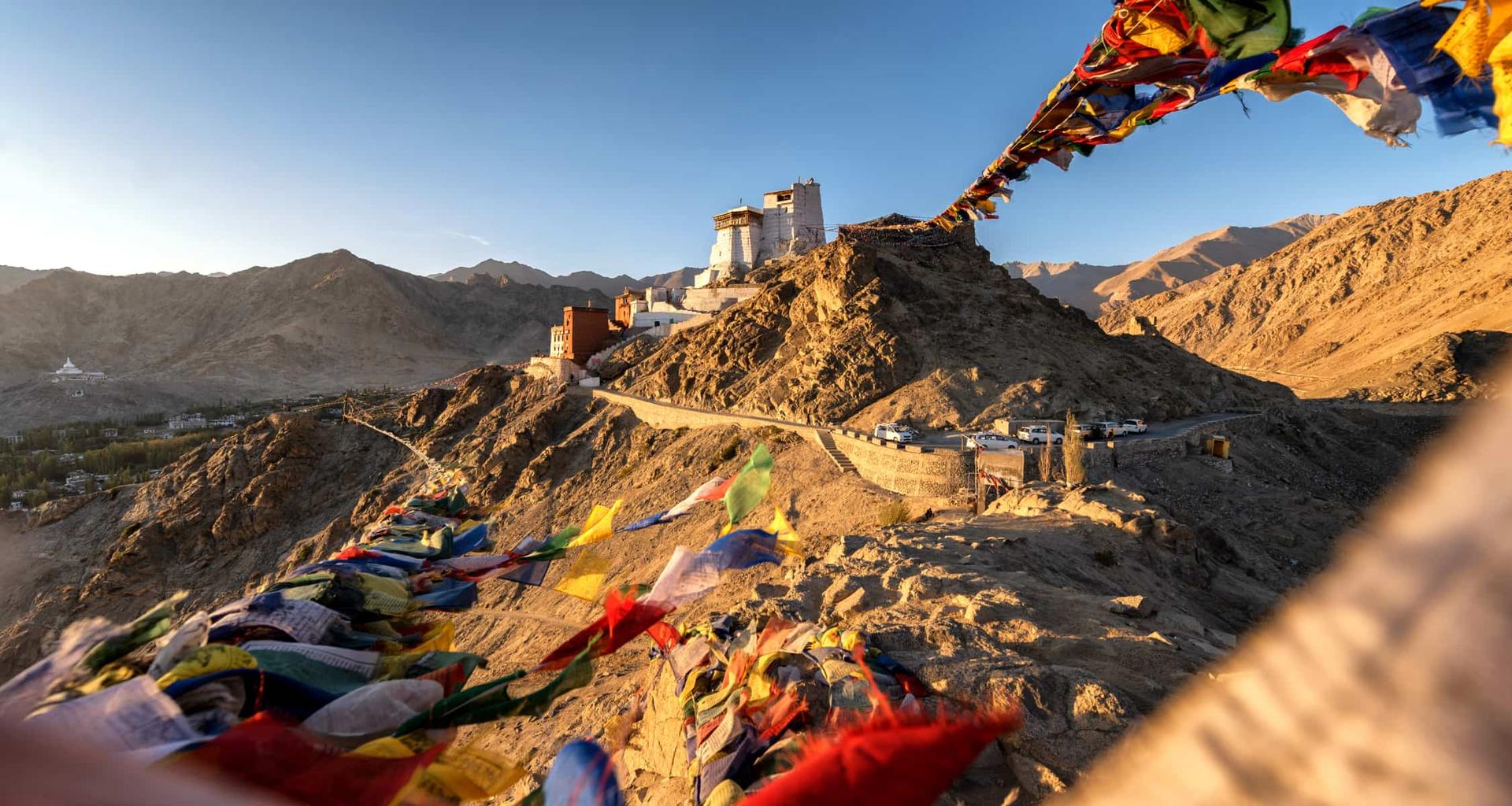
Cross the Lasermo La, between 5,400 and 5,438 m by source, on an old Silk Road path from the Indus valley to Nubra.
Climb in three steps from about 4,050 m to 4,955 m, with a rest day at the highest camp and a spare day in Leh at the end.
Walk down from glacial valleys into the Hunder desert, where dunes and double-humped camels stand at about 3,100 m.
Visit Phyang, Shey, Thiksey and Diskit monasteries, the last with its 32 m Maitreya statue.
Sleep in camps with a cook, a dining tent and an assistant guide for the pass day.
Return to Leh over Khardung La, 5,359 m by GPS, after two nights in the Nubra valley.
Essence of Journey
The experiences that capture the true spirit of the entire trip.
| Day | Route | Distance | Major Highlights |
|---|---|---|---|
| Day 1 | Delhi (arrival) | – | Airport pickup, rest |
| Day 2 | Delhi – Leh | Flight 1h 20m | Arrive at 3,500 m, rest |
| Day 3 | Leh (rest, briefing, gear check) | On foot | Microspike fit, first oximeter reading |
| Day 4 | Leh – Shey – Thiksey – Leh | About 40 km round trip | Palace and monastery, no gain in sleeping height |
| Day 5 | Leh – Phyang – Murabok | About 30 km, then a short walk | First camp at about 4,050 m |
| Day 6 | Murabok – Phyang Phu | About 5 km (3 to 4 hrs) | Camp at about 4,620 m |
| Day 7 | Phyang Phu – South Base | About 3 km (2 to 3 hrs) | Camp at about 4,955 m |
| Day 8 | South Base (rest day) | Short walk to about 5,100 m | Snow practice, pass briefing |
| Day 9 | South Base – Lasermo La – North Base | About 10 km (5 to 9 hrs) | Pass at 5,400 to 5,438 m |
| Day 10 | North Base – Hunder Dok | About 17 km (4 to 7 hrs) | Down to herders' pastures |
| Day 11 | Hunder Dok – Skarchen – Hunder | About 15 km (4 to 6 hrs) | Into the desert, hotel night |
| Day 12 | Hunder – Diskit – dunes – Hunder | About 40 km local | Maitreya statue, dunes, camels |
| Day 13 | Hunder – Khardung La – Leh | About 128 km (5 to 6 hrs) | Khardung La at 5,359 m |
| Day 14 | Leh (spare day) | – | Rest, weather buffer |
| Day 15 | Leh – Delhi | Flight 1h 20m | Early flight, departure the same evening |
About
This is a 15-day private Nubra Valley trek in Ladakh, India, that crosses the Ladakh range on foot. You walk from Phyang, near Leh, up glacial valleys and over the Lasermo La (about 5,400 m), then down through herders' pastures to the sand dunes of Hunder in the Nubra Valley. The trek has six nights in camp, a rest day before the pass and a spare day in Leh. Domestic flights are included. Prices start at about INR 260,948 per person for two people sharing.
Few treks change scenery as sharply as this one. On the south side of the pass you are walking on snow and moraine below glaciers. A day and a half later you are in a warm desert valley, with sand dunes, willow trees and double-humped camels grazing beside glacier streams.
The route follows an old trade path that once linked Leh with Nubra and Central Asia. Today it is quiet, used mostly by herders in summer. It is not an easy trek. The Lasermo La is a long, cold, high day on snow, and we plan the whole trip around getting you there rested and bringing you down safely.
Why Trek to the Nubra Valley over the Lasermo La?
Two worlds in one trek. Snowfields and glacial lakes on one side of the pass, a cold desert with sand dunes on the other.
A real high pass. At about 5,400 m, the Lasermo La is higher than Everest Base Camp in Nepal, with wide views over the Ladakh range.
An old Silk Road path. Walk the same ground that traders and their Bactrian camels used to carry wool and salt between Leh and Central Asia.
Herders' summer pastures. Yaks and dzo graze around stone shelters, and you camp in the same meadows.
The Hunder sand dunes. Finish the trek in the Nubra Valley's cold desert, with a full day for the dunes and the Bactrian camels.
Monasteries on both sides. Shey, Thiksey and Phyang before the trek; Diskit, with its 32 m Maitreya statue, after it.
Khardung La on the way back. Drive back to Leh over one of Ladakh's highest road passes, 5,359 m.
How We Plan the Pass Crossing
High passes are where treks go wrong, so this is where we put most of our planning:
Three nights in Leh first, with a briefing, gear check and microspike fitting.
Short days going up. Two short walking days of 2 to 4 hours to reach the high camp, so your body adjusts.
A rest day at the high camp. A short walk to about 5,100 m, snow practice with microspikes and poles, and a full pass briefing.
An early start on hard snow, so you are over the pass before the sun softens it.
An assistant guide on the pass section, and a rope on the steepest part if the guides decide it is needed.
A turn-back time agreed the evening before. If weather or health calls for it, the group goes back down.
Altitude safety kit: oxygen, a pulse oximeter with daily checks and a portable altitude chamber (a pressure bag that treats altitude sickness) at the high camps.
Two buffer days: the rest day at the high camp and a spare day in Leh, so one bad day does not cost you the crossing or your flight.
ACCOMMODATION CATEGORIES
| Destination | Nights | Premium | Luxury | Ultra-Luxury |
|---|---|---|---|---|
|
Delhi |
1 |
Radisson Blu Plaza Delhi Airport |
ITC Maurya |
The Oberoi, New Delhi |
|
Leh |
5 |
Hotel Chospa (boutique, Old Road) |
The Grand Dragon Ladakh |
Dolkhar (seven private villas in an orchard) |
|
Murabok, Phyang Phu, South Base, North Base, Hunder Dok |
6 |
Camps, standard twin tents |
Camps, larger tents with camp beds |
Camps, larger tents with camp beds and private toilet tent |
|
Nubra Valley (Hunder) |
2 |
Nubra Ecolodge |
The Kyagar |
Lchang Nang Retreat, Teggur |
Ladakh Nubra Valley Trek Accommodation Categories
Hotels in Delhi, Leh and Nubra are named as examples for each tier and are confirmed at booking. On the trail the tier changes the tent and the camp set-up, and the place stays the same. Every camp has a dining tent and a toilet tent, and sleeping bags and mats are supplied. Camp heights are given in Practical Notes. Ladakh hotel nights include breakfast and dinner, and all meals are included on the trail.
How Difficult Is the Nubra Valley Trek?
This trek is demanding. It is not a technical climb, but it is long, high and cold, and the pass day is serious.
The pass day: about 10 km and 5 to 9 hours, with a snow and glacier section in microspikes and a loose, steep descent.
The descent: two long downhill days of about 15 to 17 km, with glacier-fed stream crossings.
Cold nights: temperatures above 4,500 m drop well below freezing, even in summer.
Remoteness: the high camps are a day or more from a road.
How to prepare
Start training at least three months before you travel. Do long hill walks with a loaded pack, stair work and steady cardio. You should be able to walk 6 to 8 hours on back-to-back days and stay steady on a snow slope. A few days above 3,000 m beforehand helps. This is not a trek for complete beginners. If you have no mountain experience, please tell us before you book.
Altitude and Health
The biggest jumps in sleeping height are about 550 to 570 m, a little above the 500 m a day that the Leh tourism advisory suggests. That is why the days after them are short and why there is a rest day before the pass.
Pulse-oximeter readings every evening, starting with a baseline in Leh.
Anyone not adjusting well at the high camp is brought down, one day's walk from the road.
Guides carry a satellite messenger on the trail.
Drink plenty, avoid alcohol and sleeping pills at height.
Some travellers ask their doctor about acetazolamide (Diamox) before the trip; only your own doctor can advise on that. SNM Hospital in Leh is the main hospital in Ladakh.
3-TIER PRICING SUMMARY
| Tier | Per couple | Per person |
|---|---|---|
|
Premium |
Rs.521,897 – 563,649 |
Rs.260,948 – 281,824 |
|
Luxury |
Rs.642,857 – 694,286 |
Rs.321,428 – 347,143 |
|
Ultra-Luxury |
Rs.867,137 – 936,508 |
Rs.433,568 – 468,254 |
Ladakh Nubra Valley Trek 3-Tier Pricing Summary
Ranges run from the base total to about 8% above it, to allow for dates and season. Prices are indicative and are confirmed in a written quote. International flights, Indian visa fees and travel insurance are not included.
WHY BOOK THIS WITH BIZAREXPEDITION
A tailor-made, fifteen-day trek for two, planned by BizareXpedition Services Pvt. Ltd. (CIN U63090UR2016PTC007433), where the pass day, the altitude ladder and the desert finish are all written out.
A pass crossing with a plan around it. The pass day follows a rest day at South Base and an early start for hard snow, with microspikes supplied, an assistant guide on the section and a portable altitude chamber carried to the high camps.
Three nights in Leh first. Days 2 to 4 are at 3,500 m, with a briefing, a gear check and a pulse-oximeter reading, past the Leh administration's 48-hour guidance, so the first camp at about 4,050 m starts from a rested body.
A desert finish. The trail drops from 4,955 m to the Hunder dunes at about 3,100 m, so the last two days are warm, low and easy on the lungs, and the camel country gets a full day of its own.
A spare day at the end. Day 14 is held in Leh for weather or a late flight. The pass day has its own reserve in the rest day at South Base.
Reported numbers, with the gaps shown. Stage lengths, camp heights and pass heights are given as reported and differ by source. The notes say where, and the guides confirm them on the ground before the first camp.
The great monasteries on both sides. Shey, Thiksey and Phyang before the trek, and Diskit, with its Maitreya statue, in the Nubra valley after it.
SEASON ADJUSTMENTS
| Season | Months | Conditions | Price effect |
|---|---|---|---|
|
Opening |
Early to mid-July |
Snow lies on the Lasermo La approach and the streams are high. The pass is crossed in microspikes. |
Base price |
|
Peak |
Late July to August |
The most settled weather and the lowest snow. Stream crossings are higher in the afternoon. |
Top of the price range (about +8%) |
|
Best light |
September |
Clear light and cooler days, with the first snow possible on the pass. |
Base price |
|
Weather watch |
Any week |
Snow or rain can close the pass for a day, and Khardung La can see short closures. The rest day at South Base and the spare day in Leh absorb one lost day; extra nights are charged at stay rates. |
Base price, plus any extra nights |
|
Not offered |
October to June |
Khardung La and the Lasermo La close with the first heavy snow, and the trail holds winter conditions. |
Not offered on this route |
Ladakh Nubra Valley Trek Season Adjustments
What to Pack
Broken-in, waterproof trekking boots
Down jacket, warm gloves, hat and thermal layers
Waterproof shell jacket and trousers
Glacier sunglasses and high-factor sunscreen
Day pack, water bottles and a headlamp
Lens cloth and cover for the dusty, windy desert
Cash: about INR 10,000 to 15,000 for tips and small purchases (no ATMs after Leh)
PRACTICAL NOTES
Stages and camps, as reported. Murabok about 4,050 m. Phyang Phu about 4,620 m, 5.3 km and 3 to 4 hours from Murabok. South Base about 4,955 m, 3.3 km and 2 to 3 hours further. The pass is about 10 km from South Base to North Base, with North Base at about 4,900 m. North Base to Hunder Dok is about 17 km and Hunder Dok to Hunder about 15 km. Sources differ on times by an hour or more, on the height of Hunder Dok (3,830 to 4,060 m) and on the pass (5,400 to 5,438 m), so the guide confirms each stage on the day.
The acclimatisation ladder. Leh 3,500 m for three nights, then Murabok about 4,050 m (+550 m), Phyang Phu about 4,620 m (+570 m), South Base about 4,955 m (+335 m), a second night at South Base, and a pass that rises about 480 m above it. The sleeping height peaks at South Base before the crossing. The two largest gains, about 550 to 570 m, are above the 500 m a day that the Leh administration's advisory suggests, and they are the reason for the short days on Days 6 and 7 and the rest day on Day 8.
The pass day. The Lasermo La is crossed early, on hard snow, in microspikes, with an assistant guide and a rope available for the steepest section. Sources report the crossing at 5 to 9 hours, a glacial section, loose ground on the descent and snow that softens as the sun rises. The turn-back time is set the evening before. A guest who is unwell at South Base is brought down to the road.
Altitude and health. Leh is at 3,500 m, Khardung La at 5,359 m and Hunder at about 3,100 m. The Leh administration's advisory asks for light activity for the first two days and no alcohol or sleeping pills at height. Some visitors ask their doctor about acetazolamide, starting two days before arrival. Only your own doctor can advise on that. If symptoms grow worse with rest, descend and tell your guide at once. SNM Hospital in Leh is the main hospital, and the camps are a day or more from a road.
Fitness. The crossing is physically demanding. Start training at least three months before travel: long hill walks with a loaded pack, stair work, and if possible a few days above 3,000 m. You should be able to walk six to eight hours on consecutive days, and to stay warm and steady on a snow slope. No technical skill beyond walking in microspikes is needed.
Permits. Nubra Valley and Khardung La need a Protected Area Permit for foreign guests, arranged through a registered agent in Leh for a group of two or more on paper. We specify the trek route in the application and confirm that the permit covers the Hunder Dok and Skarchen sections. We need passport and Indian visa copies at least three weeks before travel. Leh and the Phyang valley need no permit.
Streams and weather. Glacier-fed streams are lowest in the morning and rise through the afternoon, so crossings are timed early. Afternoon winds are common on the high ground, and a sudden snow flurry is possible at any time of the summer. Bring a waterproof shell and gloves.
The desert. Hunder's dunes sit at around 3,050 to 3,100 m. Nubra sits lower than Leh, so the last nights are physically easier. Days are hot and nights are cool. Sand and wind can be hard on cameras; bring a lens cloth and a cover.
Cash and connectivity. There are no reliable ATMs after Leh. Carry rupees for tips and small purchases, roughly Rs 10,000 to 15,000. Mobile signal is absent on most of the trail and patchy in Nubra. Only postpaid SIMs from elsewhere in India work in Ladakh. Guides carry a satellite messenger on the trail.
Weather and flights. Every flight to and from Leh runs in the morning. When weather stops one, the next is usually the next morning. Day 14 is held empty for that, and a guest with a tight connection should add a buffer day.
Tipping. Tips for the guides, crew, drivers and hotel staff are not included and are up to you. Your guide can advise on local practice.
Booking Summary
Dept. City :
--
Dept. Date :
--
Traveller :
Adults: 2, Child: 0, Infant: 0
Rooms :
--
Basic Price :
--
Total Cost
--
GST
--
Grand Total
--
Itinerary (Day Wise)
This trek crosses the Ladakh range on foot, from the glaciers above Phyang to the sand dunes of the Nubra Valley. After a night in Delhi you fly to Leh. There you spend three nights resting, getting a briefing and gear check, and visiting the Shey and Thiksey monasteries. The walk begins at Phyang and climbs in short, easy stages through glacial valleys to the camp at the foot of the Lasermo La. A full rest day there gives you time for snow practice with microspikes and poles. Early the next morning you cross the pass at about 5,400 m, on an old trade path that once linked Leh with Central Asia. You then walk down through herders’ summer pastures to Hunder, where the scenery changes to a warm desert valley with dunes, willow trees and double-humped camels. A free day in Nubra lets you visit Diskit Monastery and its 32 m Maitreya statue, before you drive back to Leh over Khardung La. A spare day in Leh at the end covers any weather delays before your flight home. The guides plan the crossing carefully. An assistant guide joins you for the pass, everyone agrees a turn-back time the night before, and oxygen and a portable altitude chamber stay at the high camps.
Day 1
DELHI | ARRIVAL
Route: Delhi airport to hotel
Your driver meets you at arrivals and takes you to the hotel. Nothing is planned for the evening.
The flight to Leh leaves early tomorrow. Every flight to Leh leaves in the morning, because winds pick up later in the day at an airport about 3,250 m high. Tonight is for sleep.
Experience of the Day
– Private airport pickup and transfer to the hotel.
– A free evening to rest before tomorrow's early flight to Leh.
Food
Dinner at the hotel; nothing else is planned today.
Activities to Do
None scheduled. An easy evening to recover from the international flight.
Day 2
DELHI TO LEH | ARRIVAL IN LADAKH
Route: Delhi – Leh (flight)
The flight crosses the Himalaya into the Indus valley. Your guide and driver meet you at Leh airport, and you go straight to the hotel.
Leh is at 3,500 m. The Ladakh tourism advisory asks new arrivals to rest on the first day and add no more than about 500 m of sleeping height a day after that. Today is for rest. Drink plenty of water and skip alcohol tonight.
Experience of the Day
– A flight over the Himalaya into the Indus valley.
– Met at Leh airport by your guide and driver.
– A full rest day at 3,500 m, as the Ladakh tourism advisory asks of new arrivals.
Food
Breakfast before the flight; lunch and dinner at the Leh hotel.
Activities to Do
Light rest only today. No sightseeing is planned on arrival day.
Day 3
LEH | REST, BRIEFING AND GEAR CHECK
Route: Leh hotel – main bazaar – Leh hotel
The morning is free. A slow walk to the main bazaar is fine, and any walking should stay easy. Your guide then holds the trek briefing at the hotel: the stages, the camps, the pass day, the river crossings, what the horses carry and what you carry.
After the briefing the guide checks every guest's boots, layers, gloves, poles and day pack, fits the microspikes, and records a first pulse-oximeter reading for each guest. The readings are repeated each evening on the trail and give the guide a baseline for the whole group.
Experience of the Day
– A briefing on the stages, the camps and the pass day.
– A fit of microspikes and a check of boots, poles and layers.
– A first pulse-oximeter reading, the baseline for the trek.
Food
Breakfast, lunch and dinner at the Leh hotel.
Activities to Do
A slow walk to the main bazaar if you wish, and hire of any missing kit.
Shopping
Down jackets, gloves, gaiters, sunglasses and trekking poles can be bought or hired in Leh's main bazaar today.
Day 4
LEH | SHEY AND THIKSEY
Route: Leh – Shey (about 15 km) – Thiksey (about 19 km from Leh) – Leh
Shey was the summer capital of Ladakh. The present palace and monastery were built in 1655 by Deldan Namgyal in memory of his father, Sengge Namgyal. Inside is a 12 m copper Buddha, gilded with about 5 kg of gold, made by a Nepalese sculptor with copper from the Lingshet mines in Zanskar.
Thiksey monastery stands at about 3,600 m and has twelve storeys. It was founded in the mid-15th century by Palden Zangpo and belongs to the Gelug order. Its 15 m Maitreya statue, installed for the Dalai Lama's 1970 visit, is the largest in Ladakh.
Return to the hotel by early afternoon. Pack tonight for the trail: tomorrow the camps begin, and what you carry is only a day pack.
Experience of the Day
– Shey Palace and its 12 m gilded copper Buddha.
– Thiksey monastery's twelve storeys and 15 m Maitreya statue.
– A half-day at the height of Leh, with no gain in sleeping height.
Food
Breakfast at the hotel; lunch en route or at the hotel; dinner at the hotel.
Activities to Do
A guided walk through Shey and Thiksey; an afternoon rest before the trail.
Day 5
LEH TO MURABOK | PHYANG AND THE FIRST CAMP
Route: Leh – Phyang (about 20 km) – Murabok (jeep track)
Phyang monastery stands above the village of the same name, a short drive west of Leh. Sources date it to the 16th century, and it belongs to the Drikung Kagyu order. After a short stop the vehicle follows the valley as far as the track allows, and the group walks the last stretch to the camp at Murabok.
The valley here is narrow and dry, with scree slopes and a stream that is clear in the morning and brown by afternoon. This is a high first camp, only about 550 m above Leh, and the afternoon is for rest, tea and an early dinner.
Experience of the Day
– Phyang monastery, above its village.
– The drive and short walk to Murabok.
– A first night in a tent at about 4,050 m.
Food
Breakfast at the Leh hotel; lunch en route; dinner in the dining tent.
Activities to Do
A short visit to Phyang; a guided walk to camp; an evening oximeter check.
Day 6
MURABOK TO PHYANG PHU | INTO THE GLACIAL VALLEY
Route: Murabok – Phyang Phu (about 5 km)
The path climbs along the stream into a wider valley, with herders' stone shelters on the slopes and yak and dzo grazing in the pastures. Phyang Phu is a camp at about 4,620 m, surrounded by moraine and, on clear days, glimpses of the snow peaks that feed the valley.
The trail is part of an old route that joined the Indus valley to Nubra, a branch of the Silk Road network that carried wool, salt and goods between Leh and Central Asia. The group walks the same ground, and the guide points out the herders' camps that mark the stages.
Experience of the Day
– A walk up the glacial valley to Phyang Phu.
– Yak and dzo grazing among herders' shelters.
– A first look at the moraine that leads to the pass.
Food
Breakfast and dinner in the dining tent; trail lunch.
Activities to Do
A guided walk of about 5 km with a gain of about 570 m; a gentle afternoon walk around camp.
The Human Story: The Old Caravan Path
Traders crossed these passes for centuries, and the Bactrian camels of Nubra are the descendants of the animals that carried goods on them. When the route closed in 1950, many camels were left behind in Nubra. The valley's shepherds still use the high pastures in summer, and their stone shelters are the nearest thing to a village between Phyang and Hunder.
Day 7
PHYANG PHU TO SOUTH BASE | THE FOOT OF THE PASS
Route: Phyang Phu – South Base of Lasermo (about 3 km)
The valley narrows and the ground turns to moraine and boulders. South Base is a camp at about 4,955 m beneath the pass, the highest sleeping height of the trek. On a clear day the ridge of Stok Kangri stands to the south.
The group arrives by late morning. The guides check each guest's oximeter reading, pulse and appetite, and the portable altitude chamber is set out beside the cook tent. A guest who is not acclimatising is brought down here, one day's walk from the road.
Experience of the Day
– The shortest walk of the trek, to about 4,955 m.
– Arrival at South Base, beneath the pass.
– The portable altitude chamber set out beside the cook tent.
Food
Breakfast in the dining tent; trail lunch; dinner at South Base.
Activities to Do
A guided walk of about 3 km with a gain of about 330 m; an evening oximeter check.
Day 8
SOUTH BASE | REST AND SNOW PRACTICE
Route: South Base – a short walk toward the lakes (about 5,100 m) – South Base
The day is spent going high and sleeping at the same height. The group walks up toward the lakes above camp, sources placing the highest at about 5,140 m, and practises the skills that tomorrow needs: fitting microspikes, walking on snow, using trekking poles on a slope, and crossing a short snow bank.
After the walk the group returns to camp, eats early and goes to bed. The guide gives the pass-day briefing: the start time, the turn-back time, what to carry, and who walks where.
Experience of the Day
– A rest day at the highest camp.
– A walk toward the glacial lakes and back.
– Snow practice with microspikes, and the pass-day briefing.
Food
Breakfast, lunch and an early dinner at South Base.
Activities to Do
A guided walk to about 5,100 m; microspike and pole practice on a snow bank.
Day 9
SOUTH BASE TO NORTH BASE | THE LASERMO LA
Route: South Base – Lasermo La (5,400 to 5,438 m) – North Base (about 10 km)
The day starts early, so that the snow on the approach is hard and the group is over the pass before the sun softens it. The climb to the pass crosses moraine and then a snow and glacier section where microspikes are worn. The assistant guide goes ahead, and the guides decide whether the group wears a rope on the steepest part.
The Lasermo La is a broad, windswept saddle with long views on a clear day. The descent starts steeply on loose ground and snow, then eases to a high meadow camp at North Base, at about 4,900 m. The group eats a late lunch there and rests.
The guide sets a turn-back time the evening before. If the group is not near the pass by then, or the weather turns, they return to South Base, and the next day is spent on the pass or on the way back.
Experience of the Day
– The Lasermo La, between 5,400 and 5,438 m.
– A snow and glacier section crossed in microspikes.
– A descent to a high meadow camp at North Base.
Food
Hot drinks and breakfast before first light; packed lunch; dinner at North Base.
Activities to Do
The pass crossing, roped on the steepest part if the guides decide; the descent to North Base.
The Human Story: The Turn-Back Time
A turn-back time is the most important rule of the day. Climbers turn around for cold, wind, soft snow and a worsening head, and the guides on the trail are expected to make that call whatever the pass is worth to a guest. We choose guides who will make it, and we brief you the evening before so that you agree to the rule before the day starts.
Day 10
NORTH BASE TO HUNDER DOK | DOWN INTO NUBRA
Route: North Base – Hunder Dok (about 17 km)
The trail follows a stream down from the pass, through herders' camps and meadows where yaks and dzo graze. Dok is the Ladakhi word for a herders' summer camp, and Hunder Dok is the pasture settlement above Hunder. Sources place the camp between about 3,830 and 4,060 m.
The valley walls change as the path loses height. Rock turns to sand and scree, the vegetation thins, and the stream cuts through gorges that open into the desert beyond. Camp tonight is lower and warmer, and the night is easier than the past three.
Experience of the Day
– A stream-side descent through herders' pastures.
– Yaks and dzo on the high meadows.
– Camp at Hunder Dok, lower and warmer.
Food
Breakfast in the dining tent; trail lunch; dinner at Hunder Dok.
Activities to Do
A guided walk of about 17 km, mostly downhill, with stream crossings.
Day 11
HUNDER DOK TO HUNDER | THE DESERT
Route: Hunder Dok – Skarchen – Hunder (about 15 km)
The last day of the trek follows the Hunder gorge past Skarchen, a small village of stone houses and apricot trees, and out into the open floor of the Shyok valley. On the far side the dunes stretch toward Diskit. The change from snow and moraine to sand and sea buckthorn is sudden, and the air is warm.
The group reaches the hotel in the afternoon. After six nights in camp, the first shower and the first bed are the day's main pleasure.
Experience of the Day
– The Hunder gorge and the village of Skarchen.
– The first view of the dunes from the trail.
– A hot shower and a bed at the Nubra hotel.
Food
Breakfast in the dining tent; trail lunch; dinner at the Nubra hotel.
Activities to Do
A guided walk of about 15 km, mostly downhill.
Day 12
HUNDER | DISKIT, THE DUNES AND THE CAMELS
Route: Hunder – Diskit (8 km) – dunes – Hunder; optional drive to Sumur
Diskit monastery was founded in the 14th century by Changzem Tserab Zangpo, a disciple of Tsong Khapa, and belongs to the Gelug order. On the ridge beside it stands a 32 m Maitreya statue; building began in April 2006, and the Dalai Lama consecrated it on 25 July 2010.
Hunder's cold-desert dunes stretch for about 7 km between the two villages, at around 3,050 m. Come in the late afternoon, when the light is soft and the wind has dropped. A short camel ride is available, and watching from the dunes is as good.
Experience of the Day
– Diskit monastery and its 32 m Maitreya statue.
– The Hunder dunes in the late-afternoon light.
– An optional camel ride, or simply watching.
Food
Breakfast, lunch and dinner at the Nubra hotel or in Diskit.
Activities to Do
A monastery visit at Diskit; a walk among the dunes; an optional camel ride at Hunder.
The Human Story: The Camels of Hunder
The double-humped camels here are not native to Ladakh. Silk Road traders brought them across the passes, and when the trade route closed in 1950, many were left behind in Nubra. A count in 2015 found 211 animals, including 21 calves. Hunder families began offering camel rides in 2003, and the income helped the herd recover. The picture is mixed: owners say nose reins can cause minor bleeding, and the valley has no dedicated vet service, so the ride here is optional and brief, and you can watch from the dunes instead.
Day 13
HUNDER TO LEH | OVER KHARDUNG LA
Route: Hunder – Khalsar – Khardung La (5,359 m) – Leh (about 128 km)
The road climbs from the Nubra valley through Khardung village to Khardung La, which is 5,359 m by GPS survey. Signs at the top claim about 5,602 m. Stay at the top for no more than 15 minutes; the air is thin and colder than you expect, even in summer.
The descent runs to Leh through two military check posts, South Pullu and North Pullu. Your guide handles the permit paperwork, and you carry your passport. You reach the hotel by late afternoon.
Experience of the Day
– Khardung La, at 5,359 m by GPS.
– The descent to Leh through the check posts.
– A return to the Leh hotel and a warm room.
Food
Breakfast at the Nubra hotel; lunch en route; dinner at the Leh hotel.
Activities to Do
A short stop at the Khardung La summit; photo stops on the descent.
Day 14
LEH | SPARE DAY
Route: Leh hotel – main bazaar – Leh hotel
Today is held empty. If weather delayed the pass crossing or the Khardung La road, it is used here. If not, it is a day of rest after the trail. The main bazaar is a short walk from the hotel and sells pashmina, Ladakhi jewellery and prayer flags.
Repack tonight. Tomorrow's flight to Delhi leaves early.
Experience of the Day
– A spare day in Leh.
– Rest after six nights in camp.
Food
Breakfast, lunch and dinner at the Leh hotel.
Activities to Do
None scheduled. Laundry, a slow lunch and the bazaar are the options.
Shopping
Leh's main bazaar sells pashmina, Ladakhi jewellery, prayer flags and thangka paintings, a short walk from the hotel.
Day 15
LEH TO DELHI | DEPARTURE
Route: Leh – Delhi (flight) – Delhi airport
You fly out of Leh early in the morning and reach Delhi before midday. Rooms are available on request for day use, to rest or freshen up before an evening international flight. Your driver takes you to the airport in time for your flight home.
Experience of the Day
– An early flight across the Himalaya to Delhi.
– Transfer to the international terminal in the evening.
Food
Breakfast at the hotel; other meals as you choose.
Activities to Do
None scheduled. A day-use room in Delhi is available on request.
Tour Information
Your complete guide to a hassle-free and enjoyable trip.
Inclusion
Exclusion
Payment Terms
Important factors to consider before your trip!
Cancellation
Need To Know
Be Responsible Traveller
- Minimize Plastic Use : Bring a reusable water bottle, shopping bag, and utensils to reduce the need for single-use plastics. Many destinations have water refill stations and eco-friendly stores.
- Support Local and Sustainable Businesses : Eat at local restaurants, buy souvenirs from local artisans, and choose tour operators that prioritize sustainable practices and support the local community.
- Respect Wildlife and Natural Habitats : Avoid disturbing wildlife or their natural habitats. Stick to designated paths and observe animals from a distance without feeding or touching them.
- Dispose of Waste Properly : Follow local guidelines for recycling and waste disposal. If facilities aren't available, carry your waste with you until you can dispose of it responsibly.
- Educate Yourself and Others : Learn about the local environment, culture, and customs. Respect local practices and traditions, and share your knowledge about responsible travel with others.
- Choose Sustainable Activities : Engage in eco-friendly activities such as hiking, snorkeling, or visiting national parks. Avoid activities that exploit animals or damage the environment.
- Leave No Trace : Follow the principle of "Leave No Trace," which means leaving natural areas as you found them. Pack out all trash, avoid picking plants, and refrain from carving or writing on rocks or trees.
- Plant Trees Whenever Possible : Participate in local tree-planting initiatives or plant trees in your own community. Trees absorb carbon dioxide, provide oxygen, and help support biodiversity, making them vital for a healthy environment.
Connect
Share Itinerary
Email Itinerary
Frequently Asked Questions (FAQs) & People Also Ask — Ladakh: Nubra Valley Trek
We help you prepare for your trip and ensure an effortless and enjoyable travel experience.
What is the route, and why does it end in the desert?
From Phyang, near Leh, the trail follows an old trade path up a glacial valley, over the Lasermo La and down through herders' pastures to Hunder in the Nubra valley, where the dunes begin. Walking this way leaves the high ground first and the desert last, so the final days are warm and low.
How high is the Lasermo La, and how hard is the crossing?
Sources give 5,400 m, 5,420 m and 5,438 m. The crossing takes 5 to 9 hours on hard snow in microspikes, with a glacial section and a loose descent. Sources call it moderate to demanding. It needs good fitness and no technical skill beyond walking in microspikes.
How is altitude managed?
Three nights in Leh, then camps at about 4,050 m, 4,620 m and 4,955 m, a second night at South Base before the pass, and oximeter checks each evening. A portable altitude chamber and oxygen are carried to the high camps, and a guest who is not acclimatising is brought down.
What if the pass is closed or I cannot cross it?
The rest day at South Base and the spare day in Leh absorb one lost day. If the pass cannot be crossed, the group returns to the road by the way it came, and we send a revised plan with Nubra reached by road over Khardung La.
What do I need to bring, and what is supplied?
Tents, mats, sleeping bags, dining and toilet tents, microspikes, poles and a rope are supplied. Bring your own boots, down jacket, gloves, hat, layers and sunglasses. Boots and jackets can be hired in Leh.
What permits do I need?
A Protected Area Permit for Nubra and Khardung La, and trekking and environment fees. We arrange them once we hold your passport and Indian visa copies, and we confirm the permit covers the trek route.
When can this trek be done?
From early July to September. The Lasermo La and Khardung La close with the first heavy snow, and the trail holds winter conditions from October to June.
What will the camps be like?
A twin tent for the two of you, a dining tent, a toilet tent, mats and sleeping bags, and meals cooked on the trail. The upper tiers add a larger tent with camp beds and a private toilet tent. Nights above 4,500 m are cold.
Do we see the dunes and the camels?
Yes. Days 11 and 12 are in Hunder, with a full day for Diskit monastery and the dunes. The camel ride is optional, and watching from the dunes is as good.
What does it cost per person?
The modeled price is about Rs 260,948 to 281,824 per person at Premium, Rs 321,428 to 347,143 at Luxury, and Rs 433,568 to 468,254 at Ultra-Luxury, for two guests sharing. That covers stays, flights, vehicles, guides, crew, equipment, permits and entries. International flights, visa and insurance are extra.
Is there a gentler version?
Yes. A Nubra-side version can walk the Hunder gorge and the valley villages without the pass, and our Trekking in Ladakh crosses lower passes without snow. The Tailor-made note describes both.
Who is it best suited for?
A fit walker who wants a high pass and a very different landscape on the far side, and accepts a long day on snow. It is no beginner's trek, and guests with no mountain experience are asked to tell us before booking.
BizareXpeditionTMReviews
Let's go, pack up, and hit the road!
Similar Tour Packages
Explore other exciting options for your next adventure!
Trusted Paths, Bold Journeys — Inside BizareXpedition
From humble beginnings to a trusted name in the industry, BizareXpedition's story is one of purpose-driven growth, community connection, and a relentless pursuit of excellence that speaks for itself.














Ladakh: Nubra Valley Trek
best deal price
Without GST
₹2,60,948
per person on twin sharing
Book Now