
India: Ladakh Rafting & Adventure Sports Tour9N/10D
India: Ladakh Rafting & Adventure Sports Tour
Start & City : Leh
best deal price
₹
Without GST ₹1,72,770
per person on twin sharing
Choose your departure city, dates, and add guests to secure your tour.
Hurry, as seats fill up, prices rise! Book now!
1. Choose your departure date
Highlights
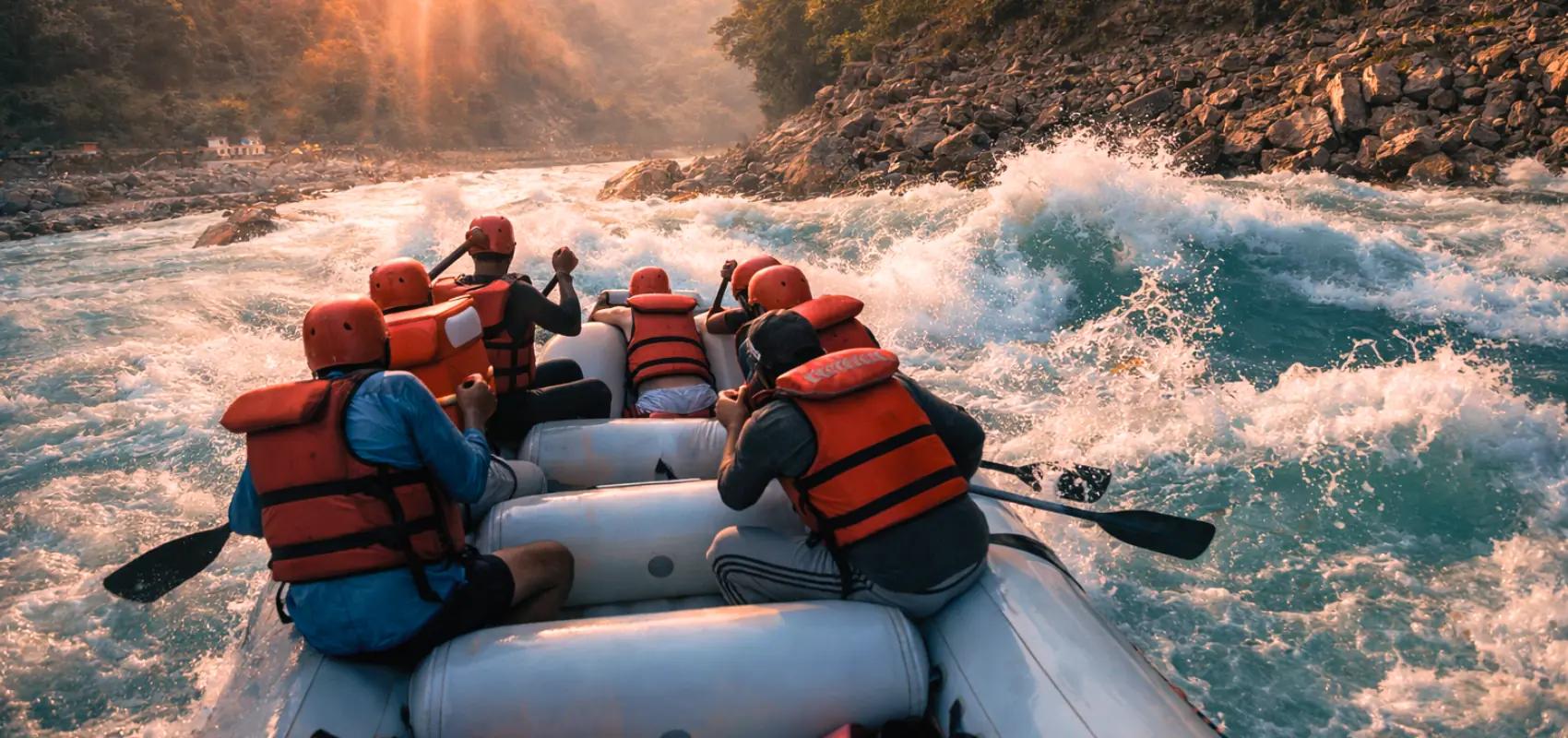
Raft the Zanskar gorge from Chilling to the Nimmu confluence, about 28 km of cold, fast water between canyon walls.
Start on the Indus with a gentle run from Phey, with a swim and rescue drill, before the harder water begins.
Run the Indus below Nimmu and the rapids at Nurla, with a skills check on Day 6 deciding which stretch you take on Day 7.
Ride a mountain bike down from Khardung La toward Leh, with a support vehicle and a guide beside you.
Walk the Likir to Yangthang trail through apricot orchards and three passes, with the Sham valley below.
Stay in a heated Leh hotel and a riverside lodge near Nurla, with a spare day for flow and weather.
Essence of Journey
The experiences that capture the true spirit of the entire trip.
| Day | Route | Distance | Major Highlights |
|---|---|---|---|
| Day 1 | Leh (arrival) | Airport transfer | Rest at 3,500 m |
| Day 2 | Leh (acclimatisation, gear) | Short town transfers | Fitting, safety briefing |
| Day 3 | Leh – Phey – Nimmu – Leh | About 80 km | Indus run, class I to III |
| Day 4 | Leh – Chilling – Nimmu – Leh | About 100 km | Zanskar run, about 28 km |
| Day 5 | Leh – Khardung La – Leh | About 80 km | Mountain-bike descent |
| Day 6 | Leh – Nimmu – Saspol – Nurla | About 95 km | Indus run, skills check |
| Day 7 | Nurla – Alchi – Khaltse – Nurla | Local day | Alchi to Khaltse run, or the alternative |
| Day 8 | Nurla – Likir – Yangthang – Leh | About 100 km | Likir to Yangthang walk |
| Day 9 | Leh (reserve day) | Local day | Spare run, or rest |
| Day 10 | Leh (departure) | Transfer to airport | Morning flight out |
About
The Ladakh Rafting & Adventure Sports Tour is a private 10-day, 9-night trip in northern India. You raft four stretches of the Zanskar and Indus rivers, building from easy class I–II water up to class III–IV in the Zanskar gorge and, if you pass a skills check, class III–V near Nurla. Between runs you mountain-bike down from Khardung La (about 5,360 m) and hike from Likir to Yangthang. It runs late June to early September.
Just west of Leh, two rivers meet. The Indus comes in wide and steady from the east. The Zanskar crashes down from the south through a gorge so tight the road barely squeezes in beside it. Both are fed by melting snow, both run cold and fast all summer, and both can be rafted in a day.
This tour puts four of their best runs into ten days, in the right order. You start gently, get to know the crew, and step up only when you are ready. On the days off the water, you swap the paddle for a mountain bike or hiking boots.
It is private. Just you, your travel partner, a dedicated raft, a rafting guide and a safety kayaker on every run. No sharing a boat with strangers, no rushing through the briefing.
The Four River Runs
The runs are ordered from easiest to hardest, with a skills check before each step up. Grades are shown as ranges because the same stretch changes a lot between June and September. Your rafting guide confirms the grade on the day.
| River run | Distance | Grade | Who it suits |
|---|---|---|---|
|
Indus: Phey to Nimmu |
About 25 km |
Class I–III |
Everyone. Includes a swim and rescue drill |
|
Zanskar: Chilling to Nimmu |
About 28 km, 3 to 3.5 hours |
Class III, a few rapids up to IV |
Fit beginners and up, after the first run |
|
Indus: Nimmu to Saspol |
Day run |
Class I–III |
Everyone. The crew checks your paddling and swimming |
|
Indus: Alchi to Khaltse |
Short and fast |
Class III–V |
Experienced rafters who pass the skills check |
|
Alternative: Nimmu to Alchi |
Day run |
Class I–III |
Anyone not offered the harder run |
Ladakh Rafting & Adventure Sports - Four River Runs
What do rafting grades mean?
Class I–II: easy, moving water with small waves. Great for beginners.
Class III: bigger waves and rocks that need steering. Exciting, and a swim is possible.
Class IV: fast, powerful rapids with a real chance of a swim. Teamwork matters.
Class V: long, violent rapids. For experienced rafters only, with expert guiding.
Which Ladakh Rafting Option Is Right for You?
| Info | Single rafting day trip | This 10-day adventure tour | Full Zanskar expedition |
|---|---|---|---|
|
Rafting |
One run |
Four runs, building in difficulty |
About six rafting days |
|
Grades |
Usually class II–III |
Class I up to III–V |
Class II–IV |
|
Nights |
Hotel in Leh |
Hotels in Leh and Nurla |
Camping on the river |
|
Other activities |
None |
Bike descent, hike, monasteries |
None; long road journeys |
|
Best for |
A taste of the river |
Variety, progression and comfort |
Hard-core river expeditions |
|
Season |
June to September |
Late June to early September |
August to September |
Which Ladakh Rafting Option Is Right for You?
Want the full multi-day Zanskar descent? It needs about three days of road travel each way via Kargil and the Pensi La, plus a bigger crew, so we plan and quote it as its own expedition.
Who Is This Tour For?
Active couples and friends who want more than sightseeing from their Ladakh trip.
First-time rafters who want to learn properly before tackling bigger water.
Experienced paddlers looking for some of the highest-altitude white water in the world.
Families with teenagers aged 14 or over (younger children only on easy class II sections).
Please speak to your doctor first if you…
Have a heart or lung condition, or a recent injury.
Are not a confident swimmer or have a fear of water.
Are pregnant or have any condition affected by cold water or altitude.
Is Rafting in Ladakh Safe?
With a good operator, the right gear and sensible progression, yes. These are cold, powerful glacier-fed rivers, so we take safety seriously and spell it all out before you book.
Your own raft, guide and safety kayaker on every run. The kayaker stays within sight at all times.
Certified guides. Rafting guides hold first-aid and CPR certificates.
Full kit, fitted for you: helmet, life jacket, wetsuit and spray jacket, plus throw bags, a first-aid kit and a repair kit on every run.
A swim and rescue drill on the first day, in calm water.
Licensed partner. We confirm our rafting partner holds the Ladakh Tourism Department permit and send you its details with your booking.
The guide has the final say. Big rapids are scouted from the bank. You can run them, walk around them, or let the guide take the raft through.
Altitude comes first
Leh is at 3,500 m (11,480 ft). You spend two easy days there before the first run, and no night is higher than Leh. Oxygen and a pulse oximeter travel with you, with a reading each day. Your travel insurance must cover high altitude, adventure sports and evacuation.
ACCOMMODATION CATEGORIES
| Destination | Nights | Premium | Luxury | Ultra-Luxury |
|---|---|---|---|---|
|
Leh |
7 |
Hotel Chospa (boutique, Old Road) |
The Grand Dragon Ladakh |
Dolkhar (seven private villas in an orchard) |
|
Nurla |
2 |
Faryork Resort |
The Legacy Alchi |
The Apricot Tree Hotel |
Ladakh Rafting & Adventure Sports Accommodation Categories
Hotels are named as examples for each tier and are confirmed at booking. Leh nights include breakfast and dinner. Nurla nights include breakfast and dinner at the lodge, and lunch on river days is a hot lunch on the bank. Ladakh's taxi rules allow only Ladakh-registered vehicles for sightseeing, so all tiers travel in an Innova Crysta, with a support vehicle and trailer for the rafts handled by the rafting crew.
The Khardung La Mountain-Bike Descent
This is the day people talk about afterwards. A vehicle takes you and the bikes up to Khardung La, at about 5,360 m (17,585 ft). After a short stop at the top, you ride about 39 km (24 miles) back down to Leh, losing nearly 1,900 m of height as you go.
A cycling guide rides ahead and a support vehicle follows behind.
Mountain bikes and helmets are included.
The top section is rough, cold and can be windy. You should be comfortable riding on loose surfaces and braking for long stretches.
If weather or altitude makes the top unsafe, the guide starts the ride lower down.
3-TIER PRICING SUMMARY
| Tier | Per couple | Per person |
|---|---|---|
|
Premium |
Rs.345,541 – 373,184 |
Rs.172,770 – 186,592 |
|
Luxury |
Rs.440,041 – 475,244 |
Rs.220,020 – 237,622 |
|
Ultra-Luxury |
Rs.630,301 – 680,725 |
Rs.315,150 – 340,362 |
Ladakh Rafting & Adventure Sports 3-Tier Pricing Summary
Ranges run from the base total to about 8% above it, to allow for dates and season. Prices are indicative and are confirmed in a written quote. International flights, Indian visa fees and travel insurance are not included.
WHY BOOK THIS WITH BIZAREXPEDITION
A tailor-made, ten-day rafting and adventure tour planned by BizareXpedition Services Pvt. Ltd. (CIN U63090UR2016PTC007433), starting and ending in Leh, with seven nights in Leh and two near Nurla and one reserve day held for the rivers.
Planned by grade. The runs are ordered from the easiest to the hardest, with a skills check before each step up. Grades are given as ranges, because the same stretch changes between June and September and sources differ, and we confirm the grade on the day.
A crew built for two. Each run has its own raft, a guide who holds a first-aid and CPR certificate, and a safety kayaker within sight. Helmets, life jackets, wetsuits and spray jackets are fitted for you on Day 2.
Acclimatised before the water. The river is cold and the air is thin. Two nights in Leh come before the first run, and every night after is at or below Leh's height, so that you arrive at the water rested.
A day to flex. Snowmelt, rain and rockfall can change a run overnight. Day 9 is held empty so that a closed or too-high stretch is replaced, or a favourite is run again.
Land days that match. A mountain-bike descent from Khardung La, the Alchi temples near Nurla and a walk between Likir and Yangthang use the same legs in a different way, so the days between runs stay full.
Plain timing for cold water. These rivers are fed by snowmelt and a swim is a cold one. The notes below say who should and should not raft, the age limits and the health checks, before you book.
SEASON ADJUSTMENTS
| Season | Months | Conditions | Price effect |
|---|---|---|---|
|
Late May – mid June |
Snowmelt begins |
Water is low but rising, and cold. Some stretches are not yet at the flow that makes them worth running, and the passes on the Nubra road may still be patchy. |
Not offered |
|
Late June – July |
High snowmelt flow |
The Indus and the Zanskar run at their fullest, which is also their coldest, and the harder stretches are at their hardest. |
Top of the price range (about +8%) |
|
August |
High flow, easing |
Flows stay high into August and begin to ease later in the month. Sources describe the full Zanskar descent as an August and September trip. |
Top of the price range (about +8%) |
|
September |
Falling water |
Levels fall through the month, the air cools and the harder stretches slow down. Some runs may not be offered if the water is too low. |
Base price |
|
Winter |
Frozen |
The rivers are ice, and the runs are not offered. |
Not offered |
Ladakh Rafting & Adventure Sports Season Adjustments
Good to Know Before You Go
Permits: none needed. Just send your passport and Indian visa copies two weeks before travel, along with the health and swimming form.
Getting there: fly into Delhi, then take a morning flight to Leh (about 1 hour 20 minutes).
What to bring for the river: swimsuit (worn under the wetsuit), quick-dry top, warm layer for the bank, hat, sun cream, sunglasses with a strap and a dry change of clothes. Avoid cotton.
Cash: carry about INR 8,000 to 10,000. ATMs in Leh usually work but can be out of order.
Phone signal: patchy on the rivers and passes. Foreign SIMs and Indian prepaid SIMs do not work in Ladakh.
Weather days: rockfall or a high river can close a road or a stretch. That is what the spare day on Day 9 is for.
Extend or Customise Your Trip
Add Nubra Valley or Pangong Lake before or after the rafting.
The full Zanskar river expedition, about six days of rafting with river camps, for August and September.
Delhi nights and flights at either end for a door-to-door trip.
Add a trek, such as the Markha Valley, for even more adventure.
Booking Summary
Dept. City :
--
Dept. Date :
--
Traveller :
Adults: 2, Child: 0, Infant: 0
Rooms :
--
Basic Price :
--
Total Cost
--
GST
--
Grand Total
--
Itinerary (Day Wise)
West of Leh, the Indus and the Zanskar meet in a rush of cold, grey-green snowmelt, and this trip is built around rafting both of them. Over ten days you start easy on the Indus from Phey, with a swim drill in calm water, then move up to the Zanskar gorge between Chilling and Nimmu, where the canyon walls rise right above the raft. If you pass the skills check, the harder rapids near Nurla come next. On the days off the water you ride a mountain bike about 39 km down from Khardung La and walk the old village trail from Likir to Yangthang through apricot orchards. The trip is private, so it’s just your group, your own raft, a certified guide and a safety kayaker on every run. You get two slow days in Leh to adjust to the altitude first, and one spare day in case the river has other plans.
Day 1
LEH | ARRIVAL
Your guide and driver meet you at Leh airport and take you to the hotel. Every flight to Leh lands in the morning, because winds pick up later in the day at an airport about 3,250 m high. The first day is for rest.
Leh is at 3,500 m. The Ladakh tourism advisory asks new arrivals to rest on the first day and add no more than about 500 m of sleeping height a day after that. Drink plenty of fluids, skip alcohol tonight, and let the thin air settle before any exercise.
Experience of the Day
– Met at Leh airport by your guide and driver.
– A full rest day at 3,500 m, as the Ladakh tourism advisory asks of new arrivals.
Food
Lunch and dinner at the Leh hotel.
Activities to Do
Light rest only today. No exercise is planned on arrival day.
Day 2
LEH | ACCLIMATISATION AND GEAR
Route: Leh hotel – Old Town – Leh hotel
The morning is free for rest and a slow walk through the Old Town. In the afternoon the rafting guide comes to the hotel to fit your helmet, life jacket, wetsuit and spray jacket and to go through the safety talk: how to sit in the raft, how to hold the paddle, how to swim a rapid on your back with your feet downstream, how to take a rope, and what the whistle signals mean.
You also go through the plan for each run. The rafting guide explains the grade, the rapids to expect and the points where the crew will stop to scout, and your cultural and adventure guide explains the land days. A pulse-oximeter reading is taken for each guest, and any questions about health or swimming are settled today, before you reach the riverbank.
Experience of the Day
– Fitting of helmet, life jacket, wetsuit and spray jacket at the hotel.
– A safety talk on swimming a rapid, taking a rope and the whistle signals.
– A first pulse-oximeter reading for each guest.
Food
Breakfast, lunch and dinner at the Leh hotel.
Activities to Do
A slow Old Town walk if you wish; the gear fitting and safety talk in the afternoon.
Shopping
The main bazaar sells quick-dry layers, sun cream and sunglasses straps, if anything is missing.
Day 3
INDUS | PHEY TO NIMMU, A FIRST RUN
Route: Leh – Phey – Indus run to Nimmu – Leh
Phey lies about 12 km from Leh on the Indus, and the run to Nimmu, about 36 km from Leh, covers about 25 km of the river. Sources grade it from class I to III, and the gentler water at the start is where the crew sets the pace. Before the run you practise paddle strokes on the bank, and in a quiet pool you swim in your life jacket and are pulled back to the raft, so that you know what a swim feels like.
The river passes villages and fields along the Indus, with the Ladakh range above. The rapids are splashy and short, and the guide uses the spaces between them to teach. You finish at Nimmu, near the confluence, with a hot lunch on the bank, and are driven back to Leh in the afternoon. The crew reports on your paddling, and this decides what is offered on Days 4 and 7.
Experience of the Day
– Paddle strokes practised on the bank.
– A swim and rescue drill in a quiet pool.
– About 25 km of the Indus from Phey to Nimmu, past villages and fields.
Food
Breakfast at the Leh hotel; a hot lunch on the riverbank; dinner at the Leh hotel.
Activities to Do
Rafting with a guide and safety kayaker; a short drill session before the run.
Day 4
ZANSKAR | CHILLING TO NIMMU
Route: Leh – Chilling – Zanskar run to Nimmu – Leh
The Zanskar is the longer, colder and narrower river, and the run from Chilling to the confluence at Nimmu takes about three to three and a half hours. Chilling lies on the Zanskar road beyond Nimmu, and the river drops through a gorge with rock walls rising from the water. Sources grade it class III, with a few harder rapids that some accounts put at class IV, and the grade changes with the flow.
The crew scouts the larger rapids from the bank and decides whether to run them with you in the raft, to portage, or to run them with a guide only. You stop for a hot lunch at a sandy bend. The run ends where the Zanskar meets the Indus, below Nimmu, where the two rivers' water often runs in two colours side by side for a short way, and you are driven back to Leh in the afternoon.
Experience of the Day
– About 28 km of the Zanskar gorge, from Chilling to the Nimmu confluence.
– Scouting of the larger rapids from the bank.
– The meeting of the two rivers, with the water running in two colours.
Food
Breakfast at the Leh hotel; a hot lunch at a sandy bend; dinner at the Leh hotel.
Activities to Do
Rafting for about three hours, with stops to scout and to rest.
The Human Story: The Gorge Road
Chilling is the trailhead for the winter walk on the frozen Zanskar, known as the Chadar, and its villagers are known for their metalwork. In summer the same river is a rafting run, and the villagers watch the rafts go past.
Day 5
KHARDUNG LA | A BICYCLE DOWNHILL
Route: Leh – Khardung La – ride down to Leh
Today the legs have a different job. The support vehicle carries you and the mountain bikes up the road to Khardung La, the pass on the Nubra road, at about 5,360 m. The road signs give a higher figure, and surveys differ. You stay at the top briefly, for photographs and a warm drink, because the air holds roughly half the oxygen of sea level. Then you ride down.
The descent is about 39 km, with a drop of close to 1,900 m to Leh. The first stretch is rough, with loose stone and the occasional patch of water, and then the road becomes tarmac. The guide rides ahead, the vehicle follows, and you stop for tea at South Pullu. You are in Leh by early afternoon, and the rest of the day is free.
Experience of the Day
– The drive up to Khardung La, at about 5,360 m.
– A short stop at the top for photographs and a warm drink.
– A ride of about 39 km down to Leh, with the guide ahead and the vehicle behind.
Food
Breakfast at the Leh hotel; tea and a snack at South Pullu; lunch and dinner in Leh.
Activities to Do
Mountain biking downhill, with a short stop at the pass.
Day 6
NIMMU TO SASPOL | A SKILLS CHECK, THEN NURLA
Route: Leh – Nimmu – Indus run to Saspol – Nurla
You leave Leh at about 8 am and join the Indus below Nimmu. The stretch between Nimmu and Saspol is one the Ladakh tourism pages name for guided white water, and sources grade it from class I to III. It is the run on which the crew checks your paddling and swimming before tomorrow, and it is a lively run in its own right.
After lunch on the bank you are driven on to Nurla, near Alchi, passing Likir, and arrive at your lodge by late afternoon. Nurla is at about 3,100 m, lower than Leh, so the night here is an easy one.
Experience of the Day
– The Indus between Nimmu and Saspol.
– A skills check by the rafting guide.
– The drive through Likir to Nurla.
Food
Breakfast at the Leh hotel; a hot lunch on the bank; dinner at the Nurla lodge.
Activities to Do
Rafting with a guide and safety kayaker; a transfer to Nurla in the afternoon.
Day 7
ALCHI TO KHALTSE | THE NURLA RAPIDS
Route: Nurla – Alchi – Indus run to Khaltse – Nurla
The stretch from Alchi to Khaltse is the hardest on the days listed. Sources grade it from class III to V, and a long series of rapids near Nurla is the reason. It is a run for guests who have rafted before, and who have passed the skills check on Day 6, and the rafting guide has the final say. The run is short and fast, and a safety kayaker stays beside the raft throughout.
Guests who are not offered the run take the alternative, the stretch from Nimmu to Alchi, which sources grade from class I to III. In the morning, before the river, you can walk through the Alchi temples, a group of temples on the south bank of the Indus at about 3,100 m, with murals that scholars place between the 11th and early 13th centuries. Photography is not allowed inside. The afternoon is free at the lodge.
Experience of the Day
– The Alchi to Khaltse run, or the Nimmu to Alchi alternative.
– A walk through the Alchi temples, with murals of the 11th to early 13th centuries.
– A quiet afternoon at the lodge.
Food
Breakfast at the Nurla lodge; a hot lunch on the bank; dinner at the lodge.
Activities to Do
Rafting for one to two hours; a temple visit; time to rest.
Shopping
Alchi has small shops for Ladakhi crafts and dried apricots.
Day 8
LIKIR TO YANGTHANG | A DAY ON FOOT
Route: Nurla – Likir – walk to Yangthang – Leh
You drive from Nurla to Likir, a Gelug monastery founded in 1065, with a Maitreya statue 23 m high, completed in 1999. From the village a trail climbs over two passes through barley fields and apricot orchards to Yangthang, a distance of about 10 km that takes five to six hours. The highest point is below 3,900 m, and the walk is rated easy to moderate.
The vehicle meets you at Yangthang and drives you back to Leh, about two hours. The day is a long one. If you would rather rest, the guide shortens the walk to a few kilometres from Likir to the first pass, and the vehicle collects you there.
Experience of the Day
– Likir Monastery and its 23 m Maitreya.
– A trail through barley fields and apricot orchards to Yangthang.
– A drive back to Leh along the Indus.
Food
Breakfast at the Nurla lodge; a packed lunch on the trail; dinner at the Leh hotel.
Activities to Do
A walk of about 10 km, with two passes, in five to six hours.
Day 9
LEH | RESERVE DAY
Route: Leh hotel – optional run – Leh hotel
This day is held in reserve. If a river run on an earlier day was closed, because the flow was too high, a rockfall blocked the road or the weather turned, the run is made up today. If every run went as planned, you can repeat the Zanskar from Chilling, spend a rest day in Leh, visit the palace and the Old Town, or go to Thiksey and Hemis in the east.
The rafting crew confirms the day's run the evening before. A repeat run is charged at the run rate, and a made-up run is not charged again.
Experience of the Day
– A made-up or repeated river run, if the water allows.
– Or a free day in Leh, with the palace, the Old Town and a rest.
Food
Breakfast, lunch and dinner at the Leh hotel or in town.
Activities to Do
As above. The day is held in reserve for the rivers.
Shopping
Leh's main bazaar sells pashmina, silver jewellery and prayer flags.
Day 10
LEH | DEPARTURE
Route: Leh hotel – Leh airport
Your driver takes you to the airport. Every flight out of Leh leaves in the morning. If you are staying on in Ladakh, today is the day to move on to your next stop.
Guests with an evening international flight from Delhi can connect the same day. The Leh–Delhi flight takes about 1 hour 30 minutes.
Experience of the Day
– Transfer to Leh airport for a morning flight.
Food
Breakfast at the hotel; other meals as you choose.
Activities to Do
None scheduled. The day is kept free to flex around your flight time.
Tour Information
Your complete guide to a hassle-free and enjoyable trip.
Inclusion
Exclusion
Payment Terms
Important factors to consider before your trip!
Cancellation
Need To Know
Be Responsible Traveller
- Minimize Plastic Use : Bring a reusable water bottle, shopping bag, and utensils to reduce the need for single-use plastics. Many destinations have water refill stations and eco-friendly stores.
- Support Local and Sustainable Businesses : Eat at local restaurants, buy souvenirs from local artisans, and choose tour operators that prioritize sustainable practices and support the local community.
- Respect Wildlife and Natural Habitats : Avoid disturbing wildlife or their natural habitats. Stick to designated paths and observe animals from a distance without feeding or touching them.
- Dispose of Waste Properly : Follow local guidelines for recycling and waste disposal. If facilities aren't available, carry your waste with you until you can dispose of it responsibly.
- Educate Yourself and Others : Learn about the local environment, culture, and customs. Respect local practices and traditions, and share your knowledge about responsible travel with others.
- Choose Sustainable Activities : Engage in eco-friendly activities such as hiking, snorkeling, or visiting national parks. Avoid activities that exploit animals or damage the environment.
- Leave No Trace : Follow the principle of "Leave No Trace," which means leaving natural areas as you found them. Pack out all trash, avoid picking plants, and refrain from carving or writing on rocks or trees.
- Plant Trees Whenever Possible : Participate in local tree-planting initiatives or plant trees in your own community. Trees absorb carbon dioxide, provide oxygen, and help support biodiversity, making them vital for a healthy environment.
Connect
Share Itinerary
Email Itinerary
Frequently Asked Questions (FAQs) & People Also Ask — India: Ladakh Rafting & Adventure Sports Tour
We help you prepare for your trip and ensure an effortless and enjoyable travel experience.
What are the rafting stretches?
Four runs: the Indus from Phey to Nimmu (class I to III), the Zanskar from Chilling to Nimmu (class III, with a few harder rapids), the Indus from Nimmu to Saspol (class I to III) and the Indus from Alchi to Khaltse (class III to V) or, for guests who are not offered it, Nimmu to Alchi (class I to III). Grades are ranges and change with the flow.
How hard is the Zanskar run?
The run from Chilling to Nimmu takes about three to three and a half hours over about 28 km. Sources grade it class III, with a few rapids that some put at class IV. The water is cold and fast, and the guide scouts the larger rapids from the bank.
Do I need rafting experience?
The first three runs are led with teaching, so experience is not needed. The Alchi to Khaltse run is for guests who have rafted before and who pass the skills check on Day 6. Others take the alternative.
What is the minimum age, and who should not raft?
Under the Ladakh tourism guideline the minimum age is 14 on all sections, relaxed to 10 on easy class II sections. You must be able to swim. Guests with heart or lung conditions or a recent injury should speak to their doctor first.
When is the rafting season?
The rivers run high from June to August and fall in September. The plan is offered from late June to early September. The long multi-day Zanskar descent is described by sources as an August and September trip.
What safety gear is used?
Helmets, life jackets, throw bags, a first-aid kit and a safety kayaker within sight on every run. Wetsuits and spray jackets are fitted for you. Rafting guides hold first-aid and CPR certificates.
What if a run is cancelled?
Rivers change with the weather. Day 9 is held in reserve, and a closed run is made up if the water allows. A repeat run for choice is charged at the run rate.
Can we raft the whole Zanskar?
The multi-day descent is a separate expedition of about six rafting days, with three days of road each way and camping on the river, and it takes a longer plan. We quote it on request.
Is the Khardung La ride safe at that height?
You stay at the top for a short time and ride down about 1,900 m to Leh, which lowers the altitude quickly. It follows two nights in Leh and two river days, with an oximeter reading. The guide may delay or replace the ride on the day.
Will I get altitude sickness?
Some mild effect, a light headache or poor sleep, is common above 3,000 m and usually settles with rest. The plan keeps every night at or below Leh's height and starts with two quiet days. Ask your own doctor about acetazolamide before you travel. If symptoms worsen with rest, your guide arranges a descent.
Do I need a permit?
No Protected Area Permit is needed on the days listed. We need your passport and Indian visa copies at least two weeks before travel.
Do you include flights to Leh?
No. The plan starts and ends at the Leh hotel. For two guests in economy, Delhi–Leh–Delhi adds about Rs 34,000 at modeled fares, and we can book them on request.
How much does this Ladakh rafting tour cost per person?
The modeled price is about Rs 172,770 to 186,592 per person at Premium, Rs 220,020 to 237,622 at Luxury, and Rs 315,150 to 340,362 at Ultra-Luxury, for two guests sharing. That covers stays, vehicles, guides, four river runs, the bicycle descent and the listed experiences. Flights, international flights, visa and insurance are extra.
BizareXpeditionTMReviews
Let's go, pack up, and hit the road!
Similar Tour Packages
Explore other exciting options for your next adventure!
Trusted Paths, Bold Journeys — Inside BizareXpedition
From humble beginnings to a trusted name in the industry, BizareXpedition's story is one of purpose-driven growth, community connection, and a relentless pursuit of excellence that speaks for itself.














India: Ladakh Rafting & Adventure Sports Tour
best deal price
Without GST
₹1,72,770
per person on twin sharing
Book Now