
High-Altitude Wildlife of the Kumaon Frontier9N/10D
High-Altitude Wildlife of the Kumaon Frontier
Start & City : Delhi
best deal price
₹
Without GST ₹74,529
per person on twin sharing
Choose your departure city, dates, and add guests to secure your tour.
Hurry, as seats fill up, prices rise! Book now!
1. Choose your departure date
Highlights
Trek up to Khaliya Top, close to 4,000 metres, for golden eagle, Himalayan griffon, bearded vulture and — with real luck and a good guide — the Himalayan monal stepping out of the dwarf rhododendron.
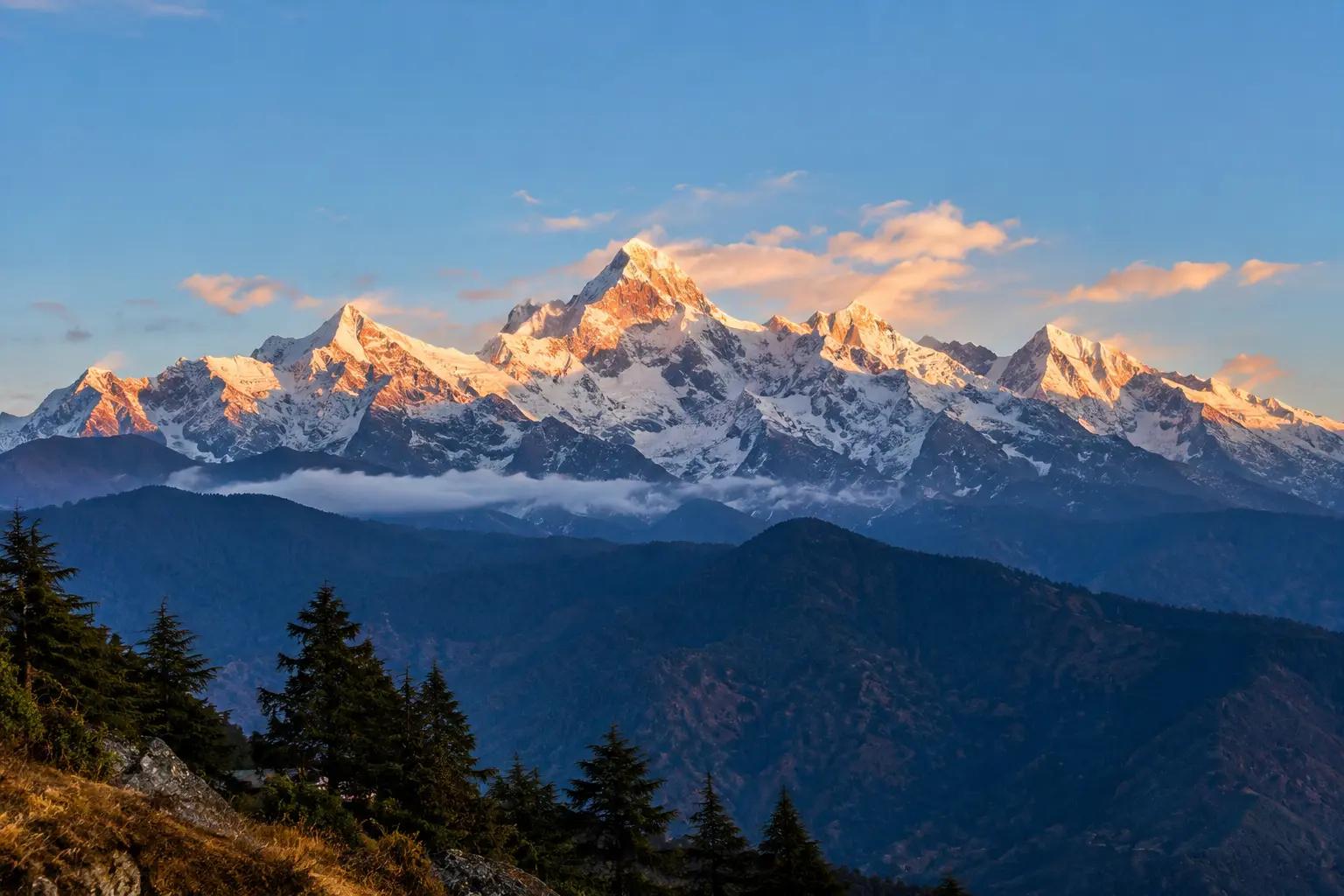
Stand at Chaukori's ridge for an open sweep of Nanda Devi, Trishul, Chaukhamba and the five white summits of Panchachuli in one unbroken line — no tree, spur or building in the way.
Walk into the Goriganga valley towards Lilam, a stretch the ITBP kept off-limits to ordinary travellers until October 2023, when the old safety-era restriction was finally lifted for tourists and trekkers.
Visit the musk deer breeding and research centre near Chaukori — enclosures, not a meadow, and photography is not allowed inside, but it is the honest way to see a musk deer in this region at all.
Step inside Munsiyari's Tribal Heritage Museum, built in 2000 by a retired army officer from the Shauka community to hold onto a Himalayan trading language that has almost no speakers left.
Cross the Kalamuni Pass at 2,750 metres between Chaukori and Munsiyari, with a short stop at Birthi Falls, a 126-metre drop straight off the roadside cliff.
Spend four full nights based in Munsiyari itself — long enough for an acclimatised trek day, a valley day and a day with nothing scheduled but the mountain in front of you.
Essence of Journey
The experiences that capture the true spirit of the entire trip.
| Day | Route | Distance | Major Highlights |
|---|---|---|---|
| Day 1 | Arrive Delhi | — | Overnight in Delhi ahead of the early Shatabdi |
| Day 2 | Delhi → Kathgodam (train) → Chaukori (road) | ~193 km | Shatabdi 12040; Panchachuli first views |
| Day 3 | Chaukori | Local | Musk deer centre; tea garden; panorama ridge |
| Day 4 | Chaukori → Munsiyari | ~98 km | Birthi Falls; Kalamuni Pass, 2,750 m |
| Day 5 | Munsiyari – Khaliya Top trek | ~12 km rt | Raptors, monal; alpine meadow, ~3,700-4,000 m |
| Day 6 | Munsiyari – Goriganga valley | ~24 km rt | Lilam road; river valley; newly ILP-free |
| Day 7 | Munsiyari (local day) | Local | Tribal Heritage Museum; village walk; buffer day |
| Day 8 | Munsiyari → Chaukori | ~98 km | Return leg, same route |
| Day 9 | Chaukori → Kathgodam (road) → Delhi (train) | ~193 km | Shatabdi 12039; late Delhi arrival |
| Day 10 | Depart Delhi | — | International departure / onward flight |
About
This is a 10-day private wildlife and birding tour to Munsiyari in the Kumaon Himalaya of Uttarakhand, India. The highlight is a trek to Khaliya Top (around 3,700–4,000 m) to look for golden eagles, bearded vultures and the colourful Himalayan monal. You also visit a musk deer breeding centre at Chaukori and explore the remote Goriganga valley, all under the five peaks of Panchachuli. Prices start at about INR 74,500 per person (twin sharing).
Munsiyari sits at the very end of the road in eastern Uttarakhand. Ahead, the five snowy peaks of Panchachuli close off the valley. Beyond them, an old trade route once led on foot all the way to Tibet.
Wildlife up here doesn't wait at a safari gate. It lives on high ridges, in alpine meadows and on cliffs above the treeline. That's why this trip is built around walking and watching, not jeep drives, with a local naturalist who knows exactly where to look.
We'll be honest from the start. The birds are the reliable stars here: eagles, vultures and high-mountain species are seen on most good-weather days. The shy mammals like snow leopard, musk deer and serow are real but rarely seen. We'll never promise you a snow leopard. We will give you the best possible chance to see what's out there, in one of the most beautiful corners of the Himalaya.
ACCOMMODATION CATEGORIES
Chaukori and Munsiyari are both small hill markets with no five-star-class property — this is stated plainly rather than dressed up. Where a property name could not be confirmed as currently operating at the standard implied, it is flagged honestly rather than guessed, pending ground-ops confirmation.
| Destination | Nights | Premium | Luxury | Ultra-Luxury |
|---|---|---|---|---|
|
Delhi |
2 |
Radisson Blu Plaza, Airport |
ITC Maurya (or equivalent) |
The Oberoi, New Delhi |
|
Chaukori |
3 |
KMVN Tourist Rest House, Chaukori |
Best available boutique resort* |
Best available boutique resort* |
|
Munsiyari |
4 |
Hotel Milam Inn (or equivalent) |
Best available private cottage* |
Best available private cottage* |
Munsiyari Wildlife Birding Accommodation Categories
Who Is This Tour For?
Birdwatchers who want Himalayan specialities like the monal, lammergeier and snowcock
Wildlife photographers happy to work for their shots on foot
Nature lovers and walkers who want big mountain views without a multi-day trek
Travellers looking for a quiet, uncrowded side of the Himalaya
You should be reasonably fit and comfortable walking uphill at altitude for a few hours. No technical climbing is involved.
What Wildlife Can You See Around Munsiyari?
Here's an honest guide to your chances, so you know what to expect.
| Species | Where | Chance of seeing |
|---|---|---|
|
Golden eagle, Himalayan griffon, bearded vulture |
Khaliya Top |
Good on clear days |
|
Snowcock, red-billed chough, alpine birds |
Khaliya Top meadows |
Good |
|
Himalayan monal |
Khaliya Top, treeline scrub |
Possible, not guaranteed |
|
Valley and forest birds |
Goriganga valley, Chaukori |
Good |
|
Himalayan musk deer |
Breeding centre near Chaukori |
Certain (in enclosures) |
|
Himalayan pika, red fox |
High meadows |
Possible |
|
Serow, Himalayan bears |
Forests and slopes |
Rare |
|
Snow leopard |
Higher ranges |
Very rare. Not promised. |
What Wildlife Can You See Around Munsiyari?
WHY BOOK THIS WITH BIZAREXPEDITION
BizareXpedition runs this circuit directly as a ground operator in Haridwar, with its own vehicle and driver for the whole loop and no resold package layered with a middleman's commission.
One driver, one vehicle, Delhi to Delhi. The same car and driver that collects you at Delhi carries you through Chaukori and Munsiyari and back — no handover to a local operator at Kathgodam.
A dedicated naturalist for the two wildlife days. Khaliya Top and the Goriganga valley day each come with a local birding/naturalist guide who works this specific ground, not a general-purpose sightseeing guide reassigned for the day.
Honest sighting-odds briefing before you trek. Before Day 5's climb to Khaliya Top, BizareXpedition gives a plain briefing on what is realistic to see — the birds, confidently; the mammals, as shy, real, but not guaranteed.
Three tiers, one route. Premium, Luxury and Ultra-Luxury move through the identical circuit — Munsiyari's own hotel market has no five-star-class property, so the higher tiers buy room grade, vehicle standard and guide attention rather than a different trip.
The Askot extension, offered honestly rather than squeezed in. Askot Musk Deer Sanctuary is a genuine 10-12 hour round trip from Munsiyari via Pithoragarh, not a casual add-on day — it is offered as a clearly separate +2N/+2D extension, priced on its own, for guests who want the formally protected sanctuary specifically.
OPTIONAL EXTENSION: ASKOT MUSK DEER SANCTUARY (+2N / +2D)
Askot Musk Deer Sanctuary — declared in 1986, with a core area of roughly 599.93 sq km (a wider Key Biodiversity Area assessment, covering the sanctuary plus the Goriganga basin buffer, gives 2,015.73 sq km; the two figures measure different things, and both are given here rather than picking the larger one) — is the named, formally protected sanctuary most associated with this region's wildlife. It is genuinely not a Munsiyari day trip: it sits roughly 128 km south of Munsiyari via Pithoragarh (itself a 3-4 hour hill drive, not the flat-road 50 km/h some distance sites assume), with the sanctuary gate a further 54 km beyond Pithoragarh town. A round trip done properly is a genuine 10-12 hour undertaking — closer to two extra days than a casual add-on.
BizareXpedition offers it honestly as a separate +2N/+2D extension via Pithoragarh and Didihat, priced on its own below, rather than compressed into the base circuit or silently left out. Confirmed species across sources include musk deer, snow leopard, Himalayan tahr, blue sheep, goral, serow, Himalayan black and brown bear, leopard, and 227 recorded bird species including the globally threatened Cheer Pheasant and Satyr Tragopan — over 45% of all Western Himalayan breeding bird species recorded in one protected area. A mandatory forest department permit and forest-guide escort apply, included in the extension price below.
| Tier | Extension From (per couple) | Extension To (per couple) |
|---|---|---|
|
Premium |
Rs.29,610 |
Rs.31,979 |
|
Luxury |
Rs.41,706 |
Rs.45,042 |
|
Ultra-Luxury |
Rs.56,574 |
Rs.61,100 |
Munsiyari Wildlife Birding OPTIONAL EXTENSION
Not included in the base Cost Build-up or 3-Tier Pricing table above or below — this extension is quoted and booked separately, by guest request.
3-TIER PRICING SUMMARY
| Tier | Per Couple | Per Person |
|---|---|---|
|
Premium |
Rs.149,058 – Rs.160,983 |
Rs.74,529 – Rs.80,491 |
|
Luxury |
Rs.235,620 – Rs.254,470 |
Rs.117,810 – Rs.127,235 |
|
Ultra-Luxury |
Rs.372,456 – Rs.402,252 |
Rs.186,228 – Rs.201,126 |
Munsiyari Wildlife Birding 3-Tier Pricing Summary
Pricing is indicative and modelled for date/season variance; it is not a live quote. Final pricing is confirmed at the time of booking based on exact travel dates and hotel availability.
SEASON ADJUSTMENTS
| Season | Months | Notes |
|---|---|---|
|
Peak |
Apr – Jun |
Clearest Panchachuli/Nanda Devi views; active Khaliya Top birding |
|
High |
Sep – Nov |
Crisp autumn air, strong visibility; second-best birding window |
|
Shoulder |
Mar, Early Dec |
Variable weather; fewer crowds; confirm Kalamuni Pass status |
|
Caution/Closure |
Dec – Feb |
Snow can close the Kalamuni Pass briefly; winter birding has reportedly declined in recent years per regional wire reports |
|
Avoid |
Mid-Jun – Sep |
Monsoon: poor visibility, landslide risk on these hill roads |
Munsiyari Wildlife Birding Season Adjustments
PRACTICAL NOTES
Safety: Hill roads between Kathgodam and Munsiyari are winding and single-lane in places; the same vetted driver runs the whole circuit, and journey times are built with rest stops rather than compressed.
Drinking water: Bottled or filtered water is provided in the vehicle and at each hotel; tap water is not recommended for drinking anywhere on this route.
Dress code: Layered clothing for a temperature range from warm valley afternoons to near-freezing mornings at Khaliya Top; sturdy walking shoes for the trek.
Tipping: Not included in the price; a guideline is provided separately on request.
Photography: Allowed at all outdoor locations and the musk deer centre's exterior; photography inside the musk deer centre's enclosures is prohibited by the facility, not by BizareXpedition.
Connectivity: Mobile network is patchy beyond Chaukori and can disappear entirely on the Goriganga valley road; Munsiyari town itself has basic coverage.
Goriganga valley access: The Inner Line Permit requirement beyond Lilam was lifted for tourists, trekkers and mountaineers by the ITBP in October 2023. This is current field-level policy, not a published statewide law, and BizareXpedition reconfirms it at the time of booking.
Askot extension: Available on request as a separately priced +2N/+2D extension via Pithoragarh — see the dedicated section above. It is not included in the base 10D/9N circuit.
Booking Summary
Dept. City :
--
Dept. Date :
--
Traveller :
Adults: 2, Child: 0, Infant: 0
Rooms :
--
Basic Price :
--
Total Cost
--
GST
--
Grand Total
--
Itinerary (Day Wise)
Munsiyari sits at the very end of the road in eastern Uttarakhand, facing the five snowy peaks of Panchachuli. Wildlife up here doesn’t wait at a safari gate. It lives on high ridges, alpine meadows and cliffs above the treeline, so this 10-day private trip is built around walking and watching with a local naturalist. You take the morning train from Delhi to Kathgodam and drive up to Chaukori, where one ridge gives you Nanda Devi, Trishul and Panchachuli in a single view, and you can see musk deer at the breeding centre nearby. From there you cross the Kalamuni Pass to Munsiyari and spend four nights. The big day is the trek up to Khaliya Top, close to 4,000 metres, looking for golden eagles, bearded vultures and, with luck, the brightly coloured Himalayan monal. You also walk into the Goriganga valley, which only opened to travellers in 2023, and visit the Tribal Heritage Museum. The birds are the reliable stars here. The shy mammals are real but rarely seen, and we’ll always be honest with you about that.
Day 1
ARRIVE DELHI | Overnight Before the Early Shatabdi
Route: International arrival, Delhi — hotel, Delhi
The Shatabdi Express to Kathgodam leaves New Delhi at 06:20, which makes a same-day connection from most long-haul international arrivals impractical. The first night is simply for arrival and rest.
Experience of the Day
Private airport transfer to the hotel.
Evening free to recover from the flight.
Food
Dinner at the hotel, or a short orientation walk to a nearby restaurant if arrival time allows.
Activities to Do
Rest; an early night ahead of the pre-dawn departure for the station.
Day 2
DELHI TO CHAUKORI | The First Climb Into Kumaon
Route: Delhi → Kathgodam (Shatabdi 12040) → Chaukori
Kathgodam is the last railhead before the hills proper begin — from here the road climbs for the rest of the day. The drive to Chaukori runs through Almora district's pine and oak belt, gaining height steadily rather than in one dramatic push, which is why the Panchachuli range only becomes visible in the last stretch, once the road finally clears the intervening ridgeline.
Chaukori itself sits at roughly 2,010 metres on a spur that runs at right angles to the main Himalayan wall — which is the real reason its panorama is as wide as it is: there is no neighbouring ridge in the way, in either direction.
Experience of the Day
Train journey, New Delhi to Kathgodam, Executive Chair class.
Road transfer into the Kumaon hills, with the first Himalayan views near Almora.
Check-in at Chaukori in time for a sunset over the eastern peaks.
Food
Breakfast box on the train; lunch en route at a hill-road dhaba; dinner at the Chaukori hotel.
Activities to Do
Arrival sunset viewing from the hotel terrace or the nearby ridge point.
Day 3
CHAUKORI | Musk Deer Country and the Tea Gardens
Route: Chaukori (local day)
Chaukori's 'musk deer sighting' is not a walk in a meadow — it is a visit to a government breeding and research centre roughly two kilometres from town, reached by a thirty-minute uphill walk from the roadside tea stalls. Around a dozen musk deer live there in enclosures, bred and studied for the musk gland that has made the species a poaching target across its Himalayan range; photography inside is not permitted. It is a real, honest encounter with the animal this high-altitude wildlife specialist tour is named for — a captive one, not a wild one, and the document says so plainly rather than letting the name imply otherwise.
Note on the musk deer centre: This is a research and conservation-breeding facility, not a safari park. Expect enclosures and a no-photography rule, not a wildlife encounter in the open.
The afternoon is free for Chaukori's own tea garden — what survives of the Berinag tea estate that once supplied London blenders in the colonial era. Most of that original estate declined after its owner's death in 1964 and was absorbed into the growing town; the smaller planted area still worked today sits around Chaukori rather than Berinag itself.
Experience of the Day
Walk to the musk deer breeding and research centre.
Afternoon at Chaukori's own tea garden.
A second evening at the panorama ridge, for whichever peaks were in cloud the day before.
Food
Breakfast and dinner at the hotel; a flask of the local Chaukori tea is worth asking for at lunch.
Activities to Do
Short nature walks around the ridge; photography of the Panchachuli/Nanda Devi line in clear morning light.
Day 4
CHAUKORI TO MUNSIYARI | Over the Kalamuni Pass
Route: Chaukori → Thal → Birthi Falls → Kalamuni Pass → Munsiyari, ~98 km
The road to Munsiyari does not try to shortcut the terrain — it follows the Kalamuni ridge at 2,750 metres because that is the one place a vehicle can cross this watershed at all; everywhere else, the slopes are simply too steep. Birthi Falls, a 126-metre drop straight off the roadside cliff near the pass, is a natural stop on the way, not a detour.
In heavy winter snow, the Kalamuni Pass can close for short periods — a genuine seasonal constraint, not a remote one, and the reason BizareXpedition does not offer this circuit through the depth of winter.
Experience of the Day
Stop at Birthi Falls.
Crossing the Kalamuni Pass, with the first clear look at the Panchachuli massif from the Munsiyari side.
Arrival in Munsiyari, with the rest of the afternoon free to acclimatise.
Food
Lunch at Thal or Birthi; dinner at the Munsiyari hotel.
Activities to Do
An easy walk around Munsiyari town on arrival, to begin acclimatising before Day 5's trek.
Day 5
KHALIYA TOP | High-Altitude Birding Day
Route: Munsiyari → Khaliya Dwar trailhead → Khaliya Top → Munsiyari
The trail climbs from a base camp near 3,250 metres through the last of the forest towards an open ridge close to 4,000 metres, depending on how far along it a guest chooses to walk. The treeline ends abruptly on this slope, not gradually — above a certain elevation band the soil thins out and the monsoon simply doesn't reach far enough to support anything taller than dwarf rhododendron. That open ground is exactly why the birds are here: golden eagle, Himalayan griffon, bearded vulture, snowcock and red-billed chough all work this kind of exposed alpine terrain, and the Himalayan monal — Uttarakhand's state bird — feeds in the same meadow when it chooses to show itself.
A forest department entry fee (modelled at roughly ₹50 per person) applies at the trailhead. The mammals of this altitude band — Himalayan red fox, Himalayan pika, and further up the snow leopard's own range — are real possibilities on a lucky day, not promises; the day is built and briefed around the birds, which are the realistic, confident reward.
Note on sighting expectations: Khaliya Top's birdlife is the genuinely deliverable highlight of this day. The Himalayan monal is a real but uncommon sighting even for guides who work this trail often — expect to see it as a possibility, not a guarantee.
Experience of the Day
Trek from Khaliya Dwar to the high meadow with a local naturalist guide.
Raptor and pheasant-family birdwatching through the morning.
Return to Munsiyari by late afternoon.
Food
Packed breakfast and trail lunch; dinner back in Munsiyari.
Activities to Do
High-altitude birdwatching; photography of the Panchachuli range from the ridge.
Day 6
GORIGANGA VALLEY | Towards Lilam
Route: Munsiyari → Goriganga valley road towards Lilam → Munsiyari
This valley's trail does not stop at Lilam — it continues all the way to the Milam Glacier and, from there, towards the old trade route into Tibet, which is exactly why the ITBP controlled movement past Lilam for ordinary travellers for decades, on safety and border-security grounds rather than anything to do with wildlife. In October 2023, following a formal request from the Pithoragarh district administration, the ITBP's 14th Battalion lifted that restriction for tourists, trekkers and mountaineers. It is current, field-level policy rather than a published statewide law, so BizareXpedition reconfirms the position at the time of booking rather than treating it as permanently settled.
Experience of the Day
Drive along the Goriganga river towards Lilam.
Riverside stops for birdlife and valley views.
A quiet, largely traffic-free road through forested slopes.
Food
Picnic lunch by the river; dinner in Munsiyari.
Activities to Do
Riverside walking and birdwatching; photography of the valley's forested slopes.
Day 7
MUNSIYARI (LOCAL DAY) | Johar Valley Heritage and a Buffer Day
Route: Munsiyari (local day)
Munsiyari is the last town of the Johar valley, home to the Shauka (Bhotia) community that once traded wool and salt on foot across the Tibet border. The Tribal Heritage Museum here was founded in 2000 by Surendra Singh Pangtey, a retired army officer and civil servant from that community, specifically to hold onto Rankas, the Shauka trading language, which by his own research has almost no remaining speakers — the museum exists because the language itself was close to disappearing, not as a general cultural display.
The rest of the day is kept deliberately open — a genuine weather-contingency buffer for Day 5's trek, in case cloud or a closed trail pushed Khaliya Top back by a day, and otherwise free time in Munsiyari itself.
Experience of the Day
Visit to the Tribal Heritage Museum.
A walk through Munsiyari's old town and the Johar valley viewpoint.
Free time, or a repeat visit to Khaliya Top if Day 5 was weather-affected.
Food
Breakfast and dinner at the hotel; lunch free to explore Munsiyari's own small eateries.
Human Story
The Tribal Heritage Museum's Rankas-language material is a rare, deliberate act of preservation by one member of the community it documents — not a government or tourism-board project.
Shopping
Johar valley woollens and Bhotia-community handicrafts, sold directly in Munsiyari's old market.
Activities to Do
Museum visit; old-town walk; optional second Khaliya Top attempt.
Day 8
MUNSIYARI TO CHAUKORI | The Return Leg
Route: Munsiyari → Kalamuni Pass → Chaukori, ~98 km
The return breaks the Munsiyari-Kathgodam distance at the same point the outward journey did, rather than attempting the full stretch in one day each way — a genuine 10-12 hour drive on hill roads that is simply too long to do safely in a single sitting.
Experience of the Day
Return drive over the Kalamuni Pass.
A last look at Birthi Falls and the Panchachuli range from the Chaukori side.
Food
Lunch en route; dinner at the Chaukori hotel.
Activities to Do
Free evening at Chaukori; an early night ahead of the next day's train connection.
Day 9
CHAUKORI TO DELHI | Back by Train
Route: Chaukori → Kathgodam (road, ~193 km) → New Delhi (Shatabdi 12039)
An early start from Chaukori is needed to reach Kathgodam comfortably ahead of the 15:20 departure. The Shatabdi's own schedule, not this route, is what sets a late Delhi arrival on this last day — guests flying onward the same night should not book anything before midnight.
Experience of the Day
Morning drive down from Chaukori to Kathgodam.
Afternoon train journey back to Delhi.
Food
Breakfast at Chaukori; dinner box on the train or on arrival in Delhi.
Activities to Do
Rest on the train; this is a travel day with no sightseeing scheduled.
Day 10
DEPART DELHI | End of the Circuit
Route: Delhi — international departure
The circuit closes where it began. Transfer timing is arranged around the guest's own departure flight.
Experience of the Day
Private airport transfer.
Food
Breakfast at the hotel before departure.
Activities to Do
Departure — no activities scheduled.
Tour Information
Your complete guide to a hassle-free and enjoyable trip.
Inclusion
Exclusion
Payment Terms
Important factors to consider before your trip!
Cancellation
Need To Know
Be Responsible Traveller
- Minimize Plastic Use : Bring a reusable water bottle, shopping bag, and utensils to reduce the need for single-use plastics. Many destinations have water refill stations and eco-friendly stores.
- Support Local and Sustainable Businesses : Eat at local restaurants, buy souvenirs from local artisans, and choose tour operators that prioritize sustainable practices and support the local community.
- Respect Wildlife and Natural Habitats : Avoid disturbing wildlife or their natural habitats. Stick to designated paths and observe animals from a distance without feeding or touching them.
- Dispose of Waste Properly : Follow local guidelines for recycling and waste disposal. If facilities aren't available, carry your waste with you until you can dispose of it responsibly.
- Educate Yourself and Others : Learn about the local environment, culture, and customs. Respect local practices and traditions, and share your knowledge about responsible travel with others.
- Choose Sustainable Activities : Engage in eco-friendly activities such as hiking, snorkeling, or visiting national parks. Avoid activities that exploit animals or damage the environment.
- Leave No Trace : Follow the principle of "Leave No Trace," which means leaving natural areas as you found them. Pack out all trash, avoid picking plants, and refrain from carving or writing on rocks or trees.
- Plant Trees Whenever Possible : Participate in local tree-planting initiatives or plant trees in your own community. Trees absorb carbon dioxide, provide oxygen, and help support biodiversity, making them vital for a healthy environment.
Connect
Share Itinerary
Email Itinerary
Frequently Asked Questions (FAQs) & People Also Ask — High-Altitude Wildlife of the Kumaon Frontier
We help you prepare for your trip and ensure an effortless and enjoyable travel experience.
How many days do you need for a Kumaon high-altitude wildlife tour?
Ten days, including the two Delhi–Kathgodam train journeys, is enough to properly cover Chaukori and a four-night Munsiyari base with one full trek day, one valley day and a genuine buffer day. A shorter trip would have to drop one of those three.
What wildlife can you realistically see around Munsiyari?
Confidently: raptors and high-altitude birds at Khaliya Top, including golden eagle, Himalayan griffon and bearded vulture, with the Himalayan monal a real possibility. Musk deer, snow leopard, serow and Himalayan bears are genuinely present in this landscape but shy and largely nocturnal — a captive musk deer visit near Chaukori is the reliable way to see that species specifically.
Is the Khaliya Top trek difficult?
It is rated easy to moderate and is walkable by most reasonably fit travellers, including first-time mountain trekkers. The trail runs roughly six kilometres one way from the Khaliya Dwar trailhead to the high meadow, on a clearly marked, largely stone-paved path.
Do you need a permit for the Goriganga valley near Munsiyari?
Not any more, for the stretch towards Lilam — the ITBP lifted the Inner Line Permit requirement for tourists, trekkers and mountaineers in October 2023. This is current policy rather than a published law, so BizareXpedition reconfirms it before each departure.
What is the musk deer park near Chaukori?
It is a government breeding and research centre about two kilometres from Chaukori, holding roughly a dozen musk deer in enclosures for conservation breeding and musk research. It is not a safari park, and photography inside is not permitted.
Can you see snow leopards near Munsiyari?
Snow leopard range extends into this landscape at higher elevations, but sightings are rare and never guaranteed anywhere in its range. This itinerary does not promise one; it is built around the confident, deliverable birdlife of Khaliya Top instead.
What is the best time to visit Munsiyari for wildlife and birding?
April to June and September to November give the clearest Panchachuli and Nanda Devi views and the most active birding at Khaliya Top. Winter brings snow and can briefly close the Kalamuni Pass; the monsoon months from mid-June to September bring poor visibility and landslide risk and are not offered.
How do you get to Munsiyari from Delhi?
By Shatabdi train from New Delhi to Kathgodam, then by private road through Chaukori and over the Kalamuni Pass — roughly ten hours of road driving split across two days, rather than attempted in one.
Is the road to Munsiyari safe?
It is a genuine hill road — winding, single-lane in places, with a real risk of brief closures from snow at the Kalamuni Pass in winter. BizareXpedition runs it with one vetted driver for the whole circuit and builds in rest stops rather than compressing the drive.
What is the Askot Musk Deer Sanctuary, and can it be added to this trip?
It is Uttarakhand's dedicated musk deer sanctuary, roughly 128 km south of Munsiyari via Pithoragarh. It is a genuine 10-12 hour round trip, not a casual day out, so it is offered as a separate, separately priced +2N/+2D extension rather than folded into the base itinerary.
How is this different from a Munsiyari sightseeing tour?
BizareXpedition's other Munsiyari journey is built around the Panchachuli peak panorama and the region's culture and history. This one is for travellers whose main goal is the region's high-altitude wildlife and birdlife specifically — Khaliya Top's raptors and monal, the musk deer centre, and the Goriganga valley — rather than peak-viewing on its own.
What should I pack for a high-altitude Kumaon wildlife trip?
Layered clothing for a wide daily temperature swing, sturdy walking shoes for the Khaliya Top trek, binoculars if you have them, and a camera with a zoom lens for the birdlife — tripods are of limited use on the trek itself.
BizareXpeditionTMReviews
Let's go, pack up, and hit the road!
Similar Tour Packages
Explore other exciting options for your next adventure!
Trusted Paths, Bold Journeys — Inside BizareXpedition
From humble beginnings to a trusted name in the industry, BizareXpedition's story is one of purpose-driven growth, community connection, and a relentless pursuit of excellence that speaks for itself.














High-Altitude Wildlife of the Kumaon Frontier
best deal price
Without GST
₹74,529
per person on twin sharing
Book Now