
Snow Leopards in Ladakh13N/14D
Snow Leopards in Ladakh
Start & City : Delhi
best deal price
₹
Without GST ₹1,98,278
per person on twin sharing
Choose your departure city, dates, and add guests to secure your tour.
Hurry, as seats fill up, prices rise! Book now!
1. Choose your departure date
Highlights
Search for snow leopards over eight days in the Sham valley, five of them full field days, with local trackers, spotting scopes and walkie-talkies.
Sleep in village homes at Hemis Shukpachan and Ulley, two villages known for winter snow leopard tracking.
Learn to read tracks, scent marks, scrapes and kill sites with the trackers who find the cats.
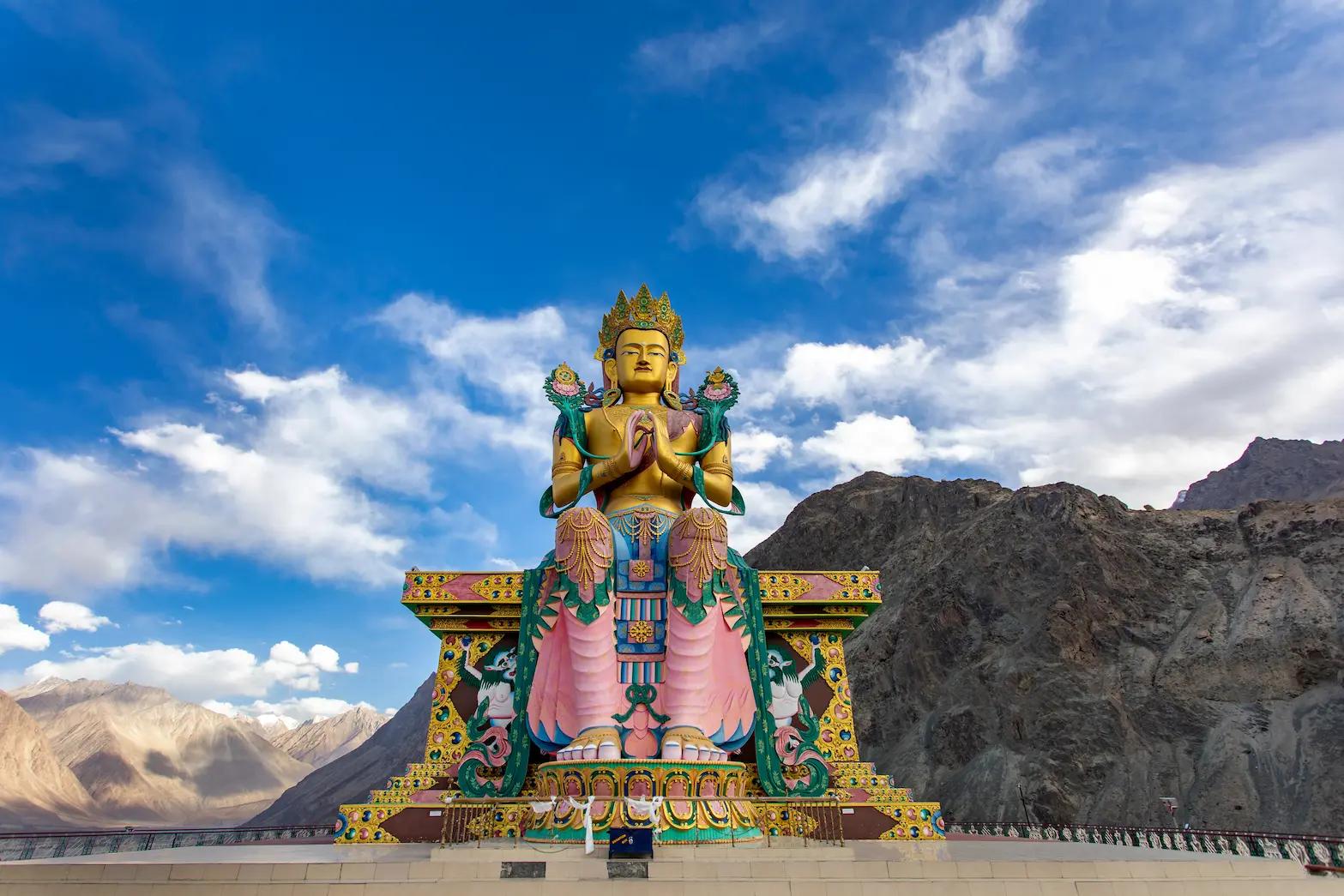
See Shey Palace and its 12 m gilded copper Buddha on a quiet winter day.
Watch for blue sheep, ibex, red fox and golden eagles, the animals that share the cliffs.
Travel with a spare day built in, because winter snow can delay the flights to and from Leh.
Essence of Journey
The experiences that capture the true spirit of the entire trip.
| Day | Route | Distance | Major Highlights |
|---|---|---|---|
| Day 1 | Delhi (arrival) | – | Airport pickup, rest |
| Day 2 | Delhi – Leh | Flight 1h 20m | Arrive at 3,500 m, rest |
| Day 3 | Leh (rest, briefing, gear check) | On foot | Optics briefing, first oximeter reading |
| Day 4 | Leh – Shey – Leh | About 30 km round trip | Shey Palace and monastery in winter |
| Day 5 | Leh – Hemis Shukpachan | About 70 km (2 to 3 hrs) | Juniper village, first scan |
| Day 6 | Hemis Shukpachan (field day) | On foot and by vehicle | Dawn scan, tracks and signs |
| Day 7 | Hemis Shukpachan (field day) | On foot and by vehicle | Search of a second side valley |
| Day 8 | Hemis Shukpachan (field day) | On foot and by vehicle | Search and evening scan |
| Day 9 | Hemis Shukpachan – Ulley | Short drive, Sham valley road | Morning scan, move to Ulley |
| Day 10 | Ulley (field day) | On foot and by vehicle | Dawn scan, tracks and signs |
| Day 11 | Ulley (field day) | On foot and by vehicle | Search and evening scan |
| Day 12 | Ulley – Leh | About 2 hrs by road | Last dawn scan, back to Leh |
| Day 13 | Leh (spare day) | – | Rest, weather buffer |
| Day 14 | Leh – Delhi | Flight 1h 20m | Early flight, departure the same evening |
About
This is a 14-day private snow leopard tour in Ladakh, India, run only in winter (January to March). You spend eight days in the Sham Valley villages of Hemis Shukpachan and Ulley, searching the cliffs at dawn and dusk with local trackers, a naturalist guide and spotting scopes, and sleeping in village homestays. A sighting is never guaranteed. Domestic flights are included. Prices start at about INR 198,278 per person for two people sharing.
The snow leopard is one of the hardest big cats on Earth to see. It lives on steep, broken cliffs, its grey coat disappears against the rock, and it moves mostly at dawn and dusk. People call it the "ghost of the mountains" for good reason.
Ladakh is one of the best places in the world to try. India's national survey (2019 to 2023) counted about 718 snow leopards in the country, and around 477 of them are in Ladakh. In winter, deep snow pushes blue sheep and ibex down to lower slopes, and the cats follow. That is when a patient search, with people who grew up on these slopes, gives you a real chance.
We will be straight with you: we can give you time, skill and good habitat. We cannot promise a cat. This page explains exactly what the search is like, so you can decide if it's for you.
Why Look for Snow Leopards in Ladakh?
More snow leopards than anywhere else in India. About two-thirds of India's counted snow leopards live in Ladakh.
Winter brings them closer. From January to March, snow drives their prey to lower slopes, and the cats follow.
Famous tracking villages. Ulley and Hemis Shukpachan in the Sham Valley are well-known winter bases, on a road that stays open all winter.
Trackers who know every ridge. Village trackers read tracks, scent marks, scrapes and kill sites, and scan the cliffs for hours.
More than one cat. Blue sheep, Asiatic ibex, red fox, golden eagles and snow partridge share the same slopes.
Conservation you can see. Homestay and tracking income has turned the snow leopard from a threat to village livestock into a reason to protect it.
What Makes Our Snow Leopard Expedition Different
Time in the field. Eight days in snow leopard country, not a quick two-day visit. More days are the single best way to improve your odds.
Two valleys, two tracker teams. Moving from Hemis Shukpachan to Ulley halfway lets a second team work a fresh set of slopes.
A named naturalist. We send you the lead naturalist's name and field record before you book.
Three nights in Leh first. Rest, a briefing on the search and spotting scopes, a cold-weather gear check and a baseline oxygen reading.
A spare day before you fly home. Snow often cancels Leh flights. One lost day won't cost you your connection.
Honesty about the odds. No made-up success rates. Every evening, your guide tells you exactly what the trackers saw.
ACCOMMODATION CATEGORIES
| Destination | Nights | Premium | Luxury | Ultra-Luxury |
|---|---|---|---|---|
|
Delhi |
1 |
Radisson Blu Plaza Delhi Airport |
ITC Maurya |
The Oberoi, New Delhi |
|
Leh |
5 |
The Grand Dragon Ladakh, standard room |
The Grand Dragon Ladakh, deluxe room |
c |
|
Hemis Shukpachan |
4 |
Village homestay |
Village homestay (same) |
Village homestay, best available room |
|
Ulley |
3 |
Village homestay |
Village homestay (same) |
Village homestay, best available room |
Snow Leopards in Ladakh Accommodation Categories
Hotels in Delhi and Leh are named as examples for each tier and are confirmed at booking. Most Leh hotels close for the winter, so the choice is narrow: The Grand Dragon Ladakh is the property reported to run through the winter with central heating, and all three tiers stay there, in different room categories. Winter opening is confirmed with the hotel at booking. Hemis Shukpachan has homestays only, and Ulley's stays are village homes as well, so the tier changes the room and the tracking set-up there, and the property stays the same. Village rooms are simple and cold at night; a stove warms the main room when fuel is available, sleeping bags rated to -20 °C are supplied, and toilets and water pipes can freeze. Ultra-Luxury adds a third tracker and a dedicated tracking vehicle on the field days. Ladakh nights include breakfast and dinner in Leh, and all meals in the villages.
What Are the Chances of Seeing a Snow Leopard?
Reasonable, with eight days in good habitat, but never certain. Here is what you should know before booking:
Trackers say a cat can take hours to find in a good stretch and weeks in a bad one.
Some travellers spend long stays without a direct sighting, but still see fresh tracks, kills and plenty of other wildlife.
Most sightings are of a cat a kilometre or more away, seen through a spotting scope rather than with the naked eye.
We publish no sighting percentage, because no honest figure can be checked.
If a sighting matters most to you, ask us about adding extra field days. That is the best way to improve your chances.
A Day in the Field
Before first light: an early breakfast and a short drive or walk to a viewpoint. Snow leopards are most active at dawn and dusk.
Morning: hours of quiet scanning with scopes, while trackers look for tracks, scent marks, scrapes and kills. Finding blue sheep or ibex tells them where to look.
Midday: a long rest, often back at the homestay.
Late afternoon: short walks to new viewpoints and a long scan at dusk.
Evening: tea and dinner with the family, and a review of the day with your guide and trackers.
Walks are short, but you spend many hours standing or sitting still in serious cold. The cold, not the walking, is the main challenge.
3-TIER PRICING SUMMARY
| Tier | Per couple | Per person |
|---|---|---|
|
Premium |
Rs.396,556 – 428,280 |
Rs.198,278 – 214,140 |
|
Luxury |
Rs.474,676 – 512,650 |
Rs.237,338 – 256,325 |
|
Ultra-Luxury |
Rs.691,062 – 746,347 |
Rs.345,531 – 373,173 |
Snow Leopards in Ladakh 3-Tier Pricing Summary
Ranges run from the base total to about 8% above it, to allow for dates and season. Prices are indicative and are confirmed in a written quote. International flights, Indian visa fees and travel insurance are not included.
WHY BOOK THIS WITH BIZAREXPEDITION
A tailor-made, fourteen-day winter search for snow leopards in Ladakh, planned by BizareXpedition Services Pvt. Ltd. (CIN U63090UR2016PTC007433), with the time to look and a plain account of the odds.
Winter timing, January to March. The program is offered only from January to March, when snow brings the prey and the cats lower. February is the usual peak. It is not offered from April to December, when the cats are on higher ground and the search is much harder.
Two Sham valley bases, three and four nights. Hemis Shukpachan on Days 5 to 8 and Ulley on Days 9 to 12 put the group in two valleys of the same cat country. Eight days in the cat country are a better chance than a short visit, and a move halfway lets the trackers work a second set of slopes.
Local trackers who know the slopes. Village trackers lead each day's search. They look for tracks, scent marks, scrapes and kill sites, and scan the cliffs for hours with spotting scopes, using walkie-talkies to share what they find.
Three nights in Leh before the cold work starts. Days 2 to 4 are in Leh at 3,500 m, with a briefing, a gear check and a pulse-oximeter reading for each guest, so the early starts at 3,800 m begin from a rested body.
A spare day in Leh at the end. Snow can cancel flights to and from Leh. Day 13 is held empty, so one lost day does not cost the flight home.
A plain account of the odds. No sighting is promised and no percentage is quoted. Most sightings are of a cat a kilometre or more away, through a scope. The notes say so, and the guide tells the group each evening what the trackers saw.
SEASON ADJUSTMENTS
| Season | Months | Conditions | Price effect |
|---|---|---|---|
|
Opening |
Early to mid January |
Snow is down and the cats are following the prey. Nights are among the coldest of the year. |
Base price |
|
Peak |
February |
Usually the best month for sightings, and the busiest. |
Top of the price range (about +8%) |
|
Closing |
March |
Days start to warm. The cats stay low for as long as the snow lasts. |
Base price |
|
Weather watch |
Any week in the window |
Snow can cancel flights to and from Leh, and extreme cold affects power, water and mobile signal. The spare day in Leh absorbs one lost day; extra nights are charged at stay rates. |
Base price, plus any extra nights |
|
Not offered |
April to December |
Not offered on this route |
Snow Leopards in Ladak Season Adjustments
Cold, Altitude and Health
Ladakh in winter is serious cold at high altitude. Daytime in the field is about -5 °C to 5 °C, and nights drop to -15 °C to -25 °C, colder with wind.
Altitude: Leh is at 3,500 m and the villages at 3,500 to 3,800 m, so sleeping height never rises by more than about 300 m in a night.
Acclimatisation: three nights in Leh before the villages, with light activity only.
Monitoring: a portable oxygen cylinder and daily pulse-oximeter readings.
Health: cold at altitude adds strain. If you have a heart or lung condition, talk to your doctor before booking.
Ask your own doctor whether you need altitude medication. SNM Hospital in Leh is the main hospital.
What to Pack
Down jacket rated to -20 °C or below
Insulated snow boots and warm socks
Two pairs of gloves (thin liners plus warm outer gloves)
Balaclava, warm hat and thermal base layers
Sunglasses and sunscreen (snow glare is strong)
Hand warmers
Camera with a telephoto lens of 300 mm or longer
Cash: about INR 10,000 to 15,000, as ATMs may not work in winter
Permits, Flights and Practical Tips
Permits: Leh and the Sham Valley need no Protected Area Permit. We arrange any wildlife and entry permits. Send passport and Indian visa copies two weeks before travel.
Flights: in winter the highways to Leh are closed, so flying is the only way in. Snow often cancels flights; book your international flight for the evening of Day 14 or later, and add a buffer if your connection is tight.
Phone signal: patchy outside Leh. Only postpaid Indian SIMs work in Ladakh, and BSNL is the most reliable in winter.
Insurance: must cover high-altitude winter travel and evacuation.
Responsible Snow Leopard Tracking
Done well, snow leopard tourism helps the cats. Not long ago, a snow leopard was mostly seen as a threat that killed village sheep and goats. Income from homestays and tracking changed that. The homestay programme started by the Snow Leopard Conservancy India Trust puts ten per cent of its proceeds into a village conservation fund.
We never walk towards a cat.
The group stays silent and low and follows the trackers.
No flash photography.
Your money goes directly to village trackers and host families.
PRACTICAL NOTES
What to expect of the search. Ladakh holds about 477 of India's 718 snow leopards, in the survey of 2019 to 2023 run by the Wildlife Institute of India with partners, and the Sham valley and Hemis area are among the best-known places to look. That does not make a sighting likely on any one day. Trackers say a cat can take weeks to find in a bad stretch, and published accounts include long stays with no direct sighting. Most sightings are of a cat a kilometre or more away through a spotting scope. We publish no sighting percentage because none can be checked, and eight days in the valleys, five of them full field days, are the most we offer short of a longer stay.
Who leads the search. A naturalist guide works with village trackers on every field day. The trackers read tracks, scent marks, scrapes and kill sites and scan the cliffs with scopes, using walkie-talkies to share what they see. The lead naturalist's name and field record are sent to guests before booking.
Cold and clothing. Daytime temperatures in the field run from about -5 °C to 5 °C and nights from -15 °C to -25 °C, with the wind making it colder. Bring a down jacket rated to -20 °C or below, insulated snow boots, two pairs of gloves, a balaclava, thermal layers, sunglasses and a warm hat. The group is outside from before first light, often still for hours, and the cold is the main hardship. Down jackets and boots can be hired in Leh.
Altitude and health. Leh is at 3,500 m, Hemis Shukpachan sits at about 3,500 to 3,800 m and Ulley at about 3,800 m, so sleeping height never rises by more than about 300 m in a night. The Leh administration's advisory asks for light activity for the first two days and no alcohol or sleeping pills at height. Some visitors ask their doctor about acetazolamide, starting two days before arrival. Only your own doctor can advise on that. Cold at height adds to the strain, and a guest with a heart or lung condition should speak to a doctor before booking. If symptoms grow worse with rest, descend and tell your guide at once. SNM Hospital in Leh is the main hospital.
Permits. Wildlife and entry permits are arranged where they are needed, along with stay registrations. We need passport and Indian visa copies at least two weeks before travel. Leh and the Sham valley need no Protected Area Permit. Rules at Hemis National Park and its gates can change between seasons, and we confirm them with our partners in Leh before we quote dates.
Roads and flights. The road from Leh into the Sham valley has no high pass and stays open through the winter. The Manali–Leh and Srinagar–Leh highways are closed, so the flight is the only way in and out. Snow regularly cancels flights, and Day 13 is held empty for that. Allow a buffer of a day or two beyond it if your onward connections are tight.
Power, water and toilets. Power cuts are common in winter and can affect heating and hot water. Water pipes freeze, and village toilets are simple. Carry hand warmers, and expect basic comfort in the homestays.
Cash and connectivity. ATMs may be out of order in winter, so carry rupees for tips, hire and small purchases, roughly Rs 10,000 to 15,000. Mobile signal is patchy outside Leh, and BSNL postpaid is the most reliable. Only postpaid SIMs from elsewhere in India work in Ladakh. Tell family you may be hard to reach in the villages.
Wildlife etiquette. Stay silent and low when a cat is seen, follow the trackers' directions, do not use flash, and never walk towards an animal. The guide and trackers decide how close the group goes. Photography is by telephoto lens, and a lens of 300 mm or longer is advised.
Tipping. Tips for the trackers, guide, drivers and homestay hosts are not included and are up to you. Your guide can advise on local practice.
Booking Summary
Dept. City :
--
Dept. Date :
--
Traveller :
Adults: 2, Child: 0, Infant: 0
Rooms :
--
Basic Price :
--
Total Cost
--
GST
--
Grand Total
--
Itinerary (Day Wise)
The snow leopard is one of the hardest big cats in the world to see. It lives on steep cliffs, its grey coat blends into the rock, and it moves mostly at dawn and dusk. Ladakh gives you one of the best chances anywhere. Around two-thirds of India’s snow leopards live here, and from January to March the snow pushes their prey, and the cats, down to lower slopes. This 14-day private winter trip starts with three quiet days in Leh, where you rest, learn to use the spotting scopes and check your cold-weather gear. Then you spend eight days in the Sham Valley, first at Hemis Shukpachan and then at Ulley, sleeping in village homes and heading out at first light with local trackers who grew up on these ridges. They teach you to read tracks, scent marks and kill sites, while you watch for blue sheep, ibex, red foxes and golden eagles. We can’t promise a sighting, and we won’t pretend we can. What we can give you is time, good habitat and people who know where to look. A spare day at the end covers any flight delays caused by snow.
Day 1
DELHI | ARRIVAL
Route: Delhi airport to hotel
Your driver meets you at arrivals and takes you to the hotel. Nothing is planned for the evening.
The flight to Leh leaves early tomorrow. Every flight to Leh leaves in the morning, because winds pick up later in the day at an airport about 3,250 m high. Tonight is for sleep.
Experience of the Day
– Private airport pickup and transfer to the hotel.
– A free evening to rest before tomorrow's early flight to Leh.
Food
Dinner at the hotel; nothing else is planned today.
Activities to Do
None scheduled. An easy evening to recover from the international flight.
Day 2
DELHI TO LEH | ARRIVAL IN LADAKH
Route: Delhi – Leh (flight)
The flight crosses the Himalaya into the Indus valley. Your guide and driver meet you at Leh airport, and you go straight to the hotel. In winter the mountains around the airport are white, and the air at the airport is well below freezing.
Leh is at 3,500 m. The Ladakh tourism advisory asks new arrivals to rest on the first day and add no more than about 500 m of sleeping height a day after that. Today is for rest. Drink plenty of warm fluids and skip alcohol tonight.
Experience of the Day
– A flight over the winter Himalaya into the Indus valley.
– Met at Leh airport by your guide and driver.
– A full rest day at 3,500 m, as the Ladakh tourism advisory asks of new arrivals.
Food
Breakfast before the flight; lunch and dinner at the Leh hotel.
Activities to Do
Light rest only today. No sightseeing is planned on arrival day.
Day 3
LEH | REST, BRIEFING AND GEAR CHECK
Route: Leh hotel – main bazaar – Leh hotel
The morning is free. Any walking should stay easy and the day is warmer in the sun than in the shade. Your guide then holds the briefing at the hotel: what the search involves, how a day in the field runs, how to use a spotting scope, and how to behave around wildlife.
After the briefing the guide checks every guest's layers, gloves, boots and hat against the cold, and records a first pulse-oximeter reading for each guest. Down jackets and insulated boots can be hired in Leh if anything is missing, and today is the day to do it.
Experience of the Day
– A briefing on the search, the optics and wildlife etiquette.
– A gear check of layers, boots, gloves and hats.
– A first pulse-oximeter reading, the baseline for the stay.
Food
Breakfast, lunch and dinner at the Leh hotel.
Activities to Do
A slow walk to the main bazaar if you wish, and hire of any missing cold-weather kit.
Shopping
Down jackets, insulated boots, gloves and balaclavas can be hired or bought in Leh's main bazaar today.
Day 4
LEH | SHEY IN WINTER
Route: Leh – Shey (about 15 km) – Leh
Shey was the summer capital of Ladakh. The present palace and monastery were built in 1655 by Deldan Namgyal in memory of his father, Sengge Namgyal. Inside is a 12 m copper Buddha, gilded with about 5 kg of gold, made by a Nepalese sculptor with copper from the Lingshet mines in Zanskar.
In winter the site is quiet, and hours vary, so the guide confirms them in the morning. The ridge above the palace is a good place to practise with the spotting scope on the hillsides across the valley, before the real search begins.
Return to the hotel by early afternoon. Pack tonight for six days in the villages: tomorrow the group leaves Leh.
Experience of the Day
– Shey Palace and its 12 m gilded copper Buddha, quiet in winter.
– Practice with the spotting scope on the hillsides across the valley.
– A half-day at the height of Leh, with no gain in sleeping height.
Food
Breakfast at the hotel; lunch at the hotel; dinner at the hotel.
Activities to Do
A guided visit to Shey; an hour of scope practice on the ridge above the palace.
Day 5
LEH TO HEMIS SHUKPACHAN | INTO THE SHAM VALLEY
Route: Leh – Indus valley road west – Hemis Shukpachan (about 70 km)
The road runs west down the Indus, then turns off to Hemis Shukpachan. Shukpa is the Ladakhi word for juniper, and the groves around the village are held sacred. Homestays are the only way to stay here, and the family cooks the meals.
In winter the village is a snow leopard tracking base. The trackers meet the group in the afternoon, walk to the first viewpoints and set up the scopes. The first scan is short, and the plan for tomorrow's dawn start is set around what they know of the cats' recent movements.
Experience of the Day
– The drive down the Indus to the Sham valley.
– Hemis Shukpachan's juniper groves and homestay.
– A first afternoon scan with the village trackers.
Food
Breakfast at the Leh hotel; lunch and dinner at the Hemis Shukpachan homestay.
Activities to Do
A short walk to the first viewpoints, with the scopes set up for an afternoon scan.
Day 6
HEMIS SHUKPACHAN | THE FIRST FIELD DAY
Route: Hemis Shukpachan – side valleys and ridgelines – Hemis Shukpachan
The day starts at first light, because snow leopards are most active at dawn and dusk. The trackers lead the group to a viewpoint, set up the scopes and scan the cliffs for hours. They look for the cat itself, and also for tracks in the snow, scent marks, scrapes and kill sites, which show where a cat has been in the last day or two.
Between scans the group walks short distances to new viewpoints. Blue sheep, or bharal, and Asiatic ibex are the cats' main prey, and finding them tells the trackers where to look. Golden eagles, red fox and snow partridge may also show themselves.
Experience of the Day
– A dawn scan with the village trackers.
– Reading tracks, scent marks, scrapes and kill sites in the snow.
– Blue sheep and ibex, the cats' main prey.
Food
An early breakfast; packed lunch in the field; dinner at the homestay.
Activities to Do
Walking to new viewpoints; scanning with spotting scopes and binoculars; an evening scan.
The Human Story: The Trackers
The trackers are men from the villages, and they know these slopes because they grew up on them. Before guests came for the cats, snow leopards were mostly a loss to a family, taking sheep and goats from the corral. Guest income from homestays and tracking changed that. The Snow Leopard Conservancy India Trust began its homestay programme in the early 2000s and puts ten per cent of the proceeds into a village conservation fund.
Day 7
HEMIS SHUKPACHAN | THE SECOND FIELD DAY
Route: Hemis Shukpachan – a second side valley – Hemis Shukpachan
The trackers choose today's valley from yesterday's signs and from what they have heard from other villages. A fresh kill or new tracks sends the group there; a quiet day sends them to a new viewpoint.
Most sightings are of a cat a kilometre or more away, sitting or walking on a distant slope, seen through the scope. The trackers call it quietly across the valley by walkie-talkie. The group is asked to stay silent, stay low and follow their directions.
Experience of the Day
– A second side valley, chosen by the trackers from the signs.
– A scope view of the cliffs the cats use.
– Golden eagles and red fox along the ridgelines.
Food
An early breakfast; packed lunch in the field; dinner at the homestay.
Activities to Do
Short walks between viewpoints; long periods of quiet scanning.
Day 8
HEMIS SHUKPACHAN | THE THIRD FIELD DAY
Route: Hemis Shukpachan – viewpoints above the village – Hemis Shukpachan
The last full day at Hemis Shukpachan repeats the pattern: a dawn start, a long scan, short moves between viewpoints and a rest at midday. By now the group knows how the trackers work and where the signs have been.
In the afternoon the trackers walk the group to the best viewpoint of the stay for a long dusk scan. Tomorrow the group moves to Ulley, where a different set of trackers know a different set of slopes.
Experience of the Day
– A long dusk scan from the best viewpoint of the stay.
– The trackers' reading of the cats' movements over the week.
– The last evening at Hemis Shukpachan.
Food
An early breakfast; packed lunch in the field; dinner at the homestay.
Activities to Do
A dawn scan, a walk to viewpoints above the village and a dusk scan.
Day 9
HEMIS SHUKPACHAN TO ULLEY | A SECOND VALLEY
Route: Hemis Shukpachan – dawn scan – Sham valley road – Ulley (about 3,800 m)
Ulley sits at roughly 3,800 m, in the same part of the Sham valley, near Saspochey and Hemis Shukpachan. It is one of the best-known snow leopard villages in Ladakh, and its trackers and homestay hosts have guided guests here for many years.
The group arrives by midday, settles in, and walks out with the Ulley trackers for the first afternoon scan. They explain the valley's ridges, the places where the cats have been seen and the routes they take.
Experience of the Day
– A last dawn scan at Hemis Shukpachan.
– The Sham valley road to Ulley.
– A first afternoon scan with the Ulley trackers.
Food
An early breakfast; lunch and dinner at the Ulley homestay.
Activities to Do
A morning scan and a short afternoon walk with the Ulley trackers.
Day 10
ULLEY | THE FOURTH FIELD DAY
Route: Ulley – valley viewpoints – Ulley
The routine is the same: dawn scan, tracks and signs, short moves, and a rest at midday. The Ulley trackers read the slopes differently, from different viewpoints, and the group often learns something new about how the cats use the ground.
In the evening the trackers and the guide compare the day with the group, over tea and dinner in the homestay.
Experience of the Day
– A dawn scan from Ulley's viewpoints.
– Ulley's trackers and their reading of the valley.
– Evening tea with the trackers and the guide.
Food
An early breakfast; packed lunch in the field; dinner at the homestay.
Activities to Do
Walking to viewpoints; scanning with spotting scopes; an evening review of the day.
Day 11
ULLEY | THE FIFTH FIELD DAY
Route: Ulley – a second valley – Ulley
Today the trackers take the group to a second valley, chosen from the signs of the last two days. The evening scan is the long one, and it ends the search.
Whether or not the cat has shown itself, the group will have spent eight days on the slopes where it lives, and seen the tracks, the ibex and the eagles that go with it.
Experience of the Day
– A second valley at Ulley, chosen from two days of signs.
– A long evening scan, the last of the search.
– Blue sheep, ibex and eagles on the slopes.
Food
An early breakfast; packed lunch in the field; dinner at the homestay.
Activities to Do
Short walks between viewpoints; a long dusk scan.
Day 12
ULLEY TO LEH | THE LAST DAWN SCAN
Route: Ulley – dawn scan – Leh
The last dawn scan is a short one, and the group walks out with the trackers one more time. Then the vehicle takes the group east along the Indus to Leh. You reach the hotel by early afternoon.
A hot shower and a warm room are the plan. The guide thanks the trackers on the group's behalf before you leave the village.
Experience of the Day
– A last dawn scan with the trackers.
– The drive east along the Indus to Leh.
– A hot shower and a warm room.
Food
An early breakfast at the homestay; lunch in Leh; dinner at the hotel.
Activities to Do
A short morning scan, then the road to Leh.
Day 13
LEH | SPARE DAY
Route: Leh hotel – main bazaar – Leh hotel
Today is held empty. If snow delayed a flight or the road, it is used here. If not, it is a day of rest after eight days in the cold.
The main bazaar is a short walk from the hotel and sells pashmina, Ladakhi jewellery and prayer flags, though many shops close or shorten their hours in winter.
Experience of the Day
– A spare day, held empty for snow and flights.
– Rest after eight days in the cold.
Food
Breakfast, lunch and dinner at the Leh hotel.
Activities to Do
None scheduled. Laundry, a slow lunch and the bazaar are the options.
Shopping
Leh's main bazaar, for pashmina, Ladakhi jewellery and prayer flags, is a short walk from the hotel; hours are shorter in winter.
Day 14
LEH TO DELHI | DEPARTURE
Route: Leh – Delhi (flight) – Delhi airport
You fly out of Leh early in the morning and reach Delhi before midday. Rooms are available on request for day use, to rest or freshen up before an evening international flight. Your driver takes you to the airport in time for your flight home.
Experience of the Day
– An early flight across the Himalaya to Delhi.
– Transfer to the international terminal in the evening.
Food
Breakfast at the hotel; other meals as you choose.
Activities to Do
None scheduled. A day-use room in Delhi is available on request.
Tour Information
Your complete guide to a hassle-free and enjoyable trip.
Inclusion
Exclusion
Payment Terms
Important factors to consider before your trip!
Cancellation
Need To Know
Be Responsible Traveller
- Minimize Plastic Use : Bring a reusable water bottle, shopping bag, and utensils to reduce the need for single-use plastics. Many destinations have water refill stations and eco-friendly stores.
- Support Local and Sustainable Businesses : Eat at local restaurants, buy souvenirs from local artisans, and choose tour operators that prioritize sustainable practices and support the local community.
- Respect Wildlife and Natural Habitats : Avoid disturbing wildlife or their natural habitats. Stick to designated paths and observe animals from a distance without feeding or touching them.
- Dispose of Waste Properly : Follow local guidelines for recycling and waste disposal. If facilities aren't available, carry your waste with you until you can dispose of it responsibly.
- Educate Yourself and Others : Learn about the local environment, culture, and customs. Respect local practices and traditions, and share your knowledge about responsible travel with others.
- Choose Sustainable Activities : Engage in eco-friendly activities such as hiking, snorkeling, or visiting national parks. Avoid activities that exploit animals or damage the environment.
- Leave No Trace : Follow the principle of "Leave No Trace," which means leaving natural areas as you found them. Pack out all trash, avoid picking plants, and refrain from carving or writing on rocks or trees.
- Plant Trees Whenever Possible : Participate in local tree-planting initiatives or plant trees in your own community. Trees absorb carbon dioxide, provide oxygen, and help support biodiversity, making them vital for a healthy environment.
Connect
Share Itinerary
Email Itinerary
Frequently Asked Questions (FAQs) & People Also Ask — Snow Leopards in Ladakh
We help you prepare for your trip and ensure an effortless and enjoyable travel experience.
What are the real chances of seeing a snow leopard?
Reasonable, with eight days in good habitat, but never certain. Ladakh holds about 477 of India's 718 snow leopards, and winter brings them lower, but the area is vast. Trackers say it can take weeks to find a cat in a bad stretch, and published accounts include long stays with no sighting. We publish no percentage, because none can be checked. The best way to improve the odds is more days in the field.
When is the best time to look for a snow leopard in Ladakh?
January to March, with February usually the peak. Snow drives the blue sheep and ibex to lower slopes and the leopards follow. This program is offered only in that window. From April to December the cats are on higher ground and the search is much harder.
What does a day in the field look like?
A start before first light, a drive or short walk to a viewpoint, and hours of scanning the cliffs with spotting scopes while the trackers look for tracks, scent marks, scrapes and kill sites. There is a long rest at midday and another scan at dusk. Most of the day is spent still, in the cold.
Who finds the cats, and what about the guide's credentials?
Village trackers, who know the slopes from childhood, lead the search, and a naturalist guide explains what the group is seeing. The lead naturalist's name and field record are sent to guests before booking, so you can judge them before you commit.
How cold will it be, and how do I dress?
Daytime in the field runs from about -5 °C to 5 °C and nights from -15 °C to -25 °C. Bring a down jacket rated to -20 °C or below, insulated boots, two pairs of gloves, a balaclava and thermal layers. Sleeping bags rated to -20 °C are supplied, and down jackets and boots can be hired in Leh.
Where do we sleep, and how comfortable is it?
In village homes at Hemis Shukpachan and Ulley, where homestays are the only way to stay. Rooms are simple and cold at night, a stove warms the main room when fuel is available, and water pipes and toilets can freeze. In Leh, the group stays at one of the few hotels that stay open in winter.
Will I get altitude sickness?
Some mild effect, a light headache or poor sleep on the first night, is common at 3,500 m and is not itself a reason to worry. The plan follows the Leh administration's advisory: rest fully on arrival day, spend three nights in Leh before the villages, and drink plenty of warm fluids. Ask your own doctor about acetazolamide before you travel. If symptoms worsen with rest, your guide arranges a descent.
What permits do I need, and who arranges them?
Wildlife and entry permits where required, which we arrange once we hold your passport and Indian visa copies. Leh and the Sham valley need no Protected Area Permit. Rules at Hemis National Park can change between seasons, and we confirm them before we quote dates.
What if snow cancels my flight?
A weather cancellation at Leh usually moves the flight to the next morning. Day 13 is a spare day, so one lost day on the way out is absorbed. The highways into Leh are closed in winter, so the flight is the only way in or out. Book your international flight for the evening of Day 14 or later.
Is it ethical to track snow leopards?
Done well, yes. The group keeps a long distance, stays silent and low, uses no flash and follows the trackers' directions. Income from tracking and homestays gives villages a reason to live with the cats: the homestay programme run by the Snow Leopard Conservancy India Trust puts ten per cent of its proceeds into a village conservation fund.
How much does this snow leopard tour cost per person?
The modeled price is about Rs 198,278 to 214,140 per person at Premium, Rs 237,338 to 256,325 at Luxury, and Rs 345,531 to 373,173 at Ultra-Luxury, for two guests sharing. That covers stays, flights, vehicles, guide, trackers, optics, permits and the listed experiences. International flights, visa and insurance are extra.
Who is it best suited for?
A wildlife traveller who accepts that a sighting is not promised, can stay still for hours in the cold, and wants as many days in the field as fourteen allow. For a gentler first look at Ladakh's wildlife, our thirteen-night Bears & Beyond is the better fit.
BizareXpeditionTMReviews
Let's go, pack up, and hit the road!
Similar Tour Packages
Explore other exciting options for your next adventure!
Trusted Paths, Bold Journeys — Inside BizareXpedition
From humble beginnings to a trusted name in the industry, BizareXpedition's story is one of purpose-driven growth, community connection, and a relentless pursuit of excellence that speaks for itself.














Snow Leopards in Ladakh
best deal price
Without GST
₹1,98,278
per person on twin sharing
Book Now