
Published On - Sep 24, 2026
Updated On - Sep 24, 2026
25 min
Udaipur — The City of Lakes
A city founded by a man who refused to submit to an empire and chose a lake instead of a fortress. Five interconnected lakes, a palace built over 400 years by 22 successive rulers, an island hotel that reportedly inspired the Taj Mahal, and a sunset that makes first-time visitors go completely quiet. Here is everything you need to know about Udaipur in 2026 — done properly.
Udaipur, famously known as the City of Lakes, is one of Rajasthan's most beautiful and romantic destinations, founded in 1553 by Maharana Udai Singh II. Surrounded by the Aravalli Hills and interconnected lakes, the city is renowned for its magnificent City Palace, the iconic Lake Pichola, the floating Taj Lake Palace, Jag Mandir, Sajjangarh Monsoon Palace, and centuries of Mewar heritage. Visitors can enjoy sunset boat rides, heritage walks through the old city, traditional folk performances at Bagore Ki Haveli, and day trips to Chittorgarh, Kumbhalgarh, and Ranakpur. Combining royal history, stunning lake views, vibrant culture, and timeless architecture, Udaipur remains one of India's most captivating travel destinations in 2026.
Why Udaipur is different from every other Rajasthani city
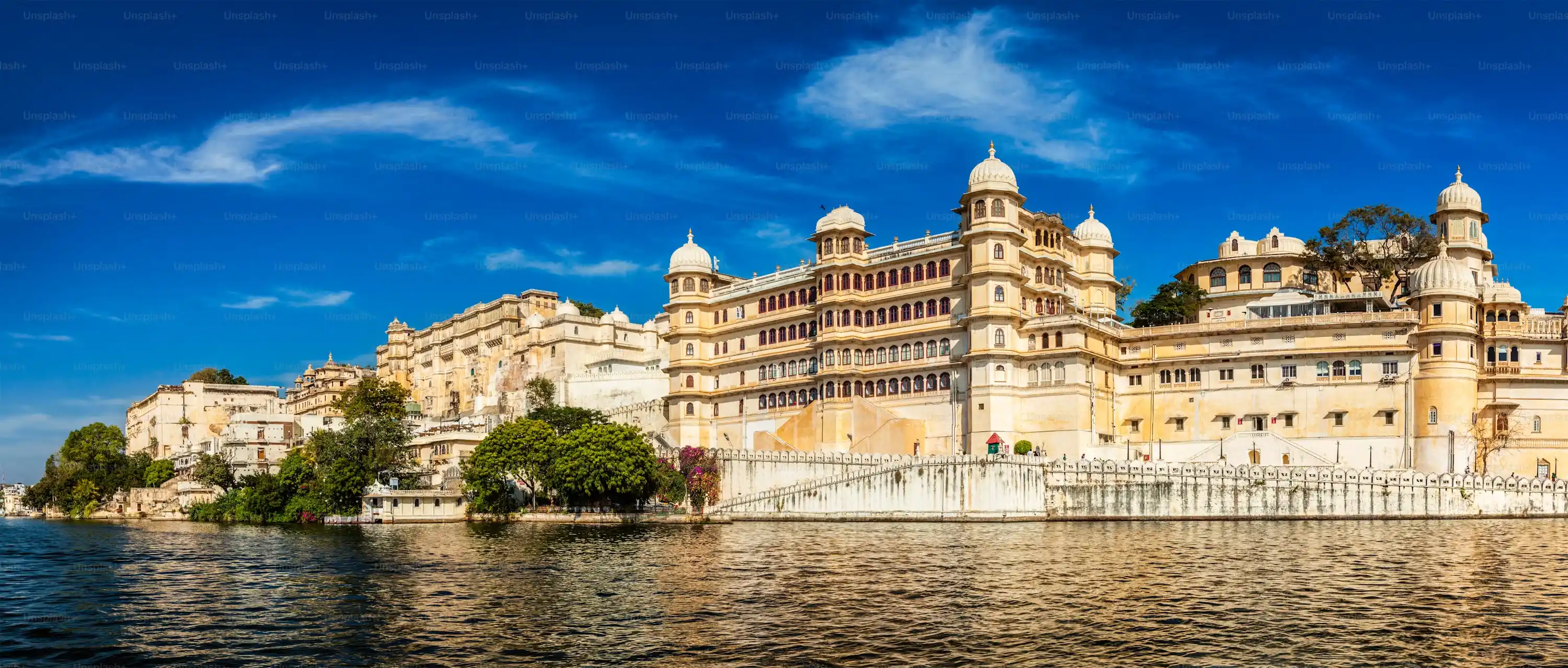
Most Rajasthani cities are defined by their forts. Jaipur by the Amber Fort on the ridge. Jodhpur by Mehrangarh above the blue city. Jaisalmer by the fort that is also the city. Udaipur is defined by its lakes. The defensive logic is the same — Maharana Udai Singh II chose this location in 1553 specifically because the lakes, forests, and Aravalli Hills provided natural protection from the Mughal armies who had just driven him from Chittorgarh — but the visual result is completely different. Where other Rajasthani cities feel martial and upward-thrusting, Udaipur feels reflective. The water multiplies everything: every palace, every sunset, every evening light on cream-coloured marble is repeated in the lake below it.
The Mewar dynasty that built Udaipur has a specific distinction that gives the city its particular character. The Sisodia Rajputs of Mewar were the only major Rajput dynasty that never submitted to Mughal authority — not at the time of Akbar's conquest of most of Rajputana in the 16th century, not subsequently. Every other significant Rajput kingdom made peace with the Mughals. Mewar continued fighting, accepting exile and poverty over subjugation, until Mughal power itself began to wane. This defiance is built into the City Palace — in the Armoury's weapons from the 1576 Battle of Haldighati where Maharana Pratap fought Akbar's forces, in the palace's refusal to incorporate the Mughal architectural gestures that mark almost every other Rajput palace of the same period.
Udaipur is frequently described as India's most romantic city, and while romantic is a word that travel writing overuses, the specific reasons for it here are architectural and topographical rather than just atmospheric. A city built on a lake, with a floating palace on an island at the centre, with an illuminated shoreline at night that includes the City Palace and its centuries of construction — this is a physical environment that produces a specific kind of visual response in people who encounter it. The word romantic is the shorthand for that response. The response itself is genuine.
| FACT | DETAIL |
|---|---|
|
Founded |
1553 by Maharana Udai Singh II — who moved the Mewar capital here after losing Chittorgarh to Akbar |
|
Dynasty |
Sisodia Rajputs of Mewar — the only Rajput dynasty that never submitted to Mughal authority |
|
Nicknames |
City of Lakes; Venice of the East; White City (for the marble and whitewash of its buildings) |
|
Five main lakes |
Lake Pichola (central); Fateh Sagar; Rang Sagar; Swaroop Sagar; Udai Sagar |
|
City Palace history |
Construction began 1553; built across 400 years by 22 successive Maharanas; 11 palaces within the complex; largest palace complex in Rajasthan |
|
Crystal Gallery opening |
Items commissioned from F&C Osler & Co, Birmingham in 1877; Maharana Sajjan Singh died before they arrived; packages sat unopened for 110 years; opened to public 1994 |
|
Jag Mandir island |
Built 1620–1652; gave refuge to Prince Khurram (future Shah Jahan) during his rebellion — credited with influencing the Taj Mahal's design |
|
Octopussy (1983) |
James Bond film partly shot at City Palace and Jag Mandir — adds to Udaipur's cinematic fame alongside Rang De Basanti, Ram-Leela |
|
Sajjangarh (Monsoon Palace) |
Built 1883 at 944m altitude; intended to watch monsoon clouds arrive; never completed after Maharana Sajjan Singh died in 1884; view encompasses all five lakes |
|
Jagdish Temple |
Built 1651 by Maharana Jagat Singh I; 150m from City Palace; dedicated to Lord Vishnu; tallest temple in Udaipur; aarti 7× daily |
|
Nearest airport |
Maharana Pratap Airport (UDR), 23 km from city — flies to Delhi, Mumbai, Jaipur, Hyderabad, Bengaluru |
|
Nearest railway station |
Udaipur City Station — trains from Delhi, Jaipur, Jodhpur, Mumbai, Ahmedabad |
|
Best season |
October–March; peak is November–February |
|
Entry fee — City Palace Museum |
₹300 adult Indian; Crystal Gallery ₹350–550 extra (separate ticket) |
|
Entry fee — Sajjangarh |
₹130 entry + ₹80 ropeway |
|
Boat ride — Lake Pichola |
₹400 public sunset cruise from Rameshwar Ghat; ₹600–800 Taj Lake Palace boat to Jag Mandir |
|
Dharohar folk dance show |
Bagore Ki Haveli, Gangaur Ghat; 7–8 PM daily; ₹150–200; 1 hour |
UDAIPUR — ESSENTIAL FACTS 2026
The Mewar Maharanas were the only Rajput rulers who never submitted to the Mughal empire. That defiance is in the palace walls, in the armoury, in the fact that Udaipur exists at all — a capital founded on the principle that a lake was a better defence than a deal
Getting there
Maharana Pratap Airport is 23 kilometres from the city and connects to Delhi (1.5 hours), Mumbai (1.5 hours), Jaipur (50 minutes), Hyderabad, and Bengaluru. The taxi from the airport to the lake-side old city runs ₹500–800 and takes 30–40 minutes. Flights are seasonal on some routes and can be limited in availability — book 4–6 weeks ahead in peak season.
By train, Udaipur City Station connects to Delhi (Chetak Express: 12–13 hours overnight), Jaipur (Mewar Express: 7–8 hours), Jodhpur (6–7 hours), and Mumbai (18–20 hours). The overnight trains from Delhi and Jaipur are the most practical options for travellers who want to avoid flying. The station is 3 kilometres from the old city — auto-rickshaw or taxi to the lakeside area takes 10–15 minutes.
By road, Udaipur is approximately 250 kilometres from Jaipur (5–6 hours), 290 kilometres from Jodhpur (5–6 hours via the scenic Aravalli route that passes Kumbhalgarh), and 660 kilometres from Delhi (10–11 hours). The Jodhpur–Udaipur road via Kumbhalgarh Fort and Ranakpur Jain Temple is worth taking slowly rather than rushing — it passes through the Aravalli Hills at their most dramatic and the two en-route stops are genuinely worth stopping for.
The City Palace — 400 years in a single complex
The City Palace is not a palace. It is eleven palaces, built across four centuries by 22 successive Maharanas, each adding courts, towers, gardens, and chambers to the work of their predecessors. The first structure — the Rai Angan, the Royal Courtyard — was built by Maharana Udai Singh II in 1559 on the advice of a hermit he met on a hunting expedition near the lake. The last significant addition was made in the early 19th century. The result is an architectural layering that is not easy to read at first: the corridors connect styles and centuries in rapid succession, and what appears to be architectural inconsistency is actually 400 years of royal autobiography in stone.
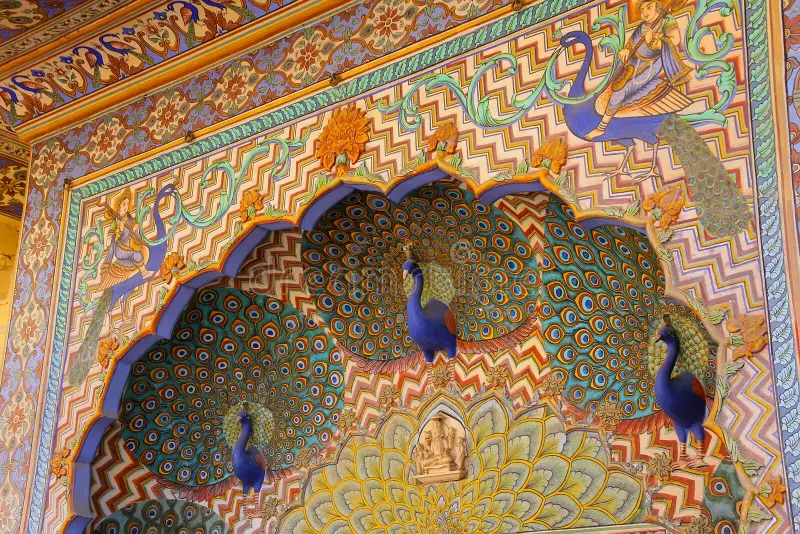
The Mor Chowk — Peacock Courtyard — is the palace's most celebrated interior: three peacocks rendered in coloured glass mosaic, each made from 5,000 individually placed pieces, representing the three seasons of summer, winter and monsoon. They were commissioned by Maharana Sajjan Singh and added to a courtyard that Maharana Karan Singh had originally built — the layering of contributions within a single space is characteristic of the whole complex.
The Crystal Gallery requires a separate ticket (₹350–550) and is entirely worth it for the story as much as the objects. Maharana Sajjan Singh commissioned a full set of crystal furniture — chairs, tables, beds, chandeliers, crockery — from F&C Osler and Company of Birmingham in 1877. The same firm had made the famous crystal fountain at the Great Exhibition of 1851. Sajjan Singh died in 1884 before the shipment arrived. The packages sat in the palace storeroom, unopened, for 110 years. When they were finally opened in 1994 and the contents laid out, the collection was found to be the largest private crystal collection in the world. A chair that weighs over 50 kilograms. A crystal bed. The specific detail that they sat for 110 years is the thing that makes the Gallery.
An audio guide (₹100) or a licensed guide (₹300–500) is not optional for the City Palace — it is functionally essential. The palace is a labyrinth of corridors that connect in ways that only make sense once you understand which Maharana built which section and why. Without that context, visitors report walking in circles through beautiful but contextless rooms. With it, the palace becomes one of the most coherent royal biographies available in Indian architecture.
Lake Pichola — the evening that Udaipur is built around
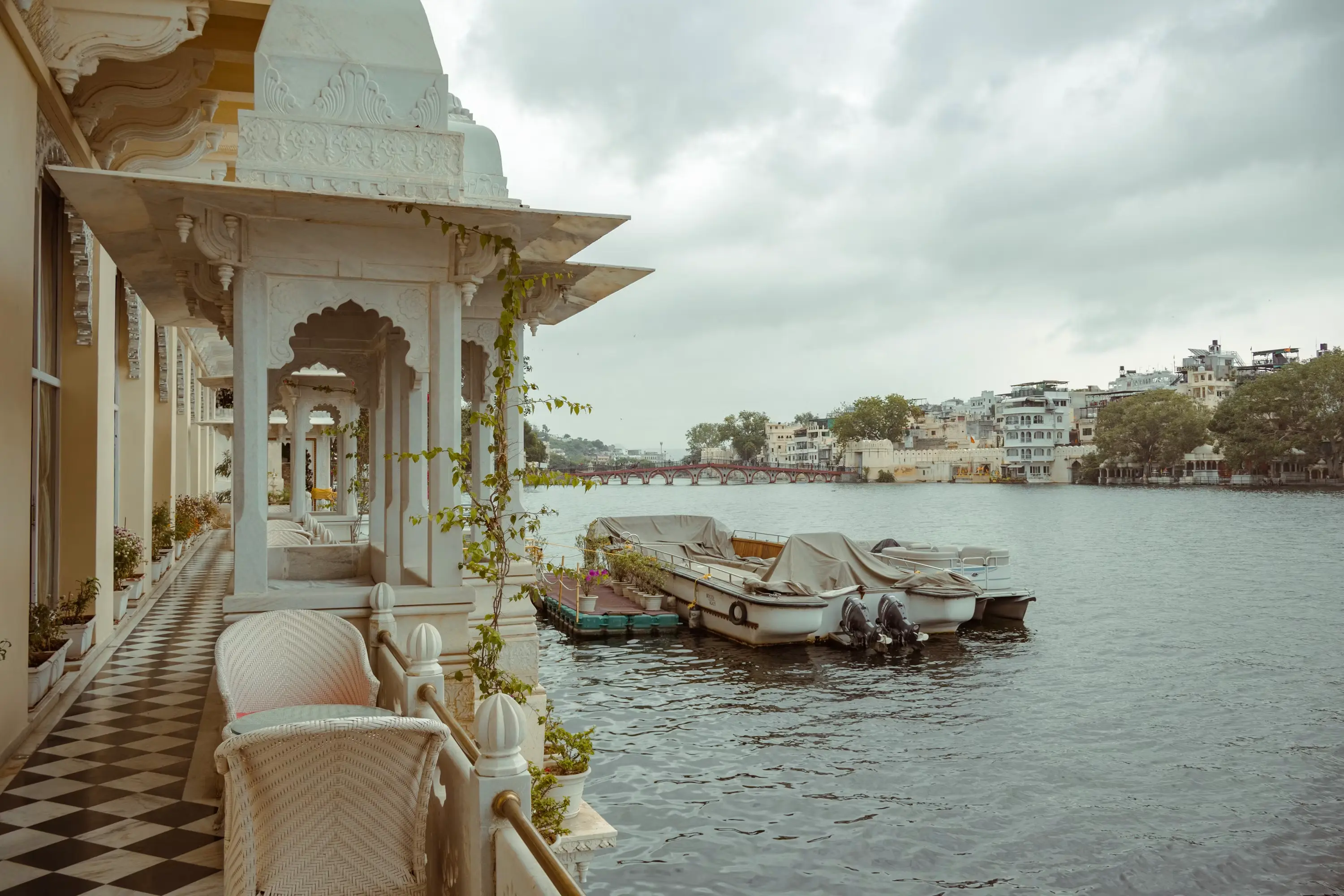
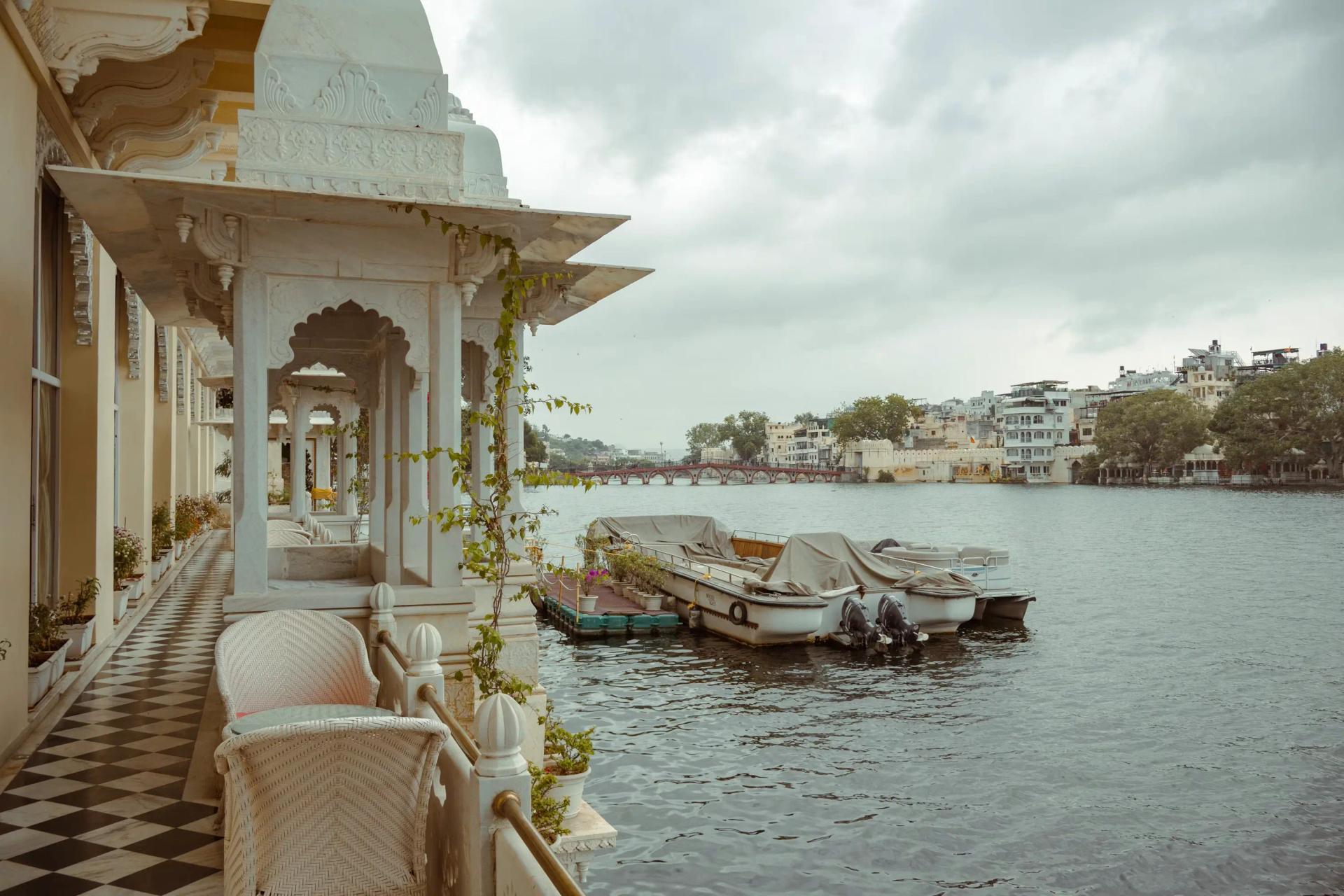
Lake Pichola was not natural. It was built in the 14th century by a Banjara tribesman named Pichhu Banjara, who constructed a dam on the existing watercourse as a stopping point for his trade caravans. Maharana Udai Singh II found it when he chose the site for his new capital and recognised its strategic value immediately. The lake that now dominates Udaipur's visual identity — 4 kilometres long, 3 kilometres wide, home to two island palaces — began as a trade route campsite.
The sunset boat ride on Lake Pichola is the experience that defines Udaipur for most visitors, and it earns its status. The public boat from Rameshwar Ghat costs ₹400 per person for a one-hour cruise and gives the full view: the City Palace on its eastern bank catching the last light, the white marble of the Taj Lake Palace on its island, and Jag Mandir palace on the second island. The light moves across the palace facades as the sun descends behind the Aravalli Hills to the west, and the sequence of colours — gold to amber to the floodlit white that arrives after dark — is genuinely as good as every photograph of it suggests.
The Taj Lake Palace, built on its island from 1620 to 1652 by Maharana Jagat Singh II, is the hotel that the island's history most obviously supports. The marble of the palace interior, according to historians, was the architectural inspiration that Prince Khurram carried with him when he went on to build the Taj Mahal as Emperor Shah Jahan. The island palace that influenced the most famous building in the world is now a 5-star hotel. The boat from the Taj's jetty to Jag Mandir (the other island, also a palace) takes non-guests too, for ₹600–800, and allows visitors to walk on the island and see the marble work directly. It is worth doing specifically for that — the Taj Mahal connection is not tourism hyperbole.
Ambrai Ghat, on the western bank of Lake Pichola opposite the City Palace, is the single vantage point from which the City Palace, the Taj Lake Palace, and Jag Mandir are all visible simultaneously at lake level. The Ambrai restaurant, whose tables are set directly on the ghat stones, has this view as its backdrop every evening. It is the most consistently cited restaurant in Udaipur for the setting — not the most expensive, not the most elaborate, but the most specifically and irreplaceably positioned. Book ahead for the evening. Ask for a ghat-facing table. Arrive at 7 PM when the Lake Palace is lit.
| SITE | TIME NEEDED | ENTRY FEE | BEST TIME | HONEST DETAIL |
|---|---|---|---|---|
|
City Palace Museum |
2–3 hours minimum |
₹300 adult |
9:30 AM–5:30 PM; morning for cooler conditions and fewer crowds |
22 rulers, 400 years, 11 palaces. Audio guide (₹100) or local guide (₹300–500) is genuinely essential — the labyrinthine corridors make little sense without the historical context. Don't skip the Crystal Gallery (separate ticket ₹350–550): the unopened-for-110-years story alone justifies the extra fee. Fateh Prakash Palace wing is a hotel — you can dine there without staying. |
|
Mor Chowk (Peacock Courtyard) |
30 min (within City Palace) |
Included in City Palace ticket |
Morning light |
Three peacocks of 5,000 pieces of coloured glass representing summer, winter and monsoon. This is the most photographed interior in the palace. Morning sun creates the best light on the mosaics. Don't rush through it. |
|
Lake Pichola sunset boat |
1 hour |
₹400 (public cruise, Rameshwar Ghat); ₹600–800 (Taj Lake Palace jetty to Jag Mandir) |
5:00–6:30 PM sunset slot |
The public boat from Rameshwar Ghat is perfectly good and gives the same views. The pricier Taj boat to Jag Mandir allows you to walk around the island. Both are worth doing on different evenings. Jag Mandir by boat: where Shah Jahan sheltered; the marble work reportedly inspired the Taj Mahal. |
|
Ambrai Ghat and Ambrai Restaurant |
2 hours for dinner |
Free to walk; restaurant ₹1,500–2,500 for dinner |
Sunset and evening (illuminated Lake Palace) |
The only point in Udaipur from which you can see the City Palace, Taj Lake Palace, and Jag Mandir simultaneously at lake level. The restaurant tables are directly on the ghat. Book ahead for evening. If eating elsewhere, still walk to Ambrai Ghat at 7 PM to see the Lake Palace illuminated. |
|
Sajjangarh (Monsoon Palace) |
1.5–2 hours |
₹130 entry + ₹80 ropeway |
Sunset (arrive by 5 PM) |
The only viewpoint from which all five of Udaipur's main lakes are visible simultaneously. The palace itself is partially ruined (construction stopped when Maharana Sajjan Singh died in 1884) and atmospheric rather than manicured. The wildlife sanctuary around it has leopards, deer and wild boar. Go for the sunset panorama. |
|
Jagdish Temple |
30–45 min |
Free |
Morning aarti (7 AM) or evening aarti (7 PM) |
150 metres from the City Palace main entrance. The black stone Vishnu image was reportedly brought from Mathura. The morning aarti, with drums and bells and incense smoke rising in the pre-tourist-hour quiet, is one of Udaipur's more genuinely spiritual moments. If visiting City Palace in the morning, stop at Jagdish on the way. |
|
Saheliyon Ki Bari (Garden of Maidens) |
45 min–1 hour |
₹50 Indian |
Morning or late afternoon |
Built in the 18th century by Maharana Sangram Singh II as a retreat for the royal women attendants. Marble fountains, lotus pools, covered walkways, elephant-shaped water jets. Charming rather than spectacular but the most peaceful garden in the city. |
|
Bagore Ki Haveli + Dharohar Show |
2 hours (museum + show) |
Museum ₹60; Show ₹150–200 |
Museum 10 AM–5:30 PM; Show daily 7–8 PM |
18th-century aristocratic haveli on Gangaur Ghat. The Dharohar show (folk dances — Ghoomar, Bhavai, fire dance) is genuinely well-performed and authentic-feeling rather than tourist-staged. Arrive 15 minutes early for seating. Combine haveli museum visit in late afternoon with the show. |
|
Fateh Sagar Lake |
1 hour (lakeside walk or cycle) |
Free; Nehru Garden island ferry ₹20 |
Dawn or late afternoon |
Udaipur's second main lake, north of Pichola. Locals' lake — less touristic, cycling path around the perimeter, the solar observatory on its central island is the only island solar observatory in India. A bicycle hire and a dawn loop of Fateh Sagar is the most local experience available in Udaipur. |
|
Old City mural walk + miniature painting workshop |
2–3 hours |
Free to walk; workshops ₹500–1,500 for a session |
Morning for light; workshops any time |
The old city between Jagdish Temple and Lal Ghat is covered in traditional Mewar school miniature paintings on whitewashed walls. Walking without a plan is the right approach. Short workshops in the artist studios on Bhattiyani Chohatta are available for a genuine hands-on experience — one of Udaipur's most underutilised authentic activities. |
WHAT TO SEE AND DO — COMPLETE GUIDE 2026
The Crystal Gallery at City Palace: Maharana Sajjan Singh ordered the collection from Birmingham in 1877. He died in 1884 before it arrived. The packages sat unopened in the palace storeroom for 110 years. When they were finally opened in 1994, the collection was found to be the world's largest private crystal collection. A crystal bed. A crystal chair that weighs 50 kg. 110 years of waiting.
Sajjangarh — the palace built to watch the monsoon arrive
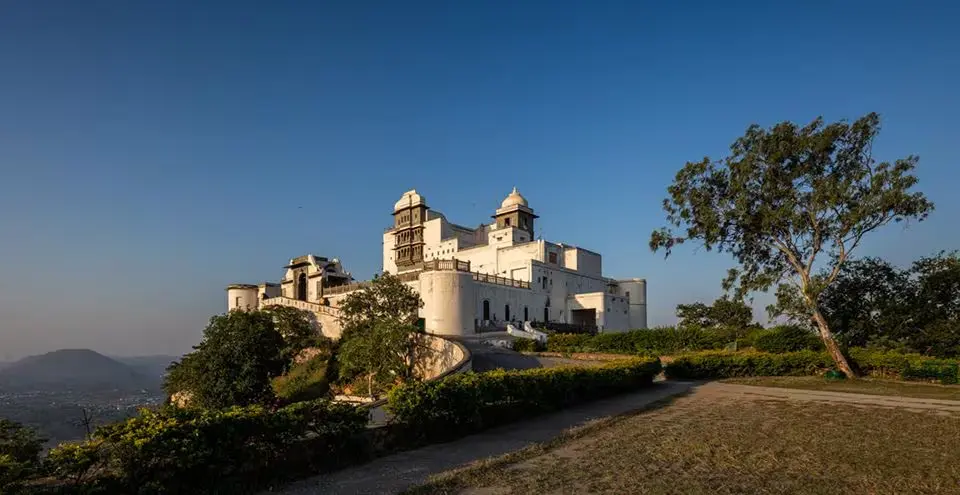
Sajjangarh — the Monsoon Palace — sits at 944 metres on a hill 5 kilometres from the lake, and it was built in 1883 for a specific purpose: Maharana Sajjan Singh wanted to watch the monsoon clouds arrive from the Gulf of Oman across the Aravalli hills. The palace was designed with a high tower from which he could observe this annual meteorological event. He died the following year, 1884, before the construction was complete, and the palace has remained in a state of partial completion ever since.
The condition of the palace — unfinished, somewhat worn, managed by the Forest Department as part of the wildlife sanctuary that occupies its hillside — is part of what makes it interesting. This is not a polished heritage site. It is an abandoned ambition at 944 metres, with a view that encompasses all five of Udaipur's main lakes simultaneously. The view at sunset, when the light is horizontal and the lakes below catch the last colour before dark, is the most comprehensive panorama of the city available from any single vantage point. Go up for the view. Come back down before the ropeway closes at sunset.
Chittorgarh and the day trips worth making
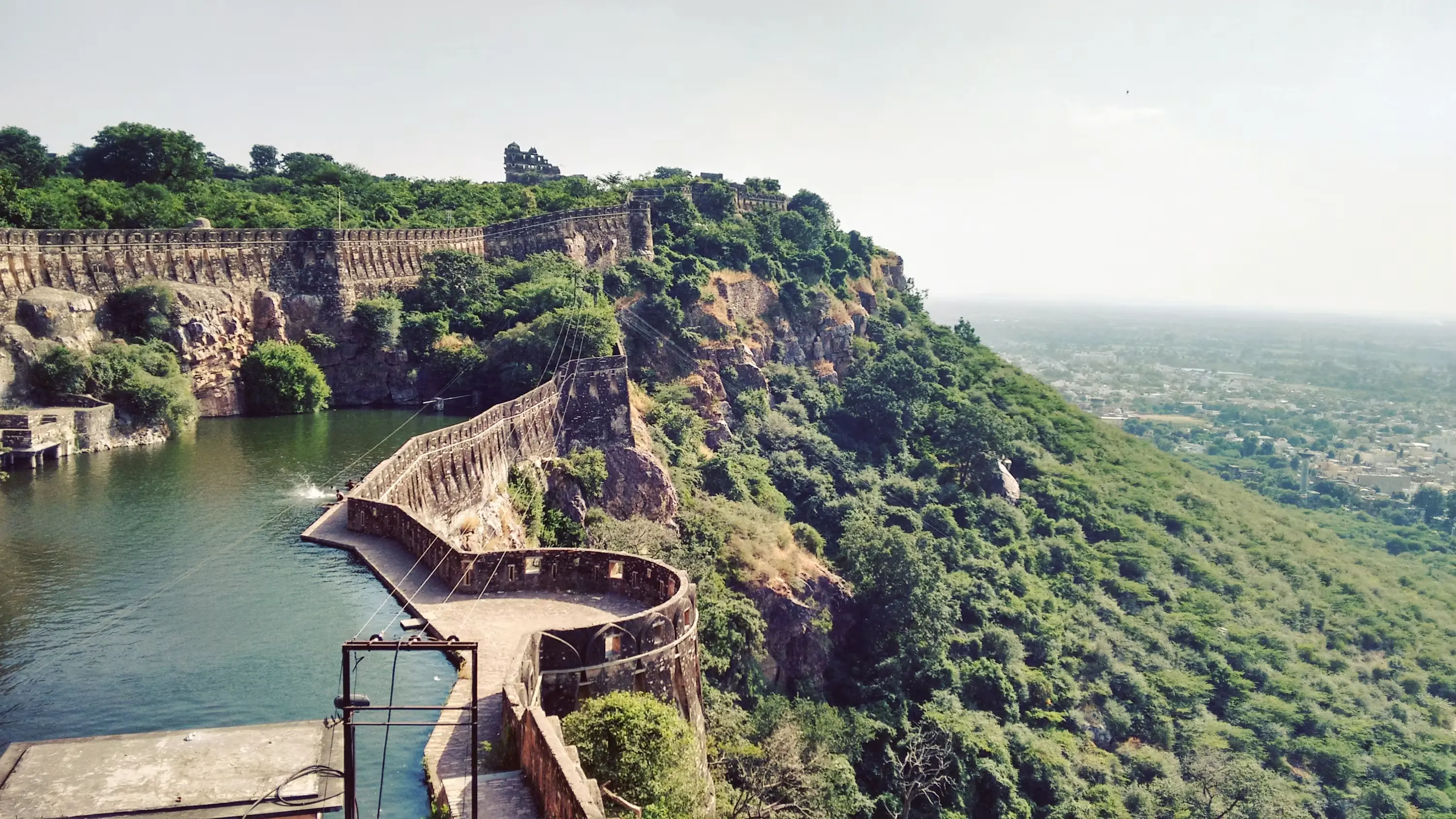
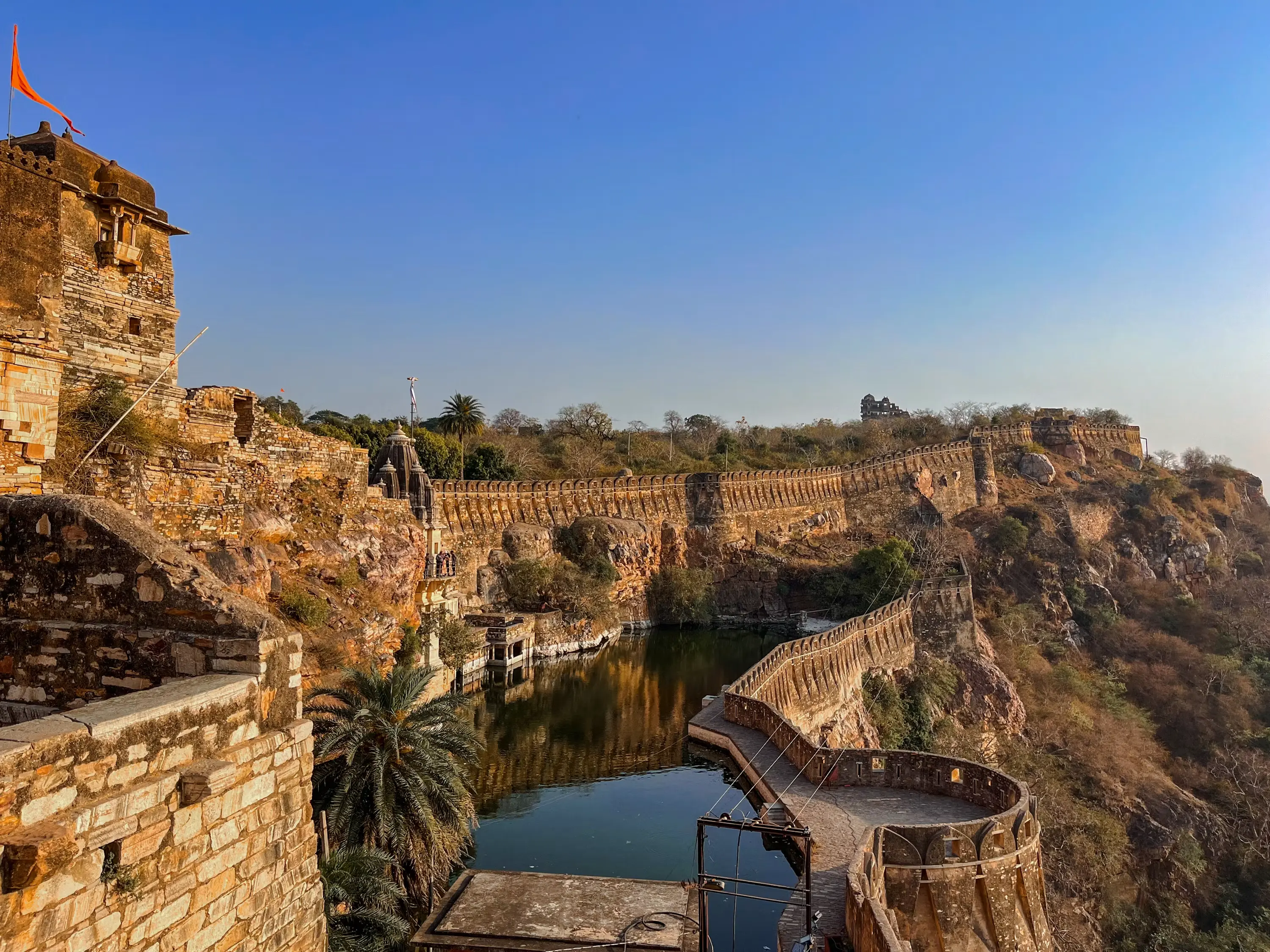
Chittorgarh, 115 kilometres from Udaipur, is the place that Udaipur exists because of. When Maharana Udai Singh II was driven from Chittorgarh by Akbar in the 1560s, he moved his capital to the new lake-side city. Chittorgarh Fort is India's largest by area — a plateau-top citadel with temples, towers, palaces, and reservoirs spread across 700 acres of hilltop. Three times in its history, the women of the Mewar court performed jauhar — collective self-immolation to avoid capture — rather than surrender to the besieging forces. The weight of that history is present in a way that a day trip cannot fully absorb, but the Tower of Victory (Vijay Stambha, 37 metres, built 1448 to commemorate a defeat of the Delhi Sultanate) alone is worth the journey. This is one of the great architectural achievements of medieval India, and it receives a fraction of the visitors that it deserves.
Kumbhalgarh Fort and Ranakpur Jain Temples form the finest single day trip from Udaipur and can be combined comfortably with an early departure. Kumbhalgarh, 80 kilometres north, has a 36-kilometre perimeter wall — the second-longest continuous wall in the world after the Great Wall of China. Ranakpur, 50 kilometres further, has 1,444 individually carved marble pillars across its Jain temple complex, none of which are identical. The quality of carving is comparable to Khajuraho. Both sites arrive at their finest in the morning light, before tour groups, which is another reason to leave Udaipur by 7 AM.
| DAY TRIP | DISTANCE | TIME NEEDED | WHY GO |
|---|---|---|---|
|
Chittorgarh Fort |
115 km / 2.5 hrs |
Full day |
The original Mewar capital that Maharana Udai Singh fled. India's largest fort complex by area; the scene of three legendary jauhar (mass self-immolation) episodes when Rajput women chose death over capture. The Tower of Victory (Vijay Stambha, 37m, built 1448 to commemorate a victory over the Delhi Sultanate) is the single finest architectural monument in this part of Rajasthan. The ruins of the fort carry a weight that Udaipur's more polished heritage doesn't quite replicate. |
|
Kumbhalgarh Fort + Ranakpur Jain Temples |
80 km / 1.5 hrs to Kumbhalgarh; 50 km more to Ranakpur |
Full day (both combined) |
Kumbhalgarh: 36km perimeter wall (second-longest continuous wall in the world after the Great Wall of China); birthplace of Maharana Pratap; panoramic Aravalli views. Ranakpur: 1,444 individually carved marble pillars (no two identical); 15th century; the quality of carving rivals Khajuraho. Together these form the finest single day trip from Udaipur. |
|
Eklingji and Nagda temples |
24 km / 30 min |
Half day |
Eklingji: the tutelary deity of the Mewar Maharanas — a 4th-century Shiva temple that the Maharanas visited every Monday; actively worshipped, atmospheric. Nagda (adjacent): 10th-century ruined temple complex including the extraordinary Sas-Bahu temples, with some of the finest stone carvings in Rajasthan. Undervisited by comparison to their quality. |
|
Shilpgram Rural Arts Complex |
3 km from Udaipur |
2–3 hours |
A 70-acre complex showcasing traditional crafts, architecture, and performing arts from western India. The annual Shilpgram Utsav (21–30 December) is Rajasthan's finest folk arts festival — 10 days of music, dance, craft demonstrations from across the region. Worth the visit during the festival; modest otherwise. |
DAY TRIPS FROM UDAIPUR
The old city — what the walking reveals
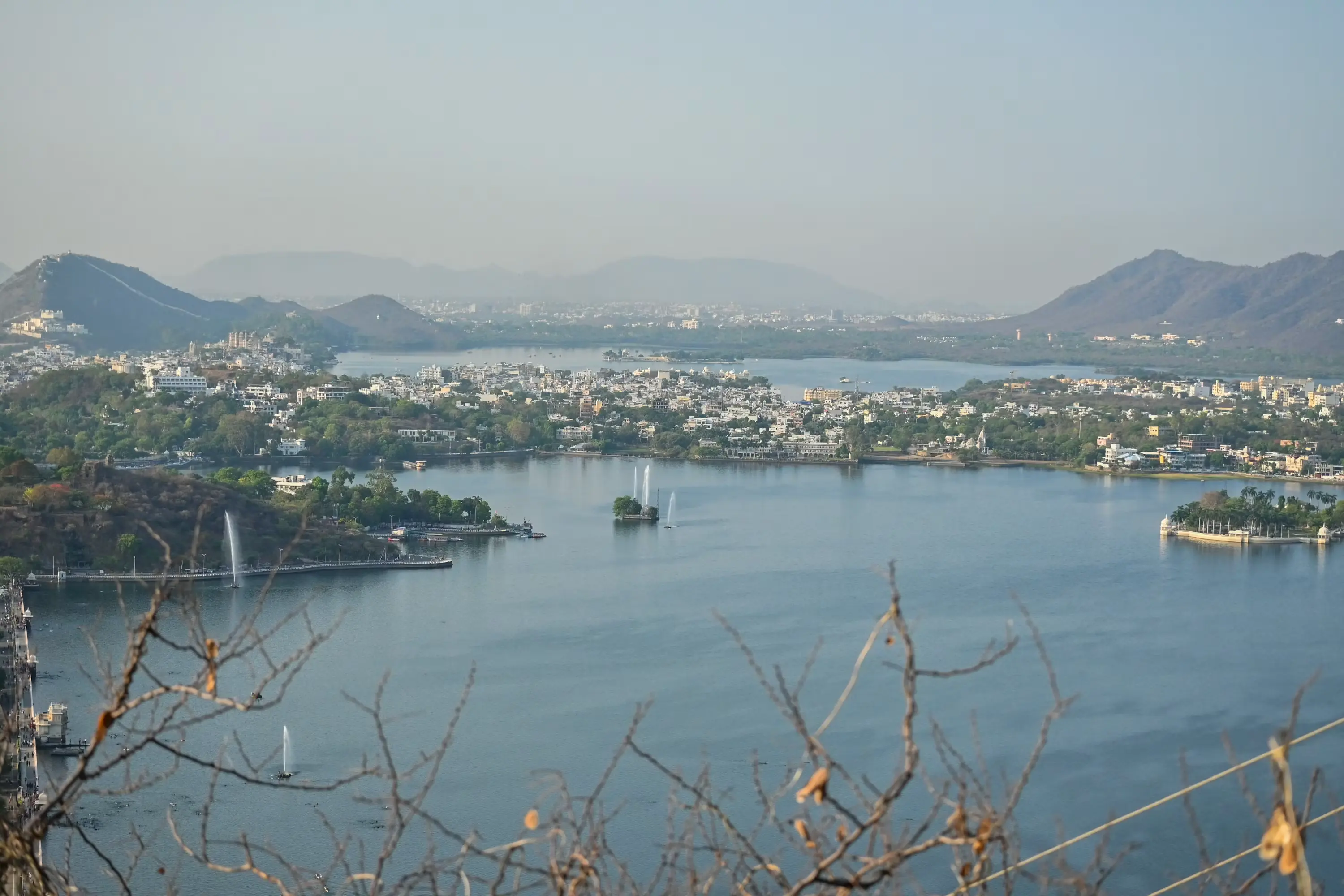
Udaipur's old city between Jagdish Temple and Lal Ghat is one of the few places in Rajasthan where the instruction 'walk without a plan' is the most honest advice available. The lanes are narrow and painted white, with traditional Mewar school miniature paintings on many of the walls — intricate depictions of Radha-Krishna, royal processions, battle scenes, and natural subjects painted in the style that has been specific to this region for three hundred years. No map quite captures the specific pleasure of finding them, which is why the plan-free walk is the right approach.
Miniature painting workshops are available in the artists' studios on Bhattiyani Chohatta and the surrounding lanes. These are genuine working artists — the Mewar school of miniature painting is a living tradition that continues to be practised here — and a 2-hour workshop in which you learn the basic techniques, the colours (traditionally made from stone, mineral, and plant sources), and the compositional conventions is one of the most authentic experiences available in Udaipur for travellers who want to participate rather than just observe. Cost: ₹500–1,500 depending on the teacher and duration. Worth seeking out specifically rather than leaving to chance.
The evening ritual walk from Jagdish Temple to Gangaur Ghat, with a stop at the Bagore Ki Haveli for the Dharohar folk dance show at 7 PM, is the sequence that most experienced Udaipur visitors recommend for a first evening in the city. The aarti at Jagdish Temple at 7 PM, with drums and bells and the smell of incense moving through the carved stone of the temple's exterior, is one of the more spiritually specific experiences available in Udaipur's old city. The show at Bagore Ki Haveli immediately after — Ghoomar, Bhavai, fire dance, puppet show — covers the major forms of Rajasthani folk performance in a well-organised hour. Arrive at the temple a few minutes before the aarti and at Bagore Ki Haveli 15 minutes before the show for good seating.
Where to stay
The accommodation question in Udaipur is more consequential than in most Indian cities, because where you stay determines your daily relationship with the lake. A room with a lake view and a balcony above the water in the Lal Ghat area costs ₹1,500–3,000 and gives the Taj Lake Palace on the horizon every morning. A room without a lake view, a few lanes further from the ghat, costs ₹700–1,200 and gives you the old city. Both are legitimate choices depending on what you're here for.
At the top tier, the Oberoi Udaivilas and the Taj Lake Palace are the two choices that require a specific understanding of what they offer relative to each other. The Taj Lake Palace, on its island, accessible only by boat, gives the experience of being inside the water rather than beside it. The Oberoi Udaivilas, on the lake bank with 30 acres and the best views of the Lake Palace from the shore, gives the experience of looking at that scene rather than being inside it. The observation often cited is that staying at the Lake Palace is like staying in the Eiffel Tower — you can't enjoy the view of it. Both are correct depending on which version of Udaipur you came for.
Fateh Prakash Palace, managed by the Mewar royal family's HRH Hotels within the City Palace complex itself, is the heritage option that most specifically connects accommodation to the history of the place. The dining at the Sunset Terrace, with the City Palace rising above and Lake Pichola below, is among the most specifically Udaipur-located meals available. For those who want the palace experience at a mid-luxury price point without the four-figure-dollar rates of the Taj and Oberoi, Fateh Prakash is the answer.
| PROPERTY | TYPE | PRICE RANGE | NOTES |
|---|---|---|---|
|
Oberoi Udaivilas |
Luxury palace resort |
₹28,000–90,000+/night |
On the banks of Lake Pichola; 30 acres; moated pool around the building; best views of the Taj Lake Palace from the hotel; consistently ranked among the world's finest hotels; the 'if you stay in the Eiffel Tower you can't see it' alternative to the Lake Palace; the Udaimahal restaurant is the most consistently praised fine dining in Udaipur |
|
Taj Lake Palace |
Historic island hotel |
₹25,000–80,000+/night |
On an island in Lake Pichola; boat arrival; surrounded by water on all sides; built 1620–1652 by Maharana Jagat Singh II; 83 rooms; the floating palace experience unavailable anywhere else in India; James Bond's Octopussy partly filmed here; book lake-facing suite well ahead in season |
|
The Leela Palace Udaipur |
Luxury lake hotel |
₹20,000–60,000+/night |
80 acres on the banks of Lake Pichola; infinity pool with lake views; spa; multiple restaurants; one of the three top-tier options alongside Oberoi Udaivilas and Taj Lake Palace |
|
Fateh Prakash Palace (HRH) |
Heritage palace hotel |
₹8,000–20,000/night |
Part of the City Palace complex, managed by the Mewar royal family's HRH Group; the most direct 'living in the palace' experience; the Crystal Gallery is in this wing; Sunset Terrace restaurant with direct City Palace and lake views; excellent mid-luxury heritage option |
|
Amet Haveli |
Heritage haveli |
₹4,000–10,000/night |
Traditional haveli on the lake shore; rooftop Sunset Terrace restaurant; honest value for the lake-view location; family-run; recommended consistently for location and character |
|
Kankarwa Haveli |
Heritage haveli |
₹2,500–6,000/night |
Lake-edge family-run haveli; basic but clean; lake-view rooms are the priority; recommended by multiple experienced travellers as the best value heritage stay on the water |
|
Zostel Udaipur |
Hostel |
Dorm ₹400–600; private ₹1,500–2,500 |
Lake-view common areas; excellent for solo travellers; central old-city location |
|
Budget guesthouses (Lal Ghat area) |
Budget hotels |
₹700–2,000/room |
The lanes of Lal Ghat have multiple honest budget options; always ask for a lake-view room; hot water and Wi-Fi are standard; proximity to the boat ghats is the priority; Poonam Haveli and similar operations consistently recommended |
WHERE TO STAY — 2026 ACCOMMODATION GUIDE
Staying at the Taj Lake Palace is like staying in the Eiffel Tower — you can't enjoy the view of it. The Oberoi Udaivilas lets you see the Lake Palace from the outside, which many experienced travellers prefer. Knowing which version you want before you book is the most useful single planning decision in Udaipur.
Food in Udaipur
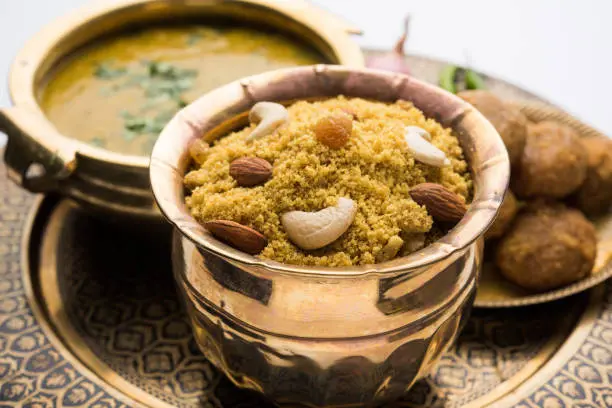
Udaipur's food is lighter and gentler than the desert city cuisine of Jodhpur or Jaisalmer. The lake influence brings freshness — the cooking uses more vegetables, more yoghurt-based preparations, and a wider range of fish and freshwater produce than the drier parts of Rajasthan. Dal Baati Churma is the Rajasthani staple (softer and more subtly spiced here than the Jodhpur version), but the city's real food strength is its rooftop cafés and lakeside restaurants, where the view supplements a cooking style that is genuinely pleasant without being the city's main attraction.
Ambrai, Upre (at the Lake Pichola Hotel), and the Sunset Terrace at Fateh Prakash Palace are the three most frequently cited dinner venues for their settings. Ambrai for the ghat-level view of the Lake Palace. Upre for the upper-terrace perspective on the lake from the City Palace side. The Sunset Terrace for the palace-above, lake-below combination that is uniquely available only from within the City Palace complex. All three require advance reservations in peak season.
For daytime eating and the local food experience: Jheel's Ginger Coffee Bar on Gangaur Ghat is the most consistently recommended café for breakfast with a lake view at non-hotel prices. The local thali restaurants near Jagdish Temple serve the meal that the luxury restaurants elaborate on — dal, sabzi, roti, rice, curd — for ₹150–250 with honest quality. The Natraj restaurant on City Palace Road is the long-established local favourite that guidebooks discover and then see become busier every year.
| MONTH | TEMP | CONDITIONS | BEST FOR | NOTES |
|---|---|---|---|---|
|
October |
25–32°C |
Post-monsoon green; lakes full; warm but manageable |
All sightseeing; lakes at their fullest and most beautiful |
Excellent shoulder month; accommodation good value; September monsoon fills the lakes to their most photogenic level |
|
November |
18–28°C |
Cool, clear, exceptional light |
Everything; most consistent recommendation across guides |
November full moon is extraordinary on the lakes — check lunar calendar when booking |
|
December |
12–25°C |
Cool and comfortable; some cold nights |
City Palace; lake boat rides; Shilpgram Utsav (21–30 Dec); Chittorgarh day trip |
Shilpgram Utsav makes late December a specific event worth timing around; Christmas in Udaipur is festive and pleasant |
|
January–February |
10–22°C |
Finest weather; clear blue sky |
All sightseeing; Makar Sankranti kite festival (14 Jan); Mewar Festival (March approaches) |
Peak season and peak prices; book everything 6–8 weeks ahead |
|
March |
15–28°C |
Warming; Gangaur Festival (major); Holi |
Gangaur procession on Lake Pichola is Udaipur's most beautiful festival moment |
After Holi crowd thins; good value window opens |
|
April–June |
28–40°C |
Hot; avoid midday outdoor activity |
Heritage hotel stays with AC; early morning sightseeing only |
If visiting: all outdoor activity by 9 AM; Sajjangarh and Chittorgarh impractical midday; lake breeze helps Pichola-side properties |
|
July–September |
25–35°C |
Monsoon; dramatic lake fills; lush Aravallis |
Lake at its fullest and most beautiful; Hariyali Amavasya festival |
Outdoor sightseeing can be disrupted by heavy rain; Chittorgarh road flooding possible; Sajjangarh magical in rain |
SEASON-BY-SEASON GUIDE
Planning your Udaipur trip with BizareXpedition
A genuinely well-planned Udaipur visit involves more specific knowledge than most booking platforms can provide: which room at Fateh Prakash Palace has the best lake terrace access, which evening has a full moon that makes the Lake Palace particularly extraordinary from Ambrai Ghat, which guide at the City Palace gives the best account of the Mor Chowk mosaic, whether Kumbhalgarh or Chittorgarh is the better day trip for a particular traveller's interests.
BizareXpedition™ Services Pvt. Ltd. (bizarexpedition.com), based in Haridwar and specialists in Rajasthan and India-wide travel design, builds Udaipur itineraries that handle these specifics — from the room-type confirmation at heritage properties to the sequencing of the day trips and the timing of the Dharohar show relative to the evening's other plans. Whether Udaipur is the centrepiece of a Rajasthan honeymoon circuit or a three-day cultural stand-alone, the level of planning applied is the same: research-first, honest, and calibrated to what the destination actually offers.
| ITEM | NOTES |
|---|---|
|
Book Taj Lake Palace and Oberoi Udaivilas well ahead |
Both fill in November–February; lake-facing suite rooms at the Lake Palace go first — confirm room type at booking |
|
City Palace: combine with audio guide |
The palace maze without context is just corridors. The ₹100 audio guide or a local guide (₹300–500) transforms it into a coherent 400-year story. Worth every rupee. |
|
Ambrai Ghat dinner reservation |
Book ahead for dinner November–February; ask specifically for a ghat-facing table — some tables face the lane, not the lake. Non-negotiable point of the reservation. |
|
Sunset at Sajjangarh: time it correctly |
The ropeway closes at sunset — arrive by 5 PM (earlier in winter when dusk comes earlier). A taxi up the hill is an alternative to the ropeway. Don't attempt the drive up in a compact car. |
|
Dharohar show seating |
Arrive 15 minutes early at Bagore Ki Haveli. The front rows, seated on the marble floor, give the best visibility of all the dance forms including the fire dance finale. |
|
Uber/Ola in Udaipur |
Both operate in Udaipur. Use them for City–Sajjangarh, City–Fateh Sagar, and City–Saheliyon Ki Bari rather than negotiating with auto-drivers at tourist sites. |
|
Shopping: Hathipol market over tourist shops |
Hathipol Bazaar, west of Jagdish Temple, is where local Udaipuris buy textiles and craft items — prices more honest, product quality more genuine than the tourist-facing shops near the ghats. Good for silver, blue pottery, block-printed fabric. |
|
Day trip sequencing |
Kumbhalgarh + Ranakpur as a full day leaves Udaipur by 7 AM and returns by 8 PM comfortably. Chittorgarh as a separate full day. Don't combine both in one day — 8 hours of fort-walking is too much. |
|
Jag Mandir evening access |
Non-hotel guests can visit Jag Mandir island on the Taj Lake Palace boat for an evening visit — costs ₹600–800 and is worth doing specifically to see the marble work that preceded the Taj Mahal. |
|
Emergency contacts |
Udaipur Police: 0294-2410100; Government Hospital: 0294-2528811; Rajasthan Tourism Info: 0294-2411535 |
PRACTICAL CHECKLIST — UDAIPUR 2026
| CATEGORY | BUDGET | MID-RANGE | LUXURY |
|---|---|---|---|
|
Accommodation |
₹700–2,000/night (Lal Ghat guesthouses; Zostel) |
₹4,000–10,000 (Amet Haveli; Fateh Prakash Palace entry) |
₹20,000–90,000+ (Leela; Oberoi Udaivilas; Taj Lake Palace) |
|
Boat rides and entry fees |
₹300–600/day (public boat ₹400; City Palace ₹300) |
₹600–1,200 (City Palace + Crystal Gallery; Jag Mandir boat) |
₹1,500–3,000 (guided private tours; all sites + Jag Mandir evening) |
|
Food |
₹300–600 (dhabas; Jagdish Temple area restaurants; local thalis) |
₹700–1,500 (Jheel's Ginger; Upre rooftop; Natraj) |
₹2,000–5,000 (Ambrai; Udaimahal at Oberoi; Sunset Terrace) |
|
Local transport |
₹200–400 (auto; Uber; bicycle hire) |
₹500–1,000 (private car for day; Sajjangarh ropeway) |
₹1,500–3,000 (private car with driver, full day; hotel transfers) |
|
Day trips (per person) |
₹400–800 (shared taxi to Kumbhalgarh or Chittorgarh) |
₹1,500–2,500 (private taxi; site entries) |
₹3,000–5,000 (private guided day trip with car) |
|
Total per day estimate |
₹1,900–4,400 |
₹7,300–15,700 |
₹28,000–1,00,000+ |
BUDGET GUIDE — PER PERSON PER DAY
On the last evening, I walked to Ambrai Ghat after dinner. The Taj Lake Palace was lit across the water — white marble, symmetrical, floating. The City Palace was lit above it on the east bank, gold and monumental. The lake was still enough to hold both reflections. I stood there for twenty minutes watching the lights, thinking about the hermit who advised Maharana Udai Singh to build his city here in 1553, and about what the Maharana must have understood when he looked at this lake for the first time and decided that this was where the new Mewar would stand. The water was the answer to everything. It still is.
Best Selling Tour Packages
Explore other exciting options for your next adventure!