

Karan
Writer
Updated On - Jun 04, 2026
5 min
Published On - Mar 25, 2026
Kalimath Temple Guide - History, Significance, Best time
Kalimath is an ancient village and one of the most powerful and mysterious Shakti shrines in the Himalayas, located at an altitude of approximately 6,000 feet on the banks of the Kali River (locally known as Saraswati River) in Uttarakhand.
Frequently Asked Questions (FAQs)
1. Is Kalimath a Shakti Peeth?
2. What is the legend of the demon Raktabija?
3. What is the connection between Kalimath and Dhari Devi?
4. Is there an idol of Goddess Kali inside the temple?
5. What other deities can I worship here?
6. When is the sacred silver plate removed?
7. Can I perform ancestral rites here?
8. When are the temple timings?
9. Can Kalimath be visited with Kedarnath?
10. Where can I stay in Kalimath?
What a beautiful coincidence - while writing it down... today is the 7th day of Chaitra Navratri — means the day of Kalratri, the fierce form of Maata Durga and coincidentally, the topic Kalimath Temple is also about the fierce form of Maata Parvati/Durga which is Maa Kali. So, with the blessing of divine energies, let’s start this virtual guide to Kalimath Temple.
केदारमण्डले दिव्ये मन्दाकिन्यः परे तटे।
सरस्वत्यास्तटे सौम्ये कालीतीर्थमित स्मृतम।।
- (स्कन्दपुराण, केदारखंड )
Uttarakhand is a land of divine mysticism; whenever you think you have seen it all, a new chapter unturned that we never knew existed. Once such a place was Kalimath which we almost ignored but we’re uncovering it on an auspicious day.
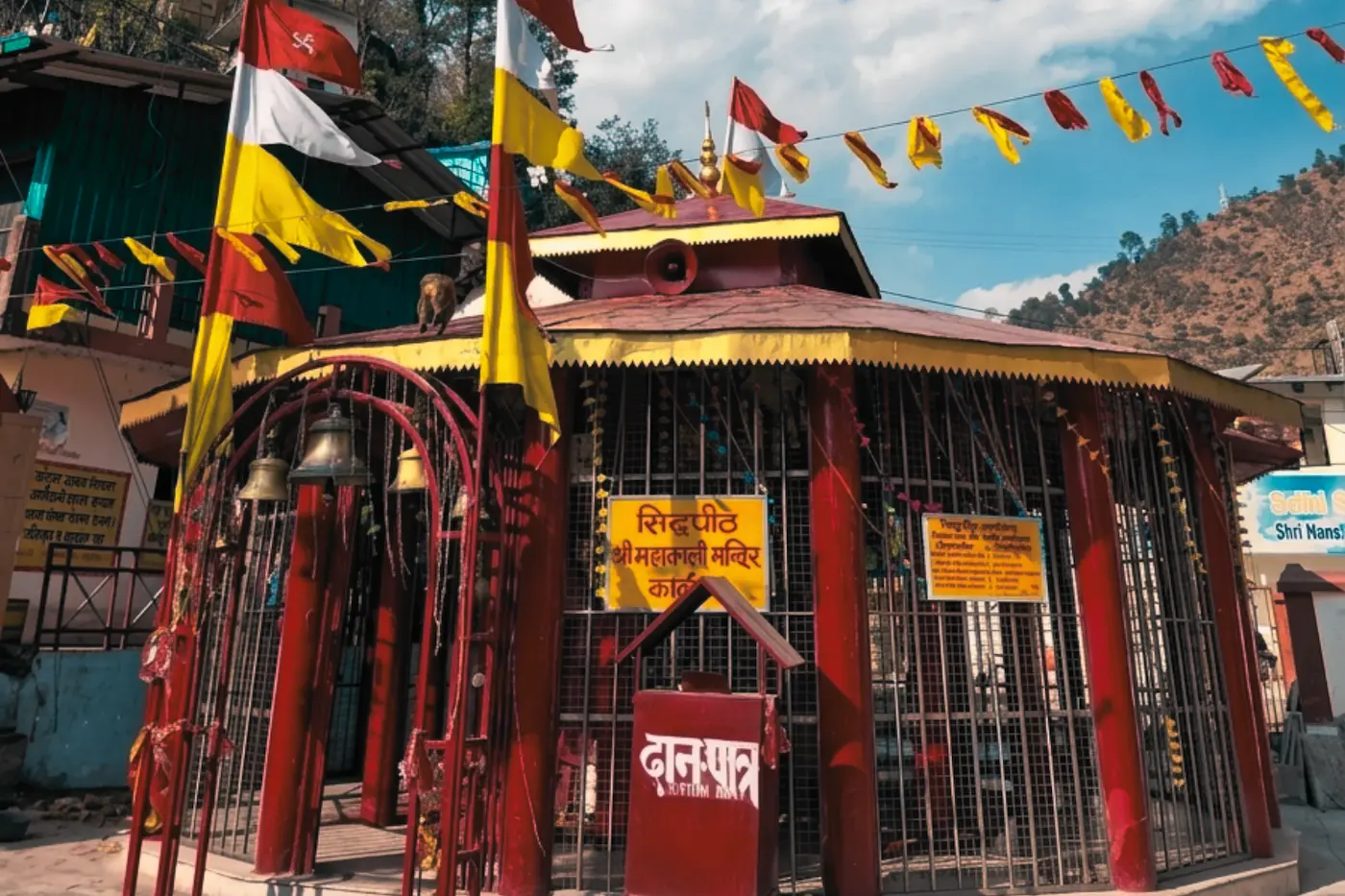
Kalimath Temple
It is always seen divinity doesn’t come in just one form — Kalimath reveals itself in contrasts. Here, the goddess is both the nurturing Parvati and the fierce Kali, holding within her the balance of creation and destruction, calm and chaos, light and darkness. It’s a rare reminder that divinity isn’t just about peace, but also about strength and balance. Unlike other temples, there is no idol to gaze upon instead, a silver plated Shakti Yantra and the energy of the goddess is believed to reside beneath the ground, making this place feel even more mysterious and alive.
This Kamlimath Temple Guide answers your every query that requires you to plan your visit to this temple - like where is Kalimath temple, how to reach Kalimath, what is the best time, where to stay, what’s the arti time, its history, significance, and much more.
Overview
Kalimath is an ancient village and one of the most powerful and mysterious Shakti shrines in the Himalayas, located at an altitude of approximately 6,000 feet on the left side of Mandakini river, on the banks of the Kaliganga River (locally known as Saraswati River) in Uttarakhand. Just like Kamakhaya Devi in East, Jawlapa Devi in West, Vindhyavasini in South hold deep spiritual importance, similarly Kalimath Temple in the North carries equal significance and is revered as one of the 108 Shakti Peethas.
Kalimath temple is dedicated to Mata Kali who is one of the first Deity of 10 Maha Vidhaya. In older scriptures like Skandpuran, Shiv Mahapuran and Devi Bhawatam, Kalimath is also referred as Giriraj Peeth. Also referred as the Astdhatri Devi (the guardian deity) of Kedarnath.
History and Mythological Significance
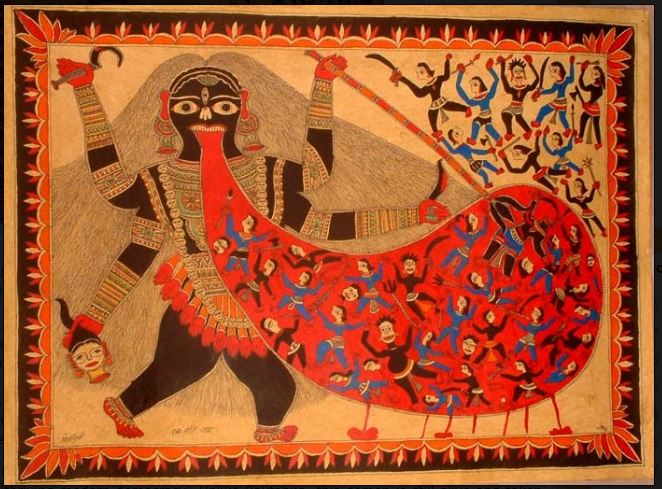
Raktbeej Danav
Defeat of Raktabija: According to ancient scripture Skandapuran, this is the place where Goddess Kali killed the demon Raktabija. The demon had a boon that every drop of his blood spilled on the ground would create another version of himself. To stop this, Kali drank every drop of his blood before it could touch the earth.
Descent into the Earth: After destroying the demon Raktabija and restoring cosmic balance, Goddess Kali is believed to have gone underground or withdrawn her energy into the earth at this spot. The point where she disappeared became a sacred pit (Kund).
Sati's Right Ankle: As a Shakti Peeth, the site is also associated with the self-immolation of Goddess Sati. Specifically, local mythology holds that the right ankle of Sati fell at this location.
Link to Dhari Devi: A divine connection exists between Kalimath and the Dhari Devi Temple. Tradition holds that the upper half of the idol of the goddess is worshipped at Dhari Devi, while the lower half resides at Kalimath.
Cultural Connections
Kalidas: The great Sanskrit poet Kalidas is historically believed to have meditated at Kalimath and was blessed by the Goddess there.
Priestly Lineage: The temple's rituals have long been managed by Bhatt and Gaur Brahmins from the nearby Kaviltha village. While animal sacrifices were historically practiced, they were stopped in the 1990s and replaced with symbolic offerings like coconuts.
Unique Worship and Rituals
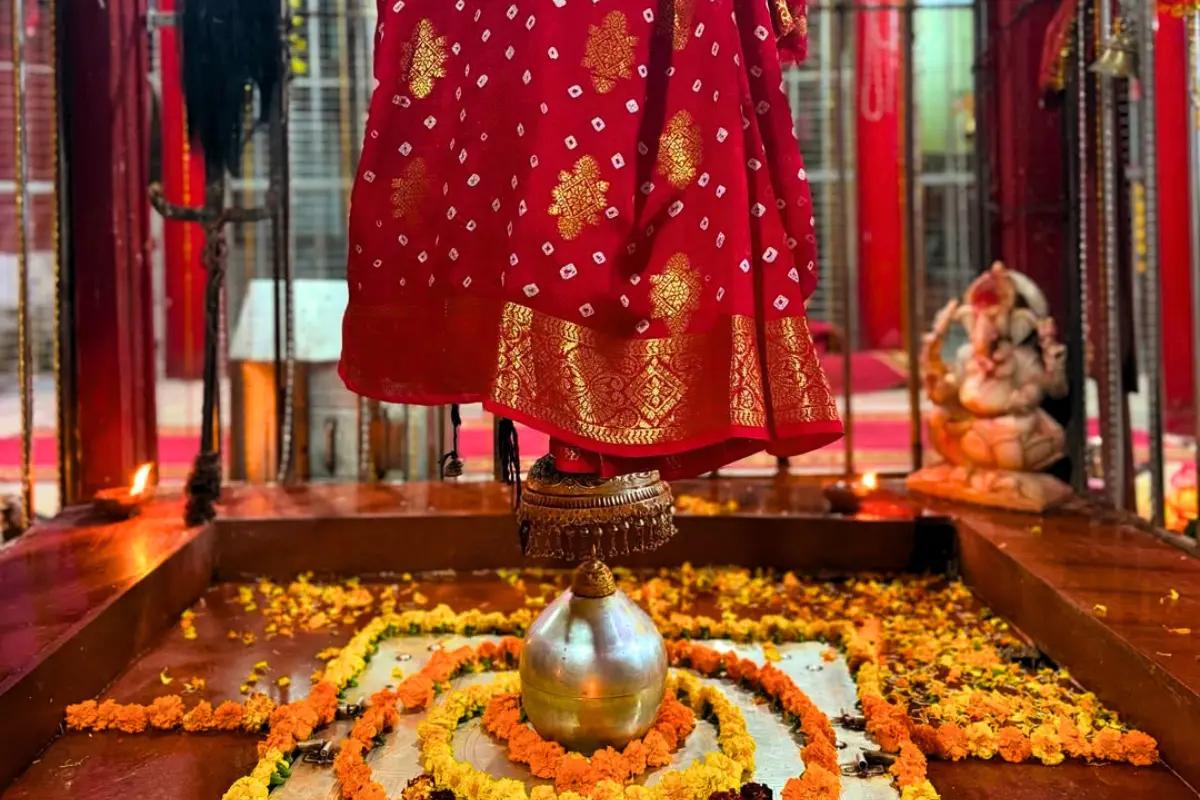
The Silver Plate (Sri Yantra): Unlike most Hindu temples, no idol of Goddess Kali is worshipped at Kalimath. Instead, the sacred pit where she disappeared is covered by a silver plate known as the Rajatpat Shakti Yantra.
Annual Revelation: The pit/Kund is covered throughout the year by Shakti Yantra and is opened only once annually at midnight on the Ashtami of the Sharad Navratri (eight days of Autumn Navratri). This secret ritual is performed exclusively by the Chief Priest.
The Trinity: Kalimath is rare for worshipping a trinity of divine feminine energies—Kali, Lakshmi, and Saraswati—in a single space. Nearby, the Lakshmi Mata Temple houses an eternal flame believed to have been burning for three Yugas.
Temple Architecture and Unique Features of Kalimath
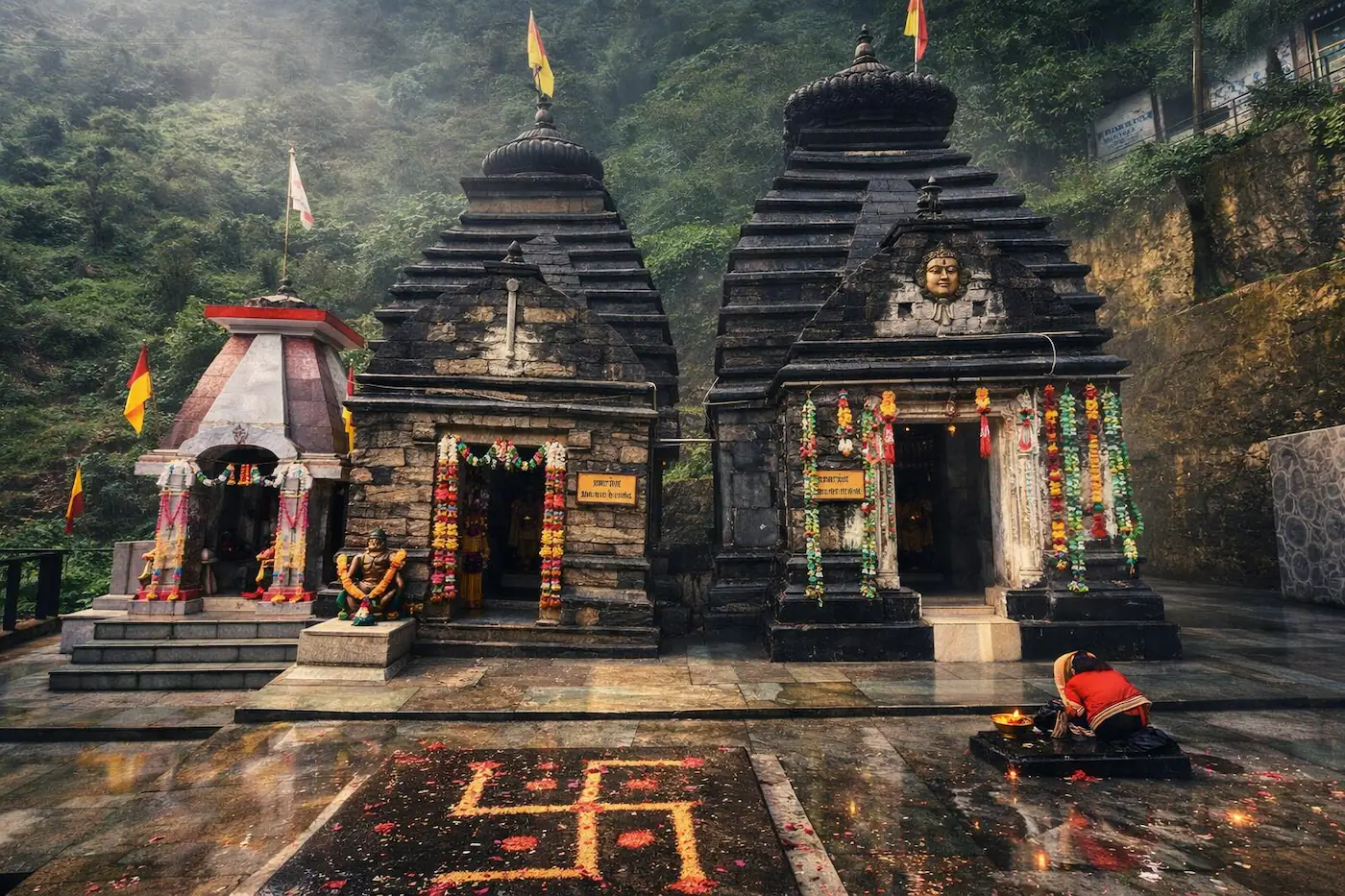
Other Temples in Kalimath Mandir Complex
The architectural structure of Kalimath Temple is also unique. In the temple complex there are a rare trinity of temples dedicated to Mahakali, Mahalakshmi, and Mahasaraswati. All the three temples are arranged in the same way as the position of goddess mentioned in the Durgasaptsati; Mahalakshmi in the center, Mahakali to the Right, and Mahasaraswati to the left. Other than these there are a Gauri-Shankar Temple, Bhairavdev Temple and Akhand dhuni as well.
1. Mahakali Temple
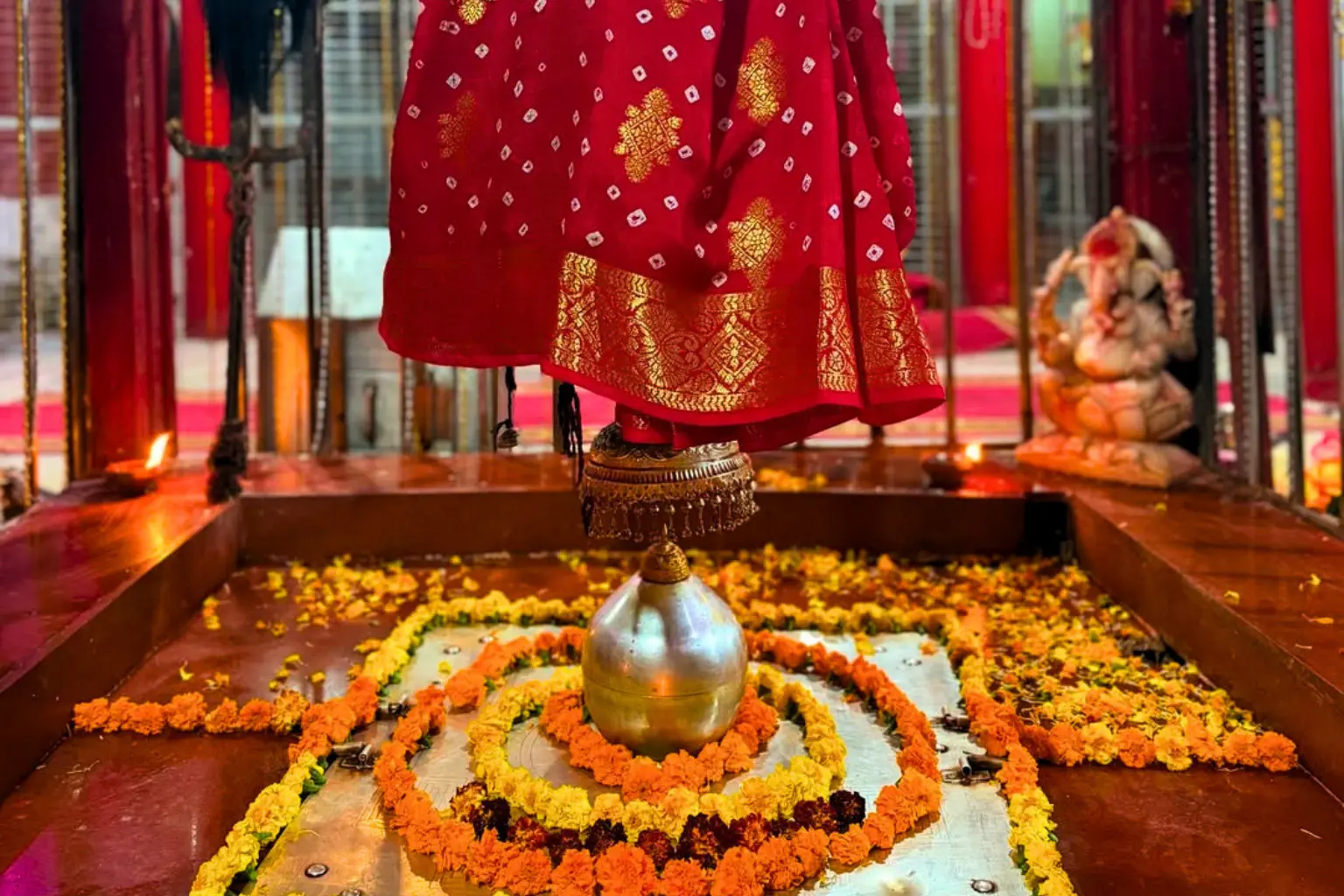
The architecture of the Mahakali shrine is relatively modern, featuring 7-foot-high cement pillars that support a circular circumambulation path covered by a tin roof. But the most distinct feature of this temple is that it contains no visible idol of the goddess. Instead, the focus of worship is a sacred pit or Kund, believed to be the location where Goddess Kali entered the earth after killing the demon Raktabeej. This pit is always covered by a silver plate known as the Rajatpat Sri Mahakali Yantra. Over the Shakti Yantra, a hanging structure, beautifully dressed in a saree, depicts the form of Maa Kali worshipped here. The torso of Maa Kali is worshipped in Dhari Devi.
2. Mahalakshmi Temple
The Mahalakshmi Temple is the largest of the three main. Its structural design follows a quadrangular (Chaturasra) plan consisting of a garbha griha, a mandapa, and an antarala. It is characterized by a 12-tiered "fasada" style shikhara. The temple houses a four-armed Ashtadhatu (eight-metal) idol of Goddess Lakshmi and silver and copper masks.
3. Mahasaraswati Temple
This shrine enshrines an eight-armed stone idol of Goddess Saraswati. In a departure from typical iconography, she is represented in a "Raudra" (fierce) form holding weapons rather than a Veena. The temple also includes a fire pit where a yagna is held once every 12 years during a special procession.
4. Gauri Shankar Temple
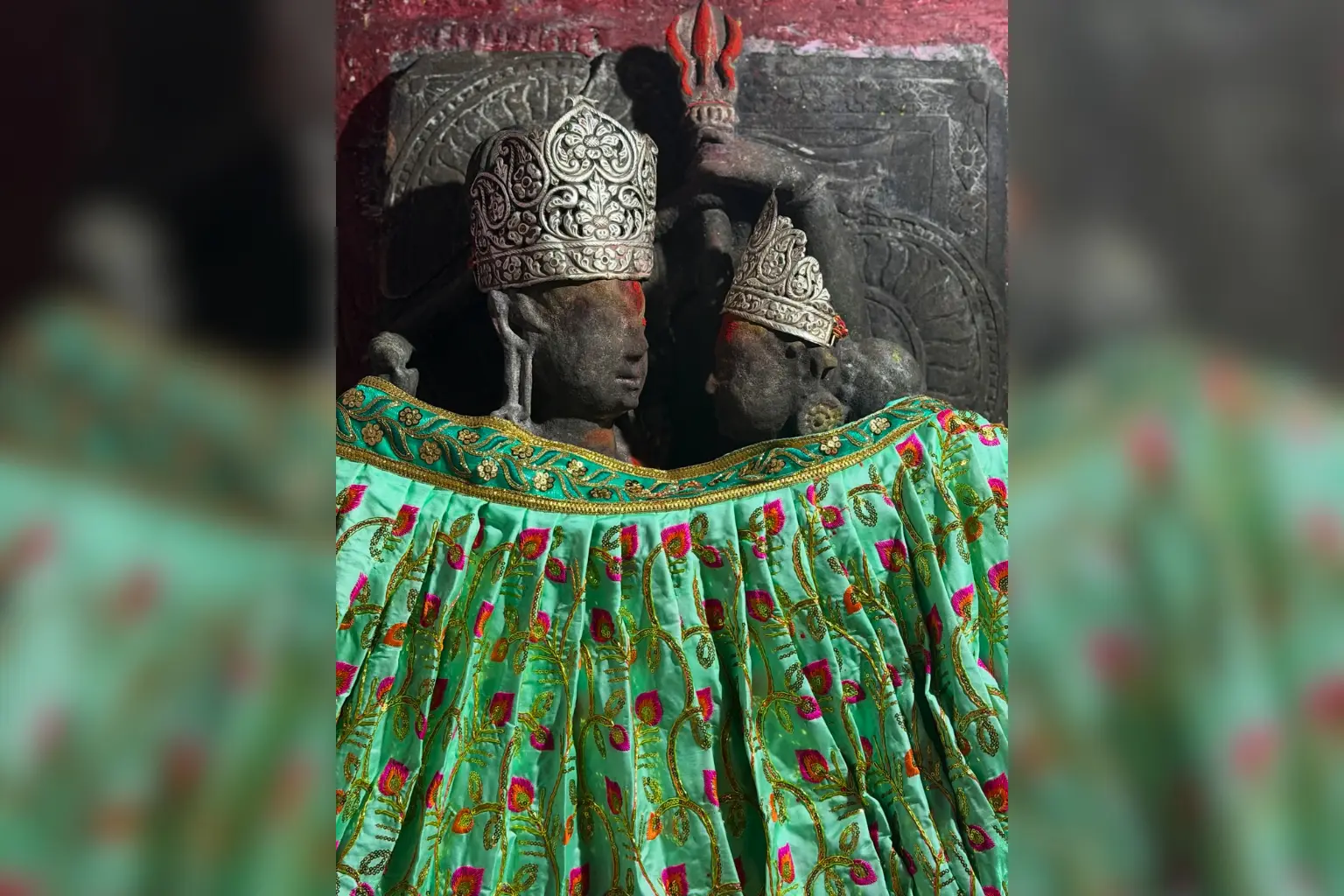
Gauri Shankar Temple
This 30-foot-high temple contains a composite stone idol of Shiva and Parvati. Unlike other depictions, this idol is shown in a "Pranay Mudra" (a loving or amorous posture) where the Mata Gaura and Mahadev are seen looking at one another. The idol depicts the entire Shiva Parivar, featuring Shiva seated with Gauri on his cahan/vehicle Nandi, accompanied by Ganesha, Kartikeya, and the figures of Riddhi and Siddhi.
Legends says that - this specific idol was crafted by Adi Shankaracharya himself during a state of high spiritual realization.
5. Eternal Flame
The flame burns continuously without interruption from the three yugas as like Triyuginarayn eternal flame. — symbolizing the eternal presence of Maa Kali. It is believed that this sacred jyoti has been lit for centuries, maintained by temple priests through strict rituals.
Best Time to Visit Kalimath Mandir
The Kalimath Temple is accessible to devotees all 12 months of the year. However, the specific best time depends on whether you are prioritizing weather, accessibility, or religious significance:
Ideal Weather and Accessibility
Summer (March – June): This is considered the ideal season for a visit. During these months, the weather is pleasant and comfortable (ranging from 10°C to 25°C), offering clear skies and excellent road accessibility. Also, crowded from May to June because of Chardham Devotees also show their obedience here.
Autumn (September – October): This is another excellent time to visit. The air is cool and pleasant, and the post-monsoon period provides clear mountain views.
Most Auspicious Spiritual Timing
Navratri: The nine-day Navratri festival is regarded as the most auspicious time to offer prayers at Kalimath.
Sharad Navratri (Ashtami): The eighth day of Sharad Navratri is of particular significance. It is the only time in the year that the silver plate covering the sacred Kund is removed at midnight for a special puja performed by the Chief Priest.
Times to Avoid or Consider
Monsoon (July – August): A visit during this time is generally not recommended. The region experiences heavy rainfall, which creates a high risk of landslides, road blockages, and poor visibility.
Winter: While winters are very cold, the temple remains accessible and offers a spiritually peaceful environment for those who don't mind the low temperatures. If you are planning to visit other nearby sites like Kedarnath, then you can also visit here.
How to Reach Kalimath Temple
This Kalimath Temple is located in the Rudraprayag district, about 48 km from Rudraprayag and 12 km from Guptkashi. Here, the best way to reach it is by road.
By Road
Road travel is the most common way to reach Kalimath, as the temple is well-connected to major pilgrimage hubs. If you can come from Haridwar, Rishikesh or Delhi - you have to reach Rudrprayg or Guptkashi first for this you can take a private bus or shared vehicle. From there you can hire private taxis, private cars, or shared jeeps/cabs to the temple.
By Train
There is no way to reach by train. The nearest railway station is Rishikesh Railway station from there you can take a public bus or shared vehicle to Rudraprayag and then continue to Kalimath via local transport.
By Air
Jolly Grant Airport in Dehradun is the nearest airport and is about 240 km from the Kalimath Temple. Once you reach the Airport you can hire a private taxi or take a shared vehicle to reach Kalimath.
Where to stay in Kalimath
There are staying options like lodges, hotels, dharamshala, ashram available which you can take for a night stay in Kalimath. There are some newly constructed, grand guest houses and homestays which have been established in Kalimath specifically for pilgrims, offering high-quality rooms at nominal rates. Also if you are looking for a nearby staying option other than Kalimath for a deluxe option, for that case you can take your stay in Ukhimath, Guptkashi or Rudraprayag.
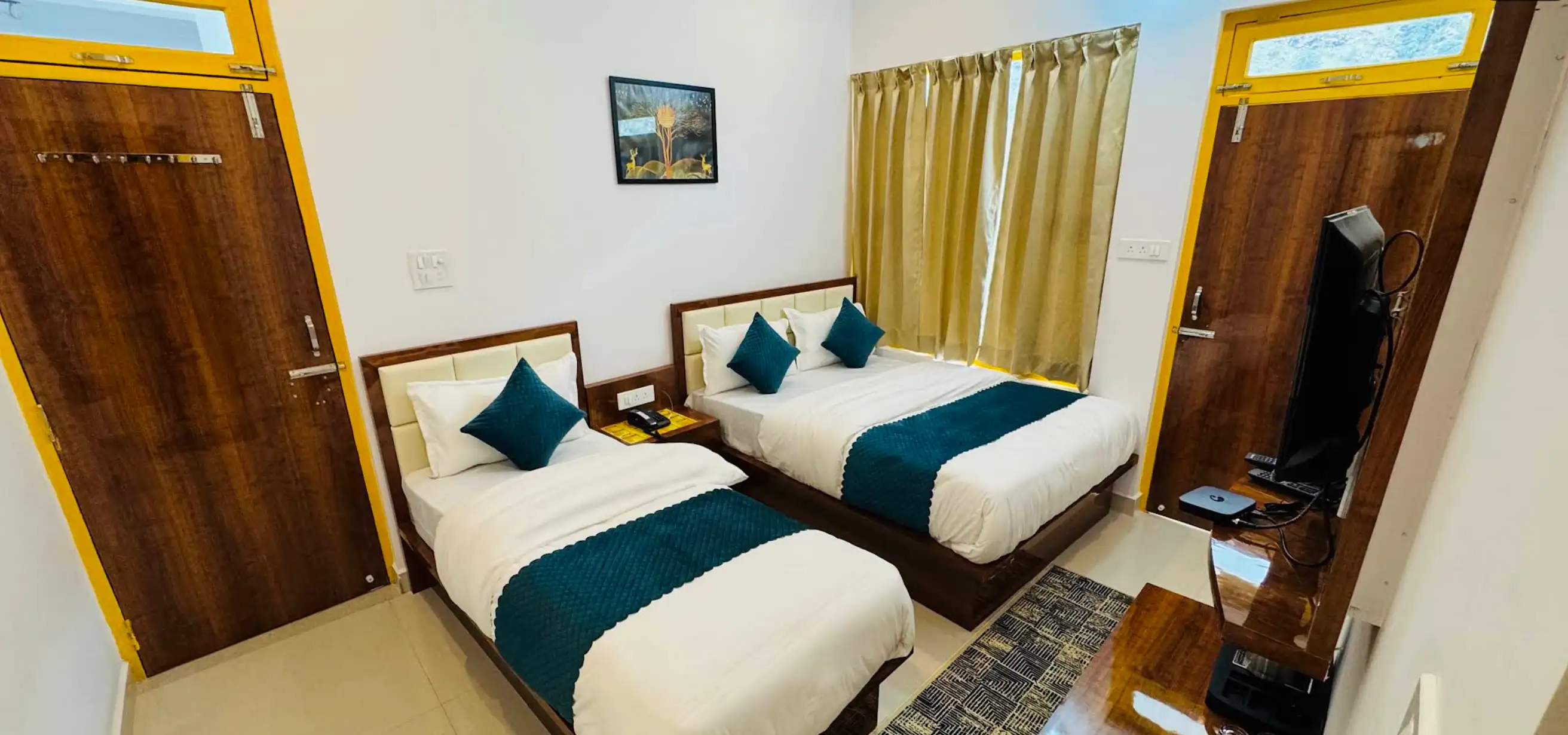
Dharamshalas - There are several dharamshalas provide basic lodging for pilgrims, including the Satpal Maharaj Dharamshala, the Hans Dharamshala, and one managed by the Shri Badrinath-Kedarnath Temple Committee.
Kalimath Mandir Opening and Aarti Timing
| Ritual / Timing | Winters | Summers |
|---|---|---|
| Opening Time | 5:30 AM | 4:00 AM |
| Bhog Time | 12:00 – 1:00 PM | 12:00 – 1:00 PM |
| Evening Aarti | 6:00 PM | 7:30 PM |
Kalimanth Mandir Opening and Aarti Timing
Nearby Places to Visit
Kalishila (approx. 6–8 km trek): Located atop a hill, this massive rock is believed to be the spot where the Goddess meditated and where Sati was reborn as Parvati.
Kaviltha Village: Just a short distance from Kalimath, it houses a statue and museum for Kalidas and hosts a three-day festival in his honour.
Kunjethi Village (2 km east): Home to the Mata Manana Devi and Mankameshwar Mahadev temples.
Dhari Devi Temple (approx. 63 km): Enshrines the upper half of the goddess whose lower half is at Kalimath; she is revered as the protector of the Char Dham.
Guptkashi
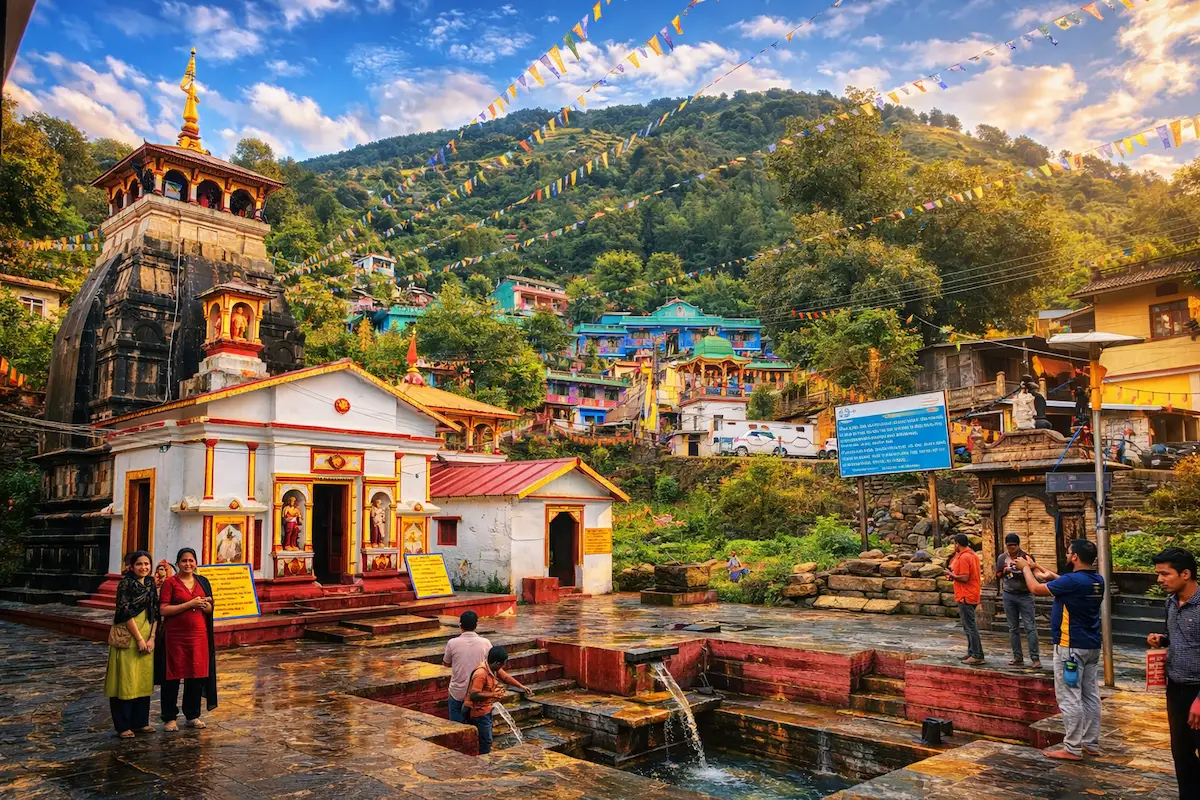
Guptkashi (approx. 10–13 km): A major spiritual hub featuring the ancient Vishwanath and Ardhnarishwar temples.
Ukhimath (approx. 20 km): The winter seat of Lord Kedarnath and Madhyamaheshwar, filled with ancient temples.
Triyuginarayan Temple (approx. 56 km): The legendary site of the marriage of Lord Shiva and Parvati, featuring a perpetual fire that has burned for ages.
Gaurikund (approx. 42 km): The starting point for the Kedarnath trek, famous for its natural hot springs.
Kedarnath Temple (approx. 57 km): One of the 12 Jyotirlingas, accessible via a trek from Gaurikund.
Chopta and Tungnath (approx. 61 km): Chopta, known as the "Mini Switzerland of India," is the base for the trek to Tungnath, the highest Shiva temple in the world.
Deoria Tal: A stunning high-altitude lake reachable via a trek from Sari Village.
What are the main festivals celebrated in Kalimath?
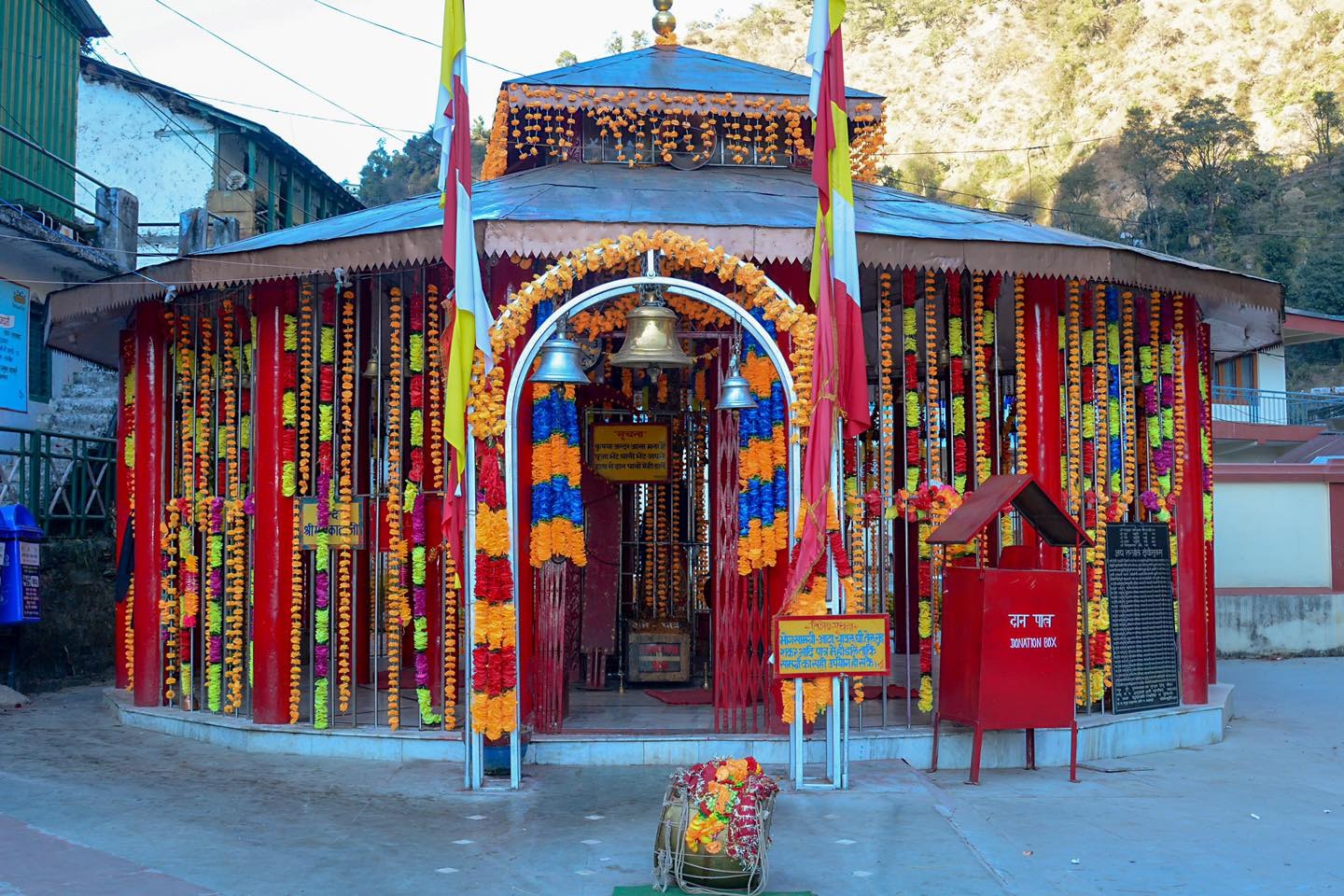
All four types of Navratri are celebrated annually, honoring Goddess over nine nights. These include two main festivals — Sharad Navratri (autumn) and Chaitra Navratri (spring)—along with two "Gupt" (hidden) Navratris Magha and Ashadha.
December Procession: Every December, a major procession is organized that unites the local community. Residents from six nearby villages—Kalimath, Kaviltha, Byunkhi, Jaggi Bagwan, Bedula, and Kunjethi—participate in this event.
Frequently Asked Questions (FAQs)
1. Is Kalimath a Shakti Peeth?
Yes, Kalimath is revered as one of the 108 Shakti Peethas mentioned in the Srimad Devi Bhagwat. It is specifically believed to be the place where the right ankle of Goddess Sati fell.
2. What is the legend of the demon Raktabija?
Kalimath is the site where Goddess Kali killed the demon Raktabija, who had a boon that every drop of his blood spilled on the ground would create another version of himself. Kali prevented this by drinking his blood before it could touch the earth. After his defeat, she chose this spot to withdraw her energy and descend into the earth.
3. What is the connection between Kalimath and Dhari Devi?
According to powerful local belief, the goddess's idol is split into two: the upper half (crown to torso) is worshipped at the Dhari Devi Temple, and the lower half (naval to feet) is enshrined at Kalimath.
4. Is there an idol of Goddess Kali inside the temple?
No, unlike most Hindu temples, there is no visible idol of Goddess Kali at Kalimath. Instead, devotees worship a sacred Kund (pit) where the Goddess entered the earth.
5. What other deities can I worship here?
Kalimath is rare for worshipping the trinity of Mahakali, Mahalakshmi, and Mahasaraswati in one space. The complex also includes temples for Gauri-Shankar, Bhairavnath, Siddheshwar Mahadev, and the Sun God.
6. When is the sacred silver plate removed?
The sacred pit is covered by a silver plate known as the Rajatpat Sri Yantra. This plate is removed only once a year at midnight on the eighth day (Ashtami) of Sharad Navratri for a secret puja performed exclusively by the Chief Priest.
7. Can I perform ancestral rites here?
Yes, the site is considered auspicious for performing tarpan (offerings) and Pinda Daan for ancestors.
8. When are the temple timings?
The temple opens at 4:00 AM during the summer and 5:30 AM in winter. It closes for Bhog daily from 12:00 PM to 1:00 PM. Evening Aarti is held at 7:30 PM in summer and 6:00 PM in winter.
9. Can Kalimath be visited with Kedarnath?
Yes, it is a spiritual stop on the Kedarnath route, located approximately 57 km from the Kedarnath Temple and near Ukhimath and Guptkashi.
10. Where can I stay in Kalimath?
Accommodation includes several dharamshalas (Satpal Maharaj, Hans, and Temple Committee), a newly built grand guest house, and budget-friendly local home stays provided by villagers.
Best Selling Tour Packages
Explore other exciting options for your next adventure!