
Abhinav
Writer
Updated On - Oct 08, 2026
25 min
Published On - Oct 08, 2026
Taktsang Monastery (Tiger's Nest) — Complete Guide
A monastery clinging to a cliff 900 metres above a Himalayan valley, built around a cave where a tantric saint is said to have meditated for three years, three months, three weeks, three days and three hours after arriving on the back of a flying tigress. No description fully prepares you for it. This guide covers the legend, the architecture, the climb, and everything an Indian traveller specifically needs to know before attempting it in 2026.
Taktsang Monastery, popularly known as Tiger's Nest, is Bhutan's most iconic monastery, dramatically perched on a cliff 900 metres above the Paro Valley. This complete 2026 travel guide covers its fascinating legend, history, architecture, hiking trail, permits, entry fees, best time to visit, opening hours, practical tips, and essential information for Indian travellers, making it the perfect resource for planning an unforgettable visit to Bhutan's most sacred landmark.
Why this is unlike any other monastery you'll visit
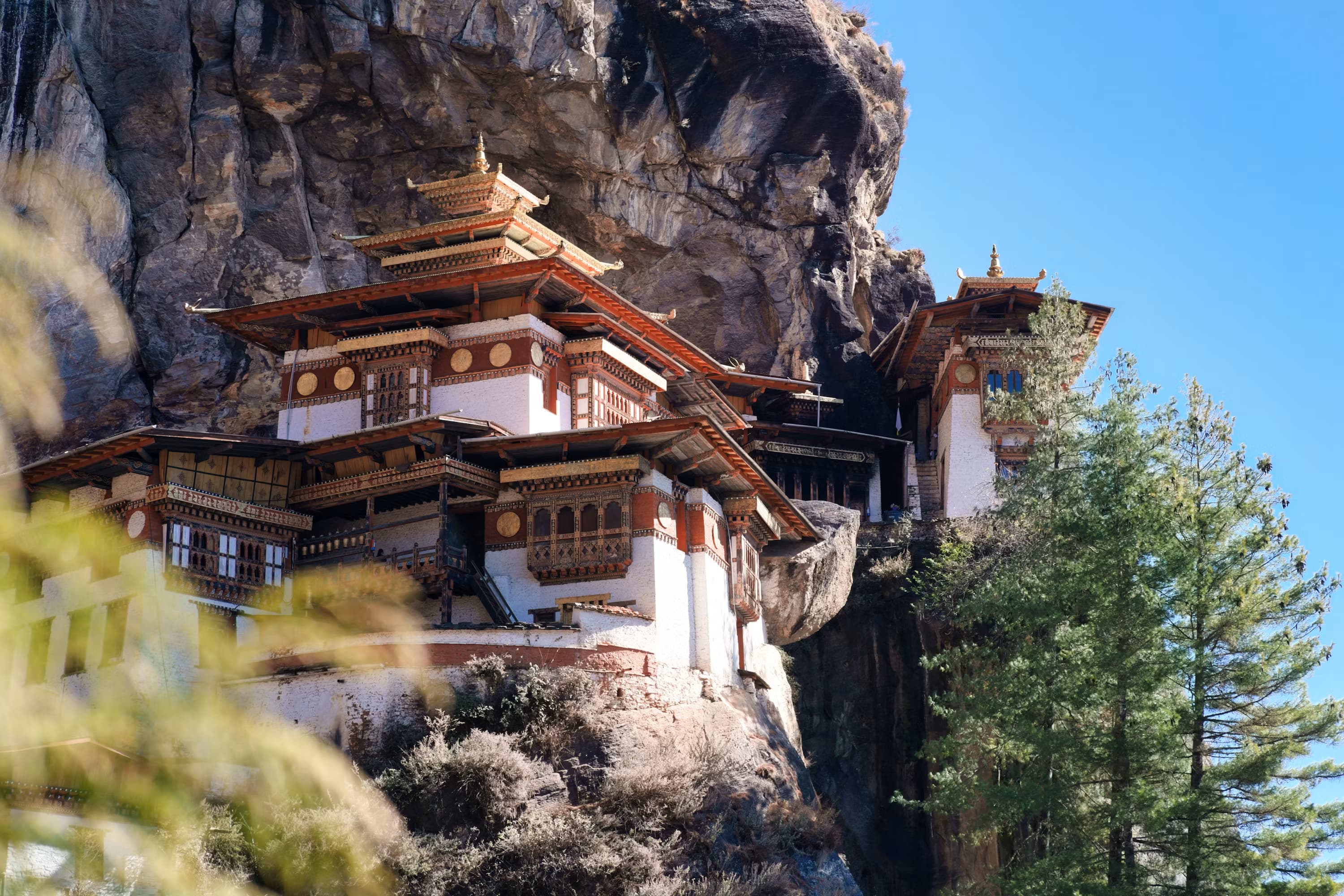
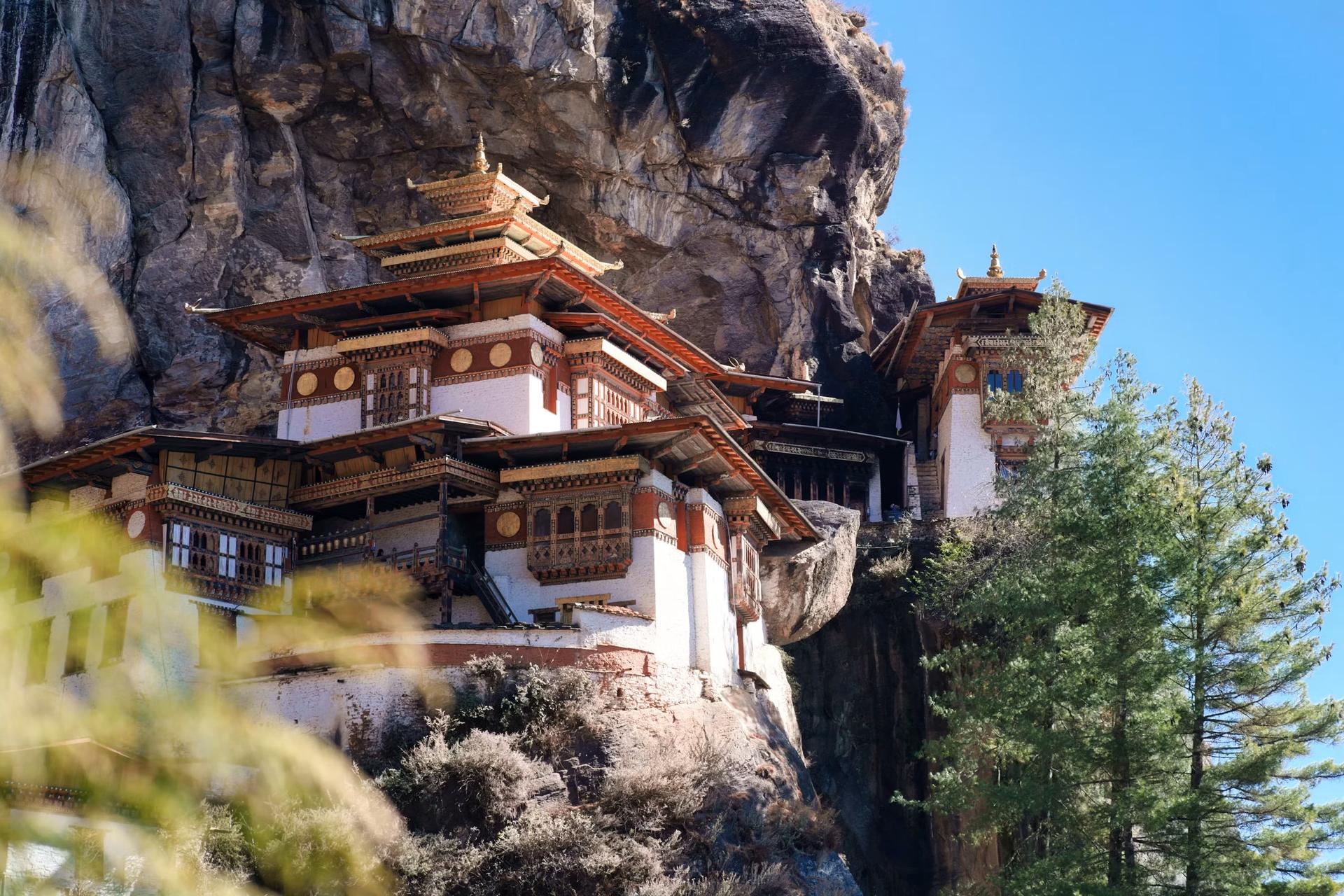
There's a particular moment on the Tiger's Nest trail, usually about an hour and a half in, when the forest opens slightly and you see it properly for the first time — not the glimpse through the trees that the guidebooks mention, but the full, improbable sight of a white-walled, gold-roofed monastery complex apparently glued to a sheer granite cliff face, with several hundred metres of empty air beneath it. I have read the elevation figures, looked at the photographs, and known intellectually what I was about to see. None of that fully prepared me for the actual moment of seeing it.
Paro Taktsang — Tiger's Nest to almost everyone who isn't Bhutanese — is the single most photographed and most visited site in the Kingdom of Bhutan, and it earns that status in a way that genuinely famous places don't always manage. It is simultaneously a serious physical undertaking, a profound piece of architectural and engineering achievement, and one of the most sacred sites in the entire Himalayan Buddhist world. Most visitors arrive expecting a striking photograph. Most leave describing something closer to a personal transformation. Both reactions are reasonable responses to the same place.
This guide treats Tiger's Nest as what it actually is: not a single attraction to tick off a Bhutan itinerary, but a complete experience with its own legend, its own architecture, its own physical demands, and — for Indian travellers specifically — its own set of practical requirements that differ in some important ways from what international visitors need to know.
| FACT | DETAIL |
|---|---|
|
Full name |
Paro Taktsang / Taktsang Palphug Monastery — popularly Tiger's Nest |
|
Meaning of 'Taktsang' |
Tiger's Lair — from the legend of Guru Rinpoche arriving on a transformed tigress |
|
Location |
Upper Paro Valley, Paro District, Western Bhutan — about 12 km / 30 min drive from Paro town |
|
Altitude |
3,120 m (10,240 ft) |
|
Height above valley floor |
Approximately 900 m (3,000 ft), clinging directly to a sheer granite cliff |
|
Trailhead altitude |
~2,400 m (Ramthangkha base) |
|
Total elevation gain |
700–900 m depending on measurement point |
|
Trail distance |
6–7 km round trip (roughly 3–3.5 km one way) |
|
Typical time |
4–6 hours round trip including monastery visit; ascent 2–3 hrs, descent 1.5–2 hrs |
|
First temple built |
c. 1508 by Nyingma master Sonam Gyaltshen at Taktsang Pelphug |
|
Main monastery complex built |
1692, by the 4th Druk Desi, Tenzin Rabgye |
|
Cave meditation duration (legend) |
3 years, 3 months, 3 weeks, 3 days and 3 hours |
|
1998 fire |
19 April 1998 — caused by an unattended butter lamp; destroyed the main temple and meditation chapel |
|
Reconstruction completed |
2005 — using traditional rammed-earth and timber methods, no modern scaffolding on the cliff face |
|
Number of temples |
Four main temples plus several smaller shrines and monks' residential quarters |
|
Entry fee (2026) |
Nu 500 (~₹500) — usually bundled into your SDF/tour package |
|
Guide requirement |
Mandatory — licensed Bhutanese guide required for ALL visitors, including Indian nationals |
|
Opening hours |
8 AM–1 PM, 2 PM–6 PM (lunch break closure for entry, though hiking is possible throughout) |
|
UNESCO status |
On Bhutan's UNESCO Tentative List |
TAKTSANG MONASTERY — ESSENTIAL FACTS 2026
Most monasteries are built, then acquire holiness over time. Taktsang's holiness was established first, inside a natural cave in a cliff face, centuries before any building existed. The architecture that surrounds it today exists purely to honour what was already there.
The legend — and why it matters before you climb
Understanding the story behind Taktsang changes the experience of the hike, because almost everything you'll see — the iconography inside the temples, the name of the site, the specific cave the entire complex is built around — only makes sense in light of it.
In the 8th century, according to Bhutanese Buddhist tradition, the tantric master Guru Padmasambhava — known throughout the Himalayan Buddhist world as Guru Rinpoche, 'precious teacher' — flew to this cliff from Singye Dzong in Tibet on the back of a tigress. The tigress was not an ordinary animal; she was Yeshe Tsogyal, one of Guru Rinpoche's closest disciples and consorts, transformed for the journey. The valley below the cliff, in this telling, was under the control of a powerful local demon named Singye Samdrup, whose influence spread disease and spiritual corruption across the region. Guru Rinpoche came not to retreat from this threat but to confront it directly, assuming his most ferocious form to do so.
That form is Dorje Drolo — depicted in Bhutanese religious art as a wrathful, three-eyed figure wreathed in flame, riding a pregnant tigress, holding a vajra in one hand and a phurba ritual dagger in the other. This is the imagery you'll encounter inside the monastery's shrine rooms, and it surprises many first-time visitors who arrive expecting the serene, peaceful Buddha imagery more common elsewhere. The wrathfulness is the point: this is a deity engaged in active, forceful spiritual combat, not passive contemplation. Having subdued the local spirits, Guru Rinpoche entered the cave now known as Taktsang
Senge Samdup and meditated there for what tradition records with remarkable specificity as three years, three months, three weeks, three days, and three hours — emerging in eight distinct manifestation forms, each representing a different aspect of enlightened activity. The cave became one of thirteen "Tiger's Nest" sites across the historical Himalayan Buddhist world where Guru Rinpoche is said to have practised in this way, and it is, by a clear margin, the most famous and most visited of all thirteen.
The name Taktsang itself — "Tiger's Lair" — commemorates this arrival. Local accounts add a secondary layer to the story: that people in the area later encountered an actual tigress living in one of the caves, reinforcing rather than explaining the name that the original legend had already established. Whichever version you prefer, the name has stuck for well over a thousand years, attached to a site whose sanctity, as one detailed account of the monastery puts it, was established first in a natural void in the rock — with the architecture arriving only centuries later, to honour what was already considered holy.
From cave to monastery — the construction history
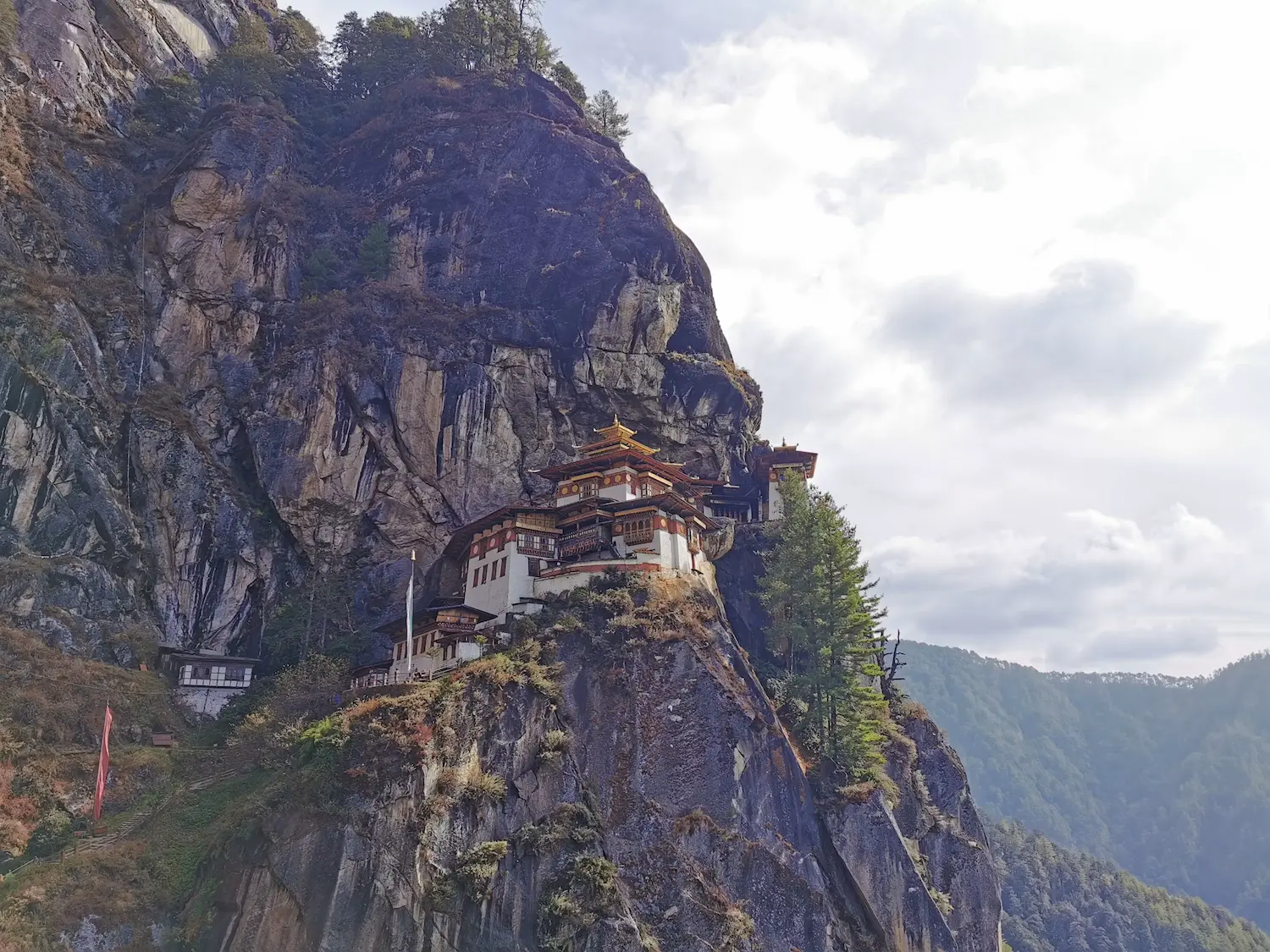
The gap between the 8th-century legend and the building you'll actually climb to is considerable, and worth understanding. The first temple structure at the site was built around 1508 by Sonam Gyaltshen, a Nyingma Buddhist master, specifically at Taktsang Pelphug — the location of the original cave. In 1645, during the consolidation of Bhutan as a unified state, the entire site was offered to Zhabdrung Ngawang Namgyal, the figure most responsible for Bhutan's existence as a nation rather than a collection of separate valleys and fiefdoms. It was here, during the Tibetan invasions of 1644 and 1646, that the Zhabdrung and his teacher first performed a ritual specifically invoking Guru Rinpoche and the site's protective deities — a moment that ties Taktsang directly into the foundational political history of Bhutan, not just its religious history.
The monastery complex recognisable today — the four interconnected temples, the cliffside architecture, the white walls and gold roofs visible from the valley floor — was built in 1692 by the 4th Druk Desi (the secular ruler under the dual system of governance Bhutan operated at the time), Tenzin Rabgye, constructed directly around the Taktsang Senge Samdup cave. This is the building, with one significant interruption, that has stood here for over three centuries.
The interruption was severe. On April 19, 1998, a fire broke out at the monastery — caused, according to the most detailed accounts, by an unattended butter lamp rather than the electrical fault sometimes cited elsewhere. The blaze destroyed the Guru Tsengye Lhakhang (the main temple), the Dubkhang (the meditation chapel), and significant portions of the Pelphug Lhakhang — the innermost sanctuary built around the original cave itself. Centuries-old murals, gilded statues, and irreplaceable manuscripts were lost. It was treated, correctly, as a national tragedy, and the Fourth King, Jigme Singye Wangchuck, personally oversaw the reconstruction effort that followed.
What makes the reconstruction remarkable is the method. Rather than using modern construction techniques or scaffolding suspended from the cliff face — which would have been the practical, faster option — Bhutanese craftsmen rebuilt the monastery using traditional rammed-earth and timber construction, the same methods used in 1692, employing ropes, human chains, and locally sourced timber rather than cranes or scaffolding. The work took until 2005 to complete. What you climb to today is, in the most literal sense, a building reconstructed by hand on a cliff face using methods that predate modern engineering — a decision that tells you something specific about how Bhutan thinks about the relationship between heritage and convenience.
| LEG / SECTION | ALTITUDE RANGE | DISTANCE / TIME | WHAT YOU'LL SEE |
|---|---|---|---|
|
Base (Ramthangkha) to first viewpoint |
~2,400–2,600 m |
20–30 min |
Forest of blue pine and rhododendron; water-powered prayer wheels turned by mountain streams; first glimpse of the monastery through the trees — genuinely motivating |
|
First viewpoint to Cafeteria (halfway point) |
~2,600–2,950 m |
40–70 min more (1–2 hrs total from base) |
Wide switchback dirt trail, well-maintained; horses available for hire up to this point only (₹700–1,000 one way); prayer flags throughout |
|
Cafeteria rest stop |
2,950 m |
20–40 min recommended |
Toilets, tea, coffee, light snacks, vegetarian buffet lunch; last facilities before the monastery; classic clear view of Taktsang from here |
|
Cafeteria to main viewpoint |
2,950 m to ~3,140 m |
25–45 min |
The trail's best photo opportunity — the iconic angled view of the monastery on the opposite cliff face; many casual visitors turn back here |
|
Viewpoint down to the bridge |
Descends ~100 m |
15–20 min |
Steep stone stairs down to a wooden bridge draped in prayer flags, crossing a gorge with a waterfall dropping about 60 m into a sacred pool |
|
Bridge to monastery gate |
Climbs back to 3,120 m |
20–30 min — the steepest section |
Stone stairs carved into the rock — the famous 'dreaded stairs'; this is where pace and patience matter most; the monastery entrance is just ahead |
THE TRAIL — SECTION BY SECTION
The fire that destroyed much of Taktsang in 1998 was caused by an unattended butter lamp. The reconstruction that followed used no modern scaffolding on the cliff face — ropes, human chains and hand tools, the same methods used in 1692. That decision is, in its own way, as much a statement about Bhutan as the monastery itself.
What's actually inside — the four temples
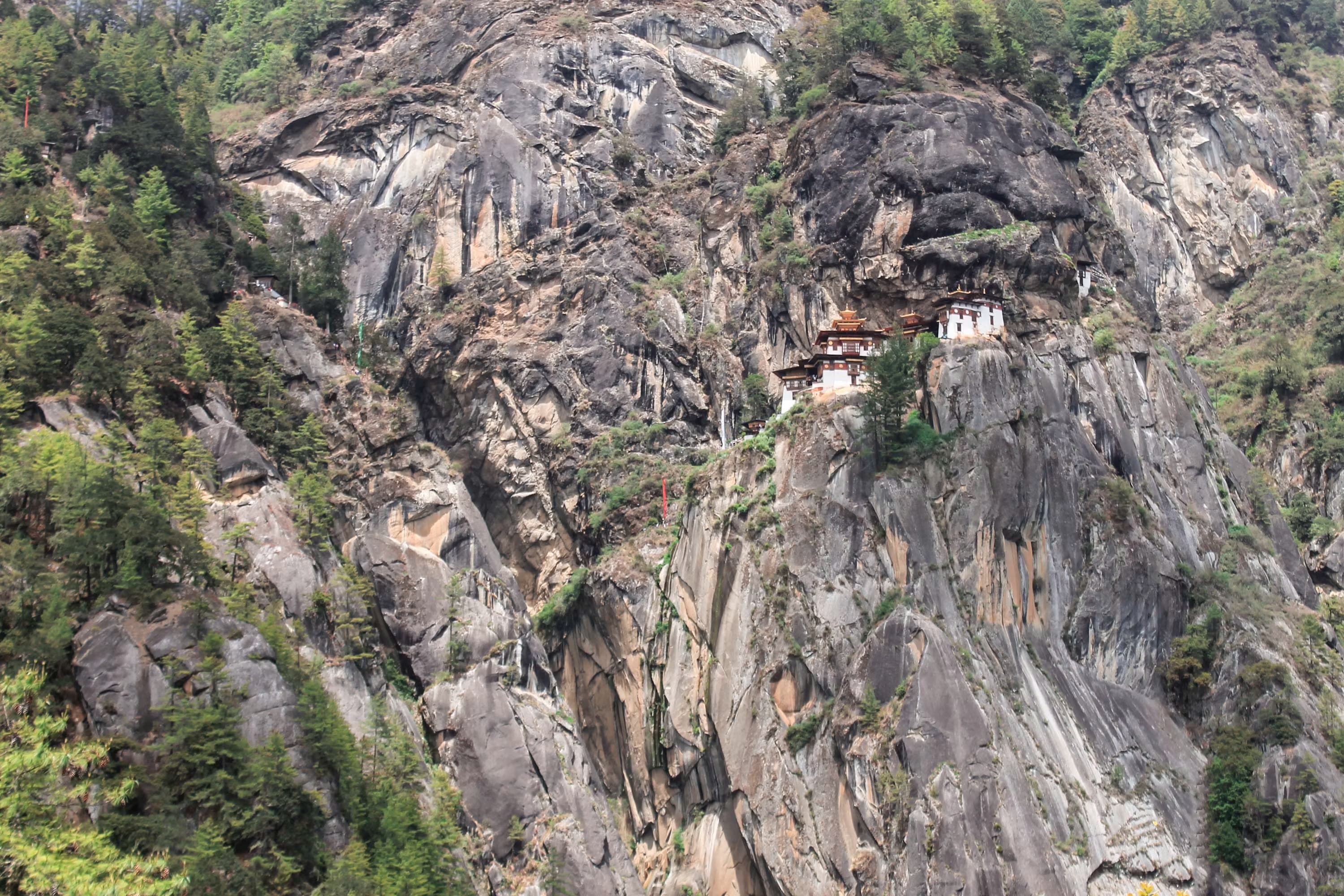
Once you've made the climb, deposited your phone and camera in the lockers at the entrance, and passed through the gate, you enter a complex that is considerably larger and more intricate than it appears from the valley floor or even from the main viewpoint on the trail. Four main temples, connected by stairways carved directly into the rock, plus several smaller shrines and the residential quarters where monks still live and pray today.
The Pelphug Lhakhang is the innermost and most significant space — built directly around the original meditation cave. This is where the experience becomes genuinely different from any other monastery visit you're likely to have had. The cave itself is small, dark, and cold, lit only by butter lamps, with rock walls pressing close enough to create what one detailed account accurately describes as a deliberate sensation of compression — as if the mountain itself is concentrating the space into something potent. Attending monks point out a faint indentation in the stone wall, described as the natural impression of Guru Rinpoche's body, though in the available light this requires an act of interpretation as much as clear observation. A carved wooden grille normally conceals the cave entrance, opened only once a year except under special circumstances.
| TEMPLE / SHRINE | SIGNIFICANCE | KEY FEATURE |
|---|---|---|
|
Pelphug Lhakhang |
The innermost and oldest sanctuary, built directly around the original meditation cave (Taktsang Senge Samdup) |
Small, dark, cold cave space; rock walls bear what are described as natural impressions of Guru Rinpoche's body; a carved wooden grille conceals the cave, opened only once a year except in special circumstances |
|
Dubkhang |
The main assembly hall and meditation chapel — rebuilt after the 1998 fire |
A life-sized statue of Guru Rinpoche in his wrathful Dorje Drolo manifestation, the form in which he is said to have arrived riding the tigress |
|
Guru Tsengye Lhakhang |
Dedicated to the eight manifestations of Guru Rinpoche |
Murals and statues depicting Pema Jungné (Lotus-Born), Sengge Dradrok (Lion's Roar) and the Guru's other principal forms |
|
Ugyen Tsemo Lhakhang |
One of the upper temples, offering some of the highest interior viewpoints in the complex |
Smaller shrine space; quieter than the main halls; fewer visitors reach this level |
|
Temple of the Self-Speaking Statue |
Houses a statue said to have spoken when it could not be carried across the gorge: 'Do not worry, for someone shall come to carry me to Taktsang' |
One of the most repeated oral legends associated with the site — the statue was reportedly sculpted at Punakha and miraculously transported here |
|
Chorten of Langchen Pelgyi Sengye |
A memorial stupa enshrining relics of the 9th-century Tibetan yogi who meditated at the site for three years |
Located near the top of the entrance stairway; connects the site's history beyond Guru Rinpoche to later generations of practitioners |
INSIDE THE MONASTERY — THE FOUR MAIN TEMPLES
The Dubkhang, rebuilt after the 1998 fire, houses a life-sized statue of Guru Rinpoche in his wrathful Dorje Drolo form — the manifestation in which legend holds he arrived at this cliff. The Guru Tsengye Lhakhang depicts his eight principal manifestation forms across its murals and statuary. And there is a smaller, less-visited shrine that local tradition calls the Temple of the Self-Speaking Statue — housing a Guru Rinpoche image said to have been sculpted at Punakha and transported toward Taktsang, only to prove impossible to carry across the final gorge. According to the story, the statue itself spoke: "Do not worry, for someone shall come to carry me to Taktsang." It was, the legend holds, miraculously transported the rest of the way.
Near the top of the entrance stairway sits a chorten enshrining the relics of Langchen Pelgyi Sengye, a 9th-century Tibetan yogi who meditated at the same cave for three years — a detail worth knowing because it establishes that Taktsang's sanctity was not a single 8th-century event but a site that has continued to draw serious practitioners across more than a thousand years, including, by some accounts, the celebrated 11th-century poet-saint Milarepa.
The no-photography rule — and why it's worth embracing rather than resenting
Every visitor to Taktsang encounters the same requirement at the entrance: phones, cameras, bags, and any recording device must be deposited in a locker before you're permitted inside. There are no exceptions, and no amount of asking changes this. For a generation of travellers accustomed to documenting every significant moment for an audience that isn't present, this can initially register as an inconvenience.
I'd encourage a different framing. The rule means that the interior of one of the most significant religious sites in the Himalayan Buddhist world exists almost entirely outside the image economy that defines most travel experiences now. You cannot show anyone exactly what the Dorje Drolo shrine looks like. You cannot post the inside of the cave. What you can do is stand in the room, in the smoke and the flickering butter-lamp light and the specific cold mineral air of a cave that has been considered sacred for over a thousand years, and actually be there, with your full attention, because there is genuinely nothing else to do with it. In an era when almost no remarkable experience escapes documentation, Taktsang's interior is one of the very few that still exists primarily in personal memory rather than shared image. That is, on reflection, a gift rather than a restriction.
Permits and requirements for Indian travellers — what's actually different
Indian nationals occupy a genuinely distinct position in Bhutan's tourism framework, and it's worth being precise about exactly where that distinction applies and where it doesn't, specifically for Tiger's Nest.
Indians do not need a visa for Bhutan — a privilege under the 1949 Treaty of Friendship shared only with Bangladeshi and Maldivian nationals. What Indians need instead is an Entry Permit, obtained at Paro airport or the Phuentsholing border, or arranged online in advance through immi.gov.bt. If your itinerary extends beyond Thimphu and Paro — to Punakha, for instance — a separate Route Permit from the Department of Immigration in Thimphu is required as well. The Sustainable Development Fee for Indian nationals stands at ₹1,200 per adult per night as of 2026, confirmed to remain at this rate through August 2027, with a 50% discount for children aged 6 to 12 and an exemption for younger children (confirm the precise cutoff with your operator, as sources vary slightly between under-5 and under-6).
Here is the detail that catches some Indian travellers by surprise, precisely because the broader Bhutan entry framework for Indians is unusually relaxed compared to other foreign nationals: a licensed Bhutanese guide is mandatory to enter Taktsang Monastery, and this applies to Indian nationals exactly as it applies to everyone else. While Indians can, in principle, travel more independently in Bhutan than other foreign visitors — without the mandatory full tour-operator booking that non-Indian, non-Bangladeshi, non-Maldivian tourists require — cultural and sacred sites including Tiger's Nest, the major dzongs, and the national museums all require a licensed guide for entry regardless of nationality. This is a government requirement protecting the integrity of these sites, not a commercial upsell, and there's no way around it.
The Tiger's Nest entry fee itself — Nu 500, roughly equivalent to ₹500 — is in most cases already bundled into your SDF payment or tour package rather than being collected separately at the gate. Confirm this specifically with whoever is arranging your Bhutan trip so there are no surprises on the day.
| REQUIREMENT | DETAIL FOR INDIAN NATIONALS (2026) |
|---|---|
|
Visa |
Not required — Indians are visa-exempt under the 1949 Treaty of Friendship |
|
Accepted ID |
Valid Indian passport (6+ months validity) OR original Voter ID/EPIC card — Aadhaar, PAN and driving licence are NOT accepted |
|
Entry Permit |
Required for all Indians — obtained at Paro airport, at the Phuentsholing border, or online in advance via immi.gov.bt |
|
Route Permit |
Required if travelling beyond Thimphu and Paro (e.g., to Punakha) — obtained from the Department of Immigration office in Thimphu |
|
Sustainable Development Fee (SDF) |
₹1,200 per adult per night (confirmed through 31 August 2027); children 6–12 pay 50%; under 5/6 exempt (confirm exact cutoff with your operator) |
|
Tiger's Nest entry fee |
Nu 500 (~₹500) per person — typically bundled into your SDF or tour package, not paid separately at the gate |
|
Guide requirement for Tiger's Nest |
Mandatory for ALL visitors, including Indians — this is a Bhutanese government requirement and is not optional or negotiable, even though Indians can otherwise travel more independently in Bhutan than other foreign nationals |
|
Can Indians visit independently otherwise? |
Yes, broadly — Indians do not need to book a full tour package the way other foreign nationals must. But cultural and sacred sites including Tiger's Nest, dzongs, and museums still require a licensed guide for entry |
PERMITS AND REQUIREMENTS — INDIAN NATIONALS 2026
Indians can travel more independently in Bhutan than almost any other foreign nationality. But a licensed guide is still mandatory to enter Tiger's Nest — for Indians exactly as for everyone else. This is one rule that doesn't bend, regardless of how relaxed the rest of the entry framework feels.
When to go
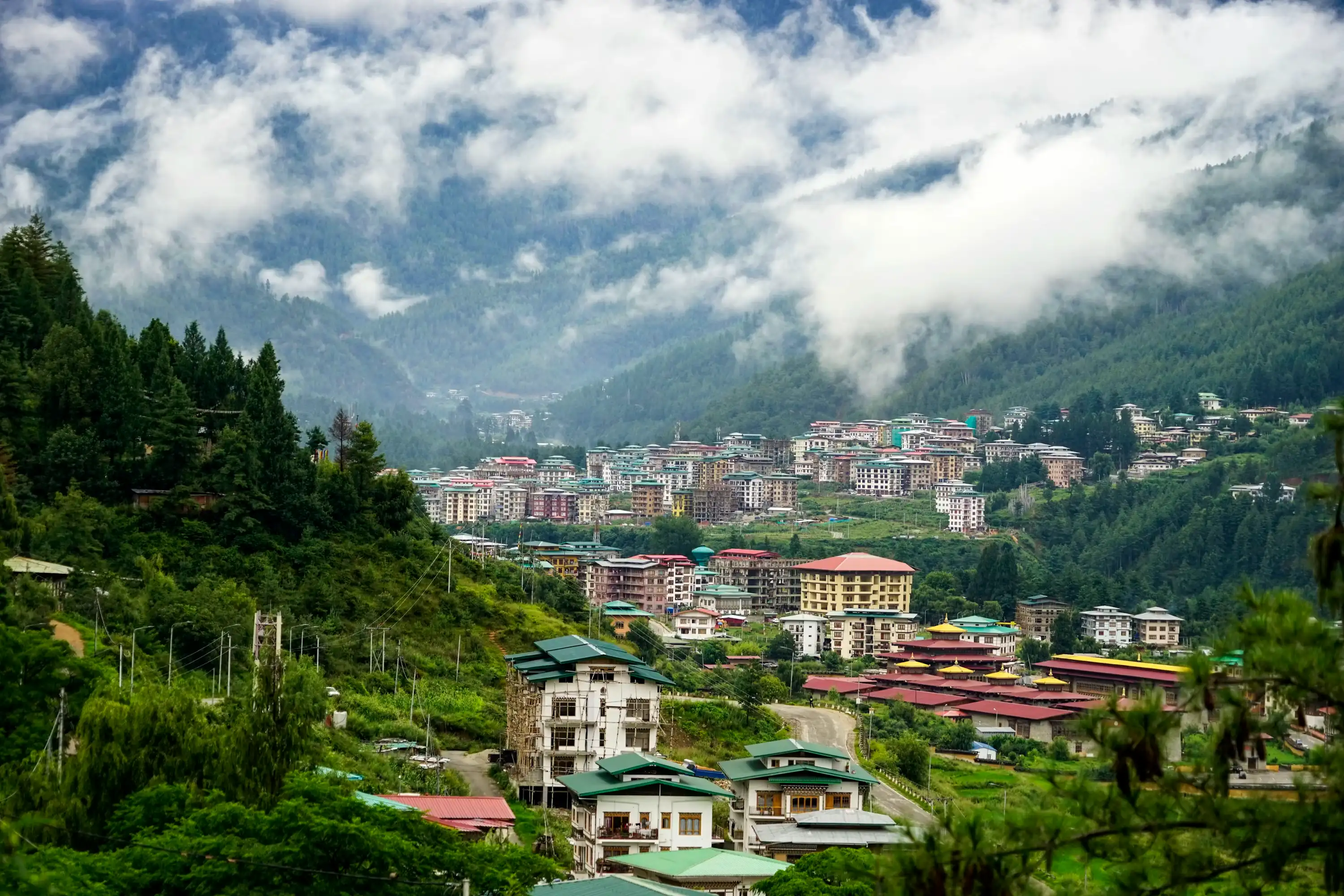
Spring (March to May) and autumn (September to November) are unambiguously the two best windows, and they offer genuinely different versions of the climb. Spring brings rhododendrons and blue poppies into bloom along the lower forested sections of the trail, with generally mild temperatures and clear skies. Autumn — and October specifically — delivers the clearest visibility of the year, which matters enormously here because so much of the experience depends on actually being able to see the monastery and the valley below rather than a wall of cloud. October is also, predictably, the single busiest month of the year, drawing the largest share of Taktsang's 75,000-plus annual visitors.
| MONTH | CONDITIONS | CROWD LEVEL | NOTES |
|---|---|---|---|
|
March–May (Spring) |
Mild temperatures, rhododendrons and blue poppies blooming, generally clear skies |
High — one of the two peak seasons |
Excellent visibility; the forest sections of the trail are at their most colourful; book well ahead |
|
June–August (Monsoon) |
Warm, frequent rain, slippery trail sections, clouds often obscure the monastery itself |
Low |
Avoid if possible — the views are the main reason to do this hike, and clouds remove much of the reward; the trail becomes genuinely more hazardous when wet |
|
September–November (Autumn) |
Crisp, clear, the best visibility of the year |
Very high — October is the single busiest month, with 75,000+ annual visitors concentrated around this season |
The best overall window; book accommodation and guides well ahead; early starts matter even more for crowd avoidance |
|
December–February (Winter) |
Cold, dry, often the clearest skies of all, possible ice on shaded trail sections |
Low to moderate |
Underrated season — fewer crowds, excellent visibility, but carry proper layers and check for icy patches especially on the final stairs |
SEASON-BY-SEASON GUIDE
The monsoon months of June through August are worth actively avoiding if your dates allow it. Rain makes the stone stair sections genuinely more hazardous, and — more disappointingly — low cloud frequently obscures the monastery itself, removing much of the visual reward that the climb is built around. Winter, December through February, is the season most visitors overlook and shouldn't: cold but dry, often delivering the single clearest skies of the entire year, and with a fraction of the autumn crowds. The trade-off is the need for proper layering and genuine caution on any icy sections of the upper stairs.
Who can actually do this hike
The honest answer, which most guides are reluctant to give plainly: healthy adults of most fitness levels can complete this hike comfortably if they pace themselves and take breaks. This is not a technical climb and requires no special equipment or experience — it is, in essence, a steady, sustained uphill walk on a well-maintained trail, made more demanding by the altitude than by any individual obstacle.
Children aged 8 and above with reasonable fitness regularly complete it, particularly if the adults accompanying them build in enough breaks and treat the cafeteria stop as a genuine rest rather than a brief pause. Older adults in their 60s and 70s complete it successfully every season, often with the help of a trekking pole on the steeper sections. Visitors with heart or lung conditions should consult a doctor before attempting it, given the combination of sustained exertion and altitude above 2,400 metres. Those with significant knee problems may find the descent — on uneven stone stairs, for a sustained period — more challenging than the ascent itself, which is a pattern several experienced visitors specifically flag as counter to what most people expect.
Horses are available at the trailhead, but only as far as the cafeteria at the halfway point — no animal makes the final, steeper section to the monastery itself, regardless of what you're prepared to pay. Several experienced visitors go further and specifically recommend walking the lower section rather than riding, citing concerns about the animals' welfare on a route they cover repeatedly throughout the day. If your primary limitation is fitness rather than mobility, walking slowly with breaks is, by every account, the better choice over the horse option in any case — both for the experience itself and for what you're supporting by choosing it.
What to actually bring
The practical preparation for Tiger's Nest is straightforward but worth taking seriously, because the consequences of under-preparing — running out of water, discovering your shoes have no grip on the descent, arriving at the gate in shorts and being turned away — are entirely avoidable with modest forethought.
| ITEM | NOTES |
|---|---|
|
Start time |
Leave Paro by 7–8 AM; the monastery opens at 8 AM; early starts mean cooler temperatures, fewer crowds, and better light for photography on the way up |
|
Footwear |
Sturdy, broken-in walking shoes or light hiking boots with good grip — the stone stairs are uneven and can be slippery, especially descending |
|
Layers |
You will warm up quickly on the climb even in winter; wear layers you can remove rather than one heavy jacket |
|
Water |
Minimum 1.5 litres from the base; the cafeteria sells bottled water but supply is limited in peak season — don't rely on it as your only source |
|
Snacks |
High-energy options — trail mix, energy bars, dried fruit — to supplement the cafeteria stop |
|
Trekking pole |
A wooden hiking pole, rentable at the base for a nominal fee, is genuinely useful on the steeper stair sections, especially on the descent |
|
Horses |
Available at the base for the lower section only — up to the cafeteria, never beyond; cost approximately ₹700–1,000 one way; several experienced visitors recommend walking rather than riding, both for the experience and for the animals' welfare |
|
What to deposit before entry |
All phones, cameras, bags and electronics must be left in a locker at the entrance — no exceptions; carry minimal essentials in pockets if possible to speed up this process |
|
Dress code |
Long pants and covered shoulders are required to enter the monastery; carry a light scarf or shawl as a backup if your outfit doesn't fully comply |
|
Acclimatisation |
Paro itself sits at 2,280 m; spend at least one full day in Paro — visiting Rinpung Dzong or the National Museum — before attempting the hike if you've just arrived from low altitude |
|
Altitude awareness |
Mild effects (heavier breathing, slight fatigue) are common and manageable; those with heart or lung conditions should consult a doctor in advance; the descent's stone stairs can be harder on knees than the ascent |
|
Photography |
No photography permitted inside any of the temples or the cave — phones and cameras are deposited before entry; the trail itself offers excellent photo opportunities, particularly from the main viewpoint and the prayer-flag bridge |
PRACTICAL CHECKLIST — TAKTSANG MONASTERY HIKE 2026
A realistic day plan
Leave Paro by 7 to 8 AM. The monastery itself opens at 8 AM, and an early start gives you cooler temperatures for the climb, a meaningful head start on the day's crowds, and the best quality light for photography on the way up — before the midday sun flattens the contrast that makes the early views so striking. Budget the full day: most visitors complete the round trip, including a proper rest at the cafeteria and roughly an hour inside the monastery itself, in four to six hours, which means a 7 AM departure from Paro typically has you back at your hotel by early-to-mid afternoon, leaving the rest of the day for Paro's other significant sites — Rinpung Dzong, the National Museum, or simply recovery.
There is no advantage to rushing this. Several of the most detailed first-hand accounts of the hike make the same point independently: this is not a race, and the people who enjoy it most are the ones who take their time, stop frequently, and treat the cafeteria break as a genuine pause rather than an obstacle between them and the summit. The reward at the end — an hour spent inside a 17th-century cliffside monastery built around an 8th-century meditation cave, with your phone in a locker and nothing to do but actually be present in the space — does not improve by being rushed toward.
Planning your Bhutan trip with BizareXpedition
Tiger's Nest is, for almost every Bhutan itinerary, the single non-negotiable inclusion — and getting the day right, with proper acclimatisation beforehand, the correct guide, and realistic timing, makes a measurable difference to how the experience lands. BizareXpedition™ Services Pvt. Ltd. (bizarexpedition.com), based in Haridwar and specialising in Himalayan journeys across the subcontinent, builds Bhutan itineraries for Indian travellers that sequence the Taktsang hike correctly within the broader trip — allowing a genuine acclimatisation day in Paro beforehand, working with guides who know the trail's specific rhythms, and ensuring the permits, SDF, and Route Permit paperwork are handled well ahead of time so the day itself is free to be exactly what it should be: a climb to one of the most extraordinary religious sites in the world, undertaken without unnecessary friction.
| CATEGORY | ESTIMATE (PER PERSON) |
|---|---|
|
SDF (Indian nationals) |
₹1,200/night — applies regardless of which day you do the hike, as part of your overall Bhutan trip cost |
|
Tiger's Nest entry fee |
Nu 500 (~₹500) — usually bundled into your SDF/package, rarely an extra out-of-pocket cost at the gate |
|
Guide and transport for the day |
Typically included in your overall Bhutan tour package; if arranged independently, budget ₹2,000–4,000 for a dedicated guide and vehicle for the day |
|
Horse rental (optional, to cafeteria only) |
₹700–1,000 one way |
|
Hiking pole rental |
Nominal — under ₹100 |
|
Food at the cafeteria |
₹300–800 for tea, snacks, or the vegetarian buffet lunch |
COST ESTIMATE — TIGER'S NEST DAY (INDIAN NATIONALS)
Standing at the main viewpoint, with the monastery visible across the gorge and the waterfall sound rising from below, a fellow traveller next to me said something that has stayed with me since: that the building looks less like something that was constructed and more like something that grew there, the way certain trees grow directly out of rock faces with no apparent soil to anchor them. It isn't, of course — it was built, twice, by hand, the second time using deliberately old methods on a cliff face that offers no margin for error. But the impression holds anyway. Some places earn the right to look inevitable. Taktsang is one of them.
Best Selling Tour Packages
Explore other exciting options for your next adventure!