
Published On - Mar 24, 2026
Updated On - Jun 04, 2026
5 min
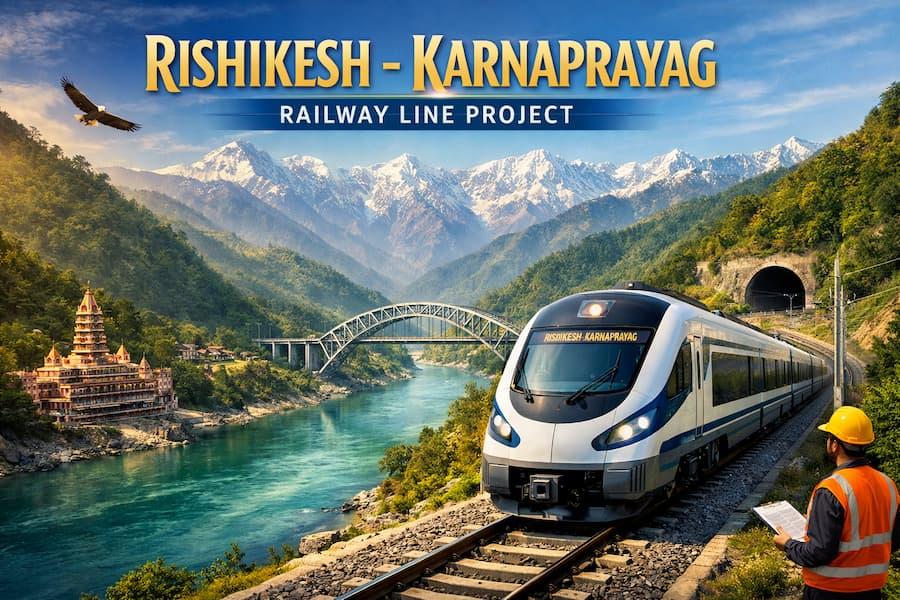
Rishikesh Karnaprayag Railway Line Project
In a significant boost for pilgrims heading to the Himalayan shrines, Indian Railways has announced that partial train services on the ambitious Rishikesh-Karnaprayag line are expected to begin soon. This development comes as registration for the 2026 Chardham Yatra officially opens, marking a new era of connectivity for the sacred pilgrimage.
Imagine this - you are sitting comfortably in your AC coach, enjoying the journey through the mountains. And the moment you step out, every sacred temple of the Char Dham is just a short drive away. What if reaching the sacred Char Dham was no longer a tiring road journey? Sounds like a dream, right? But now, that vision is slowly turning into reality with the upcoming Rishikesh–Karnaprayag railway line, a project that promises to change pilgrimage travel forever… just a matter of time.
In a significant boost for pilgrims heading to the Himalayan shrines, Indian Railways has announced that partial train services on the ambitious Rishikesh-Karnaprayag line are expected to begin soon. This development comes as registration for the 2026 Chardham Yatra officially opens, marking a new era of connectivity for the sacred pilgrimage.
Introduction
In a major boost to pilgrimage connectivity, partial train services on the Rishikesh–Karnaprayag rail route are expected to begin soon, marking a significant milestone in India’s ambitious Char Dham railway project. The 125-km line—currently under construction in Uttarakhand—is designed to bring rail access closer to key religious hubs, making the journey easier, faster, and more accessible for millions of devotees.
Project Update: Trains Coming Closer to the Hills
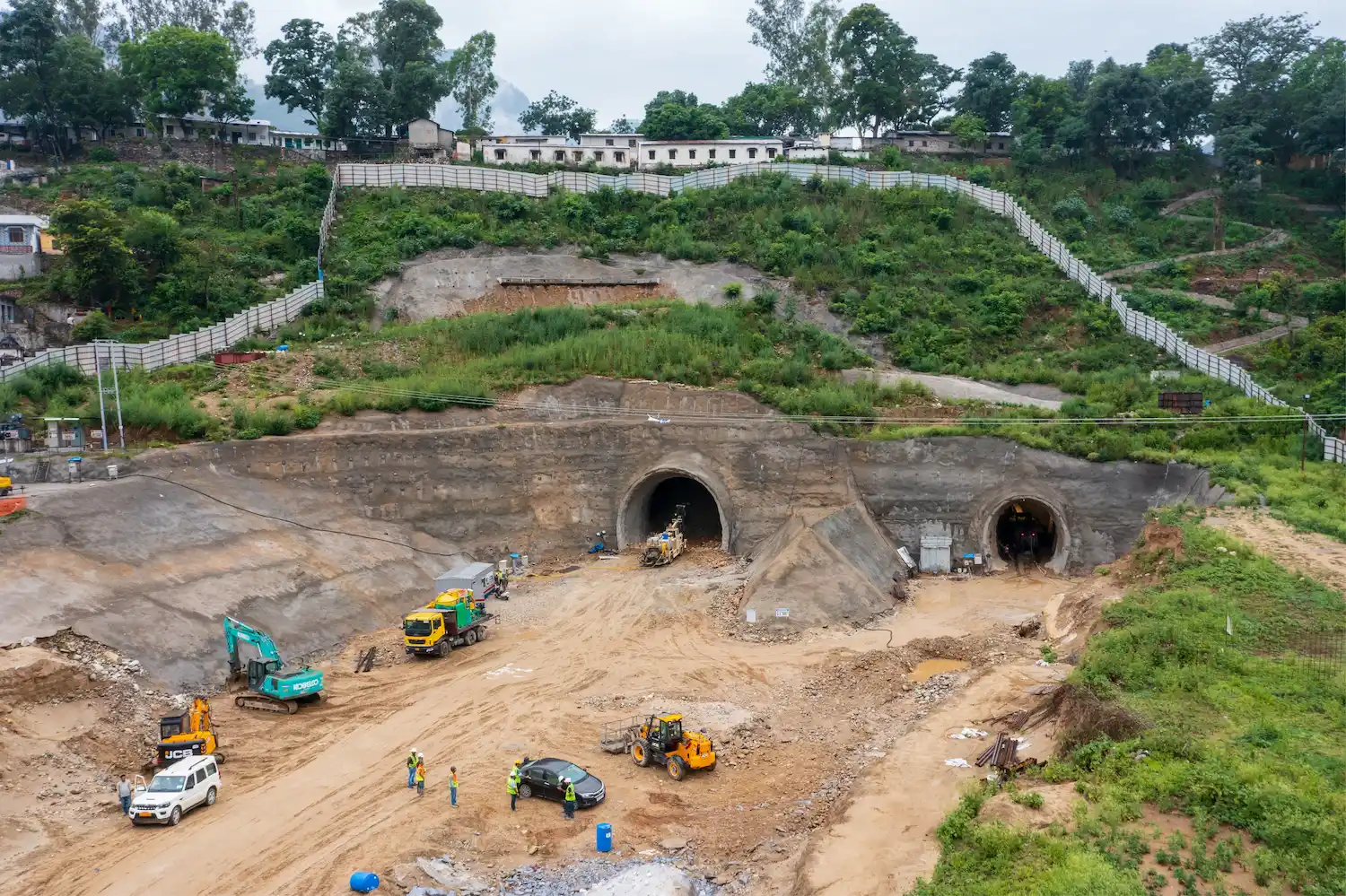
The Rishikesh–Karnaprayag railway line is part of the larger Char Dham rail network aimed at connecting Kedarnath, Badrinath, Gangotri, and Yamunotri. Despite engineering challenges like seismic zones and tunneling in mountains, work is progressing steadily, with completion targeted in the coming years
Partial operations are expected to begin soon on completed sections
The full project spans around 125 km through challenging Himalayan terrain
A majority of the route runs through tunnels and bridges due to difficult geography
How will the Rishikesh-Karnaprayag rail line transform the Chardham Yatra?
The Rishikesh-Karnaprayag rail line is set to transform the Chardham Yatra by providing a safer, faster, and more convenient alternative to the challenging mountainous road routes. Spanning approximately 125 kilometres, this project is a crucial component of the initiative to connect the Chardham circuit by rail, making the sacred shrines of Yamunotri, Gangotri, Kedarnath, and Badrinath more accessible to a wider number of devotees.
Improved Accessibility for Vulnerable Groups: The rail line is expected to be particularly beneficial for elderly travellers who often face significant difficulties navigating the steep and rugged Himalayan terrain by road.
Reduced Travel Time: Once fully operational, the railway will significantly reduce the time required to reach important points along the Chardham route.
A Milestone in Himalayan Engineering
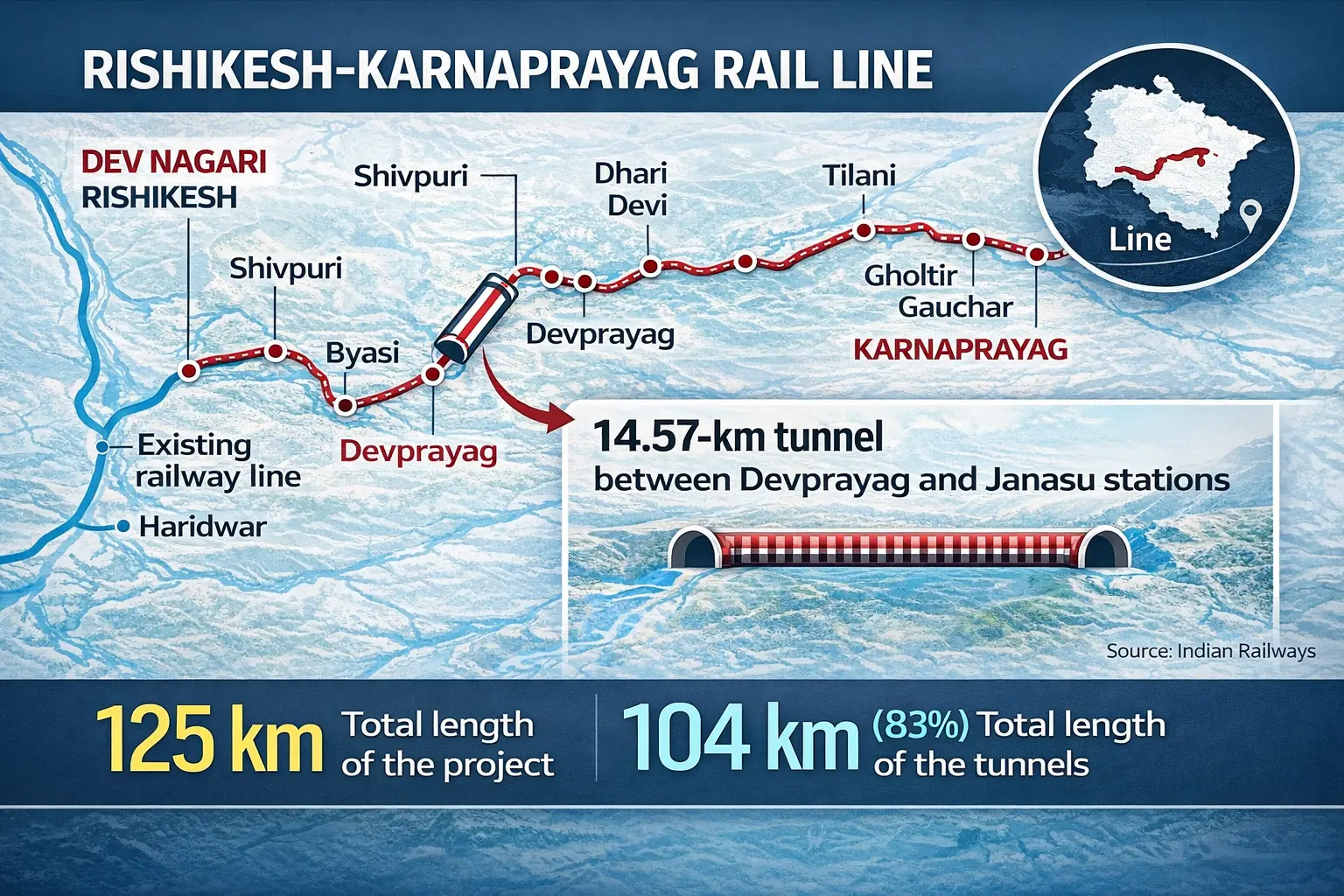
The ₹26,841 crore Rishikesh-Karnaprayag rail project is designed to transform travel across the 125-kilometre stretch. Considered one of India’s most challenging infrastructure undertakings, the line will feature an extensive tunnel network, with 105 kilometres of the 125-kilometre route passing underground. Key technical milestones include:
Tunnel Progress: Breakthroughs have been achieved in 28 out of 38 planned tunnels.
India’s Longest Tunnel: The completion of Tunnel T-8, the longest railway tunnel in the country, represents a major engineering feat in the Himalayan region.
Excavation Status: Approximately 160 kilometres of total tunnel excavation (including main and exit tunnels) has been completed out of a total planned 213 kilometres.
Why This Railway Line is a Game-Changer for Char Dham Yatra
1. Faster & Easier Travel
Currently, pilgrims rely heavily on long road journeys from Rishikesh to reach destinations like Kedarnath and Badrinath. The route is expected to drastically improve accessibility to remote Himalayan regions. This rail line will:
Cut down travel time significantly
Reduce fatigue, especially for elderly pilgrims
Offer a more comfortable journey option
2. Better Connectivity to Pilgrimage Hubs
These are key junctions for further travel to Kedarnath and Badrinath, making the yatra more structured and convenient. The line will connect major spiritual towns like:
Devprayag
Rudraprayag
Karnaprayag
3. Boost for Tourism & Local Economy
This project is not just about railways—it’s about transforming Uttarakhand’s tourism ecosystem. With easier access:
Tourist footfall is expected to increase
Local businesses (hotels, taxis, guides) will benefit
New job opportunities will be created in the region
4. Strategic & Safety Advantages
Beyond tourism, the railway line also holds strategic importance:
Faster movement in border areas
Better disaster response in hill regions
Safer alternative compared to landslide-prone roads
Timeline and Impact
While partial services are imminent, the entire railway line is slated to be fully operational by December 2027 or 2028. Currently, between 60% and 76% of the project budget has been utilized, with work advancing rapidly on bridges, track cuttings, and railway stations. Supporting infrastructure, such as motor bridges in Srinagar Garhwal, Gochar, and Kaleshwar, has already been completed to facilitate access to the new stations.
Boosting Safety and Economy
The project, a "dream" initiative of Prime Minister Narendra Modi, aims to make the pilgrimage safer and faster, particularly for elderly travellers who struggle with the difficult mountainous roads. Beyond the Yatra, the rail network is expected to strengthen connectivity for various towns across Uttarakhand, driving local economic development and tourism. Once tunnelling is finalised, Indian Railways plans to use metro-style track technology to ensure a smooth and comfortable journey through the heart of the mountains.
Source 1 - https://www.pib.gov.in/PressReleasePage.aspx?PRID=2222278®=3&lang=2
Best Selling Tour Packages
Explore other exciting options for your next adventure!