

Komal
Writer
Updated On - Aug 29, 2026
25 min
Published On - Jul 28, 2026
Kanha National Park Guide — The Real Jungle Book Territory
Sal forest, open meadow, and the deer species Kanha brought back from the edge of extinction — a practical, honest guide to India's most cinematic tiger reserve.
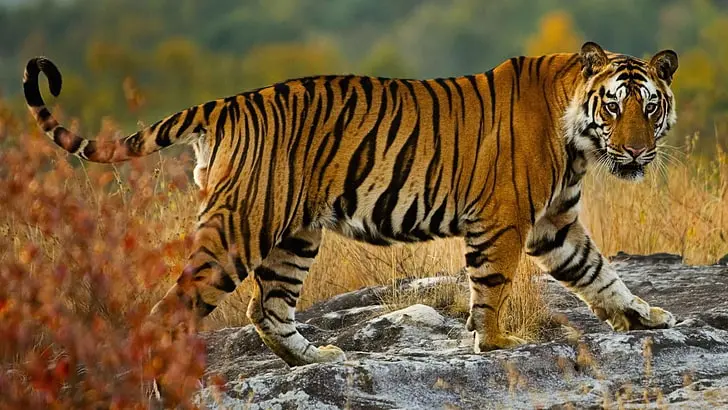
The alarm call came first — a langur's sharp, descending bark somewhere above the fire trail, then a chital's answering shriek from the meadow beyond. Our guide killed the engine mid-sentence. For eleven minutes nothing moved except dust in the morning light, and then she stepped out of the bamboo without any hurry at all, crossed the track in four unbroken strides, and was gone into the sal forest on the far side. Nobody in the jeep said a word until she was out of sight. It is the particular magic of Kanha that the waiting is never wasted time — the meadows here are wide enough, and the light golden enough, that even an empty hour feels like a story being told slowly, on purpose.
Kanha is the largest national park in Madhya Pradesh and, by most naturalists' reckoning, the most complete picture of what a Central Indian sal forest looked like before most of India's forests were cleared. It is also the reserve most commonly marketed as the real-life setting of Kipling's Jungle Book — a claim worth examining honestly before anything else, because the truth is more interesting than the tourist-brochure version.
Jungle Book Country — What's True and What's Marketing
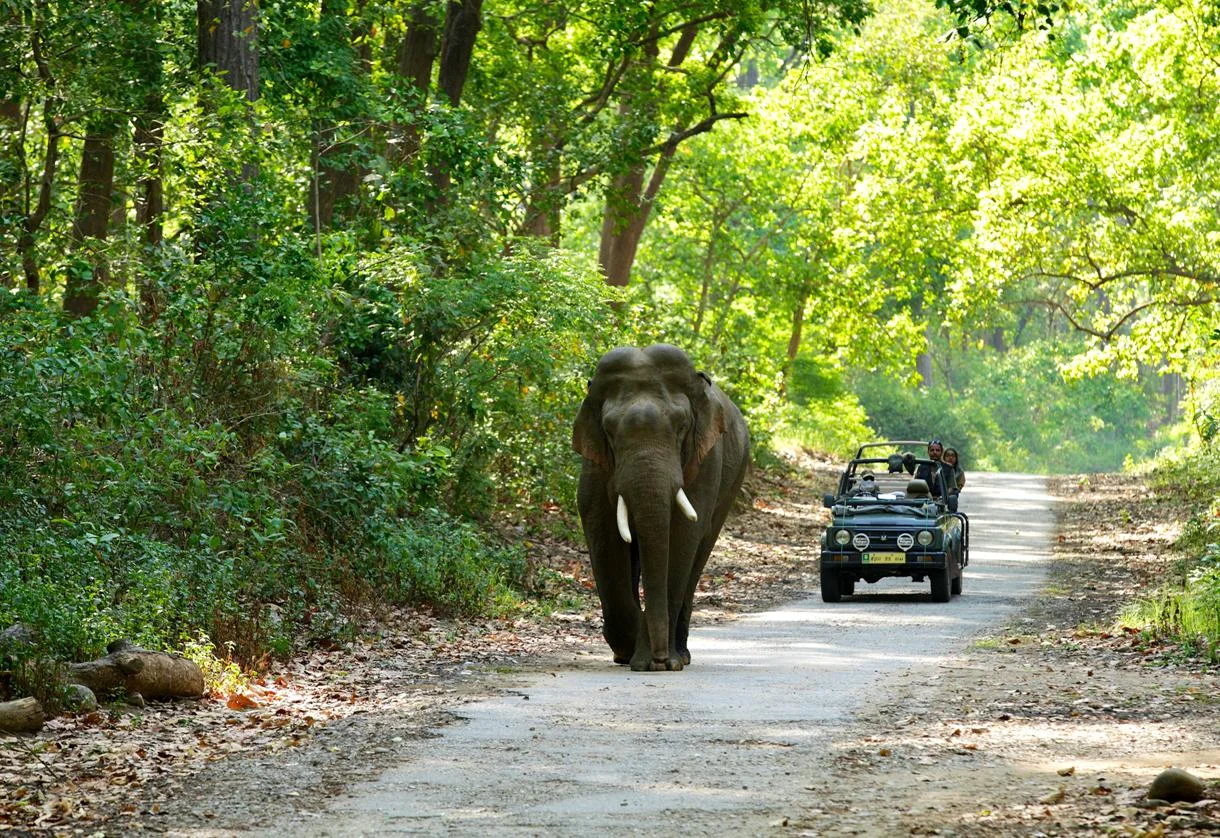
Rudyard Kipling set his 1894 stories in a fictional forest he called "Seeonee," a name drawn from the real town of Seoni in Madhya Pradesh, and mentioned the Wainganga river that still runs through the region today. It is a genuinely evocative literary geography — and it is also, by Kipling's own account, entirely secondhand. He wrote The Jungle Book at his desk in Vermont, drawing on colonial-era gazetteers, missionary reports, and stories about India rather than firsthand fieldwork in these particular forests; there is no historical record that Kipling ever set foot in Kanha, Pench, or anywhere near Seoni district. Modern Kipling scholarship even suggests his original inspiration may owe as much to the Aravalli hills of Rajasthan as to Central India. None of this stops Kanha, Pench, and Bandhavgarh from all marketing themselves as "Kipling Country," and none of it should — the sal-and-bamboo landscape here genuinely does look and feel like the world Kipling imagined, whether or not he ever saw it himself. Visit for what the forest actually is, not for a literal pilgrimage, and the disappointment some travellers feel on learning the Kipling connection is folklore rather than fact tends to disappear entirely.
What is not folklore is Kanha's own conservation history, which stands on its own without any borrowed literary credibility. The forest was first notified as a reserve in 1879 under British colonial forestry administration, made a wildlife sanctuary in 1933, and split for a period into two smaller reserves, Hallon and Banjar, before the modern Kanha National Park was formally established in 1955 — making it one of India's oldest protected areas. It became one of the original nine reserves under Project Tiger in 1973, and today spans roughly 940 square kilometres of core area across the Mandla and Balaghat districts, set within the Maikal range of the wider Satpura hills. Worth knowing before you book: the tourism zones open to safari jeeps cover only around 20 percent of that core area, spread across four zones — a detail that helps calibrate expectations about how much of this vast reserve any single safari can realistically show you.
| Detail | Information |
|---|---|
|
Location |
Mandla & Balaghat districts, Madhya Pradesh, Central India |
|
Established |
Wildlife sanctuary 1933; National Park 1955; Project Tiger reserve 1973 |
|
Core area / Total area |
~940 sq km core (largest MP reserve); tourism zones cover ~20% of core |
|
Safari zones |
Kanha, Kisli, Mukki, Sarhi (core); Khatia, Khapa, Sijhora, Phen (buffer) |
|
Entry gates |
Khatia (for Kanha/Kisli/Sarhi), Mukki, Sarhi |
|
Known for |
"Jungle Book" landscape (marketing, not verified history); barasingha recovery |
|
Park open season |
1 October to 30 June; core closed 1 July–30 Sept for monsoon |
|
Nearest airport |
Jabalpur, ~160 km / 3.5–4 hrs from Khatia Gate |
|
Official booking portal |
mponline.gov.in — the only authentic booking channel |
Kanha — Essential Facts
KANHA IS A TASTING MENU WHERE THE KITCHEN MAKES YOU WAIT BETWEEN COURSES — AND THE ELEVEN MINUTES OF SILENCE BEFORE A TIGER FINALLY CROSSES THE TRACK IS THE PART YOU REMEMBER LONGEST.
Getting There — Gates, Gateways, and Ground Reality
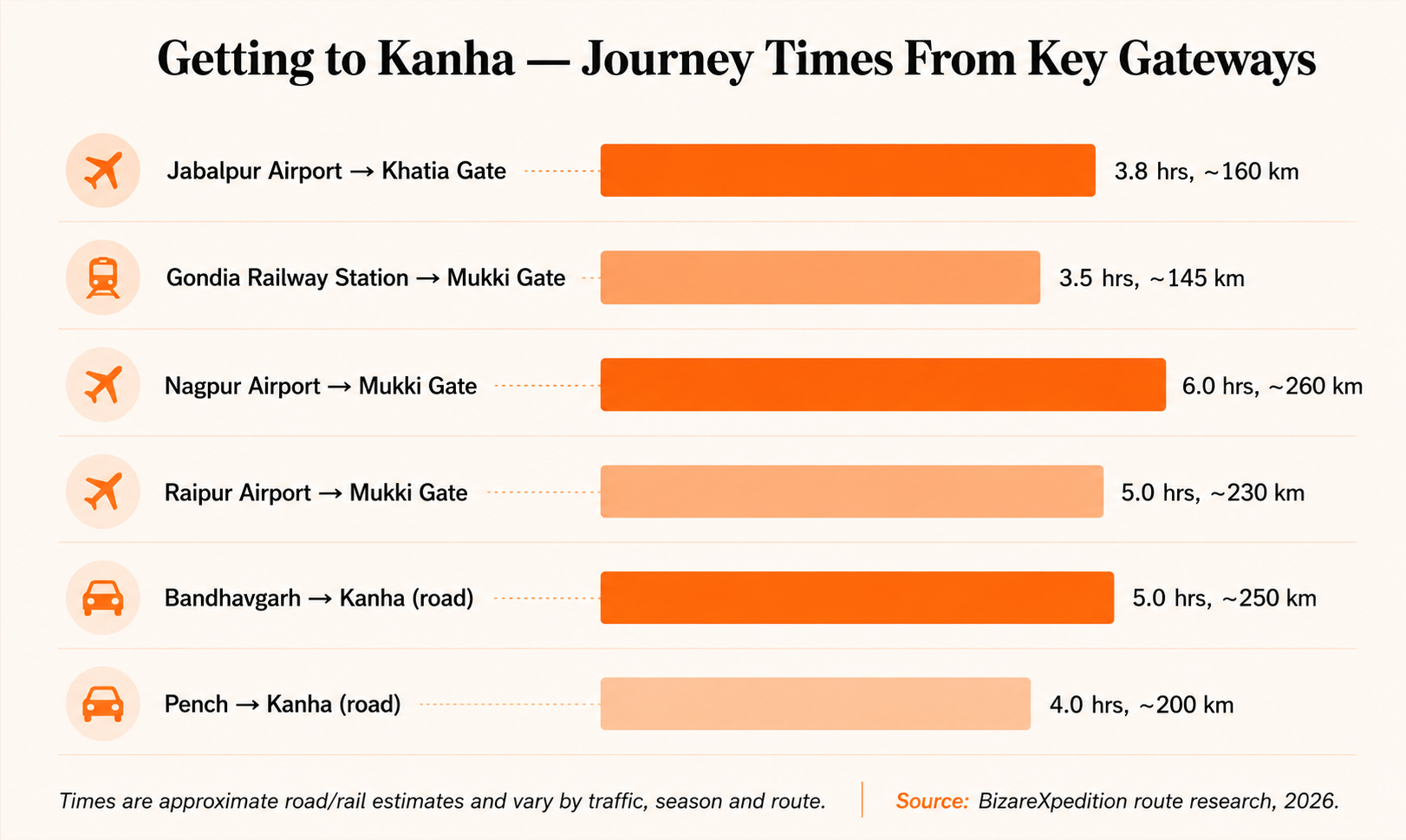
Kanha has three functioning entry gates, and which one suits you depends entirely on which zone you've booked and where your lodge sits. Khatia Gate, in Mandla district, is the busiest and most flexible, offering access to the Kanha, Kisli, and Sarhi zones and well connected from both Jabalpur and Nagpur. Mukki Gate, roughly 50 kilometres away in Balaghat district, serves the Mukki zone specifically — statistically the strongest zone for tiger sightings according to most naturalists and repeat visitors — and is reachable from Jabalpur, Nagpur, or Raipur. Sarhi Gate serves its own zone directly. The distance between gates is genuinely significant; moving between Khatia and Mukki takes close to two hours through the buffer, so decide your gate before booking your lodge, not after.
| Route | Distance | Approx. Time |
|---|---|---|
|
Jabalpur Airport → Khatia Gate |
~160 km |
3.5–4 hrs |
|
Gondia Railway Station → Mukki Gate |
~145 km |
3–3.5 hrs |
|
Nagpur Airport → Mukki Gate |
~260 km |
5.5–6 hrs |
|
Raipur Airport → Mukki Gate |
~230 km |
5 hrs |
|
Khatia Gate ↔ Mukki Gate |
~50 km |
~2 hrs via buffer roads |
|
Kanha → Pench (road) |
~200 km |
4 hrs |
|
Kanha → Bandhavgarh (road) |
~250 km |
5 hrs |
Kanha — Route
Jabalpur is the most practical air and rail gateway, roughly 160 kilometres and three and a half to four hours by road from Khatia Gate, with regular flights from Delhi, Mumbai, and Bhopal. Gondia Junction, about 145 kilometres from Mukki Gate, is the closer railhead for travellers arriving from Mumbai or the south, and Nagpur and Raipur airports both work as alternatives, at roughly five to six hours by road. For travellers building a wider Central India wildlife circuit, Kanha sits about four hours from Pench and five hours from Bandhavgarh by road, making a two- or three-park itinerary genuinely feasible without punishing transfer days.
Choosing Your Zone and Gate
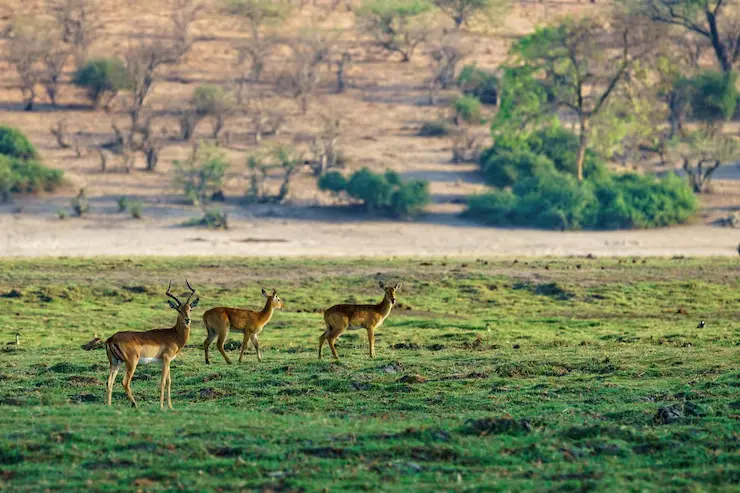
Kanha's four core zones each have a distinct character, and the choice matters more here than at most reserves because moving between zones mid-trip costs real time. The Kanha zone itself is the classic choice — open meadows, bamboo groves, and Shravan Taal, a small lake linked in local legend to an episode from the Ramayana where King Dashrath mistakenly killed the ascetic Shravan Kumar, believing him to be a deer drinking at the water's edge. Kisli, immediately adjacent, shares similar terrain on a smaller scale and is the access point for Bamni Dadar, Kanha's celebrated sunset viewpoint. Mukki, in the reserve's south, consistently posts the strongest tiger-sighting statistics among repeat visitors and naturalists, its bamboo and sal cover interspersed with the open ground that makes spotting easier. Sarhi sees fewer tigers but rewards patient visitors with strong sightings of gaur (Indian bison), nilgai, and wild boar across its dry deciduous woodland.
| Zone | Entry Gate | Entry Gate Character | Best For |
|---|---|---|---|
|
Kanha |
Khatia |
Open meadows, bamboo, Shravan Taal |
Classic first safari, general wildlife |
|
Kisli |
Khatia |
Sal forest, smaller meadows |
Bamni Dadar sunset, birding |
|
Mukki |
Mukki |
Bamboo and sal, open ground |
Strongest tiger-sighting reputation |
|
Sarhi |
Sarhi / Khatia |
Dry deciduous woodland |
Gaur, nilgai, wild boar; quieter |
Kanha — Zone
PICKING A KANHA ZONE IS LIKE PICKING A COURSE AT A PROPER TASTING MENU — MUKKI IS THE RICH MAIN EVENT EVERYONE REQUESTS, SARHI IS THE PALATE CLEANSER NOBODY REGRETS ORDERING.
The Barasingha — Kanha's Own Conservation Story
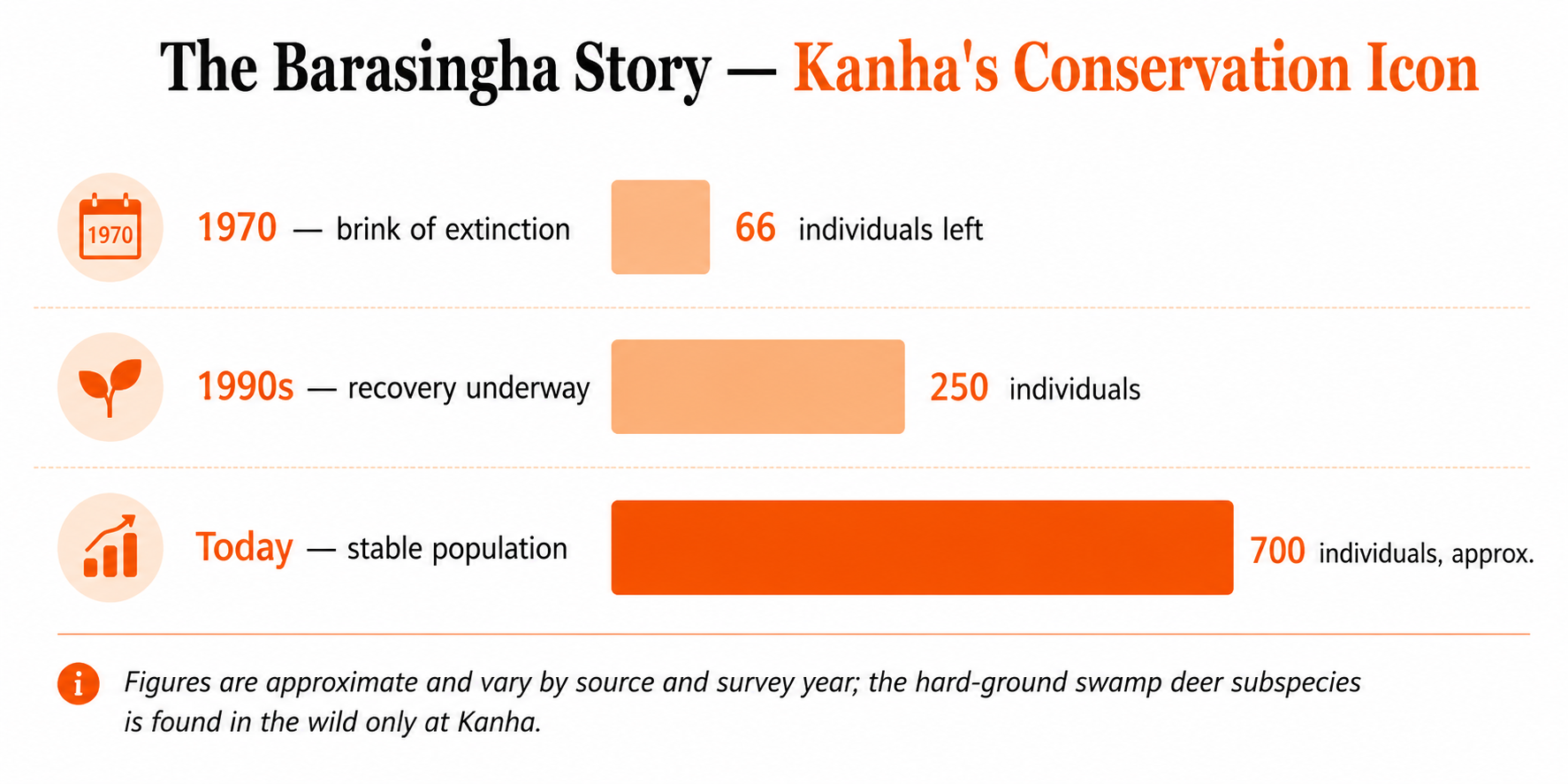
Long before Kanha marketed itself on a borrowed literary connection, it earned genuine global recognition for pulling the hard-ground barasingha back from the edge of extinction. This subspecies of swamp deer, distinguished from its wetland-dwelling cousins by its adaptation to Kanha's drier meadows, had collapsed to roughly sixty-six individuals by the early 1970s, hunted and squeezed out by habitat loss until it existed nowhere else on Earth in the wild. A sustained, decades-long recovery programme — habitat management, meadow restoration, and a captive-breeding-and-release effort — has since rebuilt the population into several hundred animals, and the barasingha, nicknamed "Bhoorsingh" by the park, now serves as Kanha's official mascot and one of Indian conservation's clearest success stories. Seeing a stag's twelve-tined antlers silhouetted against a Kanha meadow at dawn is, for many repeat visitors, a more moving sight than the tiger itself.
When to Go — Reading the Kanha Calendar
Kanha operates from 1 October to 30 June, with the core zones closing completely for the monsoon between 1 July and 30 September — a longer closure than some other Central Indian reserves observe, so double-check dates if Kanha is one leg of a multi-park trip. Winter, November through February, is the most popular season: mornings are misty and atmospheric, temperatures stay comfortable for long safari hours, and Kanha has a reputation among naturalists as the coldest of Madhya Pradesh's reserves, so genuine cold-weather layers matter even more here than at Bandhavgarh or Pench. April through June is widely considered the strongest season for tiger sightings specifically, as the forest thins and animals concentrate around dwindling waterholes despite temperatures that regularly cross 40°C.
| Season | Months | Typical Temp | Best For |
|---|---|---|---|
|
Winter |
Nov – Feb |
2°C to 24°C |
Comfortable safaris, misty mornings, birding |
|
Spring |
Mar |
12°C to 32°C |
Transitional; good sightings, thinner crowds |
|
Summer |
Apr – Jun |
20°C to 43°C |
Highest tiger-sighting probability, waterhole action |
|
Monsoon |
Jul – Sep |
— |
Core zones fully closed |
When to Go
Things to do at Kanha...
Book through the official portal only. mponline.gov.in is the sole authentic booking channel for Kanha's safari permits. A number of privately run websites use names closely resembling "Kanha National Park" and rank well in search results; some are legitimate travel agents adding a service fee, but none are the park authority itself, and it's worth knowing the difference before you pay. If in doubt, book through a licensed operator you already trust rather than the first search result.
Watch the sunset from Bamni Dadar. Reached via the Kisli zone, this elevated grassland viewpoint delivers a slow, uninterrupted view over Kanha's forest canopy as the light turns from yellow to crimson, with sambar and gaur often grazing peacefully in the meadow below. Most itineraries treat it as a quick photo stop; give it the twenty unhurried minutes it actually deserves.
Watch for the barasingha in the Kanha zone's meadows. Early morning and late afternoon are the best windows, when herds move out of the tree line to graze in open ground. A good naturalist can point out individual stags by antler shape — a small but genuine thrill for repeat visitors.
Visit a Baiga or Gond village through your lodge, thoughtfully. The Baiga and Gond communities native to Mandla and Balaghat districts lived inside what is now the park boundary until relocation programmes, intensified after 2005, moved many families outside the reserve to create undisturbed core habitat for tigers. It's a genuinely difficult history, not a simple cultural-tourism footnote, and it's worth knowing before you go. Several lodges arrange respectful visits to nearby villages, sometimes including a Baiga dance performance or a Gond-inspired thali, and the better ones channel a fair share of that income directly to the community rather than treating the visit as a photo opportunity. Ask your lodge how the visit is structured before booking one.
Try a Gond or Baiga-inspired thali. Several lodges now serve tribal-inspired tasting menus built around kodo and kutki millet, mahua-flower preparations, and local greens and chutneys — a genuinely different, and better, meal than the standard multi-cuisine buffet most safari lodges default to.
Add a second zone if your schedule allows. Because Kanha's zones differ meaningfully in terrain and sighting patterns, splitting a three-or-four-night stay across two zones — Mukki for tiger odds, Kisli or Kanha zone for landscape and barasingha — gives a genuinely fuller picture of the reserve than staying at one gate throughout.
| Zone / Activity | Vehicle Type | Duration | Notes |
|---|---|---|---|
|
Core zone jeep safari (any zone) |
6-seat open gypsy |
~5 hrs |
Two slots daily: morning and afternoon |
|
Buffer zone safari |
6-seat open gypsy |
~3–4 hrs |
Open year-round, including monsoon |
|
Bamni Dadar sunset viewpoint |
Via Kisli zone safari |
20–30 min |
Best light in final hour before closing |
|
Kanha Museum |
Near Kisli/Khatia |
45 min |
Park history and barasingha conservation story |
Kanha — Activity
KANHA IN APRIL IS AN ESPRESSO SHOT AFTER A LONG BORDEAUX WINTER — BRUTALLY HOT, OVER BY 10AM, AND FAR MORE LIKELY TO END WITH A TIGER AT THE WATERHOLE.
Things not to do at Kanha...
Don't book anything but the official portal, or a trusted operator, without checking twice. See above — several look-alike sites exist. If a price looks unusually low or a website pressures same-day payment for a "last remaining permit," treat it with real suspicion.
Don't wear bright colours on safari. Red, orange, yellow, and white are all discouraged by forest guides because they carry and disturb wildlife from a genuine distance; stick to olive, khaki, grey, and other earth tones, which is standard advice across Indian tiger reserves but genuinely enforced at Kanha.
Don't take mobile calls or play audio inside the vehicle. Phones are permitted for photography only; calls, music, and loud conversation are banned inside the safari zone, both by rule and by basic courtesy to the naturalist listening for alarm calls that indicate a predator nearby.
Don't arrive late for your safari slot. Full-vehicle permit holders must arrive within roughly one hour of a morning safari's start time, or thirty minutes for an evening slot; miss the window and the permit is cancelled with no refund. Build in real buffer time from your lodge, especially if it's a distance from the gate.
Don't expect every safari, or even every trip, to deliver a tiger. Kanha's tourism zone is a genuinely small fraction of a genuinely large reserve, and sightings depend on territory, season, and luck as much as on the skill of your guide. Treat each drive as time spent inside an exceptional forest — the barasingha, the birdlife, the light through sal trees — rather than a transaction that owes you a specific photograph.
Don't underestimate winter cold or summer heat. Kanha has a reputation as Madhya Pradesh's coldest reserve; pre-dawn winter safaris in an open gypsy can sit close to freezing, while April and May afternoons cross 40°C. Pack for both extremes if your trip spans the shoulder season.
| Requirement | Detail |
|---|---|
|
Safari booking |
mponline.gov.in only; Indian nationals ~30 days ahead, foreign nationals ~90 days ahead for best availability |
|
ID required |
Government photo ID (passport for foreign nationals); details must match booking exactly |
|
Safari fee (approx.) |
Indian nationals ₹1,500–2,000 per vehicle; foreign nationals ₹3,000–4,000 per vehicle, plus guide fee |
|
Park closure |
Core zones closed 1 July–30 September; also closed Wednesday afternoons and Holi |
|
Dress code for safari |
Earth tones only; no red, orange, yellow, or white |
Kanha — Requirement
Where to Stay — Jungle Lodges by Gate
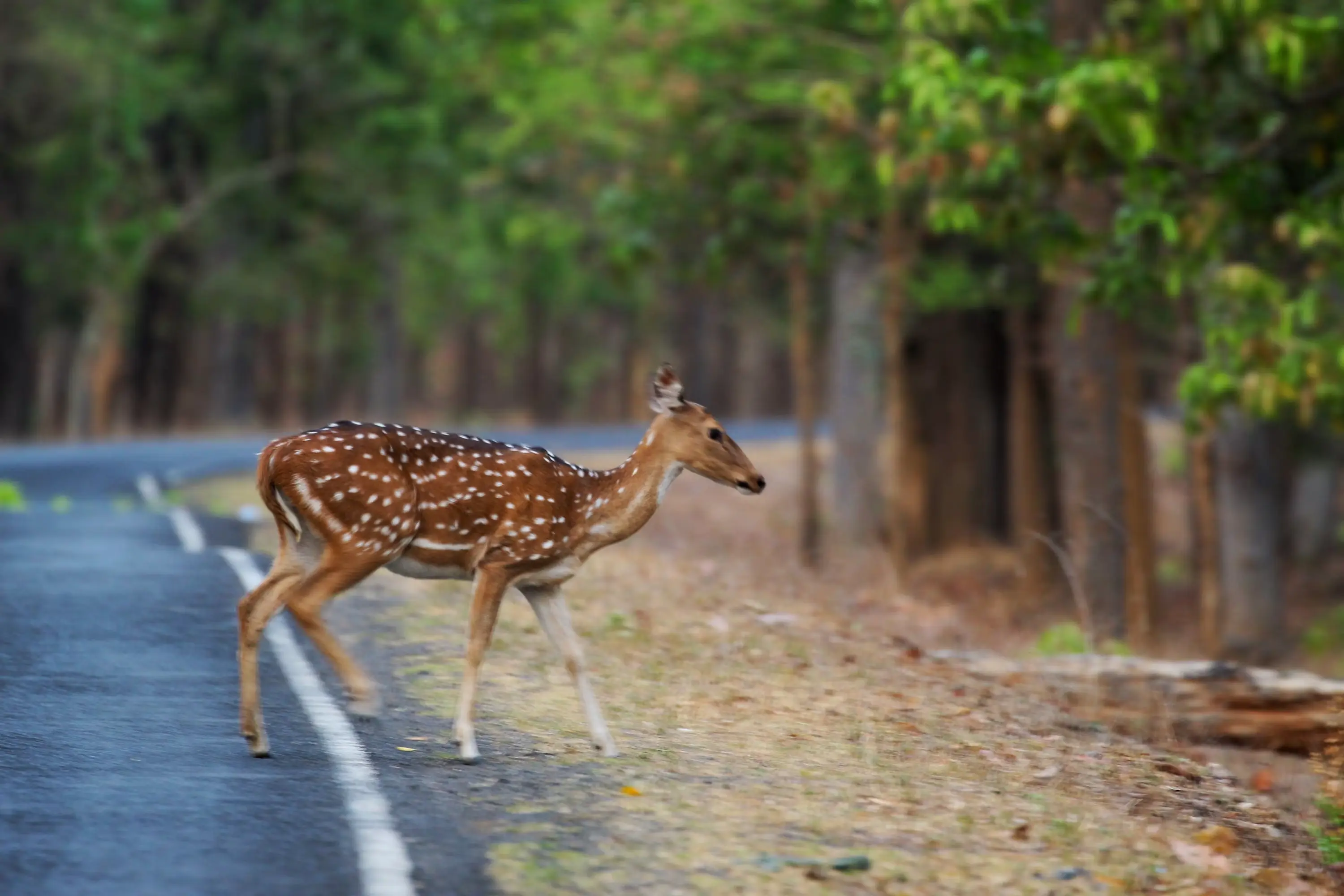
Accommodation clusters around Kanha's two main gates, and the choice of gate matters as much as the choice of lodge. Around Khatia and Kisli, options range from simple family-run guesthouses to Kipling Camp, one of India's oldest safari lodges, alongside newer naturalist-led properties. Mukki, further south, holds some of Central India's most celebrated jungle lodges, including Taj Safaris' Banjaar Tola and the naturalist-focused Singinawa Jungle Lodge, both popular with serious wildlife photographers and international guests building Kanha into a dedicated safari leg of a longer India itinerary.
| Category | Examples | Per Night (Couple) | Honest Note |
|---|---|---|---|
|
Budget guesthouse |
Family-run lodges near Khatia |
₹3,000 – ₹5,500 |
Simple, warm, good home-cooked food |
|
Mid-range lodge |
3-star jungle resorts, both gates |
₹8,000 – ₹16,000 |
Reliable safari coordination, comfortable rooms |
|
Premium jungle lodge |
Kanha Earth Lodge, Kipling Camp |
₹18,000 – ₹32,000 |
Resident naturalists, excellent food |
|
Ultra-luxury lodge |
Banjaar Tola, Singinawa |
₹45,000+ |
Top-tier service; popular with international guests |
Where to Stay
Travelling Kanha Responsibly
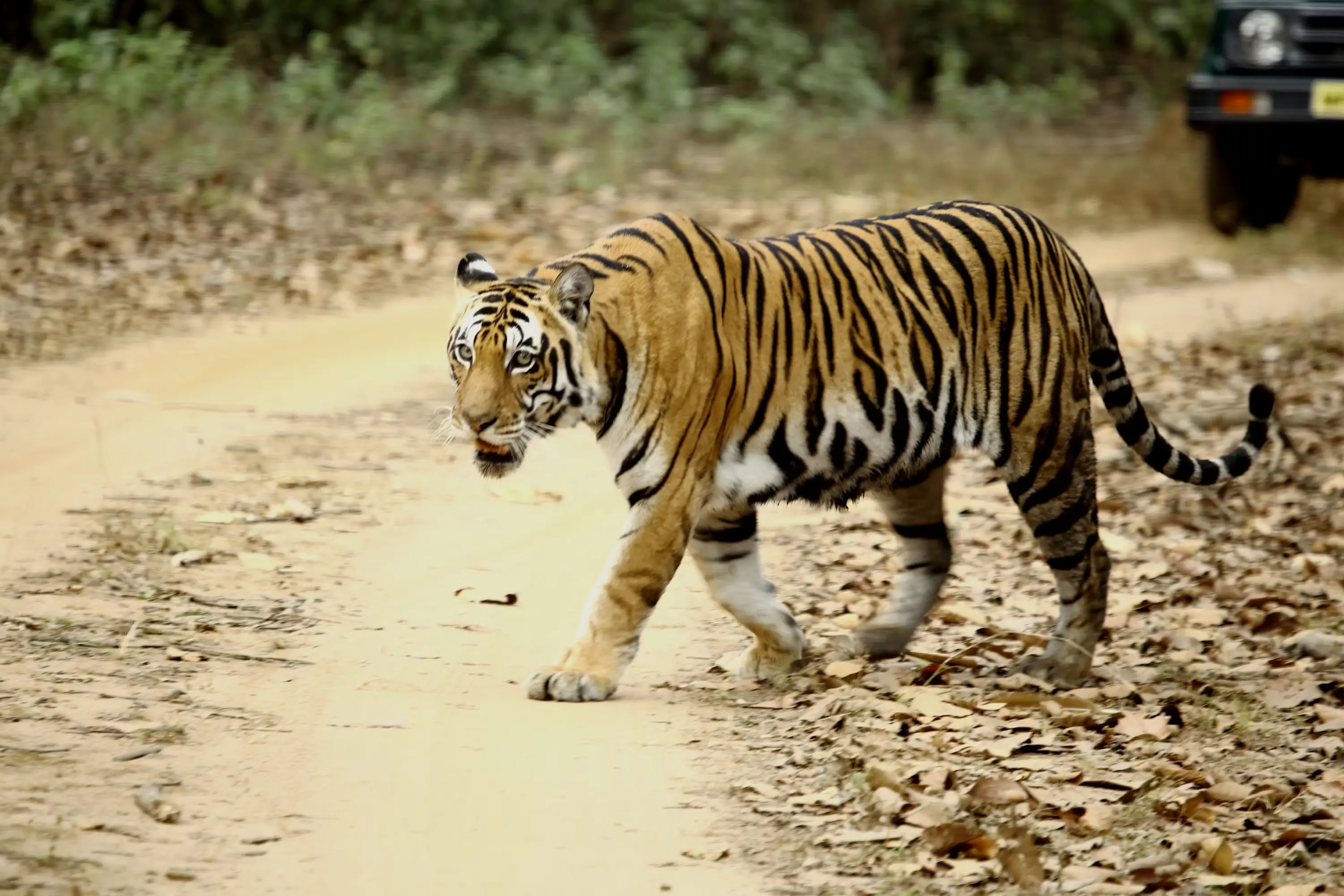
Carry a LifeStraw or similarly filtered bottle rather than accumulating single-use plastic across a multi-day safari stay; most lodges now provide refill stations. Inside the vehicle, follow your guide's lead absolutely on vehicle spacing and no off-track driving — rules that exist specifically to protect a genuinely small tiger population within a genuinely large forest from the pressure of over-tourism. If you visit a Baiga or Gond village, go through your lodge rather than independently, ask how the community benefits from the visit, and approach it as a conversation rather than a photo opportunity, given the community's own complicated recent history with the park's boundaries. Spend locally where the itinerary allows — tribal handicrafts and Gond art bought directly from artisan cooperatives near Mandla rather than city emporiums — and treat a Baiga or Gond thali as an opportunity to ask questions about the food's origins, not simply consume it as novelty.
Before you go...
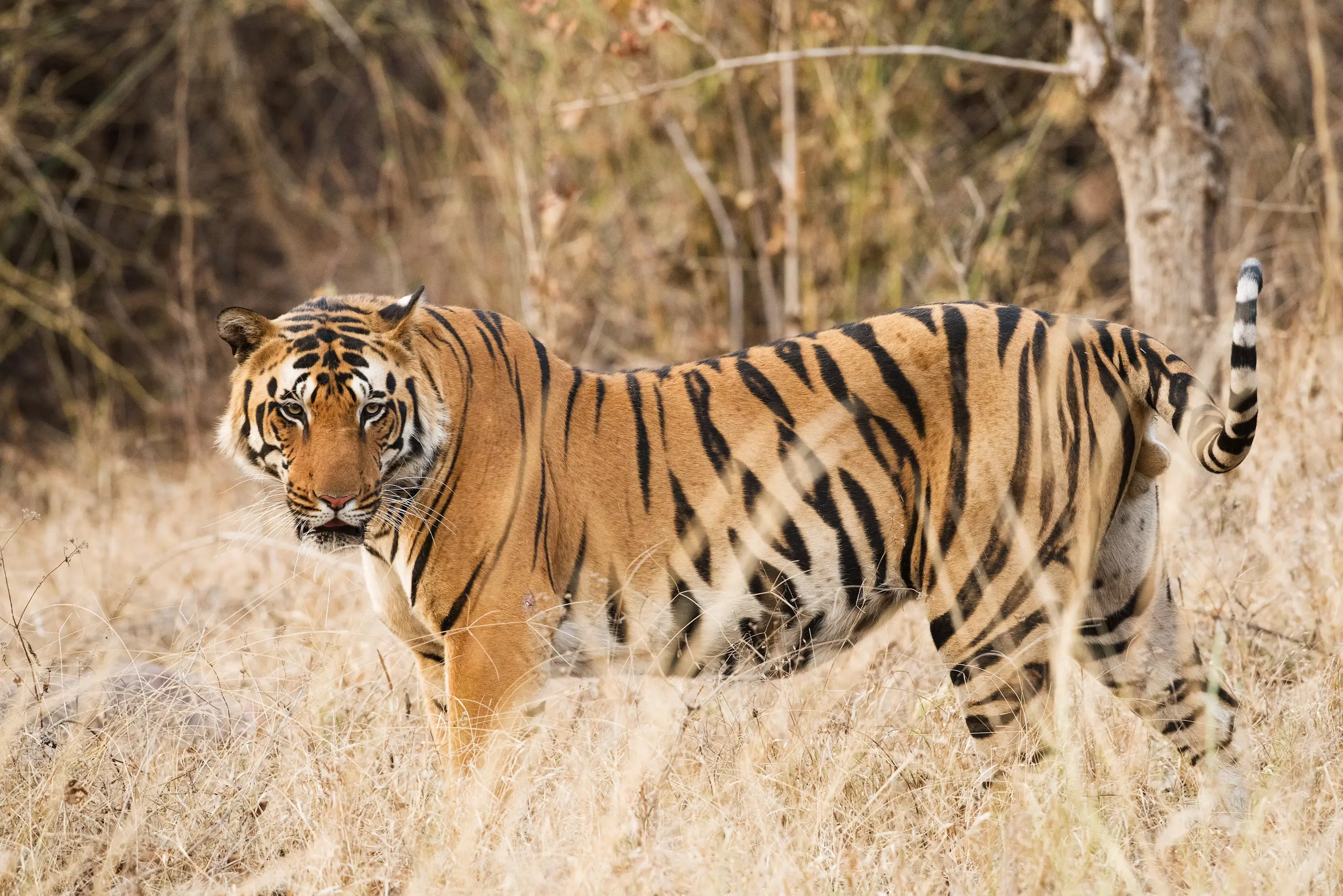
Book your safari permits the moment your travel dates are confirmed, through mponline.gov.in or a trusted operator — this is the one part of a Kanha trip that genuinely cannot be arranged at the last minute, particularly for the Mukki zone in peak winter months. Pack layers for both extremes: genuine cold-weather gear for winter dawn safaris, and loose, sun-covering clothing for a summer trip. Carry cash in smaller denominations for the rural stretch around both gates, where card machines remain unreliable, and if you're travelling internationally, confirm your Indian e-Visa and rural-coverage travel insurance well ahead of departure.
| Checklist Item | Note |
|---|---|
|
Government photo ID / passport |
Carried on every safari; details must match booking exactly |
|
Safari permits booked |
Via mponline.gov.in; Indian ~30 days, foreign ~90 days ahead for best availability |
|
Earth-toned clothing |
No red, orange, yellow, or white on safari |
|
Layered clothing for winter / sun protection for summer |
Kanha runs colder in winter than other MP reserves |
|
Binoculars and camera with zoom lens |
Standard cameras fine; drones strictly prohibited |
|
Indian e-Visa (international visitors) |
Apply online in advance; arrive via a designated e-Visa airport |
|
Travel insurance |
Confirm rural India coverage before departure |
Checklist Item
At BizareXpedition, our Himalayan roots in Haridwar don't stop at the mountains — we build Central India wildlife itineraries around enough nights at Kanha to make the odds genuinely work in your favour, a naturalist who treats an empty eleven minutes of silence as part of the story rather than a delay, and an honest conversation upfront about what Kanha's Jungle Book reputation is and isn't, so the trip you take is the one you actually came for.
Budget Guide
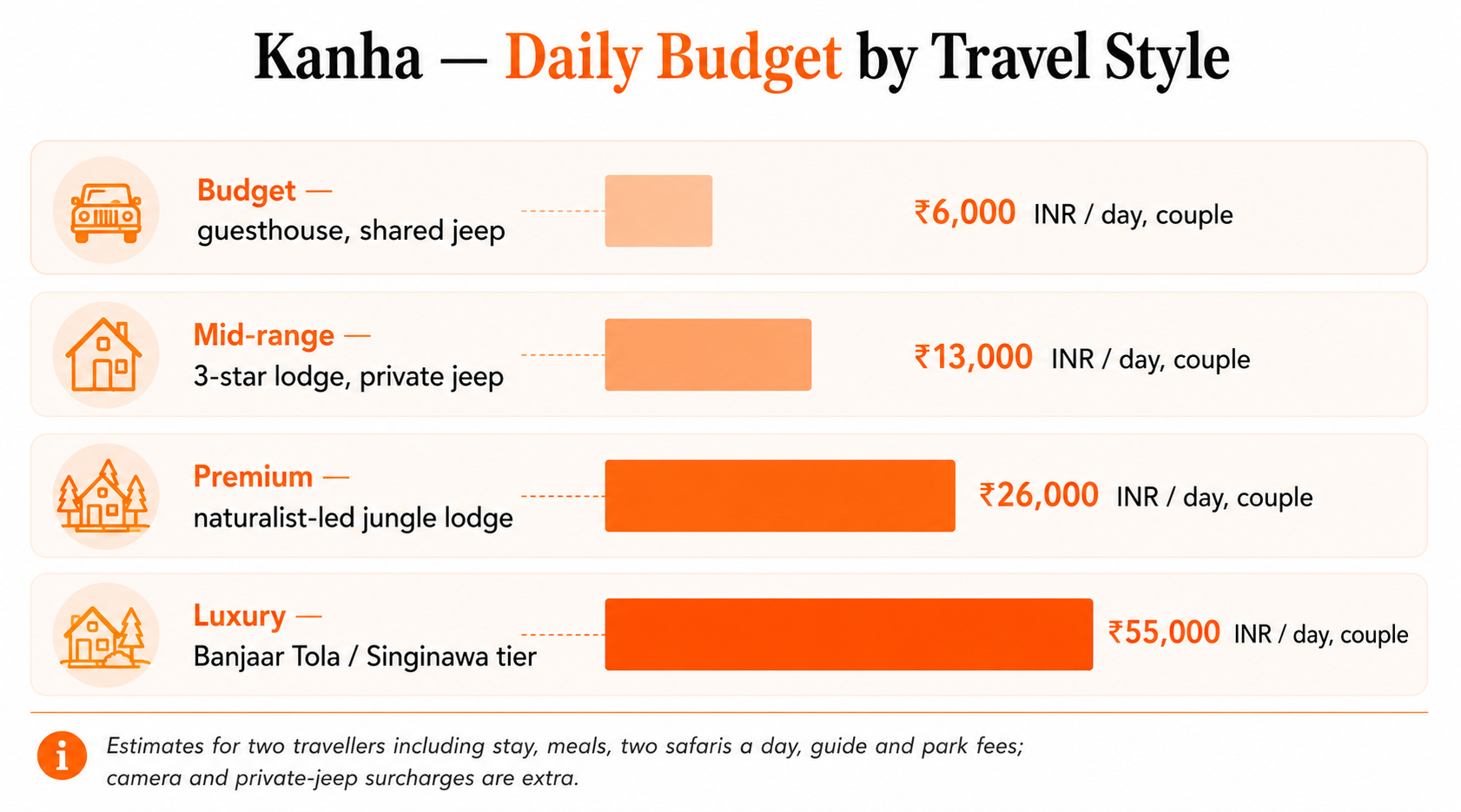
A comfortable three-night, five-safari Kanha trip in mid-range comfort typically runs between ₹30,000 and ₹48,000 per couple, inclusive of stay, meals, safaris, and guide fees. Step up into a premium naturalist-led lodge and the same trip climbs toward ₹85,000 to ₹1.1 lakh; the ultra-luxury tier around Mukki, popular with international travellers building a dedicated wildlife leg into a longer India itinerary, runs considerably higher again.
| Style | Per Day (Couple) | Night Total (approx.) |
|---|---|---|
|
Budget |
₹6,000 |
₹18,000 |
|
Mid-range |
₹13,000 |
₹39,000 |
|
Premium |
₹26,000 |
₹78,000 |
|
Luxury lodge |
₹55,000+ |
₹1,65,000+ |
Budget Guide
Long after the jeep has rolled back through the gate, it isn't the tiger's stripes that stay with you, but the eleven minutes of silence that came before her — proof, delivered without a single word, that Kanha never needed a storybook to make its case.
Best Selling Tour Packages
Explore other exciting options for your next adventure!