
Abhinav
Writer
Updated On - Aug 31, 2026
25 min
Published On - Jul 27, 2026
Bandhavgarh National Park — Complete Tiger Safari Guide
Inside India's highest-density tiger reserve — a practical, honest guide for Indian and international travellers alike, from the forests that gave the world its white tigers.
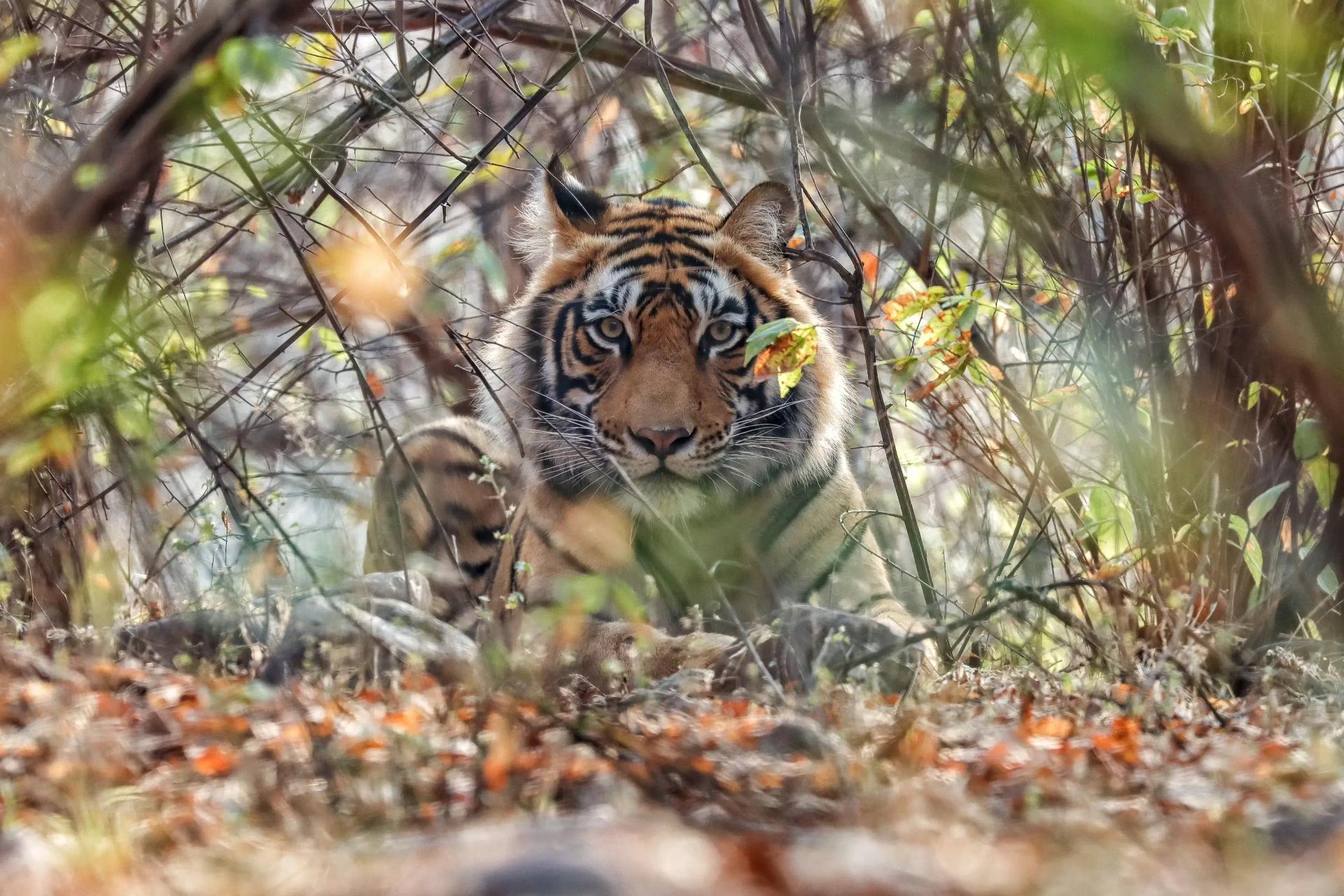
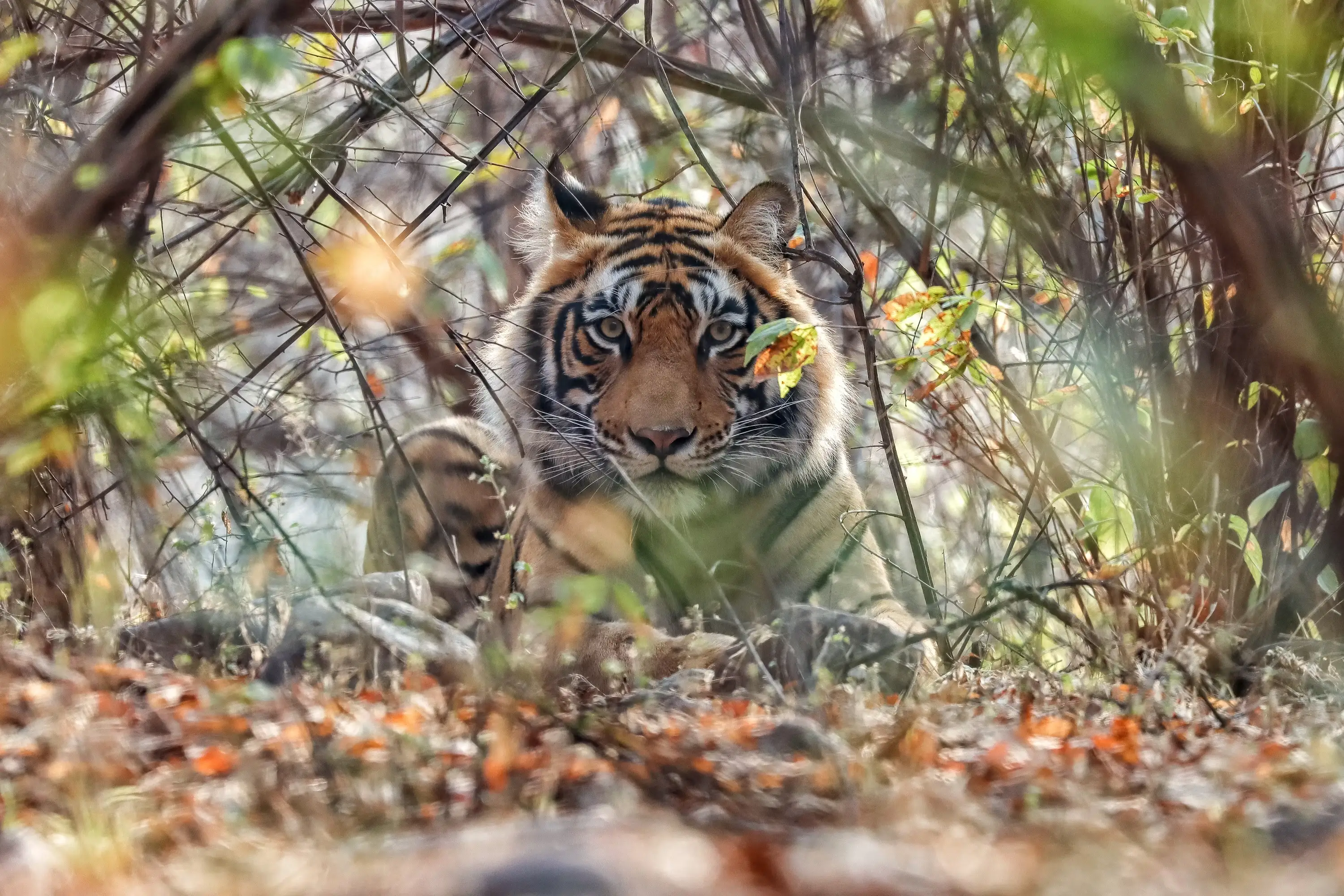
She stepped onto the fire trail without a sound, and our guide's raised hand was the only warning any of us needed. A young tigress, perhaps three years old, crossed six feet in front of the jeep's bonnet, paused mid-stride to scent-mark a sal trunk, held our gaze for four unhurried seconds, and vanished into the bamboo as though she had never been there at all. Nobody in the vehicle exhaled until she was gone. That is Bandhavgarh in a single frame — a forest with the highest density of wild tigers anywhere on the planet, and an encounter that somehow still feels like a private audience rather than a wildlife show.
If you have only one tiger reserve on your India itinerary, Bandhavgarh is the one most naturalists, photographers, and repeat visitors — Indian and foreign alike — will point you toward first. This guide covers everything from choosing a safari zone to the practical realities of getting here from Delhi, Varanasi, or Mumbai, whichever side of the world you are travelling in from.
The Brother's Fort — History Behind the Stripes
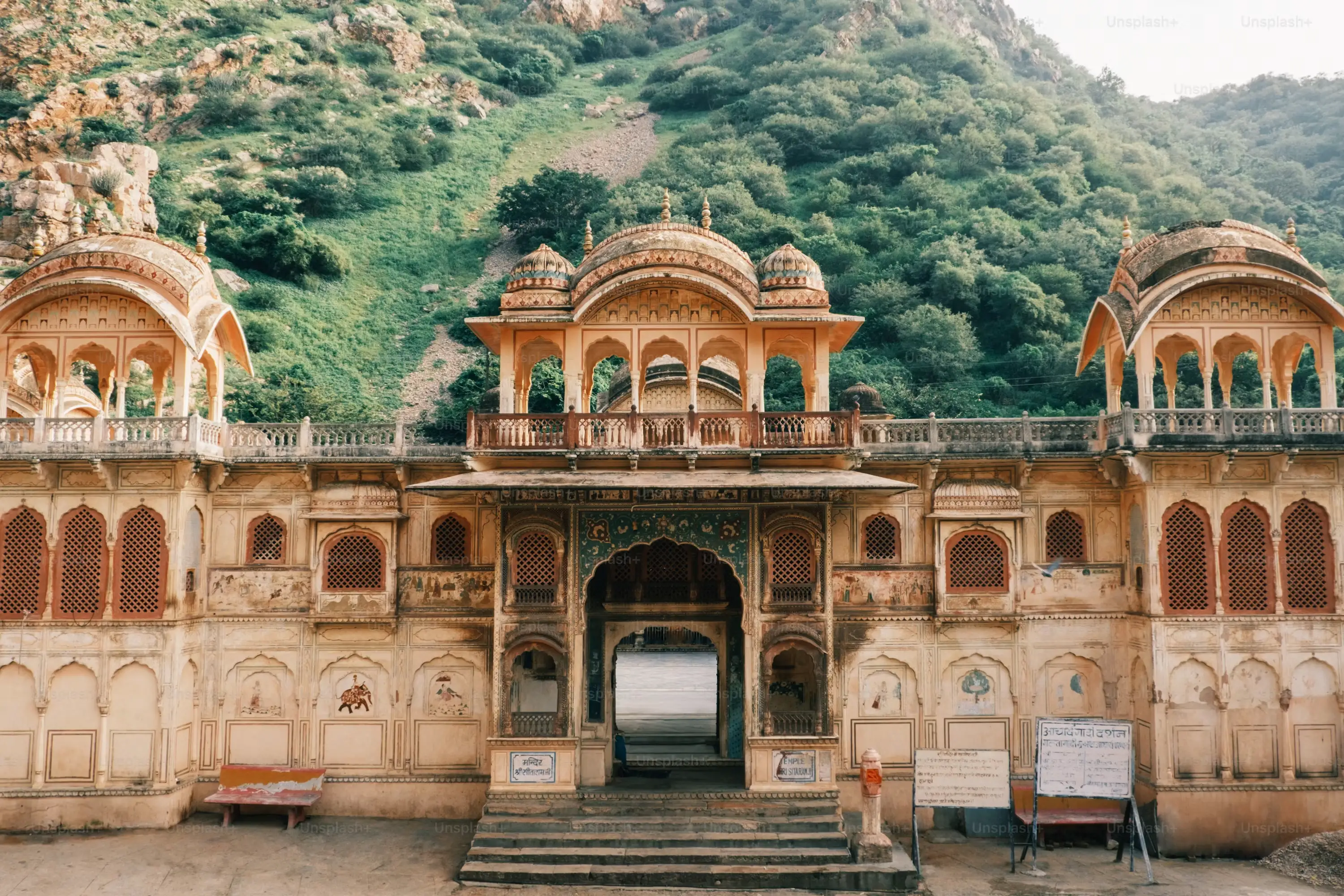
Bandhavgarh takes its name from the ancient fort brooding over its core zone — Bandhav, meaning brother, and Garh, meaning fort. Local legend, drawn from the Ramayana, holds that Lord Rama gifted this hilltop stronghold to his brother Lakshman to keep watch over Lanka from afar, and a temple to Lakshman still stands within the fort's ruins today. Archaeologists date the earliest inscriptions in the fort's man-made caves to around 300 CE, under the Vakataka dynasty, and the site subsequently passed through the hands of the Sengars, the Kalachuris, and finally the Baghels, who ruled from Bandhavgarh until the 1600s before shifting their capital to nearby Rewa.
It was that move to Rewa that accidentally saved the forest. With the royal court gone, Bandhavgarh's dense sal and bamboo jungle was left largely undisturbed, managed for centuries afterward as the private hunting reserve, or shikargah, of the Maharajas of Rewa — a grim irony, since it was precisely this exclusivity that kept the tiger population intact while much of India's forest cover was cleared elsewhere. It was here, in 1951, that Maharaja Martand Singh captured a white tiger cub he named Mohan, whose descendants went on to found virtually every white tiger bloodline in captivity worldwide today — a detail that still surprises many first-time visitors expecting Bandhavgarh's fame to rest on orange-and-black stripes alone. The forest was notified a national park in 1968 and folded into India's Project Tiger network as a full tiger reserve in 1993.
Geographically, Bandhavgarh sits in the Vindhya hill range of Umaria district, in the eastern reaches of Madhya Pradesh, its terrain a mix of sal-dominated moist deciduous forest, dry bamboo thickets, open grassland meadows, and sudden sandstone outcrops rising to the fort at roughly 800 metres. The tiger reserve today spans close to 1,540 square kilometres including its buffer, with a core area of about 716 square kilometres — considerably larger than the more famous Tala range alone, which is where most first-time visitors, understandably, want to spend their time.
| Detail | Information |
|---|---|
|
Location |
Umaria district, Madhya Pradesh, Central India |
|
Established |
National Park in 1968; Tiger Reserve since 1993 |
|
Core area / Total area |
~716 sq km core / ~1,540 sq km with buffer |
|
Safari zones |
Tala, Magadhi, Khitauli (core); Panpatha, Dhamokar, Johila (buffer) |
|
Known for |
Highest tiger density in India; origin of the world's white tigers |
|
Park open season |
15 October to 30 June (closed for monsoon, Jul–mid Oct) |
|
Nearest railhead |
Umaria, approx. 32 km from Tala Gate |
|
Nearest airport |
Jabalpur, approx. 160–170 km from Tala Gate |
|
Currency used |
Indian Rupee (INR); cards accepted at most lodges, cash needed for markets |
Bandhavgarh — Essential Facts
A BANDHAVGARH SAFARI IS A TASTING MENU WITH ONLY ONE COURSE THAT MATTERS — AND THE FOREST DECIDES, UNHURRIED, EXACTLY WHEN TO SERVE IT.
Getting There — For Indian and International Travellers
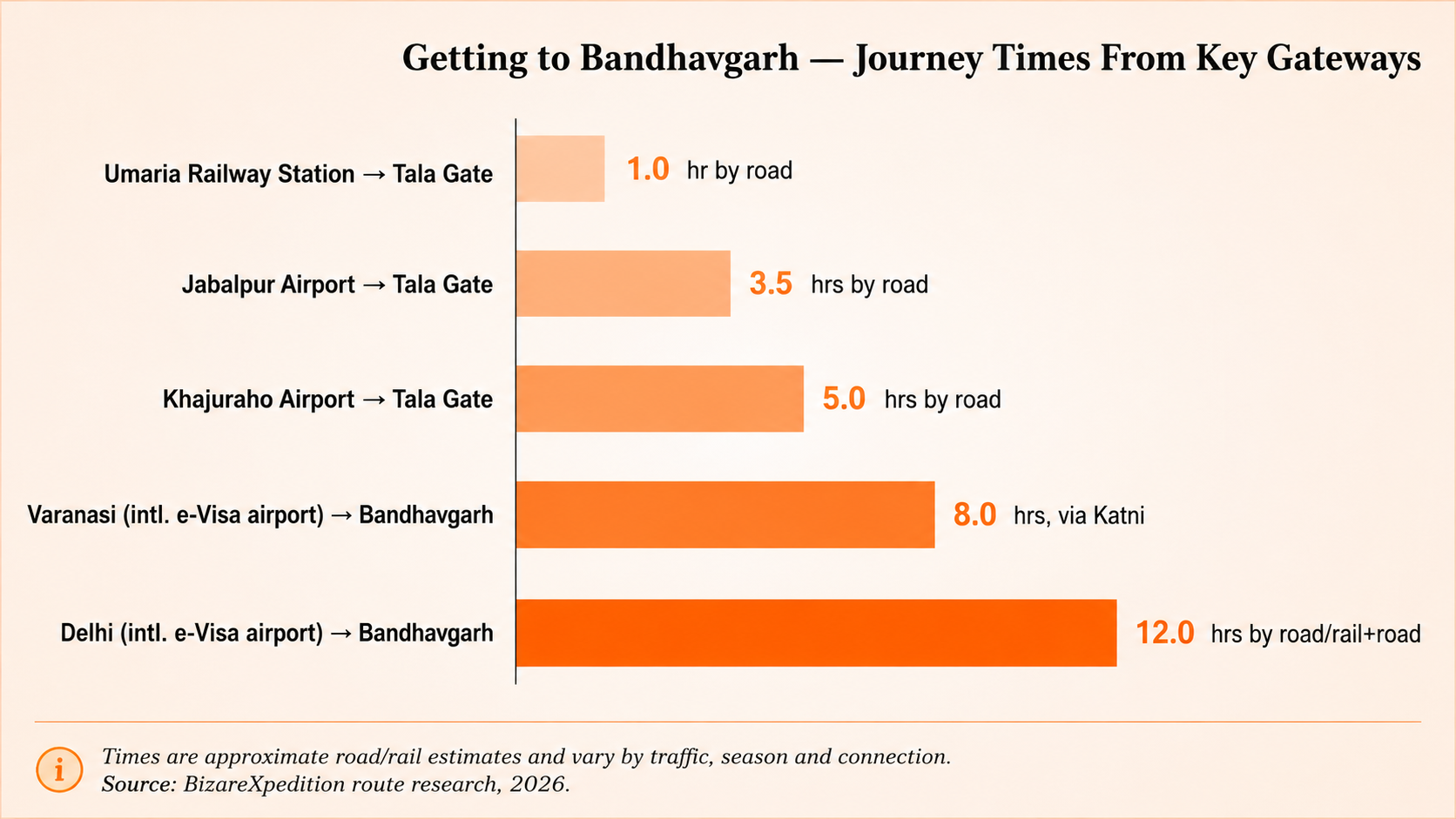
The nearest airport with meaningful flight connectivity is Jabalpur, roughly three and a half hours by road from the Tala safari gates, linked by daily domestic flights to Delhi, Mumbai, and Bhopal. The nearest railway station is Umaria, barely an hour from the park, on a line connected to Katni and onward to most of India's major rail junctions — for travellers already touring North India by train, this is often the smoothest approach. Khajuraho, roughly five hours by road, offers a scenic if longer alternative for anyone combining Bandhavgarh with the UNESCO temple circuit.
| Route | Distance | Approx. Time |
|---|---|---|
|
Umaria Railway Station → Tala Gate |
32 km |
~1 hr |
|
Jabalpur Airport → Tala Gate |
160–170 km |
3.5 hrs |
|
Khajuraho Airport → Tala Gate |
~250 km |
5 hrs |
|
Katni Junction → Tala Gate |
97 km |
2.5 hrs |
|
Varanasi (e-Visa gateway) → Bandhavgarh |
~420 km |
~8 hrs, rail + road |
|
Delhi (e-Visa gateway) → Bandhavgarh |
~800 km |
~12 hrs, flight + road or full road/rail |
Bandhavgarh - Route
For readers travelling in from outside India, the practical starting point is usually Delhi or Varanasi, both of which sit on India's e-Visa network of designated entry airports, alongside Mumbai, Bengaluru, and several others. Most nationalities can apply for an Indian e-Tourist Visa entirely online before departure, arriving through one of these airports before connecting onward by a short domestic flight to Jabalpur, or by an overnight train if the pace of a longer land journey appeals more. Varanasi in particular works well for combining a spiritual North India leg with a wildlife extension — Varanasi to Bandhavgarh runs roughly eight hours by a mix of rail and road via Katni, easily broken into a comfortable two-day journey with an overnight stop. Whichever route you choose, we strongly recommend arriving at your lodge the evening before your first safari; morning safaris begin before sunrise, and there is no worse way to greet Central India's tiger country than bleary-eyed off an overnight journey.
Choosing Your Safari Zone
| Zone | Distance from Tala Village | Character | Best For |
|---|---|---|---|
|
Tala |
Entry point itself |
Oldest, richest, most famous |
First-timers, fort views, highest odds |
|
Magadhi |
~12 km |
Largest zone, raw wilderness |
Repeat visitors wanting fewer jeeps |
|
Khitauli |
~16 km |
Flat, dry, quietest core zone |
Birders, patient wildlife watchers |
|
Panpatha (buffer) |
~25 km |
Grassland and sal forest |
A relaxed second safari, night drives |
Choosing Your Safari Zone
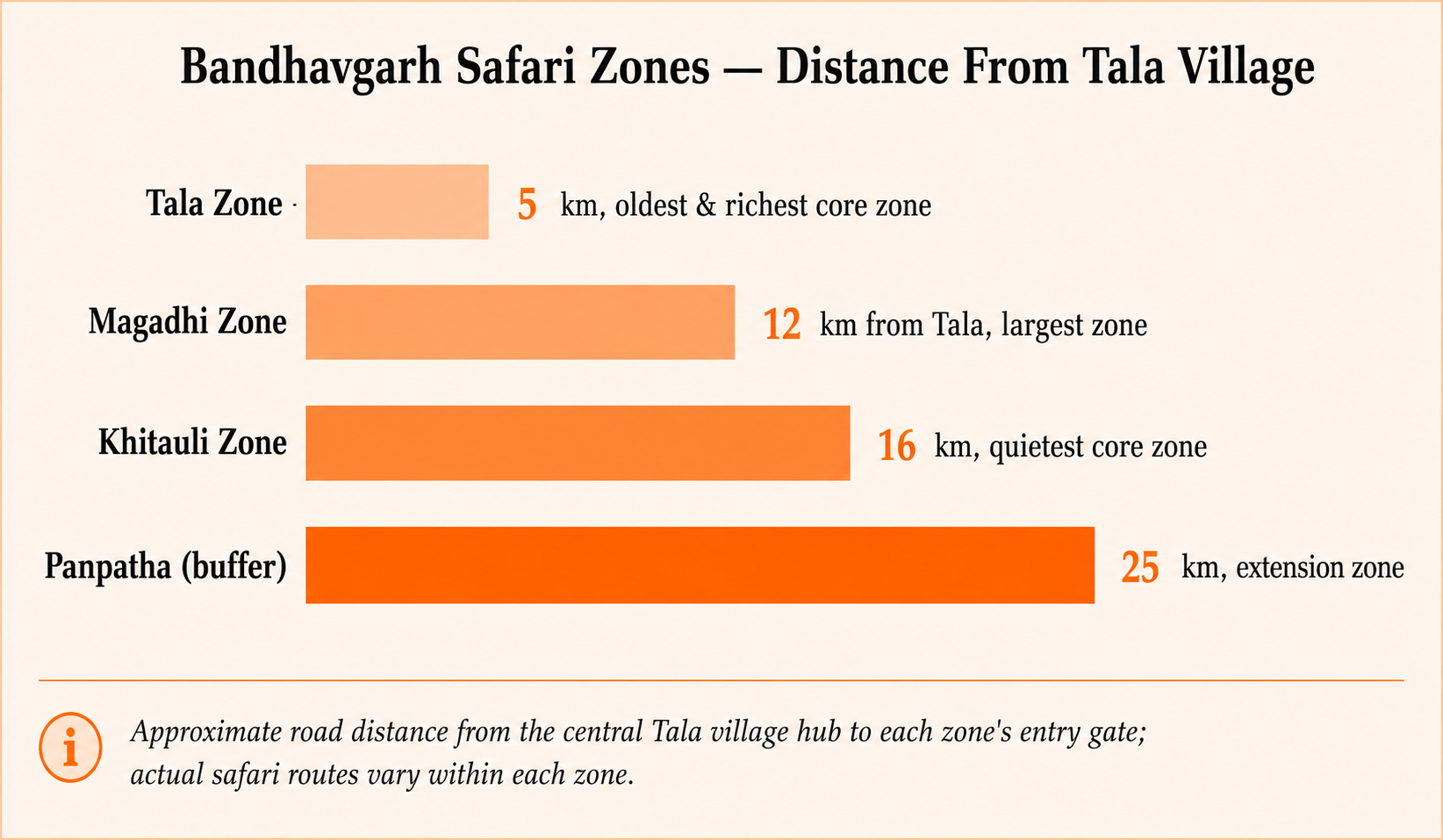
Bandhavgarh's core is divided into three main tourism zones, each entered through its own numbered gate, and first-time visitors are often surprised to learn you cannot simply pick a favourite on the day — zones are allotted at the time of online booking, so understanding the differences before you reserve matters more here than at most Indian reserves.
Tala Zone — the classic choice. The oldest and most storied of the three, Tala holds the original national park boundary, the ruins of Bandhavgarh Fort, the 10th-century Shesh Shaiya statue of a reclining Vishnu, and meadows like Chakradhara that have hosted generations of resident tigresses raising cubs in full view of safari jeeps. It remains statistically the strongest zone for a sighting, which also makes it the most heavily booked — reserve at least 90 to 120 days ahead for winter dates.
Magadhi Zone — the largest and wildest. Twelve kilometres from Tala village, Magadhi is the biggest of the three zones by area, mixing dense forest with open grassland around several natural and man-made waterholes. Many of Tala's resident tigers range across into Magadhi's territory too, so sighting odds run close behind Tala's, with noticeably lighter jeep traffic and a rawer, less curated feel.
Khitauli Zone — the quiet one. Flatter and drier than Tala or Magadhi, Khitauli sees the fewest vehicles of the three core zones and rewards patient, unhurried travellers — strong for birdwatching, a resident herd of wild elephants that occasionally passes through, and a genuine sense of having the forest to yourself, even if the tiger odds run a shade lower.
Buffer zones — for a second safari without competing for permits. Panpatha, Dhamokar, and Johila extend around the core and see far lighter tourist traffic; they are good value for an additional safari on a multi-day stay, and increasingly productive for tiger and leopard sightings as the core population disperses outward.
CHOOSING A BANDHAVGARH ZONE IS LIKE CHOOSING A COURSE AT A PROPER TASTING MENU — TALA IS THE RICH MAIN DISH EVERYONE ORDERS, KHITAULI IS THE PALATE-CLEANSING COURSE NOBODY REGRETS.
When to Go — Reading the Bandhavgarh Calendar
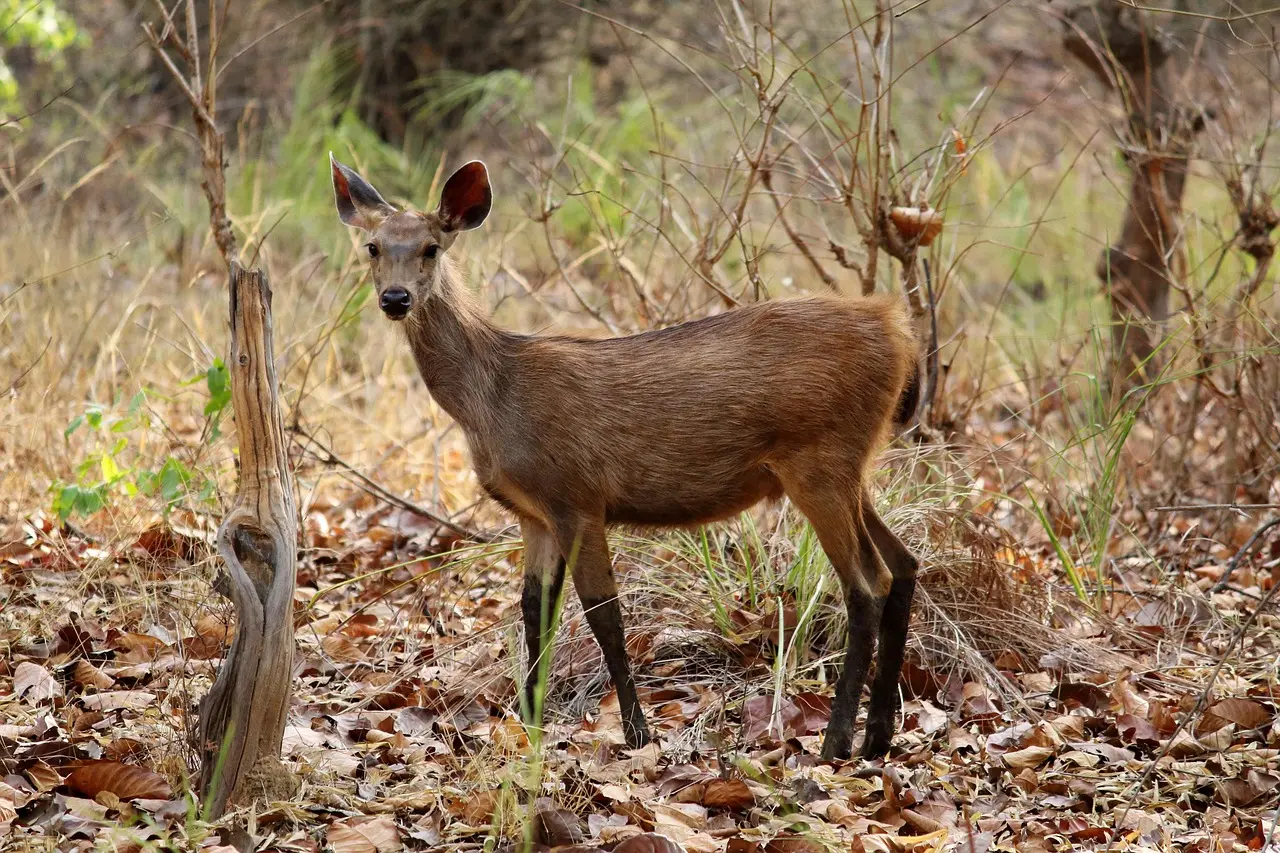
The park operates from 15 October to 30 June, closing entirely through the monsoon months to let the forest and its wildlife recover undisturbed. Winter, November through February, brings the most comfortable daytime temperatures and the clearest light for photography, though pre-dawn safaris in an open gypsy can dip close to freezing — pack far more than you think you need. April through June is peak tiger-sighting season by most naturalists' reckoning: as temperatures climb past 40°C, tigers and their prey concentrate around the reserve's dwindling waterholes, and visibility through the thinning, leaf-shedding forest improves considerably, even as the heat itself becomes the trip's real physical challenge.
| Season | Months | Typical Temp | Best For |
|---|---|---|---|
|
Winter |
Nov – Feb |
5°C to 25°C |
Comfortable safaris, best light, birding |
|
Spring |
Mar |
15°C to 32°C |
Transitional; good sightings, fewer crowds |
|
Summer |
Apr – Jun |
22°C to 44°C |
Highest tiger-sighting probability, waterhole action |
|
Monsoon |
Jul – mid-Oct |
— |
Park closed to tourism |
When to Go
Things to do at Bandhavgarh...
Book at least four to five safaris across two to three nights. A single safari is a lottery ticket; four or five, spread across different times of day and ideally two zones, turn it into genuinely good odds. Most naturalist-led lodges recommend a minimum two-night stay for exactly this reason.
Hire an independent naturalist alongside your forest department guide. Every jeep carries a compulsory forest guide, but many lodges offer their own naturalist for a modest additional fee — someone who tracks alarm calls, individual tiger territories, and animal behaviour with a depth that transforms the experience, particularly for photographers and first-time safari-goers unfamiliar with reading the forest's signals.
Learn to read alarm calls before you go. The sharp, repeated bark of a spotted deer or the langur's descending call are the forest's own early-warning system for a moving predator — guides track these constantly, and understanding even the basics turns long, quiet stretches between sightings into their own kind of tension and anticipation.
Visit in April or May if a tiger sighting is the singular priority. It is uncomfortable, dusty, and hot, but naturalists consistently rank the pre-monsoon summer as the strongest sighting season, as animals concentrate around shrinking water sources in the drier zones.
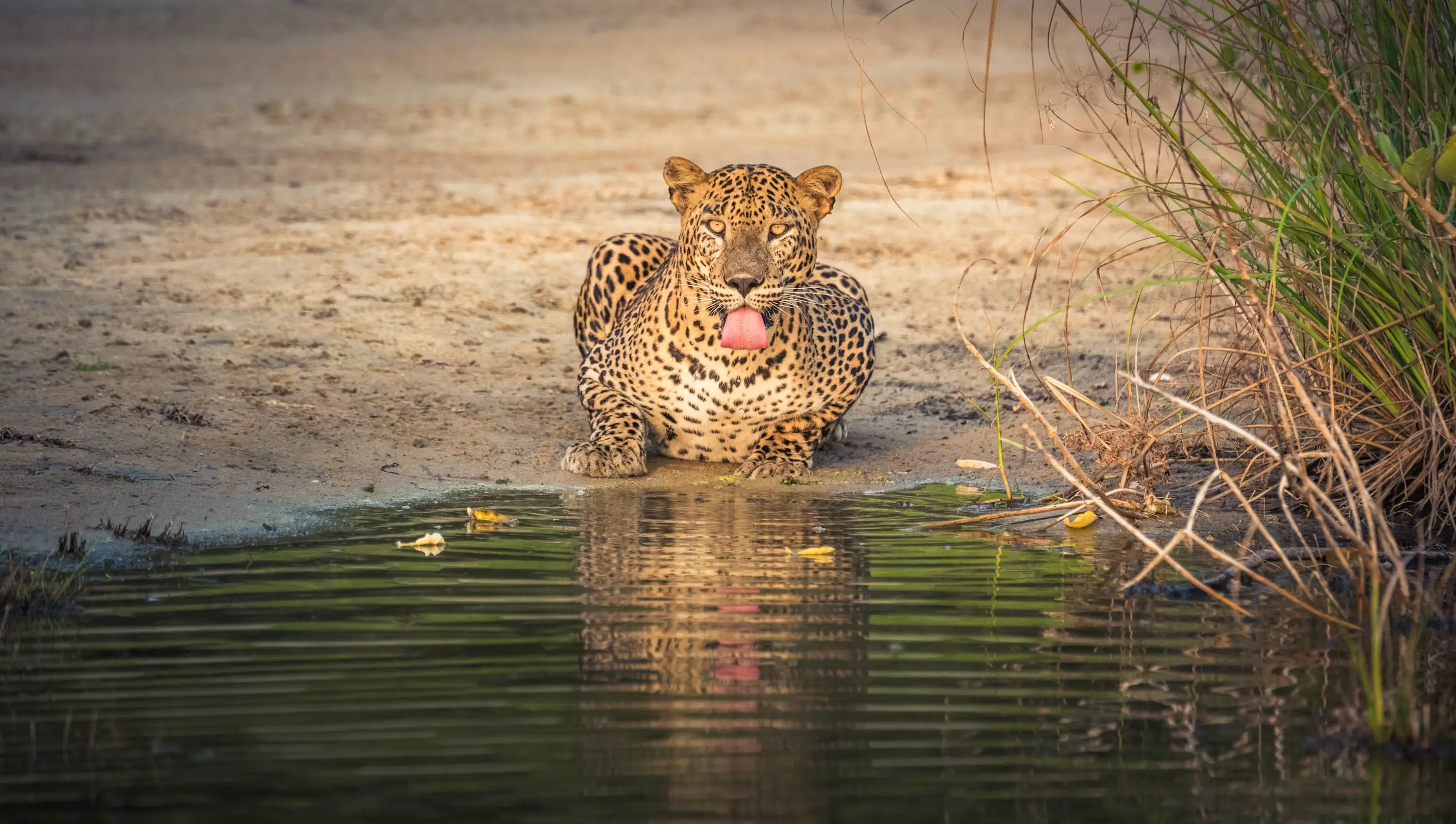
Spend an extra day on birds and smaller wildlife. Bandhavgarh holds over 250 recorded bird species alongside its tigers — the white-naped woodpecker, paradise flycatcher, and crested serpent eagle among them — plus leopards, sloth bears, wild dogs, and Indian gaur that reward visitors who don't spend every safari chasing stripes alone.
Combine Bandhavgarh with Kanha or Pench. The two reserves sit close enough by road to combine into a single Central India wildlife circuit, and stitching two parks into one trip meaningfully raises your overall odds of a strong tiger encounter, since sighting luck varies week to week at any single reserve.
| Zone / Activity | Vehicle Type | Duration | Best Season |
|---|---|---|---|
|
Core zone jeep safari (Tala/Magadhi/Khitauli) |
6-seat open gypsy |
~3 hrs |
Year-round when open |
|
Buffer zone safari (Panpatha, etc.) |
6-seat open gypsy |
~3 hrs |
Year-round when open |
|
Night safari (buffer only, where offered) |
6-seat open gypsy |
~2.5 hrs |
Winter months |
|
Bandhavgarh Fort trek (seasonal opening) |
On foot, guided |
4–5 hrs |
August (Janmashtami), December |
Things to do at Bandhavgarh
BANDHAVGARH IN SUMMER IS AN ESPRESSO SHOT AFTER A LONG BORDEAUX WINTER — SHARP, HOT, OVER QUICKLY, AND FAR MORE LIKELY TO KEEP YOU AWAKE WITH WHAT YOU JUST SAW.
Things not to do at Bandhavgarh...
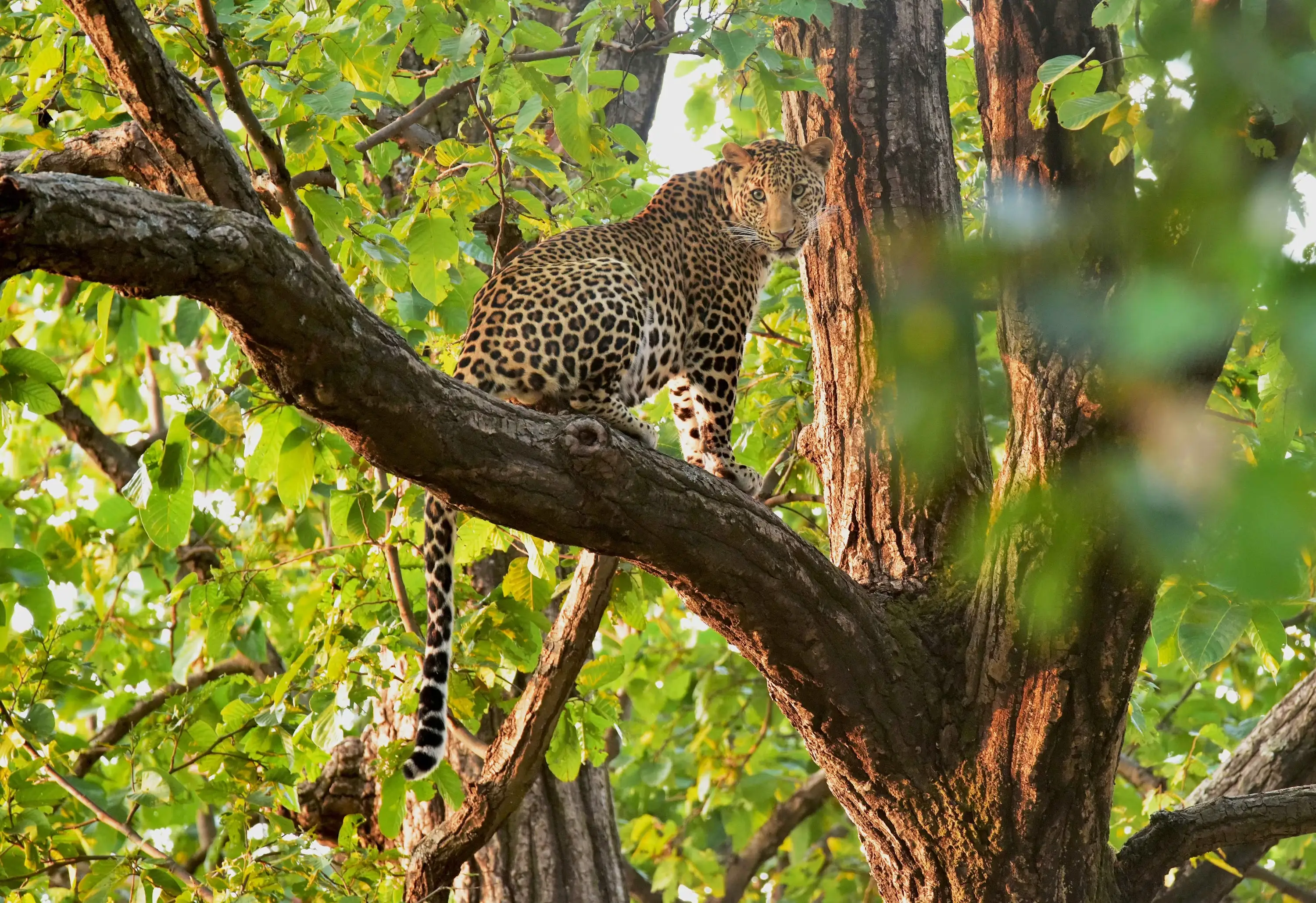
Don't book your safari at the last minute. Tala zone permits especially sell out through the Madhya Pradesh Forest Department's online portal ninety to a hundred and twenty days ahead of peak winter and summer dates. Lock your travel dates and book the moment they're confirmed, ideally through a licensed operator who can track zone availability on your behalf.
Don't expect — or demand — a guaranteed tiger sighting. Even in India's highest-density reserve, sightings are never certain on any single drive. Treat each safari as an opportunity to experience the forest itself — the alarm calls, the light through sal trees, a langur troop crossing overhead — rather than a transaction that owes you a specific outcome.
Don't ask your driver to chase a sighting. Forest department rules cap vehicle numbers around any confirmed tiger and prohibit off-track driving, and reputable guides will not break this regardless of tip incentives. Treat any driver willing to bend the rules as a red flag, not a bonus.
Don't underestimate the pre-dawn cold in winter, or the afternoon heat in summer. December and January mornings in an open gypsy can sit close to 5°C before sunrise; April and May afternoons can cross 42°C. Pack genuine layers for winter and carry far more water than feels necessary in summer — dehydration, not tigers, is the most common safari-day complaint we hear.
Don't rely on mobile data inside the reserve. Signal is patchy to non-existent across most core and buffer zones. Download offline maps, tell family your rough schedule in advance, and treat the safari hours as a genuine digital break.
Don't skip travel insurance or basic health precautions. For international visitors especially, confirm your travel insurance covers rural India, carry any prescription medication clearly labelled, and drink only bottled or properly filtered water throughout the trip.
| Requirement | Detail |
|---|---|
|
Safari booking |
Book online via MP Forest Department portal 90–120 days ahead, or through a licensed operator |
|
ID required |
Government photo ID (passport for foreign nationals) carried on every safari |
|
Entry fee (approx.) |
Indian & foreign nationals pay the same zone entry fee; guide/jeep charged separately |
|
Park closure |
Closed 1 July – 14 October every year for monsoon |
|
e-Visa (international visitors) |
Apply online in advance; arrive via a designated e-Visa airport (Delhi, Varanasi, Mumbai, etc.) |
Requirement Details
Where to Stay — Jungle Lodges for Every Budget
Almost all of Bandhavgarh's accommodation clusters around the Tala gate area, ranging from simple family-run guesthouses to some of India's most celebrated safari lodges. Mid-range properties typically offer comfortable rooms, included meals, and safari coordination without the frills; premium and luxury lodges add resident naturalists, private safari vehicles, and a level of service built specifically around serious wildlife travellers — properties like Mahua Kothi and Taj Baghvan sit firmly in this top tier and are popular with international guests booking Central India as a single dedicated wildlife leg of a longer India trip.
| Category | Examples | Per Night (Couple) | Honest Note |
|---|---|---|---|
|
Budget guesthouse |
Family-run lodges near Tala |
₹3,000 – ₹5,000 |
Simple, warm, good home-cooked food |
|
Mid-range lodge |
3-star jungle resorts |
₹8,000 – ₹15,000 |
Reliable safari coordination, comfortable rooms |
|
Premium jungle lodge |
Kings Lodge, Samode Safari Lodge |
₹18,000 – ₹32,000 |
Resident naturalists, excellent food |
|
Ultra-luxury lodge |
Taj Baghvan, Mahua Kothi |
₹45,000+ |
Top-tier service; popular with international guests |
Where to Stay
Travelling Bandhavgarh Responsibly
Carry a LifeStraw or similarly filtered bottle rather than accumulating single-use plastic across four or five safari days; most lodges now provide refill stations. Inside the vehicle, follow your guide's lead absolutely — Bandhavgarh's forest department maintains strict vehicle-spacing and no off-track rules specifically to protect tigers from the pressure of over-tourism, and every visitor who respects them is helping keep the reserve's population healthy for the next arrival. Spend locally where the itinerary allows: Baiga and Gond tribal handicrafts bought directly from artisan cooperatives near Umaria rather than city emporiums, and the small family-run dhabas along the Jabalpur–Bandhavgarh road rather than chain outlets alone. Photograph generously, but never with flash, and never at the expense of giving an animal, or another jeep's quieter moment, the space it deserves.
Before you go...
Book your safari permits the day your travel dates are confirmed — this is the one part of a Bandhavgarh trip that genuinely cannot be arranged last-minute. Pack layers regardless of season: a fleece and windproof jacket for winter mornings, and loose, light, sun-covering clothing plus a wide-brimmed hat for the summer sighting season. Carry cash in smaller denominations for the rural stretch between Jabalpur or Umaria and your lodge, where card machines remain unreliable, and if you are travelling internationally, confirm your Indian e-Visa and travel insurance well ahead of departure, since both are considerably easier to sort from home than mid-trip.
| Checklist Item | Note |
|---|---|
|
Government photo ID / passport |
Carried on every safari without exception |
|
Safari permits booked |
90–120 days ahead for peak winter/summer dates |
|
Layered clothing |
Genuine warmth for pre-dawn winter safaris |
|
Sun protection for summer safaris |
Hat, sunscreen, light long sleeves |
|
Binoculars and camera with zoom lens |
Standard cameras fine; drones strictly prohibited |
|
Indian e-Visa (international visitors) |
Apply online in advance; arrive via designated airport |
|
Travel insurance |
Confirm rural India coverage before departure |
Checklist Item
At BizareXpedition, our Himalayan roots in Haridwar don't stop at the mountains — we build Central India wildlife itineraries the way serious safari travellers actually want them: enough nights at Bandhavgarh to make the odds work in your favour, a naturalist who treats every alarm call as information rather than noise, and an itinerary paced for people who came to watch a forest, not tick a box.
Budget Guide
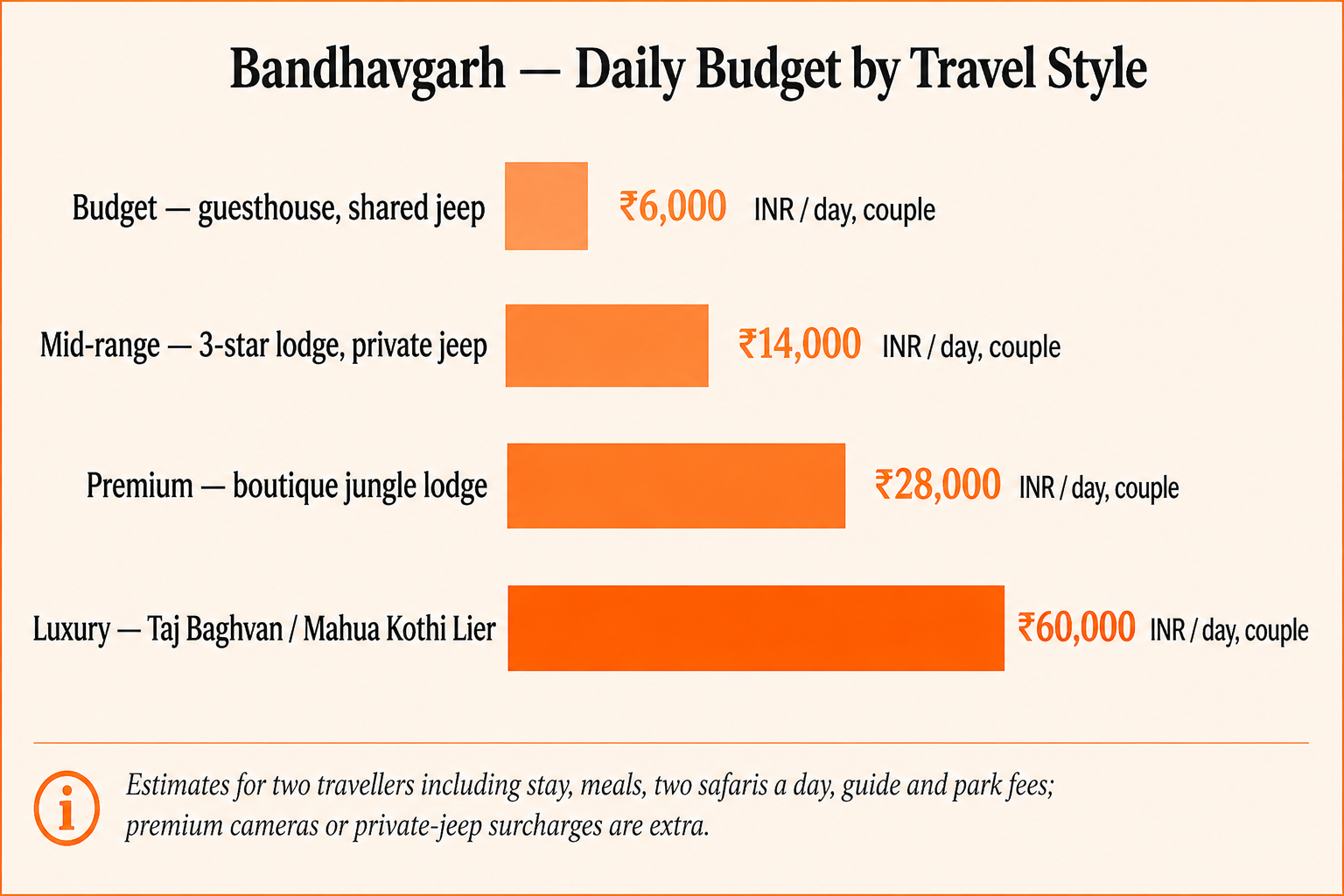
A comfortable three-night, five-safari Bandhavgarh trip in mid-range comfort typically runs between ₹28,000 and ₹45,000 per couple, inclusive of stay, meals, safaris, and guide fees. Step up into a premium naturalist-led lodge and the same trip climbs toward ₹80,000 to ₹1 lakh-plus; the ultra-luxury tier, popular with international travellers building a single dedicated wildlife leg into a longer India itinerary, runs considerably higher again but delivers a correspondingly different level of access and service.
| Style | Per Day (Couple) | 3-Night Total (approx.) |
|---|---|---|
|
Budget |
₹6,000 |
₹18,000 |
|
Mid-range |
₹14,000 |
₹42,000 |
|
Premium |
₹28,000 |
₹84,000 |
|
Luxury lodge |
₹60,000+ |
₹1,80,000+ |
Budget Guide
Long after the jeep has rolled back through the Tala gate, it is not the tiger's stripes you remember most clearly, but the four seconds of complete, unbothered eye contact before she turned back into the bamboo — a reminder, delivered without a single word, of exactly whose forest this really is.
Best Selling Tour Packages
Explore other exciting options for your next adventure!