

Sakshi
Writer
Updated On - Aug 27, 2026
20 min
Published On - Aug 27, 2026
Kaziranga National Park Complete Guide 2026: Safaris, Zones, Wildlife and Everything You Need to Know
Four safari zones, the Big Five of Kaziranga, elephant and boat safaris, 2026 costs and the honest guide to India's most important wildlife park.
Located on the floodplains of the Brahmaputra River in Assam, about 194 kilometres east of Guwahati, Kaziranga National Park is everything you want from an Indian wildlife destination without the long drives of Ranthambore or the permit complexity of some Himalayan reserves, yet different enough from any other park in the country to justify the journey to the Northeast specifically. A UNESCO World Heritage Site since 1985, Kaziranga is home to 2,613 one-horned rhinoceroses — approximately two-thirds of the world's entire population — along with over 100 Bengal tigers, large herds of Asian elephants, wild water buffalo, Eastern swamp deer and more than 500 bird species. It attracted 443,636 visitors between October 2024 and May 2025, making it the third most-visited national park in India that season, and interest in Kaziranga wildlife tours is growing faster than ever in 2026.
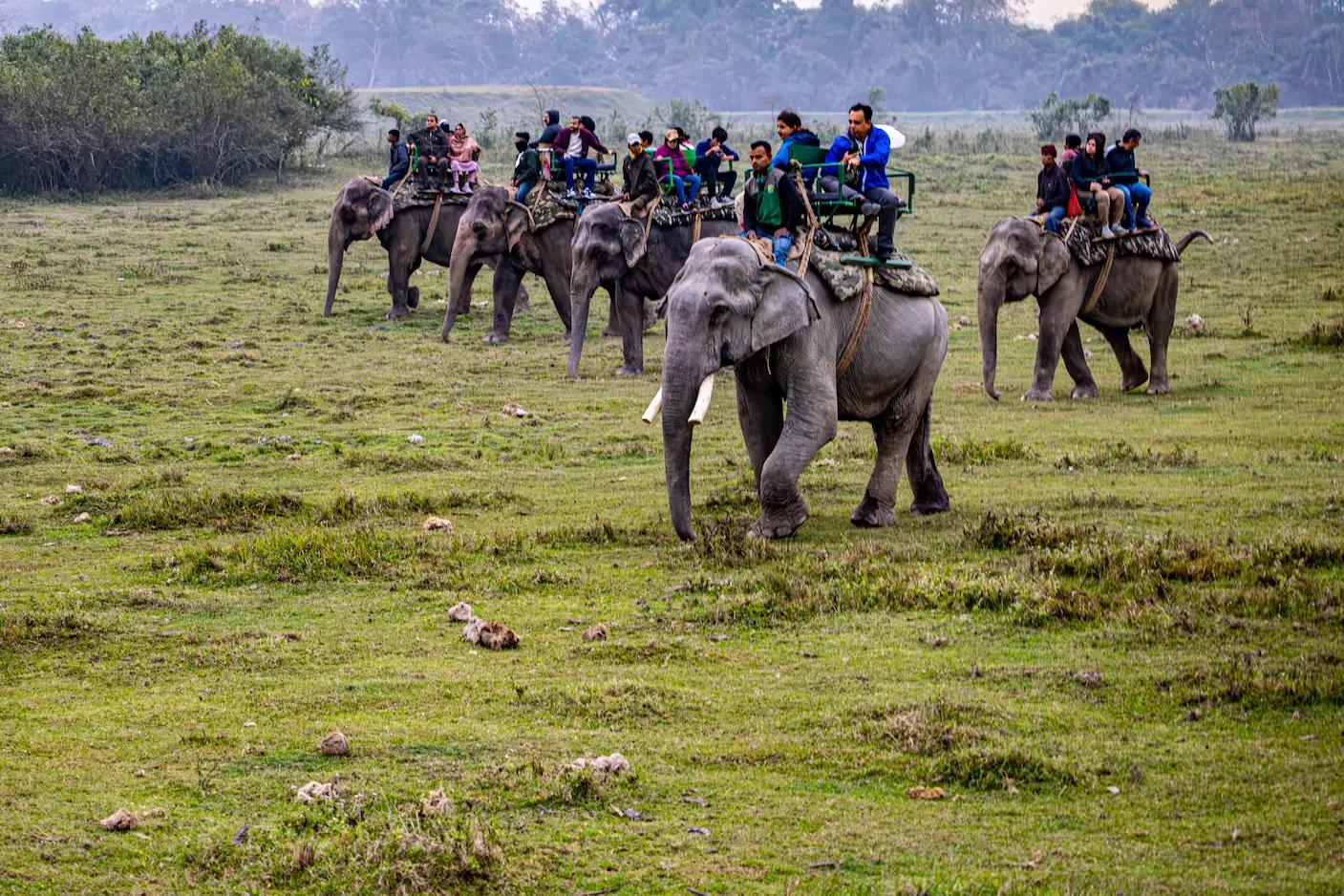
There's plenty here for every kind of wildlife enthusiast, and travellers interested in seeing rhinos, tigers and birds in a genuinely wild landscape will be pleasantly surprised by what Kaziranga has in store. You can do a morning jeep safari in the Kohora Central Range — the most popular zone and the one with the highest rhino density — and be back at your camp for breakfast having already seen more wildlife than most national parks in India offer in a full day. You can do an elephant safari in Kohora or Bagori, which is the most intimate wildlife experience the park offers, at ₹1,800 per person for a one-hour ride. You can take a boat safari in the Agaratoli Eastern Range along the park's waterways for birding and river wildlife. And to add to that, Kaziranga has a rare golden tiger — spotted in April 2025 — which makes it the only park in India where this extraordinary colour variant has been documented.
The park is open from November to April and closed from May to October when the Brahmaputra floods the grasslands completely. Here is everything you need to plan your visit.
The Four Safari Zones: Which One to Choose
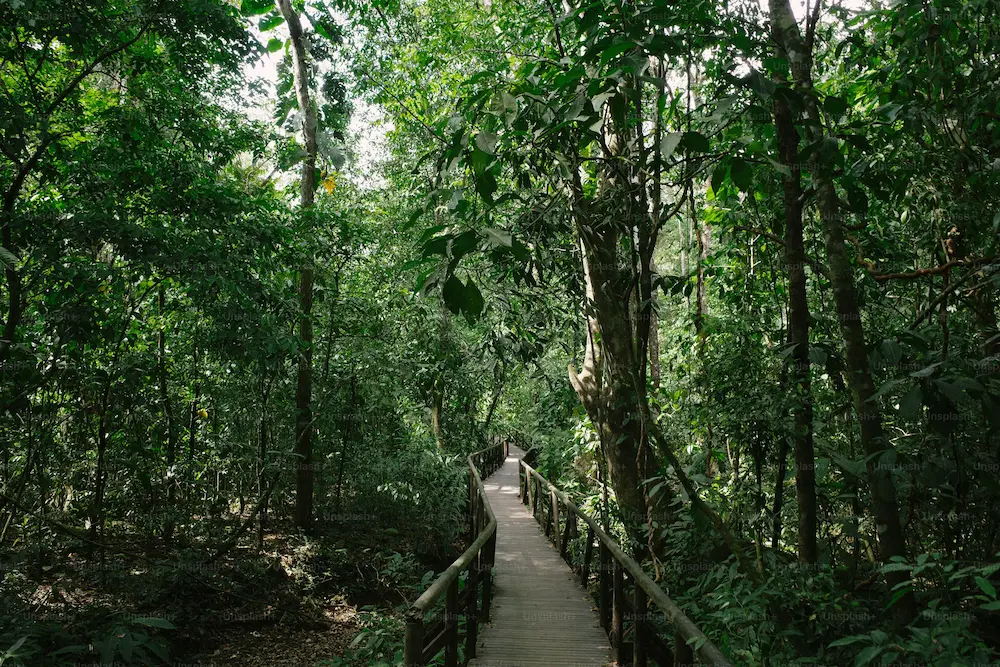
Kaziranga is divided into four safari zones — Kohora (Central Range), Bagori (Western Range), Agaratoli (Eastern Range) and Burapahar — each with a different entry gate, different character and different wildlife mix. Kohora is where most first-time visitors go, and it earns that position — highest rhino density, the only zone with both jeep and elephant safaris, and a landscape of tall grassland and water bodies that produces consistent wildlife sightings across a morning. Bagori, the Western Range, is the favourite of repeat visitors and wildlife photographers: open, flat terrain with water bodies inside the zone that draw animals in numbers, and slightly fewer vehicles than Kohora. If you have two days at Kaziranga, doing Kohora on day one and Bagori on day two gives you the best overall experience the park offers.
| Zone | Entry Gate | Best For | Honest Assessment |
|---|---|---|---|
|
Kohora (Central Range) |
Mihimukh, Kohora town |
Rhino sightings, elephant safaris, most wildlife variety |
Most popular zone — highest rhino density and the only one with both jeep and elephant safaris. Gets crowded in peak season; book well ahead. The standard first-timer's choice and it delivers. |
|
Bagori (Western Range) |
Bagori village |
Rhinos, tigers, open landscape, photography |
Open flat terrain gives the best photography conditions. Water bodies inside attract animals in numbers. Favourite of repeat visitors and wildlife photographers. Slightly less crowded than Kohora. |
|
Agaratoli (Eastern Range) |
Agaratoli town |
Birdwatching, boat safari, fewer crowds |
Only zone with a boat safari on the park waterways. Best for birding — 500-plus species, especially winter migratory birds. Quieter than the western zones. Good for a second safari if you've done Kohora. |
|
Burapahar Range |
Ghorakati village |
Hilly forest, nature walks, quiet experience |
Different character from the other three — hilly terrain rather than grassland. Lower rhino density but good for leopard and hoolok gibbon. For those who want the forest rather than the grassland experience. |
Table 1 — Safari Zones Compared: What Each One Offers
Safari Types, Timings and 2026 Costs
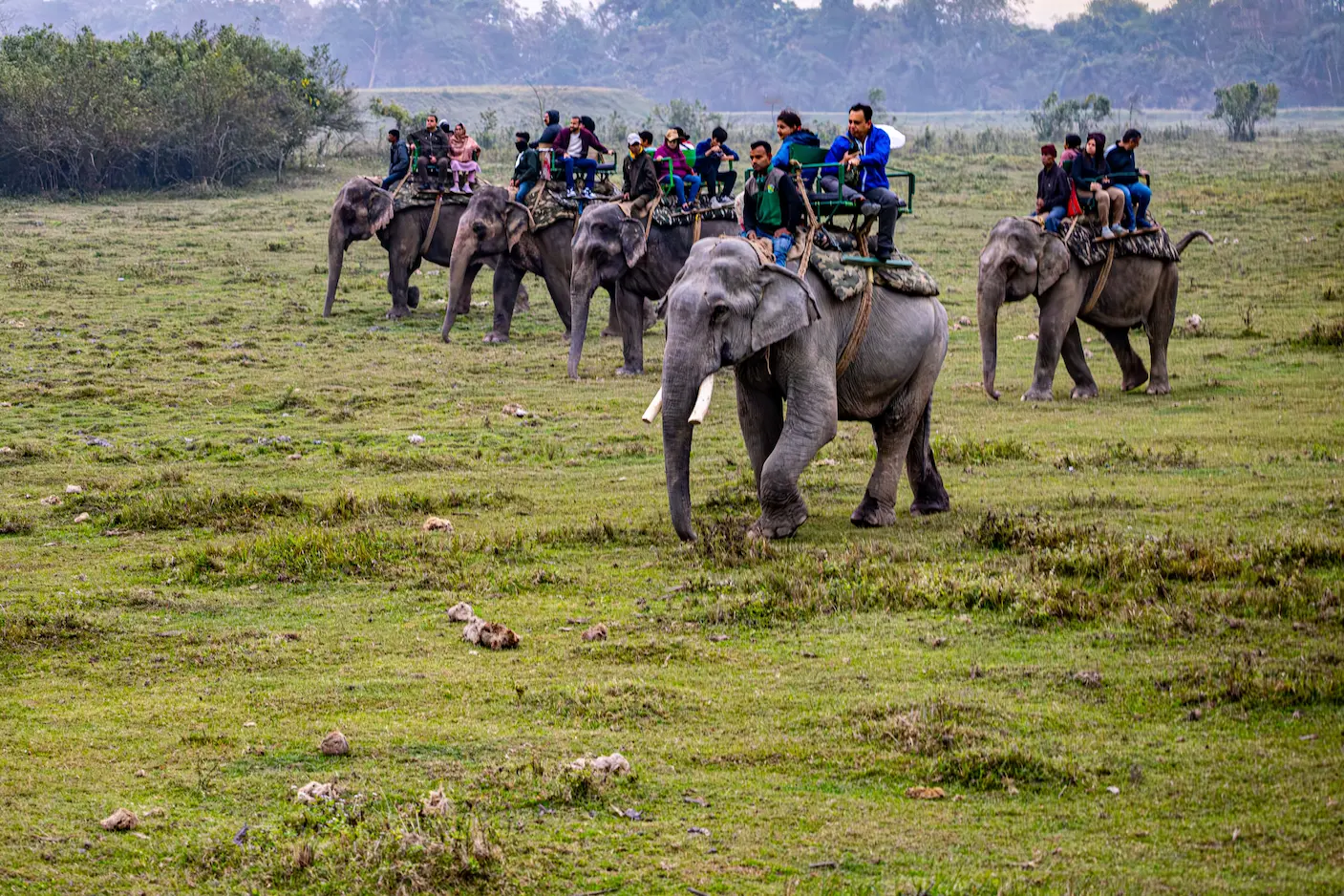
The jeep safari is the standard option across all four zones — six passengers per vehicle, two sessions daily, morning slot from 7 AM being the better choice since animals are more active at dawn. The elephant safari, available only in Kohora and Bagori, is the more intimate experience: a one-hour ride on elephant back through the grassland and forest edges, at a height that gives you sight lines into the tall grass that a jeep cannot match. It costs ₹1,800 per person for Indian nationals and carries four people per elephant. Advance booking is essential — seats are limited and the morning slots fill up quickly in the December to February peak window. The boat safari in Agaratoli is the most underappreciated option in the park: a ride along the park's waterways, excellent for birding, crocodiles and river wildlife, and the only way to see parts of Kaziranga that no vehicle can reach.
| Safari Type | Zones Available | Timing | Cost (Indians, 2026) | Notes |
|---|---|---|---|---|
|
Jeep Safari |
All four zones |
Morning: 7–9:30 AM; Afternoon: 1–3:30 PM |
₹3,500–₹5,500 per jeep (6 people) |
Most flexible. Book online at assambooking.com or through your hotel. Morning safari is better — animals more active at dawn. |
|
Elephant Safari |
Kohora and Bagori only |
Morning: 5–6 AM and 6–7 AM; Afternoon: 3–4 PM |
₹1,800 per person |
Ride of the Kings — the most intimate wildlife experience. Limited seats; advance booking essential. 4 people per elephant maximum. |
|
Boat Safari |
Agaratoli zone only |
Morning slot |
₹800–₹1,200 per person |
Along the park waterways. Best for birding and river wildlife — otters, fishing eagles, river terns. Rarely discussed, genuinely good. |
|
Canter Safari |
Kohora (Central) only |
Morning only |
₹700–₹900 per person |
Large vehicle, 30+ passengers. Cheapest option but least flexible — fixed route, cannot stop. Good for budget travellers. |
Table 2 — Safari Types, Timings and Costs (2026)
The Wildlife: What You Will See and Where
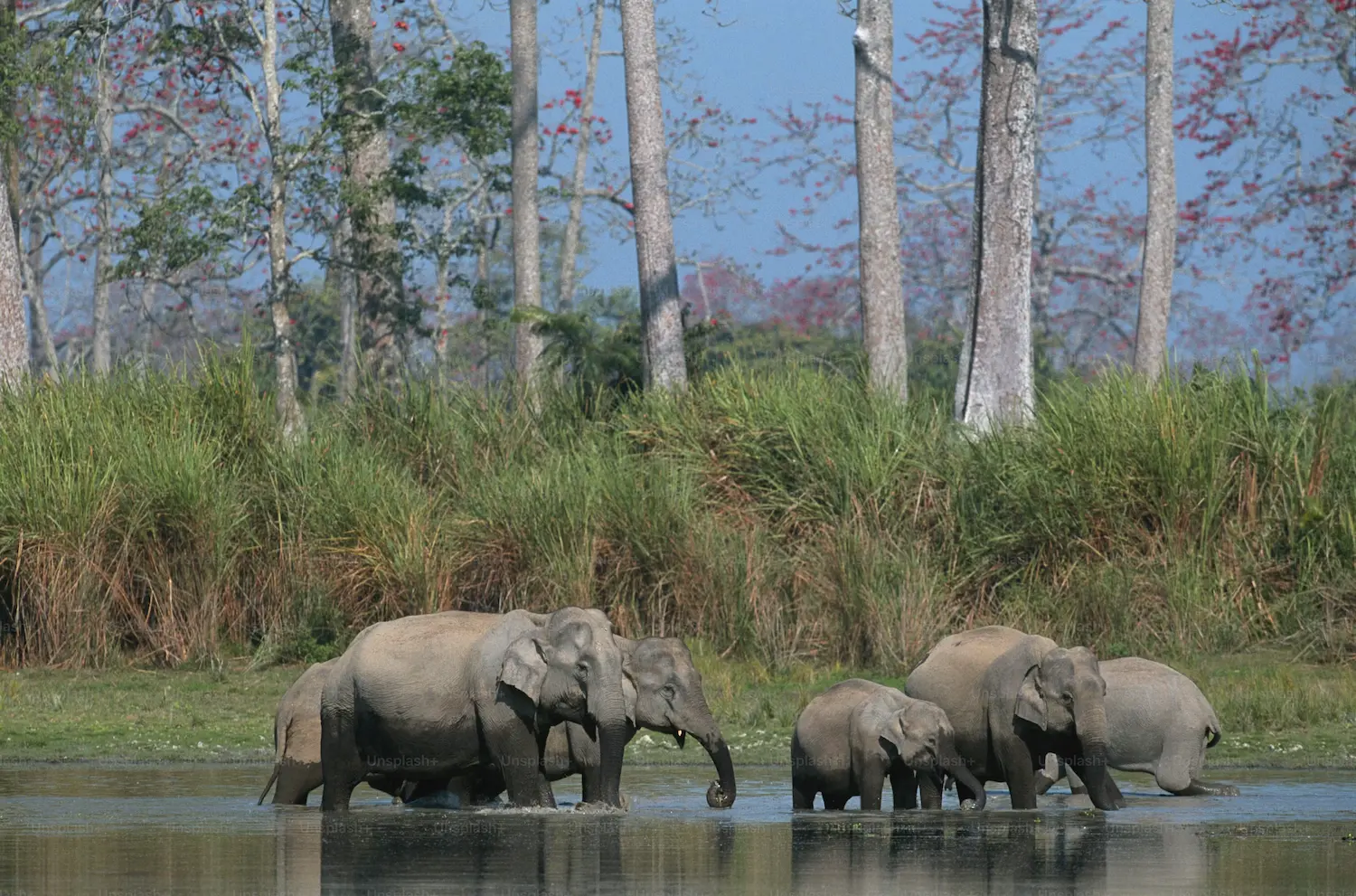
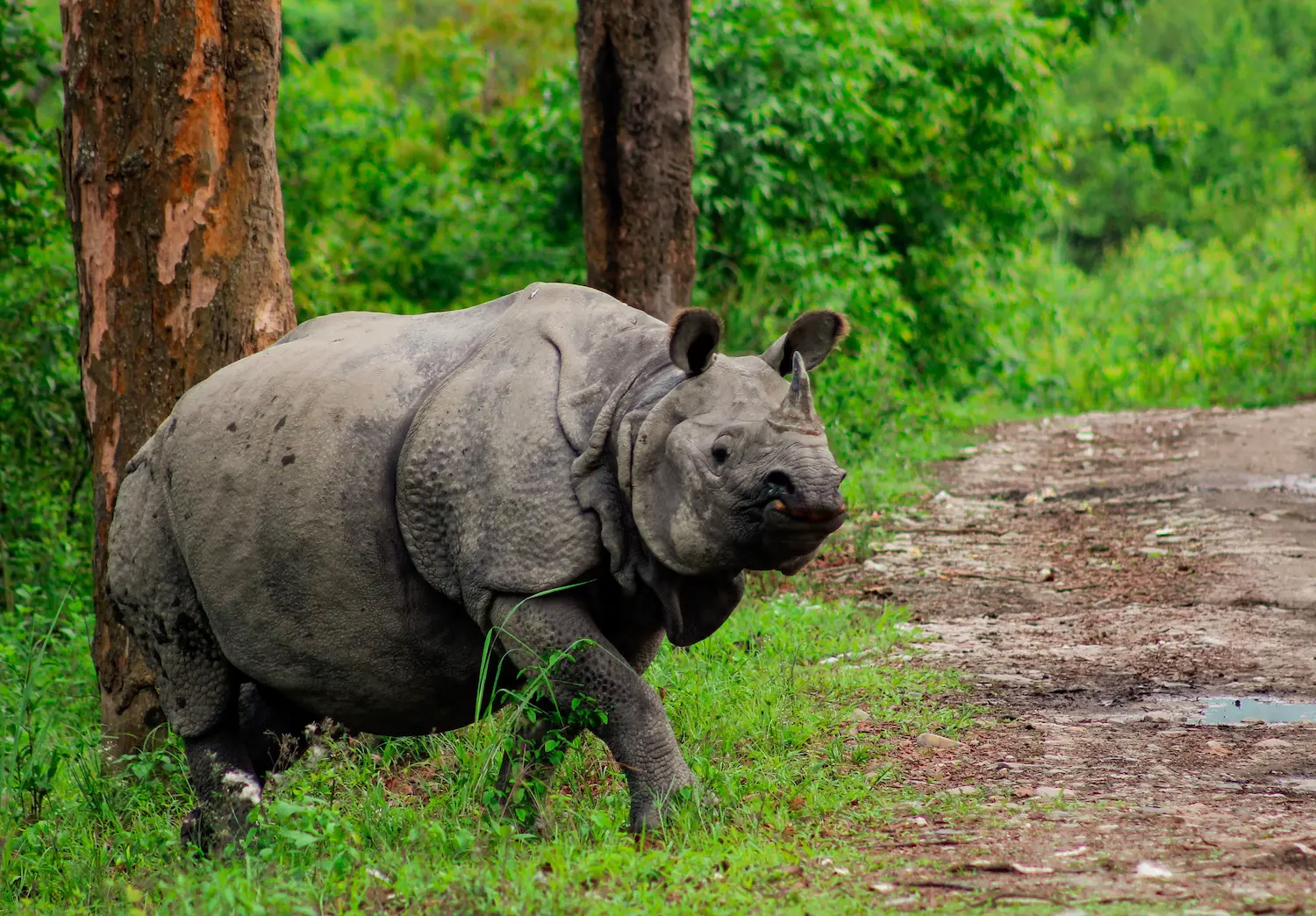
Kaziranga's headline species is the one-horned rhinoceros, and the sighting reliability here is unlike any other park in India. With 2,613 rhinos across 430 square kilometres, the density is high enough that most morning safaris in Kohora or Bagori produce rhino sightings, often at close range. The tigers are present — 104 per 100 square kilometres, one of the highest densities in the world — but sighting is not guaranteed and the tall grass means they are considerably harder to spot than the rhinos. In the meantime, the elephants are reliably seen in herds across all zones, the wild water buffalo are impressive and common near water bodies, and the Eastern swamp deer — listed as Vulnerable on the IUCN Red List — graze the Kohora grasslands in numbers that remind you that Kaziranga's conservation success extends well beyond its most famous resident.
| Species | Best Zone | What to Know |
|---|---|---|
|
Indian One-Horned Rhinoceros |
Kohora, Bagori |
2,613 in the park (2022 census) — approximately two-thirds of the world's total population. Sighting reliability is high in both Kohora and Bagori zones. Morning safaris give the best chance before animals retreat to the tall grass. |
|
Bengal Tiger |
Kohora, Bagori |
Over 100 tigers recorded in the park. Kaziranga has one of the highest tiger densities in the world — 104 per 100 sq km in 2022 — but sightings are not guaranteed. A rare golden tiger was spotted in the park in April 2025. |
|
Asian Elephant |
All zones |
Large herds are common in all zones. More reliably spotted than tigers; herds of 20 to 30 visible in the morning near water sources. |
|
Wild Water Buffalo |
Kohora, Bagori |
Large, powerful and impressive. One of the park's 'Big Five' alongside rhino, tiger, elephant and swamp deer. |
|
Eastern Swamp Deer (Barasingha) |
Kohora grasslands |
Listed as Vulnerable on the IUCN Red List. Kaziranga is one of the last strongholds for this species. |
|
Mugger and Gharial Crocodile |
Agaratoli, riverbanks |
Both species present in the park's water bodies. Boat safari is the best way to see them. |
|
Hoolok Gibbon |
Burapahar |
India's only ape species. Burapahar's forested terrain is where they are most reliably present. |
|
Birds (500+ species) |
Agaratoli (best); all zones |
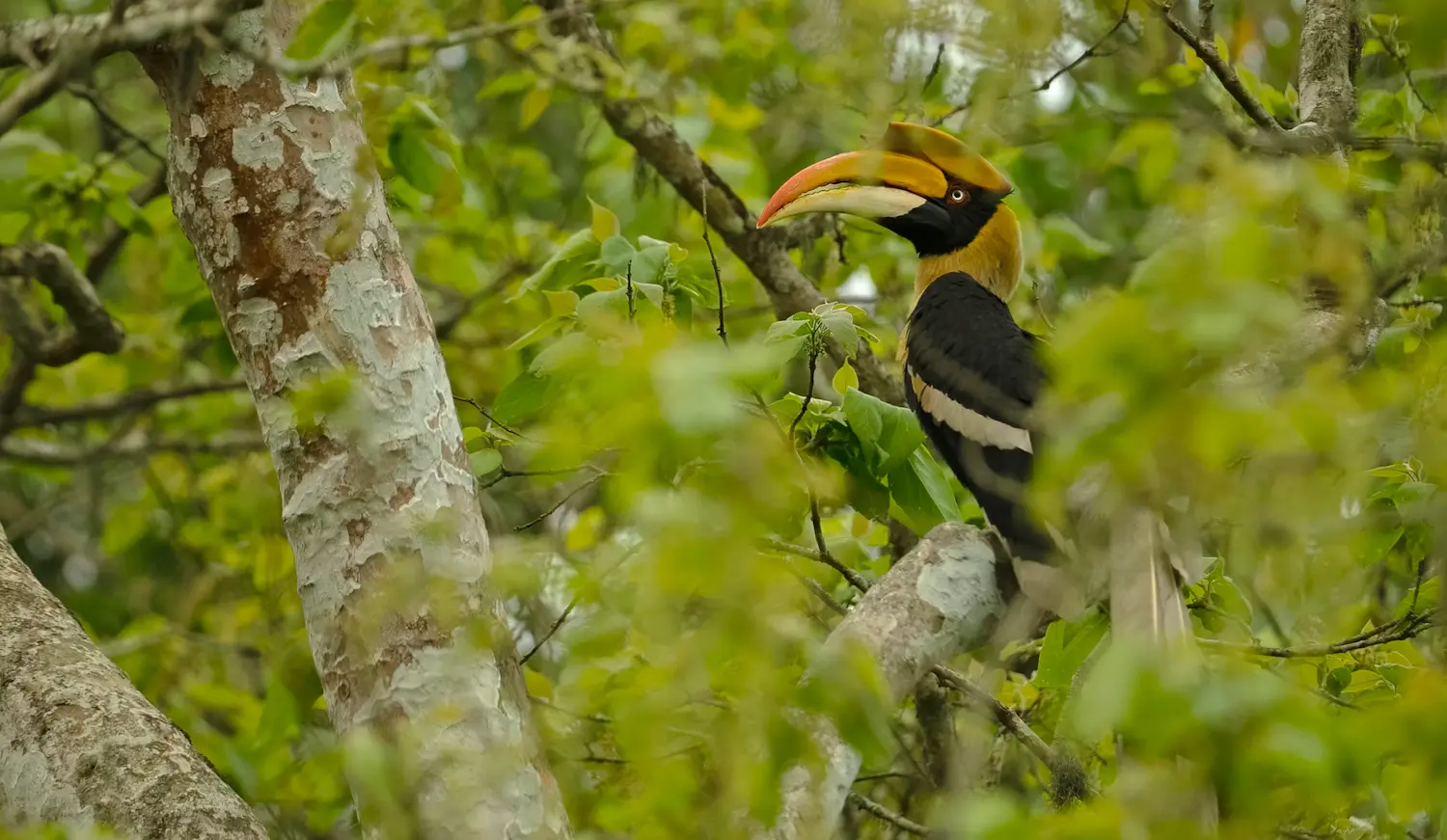
Grey Pelican, Spot-billed Pelican, Lesser Adjutant, fishing eagles, river terns and a wide range of migratory winter species. Agaratoli is the dedicated birding zone. |
Table 3 — Wildlife Reference: What Lives Here and Where to Find It
When to Go
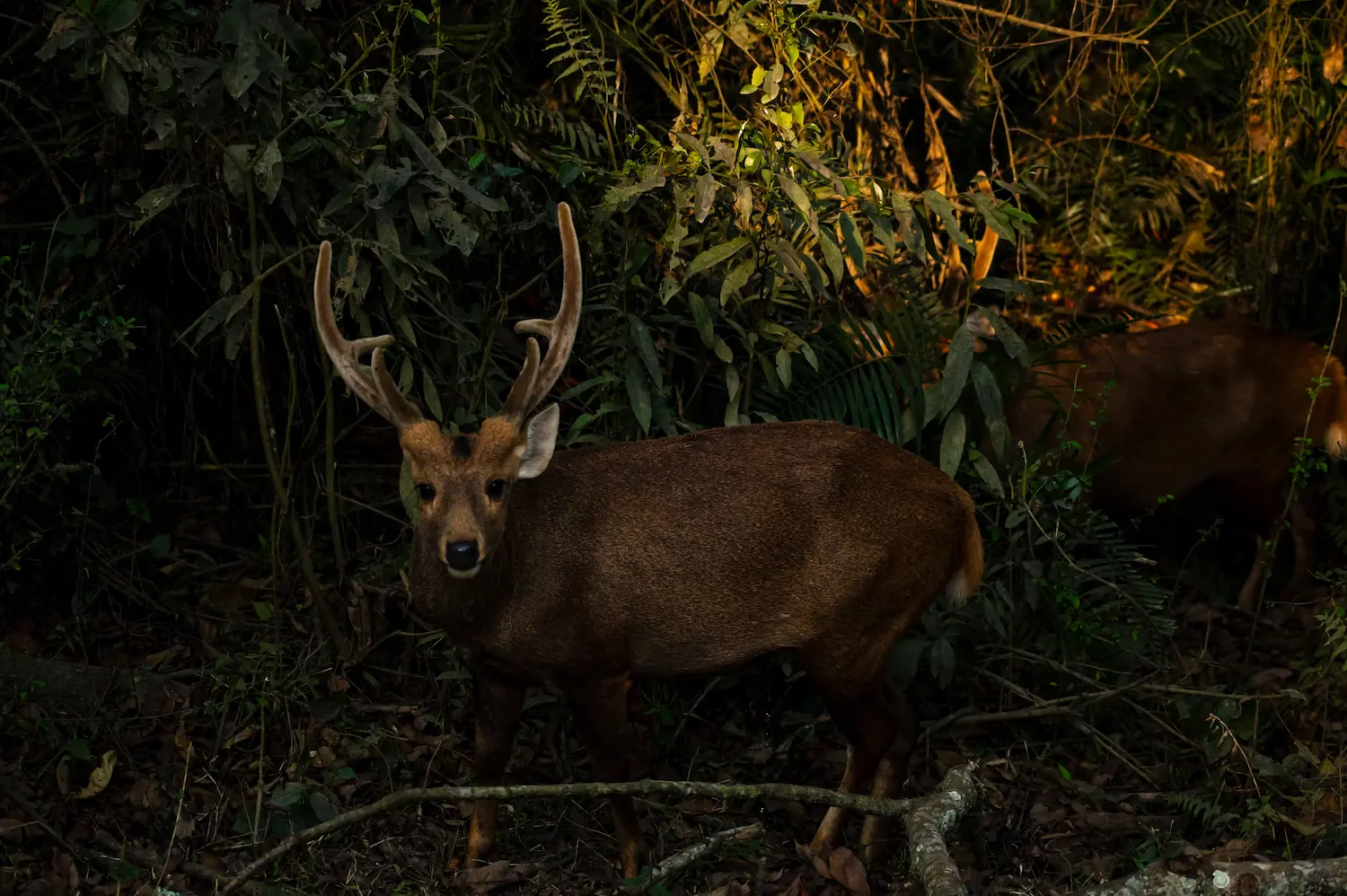
Kaziranga is open from November to April and closed from May to October — the Brahmaputra floods the entire grassland in the monsoon, which is actually part of the ecology that makes the park work, depositing nutrients and resetting the grassland. December to March is the best window: the grass is at its shortest after the park rangers cut it in November, which means animals are visible in the open rather than hidden in the tall stands. Temperatures are comfortable for early morning safaris and the wildlife activity is at its peak as animals concentrate near the remaining water sources. April is the last month before closure and is worth considering if you can handle the heat — the water scarcity means animals are very visible near rivers and pools, and the sighting probability for tigers, in particular, goes up significantly.
| Month | Temp (Kohora) | Park Status | Wildlife Activity | Best For |
|---|---|---|---|---|
|
Nov |
18–25°C |
Opens November |
Good — animals active after monsoon |
First month. Grass still moderately tall. Good start to the season. |
|
Dec–Jan |
10–22°C |
Open; peak season |
Excellent — grass short, maximum visibility |
Peak wildlife sighting months. Grass lowest after post-monsoon cut, animals in open. Cold mornings are comfortable for safari. |
|
Feb–Mar |
14–28°C |
Open |
Excellent — animals near water |
Best overall balance. Comfortable temperatures, full season open, high wildlife activity near water sources. |
|
Apr |
25–34°C |
Open until mid-April |
Very good — animals concentrate near water |
Hot but productive. Animals visible near few remaining water points. Last chance before closure. |
|
May–Oct |
Closed |
Park closed — Brahmaputra floods |
N/A |
Monsoon floods the grasslands completely. Park closed to all tourists. Plan for November opening. |
Table 4 — Month-by-Month Season and Safari Guide
Getting There
Guwahati is the main entry point for Kaziranga — direct flights from Delhi in 2.5 hours, then a 4 to 4.5 hour drive on NH27 through Assam's tea garden countryside to the park. Most visitors fly into Guwahati, stay one night if they arrive late, and drive to Kaziranga the next morning. Jorhat Airport, 97 kilometres from the park, is a faster road option for those flying via a connection, and is particularly practical for travellers combining Kaziranga with Upper Assam destinations like Majuli River Island. The drive from Shillong in Meghalaya to Kaziranga is about 300 kilometres and 7 to 8 hours — straightforward if you are doing a Meghalaya and Assam circuit together, which is the most natural Northeast combination.
| Route | Details | Journey Time | Best For |
|---|---|---|---|
|
Fly to Guwahati → road to Kaziranga |
Delhi → Guwahati (2.5 hrs, IndiGo/Air India/SpiceJet/Vistara) → Kaziranga by road (194 km, 4–4.5 hrs on NH27/NH715) |
6.5–7 hrs total |
Most popular. Guwahati has frequent Delhi flights throughout the day. Road to Kaziranga passes through Assam's tea garden countryside. |
|
Fly to Jorhat → road to Kaziranga |
Delhi → Jorhat (via Guwahati connection or direct). Jorhat Airport is 97 km from Kaziranga (2–2.5 hrs road) |
Shorter road leg |
Better if combining with Upper Assam (Majuli, Dibrugarh). Direct flights limited — check availability. |
|
Train to Furkating → road |
Trains from Guwahati to Furkating (nearest station, 75 km from Kohora). Then taxi to park. |
Train 4–5 hrs + road 2 hrs |
Budget option for those comfortable with train connections in Assam. |
|
Road from Shillong (Meghalaya circuit) |
Shillong → Guwahati (103 km, 2.5 hrs) → Kaziranga (194 km from Guwahati, 4–4.5 hrs). Total ~300 km from Shillong. |
7–8 hrs total |
Travellers combining Meghalaya + Assam on one Northeast trip — the natural combination. |
Table 5 — How to Reach Kaziranga
Where to Stay
The best accommodation options in Kaziranga are the forest-edge and riverside lodges and tented camps that place you in or immediately adjacent to the park's buffer zone — Iora, Diphlu River Lodge and Wild Mahseer are the three most consistently well-reviewed, at ₹12,000 to ₹35,000 per night for two people all-inclusive with safaris. These are the right choice if budget allows, because waking up to dawn safari activity from a camp that is already inside the park's atmosphere is a very different experience from driving in from a Kohora town hotel. The Heritage River Retreat, Assam Tourism's flagship property, is a solid mid-range option at ₹6,000 to ₹12,000. And if you're keeping costs down, the guesthouses and budget hotels in Kohora town at ₹800 to ₹2,000 are adequate for a safari-focused trip where the room is just where you sleep between games.
| Property / Type | Price Range (per night) | What to Know |
|---|---|---|
|
Luxury river camps and lodges (Iora, Diphlu River Lodge, Wild Mahseer) |
₹12,000–₹35,000 for two, all-inclusive |
Tented camps or forest lodges on the Diphlu or Brahmaputra riverbank. Safaris included or easily arranged. Best-quality experience in Kaziranga. Book 4–6 weeks ahead for peak season. |
|
Heritage River Retreat (Assam Tourism flagship) |
₹6,000–₹12,000 for two |
Government-run heritage property with good standard. Well-located for Kohora zone. Popular with families. |
|
Mid-range hotels (Kohora area) |
₹2,500–₹6,000 for two |
Several 3-star options within 5–10 km of Kohora gate. Bonhabi Resort, Kaziranga Golf Resort are the better-known names. Comfortable, functional, good safari access. |
|
Budget guesthouses (Kohora and Bagori) |
₹800–₹2,000 for two |
Basic rooms, close to the park. Adequate for safari-focused visits. Some include meals. |
|
Jungle camps (Eco-tourism operators) |
₹3,000–₹8,000 for two |
Several private operators run tented camps near the park boundary. Campfire evenings, birding walks, flexible safari arrangements. Good mid-range option. |
Table 6 — Where to Stay in Kaziranga (2026)
Quick Reference
| What You Need to Know | The Answer |
|---|---|
|
Park area |
430 sq km core area. Part of the larger Kaziranga Tiger Reserve at 1,307 sq km including buffer zones. |
|
UNESCO status |
World Heritage Site since 1985. |
|
Established |
1905 as a reserved forest; national park status 1974. |
|
One-horned rhino count |
2,613 (2022 census) — approximately two-thirds of the world's total population. |
|
Total visitors 2024–25 |
443,636 (Oct 2024–May 2025) — 3rd most-visited national park in India. |
|
Park open season |
November to April. Closed May to October due to Brahmaputra flooding. |
|
Best months |
December to March — shortest grass, highest wildlife visibility, comfortable temperatures. |
|
Tiger density |
104 per 100 sq km (2022) — one of the highest in the world. |
|
Safari booking |
Online at assambooking.com or through hotels and operators. Advance booking strongly recommended for peak season (Dec–Feb) and elephant safaris. |
|
Jeep safari cost (Indians) |
₹3,500–₹5,500 per jeep (up to 6 people). Zone-dependent. |
|
Elephant safari cost (Indians) |
₹1,800 per person. Kohora and Bagori zones only. 4 people per elephant. |
|
Boat safari |
Agaratoli zone only. Best for birding. ₹800–₹1,200 per person. |
|
Best zone for rhinos |
Kohora (Central Range) — highest density. Bagori (Western) is second and less crowded. |
|
Best zone for birding |
Agaratoli (Eastern Range) — also the only zone with boat safari. |
|
Nearest airport |
Guwahati (194 km, 4–4.5 hrs). Jorhat (97 km, 2–2.5 hrs) for those flying via connections. |
|
Distance from Shillong |
~300 km, 7–8 hrs. Natural combination for Meghalaya + Assam circuit. |
|
Distance from Guwahati |
194 km, 4–4.5 hrs on NH27. |
|
What is the Big Five of Kaziranga? |
One-horned rhino, Bengal tiger, Asian elephant, wild water buffalo, Eastern swamp deer. |
Table 7 — Kaziranga Master Reference 2026
Before You Book
Kaziranga is the right call for any Northeast trip that has wildlife on the list — it is 4.5 hours from Guwahati, open from November to April, and produces the kind of reliable wildlife sightings that most Indian national parks cannot match. The rhino sighting probability in Kohora zone on a morning jeep safari is genuinely high, the elephant safari is the most intimate wildlife experience the park offers, and the boat safari in Agaratoli is the option most first-timers overlook and most repeat visitors recommend.
December to February is the best window. Book your jeep safari online at assambooking.com before you travel — the peak season fills up, particularly on weekends and for the morning slots. And if you can get an elephant safari slot in Kohora for the 5 to 6 AM session, you really can't sleep on it. Watching a one-horned rhinoceros at close range from elephant back in the pre-dawn light of the Kaziranga grassland is one of those wildlife experiences that is as good in reality as it sounds in description, which is not something you can say about everything in India.
The park has been protecting its rhinos since 1905. In that time the population has grown from fewer than a dozen to 2,613. That is one of the finest conservation stories in Asia, and a morning safari in Kaziranga is a good way to understand it firsthand.
Best Selling Tour Packages
Explore other exciting options for your next adventure!