
Assam Tour Packages
Assam Tour Packages
Assam is a state of Northeast India that sits in the lap of the Eastern Himalayas and the Brahmaputra river valley. It shares borders with Bhutan, Arunachal Pradesh, Nagaland, Manipur, Mizoram, Tripura, Meghalaya, and West Bengal — making it both a geographic pivot and a cultural crossroads of the entire Northeast.
The name "Assam" is believed to derive from the Ahom word Asama, meaning "peerless" or "unparalleled." And honestly, once you're here, you understand why.
If there's one phrase that captures Assam best, it's this: "Luit-par Aru Neel Pahar" — meaning "beyond the Luit (Brahmaputra) and beneath the blue hills." That's how the Assamese people describe their homeland in song, in poetry, in everyday conversation. The Brahmaputra (called Luit, or Burlung in Assamese) is not just a river — it's the soul of the state. Its sandbar islands (called chars) host everything from river dolphins to one-horned rhinos to entire villages.
Assam covers approximately 78,438 sq km and is home to over 35 million people speaking more than 50 languages and dialects. It is the largest state in Northeast India by population and the most accessible gateway to the seven sister states.
Quick Answer: Assam is famous for its one-horned rhinoceros, Kaziranga National Park, Brahmaputra river, Assam tea (the world's largest tea-growing region), Bihu festival, and rich Vaishnavite culture rooted in the Sattra (monastery) tradition.
Assam Tour Packages by BizareXpedition
BizareXpedition curates immersive, responsibly designed Assam tour packages that go beyond the ordinary tourist trail. Whether you're a wildlife enthusiast chasing rhinos and tigers in Kaziranga, a tea lover wanting to wake up in a heritage bungalow inside a tea estate, a culture-seeker exploring ancient Sattra traditions, or a river adventure buff on the Brahmaputra — BizareXpedition has a package tailored for you.
Our Assam packages typically range from 4 nights/5 days to 12 nights/13 days, depending on how deep you want to go. We offer:
Wildlife & Nature Packages – Kaziranga, Manas, Nameri, Dibru-Saikhowa
Tea Tourism Packages – Heritage bungalow stays, tea-tasting trails, Jorhat & Dibrugarh tea belt
Cultural Heritage Packages – Majuli, Sivasagar, Hajo, Kamakhya
River & Adventure Packages – Brahmaputra cruise, river island camping, angling
Assam + Meghalaya Combo Packages – Guwahati, Shillong, Cherrapunji, Dawki
Full Northeast Packages – Assam as the base, covering all seven sisters
Festival Packages – Bihu special, Ambubachi Mela, Dehing Patkai festival
What is the Best Time to Visit Assam?
The best time to visit Assam is from October to April. This window covers the cool, dry months when wildlife is most visible, tea gardens are lush green, and the weather is pleasant for outdoor exploration. Here's how the seasons break down:
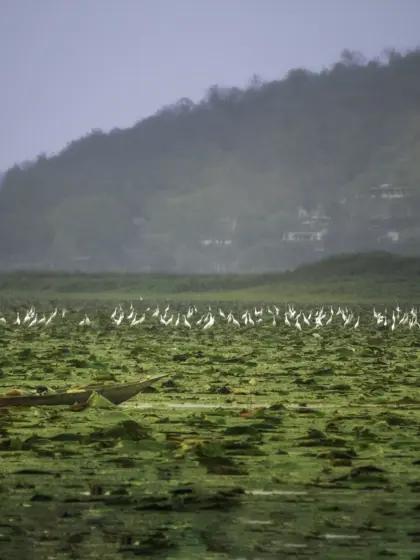
October to February (Peak Season) This is when Assam tourism is at its finest. The air is crisp, the Brahmaputra runs calmer (not in flood season), and Kaziranga's grasslands are shorter — making rhino and tiger sightings easier. Temperatures stay between 8°C and 24°C. December and January mornings can be quite foggy in the Brahmaputra valley, which gives the entire landscape an almost mystical quality — locals call it dhundh (fog), and it rolls across the river and tea gardens like a slow tide.
March to May (Bihu Season & Shoulder) This is Bohag Bihu time — Assam's most important festival, celebrated in mid-April. The state explodes in color, music, and community celebration. March is still comfortable (20°C–30°C), but April–May starts getting warm and humid. Flowering trees like Kopou Phool (Foxtail Orchid, Assam's state flower) bloom everywhere around Bihu. Wildlife parks are usually open till May-end.
June to September (Monsoon) Assam receives extremely heavy rainfall — Cherrapunji-levels of heavy in the Barak valley. The Brahmaputra floods, and most wildlife parks close. However, the landscape turns a surreal, almost electric green. Not ideal for first-timers, but experienced travelers seeking lush Assam or angling trips on mountain streams find this season compelling.
BizareXpedition Tip: For Kaziranga specifically, plan between November and April — the park closes from May 1 to October 31 due to floods. If you're targeting the Manas National Park (UNESCO World Heritage Site), it remains open longer.
What are the Top Places to Visit in Assam?
Assam is not just Kaziranga. Here is a curated guide to the destinations our Assam tour packages cover:
1. Kaziranga National Park
Kaziranga is Assam's crown jewel and a UNESCO World Heritage Site. It is home to the world's largest population of the Indian One-Horned Rhinoceros — with over 2,600 rhinos as per the last census, accounting for roughly two-thirds of the world's entire rhino population. The park also supports five of India's eight major species of great cats, including the Royal Bengal Tiger. In fact, Kaziranga has one of the highest tiger densities in India.
Jeep safaris are conducted across four main zones: Central (Kohora), Western (Bagori), Eastern (Agaratoli), and Burapahar. Elephant safaris at dawn, conducted by the forest department, put you within meters of rhinos — an experience that rewires something inside you.
Entry: 500 INR for Indians, 2,000 INR for foreigners
Safari Timing: 7:00 AM – 9:30 AM and 2:00 PM – 4:30 PM
Best Zone: Western zone for maximum wildlife density
2. Majuli – The World's Largest River Island
Majuli is unlike any other place in India. It is the world's largest inhabited river island, sitting in the middle of the Brahmaputra, and it is the cultural capital of Assam. Accessible by ferry from Jorhat (a 30–45 minute river crossing), Majuli is home to the Sattra tradition — Vaishnavite monasteries founded by the saint-reformer Srimanta Sankardev in the 15th–16th century, which transformed Assamese society, art, music, and theatre.
The Sattra is not a temple. Do not confuse it with a Hindu mandir. It is a monastery in the Eka Saran tradition — aniconist (no idol worship), community-centered, deeply artistic. When you visit, you're entering a living cultural institution. Dress modestly, remove footwear, and if monks are in prayer (naam), observe silently.
3. Guwahati – The Gateway City
Guwahati is Assam's largest city and the commercial capital of Northeast India. Most Assam tour packages begin and end here. The city sits on the south bank of the Brahmaputra and is surrounded by hills on three sides.
Key attraction in Guwahati
Kamakhya Temple – One of India's most powerful Shakti Peethas, sitting atop Nilachal Hill. The temple is dedicated to the goddess Kamakhya and draws pilgrims from across India. The Ambubachi Mela (held in June) is one of the largest tantric gatherings in the world, with over 100,000 pilgrims. This is a profound religious site with strong tantric traditions — approach with genuine respect and curiosity.
Umananda Island Temple – Located on a Brahmaputra island (Peacock Island), it's one of the smallest inhabited river islands in the world.
Srimanta Sankardev Kalakshetra – A sprawling cultural complex that is like a compressed museum of Assamese civilisation — its museums, galleries, and performance spaces cover everything from Bihu traditions to Sattra arts.
Assam State Museum – For those who want historical depth before their tour begins.
Guwahati Zoo / Assam State Zoo – One of India's best zoos, housing pygmy hog, hispid hare, golden langur, and other Northeast endemics.
4. Sivasagar – The Ahom Capital
Sivasagar (also spelled Sibsagar) was the capital of the Ahom Kingdom, which ruled Assam for nearly 600 years (1228–1826 CE) — one of the longest-surviving kingdoms in Indian history. The Ahoms resisted Mughal invasions 17 times. That's a fact that deserves to sit with you for a moment. The Ahom monuments in Sivasagar are extraordinary:
Rang Ghar – A 2-storeyed royal amphitheatre for witnessing elephant and buffalo fights. It predates the Colosseum in concept and is one of Asia's oldest amphitheatres.
Kareng Ghar – The seven-storied Ahom royal palace (now partially standing)
Sivasagar Sivadol – One of the tallest Shiva temples in India, built in 1734 CE
Talatal Ghar – A multi-level palace with underground tunnels used for military strategy
Nuance for Assamese Visitors Returning After Years Away: Sivasagar has changed dramatically — better roads, new hotels, but also some heritage sites that still lack adequate conservation. The underground tunnels at Talatal Ghar are now accessible for a short stretch. Don't miss the small Ahom Museum — it fills in the gaps that school history books left out.
5. Manas National Park
Manas is Assam's other UNESCO World Heritage Site and Project Tiger reserve. Unlike Kaziranga's grasslands, Manas has diverse terrain — forests, rivers, grasslands, and the border with Bhutan. It was declared a UNESCO World Heritage Site in 1985, but due to insurgency-related disturbances in the 1990s, it was placed on the "In Danger" list in 1992. Post-2010, with restoration efforts by local communities (the Bodo people have been central to this revival), Manas has made a remarkable comeback.
Manas is home to several species found nowhere else in the world: the Golden Langur, Pygmy Hog, Hispid Hare, and Assam Roofed Turtle. The Golden Langur — a stunningly beautiful primate with cream-to-gold fur — is one of the rarest primates in the world, found only in a small strip of Western Assam and Bhutan.
6. Tea Gardens of Upper Assam (Jorhat & Dibrugarh)
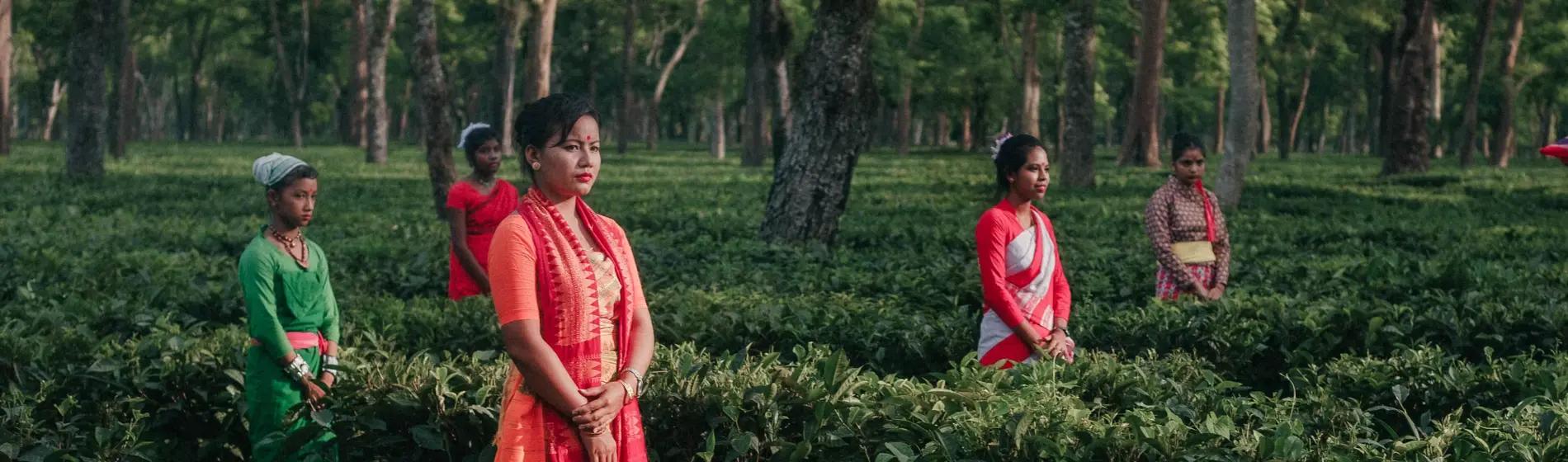
Assam produces approximately 55% of India's total tea output and nearly 15% of the world's black tea. The Assam tea belt runs across Upper Assam — the districts of Jorhat, Sivasagar, Dibrugarh, and Tinsukia are essentially one continuous ocean of tea. Tea tourism in Assam is an experience unlike conventional tourism. BizareXpedition's Assam tea estate packages offer:
Overnight stays in restored colonial bungalows inside working tea estates (you're waking up to the smell of tea leaves at 5 AM — it's something else entirely)
Factory tours where you witness the full orthodox process: withering, rolling, oxidation, drying, grading
Plucking walks with experienced chaak (pluckers), who are almost entirely women
Tea-tasting sessions with estate managers — understanding first flush, second flush, and the famous Assam malty muscatel character
7. Hajo – The Tri-Faith Pilgrimage Town
Hajo, located 32 km northwest of Guwahati, is one of the most quietly remarkable places in Assam. It hosts three significant religious sites within a few kilometers of each other:
Hayagriva Madhava Temple – A Vaishnavite temple on Monikut Hill, considered sacred by both Hindus and Buddhists (Tibetan Buddhists believe the Buddha attained Nirvana here, or that the temple enshrines Buddha relics)
Powa Mecca Mosque – Believed to hold a portion of soil from Mecca, making it a revered Islamic pilgrimage site for Muslims across South and Southeast Asia
Kedar Temple – A Shaivite temple
8. Dibru-Saikhowa National Park
Lesser visited but genuinely extraordinary. Dibru-Saikhowa in Tinsukia district is home to feral horses — semi-wild horses that roam freely across the river islands and grasslands. The park is also habitat for tigers, elephants, Gangetic river dolphins, and the rare Irrawaddy dolphin.
Culture and Festival That Defines Assam
| Bihu | Assamese Name | Time | Significance |
|---|---|---|---|
|
Spring/New Year Bihu |
Bohag Bihu (Rongali Bihu) |
Mid-April (April 14–15) |
New Year, spring, agricultural sowing — the most celebrated Bihu |
|
Harvest Bihu |
Kongali Bihu (Kati Bihu) |
Mid-October |
A quiet, lamp-lighting festival — no dancing, just prayer |
|
Winter Bihu |
Bhogali Bihu (Magh Bihu) |
Mid-January |
Post-harvest feast, community feasting, meji (bonfire) burning |
Assam Culture and Festival
Bohag Bihu is the one that most people mean when they say "Bihu." It lasts seven days. Each day has a name and a ritual — the first day (Goru Bihu) is dedicated to cattle, who are bathed in rivers and given special food in gratitude for their role in farming. This is one of those uniquely Assamese touches that outsiders find surprising and moving — a whole day to honor animals.
The Bihu dance (Husori) is performed in groups — young men and women together, which was historically radical in a society with conservative gender norms. The dhol (drum), pepa (buffalo horn flute), and toka (bamboo clapper) provide the rhythm. The movements are earthy, energetic, expressive.
Bihu songs (Bihu geet) are another universe entirely — witty, romantic, sometimes explicitly sensual, full of agricultural metaphors. They have been composed and evolved organically over centuries. There are Bihu songs that reference Brahmaputra floods, rhino sightings, tea garden romance, and longing for absent lovers — it's a living folk tradition.
What is the traditional food of Assam?
Assamese cuisine is one of India's most distinctive regional cuisines. It is defined by minimal spicing, heavy use of fermented and dried ingredients, fresh river fish, and a preference for light, clean flavors rather than heavy gravies.
Khar – A traditional alkaline dish made using the ash of the kola banana plant or raw papaya, cooked with fish, meat, or vegetables. Every Assamese meal traditionally begins with khar. If you've never eaten it before, it's hard to describe — mildly alkaline, slightly bitter, extremely cleansing. You either fall in love immediately or need a second try.
Masor Tenga – A sour fish curry made with tomatoes, lemon, or outenga (elephant apple), served with rice. Light, bright, and perfect for the humid Assam climate.
Pork with Bamboo Shoot (Ou Tenga/Bah Gaj) – In non-Brahmin, tribal, and many mainstream Assamese homes, pork cooked with fermented bamboo shoots is a staple. The fermented bamboo (khorisa) is pungent in the best way.
Duck Meat Curry (Hans Maas) – Duck with black sesame paste (til) or with ash gourd is a delicacy across Assam.
Pithas – Rice cakes made during Bihu and other festivals. Til Pitha (rice cake with sesame and jaggery, rolled like a cigar), Narikol Pitha (coconut-stuffed), Ghila Pitha (round, fried) are the most beloved.
From the tea estate tables:
If you're on a tea estate stay, the kitchen runs on a different register — colonial-era recipes, fresh produce from estate gardens, river fish, and enormous breakfasts (jolpan style) with multiple types of rice, pickles, and fresh butter.
Note: Assamese cuisine is largely rice-based. The Assamese word for cooked rice is bhat, and saying bhat khainu (literally, "I ate rice") means you had a proper meal. Any other food is supplementary. This is culturally significant — rice is not a side dish in Assam, it IS the meal.
Drinks:
Assam Tea – Obviously. But drink it the estate way: black, no milk, maybe a sliver of ginger.
Apong – Traditional rice beer of the Mishing and other tribes. Light, slightly sour, made from fermented rice. Mild by alcohol standards, profound by cultural significance.
Sunga Saul – Rice cooked in bamboo over fire. Not a drink, but worth mentioning in any food context.
How to Reach Assam
By Air
Lokpriya Gopinath Bordoloi International Airport, Guwahati (GAU) is the primary gateway. It receives direct flights from:
Delhi (1 hr 55 min, multiple daily flights — IndiGo, Air India, SpiceJet, Vistara/Air India Express)
Kolkata (1 hr, multiple daily)
Mumbai (3 hrs, multiple daily)
Bangalore (3 hrs 30 min, connecting or direct via IndiGo)
Chennai (3 hrs 30 min)
Hyderabad, Pune, Ahmedabad (connecting)
Other airports in Assam:
Dibrugarh Airport (DIB) – Connected to Kolkata and Delhi directly, useful for upper Assam packages
Jorhat Airport (JRH) – Smaller, connected to Kolkata, useful for tea estate and Majuli routes
Silchar Airport (IXS) – For Barak Valley/Silchar exploration
By Train
The train is often the most scenic and affordable option, especially from Eastern India.
| Train | From | To | Duration | Notable |
|---|---|---|---|---|
|
Rajdhani Express |
New Delhi |
Guwahati |
~17 hrs |
Fastest comfortable option |
|
Avadh-Assam Express |
Lucknow/Delhi |
Guwahati |
~35–40 hrs |
Budget-friendly, long but scenic |
|
Kamrup Express |
Kolkata |
Guwahati |
~12 hrs |
Overnight, very popular |
|
Bande Bharat Express |
Guwahati |
New Jalpaiguri (Siliguri) |
— |
New, fast connectivity to NE |
|
Intercity/Passenger trains |
Guwahati |
Kaziranga |
4–5 hrs |
Onward to Kaziranga |
Assam By Train
Important: The Northeast Frontier Railway (NFR) zone handles Assam's rail network. Trains can run late — especially during monsoon. Always build buffer time into your itinerary for train-based Assam packages.
By Road
From Siliguri (West Bengal): NH 27 connects Siliguri to Guwahati via North Bengal. ~6–7 hrs by car. The road passes through the Dooars forests and is strikingly beautiful.
From Shillong (Meghalaya): 3 hrs to Guwahati via NH 6. This is how Assam + Meghalaya combo packages often work.
Within Assam: NH 37 (now NH 715) is the main east-west artery running along the Brahmaputra's south bank, connecting Guwahati–Nagaon–Jorhat–Sivasagar–Dibrugarh. The north bank road (NH 15) is less traveled but passes through pristine forest and tribal villages.
How much does an Assam tour package cost?
The Cost of Assam Tour Packages depends heavily on the type of accommodation, duration, and season. Here's a realistic breakdown:
| Package Type | Duration | Cost per Person (approx.) | Includes |
|---|---|---|---|
|
Budget Backpacker |
5N/6D |
₹8,000 – ₹12,000 |
Guesthouses, shared transport, local food |
|
Mid-Range Package |
6N/7D |
₹18,000 – ₹28,000 |
Good hotels, AC vehicle, safari included |
|
Premium Package (BizareXpedition) |
7N/8D |
₹32,000 – ₹55,000 |
Heritage stays, all safaris, meals, guide |
|
Tea Estate Luxury |
4N/5D |
₹25,000 – ₹45,000 |
Estate bungalow, all meals, tea experiences |
|
Assam + Meghalaya Combo |
10N/11D |
₹40,000 – ₹65,000 |
Multi-destination, premium transport |
Assam tour package cost
Prices are per person on a twin-sharing basis, excluding flights. BizareXpedition packages include all ground transport, accommodation, specified meals, wildlife park entry fees, and an experienced local guide.
Additional Costs to Budget For:
Flights to/from Guwahati: ₹4,000 – ₹15,000 (depends on origin city and booking time)
Kaziranga safari (per ride): ₹2,500 – ₹4,000 (jeep), ₹1,500 (elephant, government-fixed price)
Manas safari: ₹1,500 – ₹2,500
Majuli ferry: ~₹15–20 per person
BizareXpedition Offer: We offer customized Assam tour packages based on your group size, budget, and interest. Solo travelers, couples, families, and corporate groups are all catered to. Contact us for a no-obligation quote.
Why Choose BizareXpedition for Your Assam Tour?
BizareXpedition is not a typical hotel + bus + monument tour operator. We design experiences that give you access to Assam the way locals live and understand it — not Assam filtered through a standard tourist checklist.
We work with local guides who are from Assam, not just trained on it
Our accommodation choices prioritize character — heritage bungalows, boutique river lodges, Sattra guesthouses — not just star ratings
We build in time for the unscheduled: the spontaneous conversation with a mask-carver at Majuli, the morning walk through a tea estate before the tourists arrive
We handle all logistics (permits, safari bookings, ferry schedules) so you experience Assam without friction
We operate responsibly — supporting local economies, avoiding over-touristed spots, and partnering with conservation-active organizations in Kaziranga and Manas.
Frequently Asked Questions (FAQs) & People Also Ask — assam Tour Packages
We help you prepare for your trip and ensure an effortless and enjoyable travel experience.