
Central India Photography Expedition Tour Package13N/14D
Central India Photography Expedition Tour Package
Start & City : Kanha
best deal price
₹
Without GST ₹2,54,000
per person on twin sharing
Choose your departure city, dates, and add guests to secure your tour.
Hurry, as seats fill up, prices rise! Book now!
1. Choose your departure date
Highlights
Watch the Maikal hills at Bamni Dadar turn from amber to rust in the last twenty minutes before sunset, from Kanha's signature viewpoint.
Stand in Chakradhara meadow at dawn, the open grassland once patrolled by the tiger Charger and now filmed for BBC's Dynasties.
Photograph the 65-foot reclining Vishnu at Shesh Shaiya, carved directly into the rock at the base of Bandhavgarh's two-thousand-year-old fort.
Read Kandariya Mahadev's shikhara in the first hour of direct morning light, when its carved relief throws real shadow rather than the flat look midday sun gives the same stone.
Take a private boat onto the Betwa at Orchha as the sun drops, for the single most photographed heritage frame in Central India: fourteen royal Chhatris and their own reflection caught in the same shot.
Apply, if you choose, for the Field Director's full-day zone-free photography permit — the same access BBC and National Geographic crews use in Bandhavgarh and Kanha.
Photograph the Chaturbhuj Temple's rooftop panorama at Orchha in morning side-light — fort, temple, and river in one frame.
Get a naturalist continuity briefing at the Kanha–Bandhavgarh transfer, so the second reserve's team already knows what you photographed and what you're still hoping for.
Essence of Journey
The experiences that capture the true spirit of the entire trip.
| Day | Route | Distance | Major Highlights |
|---|---|---|---|
| Day 1 | Arrival at Kanha (Jabalpur – Kanha) | 165 Kms / 4 Hrs | Jungle lodge welcome; naturalist briefing; Khatia buffer zone walk. |
| Day 2 | Kanha Safari Day 1 (Kanha & Kisli Zones) | — | Barasingha meadows, Neelam's territory; Kisli zone, Munna's legacy; Kanha Museum. |
| Day 3 | Kanha Safari Day 2 (Sarhi & Mukki Zones) | — | Saunf Meadow birding, blackbuck; Mukki zone leopard country; Bamni Dadar sunset. |
| Day 4 | Kanha Photographer's Day | — | Revisit best-light zone from Days 2-3; optional full-day zone-free permit. |
| Day 5 | Kanha – Bandhavgarh | 250 Kms / 5 Hrs | Final Kanha safari; transfer; naturalist continuity briefing. |
| Day 6 | Bandhavgarh Safari Day 1 (Tala Zone) | — | Chakradhara meadow, Charger's old territory; Badi Gufa caves; Shesh Shaiya. |
| Day 7 | Bandhavgarh Safari Day 2 (Magadhi & Khitauli Zones) | — | Sukhi Patiha waterhole; Khitauli's resident wild elephant herd. |
| Day 8 | Bandhavgarh Photographer's Day | — | Revisit best-light zone from Days 6-7; optional full-day zone-free permit. |
| Day 9 | Bandhavgarh – Khajuraho | 212 Kms / 5 Hrs | Final Bandhavgarh safari; transfer to the heritage half of the trip. |
| Day 10 | Khajuraho Photography Day 1 | — | Western Group at dawn and dusk light; Chandela sculptural detail. |
| Day 11 | Khajuraho Photography Day 2 | — | Eastern Group (Jain temples), Southern Group; optional hot-air balloon. |
| Day 12 | Khajuraho – Orchha | 175 Kms / 4 Hrs | Orchha Fort complex, Ram Raja Temple; sunset boat ride past the Chhatris. |
| Day 13 | Orchha Photography Day | — | Chaturbhuj Temple rooftop panorama; Lakshmi Narayan murals; Betwa riverside. |
| Day 14 | Departure from Orchha | Orchha – Jhansi/Gwalior | Morning at leisure; transfer for onward journey. |
About
This India photography tour wildlife heritage circuit is built around one working assumption: a camera needs more time in front of its subject than a standard sightseeing pace allows, and it needs the subject in good light. Thirteen nights move through Kanha's open barasingha meadows, Bandhavgarh's tiger-dense zsal forest around a two-thousand-year-old fort, and the sandstone sculpture of Khajuraho and Orchha, in a single private vehicle, on a schedule set by dawn and dusk light rather than a coach timetable.
The route runs Kanha, then Bandhavgarh, then Khajuraho, then Orchha, and the order matters: Kanha sits at the southern end of this circuit and Orchha at the northern end, with Bandhavgarh and Khajuraho falling in between at roughly even spacing. Every transfer moves the same direction — south to north — instead of reaching Kanha, doubling back north past Bandhavgarh's latitude, and covering that stretch of road twice to reach Khajuraho, which is what the reverse order would require. On a Central India photo expedition where every saved hour on the road is an hour spent on a safari or in front of a temple facade instead, that difference is worth building the whole route around.
Each of the two tiger reserves carries a dedicated Photographer's Day beyond its standard safari programme, with the option to upgrade to the Field Director's full-day, zone-free permit — the same authorisation television wildlife crews use in Madhya Pradesh's reserves. Khajuraho and Orchha get the architectural equivalent: two full days reading the Western, Eastern, and Southern Temple Groups at the hours their sandstone actually changes colour, and a sunset boat ride past Orchha's riverside Chhatris that remains one of the most photographed single frames in Central India. A tiger and temple photography tour, in other words, built to give the camera what it actually needs at each of its four subjects.
| Destination | Nights | Premium | Luxury | Ultra-Luxury |
|---|---|---|---|---|
|
Kanha |
4 |
Celebration Jungle Lodge |
Kanha Jungle Lodge |
Banjaar Tola – Taj Safaris |
|
Bandhavgarh |
4 |
Bandhav Vilas / Nature Heritage Resort |
Mahua Kothi – Taj Safaris |
Pashan Garh – Taj Safaris |
|
Khajuraho |
3 |
Ramada Khajuraho |
Radisson Jass Khajuraho |
Taj Chandela |
|
Orchha |
2 |
Fort View Retreat |
Amar Mahal Orchha |
WelcomHeritage Orchha Resort |
Madhya Pradesh Central India Photography Accommodation Categories
WHY BOOK THIS WITH BIZAREXPEDITION
BizareXpedition Services Pvt. Ltd. (CIN: U63090UR2016PTC007433) runs this circuit directly as a ground operator, not as a resold package layered with a middleman's commission.
One private vehicle and driver for all fourteen days, Jabalpur to Jhansi/Gwalior, so nothing about the drive changes hands between the wildlife and heritage halves of the trip.
A naturalist continuity briefing at the Kanha–Bandhavgarh changeover, so your second reserve's naturalist starts already knowing what you've photographed and what you're still after, rather than beginning cold.
The Field Director's full-day photography permit application handled on your behalf, including the advance paperwork and security deposit that make this permit genuinely difficult to arrange independently on short notice.
Three consistently offered tiers — Premium, Luxury, and Ultra-Luxury — across all four destinations, so the same circuit and the same photography-first pacing is available whichever level of property you choose.
A dedicated trip coordinator on WhatsApp throughout, for anything that needs adjusting once you're on the ground — a changed safari zone request, a permit query, a hotel-night extension.
| Tier | Package Cost (Per Couple) | Per Person (Twin Sharing) |
|---|---|---|
|
Premium |
₹4,70,000 - ₹5,08,000 |
₹2,35,000 - ₹2,54,000 |
|
Luxury |
₹6,43,000 - ₹6,94,000 |
₹3,21,500 - ₹3,47,000 |
|
Ultra-Luxury |
₹9,41,000 - ₹10,17,000 |
₹4,70,500 - ₹5,08,500 |
Madhya Pradesh Central India Photography 3-Tier Pricing Summary
Pricing is modelled from the Cost Build-up above, with the upper end of each range allowing for date/season variance. It is indicative only and requires validation against current supplier contracts and live availability before quoting a client
Places You’ll Photograph
Four stops, four very different subjects. Here is what each one is actually known for.
Kanha National Park
Kanha is the reserve widely said to have inspired the jungle setting of Kipling’s The Jungle Book, and its open barasingha meadows remain some of the best wildlife photography ground anywhere in India. Four nights here cover all four of its core zones.
Open, Chakradhara-style meadows and the barasingha (swamp deer) conservation story unique to Kanha
Bamni Dadar, Kanha’s celebrated sunset point, where the Maikal hills turn amber and then rust in the last twenty minutes of light
The legacy territories of well-known tigers, from Neelam to the late Munna, read by naturalists who know the park’s families by sight
A rare on-foot walk through the Khatia buffer zone, permit-dependent
Bandhavgarh National Park
Bandhavgarh carries the highest recorded tiger density of any reserve in India, packed into a genuinely compact core zone, and it comes with two thousand years of history built into the same landscape: a hilltop fort, thirty-nine ancient caves, and a 65-foot reclining Vishnu carved straight into the rock at Shesh Shaiya.
Chakradhara meadow, once home to the tiger Charger and filmed for BBC’s Dynasties
Shesh Shaiya’s 65-foot reclining Vishnu and Badi Gufa’s 10th-century meditation cave with Brahmi-script inscriptions
Khitauli zone’s resident wild elephant herd, settled here since a 2018 relocation
Genuinely strong odds of a close tiger sighting, even outside the dedicated Photographer’s Day
Khajuraho
Khajuraho’s sandstone temples, built by the Chandela dynasty roughly a thousand years ago, form a UNESCO World Heritage Site and one of India’s most recognisable architectural subjects. They also reward photographers who know which hour to shoot them in, which is why this tour gives them two full days rather than an afternoon.
The Western Group’s Kandariya Mahadev, read in the raking light of the first hour after sunrise
The quieter Eastern Group’s Jain temples and the Southern Group, both usually near-empty of other visitors
An optional, seasonal hot-air balloon ride over the whole temple complex
Guidance on the Archaeological Survey of India clearance needed for tripods or serious equipment at a protected monument
Orchha
Orchha, the former capital of the Bundela Rajputs on a bend of the Betwa River, is smaller and quieter than Khajuraho, but arguably just as photogenic at the right hour. Its riverside Chhatris are one of the single most photographed heritage frames anywhere in Central India.
The Ram Raja Temple, the only temple in India where Rama is worshipped as a reigning king
A private sunset boat ride past the fourteen Bundela royal Chhatris and their reflection in the Betwa
The Chaturbhuj Temple rooftop panorama, fort, temple, and river in one frame, best in morning side-light
The Lakshmi Narayan Temple’s Bundelkhand murals, closer to a private gallery than an active shrine
Why the Route Runs This Way
Kanha sits at the southern end of this circuit and Orchha at the northern end, with Bandhavgarh and Khajuraho falling in between at roughly even spacing. Every transfer moves in the same direction, so no stretch of road is ever driven twice. On a trip built around dawn and dusk light, that difference is the reason this specific sequence, Kanha, then Bandhavgarh, then Khajuraho, then Orchha, is what most photography-focused travellers end up booking, rather than a route that doubles back on itself to fit a more familiar order.
| Period | Months | Condition |
|---|---|---|
|
Peak |
Feb - Apr |
Best light and highest tiger-sighting odds; both reserves at their driest and most open. |
|
High |
Nov - Jan |
Cool, clear mornings; good light, slightly denser foliage than peak season. |
|
Shoulder |
Oct |
Reserves reopen after monsoon; forest still lush, sightings improving through the month. |
|
Caution / Closure |
May - Jun |
Very hot (up to 45C); strong sightings odds at waterholes but demanding midday conditions for a full-day permit. |
|
Monsoon (Parks Closed) |
Jul - Sep |
Kanha and Bandhavgarh close to safari tourism; this itinerary is not offered in this window. |
Madhya Pradesh Central India Photography Season Adjustments
How to Reach
Most international visitors arrive in India through Delhi or Mumbai and connect onward from there. Here is how this specific trip fits into that.
Getting to the Start Point: Jabalpur
Jabalpur is the nearest gateway to Kanha, roughly four hours away by road. It has domestic flight connections from Delhi and Mumbai, so most international travellers land at one of those two cities, clear immigration, and take a short domestic connection into Jabalpur, where your private vehicle and driver will be waiting.
Getting Away From the End Point: Orchha
At the close of the trip, Orchha connects onward through two options: Jhansi railway station, about sixteen kilometres away, with regular train services across North India, or Gwalior Airport, approximately three hours by road, with domestic flights back to Delhi.
Visas and Entry
Most foreign nationals travelling to India for tourism need either an e-Visa or a regular tourist visa arranged in advance; requirements vary by nationality and do change, so check the current rules for your passport with Indian immigration or your nearest Indian embassy or consulate before booking flights.
PRACTICAL NOTES
Safety
A dedicated trip coordinator is reachable by WhatsApp throughout; the same vehicle and driver stay with you across all fourteen days.
Drinking Water
Bottled or filtered water provided in-vehicle and at all lodges/hotels; tap water is not recommended anywhere on this circuit.
Dress Code
Neutral/earth-toned clothing for safaris (no bright colours or white); modest coverage recommended at Ram Raja Temple and other active shrines in Orchha.
Tipping
Not compulsory; naturalists, drivers, and guides customarily receive a discretionary tip at the end of each leg — your trip coordinator can advise typical ranges on request.
Photography
Standard safari and monument photography is included throughout; tripods and additional lenses for serious architectural work at Khajuraho may need advance ASI clearance (see Day 10).
The Field Director's full-day zone-free photography permit (Days 4 and 8) is the only element of this itinerary requiring separate advance application — see those days for details.
Connectivity
Mobile network coverage is reliable in Khajuraho and Orchha; expect intermittent signal inside both Kanha and Bandhavgarh's core safari zones, standard for Central India's reserves.
Booking Summary
Dept. City :
--
Dept. Date :
--
Traveller :
Adults: 2, Child: 0, Infant: 0
Rooms :
--
Basic Price :
--
Total Cost
--
GST
--
Grand Total
--
Itinerary (Day Wise)
Fourteen days, one straight line north — Kanha to Bandhavgarh to Khajuraho to Orchha, never doubling back. The first eight nights are wildlife: four full days working every zone in Kanha, from Neelam's open meadows to Munna's old bamboo forest, then the same structure at Bandhavgarh, where Chakradhara meadow and Shesh Shaiya's carved reclining Vishnu sit at the edge of the same fort. Each reserve gets a fourth day set aside just to go back to whatever zone gave the best light, or to upgrade to the Field Director's zone-free permit if you want the whole park for a day. From there it's five hours north to Khajuraho, where two full days go into reading the sandstone temples at the hours they actually change colour — dawn on the Western Group, a quieter afternoon with the Eastern and Southern Groups. The last stretch is Orchha, a short, well-timed stop built almost entirely around one shot: a sunset boat ride past the fourteen riverside Chhatris, plus a rooftop morning at Chaturbhuj Temple before the drive out to Jhansi or Gwalior.
Day 1
ARRIVAL AT KANHA | Jungle Lodge Welcome & Khatia Trail Walk
Route: Jabalpur Airport – Kanha National Park (165 Kms / 4 Hrs)
Jabalpur is Kanha's nearer gateway, roughly four hours by road, and the drive is a slow transition — highway giving way to the Maikal range's sal and bamboo cover as you approach the buffer. Check in to your jungle lodge by early afternoon and take the naturalist's welcome briefing over tea: an orientation to all four of Kanha's core zones, the tiger families currently holding territory in each, and the barasingha conservation story that makes this park unique among India's reserves. In the late afternoon, take a permit-dependent guided walk through the Khatia buffer zone — one of the very few stretches of a Central Indian tiger reserve where visitors are allowed on foot, led by a forest department guide reading pugmarks and undergrowth at a pace no jeep allows. Overnight at the jungle lodge.
Experience of the Day
The drive in from Jabalpur — highway giving way slowly to the Maikal range's sal and bamboo forest
The naturalist's welcome briefing — all four zones and their current resident tiger families
The Khatia buffer zone trail walk — one of the few on-foot experiences permitted in a Central Indian tiger reserve
Day 2
KANHA SAFARI DAY 1 | Meadows, Barasingha & Munna's Legacy
Route: Kanha Zone (Meadow Circuit) – Kisli Zone – Kanha Museum
The morning safari opens in the Kanha zone's meadows, the reserve's original core and still its most productive grassland — this is Neelam's territory, tiger T-65, whose parents built Kanha's most recognised tiger lineage, and whose open sightlines make for the finest photography in the park. In the afternoon, the safari shifts to Kisli, denser bamboo and sal forest that was, for over a decade, the territory of Munna — tiger T-17, whose forehead markings generations of naturalists read as spelling 'CAT' and 'PM,' one of the most filmed tigers in the world before his death in 2021. Break at the Kanha Museum, where exhibits on the park's tiger-monitoring work and the barasingha rescue programme add context. Overnight at the jungle lodge.
Experience of the Day
Dawn safari into the Kanha zone meadows — Neelam's territory and the reserve's finest open grassland
Barasingha herds grazing the maidans in full daylight — a species pulled back from near-extinction
Kisli zone's dense bamboo forest — Munna's old territory for over a decade
Day 3
KANHA SAFARI DAY 2 | Saunf Meadow, Birding & Bamni Dadar Sunset
Route: Sarhi Zone (Saunf Meadow) – Mukki Zone – Bamni Dadar Sunset Point
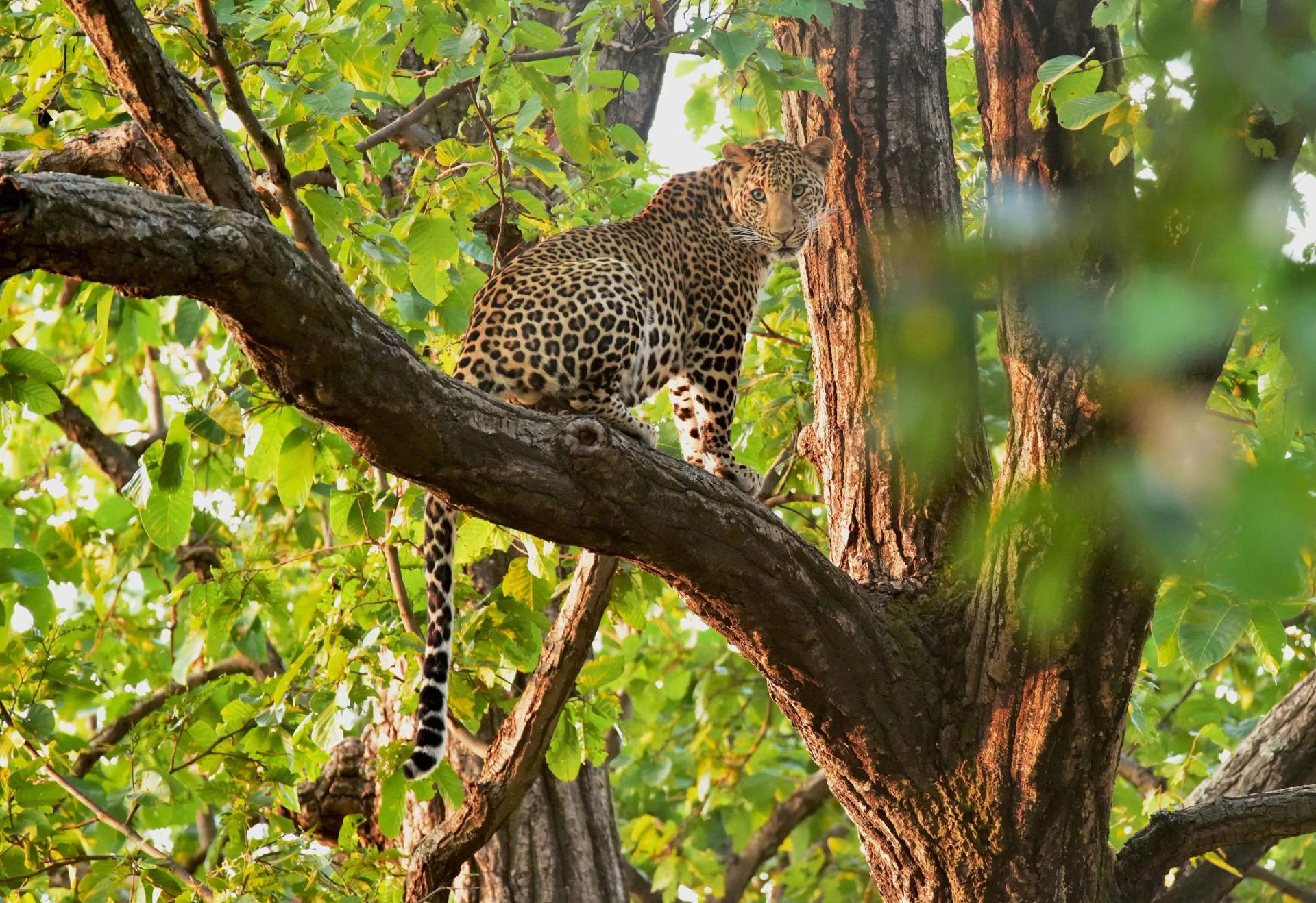
The morning heads into Sarhi, Kanha's quietest core zone and the one naturalists rate highest for birding — the safari works Saunf Meadow, the actual site where Kanha's first barasingha was recorded back in 1966, alongside blackbuck reintroduced to the zone in 2017. In the afternoon, the safari shifts to Mukki, denser forest with a real chance at leopard, before the drive climbs toward Bamni Dadar, Kanha's celebrated Sunset Point, timed to arrive well before the light drops so you can watch the Maikal hills turn amber and then rust as evening comes on. Overnight at the jungle lodge.
Experience of the Day
Saunf Meadow in Sarhi zone — the actual site of Kanha's first barasingha sighting in 1966
Mukki zone's denser forest — Kanha's strongest odds for a leopard sighting
Bamni Dadar at sunset — the Maikal hills turning amber and rust as the light drops
Day 4
KANHA PHOTOGRAPHER'S DAY | Revisit & the Full-Day Permit Option
Route: Kanha National Park — zone chosen from Days 2-3 sightings
Three days in, you and your naturalist know which zone gave the best light, the closest approach, or a sighting worth a second attempt. In its standard form this is two more included safaris, morning and afternoon, in that zone. Guests who want to go further can instead take Madhya Pradesh's Field Director-issued full-day photography permit for this one day — the same authorisation used by television wildlife crews working in the state's reserves.
Optional Add-Ons
Upgrade to the Field Director's full-day photography permit (subject to availability, advance application, and separate fee)
Day 5
KANHA – BANDHAVGARH | Final Safari & Transfer
Route: Kanha Zone Safari – Kanha – Bandhavgarh (approx. 250 Kms / 5 Hrs)
A final Kanha safari this morning before breakfast and checkout. The drive to Bandhavgarh runs roughly five hours, heading north — the same direction as the rest of this circuit. Before you leave, your Kanha naturalist briefs the Bandhavgarh team by phone on what you've seen and what you're hoping for over the next four nights. Check in by evening and take a naturalist-led walk around the lodge grounds before dinner. Overnight at the jungle lodge.
Experience of the Day
A final Kanha safari before departure
Naturalist continuity — your Bandhavgarh guide briefed in advance on your Kanha sightings and interests
Day 6
BANDHAVGARH SAFARI DAY 1 | Chakradhara Meadow & Fort Heritage
Route: Tala Zone – Chakradhara Meadow – Badi Gufa Caves – Shesh Shaiya
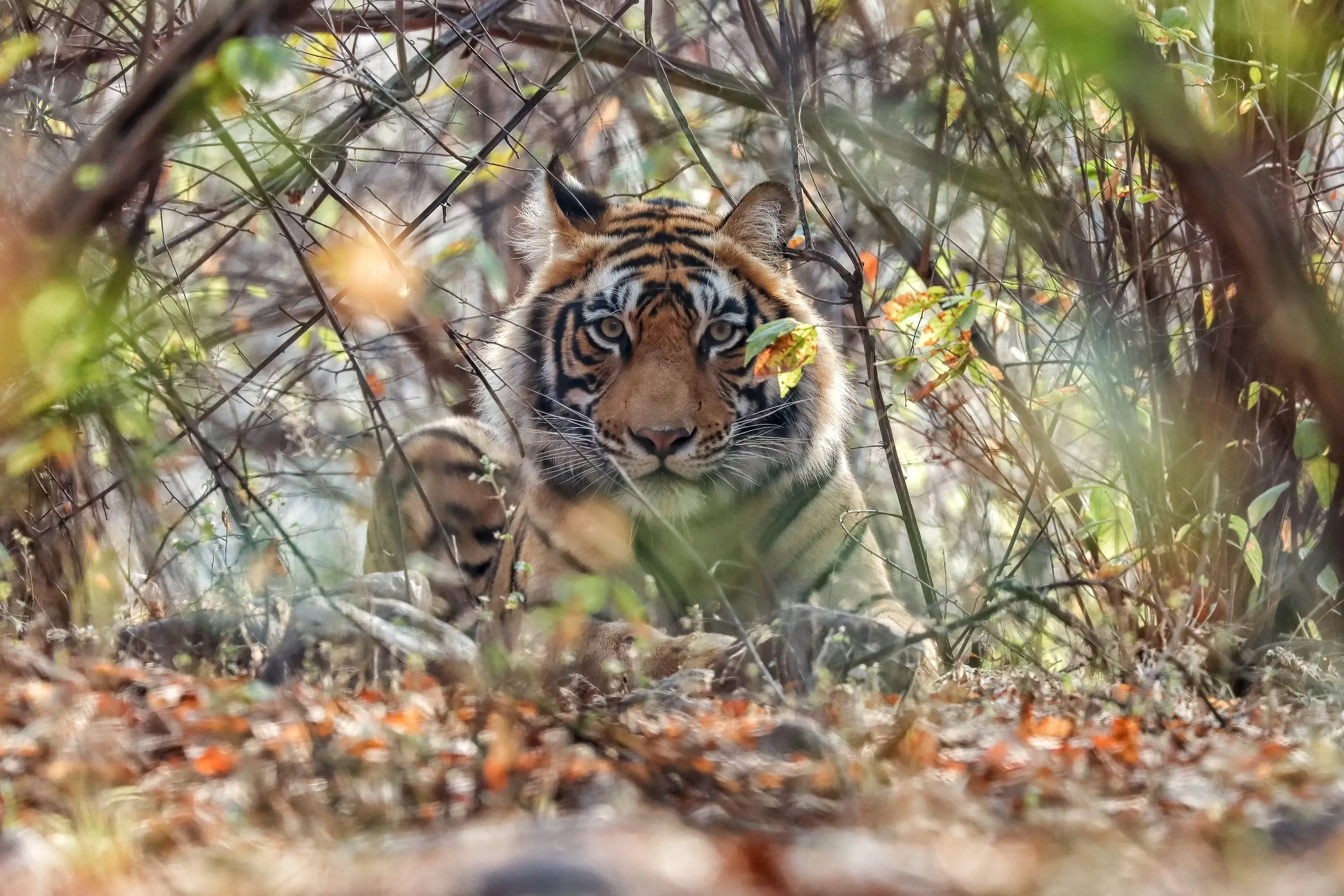
A full day in Tala, Bandhavgarh's oldest zone and the one carrying both its highest tiger density and its deepest history. The morning safari heads for Chakradhara, the open meadow that was Charger's home territory through the 1990s, its open sightlines the reason international wildlife documentaries, including BBC's Dynasties, have filmed here. In the afternoon, the safari shifts toward the fort's base, stopping at Badi Gufa, the largest of the reserve's thirty-nine ancient caves — a 10th-century meditation chamber with Brahmi-script inscriptions — and Shesh Shaiya, a 65-foot reclining Vishnu carved directly into rock. Overnight at the jungle lodge.
Experience of the Day
Chakradhara meadow at dawn — Charger's old territory, and the single best-photographed stretch of grassland in the park
Badi Gufa — a 10th-century meditation cave with Brahmi-script inscriptions
Shesh Shaiya's 65-foot reclining Vishnu, carved into rock at the base of a fort nearly two thousand years old
Day 7
BANDHAVGARH SAFARI DAY 2 | Waterholes & Elephant Herds
Route: Magadhi Zone (Sukhi Patiha) – Khitauli Zone (Resident Elephant Herds)
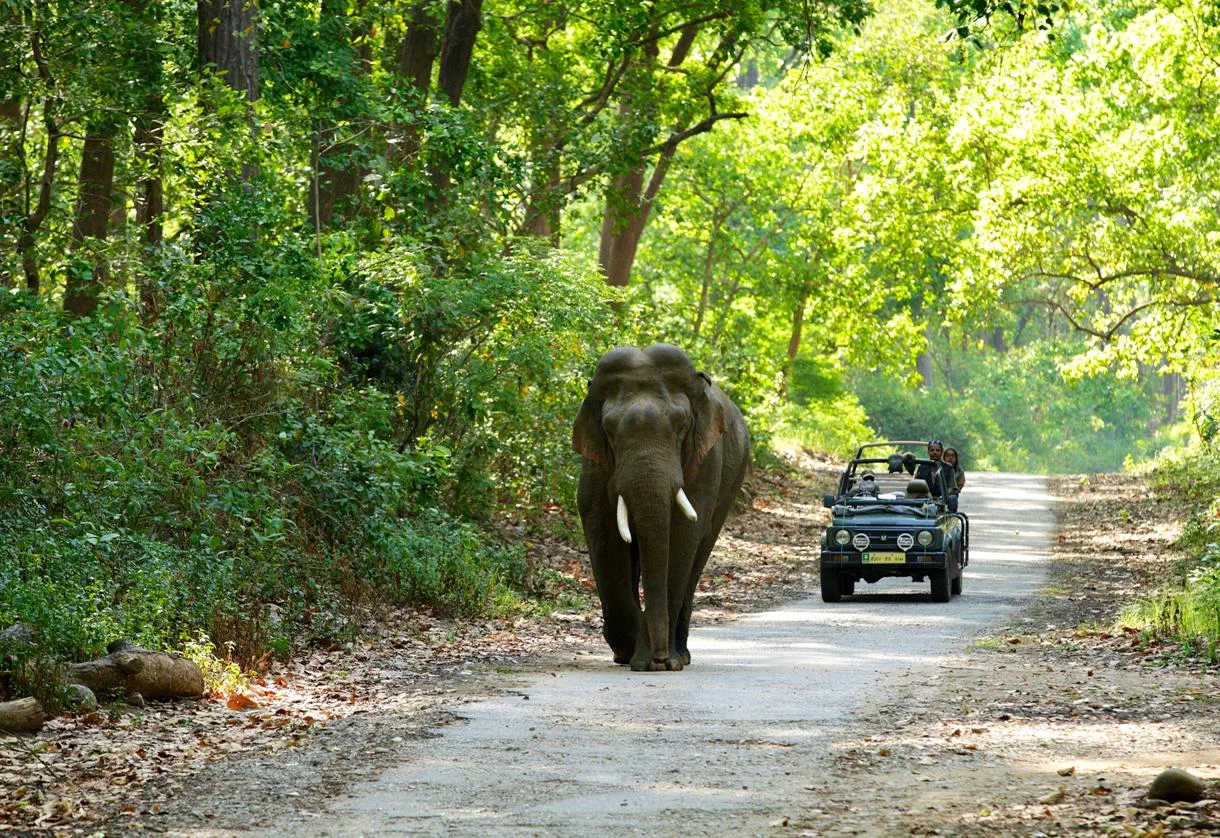
The safari moves away from Tala's crowds into Magadhi and Khitauli. The morning works Magadhi's grassland and waterholes, including Sukhi Patiha, in a landscape with markedly less vehicle traffic than Tala. The afternoon continues into Khitauli, dry-deciduous forest that has become Bandhavgarh's best zone for elephants — a herd relocated here from Chhattisgarh in 2018 has settled in and grown. Overnight at the jungle lodge.
Experience of the Day
Magadhi's Sukhi Patiha waterhole — a quieter stretch with a strong recent tiger sighting record
Khitauli's resident wild elephant herd — relocated from Chhattisgarh in 2018
Day 8
BANDHAVGARH PHOTOGRAPHER'S DAY | Revisit & the Full-Day Permit Option
Route: Bandhavgarh National Park — zone chosen from Days 6-7 sightings
The same structure as Kanha's Day 4, applied to whichever Bandhavgarh zone gave the strongest light or the closest tiger approach. In its standard form, two more included safaris in the chosen zone. Bandhavgarh's compact core and exceptional tiger density make a full unbroken day here a genuine option for a serious photographer, on the same terms as Day 4.
Optional Add-Ons
Upgrade to the Field Director's full-day photography permit (subject to availability, advance application, and separate fee)
Night safari in the buffer zone (Dhamokhar or Johila), where seasonal permissions allow
Day 9
BANDHAVGARH – KHAJURAHO | Final Safari & Transfer to the Heritage Half
Route: Tala Zone Safari – Bandhavgarh – Khajuraho (approx. 212 Kms / 5 Hrs)
A final Bandhavgarh safari this morning closes out the wildlife half of the expedition. The drive to Khajuraho continues the same northward line the circuit has followed since Kanha, roughly five hours, the landscape opening from sal forest into the Bundelkhand plateau. Check in by early evening and, as the heat breaks, take a first private guided walk through the Western Group, timed for the last two hours before sunset, when the eleventh-century sandstone turns from ochre to deep gold. Your guide introduces the Chandela dynasty's sculptural language — the visual vocabulary tomorrow's two full photography days will spend properly reading. Overnight in Khajuraho.
Experience of the Day
A final Bandhavgarh safari, closing the wildlife half of the expedition
A first private walk through the Western Group at golden hour — sandstone turning from ochre to deep gold
Day 10
KHAJURAHO PHOTOGRAPHY DAY 1 | Western Group at Dawn and Dusk
Route: Western Group of Temples — morning and late-afternoon sessions
Architecture photography depends on the direction of the light, and Khajuraho's temples are built to be read at specific times of day — the Western Group faces broadly east, so its carved facades take the sun directly for the first hour after sunrise, throwing the sculptural relief into sharp shadow-and-highlight rather than the flat look midday light gives the same stone. The morning session works Kandariya Mahadev's shikhara and the Lakshmana Temple's base frieze in that low, raking light. A midday break avoids the flattest hours, and the group returns in late-afternoon light for the Vishwanath and Chitragupta temples as the stone turns gold. Overnight in Khajuraho.
Experience of the Day
Kandariya Mahadev in the first hour of direct morning light — read in raking light rather than flat midday sun
The Western Group returning to gold in late-afternoon light for a second pass
Day 11
KHAJURAHO PHOTOGRAPHY DAY 2 | Eastern & Southern Groups
Route: Eastern Group (Jain Temples) – Southern Group – Optional Hot-Air Balloon
The Eastern Group's Jain temples sit apart from the Western Group both geographically and stylistically, and are usually far quieter of other visitors. The Southern Group's Duladeo and Chaturbhuj temples close the day at their quietest. For a view no ground-level session can produce, a hot-air balloon ride over Khajuraho is available seasonally — the temple layout and its relationship to the surrounding town, seen from above. Overnight in Khajuraho.
Experience of the Day
The Eastern Group's Jain temples — a distinctly different sculptural tradition, usually much quieter
The Southern Group at its quietest — almost always empty of other visitors
Optional Add-Ons
Hot-air balloon ride over the temple complex, seasonal and subject to availability
Day 12
KHAJURAHO – ORCHHA | Fort Complex & Sunset Chhatris Boat Ride
Route: Khajuraho – Orchha (175 Kms / 4 Hrs) – Orchha Fort – Ram Raja Temple – Betwa River
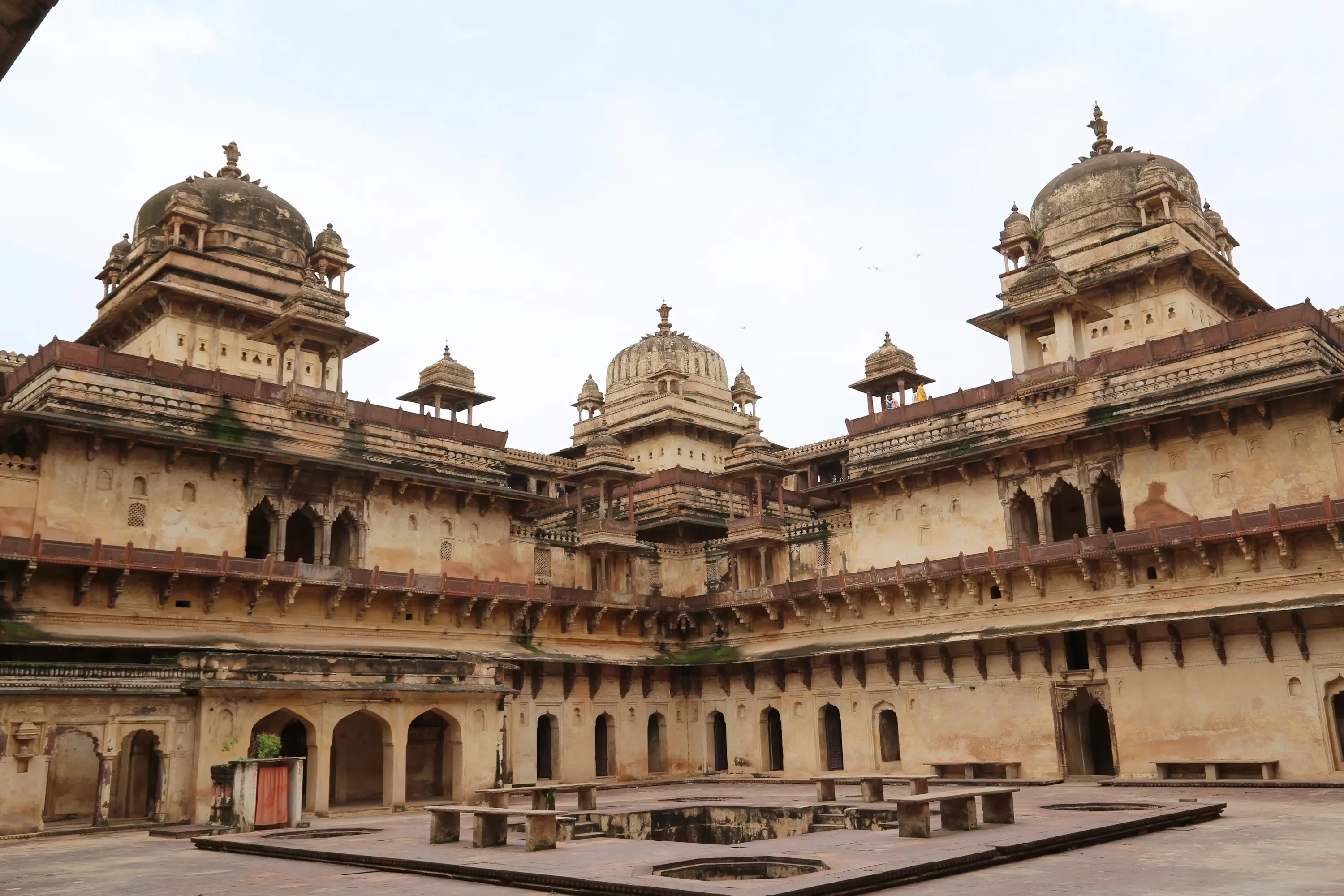
The drive southwest into Bundelkhand covers the last leg of the circuit's northward line, into Orchha — the former capital of the Bundela Rajputs, founded in the 16th century on a bend of the Betwa river. Check in by early afternoon and head into the Orchha Fort complex: Jahangir Mahal, built to host the Mughal emperor Jahangir, and the Ram Raja Temple, the only temple in India where Rama is worshipped as a reigning king. As the light softens, a private boat goes out onto the Betwa to view the fourteen Chhatris, riverside cenotaphs built for generations of Bundela rulers — the stone catching the setting sun and its own reflection in the same frame, timed to the last thirty minutes of light. Overnight in Orchha.
Experience of the Day
The Ram Raja Temple — the only shrine in India where Rama is worshipped as a king, with a daily guard of honour
A sunset boat ride past the fourteen Chhatris — Bundela royal cenotaphs and their reflection caught in the same frame
Day 13
ORCHHA PHOTOGRAPHY DAY | Chaturbhuj Rooftop & the Betwa Riverside
Route: Chaturbhuj Temple Rooftop – Lakshmi Narayan Temple – Betwa River
The Chaturbhuj Temple rooftop delivers Orchha's best panoramic view — forts, temples, and river in a single frame — best timed for morning, when the light comes in low and side-on across the rooftops. The Lakshmi Narayan Temple holds some of Bundelkhand's finest surviving murals, quiet and closer to a private gallery than an active shrine. The afternoon moves to the Betwa riverside, where the Chhatris seen from the water on Day 12 can be photographed from the bank, in a different light and at a different scale. Overnight in Orchha.
Experience of the Day
The Chaturbhuj Temple rooftop in morning side-light — forts, temples, and river in one frame
The Chhatris photographed from the riverbank — the same subject as Day 12's boat ride, a different vantage and light
Day 14
DEPARTURE FROM ORCHHA
Route: Orchha Hotel – Jhansi Railway Station / Gwalior Airport
A final relaxed morning — breakfast, a last look at the Chhatris from the riverbank if time allows, and checkout at leisure before the transfer to Jhansi railway station (roughly sixteen kilometres) or Gwalior airport (approximately 120 Kms / 3 Hrs) for onward connections. Central India Photography Expedition ends having covered fourteen private safaris across two of India's most complete tiger reserves and four full days of temple and fort architecture, in one continuous, single-direction circuit.
Tour Information
Your complete guide to a hassle-free and enjoyable trip.
Inclusion
Exclusion
Payment Terms
Important factors to consider before your trip!
Cancellation
Need To Know
Be Responsible Traveller
- Minimize Plastic Use : Bring a reusable water bottle, shopping bag, and utensils to reduce the need for single-use plastics. Many destinations have water refill stations and eco-friendly stores.
- Support Local and Sustainable Businesses : Eat at local restaurants, buy souvenirs from local artisans, and choose tour operators that prioritize sustainable practices and support the local community.
- Respect Wildlife and Natural Habitats : Avoid disturbing wildlife or their natural habitats. Stick to designated paths and observe animals from a distance without feeding or touching them.
- Dispose of Waste Properly : Follow local guidelines for recycling and waste disposal. If facilities aren't available, carry your waste with you until you can dispose of it responsibly.
- Educate Yourself and Others : Learn about the local environment, culture, and customs. Respect local practices and traditions, and share your knowledge about responsible travel with others.
- Choose Sustainable Activities : Engage in eco-friendly activities such as hiking, snorkeling, or visiting national parks. Avoid activities that exploit animals or damage the environment.
- Leave No Trace : Follow the principle of "Leave No Trace," which means leaving natural areas as you found them. Pack out all trash, avoid picking plants, and refrain from carving or writing on rocks or trees.
- Plant Trees Whenever Possible : Participate in local tree-planting initiatives or plant trees in your own community. Trees absorb carbon dioxide, provide oxygen, and help support biodiversity, making them vital for a healthy environment.
Connect
Share Itinerary
Email Itinerary
Frequently Asked Questions (FAQs) & People Also Ask — Central India Photography Expedition Tour Package
We help you prepare for your trip and ensure an effortless and enjoyable travel experience.
How many days do you need for a wildlife photography tour of Kanha and Bandhavgarh?
Four to five nights in each reserve is enough to work all of its core zones properly and still have a dedicated Photographer's Day for a second look at the best sightings. This itinerary gives four nights to each — eight nights of wildlife in total — before moving to the heritage half of the circuit.
Is Bandhavgarh or Kanha better for tiger photography?
Both are genuinely excellent, for different reasons — Bandhavgarh carries the highest recorded tiger density in India in a compact core zone, while Kanha is the larger, more complete reserve with four full zones and Central India's best barasingha and birding grounds. Rather than choosing one, this itinerary includes both, in the sequence (Kanha first, Bandhavgarh second) that keeps the whole circuit moving one direction without backtracking.
What is the best time to photograph tigers in Madhya Pradesh?
February to April gives the clearest light and the highest sighting odds, as the forest thins out and animals concentrate around shrinking waterholes. November to January is cooler and still productive, with slightly denser foliage. Both reserves close for the monsoon from July to September, so this itinerary is not offered in that window.
Do you need a permit to photograph in Indian tiger reserves?
A standard safari permit, included in this itinerary, covers ordinary photography on a normal jeep safari. A separate, Field Director-issued full-day permit exists for photographers who want zone-free, sunrise-to-sunset access in one continuous sitting — offered as an optional upgrade on Days 4 and 8 of this itinerary, subject to advance application and availability.
How much does the full-day photography permit cost in Bandhavgarh or Kanha?
Indicatively in the range of ₹64,000 to ₹90,000 for the day, on top of the package cost, plus a refundable security deposit. Forest departments in Madhya Pradesh's parks issue only a small number of these permits per day, so it needs to be applied for well ahead of travel — your trip coordinator handles this application once you confirm the upgrade.
What is the best light for photographing the temples at Khajuraho?
The Western Group faces broadly east, so the first hour after sunrise throws its carved relief into sharp shadow-and-highlight rather than the flat look midday sun gives the same sandstone. This itinerary schedules two full days at Khajuraho specifically to work both the morning and late-afternoon light across all three temple groups.
Do I need a permit for a tripod at Khajuraho?
A tripod or additional lenses for serious architectural work at a protected monument like Khajuraho may need prior clearance from the Archaeological Survey of India. This itinerary's trip coordinator arranges that clearance in advance once travel dates are confirmed.
What is the best time of day to photograph the Chhatris at Orchha?
The last thirty minutes before sunset, from a boat on the Betwa river — the stone catches the setting sun and its own reflection in the water at the same time, which is why this itinerary times the boat ride to that specific window rather than any earlier in the afternoon.
Can this itinerary be done with only one tiger reserve instead of two?
Yes — the Kanha and Bandhavgarh legs can each stand alone, and BizareXpedition offers single-park photography-focused itineraries at both reserves. This combined circuit exists because Kanha and Bandhavgarh sit close enough together (roughly five hours apart) to cover both without adding a separate trip.
What is included in the package price for this expedition?
Thirteen nights of accommodation across four destinations, full board at both jungle lodges, a private vehicle and driver for all fourteen days, fourteen private jeep safaris with a naturalist, private guides at Khajuraho and Orchha, and a dedicated WhatsApp trip coordinator. The Field Director's full-day photography permit, flights/trains, and personal expenses are priced separately — see the Inclusions & Exclusions table above.
How do I get to Kanha and back from Orchha at the end of the trip?
Jabalpur airport is the nearest gateway into Kanha, roughly four hours by road. At the end of the circuit, Orchha connects onward via Jhansi railway station (about sixteen kilometres) or Gwalior airport (approximately three hours by road).
BizareXpeditionTMReviews
Let's go, pack up, and hit the road!
Similar Tour Packages
Explore other exciting options for your next adventure!
Trusted Paths, Bold Journeys — Inside BizareXpedition
From humble beginnings to a trusted name in the industry, BizareXpedition's story is one of purpose-driven growth, community connection, and a relentless pursuit of excellence that speaks for itself.














Central India Photography Expedition Tour Package
best deal price
Without GST
₹2,54,000
per person on twin sharing
Book Now