
Published On - Sep 21, 2026
Updated On - Sep 21, 2026
20 min
Pangong Tso Complete Guide
One hundred and thirty-four kilometres of water that changes colour while you watch it. A lake that sits on an international border, freezes solid in winter despite being saline, carries centuries of conflict in its bones, and somehow looks even better in real life than in every photograph you have ever seen of it. Here is everything you genuinely need to know before you go.
One hundred and thirty-four kilometres of water that changes colour while you watch it. A lake that sits on an international border, freezes solid in winter despite being saline, carries centuries of conflict in its bones, and somehow looks even better in real life than in every photograph you have ever seen of it. Here is everything you genuinely need to know before you go.
Where exactly is Pangong Tso?
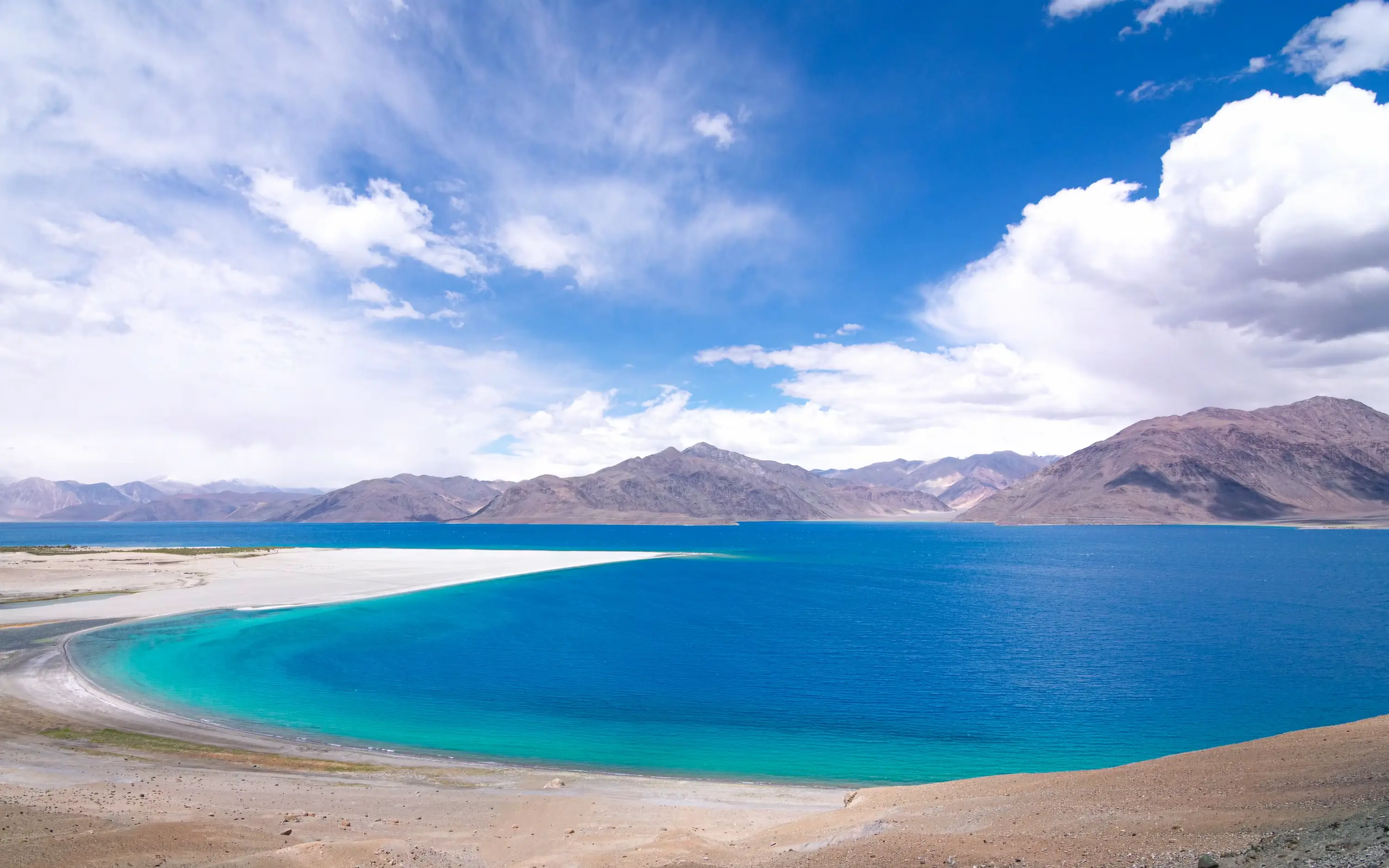
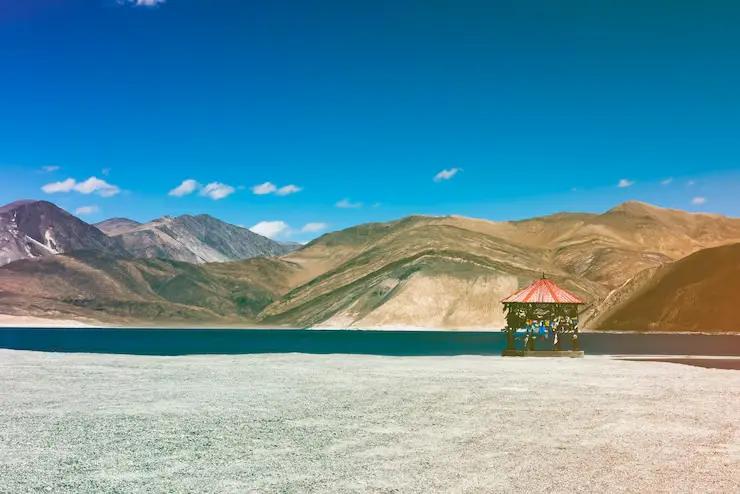
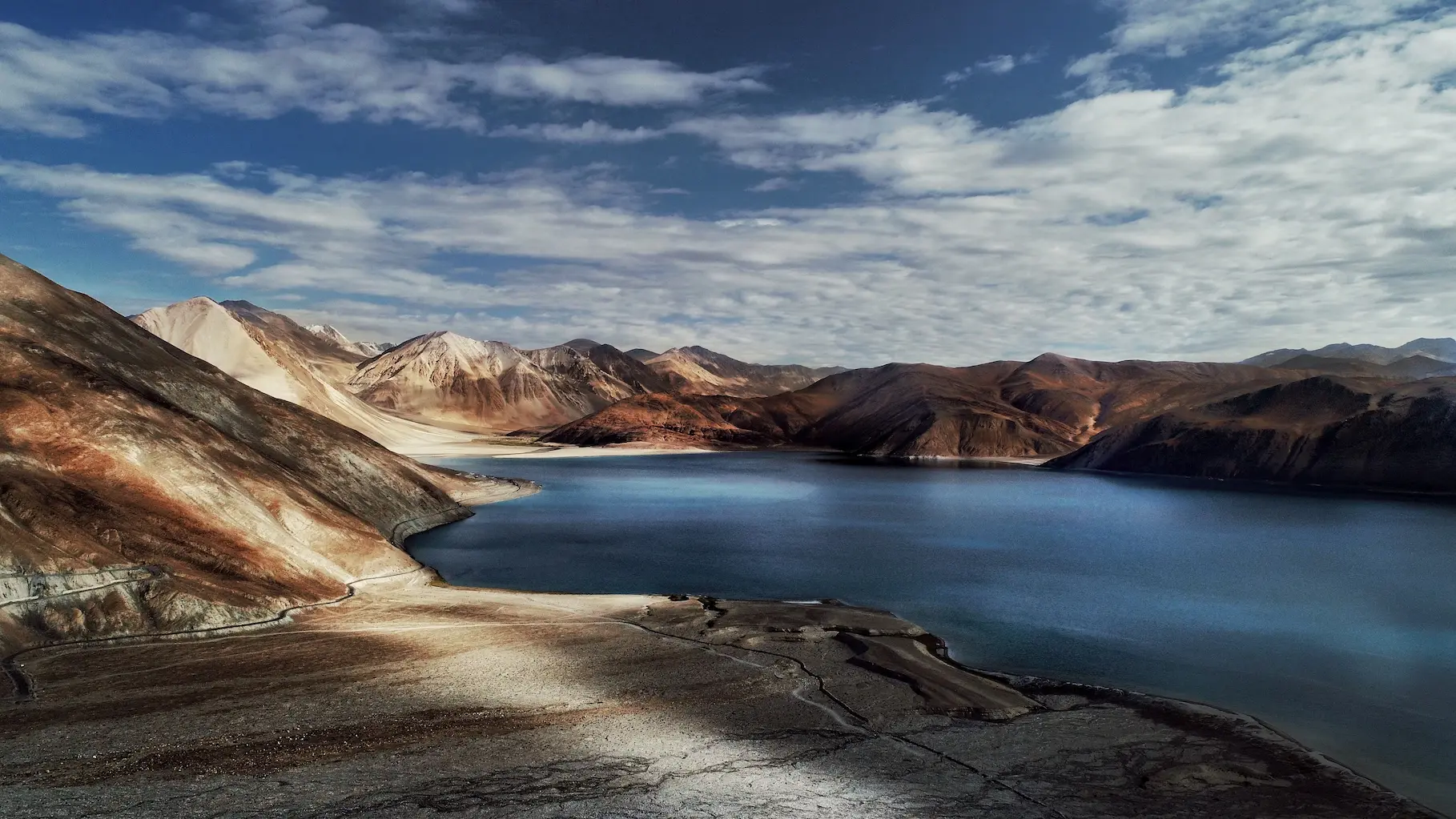
Start with a geography lesson, because Pangong Tso genuinely deserves one. The name comes from the Tibetan — pangong meaning high grassland, tso meaning lake. The high grassland lake. And it is exactly that: a ribbon of extraordinarily blue-green water stretched across the Changthang plateau of eastern Ladakh at an altitude of 4,350 metres above sea level. The lake is not enclosed by one range but three. To the north and east rise the spurs of the Pangong Range, an offshoot of the Karakoram. To the south runs the Kailash Range. To the west, the Ladakh Range completes the enclosure. These three ranges create the dramatic brown and copper backdrop that makes the lake's colour look so improbable — as if someone has spilled a vat of turquoise ink across the most barren terrain imaginable.
The lake is endorheic — entirely landlocked, with no outflow river. Water enters via glacial melt and small seasonal streams and leaves only through evaporation, which is why despite being fed by freshwater it is brackish and saline. It runs 134 kilometres in total length but is rarely more than five kilometres wide at any point. Its colour shifts between vivid turquoise, deep indigo, brilliant azure, grey-green and occasionally a brooding violet-red — depending entirely on the angle of sunlight, cloud cover, and the depth of the water below you. Pangong Tso is, without question, the centrepiece of any elite Leh Ladakh photography tour — the palette shifts six times in a single day, and no two photographs taken at the same spot four hours apart will look like the same lake. The film 3 Idiots brought it to the attention of hundreds of millions of people. No production has ever fully captured it. The only way to properly see Pangong Tso is to go.
What makes it geopolitically extraordinary — and this is not incidental background, it is essential context for understanding what you are looking at — is that roughly sixty percent of the lake lies inside the Tibetan Autonomous Region of China. The Line of Actual Control, perhaps the world's most unusual major international boundary because it has never been formally defined or agreed upon by either nation, cuts directly across the water. The spurs of the Chang Chenmo range that jut perpendicular to the northern lakeshore are labelled Finger 1 to Finger 8 by the Indian Army. India claims the LAC runs through Finger 8. China claims it runs through Finger 2. In May 2020, Chinese troops occupied positions between Finger 4 and Finger 8, triggering the most serious India-China military standoff in decades. When you drive east along the northern shore from Spangmik toward Merak, you are driving along the edge of one of the most contested stretches of frontier in Asia. The lake is beautiful. It is also genuinely serious.
Pangong Tso — Essential Facts at a Glance
| Detail | Information |
|---|---|
|
Full Name |
Pangong Tso (Tibetan: 'High Grassland Lake') |
|
Altitude |
4,350 metres (14,270 feet) above sea level |
|
Total Length |
134 km — approximately 60% lies inside Tibet/China |
|
Width |
2 to 5 km at its widest point |
|
Water Type |
Brackish/saline — endorheic (landlocked, no outflow). Not drinkable. |
|
Surrounding Ranges |
Pangong Range (north/east), Kailash Range (south), Ladakh Range (west) |
|
Colour Range |
Turquoise, azure, indigo, grey-green, violet-red — changes throughout the day |
|
Freezes in Winter? |
Yes — completely, despite salinity. November to March. Temperatures -20°C to -30°C. |
|
Open Season |
May to October (road and weather-dependent) |
|
Nearest City |
Leh — approximately 160–170 km via Chang La Pass (5–6 hours) |
|
Bollywood Appearances |
3 Idiots, Jab Tak Hai Jaan, Dil Se — among others |
|
Generator / Electricity |
Most camps: generator runs 7pm–11pm only. Bring a headtorch. |
|
ATM / Cash |
No ATMs anywhere near the lake. Cards not accepted. Bring all cash from Leh. |
Pangong Tso — Essential Facts at a Glance
VISITING PANGONG TSO AND LEAVING AFTER TWO HOURS IS LIKE BEING HANDED A BOX OF THE FINEST SINGLE-ORIGIN CHOCOLATES, SNIFFING THE LID, AND CAREFULLY PUTTING IT BACK ON THE SHELF. YOU HAVE TO STAY THE NIGHT. THE SUNRISE OVER THAT LAKE IS THE WHOLE POINT.
Getting there — routes and road reality
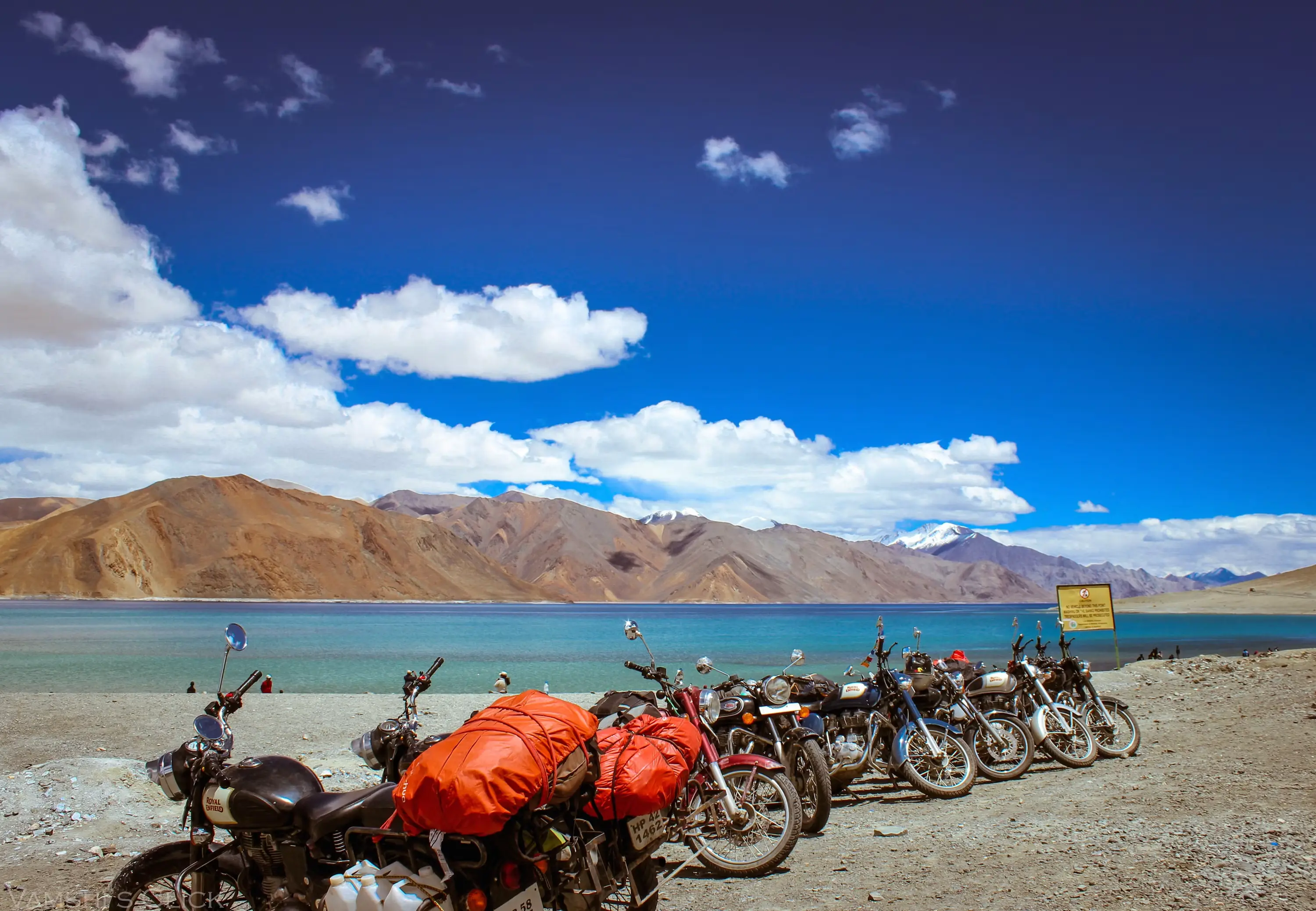
The standard route from Leh runs via Chang La Pass at 5,360 metres — one of the highest motorable passes in the world — and takes five to six hours over approximately 170 kilometres. There are five army checkpoints between Leh and Spangmik, each checking permits and identity documents. The drive itself is extraordinary. The monastery corridor along the Indus Valley on the way out — Thiksey, Hemis, Shey — constitutes what is arguably the finest VIP Leh monastery heritage tour in Ladakh, all within a morning's drive of Leh. A premium Ladakh Thiksey Gompa stay the night before your Pangong departure, followed by dawn prayers at 6am before continuing to Chang La, is the unhurried and deeply rewarding way to do this route. The BRO maintains a chai and maggi stall at the Chang La summit — one of the more absurd and wonderful features of Himalayan road travel.
For those combining Nubra Valley and Pangong in one Ladakh circuit, the direct route via Agham and Shyok village covers roughly 160 kilometres in five to seven hours without backtracking to Leh. The critical detail: leave Nubra no later than 7am. The route crosses more than twelve water points including sections of the Shyok River itself. In the early morning the crossings are manageable. By 1pm, hours of Himalayan sun have been melting glaciers upstream and those same crossings become fast-flowing, boulder-laden torrents. In July 2025 the route was temporarily closed entirely when the river flooded several road sections. Always check the Leh DC office's daily road status before committing to this route in monsoon months.
| Route | Distance | Duration | Road Reality & Key Warnings |
|---|---|---|---|
|
Leh → Chang La (5,360m) → Tangtse → Spangmik |
~170 km |
5–6 hrs |
Best overall tarmac. 5 army checkpoints. BRO chai stall at Chang La summit. Chang La snowbound Oct–May. Start by 7am. |
|
Nubra (Diskit) → Agham → Shyok Village → Durbuk → Pangong |
~160 km |
5–7 hrs |
BRO-improved 2024–25. Leave Nubra by 6–7am max — 12+ water crossings, dangerous after 1pm. Route closed Jul 2025 during monsoon peak. Check Leh DC road status every morning. |
|
Nubra → Agham → Wari La (4,900m) → Sakti → Chang La → Pangong |
~222 km |
10+ hrs |
Crosses two high passes. Very remote. Wari La opens late June. Rough in sections. No fuel anywhere. For experienced drivers and adventure riders only. |
|
Tso Moriri → Nyoma → Mahe Bridge → Pangong |
220+ km |
8–10 hrs |
Specialist remote route. Rarely used. Requires thorough local knowledge. Not for independent first-timers. |
Getting to Pangong Tso — All Routes with 2026 Conditions
When to go
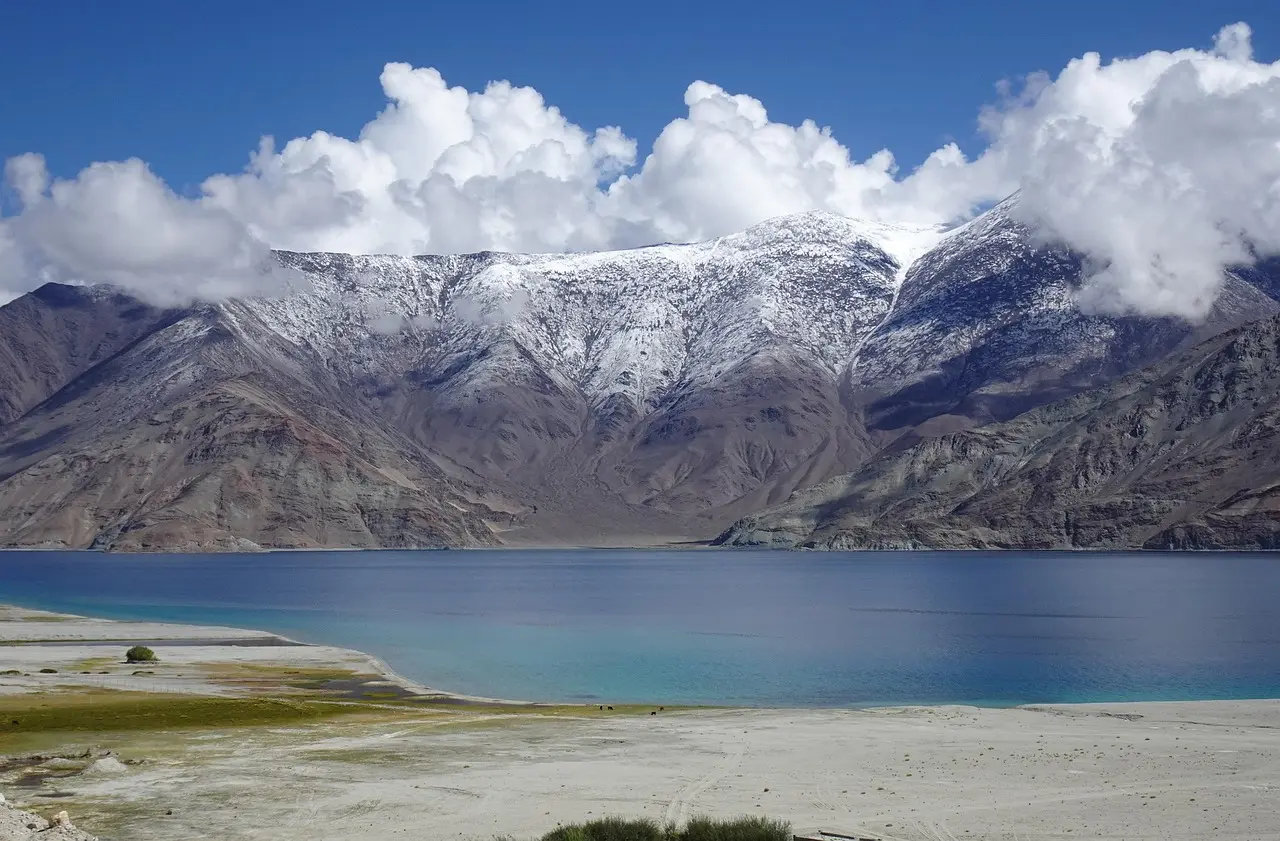
September is the finest month at Pangong Tso. The post-monsoon sky has a crystal clarity that Ladakh does better than anywhere in the world — the air is clean, the lake is at its most electric blue, the crowds are thinner than peak season, and the evenings are cool enough to make the stars over the Changthang look like a spilled bag of diamonds. October is outstanding for photographers but cold enough that you should confirm camps are still operating before making the drive.
July and August are peak season — the lake is at its most vivid turquoise, every camp is full, and the Shyok route from Nubra carries genuine monsoon flood risk. May is a quiet and dramatic early opener — pale blue water, snow on the Pangong Range peaks, almost no other visitors. June and September offer the sweet spot between colour saturation and crowd levels. Winter closes everything — temperatures plunge to minus 20 to minus 30 degrees and the lake freezes completely, which is spectacular if you can get there and have no urgent plans to leave.
| Month | Temp Day / Night | Lake Colour & Conditions | Crowds | Verdict |
|---|---|---|---|---|
|
May |
12°C / -4°C |
Pale to mid blue; snow on Pangong Range; passes newly open |
Low |
Excellent — quiet, cold, dramatic. Good value. |
|
June |
18°C / 2°C |
Deep blue; wildflowers on passes; fully open |
Moderate |
Very good — shoulder season prices. Best month for Shyok route conditions. |
|
July |
20°C / 5°C |
Vivid turquoise; peak colour saturation |
High — peak |
Most colourful but busiest. Book camps 3–4 weeks ahead. Shyok flood risk. |
|
August |
18°C / 3°C |
Blue-green; electric afternoon light |
High — peak |
Good. Monitor Shyok road daily. Carry rain gear. |
|
September |
15°C / -2°C |
Electric blue; crystal post-monsoon sky clarity |
Moderate |
Outstanding — arguably the best month overall. Clear skies, manageable crowds. |
|
October |
5°C / -10°C |
Deep indigo; ice forming at lake edges |
Low |
Spectacular for photographers. Confirm camp is open before booking. Carry serious cold gear. |
|
Nov–April |
— |
Lake freezes completely. -20°C to -30°C. |
None |
Roads blocked. General tourism not possible. |
Season Guide — Best Time to Visit Month by Month
CHANG LA AT 5,360 METRES IS ONE OF THE HIGHEST MOTORABLE ROADS ON EARTH. THE BRO MAINTAINS A CHAI STALL AT THE SUMMIT. STANDING THERE WITH SNOWFIELDS IN EVERY DIRECTION, A HOT CUP IN YOUR HAND AND YOUR BREATH VISIBLE IN THE COLD AIR, YOU UNDERSTAND COMPLETELY WHY LADAKH IS LIKE NOWHERE ELSE ON THE PLANET.
Things to do at Pangong Tso...
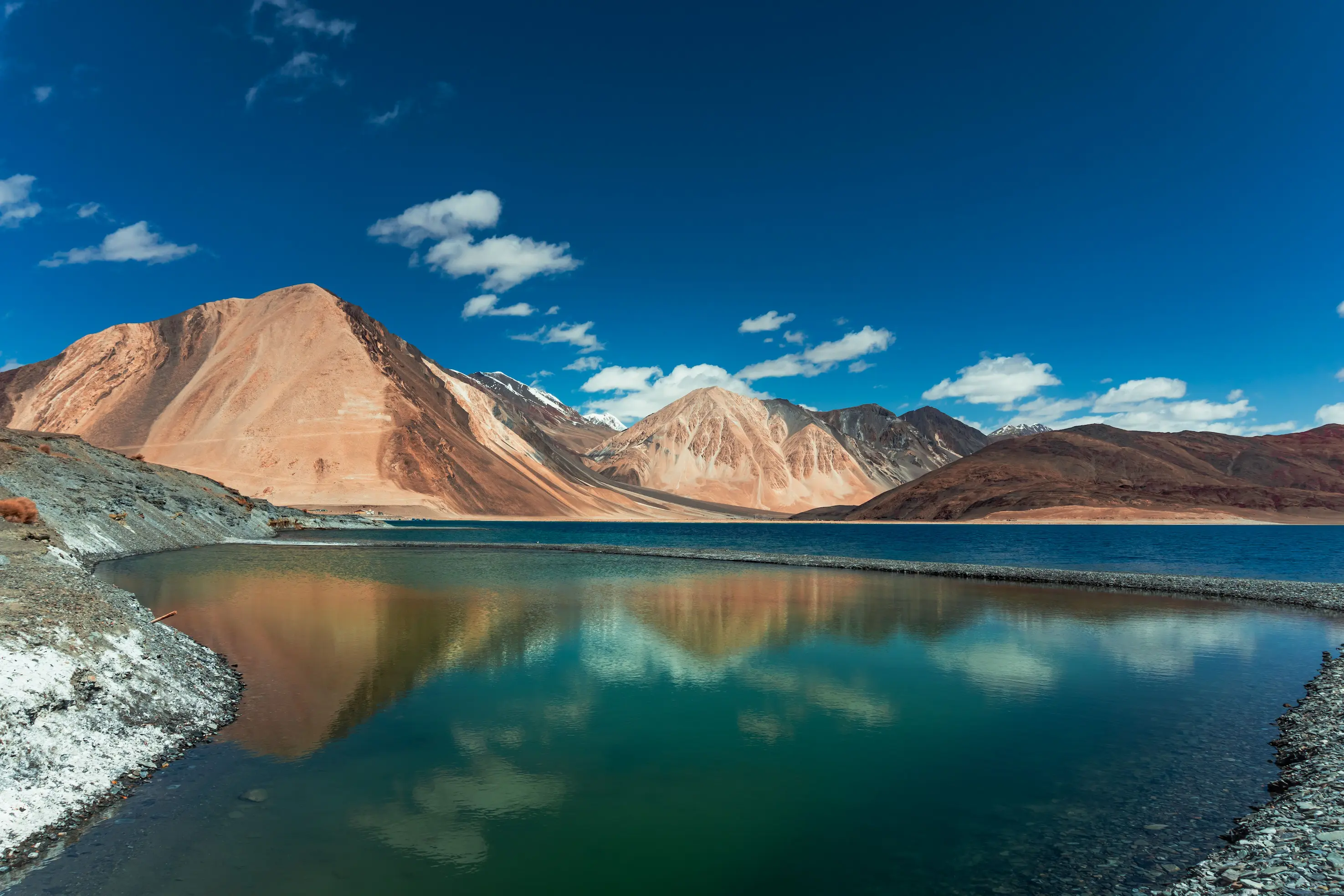
Stay the night — at least one, ideally two. This is the single most important piece of advice in this entire guide. Day-trippers from Leh get a glimpse. People who stay get the full experience — the deep amber sunset turning the mountains into something from a painting, the utterly extraordinary dark sky that follows (the Changthang plateau has near-zero light pollution and the Milky Way is visible on clear nights with a clarity most travellers have never experienced), and then the sunrise. The Pangong sunrise is the kind of thing that makes people ring their families from very cold tents to tell them they wish they were here. Electricity from generators typically runs from 7pm to 11pm at most camps — bring a headtorch for after hours. Book at least two to three weeks ahead in July and August.
Drive east past Spangmik to Man and Merak villages. Most visitors stop at Spangmik and turn back. This leaves behind the better half of the Indian section. The road continues east past Man village and on to Merak, where the lake narrows and the mountains press in close. This stretch is quieter, considerably less developed, and frankly more beautiful than the Spangmik section. As you drive east from Spangmik you are also passing alongside the Finger area — the eight rocky promontories that jut into the lake from the northern shore and that became the focus of the 2020 India-China standoff. Understanding their strategic significance transforms the drive from a scenic road trip into something considerably more layered.
Visit Rezang La War Memorial and Chushul — the 5-star Leh Ladakh cultural immersion most tours skip. Beyond Merak, the road reaches Chushul and Rezang La — the stretch that almost every commercial Pangong tour ignores completely. On 18 November 1962, Major Shaitan Singh and 113 soldiers of Charlie Company, 13 Kumaon Regiment, fought to the last man and last bullet defending Rezang La pass against a vastly larger Chinese force. Every soldier died. The memorial stands at roughly 4,600 metres with the Aksai Chin peaks visible to the east. The epitaph is considered one of the most moving war inscriptions in India: 'How can a man die better, than facing fearful odds, for the ashes of his fathers, and the temples of his gods.' Stand here for an hour. Read the names. This is what a 5-star Leh Ladakh cultural immersion into the frontier's military history feels like in practice.
Watch the colour change through the day — actively. Early morning brings a steely, pewter stillness to the water. By mid-morning it shifts to a deep jewel blue. Early afternoon produces the famous electric turquoise. By four in the afternoon it turns a brooding indigo. By twilight, on the right evenings, there is a violet-red quality to the light that no photograph captures adequately. Find a viewpoint — ideally the ridgeline above the camps for a higher perspective — and simply watch. Put the camera down occasionally and just look. The lake is performing for you. This is what photographers who have done the elite Leh Ladakh photography tour circuit come back and describe with quiet reverence: the camera is the second-best way to experience Pangong. Looking, unhurried and present, is the first.
Visit Thiksey, Hemis and Tangtse Gompa on the way in. The route via Chang La passes through the extraordinary monastery corridor of the Indus Valley. Thiksey — perched on a rocky promontory above the Indus, its white-and-ochre tiers climbing skyward — is frequently compared to Lhasa's Potala Palace. Hemis, the largest and wealthiest monastery in Ladakh, houses an extraordinary collection of thangkas and religious artefacts. En route to the lake, the small Tangtse Gompa near Tangtse village, often overlooked, is a working monastery in a dramatic setting. Start at 6am from Leh and you can take time at two monasteries and still reach Spangmik well before sunset.
Watch the sunrise from the water's edge. Set your alarm for 5am. Pull on every layer you own — at 4,350 metres even July nights drop below freezing, and at 5am the wind off the Changthang is serious. Walk the hundred metres from your camp to the lakeshore. The light comes slowly: a wash of pale gold across the Pangong Range ridges, then deepening pink, then suddenly the lake catches it all and turns it into something that has no adequate description in any language. Camp staff begin serving chai around 6am. Take it back to the lakeside. This is the moment the lake earns every rupee of the journey to get here.
| Species | Local Name | Best Spot | Best Season | Notes |
|---|---|---|---|---|
|
Bar-headed Goose |
Barmukhiya Hans |
Merak and Man shoreline |
May–September |
Breeds at the lake. One of world's highest-flying birds — crosses Himalayas at 8,000m+ during migration. |
|
Brahminy Duck (Ruddy Shelduck) |
Chakwa-Chakwi |
All along northern shore |
April–October |
Pairs are inseparable. Sacred in Buddhist folklore as a symbol of devotion. |
|
Black-necked Crane |
Kali gardan Sarus |
Chushul marshes beyond Merak |
May–August |
Rare and extraordinary. Red crown deepens when displaying. |
|
Tibetan Wild Ass (Kiang) |
Kiang |
Changthang plateau near lake |
Year-round |
Herds of 10–20 on plateau approaching the lake. World's largest wild ass species. |
|
Himalayan Marmot |
— |
Rocky slopes near Chang La and Tangtse |
May–October |
Stand upright at burrow entrances. Shrill alarm whistle. Frequently photographed near Chang La. |
|
Pashmina Goat |
— |
Merak and Man grazing areas |
Year-round |
Herded by Changpa nomads. Source of world's finest cashmere wool. |
|
Common Merganser |
— |
Open water between Man and Merak |
July–September |
Serrated bill, chestnut-brown head. Dives for fish in the shallower eastern sections. |
Wildlife and Birdlife at Pangong Tso
PANGONG TSO IS LIKE THE DIFFERENCE BETWEEN A MARS BAR FROM A MOTORWAY SERVICE STATION AND A MONTEZUMA DARK CHOCOLATE TRUFFLE MADE IN SMALL BATCHES. THE FIRST IS THE VERSION DAY-TRIPPERS GET — A QUICK LOOK, A PHOTOGRAPH, THE LONG DRIVE BACK TO LEH. THE SECOND IS WHAT HAPPENS WHEN YOU STAY THE NIGHT, WATCH THE SUNRISE, DRIVE EAST TO THE QUIET SHORE AT MERAK, AND HAVE ABSOLUTELY NOWHERE ELSE TO BE.
Things not to do at Pangong Tso...
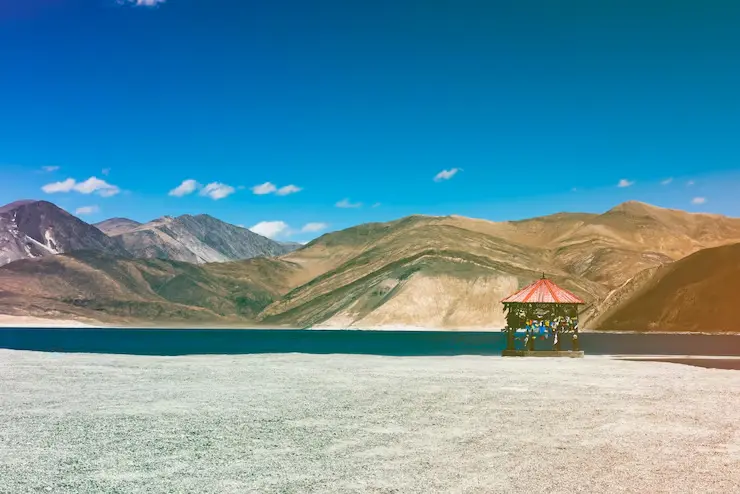
Do not attempt Pangong without proper acclimatisation in Leh. The lake sits at 4,350 metres. Most visitors arrive in Leh by flight from Delhi — jumping from roughly 200 metres to 3,500 metres in ninety minutes — and the body genuinely needs time to adjust. Two full nights in Leh before driving to Pangong is the absolute minimum; three nights is considerably safer. The symptoms of altitude sickness — persistent headache, nausea, unusual fatigue, dizziness — can arrive quietly and escalate quickly. The nearest hospital is in Leh, a minimum of five hours away. If symptoms worsen at the lake, descend immediately. Aaaram se, as they say in these parts — chill out. The lake will still be there tomorrow.
Do not book a camp without asking three specific questions first. The honest ground-level reality of Pangong accommodation is this: tent quality and position vary enormously even within the same camp, hot water is typically available for one hour only in the early morning, generators run until approximately 10pm to 11pm and the noise carries, food is universally basic — rice, dal, paneer, chapatti — and some camp bedding is insufficient for the cold. Before booking, ask explicitly: Is this a lake-facing tent in the first row? What time does your generator run until? Are the bathroom facilities attached or shared? These three questions will save you the surprises that fill the one-star reviews of otherwise decent camps.
Do not arrive at any checkpoint without your permit and original ID. There are five army checkpoints between Leh and Spangmik. The permit system was updated in 2025–26 — the old Inner Line Permit has been replaced by the Environment Development Fee (EDF), applied online at lahdclehpermit.in for ₹400 per person. The receipt must be available in print or saved digitally offline, because there is no mobile signal at most checkpoints. Foreign nationals must use a registered travel operator and apply for a Protected Area Permit well in advance. Arriving at Durbuk checkpoint without the right documents means being turned back. This happens every single week during season.
Do not camp directly on the lake shore. Pangong Tso is a protected Ramsar Wetland Reserve. Camping directly on the lake banks has been banned since 2018 by the Leh District Collectorate and fines are imposed. The licensed camps and tented accommodations in Spangmik, Man and Merak are the right and only option — close enough to the water that you will not feel the difference. Use the proper camps. The local families running them need the income, and the ecosystem needs the protection.
Do not bring single-use plastic beyond Leh. There is no waste management infrastructure at Pangong Tso. Everything that arrives in a vehicle must leave in a vehicle. Buy a LifeStraw self-filtering water bottle in Leh before you go — it eliminates plastic bottles entirely. Carry a small dry bag for all your waste and return it to Leh. There are also no ATMs anywhere near the lake. Bring sufficient cash in small denominations before leaving Leh — budget ₹300 to ₹600 per meal at Spangmik camps.
Do not photograph military installations or the Finger area structures. This is an active, strategically sensitive border zone. Do not photograph army camps, military vehicles, checkpoints, bunkers, observation posts, or the Finger area promontories from angles that could be considered strategic documentation. Foreign nationals in particular have been detained for photography violations in this region. The lake provides an extraordinary abundance of photographic material that requires no military involvement whatsoever.
Do not drive either route without full fuel, offline maps, and a postpaid SIM. There is no fuel between Leh and Spangmik in any direction. Fill completely in Leh and carry a Jerry can for high-consumption vehicles. Prepaid SIMs stop working completely outside Leh city limits. BSNL and Jio postpaid have partial coverage at Spangmik and Lukung but most of both routes are entirely network-free. Download offline maps on Maps.me or Gaia GPS while still in Leh. Share your day-plan with someone who is not travelling with you before you leave each morning.
| Visitor Type | Permit Required | How to Get It | Cost | Key Notes |
|---|---|---|---|---|
|
Indian Nationals |
Environment Development Fee (EDF) — replaced old ILP in 2025–26 |
Online at lahdclehpermit.in before departure. Takes 10 minutes. |
₹400 per person |
Print receipt or save digitally offline. Original govt ID mandatory at all 5 checkpoints. Nubra + Pangong + Tso Moriri + Hanle can all be on same application. |
|
Foreign Nationals |
Protected Area Permit (PAP) |
Must use a registered travel operator. Cannot self-apply. Start minimum 4 weeks before travel. |
Must travel in group of minimum 2 persons with registered operator. |
|
|
Vehicles |
Vehicle entry permit checked at checkpoints |
Carried with vehicle documents — taxi drivers handle this |
Included in taxi rate |
Private vehicles must have all registration and insurance papers. Rental vehicles need rental agreement. |
Permit Requirements — Pangong Tso 2026
Where to stay — villages and honest camp notes
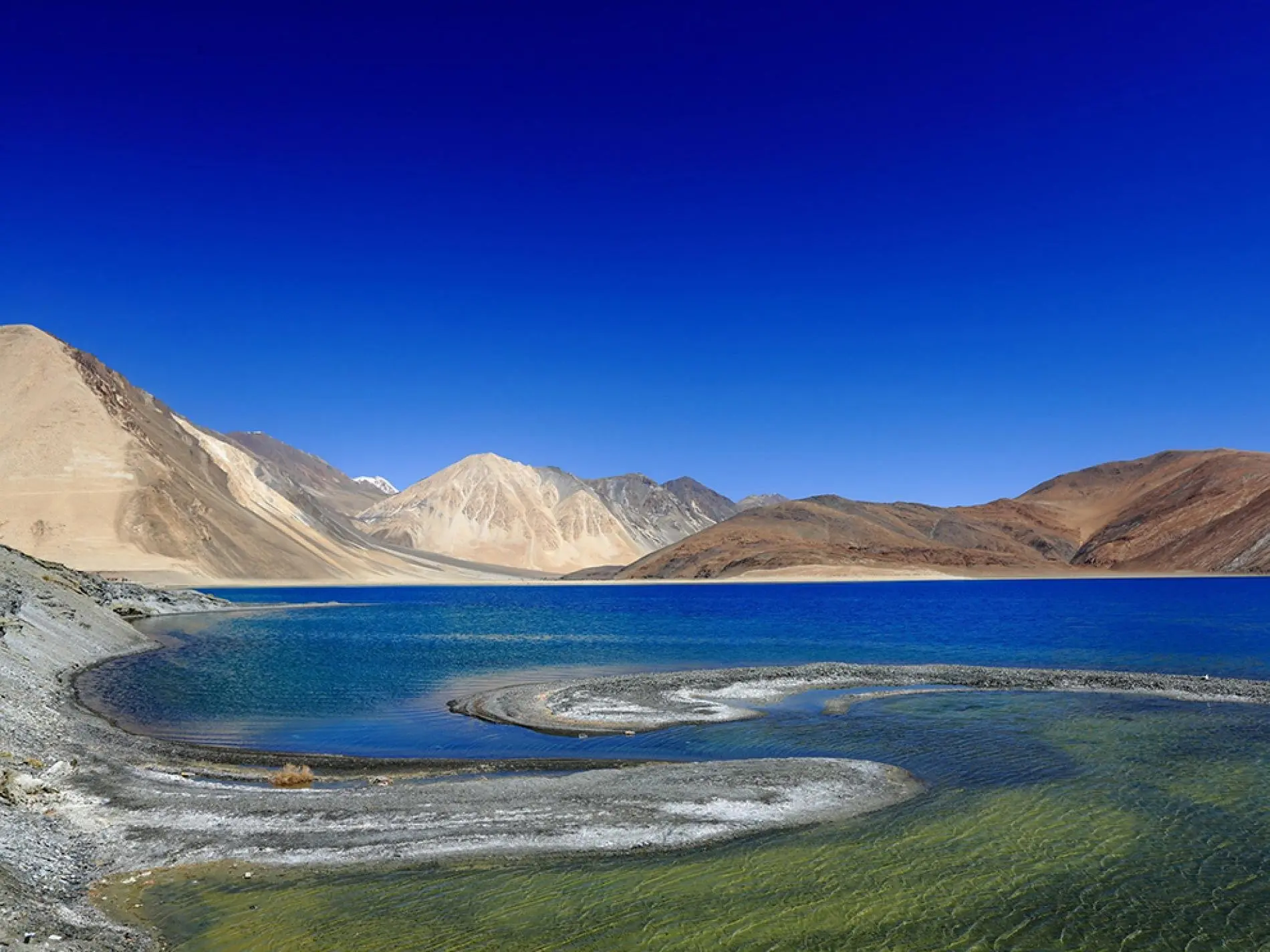
Spangmik is the most developed and most visited stretch of the Indian shoreline — approximately 30 licensed camps ranging from basic to genuinely luxurious, including several boutique Leh Ladakh glamping experience properties that have invested in proper insulation, attached bathrooms, and genuinely good bedding. It is also, on a busy July afternoon, surprisingly crowded for a lake in the middle of a Himalayan desert. The souvenir stalls and generator noise are real. The lake view from a first-row tent at sunset is also real, and it wins every time.
Man village, a short drive east of Spangmik, offers a calmer atmosphere and genuine village feel — fewer camps, more homestay character. Pangong House, a well-reviewed boutique stay run by a local family, is often cited by independent travellers as the quiet revelation of the lake. Merak, the easternmost accessible point, has minimal infrastructure and maximum peace. The bar-headed geese here browse the shallows with magnificent indifference to visitors, and the afternoon light on the water in September is a photographer's reason to exist. If this doesn't already sound like heaven, the selfie-stick count at Merak is also approximately zero.
| Village | Options | Price Range / Night | Honest Ground-Level Notes |
|---|---|---|---|
|
Spangmik |
30+ licensed camps; most developed, most crowded |
₹2,500–₹10,000 |
Most choice for first-timers. Ask specifically for lake-facing first-row tent. Generator noise until ~10–11pm — request a tent away from the generator. Hot water 1 hour only in the morning. Distance to lake can be 5–20 min walk — confirm when booking. Boutique glamping experience properties at the upper end of the price range. |
|
Man Village |
Smaller camps and boutique homestays; 5-star Pangong Lake resort stay options |
₹2,000–₹6,000 |
Calmer. Genuine Ladakhi village feel. Pangong House (boutique homestay) well reviewed. Good birdwatching along shore. Quieter evenings than Spangmik. |
|
Merak Village |
A handful of small camps; least crowded; deluxe Pangong Tso lakeside retreat feel |
₹1,500–₹4,000 |
Best for photographers, birders, and serious nature travellers. Minimal infrastructure. Bring your own supplies from Leh. The quiet here is extraordinary. Premium Leh Ladakh stargazing camp experience at its finest — zero light pollution. |
|
Lukung |
Entry-point camps; 16 km before Spangmik |
₹1,500–₹3,500 |
Good fallback if Spangmik is fully booked. Some budget camps here have thin tents — read recent reviews carefully. Royal Ladakh moonlit valley glamp atmosphere on clear nights. |
|
Tangtse Village |
Basic guesthouses; 25 km before lake |
800–₹2,000 |
Budget option. No lake views. Useful base if you want to drive in early and leave same day. |
Where to Stay — Camps and Villages at Pangong Tso
Travelling responsibly at Pangong Tso...
migratory bird populations, fragile high-altitude aquatic ecosystems, and a Changthang plateau environment that has taken millennia to reach its equilibrium. It is visited by hundreds of thousands of people every summer. The maths of this is uncomfortable unless everyone travelling here makes thoughtful choices.
Plastic waste is the most visible and urgent problem. There is no waste management at the lake — everything that arrives by vehicle must leave by vehicle. One LifeStraw self-filtering bottle bought in Leh cuts out the plastic bottle problem completely. Carry a reusable bag for your own waste and return it to Leh. Ask your camp directly what their waste policy is before you book.
Spend your money with the Changpa and Ladakhi families who have managed this plateau for centuries. A night in a family homestay at Man or Merak — dal-bhaat cooked on a bukhari wood stove, the sound of the wind across the lake outside — is more honest than any corporate camp. Respect the military and the checkpoints with genuine patience. Cross every checkpoint with full documents ready, cooperate with any requests, and be cheerful about it.
Before you go...
Apply for your EDF permit at lahdclehpermit.in before you leave home. Print the receipt and save a digital copy offline. Book your camp at least two to three weeks ahead for July and August. Ask in writing: Is this a lake-facing tent in the first row? What time does your generator run until? Are bathroom facilities attached or shared? Bring your own sleeping bag rated to minus 10 degrees Celsius regardless of what the camp promises about blankets. Tell someone your full itinerary before leaving Leh each morning — day-plan, camp name, vehicle registration, expected return time.
At BizareXpedition, we plan Pangong visits as part of fully customised luxury Leh Ladakh tour packages — with the right acclimatisation schedule, camps on the quieter eastern shore at Man or Merak, the Rezang La and Chushul historical stop for those who want the full context, and the flexibility to stay an extra night when the lake is being particularly magnificent. For those wanting the complete eastern Ladakh experience, our ultra-luxury Ladakh adventure package combines Pangong with Hanle's Dark Sky Reserve, Umling La, and the Tso Moriri circuit — the full Changthang arc in one seamlessly planned journey. Visit bizarexpedition.com to start planning.
| Category | What to Carry | Why It Matters at Pangong Specifically |
|---|---|---|
|
Documents |
EDF permit receipt (print + offline digital) + original govt ID + vehicle papers |
5 checkpoints between Leh and Spangmik. No permit = turned back at Durbuk. No exceptions. |
|
Cash |
All cash in small denominations. Budget ₹300–₹600/meal; ₹2,500–₹10,000/night. |
No ATMs at or anywhere near the lake. No card payment accepted anywhere. |
|
Fuel |
Full tank from Leh + Jerry can for larger vehicles or long circuits |
|
|
Warmth |
Down jacket, thermal base layers, warm gloves, woolly hat, windproof outer layer |
|
|
Sleeping |
Your own sleeping bag rated -10°C minimum, regardless of what the camp promises |
|
|
Light |
Headtorch with spare batteries |
|
|
Connectivity |
BSNL or Jio postpaid SIM (NOT prepaid) + offline maps downloaded before leaving Leh |
|
|
Health |
First aid kit + Diamox (consult doctor) + personal medications + lip balm SPF |
Nearest hospital is Leh — 5+ hours away. Altitude + cold + dry air is hard on skin and lungs. |
|
Water |
Reusable metal bottle + LifeStraw filter or purification tablets |
No clean water source near camps. No plastic recycling infrastructure whatsoever. |
Practical Checklist — What to Carry to Pangong Tso
| Category | Budget (₹/day) | Mid-Range (₹/day) | Premium (₹/day) |
|---|---|---|---|
|
Accommodation |
₹1,500–₹2,500 (basic camp/dorm) |
₹3,000–₹6,000 (good camp, decent tent) |
₹7,000–₹15,000+ (luxury lake-view camp) |
|
Food |
₹400–₹600 (basic dal-bhaat) |
₹700–₹1,200 (camp meals) |
₹1,500+ (premium camp full board) |
|
Transport (taxi, Leh return) |
₹6,000–₹9,000 shared |
₹10,000–₹14,000 private SUV |
₹16,000–₹22,000 premium 4WD |
|
Permits (EDF) |
₹400 per person |
Same |
Same |
|
Emergency insurance |
₹2,000–₹5,000 (10-day policy) |
₹5,000–₹12,000 (2–3 week policy) |
₹15,000+ (expedition cover) |
Daily Budget Guide — Pangong Tso
The photographs are extraordinary. The film scene is iconic. But none of it — absolutely none of it — comes close to the real thing. Some places have to be experienced in person to be properly believed. Pangong Tso is one of them.
Best Selling Tour Packages
Explore other exciting options for your next adventure!