

Sakshi
Writer
Updated On - Oct 01, 2026
25 min
Published On - Oct 01, 2026
Bandhavgarh vs Kanha vs Pench vs Corbett — Which Tiger Reserve Should You Choose?
Three Madhya Pradesh reserves and India's oldest tiger sanctuary, compared on the things that actually decide a trip — not just tiger counts, but access, cost, closure calendars, and the one thing only Corbett lets you do: sleep inside the core zone.
Ask ten safari operators which of India's tiger reserves is "the best," and most will answer with whichever three sit closest to their own bookings — usually Bandhavgarh, Kanha, and Pench, Madhya Pradesh's flagship trio. What that leaderboard conveniently leaves out is Corbett — India's oldest national park, the birthplace of Project Tiger, and by most recent counts home to more wild tigers than any other single reserve in the country. Leaving it out of the comparison isn't an oversight; it's usually because Corbett sits in Uttarakhand, an entirely different logistics chain from the MP trio, and most operators only sell one or the other.
I've sat in a Tala zone gypsy with four other vehicles converging on the same tiger within minutes of a sighting, and I've sat in Pench's Karmajhiri range with the forest entirely to myself for a three-hour drive, tiger or no tiger. I've also spent a night inside Corbett's Dhikala zone — genuinely inside the core forest, not just near it — listening to alarm calls in the dark from a forest rest house you simply cannot book at any of the other three. All four are real, serious tiger reserves. None is objectively better — they're different products, and this guide is built to help you pick the right one rather than the most-marketed one.
At a Glance
| Details | Bandhavgarh | Kanha | Pench | Corbett |
|---|---|---|---|---|
|
State |
Madhya Pradesh |
Madhya Pradesh |
Madhya Pradesh |
Uttarakhand |
|
Reputation for |
Highest tiger density in MP |
Scale — the "Jungle Book" setting |
Quiet, teak-forest solitude |
India's oldest park, highest tiger count |
|
Core zone size |
716 km² |
940 km² |
~411 km² (MP side) |
~520 km² |
|
Core safari zones |
3 |
4 |
3 (MP) + 2 (MH) |
8 |
|
Nearest airport |
Jabalpur, ~4 hrs |
Jabalpur, ~4.5 hrs |
Nagpur, ~2 hrs |
Delhi, ~5.5 hrs (direct, no connection) |
|
Overnight inside core? |
No |
No |
No |
Yes — the only one of the four |
|
Closed season |
1 Jul – 30 Sep |
1 Jul – 30 Sep |
1 Jul – 30 Sep |
Mid-Jun – mid-Nov (varies by zone) |
At a Glance
The Real Trade-off: Density vs. Scale
Bandhavgarh's reputation is earned, not marketing — the reserve is consistently described by naturalists and repeat visitors as having among the highest tiger densities anywhere in India, concentrated in a relatively compact 716 km² core. That concentration is exactly why it delivers fast, high-probability sightings, and exactly why a good sighting can turn into a small traffic jam of gypsies within minutes, particularly in Tala during the April–May dry season when animals cluster at shrinking waterholes.
Kanha takes the opposite approach at scale: 940 km² of core zone — noticeably larger than Bandhavgarh's — spread across four distinct zones (Kanha, Kisli, Mukki, Sarhi), each with a genuinely different character. Kisli mixes bamboo and mixed forest; Mukki is dominated by sal and has been reporting strong recent sightings; the Kanha zone itself holds the open grassland meadows the park is famous for. Only around a fifth of Kanha's total protected area is open to tourism at all — the reserve simply has more room to work with, which translates into a less concentrated, less crowded safari even when sightings are just as frequent.
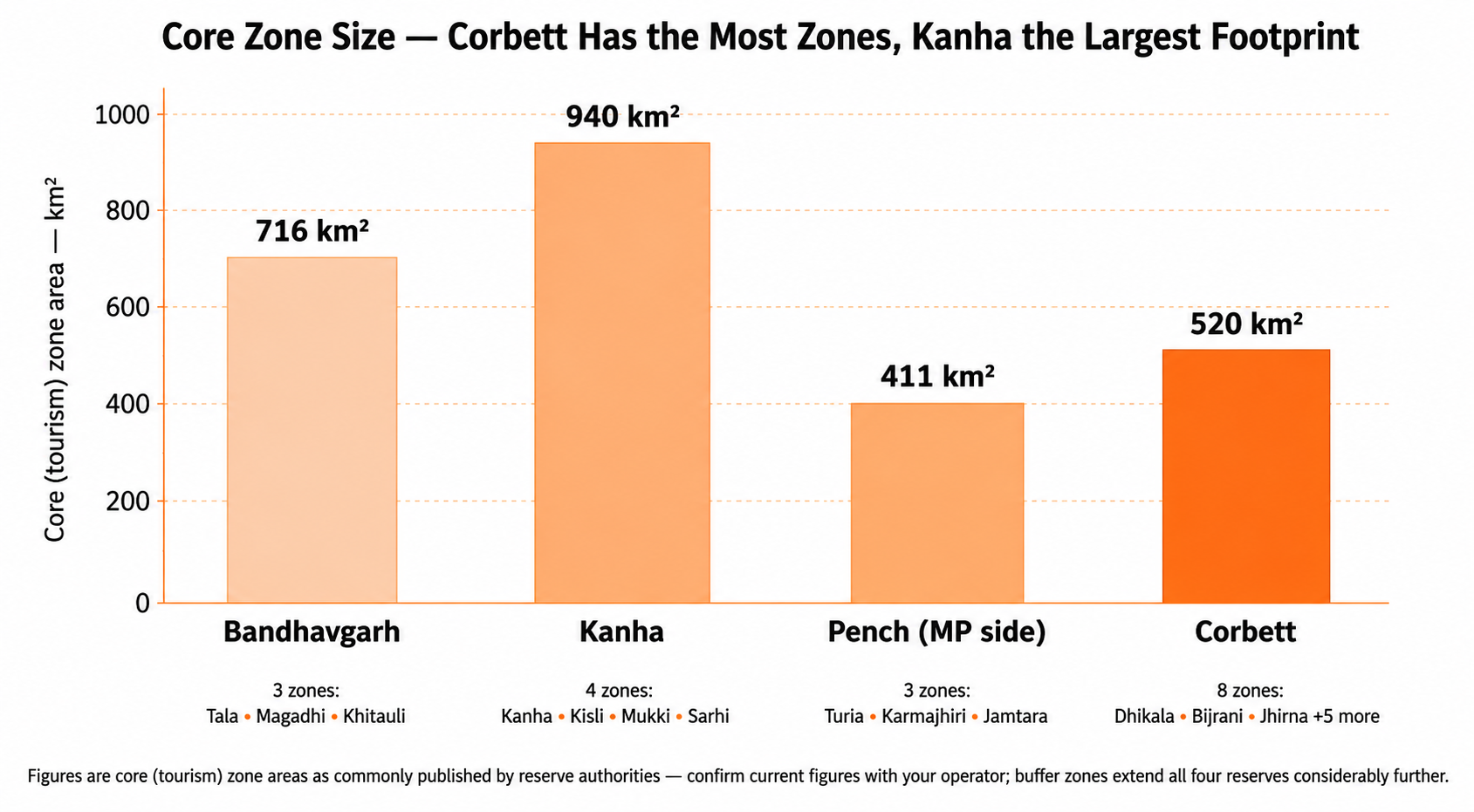
Pench is the outlier among the MP trio on both counts — smaller core zone, lower tiger density than either of the other two — and it turns that into its actual selling point rather than apologizing for it. Multiple experienced trip reports describe Pench as offering long, unhurried waits at a single waterhole with no other vehicle in sight, a genuinely different rhythm from Bandhavgarh's faster-paced, more competitive sighting culture. It's also the only one of the MP three with a strong recent wild dog and black leopard sighting record, and its status as the actual, geographically confirmed setting for Kipling's Seonee district gives it a literary claim Kanha shares only by popular association.
Corbett — The One That Changes the Whole Comparison
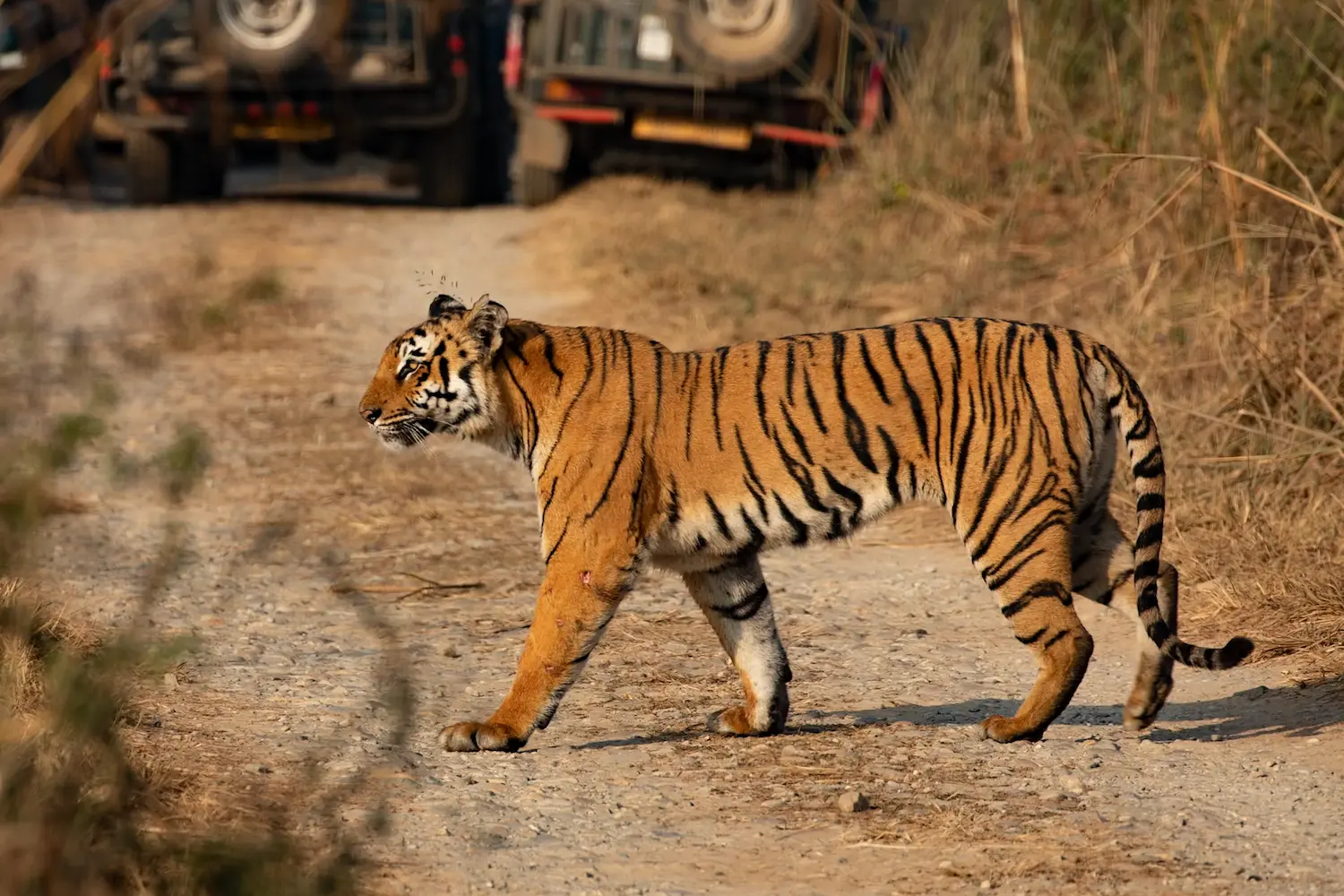
Corbett isn't just a fourth option in the same category — it's a structurally different reserve on almost every axis that matters. Established in 1936 as India's first national park and chosen in 1973 as the birthplace of Project Tiger, it carries a conservation pedigree none of the MP three can claim. More practically: recent tiger census figures put the Corbett landscape at over 260 tigers, the highest count of any tiger reserve in India — comfortably ahead of Bandhavgarh, Kanha, or Pench individually.
The terrain is where the difference really shows. Where the MP trio share a broadly similar central-Indian sal-and-teak landscape, Corbett sits in the Himalayan foothills, its zones threaded through the Ramganga river system, grasslands, and genuine hill terrain — visually and ecologically a different country. Dhikala, its most famous zone, is also its most restrictive: no day-visit jeep safari is permitted there at all — you either book an overnight forest rest house stay inside the zone, or you take a shared canter (open-bus) safari. It is the only tiger reserve in India that permits visitors to sleep inside the core zone, and that single fact reshapes what a Corbett trip actually feels like compared to the MP parks, where every safari ends with you driving back out through the gate. (Corbett beyond Tiger Safari)
| Zone | Character | Access Rule |
|---|---|---|
|
Dhikala |
The classic Corbett landscape — river plains, grassland, summer elephant herds often 100+ strong |
Overnight stay or canter safari only — no day jeep permits |
|
Bijrani |
Closest to Ramnagar (2 km from Amdanda gate); river plains and open grassland |
Popular first-timer zone; closed during monsoon |
|
Jhirna |
Consistent year-round sightings, including leopard and sloth bear |
Open all year — the reliable monsoon-season fallback |
|
Dhela |
Newest ecotourism zone; grassland and deciduous mix |
Open all year; good backup when Bijrani/Dhikala are full |
|
Durga Devi |
Riverine, strong birding reputation |
Closed during monsoon |
|
Sitabani |
Buffer zone, over 600 recorded bird species |
Open year-round; walking permitted, unlike core zones |
Corbett's core zones
The closure calendar alone is worth checking twice: Corbett's core zones shut mid-June to mid-November — noticeably longer, and shifted earlier, than the MP trio's 1 July–30 September window. Plan a late-June Kanha trip around Corbett's dates and you'll find the parks aren't actually running on the same calendar at all.
The Access Question Almost Every Guide Buries
This is one of the most underrated factors in choosing between these four, and it rarely gets more than a passing mention in most comparison content — despite being the difference between a relaxed transfer and a genuinely tiring half-day drive on either end of your safari days.
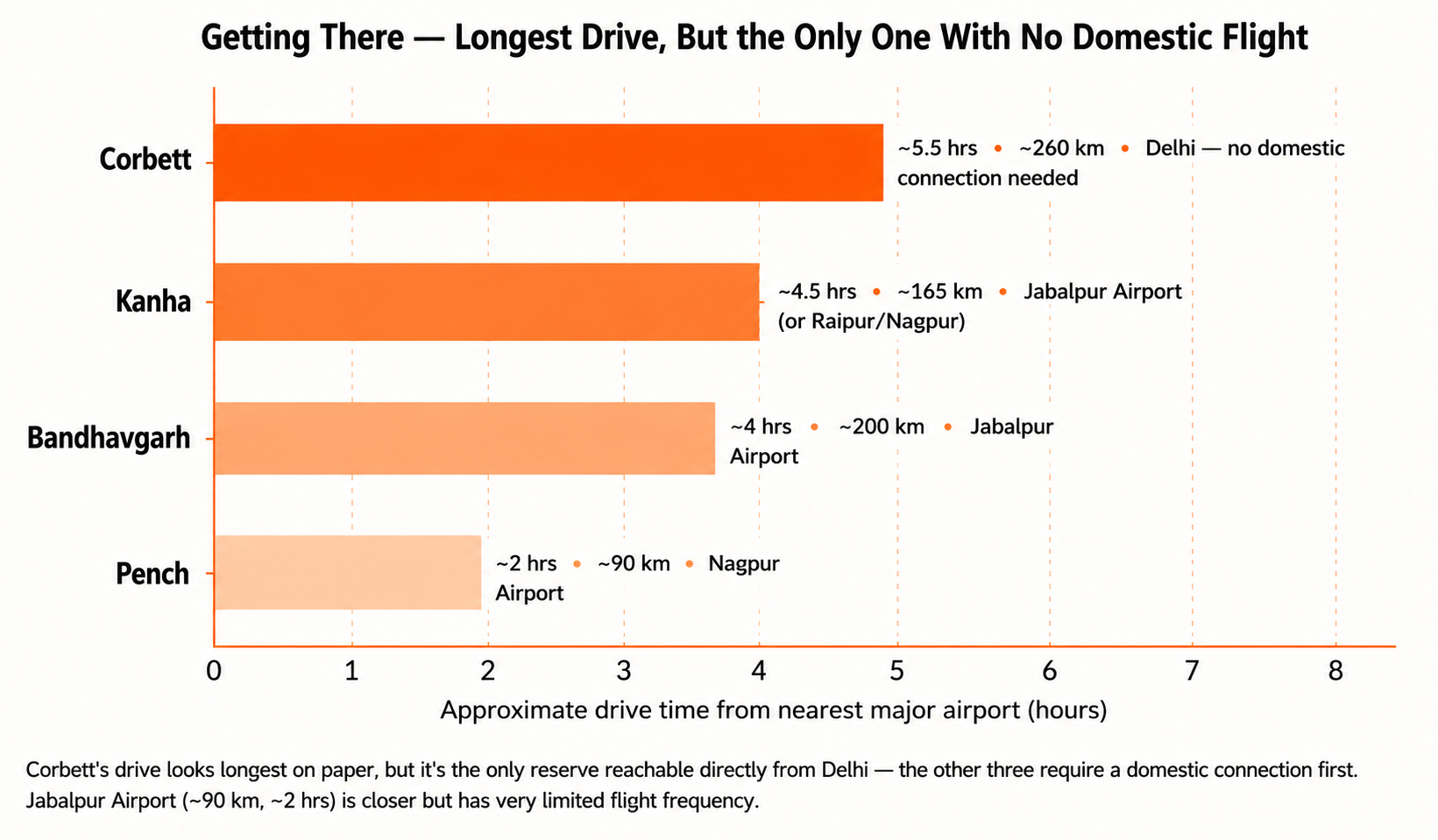
Pench's proximity to Nagpur — a well-connected airport roughly two hours away — is arguably its strongest practical advantage among the MP trio, and it's the reason Pench pairs so easily with a Tadoba extension across the Maharashtra border. Bandhavgarh and Kanha both route through Jabalpur, with drive times of four to four-and-a-half hours. Corbett's number looks the longest on the chart, but it's a genuinely different kind of journey — reachable directly from Delhi by road, with no domestic flight connection required at all. For international travellers landing in Delhi, that can work out simpler overall than flying onward to Jabalpur or Nagpur first, even with the longer drive. Pantnagar Airport sits much closer (roughly 80 km, under two hours) but has limited flight frequency, so most travellers still route via Delhi in practice.
If your total trip is five nights or fewer, Pench's two-hour transfer buys you a genuinely extra half-safari's worth of time compared to the other MP parks. But if you're coming from outside India specifically, Corbett's direct-from-Delhi routing can save you an entire domestic flight leg the MP trio all require.
What a Safari Actually Costs
Bandhavgarh, Kanha, and Pench are all managed under the same Madhya Pradesh Forest Department system, booked through the same official mponline.gov.in portal, and priced on a broadly similar structure. Corbett runs on a separate Uttarakhand system entirely (corbettgov.org) — and it's meaningfully more expensive, with an explicit price gap between Indian and foreign nationals that the MP parks don't apply.
| Component | Bandhavgarh / Kanha / Pench (MP) | Corbett (Uttarakhand) |
|---|---|---|
|
Booking portal |
||
|
Typical shared-jeep safari cost |
≈ ₹4,000 – 4,500 total (permit + gypsy + guide, split up to 6 guests) |
≈ ₹6,000 – 10,000 per jeep, zone-dependent |
|
Foreign-national pricing |
Same as Indian nationals |
Approximately 35–40% higher than Indian nationals |
|
Advance booking window |
90–120 days recommended for peak season |
45 days for day-visit permits |
|
Cheapest entry option |
Shared 6-seat gypsy |
Canter (16-seat shared bus), Dhikala zone only — ₹1,800–3,000/seat |
What a Safari Actually Costs
A single shared MP safari typically works out to somewhere around ₹4,000–4,500 total for the vehicle, guide, and permits combined, divided by however many guests are sharing. Fees at all four reserves rise most years — roughly 10% is the commonly cited annual pattern for the MP parks. Tatkal (next-day) bookings open at 5pm daily for MP parks if you arrive without an advance reservation; Corbett's day-visit booking window opens 45 days ahead rather than the 90–120 days MP peak-season slots require, which paradoxically makes Corbett somewhat easier to book on shorter notice, even though its zones fill quickly once that window opens.
Book 90–120 days ahead for MP peak-season dates (December through April); Corbett's 45-day window means you can plan that trip with less lead time, though popular zones like Bijrani and Dhikala still sell out fast within it.
A private (non-shared) gypsy costs the full vehicle fee yourself rather than split six ways — worth it for photography-focused trips where you don't want to negotiate stopping points with strangers.
Avoid third-party booking sites that mimic the official portals' design — mponline.gov.in and corbettgov.org are the only legitimate booking channels, and fraudulent look-alike sites are a genuine, repeatedly reported problem at both.
Choosing Your Zone Within the MP Trio — This Matters More Than Choosing Your Park
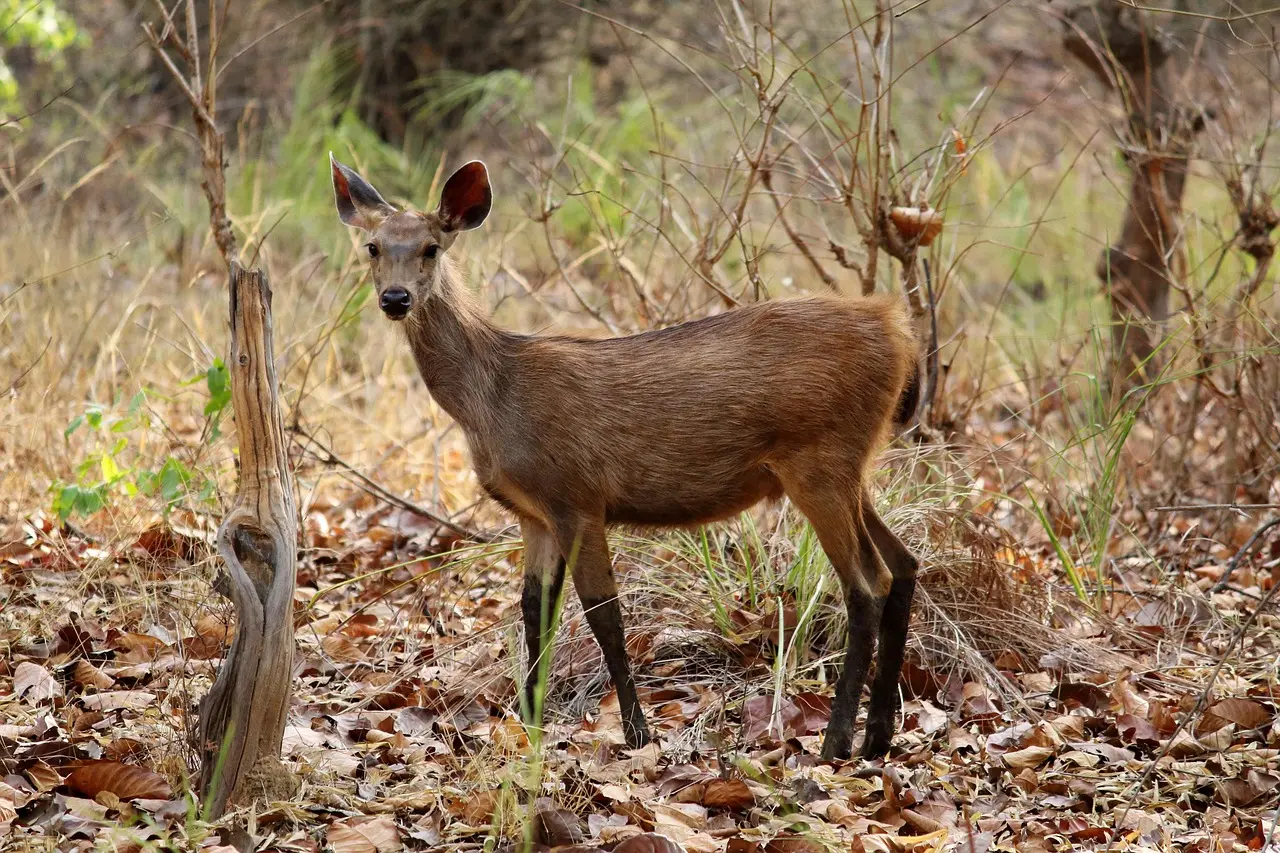
Bandhavgarh
Tala — the oldest, richest, and most sought-after zone; also home to the historic Bandhavgarh Fort and the 10th-century Shesh Shaiya. Highest sighting frequency, highest gypsy convergence around a spotted tiger.
Magadhi — mixed dense forest and grassland with several reliable waterholes (Murdhawa, Dabhadhole); a genuinely strong alternative to Tala with noticeably less vehicle pressure.
Khitauli — dry-deciduous terrain, home to a resident wild elephant herd since 2019, and increasingly popular with birders alongside the standard tiger circuit.
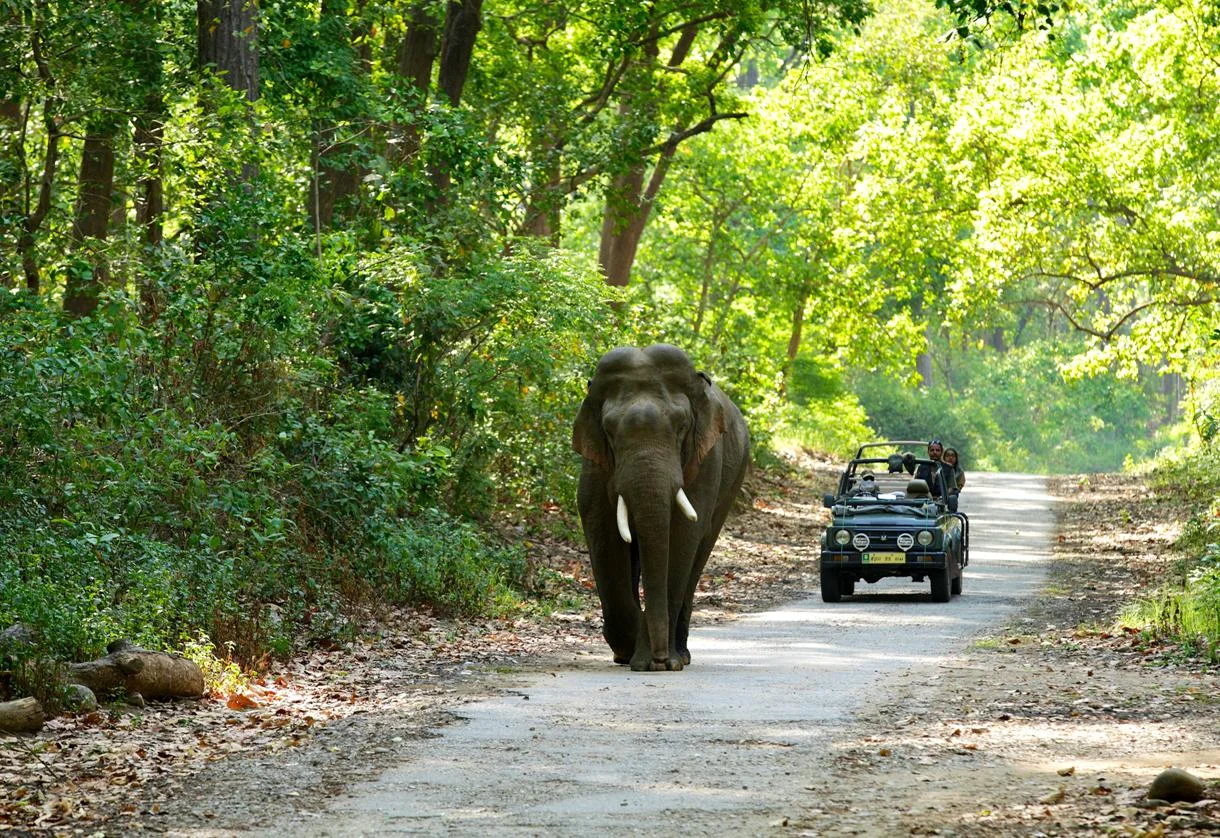
Kanha
Kanha zone — the open grassland meadows the park is known for; strong for the classic "Jungle Book" landscape shot.
Kisli — mixed bamboo forest, historically one of the more consistent zones for sightings.
Mukki — predominantly sal forest, and the zone most frequently mentioned in recent trip reports as currently delivering the strongest sightings.
Sarhi — the newest and least-visited of the four, a genuine option if solitude matters more to you than sighting odds.
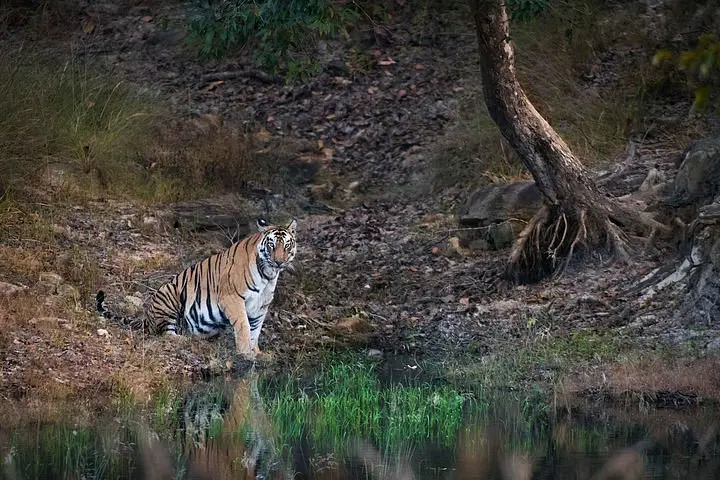
Pench
Turia — the most established MP-side gate, closest to most lodges, generally the busiest of Pench's three zones by local standards (still far quieter than Bandhavgarh's Tala).
Karmajhiri — the zone most repeatedly recommended for a peaceful, unhurried forest experience — considered by some experienced planners the single best all-round zone across all three reserves for this reason.
Jamtara — buffer-zone territory known for its immersive night-stay options, including star-bed platforms directly overlooking the forest.
When to Go
| Window | MP Trio (Bandhavgarh/Kanha/Pench) | Corbett |
|---|---|---|
|
Oct – Feb |
Cooler, lush post-monsoon forest, comfortable safari hours; denser foliage can make sightings slightly harder to spot |
Park reopens mid-November; cool, comfortable, and the start of its own peak season |
|
Mar – Jun |
Peak sighting season — thinning vegetation and shrinking waterholes concentrate movement; 40°C+ heat by April-May |
Open through 30 June; similarly hot but Himalayan-foothill elevation takes the edge off compared to the MP plains |
|
Jul – Sep / Nov |
Core zones closed across all three MP reserves (1 Jul – 30 Sep) |
Closed mid-June through mid-November — a full month longer, and shifted earlier, than the MP closure |
When to Go
If tiger sightings are your absolute priority over comfort, April and May are genuinely strong months across the MP trio, when reduced water sources force predictable animal movement — though this is also when crowd pressure peaks hardest at Bandhavgarh. Corbett's own best window sits from mid-November through February for comfortable conditions, or into the April-June stretch for the same dry-season sighting logic as the MP parks. The closure calendars don't overlap cleanly, so a multi-reserve trip spanning both regions needs its dates checked against both systems, not just one.
The Actual Decision Framework
| If this describes you... | Choose |
|---|---|
|
This is your first-ever tiger safari and you want the highest odds of a sighting |
Bandhavgarh or Corbett — book Magadhi/Khitauli (Bandhavgarh) or Jhirna/Bijrani (Corbett) over the most crowded premium zone |
|
You want the fullest, most varied wildlife experience beyond just tigers |
Kanha — barasingha, gaur, wild dog, and genuine landscape variety across four zones |
|
You have limited days and want to minimise transit time within MP |
Pench — the two-hour Nagpur transfer is a real, measurable advantage |
|
You're flying in from outside India and want to avoid a domestic connection |
Corbett — direct road access from Delhi, no second flight required |
|
You want to actually sleep inside the forest, not just drive through it |
Corbett — Dhikala's forest rest houses are the only in-core-zone overnight option in this comparison |
|
You want solitude more than sighting probability |
Pench, specifically Karmajhiri zone |
|
You're combining this with a Golden Triangle or Khajuraho itinerary |
Bandhavgarh or Kanha — both integrate more naturally with north-central India routing |
|
You're combining this with Rishikesh, Nainital, or the Uttarakhand hills |
Corbett — same state, same road network, easiest add-on of the four |
|
You have 7+ days and don't want to choose at all |
The MP trio in one circuit — see below — with Corbett better suited to its own dedicated Uttarakhand trip given the separate logistics chain |
The Actual Decision Framework
That combined-circuit option is worth taking seriously for the MP trio specifically. Kanha, Bandhavgarh, and Pench across seven to nine days exist as a standard operator itinerary precisely because each reserve genuinely complements the other two rather than duplicating the experience. Corbett, by contrast, sits far enough from the MP cluster — a different state, a different booking system, a different closure calendar — that it's rarely worth bolting onto the same trip. Treat it as its own dedicated Uttarakhand journey, ideally paired with Rishikesh, Nainital, or a Himalayan leg rather than squeezed in after Pench.
Quick Answers
Which park has the highest chance of seeing a tiger?
Bandhavgarh and Corbett are the two most commonly cited for sighting probability — Bandhavgarh for density within a compact core, Corbett because its landscape-wide tiger count is the highest of any reserve in India, though sightings are spread across eight zones rather than concentrated in one.
Is Pench worth visiting if I only have time for one park?
Only if easy access and a quieter, less competitive safari experience matter more to you than maximising sighting odds. For a single-park, first-time visit focused purely on seeing a tiger, Bandhavgarh or Corbett remain the stronger single choices.
Can I combine Corbett with the MP parks in one trip?
Technically yes, but it's rarely worth it — different state, different booking portal, different closure calendar, and no direct road or short flight link between them. Most experienced planners treat Corbett as a separate trip rather than a fourth stop on an MP circuit.
Can I do all three MP parks in one trip without it feeling rushed?
Yes, with 7–9 nights and 3 nights per reserve as a comfortable minimum — this is the standard structure most experienced Central India operators build their circuits around.
Do I need to book safaris months in advance?
For MP peak season (December–April), yes — 90 to 120 days ahead is standard. Corbett's day-visit window opens only 45 days ahead, though popular zones still fill quickly once it does.
Are the parks closed during monsoon?
MP core zones close 1 July to 30 September. Corbett's core zones close mid-June to mid-November — a longer, earlier window. Corbett's Jhirna, Dhela, and Sitabani zones stay open year-round regardless.
Before You Decide
There's no wrong answer here, whatever a leaderboard-style comparison implies — only a mismatch between what a reserve actually offers and what you actually came for. Bandhavgarh rewards travellers who want the odds stacked in their favour and don't mind sharing the moment. Kanha rewards those who want breadth and are happy to trade some sighting frequency for a fuller, quieter forest. Pench rewards anyone who values their time and their solitude in roughly equal measure. And Corbett rewards travellers willing to treat it as its own trip rather than a fourth stop — in exchange, it offers something none of the MP three can: a night actually spent inside the forest, and the highest tiger count in the country to go looking for in the morning.
BizareXpedition's Central India Grand Wildlife Circuit covers Kanha, Bandhavgarh, and Pench across one privately guided, no-group-coaches itinerary. Corbett — being Uttarakhand's own tiger reserve, right in our home state — is one we know intimately and can build as its own dedicated trip, including a Dhikala forest rest house stay most operators can't easily arrange. Ask us which single reserve, or which combination, fits your dates.
Best Selling Tour Packages
Explore other exciting options for your next adventure!