
Himachal Grand Comprehensive Circuit19N/20D
Himachal Grand Comprehensive Circuit
Start & City : Delhi
best deal price
₹
Without GST ₹1,61,973
per person on twin sharing
Choose your departure city, dates, and add guests to secure your tour.
Hurry, as seats fill up, prices rise! Book now!
1. Choose your departure date
Highlights
Climb gradually from Shimla's 2,200 metres to Spiti's cold desert above 3,800 metres through Kinnaur's fruit orchards and fortress villages — Sarahan, Sangla, Kalpa — rather than in one push.
Stand inside Tabo Monastery, founded in 996 CE and still in daily use — one of the oldest continuously operating Buddhist monastic sites anywhere in the Himalayas, its mud-brick walls and painted interiors kept intact for over a thousand years by Spiti's own bone-dry cold.
Cross Asia's highest suspension bridge at Chicham, drive to one of the world's highest post offices at Hikkim, and see genuine marine fossils exposed on a hillside at Langza — proof this cold desert was once an ocean floor.
Camp near Chandratal, the crescent-shaped "moon lake" above 4,200 metres, in the eco-zone now enforced a short walk from the water since overnight camping on the shoreline itself was banned in 2019.
Spend two full nights in Kasol's Parvati Valley, a Himalayan backpacker enclave with its own decades-old Israeli-traveller history, with an optional day at Manikaran's Sikh-Hindu hot-spring shrine and, for those who want it, a regulated visit to the self-governing village of Malana.
Sit inside the Dalai Lama's own temple complex at McLeodganj, and walk through the Tibet Museum's record of the 1959 exile — a living community, not a museum piece.
Wake for the Golden Temple at sunrise and close the circuit at the Wagah Border's evening flag-lowering ceremony, both handled as the significant, sometimes solemn places they are rather than photo stops.
Spread across five hills at Dalhousie, walk to the Subhash Baoli spring where Subhas Chandra Bose spent six months recovering his health in 1937, and take in Khajjiar's meadow, formally named "Mini Switzerland" by a Swiss diplomat in 1992.
Essence of Journey
The experiences that capture the true spirit of the entire trip.
| Day | Route | Distance | Major Highlights |
|---|---|---|---|
| Day 1 | Arrive Delhi | — | International arrival, rest, welcome briefing |
| Day 2 | Delhi → Shimla | ~350 km / 7-8 hrs | Kalka-Shimla railway heritage, Ridge, Mall Road |
| Day 3 | Shimla → Sarahan | ~180 km / 6 hrs | Bhimakali Temple, kath-kuni architecture |
| Day 4 | Sarahan → Sangla Valley | ~95 km / 4 hrs | Kamru Fort, Baspa valley orchards |
| Day 5 | Sangla → Kalpa | ~50 km / 2 hrs | Kinner Kailash views, Shyam Saran Negi's village |
| Day 6 | Kalpa → Nako | ~110 km / 4 hrs | Reckong Peo Inner Line Permit, Nako Lake |
| Day 7 | Nako → Tabo | ~55 km / 2 hrs | Tabo Monastery (996 CE) |
| Day 8 | Tabo → Kaza | ~48 km / 1.5 hrs | Dhankar Monastery en route, former Spiti capital |
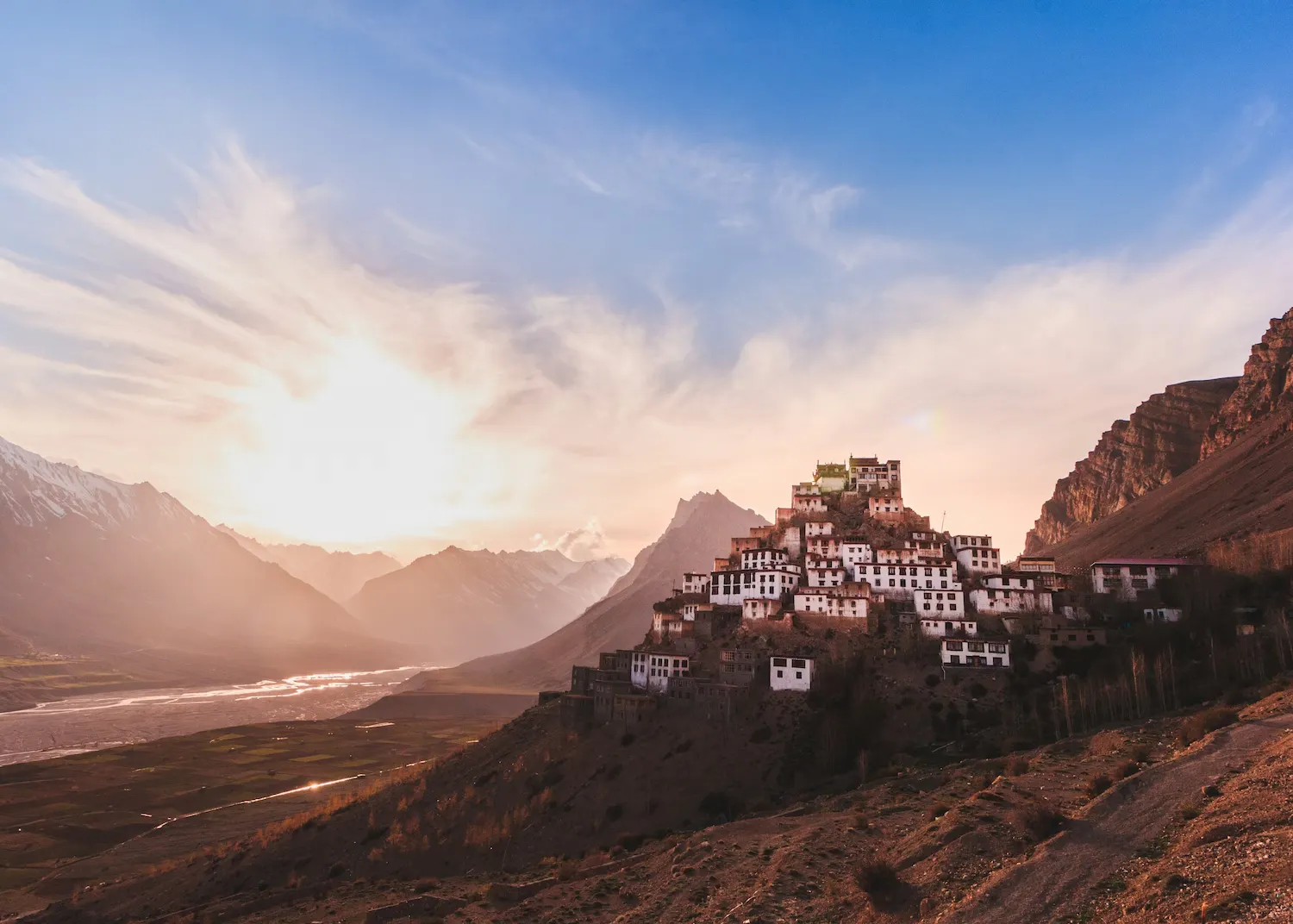
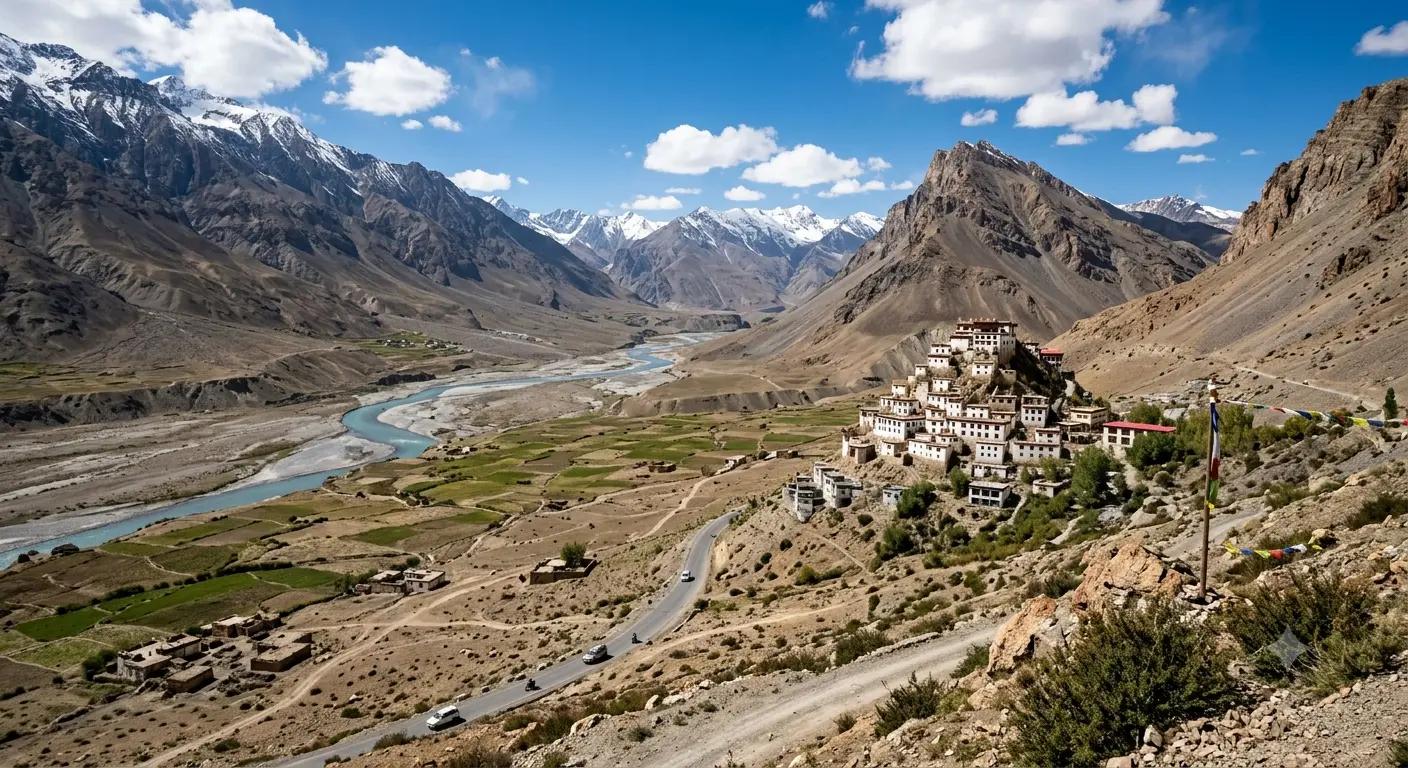
| Day 9 | Kaza – Kibber, Chicham, Langza, Hikkim, Komic | ~90 km round trip | Key Monastery, Asia's highest suspension bridge, marine fossils, world's highest post office |
| Day 10 | Kaza → Chandratal | ~105 km / 4-5 hrs | Kunzum La crossing, eco-camp near the moon lake |
| Day 11 | Chandratal → Manali | ~130 km / 6 hrs | Atal Tunnel, descent from the cold desert |
| Day 12 | Manali – sightseeing | local | Hadimba Temple, Old Manali |
| Day 13 | Manali → Kasol | ~75 km / 2.5-3 hrs | Parvati Valley, Chalal |
| Day 14 | Kasol – Manikaran / Malana (optional) | local + ~35 km | Hot-spring shrine, self-governing village |
| Day 15 | Kasol → Dharamshala/McLeodganj | ~150 km / 5-6 hrs | Road runs south to Mandi before turning west |
| Day 16 | Dharamshala – sightseeing | local | Tsuglagkhang Complex, Tibet Museum, Bhagsu |
| Day 17 | Dharamshala → Dalhousie | ~117 km / 4 hrs | Via Chamba |
| Day 18 | Dalhousie – Khajjiar, Subhash Baoli | ~24 km round trip | "Mini Switzerland" meadow, Netaji's recovery spring |
| Day 19 | Dalhousie → Amritsar | ~144 km / 4 hrs | Via Pathankot; Golden Temple, Wagah Border sunset |
| Day 20 | Amritsar → Delhi → Departure | ~45 min flight | Jallianwala Bagh, fly Amritsar-Delhi, international connection |
About
This is the ultimate Himachal tour package international travellers turn to when they want the complete Himachal itinerary for foreigners in one trip — not a taste of the state but all of it, done properly. Twenty days carry guests from Shimla's colonial ridge through Kinnaur's apple-and-deodar valleys, across the cold desert of Spiti, over Kunzum La into the backpacker valleys of Kasol and the Tibetan exile town of Dharamshala, on to the colonial hill station of Dalhousie, and out through Amritsar's Golden Temple before the flight home. Nine and a half regions, one continuous private journey.
The route itself explains the pace. Shimla sits at 2,200 metres; Kaza, in Spiti, sits close to 3,800 metres. A body climbs that gap safely only a few hundred metres a day, which is why the road runs through Kinnaur — Sarahan, Sangla, Kalpa, Nako — gaining height gradually before Spiti, rather than crossing the same gap in a single push over Kunzum La from the Manali side. Coming down the other way, once the body has already adjusted, is safe. That physiological fact, more than scenery, decides the direction this Himachal grand flagship tour travels in.
Kasol and Dalhousie are what set this apart from a shorter Himachal introduction: the Parvati Valley's backpacker culture and hot-spring pilgrimage town on one side, a quieter colonial hill station spread across five forested hills on the other. Both are named destinations in their own right here, not add-ons, each getting two full nights. Real driving distances were checked leg by leg — including the newly added Manali-Kasol, Kasol-Dharamshala, Dharamshala-Dalhousie and Dalhousie-Amritsar stretches — and the sheet's own route order held up as a genuine, non-backtracking sequence once verified; only the duration needed correcting, from the sheet's bare 18 days to a realistic 19 nights and 20 days, disclosed here rather than quietly changed.
WHY BOOK THIS WITH BIZAREXPEDITION
This circuit covers more of Himachal Pradesh, in more depth, than any other package in BizareXpedition's Himachal catalogue — the complete himachal itinerary for foreigners with long leave and a genuine interest in seeing the whole state, not a highlights reel.
Two regions no other BizareXpedition Himachal circuit combines with Spiti. Kasol's Parvati Valley and Dalhousie's colonial hill country both sit outside BizareXpedition's shorter Himachal introduction, which stops at Manali and Amritsar. Here they get two full nights each, named and built out on their own terms, not squeezed into a pass-through afternoon.
One private vehicle and one driver, Delhi to Amritsar. The same vehicle and driver run all twenty days and every one of the fourteen destinations, so there is no vehicle changeover, no re-briefing a new driver on the route, and no group coach at any point in the circuit.
A gradually climbed altitude profile, not a compressed one. Kinnaur's four stops — Sarahan, Sangla, Kalpa, Nako — each get their own night specifically so the 1,600-metre climb from Shimla to Spiti happens in daily steps a body can actually adjust to, rather than being telescoped into two or three transit days.
Inner Line Permit handling for Kinnaur beyond Kalpa and for Spiti, done end to end. Foreign nationals need a permit at Reckong Peo before Nako, Tabo and Kaza; BizareXpedition arranges the paperwork and the checkpoint stop as a routine part of the itinerary, not a client-side task.
A direct, ground-operator relationship for the whole trip. BizareXpedition runs this circuit itself, end to end, rather than reselling a wholesaler's package — the same team that built this itinerary is the one that operates it.
Three tiers that change the hotel and the vehicle, never the route. Premium, Luxury and Ultra-Luxury guests all see the same fourteen destinations in the same order; what changes is where they sleep and what they're driven in — not what they get to see.
ACCOMMODATION CATEGORIES
Tier labels only, as this document is built for international guests who don't shop by star count. Delhi, Shimla, Sangla, Kalpa, Manali and Amritsar have confirmed real properties across all three tiers. Nako, Tabo, Kaza, Chandratal, Kasol, Dharamshala and Dalhousie's boutique and luxury tiers are still thin markets in absolute terms — flagged honestly rather than guessed, with named properties to be confirmed by ground operations before this goes live.
| Destination | Nights | Premium | Luxury | Ultra-Luxury |
|---|---|---|---|---|
|
Delhi |
1 |
Business hotel |
5-star hotel |
Luxury 5-star (Oberoi/Taj-tier) |
|
Shimla |
1 |
Heritage hotel |
Boutique colonial property |
Wildflower Hall / Oberoi-tier |
|
Sarahan |
1 |
HPTDC-tier guesthouse |
Best available heritage stay |
Best available (limited market) |
|
Sangla Valley |
1 |
Valley resort |
Riverside boutique resort |
Best available premium camp/resort |
|
Kalpa |
1 |
Orchard-view hotel |
Boutique mountain property |
Best available premium property |
|
Nako |
1 |
Best available guesthouse |
Best available boutique stay |
Best available (thin market) |
|
Tabo |
1 |
Best available guesthouse |
Best available boutique stay |
Best available (thin market) |
|
Kaza |
2 |
Standard hotel |
Boutique Spiti-style property |
Best available premium property |
|
Chandratal |
1 |
Standard eco-camp |
Premium eco-camp |
Best available premium eco-camp |
|
Manali |
2 |
Mid-range hotel |
Span Resort & Spa-tier |
The Himalayan Naggar-tier |
|
Kasol |
2 |
Riverside guesthouse |
Best available boutique stay |
Best available (thin market) |
|
Dharamshala |
2 |
Business/valley-view hotel |
Boutique McLeodganj property |
Best available premium property |
|
Dalhousie |
2 |
Colonial-era hotel |
Best available boutique stay |
Best available (thin market) |
|
Amritsar |
Business hotel |
Taj Swarna-tier |
Hyatt Regency-tier |
Himachal Grand Comprehensive Circuit Accommodation Categories
3-TIER PRICING SUMMARY
| Tier | Per Couple | Per Person |
|---|---|---|
|
Premium |
Rs 3,23,946 – Rs 3,49,862 |
Rs 1,61,973 – Rs 1,74,931 |
|
Luxury |
Rs 4,65,066 – Rs 5,02,271 |
Rs 2,32,533 – Rs 2,51,136 |
|
Ultra-Luxury |
Rs 6,83,676 – Rs 7,38,370 |
Rs 3,41,838 – Rs 3,69,185 |
Himachal Grand Comprehensive Circuit 3-Tier Pricing Summary
Pricing shown is indicative and modeled for planning purposes, not a live quote; the range reflects date and season variance of roughly 8% above the base total. Final pricing is confirmed against actual travel dates and hotel availability at the time of booking.
SEASON ADJUSTMENTS
| Season | Conditions | Guidance |
|---|---|---|
|
Peak (mid-Jun – mid-Aug) |
Kunzum La/Manali-Kaza road open; warmest Spiti weather; Kasol/Manali at their busiest |
Book hotels well ahead; road can still close briefly after heavy rain |
|
High (Sep – early Oct) |
Clear skies, good visibility, cooler; road still open |
Best overall window for this full circuit |
|
Shoulder (May – mid-Jun) |
Kinnaur and lower Himachal fully open; Kunzum La may still be snowbound |
Route may need to run Kinnaur out-and-back if the Manali side isn't open yet |
|
Caution / Closure (Nov – Apr) |
Manali-Kaza road over Kunzum La closed by snow |
This exact 14-stop loop is not offered in this form; a Kinnaur-only or winter-Spiti-via-Shimla variant would be needed instead |
|
Monsoon (Jul – Aug, outer hills) |
Shimla/Sarahan/Sangla belt receives real monsoon rain; Spiti, in the rain shadow, stays largely dry |
Two separate weather risk profiles on this route — the outer hills and the trans-Himalayan zone — are not the same risk |
Himachal Grand Comprehensive Circuit Season Adjustments
Shimla: The Colonial Ridge Where the Climb Begins
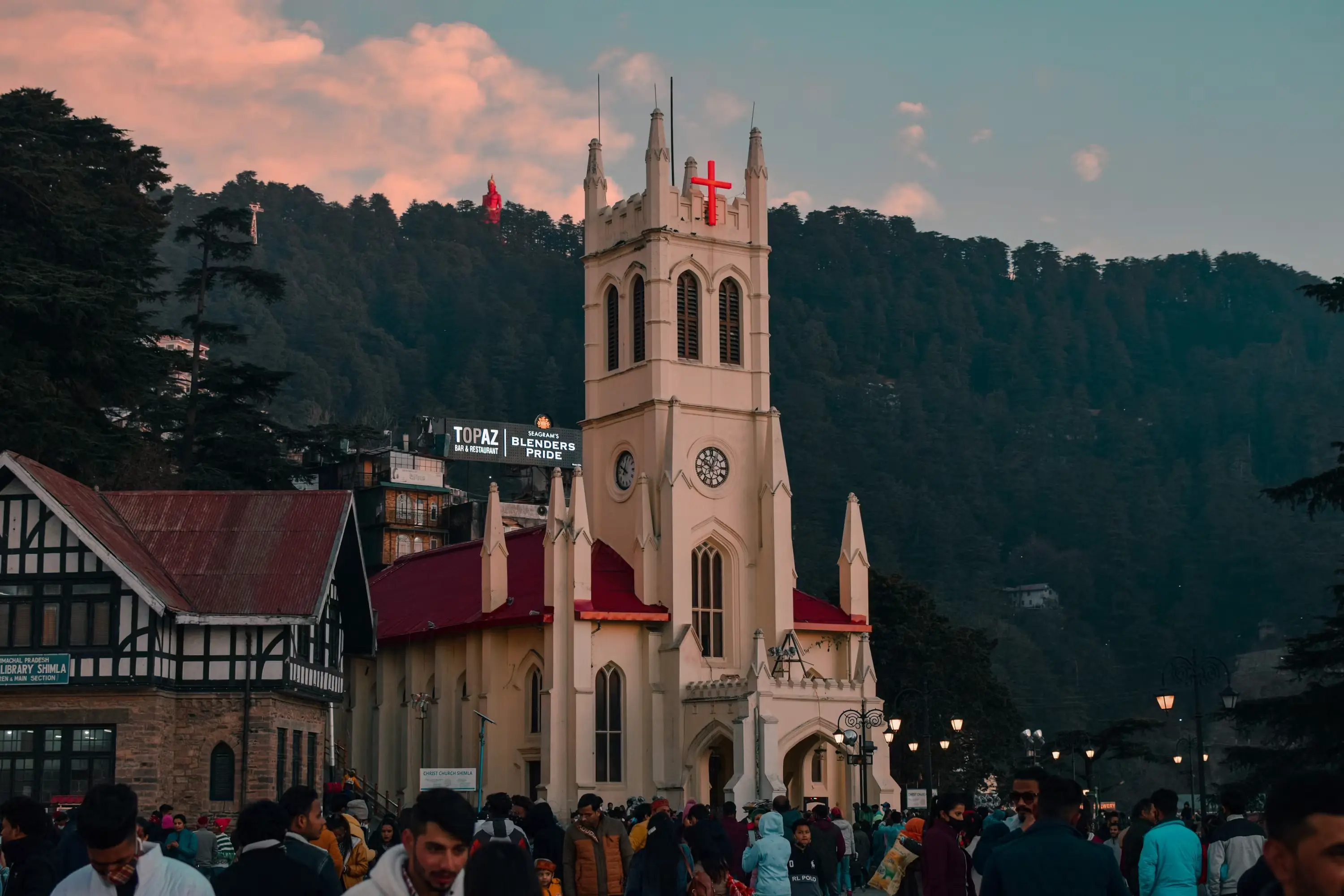
Shimla was the summer capital of British India for over a century, and the hill still carries that layout — the Mall Road along the ridge, timbered colonial buildings, and church spires above the bazaar. The narrow-gauge Kalka-Shimla railway that runs the last stretch into town, a UNESCO World Heritage line since 2008, was built between 1898 and 1903 specifically because the road alone couldn't move colonial administrators and their households up the mountain with the reliability an empire needed. Christ Church, consecrated in 1857, is one of the oldest churches in northern India, and the Viceregal Lodge, built in 1888, now houses the Indian Institute of Advanced Study.
Kinnaur's Four Stops: Climbing Gradually Toward the Cold Desert
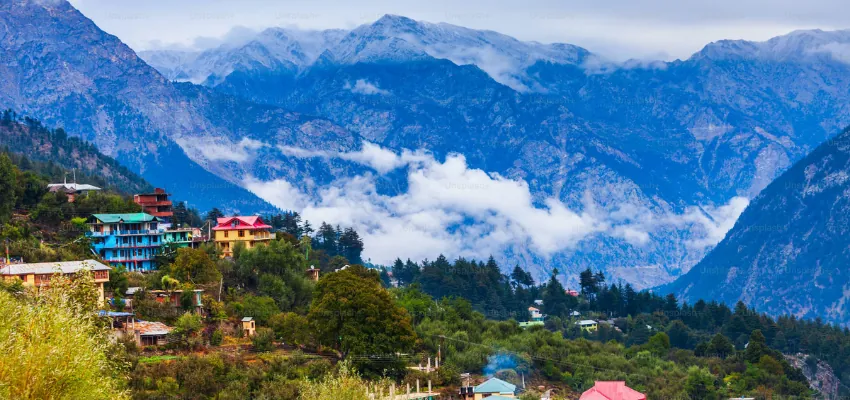
Sarahan was the summer capital of the old Bushahr princely state, and its Bhimakali Temple remains the kuldevi (family deity) shrine of that royal line. Its kath-kuni construction — alternating layers of dressed stone and deodar beams with no mortar — lets the structure flex rather than crack when the ground shakes, which is why it survived the powerful 1905 Kangra earthquake largely intact. At Sangla, the road follows the Baspa river past apple orchards into one of Kinnaur's greenest valleys; above the town, Kamru Fort has stood for more than 1,500 years as the Bushahr kings' former administrative seat, built in the same mortar-free style and still home to a living Kamakhya Devi shrine. Kalpa sits across the valley from the Kinner Kailash massif and was home to Shyam Saran Negi, known as "India's First Voter," who cast a ballot in India's first general election in 1951 and voted in every election after that until his death in 2022 at age 105. Beyond Reckong Peo — Kinnaur's district headquarters, where foreign nationals' Inner Line Permits are checked before the road continues — the landscape changes fast, and Nako, at close to 3,660 metres, sits around its own small lake ringed by four old temples said to hold a footprint of the 8th-century Buddhist master Padmasambhava.
GOOD TO KNOW: The official minimum group size for the Spiti Inner Line Permit is four foreign nationals, though Reckong Peo's permit office routinely relaxes this for couples and solo travellers in practice — worth stating plainly, since BizareXpedition's private-couple model typically falls below that official minimum.
Spiti's Cold Desert: Monasteries, Fossils and the Highest Villages
Tabo Monastery was founded in 996 CE by the translator-monk Rinchen Zangpo, making it one of the oldest continuously operating Buddhist monastic sites anywhere in the Himalayas — never abandoned or rebuilt from ruin the way many older sites have been. Its walls are unfired mud brick, not stone, and it is Spiti's bone-dry, low-humidity cold desert climate that has kept those walls and their painted interiors intact for more than a thousand years; the monastery survived the powerful 1975 Kinnaur earthquake with its structure largely intact, and the Dalai Lama has held Kalachakra initiation ceremonies here twice, in 1983 and 1996.
GOOD TO KNOW: Some travel sites describe Tabo Monastery as a UNESCO World Heritage Site. That isn't accurate: Tabo is protected by India's Archaeological Survey of India and has been proposed for UNESCO inscription, but has never actually been inscribed. It remains one of the most significant Buddhist monastic sites in India regardless of that formal status.
En route to Kaza, Dhankar Monastery — Spiti's capital under the old Nono rulers — is built directly into a cliff edge above the confluence of the Spiti and Pin rivers, a defensive position first and a monastery second. From Kaza, a full day trip reaches Kibber's Key Monastery, an 11th-century foundation destroyed and rebuilt more times than almost any other site in Spiti and now home to roughly 250 monks; Chicham Bridge, opened in 2017 and Asia's highest suspension bridge, built to replace a hand-pulled trolley cable that was villagers' only way across the gorge for decades; Langza, where genuine marine fossils lie exposed on the hillside as real evidence this cold desert plateau was once the floor of the Tethys Sea; Hikkim, home to the world's highest post office since 1983; and Komic, at roughly 4,587 metres one of the highest motorable villages anywhere, home to the 500-year-old Lundup Tsemo Gompa.
Kunzum La and Chandratal: The Moon Lake
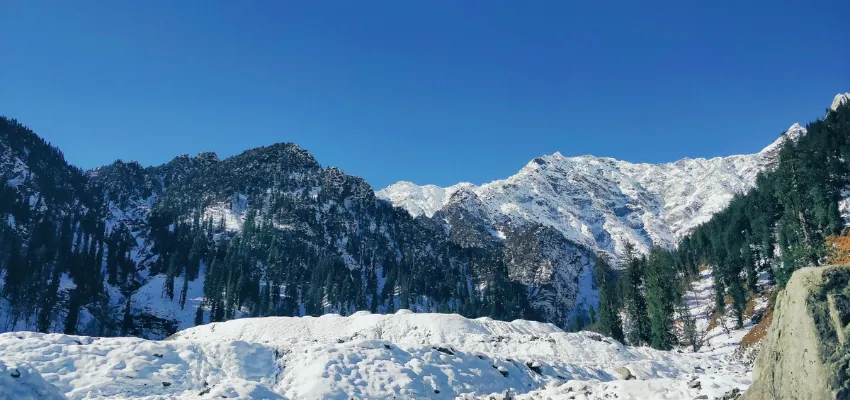
Kunzum La, at 4,551 metres, is the pass separating Spiti from the Chandra valley and, beyond it, Manali — prayer flags mark the top, and on a clear day the Chandrabhaga range is visible in the distance. Chandratal, the "moon lake," sits above 4,200 metres and takes its crescent shape from the way the Chandra river once curved through this basin.
GOOD TO KNOW: Since a 2019 ruling by the local Koksar Panchayat, camping and cooking fires are banned directly on the Chandratal shoreline to protect the lake's fragile ecosystem. Eco-camps now operate in a designated zone roughly 1.5 to 2 kilometres away, reached by a short walk — and because camp names and licences here are reissued each season, a specific camp can't be guaranteed a year in advance; BizareXpedition confirms the exact operator closer to each departure.
Manali: Coming Down Through the Atal Tunnel
The Atal Tunnel, 9.02 km long, cuts under the Rohtang Pass and shortens what used to be a weather-dependent crossing into a reliable half-hour drive, open through most of the year even when the old pass above is snowbound. Coming out the southern end, the change is immediate — bare cold-desert rock gives way to pine forest and the Beas river valley. Hadimba Temple, built in 1553, has no idol inside; the object of worship is a rock bearing what tradition holds to be Hadimba's footprint, a Mahabharata-linked deity worshipped here well before the current wooden temple was raised over the shrine. Old Manali, across the river from the main town, keeps a slower pace of apple orchards, cafes and lanes that still follow the old village layout.
Kasol and the Parvati Valley: Two Nights No Shorter Circuit Reaches
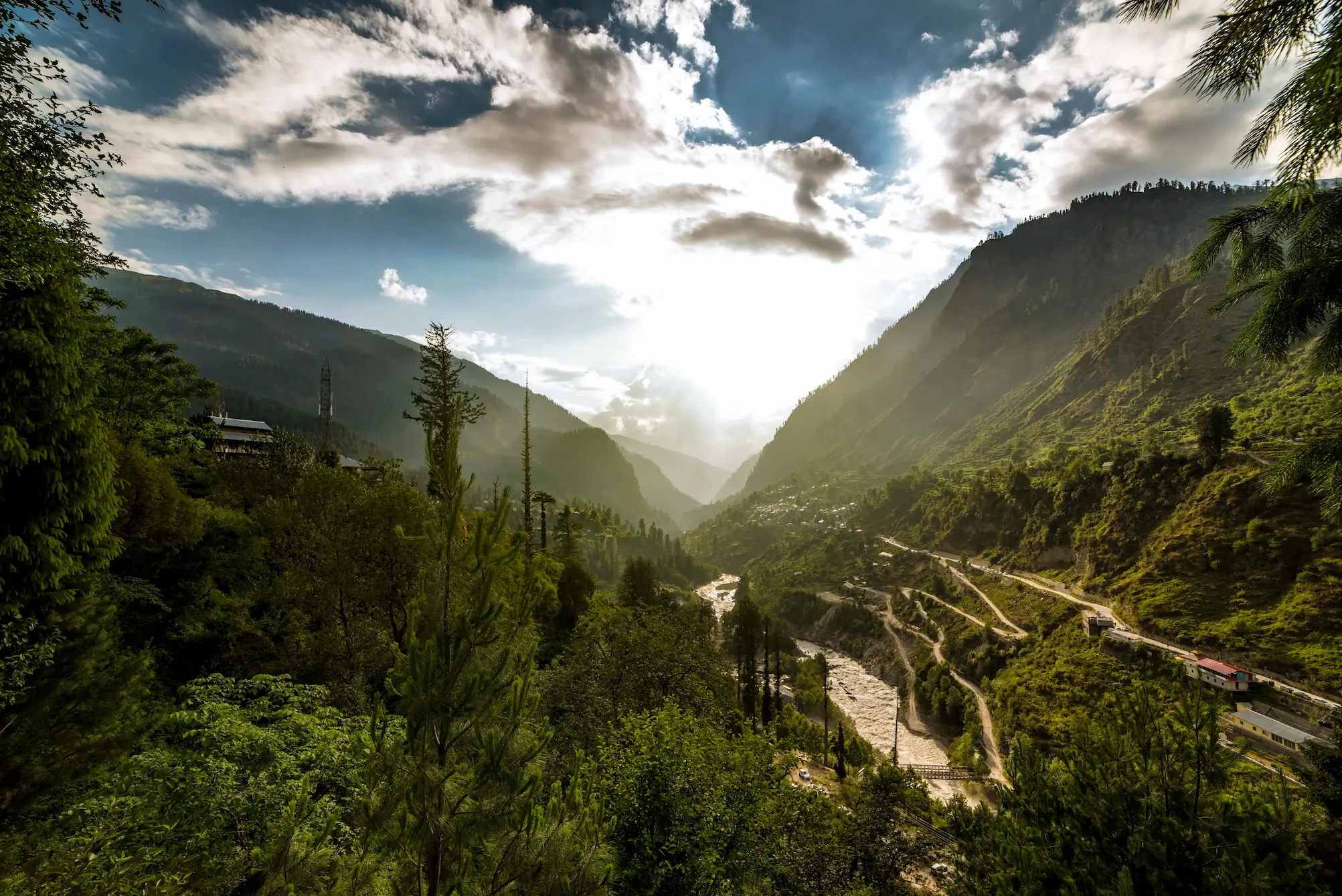
Kasol sits on the Parvati river in a valley that has drawn Israeli backpackers since the 1990s in numbers large enough that the town is still informally called "Mini Israel" — Hebrew menus, guesthouses named for Israeli towns, and a genuinely international backpacker culture layered onto an otherwise ordinary Himachal riverside village. Across a footbridge from the main village, Chalal keeps no road access at all; it's reached only on foot, which has kept its pace and architecture distinct from Kasol's own.
GOOD TO KNOW: Kasol's cafe scene is known for a locally famous product called Malana cream. This is a controlled substance under Indian law, and BizareXpedition does not arrange or endorse its purchase or use.
Manikaran and Malana: A Hot Spring and a Self-Governing Village
Manikaran's hot springs are real geothermal springs, heated by the same Parvati fault-line activity that runs through this valley, hot enough to actually boil rice and dal — both the Sikh gurdwara's community kitchen and the neighbouring Hindu temple use the water directly for cooking, a daily practical fact any visitor can watch happen. Sikh tradition holds that Guru Nanak caused the springs to appear here; a parallel Hindu legend ties them to Shiva and Parvati and an earring Parvati lost in the river, retrieved by Shiva's attendant Sheshnag in a fury that still keeps the water hot. Both traditions are told here as what each community believes, not as competing claims to settle.
Malana, reached by a short trek from the nearest road, governs itself through a bicameral village council — a lower house (Kanishthang) and upper house (Jayeshthang) — that settles disputes in the name of the local deity Jamlu, largely outside ordinary state administration. Local tradition holds the village descends from soldiers of Alexander the Great left behind after his campaigns; genetic testing of the population instead shows Y-DNA markers (J2 and R1a) common across Indo-Aryan populations in India and rare in the Mediterranean, which does not support that legend.
GOOD TO KNOW: Malana's strict no-touch custom toward outsiders — no touching people, buildings or temple structures, with fines for violations — is a genuine, living community practice, not a performance staged for visitors. Guests who add this optional excursion are briefed beforehand on exactly what not to touch, and BizareXpedition's guide manages the visit so the custom is respected throughout.
Dharamshala and McLeodganj: The Dalai Lama's Complex
The Tsuglagkhang Complex has been the Dalai Lama's residence since 1960, the year after his exile from Tibet, and the Namgyal Monastery inside it remains a working monastic institution, not a heritage site frozen in time. The adjoining Tibet Museum documents the 1959 exile itself — the flight over the Himalayas, the decades of settlement that followed — in the words and photographs of the people who lived it. Respectful dress and quiet behaviour are expected throughout, particularly near the temple's inner sanctum; access can also be limited during public teachings. Bhagsunag, a short drive above McLeodganj, adds a waterfall and an older Shiva temple for those who want a break from monastery visits.
Dalhousie and Khajjiar: Colonial Hill Country Across Five Hills
Dalhousie was established as a British summer retreat in the 1850s and named after the Earl of Dalhousie, then Governor-General of India.
GOOD TO KNOW: Local histories differ on the founder's own connection to the town that carries his name. India's own tourism authority credits the Earl of Dalhousie with founding the hill station directly in 1850, while a more recent, book-length local history argues he most likely never actually set foot in the town himself. Both accounts are stated here plainly rather than one being quietly dropped for the tidier story.
The town is spread across five hills — Kathlog, Potreyn, Terah, Bakrota and Bhangora — giving Dalhousie a genuinely different feel from a single-ridge hill station like Shimla, with colonial-era churches and bungalows connected by winding forest roads rather than one central mall. Khajjiar's wide meadow, ringed by deodar forest with a small lake at its centre, was formally named "Mini Switzerland" on 7 July 1992, when Swiss diplomat Willy P. Blazer put up a signpost giving the exact distance to Bern — 6,194 kilometres — and later had a stone from Khajjiar set into a collage displayed at the Swiss Parliament. Subhash Baoli, a natural spring a short walk from Dalhousie's centre, takes its name from Subhas Chandra Bose, who arrived in May 1937 in poor health after his release from British imprisonment and spent roughly six months recovering at a local doctor's residence, drinking daily from this spring.
Amritsar: The Golden Temple, Jallianwala Bagh and the Wagah Border
The Golden Temple's community kitchen, the langar, serves over 100,000 free meals a day to anyone who comes, regardless of faith, caste or background — entirely on volunteer labour and public donation, running continuously since the temple's founding. Watching it operate at sunrise, before the day's crowds build, is one of the clearest demonstrations of Sikhism's principle of equality actually happening in front of you rather than being described. The Wagah Border ceremony, timed to sunset and held daily on both sides of the India-Pakistan border, is a genuinely large, organised spectacle of marching and flag-lowering, with BizareXpedition's guide getting guests to the dedicated foreign-visitor stand with time to spare.
GOOD TO KNOW: Jallianwala Bagh, a short walk from the Golden Temple, is where British troops opened fire on an unarmed crowd on 13 April 1919, killing hundreds. It is preserved today as a memorial garden, not a tourist attraction, and is visited in that spirit — BizareXpedition's guide gives context before entering and allows guests to move through it at their own pace and in silence if they prefer. Photography is discouraged there out of respect.
Who This Trip Suits
Experienced Himalaya travellers with 19-20 days available who want the complete Himachal Pradesh circuit in one trip rather than splitting it across several shorter visits.
Guests who want Kasol and Dalhousie included, not just Shimla-Kinnaur-Spiti-Manali — the two regions that separate this flagship from BizareXpedition's shorter Himachal introduction.
Couples and small groups who value one continuous private vehicle and driver, rather than a group coach or a mid-trip handover to a local subcontractor.
Travellers comfortable with a gradual, multi-day altitude climb through Kinnaur before reaching Spiti's higher villages, rather than a faster, more compressed route.
Anyone who wants the honest version before booking — including which hotel tiers are still thin markets in Nako, Tabo, Kaza, Chandratal, Kasol and Dalhousie, and which sites call for quiet, respectful visits rather than ordinary sightseeing.
PRACTICAL NOTES
Safety: Private vehicle and a single vetted driver for the whole circuit; BizareXpedition's team is reachable throughout the trip.
Altitude: The route is sequenced to climb gradually from Shimla (2,200 m) to Spiti (close to 3,800 m); guests with cardiac or respiratory conditions should consult a doctor before travelling.
Permits: Foreign nationals need an Inner Line Permit for Kinnaur beyond Kalpa and for Spiti, arranged by BizareXpedition using passport and visa copies collected in advance.
Drinking water: Bottled or filtered water provided in the vehicle throughout; tap water is not recommended for drinking anywhere on this route.
Dress code: Modest dress and a head covering are expected at Bhimakali Temple, Manikaran gurdwara, Tsuglagkhang Complex and the Golden Temple; shoes are removed at all of these.
Sensitive sites: Jallianwala Bagh is a memorial to a mass killing and Malana maintains a strict no-touch custom — both are visited with explicit guidance from BizareXpedition's guide, not as ordinary sightseeing stops.
Vehicle note: Even the Ultra-Luxury tier uses a rugged 4x4 rather than a sedan-style luxury car on the Shimla-through-Kaza mountain sections, since the roads themselves don't suit a lower-clearance vehicle; tier comfort there comes through the hotel and guide instead.
Tipping: Not included; a general guideline is provided in the pre-departure information pack.
Photography: Freely permitted at most sites; photography is restricted inside some monastery inner sanctums and is discouraged at Jallianwala Bagh out of respect.
Connectivity: Mobile signal is patchy through Kinnaur and largely absent through much of Spiti; hotels in Nako, Tabo, Kaza and Chandratal's eco-camp have limited or no WiFi.
Booking Summary
Dept. City :
--
Dept. Date :
--
Traveller :
Adults: 2, Child: 0, Infant: 0
Rooms :
--
Basic Price :
--
Total Cost
--
GST
--
Grand Total
--
Itinerary (Day Wise)
You'll spend twenty days crossing Himachal from one end to the other, in the same private car with the same driver the whole way. After a night in Delhi, the road climbs to Shimla and then into Kinnaur. You stop at Sarahan, Sangla, Kalpa and Nako along the way, and those slow days give your body time to adjust before Spiti. In Spiti you'll see Tabo's thousand-year-old monastery, Dhankar on its cliff, and the high villages around Kaza, where you can post a card from Hikkim. Then it's a night near Chandratal and over Kunzum La to Manali. The second half is gentler. You get two nights each in Kasol's Parvati Valley, Dharamshala and colonial Dalhousie, with a day out to the Khajjiar meadow. Last comes Amritsar, where you see the Golden Temple at dawn and the Wagah Border ceremony at sunset, before a short flight back to Delhi for your journey home. We take care of the Inner Line Permits for Spiti, so you don't have to.
Day 1
ARRIVE DELHI | Welcome to India
Route: International arrival → Delhi hotel
Arrival evening is for check-in and rest. No sightseeing is scheduled after a long-haul flight.
A BizareXpedition representative meets guests at the airport with a name board and hands over a printed copy of the full itinerary, permit documents, and a local SIM or WiFi device for the trip ahead.
Experience of the Day
– Private meet-and-greet at the airport
– Transfer straight to the hotel, no detours
Food
Recommended: hotel restaurant on arrival night, or an early room-service meal after a long flight.
Activities to Do
Rest and acclimatise to the time change
Review the trip briefing and permit documents with the BizareXpedition representative
Day 2
DELHI TO SHIMLA | Into the Hills
Route: Delhi → Shimla (~350 km, 7-8 hrs by road)
The drive climbs out of the Delhi plains onto the Kalka-Shimla road, the town growing greener and cooler with every switchback. Shimla was the summer capital of British India for over a century, and the hill still carries that layout — the Mall Road along the ridge, timbered colonial buildings, church spires above the bazaar.
The narrow-gauge Kalka-Shimla railway that runs the last stretch into town, a UNESCO World Heritage line since 2008, was built between 1898 and 1903 specifically because the road alone couldn't move colonial administrators and their households up the mountain every summer with the reliability an empire needed.
Experience of the Day
– Evening walk on the Ridge and Mall Road
– Christ Church, consecrated in 1857, one of the oldest churches in northern India
Food
Recommended: Himachali dham thali for a first taste of local cooking.
Must-try: siddu, a steamed wheat bread stuffed with walnut or poppy-seed filling.
Activities to Do
Walk the Ridge at sunset
Visit the Viceregal Lodge, built in 1888, now the Indian Institute of Advanced Study
Day 3
SHIMLA TO SARAHAN | The Gateway to Kinnaur
Route: Shimla → Sarahan (~180 km, 6 hrs)
Sarahan was the summer capital of the old Bushahr princely state, and its Bhimakali Temple is still the kuldevi (family deity) shrine of that royal line. The temple's timber-and-stone kath-kuni construction — alternating layers of dressed stone and deodar beams, with no mortar or cement holding the wood in place — lets the whole structure flex slightly rather than crack when the ground shakes, which is exactly why it was still standing after the powerful 1905 Kangra earthquake that levelled masonry buildings across the region.
The temple complex sits at the edge of town with views straight down the Sutlej valley, and the walk up from the road passes through Sarahan's own small bazaar of apple growers and woollen-shawl sellers.
The Human Story
Bhimakali Temple's current form dates to the 19th century, though a shrine on this site is recorded far earlier. It remains an active place of worship, not a monument — daily rituals continue exactly as they did under Bushahr rule, and visitors are asked to dress and behave accordingly.
Experience of the Day
– Bhimakali Temple's kath-kuni towers and silver-plated doors
– Sunset views over the Sutlej valley from the temple courtyard
Food
Recommended: local trout, farmed in the cold streams around Sarahan.
Must-try: Kinnauri rajma with buckwheat rotis.
Activities to Do
Guided walk through Bhimakali Temple complex
Short walk through Sarahan's apple-orchard lanes
Day 4
SARAHAN TO SANGLA VALLEY | The Baspa Valley
Route: Sarahan → Sangla Valley (~95 km, 4 hrs)
The road turns off the main Hindustan-Tibet highway at Karcham and follows the Baspa river up into one of Kinnaur's greenest valleys — apple orchards give way to pine and deodar forest as the valley narrows towards Sangla.
Above the town, Kamru Fort has stood for more than 1,500 years as the former administrative seat of the Bushahr kings, its wooden tiers built in the same kath-kuni style as Sarahan's temple. A living Kamakhya Devi shrine still occupies its upper floor.
Note: Chitkul, the last inhabited village on the Baspa before the road ends at the Indo-Tibet border, is roughly 28 km further up the valley. With only one night in Sangla, it isn't built into the core itinerary here, but BizareXpedition can add it as a half-day extension on request.
Experience of the Day
– Kamru Fort's wooden towers and Kamakhya Devi shrine
– Baspa river views along the valley road
Food
Recommended: fresh Kinnauri apple varieties, in season.
Must-try: chilta, a local buckwheat pancake.
Activities to Do
Walk up to Kamru Fort
Riverside walk along the Baspa
Optional Nearby Excursions
Half-day extension to Chitkul, the last village before the Indo-Tibet border road (available on request)
Day 5
SANGLA TO KALPA | India's First Voter's Village
Route: Sangla → Kalpa (~50 km, 2 hrs)
Kalpa sits across the valley from the Kinner Kailash massif, and mornings here mean waking up to that range catching the first light. This was also home to Shyam Saran Negi, known as "India's First Voter" — he cast a ballot in India's very first general election in 1951 and voted in every election after that until his death in 2022, at the age of 105.
The short drive gives the afternoon free to walk through Kalpa's orchards and the old Narayan-Nagini temple, one of the few in the region blending Buddhist and Hindu elements in the same structure.
Experience of the Day
– Kinner Kailash range at sunrise from Kalpa
– Narayan-Nagini temple's blended Hindu-Buddhist architecture
Food
Recommended: Kinnauri rajma, buckwheat rotis, and locally grown apples.
Must-try: chilgoza (Himalayan pine nuts), a genuine Kinnaur specialty.
Activities to Do
Walk through Kalpa's orchards
Visit Narayan-Nagini temple
Day 6
KALPA TO NAKO | Crossing Into the Trans-Himalaya
Route: Kalpa → Nako (~110 km, 4 hrs, via Reckong Peo)
Reckong Peo, Kinnaur's district headquarters, is where foreign nationals' Inner Line Permits are checked before the road continues past Kalpa into the stretch of Kinnaur and all of Spiti that requires one. BizareXpedition arranges the paperwork in advance; the stop itself is a routine checkpoint rather than an obstacle.
Beyond Reckong Peo, the landscape changes fast — forest gives way to bare rock and scree as the road climbs into the rain shadow of the main Himalayan range. Nako, at close to 3,660 metres, sits around its own small lake with four old temples said to hold a footprint left by Padmasambhava, the 8th-century Buddhist master credited with bringing Vajrayana Buddhism into the Himalayas.
Note: The official minimum group size for the Spiti Inner Line Permit is four foreign nationals, though Reckong Peo's permit office routinely relaxes this for couples and solo travellers in practice — stated here plainly rather than left unmentioned, since BizareXpedition's private-couple model is typically below that official minimum.
Experience of the Day
– Inner Line Permit formalities at Reckong Peo
– Nako Lake at dusk, ringed by poplar trees
Food
Recommended: thukpa and butter tea, the first proper taste of trans-Himalayan food on this route.
Must-try: dried apricots, sold by the roadside through Kinnaur and Spiti.
Activities to Do
Walk around Nako Lake
Visit Nako's four old temples
Day 7
NAKO TO TABO | The Ajanta of the Himalayas
Route: Nako → Tabo (~55 km, 2 hrs)
Tabo Monastery was founded in 996 CE by the translator-monk Rinchen Zangpo, making it one of the oldest continuously operating Buddhist monastic sites anywhere in the Himalayas — it has never been abandoned or rebuilt from ruin the way many older sites have. Its walls are unfired mud brick, not stone, and it is Spiti's bone-dry, low-humidity cold desert climate that has kept those walls and their painted interiors intact for more than a thousand years: the same construction in a wetter climate would have dissolved centuries ago.
The monastery survived the powerful 1975 Kinnaur earthquake with its structure largely intact, and the Dalai Lama has held Kalachakra initiation ceremonies here twice, in 1983 and 1996.
The Human Story
Several published sources, including some describing Himachal circuits, call Tabo "a UNESCO World Heritage Site." This is not accurate: Tabo is protected by India's Archaeological Survey of India and has been proposed for UNESCO inscription, but has never actually been inscribed. It remains one of the most significant Buddhist monastic sites in India regardless of that formal status.
Experience of the Day
– Tabo Monastery's 996 CE mud-brick assembly hall and painted chapels
– Tabo village's monk-run guesthouses and quiet lanes
Food
Recommended: monastery-guesthouse thukpa.
Must-try: butter tea, an acquired taste worth trying once at altitude.
Activities to Do
Guided walk through Tabo Monastery's nine temples
Visit the meditation caves in the cliffs above the village
Day 8
TABO TO KAZA | Spiti's Former Capital
Route: Tabo → Kaza (~48 km, 1.5 hrs, via Dhankar)
Dhankar was Spiti's capital under the old Nono rulers, and its monastery is built directly into a cliff edge above the confluence of the Spiti and Pin rivers — a defensive position first, a monastery second. The views down onto both rivers meeting are the reason the site was chosen in the first place.
Kaza, Spiti's present-day administrative headquarters, is the base for the next two nights and for the day trip to the valley's outlying villages.
Experience of the Day
– Dhankar Monastery's cliff-edge assembly hall
– Confluence views of the Spiti and Pin rivers from Dhankar
Food
Recommended: Kaza's small market of Spitian and Tibetan eateries.
Must-try: momos and thukpa, Kaza's everyday staples.
Shopping
Spiti's hand-knitted woollens and pattu shawls, sold in Kaza's main bazaar
Activities to Do
Dhankar Monastery visit en route
Settle into Kaza and explore its bazaar in the evening
Day 9
KAZA — KIBBER, CHICHAM, LANGZA, HIKKIM, KOMIC | The High Villages
Route: Kaza – Kibber – Chicham – Langza – Hikkim – Komic – Kaza (~90 km round trip)
Kibber's Key Monastery, an 11th-century foundation, has been destroyed and rebuilt more times than almost any other site in Spiti — by Mongol raiders, in the Ladakh-Kullu wars of 1841, by fire, and again by the 1975 earthquake — and today houses around 250 monks, making it the largest active monastery in the valley.
Chicham Bridge, opened in 2017, is Asia's highest suspension bridge, built to replace a hand-pulled trolley cable that was villagers' only way across the gorge for decades. At Langza, genuine marine fossils lie exposed on the hillside — real evidence that this cold desert plateau was once the floor of the Tethys Sea, pushed up over tens of millions of years as the Indian and Asian plates collided. Hikkim's tiny post office has been the world's highest since 1983, and Komic, at roughly 4,587 metres, is one of the highest motorable villages anywhere, home to the 500-year-old Lundup Tsemo Gompa.
Experience of the Day
– Key Monastery's fortress-like assembly halls
– Crossing Chicham Bridge on foot
– Marine fossils at Langza
– Posting a card from the world's highest post office at Hikkim
Food
Recommended: a packed lunch carried from Kaza, since the high villages have limited eateries.
Must-try: local barley-flour tsampa, offered in some village homes.
Shopping
Postcards and a stamped envelope at Hikkim's post office, worth sending home
Activities to Do
Key Monastery guided visit
Walk across Chicham Bridge
Fossil-hunting at Langza (no removal of fossils, per local rules)
Post a card at Hikkim
Visit Komic's Lundup Tsemo Gompa
Day 10
KAZA TO CHANDRATAL | The Moon Lake
Route: Kaza → Chandratal (~105 km, 4-5 hrs, over Kunzum La)
Kunzum La, at 4,551 metres, is the pass that separates Spiti from the Chandra valley and, beyond it, Manali. Prayer flags mark the top, and on a clear day the Chandrabhaga range is visible in the distance.
Chandratal — the "moon lake" — sits above 4,200 metres and takes its crescent shape from the way the Chandra river once curved through this basin. Since a 2019 ruling by the local Koksar Panchayat, camping and cooking fires are banned directly on the lakeshore to protect the fragile ecosystem there; camps now operate in a designated zone roughly 1.5 to 2 kilometres away, reached by a short walk.
Note: Camp names and licences at Chandratal are reissued each season, so a specific camp cannot be guaranteed a year in advance — BizareXpedition confirms the exact operator closer to each departure.
Experience of the Day
– Kunzum La summit and its prayer flags
– Chandratal at dusk, when the water turns silver-blue
Food
Recommended: a hot dinner at the eco-camp — simple, warming food is the norm at this altitude.
Must-try: hot ginger-lemon-honey tea, standard at every high-altitude camp in the region.
Activities to Do
Sunset walk to the Chandratal shoreline (within the permitted eco-zone)
Stargazing after dark, away from any light pollution
Day 11
CHANDRATAL TO MANALI | Back Through the Tunnel
Route: Chandratal → Manali (~130 km, 6 hrs, via Atal Tunnel)
The Atal Tunnel, 9.02 km long, cuts under the Rohtang Pass and shortens what used to be a weather-dependent crossing into a reliable half-hour drive, open through most of the year even when the old pass above is snowbound.
Coming out the southern end of the tunnel, the change is immediate — bare cold-desert rock gives way to pine forest and the Beas river valley, and Manali's greenery, after ten days above 3,000 metres, feels almost tropical by comparison.
Experience of the Day
– Kunzum-to-Rohtang landscape change compressed into a single drive
– First proper forest and river views since Sarahan
Food
Recommended: trout from the Beas, a Manali specialty.
Must-try: Himachali dham thali, one more time, now made with valley produce.
Activities to Do
Arrive Manali and settle in for two nights
Evening walk along the Beas riverside
Day 12
MANALI SIGHTSEEING | Old Manali and Hadimba
Route: Manali – local sightseeing
Hadimba Temple, built in 1553, has no idol inside — the object of worship is a rock bearing what tradition holds to be Hadimba's footprint, a Mahabharata-linked deity worshipped here well before the current wooden temple was raised over the shrine.
Old Manali, across the river from the main town, keeps a slower pace — apple orchards, cafes, and lanes that still follow the old village layout rather than the newer market's grid.
Experience of the Day
– Hadimba Temple's carved wooden tower set inside a cedar forest
– Old Manali's cafe lanes and orchard walks
Food
Recommended: an Old Manali cafe for lunch — a different register from valley-town dhabas.
Must-try: siddu again here, Kullu valley's version differs slightly from Shimla's.
Shopping
Kullu shawls and caps at Manali's main market
Activities to Do
Hadimba Temple visit
Free afternoon to explore Old Manali on foot
Day 13
MANALI TO KASOL | Into the Parvati Valley
Route: Manali → Kasol (~75 km, 2.5-3 hrs)
Kasol sits on the Parvati river in a valley that has drawn Israeli backpackers since the 1990s in numbers large enough that the town is still informally called "Mini Israel" — Hebrew menus, guesthouses named for Israeli towns, and a genuinely international backpacker culture layered onto an otherwise ordinary Himachal riverside village.
Across a footbridge from the main village, Chalal keeps no road access at all — it's reached only on foot, which has kept its pace and its architecture distinct from Kasol's own.
Experience of the Day
– Parvati river views along Kasol's main lane
– Footbridge walk across to Chalal
Food
Recommended: Kasol's Israeli-influenced cafe scene — hummus, shakshuka, and falafel sit on the same menus as Himachali dham.
Must-try: Malana cream, a well-known local product — note this is a controlled substance in India and BizareXpedition does not arrange or endorse its purchase or use.
Activities to Do
Riverside walk through Kasol village
Walk across to Chalal on foot
Day 14
KASOL — MANIKARAN AND MALANA (OPTIONAL) | Hot Springs and a Self-Governing Village
Route: Kasol – Manikaran (local) – Malana (optional, ~35 km)
Manikaran's hot springs are real geothermal springs, heated by the same Parvati fault-line activity that runs through this valley, and the water is hot enough to actually boil rice and dal — both the Sikh gurdwara's community kitchen and the neighbouring Hindu temple use it directly for cooking, a daily practical fact anyone visiting can watch happen. Sikh tradition holds that Guru Nanak caused the springs to appear here; a parallel Hindu legend ties the springs to Shiva and Parvati and an earring ("mani") Parvati lost in the river, which Shiva's attendant Sheshnag retrieved in fury, the water still carrying his heat. Both traditions are told here as what each community believes, not as competing claims to settle.
Malana, reached by a short trek from the nearest road, governs itself through a bicameral village council — a lower house (Kanishthang) and upper house (Jayeshthang) — that settles disputes in the name of the local deity Jamlu, largely outside ordinary state administration. Local tradition holds the village descends from soldiers of Alexander the Great left behind after his campaigns; genetic testing of the population instead shows Y-DNA markers (J2 and R1a) common across Indo-Aryan populations in India and rare in the Mediterranean, which does not support that legend. Villagers maintain a strict no-touch custom toward outsiders — visitors may not touch people, buildings, or temple structures, and fines apply for breaking this rule.
Note: Malana's no-touch custom is a genuine, living community practice, not a performance for visitors. Guests who add this excursion are briefed beforehand on exactly what not to touch, and BizareXpedition's guide manages the visit so the custom is respected throughout.
Experience of the Day
– Manikaran's boiling hot springs at the gurdwara and temple
– Malana's village council houses and Jamlu temple exterior (optional)
Food
Recommended: langar at Manikaran gurdwara, a communal Sikh meal open to all visitors.
Must-try: Manikaran's hot-spring-cooked rice, offered as prasad at the Hindu temple.
Activities to Do
Manikaran gurdwara and temple visit
Optional Malana excursion with a briefed guide
Optional Nearby Excursions
Malana village (optional, subject to season and road conditions)
Day 15
KASOL TO DHARAMSHALA | Into the Tibetan Exile Capital
Route: Kasol → Dharamshala/McLeodganj (~150 km, 5-6 hrs)
This is a long day on the road, and the route to get there looks odd on a map: it actually runs south towards Mandi before turning west and climbing again into the Kangra valley. That's the terrain, not an inefficient routing choice — there is no shorter road between the two valleys.
Arriving into McLeodganj by evening, the town already feels different — Tibetan prayer flags, monks in maroon robes, and Hindi sharing the street signs with Tibetan script.
Experience of the Day
– Landscape change from Parvati Valley to Kangra valley over the course of the drive
– First evening in McLeodganj's Tibetan-influenced streets
Food
Recommended: Tibetan thukpa and momos, McLeodganj's everyday food.
Must-try: Tibetan butter tea, distinct from the Spitian version by preparation style.
Activities to Do
Settle into Dharamshala/McLeodganj for two nights
Evening walk through McLeodganj's main bazaar
Day 16
DHARAMSHALA SIGHTSEEING | The Dalai Lama's Complex
Route: Dharamshala/McLeodganj – local sightseeing
The Tsuglagkhang Complex has been the Dalai Lama's residence since 1960, the year after his exile from Tibet, and the Namgyal Monastery inside it remains a working monastic institution, not a heritage site frozen in time. The adjoining Tibet Museum documents the 1959 exile itself — the flight over the Himalayas, the decades of settlement that followed — in the words and photographs of the people who lived it.
Bhagsunag, a short drive above McLeodganj, adds a waterfall and an older Shiva temple to the day for those who want a break from monastery visits.
The Human Story
The Tsuglagkhang Complex is a living religious and administrative centre for Tibetans in exile, not a tourist attraction built for visitors. Respectful dress and quiet behaviour are expected throughout, particularly near the temple's inner sanctum.
Experience of the Day
– Tsuglagkhang Complex and Namgyal Monastery
– Tibet Museum's 1959 exile exhibits
– Bhagsunag waterfall and temple
Food
Recommended: McLeodganj's Tibetan bakeries for breakfast.
Must-try: Tibetan bread with apricot jam, a genuine local morning habit.
Shopping
Tibetan handicrafts and prayer flags at McLeodganj's market stalls
Activities to Do
Tsuglagkhang Complex and Tibet Museum visit
Bhagsunag waterfall walk
Day 17
DHARAMSHALA TO DALHOUSIE | Five Hills, One Colonial Hill Station
Route: Dharamshala → Dalhousie (~117 km, 4 hrs, via Chamba)
Dalhousie was established as a British summer retreat in the 1850s and named after the Earl of Dalhousie, then Governor-General of India. Local histories differ on the founder's own connection to the place he lent his name to — India's own tourism authority credits him with founding the hill station directly in 1850, while a more recent, book-length local history argues he most likely never actually set foot in the town himself. Both are stated here plainly rather than one being quietly dropped for the tidier story.
The town is spread across five hills — Kathlog, Potreyn, Terah, Bakrota and Bhangora — which gives Dalhousie a genuinely different feel from a single-ridge hill station like Shimla: colonial-era churches and bungalows sit at different elevations across the five, connected by winding forest roads rather than one central mall.
Experience of the Day
– Colonial-era churches and bungalows across Dalhousie's five hills
– Forest drives connecting the different hills
Food
Recommended: Himachali dham, made here with Chamba-district ingredients and slightly different spicing from Shimla's version.
Must-try: madra, a chickpea-and-yoghurt Chamba specialty.
Activities to Do
Settle into Dalhousie for two nights
Evening walk through the Gandhi Chowk area
Day 18
DALHOUSIE — KHAJJIAR AND SUBHASH BAOLI | Mini Switzerland and a Freedom Fighter's Spring
Route: Dalhousie – Khajjiar (~24 km round trip) – Subhash Baoli
Khajjiar's wide meadow, ringed by deodar forest with a small lake at its centre, was formally named "Mini Switzerland" on 7 July 1992, when Swiss diplomat Willy P. Blazer, then Vice-Consul at the Swiss Embassy, put up a signpost here giving the exact distance to Bern — 6,194 kilometres — and later had a stone from Khajjiar set into a collage displayed at the Swiss Parliament in Bern.
Subhash Baoli, a natural spring a short walk from Dalhousie's centre, takes its name from Subhas Chandra Bose, who arrived here in May 1937 in poor health after his release from British imprisonment and spent roughly six months recovering at a local doctor's residence, drinking daily from this spring.
Experience of the Day
– Khajjiar's meadow and deodar-forest lake
– Subhash Baoli spring and its small memorial
Food
Recommended: a picnic-style lunch at Khajjiar, arranged by BizareXpedition.
Must-try: Chamba-style tea, brewed strong and slightly spiced.
Activities to Do
Khajjiar meadow walk
Subhash Baoli spring visit
Day 19
DALHOUSIE TO AMRITSAR | The Golden Temple and the Wagah Border
Route: Dalhousie → Amritsar (~144 km, 4 hrs, via Pathankot)
The road descends out of the hills for the last time, the Himalayan foothills giving way to the flat Punjab plains by the time Amritsar comes into view.
The Wagah Border ceremony, timed to sunset and held daily on both sides of the India-Pakistan border, is a genuinely large, organised spectacle of marching and flag-lowering — BizareXpedition's guide gets guests to the dedicated foreign-visitor stand with enough time before the gates close.
Experience of the Day
– Descent from hill country to the Punjab plains
– Wagah Border's evening flag-lowering ceremony
Food
Recommended: Amritsari kulcha with chole, a genuine Punjab specialty best eaten fresh from a tandoor.
Must-try: lassi, thick and creamy, the way it's served across Amritsar's old city.
Activities to Do
Wagah Border ceremony at sunset
Evening in Amritsar's old city
Day 20
AMRITSAR — DEPARTURE | The Golden Temple and Jallianwala Bagh
Route: Amritsar – Golden Temple – Jallianwala Bagh – fly to Delhi – international departure
The Golden Temple's community kitchen, the langar, serves over 100,000 free meals a day to anyone who comes, regardless of faith, caste, or background — entirely on volunteer labour and public donation, running continuously since the temple's founding. Watching it operate at sunrise, before the day's crowds build, is one of the clearest demonstrations of Sikhism's principle of equality actually happening in front of you rather than being described.
Jallianwala Bagh, a short walk from the temple, is where British troops opened fire on an unarmed crowd on 13 April 1919, killing hundreds. It is preserved today as a memorial garden, not a tourist attraction, and is visited here in that spirit — quietly, with time to read the accounts on-site.
Note: Jallianwala Bagh is a memorial to a mass killing, not a sightseeing stop. BizareXpedition's guide gives context before entering and allows guests to move through it at their own pace and in silence if they prefer.
Experience of the Day
– Golden Temple at sunrise, before the crowds build
– Jallianwala Bagh memorial garden
Food
Recommended: one last Amritsari breakfast — kulcha and lassi — before the flight.
Activities to Do
Golden Temple sunrise visit
Jallianwala Bagh memorial visit
Fly Amritsar to Delhi, connect to international departure
Tour Information
Your complete guide to a hassle-free and enjoyable trip.
Inclusion
Exclusion
Payment Terms
Important factors to consider before your trip!
Cancellation
Need To Know
Be Responsible Traveller
- Minimize Plastic Use : Bring a reusable water bottle, shopping bag, and utensils to reduce the need for single-use plastics. Many destinations have water refill stations and eco-friendly stores.
- Support Local and Sustainable Businesses : Eat at local restaurants, buy souvenirs from local artisans, and choose tour operators that prioritize sustainable practices and support the local community.
- Respect Wildlife and Natural Habitats : Avoid disturbing wildlife or their natural habitats. Stick to designated paths and observe animals from a distance without feeding or touching them.
- Dispose of Waste Properly : Follow local guidelines for recycling and waste disposal. If facilities aren't available, carry your waste with you until you can dispose of it responsibly.
- Educate Yourself and Others : Learn about the local environment, culture, and customs. Respect local practices and traditions, and share your knowledge about responsible travel with others.
- Choose Sustainable Activities : Engage in eco-friendly activities such as hiking, snorkeling, or visiting national parks. Avoid activities that exploit animals or damage the environment.
- Leave No Trace : Follow the principle of "Leave No Trace," which means leaving natural areas as you found them. Pack out all trash, avoid picking plants, and refrain from carving or writing on rocks or trees.
- Plant Trees Whenever Possible : Participate in local tree-planting initiatives or plant trees in your own community. Trees absorb carbon dioxide, provide oxygen, and help support biodiversity, making them vital for a healthy environment.
Connect
Share Itinerary
Email Itinerary
Frequently Asked Questions (FAQs) & People Also Ask — Himachal Grand Comprehensive Circuit
We help you prepare for your trip and ensure an effortless and enjoyable travel experience.
How many days do you need for a complete Himachal Pradesh tour?
A complete Himachal Pradesh tour covering the hill towns, Kinnaur, Spiti, the backpacker valleys and the Punjab plains realistically needs 19 to 20 days. This itinerary runs 19 nights and 20 days across fourteen destinations, with at least one full night at every stop on the route.
Is this really the most complete Himachal itinerary available?
This is BizareXpedition's most comprehensive single Himachal circuit, combining Kinnaur, Spiti, Kasol and Dalhousie in one trip rather than splitting them across separate, shorter packages. Guests wanting a shorter first Himachal trip can also ask about BizareXpedition's introductory circuit, which covers the core Shimla-Kinnaur-Spiti-Manali spine over 15 days without Kasol or Dalhousie.
Do foreign nationals need a permit for Kinnaur and Spiti?
Yes. Foreign nationals need an Inner Line Permit for Kinnaur beyond Kalpa and for all of Spiti, checked at Reckong Peo. BizareXpedition arranges this paperwork in advance using passport and visa copies collected before departure.
Was Tabo Monastery ever declared a UNESCO World Heritage Site?
No. Tabo Monastery is protected by India's Archaeological Survey of India and has been proposed for UNESCO World Heritage status, but has never actually been inscribed, despite some travel sites describing it as a UNESCO site. It remains one of the oldest continuously operating Buddhist monastic sites in the Himalayas regardless of that formal status.
Is Malana open to tourists, and what are the rules?
Malana is open to day visitors, though local authorities have periodically restricted overnight stays and certain areas of the village. The village maintains a strict no-touch custom toward outsiders, with fines for touching people, buildings or temple structures. This excursion is offered as an optional add-on from Kasol with a briefed guide.
Will I get altitude sickness on this route?
This route is sequenced specifically to reduce that risk, climbing from Shimla (2,200 m) through four Kinnaur stops before reaching Spiti's higher elevations (close to 3,800 m), rather than jumping straight to altitude. Mild symptoms like headache or breathlessness are still possible above 3,500 m; guests with existing heart or lung conditions should check with a doctor before travelling.
What is Kasol's 'Mini Israel' reputation about?
Kasol has drawn large numbers of Israeli backpackers since the 1990s, enough that the town is informally nicknamed 'Mini Israel,' with Hebrew signage and guesthouses alongside its regular Himachali character. It's an international, low-key backpacker town on the Parvati river, included here for two nights.
Is Chandratal camping still allowed right at the lake?
No. Camping and cooking fires directly on the Chandratal shoreline have been banned since a 2019 ruling by the local Koksar Panchayat, to protect the lake's ecosystem. Eco-camps now operate in a designated zone roughly 1.5 to 2 km from the water, reached by a short walk.
What's included in the price, and what's extra?
Accommodation, the private vehicle and driver for all 20 days, permit handling, the closing Amritsar-Delhi flight, and all sightseeing named in the day-wise plan are included. International flights, visas, travel insurance, tips and personal expenses are excluded, along with the optional Malana excursion guide fee, quoted separately.
Can this itinerary be shortened?
Yes. The Kinnaur-Spiti section, Kasol, and Dalhousie can each be trimmed or dropped to build a shorter version, though cutting Kinnaur's gradual altitude gain is not recommended for guests unused to high altitude. BizareXpedition can quote a shorter variant on request.
What is the Wagah Border ceremony and when should I go?
The Wagah Border ceremony is a daily, highly organised military drill and flag-lowering performed at sunset at the India-Pakistan border near Amritsar, drawing large crowds on both sides. This itinerary times the Dalhousie-Amritsar drive to reach the border in time for the ceremony, with seating at the dedicated foreign-visitor stand.
Is this trip safe for first-time visitors to the Himalayas?
Yes, with the normal precautions any high-altitude Himalayan trip requires. The same private vehicle and vetted driver run the entire 20-day circuit, the altitude gain is sequenced gradually rather than compressed, and BizareXpedition's team remains reachable throughout the trip.
BizareXpeditionTMReviews
Let's go, pack up, and hit the road!
Similar Tour Packages
Explore other exciting options for your next adventure!
Trusted Paths, Bold Journeys — Inside BizareXpedition
From humble beginnings to a trusted name in the industry, BizareXpedition's story is one of purpose-driven growth, community connection, and a relentless pursuit of excellence that speaks for itself.














Himachal Grand Comprehensive Circuit
best deal price
Without GST
₹1,61,973
per person on twin sharing
Book Now