
Ultimate Uttarakhand Pilgrimage Peaks Wildlife26N/27D
Ultimate Uttarakhand Pilgrimage Peaks Wildlife
Start & City : Delhi
best deal price
₹
Without GST ₹3,02,716
per person on twin sharing
Choose your departure city, dates, and add guests to secure your tour.
Hurry, as seats fill up, prices rise! Book now!
1. Choose your departure date
Highlights
Walk the last 6 km to Yamunotri and watch pilgrims cook rice and potatoes in Surya Kund, a hot spring at about 87 degrees C.
Sleep in Harsil at 2,745 m, the valley where a British deserter named Frederick Wilson planted apples in the 1800s and was called its king.
Climb 16 to 17 km beside the Mandakini to Kedarnath at 3,583 m and spend the night in a private tent beneath the peaks.
Walk the Panch Kedar trek: Madhyamaheshwar, Tungnath, Rudranath and Kalpeshwar, five shrines that pilgrims walk to because the legend says Shiva hid in five places as a bull.
Stand on Chandrashila at 4,000 m above Tungnath, the highest Shiva temple, with the Garhwal range laid out in front of you.
Cross Mana, India's last village before the border, over the Bhim Pul rock bridge above the Saraswati gorge.
Watch Trisul and Nanda Devi appear at sunrise from Kausani, where Gandhi wrote his commentary on the Gita.
Take a Corbett tiger safari on five drives in India's first national park, from a jeep with a naturalist.
Essence of Journey
The experiences that capture the true spirit of the entire trip.
| Day | Route | Distance | Major Highlights |
|---|---|---|---|
| Day 1 | Airport – Hotel, Delhi | 25 km | Arrival, rest, briefing |
| Day 2 | Delhi – Haridwar | ~225 km, 5–6 hrs | Yatra registration, evening Ganga Aarti |
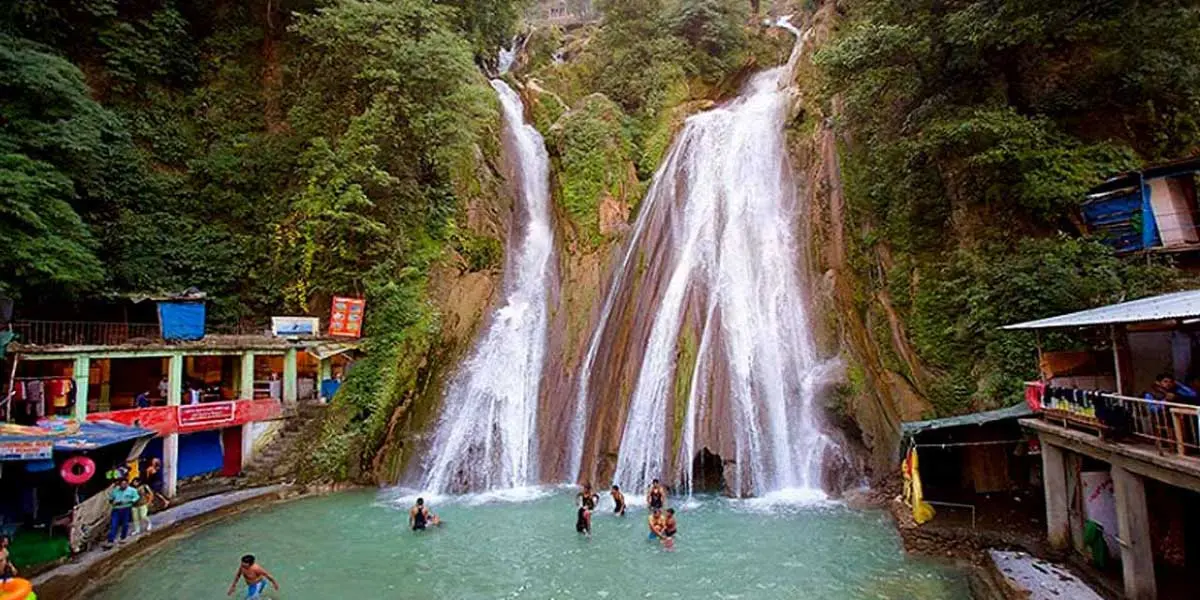
| Day 3 | Haridwar – Dehradun – Mussoorie – Kempty Falls – Barkot | ~220 km, 7–8 hrs | Mussoorie ridge road, Kempty Falls |
| Day 4 | Barkot – Janki Chatti – Yamunotri – Barkot | ~110 km drive + 12 km walk | Six-km walk to Yamunotri, Surya Kund hot spring |
| Day 5 | Barkot – Uttarkashi – Harsil | ~165 km, 5–6 hrs | Uttarkashi, Harsil valley, Bhagirathi riverside |
| Day 6 | Harsil – Gangotri – Uttarkashi | 25 km up, ~100 km down | Gangotri temple and ghat, Bhagirathi |
| Day 7 | Uttarkashi – Tehri – Devprayag – Srinagar – Rudraprayag – Guptkashi | ~220–250 km, 8–9 hrs | Tehri Lake, Devprayag, Rudraprayag |
| Day 8 | Guptkashi – Sonprayag – Gaurikund – Kedarnath | 30 km drive, 5 km shuttle, 16–17 km on foot | Trek up the Mandakini gorge to 3,583 m |
| Day 9 | Kedarnath – Gaurikund – Sonprayag – Ukhimath | 16–17 km walk down, ~45 km drive | Descent, Ukhimath |
| Day 10 | Ukhimath – Ransi – Gaundar – Nanu Chatti | ~20–25 km drive, 10 km on foot, 6 hrs | Start of the Madhyamaheshwar trek |
| Day 11 | Nanu Chatti – Madhyamaheshwar | 6 km, 4–5 hrs | Madhyamaheshwar temple at 3,490 m |
| Day 12 | Madhyamaheshwar – Budha Madhyamaheshwar – Nanu Chatti | 2 km side walk, then 6 km down | Glacial ponds, Chaukhamba reflection |
| Day 13 | Nanu Chatti – Ransi – Chopta | 10 km on foot, ~30–35 km drive | Return to road, drive to Chopta |
| Day 14 | Chopta – Tungnath – Chandrashila – Chopta | 3.5 km up, +1.5 km to the summit | Tungnath at 3,680 m, Chandrashila summit |
| Day 15 | Chopta – Mandal – Anusuya Devi – Panch Ganga | Short drive, ~11 km on foot, 7–8 hrs | Anusuya Devi forest, Panch Ganga camp |
| Day 16 | Panch Ganga – Rudranath – Panar Bugyal | ~11 km, 6–7 hrs | Rudranath temple at 3,559 m, Panar Bugyal meadow |
| Day 17 | Panar Bugyal – Lyuti Bugyal – Sagar – Gopeshwar | ~12 km, 5–6 hrs, then a short drive | Lyuti and Pung meadows, Sagar village |
| Day 18 | Gopeshwar – Helang – Urgam – Kalpeshwar – Joshimath | ~65 km drive, short walk | Kalpeshwar, Urgam valley, Dhyan Badri |
| Day 19 | Joshimath – Badrinath | ~45–47 km, 2–3 hrs | Badrinath, Tapt Kund, evening aarti |
| Day 20 | Badrinath – Mana – (Vasudhara Falls, optional) – Badrinath | 4 km each way; Vasudhara 6 km uphill | Vyas Gufa, Bhim Pul, Saraswati origin |
| Day 21 | Badrinath – Karnaprayag – Adi Badri – Gwaldam – Kausani | ~230 km, 9–10 hrs | Karnaprayag, Adi Badri, Gwaldam |
| Day 22 | Kausani – Baijnath – Anashakti Ashram – Tea Estate | Local drives | Baijnath temples, Anashakti Ashram, tea estate |
| Day 23 | Kausani – Nainital | ~120 km, 4 hrs | Naini Lake boat ride |
| Day 24 | Nainital – Kaladhungi – Ramnagar | ~70–75 km, 2.5 hrs | Kaladhungi, first Corbett safari |
| Day 25 | Corbett – Safari zones – Corbett | Local | Morning and afternoon safari |
| Day 26 | Corbett – Safari zones – Corbett | Local | Two more safaris |
| Day 27 | Corbett – Delhi | ~245 km, 5–6 hrs | Return to Delhi |
About
This is the ultimate Uttarakhand tour package for travellers with three to four weeks: the four Dhams, all five Kedars on foot, Badrinath, the Kumaon hills and Corbett National Park in one journey. It is a pilgrimage peaks wildlife tour India can rarely offer in one piece, and the Uttarakhand grand circuit international travellers ask about most often. It runs 26 nights from Delhi and back, and BizareXpedition runs every leg from its own base in Haridwar.
The route moves in one direction. It starts at the Yamuna, crosses to the Bhagirathi, and turns south to Kedarnath. From there it goes on foot through Madhyamaheshwar, Tungnath, Rudranath and Kalpeshwar and ends in Badrinath. It then crosses to Kumaon for Kausani and Nainital, and finishes with three nights in Corbett. This is a private Uttarakhand tour with a vehicle, a driver and an English-speaking Himalayan guide for the whole 27 days.
The shrines sit above 3,000 m and the treks run 10 to 20 km. A tailor-made Uttarakhand holiday of this size needs time, so rest days, short driving days and a slow rise in altitude are part of the plan. The best window is mid-May to mid-June, when all five Kedars are open and Corbett's Dhikala zone is still running. This Himalayan pilgrimage tour is priced in three tiers, Premium, Luxury and Ultra-Luxury, and every departure is built to your dates.
Note on temple access, 2026. On 10 March 2026 the Badri-Kedar Temple Committee (BKTC) resolved that non-Hindus may not enter the premises of 47 temples it manages. Reports name Badrinath, Kedarnath, Tungnath, Rudranath, Kalpeshwar and Madhyamaheshwar. The committee says Sikhs, Buddhists and Jains are exempt. The state government has not issued a statewide rule, and the sources we read do not explain how the resolution is checked at the gate for foreign visitors.
What this means for the trip. Every walk, valley, summit and village in this plan is open to everyone. Only the temple premises are affected, and only for guests the committee's rule covers. On each shrine day the guide has a matching plan for guests who cannot enter, such as Chandrashila above Tungnath and Mana village near Badrinath. BizareXpedition confirms the current rule for each shrine before departure and tells you plainly what to expect.
WHY BOOK THIS WITH BIZAREXPEDITION
A Char Dham Panch Kedar tour needs a team that lives at the start of it.
Haridwar is our home base. BizareXpedition™ Services Pvt. Ltd. (CIN U63090UR2016PTC007433) is headquartered in Haridwar, where your Yatra registration is completed in person on Day 2.
We handle the permits, not you. A Char Dham tour for international travellers involves paperwork on every leg. Char Dham registration and QR codes, the Rudranath forest registration (entry closes at 2 pm), helicopter bookings on the IRCTC portal, and any Mana permit are filed by our team.
The treks come with a full crew. Madhyamaheshwar (Days 10 to 13) and Rudranath (Days 15 to 17) run with porters, a cook, camp tents and a toilet tent, so you carry only a day pack.
Three tiers, one route. The Uttarakhand luxury tour version, and the Premium and Ultra-Luxury ones, share the same route and the same guide standard. The tiers change the rooms, the vehicle and the trek support.
You are told plainly what is uncertain. The temple-access rule, the Mana permit and the season's road conditions are all stated in the days they affect, with what we are doing about each.
ACCOMMODATION CATEGORIES
| Destination | Nights | Premium | Luxury | Ultra-Luxury |
|---|---|---|---|---|
|
Delhi |
1 |
Radisson Blu Plaza Delhi Airport |
ITC Maurya |
The Oberoi, New Delhi |
|
Haridwar |
1 |
Radisson Hotel Haridwar |
Haveli Hari Ganga (IHCL SeleQtions) |
Haveli Hari Ganga, Ganga-facing suite |
|
Barkot |
2 |
Yamuna Valley Resort |
Yamunotri River Bank Resort |
Yamunotri River Bank Resort, best riverside cottage |
|
Harsil |
1 |
Harsil Retreat |
The Harsil Village Resort |
SnowPOD Harsil |
|
Uttarkashi |
1 |
Riverside hotel (named at booking) |
Riverside resort (named at booking) |
Best available resort suite (named at booking) |
|
Guptkashi |
1 |
Kedar Camp Resorts |
Kedar Valley Resorts |
Kedar Valley Resorts, best suite |
|
Kedarnath |
1 |
Private tent, shared facilities |
Deluxe private tent |
Premium private tent with attendant |
|
Ukhimath |
1 |
Comfortable hotel (named at booking) |
Best available hotel (named at booking) |
Best available hotel, top room (named at booking) |
|
Nanu Chatti |
2 |
Village homestay |
Village homestay, best room |
Village homestay, exclusive use |
|
Madhyamaheshwar |
1 |
Temple guesthouse room |
Guesthouse room plus camp tent |
Private camp tent with crew |
|
Chopta |
2 |
Comfortable lodge |
Deluxe camp |
Premium camp with attendant |
|
Panch Ganga and Panar |
1 + 1 |
Camp tents, twin sharing |
Camp tents, larger, with cot |
Camp tents with cot, dining tent |
|
Gopeshwar |
1 |
Comfortable hotel (named at booking) |
Best available hotel (named at booking) |
Best available hotel, top room (named at booking) |
|
Joshimath |
1 |
Comfortable hotel (named at booking) |
Best available hotel (named at booking) |
Best available hotel, top room (named at booking) |
|
Badrinath |
2 |
Hotel Narayan Palace |
Best available hotel (named at booking) |
Best available hotel, top room (named at booking) |
|
Kausani |
2 |
The Heritage Resort |
The Buransh Retreat |
The Buransh Retreat, best room |
|
Nainital |
1 |
Lake-view heritage hotel (named at booking) |
The Naini Retreat |
The Manu Maharani, top-grade room |
|
Corbett |
3 |
Jim's Jungle Retreat |
Aahana The Corbett Wilderness |
Taj Corbett Resort & Spa |
Ultimate Uttarakhand Tour Accommodation Categories
Note on hotels. Garhwal above 2,000 m has very few luxury properties. Where a tier has no separate property, it differs by room grade, food and trek support. Property names are proposals and are confirmed at booking. Rates in this document are modelled, not contract rates.
What's Actually Inside This 27-Day Circuit?
Very few operators combine all of this into a single, continuously guided journey — most Char Dham packages stop at the four main shrines, and most Panch Kedar treks are sold as their own separate trip. This itinerary does both, in one continuous route, then adds the Kumaon hills and a proper wildlife stay at the end rather than treating them as an afterthought.
On paper: a full Char Dham circuit with all five Kedars on foot takes about 19 days including Delhi and Haridwar. This tour runs 27, using the extra week to add Kausani, Nainital, and three nights of Corbett tiger safaris on top, with rest days and short driving days built in so 26 nights of near-continuous altitude travel stays manageable rather than exhausting.
3-TIER PRICING SUMMARY (indicative)
| Tier | Per couple | Per person (twin sharing) |
|---|---|---|
|
Premium |
Rs.605,432 – Rs.653,867 |
Rs.302,716 – Rs.326,933 |
|
Luxury |
Rs.858,305 – Rs.926,969 |
Rs.429,152 – Rs.463,484 |
|
Ultra-Luxury |
Rs.1,237,369 – Rs.1,336,359 |
Rs.618,684 – Rs.668,179 |
Ultimate Uttarakhand Tour 3-Tier Pricing Summary
Prices are indicative and modelled. The upper figure covers date and season variation. The final quote depends on dates, hotels confirmed and any upgrade you choose.
Why This Grand Circuit Works Differently
Run from Haridwar itself. BizareXpedition is headquartered in Haridwar, where your mandatory Yatra registration is completed in person, face-to-face, on Day 2 — not couriered or handled remotely.
Every permit is handled for you. Char Dham registration and QR codes, the Rudranath forest-department registration (where trail entry closes at 2 pm sharp), helicopter bookings through the IRCTC HeliYatra portal, and any Mana Inner Line Permit are all filed by BizareXpedition's team, not left to you to navigate from abroad.
Full trek crews on the two hardest stretches. The Madhyamaheshwar leg and the Rudranath leg both run with porters, a cook, camp tents, and a toilet tent — you carry only a day pack.
One route, three tiers. Premium, Luxury, and Ultra-Luxury follow the identical itinerary and guide standard; only the rooms, vehicle, and trek support level change.
Straight answers about what's uncertain. Current temple-access rules, permit requirements, and road conditions are stated plainly for the specific days they affect, with what BizareXpedition is doing about each — see the dedicated section below.
SEASON ADJUSTMENTS
| Season | Dates | Conditions |
|---|---|---|
|
Peak |
Mid-May to mid-June (best window: about 11 to 23 May starts, using 2026 opening dates) |
All five Kedars open and Corbett's Dhikala zone runs to 15 June. Shrine crowds are highest. |
|
High |
Mid-September to mid-October |
Post-monsoon clarity. Shrines open until the November closing. Corbett's core zones open from mid-October, so wildlife days lean on Jhirna, Dhela and Garjiya. |
|
Shoulder |
Late April to early May |
Yamunotri, Gangotri, Kedarnath and Badrinath are open. Rudranath and Madhyamaheshwar open only in the third week of May, so the full Kedar circuit is not offered. |
|
Caution / Closure |
16 to 30 June |
Dhikala and Durga Devi are closed. Bijrani closes on 30 June. Pre-monsoon showers begin on the hill roads. |
|
Monsoon / Winter |
July to early September, and November to April |
Not offered. Landslide risk is high in July and August, and the shrines close for winter. |
Ultimate Uttarakhand Tour Season Adjustments
Temple opening dates change every year and are announced in spring. The dates above are the 2026 dates.
The Four Dhams, the Five Kedars & Beyond
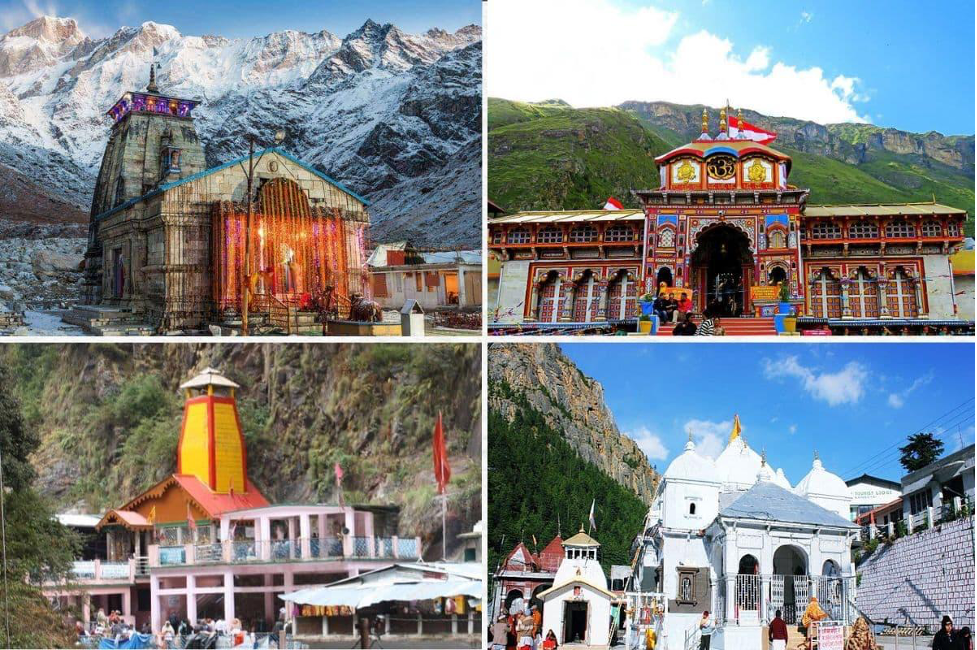
The Char Dham. Yamunotri (3,293 m), where a six-kilometre walk ends at a hot spring hot enough to cook rice; Gangotri (about 3,100 m), marking where the Bhagirathi begins its journey as the Ganga; Kedarnath (3,583 m), a 16–17 km climb beside the Mandakini to the shrine that survived the 2013 flash flood; and Badrinath (about 3,300 m) on the Alaknanda, below the 6,596 m Neelkanth peak.
The Panch Kedar. Legend holds that Shiva, fleeing in the form of a bull, sank into the ground and rose again in five places: Kedarnath (the hump), Madhyamaheshwar (the navel and stomach, reached via a village homestay trek), Tungnath (the arms, the highest Shiva temple in the world, with the 4,000 m Chandrashila summit just above it), Rudranath (the face, the hardest and highest of the five treks), and Kalpeshwar (the hair, the only one of the five open to pilgrims all year).
Beyond the pilgrimage. Harsil, where a 19th-century British deserter turned apple-growing local legend still shapes the valley's economy; Mana, India's last village before the border, with its rock bridge over the Saraswati gorge; Kausani, where Gandhi wrote his commentary on the Bhagavad Gita facing Trisul and Nanda Devi; Nainital's eye-shaped lake; and three full nights of tiger safaris in Corbett, India's first national park, home to an estimated 260 tigers as of the 2022 census.0
PRACTICAL NOTES
Registration. Char Dham Yatra registration is free and compulsory for every pilgrim. The QR code is valid for the dates and shrines you list and is scanned at checkpoints. BizareXpedition completes it with you in Haridwar.
Altitude. Kedarnath is at 3,583 m and Badrinath at about 3,300 m. The Rudranath trail passes close to 4,000 m. The plan spends its first nights below 3,000 m and rises slowly. Tell the guide about headache, nausea or breathlessness the same day.
Fitness and health. Train for 4 to 6 weeks before departure with hill walking and stair climbing. Anyone over 50, or with heart, lung or blood-pressure conditions, should see a doctor first.
Temple access. See the note at the start of this document. The rule and its enforcement can change between now and departure, and we confirm it for each shrine before you travel.
Dress code. Cover shoulders and knees at temples and remove shoes at the entrance. For treks: layers, a windproof shell, warm hat and gloves, trekking boots and poles.
Drinking water. Carry a reusable bottle and purification tablets. The guide provides safe water at hotels and camps.
Tipping. Tips for the guide, driver and trek crew are given at the end of each section. The guide advises on a suitable amount.
Photography. Photography is not permitted inside many temples. The guide tells you where it is allowed. Drones need permission and are not carried.
Connectivity. Mobile networks are patchy above Guptkashi and absent on the Madhyamaheshwar and Rudranath treks. BizareXpedition keeps a fixed daily check-in time with the guide.
Road safety. We never drive after dark. Roads can close for hours after rain, and a delay of a day is possible.
Cash. ATMs are rare above Guptkashi. Carry small notes for tea houses, porters and offerings.
Booking Summary
Dept. City :
--
Dept. Date :
--
Traveller :
Adults: 2, Child: 0, Infant: 0
Rooms :
--
Basic Price :
--
Total Cost
--
GST
--
Grand Total
--
Itinerary (Day Wise)
This is a private, 27-day, 26-night tour from Delhi that combines everything Uttarakhand's Himalayas are known for: the four Char Dham shrines (Yamunotri, Gangotri, Kedarnath, Badrinath), all five Panch Kedar temples reached on foot (Kedarnath, Madhyamaheshwar, Tungnath, Rudranath, Kalpeshwar), the Kumaon hill stations of Kausani and Nainital, and three nights of tiger safaris in Corbett — India's first national park. One private vehicle, driver, and English-speaking Himalayan guide travel with you the entire way, and the trip runs at three tiers: Premium, Luxury, and Ultra-Luxury.
Day 1
ARRIVE DELHI | Rest and Reset
Route: Airport – Hotel, Delhi
Your trip lead meets you at arrivals and takes you to the hotel. There is no sightseeing today. The next 26 days climb from the plains to 3,600 m and back, so today is for sleep.
A short briefing follows over breakfast tomorrow: your registration QR codes, the trek kit list, and a check of your medical questions with the guide.
Food
Hotel dinner. Ask for a light, early meal after a long flight.
Day 2
DELHI TO HARIDWAR | Where the Ganga Leaves the Mountains
Route: Delhi – Haridwar
Haridwar is where the Ganga comes out of the Himalaya and enters the plains. That is why the town became the gateway for every yatra that heads north. It is also where the BizareXpedition office sits, so your registration is finished in person here.
Yatra registration is free and compulsory for every pilgrim. A passport is listed as accepted ID; we confirm this at booking. Biometric counters are open in Haridwar and Rishikesh from mid-April, and the QR code you receive is scanned at checkpoints, trek starts and temple entrances all the way to Badrinath.
In the evening you watch the Ganga Aarti from the ghats: brass lamps, a bell, and hundreds of leaf boats going down the river at dusk.
Experience of the Day
– Complete your Yatra registration with the BizareXpedition team.
– Watch the Ganga Aarti at dusk.
Food
Recommended: Chotiwala, the town's best-known family restaurant. Must-try: kachori with aloo sabzi at breakfast, and hot puris with potato curry.
Shopping
Bara Bazaar for brass lamps, rudraksha beads and Ayurvedic oils. The guide points you to fixed-price shops.
Activities to Do
Ganga Aarti (evening)
Ghat walk at sunrise or sunset
Registration formalities and kit check
Day 3
HARIDWAR TO BARKOT | Through the Doon and Mussoorie
Route: Haridwar – Dehradun – Mussoorie – Kempty Falls – Barkot
The road leaves the plains at Dehradun, climbs the Mussoorie ridge, and drops into the Yamuna valley. Kempty Falls is a good break on the way. From here the road follows the Yamuna to Barkot, the base town for Yamunotri, about 55 km before the trailhead at Janki Chatti.
Barkot is a quiet river town. Dinner is early because Day 4 starts at first light.
Experience of the Day
– Ridge views from the Mussoorie road.
– Kempty Falls stop.
Food
Must-try in Garhwal: kafuli (a green leaf curry), phanu (lentil), and mandua (finger-millet) roti.
Day 4
YAMUNOTRI | The River's Source
Route: Barkot – Janki Chatti – Yamunotri – Barkot
Yamunotri sits at 3,293 m. The river itself begins higher, at the Yamunotri Glacier near Bandarpunch, and cannot be reached on foot in a day. The shrine marks the point where pilgrims can stand beside it.
Beside the temple is Surya Kund, a hot spring at about 87 degrees C. It is hot enough to cook rice and potatoes. Pilgrims tie them in cloth, lower them into the spring, and carry the cooked grain home as prasad. Before the temple entrance is the Divya Shila, a rock slab that pilgrims touch and worship before darshan.
The walk is 6 km one way and takes 5 to 7 hours with darshan. The path is concrete in places and slippery with algae, so trekking boots with a deep tread matter more than fitness.
Experience of the Day
– Walk the last 6 km to the source shrine.
– See rice cooked in a Himalayan hot spring.
Food
Packed breakfast and a hot lunch at Janki Chatti. Carry water and salted snacks.
Optional Nearby Excursions
Kharsali village stay on request, 1 km from Janki Chatti.
Day 5
BARKOT TO HARSIL | Apple Country
Route: Barkot – Uttarkashi – Harsil
Harsil sits at 2,745 m on the Bhagirathi. In 1842 a 25-year-old deserter from the East India Company, Frederick Wilson, settled here. He logged deodar for the railways, ended up known as the Raja of Harsil, and even minted his own coins. Wilson also brought in apple cultivation, and the orchards are still the valley's main crop. Kipling's story The Man Who Would Be King is said to draw on his life.
This is the first night above 2,700 m. The rest of the day is a walk along the river and nothing else.
Note on the 2025 flood. A flash flood in early August 2025 damaged the highway between Harsil and Dharali. Vehicle movement to Gangotri resumed on 30 August 2025 and the yatra restarted on 10 September 2025. The 2026 season ran without disruption. Our ground team checks the road the week before each departure.
Experience of the Day
– Walk the Bhagirathi bank in the evening light.
– See the orchards Wilson planted.
Food
Must-try: rajma with rice and hot chai at a roadside stall.
Activities to Do
Riverside walk
Village walk to Mukhba (short drive)
Day 6
GANGOTRI | Where the Bhagirathi Begins
Route: Harsil – Gangotri – Uttarkashi
Gangotri stands at about 3,100 m. The temple was built by the Nepalese general Amar Singh Thapa and restored in the 19th century. Tradition places the rock where King Bhagiratha performed austerities to ask Shiva to bring the Ganga down to earth.
The temple closes on Diwali and reopens on Akshaya Tritiya. In the months between, snow shuts the town and the idol of the goddess is kept at Mukhba village near Harsil. Each spring it goes back up in a procession.
The trek onward to Gaumukh, the glacier snout, needs a separate forest permit and several days. It is not part of the base plan and can be added.
Experience of the Day
– Stand at the head of the Bhagirathi.
– Watch the morning aarti at the ghat.
Food
Simple vegetarian meals only in Gangotri town. Carry snacks.
Optional Nearby Excursions
Gaumukh glacier trek as a separate extension.
Day 7
UTTARKASHI TO GUPTKASHI | The Long Crossing
Route: Uttarkashi – Tehri – Devprayag – Srinagar – Rudraprayag – Guptkashi
The road crosses from the Bhagirathi valley to the Mandakini valley. Devprayag is the halfway landmark: the Bhagirathi meets the Alaknanda here, and the river carries the name Ganga from this point. Rudraprayag, about 44 km before Guptkashi, is where the Mandakini joins the Alaknanda.
Guptkashi sits at the foot of the Kedarnath valley. Tonight is for an early dinner and an early night.
Experience of the Day
– Stand at Devprayag, where the Ganga is formed.
– Cross the Tehri Lake reservoir.
Food
Lunch at a highway dhaba-style restaurant near Srinagar. Ask the guide for the cleanest one that day.
Day 8
KEDARNATH | The Walk Up
Route: Guptkashi – Sonprayag – Gaurikund – Kedarnath
Kedarnath stands at 3,583 m beside the Mandakini. The path starts at Gaurikund and climbs 16 to 17 km. Your QR code is scanned at the start of the trek and again at the temple.
On 16–17 June 2013, floods tore through the valley. A huge rock lodged behind the temple and split the water around it, and the temple survived. The rock is now worshipped as the Bhim Shila. Much of the settlement below it was destroyed and rebuilt.
Helicopter flights from Sirsi, Phata and Guptkashi can replace the walk. They are booked through the IRCTC HeliYatra portal, need a valid Yatra registration number, and carry about 2 kg of luggage. We quote them as an upgrade.
Experience of the Day
– Walk up the Mandakini gorge.
– Sleep at 3,583 m beneath the peaks.
Food
Simple vegetarian meals at the trail's tea houses and at the camp. Must-try: hot ginger tea on the way up.
Optional Nearby Excursions
Helicopter round trip from Sirsi (7 min), Phata (9 min) or Guptkashi (10–15 min).
Day 9
KEDARNATH TO UKHIMATH | Down the Mandakini
Route: Kedarnath – Gaurikund – Sonprayag – Ukhimath
The morning is free at the camp before the walk down. The descent takes the same path in reverse, so knees, not lungs, are the concern. Poles help.
Ukhimath is where the Kedarnath idol is carried down each winter. From November to April it is worshipped here while snow closes the temple above.
Experience of the Day
– Walk down with the Mandakini beside you.
– Reach Ukhimath, Kedarnath's winter home.
Food
Hotel dinner. Ask for the simplest food tonight.
Day 10
UKHIMATH TO NANU CHATTI | Into the Madhyamaheshwar Valley
Route: Ukhimath – Ransi – Gaundar – Nanu Chatti
The Madhyamaheshwar trail starts at Ransi. It runs through Gaundar and up the valley through oak and rhododendron forest. The path is steady, not steep, and the village stops give you places to rest.
Nanu Chatti is a small settlement with homestays. Dinner is dal, rice, and greens cooked by the family.
Experience of the Day
– Walk through rhododendron forest.
– Stay in a village homestay.
Food
Home-cooked meals at the homestay. Must-try: mandua roti with ghee.
Day 11
NANU TO MADHYAMAHESHWAR | The Navel of Shiva
Route: Nanu Chatti – Madhyamaheshwar
Madhyamaheshwar stands at 3,490 m. According to the Panch Kedar legend, the Pandavas chased Shiva after the Kurukshetra war. He took the form of a bull and sank into the ground. He rose again in five places in Garhwal. Kedarnath has the hump, Tungnath the arms, Rudranath the face, Madhyamaheshwar the navel and stomach, and Kalpeshwar the hair.
The temple is small, dark stone, set in a bowl of meadow with the Chaukhamba peaks behind it. It is the quietest of the five.
Experience of the Day
– Reach a shrine that only walkers reach.
– Watch the Chaukhamba peaks change colour at dusk.
Food
Simple vegetarian meals at the guesthouse.
Day 12
BUDHA MADHYAMAHESHWAR | Mirror of Chaukhamba
Route: Madhyamaheshwar – Budha Madhyamaheshwar – Nanu Chatti
A 2 km side walk leads to Budha Madhyamaheshwar. The small glacial ponds there hold a clear reflection of the Chaukhamba group. Go early for the clearest light.
After the morning, the walk goes down through the same forest to Nanu. The afternoon is left open to rest.
Experience of the Day
– See Chaukhamba reflected in a glacial pond.
Food
Packed breakfast at the ridge, then lunch at the temple.
Day 13
NANU TO CHOPTA | Down and Across
Route: Nanu Chatti – Ransi – Chopta
The last walk of the Madhyamaheshwar trek is a long downhill. A vehicle waits at Ransi for the drive to Chopta.
Chopta is a high meadow at about 2,900 m, ringed with rhododendron and deodar forest. It is often called the Mini Switzerland of India. It is also the base for Tungnath.
Experience of the Day
– Reach the meadows of Chopta at dusk.
Food
Hot dinner at camp or lodge. Must-try: buransh (rhododendron) squash.
Day 14
TUNGNATH AND CHANDRASHILA | The Highest Kedar
Route: Chopta – Tungnath – Chandrashila – Chopta
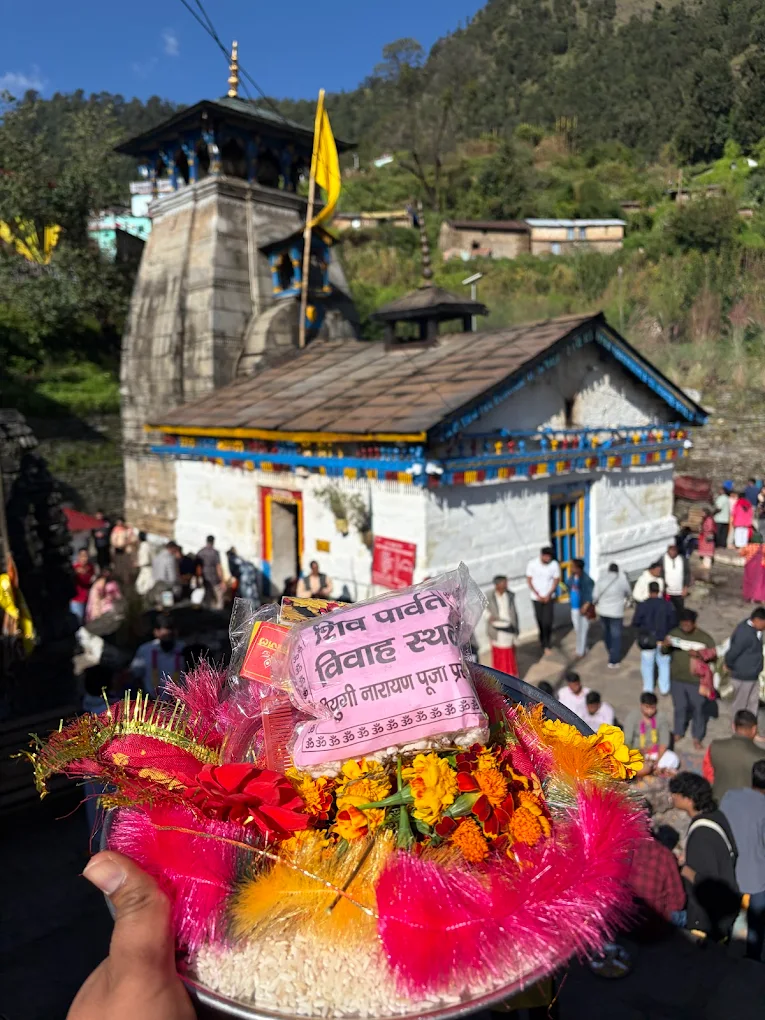
Tungnath is at 3,680 m and is usually described as the highest Shiva temple in the world. The legend says Shiva's arms appeared here. In winter, when the snow closes the shrine, worship moves down to Makkumath.
The path is lined with red rhododendron in May and June. Chandrashila, another 1.5 km up, is a 4,000 m summit with a full view of the Garhwal peaks. It is a plain walk and open to everyone.
Experience of the Day
– Climb to the highest shrine.
– Stand on Chandrashila with the whole range in view.
Food
Hot lunch at a Tungnath tea house. Must-try: hot chai and maggi at the top.
Day 15
CHOPTA TO PANCH GANGA | Onto the Rudranath Trail
Route: Chopta – Mandal – Anusuya Devi – Panch Ganga
The Rudranath trail goes from Mandal through Anusuya Devi and climbs to high meadows. It is the hardest stretch of the whole tour: long days, steep sections, and a high point close to 4,000 m at Pitradhar.
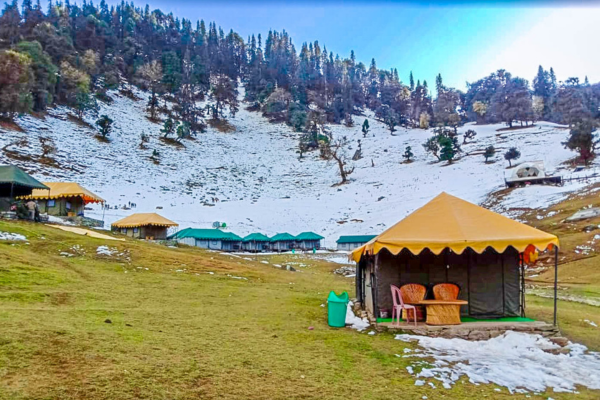
Camp is set at Panch Ganga with tents, a cook and a toilet tent. Dinner is early. Nights are cold.
Experience of the Day
– Walk through Anusuya Devi forest.
– Camp above the tree line.
Food
Meals cooked by the camp crew. Must-try: hot soup and khichdi at camp.
Day 16
RUDRANATH | The Face of Shiva
Route: Panch Ganga – Rudranath – Panar Bugyal
Rudranath is at 3,559 m. According to the legend, the face of Shiva rose here, which is why the deity is worshipped as Nilakantha. The temple is a small stone shrine in a cave-like alcove.
Panar Bugyal is the meadow above the treeline where the day ends. In May and June it is thick with wildflowers, with a few patches of leftover snow.
Experience of the Day
– Reach a shrine most pilgrims never see.
– Camp on a flower meadow.
Food
Meals cooked at camp.
Day 17
PANAR TO SAGAR | Meadow Descent
Route: Panar Bugyal – Lyuti Bugyal – Sagar – Gopeshwar
The trail drops from Panar through Lyuti and Pung Bugyal to the village of Sagar. The path goes from open meadow into oak and rhododendron forest, and the air thickens with each hour.
Gopeshwar is a small town with a proper hot shower. Tonight is for rest.
Experience of the Day
– Come down through three meadows to a village.
– First hot shower in three days.
Food
Hot dinner at the hotel.
Day 18
KALPESHWAR | The Kedar That Never Closes
Route: Gopeshwar – Helang – Urgam – Kalpeshwar – Joshimath
Kalpeshwar stands at about 2,200 m in the Urgam valley. It is the only one of the five Kedars open to pilgrims all year. Devotees worship Shiva's hair here.
The walk from Urgam is about 200 metres. It goes through potato fields and apple orchards, then through a short cave passage across the Kalpganga. Nearby is Dhyan Badri, a Vishnu shrine in the same valley, with views of the peaks.
Experience of the Day
– Complete the fifth Kedar.
– Walk through a cave on a river.
Food
Lunch in Helang. Must-try: Garhwali kafuli and local red rice.
Day 19
JOSHIMATH TO BADRINATH | The Head of the Alaknanda
Route: Joshimath – Badrinath
Badrinath is at about 3,300 m on the banks of the Alaknanda, below the Neelkanth peak (6,596 m). According to tradition, Adi Shankaracharya found a black stone image in the river and first placed it in a cave near the hot springs at Tapt Kund. The king of Garhwal moved it to the present temple in the sixteenth century.
The afternoon is left open. The altitude matters more than the schedule here.
Experience of the Day
– Reach the source of the Alaknanda's pilgrimage.
– See the Neelkanth peak at dawn.
Food
Must-try: the prasad of Badrinath, tulsi leaf and sugar-ball sweets sold at the temple.
Day 20
MANA AND VASUDHARA | India's Last Village
Route: Badrinath – Mana – (Vasudhara Falls, optional) – Badrinath
Mana sits 4 km beyond Badrinath and is the last village before the border. A heritage circuit of about 1 km takes 90 minutes to 2 hours. Vyas Gufa is where the sage Vyasa is said to have dictated the Mahabharata to Ganesha. Bhim Pul is a natural rock bridge over the Saraswati gorge, said to have been placed by Bhima. The Saraswati river appears at the surface here and disappears again downstream.
Vasudhara Falls is a 6 km uphill walk at about 3,700 m and takes 5 to 6 hours round trip. The falls drop about 120 m against the Chaukhamba massif.
Experience of the Day
– Walk through India's last village.
– Cross Bhim Pul.
Food
Tea at the last tea shop in India, at Mana.
Day 21
BADRINATH TO KAUSANI | Across to Kumaon
Route: Badrinath – Karnaprayag – Adi Badri – Gwaldam – Kausani
The road goes down the Alaknanda valley to Karnaprayag, then leaves the pilgrim road for Adi Badri, a cluster of small stone temples, and Gwaldam. The last stretch runs to Kausani on the Kumaon side of the divide.
This day changes the mountains under you from the Garhwal peaks to the Kumaon range, and ends with the first view of Trisul and Nanda Devi from Kausani.
Experience of the Day
– Watch the Garhwal peaks give way to the Kumaon range.
Food
Packed breakfast, lunch at Adi Badri or Gwaldam.
Day 22
KAUSANI | Gandhi's Switzerland of India
Route: Kausani – Baijnath – Anashakti Ashram – Tea Estate
Kausani is at 1,890 m and looks out over Trisul, Nanda Devi and Panchachuli across a wide panorama. Mahatma Gandhi stayed at the Anashakti Ashram and wrote his commentary on the Gita, the Anashakti Yoga, there. He compared the landscape to Switzerland.
Baijnath is a group of stone temples with 17 subsidiary shrines, built between the 9th and 12th centuries under the Katyuri rulers. The main temple holds a Shiva lingam. The grey-schist statue of Parvati wears a crown of 26 miniature figures.
The Kausani Tea Estate, about 5 km out on the Bageshwar road, was started in 2000–01 and produces around 70,000 kg a year. The poet Sumitranandan Pant was born in Kausani in 1900, and a small museum shows his letters and drafts.
Experience of the Day
– See the Himalayas at sunrise from a single window.
– Walk through a tea estate.
Food
Must-try: Kumaoni bhatt ki churkani (black soybean curry), aloo ke gutke, and a cup of Kausani tea.
Shopping
Kumaon shawls and Kausani tea from the estate shop.
Activities to Do
Baijnath temples
Anashakti Ashram
Tea estate visit
Sunrise viewpoint
Day 23
KAUSANI TO NAINITAL | The Eye Lake
Route: Kausani – Nainital
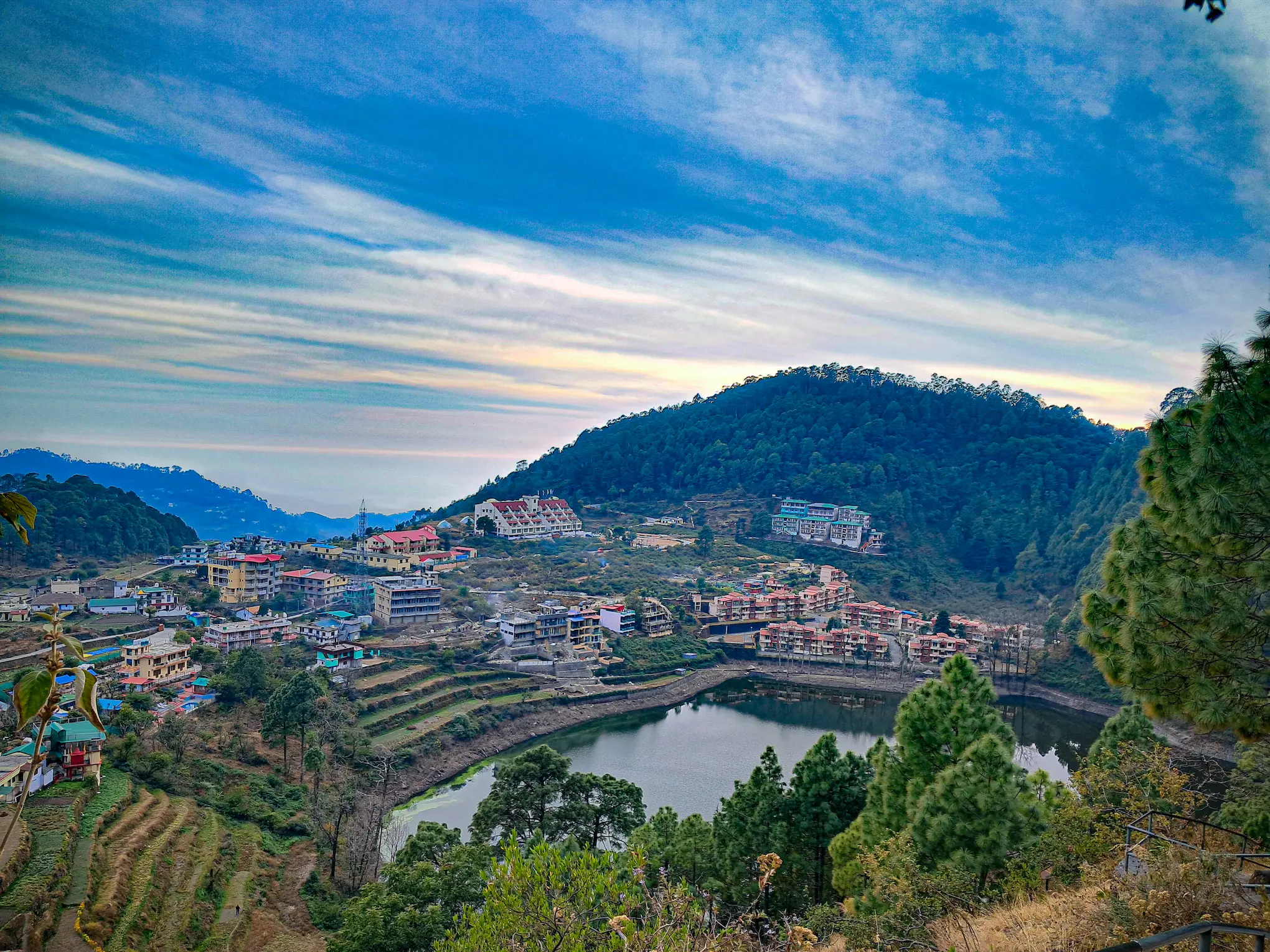
Nainital sits at 2,084 m around an eye-shaped lake, 1,433 m long and 463 m wide. Hindu tradition holds that the goddess Sati's eye fell here, and the Naina Devi temple stands on the north shore. The first European house, Pilgrim Lodge, was built in 1841 by the sugar merchant P. Barron.
The late afternoon is for a boat ride on the lake and a walk on the Mall.
Experience of the Day
– Row across a lake shaped like an eye.
Food
Recommended: Naini Lake-side cafes. Must-try: bal mithai and singori sweets from Kumaon.
Shopping
Candles, woollen goods and Kumaoni sweets on the Mall.
Activities to Do
Boat ride
Mall Road walk
Day 24
NAINITAL TO CORBETT | Jim Corbett's Country
Route: Nainital – Kaladhungi – Ramnagar
Kaladhungi is where Jim Corbett lived in winter, and his house is now a museum. From here the road runs to Ramnagar, the gateway to the reserve.
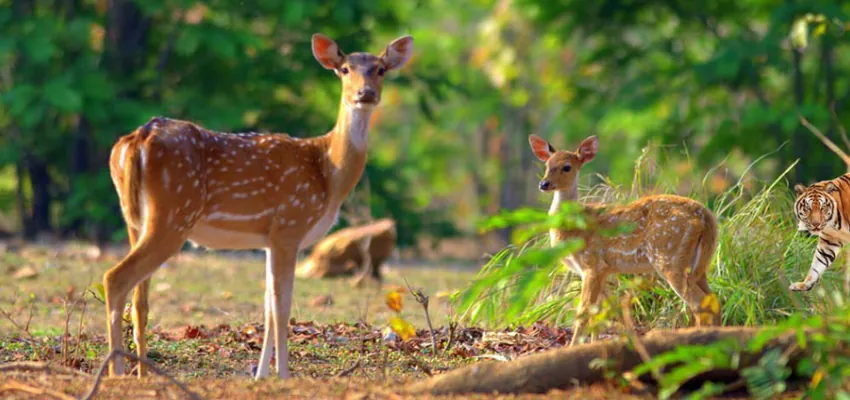
The reserve was founded in 1936 as Hailey National Park. It was renamed Ramganga in the 1950s and then Corbett National Park after the hunter turned conservationist. It is India's first national park, and Project Tiger began here in the 1970s. It covers about 1,288 km². The 2022 census counted 260 tigers. More than 586 species of birds have been recorded.
Experience of the Day
– Visit Jim Corbett's house.
– First safari in India's first national park.
Food
Hotel dinner.
Day 25
CORBETT SAFARIS | Two Drives
Route: Corbett – Safari zones – Corbett
Morning safaris last four to five hours. In May and June the heat reaches 30–40 degrees C, which pulls wildlife to water. That makes sightings easier to plan, not harder.
The Ramganga river runs through the reserve and holds gharial and mugger crocodile. Elephants number around 1,100.
Experience of the Day
– Look for tigers at waterholes.
– Watch for gharial along the Ramganga.
Food
Packed breakfast in the jeep. Lunch at the resort.
Activities to Do
Two jeep safaris with a naturalist
Day 26
CORBETT | Last Safari Day
Route: Corbett – Safari zones – Corbett
Two more safaris close the wildlife section. The naturalist can shift to a different zone or a bird-focused drive depending on what the earlier days showed.
The evening is free at the resort. Guests who want a final evening walk in the reserve buffer can ask the resort.
Experience of the Day
– Bird-focused drive with a naturalist.
Food
Farewell dinner at the resort.
Day 27
CORBETT TO DELHI | Departure
Route: Corbett – Delhi
The drive to Delhi is about 245 km and takes 5 to 6 hours. Book any onward flight for 8 pm or later.
Food
Lunch on the way.
Sightseeing
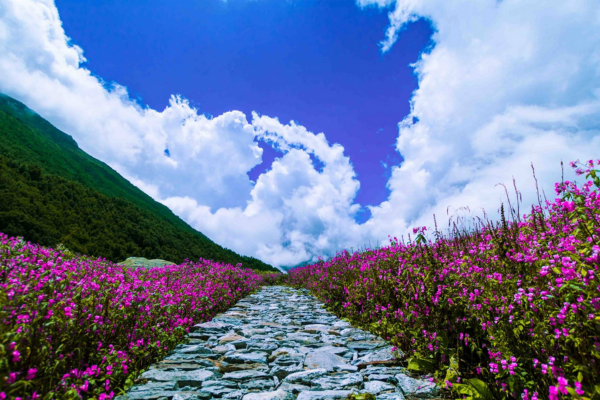
Tour Information
Your complete guide to a hassle-free and enjoyable trip.
Inclusion
Exclusion
Payment Terms
Important factors to consider before your trip!
Cancellation
Need To Know
Be Responsible Traveller
- Minimize Plastic Use : Bring a reusable water bottle, shopping bag, and utensils to reduce the need for single-use plastics. Many destinations have water refill stations and eco-friendly stores.
- Support Local and Sustainable Businesses : Eat at local restaurants, buy souvenirs from local artisans, and choose tour operators that prioritize sustainable practices and support the local community.
- Respect Wildlife and Natural Habitats : Avoid disturbing wildlife or their natural habitats. Stick to designated paths and observe animals from a distance without feeding or touching them.
- Dispose of Waste Properly : Follow local guidelines for recycling and waste disposal. If facilities aren't available, carry your waste with you until you can dispose of it responsibly.
- Educate Yourself and Others : Learn about the local environment, culture, and customs. Respect local practices and traditions, and share your knowledge about responsible travel with others.
- Choose Sustainable Activities : Engage in eco-friendly activities such as hiking, snorkeling, or visiting national parks. Avoid activities that exploit animals or damage the environment.
- Leave No Trace : Follow the principle of "Leave No Trace," which means leaving natural areas as you found them. Pack out all trash, avoid picking plants, and refrain from carving or writing on rocks or trees.
- Plant Trees Whenever Possible : Participate in local tree-planting initiatives or plant trees in your own community. Trees absorb carbon dioxide, provide oxygen, and help support biodiversity, making them vital for a healthy environment.
Connect
Share Itinerary
Email Itinerary
Frequently Asked Questions (FAQs) & People Also Ask — Ultimate Uttarakhand Pilgrimage Peaks Wildlife
We help you prepare for your trip and ensure an effortless and enjoyable travel experience.
Can non-Hindus visit Kedarnath and Badrinath?
Non-Hindus can visit the towns, valleys and trails, but the Badri-Kedar Temple Committee resolved in March 2026 to bar them from the temple premises. The rule names Badrinath, Kedarnath and several other shrines and exempts Sikhs, Buddhists and Jains. The state has not issued a statewide rule, and enforcement details were not clear in any source we read. We confirm the position before you travel.
How many days do you need for Char Dham and Panch Kedar?
The four Dhams and all five Kedars on foot need about 19 days including Delhi and Haridwar, and this 27-day Uttarakhand itinerary adds Kumaon and Corbett on top. A road-only Char Dham takes 10 to 12 days, and the Panch Kedar circuit alone takes 12 to 14. The combined route has rest days and short driving days in it so the altitude stays manageable.
Is Char Dham registration mandatory for foreign tourists?
Yes, the state's Yatra registration is required for every pilgrim, including foreign visitors, and it is free. A passport is listed as accepted ID. The QR code is scanned at checkpoints, trek starts and temple entrances. BizareXpedition completes the registration with you in Haridwar on Day 2 and confirms the document rules at booking.
Is the Kedarnath trek hard for first-timers?
The Kedarnath walk is 16 to 17 km uphill from Gaurikund and takes 6 to 8 hours, which makes it a moderate trek at altitude, not a technical one. Ponies and palanquins are available, and a helicopter can replace the walk. The plan reaches Kedarnath only after the Yamunotri, Harsil and Gangotri days between 1,300 and 3,300 m, so the body has begun to adjust.
Which is the best time to do Panch Kedar?
Mid-May to mid-June is the best time to do the whole Panch Kedar, because Rudranath (18 May in 2026) and Madhyamaheshwar (21 May in 2026) open late and all five are then accessible. Mid-September to mid-October is the second window. July and August bring landslides and slippery trails.
Do I need a guide for the Rudranath trek?
Yes, a guide is strongly advised for Rudranath. The trail is 19 to 22 km with a high point near 4,000 m, and the section across the upper meadows is hard to follow in mist or snow. Forest registration is required, and trail entry closes at 2 pm. BizareXpedition files the registration and provides the guide, porters and camp crew.
Is Uttarakhand safe for tourists?
Uttarakhand is safe for tourists, and the main risks are landslides, weather and altitude, not crime. Roads can close for hours after rain, and we never drive after dark. The guide monitors the forecast and route daily, and the second days at Badrinath and Kausani can absorb one lost day.
Do I need a permit for Mana village and Vasudhara Falls?
Foreign nationals may need an Inner Line Permit from the District Magistrate for Mana and Vasudhara, but sources disagree on the exact rule. Indian citizens need no permit. BizareXpedition confirms the current position with the district administration before departure and files any permit required. Access beyond Vasudhara is closed.
Can I see tigers at Corbett in May and June?
Yes, May and June are good months for tiger sightings in Corbett. The heat, 30 to 40 degrees C, pulls wildlife to water. Dhikala and Durga Devi close on 15 June, Bijrani on 30 June, and Jhirna, Dhela and Garjiya stay open all year. Sightings are never guaranteed. The plan has five safaris across 3 nights.
Will I get altitude sickness on Char Dham?
Altitude sickness is possible above 3,000 m, and every shrine on this route is at or above that height. The plan rises slowly, with nights at 2,745 m in Harsil and rest stops between the big climbs. Watch for headache, nausea and breathlessness, and tell your guide the same day. Allow 7 to 10 days of acclimatisation through the plan.
How much does a private Uttarakhand tour of this length cost?
A private 27-day Uttarakhand tour costs about Rs.605,432 to Rs.653,867 per couple in Premium, Rs.858,305 to Rs.926,969 in Luxury, and Rs.1,237,369 to Rs.1,336,359 in Ultra-Luxury. These are modelled figures and depend on dates, hotels confirmed and upgrades. Helicopter flights are priced separately.
Can this tour be shortened?
Yes, the tour is tailor-made and can be shortened. The most common trims are dropping Yamunotri and Gangotri, doing two Kedars instead of five, or ending after Badrinath without Kumaon and Corbett. A shorter Char Dham with Corbett runs 14 to 16 days. Tell us the dates and we rebuild the route.
BizareXpeditionTMReviews
Let's go, pack up, and hit the road!
Similar Tour Packages
Explore other exciting options for your next adventure!
Trusted Paths, Bold Journeys — Inside BizareXpedition
From humble beginnings to a trusted name in the industry, BizareXpedition's story is one of purpose-driven growth, community connection, and a relentless pursuit of excellence that speaks for itself.














Ultimate Uttarakhand Pilgrimage Peaks Wildlife
best deal price
Without GST
₹3,02,716
per person on twin sharing
Book Now