

Kritika
Writer
Updated On - Oct 19, 2026
25 min
Published On - Oct 19, 2026
Ladakh vs Spiti — Which High-Altitude Desert Should You Choose?
Not which one is better — every comparison article agrees they're both extraordinary. This one tells you which altitude profile your body can actually handle, what the permits really cost, and why the honest answer might be neither, or both.
Every Himalayan road trip eventually runs into this argument. Someone says Ladakh, for the scale of it — Pangong's impossible blue, the sand dunes of Nubra, a pass so high it makes the rest of your riding CV look modest. Someone else says Spiti, for the quiet — a mud-brick village clinging to a cliff, a monastery with no one else in the courtyard, the particular kind of silence that only a cold desert produces.
Both people are right, and every comparison article you'll find says exactly that before landing on the same unhelpful conclusion — "it depends on you." True, but not useful. What actually depends on you is measurable: how your body handles altitude, how many days you actually have, and what you're willing to pay for comfort versus what you're willing to earn through a harder road. This guide answers those three questions with real numbers, not vibes.
Ladakh vs Spiti — At a Glance
| Comparison | Ladakh | Spiti Valley |
|---|---|---|
|
Base altitude |
Leh, 3,500m (11,500 ft) |
Kaza, 3,800m (12,500 ft) |
|
How you arrive |
Flight to Leh (90 min from Delhi) or road via Manali/Srinagar |
Road only — no airport; Shimla–Kinnaur or Manali route |
|
Altitude gain pattern |
Sudden — 0 to 3,500m in under two hours by air |
Gradual — staged ascent over 4–6 days by road |
|
Governing region |
Union Territory of Ladakh (59,000+ sq km) |
Sub-division of Lahaul-Spiti district, Himachal Pradesh |
|
Best time |
June to early October (May–Sept for full circuit) |
Mid-June to mid-October |
|
Realistic minimum trip |
6 nights |
7 nights |
Ladakh vs Spiti At a Glance
The Question That Actually Matters First: Your Body, Not Your Bucket List
Almost every Ladakh-vs-Spiti article talks about landscapes before it talks about altitude sickness, which is backwards — the ascent profile is the single biggest practical difference between these two trips, and it's the one that can end a holiday in the first 24 hours if you get it wrong.
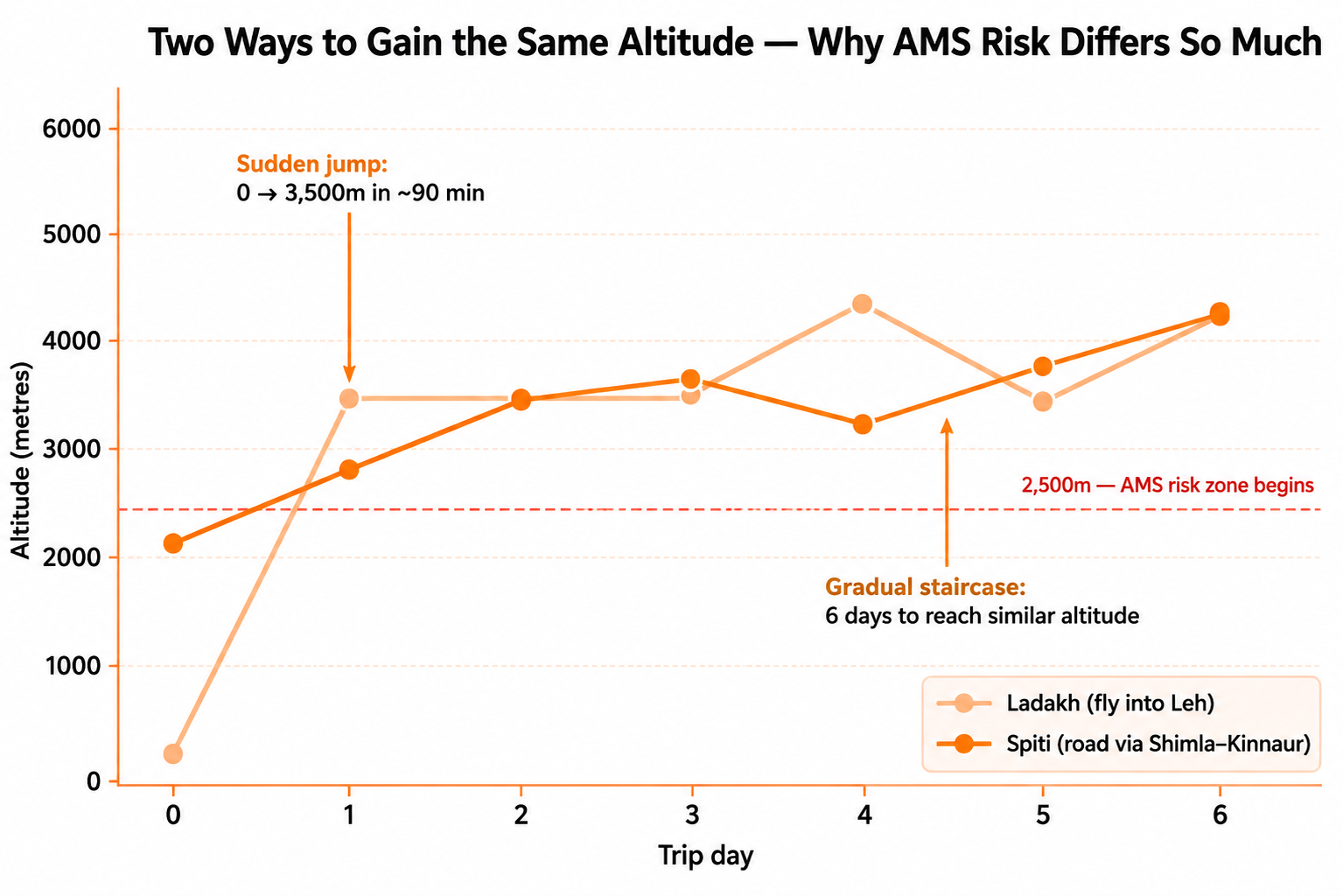
Fly into Leh and your body goes from sea level to 3,500 metres in roughly ninety minutes — one of the fastest altitude jumps a tourist can make anywhere in India. That's exactly why Leh's acclimatization day (day one, no activity, just rest and fluids) isn't a suggestion in any responsible itinerary — it's the difference between a manageable headache and a medical evacuation. Drive to Spiti via Shimla–Kinnaur instead, and you gain the same altitude range over four to six days, sleeping progressively higher each night — physiologically, this is close to the textbook way to acclimatize.
Choose Ladakh if you have limited days and are willing to build in one non-negotiable acclimatization day in Leh before going anywhere near Khardung La or Pangong.
Choose Spiti's road route if you have a known sensitivity to altitude, are traveling with older family members, or would simply rather not gamble on a sudden jump.
The one route that removes this advantage: flying into Leh and then continuing overland to Spiti (or vice versa) skips the gradual staircase entirely — if you're combining both regions, do the road-heavy region second, not first.
A detail almost no comparison article states plainly: if you fly into Leh, you are choosing the harder altitude profile regardless of how fit you are. Fitness reduces AMS risk; it does not eliminate the physiological reality of a 3,300-metre gain in under two hours.
Permits and Fees — What You'll Actually Pay, Line by Line
This is the most confused topic in both regions' travel content, largely because the rules changed meaningfully in the last few years and most guides never got updated. Here's the current, accurate picture for 2026.
| Fee | Amount | Applies To |
|---|---|---|
|
Environment/Development Fee (EDF) |
₹400 one-time per person, per year |
All Indian travellers — replaced the old Inner Line Permit in 2021 |
|
Wildlife Conservation Fee |
₹20 per person, per day |
Calculated on days spent in protected zones (Nubra, Pangong, Tso Moriri, Hanle) |
|
Red Cross Fund contribution |
₹50 one-time (optional) |
Indian travellers |
|
Protected Area Permit (PAP) |
Processed via registered Leh agent |
Foreign nationals — required for Nubra, Pangong, Tso Moriri, Turtuk, Hanle and other border-adjacent zones |
Ladakh Permits and Fees
For a standard 7-day Indian-traveller trip, total fees land around ₹590 per person — the receipt from the official LAHDC Leh portal is valid for 21 days and is what gets checked at every post, not a stamped physical ILP booklet the way it worked before 2021.
| Fee | Fee Amount | Applies To |
|---|---|---|
|
Inner Line Permit |
Not required |
Indian citizens, for standard Spiti tourism |
|
Protected Area Permit |
Processed at government office (not online) |
Foreign nationals, for notified zones in Kinnaur/Spiti |
|
Rohtang Pass permit |
₹800 petrol / ₹400 diesel vehicles |
Anyone driving via the Manali–Rohtang–Kunzum route (not required via Shimla–Kinnaur) |
|
SADA development fee |
₹100–₹400 depending on vehicle type |
All vehicles entering Spiti at the barrier — collected on the spot, not online |
|
Sumdo check-post entry fee |
₹500 (new, Feb 2026) |
Four-wheelers entering via Sumdo |
Spiti Permits and Fees
The most common mistake in Spiti isn't missing a permit — it's confusing four separate, unrelated charges (ILP, Rohtang, SADA, and the Sumdo fee) for one and assuming paying one covers the rest. They don't. Budget for all that apply to your specific route.
Getting There — The Journey Is a Different Product Entirely
| Route | Distance / Duration | Character |
|---|---|---|
|
Manali–Leh Highway |
~470 km, 2 days with an overnight halt |
The classic — multiple 4,000m+ passes, wide open valleys, heavy convoy traffic in peak season |
|
Srinagar–Leh Highway |
~430 km, 2 days |
Greener, passes through Kashmiri villages and Kargil, generally gentler gradient |
|
Fly to Leh |
90 minutes from Delhi |
Fastest by far — but the hardest altitude jump; mandatory rest day on arrival |
|
Shimla–Kinnaur–Kaza |
~427 km, 2–3 days |
No Rohtang permit needed; passes through Chitkul (India's last inhabited village) and Kalpa; the gentler Spiti approach |
|
Manali–Rohtang–Kunzum–Kaza |
~200 km, 1–2 days |
Shorter and more dramatic, but rougher roads and the Rohtang permit requirement |
Getting There
A genuinely underused option: enter Spiti via Shimla–Kinnaur and exit via Manali (or the reverse). You get the gradual acclimatization benefit of the Kinnaur route and the scenic drama of the Rohtang–Kunzum descent, without doubling back on either.
What Each Place Actually Delivers
Ladakh — Scale
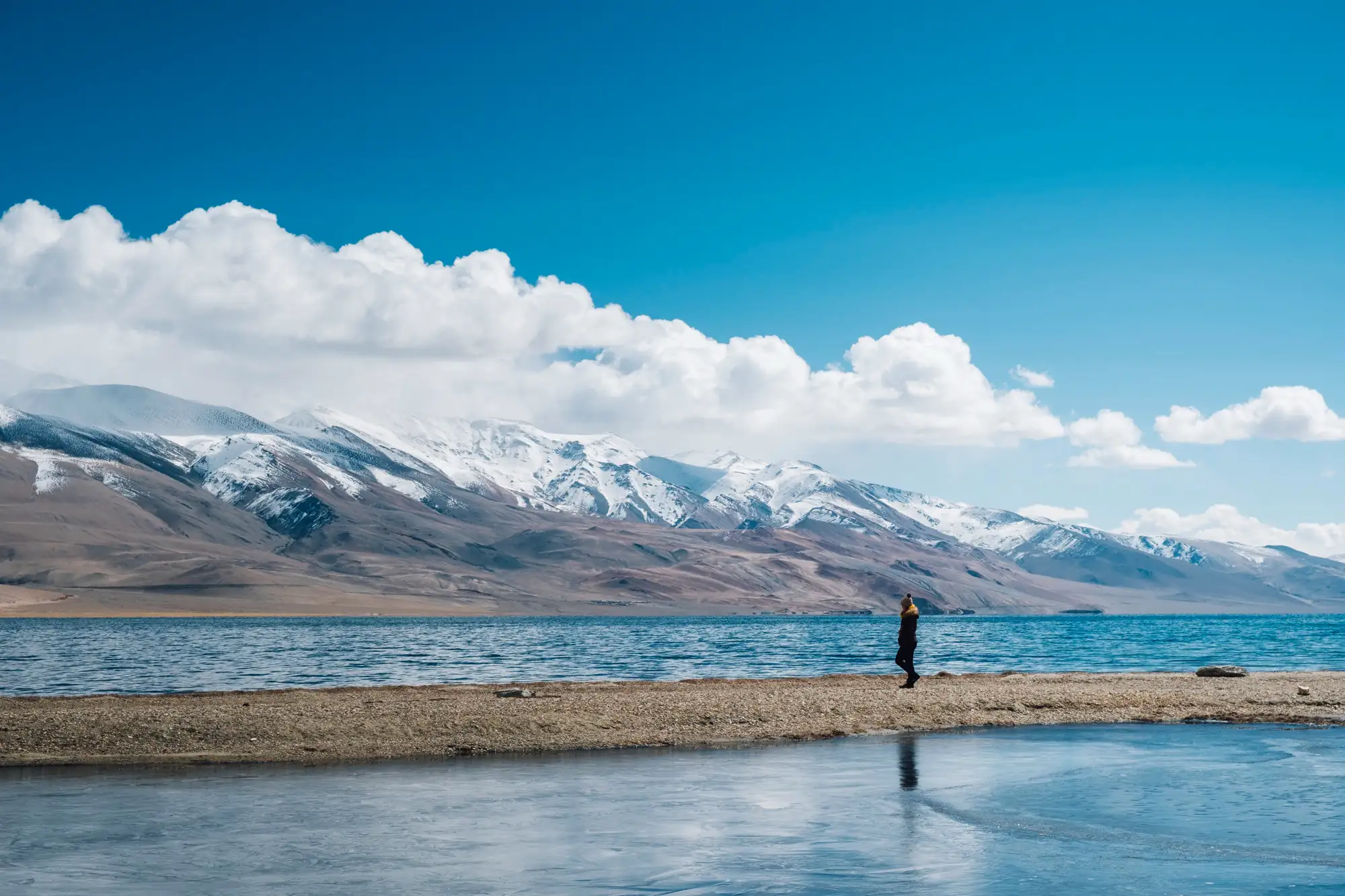
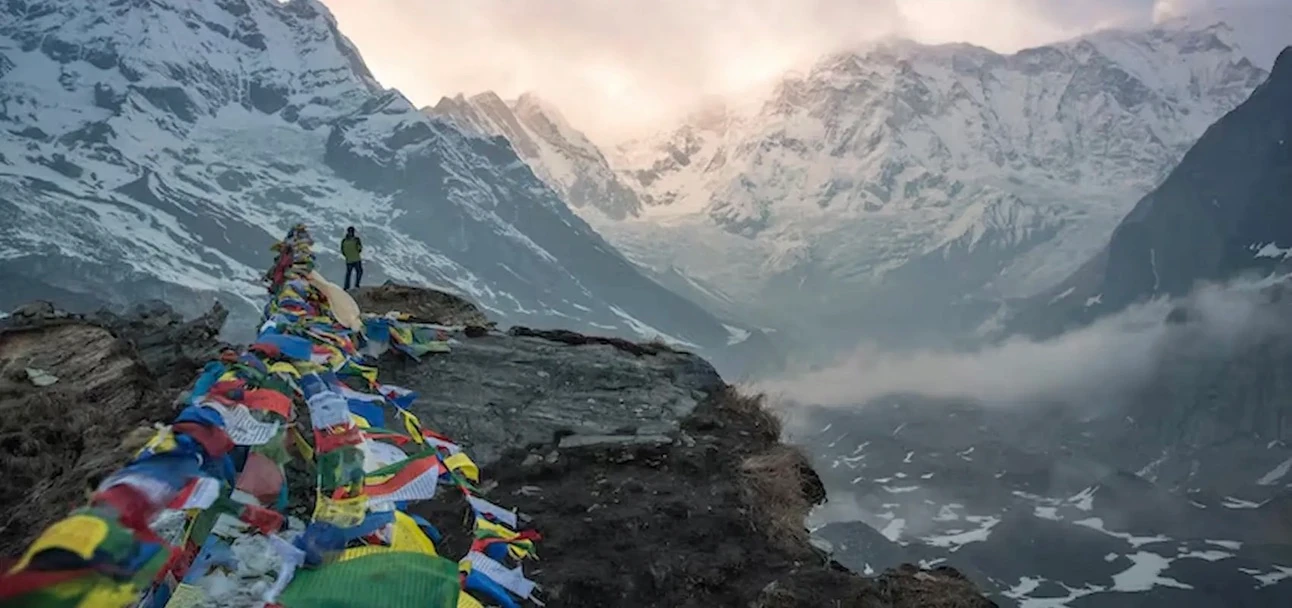
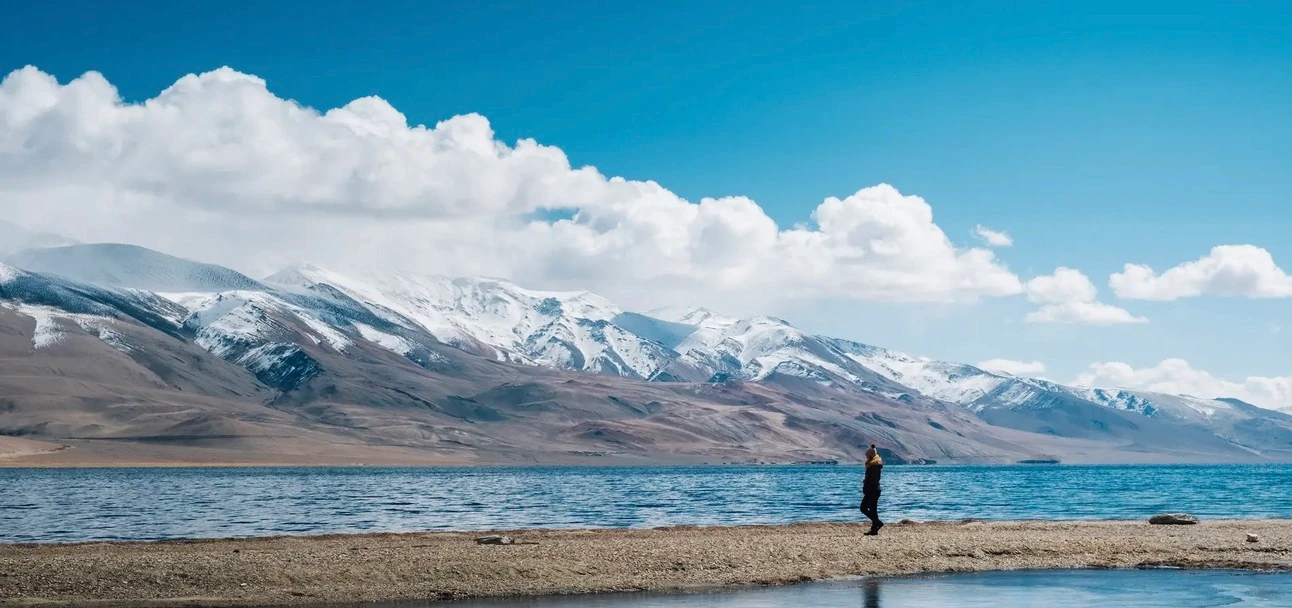
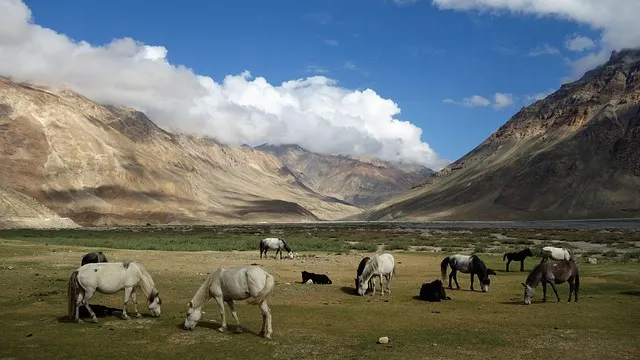
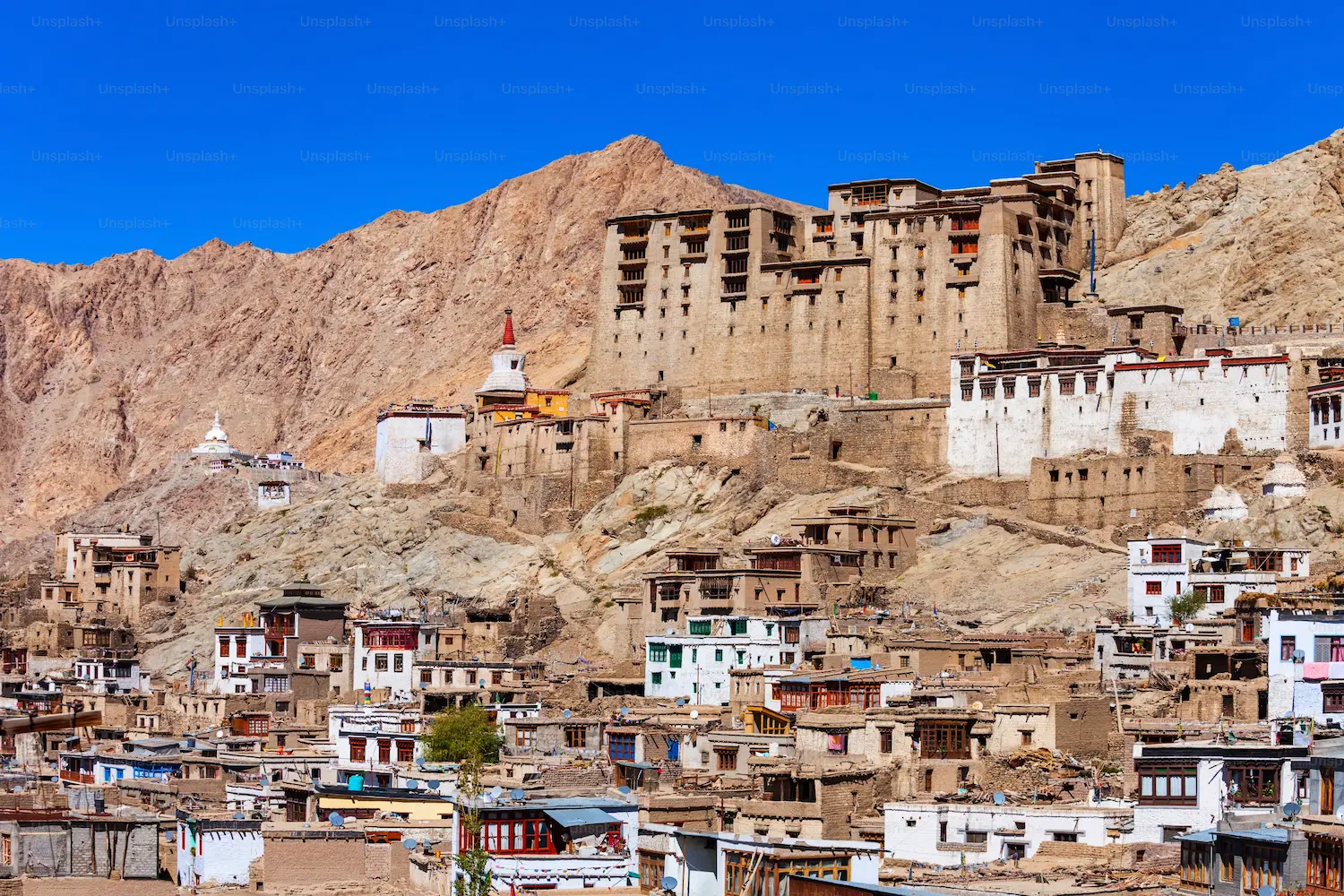
Ladakh works at a scale Spiti simply cannot match within a single trip. Pangong Tso's turquoise against bare brown mountains, Nubra's sand dunes with double-humped Bactrian camels, Khardung La and now Umling La — the world's highest motorable road at 19,300 feet — as specific, bucket-list achievements rather than just scenery. The Union Territory's 59,000+ square kilometres also mean genuine offbeat corners still exist alongside the well-trodden circuit: Turtuk's Balti culture, the Suru Valley en route to Zanskar, Panamik's hot springs. Ladakh's reputation as "mainstream" undersells how much of it remains genuinely uncrowded once you're a half-day past Leh. (Forgotten Lakes of Ladakh)
Spiti — Intimacy
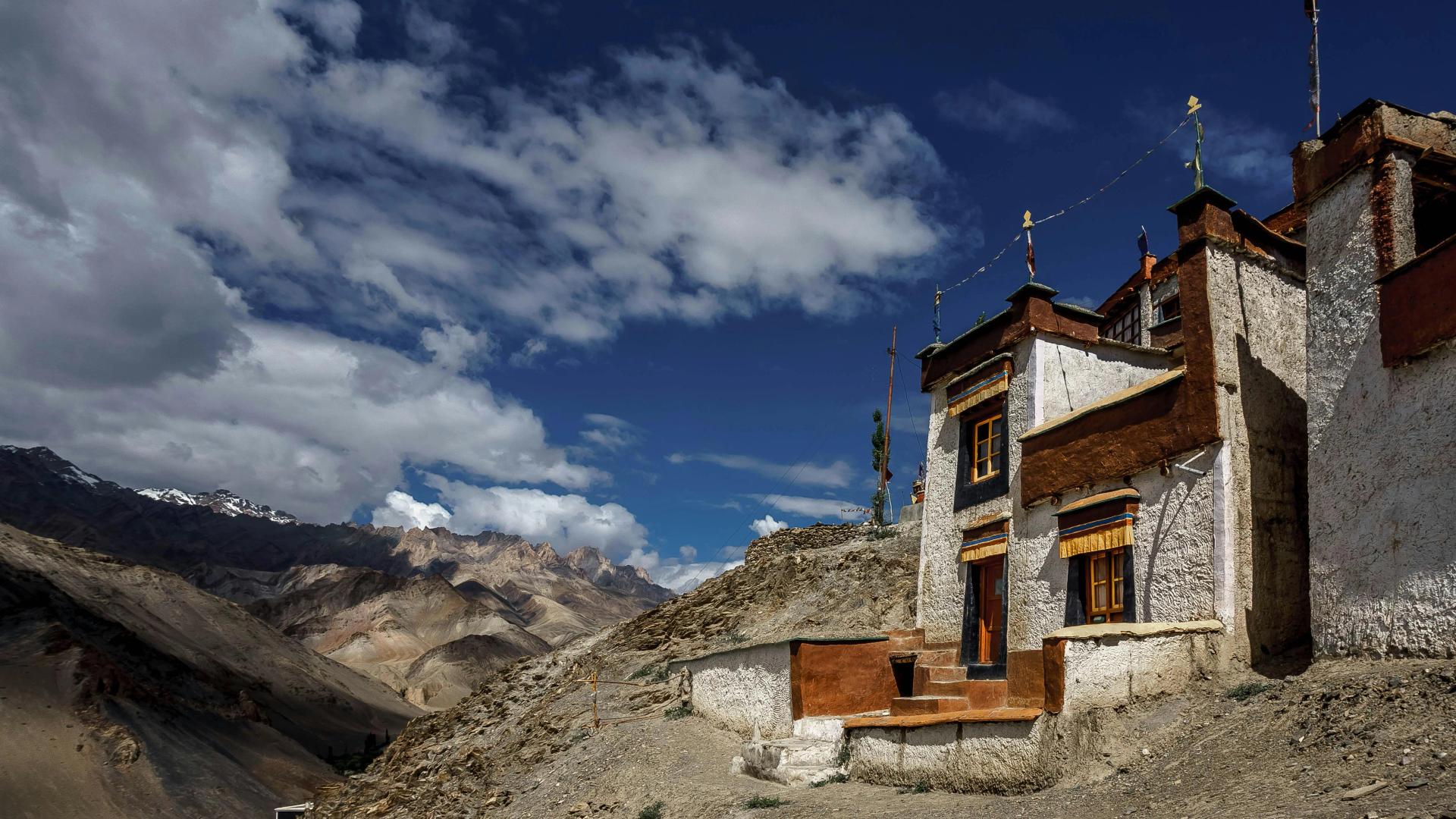
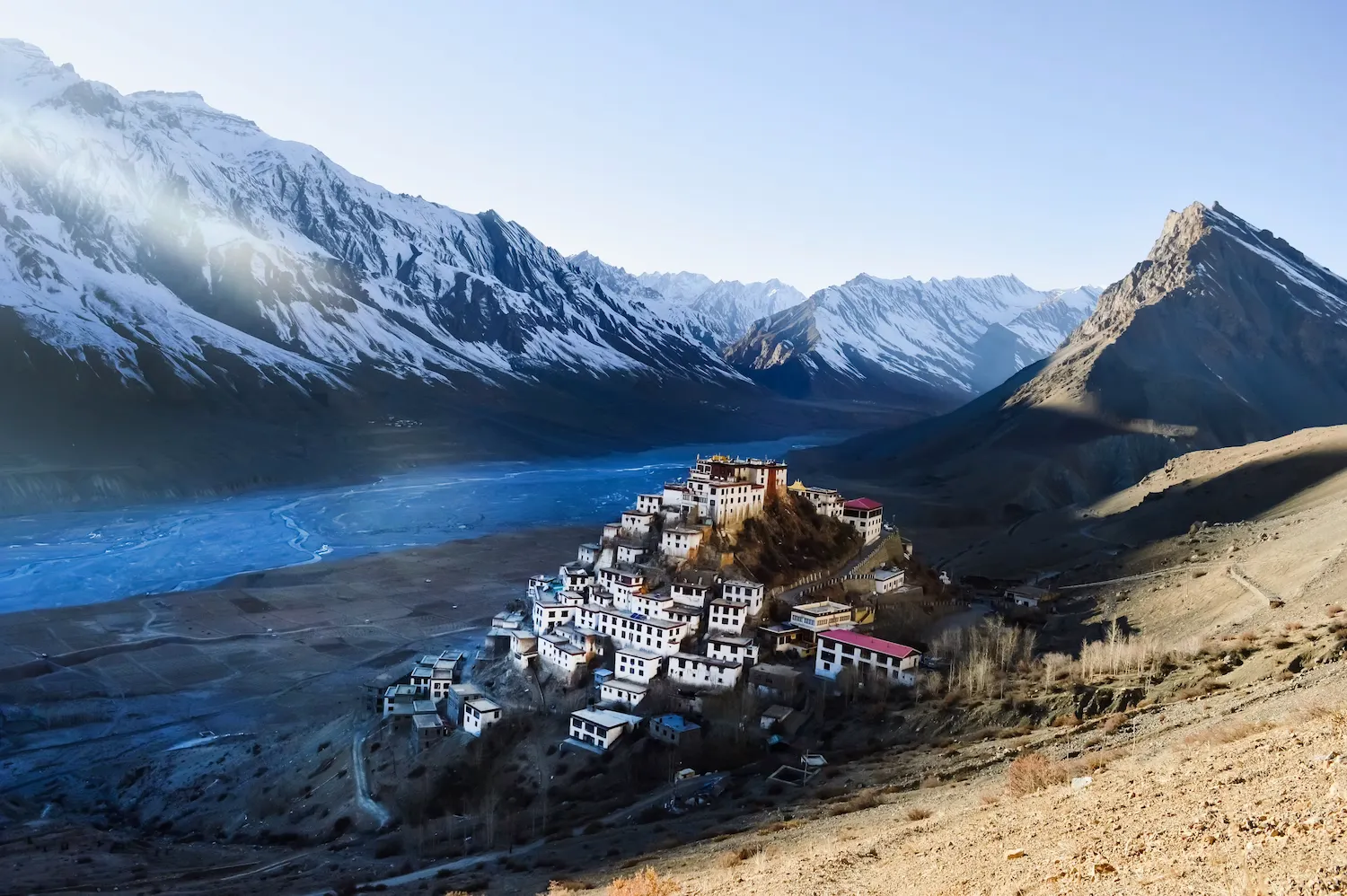
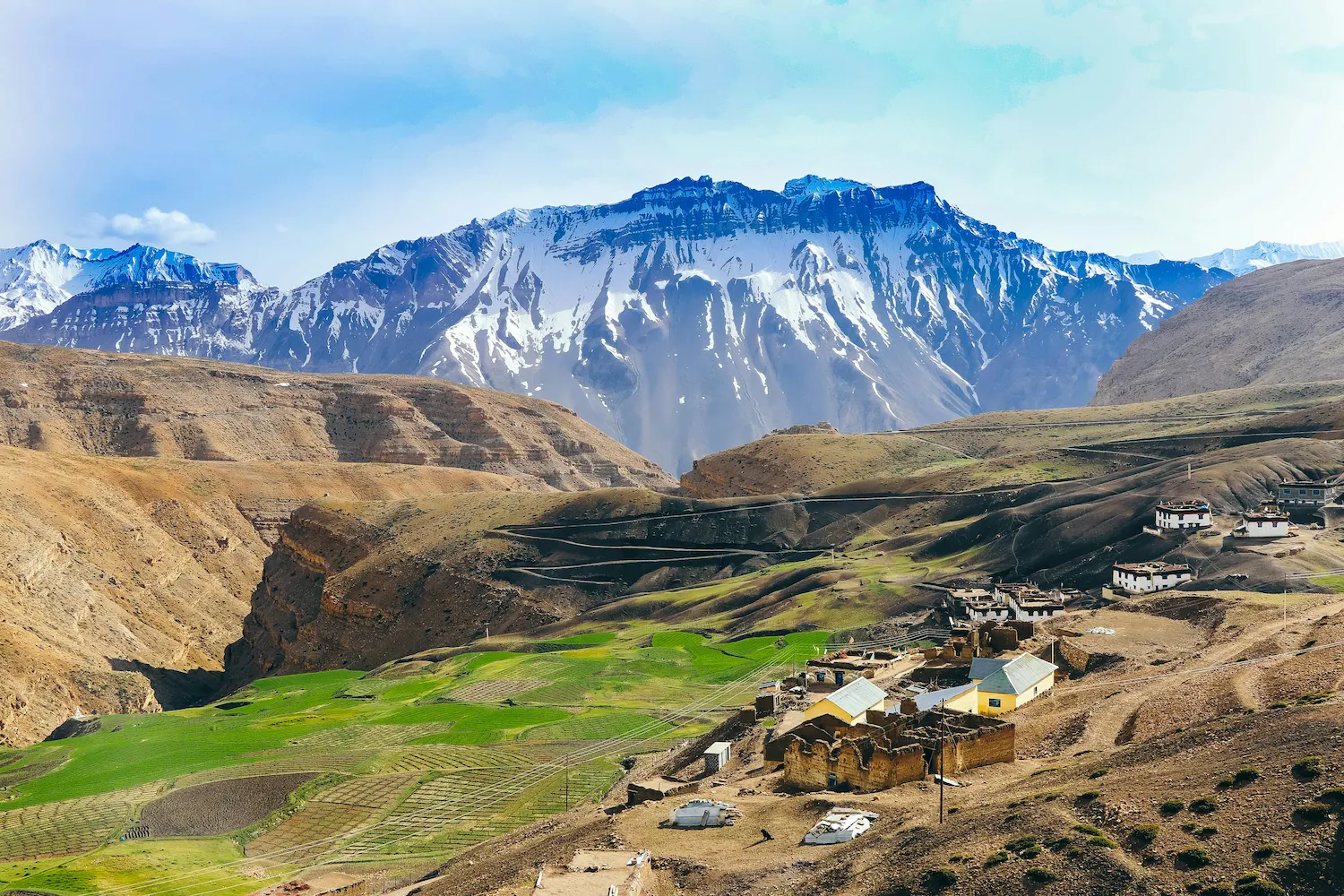
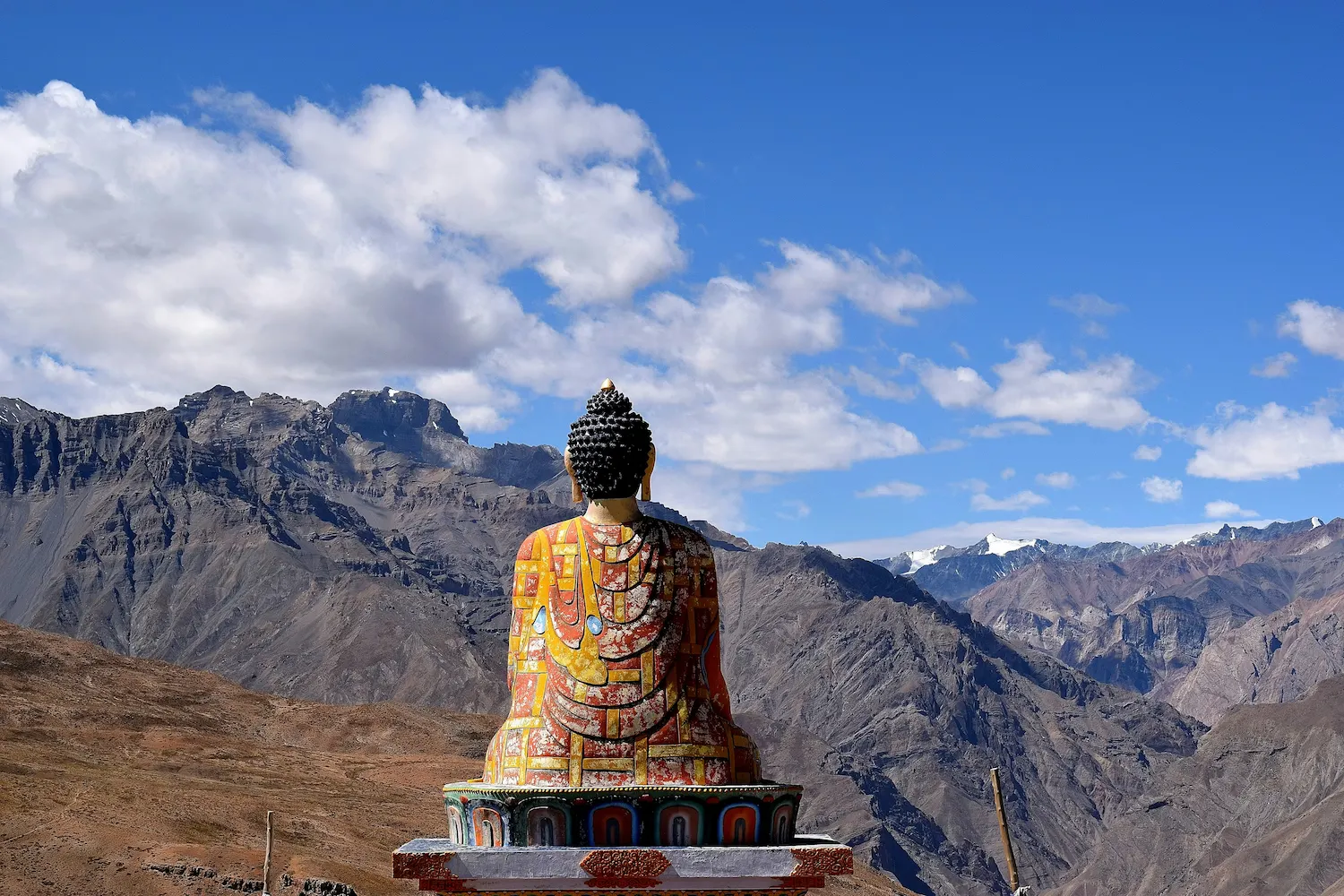
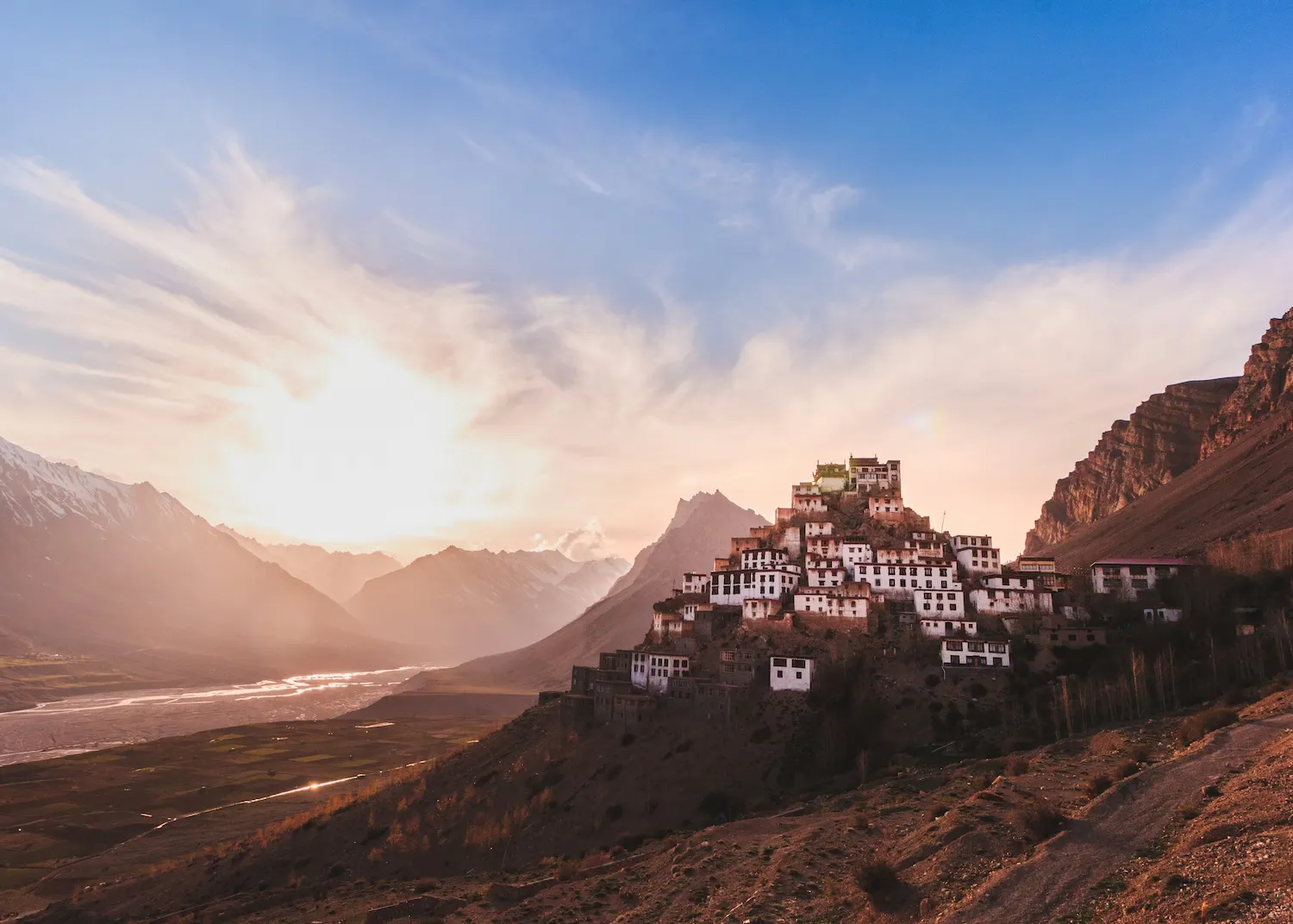
Spiti's beauty asks for patience rather than delivering it in wide-angle bursts. Key Monastery's silhouette at dusk, Langza's fossil-studded hillsides watched over by a giant Buddha statue, Dhankar's cliff-edge monastery, the Spiti River gorge at first light — these reward slowing down, not covering ground quickly. The valley is compact enough that you genuinely get to know it rather than sample it, and the Shimla–Kinnaur approach adds an entirely separate green, orchard-lined landscape before the cold desert even begins — effectively two Himalayan experiences in one route.
Ask travellers who've done both, not just one, and a pattern shows up repeatedly: Ladakh is the trip people plan for; Spiti is the trip that surprises them. Neither reaction says anything bad about the other place — it says something about expectations set by Instagram versus what's actually there.
Infrastructure and Safety — The Honest Difference
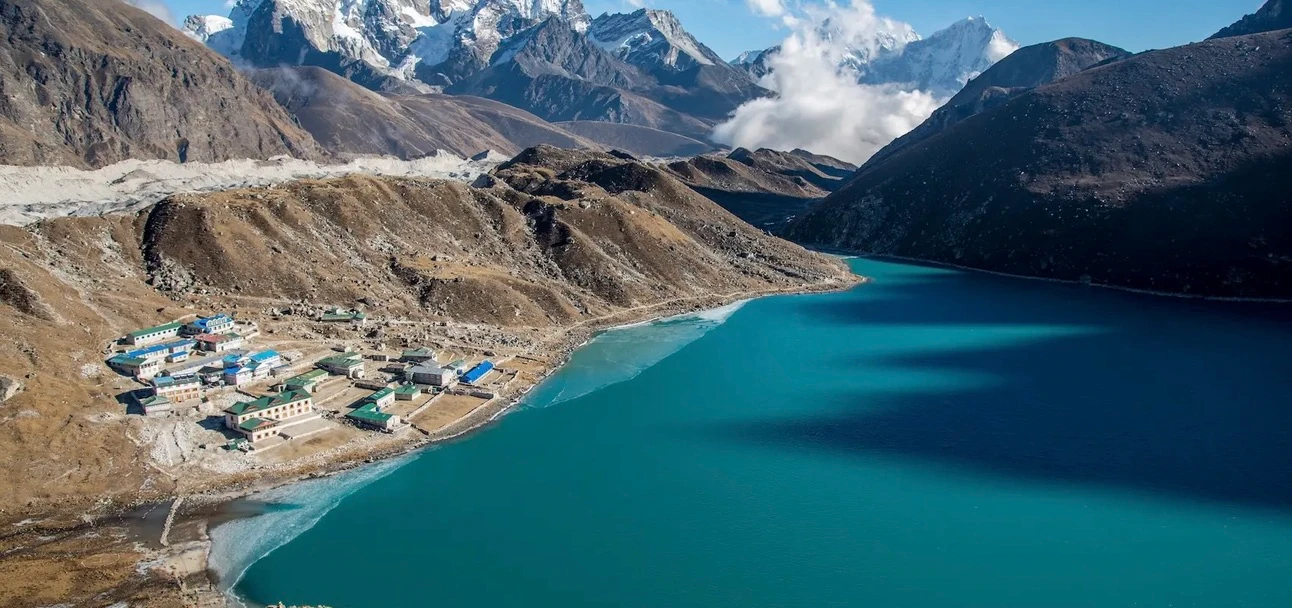
This is where the two regions genuinely diverge, and it's worth being direct about it rather than diplomatically vague.
Ladakh's roads are maintained by the Border Roads Organisation and see heavy, constant traffic — army convoys, tourist vehicles, supply trucks. If something goes wrong mechanically or medically, help is rarely more than a few hours away, and mobile connectivity is reasonably consistent along the main circuit.
Spiti has improved meaningfully in recent years — Kaza now has an ATM and a couple of fuel pumps, which wasn't true a decade ago — but medical facilities remain limited and mobile connectivity is patchy outside the main town. A breakdown on a remote stretch can mean a genuinely long wait.
For families, first-time high-altitude travellers, solo travellers wanting a safety margin, or anyone with an existing health condition, Ladakh's infrastructure is the more forgiving choice.
For travellers who specifically want remoteness as part of the experience — and who are prepared for the trade-off — Spiti's thinner infrastructure is a feature, not a flaw.
What You Will Actually Spend
Cost comparisons for both regions online tend to quote a single number stripped of context. Here's a realistic breakdown by travel style, and why the gap between the two regions is narrower than most "Spiti is so much cheaper" articles suggest.
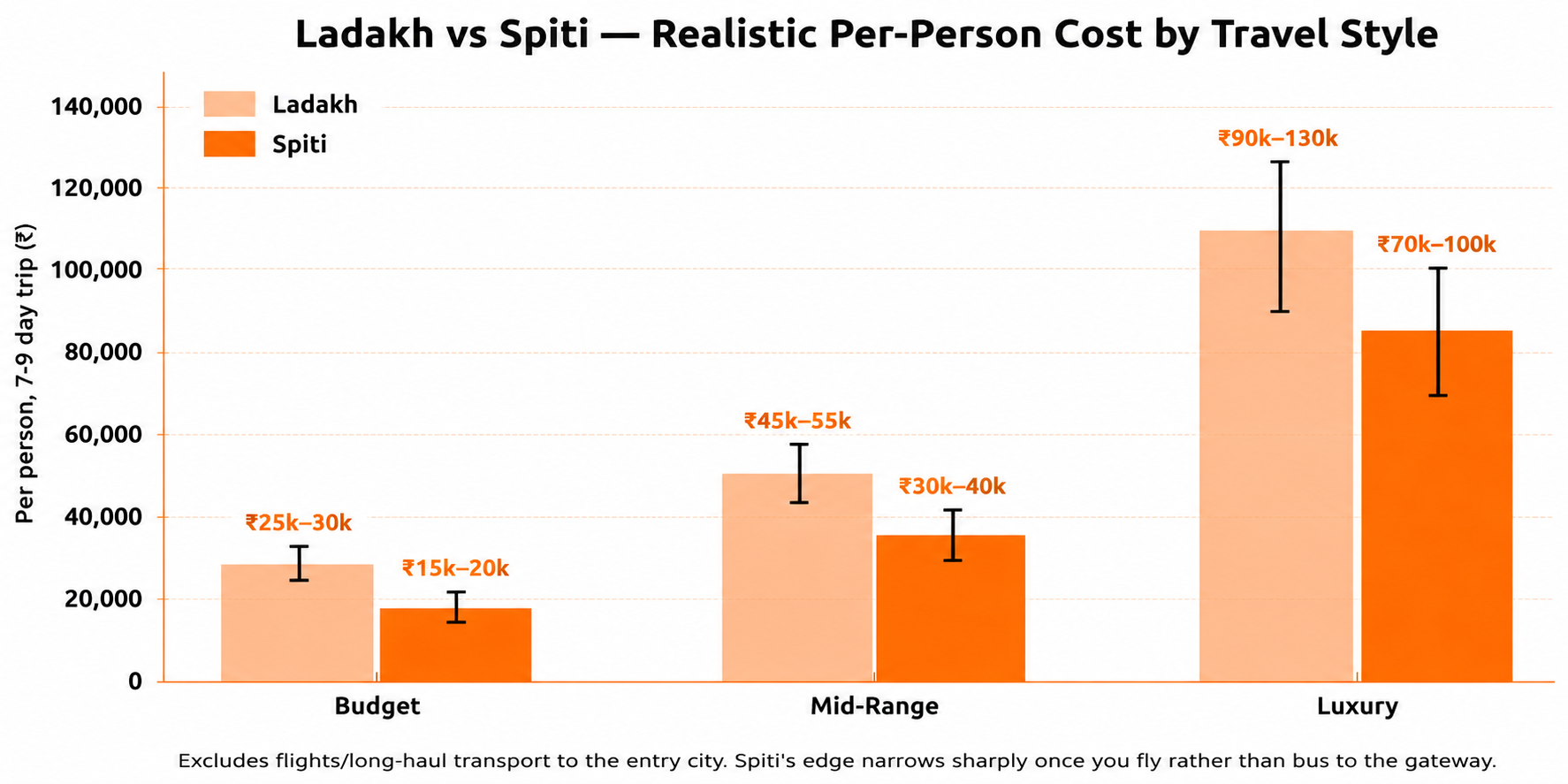
Spiti's genuine cost advantage comes from two things: no flight (you bus or drive in from Shimla or Manali) and simpler accommodation — homestays and basic guesthouses dominate rather than hotels. The moment you add a private vehicle and comfortable stays to either region, the gap narrows sharply. Ladakh's higher ceiling reflects the flight-in convenience and a wider range of genuinely luxury properties that Spiti, with its much smaller tourism infrastructure, doesn't yet have at the same scale.
The Actual Decision Framework
| If this describes you... | Choose |
|---|---|
|
You have 5–6 days total, including travel |
Ladakh — flying in saves days you'd otherwise spend on the road |
|
You've never been above 3,000m before and want the gentler ascent |
Spiti via Shimla–Kinnaur |
|
You want the specific bragging rights of Khardung La or Umling La |
Ladakh |
|
You want a road trip that unfolds slowly rather than a destination you fly into |
Spiti |
|
Budget is the primary constraint and you're comfortable with basic stays |
Spiti |
|
You're travelling with family, older parents, or anyone risk-averse about remoteness |
Ladakh |
|
You have 12+ days and don't want to choose |
Both — Shimla–Spiti–Manali–Leh as one continuous circuit |
The Actual Decision Framework
That last option is worth taking seriously if your schedule allows it. Riders and drivers who've done the full Shimla-to-Spiti-to-Manali-to-Ladakh circuit consistently report the same thing: each region makes more sense in light of the other. Spiti's intimacy gives Ladakh's scale a point of comparison; Ladakh's grandeur gives Spiti's quiet a proper context. You don't need to choose if you have the time — you need to choose which one to do first, and the altitude chart above should settle that question more than any Instagram feed will.
Quick Answers
Is Spiti actually cheaper than Ladakh?
Yes, but the gap is mostly about flights and accommodation choices, not the destinations themselves. Bus-and-homestay Spiti is genuinely cheap; flight-and-hotel Ladakh is genuinely not. Match transport and stay style and the difference shrinks considerably.
Which has worse road conditions?
Spiti's roads are narrower, less consistently maintained, and see far less traffic — if something goes wrong, you'll wait longer for help. Ladakh's main circuit is rougher in places but far busier and better supported.
Can beginners do Spiti, or is it only for experienced riders/drivers?
The Shimla–Kinnaur route is manageable for a reasonably confident driver; the Manali–Rohtang–Kunzum route is tougher and better suited to experienced riders. This is exactly the kind of route decision worth making with a local operator rather than guessing from a map.
Do I need different gear for each?
Similar cold-weather basics for both, but Spiti's homestays are simpler — pack for less reliable heating and hot water than a Ladakh hotel would offer.
Is Chandratal part of Spiti or a separate trip?
It's part of the standard Spiti circuit, no permit required for Indian travellers, only the Rohtang vehicle permit if you're approaching from Manali. Camping rules around the lake have tightened in recent years — check current regulations before planning an overnight stay there.
Before You Decide
Neither region is the "better" one, whatever a forum argument might insist — but one of them is genuinely better for the traveller you are right now, on the timeline and risk tolerance you actually have, not the one an Instagram reel implies you should have. Read the altitude chart again before you book anything. It will tell you more about which trip is right for you than any landscape photo will.
BizareXpedition runs private, no-group-coaches itineraries across both regions — including the full Shimla–Spiti–Manali–Ladakh circuit for travellers with the time to do both properly. Ask us which acclimatization schedule fits your dates before you book flights.
Best Selling Tour Packages
Explore other exciting options for your next adventure!