
North East for First-Time Foreign Visitors11N/12D
North East for First-Time Foreign Visitors
Start & City : Guwahati
best deal price
₹
Without GST ₹1,43,388
per person on twin sharing
Choose your departure city, dates, and add guests to secure your tour.
Hurry, as seats fill up, prices rise! Book now!
1. Choose your departure date
Highlights
Watch a greater one-horned rhino graze in Kaziranga's tall grass from an open jeep, in a park that holds about two-thirds of the world's population of the species.
Cover three Kaziranga ranges on three safaris: Western, Central and Eastern, each with its own lakes and grassland.
Walk down some 3,500 steps from Tyrna to Nongriat and cross the double-decker living root bridge, two spans of rubber-fig roots stacked one above the other.
See the Umngot river at Dawki in the dry season, when the water is clear enough that the boats seem to float in the air.
Walk the lanes of Mawlynnong, named Asia's cleanest village by Discover India magazine in 2003, where every house keeps a bamboo bin at the gate.
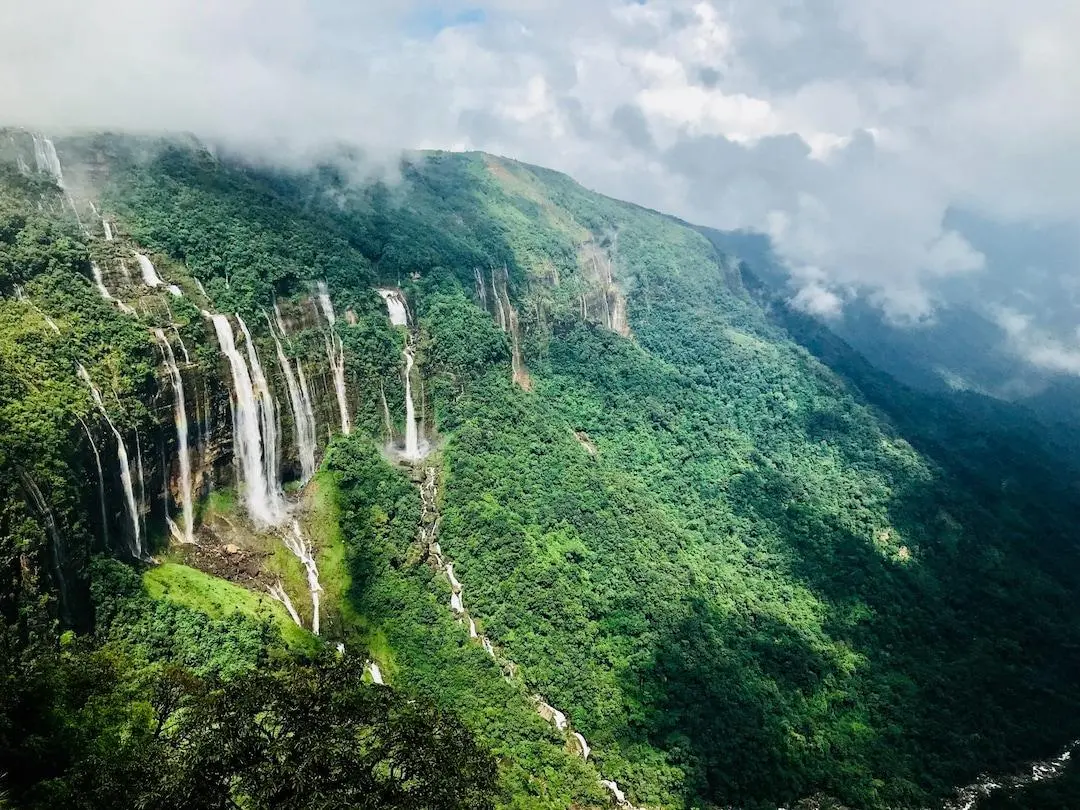
Stand at the Nohkalikai viewpoint above one of the tallest plunge waterfalls in India, on the edge of the Cherrapunji plateau.
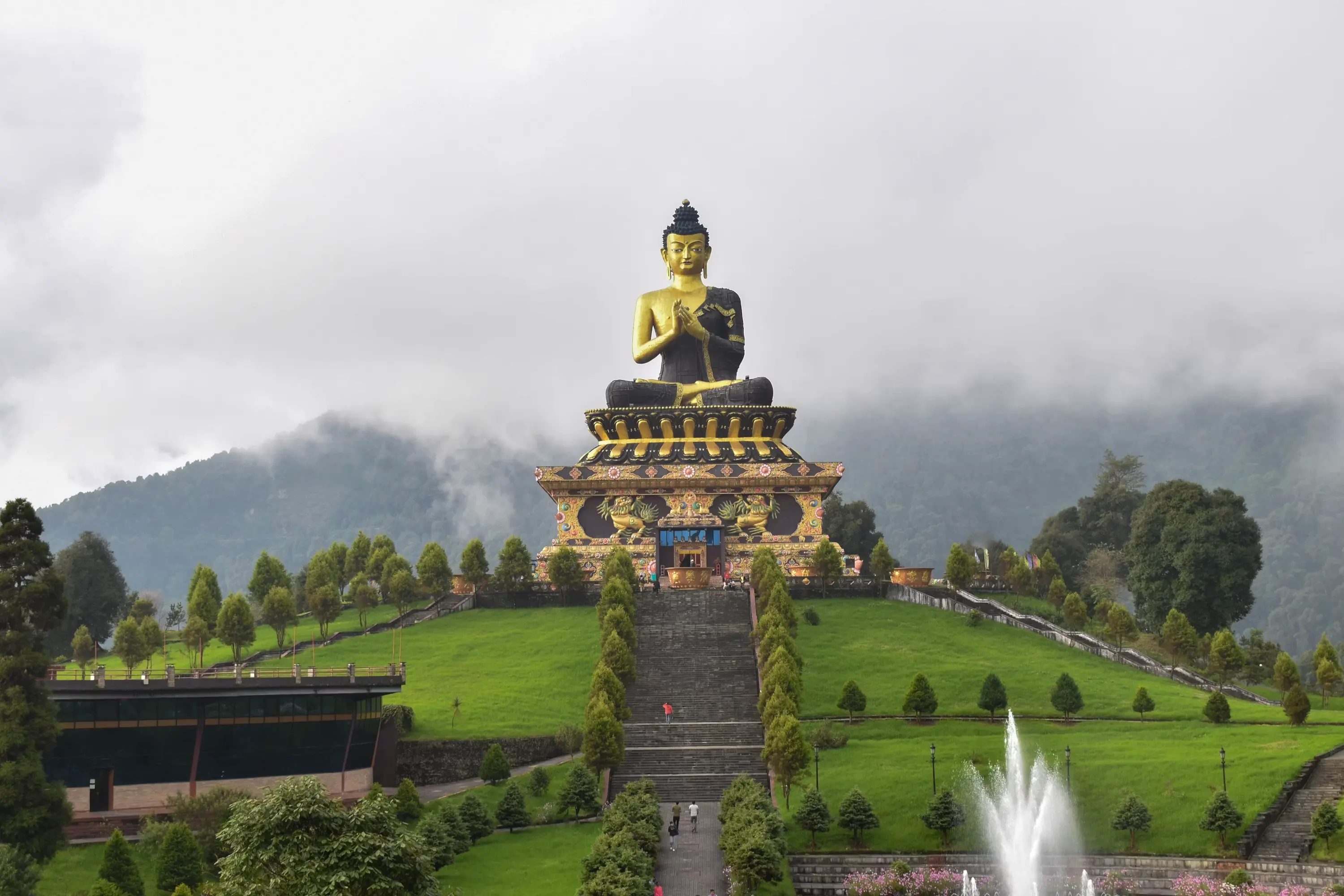
Join the evening prayers at Rumtek Monastery near Gangtok, rebuilt by the 16th Karmapa and inaugurated in 1966.
Drive up to Tsomgo Lake at about 3,750 metres, a glacial lake on the old trade road towards Tibet.
Essence of Journey
The experiences that capture the true spirit of the entire trip.
| Day | Route | Distance | Major Highlights |
|---|---|---|---|
| Day 1 | Arrive Guwahati | Airport to hotel, about 45 min | Brahmaputra sunset cruise |
| Day 2 | Guwahati to Kaziranga | About 200 km, 4.5 to 5 hrs | Western range jeep safari (afternoon) |
| Day 3 | Kaziranga | Park drives | Central range at dawn, Eastern range in the afternoon |
| Day 4 | Kaziranga to Shillong | About 255 km, 6 to 7 hrs | Umiam Lake, Police Bazaar |
| Day 5 | Shillong day trip | About 200 km round trip, 7 hrs of driving | Mawlynnong, Riwai root bridge, Dawki and the Umngot river |
| Day 6 | Shillong to Cherrapunji (Sohra) | About 55 km, 1.5 to 2 hrs | Don Bosco Museum, Nohkalikai Falls, Mawsmai Cave |
| Day 7 | Nongriat trek | About 3,500 steps each way | Double-decker root bridge, optional Rainbow Falls |
| Day 8 | Cherrapunji to Guwahati | About 150 km, 4 to 4.5 hrs | Kamakhya Temple |
| Day 9 | Fly Guwahati to Bagdogra, drive to Gangtok | Flight about 1 hr; then about 125 km, 4 to 5 hrs | Teesta valley drive, MG Marg |
| Day 10 | Gangtok | About 50 km of local driving | Rumtek Monastery, Namgyal Institute of Tibetology, Do Drul Chorten |
| Day 11 | Gangtok to Tsomgo Lake and back | About 40 km each way, 1 hr 40 min | Tsomgo Lake at about 3,750 m |
| Day 12 | Gangtok to Bagdogra, fly out | About 125 km, 4 to 5 hrs | Departure |
About
Most people who visit India see the Taj Mahal, Rajasthan and maybe Kerala. Very few make it to the North East. Don’t know why, but it's one of the least crowded and one of the most rewarding parts of the country.
This private 12-day North East India tour is built for all types of travelers whether you are a frequent traveller or a first-time visitor. In one trip, you'll look for one-horned rhinos from an open jeep in Kaziranga, walk across bridges made of living tree roots in Meghalaya, and listen to evening prayers at a Buddhist monastery in Sikkim, with the Himalaya behind you. Its landscapes, food and faiths are unlike anywhere else in the country.
We take care of the parts that put most people off: permits, long distances and knowing where to go.
What Is This Tour?
The BizareXpedition North East India package is a private, 12-day tour for first-time foreign visitors. It covers three states: Assam (Guwahati and Kaziranga National Park), Meghalaya (Shillong, Cherrapunji and the living root bridges) and Sikkim (Gangtok and Tsomgo Lake). It includes hotels, private cars and drivers, English-speaking local guides, three Kaziranga jeep safaris, the Guwahati–Bagdogra flight and your Sikkim permits. Prices start at about ₹143,388 per person, twin sharing. The tour runs from November to April.
Three States, Three Different Worlds
Each state on this route feels like a different country.
Assam: rhinos and river country. Kaziranga National Park is a UNESCO World Heritage Site and home to about two-thirds of the world's greater one-horned rhinos. The mighty Brahmaputra river flows past Guwahati, and you'll see it at sunset from a river cruise.
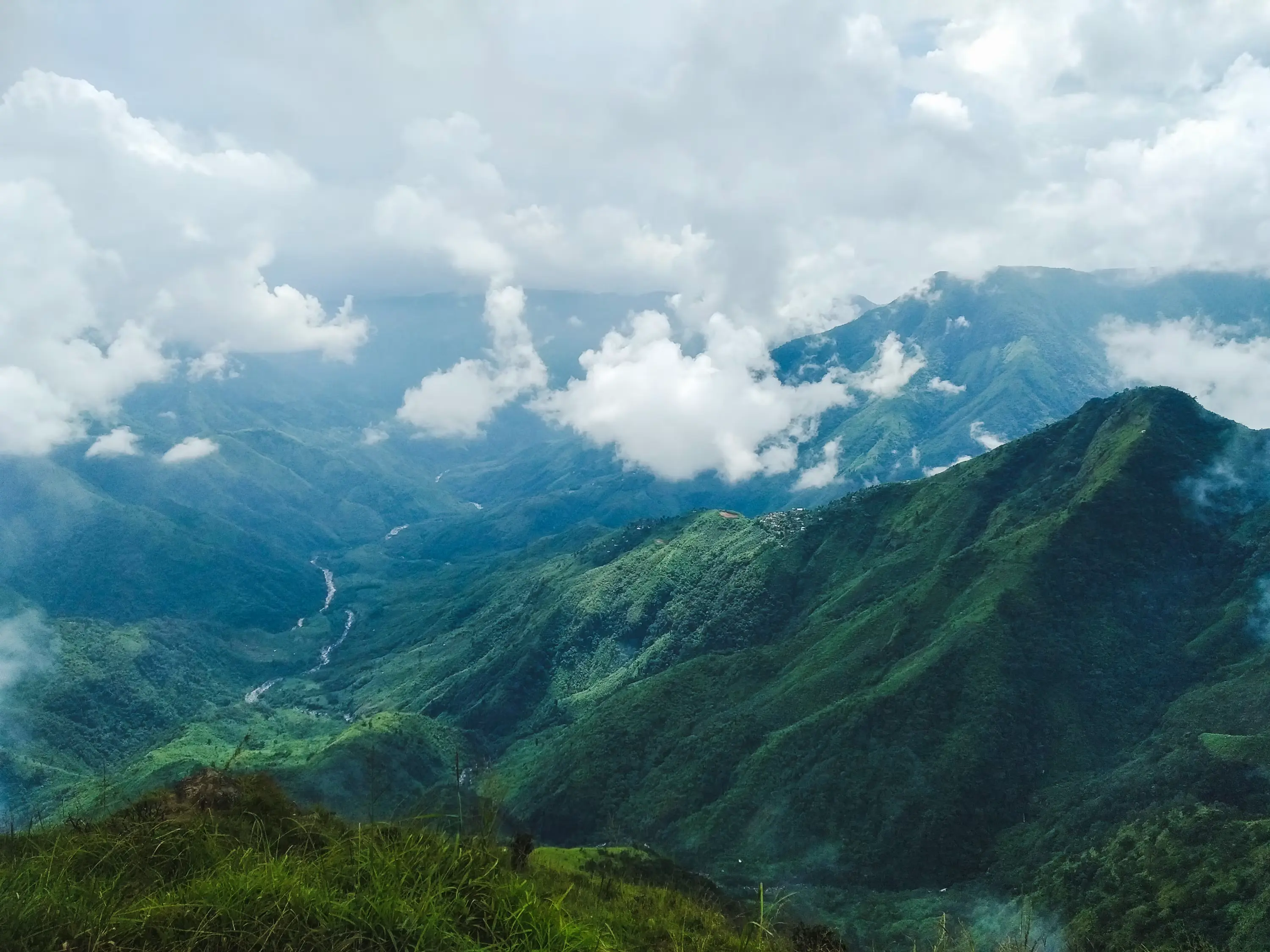
Meghalaya: the abode of the clouds. This is one of the wettest places on earth, and it shows. You'll find deep green gorges, huge waterfalls, spotless Khasi villages and bridges that local people have grown from the roots of rubber fig trees over generations.
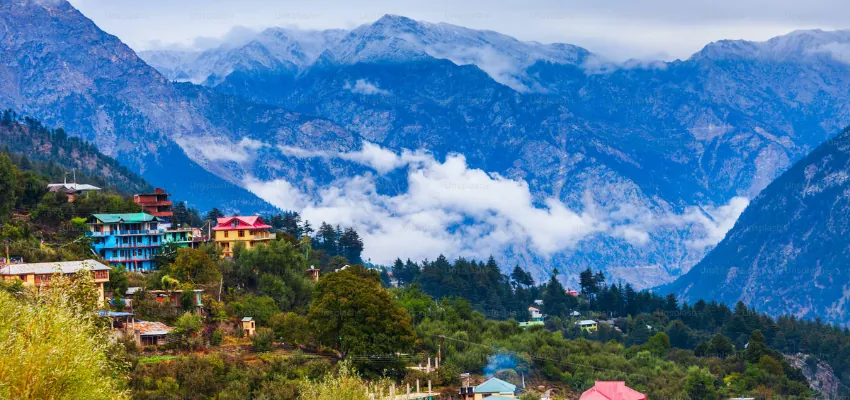
Sikkim: the Himalayan kingdom. Sikkim was an independent Buddhist kingdom until 1975. Gangtok sits on a ridge with views towards Kangchenjunga, the world's third-highest mountain, and Tsomgo Lake lies at about 3,750 metres on the old trade road to Tibet.
Who This Tour Is For
This trip is a good fit if you:
Have already seen India's classic sights and want something different
Are visiting India for the first time and want a region with fewer crowds
Love wildlife, walking, mountains and meeting local communities
Prefer a private, well-organised trip to a group tour
Are reasonably fit (the main trek is optional, and there's an easy alternative)
WHY BOOK THIS WITH BIZAREXPEDITION
A 12-day North East India itinerary for first-time visitors, planned and run by BizareXpedition from start to finish.
One route, three states, one flight. Days 1 to 8 run by road through Assam and Meghalaya. On Day 9 a one-hour flight from Guwahati to Bagdogra takes you into Sikkim, and Day 12 flies you out of Bagdogra. No day on the road is longer than about seven hours.
Three Kaziranga safaris in three ranges. The Western range on the afternoon of Day 2, then the Central range at dawn and the Eastern range in the afternoon of Day 3. Jeep slots and entry permits are booked before you arrive.
A full day for the root bridges. Two nights at Cherrapunji leave Day 7 free for the Nongriat trek, with a local Khasi guide. On Day 5 the Riwai root bridge near Mawlynnong is a short, easy walk, so every guest sees a living root bridge even without the long descent.
Sikkim permits sorted in advance. The Restricted Area Permit that every foreign national needs for Sikkim, and the separate Protected Area Permit for Tsomgo Lake, are arranged by BizareXpedition before Day 9. In Sikkim you switch to a Sikkim-registered car and driver, as local rules require for Tsomgo.
Dated for the dry season. The trip runs from November to April, when Kaziranga is open, the Umngot is clear and the Nongriat steps are dry.
A registered company, not a middleman. BizareXpedition Services Pvt. Ltd. (CIN U63090UR2016PTC007433), headquartered in Haridwar, plans and runs the trip itself, with named hotels in every tier.
ACCOMMODATION CATEGORIES
Tier labels follow the standard of the room and the property, not a star count. Cherrapunji has a small hotel market with no large luxury chain, so the Luxury and Ultra-Luxury tiers there use the same clifftop resort, in different room categories. Named properties are real hotels we plan to use, subject to availability, flagged honestly rather than guessed.
| Destination | Nights | Premium | Luxury | Ultra-Luxury |
|---|---|---|---|---|
|
Guwahati |
2 (Days 1, 8) |
Radisson Blu Hotel Guwahati |
Vivanta Guwahati |
|
|
Kaziranga |
2 |
Iora – The Retreat |
Infinity Resorts Kaziranga |
Diphlu River Lodge |
|
Shillong |
2 |
Hotel Polo Towers |
Royal Heritage Tripura Castle |
Ri Kynjai – Serenity by the Lake (Umiam) |
|
Cherrapunji (Sohra) |
2 |
Cherrapunjee Holiday Resort, Laitkynsew |
Polo Orchid Resort, standard room |
Polo Orchid Resort, top room category |
|
Gangtok |
3 |
The Elgin Nor-Khill |
Mayfair Spa Resort & Casino |
Taj Guras Kutir Resort & Spa |
North East India Introduction Accommodation Categories
NORTH EAST INDIA TOUR PACKAGE PRICE
| Tier | Per couple | Per person | Standard |
|---|---|---|---|
|
Premium |
Rs.286,776 to Rs.309,718 |
Rs.143,388 to Rs.154,859 |
Good hotels and lodges, standard rooms |
|
Luxury |
Rs.366,156 to Rs.395,448 |
Rs.183,078 to Rs.197,724 |
Superior rooms and heritage or resort properties |
|
Ultra-Luxury |
Rs.543,186 to Rs.586,641 |
Rs.271,593 to Rs.293,320 |
Suites or top rooms at the best property at each stop |
North East India Introduction 3-Tier Pricing Summary
The upper figure allows for date and season variance of about 8%. Prices are indicative and confirmed on request.
Is North East India Safe for Foreign Tourists?
Yes. Assam, Meghalaya and Sikkim are the most visited states in the region and are a sensible choice for a first trip. This tour stays on main roads, with your own driver, local guides and confirmed hotels. Some foreign governments advise caution near certain inter-state borders and advise against travel to Manipur, which isn't on this route. We check local conditions before every road day.
BEST TIME TO VISIT NORTH EAST INDIA
| Season | Months | What to expect |
|---|---|---|
|
Peak |
November to February |
Dry, clear weather. Kaziranga is fully open, the Umngot is at its clearest and the Nongriat steps are dry. Cool nights in Shillong and cold at Tsomgo. |
|
High |
Late December to early January |
Holiday demand in Shillong and Gangtok. Expect higher rates and book early. |
|
Shoulder |
October, March and April |
Kaziranga opens in stages from October. March and April bring warmer days, flowering rhododendrons in Sikkim and good light in Kaziranga after the grass is burned back. |
|
Caution |
January and February at Tsomgo; mid-May |
Snow can close the Tsomgo road for a day or more. Kaziranga starts closing in May, and pre-monsoon rain begins in Meghalaya. |
|
Monsoon |
June to September |
Kaziranga is closed, the Umngot runs muddy and the Nongriat steps are wet and slippery. The trip is not sold in this period. |
North East India Introduction Season Adjustments
Good to Know Before You Go
Safety. Assam, Meghalaya and Sikkim are the most visited states of the North East, and this route stays on well-used roads with confirmed hotels. Some foreign governments advise caution on inter-state borders in the region and advise against travel to Manipur, which is not on this route. BizareXpedition checks local conditions before each road day.
Permits. No permit is needed for Assam or Meghalaya. Sikkim needs a Restricted Area Permit, and Tsomgo Lake needs a separate Protected Area Permit, for which at least two foreign nationals must travel together. Nathu La is closed to foreign nationals.
Kamakhya Temple. An active Shakti temple where animal sacrifice is part of worship. Dress modestly, remove shoes and follow photography rules. An outer-complex visit is possible if you prefer.
Villages. Mawlynnong, Riwai and Nongriat are lived-in villages. Ask before photographing people, keep to paths, and use the bins.
Fitness. The Nongriat trek is about 3,500 steps each way. Tsomgo Lake is at about 3,750 metres; walk slowly there and drink water.
Drinking water. Drink sealed bottled water only. Your driver keeps a supply in the car.
Dress. Layers: Kaziranga is mild in winter, while Shillong, Gangtok and Tsomgo are cold at night. Bring a rain jacket for Sohra in any season.
Photography. Not allowed inside the Rumtek prayer hall or the inner shrine at Kamakhya. Camera fees apply at Kaziranga.
Connectivity. Mobile data works in Guwahati, Shillong and Gangtok. Signal is weak in parts of Kaziranga, around Nongriat and at Tsomgo.
Tipping. Appreciated but not required. Most guests tip the drivers and guides at the end of each leg.
Booking Summary
Dept. City :
--
Dept. Date :
--
Traveller :
Adults: 2, Child: 0, Infant: 0
Rooms :
--
Basic Price :
--
Total Cost
--
GST
--
Grand Total
--
Itinerary (Day Wise)
This 12-day private trip takes you through three North East states that most visitors to India never see. You begin in Guwahati with a sunset cruise on the Brahmaputra, then spend two nights at Kaziranga for three jeep safaris looking for one-horned rhinos. From there the road goes up into Meghalaya: Shillong, Mawlynnong village, the clear Umngot river at Dawki, and a full day to walk down to the double-decker root bridge at Nongriat. A short flight to Bagdogra takes you into Sikkim for monasteries around Gangtok and a drive up to Tsomgo Lake at 3,750 metres. We handle your Sikkim permits, hotels, drivers and guides. The tour runs from November to April.
Day 1
ARRIVE GUWAHATI | GATEWAY TO THE NORTH EAST
Route: Arrive Lokpriya Gopinath Bordoloi International Airport, Guwahati; transfer to hotel
Your driver meets you at the airport and takes you to the hotel. Guwahati is the largest city in the North East and the main air gateway to the region. Most guests reach it through Delhi, Kolkata or Bengaluru.
If you land by early afternoon, the evening is for the Brahmaputra. A sunset cruise leaves from the city ghats and runs for about two hours. The river is very wide here, and in the dry season you can see sandbanks and fishing boats far out in the channel. If you arrive late, the cruise can move to the evening of Day 8.
Experience of the Day
Airport pickup and hotel check-in
Sunset cruise on the Brahmaputra
First Assamese dinner
Food
Recommended: Paradise, a long-running Guwahati restaurant, for an Assamese thali.
Must-Try: Masor tenga, a light, sour fish curry, and khar, a dish made with an alkaline extract from dried banana peel.
Shopping
Assam tea, loose-leaf, from a tea shop in Fancy Bazaar or Paltan Bazaar.
Activities to Do
Rest after the flight
Brahmaputra sunset cruise, if you arrive in time
Day 2
GUWAHATI TO KAZIRANGA | FIRST SAFARI
Route: Guwahati to Kaziranga (Kohora), about 200 km, 4.5 to 5 hours by road
The road runs east along the Brahmaputra plain through rice fields and small towns. Tea gardens start to appear as you get close to Kaziranga. Lunch is at the lodge.
The afternoon jeep safari starts around 1:30 pm in the Western range at Bagori. This range has the highest density of rhinos in the park, and the open grassland makes them easy to see. Water buffalo, swamp deer and hog deer graze around the same lakes.
Kaziranga became a UNESCO World Heritage Site in 1985. The 2022 census counted 2,613 greater one-horned rhinos here, about two-thirds of all that live in the wild.
Note on safaris
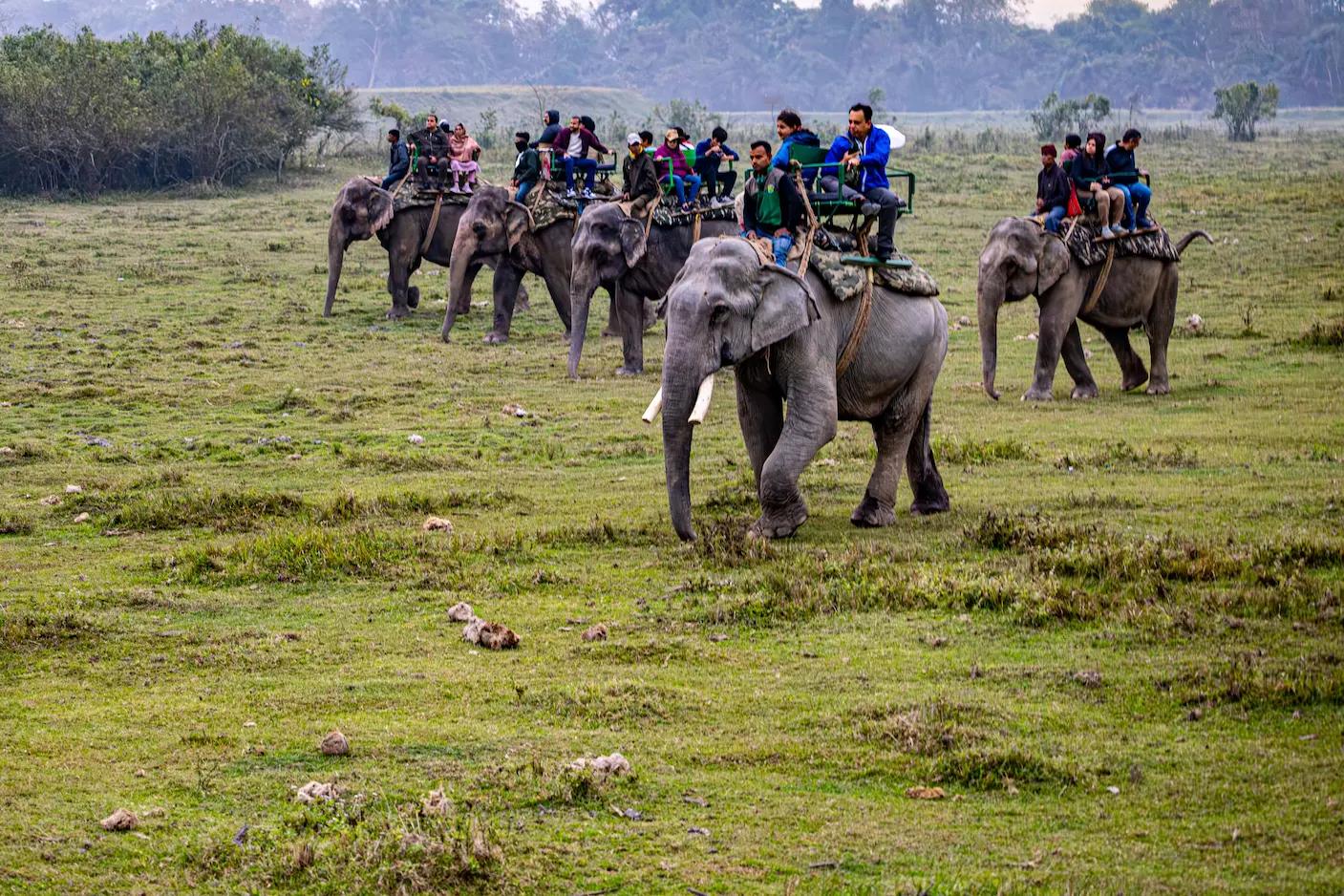
Jeep safaris run in fixed slots: morning from about 7:00 am and afternoon from about 1:30 pm, each up to two hours. The forest department sets routes and slots, and sightings are never guaranteed. Elephant-back rides are offered at the park, but this plan uses jeep safaris only.
Experience of the Day
Drive through the Brahmaputra plain
First jeep safari in the Western range
Evening at the lodge
Food
Recommended: Lunch and dinner at your lodge, most of which serve Assamese dishes alongside continental food.
Must-Try: Duck with ash gourd, a traditional Assamese dish, where the lodge kitchen offers it.
Activities to Do
Western range jeep safari (about 2 hours)
Walk in the lodge grounds or a nearby tea garden
Day 3
KAZIRANGA | CENTRAL AND EASTERN RANGES
Route: Kohora (Central range) and Agaratoli (Eastern range)
The morning starts in the Central range at Kohora, the park's main gate. The track runs through tall elephant grass to open lakes, where rhinos and wild buffalo come down to drink in the early light.
Kaziranga looks the way it does because of the Brahmaputra. Every monsoon the river floods most of the park. The flood leaves fresh silt, and the silt feeds the tall grass that rhinos, buffalo and deer eat. The same flood is why the park closes from June to September. It is also why the rhinos are here in such numbers: the grassland renews itself every year.
The afternoon safari goes to the Eastern range at Agaratoli. It is quieter, with large wetlands. Spot-billed pelicans nest here, and the range is a favourite with birdwatchers.
Experience of the Day
Dawn safari in the Central range
Afternoon safari in the Eastern range
Birdwatching on the Eastern wetlands
Food
Recommended: Dinner at the lodge.
Must-Try: Assam tea, taken with milk or plain, from the gardens around the park.
Activities to Do
Central range jeep safari
Eastern range jeep safari
Midday rest at the lodge
Optional Nearby Excursions
Kaziranga Orchid and Biodiversity Park near Kohora, between safaris (allow 1 to 2 hours)
A short tea-garden walk near the park, when a garden is open to visitors
Day 4
KAZIRANGA TO SHILLONG | UP INTO THE KHASI HILLS
Route: Kaziranga to Shillong via Nagaon and Jorabat, about 255 km, 6 to 7 hours by road
The road runs west across Assam to Jorabat, then climbs south into Meghalaya. The air cools as you gain height. Shillong sits at about 1,500 metres, and pine forest replaces the rice fields.
Stop at Umiam Lake, a large reservoir about 15 km before Shillong, for a view over the water and the hills. You reach the city by late afternoon.
In the evening, walk around Police Bazaar, the busy centre of town. Shillong has a strong live-music culture, and several cafés have bands on weekend nights.
Note on the long drive
This is the longest road day of the trip. The highway is good, and the driver plans a tea stop and a lunch stop. Assam and Meghalaya have had occasional border tensions in some districts. BizareXpedition checks local conditions before the drive.
Experience of the Day
Climb from the Assam plain into the Khasi Hills
Umiam Lake viewpoint
Evening in Police Bazaar
Food
Recommended: Trattoria in Police Bazaar, a small, well-known spot for Khasi food.
Must-Try: Jadoh, red rice cooked with pork, and dohneiiong, pork cooked with black sesame.
Shopping
Police Bazaar for Khasi woven shawls and Meghalaya's local Lakadong turmeric.
Activities to Do
Drive to Shillong
Stop at Umiam Lake
Walk in Police Bazaar
Day 5
MAWLYNNONG AND DAWKI | VILLAGES AND A CLEAR RIVER
Route: Shillong to Mawlynnong, Riwai and Dawki, and back to Shillong, about 200 km round trip
The road runs south to the edge of the Khasi Hills, above the plains of Bangladesh. The first stop is Mawlynnong. In 2003 Discover India magazine called it Asia's cleanest village. Every house keeps a bamboo bin at the gate, plastic bags are banned, and the village council sets the rules.
A short walk away is the Riwai living root bridge. It is a single span over a stream and an easy walk for most guests.
The day ends at Dawki on the Umngot river, right on the Bangladesh border. In the dry season the river carries very little silt. The water turns so clear that you can see the stones on the bottom, and the boats look as if they are floating in the air. In the monsoon the same river runs brown and fast. A short boat ride on the Umngot is included.
Note on visiting villages
Mawlynnong and Riwai charge a small village entry and parking fee, which is included. These are lived-in homes. Ask before photographing people, and use the bamboo bins for any litter.
The Human Story
Mawlynnong's rules are set by the village council and followed by families on their own. Children help sweep the lanes, and the bamboo bins are woven by people in the village. Tourist income goes to families who run the homestays and small kitchens.
Experience of the Day
Mawlynnong village walk
Riwai living root bridge
Boat ride on the Umngot at Dawki
Food
Recommended: A simple Khasi lunch at a village kitchen in Mawlynnong.
Must-Try: Fresh pineapple and local oranges sold by the roadside in season.
Activities to Do
Village walk in Mawlynnong
Short walk to the Riwai root bridge
Umngot boat ride
Optional Nearby Excursions
Sky View, a bamboo platform in Mawlynnong with views towards Bangladesh
Day 6
SHILLONG TO CHERRAPUNJI | THE RAIN PLATEAU
Route: Shillong to Cherrapunji (Sohra), about 55 km, 1.5 to 2 hours plus stops
Start at the Don Bosco Museum of Indigenous Cultures in Shillong. Its seven floors cover the peoples of the North East: their dress, tools, weapons and faiths. It is the best single introduction to the region you will get.
The road to Sohra runs across open grassland on the plateau. Stop at the Mawkdok viewpoint over the Dympep valley. Cherrapunji once held the world record for the most rain in a single year, set in 1860 to 1861. Nearby Mawsynram now records more rain on average, but the Sohra plateau is still one of the wettest places on earth.
In the afternoon, see Nohkalikai Falls, one of the tallest plunge falls in India, then walk through the lit passages of Mawsmai Cave. End the day at the Seven Sisters Falls viewpoint if the light is good.
Note on Mawsmai Cave
The cave has narrow, low sections where you need to bend or squeeze through. It is lit and short. Skip it if you do not like tight spaces; the falls viewpoints are nearby.
Experience of the Day
Don Bosco Museum of Indigenous Cultures
Mawkdok viewpoint over the Dympep valley
Nohkalikai Falls
Mawsmai Cave
Food
Recommended: Orange Roots in Sohra, a popular vegetarian restaurant on the main road.
Must-Try: Pumaloi, a steamed rice cake eaten with Khasi curries.
Shopping
Sohra's market for local honey, cinnamon and bay leaf.
Activities to Do
Museum visit in Shillong
Viewpoints on the Sohra plateau
Walk through Mawsmai Cave
Optional Nearby Excursions
Arwah Cave, a quieter limestone cave with fossils in its walls (allow 1.5 hours)
Day 7
THE NONGRIAT TREK | DOUBLE-DECKER ROOT BRIDGE
Route: Sohra to Tyrna by car (about 30 minutes), then on foot to Nongriat and back
From Tyrna, about 3,500 stone steps lead down through forest and villages to Nongriat. On the way you cross streams on steel suspension bridges, and then the double-decker root bridge at Umshiang: two spans of living roots, one above the other.
The Khasi grow these bridges from the aerial roots of the rubber fig tree. The roots are trained across a stream, often through the hollow trunk of an areca palm, and left to grow. It can take 15 years or more before a bridge is strong enough to use. The usual explanation for why the Khasi build them is the rain. Timber rots fast in one of the wettest places on earth, but a living bridge keeps growing, and it gets stronger with age. The double-decker at Nongriat is thought to be about 200 years old.
In 2022 the living root bridges were placed on UNESCO's tentative list for World Heritage status, as Jingkieng Jri. Nongriat village has natural pools below the bridge, and the walk back up is the hard part of the day.
Note on fitness
The trek is steep and the steps can be slippery. Going down is easy; coming back up is hard work, about 1.5 to 2.5 hours of climbing. Wear shoes with good grip. If the trek is not for you, the Riwai root bridge on Day 5 is an easy alternative, and the day can be spent at viewpoints and falls around Sohra instead.
The Human Story
Nongriat's families still use the root bridges every day to reach their fields and the next village. The guides on the trail are mostly from the villages below Tyrna, and the homestays in Nongriat are run by local families.
Experience of the Day
Descent through Khasi villages to Nongriat
Double-decker root bridge at Umshiang
Natural pools below the bridge
Food
Recommended: A packed lunch, or a simple meal at a Nongriat homestay kitchen.
Must-Try: Local tea and a snack at the small shops along the steps.
Activities to Do
Trek to Nongriat with a local guide
Swim in the pools, if you wish
Rest on the way back up
Optional Nearby Excursions
Rainbow Falls, about 1.5 to 2 hours further on from Nongriat, for strong walkers who start early
Day 8
CHERRAPUNJI TO GUWAHATI | KAMAKHYA TEMPLE
Route: Sohra to Guwahati, about 150 km, 4 to 4.5 hours by road
The road returns through Shillong and down to the Assam plain. You reach Guwahati by early afternoon.
Kamakhya Temple stands on Nilachal Hill above the city. It is one of the most important Shakti Peethas, temples to the goddess, in India. The inner shrine has no idol. Worship centres on a rock in the form of a yoni, kept wet by a natural spring. The present temple was rebuilt in 1565 by the Koch king Nara Narayan.
Queues can be long, and the inner shrine is dark and crowded. Your guide will explain what is happening and where you can and cannot go. The view over the Brahmaputra from the hill is worth the visit on its own.
Note on Kamakhya Temple
Kamakhya is an active place of worship. Animal sacrifice is part of the tradition here. Dress modestly, remove shoes before entering, and follow the temple's photography rules. Your guide can arrange a visit to the outer complex only, if you prefer.
Experience of the Day
Drive down from the Khasi Hills
Kamakhya Temple on Nilachal Hill
Views over the Brahmaputra
Food
Recommended: Dinner at your hotel or an Assamese restaurant in the city.
Must-Try: Pitha, Assamese rice cakes, often filled with coconut or sesame.
Shopping
Assam silk: muga (golden) and eri (soft, warm) silk from a government emporium or a silk shop in the city.
Activities to Do
Drive to Guwahati
Guided visit to Kamakhya Temple
Evening at leisure
Day 9
GUWAHATI TO GANGTOK | INTO SIKKIM
Route: Fly Guwahati to Bagdogra (about 1 hour 5 minutes), then drive to Gangtok, about 125 km, 4 to 5 hours
A morning flight takes you west from Guwahati to Bagdogra, near Siliguri in West Bengal. Your Sikkim driver meets you at arrivals.
The road follows the Teesta river up into the hills. At Rangpo you enter Sikkim, and your Restricted Area Permit is checked. The river runs green and fast below the road, and the air gets cooler as you climb to Gangtok at about 1,650 metres.
In the evening, walk MG Marg, Gangtok's pedestrian main street. It is clean and car-free, with cafés and shops on both sides.
Note on the Sikkim permit
Every foreign national needs a Restricted Area Permit to enter Sikkim. It is free. BizareXpedition applies for it before you travel, using your passport and Indian visa details. Keep your passport with you on this drive.
Experience of the Day
Flight across the North East
Teesta river drive into Sikkim
Evening on MG Marg
Food
Recommended: Taste of Tibet on MG Marg, a long-standing spot for momos and noodle soups.
Must-Try: Momos and thukpa, a Tibetan noodle soup.
Activities to Do
Flight to Bagdogra
Drive to Gangtok
Walk on MG Marg
Day 10
GANGTOK | MONASTERIES AND TIBETAN LEARNING
Route: Gangtok to Rumtek (about 24 km) and back, with city sightseeing
Rumtek Monastery sits on a hillside across the valley from Gangtok. A monastery stood here from the 18th century. When the 16th Karmapa, head of the Karma Kagyu school of Tibetan Buddhism, left Tibet in 1959, he found it in ruins and rebuilt it. The new monastery was inaugurated at Losar in 1966. A golden stupa inside holds his relics.
Back in Gangtok, visit the Namgyal Institute of Tibetology. Its museum holds old manuscripts, thangka paintings and ritual objects. Then walk around Do Drul Chorten, a white stupa ringed by prayer wheels.
Finish at Enchey Monastery, above the town, or at a viewpoint facing Kangchenjunga if the sky is clear.
Note on Rumtek
Rumtek has armed security at the gate, a result of a long dispute over the Karmapa succession. Carry your passport for the check. Photography is not allowed inside the prayer hall.
The Human Story
Many of the monks at Rumtek and Enchey are young novices who study, eat and pray together. Prayers happen at set times, and visitors are welcome to sit quietly at the back.
Experience of the Day
Rumtek Monastery and its golden stupa
Namgyal Institute of Tibetology
Do Drul Chorten and its prayer wheels
Food
Recommended: A Sikkimese meal at a local restaurant in town.
Must-Try: Gundruk, fermented leafy greens, as a soup, and sel roti, a ring-shaped rice bread.
Shopping
The Directorate of Handicrafts and Handloom in Gangtok for Tibetan-style carpets, thangka paintings and carved tables.
Activities to Do
Guided visit to Rumtek
Museum at the Namgyal Institute
Walk around Do Drul Chorten
Day 11
TSOMGO LAKE | HIGH IN THE EASTERN HIMALAYA
Route: Gangtok to Tsomgo Lake and back, about 40 km each way
The road to Tsomgo climbs fast. It rises from about 1,650 metres at Gangtok to about 3,750 metres at the lake in under 40 km, past army camps and prayer flags. This is the old trade road towards the Nathu La pass and Tibet.
Tsomgo is a glacial lake held in by steep slopes. In winter it can freeze over and snow lines the road. Get there before noon, since cloud tends to come in during the afternoon.
The afternoon is free in Gangtok. You can ride the ropeway over the town or rest before the drive out tomorrow.
Note on Tsomgo permits and altitude
Foreign nationals need a Protected Area Permit for Tsomgo, arranged through a registered agency, and must travel in a group of at least two foreign nationals. Foreigners are not allowed beyond the lake to Nathu La. At 3,750 metres, walk slowly and drink water. Snow can close the road in winter; if it does, the day switches to monasteries and viewpoints around Gangtok.
Experience of the Day
The climb from Gangtok to 3,750 metres
Tsomgo Lake
Free afternoon in Gangtok
Food
Recommended: Hot tea and momos at the stalls by the lake.
Must-Try: Butter tea, the salty Tibetan tea, if you want to try it.
Activities to Do
Morning at Tsomgo Lake
Gangtok ropeway
Last evening on MG Marg
Day 12
GANGTOK TO BAGDOGRA | DEPARTURE
Route: Gangtok to Bagdogra airport, about 125 km, 4 to 5 hours by road
The road runs back down the Teesta valley to the plains. Your driver drops you at Bagdogra airport for your onward flight. Bagdogra has direct flights to Delhi, Kolkata and other major cities.
Experience of the Day
Last views of the Teesta valley
Airport drop at Bagdogra
Food
Recommended: Breakfast at the hotel before you leave.
Must-Try: A packet of Sikkim or Darjeeling tea for the journey home.
Activities to Do
Drive to Bagdogra
Onward flight
Sightseeing

Tour Information
Your complete guide to a hassle-free and enjoyable trip.
Inclusion
Exclusion
Payment Terms
Important factors to consider before your trip!
Cancellation
Need To Know
Be Responsible Traveller
- Minimize Plastic Use : Bring a reusable water bottle, shopping bag, and utensils to reduce the need for single-use plastics. Many destinations have water refill stations and eco-friendly stores.
- Support Local and Sustainable Businesses : Eat at local restaurants, buy souvenirs from local artisans, and choose tour operators that prioritize sustainable practices and support the local community.
- Respect Wildlife and Natural Habitats : Avoid disturbing wildlife or their natural habitats. Stick to designated paths and observe animals from a distance without feeding or touching them.
- Dispose of Waste Properly : Follow local guidelines for recycling and waste disposal. If facilities aren't available, carry your waste with you until you can dispose of it responsibly.
- Educate Yourself and Others : Learn about the local environment, culture, and customs. Respect local practices and traditions, and share your knowledge about responsible travel with others.
- Choose Sustainable Activities : Engage in eco-friendly activities such as hiking, snorkeling, or visiting national parks. Avoid activities that exploit animals or damage the environment.
- Leave No Trace : Follow the principle of "Leave No Trace," which means leaving natural areas as you found them. Pack out all trash, avoid picking plants, and refrain from carving or writing on rocks or trees.
- Plant Trees Whenever Possible : Participate in local tree-planting initiatives or plant trees in your own community. Trees absorb carbon dioxide, provide oxygen, and help support biodiversity, making them vital for a healthy environment.
Connect
Share Itinerary
Email Itinerary
Frequently Asked Questions (FAQs) & People Also Ask — North East for First-Time Foreign Visitors
We help you prepare for your trip and ensure an effortless and enjoyable travel experience.
How many days do you need for a North East India tour?
Twelve days is enough for a first look at Assam, Meghalaya and Sikkim together. That gives two nights each in Kaziranga, Shillong and Cherrapunji, three in Gangtok, and one flight to link Meghalaya with Sikkim. With less time, it is better to choose two of the three states.
What is the best time to visit North East India?
November to February is the best time to visit North East India for this route. Kaziranga is open, the rivers in Meghalaya are clear and the trekking steps are dry. March and April are also good. The monsoon from June to September closes Kaziranga and makes Meghalaya very wet.
Is North East India safe for foreign tourists?
Yes, Assam, Meghalaya and Sikkim are widely visited by foreign tourists and are a reasonable choice for a first trip. This route stays on main roads with a driver, a guide and confirmed hotels. Some governments advise caution near inter-state borders and advise against travel to Manipur, which this trip does not visit.
Do foreigners need a permit to visit North East India?
For this route, foreigners need a permit only for Sikkim. Assam and Meghalaya need no special permit. Sikkim requires a free Restricted Area Permit, and Tsomgo Lake needs a separate Protected Area Permit. BizareXpedition arranges both before you arrive, using your passport and visa details.
Are foreigners allowed to visit Tsomgo Lake and Nathu La?
Foreigners can visit Tsomgo Lake but not Nathu La. The Tsomgo permit is issued through a registered agency, and foreign nationals must travel in a group of at least two. A solo foreign traveller should tell us early, as Day 11 would then switch to sightseeing around Gangtok.
How difficult is the double decker root bridge trek?
The trek is moderate to hard, mainly because of the climb back up. It is about 3,500 steps each way between Tyrna and Nongriat, and most people take 5 to 7 hours in all. The descent is easy. Anyone who prefers to skip it still sees the Riwai root bridge on Day 5, a short and easy walk.
Will I see a one-horned rhino in Kaziranga?
Rhino sightings in Kaziranga are very likely, though never guaranteed. The park held 2,613 greater one-horned rhinos at the 2022 census, and this trip includes three jeep safaris in three different ranges. Elephants, wild buffalo, swamp deer and many water birds are also common.
When is Kaziranga National Park closed?
Kaziranga is closed for the monsoon, roughly from June to September, and reopens in stages from October. The main safari season runs from about November to April. That is why this trip is sold only in the dry months.
How do you get from Meghalaya to Sikkim?
The practical way is to fly from Guwahati to Bagdogra, about an hour, then drive about 125 km to Gangtok. By road, Shillong to Gangtok is more than 600 km. On this trip the flight is on Day 9, and the ticket is included.
Is the Dawki river always clear?
No, the Umngot river at Dawki is clear only in the dry season, roughly November to April. In the monsoon it carries silt and runs brown and fast. This trip is dated for the dry months, when the boats seem to float on the water.
Do I need a visa for North East India?
Yes, most overseas visitors need an Indian visa, and many nationalities can apply online for an e-visa. The same visa covers the North East. Requirements depend on your nationality, so check the current rules before booking. Your visa details are also needed for the Sikkim permit.
How much does a North East India tour cost?
This 12-day North East India tour costs about Rs.286,776 to Rs.309,718 per couple at the Premium tier, or Rs.143,388 to Rs.154,859 per person. Luxury runs Rs.366,156 to Rs.395,448 per couple, and Ultra-Luxury Rs.543,186 to Rs.586,641. Prices include hotels, cars, guides, safaris, permits, the internal flight and GST.
BizareXpeditionTMReviews
Let's go, pack up, and hit the road!
Similar Tour Packages
Explore other exciting options for your next adventure!
Trusted Paths, Bold Journeys — Inside BizareXpedition
From humble beginnings to a trusted name in the industry, BizareXpedition's story is one of purpose-driven growth, community connection, and a relentless pursuit of excellence that speaks for itself.














North East for First-Time Foreign Visitors
best deal price
Without GST
₹1,43,388
per person on twin sharing
Book Now