
Abhinav
Writer
Updated On - Aug 19, 2026
25 min
Published On - Jul 14, 2026
Experience Premium Ladakh — The Complete Planning Guide
How to travel India's most extraordinary destination without either roughing it unnecessarily or paying for things that don't add up to a better experience. A practical, honest guide to planning Ladakh right — from permits to private SUVs, from the best luxury camps to the homestay at Hanle that an astronomer will share his telescope at.
Discover Ladakh like never before with this comprehensive Premium Travel Guide 2026. From acclimatization strategies and permit requirements to luxury stays in Leh, Nubra Valley, Pangong Lake, and Hanle, this guide helps travelers experience Ladakh comfortably and intelligently. Learn about premium itineraries, curated cultural experiences, astronomy tourism in Hanle, budget planning, transportation, and responsible travel practices for an unforgettable Himalayan adventure.
Why Ladakh rewards premium travel
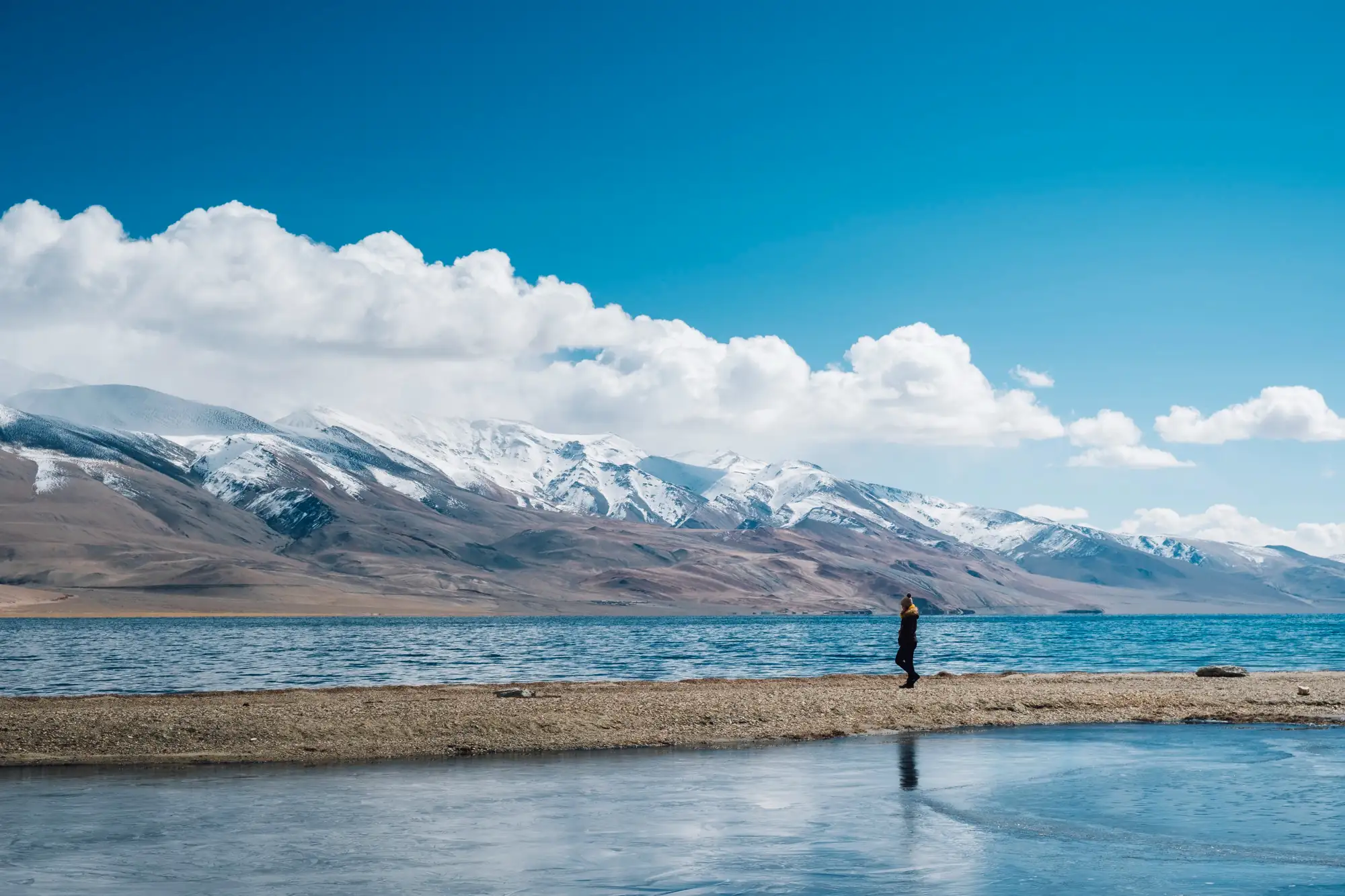
I have always believed that Ladakh is one of the places where spending more genuinely changes what you experience — not just where you sleep, but what you are able to do, where you can get to, and how much of the physical and cultural richness of the place you actually absorb.
At altitude, a bad night's sleep costs you a day. An uncomfortable journey costs you the presence of mind to notice what's around you. A missed permit costs you the lake you came for. Ladakh's remoteness and altitude mean that the margin for error is very thin. And a premium approach — planned carefully and spent wisely — isn't about luxury for its own sake. It's about removing the logistical friction that prevents people from experiencing what they actually came here for.
That said, 'premium' in Ladakh doesn't mean the same thing as premium in Bali or the Maldives. The finest camps at Pangong Tso and the most revered boutique properties in Leh have warmth, character, and genuine hospitality that no five-star lobby can manufacture. The Astronomy Ambassador at a Hanle homestay — a local Ladakhi trained by the Indian Institute of Astrophysics, pointing an 8-inch telescope at Saturn while sharing Changthang folklore about the stars — costs ₹2,000 for the night. That's premium travel. It has nothing to do with thread counts.
The acclimatisation rule — and why it shapes your entire itinerary
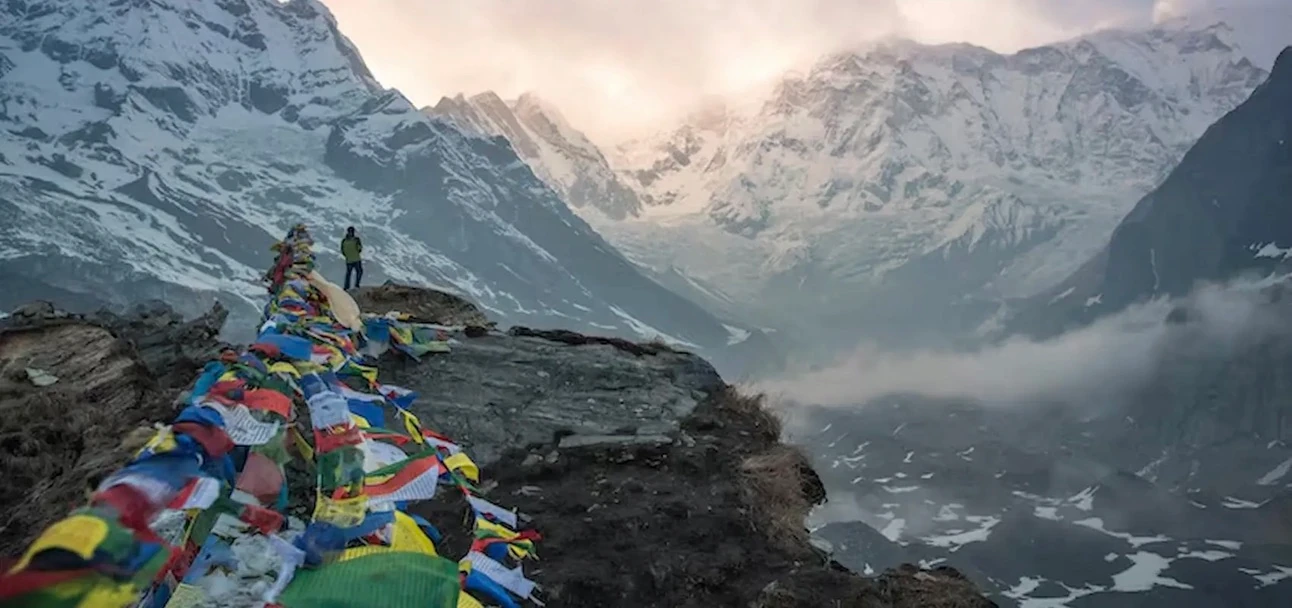
Leh sits at 3,524 metres. Your body takes 48 hours minimum to adjust to that altitude. During those 48 hours, if you try to drive to Khardung La (5,359m) or rush to Pangong, you will likely feel terrible — headache, nausea, disorientation. You will spend money on an experience you cannot properly receive.
Every premium itinerary in Ladakh builds in two full nights in Leh before any excursion. This isn't a guidebook convention. It's physiology. Walk slowly. Drink three litres of water a day. No alcohol for the first 48 hours. Don't push to see everything on day one.
The Grand Dragon Ladakh — Leh's only certified 5-star hotel — understands this better than anywhere else. Their staff bring lemon tea when they sense a guest is feeling the altitude. That small attentiveness is the reason it has the reputation it does. A good acclimatisation hotel isn't passive accommodation. It's active support for the trip you came to have.
| FACT | DETAIL |
|---|---|
|
Leh altitude |
3,524 m (11,562 ft) |
|
Best season for premium travel |
June to September (all roads and camps open) |
|
Coldest accessible month |
October (Pangong and Nubra still open; prices drop 30%) |
|
Nearest airport |
Kushok Bakula Rimpochhe Airport, Leh — daily flights from Delhi, Mumbai, Srinagar |
|
Flight time from Delhi |
1 hr 15 min (IndiGo, Air India, SpiceJet) |
|
Flight cost (return, 2026) |
₹6,000–15,000 Delhi-Leh-Delhi (book 6–8 weeks ahead) |
|
Environment Fee (Indians) |
₹400 one-time + ₹20/day wildlife fee + ₹50 optional Red Cross = ~₹590/7 days |
|
EDF payment portal |
lahdclehpermit.in — pay online, print 5–6 copies per person |
|
PAP (foreign nationals) |
Through registered Leh travel agent; ~₹400–800 per person |
|
Hanle (foreigners) |
Day visit only; must overnight in Nyoma (~75 km before Hanle) |
|
Private SUV rate |
₹4,500–6,500/day (Innova Crysta or Scorpio) |
|
Grand Dragon Ladakh |
Leh's only 5-star certified hotel; 76 rooms; L'Occitane spa; from ₹12,000/night |
|
Chamba Camp Thiksey (TUTC) |
Luxury tents near Thiksey Monastery; open mid-June to Sep; from ₹18,000/night all-in |
|
Nimmu House |
Heritage boutique; 45 min from Leh; organic meals; yoga; from ₹8,000/night |
|
Lchang Nang Retreat (Nubra) |
Private villas in apricot orchards; ₹15,000–20,000/night |
|
Hanle Dark Sky Reserve |
India's first DSR (2022); Bortle-1 skies; Astronomy Ambassadors with 8-inch telescopes |
|
Acclimatisation rule |
2 full nights in Leh before any altitude excursion — non-negotiable |
LADAKH PREMIUM TRAVEL — ESSENTIAL FACTS 2026
The finest experience I have had in Ladakh cost ₹2,000. An Astronomy Ambassador in Hanle — trained by the Indian Institute of Astrophysics — pointed an 8-inch telescope at the Andromeda Galaxy while his grandmother made butter tea inside. That is what premium travel means here.
Getting to Leh
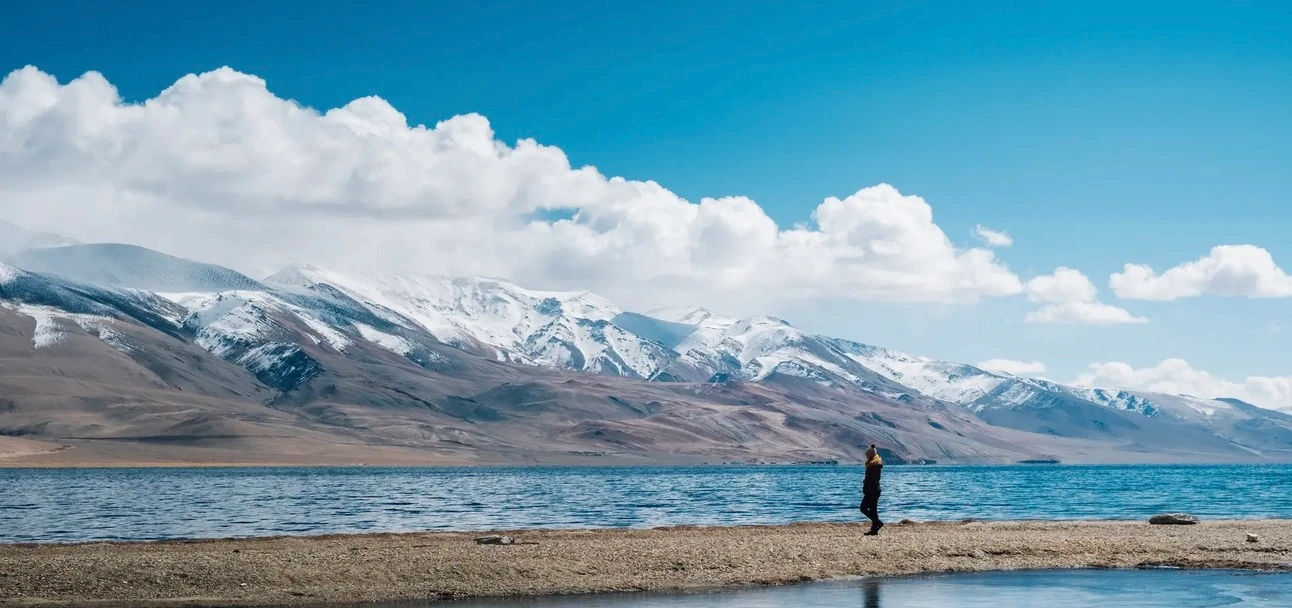
Fly. This is the unanimous advice of anyone who has done Ladakh multiple ways and values their time at altitude.
The Delhi–Leh flight is 1 hour 15 minutes. IndiGo, Air India, and SpiceJet all operate it. Return fares run ₹6,000–15,000 depending on how early you book. Book 6–8 weeks ahead in peak season (June–August) — seats go fast and fares spike badly in the last two weeks. Early morning departures from Delhi land in Leh before the mountain weather builds up in the afternoons.
The road alternatives — Manali–Leh (2 days, 479 km) or Srinagar–Leh (2 days, 420 km) — are extraordinary journeys in themselves, and they allow better acclimatisation through gradual altitude gain. If you have the time, driving in one way and flying out the other is the ideal combination. But if you're working with 7–10 days, flying both ways and using the full time in Ladakh is the smarter choice.
One practical note on Leh airport: it's a high-altitude, one-runway operation with significant sensitivity to weather and visibility. Fog cancellations in winter are common. Even in peak season, afternoon landings can be delayed by cumulus build-up. Always carry one extra day's buffer at both ends of a Ladakh trip.
Understanding the permits — what's changed in 2026
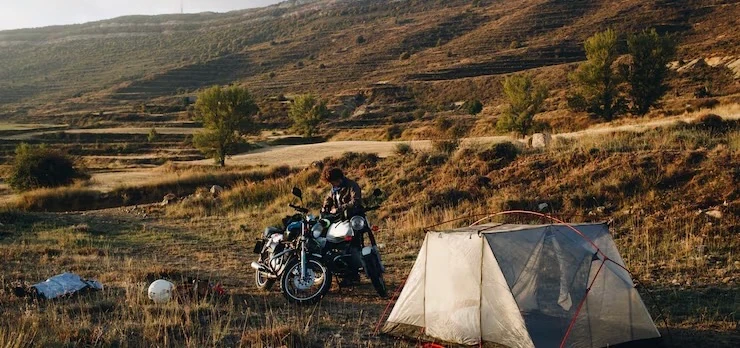
The old Inner Line Permit system for Indian nationals was replaced in 2021 by the Environment and Development Fee. In 2026, the rules remain the same, but the enforcement at checkpoints is stricter than in previous years due to heightened border sensitivity.
For Indian nationals: pay the EDF online at lahdclehpermit.in before you travel. The fee is ₹400 (one-time environment fee) + ₹20 per day for the wildlife zone fee + ₹50 optional Red Cross contribution. For a 7-day trip, you're looking at roughly ₹590 per person. Print 5–6 photocopies. Army checkpoints at South Pullu (Nubra), North Pullu (Pangong), Mahe Bridge (Hanle direction), and elsewhere have no internet and no printers. They take your paper copy and let you through. If you only have it on your phone, they will not let you through.
For foreign nationals: the PAP (Protected Area Permit) is processed through a registered Leh travel agent. Budget ₹700–1,000 per person. The agent handles the paperwork. You bring your passport, two photographs, and a copy of your visa. Same rule: print 5–6 copies.
One important update for 2026: Zanskar Valley is completely permit-free for Indian nationals. No EDF needed. This makes it one of the most accessible offbeat circuits in Ladakh for spontaneous additions to an itinerary.
| PERMIT | WHO NEEDS IT | COST (2026) | HOW TO GET IT | CRITICAL NOTES |
|---|---|---|---|---|
|
Environment & Development Fee (EDF) |
All Indian nationals visiting protected areas (Nubra, Pangong, Tso Moriri, Hanle, Umling La etc.) |
₹400 (one-time) + ₹20/day wildlife fee + ₹50 optional Red Cross = ~₹590 for 7 days |
Online at lahdclehpermit.in — pay with Aadhaar/PAN; print receipt |
NOT needed for Leh city, Shanti Stupa, Thiksey day trip. Needed for EVERYTHING beyond Leh limits. Checkpoints have NO internet — carry 5–6 printed photocopies per person |
|
Protected Area Permit (PAP) |
All foreign nationals and OCI card holders for all restricted areas |
₹400 environment fee + ₹100 Red Cross + ₹20/day wildlife fee (approx ₹700–1,000 for 7 days) |
Through a registered Leh travel agent — cannot be done independently. Bring passport, 2 photos, visa copy. |
Foreign nationals restricted from OVERNIGHT stays in Hanle — must overnight at Nyoma or return to Leh. Print 5–6 copies; army checkpoints work on physical paper only. |
|
No permit needed |
Indians: for Leh city, Zanskar Valley, Shanti Stupa, Leh Palace, Hall of Fame, Hemis, Alchi, Likir, Lamayuru |
Free / Nil |
Nothing to apply for |
This surprises many — Zanskar is completely permit-free as of 2026. No EDF needed for city sightseeing. |
|
Hanle access for foreigners |
Foreign nationals — day visit only to Hanle |
Standard PAP fees above |
Through Leh agent; specify Hanle route clearly |
Cannot overnight in Hanle village. Must stay Nyoma or earlier. Astronomy Ambassador sessions can be arranged for evening before return drive. |
|
Umling La Pass access |
All visitors (Indian and foreign) |
EDF receipt covers it for Indians; PAP for foreigners |
Same as above; specify Umling La on portal/PAP |
World's highest motorable road at 19,024 ft; high-clearance SUV essential; attempt only after 3+ days acclimatisation in Leh |
PERMITS AND FEES — COMPLETE 2026 GUIDE
Print five copies of your permit before leaving Leh. The checkpoint soldiers at South Pullu work on paper, not screens. This is the one piece of logistics that, if ignored, ends your Nubra Valley plans before Khardung La.
The premium itinerary — 7 to 10 days
The circuit that delivers the fullest Ladakh experience — acclimatisation, cultural depth, the most iconic landscapes, and one genuinely extraordinary offbeat night — runs as follows.
Days 1–2: Leh. Acclimatise. Shanti Stupa on Day 1 morning (easy walk, essential view). Leh market and Tibetan handicraft shopping on Day 1 afternoon. Day 2: Leh Palace and Thiksey Monastery (17 km from Leh; the 49-foot Maitreya Buddha is the best single sight in Ladakh accessible on acclimatisation day). Dinner at a proper Ladakhi restaurant — thukpa and skyu (root vegetable stew), not pasta.
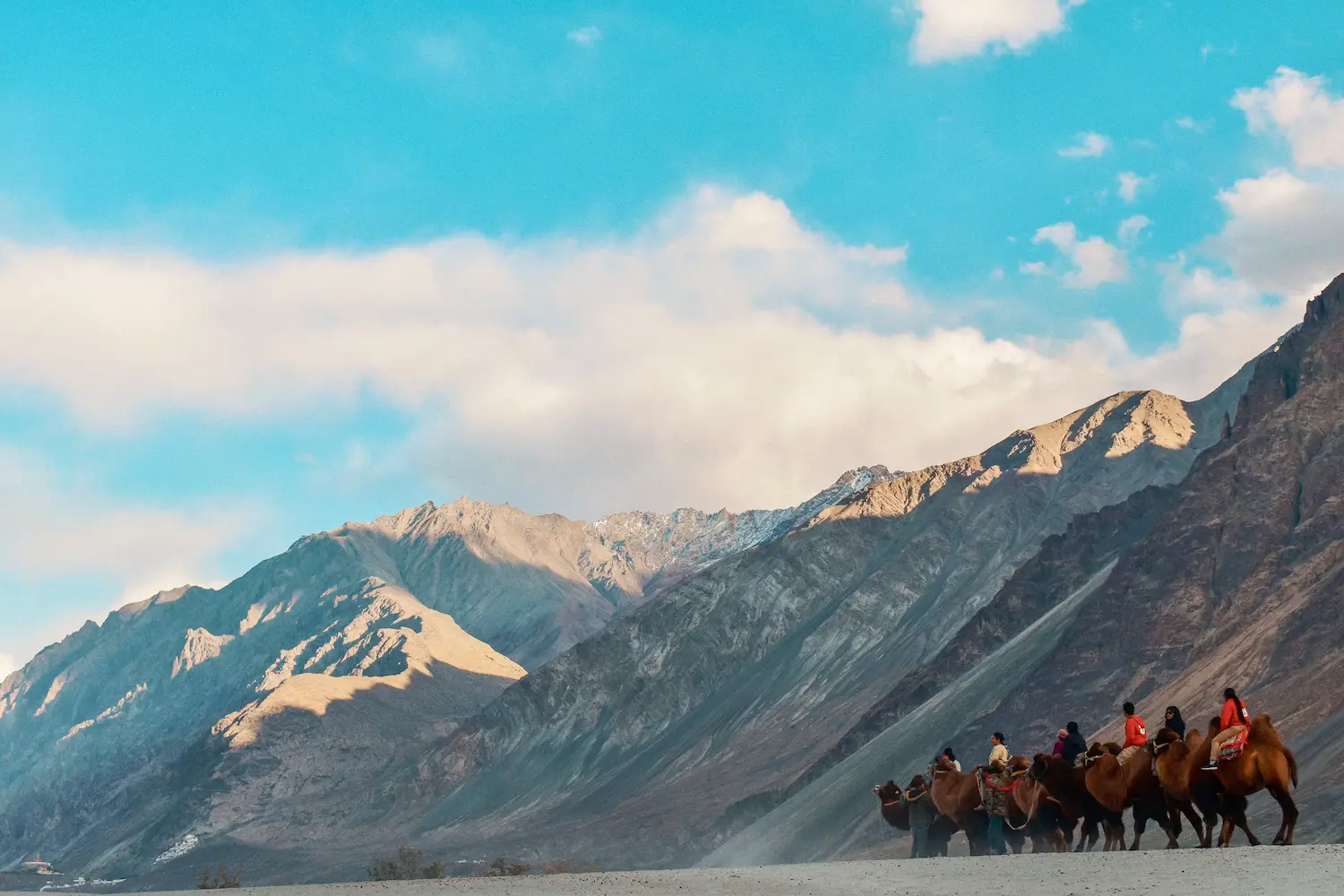
Day 3: Nubra Valley via Khardung La (5,359m; often described as the world's highest motorable pass — actually it isn't, but the drive is extraordinary). Diskit Monastery with its 32-metre Maitreya Buddha statue visible from 10 km away. Hunder sand dunes in the late afternoon — the Bactrian camel ride at sunset on grey-gold dunes with white peaks above is the specific kind of absurdity Ladakh specialises in.
Day 4: Turtuk village (Balti culture; the village was part of Pakistan until the 1971 war; stone houses, apricot orchards, the quietest café you'll find in all of Ladakh). Return via Shyok Valley, overnight in Nubra.
Day 5: Pangong Tso via Agham–Shyok route (avoids retracing the Khardung La; the road through the Shyok Valley and across the Chang La is one of the finest drives in Ladakh). Arrive Pangong by 2 PM. Walk the lake shore. Watch the colour change across the afternoon — blue-green at 10 AM, cobalt blue by 3 PM, almost silver at dusk. Sleep in a camp or geodome on the bank.
Day 6: Dawn at the lake. Then either: (a) the Hanle extension — drive south to Chushul, across the Changthang plateau to Hanle for India's first Dark Sky Reserve and an Astronomy Ambassador stargazing night; OR (b) south to Tso Moriri via Sumdo for the finest remote lake experience in Ladakh with Changpa nomad interactions and no crowds.
Day 7: Return to Leh via the Indus Valley road. Final monastery circuit in the afternoon — Hemis (the largest in Ladakh), Alchi (9th-century frescoes). Evening in the Leh market. Dinner at the Zasgyath restaurant at the Grand Dragon.
| TIER | WHAT IT GETS YOU | TYPICAL DAILY SPEND | BEST FOR |
|---|---|---|---|
|
Premium Budget (₹8,000–12,000/person/day) |
Mid-range boutique hotels; private SUV shared between 2–3 people; local restaurant dinners; all permits and entry fees |
₹8,000–12,000 excluding flights |
First-time premium visitors; couples; comfortable first Ladakh experience |
|
Luxury (₹15,000–25,000/person/day) |
Grand Dragon Ladakh or Nimmu House in Leh; Chamba Camp or Lchang Nang for outlying stays; private Innova Crysta; curated monastery experiences |
₹15,000–25,000 excluding flights |
Honeymooners; senior travellers; those who want comfort at altitude |
|
Ultra-premium (₹30,000+/person/day) |
Full private expedition; chartered helicopter segments; private chef; custom stargazing nights at Hanle; Chamba Camp full-board with guided excursions |
₹30,000–60,000 excluding flights |
Corporate retreats; anniversary journeys; bespoke adventure-luxury |
|
Total 7-day trip (premium budget tier) |
2 nights Leh + Nubra + Pangong + Tso Moriri or Hanle; private SUV; boutique hotels |
₹60,000–90,000 per person (excl. flights) |
Most practical and satisfying range for independent travellers |
|
Total 7-day trip (luxury tier) |
As above with Grand Dragon/Chamba Camp; full-board; L'Occitane spa; guided excursions |
₹1,00,000–1,50,000 per person (excl. flights) |
Organised luxury couples and family trips |
PREMIUM BUDGET TIERS — WHAT YOU GET AND WHAT IT COSTS
The three tiers of premium travel in Ladakh
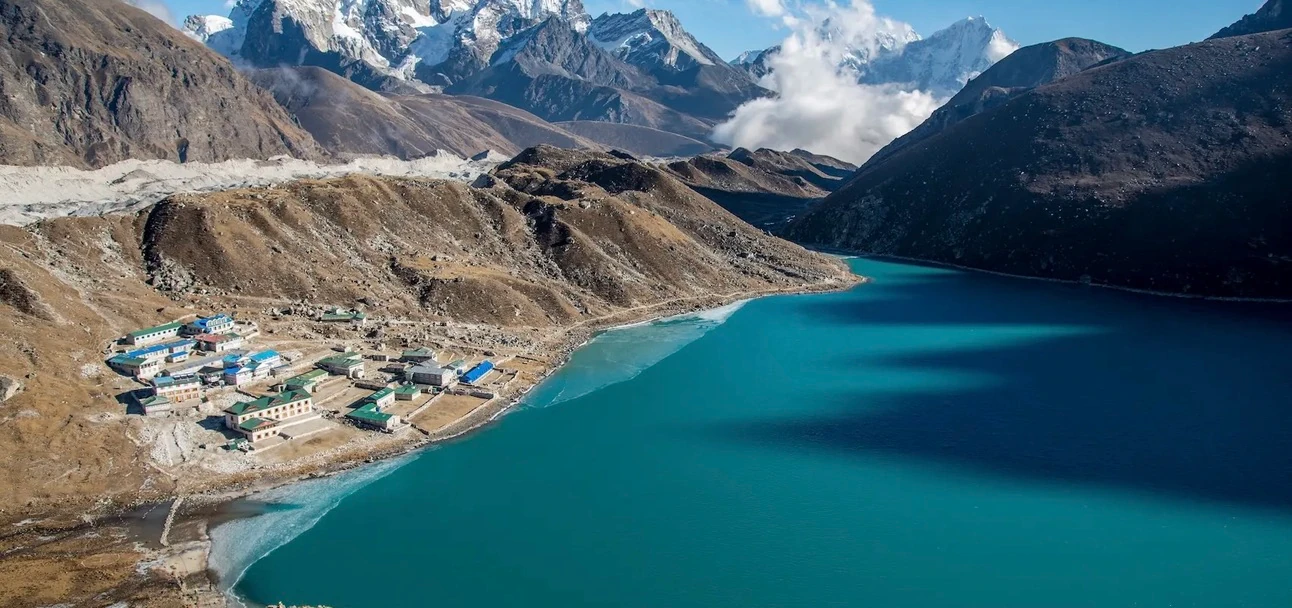
The honest truth about Ladakh costs is that there's a wide band, and where you land within it depends largely on accommodation choice and whether you're sharing your private vehicle. The table below maps the tiers clearly.
| TIER | WHAT IT GETS YOU | TYPICAL DAILY SPEND | BEST FOR |
|---|---|---|---|
|
Premium Budget (₹8,000–12,000/person/day) |
Mid-range boutique hotels; private SUV shared between 2–3 people; local restaurant dinners; all permits and entry fees |
₹8,000–12,000 excluding flights |
First-time premium visitors; couples; comfortable first Ladakh experience |
|
Luxury (₹15,000–25,000/person/day) |
Grand Dragon Ladakh or Nimmu House in Leh; Chamba Camp or Lchang Nang for outlying stays; private Innova Crysta; curated monastery experiences |
₹15,000–25,000 excluding flights |
Honeymooners; senior travellers; those who want comfort at altitude |
|
Ultra-premium (₹30,000+/person/day) |
Full private expedition; chartered helicopter segments; private chef; custom stargazing nights at Hanle; Chamba Camp full-board with guided excursions |
₹30,000–60,000 excluding flights |
Corporate retreats; anniversary journeys; bespoke adventure-luxury |
|
Total 7-day trip (premium budget tier) |
2 nights Leh + Nubra + Pangong + Tso Moriri or Hanle; private SUV; boutique hotels |
₹60,000–90,000 per person (excl. flights) |
Most practical and satisfying range for independent travellers |
|
Total 7-day trip (luxury tier) |
As above with Grand Dragon/Chamba Camp; full-board; L'Occitane spa; guided excursions |
₹1,00,000–1,50,000 per person (excl. flights) |
Organised luxury couples and family trips |
PREMIUM BUDGET TIERS — WHAT YOU GET AND WHAT IT COSTS
Tso Moriri has no ATM, no luxury camp, and no mobile signal. It is also the most beautiful thing I have seen in Ladakh. The premium experience here costs ₹2,500 for a homestay night with a Changpa family and their pashmina goats, and it is worth more than anything else on this list.
Where to stay — the premium property guide
Accommodation in Ladakh ranges from dormitory beds at ₹300 to suite rooms at ₹30,000, and the range is genuinely wide in character, not just price. A few properties are worth knowing about in detail.
The Grand Dragon Ladakh is the anchor property for any serious Leh stay. It's the only certified 5-star hotel in the Union Territory — which in itself is telling about how recently premium tourism infrastructure has arrived here. The 76 rooms use Khabdan (hand-knotted) rugs and Koshen motifs; the Stok Kangri suite has floor-to-ceiling glass facing the glacier; the L'Occitane spa is the only internationally branded wellness facility in Ladakh. The restaurant serves a mix of Ladakhi, Indian, and continental with an outdoor terrace that faces the mountains. For acclimatisation days, this is where you want to be — their staff understand altitude and they're attentive to it.
Nimmu House, 45 minutes from Leh in the village of Nimmu near the Indus-Zanskar confluence, is a different kind of choice. It's a 13th-century traditional Ladakhi house, organic meals from the kitchen garden, yoga on a terrace over the river. Multiple booking platforms call it a 'hidden gem,' which is accurate. It's also quieter than central Leh, and quiet is something the altitude requires of you more than you expect.
For the outstation nights, Chamba Camp Thiksey by TUTC is the benchmark. Their tents have wooden furniture, thick rugs, en-suite bathrooms, and the Thiksey Monastery rising behind them. The all-inclusive rate covers all meals and curated excursions. It's open mid-June to end September. Book 8–10 weeks ahead.
Lchang Nang Retreat in Nubra Valley — private villas built using traditional Ladakhi stone and timber, surrounded by apricot orchards, at ₹15,000–20,000 per night — is the finest property in the Nubra Valley and possibly the most authentic luxury experience in all of Ladakh. The owner's family has been here for generations. The meals use produce from the orchard. The stargazing from the garden is excellent even without a telescope.
| PROPERTY | LOCATION | TYPE | PRICE RANGE | WHAT MAKES IT WORTH IT |
|---|---|---|---|---|
|
The Grand Dragon Ladakh |
Leh city centre |
5-star hotel (Ladakh's only certified 5-star) |
₹12,000–30,000/night |
76 rooms with Khabdan rugs and Koshen motifs; Stok Kangri suite with glacier views; L'Occitane spa; Zasgyath restaurant with alfresco mountain dining; Nespresso suites; central for everything; Lemon tea served when guests feel altitude effects — a detail that tells you everything |
|
Nimmu House |
Nimmu village, 45 min from Leh |
Heritage boutique |
₹8,000–14,000/night (full board often included) |
13th-century village house; organic farm-to-table meals; yoga and nature walks; apricot orchards; Indus-Zanskar confluence visible; exceptional calm — ideal first 2 nights for genuine acclimatisation without city noise; open April–October |
|
Chamba Camp Thiksey by TUTC |
Near Thiksey Monastery, 17 km from Leh |
Luxury tented camp |
₹18,000–28,000/night (all-inclusive) |
Best-in-class luxury camping; hand-knotted rugs, wooden furniture, en-suite bathrooms in tents; Thiksey Monastery is your backdrop; all excursions curated; open mid-June to end September; river-view dining; fire pits; guided monastery access |
|
Lchang Nang Retreat |
Teggar village, Nubra Valley |
Private villas (traditional construction) |
₹15,000–20,000/night |
Remote Nubra experience; each villa uses traditional Ladakhi building techniques; surrounded by apricot and poplar orchards; organic garden supplies your meals; stargazing; guided village walks; complete seclusion; 120 km from Leh |
|
Namseylin Pangong Eco Geodomes |
Spangmik, Pangong Tso |
Eco geodomes |
₹8,000–14,000/night |
Wake up inside a transparent dome with Pangong Tso at your feet; best sunrise experience on the lake; solar-powered; meals Ladakhi-style; limited availability — book 6–8 weeks ahead in peak season |
|
Hotel The Zen Resort Ladakh |
Leh |
4-star boutique |
₹6,000–10,000/night |
Excellent value for the quality; mountain views; garden; close to Tibetan Market; reliable hot water and heating; strong Wi-Fi — rare for Leh; good base for day excursions |
|
Pangong Sarai Resort |
Lukung, Pangong Tso |
Boutique camp |
₹7,000–12,000/night |
One of the better-structured camps at Pangong; proper beds rather than cots; attached bathrooms; mountain views from tent windows; meals included; better insulation than most camps |
|
Local homestay (Hanle / Tso Moriri) |
Hanle village / Korzok village |
Family homestay |
₹1,500–3,000/night |
No luxury alternative exists in these two villages — but the homestays are extraordinary in their own right. Astronomy Ambassadors with 8-inch telescopes at Hanle homestays; Changpa family meals; the intimacy is the point. |
WHERE TO STAY — PREMIUM PROPERTIES ACROSS THE CIRCUIT
Curated experiences worth spending on
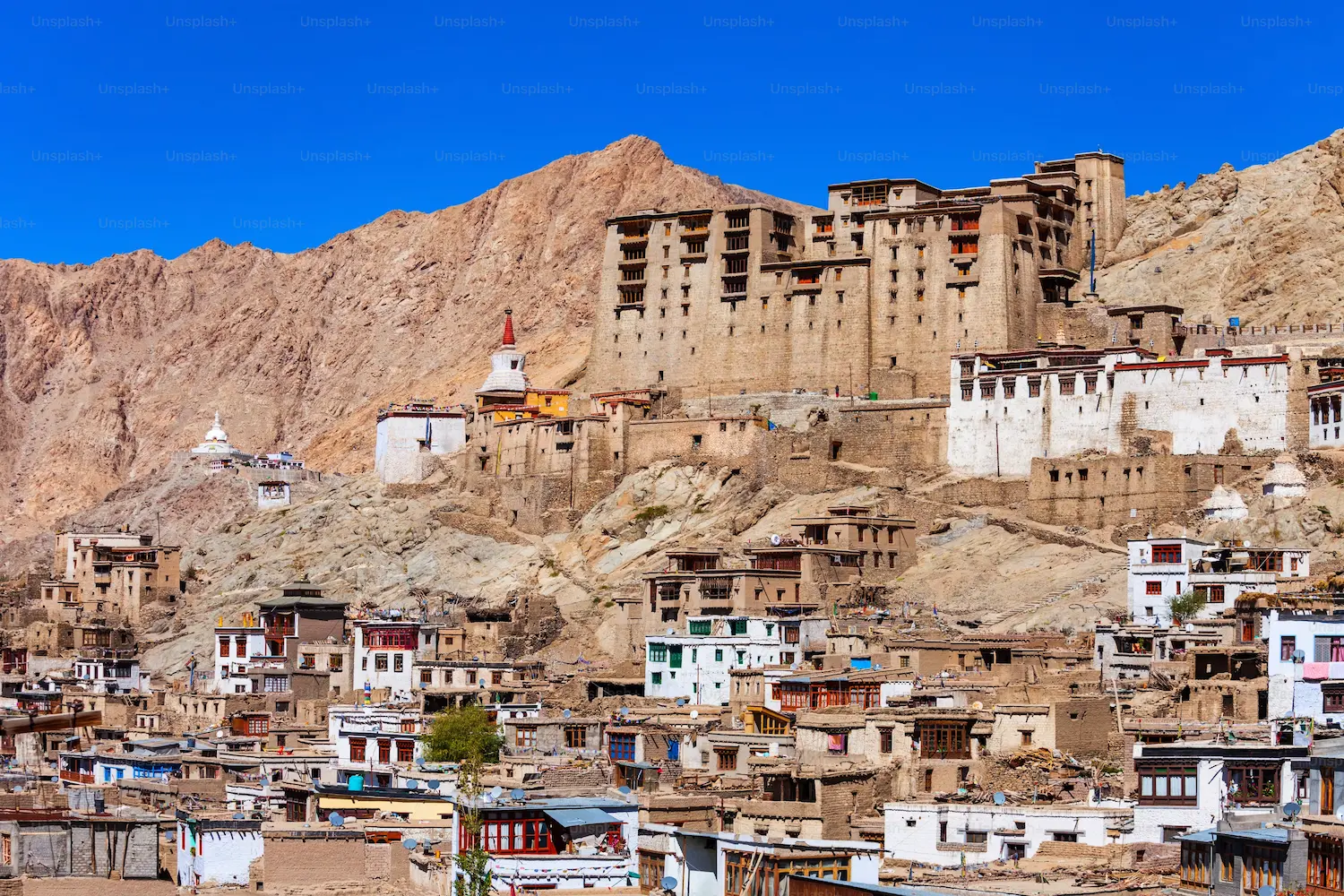
Beyond accommodation and transport, there are a handful of experiences in Ladakh that are worth specifically seeking out — and some of them cost almost nothing.
The Hemis Festival, held every June or July on dates determined by the Tibetan lunar calendar, is the largest and most dramatic masked Cham dance festival in Ladakh. Monks in extraordinary silk costumes perform dances at Hemis Monastery that are simultaneously religious ceremony and theatrical spectacle. Entry is free. Arrive by 8 AM to claim a position on the courtyard steps. If your travel dates can be arranged around the festival, they should be.
The Astronomy Ambassador programme at Hanle is one of India's genuinely original travel innovations. The Indian Institute of Astrophysics has trained over 40 local Ladakhis as certified astronomy guides. They host guests at their homestays with 8-inch telescopes, pointing out Saturn's rings, nebulae, and the Andromeda Galaxy while sharing Changthang stories about the stars. A session costs ₹1,500–3,000. India's first Dark Sky Reserve — Bortle Class 1, which means the darkest possible sky — makes this not just a cultural but a scientifically extraordinary experience.
Rafting on the Indus-Zanskar confluence near Nimmu is accessible, well-organised, and completely different from the landscape-from-a-car experience that defines most Ladakh itineraries. The river moves through canyon walls that are millions of years old. Grade I–III sections are suitable for non-experts. Two to three hours, ₹1,500–2,500 per person, book through any licensed Leh operator.
| EXPERIENCE | PROVIDER TYPE | COST (APPROX) | SEASON | NOTES |
|---|---|---|---|---|
|
Private guided monastery circuit (Hemis, Thiksey, Likir, Alchi in one day) |
Private SUV + local guide |
₹3,500–5,000 for the day (guide + vehicle) |
June–October |
Best done on Day 3 in Leh after acclimatisation; Alchi's 900-year-old Sumtsek frescoes are extraordinary; Hemis is the largest monastery in Ladakh; local guide essential to unlock the inner halls |
|
Stargazing session with Astronomy Ambassador (Hanle) |
IIA-trained local guide at homestay |
₹1,500–3,000 per session (includes telescope use) |
July–October (clearest skies) |
Book in advance through your operator; 8-inch telescope; Milky Way visible to naked eye from courtyard; guide shares Ladakhi star folklore alongside astronomy; one of the most genuinely special nights available in Indian travel |
|
Changpa nomad interaction (Tso Moriri / Rupshu) |
Local guide or community-organised visit |
₹500–1,000 as part of a homestay or guided walk |
July–September (seasonal camp active) |
Changpa people herd pashmina goats on the Changthang plateau; 15-min interaction versus 2-hour invited tea — book in advance through an operator who has relationships with specific families; not a zoo visit |
|
Rafting on the Indus/Zanskar confluence |
Licensed river operator from Leh |
₹1,500–2,500 per person |
June–September |
Grade I–III depending on section; most accessible stretch near Nimmu; suited to non-expert paddlers; spectacular canyon walls; 2–3 hours; book via Leh market operators or hotel concierge |
|
Polo match at Leh Polo Ground |
Free spectator access |
Free (matches irregular — ask locally) |
May–August |
Ladakhi polo (a rougher, faster variant of the game) played at the oldest polo ground in the region; ask your hotel concierge for match dates; genuinely exhilarating and completely untouristed |
|
Hemis Festival (masked Cham dance |
Public festival — free entry |
Free; arrive early for position |
June/July (lunar calendar — dates vary yearly) |
The most dramatic Buddhist festival in Ladakh; monks in silk costumes perform masked Cham dances at Hemis Monastery; two-day event; the largest monastery complex in Ladakh fills with colour; arrive by 8 AM for a seat on the courtyard steps |
|
Lamayuru Monastery and moonscape valley |
Private SUV from Leh |
~₹3,000–4,500 for Leh–Lamayuru return (130 km) |
May–October |
The most otherworldly landscape in accessible Ladakh — a valley of lunar-looking grey clay formations around an ancient monastery; the drive from Leh via Fotu La and Namika La passes is also extraordinary; half-day minimum |
|
Bactrian camel ride (Hunder, Nubra Valley) |
Camel operators at Hunder dunes |
₹300–500 per 20-minute ride |
June–September |
A genuinely bizarre pleasure: sand dunes at 3,050m with snow peaks above; the double-humped Bactrian camel (Central Asian breed) is native to this region; book at dawn or dusk for the best dune light; afternoon is crowded |
CURATED EXPERIENCES — WHAT TO SPEND ON AND WHY
The honest money conversation
Most Ladakh travel content either undersells the cost ('budget trip in ₹20,000!') or oversells the luxury tier without explaining what you actually get for the premium. Here is a realistic breakdown.
For a couple on a 7-day trip flying from Delhi, staying at premium boutique properties across the circuit with a shared private SUV, eating well, covering all permits, and doing one or two curated experiences — budget ₹1,50,000–2,00,000 for two people, excluding flights. That's ₹75,000–1,00,000 per person.
For the full luxury circuit — Grand Dragon in Leh, Chamba Camp for two nights, Lchang Nang in Nubra, geodomes at Pangong, Astronomy Ambassador night at Hanle — you're looking at ₹2,00,000–2,50,000 per person excluding flights. This is genuinely premium and the quality justifies it.
What it doesn't justify: paying ₹25,000 per night at a property whose premium is purely the price tag rather than the character of the stay. Some camps at Pangong charge luxury rates for accommodation that is mid-range by any honest assessment. The most reliable signal is whether the property is connected to the place — Nimmu House is owned by a family rooted in Ladakhi culture; that connection shows in every meal and every conversation. The most expensive room is not always the best room in Ladakh.
| COMPONENT | PREMIUM BUDGET TIER | LUXURY TIER | ULTRA-PREMIUM |
|---|---|---|---|
|
Flights (Delhi–Leh–Delhi) |
₹8,000–12,000 (book early) |
₹12,000–18,000 (flexible dates/last-minute) |
₹20,000–30,000+ (business class or charter) |
|
Accommodation (7 nights, per person) |
₹30,000–45,000 (boutique hotels and decent camps) |
₹60,000–1,00,000 (Grand Dragon + Chamba Camp + Lchang Nang) |
₹1,20,000–2,00,000+ (suite nights + ultra camps + private glamping) |
|
Private SUV (7 days, split between 2) |
₹15,000–20,000 per person (Scorpio) |
₹18,000–25,000 per person (Innova Crysta) |
₹30,000–50,000 (dedicated SUV with driver; helicopter segment add-on) |
|
Food (7 days, per person) |
₹8,000–12,000 (local restaurants + homestay meals) |
₹15,000–25,000 (hotel restaurants + full board where available) |
₹30,000–50,000 (full board at luxury properties + private chef for Hanle) |
|
Permits and entry fees |
₹1,500–2,500 (EDF + monastery fees + Chandratal/activity) |
₹2,500–4,000 (same + guide fees + curated monastery access) |
₹5,000–10,000 (full curated experience including Astronomy Ambassador) |
|
Activities (rafting, festival, polo, stargazing) |
₹3,000–6,000 |
₹8,000–15,000 (guided, private sessions) |
₹20,000–50,000+ (fully private; helicopter to Zanskar add-on) |
|
TOTAL per person (7 days) |
₹65,000–95,000 |
₹1,15,000–1,80,000 |
₹2,00,000–4,00,000+ |
COMPLETE BUDGET BREAKDOWN — THREE PREMIUM TIERS
Responsible travel — what premium visitors owe this place
Ladakh received over 500,000 tourists in 2023. The infrastructure — water, waste, roads, fuel supply — was not built for that number, and the pace of growth outstrips the pace of development.
The most important thing a premium traveller can do is stay longer and see less. Five days rushing through Nubra, Pangong, and Tso Moriri extracts maximum sightseeing value from Ladakh while contributing minimum economic value to the specific communities in the places visited. Ten days, moving slowly, eating at local restaurants, overnighting in community homestays rather than resort camps wherever possible — that distributes the benefit of tourism more honestly.
At Hanle specifically, the Astronomy Ambassador programme and the local homestay network have been deliberately developed as an alternative to the mass-tourism circuit. When you book a homestay here rather than a Leh camp and a day trip, you're funding a different model of tourism — one that actually keeps young Ladakhis in Ladakh.
The EDF that Indian nationals pay (₹400 + ₹20/day) goes to environmental conservation and local development. It is not much. Pay it without resenting it, and pay the optional Red Cross component too. It costs less than a cup of coffee in Delhi.
One practical act that matters: carry a LifeStraw or filter bottle. Plastic water bottles have accumulated in significant quantities around Pangong Tso and at camp sites across the circuit. High-altitude desert ecosystems do not absorb this waste. Glacier-fed tap water in Leh, filtered, is clean and safe.
Planning your Ladakh trip with BizareXpedition
The planning complexity of a premium Ladakh trip is real — permit timing, acclimatisation sequencing, accommodation availability at remote properties, curated experience bookings, and the fuel and cash logistics of the outer circuit all require coordination that is much easier with an experienced operator than without one.
BizareXpedition™ Services Pvt. Ltd. (bizarexpedition.com), based in Haridwar and specialising in Himalayan journeys across every register, designs fully customised Ladakh programmes for the premium traveller. Whether you want the Grand Dragon and Chamba Camp circuit for a honeymoon, an Astronomy Ambassador night at Hanle built into a wildlife-focused itinerary, or a multi-week trans-Himalayan journey connecting Ladakh with Spiti and the Kinnaur Valley — the team has the ground knowledge to build it, the operator relationships to secure the best properties, and the permit expertise to make sure nothing fails at a checkpoint.
The difference between a good Ladakh trip and a great one is almost always in the planning. BizareXpedition plans great ones.
| ITEM | NOTES |
|---|---|
|
EDF printouts |
Print 5–6 copies BEFORE leaving Leh — army checkpoints have no internet or printer; one copy surrendered at each checkpoint |
|
Flight booking timing |
Book Delhi–Leh flights 6–8 weeks ahead; peak season (July–Aug) routes sell out 3 months ahead; early morning flights avoid afternoon mountain turbulence |
|
Acclimatisation — non-negotiable |
Spend 2 full nights in Leh before ANY high-altitude excursion. Walk slowly. Drink 3+ litres of water daily. No alcohol for first 48 hours. No gym sessions. |
|
Altitude medicine |
Diamox (acetazolamide 250mg twice daily) on doctor's advice; start 24 hours before arrival; NOT a substitute for acclimatisation, but a useful aid; Soroche pills (ginkgo biloba) milder alternative |
|
Carry ₹10,000 minimum cash |
ATMs in Leh work but run dry; Nubra, Pangong, Hanle and Tso Moriri have NO ATMs; Camps, homestays, and smaller restaurants are cash only; carry enough for the full circuit |
|
BSNL SIM is essential |
Jio has no coverage in Nubra Valley, Pangong, Hanle, Tso Moriri. Airtel partial. BSNL works across most of Ladakh — buy at Leh market before departing for outstation |
|
Offline maps |
Download Ladakh on Maps.me or OsmAnd before leaving Leh — no internet in most of the circuit; Google Maps offline works for major roads |
|
Fuel in Leh before every excursion |
Fill completely every morning in Leh. Nubra Valley: one pump at Diskit (confirm before departing). Hanle: NO pump — fuel at Karu (~240 km from Hanle) or carry jerry can. Tso Moriri: No pump. |
|
Warm clothing even in July |
Pangong at night: 2–5°C. Hanle at night: 0 to −5°C. Kunzum/Changthang at dawn: below zero even in August. Down jacket, thermal base, and windproof shell are not optional — even in summer. |
|
Photography and respect |
Seek permission before photographing monks, Changpa nomads, or villagers at homestays. Temple interiors: ask before pointing a camera — no flash anywhere. The people here are not props. |
|
Emergency contacts |
Leh Police: 01982-252018; SNM Hospital Leh: 01982-252012; ITBP Nubra: 01982-221225; Ladakh Tourism: 01982-252297; Air India Leh: 01982-257222 |
PRACTICAL CHECKLIST — PREMIUM LADAKH TRIP
Ladakh doesn't ask for much. It asks you to slow down at altitude, to earn the views by acclimatising properly, to carry your permit printouts, to fill your fuel tank before Hanle. It asks you to look at the sky over Changthang on a moonless night and understand, genuinely, that you are looking at something that most of the world never sees. That's what this place offers. Go prepared, go slowly, and spend on the experiences that deserve it — not on the thread count.
Best Selling Tour Packages
Explore other exciting options for your next adventure!